Cuban writer Odette Casamayor and other authors reflect on language, exile, and literary creation at the Madrid Book Fair
 EFE, Madrid, June 6, 2026 / Writing from the perspective of a foreigner lends literature a singular character, and migration transforms authors into figures who would never have existed had they remained in their home country. Several Latin American writers agreed on this idea during a conversation at the Madrid Book Fair on Friday.
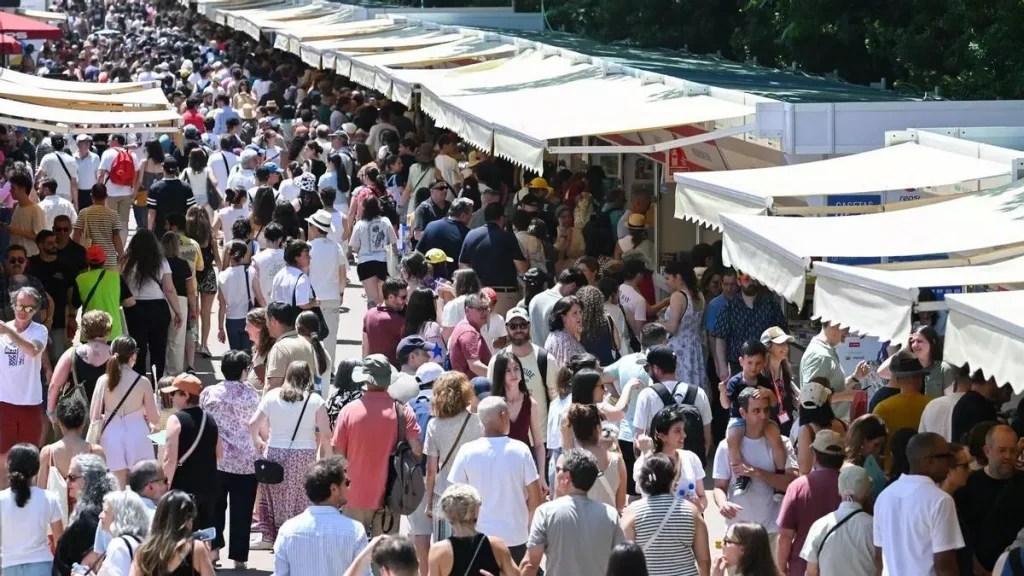
The event, titled “Wrong Journeys, Undefined Hopes and Literary Creation,” was organized at the fair by the Sundial House publishing house of Columbia University.
“I was born in Cuba, but that is not my only origin, I am fundamentally diasporic,” said Odette Casamayor, born in Havana, although she has spent most of her life between Europe and the United States.
The author of Con tinta negra [In Black Ink] confessed that the Afro-diasporic experience has given her the peace of mind to find and love herself in all her “complexity and monstrosity,” as well as the possibility of building loves that “suit her” without disappointing any pre-established code.
To feel at home, she said, she has reached “the conviction that there is no home, only being inside oneself.”
Venezuelan writer Juan Carlos Méndez Guédez, on the other hand, admitted that his prose is a bit “Frankenstein”
“If I hadn’t had to leave Argentina, I would never have written,” said poet Valeria Correa Fiz, who explained that her literature stems from the need to speak in her own language and from the constant introspection she experienced when she moved first to Miami, then to Milan, and later to Madrid.
Correa Fiz believes that migrants lose many things, including the feeling of being “local.” “I always return as a visitor,” she said, referring to the cities where she has lived.
Venezuelan writer Juan Carlos Méndez Guédez, on the other hand, accepted that his prose is a bit “Frankensteinian.” Throughout his life, he explained, he has developed a “nomadic subjectivity” in which he has incorporated vocabulary from different places, forcing him to find strategies to make his texts understandable to the widest possible range of Spanish-speaking audiences.
“I don’t speak Castilian, I speak Puerto Rican Spanish.”
Originally from Barquisimeto, Méndez Guédez pointed out that the transformations do not only occur in those who leave, but also in the places that remain in memory and that, meanwhile, change in real life.
On occasion, he said, the most melancholic places are not on the other side of the world, but “two blocks” from the house where one grew up.
“I don’t speak Castilian, I speak Puerto Rican Spanish,” said Puerto Rican linguist Natalia Olivero Huffman, referring to the decisions she makes when writing.
From her perspective, life is a continuous journey back home. “You can choose your destination, but destination chooses for you,” she asserted.
______________________
COLLABORATE WITH OUR WORK: The 14ymedio team is committed to practicing serious journalism that reflects Cuba’s reality in all its depth. Thank you for joining us on this long journey. We invite you to continue supporting us by becoming a member of 14ymedio now. Together we can continue transforming journalism in Cuba.