In 2024, a total of 624 violations against freedom of religion were committed on the island, according to a report.

 14ymedio, Madrid, June 4, 2025 — The Presbyterian-Reformed Church in Cuba has issued a strong message on the occasion of the Pentecost holiday in favor of change on the island. In a text made public this Tuesday, the congregation, which represents several dozen evangelical churches, bases its statement on the deep and successive crises that the country is suffering.
“The crushing of these crises has placed Cuban society in a narrow alley, perhaps, where the government’s appeal to ’resistance’, ’resilience’, ’creativity’, ’patience’, ’confidence’ have become irrelevant formulas for the people, a symptom of the exhaustion of the ideological reserve that supported the Revolution under the assumption of the construction of a real socialism”, says the brotherhood, which then attacks the higher echelons of the regime.
“The confusion of official discourse becomes increasingly evident when, for example, so many families today live in fear in homes that are in danger of collapse, while huge hotels stand in front of them like inert and arrogant ghosts scraping the sky; or when the laws, decrees and measures do not address the most basic needs of the people, but add to ever greater poverty for them.”
“A society that has been dollarized earns wages in depreciated national currency. A society that has been taught to think cannot freely express what it thinks”
And they list the problems almost in a litany: “A society that was electrified by an energy revolution today lacks electricity. A digitalized society lacks access to the virtual world. A society that has been dollarized earns wages in depreciated national currency. A society that has been taught to think cannot freely express what it thinks. A society in such condition needs profound changes if it is to be functional, if it is to be just, if it is to express fully the values of God’s reign.”
Therefore, they address not only their parishioners, but the “leadership of the country” and all ordinary Cubans. They ask the Government to continue reading
They also urge “the review and correction of the punitive measures and sentences” of those who “because of their ideas, today suffer imprisonment or police harassment,” as well as “the holding of forums for democratic participation with plural concurrence of visions” and “the recognition and public apology for the damage caused to sectors of Cuban civil society that have been affected by exclusionary and discriminatory policies.”
The message for ordinary Cubans is also convincing, urging them to “move from resignation to perseverance, from apathy to social and political activism, in order to establish a new and restorative moment that heals hatred and removes resentment.” Thus, they encourage the citizens to “exercise the right to participate in processes of constructive change in our country, voluntarily, honestly and transparently; choose as a priority the peaceful path for building a new country”; and “look to the future with hope.”
This includes arbitrary detention, intrusive surveillance, repeated interrogations, threats, harassment, and in some cases physical abuse
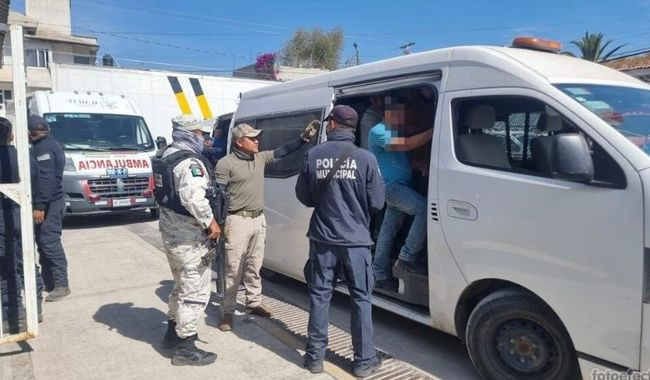
The Presbyterians’ message is published just days after Christian Solidarity Worldwide (CSW) issued a report on the situation of religious freedom in the island. A total of 624 violations were committed in 2024. This includes arbitrary detention, intrusive surveillance, repeated interrogations, threats, harassment, and in some cases physical and verbal abuse of children in school settings because of their beliefs.
The report, entitled “No Respite: Systematic Repression of Freedom of Religion or Belief in Cuba,” highlights that both registered and unregistered religious groups, including Afro-Cuban communities, Jehovah’s Witnesses, Protestants and Roman Catholics, have been targeted by the Government. In addition, there has been an increase in the imposition of fines on religious leaders for conducting unauthorized activities or worshipping in places that are not officially recognized.
One emblematic case is that of the pastors Luis Guillermo Borja and Roxana Rojas, arrested on May 19, 2024, after invoking their religious beliefs in a military court where their son was tried for intent to evade compulsory military service. Both are facing charges of disrespect and contempt of the authorities. Their son, Kevin Lay Laureido Rojas, who holds a medical exemption for a psychiatric condition, remains in a military prison.
The US Commission for International Religious Freedom has also pointed out that the Cuban regime uses a repressive legal framework to strictly control religious institutions and criminalize activities considered contrary to its ideology. Since 1959, no independent religious group has been legally registered, and those who operate without such registration are subject to surveillance, harassment and confiscation of property.
The Cuban Human Rights Observatory reported at least 996 acts against religious freedom in 2024, including impediments to attending masses, fines for religious leaders of unrecognized churches and harassment of Christians with civic commitment. In addition, there were documented cases of denial of religious assistance to political prisoners and threats against religious leaders to expel relatives of political prisoners from their congregations.
Organizations and human rights defenders have urged the international community to express its concern over these continuing violations and to seek ways to support independent civil society in Cuba, including religious groups. The current situation shows a systematic pattern of repression that undermines fundamental freedoms and human rights on the island.
Translated by Regina Anavy
____________
COLLABORATE WITH OUR WORK: The 14ymedio team is committed to practicing serious journalism that reflects Cuba’s reality in all its depth. Thank you for joining us on this long journey. We invite you to continue supporting us by becoming a member of 14ymedio now. Together we can continue transforming journalism in Cuba.