Environmental destruction, a consequence of the crisis that is of little concern to Cubans
 14ymedio, Havana, 1 June 2025 — Jorge has not seen a parakeet since he was 16 years old. Today, at almost twice that age, he could say the same about the tocororo [Cuban Trogon], the cartacuba [Cuban Tody] and other endangered species. The loss of flora and fauna in Cuba has been as dramatic as it has been silent in a country that could boast – thanks to its poor industrialization – of preserving its natural areas in good condition.
This Friday, Cubadebate put a number on the environmental crisis. Among the most serious data is that, of the 36,700 species of animals and plants that have been cataloged in the country, 35% are endangered. In addition, there is a risk that 75 per cent of the known mammal species will disappear. Among those that will survive the extinction are the bats.
Plants bear the greatest losses. Some 580 plant species are critically endangered, as well as 20 species of mushrooms and 16 of amphibians. Six types of sharks that inhabit the Cuban coast are also on the verge of extinction, as well as two classes of mammals, five of reptiles and four of fish and birds.
The situation is alarming, since “Cuba ranks fourth in the world among islands for the richness of its flora, and first for the number of species per square kilometer.”
Jorge remembers the shady business dealings with parrots and other tropical birds in the environs of the Hanabanilla reservoir, in his native Villa Clara
The main cause is illegal hunting, according to the official press. Indeed, Jorge remembers the shady business deals with parrots and other tropical birds in the environs of the Hanabanilla reservoir, in his native Villa Clara. “Once, in the area of Rio Negro, we saw a parakeet chick, which had apparently been dropped by traffickers. We picked it up, and my cousin raised it.”
With mammals, he explains, the same thing happens. “Before there were people who raised hutías in the yard and had parakeets or other birds in the house. Now that world is very rare.” The statistics are unknown and fragmentary, regrets Cubadebate, which, by way of example, says that in only one month of 2021, bird theft was reported in 98 municipalities of Cuba.
In addition to hunting, “extensive agriculture, mining, deforestation and pollution” have led to habitat loss in Cuba.
Cuba is a signatory to all the conventions published by the United Nations on the protection of natural diversity, but it’s another matter for them to comply. In everyday life the Cuban has an almost non-existent environmental culture. He does not have the means to recycle, and the huge trash dumps in the cities say everything about the state’s neglect of hygiene.
Measures against hunting, buying and selling of species has never been a priority problem for the Ministry of the Interior, whose squalid corps of rangers can do little against the bird and crocodile thieves at critical points, like the Zapata Swamp or the Northern Keys.
Cubadebate claims that the loss of biodiversity in Cuba is part of a global phenomenon
Cubadebate claims that the loss of biodiversity in Cuba is part of a global phenomenon. The island is, together with Haiti and the Dominican Republic (Hispaniola), a point of high concentration of biodiversity, where 40% of the species are endemic, so their loss constitutes an irreparable damage.
On May 26, at a meeting of Cuban botanists in Havana, scientists warned that much of the biodiversity of Cuba’s flora remains to be discovered. In 20 years, only 152 new species have been identified.
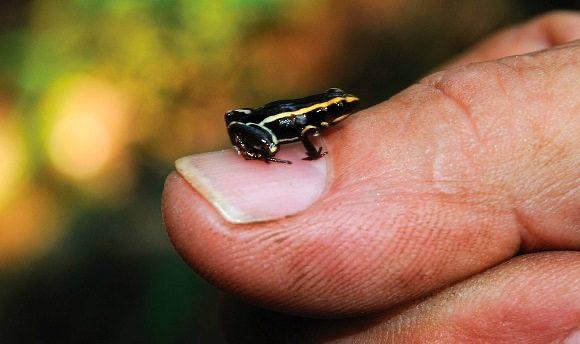
As for amphibians, whose great variety made Cuba famous in the scientific world, there are 71 species identified, of which 94% are indigenous, a phenomenon only surpassed by Hispaniola. For Cuba, 70% of the island’s amphibians are at some degree of extinction.
Another disturbing fact, although it does not have to do with biodiversity, is the lack of urgency that Cubans feel about the loss. At the bottom of the Cubadebate article, and despite the harshness of the figures, there was only one comment from the readers.
Translated by Regina Anavy
____________
COLLABORATE WITH OUR WORK: The 14ymedio team is committed to practicing serious journalism that reflects Cuba’s reality in all its depth. Thank you for joining us on this long journey. We invite you to continue supporting us by becoming a member of 14ymedio now. Together we can continue transforming journalism in Cuba.