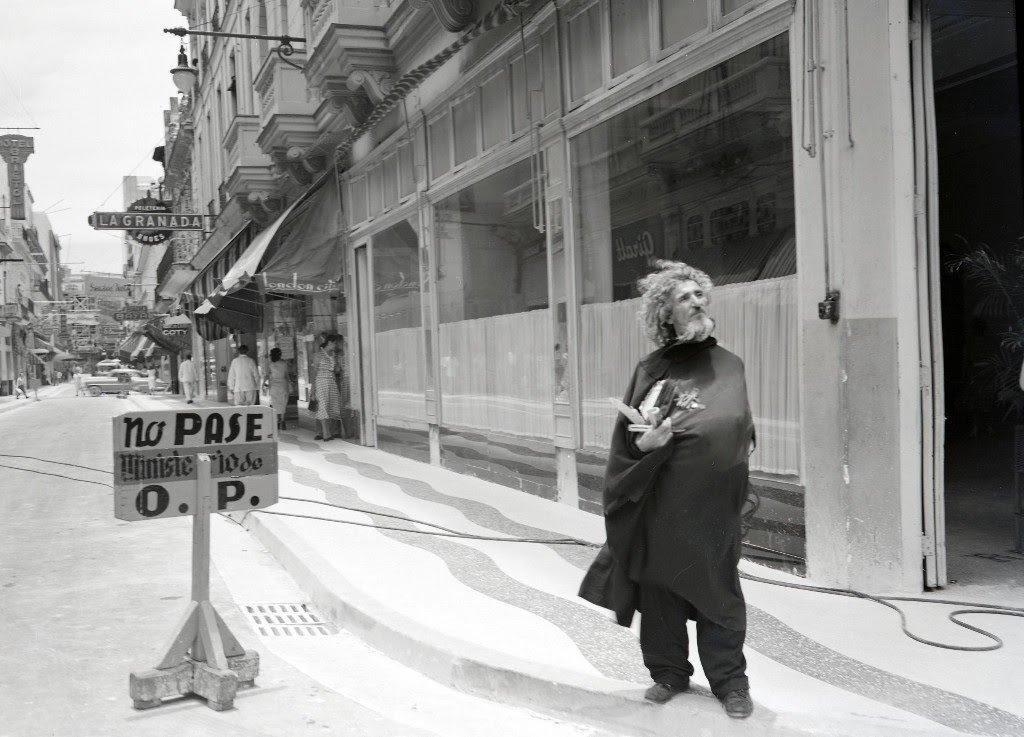
Punta Brava, Where Maceo Died, Is Now the ‘Raggediest Little Town’ in Cuba

Once there was a cinema, shops, a boulevard; today, nothing remains.
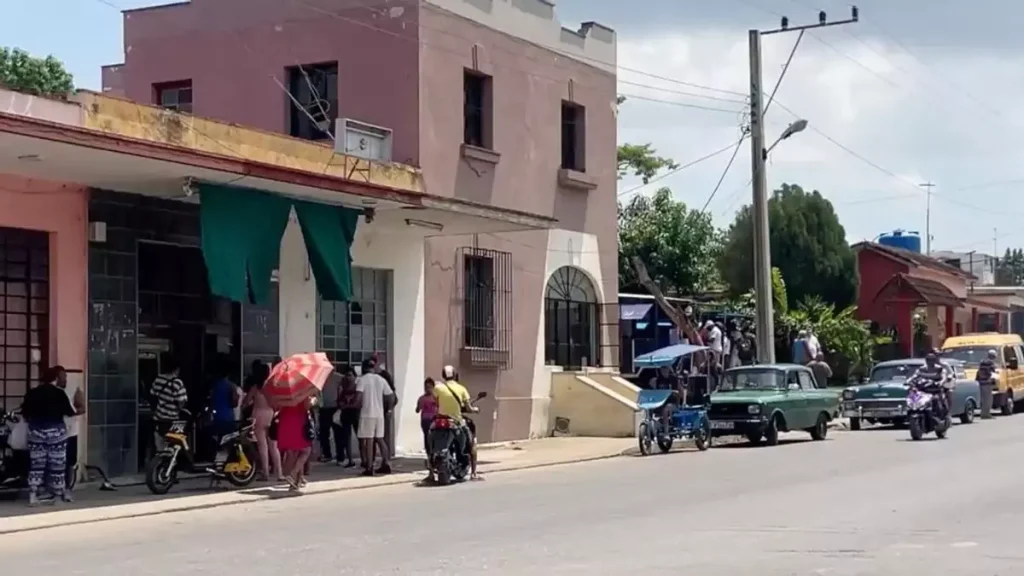

Private cars to La Lisa cost 150 pesos. / 14ymedio

14ymedio bigger14ymedio, Darío Hernández, Punta Brava (Artemisa), 20 July 2025 — In Punta Brava, there’s nothing to see, nothing to do, and nothing that works. This small town in Artemisa, nestled right on the border with Havana, has the feel of a set for a movie Western. Dust, trash rolling in the streets, and the skeletons of unused buildings. Everything feels frozen in time.

“It’s a disaster. I think this is the raggediest little town in the entire country,” two guajiros busily husking corn on the cob under a bush told 14ymedio. Their opinion is echoed by every resident interviewed by this newspaper, without exception: Before there were “things”— a movie theater, shops, a boulevard — now there’s nothing.

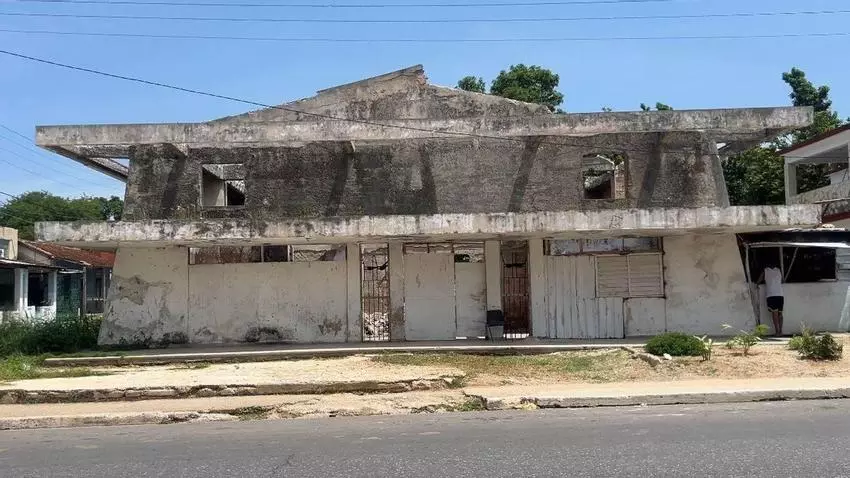
The cinema, three elderly people sitting on a balcony where they avoid the day’s heat, explain, “was gutted and everything was taken, even the tiles and the roof. No one knows who, but they stole everything.” Now, hollow inside and half-ruined, it’s Punta Brava’s public restroom. “They cleaned it up a bit, but it’s still the town’s latrine.”

History repeats itself with all the facilities and public spaces. “I was born here and I’m 82 years old, but when I was a kid, the park was in good condition. The only thing they left was the gazebo, and it’s in disrepair. The new generations have destroyed all that,” notes another elderly resident, speaking from the balcony that overlooks the park, where a bust of Maceo is located.

It was in this town that the Bronze Titan fell, they recall, and they assert, “without political fanaticism,” that the disaster it has become leaves even history in a very bad light.

The decadence of Punta Brava is easily traced: “That used to be the boulevard, now it’s not even the cemetery.” “The Cochino* River runs through there, living up to its name, and the buildings are old and neglected.” When the list ends, the retirees realize that all that remains standing in the town is the churches. “The Nazarene, the Methodist, the Evangelical, the Jehovah’s Witnesses—all the churches here are continue reading
functioning,” they emphasize.

Completely destroyed, the old cinema is now the town’s latrine. / 14ymedio

For retirees, life in the village consists of sitting in doorways amid the unbearable stench of the garbage dumps; “no one can stand it, they even throw dead animals in there,” one complains. For the younger ones, the goal is to climb on the first bus that passes along the avenue to get to Havana, where many work. But not even buses pass through Punta Brava, forgotten on the border with the capital.

“It’s very difficult to get in and out of Punta Brava. Bus 436 comes by at 8:30 am, so hold on,” the man describes, searching his pocket for his wallet. “I was a bus driver, look at my pass. What good is it if there are no buses?”

Route 180, which goes to Santa Fe, also sometimes passes through in the mornings, but other than those buses, almost nothing happens on the highway. There are private cars, but a fare to La Lisa, the nearest municipality in Havana, costs 150 pesos, so many prefer to stand on the side of the road, raise their arms, and wait for a driver who will take them as far as they can.
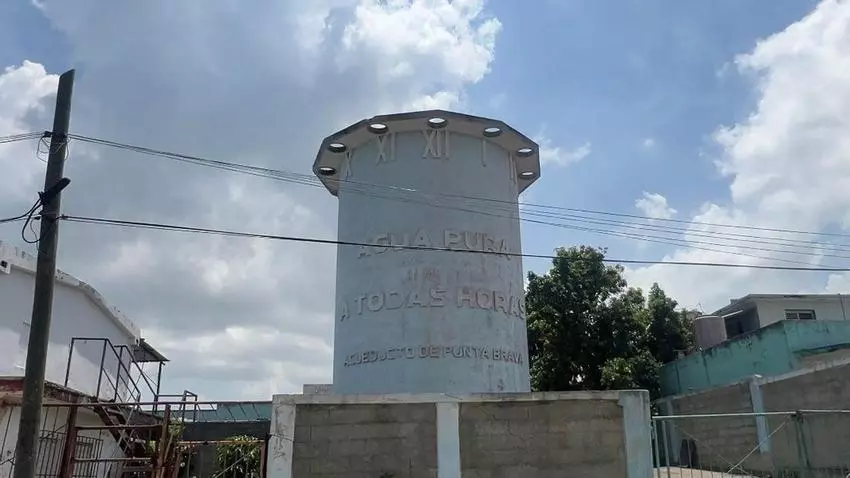
In front of the park, neighbors point out, there is an aqueduct and an elevated tank crowned by a sundial and bearing the sign: Pure water at all hours. / 14ymedio

The other means of transport is the train, which departs from Tulipán and passes through several stations such as Cien y Boyeros, El Cano, Punta Brava, Bauta, Caimito, and others until it reaches Mariel. It has about five cars and all the residents of the towns it passes through use it to travel to Havana, so it’s always full. However, to the dismay of many, “it’s been stopped for three days, and no one reports anything. It’s the only way I can get to Cerro,” says one of the Punta Brava residents.

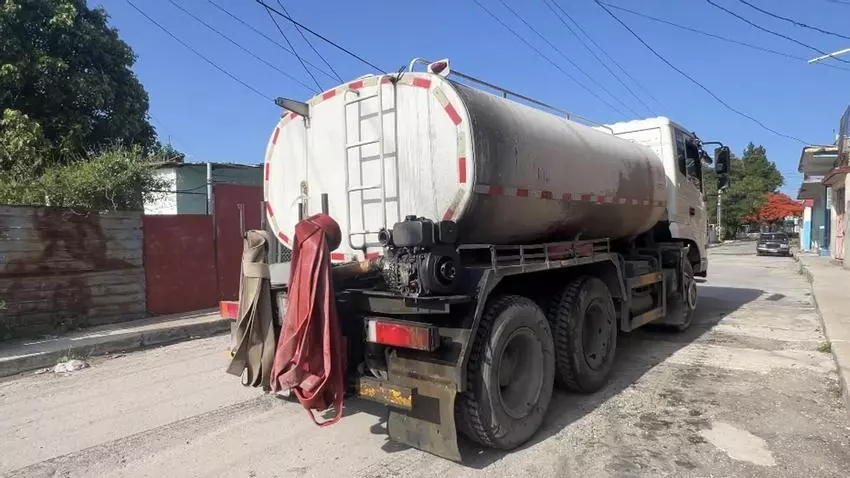
The rest of the public services are in equally deplorable conditions. The blackouts are as annoying as in the rest of the island, and the water supply is very poor. In front of the park, neighbors point out, there is an aqueduct and an elevated tank topped by a sundial and bearing the sign: Pure water at all hours. “Before, there was water all day, but now the water comes from the fire department. It comes here every other day, but it doesn’t come to my house. I have to put the pump on the stairs to get it to the house,” he says.

The rest of the town is a picture of the same disaster. The post office is closed in broad daylight, and there are no children in the park despite it being vacation time. “Look at the state of the streets, compadre. We should put a cross in the middle of the street that says: Rest in peace,” sighs the old man.

The stench of the garbage reaches the houses and bothers residents. / 14ymedio

*Translation: pig, slob, dirty, filthy

____________

COLLABORATE WITH OUR WORK: The 14ymedio team is committed to practicing serious journalism that reflects Cuba’s reality in all its depth. Thank you for joining us on this long journey. We invite you to continue supporting us by becoming a member of 14ymedio now. Together we can continue transforming journalism in Cuba.
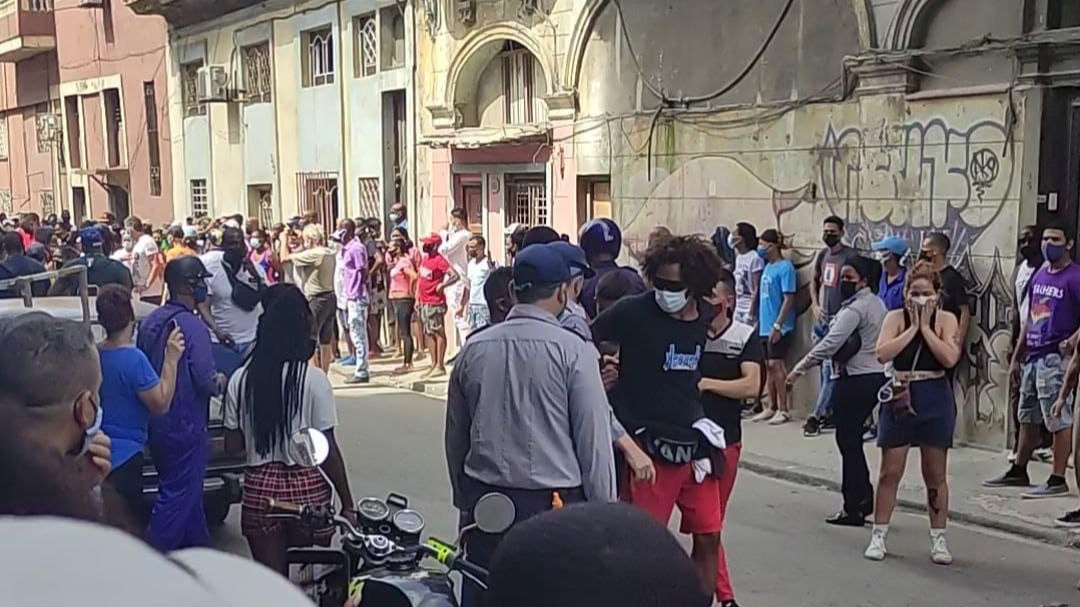

Cuba: 11 July, Four Years Later

Díaz-Canel and all the henchmen who accompany him in government and in the inevitable repression are consumed by the fear of losing power.

The 11th of July protests will forever remain in our history / 14ymedio

14ymedio bigger14ymedio, Pedro Corzo, Miami, 21 July 2025 — Castro’s totalitarian regime has once again demonstrated that the only thing left in its arsenal of lies and manipulation is the most brutal and destructive repression, the preferred tool of despots who are accustomed to using bayonets to hide their fears.

Cubans on the island ignore numerous anniversaries of the struggle for freedom that a large segment of the population has led against the Castro tyranny, but everyone knows that on the 11th of July 2021, the population took to the streets to demand their rights despite police brutality and the inevitable prison sentences they would face.

The protests of 11 July will forever remain in our history. Citizens fed up with the dictatorship, mostly young people, took to the streets and staged protests that had been lost to the national scene for decades, for a free Cuba, responding to the satrap Miguel Díaz-Canel: “You know your time is up, freedom is coming!” an expression I read with great satisfaction on the Martí Noticias website.

Another important report from Radio Martí, a piece by journalist Ivette Pacheco, reminds us that 1,597 people were arrested for participating in the protests on 11 July and the following days, and that “at least 360 remain in prison and others remain deprived of their liberty.” Camila Rodríguez, founder of Justicia 11J, told the station that those incarcerated are serving between 10 and 22 years in prison for protesting and that more than 60 minors continue reading

were among those arrested, three of whom remain in prison.

All this information about the extreme cruelty of the dictatorship is a clear message to those outside of Cuba who have defended totalitarianism.

All this information about the dictatorship’s extreme cruelty is a clear message to those outside Cuba who have defended totalitarianism, arguing that the Cuban people didn’t rebel because they agreed with their government. Now they will have to admit that they never wanted to listen to the cries of the dictatorship’s opponents, because there are many Cubans who oppose Castroism.

A new generation of Cubans has redeemed those who, for ideological reasons, opportunism, or any other motive, collaborated in the construction of a totalitarian system that destroyed the Republic and who have the sense of nation of a population in comatose state. This new generation, mostly born after Castro’s regime, are the ones occupying prisons for political reasons, as the NGO Prisoners Defenders states in one of its most recent reports.

Díaz-Canel and all the henchmen who accompany him in the government and in the inevitable repression are consumed by the fear of losing power and facing the consequences of their humiliating and degrading actions against the people. For this reason, their threats are always accompanied by criminal actions against the population, as in the time of Fidel Castro, lord and master of the Díaz-Canels who continue to sink Cuba: “We were born in a free country bequeathed to us by our parents, and the island will sink into the sea before we consent to be anyone’s slaves.” Destruction and death have always been this subject’s maxim.

This Numantian commitment of Castro’s loyalists was what led to the intermittent interruption of telephone and internet services. This is also why several police officers were stationed in front of the home of Oscar Elías Biscet and his wife, Elsa Morejón, while the regime organized a dance show near the residence in an effort to provide a circus for the citizens, since bread is conspicuously absent.

Castro’s repressive practices resemble the actions in George Orwell’s book 1984: the authorities arrest and suspend public services to prevent protests when the regime suspects something contrary to its interests is about to happen. For example, in the city of Santa Clara, Guillermo Fariñas was arrested, and in the capital, the tireless Berta Soler, leader of the Ladies in White, was arrested along with her husband, former political prisoner Ángel Moya Acosta. This is how Castro’s totalitarianism operates.

____________

COLLABORATE WITH OUR WORK: The 14ymedio team is committed to practicing serious journalism that reflects Cuba’s reality in all its depth. Thank you for joining us on this long journey. We invite you to continue supporting us by becoming a member of 14ymedio now. Together we can continue transforming journalism in Cuba.
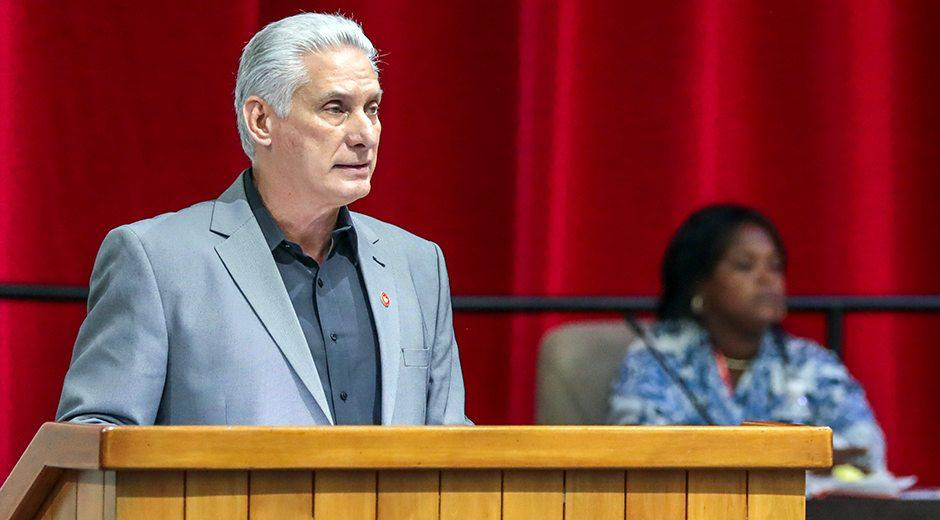
The Cuban Parliament Approves Sex Change ‘At Personal Request’

The interested party must show an opinion from a “multidisciplinary team” from Cenesex

The law meets a long-standing demand from trans people and the LGBTI community. / EFE

14ymedio biggerEFE (via 14ymedio), Havana, 19 July 2025 — On Friday the Cuban parliament approved the right to change sex “at personal request” without surgery or a court order for citizens of legal age. The deputies unanimously approved—as is customary in the Assembly—the new Civil Registry law, whose main innovation is this amendment.

Among the changes included in the legislation is that the applicant may change their gender up to two times, provided they are over 18 years of age and that the first change was made when they were a minor. If the change is requested by a minor, a court order will be required.

The reform also establishes that the changes will not be conditioned “on the prior modification of the person’s appearance or bodily function, nor on a surgical procedure for genital reassignment.”

The update to the Civil Registry places Cuba among the countries that have legislated in favor of so-called “gender self-determination” and fulfills a long-standing demand of Cuban transgender people and the LGBTI community that was not realized in 2022, when the country approved the Family Code in a referendum.

In the case of intersex newborns, parents will have the right to register them with the sex they prefer.

To register a sex change, the interested party must present a report from a “multidisciplinary team” from the National Center for Sexual Education (Cenesex) and their birth certificate. Similarly, the law establishes that sex changes made before the Civil Registry are considered restricted because they are considered “sensitive.”

In the case of intersex newborns, parents will have the right to register their continue reading

child with the sex they prefer, based on their predominant physical attributes, and the child may opt to change gender in the future. If the child is still a minor, the applicant will need the consent of their parents; if not, their own consent will suffice.

Before the reform, trans people had to go through a cumbersome bureaucratic process to change their sex. In many cases, to avoid this labyrinth, people opted to change only their name, which in practice presented even more difficulties and discrimination in their daily lives.

The Cuban NGO Translúcidos, made up mostly of trans men, welcomed the changes to the law but considered that it would have been better to replace “sex” with “gender” in the final document.

____________

COLLABORATE WITH OUR WORK: The 14ymedio team is committed to practicing serious journalism that reflects Cuba’s reality in all its depth. Thank you for joining us on this long journey. We invite you to continue supporting us by becoming a member of 14ymedio now. Together we can continue transforming journalism in Cuba.
Cuban President Díaz-Canel Acknowledges That Dollarization in Cuba Has Increased ‘Social Inequality’

The solution to reducing this gap is not to rethink the effectiveness of the Ordinance, but to avoid the “concentration of wealth in a few hands,” he said.

The president emphasized the importance of exports to attract much-needed foreign currency. / Cubadebate

14ymedio bigger14ymedio, Havana, 19 July 2025 — Cuban President Miguel Díaz-Canel acknowledged this Friday that the dollarization of the island’s economy has led to a “widening” of the “gaps that mark social inequality.” However, far from questioning the effectiveness of a policy that has been plunging citizens deeper into poverty for years, the president justified the situation by calling out “the ferocious enemy persecution,” which has left the country—according to the official narrative—operating “under many risks.” The solution to reducing this inequality, he explained, is not to consider better public and economic policies, but to avoid the “concentration of wealth in a few hands.”

In his closing speech at the National Assembly of People’s Power, the president asserted that giving the dollar a greater presence in daily life was a decision made to “overcome” the effects of the economic crisis, which has resulted in shortages of basic goods and prolonged power outages. “To overcome this situation, we have been forced to partially dollarize the economy, which has, in some ways, benefited those with certain resources and capital and those who receive remittances,” he stated.

Therefore, he proposes, the State’s capacity to redistribute resources must be improved. According to Díaz-Canel, compared to the previous year 2024, and so far in 2025, the State has achieved that goal: ensuring that companies, especially private ones, pay their taxes in full.

“We closed 2023 with a 35% increase in the fiscal deficit. Many will remember the alarm this caused (…). A year and a half later, the encouraging news is that we were able to achieve a significant reduction. In fact, during the first four months of this year, we had surplus results, and up to this point, the current account has closed without a deficit, something that hadn’t been achieved in more than ten years.”

“Discipline and strictness,” which in practice translate into excessive controls, fines and surveillance of private businesses, were the formula for success.

“Discipline and strictness,” which in practice translate into excessive controls, fines, and surveillance of private businesses, were the formula continue reading

for success, he said. “This result (…) will allow us to redistribute that income to the most vulnerable sectors, such as our retirees at this time,” he added, referring to the increase in pensions. State aid will increase from 1,528 Cuban pesos (about $12.70 at the official exchange rate) to 3,056 pesos ($25.40), a figure that, although double the current amount, is barely enough to buy two bags of powdered milk on the informal market.

The president also emphasized the importance of gaining a presence in the international market, which will attract much-needed foreign currency to the country. “We cannot remain passive (…). We must focus on all our export capabilities, which inevitably stem from an increase in production in every sector possible (…) that will then allow us to prevail against the global siege and competition.”

The island needs foreign currency to import everything from fuel to power its electrical system to a large portion of its basic food basket. Its dependence on imports means the lack of hard currency is felt in every aspect of Cubans’ daily lives, from the lack of electricity to the inability to purchase the most basic items.

This is the first time that Díaz-Canel has directly referred to the increase in inequality marked by access to foreign currency and the depreciation of the national currency.

This is the first time Díaz-Canel has directly referred to the growing inequality marked by access to foreign currency and the depreciation of the national currency. The Gini coefficient, the main indicator of social inequality, has moved from 0.25 in 1989, out of a maximum of 1,  to between 0.4 and 0.5 today, according to conservative official estimates, which would place Cuba among the average of Latin American countries.

In the last five years, Cuba’s GDP has fallen by 11%, a collapse that the government attributes—like everything else—to the US embargo, in addition to the effects of the pandemic. However, much of the food the country purchases comes from the United States. From January to May 2025, the island’s purchases from Washington amounted to more than $205 million, 16.6% more than the same period last year.

For his part, in a harangue, Raúl Castro rose from his chair this Friday and shouted several slogans before the National Assembly. “Long live Díaz-Canel!” “Long live the Revolution!” exclaimed the 94-year-old former president. The chorus of unanimous responses from the deputies was immediate. With their fists raised, the closest parliamentarians echoed the shouts of Castro, who was dressed in full military uniform.

____________

COLLABORATE WITH OUR WORK: The 14ymedio team is committed to practicing serious journalism that reflects Cuba’s reality in all its depth. Thank you for joining us on this long journey. We invite you to continue supporting us by becoming a member of 14ymedio now. Together we can continue transforming journalism in Cuba.

Bread Arrives in Some Havana Neighborhoods Accompanied by Bible Verses

“I don’t care if it has religious sayings. The bakery on my block is decorated with a picture of Fidel and a July 26th poster, and no one complains about it.”

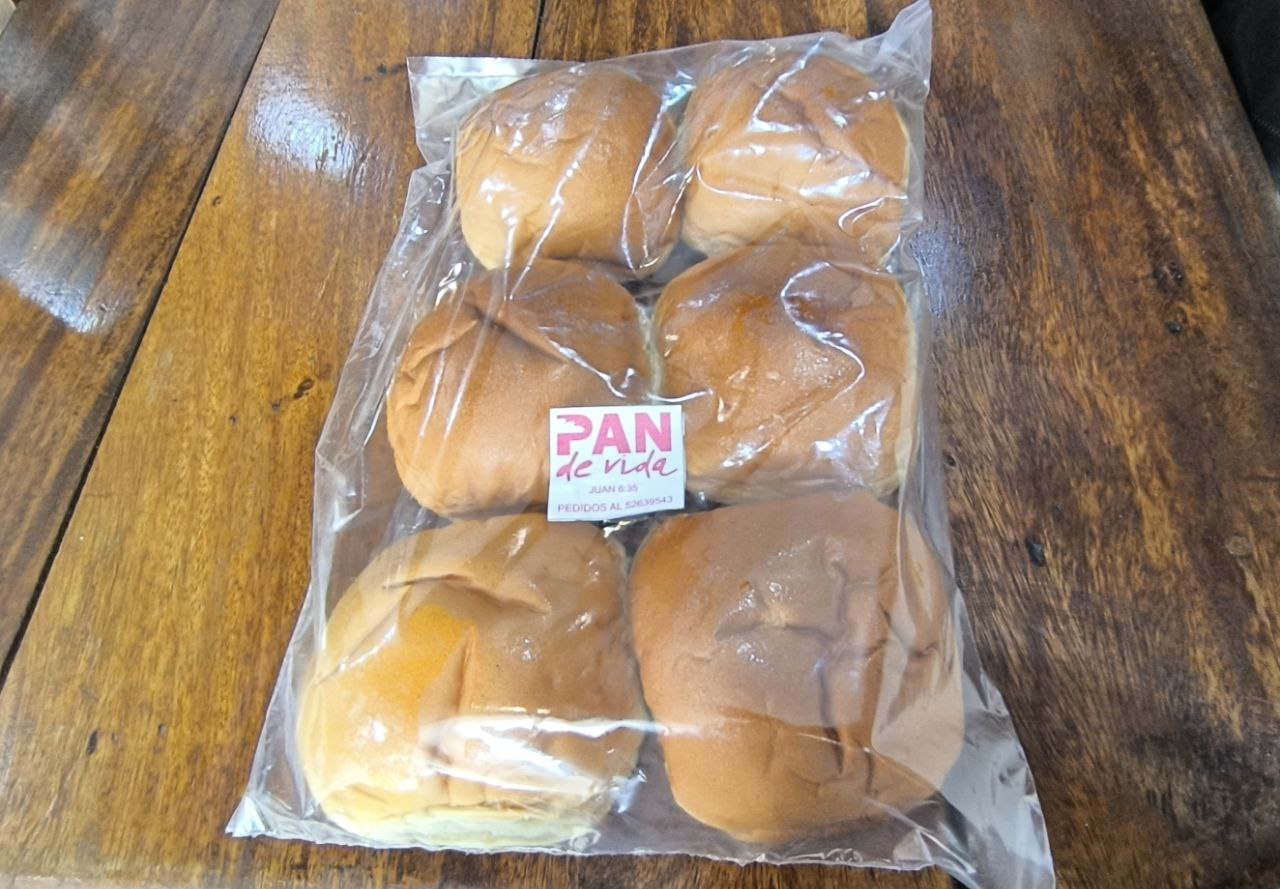
The Bread of life sells for 300 pesos a bag.

14ymedio bigger14ymedio, Juan Diego Rodríguez, Havana, 19 July 2025 — Pan de vida [Bread of life], reads the label on the bag of six rolls purchased this Friday at the home of Luis Manuel, a 21-year-old resident near Calzada de Diez de Octubre in Havana. A Bible verse on the back confirms that the package contains more than just food to satisfy hunger. “Everyone in the neighborhood is saying the same thing: ’We saw what’s written on it,’” the young man, who quickly devoured his allotted portion, told 14ymedio.

For 300 pesos a bag, the product fills the void left in Luis Manuel’s home by the lack of rice or root vegetables due to the rising price of agricultural products. “Now we’re eating more bread because rice has risen sharply, and here in this neighborhood it’s at 310 and even 320 pesos a pound,” he details. The peculiar package, which features a fragment from the Book of Isaiah, speaks of the poor and couldn’t be more in tune with the hardships experienced by the entire neighborhood, the city, and even the entire island.

“I don’t care if it has religious sayings. The bakery on my block is decorated with a picture of Fidel and a poster celebrating the 26th of July, and no one complains about it,” the young man reacts. The bags of bread come from 610 San Benigno Street in Santos Suárez, the modest bakery that supplies several areas of the same municipality. The bakery’s interior, filled with sacks of flour and the owner’s friendliness please those who come to buy because they sense that the supply will continue, unlike the fluctuations suffered by state sales, and they also receive friendlier treatment than at the rationed market.

A few years ago, it was unthinkable that a Bible verse would sneak into merchandise sold door-to-door. [“…For Jehovah has comforted his people, and for his poor has compassion” Isaiah 49:13]/ 14ymedio
A few years ago, it was unthinkable that a religious phrase would be included on a product that would end up being sold door-to-door. Much less so that a biblical reference would accompany bread, the food that for continue reading

decades was a state monopoly until the economic reforms of the 1990s allowed the opening of private bakeries. Since then, the private sector has been gaining ground in the production of the product that officialdom has failed to maintain. With better quality and variety, the cookies, flautas, and loaves made by self-employed workers or micro, small, and medium-sized businesses are much tastier than the small, sour, and often greenish loaf purchased through the ration book.

On the other hand, the word “bread” is mentioned more than 400 times in the Bible, and it is no surprise at all. It is the most basic of all foods and a symbol that goes beyond something to put in your stomach. Bread is also a metaphor for the economy of a country or a family; it is synonymous with community, friendship, and divinity. Bread is, as the bag that Luis Manuel’s family emptied in just a few minutes says: life.

____________

COLLABORATE WITH OUR WORK: The 14ymedio team is committed to practicing serious journalism that reflects Cuba’s reality in all its depth. Thank you for joining us on this long journey. We invite you to continue supporting us by becoming a member of 14ymedio now. Together we can continue transforming journalism in Cuba.
A Dozen Women Block Their Street in Old Havana After Four Months Without Water

Under the intense sun, the protesters expressed their outrage over a problem that affects every aspect of their lives.

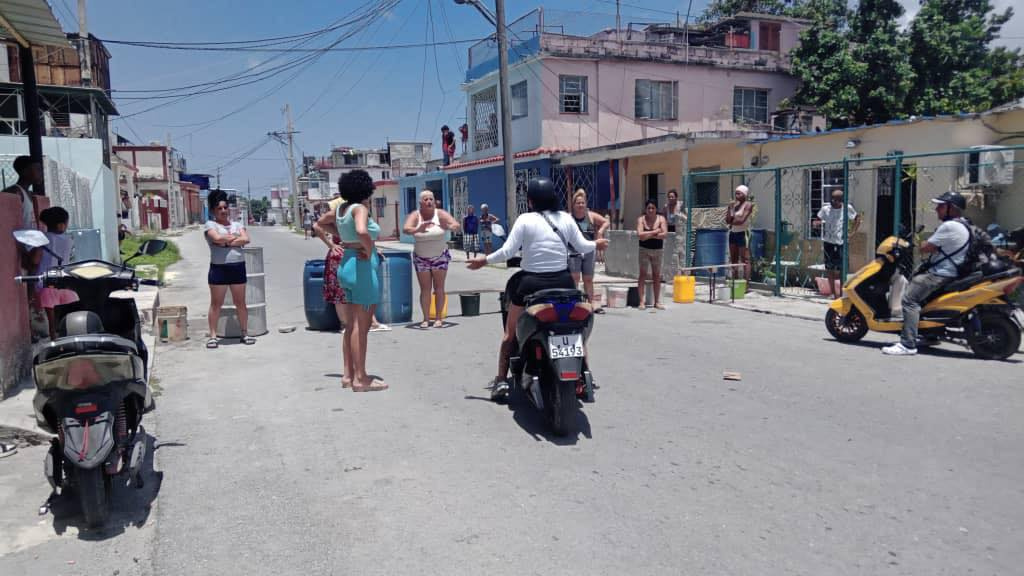
Visibly upset by the situation, the women argue that they’ve gone “everywhere, but it’s always a mess.” / Facebook/ Reglanos

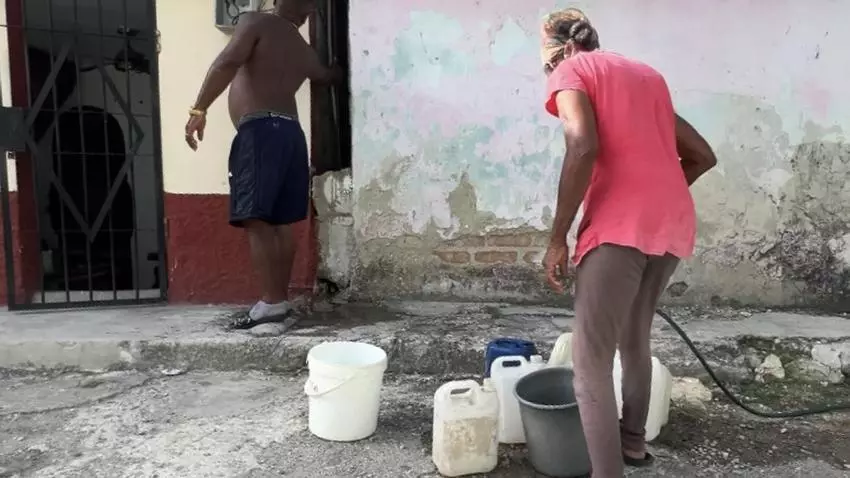
14ymedio bigger14ymedio, Havana, 19 July 2025 — With buckets, tanks, and other containers, a dozen women and their children blocked access to vehicles on Calzada Vieja between C and D in the Havana municipality of Regla, protesting the lack of water in the area for almost four months. After fruitless complaints and bureaucratic procedures, the protesters, from the Unión neighborhood, decided to take action this Saturday.

“It’s over! We’ve been without water for almost four months!” one of the women complained, as a pair of motorcyclists insisted they remove the objects from the road, according to a video posted on social media. Visibly upset by the situation, the women argue that they’ve gone “everywhere, but it’s always una baba y una muela [claptrap and hot air]. ”

Under the intense sun, with temperatures in Havana with temperatures in the high 80s, women expressed outrage over a problem that affects every aspect of their lives, from food preparation and personal hygiene to caring for young children and the elderly. continue reading

Near the well-known Guanabacoa intersection and the oil refinery, in the Unión district, the most affected area is on the top of a hill.

Near the well-known Guanabacoa intersection and the oil refinery, in the Unión neighborhood, the most affected area is located high on a hill. “The water situation here is critical,” a resident confirmed to 14ymedio. Despite everything, she feels less affected because she has been without water for only a month, given that her house is located at the bottom of the natural elevation.

Shortly after the protest began, a water truck arrived at the scene to provide residents with water supplies. This arrival helped break up the demonstration and restore vehicle traffic, according to this newspaper. Residents in the surrounding area came out with buckets and electric pumps to try to collect as much water as they could.

Shortly after the protest began, a water truck arrived at the scene so residents could get supplies. / 14ymedio

Near the truck, police cars and other vehicles bearing the Criminalistics Department emblem could be seen, as well as local government officials trying to keep the area calm.

The water shortage is a problem that increasingly affects Cuban homes due to the poor condition of pumping equipment, the lack of electricity, and the broken water mains. In recent months, the problem has only worsened in parallel with the drought and widespread blackouts that disrupt daily life on the island.

Street closures, whether to protest the poor condition of housing or to denounce the lack of water supply, have become increasingly common in Cuba in recent years. In Havana, lines of people are frequently seen blocking traffic, demanding everything from a solution to their housing problems to the arrival of a water tanker truck to alleviate the water shortage.

Last June, Lázaro Aguilar Medrano, a resident of Aguiar Street at the corner of Muralla Street in Old Havana, was arrested after blocking traffic to demand an institutional response for the poor condition of his home. Instead of officials, it was the police and State Security who arrived at the scene.

In November 2023, a dozen women and their children also blocked traffic on the corner of Monte Street and Agramonte Street in Old Havana. After several days without water, residents in the area decided to protest to highlight their situation.

“We’re not doing anything illegal, we’re just demanding our rights,” one of the residents then asserted.

In recent months, the water problem has only worsened in parallel with the drought and widespread power outages. / 14ymedio

____________

COLLABORATE WITH OUR WORK: The 14ymedio team is committed to practicing serious journalism that reflects Cuba’s reality in all its depth. Thank you for joining us on this long journey. We invite you to continue supporting us by becoming a member of 14ymedio now. Together we can continue transforming journalism in Cuba.
La Colmenita Premieres a Play Commissioned by the Cuban Government and Is Showered With Criticism

“If you’re looking for a key word for what you’ve seen, don’t worry, here it is: miserable,” says one specialist.

The theater was packed, yes: with olive-green uniforms, diplomatic ties, and bureaucratic guayaberas. / Facebook / La Colmenita de Cuba

14ymedio bigger14ymedio, Havana, 7 July 2025 — La Colmenita [The Little Beehive] a well-known Cuban children’s theater company, presented its latest show last Friday, commissioned by the Ministry of Foreign Affairs. Nonagenarian Raúl Castro Ruz—present at the premiere—received more applause than the children themselves, perhaps because the venue chosen for the performance was the universal hall of the Revolutionary Armed Forces. The theater was packed, yes: with olive-green uniforms, diplomatic ties, and the guayaberas of the bureaucracy.

President Miguel Díaz-Canel also attended the premiere of Una colmena cerrado [A Closed Beehive], and the play closed the annual meeting of Cuban diplomatic mission heads abroad. But it didn’t end there. This Sunday, the production was broadcast on Cubavisión, sparking an avalanche of negative reactions among viewers.

The play is about sick children who blame the imperialist “blockade” for all their misfortunes.

The synopsis: sick children who blame the imperialist “blockade” for all their misfortunes. “Shocking” was the word used by the official press about the piece. The opinions of critics and experts, however, have been quite different.

“Is this art?” critic and researcher Yasmani Castro Caballero asked on social media. “The work I saw yesterday by La Colmenita is a clear example of when art becomes political propaganda and not political art,” he emphasized. continue reading

“It’s a shame. To say it’s mediocre is a very high assessment.”

The young critic also questioned the loss of artistic flair that, according to him, the company had displayed in previous productions. “It’s a shame. To say it’s mediocre is a very high epithet,” he added. “Teresita Fernández must be turning in her grave for using her highly poetic music in this attempt at a theatrical production.”

The artistic and general direction was by Carlos Alberto Tin Cremata Malberti. However, the libretto was not written by any renowned revolutionary poet or playwright, but by an official from the Ministry of Foreign Affairs. On this occasion, Pedro Pablo Prada Quintero combined his skills as an improvised screenwriter and as Cuban ambassador to Argentina. It is true that he studied philology in the former Soviet Union and collaborated as a journalist for the magazine Verde Olivo [Olive Green], although since 1994 he has dedicated himself entirely to official diplomacy.

The company itself, perhaps aware of the show’s artistic shortcomings, was quick to clarify that “it is not a play, at least not in the traditional sense.” Instead, they proclaimed that it was “an action for justice and life.”

“In this mock staging, there was an excess of what theater should not allow itself: being boring and obvious.”

Playwright and professor at the University of the Arts, Roberto Viña, agreed that the production had nothing to do with theater: “The reek of slogans and flat rhetoric destroyed the class and disintegrated the classroom. It’s true, that wasn’t theater. It can’t be when the sense of victimhood and begging overrides all ethics and creative responsibility. In that simulated staging, there was an excess of what theater shouldn’t allow itself to be: boring and obvious.”

Viña’s criticism went beyond the stage: “State negligence and ineptitude cannot be attributed to a policy of foreign interference.” His opinion was shared and applauded by numerous colleagues across the country. Even people outside the performing arts pointed out that it was “in very poor taste to use sick children for the state’s political propaganda.”

But Viña was even more incisive: “If you’re looking for an essential word for what we saw, don’t worry, here it is: miserable. Because the legitimacy of the pain, loss, and trauma behind these ’everyday stories’ doesn’t excuse the miserable way in which they appropriate that narrative for ideological advertising.”

____________

COLLABORATE WITH OUR WORK: The 14ymedio team is committed to practicing serious journalism that reflects Cuba’s reality in all its depth. Thank you for joining us on this long journey. We invite you to continue supporting us by becoming a member of 14ymedio now. Together we can continue transforming journalism in Cuba.
Cuba Receives Rice from Colombia, Where There is Overproduction

Producers will sell 1,404 tons and the Colombian government will subsidize export.

The crisis in rice production in Cuba has forced the Government to take measures such as leasing land for the first time to a foreign company / 14ymedio

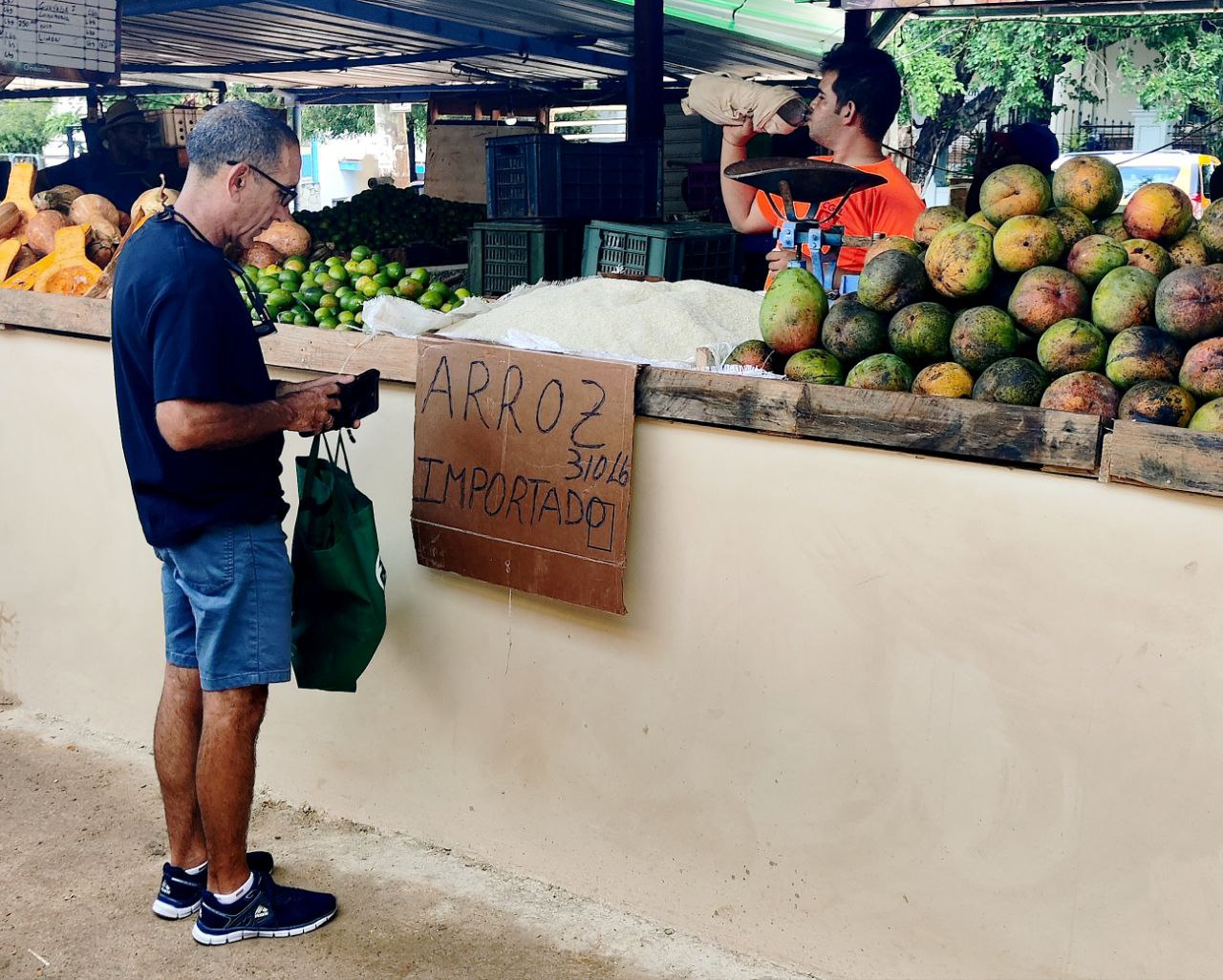
14ymedio bigger14ymedio, Madrid, July 10, 2025 — This Wednesday, at the Youth Labor Army (EJT) market on 17th and K, a poster announced the sale of imported rice at 310 pesos a pound. A few hours ago, the May’s allocation arrived at Havana’s ration stores (bodegas). “How can the poorest people eat rice with these prices?” asked a Havana resident on a walk through the countryside. “In my house you have to buy a pound daily, for lunch and dinner for three people. It’s 9,300 pesos per month, and my mother’s check is 1,500 pesos, same as my stepfather’s. They couldn’t eat rice without me,” he says.

In a parallel world, in Tolima, Colombia, so much rice is produced that prices have fallen to the minimum. In 2023, Colombia produced 685,576 tons of the product, more than 21% of national production, so the Colombian government has facilitated an agreement to sell 1,404 tons to be exported to Cuba. Although it is a small thing for the region, and farmers have warned that it does not solve their problems, any help is welcome for the Island, which barely harvested 80,000 tons of rice, a staple for Cuban tables, last year. This covered only 11% of the demand.

Cuba spent more than $300 million last year to import 407,000 tons of rice to make up its deficit, and it is not known how much it will now pay for this direct agreement with the Government of Colombia, which subsidizes the export of the product to the Island in order to minimize the costs of domestic enterprises. continue reading

Small-scale Tolima rice producers -4,968 of them- are expected to export their rice to Cuba, “generating business worth more than 5.984 billion pesos over a year,” equivalent to $1,487,817

According to the Agency for Rural Development, trade will be direct between small producers and Cuba, and it is expected that 4,968 small producers of Tolima rice will export their grain to the Island’s market, “which will generate business in excess of 5,984 million pesos during one year,” equivalent to $1,487,817.

There will be 1,644 tons of white rice marketed annually, of which 1,404 will go to Cuba, while 240 tons remain to supply social programs in Colombia, “positioning the country as a reliable food supplier and reaffirming the potential of farmer societies,” states the government agency in a press release.

But this is no solution for Dignidad Agropecuaria Colombiana, an organization that has been demanding for at least a year the intervention of the leftist government of Gustavo Petro in a complex conflict, one for which a strike is called between July 7 and 14.

“The Presidency of the Republic announces that 1,644 tons of rice will be exported, with subsidies, probably to the exporter to sell them, but the country will collect more than 2 million tons in the harvest that has already begun. This export is an effort, but it does not solve even 0.1%”of the problem, regrets this farmers’ movement, which calls for the imposition of remunerative and stable prices, in addition to fulfilling the agreements reached in a previous strike.

Between March and April, during the previous strike, the government promised to provide marketing subsidies, but months passed as farmers saw promises not kept while cereal prices plummeted and inputs became more expensive. This agreement with Cuba is one of the mechanisms to make the plan effective, but the volume of subsidized sales is, the producers claim, much too low.

In Tolima, the region where the rice that goes to Cuba is produced, productivity is very high. Despite being the third in land area dedicated to sowing, it is the largest crop of the country, with a yield above the national average, at 7.3 tons per hectare. The figure contrasts sharply with the 1.6 achieved in Los Palacios, in Pinar del Río, although the Vietnamese company AgriVMA, which cultivates 1,000 hectares under usufruct in that same province, achieves an average yield of 7.2 tons per hectare.

The figure contrasts sharply with the 1.6 achieved at Los Palacios, in Pinar del Río, although the Vietnamese company AgriVMA, which cultivates 1,000 hectares under usufruct in that same province, achieves an average yield of 7.2 tons per hectare

“The climate is very good for agriculture, and the way Cubans work here is good, but there’s a shortage of fertilizers, so we brought everything. The biggest problem here is transportation and fuel, which we’re working on with the Cuban company,” Trán Trony Pai, a Vietnamese specialist in Los Palacios, told the international press this June.

“We want more yield (in our business in Cuba), but it’s the first time we are sowing here. There are many things we are learning as well: for example, to know the land,” he added.

The crisis in rice production in Cuba has forced the government to take measures such as this, to lease land for the first time to a foreign company, but also to depend on donations from some of its partner countries – mainly Vietnam and China themselves – or to import it from Brazil, Uruguay or Canada, usually with difficulties in paying the freight.

On several occasions the inability of the Government to carry out the transaction has caused the ships to remain outside the island or stopped in port without being able to start unloading, while the Cubans are still looking for life every day to be able to fill their plates.

Translated by Regina Anavy

____________

COLLABORATE WITH OUR WORK: The 14ymedio team is committed to practicing serious journalism that reflects Cuba’s reality in all its depth. Thank you for joining us on this long journey. We invite you to continue supporting us by becoming a member of 14ymedio now. Together we can continue transforming journalism in Cuba.

In a Dark Year for Health in Cuba, Maternal and Infant Mortality Rates Go Up

  • The infant mortality rate rises to 8.2 per thousand and the maternal rate to 56.3 per cent.
  • “Among the population, there is still a fair amount of dissatisfaction associated with the provision of services that we have been unable to resolve,” said the minister.
Maternity hospital in the city of Matanzas / 14ymedio

14ymedio bigger14ymedio, Madrid, July 15, 2025 — “It has been impossible to achieve the expected results in the most sensitive issues affecting our people.” With these words, published by the official press on Monday, the Minister of Public Health, José Ángel Portal Miranda, reported on the performance of his sector during the first half of the year. The picture is very dark, and the mother-child program is at the top of the list.

From January 1 to July 12 of this year, 234 infant deaths were recorded out of 28,400 live births. Although there were 26 fewer deaths than in the first six months of 2024, there were also fewer births: 28,400 compared to 35,138 in the same period last year. As a result, the infant mortality rate rose to 8.2% per 1,000 births, almost one percentage point higher than last year’s 7.4 percent.

Only six provinces maintain rates below 7: Sancti Spíritus (1.9), Cienfuegos (3.7), Pinar del Río (4.3), Matanzas (4.2), Artemisa (5) and Las Tunas (5.7).

The aging of the population was another of the “challenges” identified by the minister.

Although eight provinces maintain a zero maternal death rate, seven others do record deaths: three, respectively, Guantánamo, Holguín and Santiago de Cuba; two, Havana and Granma; and one, Mayabeque, Las Tunas and Pinar del Río.

The aging of the population was another of the “challenges” identified by the minister of the Health and Sports Committee, who is preparing a report for the next regular session of the National Assembly of People’s Power. Of the official figure of 9.7 million inhabitants, almost 2.5 million are elderly adults, 25.7% of the total, and care for them is not optimal. In the country, said Portal Miranda, there are 305 elderly facilities for 13,949 places, “90% of them certified,” and 156 nursing homes, 70% certified.

The minister not only recognized the disaster in these areas, but also the “difficulties to improve the state of construction of medical offices and an availability of only 30% of the basic set of drugs, which in pharmacies is barely 32%.”

The latter is one of the elements most criticized by the population, but it does not follow from Portal Miranda’s presentation that there is an easy solution. The minister vaguely alluded to the elimination of the illegal sale continue reading

of medicines and said that “they ought to have a gradual recovery as long as the necessary financing is available.”

In the country whose propaganda flag has been healthcare since 1959, the medical staff and coverage of clinics are not complete.

Despite placing the “blockade” of the United States at the top of the list of those responsible for the situation, Portal Miranda did not fail to mention other obvious problems: the “exodus of professionals; failures in the organization of services -such as delays in surgical treatments; unethical attitudes; and the illegal sale of services in some institutions.” Thus, he conceded, insisting: “Among the population there remain fair dissatisfactions associated with the provision of services, which we have been unable to solve.”

In the country whose propaganda flag has been healthcare since 1959, the medical staff and coverage of clinics are not complete. There are 16,541 “healthcare facilities,” the minister indicated, “with 92.2% covered.” Although the minister says that wage benefits have been implemented for 72% of workers in the sector, which has “contributed to reducing layoffs by 25%, this does not solve all dissatisfaction.” The reduction in staff, he says, “has made it more difficult for hospitals to function.”

As measures to recover the labor force, for example, 156 retired nurses were hired, and “the rescue of another 191 through personalized arrangements” was achieved, said Portal Miranda, without specifying the details of those arrangements.

In the midst of the debacle, only one aspect shines: foreign exchange income; that is, the sale of medical services, Cuba’s main source of revenue. In the first half of the year, they achieved 102%, “reaching 50% of the annual target.”

However, despite this “over-fulfillmemt” and a “self-financing scheme in currencies” that “have allowed activities to be reordered and halted the deterioration of the system,” Portal Miranda said, with vocabulary typical of the Special Period, the conclusion is not ambiguous: “There are still no relevant results.”

Translated by Regina Anavy

____________

COLLABORATE WITH OUR WORK: The 14ymedio team is committed to practicing serious journalism that reflects Cuba’s reality in all its depth. Thank you for joining us on this long journey. We invite you to continue supporting us by becoming a member of 14ymedio now. Together we can continue transforming journalism in Cuba.
If You Need Blood in Cuba, You Will Probably Have To Buy It

While donations are at a minimum, people increasingly offer in exchange for money, food, or even a high-end cell phone.

National donations fell by more than 100,000 between 2020 and 2023 alone / Granma]

14ymedio bigger14ymedio, Madrid, 23 June 2025 — With a population estimated at 404,037, the health authorities of Sancti Spíritus estimate that 12,000 blood donations are needed throughout the year. However, in 2024 they were just 7,252, the lowest level in the last five years. Failing to reach the goal of 1,000 donations per month, they have to turn to the families of patients who can donate or to the lucrative black-market blood-selling business.

In a report by the provincial newspaper Escambray, the former coordinator of the Committees for the Defense of the Revolution (CDRs) of Sancti Spíritus, Jorge Luis Nápoles Marín – replaced in May by Yurkenia Ciriano Alonso – admitted that the organization’s ability to motivate citizens is limited. “This is not going as well as before; it’s a reality that you can’t blame on the blockade or the economic situation,” he says, although he takes care to explain the real reasons: the population’s disaffection towards the regime’s mass organizations, especially the Committees for the Defense of the Revolution (CDRs).

“Sancti Spíritus has 308,000 CDR members and a plan of 12,000 donations per year. We have plenty of arms to donate”

He admits that there are no healthcare hearings or debates on the subject and accepts the criticism, although his arguments draw attention. “Sancti Spíritus has 308,000 CDR members and a plan of 12,000 donations per year. We have plenty of arms to donate,” he says, regardless of the fact that CDR membership has lost relevance.

The Escambray article, entitled The Virtual Blood Donation Market, reviews the country’s latest official donation data: 254,845 in 2023, compared to 357,665 in 2020. The pandemic, which accelerated the demographic and economic crisis, stands as a definitive turning point for the catastrophe, since between 2014 and 2020 the number fell by just over 57,000 donations, while between 2020 and 2023 the decrease was 102,820.

Among the reasons, which Escambray has asked people connected to the sector about, is the lack of mobile banks. “In Topes de Collantes, donors have been scheduled up to eight times, and they haven’t been able to attend because we don’t have a car,” says Barbarita Altunaga Villas, head of the blood collection center in Trinidad, the area with the worst situation in the continue reading

province. The outlet states that work is underway to repair a vehicle for this purpose, but also poses a rhetorical question: “Why has the Banco Provincial not had its own facility for more than two years?”

Mirta Santos León, Director of Medical Assistance at the General Directorate of Health, claims that there have been times in recent years when the blood supply situation has become, she points out, a headache, and when there has been a shortage of collection bags. However, although there has been no shortage in 2025, “the problem lies in the willingness to donate.”

Experts consulted by Escambray believe that the loss of quality of the snacks given to volunteers is one of the reasons why the willingness to donate blood has declined. Raumara Ramos, acting director of the Provincial Blood Bank, believes it’s almost essential that the situation improves. “The snacks need to be of better quality. If we go to a place with which we have a contract and they tell us, ‘What we have is mortadella,’ we have to take it.”

The article repeatedly emphasizes that the lack of altruism is increasingly perceptible, and even calls on a sociology expert to speak of a loss of values. “Foreign codes are being adopted because the alternatives conceived within our social system as altruistic, moral, and supportive have ceased to work for a segment of the population,” reproaches José Neira Milián, a doctor in sociology, who believes that this “disdains what has been constructed in terms of human values, the original moral meaning being the intrinsic and authentic value of blood donation.”

Neira Millán describes exchanges—financial or in-kind—for blood donations as “foreign codes,” while admitting that according to the World Health Organization (WHO), altruistic or minimally incentivized donations are the majority worldwide. According to available data, Cuba collects 20 donations per 1,000 inhabitants, far from the 40 recommended by the WHO. Spain, the world leader in blood donation, only gives volunteers a small sandwich and a soft drink and has placed the city of Burgos at the top of the world list , with 60 per thousand inhabitants.

“We’ve looked for ways to get people to donate, and material support is more influential than moral stimulation.”

However, those interviewed by Escambray insist on the “incentive” approach. “We’ve looked for ways to get people to donate, and and material support is more influential than moral stimulation. We’ve stopped holding donor days; we no longer encourage those who are prominent on the block or in the work groups. It’s a botched job for a bank to offer a snack that consists of a poorly prepared sandwich and a soft drink, or not even having a mouthful of coffee to give,” says Nápoles Marín.

“Voluntary donors hardly ever show up, and only the relatives of the patient undergoing surgery attend. We need to encourage more; before, we did the donor activity, they were given a sweater, a module [food or supplies]…” says Raumara Ramos.

“What was done at one point,” says Mirta Santos, “isn’t possible now. And stimulation isn’t just about giving people a package of detergent. The Ministry of Health can guarantee medical care; but there are other things that neither the Ministry of Health nor anyone else can offer because they aren’t available today.” Altunaga Villas, however, maintains that work must be done with the private sector to find something, and reveals that this is already being done in Cienfuegos. “It doesn’t have to be a package of chicken; something always helps,” she adds.

Sonia Sánchez, head of the Transfusion Service of the Hemotherapy Department at the Camilo Cienfuegos General Provincial Hospital, says that about 20 or 30 transfusions are needed every day and gives the example of what happened one day she remembers perfectly: April 25th of this year, when she looked at the statistics, availability was zero.

“Sometimes, not always. When we’ve had the noose around our necks, we’ve had support. In recent days, the government and some companies have pledged to help us,” says Altunaga Villas.

In March 2024, the Provincial Bureau of the Communist Party requested the reactivation of the national blood program, which was in decline—in its opinion, due to “insufficient CDRs”; it is up to them, together with the Ministry of Health, to revitalize this movement,” said its head. Meanwhile, the marketing continues, and those interviewed describe cases in which people are asked for anything from 5,000 to 12,000 pesos or a high-end cell phone without the slightest hesitation right at the door of the provincial Blood Bank. Although those who were clearly doing this at the center have been called to attention, those responsible deny having filed complaints due to lack of evidence. However, they acknowledge: “Everyone knows about this.”

Translated by Regina Anavy

____________

COLLABORATE WITH OUR WORK: The 14ymedio team is committed to practicing serious journalism that reflects Cuba’s reality in all its depth. Thank you for joining us on this long journey. We invite you to continue supporting us by becoming a member of 14ymedio now. Together we can continue transforming journalism in Cuba.

Poor, Abandoned and Unable To Emigrate to the US, the ‘Palestinians’ Survive in Havana

Without housing, formal employment, and a ration book, these internal migrants are “illegal” in their own country.

Many arrive in the capital, where they are required to meet legalization requirements which, in most cases, the eastern migrants cannot meet. / 14ymedio

14ymedio bigger14ymedio, Juan Izquierdo, Havana, 17 July 2025 — Tens of thousands of Cubans are “illegal” in their own country, according to Government parameters, above all in Havana, the last stop for migrants who arrive from the east of the Island to escape extreme poverty and who don’t have the means to emigrate to the US or any other destination. Until yesterday, before the dismissal of the Minister of Labor, Marta Elena Feitó, they were also invisible or “disguised” as beggars.

Officialdom attributes the recent intensification of this migratory phenomenon “to a greater urbanization of society,” as stated by Antonio Ajas, director of the Center for Demographic Studies at the University of Havana, in comments reported by the State newspaper Granma on July 13. According to the expert, this is a natural trend in the country’s development process, where more and more people leave rural areas to settle in cities, especially in Havana, the main receiver of these displacements.

At first glance, Ajas’ explanation may seem reasonable: as cities grow, villages are emptied, and the countryside population gets older. However, attributing this phenomenon to “growing urbanization” ignores the social, economic and political context that gives rise to it. This is not a desired migration, a planned one or the product of progress, but the impoverishment and lack of prospects that push many Cubans to leave their places of origin in search of the minimum indispensable for survival. What Ajas describes as a process of urbanization is actually a desperate escape from poverty.

This reality has a face and a name, although not official. In popular Cuban language, especially in the capital, those who emigrate from the eastern provinces are called, in a derogatory way, Palestinians. The term — inherited from the idea of a displaced people, without land and without rights — has acquired a stigmatizing character. As a publication Acento notes, this phenomenon “is the result of institutional fragility in the countryside and the abandonment of rural areas, which push its inhabitants to wander around the country in a kind of contemporary nomadism.” continue reading

Unlike international displacements, these Cubans migrate within their own borders but suffer similar restrictions.

Unlike international displacements, these Cubans migrate within their own borders but suffer similar restrictions: discrimination, lack of access to housing, legal insecurity and almost total invisibility in public policies. Many arrive in Havana without a place to live, without formal employment, without a ration book, and in many cases, without being able to legalize their stay because of the still-existing restrictions of the home registration system. They are citizens of their own country but are treated as intruders.

To this situation is added a legal obstacle that further aggravates the vulnerability of internal migrants: regulations that prevent provincial Cubans from settling legally in Havana without express authorization. Decree 217 of 1997 imposes restrictions on moving to the capital, requiring a series of steps that, in most cases, eastern migrants cannot meet. This special permit system, inherited from a territorial control scheme, makes Havana a sort of restricted enclave within the country where not all citizens can legally reside.

In a 2016 article, the journalist Abraham Jiménez Enoa managed to collect statements from several deported Palestinians: “I am your brother-in-law. Look, yesterday at noon they took Junior. But calm down, he did nothing. He was with me having lunch at the gate of Alfredo’s house, and a police car parked in front of us and asked for our identity cards. They saw that he was from Santiago de Cuba and arrested him.” Two buses leave Havana every Friday, each with 45 seats plus a monthly train, returning those people to their provinces of origin.

Decree 217, still in force in practice but not always applied with the same severity, contradicts the Cuban Constitution itself. Article 52 of the Constitution recognizes the right of every citizen to reside anywhere in the national territory. The paradox between constitutional letter and decreed regulations reveals a state that, instead of facilitating integration and equitable access to rights, imposes barriers that fuel exclusion.

The birth rate continues to fall, and population aging increases; more than 25% of Cubans are over 60 years old

Official figures confirm the extent of the phenomenon. According to recent data from the National Bureau of Statistics and Information (ONEI), the population of Cuba decreased by 307,961 people between 2023 and 2024, reaching 9,748,007 inhabitants, although the renowned economist and demographer Campos believes it has actually dropped to 8 million. The birth rate continues to fall, and the aging population increases; more than 25% of Cubans are over 60 years old. In parallel, more than 250,000 people emigrated abroad in 2024 alone. But what is not discussed enough is what happens inside the country: a massive internal movement from the provinces of the East and the Center to the West, with Havana as an almost obligatory destination.

Although it is also the main point of exit, the capital concentrates the bulk of internal migration. According to the ONEI, only Havana and its metropolitan area maintain positive population growth figures, precisely because of this constant flow of internal migrants. Meanwhile, provinces such as Las Tunas, Granma, Holguín and Guantánamo are losing inhabitants at an accelerated rate. In many of them, the loss of young people is alarming and threatens to render unviable local economic and social projects, already fragile after years of state divestment.

However, this forced migration is not limited to the movement from the countryside to the city. As Ajas himself points out, there is also displacement between rural areas: farmers who leave unproductive land in their municipality to settle in another where more land is available or better conditions. This movement, although less visible, reveals a logic of economic survival which has nothing to do with urban growth or modernization. It is simply the need to find a space where one can work and live with a minimum of stability.

There are no specific programs to accommodate, legalize and guarantee basic services for these people.

But the state still does not design a clear policy towards these internal migrants. The official discourse prefers to speak of “circularity,” “return” or a “rapprochement with the diaspora,” while ignoring those who, without leaving the country, are in a legal and social limbo. There are no specific programs to accommodate, legalize and guarantee basic services for these people. Access to the rationed market, children’s school enrollment, jobs and even health care for pregnant women becomes cumbersome for Palestinians. Nor is there a serious strategy to revitalize the countryside beyond slogans about “food sovereignty.”

The case of the Palestinians shows a double abandonment: that of their places of origin, emptied of opportunities, and that of their new destinations, where they are treated as second-class citizens. Rather than taking this reality seriously, the authorities present it as a “technical challenge” or a “natural process.”

But there is nothing natural about tens of thousands of Cubans being forced to leave everything to start from scratch, without state support, without minimum guarantees and bearing the burden of stigma. This is not urbanization. It is simply forced displacement.

Translated by Regina Anavy

____________

COLLABORATE WITH OUR WORK: The 14ymedio team is committed to practicing serious journalism that reflects Cuba’s reality in all its depth. Thank you for joining us on this long journey. We invite you to continue supporting us by becoming a member of 14ymedio now. Together we can continue transforming journalism in Cuba.

A Mayor Expels Fidel Castro and Che Guevara from the Mexican Capital

Neither of them asked permission to settle in Cuba or in the Tabacalera park, explained Alessandra Rojo.

A backhoe removes the statues of Fidel Castro and Che Guevara from the Tabacalera Garden in Mexico City. / Cuauhtémoc City Hall

14ymedio bigger14ymedio, Havana, 17 July 2025 — Fidel Castro and Che Guevara are, for the time being, prohibited from sitting on the bench in Mexico City’s Jardín Tabacalera park. As if they were patients in intensive care, the heavy statues of both men seated were carried in the arms of several workers on Wednesday and removed from the site, after years of controversy over their “irregular” installation.

“Neither Che nor Fidel asked for permission to settle in Cuba… nor in the Tabacalera,” posted Alessandra Rojo de la Vega, the combative mayor of Cuauhtémoc, one of the 16 territorial demarcations into which Mexico City is divided and where the monument was located.

According to the politician, elected by a coalition opposed to the ruling party in the capital and the country, the placement of the figures in 2018 lacked the necessary documentation from the Committee on Monuments and Works of Art in Public Spaces, and the installation process was never completed. She added that her mayor’s office does not have “a single document” authorizing the statues’ presence in the park and “they are under the irregular custody of a mayor’s employee without any legal basis for doing so.” This led the district’s Urban Services department to remove the monuments.

“That’s not how things are done,” criticized the Mexican mayor and businesswoman, alluding to the “personal whims” of those who continue reading

governed the district in 2018, despite requests from Cuauhtémoc residents to recover the park bench that housed the Cuban and the Argentine.

This isn’t the first time Castro and Che Guevara have been deprived of their seats. / Fil

This isn’t the first time Castro and Che Guevara have been deprived of their seats. In 2019, the statues were reinstalled in the same location after being removed due to irregularities in the process, but the correct procedure wasn’t followed then either. Now, the mayor’s office announced, they will be put in storage and a consideration will be given to sending them to another location.

On X, the mayor’s announcement sparked all kinds of controversy and comments between those who see the measure as an offense and assured that “Che and Fidel will be back,” and those who celebrate the eviction of those “responsible for the misery a people as beautiful as Cubans are experiencing today.”

Others, jokingly, proposed sending the statues to regions governed by Morena, the party of Andrés Manuel López Obrador and Claudia Sheinbaum, which controlled Cuauhtémoc when the bronze sculptures were placed.

Known as the Encounter Monument, the figures of Guevara and Castro—tobacco in hand, both already in their post-1959 military uniforms—commemorated their exile in Mexico, where they met before sailing to Cuba aboard the yacht Granma. Since its installation, it has been the target of complaints among those who frequent the Tabacalera Garden, not only for representing a totalitarian power, but for being an obstacle to urban harmony.

Known as the ’Meeting Monument’, the figures of Guevara and Castro commemorated their exile in Mexico.

Rojo was nominated last year as the mayoral candidate for Fuerza y Corazón por México [Power and Heart for Mexico], a coalition made up of the three main opposition parties. Before winning the election, her vehicle was shot at five times by an individual who later confessed he had been hired to “scare” the politician. In the election, she won against the candidate of the ruling Morena party, Catalina Monreal— daughter of Ricardo Monreal, the former mayor of Cuauhtémoc — who tried to overturn the election result by accusing Rojo of alleged electoral irregularities. The statues were installed during Monreal’s term as mayor.

In July 2024, 14ymedio published a report on the Encuentro Monument, located in a central area of the capital, which has been vandalized (covered in white paint) and served as a clothesline for those washing in the park’s fountain.

“For me, it’s an aberration to have these statues here. We have countless national heroes, so why would we have these individuals if Castro was a dictator?” a neighborhood resident told this newspaper at the time. Another, drawn into the conversation, replied: “Shouldn’t they be somewhere else? In Cuba, for example?”

For the moment, however, Castro and Che rest in some storeroom at city hall. An empty bench and two stains on the crossbars remain in the park: they are the trace, neither epic nor heroic, of the expulsion.

For the moment, however, Castro and Che rest in some storeroom at city hall. / Expediente

____________

COLLABORATE WITH OUR WORK: The 14ymedio team is committed to practicing serious journalism that reflects Cuba’s reality in all its depth. Thank you for joining us on this long journey. We invite you to continue supporting us by becoming a member of 14ymedio now. Together we can continue transforming journalism in Cuba.

With Their Pension, Cuban Retirees Will Be Able To Buy One Carton of Eggs a Month

Instead of 1,528 pesos, the monthly payment will be 3,056 pesos for about 430,000 people.

[In Cuba, more than a quarter of the Cuban population is aged 60 or over. / 14ymedio
14ymedio bigger14ymedio, Havana, July 16, 2025 — The Cuban government announced this Wednesday an increase in the minimum pension for about 430,000 retirees starting in September, as confirmed by the prime minister, Manuel Marrero Cruz, before Parliament. State aid will increase from 1,528 Cuban pesos (about $12.70 at the official exchange rate) to 3,056 pesos ($25.40), a figure that, although it represents twice the current amount, is still well below informal market prices.

Marrero justified the measure after a recent meeting of the Central Committee of the Communist Party of Cuba (PCC), where the “complex situation of pensioners’ incomes” was assessed. According to the head of government, the adjustment will benefit 79 per cent of all retirees in the country — about 1.3 million people — who currently receive less than 4,000 pesos. “We are still looking for solutions, but I think it is fair that, although now we cannot cover everyone, we have started with 1.3 million because they are the most vulnerable,” said Marrero.

The Government did not specify where the resources will come from to cover this sum.

The measure will have an estimated tax cost of 22,000 million pesos per year (about 916 million dollars at the official exchange rate for companies), although the Government has not specified where the resources will come from to cover this sum. Marrero only advanced that “a group of measures” will be implemented to finance the expenditure, without providing details.

However, beyond the official rhetoric, the real impact of this adjustment on pensions is limited. In a country where one carton of 30 eggs can exceed 3,000 pesos, the new minimum would barely cover a single commodity, leaving pensioners unprotected against the rest of continue reading

everyday expenses, from medicines and transport to electricity, water and food. As manyindependent economists have warned, the problem is not only the low level of income, but the continued devaluation of the Cuban peso and the galloping inflation that has pulverized purchasing power.

More than a quarter of the Cuban population is aged 60 or over.

According to recent data from the National Bureau of Statistics and Information (ONEI), more than a quarter of the Cuban population is aged 60 or over. Between 2021 and 2023, the number of people over 60 grew from 2.3 million to 2.4 million, an increase of 3%. In contrast, the 15-59 age group fell by almost 12 per cent from 6.7 million to 5.9 million. This demographic change poses enormous challenges for a social security system that is increasingly supported by fewer contributors and more dependents.

The situation is compounded by deteriorating health services, chronic drug shortages and the collapse of the primary care system for older adults. In provinces like Guantanamo and Granma, homes for the elderly survive on donations, while many retirees must rely on remittances from relatives abroad, barter or informal jobs to survive. In recent reports, 14ymedio has documented how retirees sell coffee, soap and cigars on the streets, collect plastic bottles or take care of houses for tourists as their only means of subsistence.

The announcement looks more like a gesture of restraint than a substantive solution.

In addition, while the Government announces these partial reforms, it offers no guarantees of transparency or mechanisms for citizen control over the use of the state budget. The increase in pensions comes without being accompanied by a comprehensive economic reform plan or a coherent fiscal policy that addresses the structural roots of the crisis: unproductivity, bureaucracy and unbridled inflation. Nor have immediate relief measures such as the opening of markets in national currency or the liberalization of individual imports without customs barriers been considered.

In the midst of this panorama, the announcement seems more a gesture of restraint than a substantive solution. The population is aging, families are emigrating, and the generation that built the Revolution today is forced to subsist on pensions that do not cover even one lunch. With the currency in free fall, undersupplied markets and stagnant wages, doubling the minimum pension is at best a bandaid on an open wound.

Translated by Regina Anavy

____________

COLLABORATE WITH OUR WORK: The 14ymedio team is committed to practicing serious journalism that reflects Cuba’s reality in all its depth. Thank you for joining us on this long journey. We invite you to continue supporting us by becoming a member of 14ymedio now. Together we can continue transforming journalism in Cuba.

The Caballero de París and the Homeless That Don’t Exist

It’s true that the problem of begging was not born with the Revolution, but it is a direct result of the demagogy and cynicism of pretending to serve the poor.

José María López Lledín was born in Spain in 1899 and emigrated to Cuba as a child.  / Gaspar, El Lugareño

14ymedio bigger14ymedio, Yunior García Aguilera, Madrid, 17 July 2025 — In the collective memory of Cubans, there are figures who, without having held official positions, are more remembered than most ministers. One of them is José María López Lledín, better known as El Caballero de París, the Knight of Paris. His image — with prophetic beard, white mane and an unbreakable dignity wrapped in rags — still inhabits the imagination of Havana residents. Despite being a wanderer, a “street madman” to many, he became a myth, an urban legend and a symbol of the Cuban contradiction between marginality and popular respect.

López Lledín was born in Spain in 1899 and emigrated to Cuba when he was just a child. He is said to have worked in hotels, restaurants and even as a bank clerk. But it was the street that eventually took him in. For decades he wandered through Havana with a flowery speech, greeting those he met with nineteenth-century courtesy, pronouncing philosophical phrases, improvising speeches, collecting papers, sometimes writing in the air. His wandering made him part of the urban landscape, a kind of living statue that roamed the city without restrictions. He died in 1985, in the Psychiatric Hospital of Mazorra.

The official story has tried to turn him into a romantic eccentricity of the past. He has even been carved in bronze in front of the convent of Saint Francis of Assisi, as if the country had to settle its debts with the homeless only after death. But what is most annoying is not that kind of late symbolic redemption. What’s irritating is that the same system that tried to cover up the problem of begging by locking up wanderers now continue reading

disguises itself as “sensitive.”

What’s irritating is that the same system that tried to cover up the problem of begging by locking up wanderers now disguises itself as “sensitive.”

The Minister of Labor and Social Security, Marta Elena Feitó, has “resigned” after generating a scandal by saying that “there are no people living on the street,” only “people who disguise themselves as beggars.” The regime first tried to erase the videos of her speech. Then, when they understood that it was too late and the indignation almost reached the doors of the Parliament, they decided to “disappear” her. Her speech, worthy of a libretto by Ionesco, exposed a Revolution that swore to be humble but ended up accommodating a caste that never lowers the windows of its cars.

It’s true that the problem of begging was not born with the Revolution, nor was corruption, opportunism or poverty. Cuba, like any country in the world, has always had its marginalized population. But what is the direct fruit of the regime is the demagoguery and cynicism of
pretending to serve the poor, but instead multiplying them. For decades, “madmen” and beggars were hidden in institutions such as Mazorra or “social rehabilitation” centers, just as they also tried to hide homosexuals, believers and the ideologically confused. The city had to look clean, disguised only by workers and militants.

The Knight of Paris, with all his elegance and delirium, represents something uncomfortable for power: the dignity of the homeless.

Today, economic decline, runaway inflation and loss of meaning in a country with no visible future have dramatically increased the number of homeless people. You only have to go for a walk through Centro Habana, Matanzas, Santa Clara and Santiago. And yet, the official speech insists on the mirage that “no one will be left behind.” Social networks, counter-revolution and imperialism are blamed for the real image of the country, while a parallel narrative is produced where Cubans have a hard time only “in the movies.”

The Knight of Paris, with all his elegance and delirium, represents something uncomfortable for power: the dignity of the homeless, the untitled intelligence, the madness that tells truths. His figure, idealized by some, reminds us that social problems are not solved with bronze statues, denial or falsely empathetic speeches, but with concrete policies.

Today we do not have a Knight of Paris, but we have thousands of Cubans sleeping on cardboard, escaping from hunger and dodging the police, “inventing” to survive. Meanwhile, the statue in front of Saint Francis of Assisi seems to ask, in silence, why those who come to pay homage to him today do not want to look at those who continue, like him, to wander the streets of an unremembered Cuba.

Translated by Regina Anavy

____________

COLLABORATE WITH OUR WORK: The 14ymedio team is committed to practicing serious journalism that reflects Cuba’s reality in all its depth. Thank you for joining us on this long journey. We invite you to continue supporting us by becoming a member of 14ymedio now. Together we can continue transforming journalism in Cuba.

A Cuban Repressor Who Attacked Protesters on 11J Has Been Deported From the US Back to Cuba

The former Interior Ministry official was directly involved in the repression of mass protests four years ago.

Daniel Morejón García, in an image of his arrest released by U.S. immigration authorities. / X/@HSI_Miami

14ymedio bigger 14ymedio, Havana, 16 July 2025 — Daniel Morejón García, who appears on the list of repressors of the Foundation for Human Rights in Cuba (FHRC), was deported to the island, according to journalist Mario J. Pentón. The migrant had been detained by the U.S. Immigration and Customs Enforcement (ICE) since April.

“The former Interior Ministry official was directly involved in the repression of the mass protests on July 11, 2021,” Pentón stated on his X account. Morejón has been in Cuban territory since May 30, the reporter added. For its part, this newspaper attempted to contact Morejón’s daughter several weeks ago to confirm his deportation, but she never responded.

The repressor arrived in Havana in a group of 130 migrants, 106 men and 24 women who arrived through José Martí International Airport.

According to a statement issued by ICE shortly after his arrest, the 57-year-old Cuban was “administratively” arrested at his home in Miami after it was established that he had lied upon entering the country. continue reading

“Law enforcement officers obtained official Cuban government documents and information from reliable sources indicating that Morejón García had not disclosed his affiliations,” that is, his immigration application had failed to include his membership in the Cuban Communist Party and the Ministry of the Interior.

There is evidence, the text then asserted, that Morejón García attacked protesters during the massive protests of 11 July 2021.

There is evidence, the text asserted, that Morejón García attacked protesters during the massive Island-wide demonstrations of 11 July 2021 (11J) “as part of his duties.” The former agent was president of the National Defense Council in the province of Artemisa and a member of the Rapid Response Brigades, the text indicates, explaining that these are groups “composed of civilians trained and organized by the government” and “designed to assist authorities during incidents of social unrest, protests, or riots.”

The information provided by ICE coincided with that found on the FDHC website, which indicates that, as seen in a video, during the 11 June demonstration in Las Cañas, Artemisa, Morejón got off his motorcycle and attacked Armando Martínez Luis. Now a political prisoner, Martínez Luis suffers from hypertension and paranoid schizophrenia, and was sentenced to eight years in prison.

Two other protesters arrested at the same location, Rolando González Arévalo and Richael Cantún Morales, were sentenced to six and seven years, respectively. All three are serving prison sentences in Guanajay prison (where artist and San Isidro Movement leader Luis Manuel Otero Alcántara is also being held).

Based on a complaint, the Foundation reported that the former agent, who was also director of the Las Cañas feed factory, was living at his daughter’s house in Miami.

Based on a complaint, the Foundation reported that the former agent, who was also the director of the Las Cañas feed factory, was living with his daughter, Dhayma Morejón, in Miami. Another complainant, according to the foundation’s file, claimed he was a State Security agent who “walks around armed” and in Cuba was the manager of Almacenes Universales, a subsidiary of the Gaesa military conglomerate.

The former official also appears on the list that Cuban-American Congressman Carlos Giménez sent last March to the Department of Homeland Security (DHS), along with more than 100 people who, the Republican politician alleged, “previously supported the brutal policies of the Castro dictatorship and have taken advantage of U.S. immigration laws to enter our country.”

Until his deportation, Morejón García was held at the Krome Detention Center in Miami-Dade County. ICE has asked anyone with “information regarding alleged human rights violators traveling to or entering the United States” to report this situation, which can be done anonymously.

____________

COLLABORATE WITH OUR WORK: The 14ymedio team is committed to practicing serious journalism that reflects Cuba’s reality in all its depth. Thank you for joining us on this long journey. We invite you to continue supporting us by becoming a member of 14ymedio now. Together we can continue transforming journalism in Cuba.