When Life Is In The Hands Of Human Traffickers

Terminal 3 in Jose Marti International Airport in Havana (14ymedio)

14ymedio bigger14ymedio, Generation Y, Yoani Sanchez, 4 February 2017 – The wifi signal barely crosses the glass. The wireless network at José Martí International Airport only covers the boarding area. But a woman presses her whole body against the opaque window that separates the travelers’ area to communicate with human traffickers who are holding her daughter in Mexico.

For half any hour the lady reveals her despair. “I don’t have that much money, if I had it I would send it right now,” she prays through IMO. The videochat is cut several times by the poor quality of the connection On the other side, the voice of a man repeats, without backing off, “Three hundred dollars so she can return on Tuesday.”

The woman wipes her tears and unsuccessfully asks for a reduction. Nearby, a maid who cleans the bathroom passes by, idly dragging a cart with cleaning supplies. A customs official walks by, absorbed, and pretends he is not listening to the disturbing request projected from the screen of the phone, “Don’t kill her, don’t kill her.” continue reading

For half any hour the lady reveals her despair. “I don’t have that much money, if I had it I would send it right now,” she prays through IMO

The scene happens in a place crowded with people, most of whom are passengers about to board a transatlantic flight, or a new commercial route to the United States, and there are also the family members and friends who have come to see them off. No one shows any sign of hearing the drama developing a few feet away.

A tourist tosses back a beer just as the woman is asking the man for half an hour to “collect the money.” She starts the race against the clock. She calls several contacts from her IMO address book, but the first four, at least, don’t answer. On the fifth try, a shrill voice on the other end says, “Hello.”

“I need a huge favor, you can’t say no,” the lady stammers. But the head that can be seen on the screen shakes from side to side. “Are you crazy? And if after you pay this money they don’t let her go?” asks the voice. The tension makes the hand holding the phone start to tremble and her granddaughter, who has accompanied her, helps her hold on to it.

Several more calls and the money is not forthcoming. Finally a serious voice says yes, he can lend the money if the woman will pay it back “in two installments” to his sister in Havana. The mother agrees, promises she can “repay every cent,” although it sounds like a formula to get out of a bind. The man believes her.

Now they must arrange the details. The victim doesn’t have a bank account but the mother will send information about “how to send the money.” This is how the kidnappers get paid. Only then will they allow her to fly from Cancun to Havana, or at least that is what they promise.

Several more calls and the money is not forthcoming. Finally a serious voice says yes, he can lend the money if the woman will pay in back “in two installments” to his sister in Havana

In the middle of last year the Mexican authorities shut down a network trafficking in undocumented people from Cuba that operated in this tourist area in the Mexican state of Qunitana Roo. The end of the “wet foot/dry foot” policy this January has left many migrants in the hands of the coyotes, who don’t hesitate to turn to extortion to make up for the reduction in the flow of Cubans and, as a result, their loss of earnings.

The wifi signal is lost altogether, but the mother is feeling relieved. “She was in a large group, about 20 people,” she tells her granddaughter. A simple calculation allows us to know how much the captors will earn on “freeing” all those they are holding.

Nothing ends with the delivery of the money. “She is going to want to go again,” concludes the mother, the instant she hangs up from the last videochat. “I can’t stand it here, I can’t” she repeats, while walking toward the escalator filled with smiling and tanned tourists.

The Internet In Cuba: Strict Control And Excessive Prices / Iván García

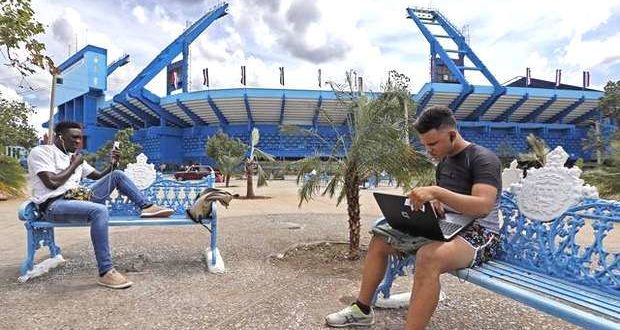
The wifi hotspot outside the old El Cerro Stadium is one of the few where you can calmly and comfortably connect to the internet, due to the park they put up because of the presence of Barack Obama at a baseball game, when the US ex-president visited Havana on 20, 21 and 22 March, 2016. Taken by the New Herald.

Iván García, 30 January 2017 — Five or six abstract oil paintings are tastelessly jumbled together in the living room of a house in the west of Havana, next to  a collection of laptops and ancient computers waiting to be repaired. We can call the owner Reinaldo.

A clean-shaven chap, who has fixed computers, tablets and laptops for twenty years and also, quietly, provided an internet service on the side.

“I have two options. Dial-up internet at 50 Cuban convertible pesos (CUC – roughly $50 US) a month. And via ADSL at 130 CUC. The transmission speed of the modem is between fifty and seventy kilobytes a second.  With ADSL, the speed is two megabytes. It has the advantage of being free (i.e. unlimited), as it is rumoured that two MB connections will be marketed by ETECSA, the government-owned telecoms company, at 115 cuc for 30 hours,” Reinaldo explains. continue reading

No-one is surprised by anything in Cuba. Clandestine businesses are always two steps ahead of what the state comes up with. Many years before the olive green people legalised private restaurants and lodgings, people had been taking the chance of running such businesses anyway.

And something similar is happening with internet business. The spokesmen for the ETECSA monopoly — the state run telephone and communications company — strongly deny it.

When, on 4 June 2013, the government opened 118 internet rooms all over the country, Tania Velázquez, an executive in the organisation, announced that “by the middle of 2014, we will start to market the internet for cellphones and, by December, at home.”

It was a bluff. While we are waiting for ETECSA to get the internet for cell phones started, what we have now is ETECSA’s Nauta email for cell phones, running on out-of-date 2G technology, too many technical problems, and initially they were charging 1 CUC a MB.

Just over a month ago, they lowered the price to 1.50 CUC for five MB, calling it Bolsa Nauta. But the service is dreadful. “You wait five or six hours to send an email, and the message never leaves the outbox. They are robbing you, as they sometimes charge your account without having offered any service. My advice is to disconnect Nauta from your cell phones as quickly as possible,” says Marlén, who opened an account two years ago.

Marketing the internet at home service is two years behind what Tania Velázquez promised. Just after Christmas 2016, ETECSA started to provide free internet via ADSL to two thousand families with fixed residential phones around the Plaza Vieja, in Havana’s colonial quarter, as a pilot, until the month of March.

“The connection is better than the wifi hotspots. Although it sometimes runs slowly. You need to have a conventional phone to receive the internet service. It isn’t true that you have to belong to the CDR, or Committee for the Defence of the Revolution, or be working. I don’t know if dissidents will be able to opt for the service when they start to sell it. Although the prices will be “thank you and goodnight.”

An ETECSA engineer, working in an internet distribution centre in the capital states that “the prices for internet at home are bollocks. Saying that they will charge 30, 70 and 115 CUC, the dearest tariff, for 30 hours, and depending on the bandwidth, is unofficial. They are looking at setting up a flat charge and also a charge per hour. The prices will be high, but not what the foreign press claims, because an hour at two MB would cost nearly three CUC, and users of half that would prefer to connect to a wifi point. There will be various speed options. The highest will be two MB,” says the engineer.

The military dictatorship has designed a structure capable of controlling the internet. Before the internet landed in the island, where previously the finca rusa, a Russian-built electronic spying base, known as the Base Lourdes, operated. Fidel Castro inaugurated the University of Information Science on the San Antonio de los Baños highway on 23 September 2002. In addition to exporting software, its functions include the rigorous monitoring of internet traffic in the country.

The internet started to operate in Cuba in September 1996. One of the first public internet rooms was located in the National Capitol building, charging $5 an hour. The connection was painfully slow and was not provided by ETECSA, but by CITMA, the present Ministry of Science, Technology and Environment.

The internet was also offered in four and five star hotels, at between $6 and $10 an hour. In the winter of 2011, the coaxial network on the island was connected to a submarine cable, at a cost of $70 million, and jointly planned with Venezuela and Jamaica.

“The cable was quite a story. It had everything. Embezzlement, poor work quality, various company officials jumping ship. Leonardo, one of the people implicated in the misappropriation of funds, stayed in Panama. The Obama administration authorised a Florida-based company to negotiate with ETECSA. The proposal was to renovate an old underwater cable. The project cost about $18 million. But the government, citing digital sovereignty, opted to do the cable with Venezuela. It is that cable which is providing the present service,” explains an engineer who worked on the ALBA-1 project.

The Cuban secret services have tools for hacking into opposition accounts and spying on the emails of the embassies in the island, including the US one.

“You must not under-estimate the technical capacity of the counter-intelligence. Almost nothing works in Cuba, but they have the latest technology for their work. Since the time of the EICISOFT (Centre of Robotics and Software) at the end of the ’80’s, the Ministry of the Interior has had specialists in new technologies. Maybe they can’t get into Apple systems, but the rest is easy peasy. They now have advice from Russia and China, which is amongst the best in the world when it comes to hacking,” says an ETECSA specialist who prefers to remain anonymous.

According to our informant, “Nothing gets past them. They have a complete arsenal of spy programs and an army of information analysts to crack dissidents’ accounts and keep an eye on social networks like Facebook, Instagram or Twitter. Everybody who travels the information highway is under their microscope.  Whenever ETECSA opens a new internet service, the State Security monitoring tools are already in place.”

For Cubans whose breakfast is just a coffee, account privacy doesn’t matter much. It’s normal for people to lend their cellphones to strangers. Or to give out their passwords to show how to work their emails. “I don’t care if the State Security is watching me. What interests me is getting off with girls on Facebook,  arranging to get out with the help of workmates who have already got to the US, and finding out stuff about CR7, as Cristiano Ronaldo is known, and Real Madrid,” says Saúl, undergraduate.

The thing is, in Cuba, the internet is, with few exceptions, a means of communicating with your family “across the Pond” (i.e. in Florida). You will see that when you go to any wifi hotspot. “Hey guys, look at the new car Luisito’s just bought,” a kid shouts to a group of friends in the Parque Córdoba hotspot in La Vibora.

“Look, what matters for most people is asking for money by email, talking to family and friends by IMO, the Cuban equivalent to WhatsApp, using the internet to read about famous artists and sport personalities, and other unimportant stuff like that. Not serious media or websites published abroad about Cuban issues,” is the realistic view taken by Carlos, a sociologist.

You can read periodicals from Florida, the New York Times in Spanish, and dailies like El País and El Mundo, without any problems. But not sites like Martí Noticias, Cubanet, Diario de Cuba, Cubaencuentro or 14yMedio.

“But you can reach them with a simply proxy,” says Reinaldo, who, as well as repairing computers, sells internet service on the side. And he takes the opportunity to explain the technical features of a gadget he has for sale, which lets you connect to the internet via satellite, without using ETECSA’s servers.

How do such gadgets get to Cuba? I ask him. “Through the ports and airports. The government controls the state economy and also the black market”, he tells me. And I believe it.

Photo: The wifi hotspot outside the old El Cerro Stadium is one of the few where you can calmly and comfortably connect to the internet, due to the park they put up because of the presence of Barack Obama at a baseball game, when the US ex-president visited Havana on 20, 21 and 22nd of March, 2016. Taken by the New Herald.

Translated by GH

With Regards to ‘Santa and Andres’* / Regina Coyula

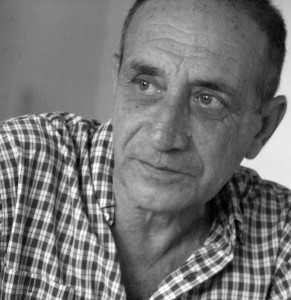
Cuban poet Delfin Prats

Regina Coyula, 30 January 2017 — In 1988 the Holguin poet Delfín Prats won the critic’s prize with his poetry collection “To Celebrate the Rise of Icarus,” and a friend of that time who didn’t want to see his name on my blog, on the night of the award ceremony brought Delfín to my house.

It was a moment of celebration and joy, because the prize came as a vindication of Delfín, a homosexual and poet in a provincial city. But that too was a trap.

In the middle of the toasts and after he dedicated his recent prize-winning book to me, I told him I had a present for him, and put into his hands “The Language of Mutes,” his David Prize winning poetry collection of 1968.

Delfín looked at me, looked at the book and broke into tears. It was the first time he’d seen the printed book, because that notebook in a landscape format did not circulate, it had been turned into pulp for including poems with homosexual content.

Translator’s note: “Santa and Andres” is a new Cuban film whose story revolves around a gay intellectual who was censored in 1980s Cuba. The government refused to allow the film to be shown in last year’s Havana film festival, saying that the plot of the movie “aims to highlight political persecution and attacks on the island that did not take place,” and that it follows “a course of action that is not consistent with history.”

The following video about Delfín Prats is not subtitled, but even if you cannot understand all the words, it is a delight to see his smile:

Guanabo, the new ‘Costa del Sol’ / 14ymedio, Marcelo Hernandez

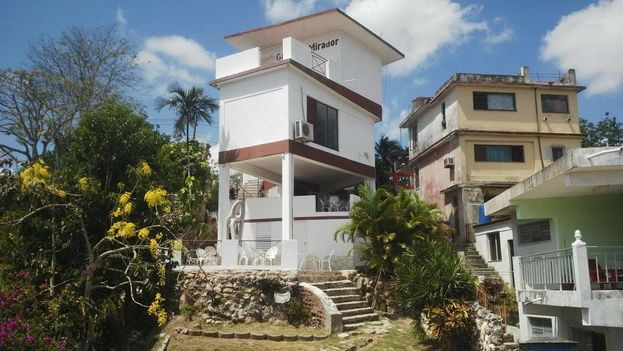
House for sale in Guanabo, La Habana. (14ymedio)

14ymedio bigger14ymedio, Marcelo Hernandez, Havana, 31 January 2017 – With an indigenous name and sands full of memories, Guanabo is the beach east of Havana that in recent months has experienced a quiet transformation. Many repatriated Cubans, foreign residents on the island, and local entrepreneurs have bought homes just a few yards from the sea to revive this Costa del Sol in decline.

José Antonio, 53, has his own real estate company, and operates under a self-employment license as a “manager of home buying and selling.” Despite the fact that the housing sector is going through complicated times due to the increase of official controls, Jose Antonio, who lived in Germany for a decade, has never known a better time.

“There is great demand in this area,” he told 14ymedio. In the 90’s he spent a vacation with his family in a wooden house very close to the sand. “I realized there was a lot of potential, because the owners did not have the money to repair their homes and create the international standards to rent them.” continue reading

Life in distant Europe helped this entrepreneur understand “what buyers are looking for”

The next thing Jose Antonio did was to begin the paperwork for repatriation, then he bought a house near the well-known Los Caballitos park and invested in it until it was “rental ready.” In those years it served as a bridge for European friends who wanted to spend long periods on the beach or buy the house of their dreams by the sea.

“When I decided to get into the real estate business, I already had a lot of contacts in the area and people trusted me.” This Monday, the real estate agent showed a couple, made up of a Havanan and a Milanese, a house overlooking the beach in the most commercial area of ​​Guanabo.

“Entryway, living room, dining room, one bathroom, two bedrooms, patio in front and behind for 70,000 dollars,” José Antonio explains. However, his most effective argument has nothing to do with square meters or technical conditions. “This is Cuba’s Gold Coast,” he assures clients. “Now is the time to buy at auction prices, later it will cost a fortune.”

Life in distant Europe helped this entrepreneur understand “what buyers are looking for.” Most of his clients are retired with contacts in the Island who want to buy through a national intermediary, a hazardous operation that often does not end well. “Life is risk and many are willing to venture,” says the agent.

But not everything is golden in Guanabo. The town is the Cinderella of the three most important beaches that make up the east coast of Havana

José Antonio has also had several clients of Cuban origin who returned to the country after the immigration reform of 2013. Cuba’s ambassador to Washington, José Ramón Cabañas, stated last November that from the beginning of 2015 until now, some 13,000 nationals with residency in the United States returned to the country.

For about $120,000 the real estate agent has just closed the sale of a property with swimming pool. The new owners have begun to restore it to settle in the Island with their respective pensions accumulated as migrants in Austria. “Such a house would have cost them a million in Europe or the United States,” says José Antonio.

But not everything is golden in Guanabo. The town is the Cinderella of the three most important beaches that make up the east coast of Havana. While Santa María shows its white sands and Boca Ciega maintains the blue of its waters, the town where José Antonio resides has deteriorated rapidly in recent years.

“At the end of the day most of them are looking for the sun and that’s what we have here, of the best quality”

“We residents are trying to unite to repair the sidewalks,” says Pepín, born in the town and who has never wanted to move to another place. Most of the streets in the town have not been repaired for decades and the sewage situation is catastrophic. The drainage of the urban area ends in the sea and mixes with the waters where bathers swim.

In some places the air stinks with the debris running through the trenches. “A few years ago this was a beach for families, especially with children, but now they prefer to go to other more beautiful areas,” adds Pepín.

However, for José Antonio this type of problems “is transitory.” In a few years and “when this is filled with people with money, families will invest in repairs,” he says. “In the end, most of them are looking for the sun, and that’s what we have here of the best quality, with no gaps.”

Everyone in Cuba Wants to Learn English / Iván García

Sign for an English School in Havana

Ivan Garcia, 3 February 2017 — It’s raining cats and dogs in Havana and the Weather Institute announces a moderate cold front on the west of the island. Like any weekend, after lunch people gather in front of the TV to watch a Spanish football game, a Hollywood film pirated by the Cuban state, or a soporific Mexican soap opera offered by the semi-clandestine “weekly packet.”

On Sunday, a day of general boredom, many Havanans sleep in or kill the boredom drinking the cheapest rum. But Sheila doesn’t allow herself this “luxury.” She looks at the overcast sky and curses her bad luck. continue reading

“I have an appointment in the afternoon with a Chinese customer who invited me to dinner and later we’ll have a drink. The guy “looks like a flower pot” (has money). The bad weather makes me want to say ’fuck it’,” comments Sheila, a hooker, while looking at her watch.

How do you talk to a Chinese man? “In English of course, throwing in a little Italian and six of seven phrases in Mandarin that I learned on the internet. In the end, I say a hundred dollars a night, or I love you, and it’s not very complicated in any language,” she adds, laughing.

Like Sheila, thousands of Cuban prostitutes learn the basics of foreign languages. In particular English, which in the last ten years has grown spectacularly in Cuba.

English schools, private or state-run, are multiplying in Havana. In the municipality of Diez de Octubre alone, one of the most populated on the island, there are around 60 English schools.

There is English a la carte. For every taste. From classes in state institutions that cost 20 Cuban pesos to sign up, to private air-conditioned schools with the newest methods of teaching children, young people and adults.

In some of them, like Britannia or America, you learn to speak the language of Shakespeare in the British or US version. “Including turns of phrase frequently sued in New York or the Spanglish spoken in Miami,” says Diana, a teacher at the America school.

Enrollment in the best private schools costs between 20 and 30 Cuban convertible pesos (CUC), the entire monthly salary of a professional. And each class is between 10 and 18 CUC.

Increasingly, children between 5 and 12 are registered by their parents. “Mastering English is imperative for the future that is coming our way. In my case, our family is thinking of emigrating. And if my children speak English the way is already paved for them,” says Carlos, father of two children who are studying English.

Technical, intensive or personalized English classes are also offered. Betty, 32, is waiting for a work permit for Canada. “Twice a week I take intensive classes, the teacher teaches me personally and it’s very helpful, I pay 35 CUC a month, but if I go to his house it’s a little cheaper.”

Havana’s marginal fauna, of course, doesn’t want to be left behind. With the increase in visitors and tourists, especially in the capital — a little more than 4 million in 2016 — there is an opportunity for hookers, informal guides, and illegal or clandestine sellers of handicrafts, works of art and tobacco.

Even those who sell cocaine, marijuana or psychotropic drugs need basic english, because “a little Italian or French, sure, but if you don’t speak any foreign language, you’re out of luck in this business,” says a guy who sells melca in the old part of the city.

Let’s call him Josuan, a sturdy guy, not very tall, who considers himself a perfect joker. “I go all the way. I sell tobacco, work as a guide, go to bed with the ladies. The problem, man, is getting some money. And if you have your wits about you and the tourists like you, you get it. But you have to know how to start a conversation in English or some other language. This creates empathy with your customer.”

Learning English is all the rage in Cuba. The military junta that governs the island has recognized it as a priority of the state. In an article on the changes in higher education in Cuba, published in Weekly Progress, the journalist Nery Ferreria wrote, “One of the most disturbing measures for many is the requirement to demonstrate a mastery of English, as an ’independent user’ before graduating from the university.”

And she mentions that Rodolfo Alarcon, in his time, before he was ousted at Minister of Higher Education in July of 2016, said that there had to be a resolution to “the problem that the Cuban professional is not capable of expressing themselves in the universal language of our times.”

In her article, Ferreira includes two comments left on the official Cubadebate website. “Start with English from elementary school and solve the deficit of teachers in this subject and then the mastery of the second language will be a done deal,” said a reader. While another added, “Why ask for what hasn’t been taught all these year. Now we want to demand it without having a base, or worse, that the parents have to pay for private lessons, which are very expensive.”

English is well-received in Cuba, especially now that the regime sighs about doing business with the Yankees. It doesn’t matter if the interlocutor is a caveman Donald Trump-style. “Business if business, man. Whoever the person. If you have the ticket, let the dog dance,” stresses René, who sells Cuban cigars on the black market.

And this is the Cuba of the 21st century, blurring ideology. From Socialism or Death to the death of Fidel Castro to Welcome Yankees as the national slogan.

No one wants to be left behind. Not the state businesses, nor the private ones nor the underworld. Everyone wants to speak English! [in English in the original]

 Translated by Jim

An Audit Reveals Millions In Losses In Havana Businesses / 14ymedio

The island currently has a total of 397 non-agricultural cooperatives. (EFE)

14ymedio bigger14ymedio, Havana, 1 February 2017 — The latest audit carried out by Cuba’s Office to the Comptroller revealed losses of more than 90 million Cuban and more than 51 million Cuban convertible pesos in public enterprises and non-agricultural cooperatives in Havana, a situation that contributes to the failure to meet economic plans in the state sector, according to Miriam Marbán González, the chief comptroller for the capital.

The results of the Eleventh National Assessment of internal control, which were presented Tuesday at a press conference at the Ministry of Energy and Mines, show a disturbing picture for the Cuban economy because of poor management efficiency and lack of integrity in planning. continue reading

The main objective of the analysis, carried out between 31 October and 9 December 2016, was the decentralization of administrative decision-making, the operation of non-agricultural cooperatives and the application of systems of payment for results.

In Havana, 67 inspections were carried out in which 301 auditors had to confront “the lack of reliability of the primary documentation or the lack thereof.”

The inspection detected “ineffectiveness in information mechanisms, the existence of some individualistic behaviors, lack of foresight and vigilance and little cooperative culture”

Non-agricultural cooperatives also revealed worrying results for this form of business management that has been expanding since its adoption in 2012. The inspection detected “ineffectiveness in information mechanisms, the existence of some individualistic behaviors, lack of foresight and surveillance and little cooperative culture.” The island currently has a total of 397 of these companies, mainly linked to food, personal and technical services.

In total, the Comptroller’s Office has examined 346 economic entities throughout the country, with the exception of Guantánamo Province, which was excluded because of economic damages caused by Hurricane Matthew.

The results of the assessments in the provinces of Cienfuegos, Matanzas, Pinar del Río, Villa Clara and Holguín have also been alarming. In this last province, the Comptroller General of the Republic, Gladys María Bejerano, was blunt: “If there is no organization, discipline and control, it is impossible to achieve the prosperous and sustainable development that we have set ourselves.”

The state, which seeks to stop, with these controls, the administrative disorder that prevails in the business sector of the island, has been attacked especially against idle inventories, criminal acts and corruption.

The national report could be presented mid-year at the next session of the National Assembly.

The José Martí Memorial Viewpoint Reopens To The Public With A New Elevator / 14ymedio, Yosmany Mayeta Labrada

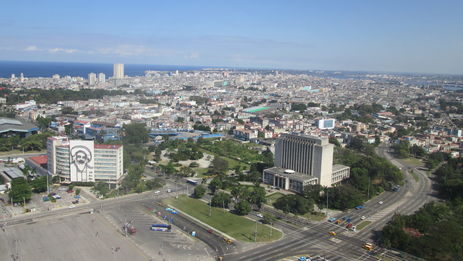
The view from the Jose Marti Memorial tower in Havana

14ymedio bigger14ymedio, Yosmany Mayeta Labradea, Havana, 2 February 2017 — After three years of being closed to the public, the viewpoint of the José Martí Memorial in the Plaza of the Revolution reopened its doors on Wednesday. The highest point in Havana has been out or service for domestic and foreign visitors since the elevator broke after more than five decades of use.

Only a small group of invited guests and press were allowed access to the reopening, despite the fact that from the early hours more than a dozen people waited to ascend to the top of the tower, which occasioned annoyance and complaints. continue reading

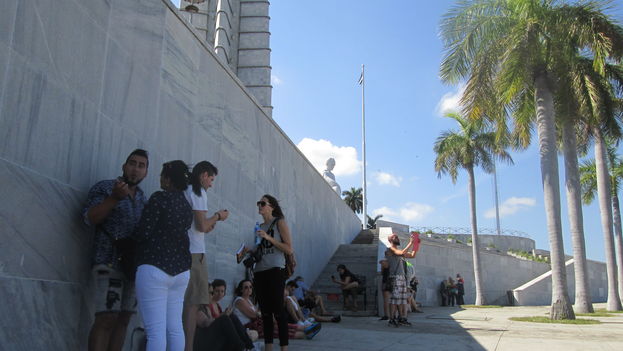
People who waited to enter at the reopening were not able to. (14ymedio)

The access to the viewpoint, some 460 feet above sea level and with a 30-mile view, was finally restored asof 1 February, after several days of testing of the new elevator.

The pilot test was not announced in the national press, which only released the date on Wednesday, to “not detract significance to the symbolic reopening”

Ana María Troya Ávila, in charge of the public relations for the monument, told 14ymedio that the service is in “high demand.” She added, “In just seven days this place welcomed around 3,000 visitors, both Cubans and foreigners.”

The pilot test was not announced in the national press, which only released Wednesday date, so as “not to detract from the significance of the symbolic reopening,” she said. One element that contributed to the annoyance of those waiting outside who were not allowed to enter.

One Spanish tourist said she was outraged by the constant bureaucracy of the island. “They keep us waiting for hours and in the end don’t open it,” she protested. Cubans just shake their heads. “We are used to this, the foreigners just have to adapt,” says an old man to calm tempers.

The incident, however, did not diminish the enthusiasm of the employees who made the inaugural tour with an unusual joy. “From this high site you can see points of extreme importance of our capital that distinguishes us in any part of the world”, detailed Troya Ávila.

According to Jorge Estany Ramírez, administrator of the memorial and the person in charge of the process of buying and assembling the elevator, the supplier of the equipment has been the Spanish company Electra Vitoria. “Its speed is six feet per second and is among the fastest in the city right now.” He also highlighted the hard work in the installation and adjustment process that began in early 2016 and has lasted until this January.

“The repair was complicated, because a major change was made, the entire elevator system was replaced from the machinery to the counterweight, so it was a year of hard work that involved not only the change of the old structure, but the need for other repairs that came up during the assembly and in the years that no service was provided,” said Estany Ramírez.

“For us this reopening represents a profit from the economic point of view , because it is a benefit that raises a lot of money and the income is soaring”

One important fact that Troya Ávila wanted to emphasize is the compass of the winds that is inlaid in the floor of the viewpoint, showing the distances between the Memorial and the six provinces at the moment of the construction of the monument and some capitals of the world, and also the significant places related to the life of José Martí.

“For us this reopening represents a benefit from the economic point of view, because it is a that raises a lot of money and the income when we provide these services are soaring and favors us,” said the official.

The Venetian ceramic murals, which are the work of the Cuban Enrique Caravia, in addition to all the images of the floor will be restored in cooperation with the Office of the Historian of the City. The managers of the place plan for the work to be carried out without affecting the access of the visitors.

The José Martí Memorial is open to the public from Monday to Saturday from 9:30 am to 4:00 pm and offers a full tour for 8 Cuban pesos (CUP -roughly $0.32 US) for residents on the Island or 6 CUP if they only want to access the lookout point. Foreigners must pay 5 Cuban convertible pesos (CUC – roughly $5.00 US) and 3 CUC for the same services.

Dozens Of Cuban Doctors Stranded In Colombia Will Travel To The United States / 14ymedio, Mario Penton

A group of Cuban doctors stranded in Colombia protests about the delay in US visas. (Archive)

14ymedio bigger14ymedio, Mario Penton, Miami, 2 February 2017 — Dozens of Cuban doctors stranded in Colombia are preparing to travel to the United States on Monday after receiving a visa as part of the recently repealed Cuban Medical Professional Parole (CMPP) program.

The doctors will be the first to reach North American soil after the end of the program that, every year, sheltered every year hundreds of health professionals who escaped from Cuban medical missions abroad.

“There will be more than 20 of us who will fly on Monday, because another flight planned for Friday was suspended,” explains Maikel Palacios by telephone from Bogota. continue reading

The health worker, who spent six months in Colombia after escaping from the Cuban medical mission in Venezuela, says he lives in “an atmosphere of hope among the hundreds of physicians stranded in that country.”

“The news that comes to us from Miami is encouraging. Solidarity Without Borders has been interested in our case,” he explains.

“We are worried about more than 20 professionals who escaped the mission before the program was eliminated and now they have no way to reach the United States and cannot return to Cuba”

Solidarity Without Borders is a non-governmental organization created by Cuban doctors who fled the countries to which the Cuban Government had sent them. Its purpose is to help colleagues, once they arrive in the United States to revalidate their titles and integrate into that country’s medical system.

According to Palacios, dozens of visas have been issued since last January when former President Barack Obama, in a surprise move, gave in to the old request of the government of Raul Castro and repealed the program created by George Bush in 2006.

The export of health personnel generated income for Cuba ion the order of US $8.2 billion in 2014.

In the ten years of existence of the CMPP more than 8,000 doctors and health personnel escaped to the United States.

“We are worried about more than 20 professionals who escaped the mission before the program was eliminated and now they have no way to reach the United States and cannot return to Cuba,” Palacios explains.

Personnel who leave medical missions are prohibited from returning to Cuba for eight years and are considered “deserters” by the Cuban authorities.

Inspections and Fines in Cuban Private Restaurants / Juan Juan Almeida

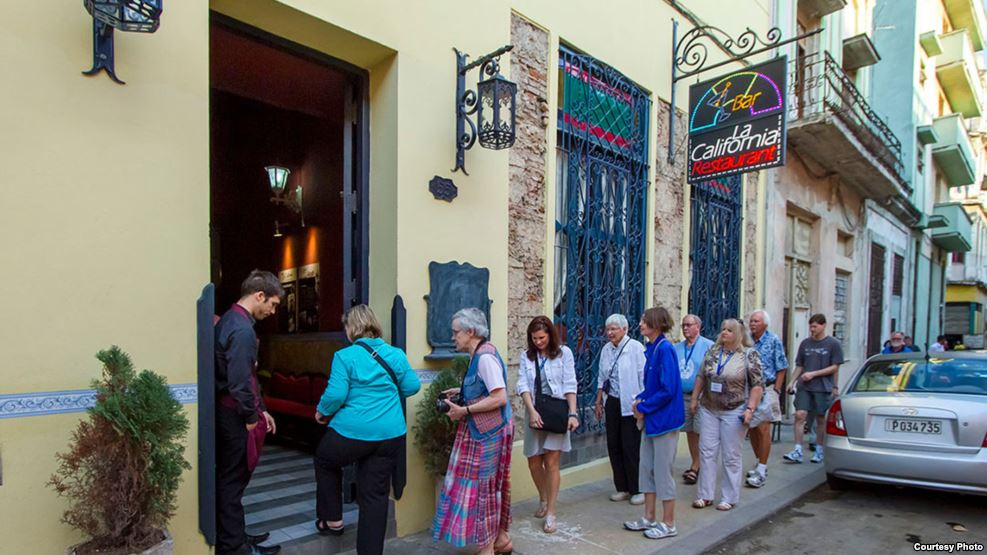
Juan Juan Almeida, 30 January 2017 — A fine that is stranger than fiction. More than 400,000 Cuban convertible pesos (roughly the same in dollars), is the astronomical figure set as a penalty for La California restaurant, a palader (private restaurant) a few steps from Cuba’s Malecon.

Established in abeautifully restored 18th century building at 55 Crespo Street between San Lazaro and Refugio in Central Havana, La California restaurant-bar offers Italian and Cuban-international fusion food, as well as exquisite service, attractive and entertaining, where the customer can enter the kitchen and prepare their own delicacy. Part of what is consumed in this agreeable place is grown on the private estate of a Cuban farmer, and the rest — according to co-director Charles Farigola — is imported. continue reading

“During the plenary session of the National Assembly Cuban vice president Machado Ventura referenced the food in the paladares, making particular note of the products offered that are not acquired in the national retail network,” began an explanation of a Cuban entrepreneur passing through Miami to buy supplies for his restaurant in Havana.

“The reality,” he continued,” is that the paladares import very little, most of the food and drink comes from the hotels*, especially those that offer ‘all-inclusive’ plans. Vacuum-packed filets, serrano ham, fresh vegetables, salmon, sausages, octopus, squid, etc. Almost everything comes from Matanzas Province, where tourism is concentrated. There are police checkpoints to search vehicles coming from the resort town of Varadero to Havana; but almost everything is transported in tour vehicles and they avoid the controls, because the national police don’t want to bother the tourists.

“The strategy, in response, was to inspect the paladares that boast about having these kinds of imported products, and La California fell. They also say that the inspection report specified that the sales report didn’t match observed reality. Parameters and factors that seem subjective.”

Can a Cuban paladar pay such a huge fine?

“I don’t think so. Look, the inspectors collect a percent of every fine they impose, and the private businesses offer the inspectors a greater percentage than they would receive. So that’s how we all survive because it’s a game of give and take.

“It could be that La California didn’t want to play this game, they could have accepted an arrangement to pay in installments, they could default and accept an ugly penalty, they may fight the fine in the courts. Anything can happen.

“No, we self-employed are not criminals, we are a social group that makes things and not communist dreams nor libertarian utopias; we are the part of civil society most dedicated to work, to generating income, jobs, and bringing money to the national economy, and even so the policy of the government is to push us toward crime,” concludes the entrepreneur before boarding his plane to Cuba, the island that, with a certain euphemism, he calls the “Barracks.”

*Translator’s note: That is, it is “diverted” (the term Cubans prefer rather than “stolen”) and sold to private businesses by a chain of state workers that can range from the highest to the lowest levels.

 Translated by Jim

Rural Women: Between Furrow And Domestic Labors / 14ymedio, Zunilda Mata

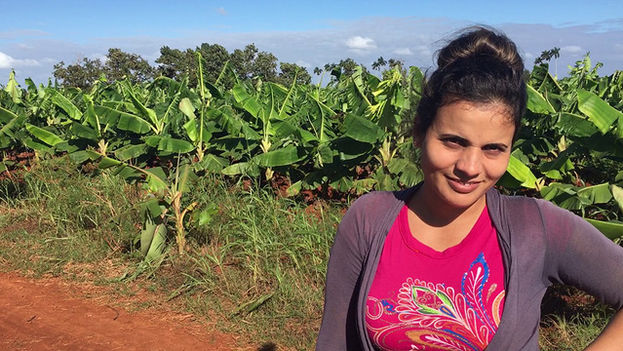
Idalmis is one of many Cuban women who dedicate 71% of their working hours to unpaid domestic work. (14ymedio)

14ymedio bigger14ymedio, Zunilda Mata, Alquizar (Artemisa), 30 January 2017 –In Alquízar the red earth covers everything with a reddish layer. To Gladys Montero that crimson powder gets into the wrinkles of the face. “I come from the deep field,” she warns. In Cuba, 21% of women live in rural areas, wake up when the rooster crows and make their lives at the rhythm marked by the crops.

Formerly praised as a “loving guajira,” drawn in a bucolic environment or photographed with her starving children, the peasant woman no longer resembles any of these stereotypes. However, her peculiarities are scarcely heard today amidst the bustle of urban centers and macho prejudices. continue reading

Gladys is close to turning 70 and carries the memories of her childhood as “fresh as a lettuce.” As a child, she helped her parents to plant “corn, beans and squash.” She only finished the eighth grade, although she detects with a glance whether a furrow was planted with dedication or sloppily.

The female workforce in the agricultural sector represents 19.2% of the total of its workers and only 17.3% of the management positions in these areas are occupied by them

Although in 2013 more than 142,300 women worked in the fields of the island, in the popular imagination these tasks remain “a thing of men.” The female workforce in the agricultural sector represents 19.2% of the total workers and only 17.3% of the management positions in this area are occupied by them.

Inside the houses the picture is totally different. 56% of rural women are engaged in household chores. Statistics from the Ministry of Agriculture indicate that for every 100 men with stable employment in the countryside, there are scarcely 30 women.

As a young woman, Gladys also cut cane, hard work that is scary even for many men. “I gave birth to my first child very young and shortly after the second one came,” she recalls. When the children grew up, her mother became ill and she took care of her until the end of her days.

The majority of her neighbors and relatives have gone through a similar situation. Hundreds of miles from the village of Artemisa, where Gladys lives, Rosa María also lives a life in front of the fire in Florida, Camagüey. “There are nights when I go to bed, everything hurts and my feet are very swollen.”

The main problems that both must overcome each day are linked to the energy source with which they process food, the water supply, domestic violence and economic difficulties. None have a hobby, they hardly participate in social activities nor have they gone to the movies in the last ten years.

The qualitative study, Fifty Voices And Faces Of Cuban Peasant Leaders, sponsored by OXFAM-Canada and the Government of Andalusia, revealed that the empowerment of rural women is failing on the overload of domestic responsibilities and childcare, along with insufficient technical preparation and sexist stereotypes, among other factors.

For every 100 hours of men’s work, women perform 120, most of them simultaneous activities

Across the country, females devote 71% of their working hours to unpaid domestic work, according to a 2002 Time Use Survey. For every 100 hours of men’s work, women perform 120, most of them simultaneous activities. A situation that is aggravated in the towns and villages.

Specialist Mavis Álvarez Licea believes that “a still significant majority of rural men behave with a strong hegemonic masculinity.” While women “are still subjected to male power, perhaps not in the same degree and condition as their predecessors but, overtly or openly, they are repressed and discriminated against.”

Gladys Montero only finished eighth grade, although she detects with a glance when a furrow was planted with dedication. (14ymediate)

The case of Teresa González is different. From the age of 17 she began to keep the accounts at the José Antonio Echevarría credit and service cooperative at Artemisa. Today she holds the presidency. “I spent the day doing the accounts and at first the men who were in the field thought that this was not work,” she recalls. Over time she has made everyone respect her work.

In 2008, the government of Raúl Castro implemented a series of measures to revive agricultural production. Among them was the delivery of idle land in a form of leasing known as usufruct, under Decrees-Laws 259 and 300, but according to figures from the Ministry of Agriculture, four years after the start of the process, of the 171,237 beneficiaries, only 9.5% were women.

Men continue to have property control over agricultural resources such as land, water, inputs and credits, and make most of the decisions. Of women, only 12,102 are landowners, for 11% of all landowners.

Men continue to have property control over agricultural resources such as land, water, inputs and credits, and make most of the decisions. Women represent only 11% of landowners

The Cuban authorities favor the figures comparing the situation between men and women in terms of access to health, education, employment and administrative positions. But little is published about the gender wage differences and the contrasts of opportunities, especially those linked to regional location.

In the middle of a furrow where she picks tomatoes, Marisol says she always has something to do. “After this comes the harvesting of garlic that pays better,” she tells 14ymedio. Her husband prefers to have her “in the house all day polishing on the floor,” but economic constraints have forced him to accept that she works in agriculture.

At her side, under the inclement sun, is Mirta, who, every day after completing the tasks of reaping and arriving at her modest house, carries the water from a nearby irrigation channel to bathe, wash clothes and cook. “We do not have a television because the current comes to us from a ‘clothesline’ (an informal wire run off someone else’s line) and the voltage is very low.”

She has not been able to convince her children to stay in that house surrounded by fields and pigsties. Her son decided to remain in the military when he finished his military service and her daughter married a man who “took her to Havana.”

_______

Editorial Note: This report was made with the support of Howard G Buffet Fund for Women Journalists  of the  International Women’s Media Foundation.

Amnesty International Calls For Release Of Cuban Opponent Eduardo Cardet / EFE, 14ymedio

Eduardo Cardet Concepción (far right) (oswaldopaya.org)

14ymedio biggerEFE (via 14ymedio), Havana, 1 Februday 2017 — The global organization Amnesty International on Tuesday called for the “immediate and unconditional” release of Cuban dissident Eduardo Cardet, who has been detained for two months accused of the crime of assault.

Amnesty International believes that Cardet, the national coordinator of the illegal Christian Liberation Movement (MCL), is a prisoner of conscience who is imprisoned “solely for the peaceful exercise of his right to freedom of expression,” according to a statement EFE had access to.

He also says that Cardet was violently arrested when he returned from visiting his mother on November 30, five days after Fidel Castro’s death, and since then has been held in a prison in the eastern province of Holguin. continue reading

Cardet, according to his wife, Yaimaris Vecino, cited by Amnesty International, is accused of attacking an agent of the authority, so that the prosecution could seek a three-year prison sentence.

In the middle of this month, Amnesty International also called for the release of Cuban dissident graffiti artist Danilo Maldonado, known as El Sexto (The Sixth), also considered a prisoner of conscience who was imprisoned without trial in the high security Combinado del Este in Havana.

El Sexto was released without charge on January 21 after spending nearly two months in prison for having written the phrase “He’s gone” on a wall of the Habana Libre hotel in the capital on November 26, 2016, after the death of Fidel Castro.

Statistics Reflect The Serious Crisis Of The Cuban Education System / 14ymedio, Mario Penton

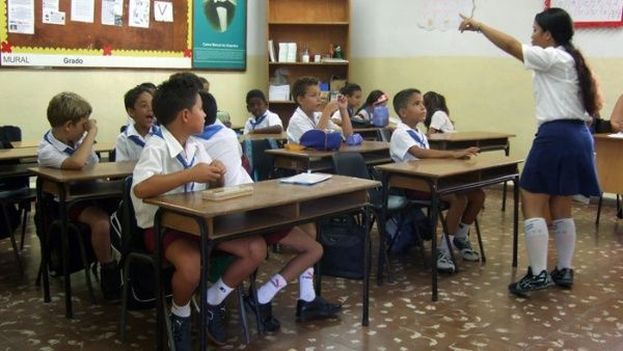
To ensure the presence of a teacher in front of the classroom, the government has had to move teachers from one region to another from the country to another. (Telesur)

14ymedio bigger14ymedio, Mario Penton, Miami, 1 February 2017 – The rapid aging of the population, joined with the reduction in available resources and the decline in the quality of teaching, are three of the features with which the economist Carmelo Mesa-Lago has characterized the situation of Cuba’s educational system.

“In 2007, the government of Raul Castro declared that he could not sustain the expenses of the educational system inherited from the previous administration, since then the investment in education and social spending in general have been reduced,” Mesa Lago explained on Saturday at a conference sponsored by the Center for Coexistence Studies.

“It was supposed that Cuba was going to have the same indicators as Uruguay by 2025, but today not only has it reached the level of that country, it has surpassed it,” said the researcher referring to the aging of the population. continue reading

Cuba is now the oldest country on the continent and this has a direct impact on the education system. The students enrolled in primary school have been fewer year after year. As has the numbers in their productive years, which in the opinion of the economist poses a serious danger, because that segment of the population is responsible for financing society’s old and young.

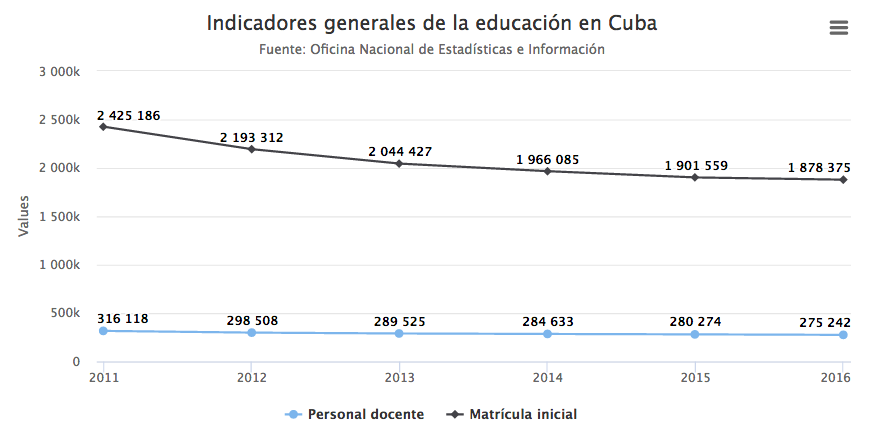
General indicators of education in Cuba. Blue: Teaching positions. Black: Enrollment

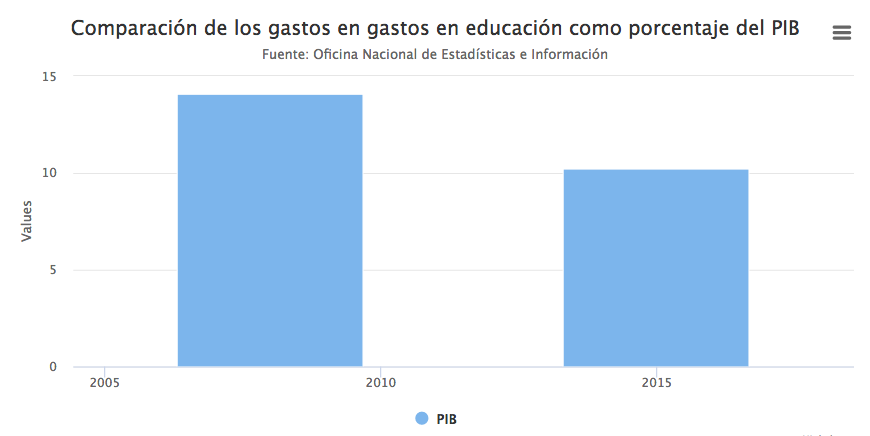
Specifically, the education system has seen its budget shrink by 4 percentage points between 2008 and 2015.

Some of the measures that Raul Castro took when taking power were the closure of “schools in the countryside,” (boarding schools), as well as the gradual elimination of more than 3,000 university seats opened by his brother Fidel in the years of the Battle of Ideas. There has also been a progressive readjustment in schools, closing those with less enrollment, and moving the remaining students to other educational centers.

Castro also eliminated costly programs like social worker programs, which graduated thousands of young people who ended up controlling fuel consumption at gas stations or handing out refrigerators and light bulbs in massive exchange programs. Programs for emerging teachers and art instructors were also dismantled, while universities for older adults and the use of technological devices in classrooms were reduced.

Between 1989 and 2007 there was an increase of the offerings of careers in the area of ​​humanities and social sciences were greatly increased, while university-related careers in the natural sciences were greatly reduced.

With Raul Castro in command, the panorama changed radically with a decrease of 83% in humanistic careers and a 13% increase in those related to the natural sciences.

However, university enrollment declined by 30% in 2014, a trend shared by other sectors, such as secondary education, where enrollment dropped by 11%.

Mesa Lago recognizes that universal and free access to education is a very important achievement that has had positive effects “in the lower income sectors such as Afro-Cubans, women and peasants.” However, the researcher emphasized that the ideologization of education and absolute control of the State on educational projects are its most important shortcomings.

Another criticism, in the opinion of Mesa Lago, is teachers’ salaries, which are among the lowest in the continent. The average salary of the educational sector is 537 Cuban pesos, which is equivalent to 21.40 dollars a month.

“Cuba has extraordinary human capital, but it is lost because it emigrates to other economic endeavors that have higher remuneration,” he explained.

According to a study carried out by the academic, in 2015 real wages adjusted for inflation only covered 28% of the purchasing power of incomes in 1989.

In order to guarantee the presence of a teacher in front of the classroom, the Government has had to transfer teachers from one region to another, as has been the case in Matanzas and Havana, where there is a significant presence of teachers from the eastern region of Cuba.

Although Cuba does not participate in the international examinations that measure the quality of educational programs, the government itself has offered a mea culpa for the deterioration of the system.

Comparisons of educational spending at a percent of GDP

Mesa Lago proposes eleven points to take into account in the future of the management of the educational system. According to the economist, resources must focus on the population most in need in the poorest provinces. The demand for work for training programs should also be taken into account.

To achieve the sustainability of the system, the economist proposes to collect tuition in higher education from those with a high income. The education system must be open and oriented to the world market.

Another important aspect is to offer more university careers in those specialties of greater demand. The fair payment to teachers and the opening to private education, through the de-ideologization of the educational system, would be indispensable for the future of the Island.

Finally, the academic proposes to restore the financial autonomy of the research centers so that they can attract international investments and allow self-employment in the educational area.

Cuba’s Young Communist Union Comes Late To The National Blogosphere / 14ymedio

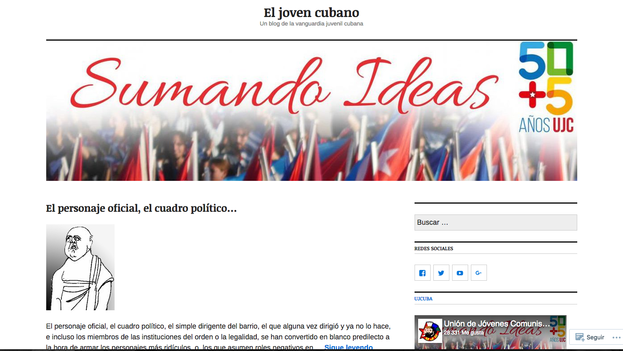
The blog of Cuba’s Young Communist Union already has more than 28,000 “likes” on Facebook. (Screen capture)

14ymedio bigger14ymedio, Havana, 1 February 2017 — The Union of Young Communists (UJC) has joined the national blogosphere, the newspaper Juventud Rebelde (Rebel Youth) reported on Wednesday. The Young Cuban arrives ten years behind the world of blogs, that the opposition, independent journalism and civic activism have successfully developed over the last decade.

The managers of the new digital site seek to turn it into “another alternative” so that young Cuban internauts can participate in a “scenario of debates and displays of opinions,” according to the official media. It is hosted on the free WordPress platform and is defined as “a blog of the vanguard Cuban youth.” continue reading

Asael Alonso Tirado, an official of the UJC National Committee, clarified that the space is committed to “a fresh language that is consistent with the codes of youth,” and “stipped of all formalism.” However, he said that in the debates there should be first “respect for and defense of the best values of the Revolution.”

The official is optimistic and says that the space has 31,500 followers and in “less than five days has achieved almost 1,000 visit, mainly from Cuba, the United States, Brazil, Argentina, Venezuela, Ecuador, Chile, Namibia and Angola.”

Nevertheless, the UJC’s blog lands in a tangled jungle of digital spaces that gain presence on the Island in spite of the low rate of connectivity to the internet. Most young people consume content that they acquire through informal distribution networks.

The Cuban Youth blog joins the most important official services and social networks. Prominent among them is Ecured, which attempts to rival the volunteer led Wikipedia; Reflections, similar to blog hosting services like Blogger; The Washing Line, which tries to compete with Facebook; and Backpack, a substitute for the informal but ubiquitous weekly packet.

None of these copies has achieved the popularity of the originals, so we will have to wait to see if the new UJC blog is able to overcome the indifference of users to official initiatives and mass organizations.

Coexistence Profiles Future Proposals For Cuban Education And Culture / 14ymedio, Mario Penton

Carmelo Mesa-Lago during his presentation at the Coexistence Study Center meeting. (14ymedio)

14ymedio bigger14ymedio, Mario Penton, Miami, 30 January 2017 — A pluralistic education, deeply democratic, with a privileged use of technology and communications together with a vision of culture open to universality: these were some of the proposals of the third meeting of the Center for Coexistence Studies (CEC) for the future of Cuba held this weekend in Miami.

The Cuban think tank, based in Pinar del Rio, held its meeting at Florida International University (FIU) within the framework of an journey of thought for Cuba. A similar process is taking place in parallel on the island, although that meeting had to be suspended in the face of the repression of the political police. Paradoxically, the prohibition decreed by the authorities facilitated greater interaction through alternative means such as email. continue reading

Dagoberto Valdés, director of the CEC, offered an overview of the national reality that, in his opinion, is marked by several elements, including the country’s economic crisis “in free fall,” the death of Fidel Castro and the end of the wet foot/dry foot policy that allowed Cubans who touched American soil to remain in the country, regardless of whether they had a visa.

The analysis of Cuban culture involved preparing a list of paradigmatic personalities, institutions and referential processes that make up the nucleus of the nation’s identity. It also addressed “weaknesses” and “negative features” in the country’s cultural processes.

With regards to education, there was a discussion of pedagogical models that tend to strengthen ethical values ​​and individual autonomy.

“The projects presented seek to clarify the roots of identity that should be rescued and maintained, as well as detail models, content and methodologies. Also, the types of institutions and educational spaces that should predominate in the future, and what the profile of an educator should be,” said the press release issued by the institution.

Four sessions enriched the meeting, including one led by the economist Carmelo Mesa Lago, another by anthropologist and journalist Miriam Celaya, as well as two led by members of the editorial team of Coexistence magazine, Dagoberto Valdes and Yoandy Izquierda.

The meeting at the FIU, together with the work being done in Cuba, has enabled the drafting of 45 legislative proposals for a new Cuban legal framework.

The results of the workshops will be compiled by the Center’s Academic Council and the Board of Directors and published on its website.