Grenada, Angola, Ukraine and now Venezuela reveal a sustained policy of denial, euphemisms and silence regarding military presence in foreign conflicts.

 14ymedio, Havana, January 5, 2026 — For over six decades, the Cuban regime has developed a recognizable pattern for managing—and narrating—the presence of its troops outside its national territory. This is not merely a military strategy, but a political and communications method that combines denial, concealment, euphemisms, and, when all else fails, a belated epic designed to reconstruct the official narrative. Grenada, Angola, Ukraine, and now Venezuela allow us to follow this thread with unsettling clarity.
The script usually begins with denial. In 2019, when Washington once again focused on Cuban influence in Caracas, Johana Tablada, then Deputy Director General for the United States at the Ministry of Foreign Affairs, was emphatic: “There are no Cuban troops in Venezuela.” She concluded with a phrase that now resonates like a piece of propaganda history: “You can’t withdraw troops from Venezuela that don’t exist.” According to her, Cuba only maintained civilian collaborators in the country, primarily in the health sector, within the framework of legitimate bilateral agreements.
Troops don’t exist until they die. And when they die, they exist only as symbols.
Tablada’s phrase sums up better than any editorial the logic of Cuban power when it comes to its adventures around the world . The troops don’t exist until they die. And when they die, they exist only as symbols, never as proof of an interventionist policy that the regime refuses to openly acknowledge.
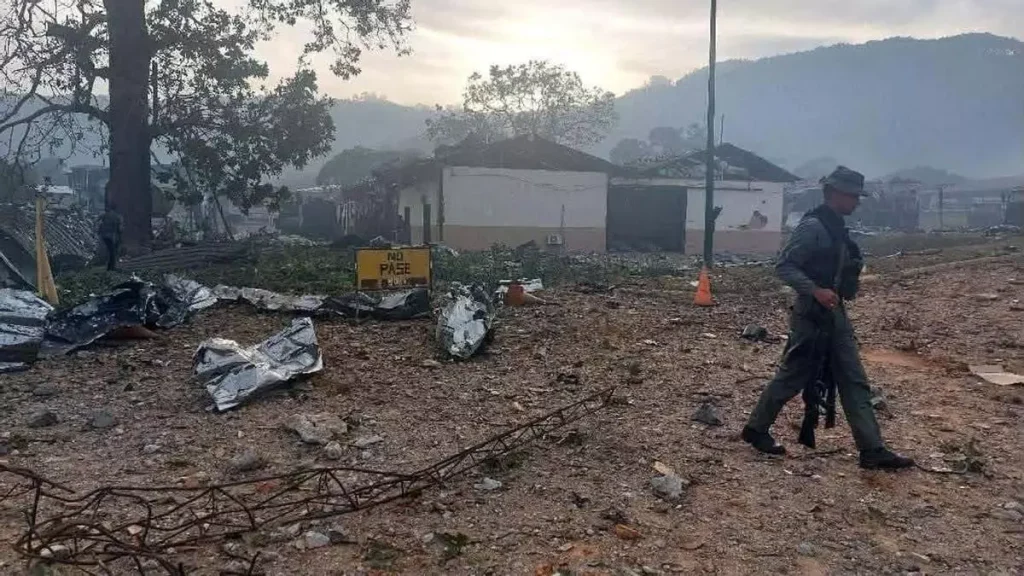
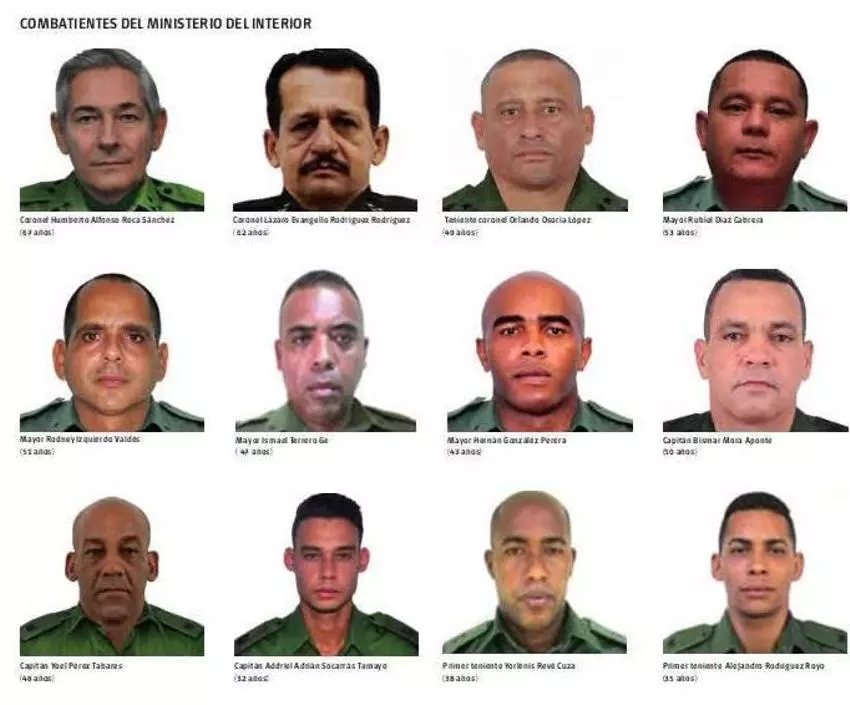
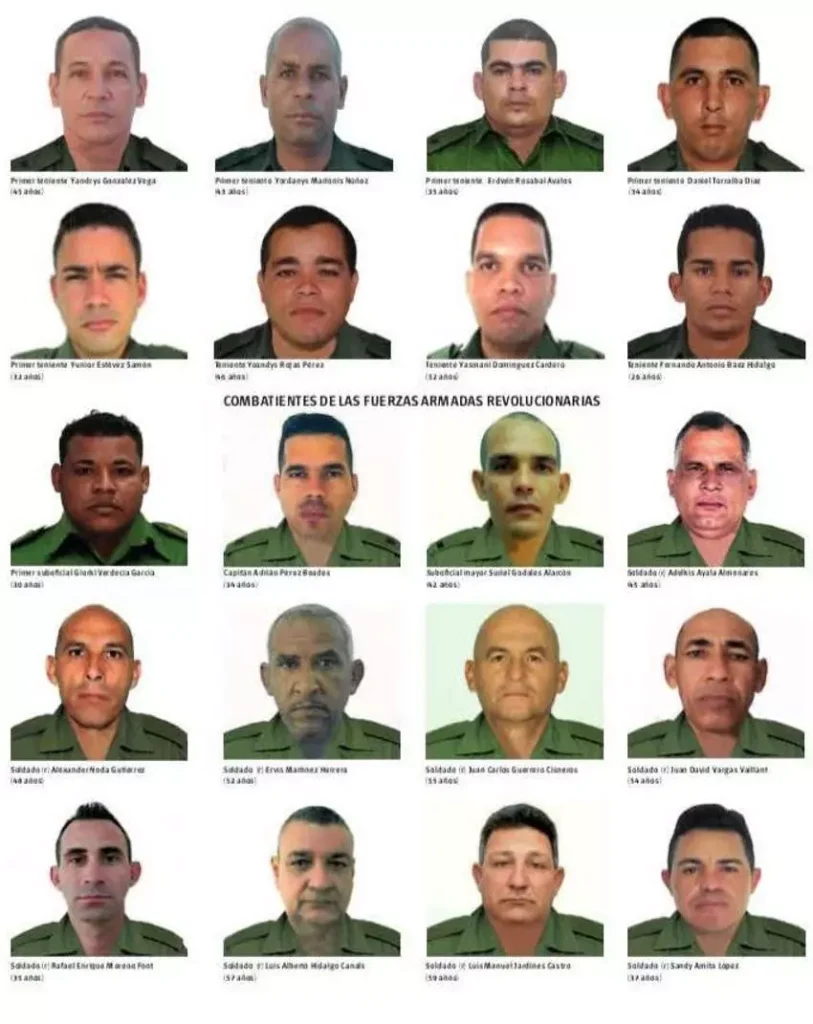
Seven years after those emphatic declarations, the Cuban government itself decreed national mourning for the deaths of 32 Cubans “in combat actions” during the U.S. operation to capture Nicolás Maduro. The official statement spoke of missions carried out “at the request of counterpart bodies in the South American country,” acknowledging that the deceased belonged to the Revolutionary Armed Forces and the Ministry of the Interior, and describing their actions as “heroic.” What had been denied for years was suddenly honored with flags at half-mast and slogans of “honor and glory.”
This abrupt shift from nonexistence to glorification is not new. In October 1983, when the United States invaded Grenada, the official Cuban narrative claimed continue reading
Angola represents the most elaborate case of historical justification. For 16 years, between 1975 and 1991, Cuba maintained a massive military presence in that African country under the pretext of “paying its historical debt to Africa” and combating apartheid. The official narrative spoke of internationalism, solidarity, and epic struggle. The death toll, however, was treated with extreme secrecy. It wasn’t until the late 1980s that a list of 2,016 deaths in Angola was acknowledged, a figure later adjusted to 2,077 by Raúl Castro himself. Even today, doubts persist about the accuracy of these numbers, fueled by mass burials, lists lacking details, and decades of official silence. Heroism was extolled; the human cost, minimized.
Faced with reports that thousands of Cubans were fighting alongside Russian forces, Havana opted for a middle ground.
In Ukraine, the pattern mutates again, but it doesn’t disappear. Faced with reports that thousands of Cubans were fighting alongside Russian forces, Havana opted for a middle ground: admitting the presence of Cuban nationals in the conflict, but completely disassociating itself from them. According to the Foreign Ministry, Cuba “is not participating” in the war, and the Cubans involved had been recruited by organizations with no ties to the state or were acting “on their own.” A policy of “zero tolerance for mercenaries” was invoked, while acknowledging that many of those detained for attempting to travel to Russia had military training and links to the Armed Forces. Once again, the state washed its hands of the matter when the narrative of noble cooperation no longer held any credibility.
Venezuela completes the circle and exposes the contradiction in its starkest form. For years, the Cuban regime denied any military role in protecting Chavismo. Now, after Maduro’s capture, it acknowledges deaths, security missions, and direct combat, but avoids specifying roles, hierarchies, or responsibilities. The official version speaks of US “state terrorism” and heroic sacrifice, while US President Donald Trump describes a lightning operation with little effective resistance. The contrast between these two accounts is not only striking but also reveals Cuba’s military ineffectiveness in the face of Washington’s military and technological might.
In all these scenarios, the same sequence repeats itself. First, denial. Then, a disguising of the military presence under functional labels—construction workers, collaborators, technicians, or even doctors. Later, if the facts become clear, a disassociation from those involved or an envelopment in a defensive narrative that dilutes political responsibility. Mourning, tributes, and slogans come later, when it is no longer possible to maintain the initial fiction.
Many family members of those killed in foreign conflicts have chosen silence over these past six decades. Some out of conviction and affinity with the official narrative of self-immolation and sacrifice, others out of fear. However, with the deaths in Venezuela, the situation is very different from that surrounding the combatants in Angola or the “construction workers” in Grenada. Social media is now the channel through which names, photos, and other biographical details of the deceased are beginning to circulate.
What has changed is not the official method, but the internal context and the international reaction. In Angola, the Cold War offered a robust ideological alibi. In Grenada, the Caribbean was still a terrain of direct confrontation between blocs. In Ukraine and Venezuela, the world is different, more interconnected, more skeptical, and less willing to accept versions without evidence. But Havana insists on speaking to the present with the language of the past.
____________
COLLABORATE WITH OUR WORK: The 14ymedio team is committed to practicing serious journalism that reflects Cuba’s reality in all its depth. Thank you for joining us on this long journey. We invite you to continue supporting us by becoming a member of 14ymedio now. Together we can continue transforming journalism in Cuba.