Venezuela’s Delcy Rodríguez Says “Enough of Washington’s Orders,” but Continues To Release Political Prisoners

The NGO Foro Penal reports at least 80 new releases from prison in the last few hours


Delcy Rodríguez called it “shameful” that a Venezuelan would celebrate and thank the US military attack / EFE

14ymedio biggerEFE (via 14ymedio), Caracas, January 25, 2026 – On Sunday Venezuela’s interim president, Delcy Rodríguez, defended  the dialogue proposed by her administration as a way to resolve “divergences” and “internal conflicts,” and rejected the “orders” she claimed came from Washington regarding politicians in her country.

“That is why it is important that we open up spaces for democratic dissent, but let it be politics with a capital P and with a V for Venezuela. Enough of Washington’s orders to Venezuelan politicians; let Venezuelan politics resolve our differences and internal conflicts,” the official declared at an event with oil workers in the city of Puerto La Cruz (northwest).

In the event, broadcast by the state channel Venezolana de Televisión (VTV), Rodríguez stated that “respectful discussion is welcome” with people who “think differently,” but added that “those who seek harm and evil” must be “rejected and separated from national life.”

“Those who dared to go to the United States to give thanks for the bombing against our people do not deserve the dignity of this country or its people,” she stressed without continue reading

mentioning names.

“Those who dared to go to the United States to thank them for the bombing of our people do not deserve the dignity of this country.”

The acting president recalled that on Friday she proposed calling for a “true dialogue,” an initiative that – as she said that day – should include both “agreeing” and “divergent” political sectors, and entrusted this task to her brother and the president of Parliament, Jorge Rodríguez.

She also called for the dialogue to have “concrete, immediate results,” to be Venezuelan, and to ensure that “external orders are no longer imposed,” she stressed, “neither from Washington, nor from Bogotá, nor from Madrid.”

On Saturday, Delcy Rodríguez called it “shameful” that a Venezuelan would celebrate and thankful for the US military attack in which Nicolás Maduro was captured, a week after opposition leader María Corina Machado met with President Donald Trump.

However, despite her speech against the directives issued from the White House, new releases of political prisoners continue to be reported, a demand from Washington after the change in government.

This Sunday, the NGO Foro Penal, which leads the defense of political prisoners in Venezuela, reported at least 80 new releases in the country in the last few hours.

“At least 80 political prisoners, as we are verifying, have been released today across the country. More releases are likely to follow.”

“At least 80 political prisoners, as we are verifying, have been released today across the country. More releases are likely to follow,” Alfredo Romero, president of Foro Penal, posted on X.

The vice-director of Foro Penal, Gonzalo Himiob, in a publication in X, reported “with great joy” the release of Foro Penal’s volunteer lawyer Kenny Tejeda Jiménez, who, he assured, “was arbitrarily detained” since August 2, 2024.

The NGO reported on its website that Tejeda was arrested while “providing legal assistance” to citizens at a Bolivarian National Guard (GNB) command post in Carabobo state (north), amid the crisis following the July 2024 presidential elections, in which the opposition led by María Corina Machado and Edmundo González Urrutia denounced the fraud in the result that gave Nicolás Maduro re-election.

This Sunday, the National Union of Press Workers reported on the release of journalism student Juan Francisco Alvarado, who had been sentenced to 15 years in prison, but whose conviction was overturned this week by an appeals court.

The interim president stated on Friday that 626 people have been released in the country. However, Foro Penal had only verified 156 releases as of Friday, while the Democratic Unitary Platform (PUD), which groups the majority opposition, said on Saturday that it had confirmed 173 releases up to that day.

Even with the releases that continue to accumulate, there are still 780 political prisoners, according to Foro Penal, including activists and opposition members.

One of them is former congressman Juan Pablo Guanipa, a close associate of opposition leader María Corina Machado, who, after several months in hiding, was arrested on May 23, 2025, in a police operation aimed at dismantling an alleged plan to “boycott,” through supposed “terrorist acts,” the regional and legislative elections held that month. Seventy other people, including foreigners, were also arrested at that time, according to the government.

Perkins Rocha, another of Machado’s closest allies, was arrested on August 27, 2024.

Also on the list is Perkins Rocha, another of Machado’s closest allies, who was arrested on August 27, 2024, almost a month after the presidential elections that year, after being linked to the disclosure of the electoral records that the majority opposition claims to have collected in the elections and which it presents as evidence of the claimed victory of Edmundo González Urrutia, a victory Chavismo labeled as false.

Another name is that of Freddy Superlano, a former deputy who was arrested on July 30, 2024. In September of that year, Attorney General Tarek William Saab linked him to the disclosure of more than 80% of the voting records that the majority opposition claims to have collected.

Javier Tarazona also appears in the list. The director of the NGO Fundaredes was arrested on July 2, 2021, after going to the Prosecutor’s Office in Coro, the capital of Falcón state (northwest), to report that he was being harassed and persecuted by police officers, agents of the Bolivarian National Intelligence Service (SEBIN), and unidentified individuals, according to the organization. Tarazona faces charges of alleged incitement to hatred, terrorism, and “treason.”

Meanwhile, Nélida Sánchez, training coordinator for the NGO Súmate, was arrested in August 2024 “without a warrant and under false pretenses in the city of Los Teques, Miranda state (northern Venezuela),” according to the organization. She was subsequently accused of the alleged crimes of incitement to hatred, criminal association, conspiracy, treason, and terrorism.

Nélida Sánchez, training coordinator of the NGO Súmate, was arrested in August 2024 “without a court order”

Another woman on the list is María Oropeza, an activist with the Vente Venezuela party—led by Machado—in the western state of Portuguesa. She was arrested on August 6, 2024, when she broadcast live on Instagram the moment state security officials arrived at her residence and took her away. Oropeza had previously warned about an operation targeting opposition members.

Finally, Eduardo Torres, a lawyer and member of the NGO Provea, was arrested on May 13, 2025, after being accused of his alleged involvement in a plot to “generate violence” in the regional and legislative elections that month.

Provea had reported, three days before the Attorney General’s announcement, that Torres’s whereabouts were unknown. The activist is a beneficiary of precautionary measures from the IACHR (Inter-American Commission on Human Rights) due, according to that body, “to the threats and acts of harassment he has suffered for his work” in Venezuela.
____________

COLLABORATE WITH OUR WORK: The 14ymedio team is committed to practicing serious journalism that reflects Cuba’s reality in all its depth. Thank you for joining us on this long journey. We invite you to continue supporting us by becoming a member of 14ymedio now. Together we can continue transforming journalism in Cuba.
Mexico Cancels Without Explanation an Oil Shipment Bound for Cuba

Pemex’s decision comes amid a U.S. campaign to completely cut off fuel supplies to the Island

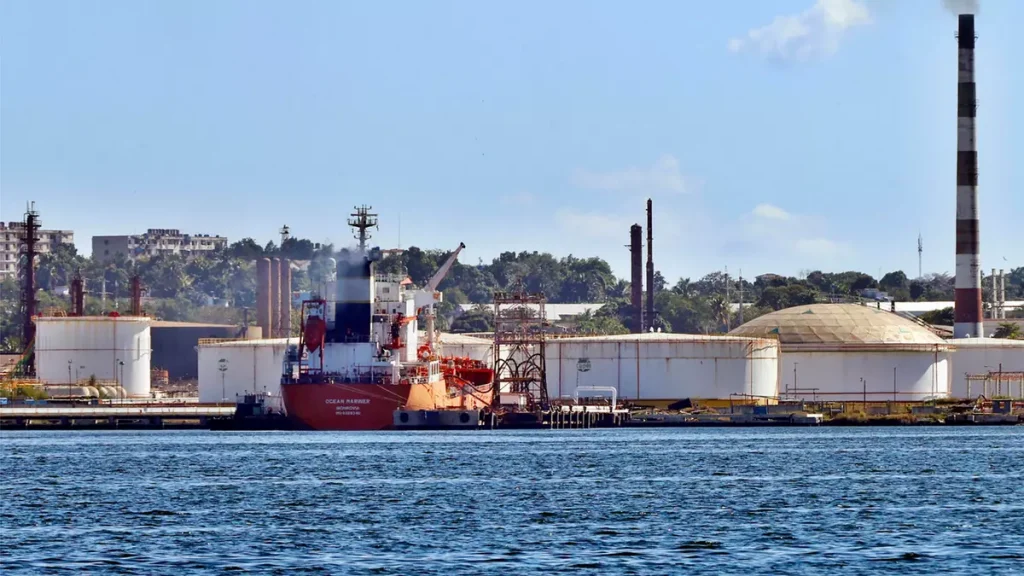
The last Pemex shipment reached the island on January 9. / EFE

14ymedio bigger14ymedio, Madrid, January 27, 2026 – Mexico’s state-owned oil company Pemex canceled an oil shipment to Cuba that had been scheduled for this month, according to U.S. outlet Bloomberg. According to the information published on Monday, the company had planned a mid-January shipment aboard the Swift Galaxy, flying the Panamanian flag, which was supposed to arrive by the end of the month, but it disappeared from the schedule.

Bloomberg reports that it contacted both Pemex and Mexico’s Ministry of Energy, which did not immediately respond to its inquiry. Likewise, several Mexican media outlets, such as La Jornada and Sipse, tried to reach Pemex with mixed results. The former was told that they had “no information on the matter,” while the latter says it turned to experts due to the lack of comment from the company. “Sources linked to the energy sector indicate that the adjustment could be related to factors such as crude availability, logistical planning, and international market conditions,” they note.

The decision became known almost two weeks after U.S. President Donald Trump stated on social media: “There will be no more oil or money for Cuba: zero.” The message was part of a reference to how the regime had benefited from Venezuelan crude, helping ensure its survival, but it raised doubts as to whether it applied only to PDVSA products, which Trump now effectively controls, or extended to other countries as well.

“Sources linked to the energy sector indicate that the adjustment could be related to factors such as crude availability, logistical planning, and international market conditions,” they note

A few hours later, U.S. Secretary of Energy Chris Wright said in an interview with CBS that the policy would be to “allow” Mexico to continue sending crude to Cuba. According to Bloomberg, it was precisely during those days that the Swift Galaxy tanker should have been loaded.

Mexican President Claudia Sheinbaum also spoke by phone with Donald Trump on January 13, in a call during which it was speculated that the situation with Cuba might have been addressed, but both sides denied it. “We had a very good conversation with the President of the United States, Donald Trump. We talked about various topics, including security with respect for our sovereignties, reducing drug trafficking, continue reading

trade, and investments,” the president said on social media.

Later, at her morning press conference, Sheinbaum explicitly stated that she did not speak with Trump about Cuba, but that she could facilitate negotiations between the two countries. “Obviously, if Mexico were to become a vehicle for communication between the United States and Cuba, both sides would have to agree, evidently,” she said, hours after the American president had demanded that Havana sit down to negotiate and even claimed that they already were, something denied by the Cuban side.

The Mexican president has since insisted that cooperation with Cuba is historic and will continue, but this Friday Reuters published a report based on statements from three high-level sources who said the Mexican government is evaluating whether to maintain, reduce, or suspend crude supplies to the Island out of fear of retaliation. “There is real fear of antagonizing Trump just when Mexico needs room to negotiate with Washington,” one official told the agency. The report coincided with Politico publishing that the White House is considering invoking the Helms-Burton Act to “impose a total blockade on oil imports made by Cuba.”

Mexican officials said there has been a growing presence of U.S. Navy drones over the Gulf of Mexico, following routes similar to those of tanker ships carrying Mexican fuel to Cuba. “It’s impossible not to read that as a message,” one source admitted.

The cancellation of the January shipment, in any case, predates those reports, but the context is unmistakable. The last Pemex crude shipment to reach Cuba was aboard the Ocean Mariner on January 9, with around 85,000 barrels of fuel from Veracruz.

In 2023, exports totaled about 16,000 barrels per day of oil and derivatives (worth roughly $300 million). In 2024, cooperation increased to 20,100 barrels per day, 20% more (although derivatives fell by 18%), with an estimated total value of $600 million.

Between January and September 2025, Mexico supplied Cuba through Pemex subsidiary Gasolinas Bienestar with around 19,200 barrels per day, according to official documents: 17,200 barrels of crude and 2,000 of derivatives. University of Texas expert Jorge Piñón estimates that in the first 13 months of the Sheinbaum administration, from October 2024 to November 2025, the average was 8,700 barrels per day.

Pemex is currently the largest oil supplier in the absence of Venezuelan crude, since contributions from Russia, Iran, and Algeria have been very limited, at least until now. Even so, Cuba, which needs at least 110,000 barrels per day and produces only 40,000 of heavy crude (usable only for thermal power plants) is in a severe energy crisis, and blackouts are beginning to exceed 40 uninterrupted hours in several provinces.

Translated by Regina Anavy

____________

COLLABORATE WITH OUR WORK: The 14ymedio team is committed to practicing serious journalism that reflects Cuba’s reality in all its depth. Thank you for joining us on this long journey. We invite you to continue supporting us by becoming a member of 14ymedio now. Together we can continue transforming journalism in Cuba.
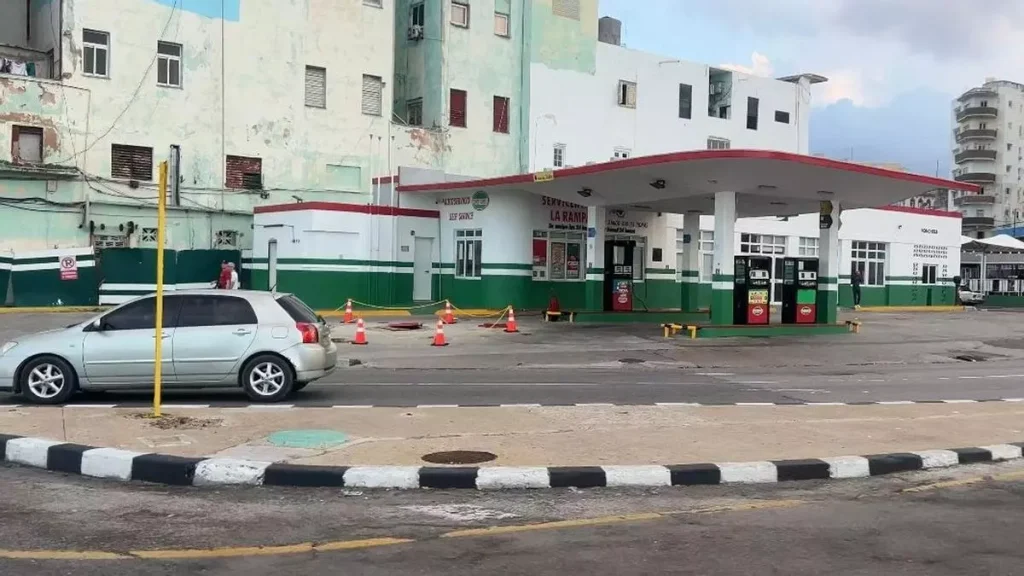
Tourists Aren’t Going to Cuba Anymore Because There’s No Food, Admits the Minister of Tourism

This sector “is experiencing the worst numbers in its recorded history” according to economist Pavel Vidal.

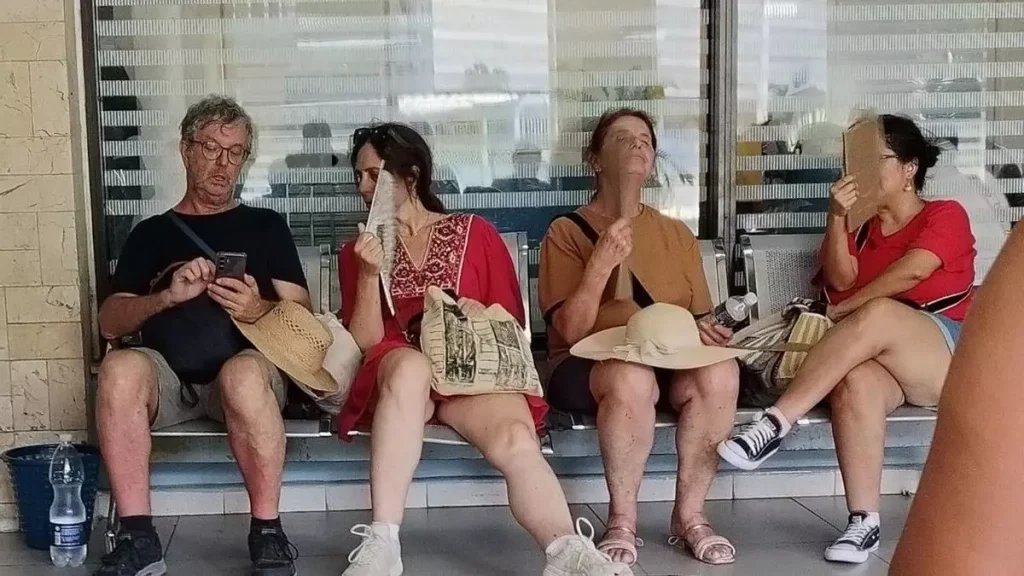
Tourists fanning themselves in the Havana bus terminal in Viazul, which is without air conditioning.

14ymedio bigger14ymedio, Madrid, July 16, 2025 [Delayed Translation] Cuban authorities no longer mention the Coronavirus pandemic, as they have until now, as an explanation for the tourism debacle. Discussing the topic at the Agro-Food Commission in Parliament this Tuesday, Minister of Tourism Juan Carlos Garcia Granda related the decrease in visitors to the “shortage of the sector,” which he said began in 2023 and “worsened” throughout 2024.

“This has been the worst moment since the collapse of the Twin Towers, in 2001, not counting the pandemic period,” asserted the Minister of Tourism, in another meeting on top of those that have been held prior to the fifth regular session of the National Assembly, which begins today, and which paint the bleakest picture for the country.

Among the principal reasons for this shortage given by Garcia Granda are “the centralization of foreign payments and schemes that are unattractive to national producers, especially in the agricultural sector.” That is to say, the difficulty for farmers in accessing dollars, who largely also do not do bank transactions.

There are also “debts in the national currency, difficulties in the conciliation and payments that are not made effectively”

The Minister of Agriculture, Ydael Perez Brito, gave more information, indicating that even though there are “more than 55 links between agriculture and non-state management related to tourism,” there are also “debts in the national currency, difficulties in the conciliation and payments that are not made effectively, which discourages producers.”

The Minister of the Food Industry, Alberto Lopez, went even further: simply, there is an “incapacity” of the production right now to satisfy the demands of tourism. The sector, according to the official continue reading

press account of his words, “depends on two essential sources: national agriculture and imported products, which both have been diminished in the last few years, which has reduced industrial production.”

Hotel chains like Melia know this well; since last year it has its own importer, Mesol, to guarantee its services. The Spanish chain is one of the few that has been partially saved from the wreck of the sector on the island. In the first trimester of the year, it recorded a 40% occupancy rate, compared to the pitiful national average of 24.1%.

The authorities seem to be conscious of the complaints of the people due to the fact that the regime spends more on luxury hotels than other economic and social sectors, but without explicitly admitting it. The Prime Minister, Manuel Marrero Cruz, who, returning to a phrase that has been repeated in official sources for months, said that tourism “when it is going at a good rate, revives the whole economy” and that “guaranteeing its functioning doesn’t imply neglecting the population, but rather facilitating profits to answer to their needs.”

The Food Industry “does not seek to get rich off of tourism, but rather restock itself to sustain production.”

In the same thread, minister Alberto Lopez underlined that the Food Industry “does not seek to get rich off of tourism, but rather restock itself to sustain production.”

Other problems of the sector mentioned at the meeting were the lack of fuel and the state of the airports. On this last point, they detailed an official report that revealed “deficiencies that affect the quality of a fundamental service for mobility and tourism development.”

The report, which included the inspection of 19 out of the 22 civil airports on the island, and interviews with more than 400 people showed that despite “improvements in preventative maintenance” of international terminals like Havana, in domestic terminals like Granma, Guantanamo and Las Tunas, “the runway deterioration necessitated the partial closure or limitation of operations for small planes.”

Failures of basic services like water supply, poor hygiene in the bathrooms, connectivity issues, scarce cleaning even in VIP lounges, as well as delays in migration and customs processes were just some of the beads in the rosary of problems on display, of a manner rarely seen by those same authorities of the Assembly.

The exposition of this commission coincided with the publication, also this Tuesday, of the monthly report of the economist Pavel Vidal, in which the tourism disaster stands out significantly. “Neither tourists, nor electricity. The Cuban economy continues to be far from offering any sign of recovery. The tourist industry in Cuba in 2025 experienced the worst numbers in its recorded history. This has repercussions in the foreign currency shortage in the country, meanwhile the Cuban government maintains the position of evading any exercise of grand transformation,” summarizes the specialist in his report, which raises alarms, furthermore, that this month could surpass the barrier of 400 pesos to the dollar on the informal market.

“Both phenomena feed back into themselves and create a vicious cycle that limits any kind of economic recuperation”

Vidal, a Colombian resident, concludes that, if you extrapolate the data of the National Office of Statistics and Information (ONEI), about the arrival of visitors until May 2025 and consider the trends of the remaining months, this year “will unlikely surpass 1.8 million tourists,” when the government’s plan was to reach 2.6 million. “The former number would represent around 400,000 fewer tourists than in 2024, a reduction of around 19%,” continues the economist. “The contraction of the Cuban tourism industry in 2025 is the largest recorded since the recording of visitors began (1985), excluding 2020 and 2021, the years of the Covid-19 pandemic.”

This carnage, continues the specialist, is coupled with the no-less-serious issue of the energy deficit. “Both phenomena feed back into themselves and create a vicious cycle that limits any kind of economic recuperation,” says Vidal. “On one hand, the frequent and prolonged blackouts undermine the competitiveness of the tourism sector and greatly affect the international perception of the destination as well as the quality of its services. On the other hand, the sustained drop in revenue from international tourism– one of the principal sources of foreign income for the country– reduces the availability of foreign currency from the State to import fuel and carry out the maintenance that the antiquated thermoelectric plants require.”

Apart from an increase in inflation, Vidal also signaled a loss for private companies. “The MSMEs and the private sector in general are very affected given the high level of direct and indirect dependency on tourism,” and, given “a significant decrease in revenue and profit margins,” in addition to “regulatory prohibitions,” they are given little chance of recovery.

Translated by Logan Cates
____________

COLLABORATE WITH OUR WORK: The 14ymedio team is committed to practicing serious journalism that reflects Cuba’s reality in all its depth. Thank you for joining us on this long journey. We invite you to continue supporting us by becoming a member of 14ymedio now. Together we can continue transforming journalism in Cuba.
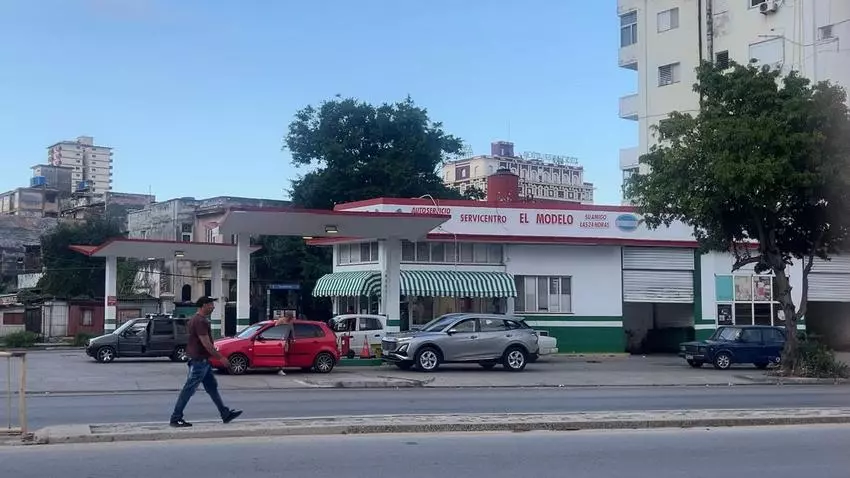
Even the Black Market Has Run Out of Gasoline in Havana

Only a few service stations that take foreign currency are operating, where a liter of regular gas costs $1.10 and premium $1.30.

The service stations were once again empty this weekend, not only of gasoline, but also of people trying to buy it. / 14ymedio

14ymedio bigger14ymedio, Havana, Darío Hernández, January 26, 2026 – When gasoline was scarce in Havana, there were always people who knew where to find it. Fuel theft is a good business in Cuba, and the market had never failed. Until now. “Even the people who sell on the side, who almost always have it, don’t have any either,” says Pedro, a street-smart habanero who knows how to get around, but who now states bluntly: “Gasoline has disappeared.”

The service stations were once again empty this weekend, not only of gasoline, but also of would-be buyers, except for the most stubborn who refused to leave the line just in case something arrived. “Being here is pointless,” said a private transport operator waiting in line.

At one of the Cupet stations reserved for state vehicles, which receive fuel by allocation, they weren’t pumping either, and drivers were waiting for a tanker truck to arrive. When asked whether there was any way to resolver (work something out), one of them replied that it wasn’t possible because what they were being given wouldn’t even last two weeks. “If I sell you any, I’ll end up stranded.”

The only station that had customers waiting on Sunday was the one at Línea and E, in El Vedado, which sells fuel in dollars. / 14ymedio

Walking past gas stations in the capital is bleak. The only one with customers waiting on Sunday was the Línea and E station in El Vedado, which sells fuel in dollars. Most of the cars were modern, and it was clear their owners were well-off. Since last year, when some service stations were dollarized in order to obtain hard currency amid the collapse of tourism, these had been the only places where supply was guaranteed. Now even that is not always enough, and prices don’t help either. A liter of regular gas continue reading

costs $1.10 and premium $1.30, paid with prepaid cards or the Clásica card.

“The situation is extremely complicated,” Pedro insists. “A friend in Matanzas who owns a car told me that over there it’s the same. The only places selling are the service stations, in dollars, end of story, because there’s nothing on the street either. He says the dollar went up to 600 pesos, but then the gasoline disappeared, and there’s nowhere to find it.”

Suddenly, a man on a motorcycle shows up. He says he managed to buy fuel on the black market because he couldn’t find any at a service station, but before that he had to make another round through the informal market to buy dollars to pay for the gasoline.

Oil isn’t arriving, and the paths are narrowing. Everyone trembled again on Friday when the Reuters agency reported that the Mexican government is evaluating whether to maintain, reduce, or suspend its crude oil supply to the Island, amid fears of direct reprisals from the United States under the presidency of Donald Trump. Added to this were statements to Politico by sources familiar with an alleged White House plan to invoke the Helms-Burton Act in order to “impose a total blockade on oil imports carried out by Cuba.” “Energy is the key to killing the regime, and this will happen in 2026, with a 100% probability,” said one of the sources.


Gasoline is on the path to disappearing in Cuba, even on the black market. / 14ymedio

The reaction in Havana was immediate. The Deputy Minister of Foreign Affairs, Carlos Fernández de Cossío, spoke on Friday, denouncing a “brutal assault against a peaceful nation that poses no threat whatsoever to the United States.” He added that these measures are irrefutable proof that the economic hardships faced by the Cuban people are mainly caused and designed in Washington.

Carlos de Céspedes, Cuba’s ambassador to Colombia, has also weighed in. In an interview on Saturday with Qatari television network Al Jazeera, he accused the U.S. of “international piracy” and said it is imposing a “maritime siege” on the Island. “Cuba is facing U.S. threats more powerful than at any time in the 67 years since the Revolution,” he asserted.

The authorities, for their part, have continued without providing public data on the fuel shortage, not even on the fuel used for distributed generation, whose specific shortfall is not discussed. This Sunday, the Island experienced another day of blackouts: with a forecast peak demand of 3,130 megawatts (MW), available capacity was only 1,325, which pointed to a shortfall of 1,805 MW, equivalent to 60% of national consumption.

Although it is not known what portion is due to the lack of fuel, it was specified that only 450 MW corresponded to the deficit at thermoelectric plants.

If in Havana power outages already exceed 15 consecutive hours, what is happening in other provinces is truly staggering: 29 hours in Pinar del Río, 40 in Matanzas, and 48 in Cienfuegos, numbers that no longer surprise anyone. “Don’t add more misfortune to what we already have in that report that isn’t true,” a user pleaded with the Electric Utility. “Look for solutions for a people who are suffocating, who are agonizing. Don’t ask for resistance because there is none left. Be capable of moving your country forward and stop justifying the atrocities you commit with the blockade, because your standard of living isn’t affected.”

Translated by Regina Anavy

____________

COLLABORATE WITH OUR WORK: The 14ymedio team is committed to practicing serious journalism that reflects Cuba’s reality in all its depth. Thank you for joining us on this long journey. We invite you to continue supporting us by becoming a member of 14ymedio now. Together we can continue transforming journalism in Cuba.

Lack of Fuel Forces a Return to Manual Sugarcane Cutting in Campechuela, Cuba

The official press says machete workers will receive 700 pesos per ton and their income could reach 22,000 pesos a month

Authorities expect to produce 17,000 tons during the harvest / EFE

14ymedio bigger14ymedio, Havana, January 25, 2026 – Day Zero has arrived. The machines will not cut the cane at the Enidio Díaz Machado mill in Campechuela (Granma province), and if the goal of producing more than 17,000 tons of raw sugar is to be met, it will have to be done as it was centuries ago: by hand.

According to a report published this Saturday in the State newspaper Granma, provincial authorities “assessed” preparations for the upcoming sugar harvest. Faced with the “complex period” they foresee—due to the “difficult situation with the availability of fuels and other inputs,” such as lubricants—the “key strategy” will be to “increase by nearly 80% the volumes of cane to be milled through manual cutting.”

“It will be a complex harvest and we cannot give up contributing the maximum possible to production. We have to rely on coordination between sectors and the participation of all the municipalities in Granma,” said Governor Terry Gutiérrez during a session of the Provincial Government Council held on Friday.

To incentivize workers to carry out this arduous labor, a payment of 700 pesos per ton was offered to machete workers, who, according to Granma, could reach monthly incomes of up to 22,000 pesos.

The production also faces “the unfavorable performance in land preparation and planting activities”

The production, which is intended “mainly for the rationed family food basket and for social consumption,” also faces “the unfavorable performance in land preparation and cane planting activities during January, a situation involving the province’s five sugar agro-industrial companies.” Likewise, “the occurrence of fires” remains a risk, prompting a call to keep watch over the cane fields. continue reading

The difficulties in getting the milling machinery running at Enidio Díaz Machado are a chronicle of a death foretold. A year ago, the province of Granma “officially” celebrated the start of the 2024–2025 sugar harvest, but “technical problems stopped the machines” just two hours after work began.

The causes have not changed since then. The harvest, which was supposed to begin in December 2024, could not start due to “shortages of lubricants and fuels” for the machinery. Several weeks passed trying to solve the “technical failures and shortcomings,” and when cane milling finally began, it ran only from 5:00 to 7:00 a.m. and at barely 70% of capacity.

The condition of the mills is one of the reasons milling nationwide is minimal. It should be recalled that in 1959 Cuba had 161 sugar mills in private hands that produced 5.6 million tons of sugar that year. The plants were kept in shape during the decades of Soviet subsidies, yielding the best sugar production figures between the 1970s and 1980s—more than 8.5 million tons—though never reaching the Fidelist utopia of “the 10 million.”

In 1959, Cuba had 161 mills in private hands that produced 5.6 million tons of sugar that year

Traditionally, Cuba consumed 700,000 tons and exported the rest, but with current production the picture has changed radically: it has now been forced to import much of the sugar it needs for its population and has been unable to fulfill export contracts. There is an even more serious symptom: since at least 2020, every harvest on the Island has been labeled the worst of the last 100 years. For example, the 2021–2022 harvest closed with 473,720 of the projected 911,000 tons. The following season it fell to 350,000 tons, well below the 400,000 required for domestic consumption.

A year later, the 2023–2024 harvest was practically the death of Cuban sugar, with production of barely 160,000 tons, while the most recent one, according to data compiled by the EFE news agency and published by this newspaper, barely reached 147,652 tons.

All of this led to the Island paying the United States $14.9 million for sugar last year alone, while in 2024 it spent $11.1 million, according to figures from the U.S. Department of Agriculture, in addition to importing significant quantities from France and Brazil.

Translated by Regina Anavy

____________

COLLABORATE WITH OUR WORK: The 14ymedio team is committed to practicing serious journalism that reflects Cuba’s reality in all its depth. Thank you for joining us on this long journey. We invite you to continue supporting us by becoming a member of 14ymedio now. Together we can continue transforming journalism in Cuba.
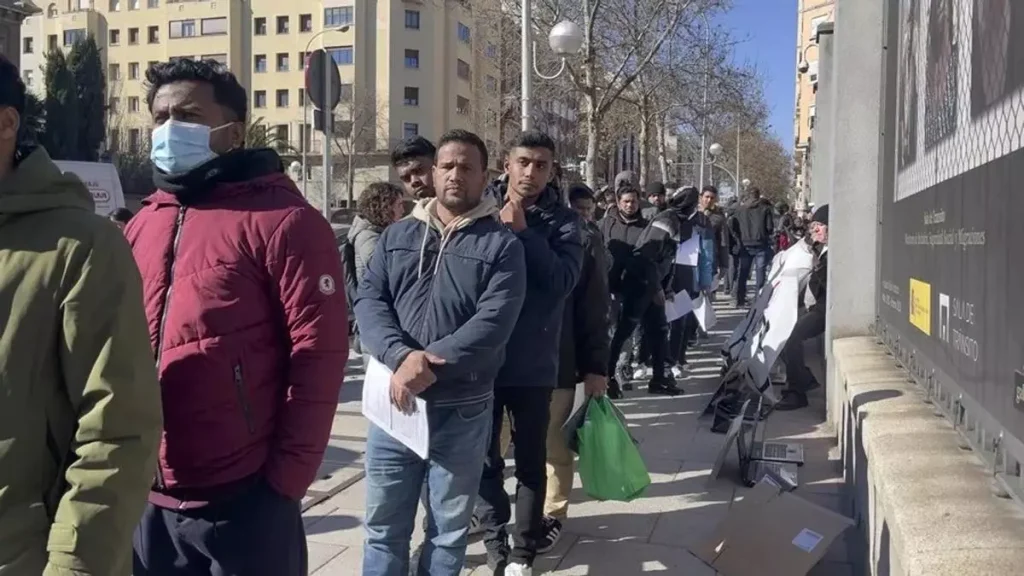
The Spanish Government Will Approve an Extraordinary Regularization of Migrants by Decree, Including Cubans

The measure will affect people who were residing in Spain before December 31, 2025

Line at a foreigners’ office. / EFE/Macarena Soto

14ymedio biggerEuropa Press / EFE/ 14ymedio, Madrid, January 26, 2026 — The Government will approve this Tuesday, January 27, at the Council of Ministers, an extraordinary regularization of migrants by royal decree, following an agreement between the Spanish Socialist Workers’ Party (PSOE) and the far-left Podemos, sources from the Ministry of Inclusion, Social Security and Migration confirmed to Europa Press.

These same sources explained that this extraordinary regularization, first reported by the progressive Partido Morado [Purple Party], applies to foreigners who are already in Spain, and added that it will be carried out “with the aim of guaranteeing rights and providing legal certainty to an existing social reality.” Because it is being approved by decree, it will not need to be ratified by Congress.

The initiative revives the mandate of the Popular Legislative Initiative (ILP), backed by more than 700,000 signatures and supported in 2024 by all parliamentary groups except the conservative Vox Party (310 votes in favor and 33 against), although it remains stalled in the lower house.

Montero said that beneficiaries will have to prove at least five months of stay in Spain, for which they will need to provide proof of registration, medical reports, or money transfers

The Podemos Member of the European Parliament, Irene Montero, revealed the agreement with the PSOE on Monday during an event in Madrid focused precisely on the regularization of this group. There, she said the measure will apply to people who were residing in Spain before December 31, 2025.

In addition, Montero explained that beneficiaries will have to demonstrate at least five months of residence in Spain, for which they will need to submit proof of municipal registration, medical reports, or money transfers. Upon submitting the application continue reading

, a provisional residence authorization will be granted.

Montero also said that Podemos will ensure the process is “swift and effective” and that it is necessary to guarantee the rights of these individuals in the face of “racist violence.”

The Funcas think tank (Savings Banks Foundation) estimates that about 840,000 migrants live in Spain in an irregular administrative situation, representing 17.2% of the foreign population from non-EU countries.

This estimate is based on the difference between the population actually residing in Spain according to the National Statistics Institute (INE) and foreign nationals who do have residence permits, are beneficiaries of international protection, or are in the process of obtaining it.

Funcas estimates that around 840,000 migrants live in Spain in an irregular administrative situation, representing 17.2% of the foreign population from non-EU countries.

These data, as of January 1, 2025, point to a notable and sustained increase in the number of foreigners in an irregular situation since 2017, when the estimated figure stood at around 107,000, or 4.2% of the non-EU foreign population residing in Spain.

By origin, nationals from the American continent stand out (760,000), representing 91% of total irregular immigration, especially Colombians (nearly 290,000), Peruvians (almost 110,000), and Hondurans (90,000). African (50,000), Asian (15,000), and European (14,000) nationalities trail far behind.

The report does not specify the exact number of Cubans in an irregular situation, but the thousands estimated to be in this situation will also be able to benefit from the government measure.

The data predate the latest reform of the immigration regulations, which came into force in May 2025 and introduced changes to make access to regularization through social ties (arraigo) more flexible, which “would tend, in principle, to reduce the number of irregular migrants.”

The new regulations will allow 900,000 people to be regularized over three years. However, Funcas notes that if current trends continue, even if the government’s estimates are met, the number of residents in an irregular situation would not decrease, but rather stabilize.

For Funcas’s Director of Social Studies, María Miyar, the figures once again demonstrate “the characteristics of the Spanish migration model of the last 25 years,” which “assumes that a significant proportion of immigrants go through a long period of irregularity before obtaining administrative regularization.”

The think tank highlights the “lack of planning in Spanish migration policy, without a clear strategy regarding the volume of immigrants received or their characteristics.”

While acknowledging that the new regulations “will surely contribute to the social integration of many immigrants,” they add that it “still does not entail real planning.”

To truly reduce the figures, the report points to the need for measures that improve the management of migration flows and that are framed within a broad strategy of economic growth and productivity, directing immigration toward sectors of the economy with labor shortages and qualification requirements.

Translated by Regina Anavy

____________

COLLABORATE WITH OUR WORK: The 14ymedio team is committed to practicing serious journalism that reflects Cuba’s reality in all its depth. Thank you for joining us on this long journey. We invite you to continue supporting us by becoming a member of 14ymedio now. Together we can continue transforming journalism in Cuba.

President Díaz-Canel Oversees Military Preparations To Defend Cuba Against US Threats

The triumphalist rhetoric contrasts with the obsolete weaponry shown in images broadcast on national television.

“The best way to prevent aggression is for imperialism to calculate the price of attacking our country,” Díaz-Canel said in front of the cameras. / Juventud Rebelde

14ymedio bigger14ymedio, Havana 25 January 2026 — Once again, on a Saturday marked by fear and uncertainty among Cuba’s leadership, Miguel Díaz-Canel donned his olive green uniform to lead military manoeuvres that the regime presents as “national defence drills”. In reality, however, the deployment seems to respond less to a credible security strategy than to an urgent need for internal propaganda at a time of extreme political fragility.

According to information released by the state press, the day of 24 January included the observation of “demonstrative tactical exercises” with tanks, shooting practice with university students and combat drills, as well as visits to anti-aircraft defence units. The official account insisted on linking these actions to the “hegemonic offensive” of the United States, following the military operation on 3 January in Venezuela, which ended with the capture of Nicolás Maduro.

“The best way to prevent aggression is for imperialism to have to calculate the price of attacking our country,” Díaz-Canel told the cameras. But if that operation in Caracas made one thing clear, it was the weakness of the Cuban military.

The speed with which the forces linked to Maduro’s protection were neutralised, the absence of a credible strategic response and the human toll of the operation – with dozens of Cubans killed on foreign soil – have had a devastating impact on the morale of those who still believe in the strength of the island’s military apparatus. The cardboard epic repeated by the propagandists on State TV’s Round Table program is one thing; what professional strategists discover when they analyse what happened in Caracas without slogans is quite another. In military terms, it was a disaster continue reading

for Cuba.

Most Cubans did not even see the news

The images broadcast on the Noticiero Estelar reinforced that impression. Tanks kicking up columns of dust, a helicopter manoeuvring over a fortified model and a soldier waving a flag from the roof of a semi-ruined building made for a scene more akin to a low-budget war film than a modern defence exercise. Even so, Díaz-Canel congratulated the participants on the “success” of the training, in a gesture that underscored the gap between official discourse and social perception.

In reality, most Cubans did not even see the news programme. Some were plunged into scheduled power cuts; others have simply stopped paying attention to messages they consider irrelevant to their daily lives. Soldiers camouflaged with dry grass, old officers watching a rudimentary-looking drone with childlike wonder, and militiamen instructing civilians in the use of obsolete rifles have served more as raw material for memes on social media than as a demonstration of deterrent force.

Díaz-Canel’s constant return to the olive green uniform also revives an ambiguity that has been carefully managed for years. When he was appointed president in 2018, biographical profiles circulated that presented him as a retired lieutenant colonel and former internationalist combatant in Nicaragua. Over time, official biographies softened that profile. They acknowledged his stay in Nicaragua between 1987 and 1989, but described him as a “civilian” and avoided detailing his military functions, rank or position. If it was previously convenient to erase his military footprint and sell him as a technocratic and modern leader, the regime is now once again emphasising his image as a “commander” in an attempt to confer martial authority on an increasingly eroded leadership.

Beyond the warmongering rhetoric, the question remains: what real significance does this deployment have for the Cuban population? And who truly feels threatened?

This narrative has historically served to justify the lack of freedoms, economic failure and repression of any dissent.

From Havana, the official discourse continues to fuel the idea of imminent aggression from “imperialism”, the euphemism used to refer to the United States for more than six decades. This narrative has historically served to justify the lack of freedoms, economic failure and the repression of any dissent. Today, it is being recycled in the midst of a real regional crisis, but it seems to respond more to fears of internal fractures than to a concrete threat of foreign invasion.

In parallel with the manoeuvres, the National Defence Council approved “plans and measures” to give way to the so-called “state of war”, a concept shrouded in opacity. No details have been provided on its scope, duration or legal implications for citizens. Official media outlets such as Cubadebate and Granma presented it as part of the “War of the Whole People”, without explaining which rights could be affected or under what conditions it would be activated.

This secrecy is reminiscent of other moments in recent history when the regime has resorted to grandiloquent terms – “maximum alert”, “economic war”, “revolutionary offensive” – to justify internal measures aimed less at confronting real threats than at containing social discontent and internal betrayals.

But this theatre has its limits. Most Cubans know from experience that “defending the homeland” does not translate into food on the table, medicines in hospitals or wages sufficient to live on. The great threat to the Cuban population does not seem to come from the north. Rather, it comes from the system’s own inability to solve structural problems. In this context, the display of military muscle serves merely as a distraction for a citizenry that is demanding real answers with increasingly less patience.

Translated by GH

____________

COLLABORATE WITH OUR WORK: The 14ymedio team is committed to practicing serious journalism that reflects Cuba’s reality in all its depth. Thank you for joining us on this long journey. We invite you to continue supporting us by becoming a member of 14ymedio now. Together we can continue transforming journalism in Cuba.

The Cuban Regime Faces Its Most Fragile Hour

The external context has hardened just as the internal legitimacy of the system appears to be most eroded

The capture of Nicolás Maduro on January 3rd has put the Havana leadership in a difficult position. / Antonio Finlay/X

14ymedio bigger14ymedio, Yoani Sánchez, Generation Y, Havana, 25 January 2026 — I have lost count of the times the Cuban regime has been “on the verge of collapse.” I’ve heard it in diplomats’ after-dinner conversations, in expert analyses, and in the predictions of soothsayers who change their tune as easily as they change their shirts. One day it was the physical disappearance of the “supreme leader”; another, the supposed “imminent” fracture within the Armed Forces; then, the definitive economic collapse that, this time for sure, Castroism could not withstand. And yet, the country continued to wake up to its long lines, its managed fear, and its political inertia.

However, now, unlike in other times, those oracles might be right. The discontent is no longer a whisper; it is street corner conversation, arguments in the ration store, and exasperation in the bus line. Records of social conflict and protests reported by independent observatories paint a picture of 2025 with increasing numbers of public complaints, a barometer pointing to widespread and persistent unrest.

Is this the highest level of discontent since January 1959? No one has a scientific instrument to measure and compare decades of enforced silence, but I am convinced that three circumstances have never coincided so visibly: sustained material precariousness, the loss of fear in growing segments of the population, and the breakdown of the official epic narrative that for years served as anesthesia and a gag.

The scenario is unprecedented and fragile, because social unrest has ceased to be an exception and has become an everyday occurrence.

To this internal situation is now added a harsher international environment for the authorities. The capture of Nicolás Maduro on January 3rd has put the Havana leadership up against the ropes and reactivated pressure from Washington.

That is why, when people ask me if the regime is in its final moments, I don’t respond with unbridled optimism or fireworks about an imminent end. I say that the situation is unprecedented and fragile, because social unrest has ceased to be the exception and has become commonplace; because the economy no longer offers a margin to buy loyalties through perks; and because the external context has hardened just as the system’s internal legitimacy seems most eroded.

Endings, however, rarely happen as experts or prophets imagine. Sometimes they are not a sudden blow, but a drip by drip, a slow erosion that leads to extinction. In Cuba, the question is not only when the regime will fall, but what kind of country will remain standing when the dictatorship finally collapses upon us.

____________

COLLABORATE WITH OUR WORK: The 14ymedio team is committed to practicing serious journalism that reflects Cuba’s reality in all its depth. Thank you for joining us on this long journey. We invite you to continue supporting us by becoming a member of 14ymedio now. Together we can continue transforming journalism in Cuba.

A Stage in Flight on Cuban Theater Day

Away from the spotlight, a reality prevails marked by exodus, censorship, and an increasingly precarious resistance.

The industry no longer faces colonial bayonets, but it does face a system that expels its creators, monitors every uncomfortable word, and turns off the lights on its stages. / Facebook

14ymedio bigger14ymedio, Havana, January 22, 2025 — Every January 22nd, the island’s official calendar marks Cuban Theater Day, a date meant to celebrate the nation’s stages, but in this 2026, we find the theaters shrouded in a gloom that extends far beyond the theatrical realm. While the Union of Writers and Artists of Cuba (UNEAC) showcases the Villanueva Awards as proof of cultural vitality, a reality marked by exodus, censorship, and an increasingly precarious resistance prevails outside the spotlight.

The origin of this commemoration is written in blood. In 1869, at Havana’s Villanueva Theater, the shouts of “Long live the land that produces sugarcane!” and “Long live Free Cuba!” from the audience during a comic play, unleashed a massacre perpetrated by the Spanish Volunteer Corps. That episode irreversibly sealed the link between Cuban theater and political freedom.

Today, 157 years later, the performing arts community no longer faces colonial bayonets, but rather a system that expels its creators, monitors every uncomfortable word, and extinguishes—literally and symbolically—the lights on its stages. Cuba is experiencing one of the deepest crises in its recent history, and the impact on the performing arts is devastating.

In this context, the 2025 Villanueva Critics’ Awards were formally presented this Wednesday at the Villena Hall of the UNEAC (National Union of Writers and Artists of Cuba). The jury, after evaluating just over one hundred productions—a number that pales in comparison to the exuberance of previous decades—decided to recognize those works that managed to overcome logistical shortcomings and widespread discouragement. continue reading

Behind the diplomas and speeches about ethical commitment, the crisis of Cuban theater is structural and painful.

Among the award winners were Faro, by Teatro Andante; Un rastro en las estrellas, by Teatro de Las Estaciones; and Actea, by the Lyceum Mozartiano de La Habana. Also recognized were Eclipse (Danza Espiral) and El nombre de Juana, a collaboration between the Nave Oficio Creative Community of Isla and the Mujeres, Fuente de Creación [Women, Source of Creation] project. In the international category, the awards went to Core Meu (Les Ballets de Monte-Carlo) and Gaia 2.0 (French company Bakhus).

Especially worth mentioing is the Special Recognition awarded to Un domingo llamado deseo (A Sunday Called Desire), a production by Trotamundo and Teatro El Público. The play, written and directed by Norge Espinosa, starred two legends who refuse to leave the stage: National Theater Award winners Verónica Lynn and Carlos Pérez Peña.

However, behind the diplomas and speeches about ethical commitment, the crisis in Cuban theater is structural and devastating. In a country where scheduled blackouts dictate the rhythm of daily life, sustaining a theater season borders on the absurd. Many performances are canceled due to lack of electricity, and those that do take place are held in unheated theaters, where audience and artists share the same sweat and anxiety under roofs that threaten to collapse after years of neglect.

Emigration has also emptied theater companies, fragmented collectives, and forced the constant reassembly of casts and technical teams. Directors, playwrights, actors, designers, and critics have left in successive waves, driven by paltry salaries, a lack of career prospects, and a suffocating political climate. The result is an intermittent theater scene, sustained more by personal sacrifice and sheer willpower than by a coherent and sustained cultural policy.

What ethics and what civic duty can be upheld if not that of the cry for freedom that marked the national theater in 1869?

In the provinces, where theater has always been more vulnerable, the situation is even more dire. Cancelled tours, indefinitely postponed premieres, and theaters that barely manage to open a few days a month are now part of the everyday landscape.

Far from being a relic of the past, censorship continues to operate as an everyday mechanism. And sometimes administrative silence, budget cuts, or selective exclusion are enough to discipline creativity.

Those who choose to stay walk a tightrope. Some take refuge in metaphorical language and subtext to avoid reprisals; others resign themselves to the marginalization of alternative theaters, always under the watchful eye of State Security. Few, however, betray the spirit of the Villanueva—and the old saying about the “egg-eating dog”*—to sing praises to a regime that has muzzled theater for decades.

As the award-winning artists themselves have repeatedly stated, the mission of theater is to “cultivate values”: ethics, civic responsibility, and aesthetic sensibility. But on an island where official discourse reduces culture to slogans and propaganda, that mission becomes uncomfortable. What ethics and civic responsibility can be upheld if not that of the cry for freedom that marked the national theater in 1869? If the land no longer produces even sugarcane, what, then, is the Cuba to which Cuban theater aspires today?

*Translator’s note: From the custom of putting a hot egg (freshly taken from boiling water) in the mouths of dogs that tend to eat eggs, as a lesson to them. 

____________

COLLABORATE WITH OUR WORK: The 14ymedio team is committed to practicing serious journalism that reflects Cuba’s reality in all its depth. Thank you for joining us on this long journey. We invite you to continue supporting us by becoming a member of 14ymedio now. Together we can continue transforming journalism in Cuba.

“We Will Die With Our Boots on Defending the Revolution,” Warns Major ‘Ernesto’

State Security forbids Dagoberto Valdés from any contact with the US ambassador and assures that what happened in Venezuela, where there was “betrayal and collaboration with the enemy,” will not happen in Cuba.

Valdés explained that the meeting with Mike Hammer was related to the distribution of humanitarian aid donated by the United States through the church. / Facebook / US Embassy in Cuba

14ymedio bigger14ymedio, Havana, 23 January 2025 —  The Center for Coexistence Studies (CEC) confirmed that Dagoberto Valdés Hernández was arrested and interrogated this Friday at the State Security headquarters in Pinar del Río, in an operation led by Majors Ernesto and Manuel, both officers of the political police. The arrest, carried out without a warrant or the right to be summoned, was motivated—according to the officers themselves—by a recent visit Valdés made to Mike Hammer, Chargé d’Affaires of the United States Embassy in Cuba.

According to the statement released by Convivencia, officers arrived at Valdés’s home in the morning, accompanied by a police patrol. They ordered him to clear the house of any visitors present, lock it, and accompany them immediately, without explaining the reason for his arrest or allowing him to make a phone call. Valdés was taken directly to the State Security headquarters in the provincial capital.

After learning of the arrest, members of the Community Relations team went to the Police Headquarters to try to locate him. The officer on duty stated that they had not received any patrol cars that morning. Given this response, they went to the State Security headquarters, where initially no information was provided either. Only after insisting on speaking directly with someone in charge did Majors Ernesto and Manuel appear at reception to inform Yoandy Izquierdo Toledo that Valdés was being held there.

In that same exchange, the officers told Izquierdo that he had “saved them a trip because they were going to look for him too,” demanded he hand over his identity card, and informed him that he would be interrogated as well. Valdés was taken to internal offices, where an interrogation of more than two hours took place, involving the head of the Legal Department of State Security, Major Ernesto—the officer who “handles” Convivencia—Major Manuel, head of the Counterrevolution Brigade in the province, and a young officer who did not identify himself.

The legal officer explained that the reason for the arrest was Valdés’ visit to Mike Hammer

During the interrogation, the legal officer explained that the reason for the arrest was Valdés’s visit to Mike Hammer. In that context, he accused him of terrorism and of collaborating with a foreign power that—he claimed—had threatened Cuba with military intervention. The officers asserted that they would not allow the U.S. diplomat to contact people continue reading

within the country to “use them for his own purposes” in the current national situation and affirmed that they would “die with their boots on defending the Revolution.”

Major Ernesto read excerpts from a column published by Valdés in Convivencia on Monday, January 19, in which he urged preparations for peaceful change in Cuba under the premise that “the future is already here.” He asked if this text was related to the visit to the diplomat. Valdés responded by quoting his own article, in which he recalled the words of Saint John Paul II, according to which Cubans “are and must be the protagonists of our own personal and national history,” emphasizing that change must be undertaken by the citizens themselves.

Valdés further explained that the meeting with Hammer was related to the distribution of humanitarian aid donated by the United States through the church, and that the purpose of the conversation was to learn his opinion on the process. Despite this, the officials insisted on portraying the contact as a hostile act and reiterated warnings about future interactions with foreign diplomats.

At the conclusion of the interrogation, the officers informed Valdés that it was a warning document, which he refused to sign. They advised him not to respond to any further invitations from the U.S. diplomat or participate in activities organized by the Embassy, ​​although they indicated that he could travel to Havana for reasons related to the Church, studies, family matters, or caring for sick people.

The arrests and interrogations confirm the state of panic gripping the regime’s repressive forces.

Later, Yoandy Izquierdo was interrogated under the same pretexts. The officers warned him about alleged manipulation by the U.S. Chargé d’Affaires and other embassies, demanded he “maintain the profile” of Convivencia, and asserted that sharing the ideas of the “enemy” also constitutes a crime.

They alluded to Venezuela as an example of what, they said, they would not allow to happen in Cuba, that they “knew everything” because of Cuban intelligence reports, but there “there was betrayal and collaboration with the enemy,” and that here that was not going to happen because “the Revolution is stronger than ever.”

Izquierdo responded that he is responsible for what he writes and for his work with the Coexistence Project and the Center for Studies for over 15 years, but not for official interpretations or “hypothetical futures.” He also questioned the proportionality of the police deployment to address the content of the interrogation, to which Major Ernesto replied that it was a matter of “action-reaction” due to the gravity of the situation in the country.

The arrests and interrogations confirm the state of panic experienced by the regime’s repressive forces in the current regional geopolitical scenario, marked by the capture of Nicolás Maduro and the abrupt realignment of alliances and loyalties on the Cuba-Venezuela axis.

____________

COLLABORATE WITH OUR WORK: The 14ymedio team is committed to practicing serious journalism that reflects Cuba’s reality in all its depth. Thank you for joining us on this long journey. We invite you to continue supporting us by becoming a member of 14ymedio now. Together we can continue transforming journalism in Cuba.

Cuban State Security Arrests Dagoberto Valdés, Director of the Center for Coexistence Studies

Dagoberto Valdés and his colleague Yoandy Izquierdo are in the same situation; Major ‘Ernesto’ has not given any explanation

Dagoberto Valdés (left) and Yoandy Izquierdo (right),  members of the Center for Coexistence Studies, were detained at the headquarters of the Technical Investigations Department (DTI) in Pinar del Río. / Facebook / Coexistence

14ymedio bigger14ymedio, Havana, January 23, 2025 —  Catholic intellectual and activist Dagoberto Valdés Hernández was arrested this Friday by State Security agents at his home in Pinar del Río, in an operation that also involved police officers. The arrest was reported by the Center for Coexistence Studies (CEC), an organization Valdés has led for more than two decades and which has become one of the most enduring spaces for independent civic thought in Cuba.

According to information released by Convivencia, the operation was led by Major Ernesto, a State Security officer who “handles” that organization. The officer arrived at Valdés’s house accompanied by a police patrol and took him away without explaining the reasons for the arrest or where he was being taken. Since then, members of the CEC have tried to locate him at Police Headquarters and at the State Security offices in Pinar del Río.

The arrest wasn’t limited to Valdés. Shortly afterward, Yoandy Izquierdo, a member of the Community Relations team , went to the headquarters of the Technical Investigations Department (DTI) in Pinar del Río to inquire about Valdés’s situation. There, he was received by Major Ernesto himself, who proceeded to arrest him: “You’ve saved me a trip, because I was just about to come looking for you too.” Izquierdo had left his phone with some friends before being detained at that DTI headquarters, located at kilometer 4 on the road to San Juan y Martínez.

A central figure of the Cuban Catholic laity, Valdés has been for decades a benchmark of critical thinking not aligned with power

Convivencia confirmed to this newspaper that both Dagoberto Valdés and Yoandy Izquierdo are being held at that police facility. The manner in which the arrest was carried out once again highlights a recurring practice of the Cuban repressive apparatus: detention without a warrant, without formal notification to the family, and without information about the detainees’ legal status. It is unknown whether this is a case of enforced disappearance continue reading

of short duration, a tactic designed to sow uncertainty, intimidate those around them, and prevent an immediate public reaction.

Dagoberto Valdés is not a new name in the files of State Security. An agricultural engineer by training and a central figure in the Cuban Catholic laity, he has been for decades a leading voice of critical thought not aligned with the regime. First through the magazine Vitral in the 1990s, and later through Convivencia, Valdés has promoted a discourse centered on human dignity, citizen participation, and the need for a peaceful and democratic transition in Cuba. This combination of structured thought, moderate language, and persistence has proven particularly uncomfortable for the regime.

The harassment against him and his team has been systematic. Interrogations, police summonses, veiled threats, smear campaigns, and temporary detentions are all part of the repertoire used against the center. On several occasions, Valdés has been stopped on the road, detained for hours, and subjected to interrogations focused on his international connections, the magazine’s funding, and the center’s contacts with other civil society actors. None of these actions have resulted in legal proceedings, but they have served to maintain constant pressure.

Since its founding, the Convivencia Studies Center has been committed to analyzing Cuban reality from a pluralistic perspective, addressing topics such as the economy, education, culture, and citizens’ rights.

This Friday’s arrest comes amid a tightening of political control and growing intolerance toward any form of autonomous organization. While the government insists on its discourse of “unity” in the face of the economic and social crisis, coupled with fears of military actions similar to those carried out by the US in Caracas, repression against critical voices, including those advocating dialogue and non-violence, is intensifying.

In recent days, other prominent figures in the critical press and intellectual circles have experienced a similar ordeal. Journalist Henry Constantín, director of La Hora de Cuba, was released after being detained and held incommunicado for 44 hours in Havana. A few days later, writer and columnist Jorge Fernández Era was detained for 16 hours, also with his whereabouts unknown, after going out to carry out his monthly civic protest.

Since its founding, the Center for Coexistence Studies has been committed to analyzing Cuban reality from a pluralistic perspective, addressing topics such as the economy, education, culture, and civil rights. Its texts, seminars, and proposals have avoided the language of direct confrontation, which has not prevented the authorities from taking radical measures against the project. For State Security, simply thinking about Cuba outside the official narrative constitutes a threat.

On social media, activists, intellectuals, and believers have expressed their concern and demanded Valdés’s immediate release. This reaction, however, has once again been met with the usual wall of official silence.

____________

COLLABORATE WITH OUR WORK: The 14ymedio team is committed to practicing serious journalism that reflects Cuba’s reality in all its depth. Thank you for joining us on this long journey. We invite you to continue supporting us by becoming a member of 14ymedio now. Together we can continue transforming journalism in Cuba.
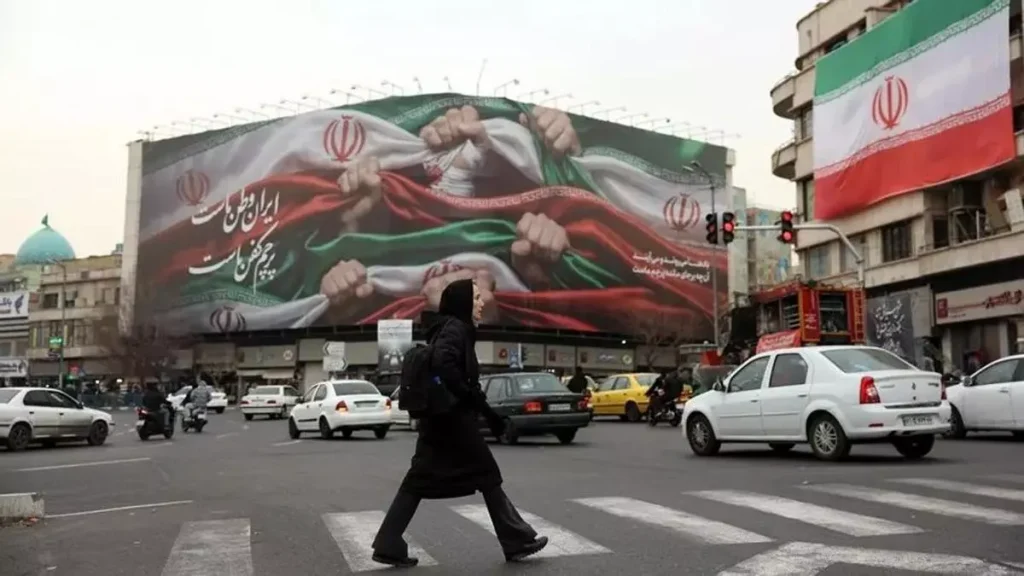
Cuba Votes Against Resolution Condemning Executions of Peaceful Protesters in Iran

Human Rights Council calls for end to repression following protests

The state response to peaceful protests has resulted in the deaths of thousands of people, including children, and a large number of injuries. / EFE

14ymedio biggerEFE/14ymedio, Geneva, 24 January 2025 — The UN Human Rights Council on Friday approved a resolution demanding that Iran end extrajudicial executions, enforced disappearances, torture and other abuses committed against peaceful protesters. In the vote, Cuba aligned itself with the regimes that rejected the text, a position that once again places Havana on the side of states accused of covering up or minimising serious human rights violations.

The resolution was adopted after a special session held in Geneva to discuss the repression unleashed in Iran since late December. The document “deeply deplores” the human rights situation in Iran, where the state’s response to peaceful protests “has resulted in the deaths of thousands of people, including children, and a large number of injuries,” according to the approved text.

The Council also urges the Iranian authorities to ensure that no one is sentenced to death or executed for crimes that do not reach “the threshold of the most serious,” and explicitly prohibits the imposition of capital punishment for acts committed before the age of 18. The resolution also stresses the need for all criminal sentences to be handed down by “competent, independent and impartial” courts, a requirement that clashes with repeated allegations of summary trials and proceedings without guarantees.

As part of the measures, the Council extended the mandate of the Independent International Fact-Finding Mission on Iran for two years, requesting an urgent investigation into abuses committed during recent protests, including the executions of demonstrators and the systematic repression of dissent. continue reading

Only seven countries voted against: Cuba, China, India, Indonesia, Iraq, Pakistan and Vietnam.

The text was approved with 25 votes in favour from the 47 members of the Council, including Bolivia, Chile, Colombia, the Dominican Republic, Ecuador, France, Italy, Japan, Mexico, the Netherlands, Spain and the United Kingdom.

Only seven countries voted against it: Cuba, China, India, Indonesia, Iraq, Pakistan and Vietnam.
The vote came after more than three hours of debate in a body from which the United States and Israel withdrew last year.

Havana’s vote reignited criticism from organisations and activists who question the legitimacy of a state with a sustained history of internal repression holding a seat on the Council. Several NGOs point out that Cuba does not allow peaceful demonstrations, criminalises dissent, imprisons opponents for political reasons and lacks independent courts.

For these groups, the presence of governments that systematically violate the fundamental rights of their citizens not only erodes the credibility of the Council, but also turns its debates into an exercise in double standards where perpetrators judge and acquit other perpetrators.

Translated by GH

____________

COLLABORATE WITH OUR WORK: The 14ymedio team is committed to practicing serious journalism that reflects Cuba’s reality in all its depth. Thank you for joining us on this long journey. We invite you to continue supporting us by becoming a member of 14ymedio now. Together we can continue transforming journalism in Cuba.

December Ended With 61 Cases of Abuse in Cuban Prisons and One Death in State Custody

The lack of official transparency prevents us from knowing the true extent of the abuses documented.

The most vulnerable groups are political prisoners, people of African descent, and those suffering from chronic illnesses. / EFE

14ymedio bigger14ymedio, Havana, 24 January 2025 — The human rights situation in Cuban prisons was once again highlighted in December 2025. According to the monthly report by the Cuban Prison Documentation Centre (CDPC), an independent organisation based in Mexico, at least 61 human rights violations and the death of one prisoner in state custody were recorded during that month. The data, compiled from testimonies from family members, direct complaints and monitoring of individual cases, confirms the persistence of abuse, medical neglect and arbitrary punishment within the island’s prison system.

The report identifies 48 prisoners affected by these violations, including seven women and 41 men. Although the figure is already alarming, the organisation itself warns that it is an underestimate, due to the lack of access to prisons, surveillance of prisoners and their families, and the criminalisation of any attempt at independent documentation. In this context of opacity, each complaint involves additional risks for those who make it.

Among the most serious cases documented in December are those of Yosvany Rosell García Caso and Leoncio Rodríguez Ponce, who are being held in prisons in the eastern provinces of Holguín and Las Tunas. Both have suffered multiple violations, especially after going on hunger strike to protest against their conditions of detention. Far from addressing their demands or assessing their state of health, the prison authorities chose to transfer them to other prisons, a common practice used as a form of punishment and isolation. continue reading

The violations recorded by the NGO are grouped into 30 different categories, revealing the extent of the abuses.

The report also laments the death of Yaciel Antúnez Antúnez, who was being held in the territorial prison for people with HIV in the province of Villa Clara. According to the documentation collected, the death was related to a sustained lack of medication and the absence of timely medical care. This case adds to other deaths that have occurred in recent years in Cuban prisons, many of them associated with untreated chronic diseases, malnutrition or prolonged medical negligence.

The violations recorded by the CDPC are grouped into 30 different categories, revealing the extent of the abuses. The most recurrent were harassment and repression, followed by poor living conditions in prison, denial of medical care, problems with food, restrictions on communication with the outside world, and the use of punishment cells. In practice, these categories overlap and create a systematically degrading environment for prisoners.

Complaints about material living conditions paint a critical picture: insufficient, poorly prepared or rotten food; shortages of drinking water; deteriorated infrastructure; lack of mattresses and bedding; constant presence of rodents and insects; and epidemic outbreaks without effective health control. Far from being exceptional, these conditions are part of everyday prison life and directly affect the physical and mental health of inmates.

The violations recorded in December were documented in 33 prisons and detention centres in 14 provinces of the country and in the special municipality of Isla de la Juventud.

Added to these shortcomings are reprisals against those who report them. The report documents restrictions and surveillance of communications with family members, arbitrary suspensions of calls and visits, transfers to punishment cells, forced transfers to prisons far from the place of residence, and physical abuse by guards. In many cases, threats serve as a deterrent to prevent further complaints and isolate the most active or “problematic” prisoners.

The violations recorded in December were documented in 33 prisons and detention centres in 14 provinces of the country and in the special municipality of Isla de la Juventud, confirming that these are not isolated incidents or problems concentrated in a specific region. The geographical spread of the complaints points to structural failures in the Cuban prison system and a policy of control that prioritises discipline and punishment over basic rights.

The CDPC also emphasises that certain groups are particularly vulnerable within prisons. These include people imprisoned for political reasons, people of African descent and those suffering from chronic illnesses. In many cases, these conditions of vulnerability accumulate, increasing exposure to abuse, medical negligence and arbitrary sanctions.

The organisation insists that the Cuban state’s lack of transparency is a major obstacle to understanding the true extent of what happens behind prison walls. The absence of official statistics, the refusal to allow access to independent observers, and the persecution of activists and family members who denounce abuses prevent effective oversight and encourage impunity.

Translated by GH

____________

COLLABORATE WITH OUR WORK: The 14ymedio team is committed to practicing serious journalism that reflects Cuba’s reality in all its depth. Thank you for joining us on this long journey. We invite you to continue supporting us by becoming a member of 14ymedio now. Together we can continue transforming journalism in Cuba.
Whether He Admits It or Not, Trump Only Has One Option in Venezuela

Between power vacuums and diplomatic maneuvers, the fate of the country hangs in the balance.

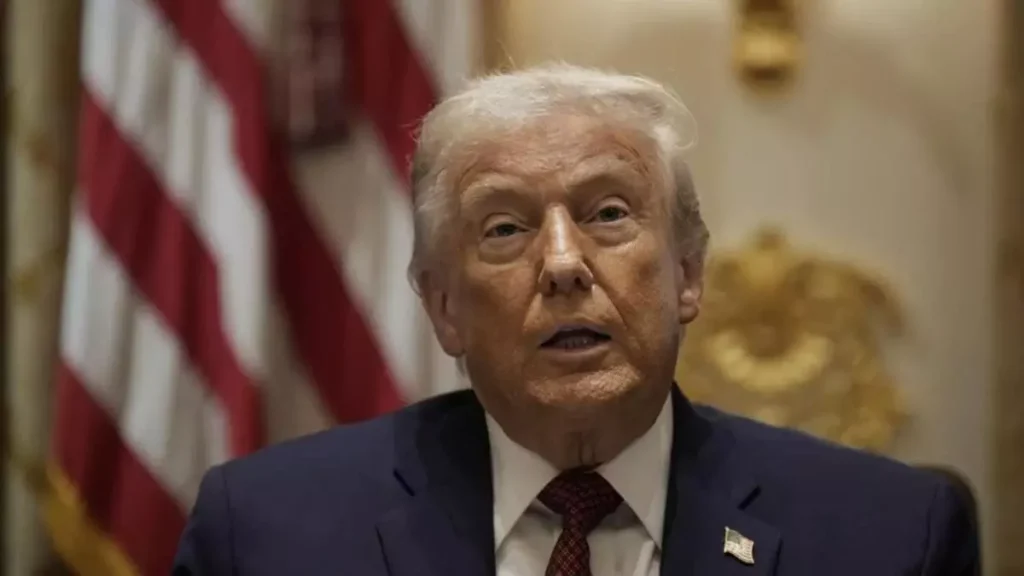
Dismissing María Corina Machado was, we now know, a political blunder and a childish emotional outburst. / 14ymedio

14ymedio bigger14ymedio, Federico Hernández Aguilar, San Salvador, January 22, 2026 -Reducing geopolitical threats to the US—that is, limiting the influence of Iran, China, and Russia (probably in that order)—is reason enough for someone like Donald Trump to order the removal of a dictator in South America. Nicolás Maduro was a prime candidate for a swift removal without the need for any military invasion. And that’s exactly what the Republican president did, removing the missing piece to better control the chessboard.

With the fall of Hugo Chávez’s successor, however, a whole new range of possibilities opens up. We already know that Trump lacks democratic credentials and even the slightest scruples to conceal this deficiency. We also know that his temperament is volatile, his ego colossal, and his thirst for power astounding. He has no qualms about saying what he thinks because he has never needed to think about what he says. His limits, as he himself has stated, depend on what he calls his “own morality,” an assertion that will surely be a topic of debate among psychotherapists and legal philosophers in the years to come.

But Donald Trump, like any politician lacking statesmanship, does have fears. He fears real challenges to his power. And he also possesses a keen sense for understanding when that power might truly be challenged. The midterm elections next November exert a real pressure on the president, because by then he must present tangible achievements on nearly every front his excesses have opened up. continue reading

But Donald Trump, like any politician lacking statesmanlike qualities, does have fears.

And it is precisely here that democracy in Venezuela can take root: in that small crack between unbearable narcissism and electoral realism. If figures like Marco Rubio have managed to push their boss down the path of a surgical and successful coup, they are now obligated to propose the long process of democratic restoration as a noble and lasting legacy. Not because Trump cares about Venezuelans, but because he cares about what posterity will say about him.

And a resounding failure in Bolívar’s land is not only now a possibility—not to mention a terrible legacy—but the rhetoric emanating from the White House has already made this harsh reality palpable for many observers, both within Venezuela and around the world. The time has come for the empty, boastful rhetoric to give way to pragmatism and skill, even for Trump’s own benefit.

Dismissing María Corina Machado as a key player in the Venezuelan transition was, as we now know, a political blunder and a childish emotional outburst (with a Nobel Prize to boot). However, as expected, someone finally told Trump that his tantrum would have consequences. Machado will have to return to Caracas and lead the reconstruction of her country, whether with the approval or the reluctance of the US president.

Long before that, it is true, the dangerous power vacuum left by Maduro must be filled. The remaining Chavistas, currently embodied by Delcy Rodríguez, are the necessary scapegoat for this purpose. Without someone like her, dismantling the oppressive structure in Venezuela would necessitate a military occupation in the short or medium term. And nobody wants that. Not even Trump; least of all his voters.

But restoring order in the barracks is very different from governing toward democracy. That task cannot be carried out by any figure from the fallen regime, among other things because none of them understand the meaning of the rule of law, separation of powers, or accountability. Whoever Washington negotiates with to oversee this period must know that their mission has an expiration date.

But restoring order in the barracks is very different from governing towards democracy.

Following the stabilization phase that will prevent the country’s collapse, the US will then have to provide on-the-ground protection and support to the legitimate opposition that defeated Maduro at the polls in July 2024, hopefully sooner rather than later. This support should be shared with other neighboring countries in the region. An overwhelming US presence is inadvisable.

Recognizing these fundamental conditions is the basis for a successful transition. If the US has truly chosen to guide the initial stability, with the promise of building the foundation for a full democracy, then Rodríguez’s role is merely instrumental, while Machado’s is essential. But until that happens, the Chavista past must now bear the risks of the necessary dismantling.

The release—not merely the release of political prisoners—is non-negotiable, as is the disarmament of the motorized armed groups under Diosdado Cabello’s command. Those who remain defiant must have their options limited: join the Colombian guerrillas on the border, attempt a futile internal military resistance, or go to prison. The important thing is that each remnant knows what they stand to gain if they challenge Delcy Rodríguez’s interim presidency.

At the same time, the opposition’s social base must receive the right messages, not more confusion. As Andrés Izarra, a former member of Chávez’s cabinet, wrote, “Trump’s triumph was taking Maduro out of the car while it was moving and getting in himself.” True. The problem is that not only has the car continued moving, but this vehicle—called Venezuela—has only one possible destination: democracy. Any other destination is a collision… and it will be fatal for whoever is on board, even if their last name is Trump.

__________________

COLLABORATE WITH OUR WORK: The 14ymedio team is committed to practicing serious journalism that reflects Cuba’s reality in all its depth. Thank you for joining us on this long journey. We invite you to continue supporting us by becoming a member of 14ymedio now. Together we can continue transforming journalism in Cuba.
Syphilis: A Hunter, a Bacterium, and the Deep Origin of a Modern Disease

Bone remains from 5,500 years ago provide new clues about the evolution of a global pathogen

Ancient DNA provides unique information about past microbial infections. / HHMI Tangled Bank Studios

14ymedio bigger14ymedio, Federico Kukso/SINC Agency, January 24, 2026 — Some 5,500 years ago, a hunter died about 30 kilometers southwest of what is now Bogotá, Colombia. He wasn’t tall—barely five feet three inches—and was a little over 45 years old, a considerable age for his time. Following the rites of his people, his family placed his body in a rock shelter that, centuries later, would be called Tequendama I.

No one knows this man’s name, what his voice sounded like, or the exact cause of his death. The only thing scientists have been able to confirm, after meticulous paleogenetic analysis, is that his skeleton held a secret all that time. “To our surprise, we found DNA from the bacterium Treponema pallidum, responsible for several diseases such as syphilis, yaws, and bejel, in a leg bone,” Colombian archaeologist Miguel Delgado, one of the authors of the research, told SINC.

In a study published in the journal Science, this researcher from the National University of La Plata (Argentina) and a team of Italian, American, German, and Swiss geneticists reveal that this is the oldest known molecular evidence of this pathogen in humans on a global scale. The finding redefines what was previously known about one of the infectious diseases that has most affected populations worldwide. continue reading

“Understanding the evolutionary history of this disease helps us to understand it in depth,” adds Delgado, known for his study of the peopling of the Americas. “It allows us to better understand its manifestation and its current spread.”

The Tequendama I archaeological site is located in the Bogotá Savannah in the eastern highlands of Colombia, a region that played a key role in the early human expansion in South America. Since 1969, archaeologists like Gonzalo Correal Urrego have recovered stone tools, rock art, animal bones, and hundreds of well-preserved human remains there, some dating back as much as 12,000 years. Among them is the bodyof this 1.58-meter-tall man, identified as TE1-3.

False-color electron microscope image of the spiral bacterium ‘Treponema pallidum’, which causes syphilis. / David Cox | CDC

Radiocarbon dating indicates that he lived approximately 5,500 years ago. There are no clear signs as to the cause of his death: no evidence of violence or complex diseases. “It was probably a natural death, a consequence of an extremely harsh lifestyle and a poor diet,” the archaeologist suspects.

The discovery of this bacterium’s DNA was, in a way, fortuitous, scientists explain. To reconstruct the evolutionary history of populations and the diseases they suffered, paleogeneticists usually examine DNA preserved in the inner ear or teeth, where the greatest amount of prehistoric genetic material is preserved. “However, when we took the samples, we had neither teeth nor a skull,” notes Delgado, a scientist at CONICET in Argentina.

After obtaining a license from the Colombian Institute of Anthropology and History (ICANH) – the regulatory body for archaeological heritage in Colombia – the researchers decided to take the risk and sent samples of this hunter’s tibia to different laboratories to perform ancient DNA analysis.

First, they sent the sample to the Human Paleogenomics Laboratory of German biological anthropologist Lars Fehren-Schmitz at the University of California, USA. Then, they sent it to the Population Genomics Group of paleogeneticist Anna-Sapfo Malaspinas at the University of Lausanne, Switzerland. Upon sequencing the material, the scientists noticed a type of DNA that did not belong to the individual, but rather to a helical bacterium: Treponema pallidum.

“It was truly surprising,” says molecular anthropologist Elizabeth A. Nelson of Southern Methodist University in Dallas, one of the authors of the article. “Recovering DNA from ancient pathogens is always a challenge, and Treponema pallidum is particularly difficult to detect. This is because, during the stages of skeletal lesion formation, the pathogen is usually present in the body at very low levels.”

This discovery extends the complex evolutionary history of this pathogen: it is three thousand years older than the human remains with T. pallidum found on the southeast coast of Brazil – reported in 2024 – and five thousand years earlier than the arrival of Europeans to the continent.

It is also one of the sexually transmitted infections that causes the most concern.

The geographic origin, evolution, and spread of treponemal diseases—each caused by subspecies of the diverse Treponema family of microbes —remain one of the most persistent debates in the history of infectious diseases. Without treatment, syphilis can lead to devastating neurological consequences: blindness, deafness, mental disorders, and even death.

It is also one of the sexually transmitted infections that causes the most concern: according to the World Health Organization, its global incidence is increasing year after year. Yaws, on the other hand, primarily affects the skin and bones and is transmitted through direct contact in warm, humid regions. Bejel and pinta, meanwhile, cause mouth ulcers and bone lesions.

Where and when the pathogens that have affected human societies first appeared remains a great mystery. Recent technological advances and reduced sequencing costs have enabled unprecedented study of the evolution of bacteria, viruses, and parasites.

In particular, research into ancient DNA (aDNA) of pathogens provides unique information about past microbial infections. This genetic material acts as a time capsule: it possesses remarkable stability, can be analyzed even after millennia, and allows us to observe how pathogens have genetically changed over time.

“The field of ancient DNA took off with the arrival of high-throughput sequencing in 2008,” recalls Argentine molecular biologist Nicolás Rascován, from the Pasteur Institute in Paris. “In 2011, the genome of an ancient pathogen was recovered for the first time from archaeological samples: that of the bacterium Yersinia pestis, responsible for the plague. It was then that the study of past diseases through DNA sequencing gained momentum.”

“By studying the DNA of ancient pathogens, we can trace their evolution as they developed.”

From that moment on, the burgeoning science of paleogenomics made it possible to reconstruct the deep history of the pathogens responsible for human infectious diseases, such as tuberculosis (Mycobacterium tuberculosis), smallpox (Variola virus), and hepatitis B (HBV). Various studies show that these infections emerged around 6,500 years ago, coinciding with the beginning of close contact between humans and domesticated animals, a change that increased the risk of zoonosis, that is, the transmission of pathogens from animals to people.

“By studying the DNA of ancient pathogens, we can trace their evolution as they developed,” explains Italian computational biologist Davide Bozzi of the University of Lausanne. “This can give us insights into how pathogens adapted to infect humans or how they became virulent. This knowledge is an essential first step in understanding and controlling the emergence of new viruses and bacteria or the reemergence of past diseases.”

In the spring of 1495, the French king Charles VIII invaded the Kingdom of Naples, driven by his desire to become emperor. After a brief period of success, his mercenary troops began to succumb to an invisible enemy: a disfiguring disease previously unknown to the world. Medical chronicles of the time describe fever, widespread skin eruptions, genital ulcers, intense bone pain, and a high mortality rate.

The French called it “the Neapolitan disease.” For the Italians, it was “morbus gallicus” (French disease). The Russians knew it as “the Polish disease,” and the Poles, “the German disease.” For the inhabitants of Flanders and North Africa, it was “the Spanish disease,” while for the Spanish, it was “the buboes.”

Within a few months, the disease spread across Europe along military and trade routes, leaving many survivors with neurological damage and permanent deformities. Today, this episode is considered the first documented historical record of syphilis in the Old World.

Some believed it was divine punishment. For astrologers, the epidemic was a consequence of two solar eclipses and the conjunction of Mars and Saturn. Others, however, blamed the sailors who returned from America with Christopher Columbus in 1493. “It is possible that 15th-century syphilis was the first globalized emerging infectious disease and a harbinger of all subsequent ones, from HIV/AIDS to COVID-19,” say anthropologists Molly K. Zuckerman and Lydia Bailey of Mississippi State University.

The term syphilis was coined only in 1530 by the Italian physician and poet Girolamo Fracastoro, in his poem Syphilis sive Morbus Gallicus (Syphilis, or the French Disease). In it, the shepherd Syphilius offends the god Apollo and, as punishment, unleashes a plague that ravages his people. The disease is named after him.

“It is possible that syphilis in the 15th century was the first globalized emerging infectious disease and a harbinger of all subsequent ones, from HIV/AIDS to COVID-19.”

Since then, several competing hypotheses have sought to explain its origin. The “Columbian hypothesis” maintains that syphilis was already widespread in the human populations of the Americas before the European conquest. The “pre-Columbian hypothesis,” on the other hand, states that the bacterium T. pallidum circulated in Eurasia during the medieval period and possibly earlier, but was mistaken for other diseases. The current consensus is that it was present on both continents, but in the Americas, a variant evolved into venereal syphilis. European contact would have accelerated its rapid global spread.

“The question of the origin of disease has been raised for centuries because people wanted to blame someone,” notes anthropologist Nasreen Broomandkhoshbacht of the University of California. “These narratives are harmful; they can be used to justify violence and the dehumanization of entire groups of people.”

Since its discovery in 1905, this bacterium has intrigued microbiologists, especially because it cannot be cultured in the laboratory. In 1943, penicillin revolutionized the treatment of syphilis. In 1998, its entire genome was sequenced. At the time, it was thought that this achievement would pave the way for the development of preventative vaccines. That has not happened.

Ancient T. pallidum DNA, identified in the tibia of this hunter-gatherer who lived 5,500 years ago in Colombia, provides valuable clues to understanding the evolution of the disease. By comparing this genetic material with that of modern strains of the same pathogen, it is possible to trace the changes it has undergone over time. In this case, phylogenetic analysis reveals that the genome of this bacterium corresponds to a previously unknown branch of Treponema pallidum, which diverged before the common ancestor of the current subspecies.

Although it clearly falls within the T. pallidum species, the TE1-3 strain exhibits remarkable genetic diversity and is distinct from modern strains. “What we found cannot be classified as syphilis,” cautions Broomandkhoshbacht.

False-color electron microscope image of the spiral bacterium ‘Treponema pallidum’, which causes syphilis. / Colombian Institute of Anthropology and History (ICANH)

“Syphilis, bejel, and yaws are very different diseases, and all are much more closely related to each other than to the pathogen we described in our research. We now know that in the past there was an even greater diversity of these pathogens, which could mean there was even greater variation in their behavior. Historical records of syphilis show that it has changed dramatically over the last 500 years, so even if what we found was a direct ancestor of syphilis (which it isn’t), we could assume that it behaved quite differently,” he adds.

The findings also suggest that T. pallidum predates the emergence of agriculture in the Americas. “This individual lived about 5,500 years ago, in a Middle Holocene hunter-gatherer community, long before the intensification of agriculture or the demographic changes of the colonial era—two factors often associated with the spread of infectious diseases,” Nelson adds.

In contrast, the TE1-3 lineage appears to be linked to the social and ecological conditions typical of hunter-gatherer societies: high mobility, interactions in small communities, and close contact with wild animals.

Even so, scientists find it striking that the remains of the studied individual show no visible signs of disease. “We cannot determine whether the absence of skeletal pathology reflects an early or latent phase of the infection,” they state.

Many questions remain unanswered. “We still don’t know how this ancient lineage was transmitted, whether animals played a role as reservoirs in the past, or whether the pathogen we identified represents an early or extinct lineage,” explains Elizabeth Nelson.

In addition to continuing their research in Colombia, the scientific team is expanding the scope of their work southward into the Andes, in collaboration with Peruvian colleagues. “To understand how the Treponema lineage identified in Tequendama evolved, it is essential to study other individuals over time and in different regions,” says anthropologist Lars Fehren-Schmitz. “Likewise, to better understand the ecology of diseases, research should not be limited to the remains of human ancestors, but should also extend to the analysis of animal remains.”

____________

COLLABORATE WITH OUR WORK: The 14ymedio team is committed to practicing serious journalism that reflects Cuba’s reality in all its depth. Thank you for joining us on this long journey. We invite you to continue supporting us by becoming a member of 14ymedio now. Together we can continue