“We Will Die With Our Boots on Defending the Revolution,” Warns Major ‘Ernesto’

State Security forbids Dagoberto Valdés from any contact with the US ambassador and assures that what happened in Venezuela, where there was “betrayal and collaboration with the enemy,” will not happen in Cuba.


Valdés explained that the meeting with Mike Hammer was related to the distribution of humanitarian aid donated by the United States through the church. / Facebook / US Embassy in Cuba

14ymedio bigger14ymedio, Havana, 23 January 2025 —  The Center for Coexistence Studies (CEC) confirmed that Dagoberto Valdés Hernández was arrested and interrogated this Friday at the State Security headquarters in Pinar del Río, in an operation led by Majors Ernesto and Manuel, both officers of the political police. The arrest, carried out without a warrant or the right to be summoned, was motivated—according to the officers themselves—by a recent visit Valdés made to Mike Hammer, Chargé d’Affaires of the United States Embassy in Cuba.

According to the statement released by Convivencia, officers arrived at Valdés’s home in the morning, accompanied by a police patrol. They ordered him to clear the house of any visitors present, lock it, and accompany them immediately, without explaining the reason for his arrest or allowing him to make a phone call. Valdés was taken directly to the State Security headquarters in the provincial capital.

After learning of the arrest, members of the Community Relations team went to the Police Headquarters to try to locate him. The officer on duty stated that they had not received any patrol cars that morning. Given this response, they went to the State Security headquarters, where initially no information was provided either. Only after insisting on speaking directly with someone in charge did Majors Ernesto and Manuel appear at reception to inform Yoandy Izquierdo Toledo that Valdés was being held there.

In that same exchange, the officers told Izquierdo that he had “saved them a trip because they were going to look for him too,” demanded he hand over his identity card, and informed him that he would be interrogated as well. Valdés was taken to internal offices, where an interrogation of more than two hours took place, involving the head of the Legal Department of State Security, Major Ernesto—the officer who “handles” Convivencia—Major Manuel, head of the Counterrevolution Brigade in the province, and a young officer who did not identify himself.

The legal officer explained that the reason for the arrest was Valdés’ visit to Mike Hammer

During the interrogation, the legal officer explained that the reason for the arrest was Valdés’s visit to Mike Hammer. In that context, he accused him of terrorism and of collaborating with a foreign power that—he claimed—had threatened Cuba with military intervention. The officers asserted that they would not allow the U.S. diplomat to contact people continue reading

within the country to “use them for his own purposes” in the current national situation and affirmed that they would “die with their boots on defending the Revolution.”

Major Ernesto read excerpts from a column published by Valdés in Convivencia on Monday, January 19, in which he urged preparations for peaceful change in Cuba under the premise that “the future is already here.” He asked if this text was related to the visit to the diplomat. Valdés responded by quoting his own article, in which he recalled the words of Saint John Paul II, according to which Cubans “are and must be the protagonists of our own personal and national history,” emphasizing that change must be undertaken by the citizens themselves.

Valdés further explained that the meeting with Hammer was related to the distribution of humanitarian aid donated by the United States through the church, and that the purpose of the conversation was to learn his opinion on the process. Despite this, the officials insisted on portraying the contact as a hostile act and reiterated warnings about future interactions with foreign diplomats.

At the conclusion of the interrogation, the officers informed Valdés that it was a warning document, which he refused to sign. They advised him not to respond to any further invitations from the U.S. diplomat or participate in activities organized by the Embassy, ​​although they indicated that he could travel to Havana for reasons related to the Church, studies, family matters, or caring for sick people.

The arrests and interrogations confirm the state of panic gripping the regime’s repressive forces.

Later, Yoandy Izquierdo was interrogated under the same pretexts. The officers warned him about alleged manipulation by the U.S. Chargé d’Affaires and other embassies, demanded he “maintain the profile” of Convivencia, and asserted that sharing the ideas of the “enemy” also constitutes a crime.

They alluded to Venezuela as an example of what, they said, they would not allow to happen in Cuba, that they “knew everything” because of Cuban intelligence reports, but there “there was betrayal and collaboration with the enemy,” and that here that was not going to happen because “the Revolution is stronger than ever.”

Izquierdo responded that he is responsible for what he writes and for his work with the Coexistence Project and the Center for Studies for over 15 years, but not for official interpretations or “hypothetical futures.” He also questioned the proportionality of the police deployment to address the content of the interrogation, to which Major Ernesto replied that it was a matter of “action-reaction” due to the gravity of the situation in the country.

The arrests and interrogations confirm the state of panic experienced by the regime’s repressive forces in the current regional geopolitical scenario, marked by the capture of Nicolás Maduro and the abrupt realignment of alliances and loyalties on the Cuba-Venezuela axis.

____________

COLLABORATE WITH OUR WORK: The 14ymedio team is committed to practicing serious journalism that reflects Cuba’s reality in all its depth. Thank you for joining us on this long journey. We invite you to continue supporting us by becoming a member of 14ymedio now. Together we can continue transforming journalism in Cuba.

Cuban State Security Arrests Dagoberto Valdés, Director of the Center for Coexistence Studies

Dagoberto Valdés and his colleague Yoandy Izquierdo are in the same situation; Major ‘Ernesto’ has not given any explanation

Dagoberto Valdés (left) and Yoandy Izquierdo (right),  members of the Center for Coexistence Studies, were detained at the headquarters of the Technical Investigations Department (DTI) in Pinar del Río. / Facebook / Coexistence

14ymedio bigger14ymedio, Havana, January 23, 2025 —  Catholic intellectual and activist Dagoberto Valdés Hernández was arrested this Friday by State Security agents at his home in Pinar del Río, in an operation that also involved police officers. The arrest was reported by the Center for Coexistence Studies (CEC), an organization Valdés has led for more than two decades and which has become one of the most enduring spaces for independent civic thought in Cuba.

According to information released by Convivencia, the operation was led by Major Ernesto, a State Security officer who “handles” that organization. The officer arrived at Valdés’s house accompanied by a police patrol and took him away without explaining the reasons for the arrest or where he was being taken. Since then, members of the CEC have tried to locate him at Police Headquarters and at the State Security offices in Pinar del Río.

The arrest wasn’t limited to Valdés. Shortly afterward, Yoandy Izquierdo, a member of the Community Relations team , went to the headquarters of the Technical Investigations Department (DTI) in Pinar del Río to inquire about Valdés’s situation. There, he was received by Major Ernesto himself, who proceeded to arrest him: “You’ve saved me a trip, because I was just about to come looking for you too.” Izquierdo had left his phone with some friends before being detained at that DTI headquarters, located at kilometer 4 on the road to San Juan y Martínez.

A central figure of the Cuban Catholic laity, Valdés has been for decades a benchmark of critical thinking not aligned with power

Convivencia confirmed to this newspaper that both Dagoberto Valdés and Yoandy Izquierdo are being held at that police facility. The manner in which the arrest was carried out once again highlights a recurring practice of the Cuban repressive apparatus: detention without a warrant, without formal notification to the family, and without information about the detainees’ legal status. It is unknown whether this is a case of enforced disappearance continue reading

of short duration, a tactic designed to sow uncertainty, intimidate those around them, and prevent an immediate public reaction.

Dagoberto Valdés is not a new name in the files of State Security. An agricultural engineer by training and a central figure in the Cuban Catholic laity, he has been for decades a leading voice of critical thought not aligned with the regime. First through the magazine Vitral in the 1990s, and later through Convivencia, Valdés has promoted a discourse centered on human dignity, citizen participation, and the need for a peaceful and democratic transition in Cuba. This combination of structured thought, moderate language, and persistence has proven particularly uncomfortable for the regime.

The harassment against him and his team has been systematic. Interrogations, police summonses, veiled threats, smear campaigns, and temporary detentions are all part of the repertoire used against the center. On several occasions, Valdés has been stopped on the road, detained for hours, and subjected to interrogations focused on his international connections, the magazine’s funding, and the center’s contacts with other civil society actors. None of these actions have resulted in legal proceedings, but they have served to maintain constant pressure.

Since its founding, the Convivencia Studies Center has been committed to analyzing Cuban reality from a pluralistic perspective, addressing topics such as the economy, education, culture, and citizens’ rights.

This Friday’s arrest comes amid a tightening of political control and growing intolerance toward any form of autonomous organization. While the government insists on its discourse of “unity” in the face of the economic and social crisis, coupled with fears of military actions similar to those carried out by the US in Caracas, repression against critical voices, including those advocating dialogue and non-violence, is intensifying.

In recent days, other prominent figures in the critical press and intellectual circles have experienced a similar ordeal. Journalist Henry Constantín, director of La Hora de Cuba, was released after being detained and held incommunicado for 44 hours in Havana. A few days later, writer and columnist Jorge Fernández Era was detained for 16 hours, also with his whereabouts unknown, after going out to carry out his monthly civic protest.

Since its founding, the Center for Coexistence Studies has been committed to analyzing Cuban reality from a pluralistic perspective, addressing topics such as the economy, education, culture, and civil rights. Its texts, seminars, and proposals have avoided the language of direct confrontation, which has not prevented the authorities from taking radical measures against the project. For State Security, simply thinking about Cuba outside the official narrative constitutes a threat.

On social media, activists, intellectuals, and believers have expressed their concern and demanded Valdés’s immediate release. This reaction, however, has once again been met with the usual wall of official silence.

____________

COLLABORATE WITH OUR WORK: The 14ymedio team is committed to practicing serious journalism that reflects Cuba’s reality in all its depth. Thank you for joining us on this long journey. We invite you to continue supporting us by becoming a member of 14ymedio now. Together we can continue transforming journalism in Cuba.
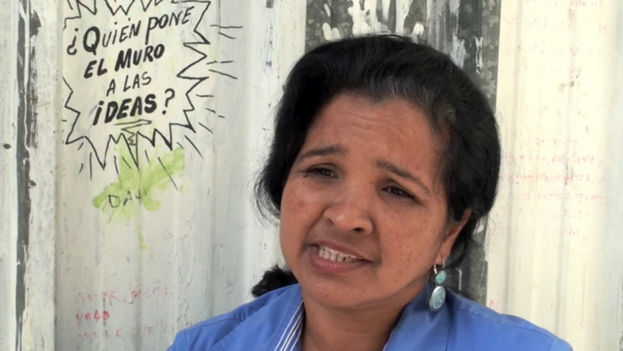
Publisher of ‘Coexistence’ is Incommunicado in State Security Headquarters / 14ymedio, Mario Penton

Karina Gálvez, editor of the magazine Coexistence in Pinar del Río. (Alongthemalecon)

14ymedio bigger14ymedio, Mario Penton, Miami, 21 January 2017 — The editor of the magazine Convivencia (Coexistence), the economist Karina Galvez, is still being held incommunicado 24 hours after a spectacular police raid on her home in Pinar del Río.

Gálvez is accused of tax evasion, something that the editorial team of the Coexistence Study Center precluded in a press release.

“Karina has no business, nor is she self-employed in her work, nor does she work for the Cuban state,” says the letter signed by the team of the first think tank in the western part of the island. continue reading

The members of Convivencia explain that the accusation refers to the sale of Galvez’s home: “All the transactions carried out in 2014 are in order and all corresponding tax payments have been made.”

According to the note, the detainee is being advised by the team of lawyers of the International Legal Consultancy in Pinar del Río.

Karins Gálvez’s house is sealed and friends and relatives are prohibited from entering. According to the official who identified herself as Major Odalys, the house is “occupied” and Galvez will be held incommunicado for seven days, after which she may receive a visit to give her personal cleanliness supplies.

“They have not taken anything from the house, what they have done is pasted on the doors and the garage papers handwritten in ink,” Yoandy Izquierdo, a member of the editorial team ‘Coexistence’, told 14ymedio.

According to Izquierdo, after a week, police and state security officials will determine whether they will impose “a precautionary measure, bail or imprisonment.”

The break-in of Galvez’s house came within a few hours of the inauguration of the new interior minister, Julio César Gandarilla, who exercises command of the National Revolutionary Police and State Security forces.

Dagoberto Valdés Hernández, director of the Coexistence Study Center, has highlighted the increase in repressive actions against the center, which has no political affiliation.

“This is part of the harassment that the Study Center has been suffering intensely for months. I was warned that life would be more difficult for us and we are not in a time of maintaining alternative positions,” Valdes said in a telephone conversation with 14ymedio.

“What they have done to Karina Gálvez is a clear violation of human rights and it seems to concern the production of thought for the future of the country, when precisely what we Cubans need sit down around the table and discuss how we can solve the serious problems our nation is experiencing,” he added.

On Christmas Eve, Galvez had been summoned to the Department of Immigration and Immigration (DIE) where she was questioned about her travels outside Cuba.

Valdés himself underwent an intense interrogation last October when she was told that her academic activity represented a danger.

On November 25, State Security banned a meeting of the Center that was intended to address the issue of culture and education in the future of Cuba.

“The repressive wave grows and spreads like we have never seen. We are very worried and we want to make a warning call,” said Valdés.

A Gift from Pinar del Rio on Padre Felix Varela’s 225th Birthday / Intramuros, Yoandy Izquierdo Toledo

I remember every November 20th for a special reason (besides being the birthday of a dear aunt, and of a friend): on this day the Cuban nation gave birth to one of the preeminent pillars of our founding history, Father Felix Varela.

“The complete patriot,” as Martí called him, knew how to merge science and conscience in order to carry out the difficult art of showing the way toward freedom and social justice.

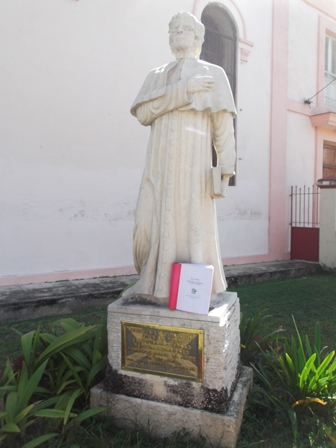
Pinar del Rio has the only full-body statue of Varela on the island, located on the grounds of the Cathedral. The work, done in marble from San Juan y Martinez by the sculptor José M. Pérez Veliz, shows us Varela in a walking position, looking into the distance, like someone watching over the fate of the city and the nation. In his left hand he holds his greatest work, Letters to Elpidio. About Impiety, Superstition and Fanaticism. He seems to be telling us from its pages: “Dear ones, never be arrogant with the weak or weak with the powerful.”

Twenty years after the founding of the now-defunct Center for Civic and Religious Training (CFCR) in Pinar del Rio, and seven years after the unveiling of this sculpture, we members of the Coexistence team, the successor to the work of the Center and its magazine Stained Glass, made a pilgrimage to the foot of this wonderful work in order to offer of our project of ethical and civic education – an edited volume of Coexistence Issues, containing courses taught by CFCR from 1993 to 2007.

Inspired by the Varelian maxim that “There can be no homeland without virtue,” we offer this book as a continuation and application of the legacy of the first one who taught us to think. It is a gift from Pinar del Rio to the Father of our culture.

Yoandy Izquierdo Toledo (Pinar del Río, 1987).

Diplomate in Microbioology, Manager of Coexistence Issues, Resides and works in Havana.

21 November 2013