Pemex’s decision comes amid a U.S. campaign to completely cut off fuel supplies to the Island
 14ymedio, Madrid, January 27, 2026 – Mexico’s state-owned oil company Pemex canceled an oil shipment to Cuba that had been scheduled for this month, according to U.S. outlet Bloomberg. According to the information published on Monday, the company had planned a mid-January shipment aboard the Swift Galaxy, flying the Panamanian flag, which was supposed to arrive by the end of the month, but it disappeared from the schedule.
Bloomberg reports that it contacted both Pemex and Mexico’s Ministry of Energy, which did not immediately respond to its inquiry. Likewise, several Mexican media outlets, such as La Jornada and Sipse, tried to reach Pemex with mixed results. The former was told that they had “no information on the matter,” while the latter says it turned to experts due to the lack of comment from the company. “Sources linked to the energy sector indicate that the adjustment could be related to factors such as crude availability, logistical planning, and international market conditions,” they note.
The decision became known almost two weeks after U.S. President Donald Trump stated on social media: “There will be no more oil or money for Cuba: zero.” The message was part of a reference to how the regime had benefited from Venezuelan crude, helping ensure its survival, but it raised doubts as to whether it applied only to PDVSA products, which Trump now effectively controls, or extended to other countries as well.
“Sources linked to the energy sector indicate that the adjustment could be related to factors such as crude availability, logistical planning, and international market conditions,” they note
A few hours later, U.S. Secretary of Energy Chris Wright said in an interview with CBS that the policy would be to “allow” Mexico to continue sending crude to Cuba. According to Bloomberg, it was precisely during those days that the Swift Galaxy tanker should have been loaded.
Mexican President Claudia Sheinbaum also spoke by phone with Donald Trump on January 13, in a call during which it was speculated that the situation with Cuba might have been addressed, but both sides denied it. “We had a very good conversation with the President of the United States, Donald Trump. We talked about various topics, including security with respect for our sovereignties, reducing drug trafficking, trade, and investments,” the president said on social media.
Later, at her morning press conference, Sheinbaum explicitly stated that she did not speak with Trump about Cuba, but that she could facilitate negotiations between the two countries. “Obviously, if Mexico were to become a vehicle for communication between the United States and Cuba, both sides would have to agree, evidently,” she said, hours after the American president had demanded that Havana sit down to negotiate and even claimed that they already were, something denied by the Cuban side.
The Mexican president has since insisted that cooperation with Cuba is historic and will continue, but this Friday Reuters published a report based on statements from three high-level sources who said the Mexican government is evaluating whether to maintain, reduce, or suspend crude supplies to the Island out of fear of retaliation. “There is real fear of antagonizing Trump just when Mexico needs room to negotiate with Washington,” one official told the agency. The report coincided with Politico publishing that the White House is considering invoking the Helms-Burton Act to “impose a total blockade on oil imports made by Cuba.”
Mexican officials said there has been a growing presence of U.S. Navy drones over the Gulf of Mexico, following routes similar to those of tanker ships carrying Mexican fuel to Cuba. “It’s impossible not to read that as a message,” one source admitted.
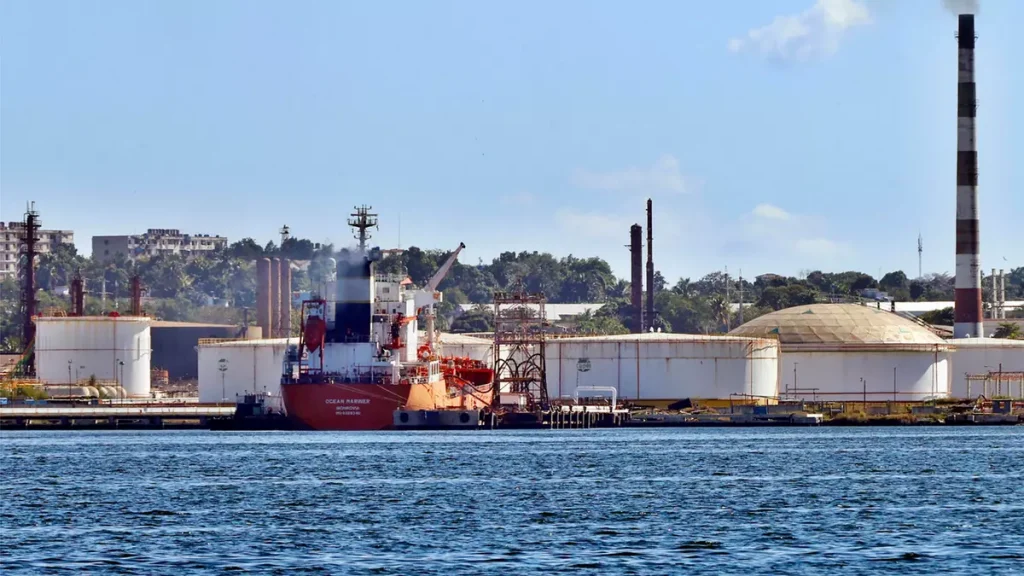
The cancellation of the January shipment, in any case, predates those reports, but the context is unmistakable. The last Pemex crude shipment to reach Cuba was aboard the Ocean Mariner on January 9, with around 85,000 barrels of fuel from Veracruz.
In 2023, exports totaled about 16,000 barrels per day of oil and derivatives (worth roughly $300 million). In 2024, cooperation increased to 20,100 barrels per day, 20% more (although derivatives fell by 18%), with an estimated total value of $600 million.
Between January and September 2025, Mexico supplied Cuba through Pemex subsidiary Gasolinas Bienestar with around 19,200 barrels per day, according to official documents: 17,200 barrels of crude and 2,000 of derivatives. University of Texas expert Jorge Piñón estimates that in the first 13 months of the Sheinbaum administration, from October 2024 to November 2025, the average was 8,700 barrels per day.
Pemex is currently the largest oil supplier in the absence of Venezuelan crude, since contributions from Russia, Iran, and Algeria have been very limited, at least until now. Even so, Cuba, which needs at least 110,000 barrels per day and produces only 40,000 of heavy crude (usable only for thermal power plants) is in a severe energy crisis, and blackouts are beginning to exceed 40 uninterrupted hours in several provinces.
Translated by Regina Anavy
____________
COLLABORATE WITH OUR WORK: The 14ymedio team is committed to practicing serious journalism that reflects Cuba’s reality in all its depth. Thank you for joining us on this long journey. We invite you to continue supporting us by becoming a member of 14ymedio now. Together we can continue transforming journalism in Cuba.