Only One of the 20 U-15 Cuban Players Who Won Silver in the 2022 World Cup Remains in Cuba

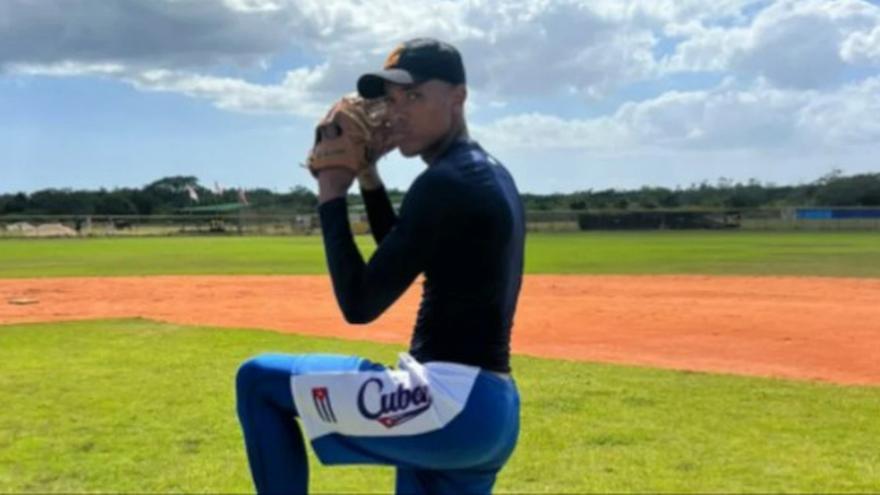
Yordan Rodríguez traveled to the Dominican Republic with the purpose of signing with the MLB. (Facebook/Francys Romero)

14ymedio bigger14ymedio, Havana, 28 January 2024 — With the departure from Cuba on January 26 of the prospective pitcher Yordan Rodríguez, only one of the members of the under-15 baseball team that attended the World Cup of that category in 2022, held in the State of Sonora, Mexico, remains on the Island.

According to journalist Francys Romero, the athlete traveled to the Dominican Republic where he seeks to sign a contract with a Major League Baseball organization [MLB]. Rodríguez, a native of the province of Guantánamo, has an excellent physical condition: a height of 6 ’4″ and pitches that reach 89 mph.

Yordan Rodríguez, in the last U-15 Championship in Cuba, offered a no-hitter, and some time after the World Cup he led the pitchers of his category in strikeouts (58). In addition, he averaged 2.66 effectiveness. continue reading

The massive exodus of the members of the team that won the silver medal in the 2022 event deals a hard blow to the future of national sports in Cuba

The massive exodus of the members of the team that won the silver medal in the 2022 event deals a severe blow to the future of national sports in Cuba, by directly undermining its reserve of young players. Just three days ago, 14ymedio published the departure from the Island of outfielder Maikol Rodríguez, also to the Dominican Republic.

Romero explains that the figures for this team represent “something unprecedented.” In just 14 months, 95% of the roster has left the country (19 out of 20 players). “Previously, almost all the national teams had players in lower categories who left, but not in such a short period of time or in such a high percentage as that of this Cuba U-15 of 2022,” adds the sports journalist.

In the text The dream and reality. Stories of the emigration of Cuban baseball (1960-2018), Romero says that every year the average age of the baseball players who leave the Island decreases. The average age was 24.4 years in 2015; three years later it was reduced to 17.9.

Romero explains that the figures for this team represent “something unprecedented”

With his departure from the Island, Yordan Rodríguez joins the list of former members of his team who left Cuba with the aspiration to enter the MLB and thus improve their economic and professional training conditions.

Until the 25th, in addition to Maikol Rodríguez, the following members of the U-15 team had left Cuba: Alejandro Cruz, Mailon Batista, Robier Hernández, Alex Santiago, Pedro Danguillecourt, Jaider Suárez, Dulieski Ferrán, Ernest Machado, Yosniel Menéndez, Roberto Peña, Segian Pérez, Alejandro Prieto, Danel Reyes, Ronald Terrero, Jonathan Valle, Yunior Villavicencio and Cristian Zamora. Only the catcher, Yaidel Ruíz, has remained in the country.

Translated by Regina Anavy

____________

COLLABORATE WITH OUR WORKThe 14ymedio team is committed to practicing serious journalism that reflects Cuba’s reality in all its depth. Thank you for joining us on this long journey. We invite you to continue supporting us by becoming a member of 14ymedio now. Together we can continue transforming journalism in Cuba.
With the Cancellation of Flights to Cuba, Argentina’s Favors to Havana Will End

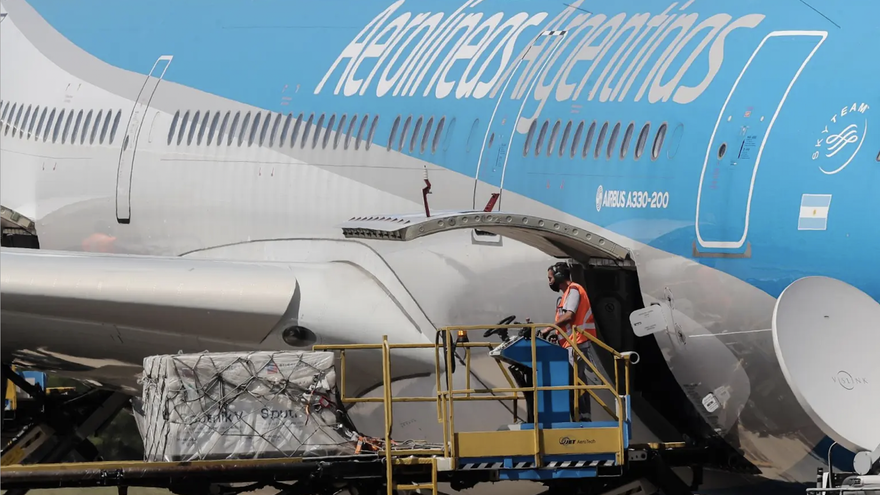
The company had already ceased operations in Havana in 2016. (EFE)

14ymedio bigger14ymedio, Madrid, 25 January 2024 — A little over a year and a half after Aerolíneas Argentinas re-established its flights to Cuba, the company has announced that it is canceling them again. This Thursday, according to local media information with inside company sources, the route is not profitable, so starting next March 8 they will suspend the weekly frequency that until now connected the South American country with Havana via Cancun.

Each flight to the Cuban capital from Buenos Aires, airline sources declared to Infobae, had an average of $16,000 in losses. In 2023 alone, the company lost half a million dollars, although, according to Clarín, the figure would have been higher if it had not been subsidized by the Government.

“Those passengers who already purchased their tickets for that destination will be transferred to flights through other airlines at no additional cost”

Those passengers who already purchased their tickets for that destination will be transferred to flights through other airlines at no additional cost.  If they wish to cancel their trip as a result of this modification, the full value of the ticket will be refunded”, the company reported. continue reading

The measure was taken after the appointment of a new company manager, Fabián Lombardo, who will implement the transfer of shares, from the State to private hands in Aerolíneas Argentinas decreed by the brand-new president, Javier Milei.

Although the previous government of Peronist Alberto Fernández assured that the route to Cuba is “highly requested by agencies and tour operators”, the data showed that Cuba is not a relevant tourist or commercial destination for Argentina.

The company had ceased operations in Havana in 2016. Previously, the Government of Mauricio Macri had made the decision to restructure the airline to reduce the deficit it represented for the State: nationalized in 2008, the company cost to the country was around two million dollars per day.

The savings plan significantly affected the aircrafts and, consequently, the routes operated were reduced

The savings plan significantly affected the aircrafts and, consequently, the routes operated were reduced. At that time, those responsible argued that Cuba had become a very expensive destination, something that the company itself has now confirmed again.

The libertarian Milei already made it clear that “current foreign policy fundamentals differ from the previous one”, regarding his country’s refusal to finally be part of the BRICS group of emerging countries (Brazil, Russia, India, China and South Africa).

In his participation at the World Economic Forum in Davos last week, he once again reiterated his position regarding economic systems such as the one that governs Cuba, saying that socialism “is, always and everywhere, an impoverishing phenomenon that failed in every country where it was tried.  “It was an economic failure, it was a social failure, it was a cultural failure and it also claimed the lives of 150 million human beings.”

14ymedio, Madrid, January 25, 2025 — A little more than half a year after Aerolíneas Argentinas reestablished its flights to Cuba, the company has announced that it is canceling them again. According to local media this Thursday with sources in the company itself, the route is not profitable, so starting next March 8 they will suspend the weekly frequency that until now connected the South American country with Havana via Cancun.

Translated by Norma Whiting

____________

COLLABORATE WITH OUR WORKThe 14ymedio team is committed to practicing serious journalism that reflects Cuba’s reality in all its depth. Thank you for joining us on this long journey. We invite you to continue supporting us by becoming a member of 14ymedio now. Together we can continue transforming journalism in Cuba.

‘Bosses at State-Owned Businesses Are Living on Another Planet’, Cubans Complain

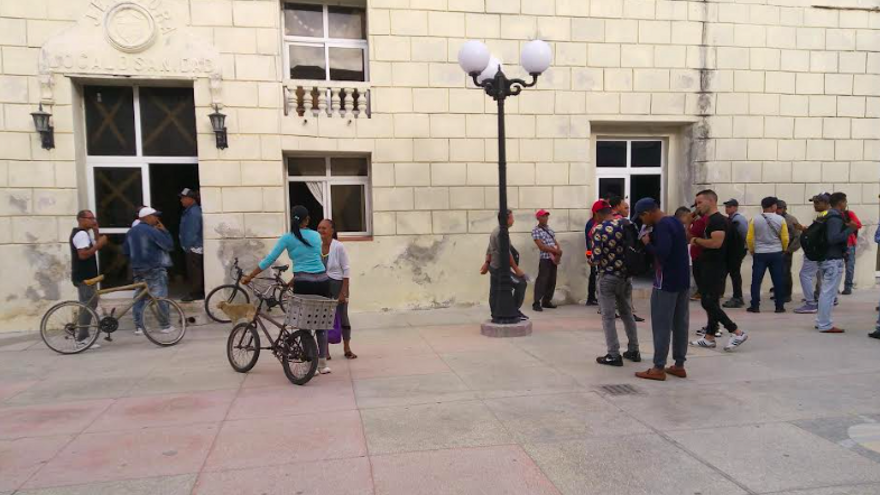
Manzanillo’s Municipal Department of Labor, where a job fair was held on Monday. (14ymedio)

14ymedio bigger14ymedio, Juan Matos, Manzanillo (Granma province), 23 January 2024 — “No private companies were invited? We’re wasting our time,” one young man was heard saying as he left the “job fair” held on Monday at the local headquarters of the Ministry of Labor in this provincial port city in Granma province. Given a choice between accepting a position at a state company or remaining unemployed, the local attendees had only to listen to the job descriptions to realize the potential employers had nothing to offer them.

They had gone to the event — yet another attempt to rejuvenate the public sector workforce, which has been decimated by the loss of personel to the private sector or to emigration – with the hope that the owner of some MSME (micro, small or medium sized business) or self-employed individual might hire them. The focus, however, was unmistakably on the public sector as confirmed by the fact that the event was held at the ministry’s Manzanillo offices.

Instead of talking about salaries, Daniel Rivero, a specialist at the Municipal Department of Labor, preferred instead to focus on the real “benefits” of working for the state: job security, training sessions and community improvement. Still, there was no disguising the terrible working conditions and low pay at places like Manzanillo’s Azcuba subsidiary or the Paquito Rosales tobacco factory. Not to mention the salary — the “tempting” figure of about 6,000 pesos per month — that was being offered to those willing to join a Matanzas construction brigade. Meanwhile, monthly pay for a night watchman was 2,200 pesos while that of an accountant was 3,968. Last on the list were farm workers, who were being asked to toil away for a mere 2,500 pesos a month. continue reading

“I am not working for the state just so I can be poor,” murmured one of the attendees, who was wearing pullover with an American flag emblazoned on it. “I just came for the hell of it. The openings are for night watchmen and cigar rollers, both with ridiculous salaries,” claimed another as he was leaving the building.

The public sector is experiencing an unprecedented human resources crisis and needs workers but, unfortunately, has very little to offer them

At this rate, no one is going to get a job,” predicted another participant when told that no independent entrepreneurs or MSME managers would be attending the fair. The most accurate summation of the day was provided by another young man when he learned who the majority of the participants were: “The heads of state companies live on another planet.”

There is one thing, however, that was clear from Rivero’s explanation: the public sector is experiencing an unprecedented human resources crisis and needs workers. Unfortunately, it has very little to offer them. One example can be found in Guantanamo, the neighboring province, where the government has sponsored several job fairs in order to demonstrate the purported success of this initiative.

“Multitudinous… great opportunity… a festival of culture… knowledge.. labor law.” The state media was effusive in its praise of the Guantanamo job fair, which was held on December 8. But behind the accolades hid an alarming number: 2,200 job openings.

To convince attendees to sign on, job fair organizers had to mobilize 518 potential employers, or company leaders, from across the province. They did manage to somewhat “reduce the territory’s unemployment rate,” though state media avoided revealing the number of employement contracts signed during the event. The minister of labor herself, Martha Elena Feitó, announced the job fair on her X account, applauding its results.

Only those who are desperately looking for a job come to listen to what the state has to say on labor issues

It seems job fairs like this are here to stay, at least for the next few months. Companies’ social media pages, state television and government press outlets announce a new one every week in an effort to save the public employment sector. What all of them have in common are low salaries and indifferent attendees.

14ymedio has attended several of these fairs throughout the country. Typically, potential employers wait around until, at the last moment, some straggler shows up and saves the day by accepting a job offer. Only retirees who need to return to the workforce, or young people who are desperately looking a job, come to listen to what the state has to say on labor issues.

Furthermore, all information is conveyed by word of mouth. There is no brochure or copy of a standard contract to clarify the situation in which the future worker will find himself. Blindly, with the vague promise of a salary increase, a few attendees showed up at a job fair at Havana’s Rubén Martinez Villena high school last Saturday. They left no better off than when they arrived. The current salary for a teacher, approximately 5,600 pesos a month, scared off most of the candidates.

It was the same situation last Thursday at the headquarters of the Havana Electric Company. The most attractive salaries went to linemen – a maximum of 12,000 pesos – but the positions were quickly filled. The pay for accountants, inspectors, economists, dispatchers and meter readers — workers whose stampede to the private sector has been unstoppable — did not exceed four figures.

____________

COLLABORATE WITH OUR WORKThe 14ymedio team is committed to practicing serious journalism that reflects Cuba’s reality in all its depth. Thank you for joining us on this long journey. We invite you to continue supporting us by becoming a member of 14ymedio now. Together we can continue transforming journalism in Cuba.

Taxes Triple on Imported Tobacco and Alcohol in Cuba

Cubans believe that national tobacco will be scarce, and it will not be possible to cover demand with the increase in the tax on imports. (14ymedio)

14ymedio bigger14ymedio, Madrid, 26 January 2024 — The Cuban Government announced on Thursday the increase in tariffs for the import of cigars, cigarettes, rum and other alcoholic beverages. For all these products, the general rate becomes 30%, while for countries considered a “favored nation” it will be 15%. In both cases, the percentage is tripled, since before it was 10% and 5%.

These increases were announced by the ministers of Economy and Planning, Alejandro Gil, and of Finance and Prices, Vladimir Regueiro Ale, in a Round Table program at the end of December.

“We are increasing tariffs for these products that are similar to national production, which we must continue to stimulate and protect, favoring exports and the greater presence of our products in the national market,” Regueiro explained. continue reading

Although finished products in general were mentioned, in the Official Gazette published yesterday, tobacco and alcohol are the only ones included

 Although finished products in general were mentioned, in the Official Gazette published yesterday, tobacco and alcohol are the only ones included. We will have to wait to see if the measure extends to other products and if there will be shortages because of the increased tariffs.

The Gazette also includes another resolution about tariffs on the import of raw materials, inputs and intermediate goods. They are reduced by half “for production processes, with a special focus on food and agricultural production,” the text reads.

The objective of these measures, as announced by the authorities on television, is to stimulate domestic manufacturing. “At the end of November, imports made by non-state economic actors exceeded $1 billion. It is an important figure, and those imports are generally characterized by being finished products. That does not bring added value to our economy,” said the minister, who admitted the complexity in some cases where the product can be finished or intermediate depending on how it is used.

Regueiro gave as an example the case of flour, which can be sold in a store or bought to make bread, although the case is extended to others, such as oil. On the other hand, it is not the case of tobacco and alcohol, which were the obvious candidates for the application of higher tariffs. As for imported food, everything seems to indicate that the Government has chosen to wait, since a tax increase would seriously affect the supply of basic food through the private enterprises, which do not yet have the capacity to transform raw materials into products for national consumption.

The first reactions have not been positive, as expected. Although some users have admitted in the official press that these are not basic necessities, so the case is not so serious – which predicts the effect it will have when the rule is extended – most express their fear that it will mean the lack of capacity of the Cuban industry to cover that demand.

“It matters because the national industry is very far from meeting national demand,” says a reader on Cubadebate. “But how nice it would have been if they had taxed tourists for bringing in products that can be bought in the country.”

Some pointed out that the increase in the exchange rate — dollar to pesos — which goes from 1×24 to 1×120, and causes, in reality, the tariffs to increase 2.5 times, although others refute it

“I do not doubt that with the announcement, tomorrow those who sell beer will increase the price and say that they do it because of the increase in the tariff. They can also hide the beer for a few days so that the demand grows and then take it out with a higher price, despite the fact that they have it in the country before this publication,” says another, calling the sellers “scoundrels”.

It could be expected that the reaction to the lowering of the tariff to import raw materials would be more positive, but the initial comments do not report a great reception. Some pointed out that the increase in the exchange rate, which goes from 1×24 to 1×120 — dollar to pesos — and causes the tariffs to increase 2.5 times, although others refute it.

“But the increase in the exchange rate also applies to the import of finished products, it is for everything. Although the exchange rate increases, the tariffs for intermediate products will be 50% lower than for the finished ones, which is the intention,” one reacts.

The feeling, after so many years of failures, is not one of optimism. “Of course there is no reduction. Well, yes: of words. We are an educated people, you don’t have to be an economist. Hopefully this new improvisation will give the expected results or at least come closer.”

Translated by Regina Anavy

____________

COLLABORATE WITH OUR WORKThe 14ymedio team is committed to practicing serious journalism that reflects Cuba’s reality in all its depth. Thank you for joining us on this long journey. We invite you to continue supporting us by becoming a member of 14ymedio now. Together we can continue transforming journalism in Cuba.

Beginning February 15 the Sale and Slaughter of Livestock in Cuba Will Be Banned

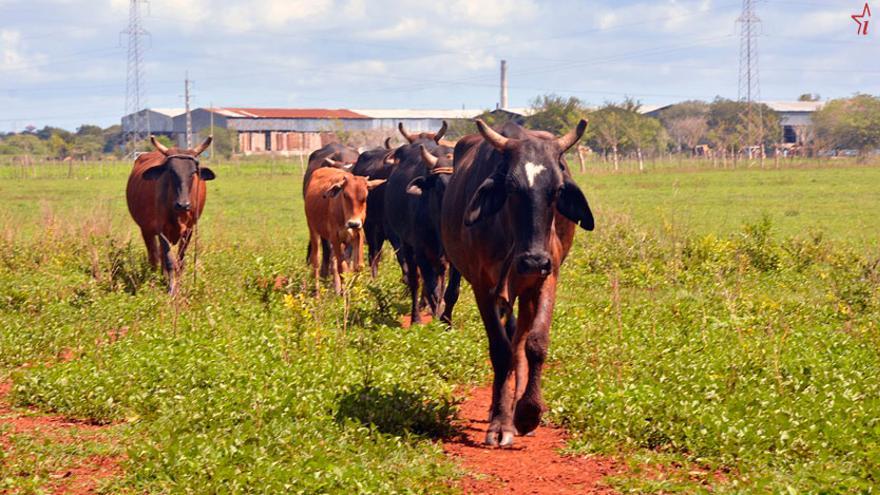
The Cuban Government will ban the sale of livestock beginning February 15 until the end of the mass count. (Invasor)

14ymedio bigger14ymedio, Madrid, 26 January 2024 — The Ministry of Agriculture has ordered the cessation of purchase and sale of livestock from February 15, with exceptions to slaughters authorized for emergency health reasons or for sale to the State. The objective is to begin, on March 1, a special control to quantify the existing livestock in the country and thus “have a characterization of the current situation of the livestock sector in Cuba.”

The news has been disseminated in the official press by the general director of Livestock, Arián Gutiérrez Velázquez. The official stressed that they will not be making “surprise visits” to detect illegalities and that livestock owners will be notified in advance of the day the Commission will pass through their farm.

According to their data, there are more than 200,000 people in the registry, natural and legal, who own cattle and buffalo, and about 167,000 who own horses. The ministry will visit producers, owners and hired workers within the sector and aspires to have an adequate account of stocks, diminished by the alarming increase in theft and slaughter. continue reading

According to their data, there are more than 200,000 people in the registry, natural and legal, who own cattle, and about 167,000 who own horses

Livestock holders must update their data in the registry before February 29, since there will be a comparison of that figure to the one found in person. “The producers must have their herds updated in the livestock registry and have them branded,” Gutiérrez Velázquez told Granma.

Thus, farmers must declare births, deaths, thefts and slaughter.

According to the last Statistical Yearbook, published in 2023 with the data of the previous year, there were 947,300 horses on the Island and 3,516,400 head of cattle, a figure that contrasts with the six million that were counted in 1958. The numbers in the next census, without a doubt, will prove to be even worse than last year’s.

In the sector’s parliamentary commission, held in December ahead of the second ordinary session of the National Assembly, a report revealed that in 2023, more than 155,000 head of livestock were lost solely by theft and slaughter, and an unknown number of deaths are added due to the lack of replacement. There are not enough cattle due to “deterioration of the food base and the delay in the incorporation of the female into reproduction.”

In 2021, 33,690 head of cattle were lost for the same reason and in 2022, 82,445, which meant 22 million fewer pounds of meat

The damage to livestock mass was evident in that report, which indicated that in 2021, 33,690 head of cattle were lost for the same reason and in 2022, 82,445, which meant 22 million fewer pounds of meat. The document clarified the “accelerated” deterioration, with a mass that “decreases for years, and all indicators have alarming results.”

Ramón Aguilar Betancourt, president of the Agri-Food Commission, stressed that the animals do not have enough food and water, and frequent irregularities are repeated — not declaring births or registering changes in sex and category, among others.

At this time, the so-called “special control action” is being organized, according to Gutiérrez Velázquez, and working commissions have been created at the municipal and popular council levels. The first farmers visited will be those who raise cattle, while those who have horses will be the second. Finally, the Ministry indicates, “the change of ownership will be made to update the possession of larger livestock.”

Translated by Regina Anavy

____________

COLLABORATE WITH OUR WORKThe 14ymedio team is committed to practicing serious journalism that reflects Cuba’s reality in all its depth. Thank you for joining us on this long journey. We invite you to continue supporting us by becoming a member of 14ymedio now. Together we can continue transforming journalism in Cuba.

Guardians of Official Dogma Kill a Havantur Ad for Flights from Cuba to Miami

Ad for a charter flight to Miami that was pulled after fierce criticism from hardline ideologues.  (Captura)

14ymedio bigger14ymedio, Havana, 21 January 2024 — Havanatur has been getting into ideological trouble lately. Their recent ads promoting flights from Cuba to Miami for the equivalent of 229 dollars inexplicably disappeared hours after they were posted. Unlike the previous controversy in December in which the state-run travel agency used an image of Santa Claus, this time the guardians of the anti-imperialist dogma reacted with lightning speed.

The agency was inviting travelers to discover “the beautiful beaches and warm climate of the sunny city” via charter flights from Holguín.

“Are you looking for cheap flights to Miami? Special deals for our valued customers,” read another ad which was also pulled. In addition to trips to Miami, Havanatur also offers flights to Houston and Tampa. continue reading

An ad promoting trips to Miami with Havanatur for the equivalent of 229 dollars. (Captura)

Last December, the agency was immersed in another controversy over ads promoting trips within Cuba. Havanatur published illustrations of a chubby Santa smoking a cigar on the steps of the Cuban Capitol and lounging on one of the island’s beaches.

Though the images were generated by artificial intelligence, the regime’s ideological watchdogs unleashed a wave of fierce criticism in government publications, accusing the agency of succumbing to “seduction by colonialization.” As a result, the problematic posts were deleted.

Another ad, this one promoting daily flights from Holguín to Miami, which was also pulled. (Captura)

In July 2022, 14ymedio reported that  Havanatur’s prices for its domestic tourism packages were so high that Cubans were not buying them.

To avoid criticism on social media, the state-run agency does not list prices on any of its ads promoting travel within the country, so it is impossible to know how much a trip to any of the hotels in the resort town of Guardalavaca, or to Mayarí’s popular Guayabo Falls in Holguín province, might cost. A decision by the regime’s ideology department now means we won’t know how much Havanatur charges to take one its lucky customers on vacation to enemy territory.

____________

COLLABORATE WITH OUR WORKThe 14ymedio team is committed to practicing serious journalism that reflects Cuba’s reality in all its depth. Thank you for joining us on this long journey. We invite you to continue supporting us by becoming a member of 14ymedio now. Together we can continue transforming journalism in Cuba.

The Thieves in a Havana Ration Store Had No Luck: The Rice Had Not Arrived

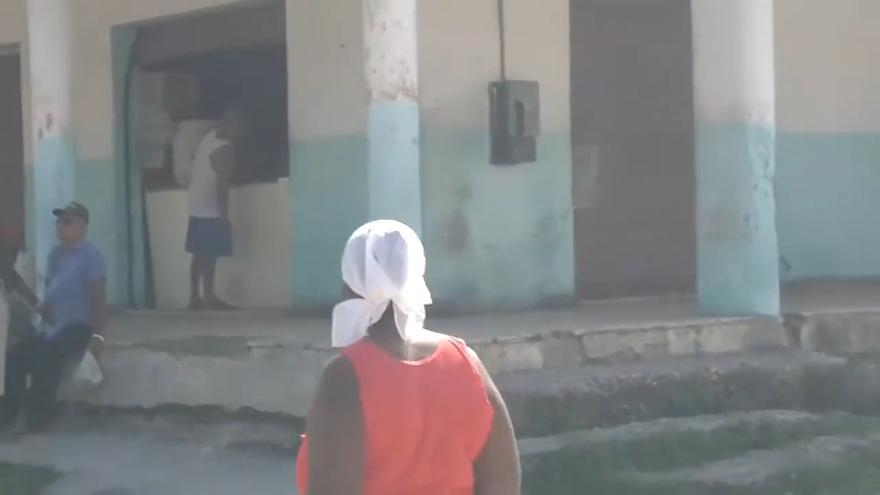
The bodega (ration store) is located at the corner of Pocito and 10th Street.

14ymedio bigger14ymedio, Natalia López Moya, Havana, 26 January 2024 — The neighbors woke up on Friday in the Lawton section of Havana to the news that the bodega (ration store) at Pocito and 10th Streets had been robbed at dawn.  The thieves had not properly done their research, however.  Nidia, a local resident, told 14ymedio that the shipment of rice scheduled for January “had not yet arrived. Besides they weren’t able to take all the loot. They left part of it behind on the porch.”

Although typically there is little traffic in the area, this morning it was full of police cars, a “canine” unit, and uniformed officers “who went door-to-door asking for identification documents in all the neighboring houses,” according to this woman.  “I wanted to take a picture of the storefront to post on Facebook, but the police wouldn’t let anyone get close.”

Another neighborhood resident said “The dog got as far as an apartment building, but there he lost the scent.  I don’t know if they were fools, they sensed someone might surprise them, or the transportation they planned to use failed, because they left part of the loot behind in the porch of the bodega,” he added. continue reading

Rather than express worry or annoyance at the police opration and the visits by officers, the neighbors were scornful of the robbery.  “One has to be clueless to attempt a robbery at that store, which is emptier than my refrigerator at home,” joked someone who said he had to buy “all the rice for January on the free marketplace at 170 pesos per pound” because the monthly quota of this product had not arrived at the bodega on Pocito Street.

“The dog got as far as an apartment building, but there he lost the scent”

He added “We were lucky, if one can call it that.  It would have been much worse if the thieves had come after the rice had been delivered.  That would have really hurt.”

The  basic items in the ration basket for January have been inconsistently distributed in the capital city of Havana.  While some areas have received a few pounds of rice from time to time, at the corner store of Pocito and 10th Streets, this high-demand item had not yet arrived.

So there are very few items of food left in this store, especially those intended for prescribed diets or children under seven.  A customer joked “The mice in this store would be better off if they moved to the hardware store, where they could at least eat nuts and bolts.”

The severe shortages in Cuba have led to a wave of robberies in food stores. This past June, thieves entered the store at H Street between 13th and 15th in El Vedado, Havana.  They took all the rice they could find and a portion of the sugar destined for the basic rations for the month.

During the first eight months last year, ten bodegas in the Sancti Spiritus province were robbed.  The thieves entered the stores violently, breaking down doors, windows and roofs, according to statements made to the press by Ariel Fernandez, who is in charge of commerce for the province.

Translated by MCN

Note from site manager: Thank you “MCN”… this is a lovely, and very accurate, translation and we hope you will continue to translate!

____________

COLLABORATE WITH OUR WORKThe 14ymedio team is committed to practicing serious journalism that reflects Cuba’s reality in all its depth. Thank you for joining us on this long journey. We invite you to continue supporting us by becoming a member of 14ymedio now. Together we can continue transforming journalism in Cuba.

European Food Aid Is Free but It Is Being Sold on the Informal Market in Cuba

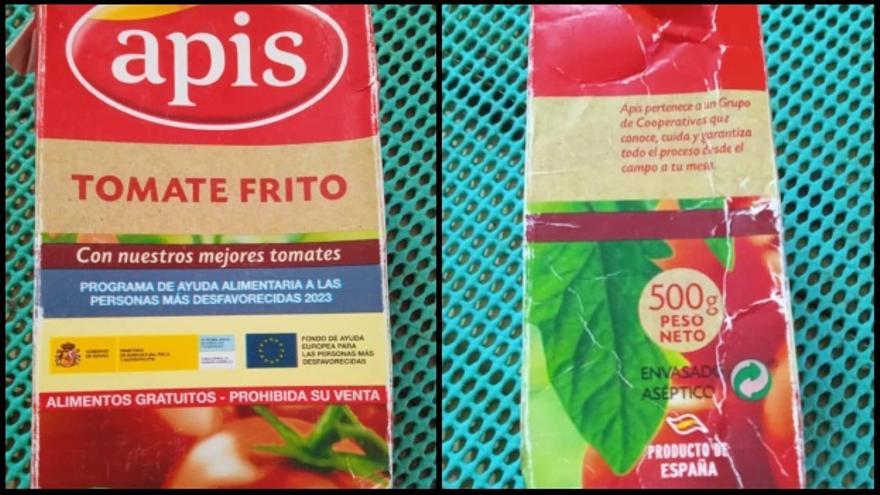
On the ‘tetrapacks’ not only did it read that it was a product from Spain of the Apis brand, but that it was merchandise that had arrived in Cuba through the European Food Aid program. (14ymedio)

14ymedio bigger14ymedio, Juan Diego Rodríguez, Havana, 17 January 2024 — The merchandise, some 500-gram boxes of tomato sauce, “Are of good quality, each one for 300 pesos and I have five. If you buy them all I will give you a discount,” explains the informal seller, dressed in a cap and backpack, who knocked on 72-year-old Niurka’s door in the Central Havana neighborhood of San Leopoldo. A regular in the area, the merchant has built a clientele through the years, based on trust. “Neither snitches nor people who want to do business on credit” is his motto.

But today, security was more necessary than other times. It indicated on the tetrapaks not only that it was a product from Spain of the Apis brand, but that it was merchandise that had arrived in Cuba through the European Aid Fund for the Most Disadvantaged People (Fead). On the packaging, in capital letters, it warned: “Free food, sale prohibited.” Niurka extended three 100-peso bills, took the box and pretended that she had not read the sign or seen the blue flag with its little stars in a circle.

Where did the merchant get the tomato sauce? Did he steal it from a state warehouse or did the families who benefited from the aid give it to him to get some cash? Questions flooded into Niurka’s head as soon as she closed the door. But it could be said that, whatever the case, she was also “a vulnerable person,” with a meager pension and two grandchildren to care for. She immediately opened the box, poured the contents into the pan where she already had some sausage slices and prepared, at full speed, some spaghetti for the children who would soon arrive home from school. continue reading

The module that has recently arrived in Cuba from Spain includes rice, cooked chickpeas, canned tuna and meat, pasta, fried tomato or cookies.

Fead provides food or basic material assistance to people who need it most in nations with high rates of poverty and economic insecurity. Support consists of food, clothing, footwear and other essential products for personal use, such as soap and shampoo. But each European nation decides the type of aid it wants to provide, and how to obtain it and distribute it.

The module that has recently arrived in Cuba, coming from Spain, includes rice, cooked chickpeas, preserved tuna and meat, pasta, fried tomato, cookies, vegetable salad, soluble cocoa and oil, a composition similar to the one that has reached other Latin American countries. The intention is that it land on the table of those families who have been plunged into misery by inflation, low pensions, physical disabilities of some of their members, and old age.

However, the mechanism does not escape tricks and the rerouting of resources. There is also no way to control whether beneficiaries use these free foods to put on their own plates, or end up selling them on the black market. With the 300 Cuban pesos from selling a box of tomato sauce, someone can probably pick up some food or vegetables that will give them more value on their table.

Due to those inextricable paths that life takes, today Niurka ate thanks to European aid, although her name is not registered in any humanitarian program.

Translated by Norma Whiting

____________

COLLABORATE WITH OUR WORKThe 14ymedio team is committed to practicing serious journalism that reflects Cuba’s reality in all its depth. Thank you for joining us on this long journey. We invite you to continue supporting us by becoming a member of 14ymedio now. Together we can continue transforming journalism in Cuba.

;

With the Felton and Guiteras Power Plants Out of Combat, a New Season of Blackouts Arrives in Cuba

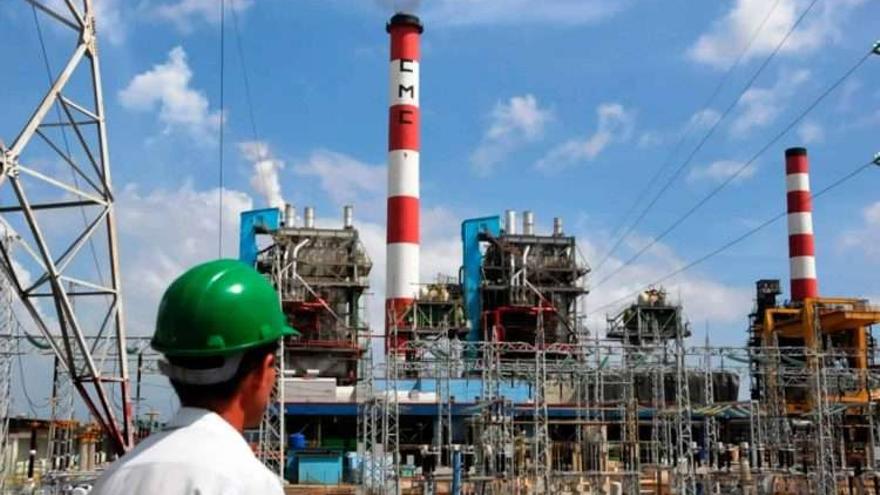
The Antonio Guiteras thermoelectric plant, in Matanzas, is the most important in the west of the Island. (ACN)

14ymedio bigger14ymedio, Madrid, 26 January 2024 — In just two hours, a storm of indignant comments has fallen on the Facebook page of the Electric Union of Cuba (UNE), which announces for this Friday a deficit of 1,010 megawatts (MW) during peak hours. The figure is one of the highest that can be remembered, after November 12, 2023, when it predicted an “affectation” of 1,000 MW. The enormous deficit in electricity is more than double that of yesterday (482 MW), when some provinces reported power outages and internet failures to this newspaper.

As warned by the UNE, the situation is due to breakdowns in unit 6 of the Maximo Gómez power plant in Mariel; a unit of the Antonio Guiteras in Matanzas; the 5 of Diez de Octubre in Nuevitas; unit 6 of Antonio Maceo in Renté and unit 2 of the Lidio Ramón Pérez in Felton. continue reading

It is only two days since the UNE announced the shutdown of the Antonio Guiteras thermoelectric plant for 72 hours due to maintenance

Although the report places the breakdown in the Antonio Guiteras, the main power plant in the West, it is only two days since the UNE announced the shutdown of the thermoelectric plant for 72 hours for maintenance. Today’s UNE announcement indicates that Mariel’s unit 8 is also undergoing maintenance.

Incomprehensibly, the UNE made the decision to continue with the maintenance of the Guiteras at the same time that the Felton thermoelectric plant, which is the most important in the east of the Island, had just broken down. The failure at the Felton occurred on Sunday, a day after there was no deficit, and only a week after its most recent synchronization with the National Energy System (SEN), on January 15.

In August 2022, at the time of the biggest crisis of the electricity system in the last two years, Raúl Castro and Miguel Díaz-Canel visited the plant. The Felton is a mirror in which the state of energy in Cuba is reflected. That day, the president uttered a phrase that haunts the plant. “Felton 1 decides today on the course of the recovery strategy, and its start is vital for the fulfillment of the objectives set, in the first order, to minimize or eliminate the blackouts by next December.”

If the situation depends on the state of Felton, the infinity of breakdowns it has suffered since then highlights the panorama, aggravated by the (apparently planned) shutdown of the Guiteras, the most important power plant in the west of the Island.

The UNE has pointed out that, for peak time, “the entry of 6 engines in the Patana de Melones with 90 MW is estimated

The UNE has pointed out that, for peak hours, “the entry of 6 engines in the Patana de Melones with 90 MW and the entry of unit 6 of the CTE Mariel with 100 MW is estimated,” which will bring little relief. Indignation is already spreading among customers, who in just a month will see the bill for “big consumers” rise.

“Those 1,000 MW are consumed by Havana and paid for by the other provinces,” a user writes, with capital letters that denote his indignation. Most, however, were ironic, knowing that it would be of little use to bother. “That’s great, I’m very happy. New season of the blackout poster. We will see how this season ends and a new one appears. Long live the Ministry and its mysteries,” another mocks.

Minister Vicente de la O Levy, who replaced Liván Arronte after the catastrophe of 2022, is now in the crosshairs, and a few days ago his ministry reported that in 2023 there were 70% fewer blackouts than the previous year. But not everyone supports him. “The minister is going too far with his fantastic strategy. The other guy was better,” says another commentator.

Translated by Regina Anavy
____________

COLLABORATE WITH OUR WORKThe 14ymedio team is committed to practicing serious journalism that reflects Cuba’s reality in all its depth. Thank you for joining us on this long journey. We invite you to continue supporting us by becoming a member of 14ymedio now. Together we can continue transforming journalism in Cuba.

Two Fishermen Missing Five Days Ago in Southern Cuba Are Found Alive

The cienfuegueros went fishing last Sunday from Punta de Tamarindo, near Rancho Luna beach. (Facebook/Edmundo Dantés Junior)

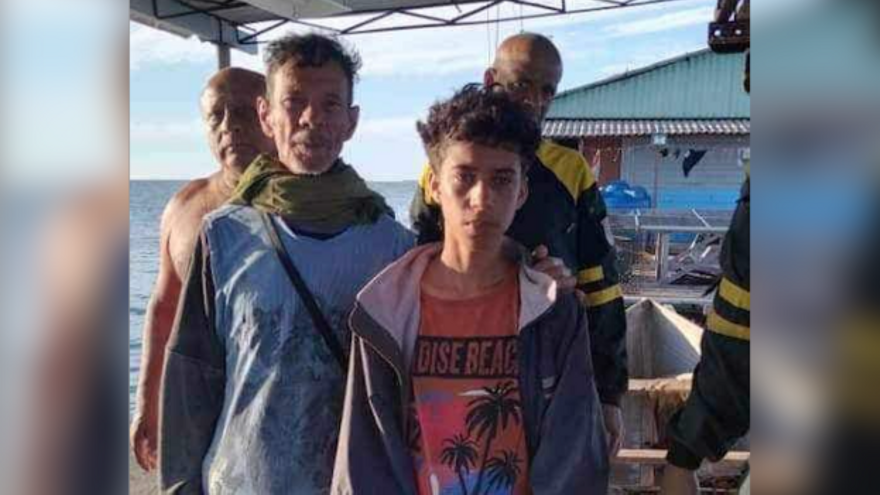
14ymedio bigger14ymedio, Havana, January 26, 2024 — Cienfuegos fisherman Jacinto Octavio Rivero Li and a teenager who accompanied him, Alexander Turiño Nualla, were found alive this Thursday in a key on the southern coast of Cuba, after missing at sea for five days. The authorities have not offered details, but several publications on social networks claim that, after going fishing early last Sunday, their boat was dragged out to sea by a storm.

The versions of the rescue of Rivero, known as “El Chino” Li, and 14-year-old Turiño, differ in the place where they were found. While some locate the key to the west of the Isla de la Juventud, others claim that they were found in Cayo Sigua, an islet in Matanzas near the Cienfuegos coast. A third version – impossible because of the distance and for being in the north of Cuba – says that both had ended up in the Bahamas. continue reading

The images of the rescue of Rivero and Turiño show two uniformed men of Search and Rescue of the Ministry of the Interior

The images of the rescue of Rivero and Turiño show two uniformed men of Search and Rescue of the Ministry of the Interior, who allegedly answered the call of a fishing boat that located the cienfuegueros on the islet where they were found.

The physical change of the teenager is notable. In the rescue photos he appears much thinner and emaciated compared to the images disseminated during the search.

According to the publications, on January 20, the teenager, a resident of the Cienfuegos neighborhood of Tulipán, went fishing with Rivero on an aluminum boat from Punta de Tamarindo, near the beach of Rancho Luna. Several users indicated on Facebook that both had been seen for the last time at 4:00 in the morning on Sunday the 21st, when the light of the boat could be seen from the coast.

From that moment on, nothing else was known, and both relatives and people close to Rivero and Turiño began to report their disappearance on social networks. Some even point out that they both decided to go fishing despite the fact that they had been warned about the bad weather.

The family, according to the same sources, also notified the Cienfuegos police of their absence, and ground searches were even carried out.

An insistent comment in the publications that narrate the rescue has been the surprise that both were found alive

An insistent comment in the publications that narrate the rescue has been the surprise that both were found alive, something that has not happened in many of the disappearances that have been reported in recent weeks.

This is the case of Yorjelguis Bolaños Fernández, a 41-year-old Cuban living in the United States who disappeared on January 7 in Madruga (Mayabeque) and was found dead 10 days later. According to unconfirmed information, his body was found buried near the Institute of Animal Science (ICA), in San José de las Lajas, and the cause of death was stabbing.

On December 28, the independent press also reported the violent murder of Eugenio García, a 25-year-old who had been missing for days. García had left his house carrying 1,300,000 pesos with him to buy foreign currency on the informal market. Two days later, the young man was found dead “under a bridge,” apparently killed by a “beating” to steal his money.

Translated by Regina Anavy

____________

COLLABORATE WITH OUR WORKThe 14ymedio team is committed to practicing serious journalism that reflects Cuba’s reality in all its depth. Thank you for joining us on this long journey. We invite you to continue supporting us by becoming a member of 14ymedio now. Together we can continue transforming journalism in Cuba.

‘Fidel Castro Had to Know’ Says Former Colombian Drug Dealer Carlos Lehder

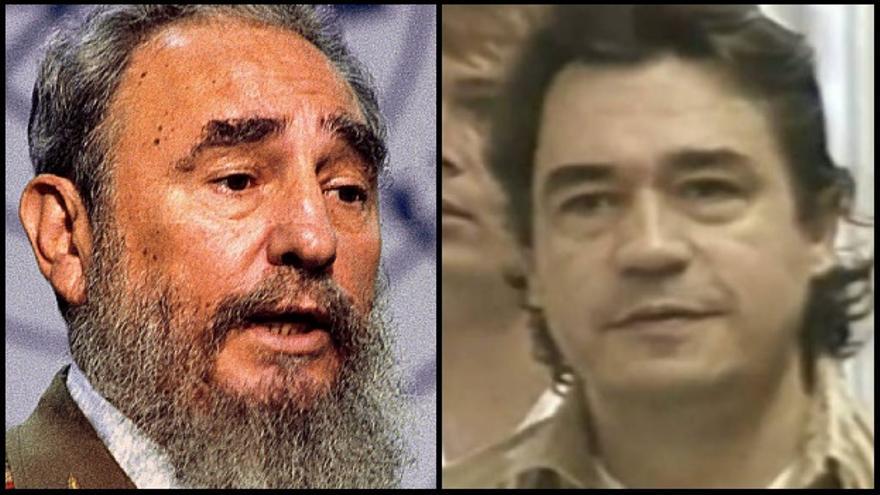
“I imagine that Fidel Castro was aware of everything, but I don’t know, because I didn’t see them talking together.” (Collage)

14ymedio bigger14ymedio, Madrid, January 25, 2024 — Former Colombian drug trafficker Carlos Lehder, who has just published his memoirs under the title Life and Death of the Medellín Cartel, continues to reveal details about the relationship of the criminal organization with Cuba. In a telephone interview with journalist Vicky Dávila on Semana magazine’s television program, the former criminal reiterates that “obviously Fidel Castro had to know about the cocaine trafficking; he was the conductor of the orchestra.”

When asked about the veracity of this assertion, he says: “I imagine that Fidel Castro was aware of everything, but I don’t know, because I didn’t see them talking together. I know that Raúl Castro was the commander of that operation, the leader, and I emphasize that they, although they did not know how to traffic cocaine, immediately tried to control the entire business.”

Beyond the book, where he tells about his meeting with the youngest of the Castros, then Minister of Defense, Lehder revealed that being imprisoned in the United States, where he was extradited in 1987, and cooperating with authorities, he learned that the U.S. government tried to file federal charges against Raúl Castro for “cocaine trafficking.” continue reading

They never brought federal charges against Raúl Castro although they had mountains of evidence, and a number of boatmen had been caught with cocaine coming from Cuba

The U.S. security and surveillance forces, says the former drug trafficker, “had fully monitored the shipments and boats that arrived with cocaine directly from the port of Mariel and other Cuban ports to the coasts of Florida.” He also says that “they were accumulating evidence” at the time when President George Bush, the father, lost the election to Bill Clinton. “There was, of course, a change of prosecutors and whatever, but they never brought federal charges against Raúl Castro although they had mountains of evidence, and a number of boatmen had been caught with cocaine coming from Cuba who were cooperating with the U.S. government.”

Lehder reports that he made two trips to Cuba and didn’t want to do any more. “I already saw the maneuvers they were doing, very dangerous maneuvers for me,” he says, without giving more details, and he criticized the Cuban regime: “They had their boots on the necks of the Cuban people.” Considering the Cuban government a “dictatorship,” he says, “that’s too kind a word; it’s barbaric,” an “affront to every human being and an insult to Latin America and God.”

Without specifically mentioning the famous drug trafficking case that led to the execution of General Arnaldo Ochoa, Tony de la Guardia, Jorge Martínez Valdés and Amado Padrón Trujillo in 1989, Lehder tells journalist Vicky Dávila about the “debacle” of the deal with the Colombians: “The Cubans ended up killing each other for the cocaine business.”

Faced with the suspicion raised by his testimony, which accuses numerous leaders of having accepted bribes from the cartel, Lehder argued: “The honesty of my word gave me my freedom. Pablo Escobar trusted my word for many years; the American government, with which I have no pending accounts, trusted my word and gave me my freedom. The Prime Minister of the Bahamas trusted my word, and we negotiated with him and I paid him monthly. It was unfortunate, but that was the code of conduct among international drug traffickers, who have to bribe the authorities to get protection.”

Translated by Regina Anavy

____________

COLLABORATE WITH OUR WORKThe 14ymedio team is committed to practicing serious journalism that reflects Cuba’s reality in all its depth. Thank you for joining us on this long journey. We invite you to continue supporting us by becoming a member of 14ymedio now. Together we can continue transforming journalism in Cuba.

Dozens of Cubans Remove Snow from Moscow Streets for 9,000 Pesos a Month

Two Cubans, who clear snow off Moscow streets, on a lunch break. (MSK1)

14ymedio bigger14ymedio, Madrid, 22 January 2024 — Russian media has discovered that dozens of Cubans are clearing large amounts of snow from Moscow streets. Last weekend the online news site MSK1 interviewed a group of young people from the island who do this work in the Arbat and Khamovniki districts.

“My name is Robert. I’m from Cuba,” said the head of the makeshift brigade. “Generally, my team has 150 to 200 people. We work in the Arbat but we can work wherever they might need us. We came here on our own, voluntarily, not as part of a government program.”

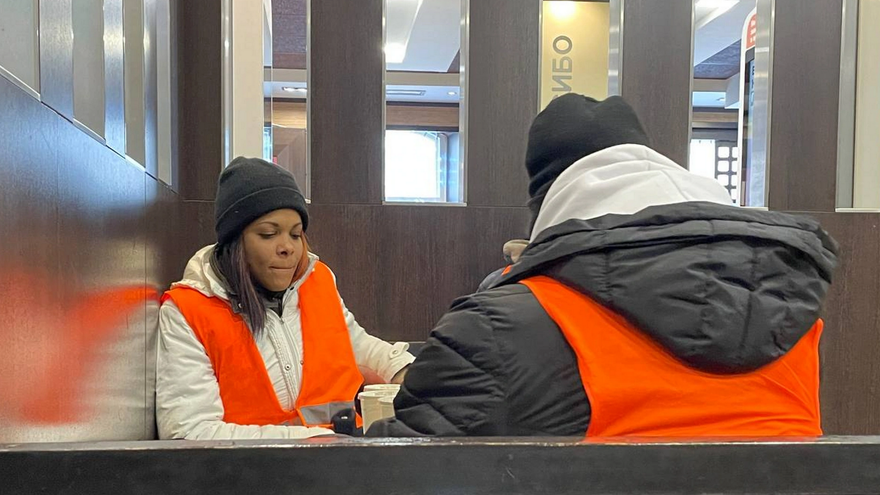
MSK1 met in a fast-food restaurant with some of Robert’s team members, who said emphatically that they were very satisified with their Russian jobs. “There is no one from Cuba controlling us. My boss is Uzbek. My salary comes straight to me. I don’t have to hand it over to anyone,” one of them says smiling. continue reading

According to these immigrants, their pay is almost double what they would receive in Cuba. They can also buy most things at very affordable prices

Their salary, they claim, is 34,000 rubles a month, more than 9,000 Cuban pesos. According to these immigrants, their pay is almost double what they would earn in Cuba. They can also buy most things at very affordable prices. In Cuba, they report, they would need at least 3,000 pesos to buy a canned cola — alternatively, a domestically produced version goes for 220 pesos — but in Russia it is much cheaper and they can drink as much soda or eat as many hamburgers as they like.

Judging from accounts on social media,  Cuban recruits have been removing snow from Russian streets for years. What the MSK1 reporter chooses to focus on, however, is the Cubans’ dark complexions, which — he takes pains to point out — constrast with the whiteness of the snow. This has made them the center of attention of local residents. He also refers to their birthplace, more than once, as “freedom island.”

“Robert prefers not to discuss the realities of life in a country with a planned socialist economy but he has no problem praising the new Russian-Cuban relations and sees Russia as a great friend to his country,” the article states. “It’s cold in Russia but I really like it here. It’s all good! Russia is a great friend of Cuba!” says the young man, dressed in the scarf of a sports club to protect himself from the Russian capital’s freezing temperatures , which this January have been even lower than usual.

Local residents are surprised at the sight of the Cubans, the article states, initially confusing them with immigrants from Central Asia, though they later realize that their complexions are even darker.

It is difficult, however, to know just how this type of employment works. “No foreigners of any kind work for the Office of Housing in the Arbat district except citizens of the CIS (Commonwealth of Independent States). All of them have the necessary permits and registrations. We are strict about this. Not just anyone gets accepted,” says a state employee who denies any connection to the Cubans, even expressing surprise at their identifiable clothing. “I don’t know where they got those jackets. I swear they’re not ours,” he insists.

However, the district’s press office confirmed that the immigrants – Cuban students as it turns out – are working as backup personnel on a paid, voluntary basis. “Currently, we are fully staffed, with almost 17,000 people. But during heavy snowfalls, we need additional resources to clear the district’s streets. Very often, those who volunteer to participate are students, some of them Cubans, who are provided with the necessary equipment and special clothing,” it states.

The devaluation of the ruble is affecting the entire country, which previously attracted many immigrants but now is attracting Cubans almost exclusively

MSK1, on the other hand, reports that Russia needs an additional 4.8 million workers based on a study by the Russian Academy of Sciences’ Institute of Economics. The problem is especially critical in jobs that do not require special qualifications, as is the case here, in which employees do not even need to speak the language.

The devaluation of the ruble is affecting the entire country, which previously attracted many immigrants but now is attracting Cubans almost exclusively. “They save every penny to send home to their families,” says analyst Valery Mironov, who was interviewed by MSK1. “The ruble exchange rate is very important to [the other immigrants]. When it was fifty rubles to the dollar, that was a good salary. But now that it has fallen to almost half that for almost the same salary, they’re not coming,” he adds.

“It is simply does not make economic sense for them to come here. They prefer to go to neighboring Kazakhstan or Europe instead. For Cubans, however, it is all much simpler. They earn a good salary here. I also think that there is some kind of special government program,” Mironov surmises.

____________

COLLABORATE WITH OUR WORKThe 14ymedio team is committed to practicing serious journalism that reflects Cuba’s reality in all its depth. Thank you for joining us on this long journey. We invite you to continue supporting us by becoming a member of 14ymedio now. Together we can continue transforming journalism in Cuba.

For the Scavengers, the Building Collapses in Havana Are Good News

With rebar in hand and dodging surveillance cameras, a scavenger decides to enter the danger zone. (14ymedio)

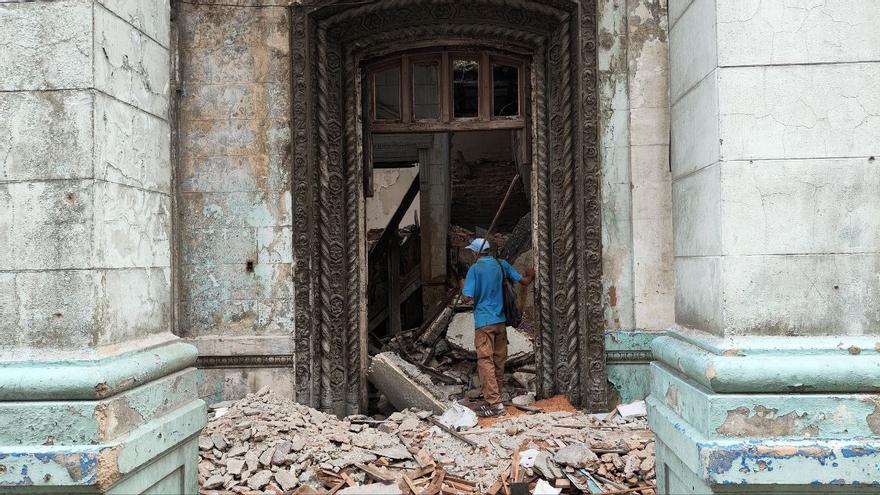
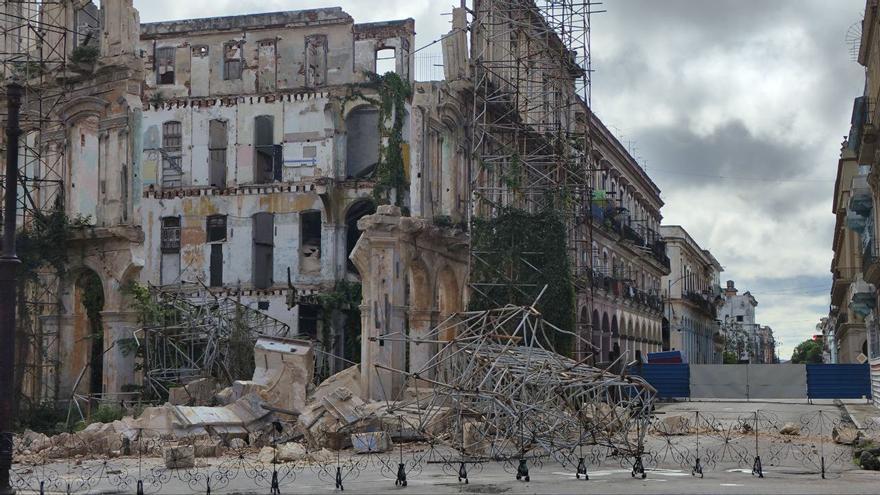
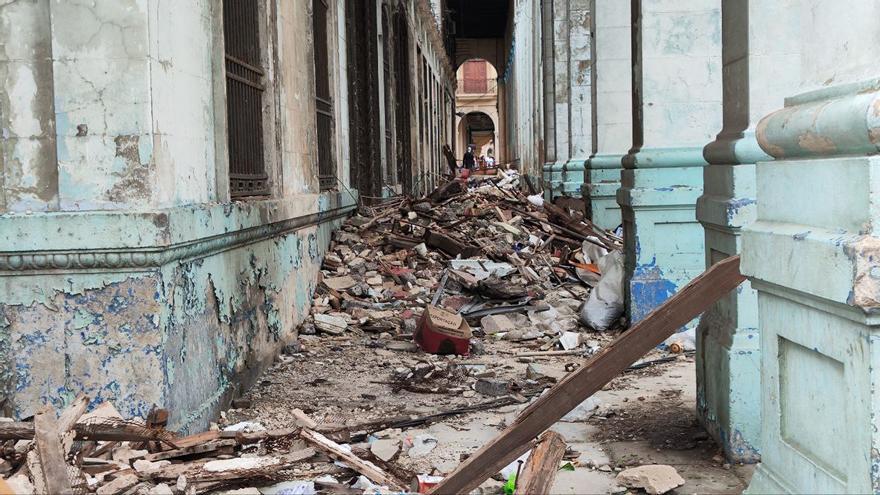
14ymedio bigger 14ymedio, Juan Diego Rodríguez, Havana, January 24, 2024 — The scavengers of Havana are happy. A mass of debris, bricks, iron and garbage has extended, since Monday, in the area of the facade of the old Vía Blanca hotel at 505 Zulueta Street. It took three months since this newspaper’s last visit to the property – then converted into a nest of thugs and drunks – for the collapse to be total.

Now, iron bars surround the collapse zone and prevent passage through the streets that surround it. The residents of the neighborhood, standing on the sidewalk of the neighboring police station on Dragones Street, launch their hypotheses: “They put the fence there in place of yellow tape because people would just lift it, duck under and keep walking.” Others, such as scavengers and criminals, continue to “explore” the ruins, trying to dodge the station’s surveillance cameras.

The decline of 505 Zulueta has accelerated in recent weeks. “The building began crumbling, and a part was closed, but finally the facade fell on the structure and destroyed it,” says one of the masons who works in the buildings on the street. Now you can’t walk there, and the neighbors complain that the ruins prevent them from going through the passage.

The decline of 505 Zulueta accelerated in recent weeks. (14ymedio)

For the scavengers, however, the building collapses are good news. Dedicated to dismantling buildings in poor condition to reuse what is possible – rebar, sticks, bricks, nails and even dust for concrete – the craft has proliferated in a city that is falling apart. A door knocker from the 50s or continue reading

the Soviet era can end up in a tenement building or in a slum on the periphery of Havana.

Any corner of the city can attest to their feats. In front of a mutilated wall on Hospital Street, a neighbor describes the scavengers: “They take anything that serves them in a particular construction. They sell anything. The walls disappear as the bricks are taken away.”

He is not wrong. On Hospital Street the plaster on the wall has been scraped away and you can see the bricks – whole and in pieces. Towards the corner, the iron structure is naked and wobbles over a gigantic garbage dump. “It won’t take long to fall,” the neighbor says.

The portals of the building located on the corner of Monte and Egido were once spacious and stately. (14ymedio)

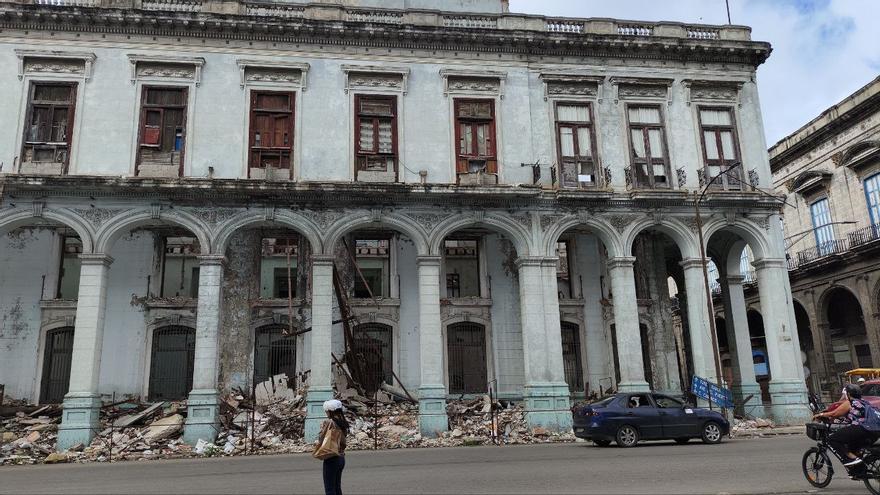
The scavengers can be recognized by a piece of rebar or wood in their hands. Not infrequently they are, in addition, beggars or dumpster divers – digging in the garbage cans to look for food. The portals of the building located on the corner of Monte and Egido were once spacious and stately. The property functioned as an office of the state-owned Medicuba company and was abandoned a few years ago. Now, its entrance is carpeted by a formidable garbage dump.

Rummaging through the garbage, a “predator of ruins” – they are also caled “pirañas” and “termites” – explains to 14ymedio the tricks of his trade. Because of the pile of garbage and a “steel fence” that the State placed there, he cannot go inside as he would like. The mammoth building, he continues, has many useful materials, but taking them out will cost work. Rebar in hand and dodging two security cameras, the scavenger decides to enter and goes through a door whose threshold is, despite the debacle, a work of art.

In the heart of Havana, the notable buildings – almost all built during the Republic – are a species in danger of extinction. The inaction of the State and the incursions of the scavengers are destroying them until, eventually, they collapse.

A formidable pile of garbage carpets the portals of the building located at Monte and Egido. (14ymedio)

The damage is irreversible in most cases. It was denounced on Tuesday by the documentary filmmaker Jorge Dalton, when he learned of the collapse of 505 Zulueta. “The painful and unhappy landscape of that area is just a small sample of the 65 years of a model more defeated than an old and patched spring mattress, useless and rusty, where everything is laziness, hopelessness, destruction and desolation,” alleged the creator, who lived for many years in Havana and now lives in El Salvador.

In 1995, Havana Historian Eusebio Leal promised the neighbors of 505 Zulueta a transfer to better houses in Alamar and Habana del Este. It took 25 years for the nine families who lived there – including children – to be relocated in 2020, in the face of the imminent collapse.

When this newspaper visited the area, in September last year, the neighbors considered it as a kind of sanctuary for criminals. Not even the police from the Dragones station dared to cross the scaffolding barrier to look for the thieves who used the ruins as a hiding place.

However, the Way of the Cross of 505 Zulueta – and of multiple buildings in Havana – has many stations left, “loose stones” that collapse on the people and garbage that now has to be collected with the help of several trucks. But in the no man’s land that Havana has become, the scavenger is king.

Translated by Regina Anavy

____________

COLLABORATE WITH OUR WORKThe 14ymedio team is committed to practicing serious journalism that reflects Cuba’s reality in all its depth. Thank you for joining us on this long journey. We invite you to continue supporting us by becoming a member of 14ymedio now. Together we can continue transforming journalism in Cuba.

Italy Hires 158 Cuban Health Workers To Work in Medical Centers in Sardinia

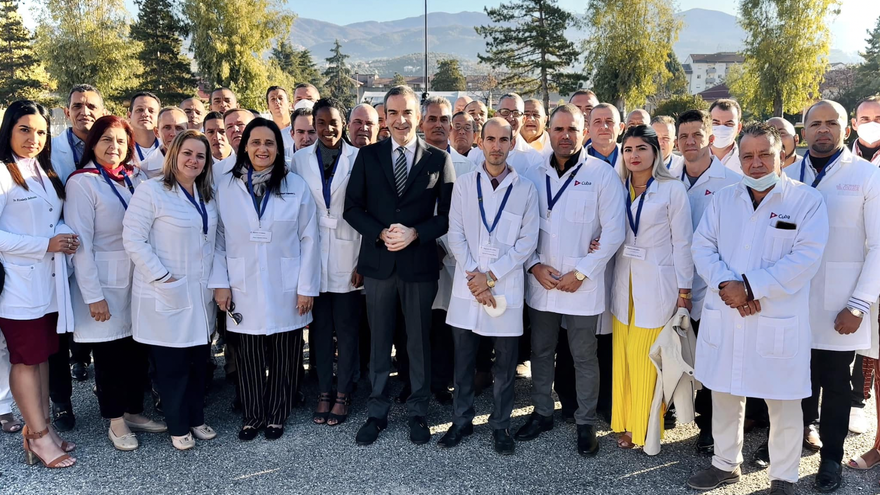
Some 500 Cuban health workers have arrived in the Calabria region. (Facebook/Roberto Occhiuto)

14ymedio bigger14ymedio, Madrid, 24 January 2024 — After Calabria, another Italian region will receive a group of Cuban doctors soon. According to the Sardinian press, 128 doctors and 30 nurses will arrive in Sardinia very soon – without specifying a date – since the permits are about to be delivered. At the moment, the financial content of the contract, which ends on December 31, 2025, has not been revealed and contains a clause for an eventual renewal.

The news was disseminated a few days ago by the media L’Unione Sarda, to whom the regional Minister of Health, Carlo Doria, confirmed that Cubans are currently receiving Italian lessons. The measure provides a solution to the urgent lack of medical personnel on the largest island in the Mediterranean.

The agreement, concluded at the Cuban Embassy in Rome between the Doria municipal government and Cuban Minister of Health José Ángel Portal Miranda, responds to months of demands from the inhabitants of Sardinia, in particular the SOS Barbagia-Mandrolisai committee.

The collective is named after two regions located in the center of Sardinia, where the lack of doctors is more noticeable than in the two large tourist areas of the country, the north (with the exclusive Emerald Coast) and the south, where Cagliari, the capital, is located. Outside these two privileged continue reading

areas – where the public healthcare network also does not have a large endowment – the shortage is alarming.

According to data from December, there are only three emergency doctors, who cannot cover the calls

According to data from December, there are only three emergency doctors, who cannot cover all the calls, and the ambulances do not have any doctors on board. In one of the health centers, the head of emergency is moving soon, leaving the place with only one permanent and three temporary doctors; that is, four of the seven that should be there. Surgeries are in danger, workers warn, having already been limited to being performed only four days a week, and with only two radiologists, it is impossible to cover holidays and vacations.

In addition, the air ambulance does not work at night either. It’s an essential transport on a very undeveloped island with precarious roads that triple the time to travel long distances.

“There is very little left of what was there a few years ago,” Manuel Tanda, head of a medical center in the area, said last month. “The situation is aggravated by the fact that 118 (emergency) operates without doctors and the air ambulance does not work at night, in case of adverse weather conditions or when other interventions are carried out. We request compliance with Ministerial Decree 70 and the law of redefining the hospital network of 2017,” he said, without mentioning other shortages like the lack of pediatricians and psychiatrists.

SOS Barbagia-Mandrolisai contacted the Doria municipal government and other health authorities in April to request an immediate solution, “invoking the hiring, ultimately, of Cuban doctors,” according to the letter, in which the detail about the lack of doctors was exhaustive and alarming.

“The health situation in Sardinia is rapidly worsening, both in terms of primary and hospital care. We note the lack of coverage at the level of essential assistance, the abnormally long waiting lists, the use of private healthcare (for those who can afford it) and the flight of hospital staff due to extreme working conditions,” they wrote, specifying that the problem already existed before the pandemic and that the hospital in the worst situation (San Camilo di Sorgono) was already qualified in a decree (the aforementioned 70) as “particularly disadvantaged,” without anything having been done to remedy it.

After listing the missing positions, the committee launched its emergency proposal, the hiring of Cuban doctors as an urgent measure

 After listing the missing positions, the committee launched its emergency proposal, the hiring of Cuban doctors as an urgent measure in the face of the realization that everything else had failed: “The administrative process could be the same as that followed by the region of Calabria, with a cooperation agreement with the Cuban Medical Services Marketer (CSMC), which requires that Cuban health workers possess the necessary qualifications and skills for the exercise of care activities and the possibility of replacing them with equally qualified personnel if necessary.”

In the summer, the regional government began to accept that this was the only immediate solution. “It was necessary to proceed with the activation of a collaboration agreement with the Cuban government to provide specialized services in the branches of the healthcare system that lack workers,” it stated. It also specified that “an endowment fund of 5 million euros per year would be available for their coverage, including food, accommodation and training.” The local Italian press said that for each of the doctors of Calabria, the region would pay 3,500 euros in salary and 1,200 euros for maintenance, accommodation, travel and training.

The reaction of the national unions was not long in coming. In August, Luciano Congiu, regional deputy secretary of the Italian Union of Physicians, convened a meeting with the region to “address the content of the Complementary Regional Agreement on general medicine and discuss the pay for doctors willing to work in disadvantaged areas of Sardinia. The compensation can also double the salary, as happens in other areas of Italy, to work in a more complex environment.”

The unions say they have better proposals to restructure health in a complex region such as Sardinia without the need to resort to hiring overseas or using private companies, which they have also denounced for months. “We have to respond to the lack of health services in the territory, intervene in the bureaucratic tasks that burden the work of doctors and decisively aim for a salary adjustment to respond to the crisis,” they said.

Italy was the first European country to open the door to the hiring of Cuban doctors through the State

Italy was the first European country to open the door to the hiring of Cuban doctors through the State. It did so in an emergency, during the 2020 pandemic, when there was a virulent breakout of Covid-19 in the regions of Piedmont and Lombardy (north of the country). Calabria (in the extreme south) then signed a contract to cover structural needs and hired 500 health workers from the Island. “The idea arose from despair,” said Roberto Occhiuto, president of the Calabria region, but there are complaints in some European sectors about the CMSC operation.

Cuban doctors work in semi-slavery conditions in dozens of countries, since the government appropriates between 70% and 90% of their salary, and, in addition, they cannot interact with the local population and must publicly support the Cuban regime. Many health workers, however, continue to resort to these “medical missions” in order to facilitate their departure from Cuba or, at least, to receive a salary higher than they would earn on the Island.

Translated by Regina Anavy

____________

COLLABORATE WITH OUR WORKThe 14ymedio team is committed to practicing serious journalism that reflects Cuba’s reality in all its depth. Thank you for joining us on this long journey. We invite you to continue supporting us by becoming a member of 14ymedio now. Together we can continue transforming journalism in Cuba.

Little Homeland, Too Much Death

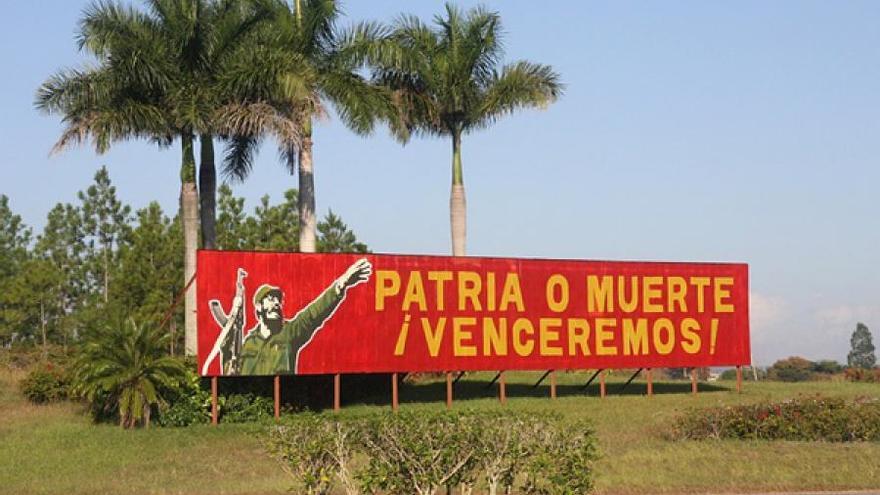
Fidel Castro’s fatal prophecy of “Homeland or Death” is being fulfilled. (Ministry of Foreign Affairs)

14ymedio bigger14ymedio, Yunior García Aguilera, Madrid, 24 January 2024 — The Homeland, or what remains of it, is in danger of extinction, and the data prove it. It is not a campaign of the regime’s enemies; their own statistics say it clearly, even if they try to hide them, delay them or cover them with clumsy makeup.

In 2021, the same year that people took to the streets to shout “Homeland and Life,” 167,645 people died in Cuba, about 55,000 more than in the previous year. An average of 459 Cubans died every day, and it is even worse if we compare ourselves with other countries. That year alone, the gross mortality rate in Cuba was 14.65 per thousand inhabitants, one of the highest in the world. In the United States it was 10.40; in Brazil, 8.33; in Colombia, 7.74. Cuba was even higher than Haiti, where the mortality rate was 8.68.

It is evident that the regime concealed the real number of deaths from Covid-19, but it is also obvious that it was not difficult to die of anything in a collapsed country, without medicines, with poor food and with terrible hygienic-sanitary conditions.

Nor is there optimism about total births. In 2021 this fell to less than 100,000 for the first time. It was even worse in 2022, with 3,693 fewer births

Unfortunately, the situation did not improve much after that year. The National Office of Statistics and Information (Onei) published the figure of 120,098 deaths in 2022, well above the number  before 2021. And it is continue reading

suspicious that the second head of that Institution, Juan Carlos Alfonso Fraga, admitted a much higher figure shortly before during an interview with the AP agency: 129,049 deaths. In four months, almost 9,000 numbers of that statistic disappeared.
Nor is there optimism about the birth rate. In 2021, total births were less than 100,000 for the first time. It was even worse in 2022, with 3,693 fewer births. The Regime pats itself on the back, bragging that Cuba has birth rates similar to that of developed countries. Another lie! People don’t want to have children in Cuba because of the misery and insecurity they experience. Even Cubadebate has had to admit that there has been no generational replacement since 1978.

And then there is the migratory phenomenon. The country does not want to include in its statistics the hundreds of thousands of Cubans who have left without returning in the last three years. They hold on to the fact that the population continues to be more than 11 million inhabitants. They have extended the allowed time of stay abroad again and again. They say they do it because of the pandemic and its effects, they are so good! In reality, they do it so as not to have to admit the tremendous gap that the Island has suffered. Cuba is, on top of that, the country with the lowest proportion of immigration worldwide.

According to the Ministry of Public Health, the first cause of death is related to heart disease. It is fatally ironic that the Regime’s slogan was precisely: “On Cuba, put a heart.” It would seem like black humor in another context, but in this one it sounds like premeditated cruelty. The constant stress to which they subject a people who no longer know what the next order or package will be has the country at permanent risk of a heart attack. It is also alarming that, among the top 10 causes of death, suicide is found, even if they use the euphemism “self-inflicted injuries.”

In a country with destroyed roads and obsolete cars, how can we expect accidents to go down?

When all the statistics for 2023 come out, it will be hard not to cry for Cuba. If we add to all of the above the sudden increase in violence, femicides, drug use among young people, machetes, stab wounds… God!

In a country with destroyed roads and obsolete cars, how can we expect accidents to go down? In a country that gives combat orders against its own people and plays dice with the economy, how do they expect young people to stay? In a country that has made an apology for violence, where its officials hand out slaps, how can they expect young people from the slums not to pick up knives?

If the Regime does not fall soon, do not imagine that they will be there for 62,000 millennia; at this rate, the population will become extinct in ten years. This will fulfill Fidel Castro’s fatal prophecy when he said “Homeland or Death.” There is very little left of the homeland, and what is left is unrecoverable. Death is the one equalizer, from Punta de Maisí to Cabo de San Antonio.

Translated by Regina Anavy

____________

COLLABORATE WITH OUR WORKThe 14ymedio team is committed to practicing serious journalism that reflects Cuba’s reality in all its depth. Thank you for joining us on this long journey. We invite you to continue supporting us by becoming a member of 14ymedio now. Together we can continue transforming journalism in Cuba.