Cuban President Díaz-Canel Explains His Theory About the ‘Blockade’ in Another ‘Two-Voice Monologue’ With Ramonet

The journalist presented the interview in three “blocks,”,domestic policy, economy and foreign policy, but the three merged without remedy or distinction
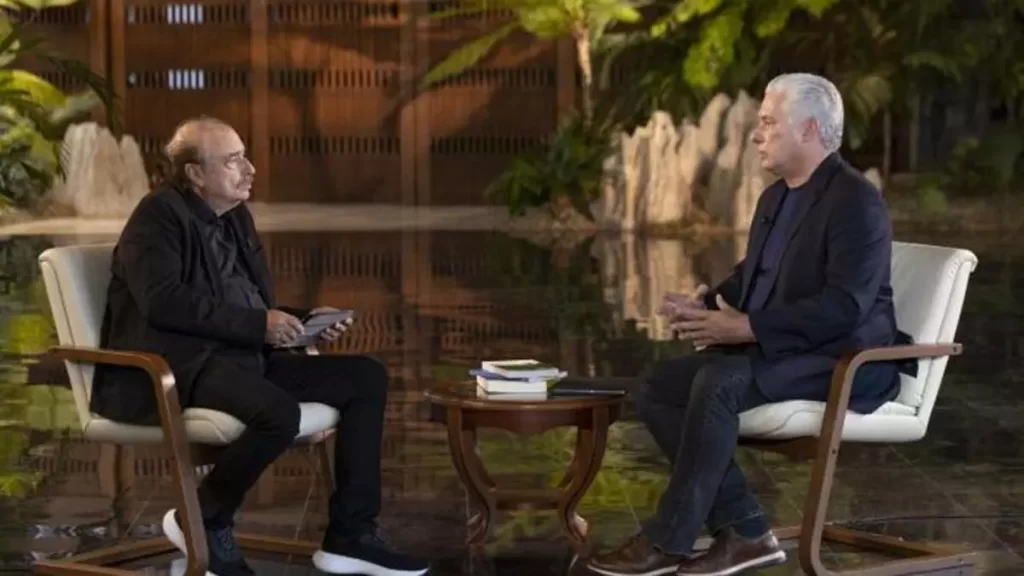

Ignacio Ramonet and Miguel Díaz-Canel, during the interview, which took place on May 11 at the Palace of the Revolution / Estudios Revolución

14ymedio bigger14ymedio, Havana, 15 May 2024 — The word “blockade” was uttered a total of 62 times in the interview that Cuban President Miguel Díaz-Canel held with Franco-Spanish Ignacio Ramonet on May 11 at the Palace of the Revolution. In the long conversation, published this Wednesday in the official media, both reiterated that the United States embargo is the main cause of the evils that afflict Cuba.

“Many people ask, if there has been a blockade for so long, what distinguishes the blockade in the current moments?” Ramonet asks Díaz-Canel, renowned hagiographer of the regime and author of the “two-voice monologue” One Hundred Hours With Fidel, to which the hand-picked president responds: “Today the blockade has a qualitatively different characteristic; today we are talking about a tightened blockade.”

Although Ramonet presented the interview in three “blocks” – domestic policy, economy and foreign policy – ​​the three merged without remedy or distinction. continue reading

The mass protests of July 11, 2021 (’11J’), appear halfway in the dialog and undervalued

One of the most important events that has occurred on the Island in recent years, the mass protests of July 11, 2021 (commonly referred to as ’11J’), appears halfway in the dialog and undervalued. The Spanish communicator calls them a “sociological phenomenon” and considers that “although they have not been massive, they have surprised because this is not common.” Díaz-Canel avoids at all times the hundreds of protesters who ended up with long prison sentences and insists that his government “does not have a repressive response.”

What happens, as he continues alluding to 11J and other protests that resulted in arrests, is that “they commit acts of vandalism and attacks against state property, against social property, they alter public order, and that then does lead to a response that is not due to ideology… It is a judicial response, a legal response like they would happen in any other country.” In short, that day was once again to blame for the supposed “unconventional war” carried out by the United States against the Island.

Regarding the economic debacle, Díaz-Canel marks the start date as “the second half of 2019”, when the Administration of then US president, Donald Trump, “applies more than 240 measures that intensify the blockade. They suddenly cut off all our sources of income in foreign currency” and “an enormous energy and financial persecution is organized.”

Among the consequences, he also mentions that “remittances are cut off, which was an important source of income for the country.” Independent studies estimate that, in fact, since 2019, there has been a 45% drop in remittance income, although in no case has it disappeared.

Without the president ever remarking on it, in September of that year an energy crisis began to occur on the Island that, with peaks and valleys, that continues to this day. However, at that time, Díaz-Canel did not allude to the embargo, and defined the energy situation as “temporary,” resolvable with the imminent arrival of a ship full of oil.

 Before that second half of 2019, “we had a stable supply of fuel based on agreements with friendly countries”

Before that second half of 2019, “we had a stable supply of fuel based on agreements with friendly countries, with brother countries, which meant that under those agreements we did not have to spend almost nothing of the foreign currency income that we received on fuel, because all of this had compensation from the services that we provide to those brother countries,” the president argues in the conversation with Ramonet, referring, without saying it clearly, to the exchange of favors with Venezuela.

The delivery of oil from Caracas began to decline precisely that year, coinciding with an energy crisis in Venezuela itself, something that Díaz-Canel does not allude to at any point in the interview.

The president continues outlining the idyllic world that the Island was living in before the aforementioned date: “Under all those conditions we had income in foreign currency that allowed us to import raw materials to develop our main productive processes to the extent that we could have those things with the limitations of the blockade. We could buy food to satisfy the basic family basket, we could even buy food and other merchandise that we put in the stores.”

Later, at the beginning of 2020, “when there were only around eight or ten days left for Trump to leave the White House,” Díaz-Canel laments, the United States included Cuba on the list of countries sponsoring terrorism. “And then, suddenly, all the banking agencies and all the financial institutions stopped giving us credit,” he says.

The consequence, as Díaz-Canel puts it, always a product of external factors, is to have become “a country that lives off the current account, that is, what you earned this week and how you distribute it among a tremendous amount of priorities that the country has that cannot be covered with the income of a single week.”

This Wednesday, however, the State Department removed Cuba from the list of countries that “do not fully cooperate” with Washington’s efforts against terrorism. It is not the list from which Havana aspires to get off, but rather a smaller scale list. Many have seen in the announcement, however, a first step by the Biden Administration to consider that Cuba does not sponsor terrorism.

With regards to why the current US Administration has maintained sanctions on the Island, the president, who blames the United States for prioritizing “the interests of a minority, which is the Cuban-American mafia,” omits that the measures taken against the regime by part of Joe Biden’s Government occurred precisely after the repression following the 11J mass protests.

“We no longer have the same capacity to cover and honor our commitments to pay dividends to foreign entities in a timely manner,” he details about the country’s external debt, ignoring that in 2015 the Paris Club forgave Cuba 8.5 billion dollars of the 11 billion that it owed to the countries grouped under that organization. (The rest was restructured into payments until 2033 and investment projects on the Island).

The lack of availability of foreign currency, Díaz-Canel concedes, caused the “creation” of an illegal market, which he blames for the rise in prices: “It almost becomes an element that imposes prices and that also contributes to the issue of inflation”.

Another unavoidable issue was the “destabilization” of the national energy system, which also has its origin, according to the president, in the lack of fuel

Another unavoidable issue was the “destabilization” of the national energy system, which also has its origin, according to the president, in the lack of fuel. “We have not been able to [operate the entire] national electricity system for 24 hours for more than five days, which means that at all times we have had some level of blackout, and that, successively, undoubtedly damages, complicates the situation, causes discomfort, causes misunderstandings and hardens the lives of Cubans,” Díaz-Canel acknowledges. And he adds: “More than $300 million a year is needed to maintain this national electrical energy system, and that availability has not existed.”

Last April, the technical director of the Cuban Electrical Union, Lázaro Guerra, told the official press that the total amount the country would need to repair its thermoelectric plants is in the range of 10 billion dollars.

To the proliferation in Cuba of micro, small and medium-sized enterprises (MSMEs), presented by Ramonet as the “emergence of a market economy space,” Díaz-Canel immediately provides “some clarifications”: the economy is planned and will continue to be, as required. “The main means of production are in the hands of the State and are represented by state companies. Therefore, the greatest weight of the economy is in the state sector.”

The private sector will continue to expand, he says, with around 10,000 registered MSMEs, but “it will be a sector that will not be an enemy of the Revolution,” despite, he asserts, “a very direct intention of the Government of “the United States of trying to turn this sector into an opposition sector.”

The last part of the interview focused on international relations. Regarding the renewed approach to Russia, a country that he visited last week , he assured that “it is not about entering into a new alliance, it is an alliance that we have been in for a long time.”

Beyond Moscow, he made it clear which are the “friendly countries”: López Obrador’s Mexico, Maduro’s Venezuela, Daniel Ortega’s Nicaragua, Xiomara Hernandez’s Honduras and Lula da Silva’s Brazil.

____________

COLLABORATE WITH OUR WORKThe 14ymedio team is committed to practicing serious journalism that reflects Cuba’s reality in all its depth. Thank you for joining us on this long journey. We invite you to continue supporting us by becoming a member of 14ymedio now. Together we can continue transforming journalism in Cuba.

Cuba’s Foreign Ministry Says That ‘It Is Not Enough’ To Be Taken Off the List of Countries That Do Not Cooperate Against Terrorism

Cuba’s Foreign Ministry highlighted the contradiction of keeping Havana on one list and removing it from the other, as well as the “confusion” caused by the US announcement

The Cuban Minister of Foreign Affairs, Bruno Rodríguez, in an archive photograph. (EFE/ Ernesto Mastrascusa)

14ymedio biggerEFE (via 14ymedio), Havana, 16 May 2024 — The Cuban Foreign Ministry demanded this Wednesday that the United States remove it from the List of State Sponsors of Terrorism hours after the State Department removed the Island from another inventory, that of countries that “do not fully cooperate” with Washington in its fight against terrorism. The contradiction of keeping Havana on one list and removing it from the other, as well as the “confusion” that the announcement caused, was the subject of a statement from the Ministry of Foreign Affairs.

The text urges that the White House “correct this injustice,” and alleges that there is a “loud and repeated” demand from the Cuban people and also from “numerous governments, especially from Latin America and the Caribbean, and from political, social and religious organizations the United States, and politicians of that country.”

The Foreign Ministry said that “it is not enough to recognize that Cuba cooperates fully with the United States” in anti-terrorist matters because “it also does so with the international community as a whole” and “it is a known truth and no attempt should be made to confuse public opinion.”

He also stressed that the State Department maintains the Caribbean country on a list that designates “States that supposedly ’sponsor’ terrorism”, whose “sole purpose is to slander and serve as a pretext for the adoption of coercive economic measures against sovereign States,” like those that are mercilessly applied against Cuba.” continue reading

“The clear and absolute truth is that Cuba does not sponsor terrorism, but rather has been a victim of it”

“The clear and absolute truth is that Cuba does not sponsor terrorism, but has been a victim of it, including State terrorism, as anyone who is interested in the subject can confirm, and an issue that the US Government is perfectly aware of,” the statement says.

The Foreign Ministry insists that Joe Biden “has all the prerogatives to act honestly and do the right thing,” since this decision could be carried out exclusively by the president of the United States without having to depend on the support of the legislative chambers.

The State Department explained that the decision to remove Cuba from the list of countries that do not fully cooperate with counterterrorism efforts took into account that “the circumstances for Cuba’s certification have changed from 2022 to 2023.” The inclusion of Cuba in the US list of countries sponsoring terrorism in January 2021 was one of the last decisions made by the Administration of Republican Donald Trump (2017-2021) before leaving power.

However, after Biden’s arrival at the White House in January 2021, Cuba remained on the list, and the Cuban Government insists that it is unjustified and has serious financial implications for the Island, since it makes international transactions extremely difficult.

____________

COLLABORATE WITH OUR WORKThe 14ymedio team is committed to practicing serious journalism that reflects Cuba’s reality in all its depth. Thank you for joining us on this long journey. We invite you to continue supporting us by becoming a member of 14ymedio now. Together we can continue transforming journalism in Cuba.

Musician Gorki Aguila Arrives in Mexico After Days of Uncertainty Over His Exit From Cuba

The artist was detained on May 3 for more than 24 hours by Cuban State Security.

The musician Gorki Águila after landing at Mexico City International Airport / Facebook/Capture

14ymedio bigger14ymedio, Havana, 13 May 20204 — “I am glad to get out of hell, out of the Castros’ extermination camp.” Such was the bluntness of Cuban musician Gorki Águila upon arriving in Mexico City on Monday, May 6. After several days of uncertainty, due to his arrest on Friday, May 3 at José Martí International Airport in Havana, the leader of the band Porno para Ricardo has managed to leave the Island.

“They tore me from my homeland,” a visibly emotional Águila declared, but adding that they had been unable to pull him out “by the roots” from the place where he has made his art and life’s work. With an affectionate shout-out to his followers, the artist sealed his entry into Mexican territory in what appears to be a journey with no quick return, at least as long as the current political regime remains in Havana.

“We filmed Gorki’s first moments in Mexico City airport after he finally got out of Cuba,” boasted Czech photographer and filmmaker Hana Jakrlova. She recalled that at first, the rocker could not board the plane because immigration officials had informed him that he was being “regulated,” the official euphemism for Cubans who are prohibited from leaving the country.

The “regulation” contradicted what he had previously been told by State Security

“Stay tuned for our documentary film, Permanent Gorki,” Jakrlova announced. “We were filming the final days of Gorki’s life in Cuba, and we plan to follow him in his involuntary exile. Freedom for Cuba!” Águila’s departure closes a week-plus of uncertainty as to whether the Cuban authorities would let him emigrate, a question that had opened with his arrest on May 3 at Cuba’s most important airport terminal. continue reading

After passing through the airline check-in, Águila went over to the counters of the Directorate of Identification, Immigration and Emigration, where he was notified that a regulation was pending on his person. Upset with the arbitrary decision, which contradicted what State Security had previously informed him, the musician protested angrily at the scene.

Right then and there Águila was detained by the police. Although at first he had been reported missing, 14ymedio was able to confirm with an operator of the Ministry of the Interior telephone service that, following his detention at the airport terminal, the leader of the rock band Porno Para Ricardo was temporarily held at the Santiago de las Vegas police station.

“Gorki was released yesterday (Saturday night) after they made him go through that whole disturbing situation; he missed his flight,” confirmed Ciro Javier Díaz Penedo, another Porno Para Ricardo member, more than 24 hours later via social media.

For its part, the Cultural Rights Observatory, during the hours following his arrest, issued an “alarm over arbitrary detention” of Águila and reported him “missing.” The organization criticized the political police for “significantly violating the freedom of movement, among other human rights” of the activist, and demanded his immediate release.

Águila, whose songs became a symbol of the counterculture opposed to the regime, got on State Security’s radar decades ago. The musician suffered many arrests on the Island, the most notable being in 2008, when many artists and intellectuals demanded his release.

He also had numerous immigration-related run-ins with the Island’s authorities. In 2010, for example, the regime prevented his return to Cuba from the U.S., alleging that his passport had not been extended. Águila extended the document’s validity that same day and traveled the next, but he continued to be harassed.

In 2018, the authorities again prevented his departure, this time to Miami, from where he was set to travel to Lima, Peru as a guest of the Forum of Civil Society and Social Actors.

Translated by: Alicia Barraqué Ellison

____________

COLLABORATE WITH OUR WORKThe 14ymedio team is committed to practicing serious journalism that reflects Cuba’s reality in all its depth. Thank you for joining us on this long journey. We invite you to continue supporting us by becoming a member of 14ymedio now. Together we can continue transforming journalism in Cuba.
The Lack of Electricity Paralyzes Businesses and Life in Matanzas, Cuba

Small businesses dedicated to the food trade are others are affected, and the annoyance of their owners who, in addition to income, lose part of their merchandise, is increasing .

Products that need to be refrigerated lose quality in the absence of electricity / 14ymedio

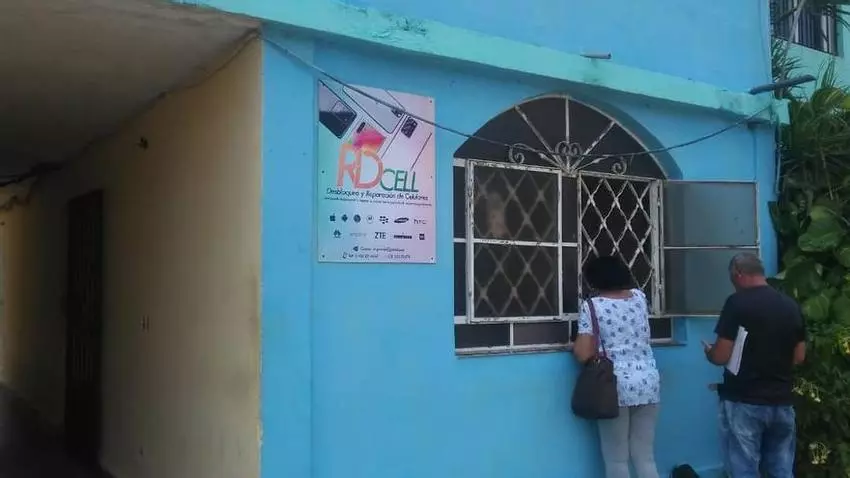
14ymedio bigger14ymedio, Julio César Contreras, Matanzas, 14 May 2024 — Aurelio has not been able to serve any customers this Tuesday in his cell phone repair shop in Matanzas. The constant blackouts, especially in the part of the city where he works, affect his business, which depends almost entirely on electricity. The situation has forced him to give, for several days, the same response to his clients: “I have a solution for your phone. What I don’t have is electricity.”

“I live in Pueblo Nuevo, near the bus terminal, and I have to come to Allende to do my job. After an early morning with a blackout at home, isn’t it easy to get here and find the same situation?” the 52-year-old man from Matanzas, whose power in his workshop has been turned off again since 7:00 am, tells this newspaper.

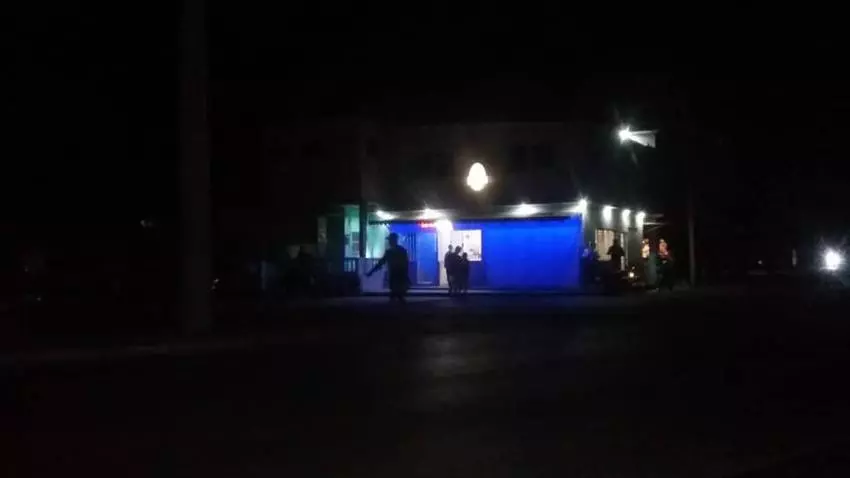
In the middle of the darkness of the night, and in a blackout, only a cafeteria can provide service with its own power plant / 14ymedio

His business, Aurelio says, is not “even remotely” the only one that suffers losses due to power outages. “Even state-run businesses are struggling.” A few days ago, the man from Matanzas went to the Bellamar state pizzeria, located a few blocks from his workshop, to look for some lunch. The place was in blackout and they had not been able to prepare any dishes. Asked if it was possible to return in a couple of hours, the waitress’s response – with a smile – was forceful: “You can come back whenever you want, but since we don’t know how long the blackout will be, we’re leaving.”

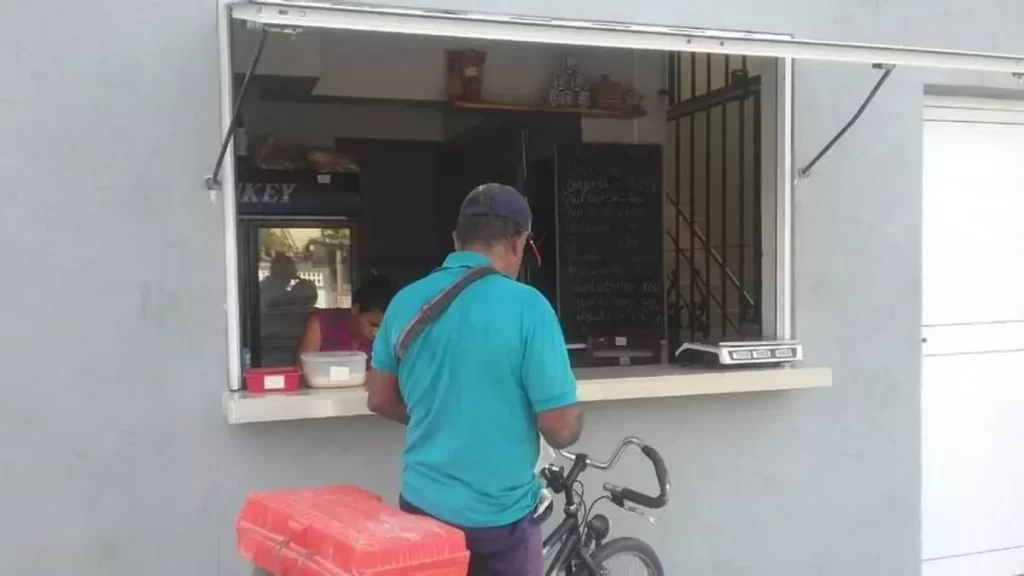
The MSMEs [micro, small and medium-size private enterprises] dedicated to the food trade, especially those that need refrigeration, are also affected, and the annoyance of their owners , who in addition to income, lose part of their merchandise, is increasing. “Here we use a coffee maker, toaster, oven… Everything is electrified. With the constant blackouts, it is difficult to maintain the ice cream and cold products with the necessary quality,” the owner of a cafeteria in the Iglesias neighborhood explains to 14ymedio. continue reading

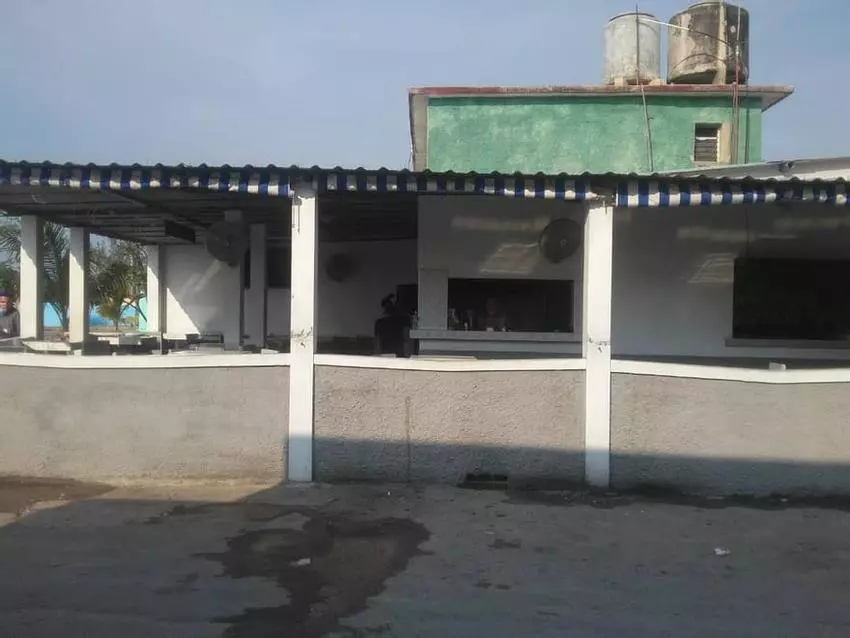
When water cannot be pumped up to the rooftop tanks due to lack of electricity, the establishments’ offerings are affected / 14ymedio

“I have a friend whose MSME is mainly dedicated to selling chicken, and this week he had to empty an entire refrigerator that already had flies because the meat had spoiled,” he says. Compared to how demanding the State is with individuals, he laments, “the commitment is little.” “Every month I have to make a payment for my license, whether I sell anything or not. And if the inspectors show up, they want to charge me a fine for anything. Meanwhile, I am losing money and products go down the drain,” he complains.

The blackouts affect even the sectors most favored by the regime, such as tourism, which has one of its most important enclaves in Varadero. The hotels may not have the power cut off, but when the buses that transport workers come to refuel and there is no fuel at the service center, an operation that should take a few minutes ends up becoming a cumbersome procedure that takes long hours.

A cellphone repair shop with service turned off due to lack of electricity / 14ymedio

“Yesterday I was here until 7:00 pm and I couldn’t refuel because there was no electricity service and, therefore, the magnetic card could not be swiped. Today, the same. “I decided to wait a while, but if the power doesn’t come on…” says one of the disappointed drivers. The same thing happens with tourists who rent vehicles and when they arrive in the city find “no gas, no food, no anything.”

The chain of services affected by the blackouts, which, according to several residents of Matanzas, can exceed eight hours, is incalculable. “If there is no electricity, you cannot withdraw money from the bank, without money there is no food or transportation, much less energy to face the same situation every day. The list goes on and you come to see you can’t do anything because it is an essential service,” Aurelio grumbles.

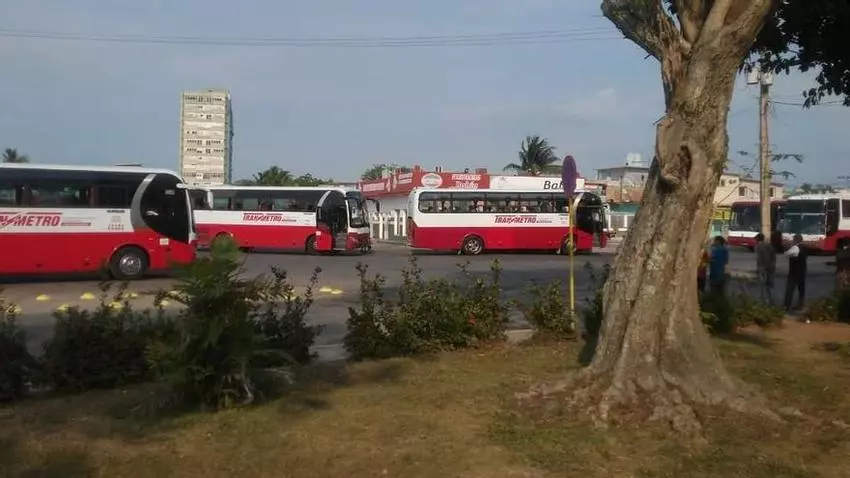
The buses pile up, waiting for supplies to refuel / 14ymedio

The only place where there is no lack of electricity, explains the man from Matanzas, is in the La Marina neighborhood, where popular protests have occurred. In the rest of the city, “it doesn’t matter if it’s in an Etecsa branch [state telecommunications company], in the bank, in the law firm or in a store, wherever you go, there is a blackout.”

____________

COLLABORATE WITH OUR WORKThe 14ymedio team is committed to practicing serious journalism that reflects Cuba’s reality in all its depth. Thank you for joining us on this long journey. We invite you to continue supporting us by becoming a member of 14ymedio now. Together we can continue transforming journalism in Cuba.
Washington Removes Cuba From the List of Countries That ’Do Not Cooperate’ With Its Efforts Against Terrorism

This is not the List of Countries Sponsoring Terrorism, but rather a smaller inventory that includes Iran, North Korea, Venezuela and Syria.

United States Secretary of State Antony Blinken / EFE

14ymedio bigger14ymedio, Havana, 15 May 2024 — On Wednesday, the United States Department of State removed Cuba from the list of countries “that do not fully cooperate with Washington’s anti-terrorist efforts.” This is not the List of Countries Sponsoring Terrorism, on which the Island remains despite the regime’s international protests, but rather another smaller inventory, as explained in an official document to which Martí Noticias had access.

“On May 15, the US Secretary of State determined and certified, under Section 40A of the Arms Export Control Act, that four countries – North Korea, Iran, Syria and Venezuela – were not fully cooperating with the anti-terrorist efforts of the United States in the calendar year 2023,” Martí quotes the document, which does not include the Island.

For that year, therefore, Cuba’s status changed compared to 2022, when it was in this list of countries. To date, the Island had remained on the list – which prohibits the United States from exporting weapons or offering defense services and articles to the countries that are included – for three consecutive years.

Given this new decision, the Cuban Foreign Minister, Bruno Rodríguez, stated this Wednesday on the social network X: “The US the State Department has just admitted what is known to everyone: that Cuba collaborates fully with efforts against terrorism,” in reference to the State Department’s action. continue reading

 The regime’s campaign to pressure Washington to remove Cuba’s name from the List of State Sponsors of Terrorism has been gaining intensity for months

At the same time, Rodríguez insisted on demanding that the US Government remove Cuba from “the arbitrary list with which it designates countries that supposedly sponsor terrorism” and stop “applying the coercive economic measures that accompany this unjust designation.”

“All political manipulation of the issue should cease and our arbitrary and unjust inclusion on the list of countries sponsoring terrorism should end,” he added.

The regime’s campaign to pressure Washington to remove Cuba’s name from the List of State Sponsors of Terrorism – which involves more serious measures – has been gaining intensity for months. The announcement has raised the suspicions of some US members of congress of Cuban origin who, like María Elvira Salazar, believe that it is “a new sign that the Biden Administration is paving the way to remove Cuba from the list.”

“How is it possible that a dictatorship that finances terrorism in Latin America, supports Hamas and shelters international terrorists in its territory now ’cooperates’ with the United States on antiterrorism? Once again the White House is guilty of innocence or its condescension with the Castro/Díaz-Canel regime is quite evident,” said Salazar, quoted by América TeVé.

Last April, in a meeting with senior Washington officials, Cuban Vice Foreign Minister Carlos Fernández de Cossío once again protested Cuba’s appearance among these countries. Weeks before, in February, at a meeting between representatives of the United States and Cuba to improve police and judicial coordination channels between both countries, the Island delivered to the White House its own list of “terrorists” – the majority residing in the United States — and asked for their cooperation.

For its part, the Cuban exile in the United States has responded to the regime’s campaign. Last March, a group of Republican members of Congress of Cuban origin asked the President of the United States, Joe Biden, to keep Cuba on the list of State sponsors of terrorism, a category that entails sanctions for the Island. The request occurred within the framework of a trip to Cuba by two members of Congress from the progressive wing of the Democratic Party who met with Díaz-Canel.

The president himself has demanded on multiple occasions that the Government be removed from the list

The president himself has demanded on multiple occasions that Cuba be removed from the list, which, he insists, represents great economic losses for the Island. The most recent allusion was made in an interview with the Spanish journalist Ignacio Ramonet, in which he said that at the beginning of 2020, “when there were around eight or ten days left for Trump to leave the White House,” the United States included Cuba on the list of countries sponsoring terrorism. “And then, suddenly, all the banking agencies and all the financial institutions stopped giving us credit.”

With regards to why the current US Administration has maintained sanctions on the Island, the president argued that the US prioritizes “the interests of a minority, which is the Cuban-American mafia.”

____________

COLLABORATE WITH OUR WORKThe 14ymedio team is committed to practicing serious journalism that reflects Cuba’s reality in all its depth. Thank you for joining us on this long journey. We invite you to continue supporting us by becoming a member of 14ymedio now. Together we can continue transforming journalism in Cuba.
Nine-Years in Prison for the Cuban Who Wrote ‘Diaz-Canel Motherfucker’ on a Wall

Jorge Luis Boada Valdés, for whom the Prosecutor’s Office requested a 15 year sentence, must spend at least half of the sentence in prison

Jorge Luis Boada Valdés has continued to make protest graffiti in prison. /Courtesy

14ymedio bigger14ymedio, Madrid, 7 May 2024 — Jorge Luis Boada Valdés’ should have been sentenced last November for having painted “Díaz-Canel, motherfucker” on three occasions, on a wall in the Havana neighborhood of Lawton, but the wait has been extended for half a year. The Provincial Court of Havana sentenced the young man to nine years in prison for the crimes of enemy propaganda and other acts against State Security.

The family was informed about the sentence on Saturday, Jorge Boada, the prisoner’s father, told Diario de Cuba. “This Saturday we finally learned about the sentence, which is four and a half years of confinement and another four and a half on the street, the latter in case my son behaves well in prison. I believe he should not be in prison for what he did, but at least his sentence is not 15 years, as the Prosecutor’s Office requested,” he told the independent media.

Boada was arrested in February 2022 after receiving a summons for writing graffiti with the slogan “Díaz-Canel, motherfucker” on several occasions. In addition, the young man took photos of his actions and posted them on his social networks. Initially, he was taken to the State Security headquarters Villa Marista, where he again wrote sentences against the Government. Later he was transferred to Valle Grande, where he was seen somewhere in the prison with a sheet reading ’Patria y vida’ [Homeland and Life], which caused him to be taken to a punishment cell.

His family stated from the beginning that the young man – who studied in a “special school”– did not have “the mental capacity” to understand the acts he committed. The psychiatric expert report carried out for the trial, however, concluded that he did have criminal responsibility. continue reading

Boada’s family, which has described to the independent press the harassment suffered by the boy in prison, also warned that Jorge Luis suffers from epilepsy and requires constant medication, which is hard to sustain in prison, where the regime does not treat inmates appropriately.

In the trial, held last November 2023, two other people were indicted, Luis Andrés Domínguez Sardiñas, 47, and Yohan Carlos Terán Izquierdo, 25.

The Prosecutor’s Office alleged in its indictment that Domínguez intended to create “an environment of destabilization of the internal order and the country’s security”

The Prosecutor’s Office alleged in its indictment that Domínguez intended to create “an environment of destabilization of internal order and the country’s security,” calling for protests after the demonstrations of 11 July 2021.

Meanwhile, two “influential counterrevolutionaries” living abroad allegedly promised Boada and Domínguez to send them “rubber bands” to make slingshots, “alcohol to make incendiary devices,” spray to paint posters and perform other “actions of civil disobedience.”

The letter, to which the Spanish agency EFE had access, did not indicate whether the money and material were sent. During the trial, several neighborhoods in Havana were militarized to prevent popular protests, including Santos Suárez and La Víbora. In addition, other neighborhoods such as Luyanó suffered communication and internet blackouts.

Translated by L.A.R

____________

COLLABORATE WITH OUR WORKThe 14ymedio team is committed to practicing serious journalism that reflects Cuba’s reality in all its depth. Thank you for joining us on this long journey. We invite you to continue supporting us by becoming a member of 14ymedio now. Together we can continue transforming journalism in Cuba.
Jose Daniel Ferrer’s Jailers Stop His Family From Visiting Him One More Time

His wife, Nelva Ismarays Ortega Tamayo, denounced that the agents had limited themselves to accepting the “bag” of food and medicine she brought.

José Daniel Ferrer, leader of UNPACU, imprisoned in Santiago de Cuba, in an archive image.

14ymedio bigger14ymedio, Havana, 10 May 2024 — The Mar Verde high-security prison authorities in Santiago de Cuba prevented political prisoner José Daniel Ferrer’s family from visiting him last Monday. In an audio sent via WhatsApp, his wife, Nelva Ismarays Ortega Tamayo, denounced that the jailers had limited themselves to accepting the “bag” of food and medicine that she brought to the leader of the Patriotic Union of Cuba (UNPACU).

Ortega Tamayo was scheduled to make a regular visit to her husband and was accompanied by her four-year-old son, Daniel José, and her stepdaughter, Fátima. The agents blocked their way and only accepted “the bag with food, hygiene products, toiletries and some medicines.”

This has been happening for “more than a year,” laments the woman, who sees in this act a constant and unpunished violation of her husband’s rights, and in addition to this, they have cancelled their “family and marital visits” without prior notice. On May 3, she exemplifies, a conjugal visit was scheduled, but the prison guards made her wait several hours only to tell her that she could not see Ferrer, thus showing off their “abuse of power so characteristic of them.”It is “psychological torture,” to which she is already accustomed, says Ortega Tamayo.

“The dictatorship insists on keeping him isolated not only from the rest of the prison population but also from his own family,” she adds. Ferrer remains “in the same punishment and isolation cell since August 14, 2021, under inhuman, cruel and degrading conditions, being a victim of mistreatment and physical and psychological violence. Deprived of his liberty. Poorly fed. Drinking non-potable water most of the time, prisoners have to carry the water over long distances because tanker trucks hardly ever reach there,” she says. continue reading

For more than two years he has only been entitled to 12 family visits and 9 marital visits, the woman summarizes

Nor does he have medical or dental care, Ortega Tamayo denounces, and he is exposed – like all prisoners on the island, she emphasizes – to “malnutrition, parasitism, leptospirosis and tuberculosis,” due to coming in contact with “rats, bedbugs, ticks, cockroaches, etc.”

For more than two years she has only been entitled to 12 family visits and 9 marital visits, summarizes the woman, who also complains about Ferrer’s inability to make phone calls. The regime is determined to “slowly bury him alive and make his life miserable,” she says. The family suffers constant frustration and anguish, she explains, and can only wonder “how he is, where he is” or whether he has started a new hunger strike or has been beaten.

“We call on international solidarity to keep supporting my husband and complaining about the abuses suffered by him in prison,” her message concludes, holding Miguel Díaz-Canel and Raúl Castro accountable for Ferrer’s physical and mental integrity. “We fear very much for my husband’s life, so we will continue to demand proof of life and his immediate and unconditional release.”

On April 1, the authorities agreed to allow Ortega Tamayo to visit Ferrer for “two measly minutes.” Until March, the political prisoner had not been able to communicate with his family for a year. “At seven in the morning I was standing in front of the prison, and at 10, in the waiting room, First Lieutenant Iranis Pozo, as he identified himself, showed up and took me to the office where we used to do family visits,” Ortega said. She also pointed out that in the office, guarded by “a female guard” so that her position could not be heard from outside, the agent tried to convince her to abandon her “stand.”

“Realizing that I would stand my ground and that the only way to get me out was in a police car or after allowing me to see my husband, the same officer told me that they would give me two minutes, after talking to the Headquarters and State Security,” she then explained.

Among the few words they exchanged, Ferrer asked her to denounce his situation and that of other prisoners such as Fernando González Vaillant and Roilán Zárraga Ferrer, who have already served their respective sentences – in González’s and Zárraga’s case “months ago”– but remain in prison. “The dictatorship doesn’t want them out on the streets,” Ortega said.

José Daniel Ferrer has been in prison since 2021 before he could join the 11 July 2021 (’11J’) mass protests, although the history of repression against him began much earlier. The opposition leader was part of the group of prisoners of the Black Spring, he was sentenced to death, the conviction was commuted to 25 years in prison and he was released after eight years thanks to the Vatican’s efforts and Spain’s mediation.

Translated by L.A.R

____________

COLLABORATE WITH OUR WORKThe 14ymedio team is committed to practicing serious journalism that reflects Cuba’s reality in all its depth. Thank you for joining us on this long journey. We invite you to continue supporting us by becoming a member of 14ymedio now. Together we can continue transforming journalism in Cuba.
How To Forget Cuba in Three Tries

The complex thing here is that it is not about forgetting a person, but about removing an entire country from your bones, from your liver

Being Cuban is a singularity, not an identity that functions as a straitjacket / 14ymedio

14ymedio bigger14ymedio, Yunior García Aguilera, Madrid, 11 May 2024 — Those who have had a toxic relationship desire with all their soul to be able to say: it’s over, a clean slate. But, I wish forgetting were so simple! It usually happens that the more you try to leave behind that story that hurts you, the more you remember it. To get your ex-partner out of your head, there are dozens of manuals. The complex thing here is that it is not about forgetting a person, but about removing an entire country from your bones, from your liver.

No supermarket sells the famous Coca-Cola of oblivion. Even those who claim to have taken it often have relapses. I have met several countrymen who swear to me: “I had disconnected from Cuba, compadre, until November 27 or July 11.” That means that, in reality, they had not forgotten. They had simply put Cuba on pause.

Some neurologists claim that the brain never forgets. The memories are still there, trapped in collections of neurons called “engram cells.” The illusion of forgetting occurs when the circuits that connect these sets are broken. It is as if a path leading to an intricate place were filled with grass. The place still exists, what we can’t find is the path. continue reading

I know of Cubans who keep their phones on Cuban time, even though they live in France

I know of Cubans who keep their phones on Cuban time, even though they live in France. There are others who spend hours digging through Facebook, more aware of what is happening in Marianao than the Marianaos themselves. It doesn’t matter if you have an Australian passport, you are probably aware of the relationship between Lázaro and Yarelis; or Fernando, the pianist from Guanabacoa; or the dismissal of Lisandra, the “Cuban Amy Winehouse.”

Some, with greater political awareness, are unable to sleep all night every time they arrest an activist, and wear out their brains thinking of a thousand ways to bring down the dictatorship. But, let’s be honest, even those of us most committed to the fight for democracy have, more than once, felt deeply disappointed and exhausted. Above all, when after so much misery and abuse, we see thousands of Cubans marching and shouting slogans, trying to defend the indefensible. That is why we read comments like: “Cuba has no remedy” or “a people have the dictatorship they deserve.”

Those who opt to turn the page avoid websites and profiles that remind them of that piece of land with more marabou trees than palm trees. They try to get the algorithm to do its thing and send them different content. “You’re a masochist,” I am told all the time by a friend who has been successful, according to him, in tricking Zuckerberg and Elon Musk into getting the networks to show him news about Dubai, instead of talking to him all the time about Jatibonico.

The second piece of advice from successful forgetters is to assimilate into their new context. I met a girl recently who has only been in Madrid for a couple of months and she is already more Spanish than Lola Flores. In a single sentence she is able to say vale (okay), tío (dude), hostias (hosts), majo (nice), currante (hard-working) and even gilipollas (douchebag). The only problem is her spelling, the girl puts the Z wherever she wants. But I won’t be the one to judge her. She has her own reasons to prevent the Cuban from coming out of her pores. No Madrilenian cat will take her as a breed, but she will heal the occasional wound.

“The third and final step to hide Cuba in the drawer of amnesia is to achieve that abstract and idyllic condition of being a “citizen of the world.”

The third and final step to hide Cuba in the drawer of amnesia is to achieve that abstract and idyllic condition of being a “citizen of the world.” It sounds great, the problem is achieving it. Let’s see… I myself am against chauvinism and it seems very ridiculous to me to try to fit “in a Pepe way” with the stereotypes of what they call Cubanidad. For me, being Cuban is a singularity, not an identity that functions as a straitjacket. But, if getting a single residence, a single citizenship, is already a hell of a bureaucratic hassle, then imagine achieving them all and declaring yourself cosmopolitan!

Despite everything, some claim to have cured themselves of Cuba using this formula: evasion, assimilation, universality. If for the sake of your mental health you think it is necessary to permanently bury the memory of the place where you were born, well… try it. But if you have already tried everything and Cuba is still beating in your brain, then, like me, you suffer from chronic Cubanitis. We have to continue doing everything possible and the impossible so that this beautiful land is a place worth remembering and where it is worth returning… someday.

____________

COLLABORATE WITH OUR WORKThe 14ymedio team is committed to practicing serious journalism that reflects Cuba’s reality in all its depth. Thank you for joining us on this long journey. We invite you to continue supporting us by becoming a member of 14ymedio now. Together we can continue transforming journalism in Cuba.

With the Traffic Lights Out and a ‘Swimming Pool’ Size Pothole, Disorder Takes Over the Streets of El Cerro in Havana

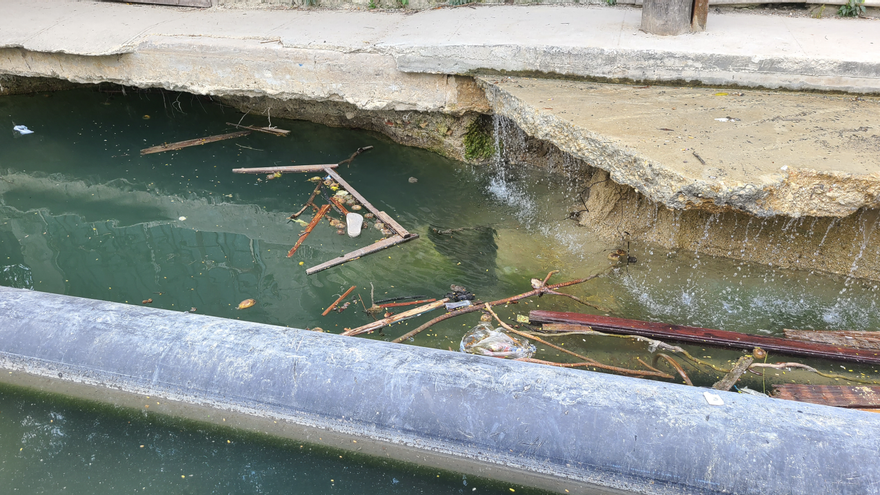
Small “waterfalls” have already formed inside the hole with the water flowing from the pipe and the neighbors foresee a disaster.

Images of a group of children bathing in the pothole-pool reached Cuban screens last month / 14ymedio

14ymedio bigger14ymedio, Havana, 11 May 2024 — “Until a misfortune occurs, the Government is not going to fix this,” predicts Marta, a neighbor who lives a few steps from the pothole-pool in the municipality of Cerro, in Havana. After several years of cutting the street in two, the hole has not only taken on monstrous proportions, but, since the last time this newspaper visited the neighborhood, it has absorbed more garbage, debris and water.

Its spine, a pipe that should have been fixed by the state company Aguas de La Habana weeks ago, remains broken. “They came to get a snack,” Marta mocks, alluding to the workers who, supposedly, would be in charge of covering the leak and restoring the pavement. However, it is easy to see that the pothole no longer requires a minor or partial solution, but rather a serious attack.

Marta sees “a misfortune” coming and she is right. The pothole is surrounded by two “traversable” parts: the fragment of street that was left next to it and a piece of sidewalk, which now serves as a bridge for anyone who wants to risk crossing. It is enough to see, the woman comments, how the structure warps when someone passes over it.

The structure surrounding the pothole warps when someone passes over the sidewalk / 14ymedio

“If someone falls in there and is unlucky enough to not know how to swim, they drown,” she says. The warning is not exaggerated. Inside the pothole, small “waterfalls” have already formed with the water flowing from the pipe. It doesn’t even need to rain for the hole to fill with the bluish liquid through which pieces of wood and “rafts” of dirt float. continue reading

The situation is unsustainable and although the families of the neighborhood have been living with the pothole for years, there are those who are thinking of protesting in a visible way against its presence. “More than once we have decided to throw stones into the puddle, until the Police come and set up ‘the nasty one’,” says Marta, tired of warning the neighborhood children not to get into the puddle.

The images of a group of children bathing in the pothole-pool reached the screens of Cubans, via Facebook, last month. It is better not to look at the rest of the street. Dusty, surrounded by trash piles, the passage that does not interrupt the gap is hindered by garbage. In April, when 14ymedio photographed the state of the place, the pothole had even grown pumpkin plants, with their corresponding fauna of mosquitoes, frogs and cockroaches.

The traffic lights from the corner of Calzada de Cerro and Tejas to Belascoaín are out / 14ymedio

Cerro, the municipality that – according to the saying – held “the key” to Havana and its viaducts, contains several of the worst streets in the capital. The disaster is not limited to the condition of the pavement, but also to traffic signals and traffic lights. A clear example is the set of “blackout” of the traffic lights from the corner of Calzada de Cerro and Tejas to Belascoaín.

Without a traffic officer to control it, the stretch is in absolute disarray. The cars zigzag in search of a clear path and their drivers no longer bother to look up for the red, green and yellow lights. With a summer that has just started and increasingly longer days of blackouts, the only light that can be used in Havana is that of the sun.

_____________

COLLABORATE WITH OUR WORKThe 14ymedio team is committed to practicing serious journalism that reflects Cuba’s reality in all its depth. Thank you for joining us on this long journey. We invite you to continue supporting us by becoming a member of 14ymedio now. Together we can continue transforming journalism in Cuba.

Reactionary and Intransigent

 I will be against Castro’s totalitarianism and I will demand justice for the Cuban people until my last breath.

Demonstration of the Cuban exile in October 2022, in Miami / 14ymedio

14ymedio bigger14ymedio, Pedro Corzo, 12 May 2024 — Since my distant adolescence the terms “reactionary and intransigent” became popular in Cuba. Any individual who objected to the populist dictatorship of the Castro brothers, which became a totalitarian system a few years later, was branded with both epithets and placed on the path of being excommunicated by the Revolution, which meant being alone against the world, a decision that for the sake of decorum, many of us took.

There was a kind of chemistry between those young people that led to an almost immediate identification, responding to a saying of my late friend, Aquilino Álvarez Triana, “God created them and the Revolution unites them,” a kind of imitation of the title of that unforgettable film by Roger Vadim with the suffocating Brigitte Bardot.

Luckily, I was always among the reactionaries and intransigents. The right, as Ramiro Gómez calls it.

At first we rejected these accusations, but later we agreed that in the ocean of insults and permanent moral execution of Castroism they were the least offensive, in addition to reflecting reality because we were completely antagonistic to the dictatorship. continue reading

One cannot forgive the murderer who does not accept his crimes and even less forget the devastation that occurred in Cuba

We categorically rejected the firing squads, the criminalization of politics, the confiscation of property, religious persecution, the absolute control of information and the establishment of a police state that violated citizen rights in every way. We did not accept Fidel Castro’s conversion into God and that his most notorious henchmen made up a kind of Olympus.

I admit that el cintillo bothered me, but the enemy was and is right. The adjective is valid in Cuba and also in the United States, because I continue to repeat my behavior from more than 65 years ago, as I commented to my friend, the writer Jose Antonio Albertini.

I will be against Castro’s totalitarianism and I will demand justice for the Cuban people until my last breath. You cannot forgive the murderer who does not accept his crimes, much less forget the devastation that occurred in Cuba.

Intransigent, because I am in favor of Israel in its fight against the Hamas terrorists, who raped women, murdered children and held people hostage, while some very important NGOs, defenders of women, maintain a silence very similar to complicity by omission.

Against Vladimir Putin for having invaded Ukraine and being the best ally of Castroism and the despotisms of Nicaragua, Venezuela and Bolivia, while I criticize Luis Inacio Lula da Silva because I consider him one of the biggest frauds in Latin American politics.

I reject the theocracy of Iran for oppressing its people and seeking to destabilize the West.

I condemn China’s state capitalism for denying rights to its citizens and threatening Taiwan and the world. Its North Korean counterpart deserves the same repudiation.

I continue to refute the judicialization of politics in any country, including the United States, which unfortunately, like other Western countries, is putting its identity at risk due to the desire of some of its politicians to promote projects that lead to the atomization of our rights and opportunities.

There can be no sanctuaries for those who break the law, that is the beginning of chaos that will extinguish everything

I will be reactionary and uncompromising because I defend Law and Order. A criminal should never be equated with a decent person. A thief is both someone who steals 25 cents and several thousand. Both should go to prison, which is why I do not understand the lack of sanctions for those who steal objects of lesser value from businesses.

I believe in the death penalty and in the right of the couple to decide about pregnancy for as long as the law decides.

I will never understand that there are areas in a city that are outside the control of the authorities. There can be no sanctuaries for those who break the law, that is the beginning of chaos that will extinguish everything.

I am uncompromisingly against a society of privilege. No person has more rights than their peers, whether due to the color of their skin, religion or sexual orientation, adding that I reject gender ideology because the family, man and woman, is the fundamental pillar of society.

There is a lot to say about all these things and some, perhaps the majority, will not be well received, but as a citizen I firmly believe in the politically incorrect phrase of the apostle Jose Martí, “only the truth will permit us to don the manly toga*.”

 *Translator’s note: A phrase originally attributed to José de la Luz y Caballero (1800–62), an influential Cuban intellectual, referring to the white toga of adulthood given to boys in ancient Rome when they reached sixteen. 

____________

COLLABORATE WITH OUR WORKThe 14ymedio team is committed to practicing serious journalism that reflects Cuba’s reality in all its depth. Thank you for joining us on this long journey. We invite you to continue supporting us by becoming a member of 14ymedio now. Together we can continue transforming journalism in Cuba.

Mexico Accelerates Its Import of Cuban Doctors To Reach the ‘Goal’ of 1,200

  • The director of the Mexican Social Security Institute announces the arrival of another 123 health workers after a meeting in Havana with Miguel Díaz-Canel
  • The opposition candidate Xóchitl Gálvez accuses the Government of “financing a dictatorship”
Miguel Díaz-Canel with Zoé Robledo Aburto, general director of the Mexican Social Security Institute, on Friday in Havana. / Cubadebate

14ymedio bigger14ymedio/EFE, Mexico City, 13 May 2024 — “Strengthen health cooperation between both countries.” With those words, Mexico defined in a statement the objective of the meeting held in Havana between Zoé Robledo, the director of the Mexican Social Security Institute (IMSS), and the Cuban president Miguel Díaz-Canel.

There is no news in the text, beyond reporting the arrival, in the coming days, of another 123 Cuban doctors specializing in family medicine, who will join the 806 who already work in the public health sector in Mexico (the statement says there are 768). The intention, they insist, is to import up to 1,200 healthcare workers from the Island to Mexico during the remainder of the six-year term.

The island’s health workers will join the IMSS-Bienestar, a system created by the Mexican president, Andrés Manuel López Obrador, to serve people without social security, which replaced Seguro Popular, a program with the same purpose.

 Although the meeting took place last Friday in Havana, the IMSS specified days later the number of Cuban specialists, who will join the 806 who already work in the public health sector

“At that meeting, the general director of Social Security indicated that through the agreement between the Governments of Mexico and Cuba, it is intended to expand to 1,200 the number of Cuban doctors who support the IMSS-Wellness medical units located in remote and difficult-to-access areas,” detailed the institute. continue reading

The hiring of Cuban doctors in Mexico has sparked criticism from the opposition, including from presidential candidate Xóchitl Gálvez, who just last week promised that her government would not hire those workers.

“Mangos [don’t even believe it] that we are going to continue bringing Cuban doctors to Mexico! In Mexico, there is a surplus of capacity and talent, and the bringing of Cuban doctors has only served to simulate the financing of an authoritarian regime because they don’t even believe that they are paid well,” she explained during the presentation of her health plan last Monday.

Gálvez raised her tone this Sunday and accused the Government of “financing a dictatorship” after new information was revealed.

“This Government is betting on financing a dictatorship, which is the case of Cubans who violate human rights. Not us, we want our Mexican doctors to earn well and have good jobs,” the candidate of the Fuerza y Corazón por México [Force and Heart for Mexico] coalition.

In this context, Gálvez promised to “open more specialty positions for Mexican doctors” and train more specialists, surgeons, cardiologists and pediatricians.

“With regards to health, we are going to open more medical schools in rural areas. We want there to be more doctors, we do not want Cuban doctors, we want Mexican doctors,” she remarked.

The former senator also insisted on reviving Seguro Popular, a program that covered citizens without social security that López Obrador replaced with a system called IMSS Bienestar, which Gálvez considers “a failure.”

“Social policy is a failure, 50 million people do not have social security in terms of health,” she said.

 “Social policy is a failure, 50 million people do not have social security in terms of health,” she said

The Government justifies the hiring of the Cuban doctors because Mexico has 2.4 doctors per 1,000 inhabitants, higher than the average of 2 per 1,000 in Latin America, but lower than the average of 3.5 of the Organization for Economic Cooperation and Development (OECD) countries, according to the National Institute of Statistics and Geography (Inegi).

In addition, the López Obrador Administration has defended Cubans after stating that Mexican doctors do not want to work in rural or marginalized areas, while health personnel have responded that there are areas in which they cannot work due to violence.

“The participation of Cuban doctors in IMSS-Bienestar has added to the work of Mexican doctors to strengthen the First Level of Care by increasing productivity in consultations and the operating room,” the institute’s statement concluded.

Three weeks before the elections, on June 2 Gálvez appears in second place in the polls, below the ruling party’s Claudia Sheinbaum. Some 98 million voters are called to renew more than 20,000 positions, including the Presidency, the 500 deputies and the 128 senators.

____________

COLLABORATE WITH OUR WORKThe 14ymedio team is committed to practicing serious journalism that reflects Cuba’s reality in all its depth. Thank you for joining us on this long journey. We invite you to continue supporting us by becoming a member of 14ymedio now. Together we can continue transforming journalism in Cuba.

The Deadliest Motto of the Cuban Revolution is Fading Little by Little

Only 5 illuminated letters remain of the 23 that make up the slogan posted on the Habana Libre Hotel

The slogan was put in place just two months after the release of the song ’Patria y Vida’ / 14ymedio

14ymedio bigger14ymedio, Pedro Espinosa, Havana, 10 May 2024 — At the end of April 2021, an old well-known Castro slogan appeared on the façade of the Habana Libre hotel in the capital: Patria o Muerte Venceremos [Homeland or Death We Will Win]. The sign, on the cornice of the building that faces 23rd Street in El Vedado – where there was once a mural created by the Cuban painter Cundo Bermúdez who was exiled in the 60s – in red capital letters, had been placed just two months after the song Patria and Vida [Homeland and Life] was released, and immediately converted into an anthem and motto against the single-party regime

The coincidence escaped no one, especially taking into account that the blue letters that said Habana Libre on top of the emblematic building had been removed more than two years ago without being returned to their place, neither then nor now.

The letters lit up at night, making the phrase darker in the middle of the darkness in which daily blackouts leave the city.

However, little by little they have been melting away. Now, only 5 illuminated letters remain of the 23 that make up the deadly call. The epitome of an entire system that is collapsing, the slogan is fading in Cuba.

____________

COLLABORATE WITH OUR WORKThe 14ymedio team is committed to practicing serious journalism that reflects Cuba’s reality in all its depth. Thank you for joining us on this long journey. We invite you to continue supporting us by becoming a member of 14ymedio now. Together we can continue transforming journalism in Cuba.

New Trash Dumps and Puddles Like Lakes, the Hygiene Situation in Matanzas, Cuba

“Sometimes plastic bags and papers fly to my door, and the smell is intolerabl, especially at night”

Calle Medio is one of the most central streets in the city / 14ymedio

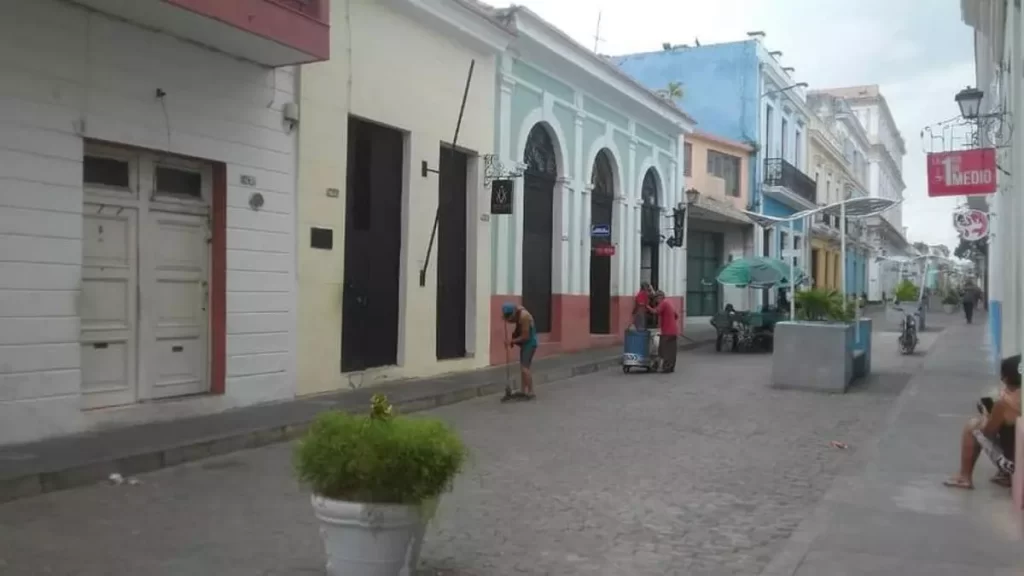
14ymedio bigger14ymedio, Julio César Contreras, Matanzas, 10 May 2024 — He took the job to “survive,” but Fernando strives to make Calle Medio, in Matanzas, look impeccable by the end of the day. At 73, he still gets up at dawn and gathers strength to pick up trash from Monday to Sunday in the city centre. His tools: a worn broom and millenary gloves; his mission: to sweep, as much as he is physically able to, all the garbage that piles up in the city.

“If you want to know what the hygienic situation is, all you have to do is walk through Matanzas,” says the sweeper to this newspaper, aware that the view he promises is not pleasant. “Right there is a ‘trash dump’ in the middle of the street that can be compared to a swimming pool, but fixing that is out of my reach.”

According to the man from Matanzas, the working conditions offered by Communal Services are not acceptable at all. “We have to make do with old brooms and dustbins. It is not nice to say it, but they demand a lot from us and we are given very little,” he reflects. To top it off, the job he got with the idea of “shoring up” the insufficient pension he receives, barely earns him another 2,500 pesos per month which is not enough for much. continue reading

“I don’t know what we’re going to do if this ends up in a disease or a plague of rats

Fernando is known on Calle Medio, one of the most central streets in the city, where he often sweeps. “This area is quite clean, but other more distant streets, especially in residential neighborhoods, are not as lucky.”

Alina, a housewife living in the Peñas Altas neighborhood, has been complaining to the authorities for weeks about a trash dump that emerged at the corner of her house. “The People’s Power delegate talks and talks, but he doesn’t solve anything and the garbage truck sometimes goes weeks without coming, so I can’t count on that.”

The trash dump of “titanic proportions” has begun to disrupt her daily life. “Sometimes plastic bags and papers fly to my door, and the smell is intolerable, especially at night,” she explains. Neighbors are also unhappy with the situation, “but many have gotten used to it and now it is the neighborhood’s garbage dump, from construction debris to food waste, garbage and junk end up there, then the dumpster divers get them.” However, there is a thought that worries Alina more than the smell and dirt: “I don’t know what we are going to do if this ends up in a disease or a plague of rats.”

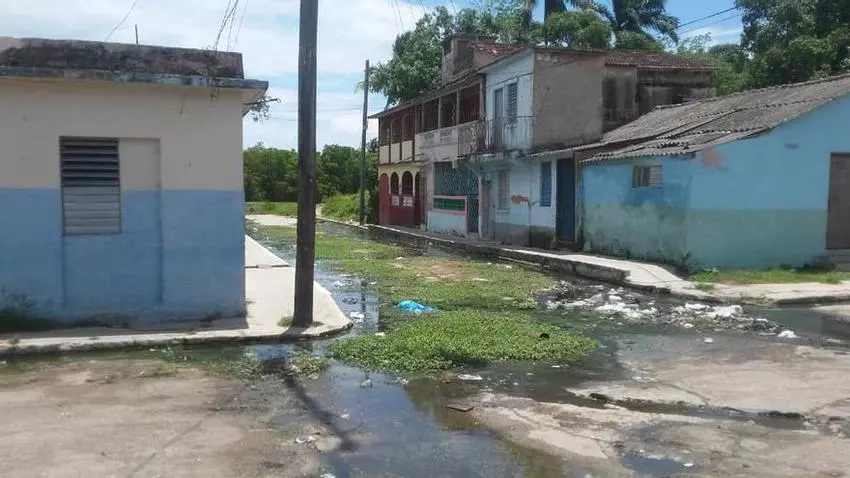
In the city’s lower elevation neighborhoods, where water accumulates when it rains and sewers rarely do their job, residents notice the appearance of several gigantic puddles on street corners. Félix, a retired officer of the Ministry of the Interior, suffers this phenomenon first-hand in La Marina neighborhood, where he resides. “When it rains just a little bit, so much water accumulates in front of my house, that I already talk about lakes and not puddles. Sometimes we have to wait more than an hour after the rain to be able to leave and, if then some days go by without rain, that stagnant water becomes green and stinking,” he said.

The residents of Matanzas sometimes have to wait several hours for the stagnant water to recede before they can go out / 14ymedio

Felix doesn’t just sit back and watch, and says that on several occasions he has gone to the authorities to report the problem. “I have gone to the Government and the Party to raise the complaint about what is happening. They always tell me that they are going to create a task force to analyze the case. You don’t have to be an expert to know what it takes. The truth is that they do nothing. And then do not express your opinion, because they accuse you of being a counterrevolutionary,” he complains.

At the end of the street, the same puddle that robs Felix of his sleep merges with water from a broken ditch. “I have seen with my own eyes how excrement circulates from one side to the other without anyone caring,” says Carmen who, from the other shore, shares her neighbor’s concern. Her disappointment with the response given to her by the authorities is also evident. “They always tell us that there are no resources, that they are studying the issue, that the blockade* does not allow [a solution]. In short, that they are not going to do anything and that we must solve it ourselves if we can and want to. ”

The dissatisfaction of people in Matanzas with hygiene in the city, once an example of a clean city, extends to other services, such as the scarcity of garbage bins in central areas, the reluctance to hire – as in other provinces – truck drivers and individuals who support the collection of waste, or the hiring of more sweepers like Fernando.

Likewise, with the containers overflowing and the few streets he can cover in one day, the old collector knows that there is very little he can do to prevent the garbage from taking possession of the city once and for all .

Translator’s note: There is, in fact, no US ‘blockade’ on Cuba, but this continues to be the term the Cuban government prefers to apply to the ongoing US embargo. During the Cuban Missile Crisis the US ordered a Naval blockade (which it called a ‘quarantine’) on Cuba in 1962, between 22 October and 20 November of that year. The blockade was lifted when Russia agreed to remove its nuclear missiles from the Island. The embargo had been imposed earlier in the same year in February, and although modified from time to time, it is still in force.

____________

COLLABORATE WITH OUR WORKThe 14ymedio team is committed to practicing serious journalism that reflects Cuba’s reality in all its depth. Thank you for joining us on this long journey. We invite you to continue supporting us by becoming a member of 14ymedio now. Together we can continue transforming journalism in Cuba.
Panama’s President-Elect Wants to Close the Darien Jungle Route and Deport the Migrants

In 2023, 520,000 people crossed the Darién jungle, including many Cubans

Between January and February 2024, 328 complaints of sexual violence were registered in the Darién / EFE

14ymedio bigger14ymedio, Havana, 12 May 2024 — The president-elect of Panama, José Raúl Mulino, who will assume the office in July, promises to “end the Darién odyssey.” During his proclamation, he said that the Darién jungle route between Colombia and Panama, through which more than 70,000 migrants have already crossed in 2024 on their journey to the United States, “has no reason to exist.”

More than 520,000 migrants crossed the Darien jungle in 2023 . The most frequent nationalities to cross were Venezuelans (328,667); Ecuadorians (57,222); Haitians (46,558); and Chinese (25,344), according to data from the Panamanian Ministry of Public Security.

An agent from the National Border Service (Senafront) of Panama controls migrants waiting to be registered with immigration agents after crossing the Darién / EFE

There is no precise data on how many people die in this jungle, where travelers face the wild environment and also criminal groups that commit assaults and rapes. According to reports offered by organizations such as Human Rights Watch and Doctors Without Borders, violence has increased significantly in recent months. Between January and February 2024, 328 reports of sexual violence were registered, compared to 676 reports in all of 2023.

The Panamanian authorities generally maintain a harsh discourse against migration, noting that on the Colombian side control is held by the criminal group of the Clan del Golfo, which in 2023 received about 68 million dollars for the passage of migrants, in addition to other gangs that rob and attack those who pass by. continue reading

At the beginning of May, Panama’s Director of Immigration, Samira Gozaine, told EFE: “There are stories from people who say that mothers drown their children in the river because it is difficult to carry them (…) they abandon them to their luck.”

Panama’s president-elect, José Raúl Mulino, says that the Darién “is not a transit route” / EFE

“What you are experiencing is total hell,” says Venezuelan Luisannys Mundaraín, 22, but the crisis in Venezuela gave her no other option, with 12-hour days in a supermarket for $20 a week.

The announcement by the Panamanian president-elect about the closure of the Darién caused discomfort. “Such a decision could trigger a significant congestion of migrants in our territory,” said the office of the Mayor of Necoclí, Colombia, speaking to the Reuters agency.

In regions such as Necoclí, Turbo and Acandí, the migratory exodus has become a transportation business. The New York Times denounced the business in Colombia. Migrants pay $40 for a boat ride to reach the tropical forest.

“A guide who takes you along the dangerous route when you start walking: $170. Someone to carry your backpack on muddy hills: 100 dollars. A plate of chicken and rice after a day of laborious climbing: $10. Special all-inclusive packages to make the risky effort faster and more bearable (with tents, boots and other basics): $500, or more,” the New York newspaper published in 2023.

____________

COLLABORATE WITH OUR WORKThe 14ymedio team is committed to practicing serious journalism that reflects Cuba’s reality in all its depth. Thank you for joining us on this long journey. We invite you to continue supporting us by becoming a member of 14ymedio now. Together we can continue transforming journalism in Cuba.
The Successful Privately Owned Ice Cream Brand, Helado’s Cid, Opens a Location in the Heart of Havana

Waiting in front were a dozen employees, recognizable by their uniforms, as well as an equal number of customers / 14ymedio

14ymedio bigger14ymedio, Juan Diego Rodríguez, Havana, May 7, 2024 — All bubblegum pink and turquoise, the brand new Helados Cid (Cid Ice Cream) location, which opened Friday at 23rd and H streets in Havana’s Vedado district, is a magnet. The place had been under construction for half a year and expectations were at their peak on opening day. Waiting in front were not only a dozen employees – recognizable by their uniform, with pink polo shirts for men and blue for women – but also an equal number of customers.

Until July 2023, the building was occupied by a privately owned establishment that operated as a cafe by day and a bar at night. When it closed, the owners auctioned off the furniture and appliances without further explanation. It was painted in November and scaffolding was erected at its front door. The shiny refrigeration equipment that could be seen from the outside suggested that the new place would remain in private hands. And so it did.

The secret was revealed in February when a sign in the shape of a scoop of ice cream with the name “Sabor Cid” (“Taste of Cid”) emblazoned on top was hung. But it was not until May 3, six months after repairs had begun, that the doors opened and the newly restored premises came to life.

Unlike what happens with other businesses, which are often empty on opening, people were attracted to Helados Cid and went in / 14ymedio

Unlike what has happened with other businesses such as Bueníssimo Sodería Gourmet, which was empty on the day of its opening, people were attracted to Helados Cid and went in. They were greeted by one of the owners, Yendri García Cid, who did not hesitate to ask them what the thought of the ice cream and of their experience. A professional photographer was there to record it all. continue reading

As García Cid told one of the customers, they not only offer domestically produced ice cream but an imported Italian version as well. The former is available in the “house specialties,” listed on the menu as Copa Cid (2,250 pesos), Affogato Cid (790) and Dona Helada (960). It can also be purchased separately in five individual flavors — dulce de leche, chocolate, strawberry, vanilla and hazelnut — which cost 295 pesos for a one-scoop cone or 700 for a three-scoop basket.

Unfortunately, having to import some of the menu items from Italy “makes things more expensive,” explains the owner, who started the business with his brother Henry. Their goal, he says, is to import the raw materials needed to make this type of ice cream themselves.

For now, the high prices for the Italian items – from 760 pesos for a two-scope cone to a selection of five scoops for 1,875 – do not seem to be deterring customers. Of the privately owned competitor brands such as Clamanta, Gustó or Los Olivos, which have already bested the state-owned Coppelia, now only a shadow of its former self, Cid seems to be the most highly regarded. This is confirmed by the lines of customers at stores, restaurants and dessert shops to which, until now, it was only sold wholesale.

The high prices at Hellos Cid do not seem to be deterring customers / 14ymedio

Helados Cid describes itself on its website as “a family business” that was founded 17 years ago. “We have gradually perfected the production processes which have allowed us to offer ice cream of various flavors and formats on an industrial scale.” Initially, the company delivered their tubs of ice cream using an old 1950s American sedan outfitted with a refrigerator but soon switched to a truck of considerable size. They also went from making only ice cream to making other dairy products such as yogurt.

Currently, the prosperity of the firm — it is registered as #286 on the Ministry of Economy and Planning’s list of micro, small and medium-sized companies — has garnered the interest of both the state press and government officials. “Many residents of the capital today delight in Cid Ice Cream,” Radio Rebelde gushed two years ago, highlighting its “variety of flavors, packaging that describes it as creamy and, according to its slogan, ‘as tasty as life itself’.”

Around the same time, the municipal government of Bauta, a town in Artemisa province where the brothers’ dairy factory is located, ran an article on the company. It reported on a visit by the then-ambassador of Argentina, Luis Ilarregui, and the Argentinian director of Frishers, Hernán Oms, whose company supplied the factory’s machinery. A few months earlier, Humberto Camilo Hernández, head of the Communist Party Central Committee’s Cadre Policy Department, inspected the facilities, “where he took an interest in the quality of the product.”

The blessing of the government officials, however, does not make the company any less competitive. “You can’t say anything bad about this place,” a customer remarked on Sunday as she was leaving, holding her son’s hand. “The quality, the service… It’s not for everyone but it’s worth the price.”

____________

COLLABORATE WITH OUR WORKThe 14ymedio team is committed to practicing serious journalism that reflects Cuba’s reality in all its depth. Thank you for joining us on this long journey. We invite you to continue supporting us by becoming a member of 14ymedio now. Together we can continue transforming journalism in Cuba.