The Crisis Fuels a Fervor for Afro-Cuban Religions on the Island

Many Cubans look to the orishas for answers to their problems or ask them to help them emigrate


The link between crisis and religion is not new in Cuba / Yoruba Cultural Association

14ymedio bigger14ymedio, Laura Bécquer/EFE, 15 June 2024 — When a Cuban woman, Elvira García, knocked on the door of the babalao (Ifá priest) she did so looking for answers to her despair in the Afro-Cuban religion. The retired teacher was at her limit. Because of her difficulties in putting food on the table with the problems of shortages and inflation in Cuba, but also because of her daughter’s illness and the lack of medicines.

She also sought, she acknowledges, to reunite with her family – who had emigrated to the United States – and a spiritual refuge in the face of loneliness and difficulties. “I never professed any religion, but when my daughter had to have throat surgery and she was very ill, I looked to the orishas for the answers that could not be found on the earthly plane,” she explains.

It was then that she arrived at the house of babalao Daniel Oliva, who says that García is no exception. This 46-year-old Yoruba oracle scholar claims that he has seen a “religious explosion with the growth of believers due to the economic crisis in recent years.” This opinion is shared by experts and people linked to different religions on the Island. In the case of these traditional beliefs – which may be practiced by one in three Cubans, according to some studies – it is even more complex, because they are often mixed with Christianity. continue reading

“People are looking for a dream and see in religious places the possibility of helping them achieve it”

“People are looking for a dream and see in religious places the possibility of helping them achieve it,” explains Oliva from his house-temple in Havana. The link between crisis and religion, he says, is not new in Cuba. In the so-called Special Period, he remembers, something similar happened. “Many people turned to religion regardless of denomination – Yoruba, Christian, even Muslim – during the crisis of the 90s when things got bad,” he points out. In Havana, for example, it is common for groups of practitioners to meet on the shore of the sea or some rivers and, dressed completely in white, perform rituals.

Cuba is going through a harsh crisis that is reflected in frequent and prolonged blackouts, shortages of food, medicine and fuel, rampant inflation and a growing dollarization of the economy. The combination of the pandemic, the tightening of US sanctions and failed economic and monetary policies have aggravated the situation even further.

This scenario – and the lack of expectations for a medium-term recovery – has unleashed an unprecedented exodus in the last three years. According to different unofficial calculations, around 7% of the Cuban population has emigrated. Since 2021, some 650,000 have left for the United States and another 100,000 for Mexico. The numbers are even higher if those who have gone to Europe or other Latin American countries are counted.

The desire to leave their country in search of a better life is a recurring theme among those who consult Oliva

The desire to leave their country in search of a better life is a recurring theme among those who consult Oliva. “Ifá (father or guardian of secrets) has been listening to people’s prayers for years. The majority come because they want to live a little better and for that they have to emigrate,” explains the Cuban babalao.

Leaving Cuba “to improve economically” was precisely the reason that led Cuban chef Vladimir Blanes to “ask Orula” (the orisha who owns the Ifá board and divination). “I had several difficulties in achieving my dream, so I saw my last opportunity in religion,” explains the 36-year-old.

Oliva, however, is concerned because “these are times when deception, falsehood and lies increase in the face of people’s suffering.” However, he tells “all Cubans not to lose faith and to continue searching for “el aché ” (luck or blessing) despite the crisis.

____________

COLLABORATE WITH OUR WORKThe 14ymedio team is committed to practicing serious journalism that reflects Cuba’s reality in all its depth. Thank you for joining us on this long journey. We invite you to continue supporting us by becoming a member of 14ymedio now. Together we can continue transforming journalism in Cuba.

The British Company Small World Suspends the Sending of Remittances to Cuba From Europe

Fincimex suggested that senders from Europe use other routes

So far there is no known on-line version of Small World that explains the reasons / EFE

14ymedio bigger14ymedio, Havana, June 15, 2024 — Remittances that were sent to Cuba from Europe through Small World Financial Services have been stopped. Since 2011, the British company has been dedicated to sending remittances to the Island. This was reported by the Cuban State-owned company Fincimex through a statement that was released this Friday on all its social networks, and that in turn was replicated by the profiles of some Cuban banks, such as the Metropolitan of Havana.

The financial institution belonging to the Cimex Corporation pointed out that so far they do not have an official statement from Small World that explains the reason or the extent of the interruption in its operations.

Nor does the English company’s website contain any statement from its press team. However, some local media have echoed the news confirming the cessation of operations. If a person tries to send money to Cuba from the Small World portal, a legend appears that says “country not available.”

Small World’s operations to Cuba are not available / 14ymedio

Fincimex explained that “they will keep consumers informed about any news of interest” in relation to the interruption of operations by Small World, which was described as “unexpected.” “This financial service was in high demand from Europe, for its stability, security and immediacy. It is continue reading

confirmed that there are no operations in transit or pending at the time of the closure of the operations,” the statement says.

 Fincimex recommended looking for other alternatives for sending remittances from Europe

Given the situation, Fincimex suggested that senders from Europe use other official channels to send their remittances to Cuba. It mentioned several services such as tocopay.com, grupotitanes.com, moneyexchange.es and fonmoney.com through oceancard.com. It added that “these routes guarantee direct remittances to bank accounts, Classic cards and AIS in just 7 minutes and with competitive prices.”

At the beginning of May, after remaining inactive for a few months, Western Union’s remittance service to Cuba from the United States resumed “with immediate effect,” according to Fincimex, “in coordination with its counterpart, Orbit S.A.”

At the end of that same month, Western Union announced its partnership with the virtual shopping site Katapulk, owned by the Cuban-American Hugo Cancio, owner of the Fuego group of companies. In a statement, the American financier explained that the motive behind the union is to create “an additional channel to send money to close relatives in Cuba” and “offer its customers a first-class experience.”

Translated by Regina Anavy

____________

COLLABORATE WITH OUR WORKThe 14ymedio team is committed to practicing serious journalism that reflects Cuba’s reality in all its depth. Thank you for joining us on this long journey. We invite you to continue supporting us by becoming a member of 14ymedio now. Together we can continue transforming journalism in Cuba.

Hundreds of Cubans Line Up To Visit the Russian Frigate and Submarine in Havana

“I think I’m in a Soviet movie, one of those black and white ones they showed us in the 80s”

At one in the afternoon, the downpour shook the cohesion of the queue / 14ymedio

14ymedio bigger14ymedio, Juan Diego Rodríguez, Havana, 15 June 2024 — This newspaper took advantage of the “only opportunity” that the Russian Navy offered Cubans to visit the hull of the frigate Gorshkov. The ship, 135 meters long, is anchored in the port of Havana next to the Kazan nuclear submarine, which was also accessible. Under the drizzle and wind, a line of hundreds of people waited their turn to climb onto the ship’s hull or to walk through the submarine’s hatches.

Both ships arrived on the island on June 12 as part of a Russian naval detachment , whose journey has caused an international stir. Umbrellas lined the port railing as the line, without the slightest hurry, moved forward. At noon, when the rain began to get worse, no one dared to walk on the Kazan anymore .

At noon, when the rain began to get worse, no one dared to walk on the ’Kazan’ / 14ymedio

There were quite a few desertions. Faced with the kilometer-long line, many abandoned the dock and sought refuge in the nearby portals. Mothers with their children, elderly people, old combatants and young people were waiting for the signal from one of the three police officers who opened and closed the path to the ship. Several plainclothes agents with lapels moved among the curious. continue reading

At one in the afternoon, the downpour shook the cohesion of the line. For many it was the end of their wait and they ran across the avenue. From afar, the severe gray and rain that seem to dominate the bay this Saturday felt much more appropriate than the tropical sun with the Russian ships.

Without being able to board the frigate, whose powerful A-192 Armat cannon was pointed at the Morro castle, an old man consoled himself with nostalgia. “I think I’m in a Soviet movie, one of those black and white ones they showed us in the 80s,” he said, pointing to the silhouette of a man alone with a stoic bearing on the imposing submarine, under the curtain of the downpour.

____________

COLLABORATE WITH OUR WORKThe 14ymedio team is committed to practicing serious journalism that reflects Cuba’s reality in all its depth. Thank you for joining us on this long journey. We invite you to continue supporting us by becoming a member of 14ymedio now. Together we can continue transforming journalism in Cuba.

With the Arrival of a Submarine From the United States in Guantánamo, Cuba Returns to the Cold War

 The ‘USS Helena’ arrives at the Island one day after four Russian military ships

The visit of the USS Helena is “routine” says the South Command / X/@AirAssets

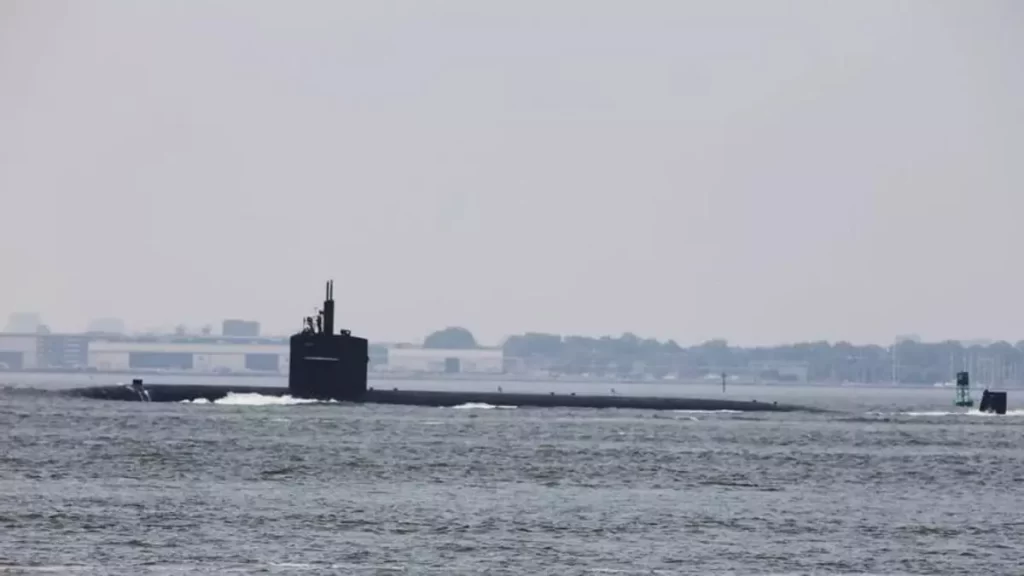
14ymedio bigger14ymedio, Madrid, 13 June 2024 — The U.S. Navy announced that one of its fast-attack submarines arrived in Guantánamo Bay this Thursday. The presence of the USS Helena, with nuclear propulsion, is part, says the Southern Command in a message published on its X account, of a “routine port visit” while “carrying out its global mission of maritime security and national defense.”

Although the ship arrives just a day after four Russian warships docked in the port of Havana, the Navy says that “the location and transit of the ship were previously planned.”

The Miami Herald reported on Wednesday that the United States followed closely, with several warships and planes, the arrival of the Russian ships, which passed less than 30 miles off the coast of Florida on Tuesday.  The American deployment includes three guided missile destroyers (the USS Truxtun, the USS Donald Cook and the USS Delbert D. Black), as well as a coastguard vessel, the Stone, and a Boeing P-8 maritime patrol plane.

“We will always monitor any foreign ship that operates near our waters“

Although the U.S. authorities have insisted that the presence of Russian ships in Cuban waters “does not pose a threat,” they also clarified: “We will always monitor any foreign ship that operates near our waters.” continue reading

After several days insisting that the Russian naval detachment came in peace, Sputnik interviewed a specialist who thinks otherwise: “I think we can see this [the sending of the flotilla to Cuba] as a direct Russian response to the U.S. announcement about the so-called Freedom of Navigation exercise,” said Mark Sleboda, an expert in international relations and security and a regular defender of Putin’s policy. The arrival of Russian ships in Cuba is “a reminder to the United States that both [countries] can play this game,” he added.

On the other hand, the Russian Ministry of Defense on its Telegram channel uses a much more diplomatic tone and limits itself to saying that the entry into Havana of the frigate Gorshkov represents the end of a “high-precision missile exercise” executed in the Atlantic. The visit to the Island is “informal” and part of Russia Day, which was celebrated yesterday, June 12, they added.

The “exercises” that the Russians carried out in the Atlantic come less than two weeks after President Joe Biden authorized Ukraine to use weapons provided by the United States to attack inside Russia with the aim of protecting Kharkov, the second largest city in Ukraine.

Translated by Regina Anavy

____________

COLLABORATE WITH OUR WORKThe 14ymedio team is committed to practicing serious journalism that reflects Cuba’s reality in all its depth. Thank you for joining us on this long journey. We invite you to continue supporting us by becoming a member of 14ymedio now. Together we can continue transforming journalism in Cuba.

The Situation in Cuba ‘Is Terrible’ Whispers Silvio Rodríguez in an Interview

The troubadour, 77 years old, releases a new album with 11 songs under the title ’Quería Saber’ – ‘I Would Like to Know’

’Quería saber’ — I Would Like to Know’ — released this June, is the 22nd album of Silvio Rodríguez, who will be 78 years old in November. / EFE/ Kaloian Santos/ Office of Silvio Rodríguez

14ymedio bigger14ymedio, Madrid, 14 June 2024 — “To pronounce the ‘we’, to complete the unity, we will have to count on the other, the lights and the darkness,” reads one of the lyrics of Silvio Rodríguez’s latest album, Quería Saber — ’I would like to know’ — recorded between 2019 and 2024. The 77-year-old troubadour spoke to the Associated Press agency, in an interview in which other very indiscreet verses are revealed. “And while they imagine themselves clear of conscience, reality is a relaxation of inefficiency. The young flee en masse and are upset because a mouth makes no distinction between race or gender.” In the conversation, which took place in his recording studio, Rodríguez confesses he is horrified by the situation on the Island, specifically with regard to inflation, the lack of food, mass migration and the deterioration of social security.

“The current situation undermines any ideal conviction. The reality is hard for most of our people, very hard. And that starting with the number of old people who dedicated their lives to the Revolution in body and soul and who now, imagine, with retirement they don’t even have enough for a carton of eggs,” he says.

“I don’t like absolutisms, I don’t like isms”

The singer-songwriter, who was a deputy in the National Assembly of People’s Power and actively participated in international missions of a cultural type, claims that he has not stopped being a man of the Left, with dreams of a “more humane and just” society, but rejects that this is “an excuse to hide criticism or ignore the negligence” of the system. continue reading

“I identify with what has been called the Left. I don’t like absolutisms, I don’t like isms,” he emphasizes.

The conversation is sprinkled, according to the agency, with exclamations about how “terrible” the situation on the Island is. “Most people, everywhere, want to live their lives peacefully, progress a little, have some possibilities,” he admits. Despite this, he does not cease to vindicate the achievements of the Revolution, in recent decades, in terms of Education and Public Health. “They are unquestionable,” he says.

The Associated Press points out that the album is, despite the presence of a couple of intimate subjects, eminently social and political, like most of the troubadour’s discography, and he is indifferent to the criticism of those who accuse him for his affinity with the regime. “I don’t care about what they think,” he argues.

Born in San Antonio de los Baños – where the demonstrations of 11 July 2021 began – on 29 November 1946, Rodríguez now presents his 22nd album and follows a life of routine, answering emails, composing and recording.

The troubadour says he is indifferent to the criticism of those who accuse him for his affinity with the regime

“I’ve never taken myself very seriously,” he says, asked about fame. “It’s the result of work. The virtue of songs is that they accompany people. If any song of mine is good for that, who can want more?” he concludes.

A still confessed fan of Fidel Castro, Rodríguez has progressively increased, in recent years, his criticism of the Díaz-Canel government, although without abandoning his ideological positions. Just three months ago, in an interview with Spanish media, he insisted on the worrisome, but understandable, exodus of the youth, in addition to affirming that Vladimir Putin is very far from the values of communism. However, he refused to classify Russia’s action in Ukraine as an invasion.

He has also positioned himself against the current leadership by opposing the repression of the demonstrations of 11J, whose penalties he considered disproportionate, and the protests over the lack of electricity.

In 2022 he also admitted that “the various real experiences of socialism show that, as it was conceived, it is impracticable,” and he proposed to reformulate the model with “socialist governments directing capitalist economies.” At the beginning of that year, in an interview with an Argentine media, he considered that the Revolutionary Offensive had done a lot of damage to the Cuban people. “We can’t spend our lives believing that everything we cannot do is the fault of a very powerful neighbor who blocks us and prevents us from doing things. If in 60 years we have not been able to develop a creativity that overcomes the blockade, that is our fault,” he said.

Translated by Regina Anavy

____________

COLLABORATE WITH OUR WORKThe 14ymedio team is committed to practicing serious journalism that reflects Cuba’s reality in all its depth. Thank you for joining us on this long journey. We invite you to continue supporting us by becoming a member of 14ymedio now. Together we can continue transforming journalism in Cuba.
Cuba Prepares for a New Shipwreck Because ‘There Is No Sugar Harvest Without Fuel’

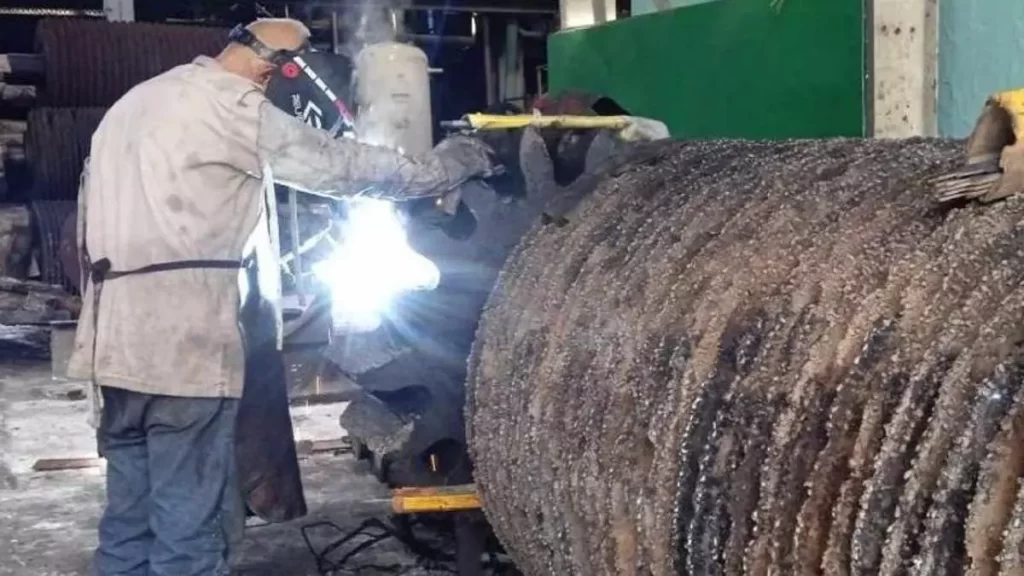
The Melanio Hernández sugar mill has ground only 30% of its capacity. / Escambray

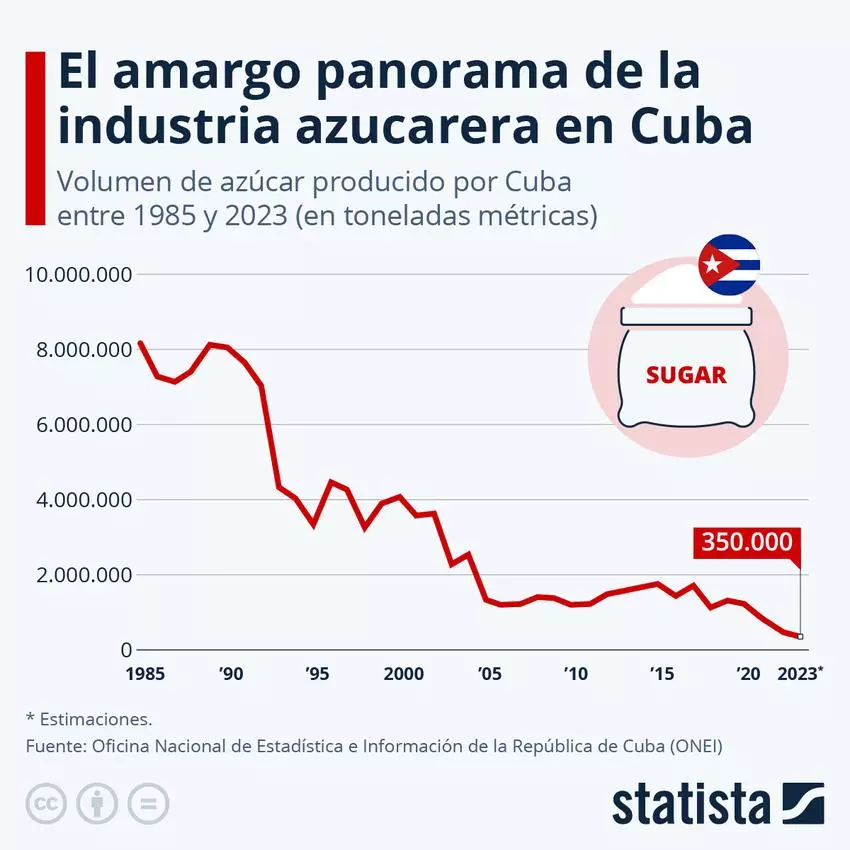
14ymedio bigger14ymedio, Madrid, 14 June 2024 — Two weeks ago, Cuba’s 2023-2024 sugar harvest officially concluded, and it is not yet known what the amount projected for this year will be beyond the fact that it would be “higher than the previous one,” according to Julio García Pérez, director of Azcuba, in December. With 350,000 tons of sugar, the record was again negative, but the well has no bottom, and judging by the data of Sancti Spíritus, a new shipwreck is expected. The province harvested around 16,000 tons this week, approximately 75% of what was planned, the Escambray newspaper said on Thursday.

Many provinces prolonged the harvest beyond the formal calendar this year, in the words of the media, “given the interest of raising the inventory of crude oil for national distribution,” so the results are not final, and those of the rest of the Island remain to be known, but the partial data speak for themselves. In May the cane was only ground for 13 days, and there are many factors that contribute to the disaster, including that the mill grinds at 30% of its capacity, half of what was expected, and that there is still “an appreciable amount” of cane to be cut, almost six months after the beginning of the process.

“The mill is not working, and the sugar plan is small, synonymous with a simple harvest,” the newspaper says, returning to the words of the president of Azcuba, who advanced a new, modest but efficient, plan – something that already happened in 2022-2023, with the same result. The newspaper maintains that there is a lack of resources and the sugar is made “in drips,” while the grinding is reduced to a few hours “every two or three days,” sometimes only twice a week.

A great human job has been done “for organizing a harvest that had lost the match before it even began and will end in the middle of spring with the lowest production in provincial history”

The article praises the workers for making do with little fuel to grind the cane, which shows “decent indicators, some of which are registered as the best at the country level.” The phrase, devastating, warns of how the harvest is going on a national scale, since, the media insists, a great human continue reading

job has been done “for organizing a harvest that had lost the match before it even began and will end in the middle of spring with the lowest production in provincial history.”

The Melanio Hernández sugar mill, in Tuinucú, solely responsible for the grinding, began badly, with a breakdown that kept it paralyzed in December, but this was the least of its problems. “For most of that time without grinding, there was a lack of fuel and oil for the engine, and the rains had an impact on the fields,” reports Escambray, which concludes that if the Uruguay sugar mill were active — the so-called Colossus of Jatibonico, which is being repaired with an investment and the help of Russian engineers — things would not only not be better, but could be worse.

“It has not been possible to cut the little cane that the territory has, and it only managed to plan a sugar production of about 21,000 tons, lower than the previous harvest,” admits the article, which attributes part of the evils to the “lack of financing and external measures designed to suffocate the economy,” although it does mention the lack of resources. Those resources could be greater if the Government invested in the sugar industry, which in 2023 obtained only 369 million pesos, compared to 410.1 million in 2022.

The collapse of the harvest since 1985. / statista /Onei

Escambray does not skimp on the characterization of the disasters: “The harvest has been bad because of the greatest weakness so far this century, the lack of raw material. It is impossible to grind the cane,” and “there is no harvest without fuel,” which is never guaranteed for transport – neither by truck or train – from the farthest cane field.

The worst is yet to come. According to Escambray, the need to extend the harvest to June is obvious, but at the same time the schedule of repairs and maintenance for the mill is being affected, and it could collapse. In addition, the planting of the next cane is now in danger. “It is enough to know that the province is utilizing only 40% of the area dedicated to cane and, of that, one part is of poor quality.”

Last year, Cuba was very far from the half-million tons of sugar it needs for national consumption, while its export commitments of 411,000 tons failed, with the consequent loss of foreign exchange

Mario Amador, president of the Nicaragua’s National Committee of Sugar Producers, announced on Thursday that their harvest closes with 1,777,210 tons of sugar, only 500 less than the best harvest in the country’s history

On the other hand, the Nicaraguan producers hope to get 220 million dollars thanks to a harvest that is nearing the record. Mario Amador, president of that country’s National Committee of Sugar Producers, announced on Thursday that their harvest closes with 1,777,210 tons of sugar, only 500 less than the best harvest in the history of the country.

The businessman celebrated the data, which were accomplished “despite the adverse weather conditions.” “We could say that it has been a record in all aspects of production. We had a record production of cane with more than 8,400,000 tons,” he said.

To this will be added the 294,467 tons of molasses, which if exported will amount to 50 million dollars more, a total of 270. Amador indicated that the sector, one of Nicaragua’s main exporting sectors, employs 136,000 people and that the fabulous production has led to the incorporation of 970 million kilowatt hours (KWh) in renewables thanks to biomass; that is, a contribution of 20 percent to the national energy consumption.

Translated by Regina Anavy

____________

COLLABORATE WITH OUR WORKThe 14ymedio team is committed to practicing serious journalism that reflects Cuba’s reality in all its depth. Thank you for joining us on this long journey. We invite you to continue supporting us by becoming a member of 14ymedio now. Together we can continue transforming journalism in Cuba.

Cuba’s Zaza Reservoir Is Exhausted: Where There Used To Be Fish There Now Are Grazing Cattle

The drought threatens to make the largest reservoir in Cuba disappear for good

The volume of the reservoir is below 13% of its capacity / 14ymedio

14ymedio bigger14ymedio, Mercedes García, Sancti Spíritus, 14 June 2024 — If anyone in Cuba is enthusiastic about the current hurricane season, which is predicted to be active, it is the authorities of Hydraulic Resources in Sancti Spíritus. It has been five years since the Zaza dam opened its gates – that is, since it has been completely filled – and the lack of forceful downpours in recent months has made the drought critical. Where before fishermen slipped in to get some tilapia, now there are cows. “All the land you see should be covered with water at least up to the height of the bridge,” says a resident of the area, who arrived on the La Sierpe road to check the state of the reservoir. “This is in very bad condition, and the water has receded so much that the farmers now use the reservoir for their animals,” he says, counting 70 or 80 cows.

“In the end, the drought has had its profitable side, and the cattle feed on that green grass because they are close to the reservoir. The bad thing is that many people have become accustomed to the fact that no water passes through here, or downstream,” reflects the neighbor, although he acknowledges that “what’s worse is that it doesn’t rain.”

“All the land you see should be covered with water at least up to the height of the bridge

The authorities, even at the national level, have a similar concern. It’s been five years since the dam released water, and many residents have established fields and other structures in what used to be the bed of the Zaza River. Although now the largest reservoir on the island holds just 13% of the 1,020 million cubic meters of water it can store, that could change this summer, and the lives of many residents would be in danger. continue reading

On June 8, Inés María Chapman, Deputy Prime Minister of Cuba, took a tour of the dam. The intention of the entourage, also composed of the national president of Hydraulic Resources, Antonio Rodríguez Rodríguez, was to alert the provincial authorities because, if there are heavy rains, “there are no conditions as at other times to provide solutions to those problems,” Chapman said.

The official arrived in Zaza two days after an article in the local newspaper, Escambray, announced the desperate measures that were taken so that the reservoir did not become totally empty. It has not been in such a hopeless situation since the 1980s, when it dropped to 100 million cubic meters.

The water has receded so much that several farmers let their cattle graze on the land / Escambray

According to Escambray, on that day the volume was 121 million thanks to the rains that occurred in part of Sancti Spíritus. Until that moment, the official press admitted, the water was maintained with transfers from the Tuinucú, Dinorah and Felicidad reservoirs. In May alone, the rainfall was below the historic record low of 98 millimeters (mm), and about 54 mm was reported, just over half. The drought affecting Zaza, which also nourishes other territories such as Ciego de Ávila, has considerably affected other economic lines, beyond the water supply to the population. According to the newspaper, with the decrease in volume, the water was limited to the agro-industrial grain company Sur del Jíbaro in La Sierpe, a rice-producing area that has since seen its production decline.

At the beginning of May, when the press first warned of the complex situation in Zaza, the issue revolved around the fishermen who work in the reservoir, who had to start a frenetic catch before the fish died from the drought.

Zaza is “dying,” said Armando García, a fisherman interviewed by Cubadebate at the time. “You don’t have to throw bread in the water; you can catch fish with your bare hands.”

The authorities have placed their hope on the rains predicted for this month, and that a passing hurricane will bring enough water for the dam to reach a volume that allows it to be used all year round. Last season Zaza was only filled at 40%, and the consequences have been widely seen this 2024.

At the moment, the dam gates have dry walls, the puddles of stagnant water have begun to turn green, and in what used to be the bottom of the reservoir the cattle have created paths in the grass.

Translated by Regina Anavy

____________

COLLABORATE WITH OUR WORKThe 14ymedio team is committed to practicing serious journalism that reflects Cuba’s reality in all its depth. Thank you for joining us on this long journey. We invite you to continue supporting us by becoming a member of 14ymedio now. Together we can continue transforming journalism in Cuba.
The Number of Political Prisoners in Cuba Continues To Grow: 1,113 in May

Only five political prisoners were released, “after full compliance with the sanction or measure imposed,” said Prisoners Defenders

Of the 19 Cubans imprisoned in May, 11 were arrested after the protests in Juraguá /Daniel Benitez / X

14ymedio bigger14ymedio, Havana, 13 June 2024 — With the arrest of 19 people in May, the Cuban regime has a total of 1,113 political prisoners, according to the most recent report by Prisoners Defenders (PD) published this Thursday. Of the cases listed for the month, 11 are protesters of the Juraguá protests, in Cienfuegos, on May 28. In the same period, only five political prisoners were released, “after full compliance with the sanction or measure imposed,” said PD. Likewise, Lisdani Rodríguez Isaac, of Villa Clara, was released with an extra-criminal license granted for her pregnancy, which will last a year, after which she could return to jail.

According to the organization, based in Madrid, the month of May was characterized by “repression against peaceful demonstrators, large-scale repressive operations against independent journalists, torture of prisoners with psychiatric conditions and the denial of prison benefits for political prisoners entitled to them,” such as parole or the suspension of correctional work, according to the statement.

On May 20, the political police also arrested, interrogated, summoned or prohibited other independent journalists from leaving their homes

In the specific case of the detainees in Juraguá, who took to the streets in protest of the prolonged blackouts and the lack of other essential services, “the authorities imposed a bail of 200,000 Cuban pesos – 530 dollars in the continue reading

informal exchange market in Cuba, an unattainable figure for most Cubans. They are being prosecuted for the alleged crimes of public disorder, contempt or attack,” the organization explains.

Erich González Lima, a journalist residing in the Nuclear City of Juraguá, is one of the demonstrators arrested by the Cuban authorities for participating in the protest. On May 20, when the Day of the Republic* was being commemorated – which the regime does not celebrate – the political police also arrested, interrogated, summoned or prohibited other independent journalists such as Juan Manuel Moreno Borrego and Antonio Suárez Fonticiella from leaving their homes.

Jorge Luis Boada Valdés was also sentenced in May to nine years in prison for the crime of “propaganda against the constitutional order.” Boada had been imprisoned in the Combinado del Este for more than two years for having written on a wall several phrases insulting Cuban President Miguel Díaz-Canel.

PD also warned about the violation of the rights of prisoners in Cuban prisons and gave as an example the case of Adel de la Torre, a young man who suffers from paranoid schizophrenia and who, at the age of 25, “was imprisoned for demonstrating peacefully” during the social protests of July 11, 2021, and sent to prison 1580, located in San Miguel del Padrón, Havana. The organization denounced the “violent beatings by the guards” that the young man has suffered.

The relatives of most of these inmates have tried to negotiate with the authorities for better medical treatment and shorter stays in prison

Other political prisoners have been denied transfer to less severe disciplines or other relief to which they should have access. This is the case of Luis Robles Elizastigui, the “young man with the banner,” sentenced to five years in prison for raising, in 2021, a poster asking for the release of rapper Denis Solís. According to PD, the young man was denied parole because, “although he satisfies the minimum term required and maintains adequate conduct in a state of imprisonment, the Court took into account the seriousness of the matter, in addition to the influence it had on the population and the tranquility of the citizenry, being necessary to ratify his confinement so that he reflects on the criminal action or actions carried out,” according to the aforementioned court.

The monthly report of the Cuban Center for Human Rights, led by the opponent Martha Beatriz Roque, offers a similar assessment. The document denounces the mistreatment of prisoners with psychiatric or chronic conditions, including, as more “difficult” cases, Alexander Díaz Rodríguez – cancer patient; Abel Lázaro Machado Conde – psychiatric disorders and epilepsy; Dayron Martín Rodríguez – psychiatric patient with suicidal behavior; and Ismael Rodríguez González – psychiatric conditions.

The relatives of most of these inmates have tried to negotiate with the authorities for better medical treatment and shorter stays in prison. Many are even obligated to take medications to the prisons to treat their family members, and the authorities have ignored their requests that the rights of prisoners be respected.

*Translator’s note: The Day of the Republic commemorates 20 May 1902, the day Cuba officially acquired independence from the United States.

Translated by Regina Anavy

____________

COLLABORATE WITH OUR WORKThe 14ymedio team is committed to practicing serious journalism that reflects Cuba’s reality in all its depth. Thank you for joining us on this long journey. We invite you to continue supporting us by becoming a member of 14ymedio now. Together we can continue transforming journalism in Cuba.
In May, a Significant Part of Venezuelan Crude Oil Arrived in Cuba Aboard Two ‘Ghost’ Ships

The ships Athenas and Tina 5 made several deliveries of crude oil without their movements being detected by maritime tracking applications.

The Tina 5, built in 2002, sails with the flag of Panama / Vesselfinder

14ymedio bigger14ymedio, Havana, June 13, 2024 — At the beginning of June, experts wondered where the British agency Reuters had obtained the data that allowed it to say that Venezuela had tripled its shipments of crude oil to Cuba in May, compared to the previous month. The answer came in the form of a hypothesis that has yet to be confirmed: two large “ghost” ships, the Athenas and the Tina 5, made several deliveries of Venezuelan crude oil without their movements being detected by maritime tracking applications. There is very little information about these tankers that Caracas uses to send oil to allies such as Cuba. More than discreet, the movements of both ships are invisible, although their sporadic appearances on the radar account for their activity in the Caribbean

Sources for 14ymedio indicate that Venezuela resorted to both ships to transport part of the 70,000 barrels per day (bpd) of crude oil that it sent last month to the Island. They disconnected their transponders to dodge the radar and “transferred their cargo to smaller ships in the bay of Nipe, in the provinces of Holguín and Matanzas,” says an expert who closely follows oil shipments to Cuba.

There is very little information about the tankers that Caracas uses to send oil to allies such as Cuba

However, in the port of Matanzas there were signs of the tankers Primula, the Marianna V.V. and the Caribbean Alliance having docked in the last 30 days, in addition to the tugboat Karadeniz One, which is part of the fleet of Turkish patanas on the Island. This Thursday, the tankers with the Cuban flag Sandino, María Cristina and Alicia were at the terminal. In Nipe, on the other hand, there is no information about the movement of ships, although continue reading

the tracking applications showed an unidentified tanker in the middle of the bay this Thursday.

The Athenas and the Tina 5 are oil tankers of considerable size. The Tina 5, built in 2002, sails with the flag of Panama. The latest information indicates that it left Trinidad and Tobago for an unknown destination.

As for the Athenas, which sails with the Liberian flag, it was located this Thursday on the northern coast of Venezuela, heading to the port of Scarborough, in Trinidad and Tobago.

Some 10% – 708,900 bpd – of the total shipments in May of PDVSA, the Venezuelan state-owned oil and gas company, went to Cuba, according to Reuters. The main destination of crude oil, more than a third of total exports (250,000 bpd), was Asia. The United States follows, with an average of 205,000 bpd sent by the American Chevron, and Europe, with 129,000 bpd.

A study published at the end of May by the Elcano Institute, based in Madrid, analyzed this increase in Venezuelan exports in light of the announcement of the return of Washington’s sanctions after the non-compliance, by the regime of Nicolás Maduro, with the agreements made in Barbados to guarantee free elections.

The investigation analyzed the extent to which the imposition of sanctions had benefited Cuba. The PDVSA has progressively increased its shipments to the Island through its subsidiary PDV Marina to circumvent Washington’s measures.

The sale of Venezuelan oil, since then, has been characterized by the increase in corruption and the lack of transparency “in response” to the United States. The PDVSA has not published financial reports since 2016. It uses the black market and sells to “companies willing to take the risks,” with the mediation of Cuba, Russia, Iran, Malaysia and the United Arab Emirates, which have “secondary sanctions” from Washington. Russia and Iran influence the PDVSA when making oil decisions.

Russia, the investigation explains, managed 60% of the PDVSA’s financial operations before the invasion of Ukraine and delivered dollars in cash to Venezuela. As for Iran, it is known that it sends technical support, engineers, thinning substances and spare parts.

Meanwhile, the American network CNN published on Tuesday a report on the debacle of the Venezuelan economy since 2013 – when Maduro took office – and contrasted the oil exports at the time – 2.4 million bpd, on average – and the current ones, which in March reached 895,000 bpd. According to CNN, Venezuela exploits 42% of its production capacity.

“The collapse of the sector precedes the strategy of maximum international pressure on the Maduro regime and finds its cause in the deficit of governance that has accompanied the country for at least a decade”

The Elcano Institute’s investigation coincided with the chain of events in which the future of oil in Venezuela faces difficulties that are too difficult to solve in the current political situation: “The short period of détente [the six months of lifting of sanctions] has shown that, regardless of the political future of Venezuela, the recovery of its oil sector will be difficult. The collapse of the sector precedes the strategy of maximum international pressure on the Maduro regime and finds its cause in the deficit of governance that has accompanied the country for at least a decade,” they explained.

In addition, Venezuelan crude oil itself has technical drawbacks. Orinoco crude, the Institute analyzes, is extra-heavy and has “less attractiveness” for international companies due to the high cost of its refinement. In addition, the PDVSA has been delegitimized internationally after “two decades of inefficient management, corruption and looting,” not to mention the infrastructure, which was noticeably damaged.

With the progressive debacle of the oil industry, Cuba has a lot to lose. Shipments from Venezuela – along with those of other key allies, such as Mexico and Russia, which the Pashin tanker, escorted by a war fleet, has just sent to the Island – are indispensable to operate the country’s deteriorated energy system.

Hit by a new blackout season, Cuba faces a generation deficit of 1,240 megawatts this Thursday. The Electric Union, which has not raised its head for months, stressed on a daily basis the precariousness of its facilities and the lack of fuel on which it blames all its ills. In addition, it reported that several units of its key thermoelectric plants – Mariel (Artemisa), Felton (Holguín), Nuevitas (Camagüey) and Renté (Santiago de Cuba) – are out of service.

Translated by Regina Anavy
_______________________

COLLABORATE WITH OUR WORKThe 14ymedio team is committed to practicing serious journalism that reflects Cuba’s reality in all its depth. Thank you for joining us on this long journey. We invite you to continue supporting us by becoming a member of 14ymedio now. Together we can continue transforming journalism in Cuba.

With the Arrival of a Submarine From the United States in Guantánamo, Cuba Returns to the Cold War

The ‘USS Helena’ arrives at the Island one day after four Russian military ships

The visit of the USS Helena is “routine” says the South Command / X/@AirAssets

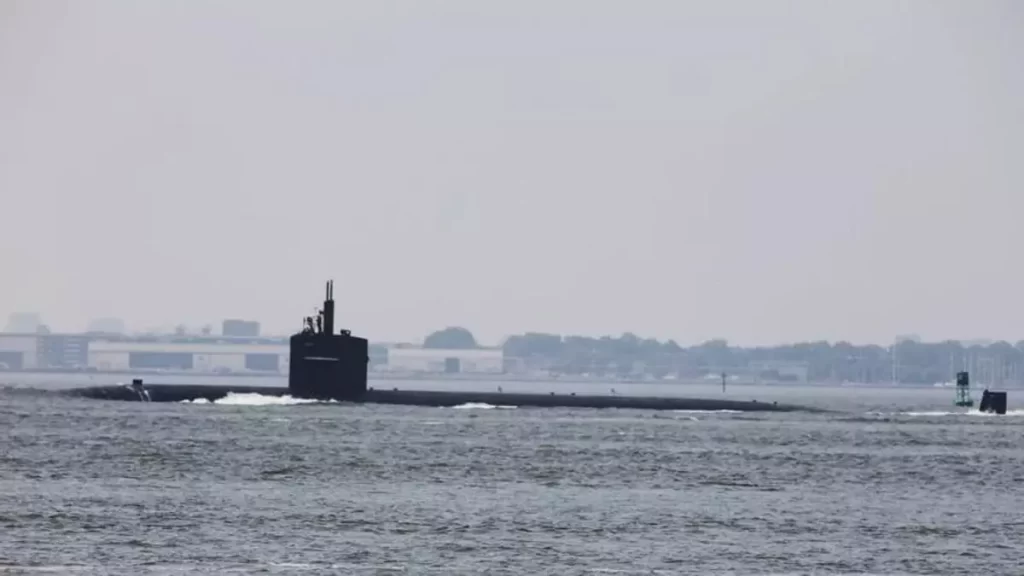
14ymedio bigger14ymedio, Madrid, 13 June 2024 — The U.S. Navy announced that one of its fast-attack submarines arrived in Guantánamo Bay this Thursday. The presence of the USS Helena, with nuclear propulsion, is part, says the Southern Command in a message published on its X account, of a “routine port visit” while “carrying out its global mission of maritime security and national defense.”

Although the ship arrives just a day after four Russian warships docked in the port of Havana, the Navy says that “the location and transit of the ship were previously planned.”

The Miami Herald reported on Wednesday the the United states followed closely, with several warships and planes, the arrival of the Russian ships, which passed less than 30 miles off the coast of Florida on Tuesday. The American deployment includes three guided missile destroyers (the USS Truxtun, the USS Donald Cook and the USS Delbert D. Black), as well as a coastguard vessel, the Stone, and a Boeing P-8 maritime patrol plane. continue reading

“We will always monitor any foreign ship that operates near our waters“

Although the U.S. authorities have insisted that the presence of Russian ships in Cuban waters “does not pose a threat,” they also clarified: “We will always monitor any foreign ship that operates near our waters.”

After several days insisting that the Russian naval detachment came in peace, Sputnik interviewed a specialist who thinks otherwise: “I think we can see this [the sending of the flotilla to Cuba] as a direct Russian response to the U.S. announcement about the so-called Freedom of Navigation exercise,” said Mark Sleboda, an expert in international relations and security and a regular defender of Putin’s policy. The arrival of Russian ships in Cuba is “a reminder to the United States that both [countries] can play this game,” he added.

On the other hand, the Russian Ministry of Defense on its Telegram channel uses a much more diplomatic tone and limits itself to saying that the entry into Havana of the frigate Gorshkov represents the end of a “high-precision missile exercise” executed in the Atlantic. The visit to the Island is “informal” and part of Russia Day, which was celebrated yesterday, June 12, they added.

The “exercises” that the Russians carried out in the Atlantic come less than two weeks after President Joe Biden authorized Ukraine to use weapons provided by the United States to attack inside Russia with the aim of protecting Kharkov, the second largest city in Ukraine.

Translated by Regina Anavy

____________

COLLABORATE WITH OUR WORKThe 14ymedio team is committed to practicing serious journalism that reflects Cuba’s reality in all its depth. Thank you for joining us on this long journey. We invite you to continue supporting us by becoming a member of 14ymedio now. Together we can continue transforming journalism in Cuba.

No More Lifelines for the Castro Regime

Having witnessed so many crises, I fear someone will throw the Castro regime another lifeline, though in this case it can only come from Washington, Fidel Castro’s chosen enemy since the summer of 1958.

Hugo Chavez with Fidel Castro in Havana in 1994 / Prensa Latina

14ymedio bigger14ymedio, Pedro Corzo, Miami, 9 June 2024 — Cuba’s totalitarian government has experienced many serious crises. So many that it often seemed it was on its last leg. Invariably, however, some like-minded ally threw it a lifeline, like the rope that sailors throw to someone who is about to drown.

Though the former Soviet Union supported the regime for more than thirty years, the Castro brothers had no qualms accepting help from several Spanish governments, including those of the right-wing dictator Francisco Franco as well as the leaders of Spain’s Socialist Worker’s Party, Felipe Gonzalez and Pedro Sanchez. At a time when Cubans were going deaf from the sound of firing squads, however, the former individual — like many others — “heard nothing” during his frequent trips to the island.

Other European and Latin American nations have stepped in to solve the Castros’ money problems, though we should note that, in the course of providing aid to the spendthrift Fidel Castro, only the Venezuelan autocrats Hugo Chavez and Nicolás Maduro managed to bankrupt their own country. continue reading

The supreme leader used to give every guerrilla commander being trained in Cuba a Rolex watch, which was purchased with funds donated by his sponsors

Stories abound of just how wasteful the elder of the two brothers could be. For example, the supreme leader used to give every guerrilla commander being trained in Cuba — the idea being they would overthrow the very democracies that were courting him — a Rolex watch, which was purchased with funds donated by the dictatorship’s sponsors.

Another individual who helped pay the bills — both political and economic — is Luis Ignacio “Lula” da Silva. The corrupt president of Brazil has proven to be a faithful servant of the totalitarian regime.

Another ally was Argentina’s military junta. Both regimes supported each other when they came under criticism from the United Nations Commission on Human Rights. Juan Domingo Perón sold Cuba three-million dollars’ worth of transportation infrastructure, a bill the country has still not repaid. Similarly the Club of Paris has forgiven or restructured much of Cuba’s debt even though the regime has a history of not paying back the loans it receives.

The presidents of Mexico have also been discreet but faithful allies. Andrés Manuel López Obrador is the most strident but, with few exceptions, they have supported the Cuban regime in spite of all the summary executions, political prisoners and boat people.

In the opinion of many, including a family member who remains in Cuba, the totalitarian system is nearing its end. This person — I am not mentioning his name because it would not be prudent —is worried about what the demise of the dictatorship might look like and whether or not it will lead to a bloodbath, as happened in the now distant 1959. Like others writing from Cuba, he is convinced that the nightmare is coming to an end.

There are plenty of officials [in the U.S.] who are happy to tolerate the sins of others, particularly if the sinners come from the political left.

I do not consider myself to be one of the optimists but the reality is that Castro-ism is looking more exhausted than it ever has before. Its narrative no longer makes any sense and its current dictator has shown himself to be the most incompetent Cuban ruler of the last sixty-five years. And that is in a system characterized by predators who have distinguished themselves by their prodigious ineptitude.

Having witnessed so many crises, I fear someone will throw the Castro regime yet another lifeline, though in this case it can only come from Washington, Fidel Castro’s chosen enemy since the summer of 1958, when he dictated a letter to his secretary, Celia Sánchez, in which he said, as of that moment, he would launch his real war against the United States.

Russia, China and Iran are certainly strong allies of totalitarian regimes, and they will loan them a handkerchief in their moments of sorrow, but lifelines do not come cheap and none of the three are in a position to waste their resources by throwing money into the bottomless pit that Cuba has become under the Castros.

The United States could very well become the new savior. There are plenty of officials there who are happy to tolerate the sins of others, particularly if the sinners come from the political left.

These individuals are profiled in “The Fourth Floor,” a book by Earl E. T. Smith, the U.S. ambassador to Cuba during the revolution. They are mid-level officials who, in spite of not having senior government positions, often largely determine the policies of the U.S. State Department and other agencies, at least according to this humble writer, as José Estrada is used to saying.

____________

COLLABORATE WITH OUR WORKThe 14ymedio team is committed to practicing serious journalism that reflects Cuba’s reality in all its depth. Thank you for joining us on this long journey. We invite you to continue supporting us by becoming a member of 14ymedio now. Together we can continue transforming journalism in Cuba.

Cuba’s Official Press Requests a Hard Hand With the Ranchers of Camagüey Who Aren’t Delivering Milk

Almost 1,800 producers in the province have not supplied a single liter of milk so far this year

The province at the moment can only guarantee milk to children under the age of seven / Adelante

14ymedio bigger14ymedio, Havana, June 7, 2024 — Of the 8,023 farmers who signed a contract with the State this year in Camagüey, more than half – about 4,198 – have failed to comply with the daily delivery of milk to the province, and, of them, 1,792 “do not deliver a single liter.”

The situation, which aggravates the already declining production of the livestock territory par excellence on the Island, was denounced this Thursday by the official press.

“The province continues to bet on increasing the delivery of milk to the industry, although at the end of May it has not achieved the definitive takeoff that was expected,” the local newspaper Adelante reports, launching an attack that does not forgive the “apathetic” farmers or the authorities, for letting the farmers get away with it and not demanding “an increase in delivery.” At the top of the list is the municipality of Guáimaro.

“The negative trend goes up. From January to May, the volumes collected in 2024 were 11,158,000 liters compared to 13,320,000 last year on the same date,” says the media. The reason for the fall by more than two million liters, it adds, is that the authorities aren’t hard enough on the farmers, continue reading

“even though they know the people in each territory of the province who show apathy or disinterest for their respective contributions to the national economy.”

The newspaper even states that “the prices paid to the producers cannot be the reason,” despite the fact that on numerous occasions the farmers themselves have pointed out that the low amounts paid by Acopio* is one of the fundamental causes why livestock is unprofitable for them. But Adelante insists: they are paid 38 pesos, “the maximum per liter,” and there is even a stimulus for those who overcomply, of 70 pesos per liter.

However, the media is aware of the price of milk in the informal market, which brings more benefits to the farmers

However, the media is aware of the price of milk in the informal market, which brings more benefits to the farmers and allows them – contrary to the prices of Acopio – to face the expenses they incur on their farms. “It will be necessary to review why those who don’t comply are charged 114 pesos for each liter not delivered, because it is no secret that they can sell in the informal market at 160-170 pesos per liter, and even on some streets of the city, such as Industry, at 200 pesos, taking advantage of prices in their favor,” says the article.

In addition, it points out, the “ups and downs” of production and problems in refrigeration due to blackouts have caused the milk from the ration system’s standard family basket to be delivered only to children under seven years of age, while the product has disappeared from medical diets.

The authorities, according to the media, still hope that in the rest of the year and taking advantage of the spring – the optimal stage for production – the industry will increase from the 200,000 liters per day that are currently delivered to the 360,000 that have been achieved on other occasions. The situation, however, leaves on the ground the expectation of being able to reach the proposed 52 million liters by 2024, a goal well below that of 2023, which foresaw 69 million, although only 42 million were produced.

At the beginning of this year, when Adelante revealed those figures, they gave other reasons for the decline in the 2023 production: the salary in the industry “is much lower than what is offered by other forms of economic management, especially non-state ones.” Specifically, the authorities had promised an average monthly salary of about 5,000 pesos that ended up being less than 3,400** pesos. “Productivity was at 25%,” the provincial newspaper said at the time. Wages have not changed, but this year it is the producers who are responsible.

Translator’s notes:
*Acopio is the Cuban State Procurement and Distribution Agency
** To put this salary in perspective, the current price of a single carton of eggs (30 eggs) in Cuba is more than 3,000 pesos.

Translated by Regina Anavy

____________

COLLABORATE WITH OUR WORKThe 14ymedio team is committed to practicing serious journalism that reflects Cuba’s reality in all its depth. Thank you for joining us on this long journey. We invite you to continue supporting us by becoming a member of 14ymedio now. Together we can continue transforming journalism in Cuba.

Twenty Six Percent of the Farmers of Las Tunas Refuse To Sell Their Products to the Cuban State

Local leaders have proposed a “broad plan of visits” to persuade the farmers

The official press explained that the Dairy and Meat companies in the province have been failing to comply with their contracts for years

14ymedio bigger14ymedio, Havana, 12 June 2024 — The authorities of Las Tunas have proposed to carry out a “wide plan of visits” to the farmers who refuse to deliver their agricultural products to the State. The contracts in the province, which should have ended in 2023, were completed in May by only 74% and, according to the official press, since the beginning of the year the progress to solve this situation has been “tiny.”

An article published this Wednesday by the local media Periódico 26 gave the measure of the situation: “In one way or another there are delays in all the municipalities, but those that make the least progress are Puerto Padre, Majibacoa and Jobabo, in which an extensive plan of visits to owners or usufructuaries [a form of leasing], both private and state, is imposed to expedite what should have been completed a long time ago.”

Of the total number of producers in the province – the figure is around 20,000 – only 16,326 have signed contracts with the State to deliver products this year. The refusal of the farmers, which the newspaper attributes to the “insufficient control of the real potential of livestock owners” and the lack of demand and dialogue of the institutions with the producers, has repercussions for several essential food industries.

For the dairy farmers, for example, the goal was to provide 25,931,800 liters in 2024, but so far they have only managed to get farmers to commit to continue reading

delivering 22,024,253 liters, 85%. The most backward municipalities are those of Manatí and Jobabo.

The same goes for meat deliveries, which of the 5,263 tons per year projected, barely 4,074 were delivered

The same goes for meat deliveries, which of the 5,263 tons per year projected, barely 4,074 were delivered. The most indebted territories were once again Manati, in addition to Majibacoa and Puerto Padre, the territories with the worst management according to Periódico 26.

Whether or not the farmers comply with the milk and meat plans is still to be seen, although the authorities are not very optimistic. “For several years, the Las Tunas Meat and Dairy companies have failed to comply with their contracts in the established time, and, although there are constant extensions, several agricultural producers evade their responsibility or deliver quantities lower than those agreed,” says the media.

“Recovering what has not been contracted is one of the goals for June, which implies reaching every corner of the province, wherever there is a farm. Only in this way will the process be successful and, along with the prevention of illegalities, there will be more beef, milk and other products,” the newspaper concluded. However, on this last point, the Las Tunas authorities don’t seem to have much luck.

As reported by the media itself a week ago, in the first quarter of the year the province had 1,954 cases of theft and slaughter of livestock. The authorities then blamed the farmers for not taking proper care of the cattle and said these crimes were the main cause of the calamitous decrease in the livestock mass in the province.

As for agriculture, Periódico 26 published on Wednesday an article saying that the delivery of land in usufruct to state and private entities was a “promising” area in the territory. According to the media, so far this year 3,900 applications have been approved, totaling about 47,430 hectares.

So far this year, 3,900 applications have been approved totaling about 47,430 hectares

“In order to gradually eliminate idle lands with potential for agriculture and livestock, 4,885 files were processed, which guarantees a remarkable growth for six consecutive years,” the media said, although it did not reveal the figures for past years.

The authorities foresee a growing interest in this type of contract between state companies for the second half of the year and explained that the applications of 46 entities for self-consumption have been approved so far. “However, these numbers are still ephemeral, since the intention is to link one hundred percent of all entities,” the official newspaper added, without giving figures on the private sector.

The announcement comes a week after the Government reported a new rule that, as of last Tuesday, allows companies, both state and private, and cooperatives of the agricultural system and the Azcuba group to create “self-consumption and livestock modules” to “contribute to the food of their workers, members or associates” and their families.

The measure aims to improve the food situation of employees in the sector through self-sufficiency and includes the delivery of land in usufruct to those who request it for this purpose even if the social purpose of the companies is not agricultural, forestry or fruit production.

Translated by Regina Anavy

____________

COLLABORATE WITH OUR WORKThe 14ymedio team is committed to practicing serious journalism that reflects Cuba’s reality in all its depth. Thank you for joining us on this long journey. We invite you to continue supporting us by becoming a member of 14ymedio now. Together we can continue transforming journalism in Cuba.
Cuba: Ciego De Ávila’s Desperate Race To Finish an Aqueduct by July 26

The order came from the head of the Civil Defense, despite the lack of progress on the work to bring water to the inhabitants of Florence

On site were only seven bricklayers from the Bécquer company, which had committed to the Communist Party and the provincial government to fulfill the “task” / Invasor

14ymedio bigger14ymedio, Havana, 12 June 2024 — The Cuban military showed up this Monday at the works of the Florence aqueduct, in Ciego de Ávila, to persuade the builders to finish it for the greatest anniversary of the regime, on July 26.* The urgency has an explanation: the municipality, which has never had a reservoir of that magnitude, sees how its current reservoir – at 24% of its capacity – is following the same path as the Zaza dam, about to dry up completely.

As verified on Tuesday by 14ymedio, the Sancti Spiritus reservoir – which is, at least in structure, the largest dam in Cuba – does not even reach the bottom of the water gauge, and the authorities place the state of the dam at only 13%. In Zaza, they opted for frenetic fishing, while in Ciego de Ávila the Government invested 25 million pesos in plan B, which is the aqueduct. However, there has been no progress, and the works are barely halfway through the plan. Alarmed by the delay, the national head of Civil Defense, the octogenarian General Ramón Pardo Guerra, traveled to Florence this Monday with an entourage. His message: we have to finish the aqueduct “in time to celebrate July 26.”

Reaching the goal set by the military seems, at the very least, difficult. Judging by the images published in the official press, a few days ago only the foundations had been laid and a quadrant of steel bars had been arranged. On site there were only seven bricklayers from the Bécquer company, who, however, committed themselves to General Pardo, the Communist Party and the provincial government to fulfilling the “task.” continue reading

The Bécquer company collaborates with the Cuito Cuanavale Base Business Unit, whose “inaction” caused the delay in the aqueduct

The Bécquer company collaborates with the Cuito Cuanavale Base Business Unit, whose “inaction” caused the delay in the aqueduct. Interviewed by Invasor, the delegate of Hydraulic Resources in Ciego de Ávila, Edwin González, listed everything that remains to be done: the Bécquer company must install a floating raft and the Cuito Cuanavale a 160-millimeter pipe.

They will also place two submersible pumps, build three watering units and expand the hydraulic network by 6.2 kilometers. “They have most of the resources,” they assured, to complete in just over a month what was required by the General.

Florencia is the only municipality of Ciego de Ávila that does not have an aqueduct. A mountain town with fewer than 20,000 inhabitants, about 1,515 of whom depend on the tanker trucks going – in “very elongated cycles” – to the most complex areas to bring them water. In fact, they admit, “most of the time the three trucks don’t even fulfill their assignment.” Another 5,302 people depend on the hydraulic network that feeds on the dam, which has been plagued for months by drought.

Built more than 30 years ago, the reservoir now has only 14 million cubic meters of water

Built more than 30 years ago, the reservoir now has only 14 million cubic meters of water. The emergency is clear if we compare the data with what the dam managed to record in May 2018: 91 million cubic meters. The following month, the figure was 86.4 million, which represented 108% of its capacity. The dam then enjoyed a rainy season and the “draining” of the Jatibonico River, which was beneficial for the small hydroelectric plant of Florence, which the official press doesn’t mention.

This year, taking into account the drought forecasts, the dam is on its way to reaching its lowest level, the 10 million cubic meters recorded in 2017. Between the unfinished aqueduct and the reservoir, the people of Avila are the ones who carry the worst burden. In the main municipality there are four pumping stations with solar panels and two tanks of 55 cubic meters that are used to store water, but this is not enough.

In the highest and most intricate part of the municipality, about 300 houses have not received water for a month. The farmers of the area have complained about the impact that the lack of water has had on their crops and warned that, as long as the supply – even with the water trucks – is not stable, they will not be able to meet their deliveries.

For her part, Deputy Prime Minister Inés María Chapman, who visited Florence in April, was categorical about the issue and said that “the use of water trucks should be eliminated as soon as possible, because they consume too much fuel.”

To the situation is added the fact that the area, historically, has suffered long droughts. With blackouts and an aqueduct project in the mountains that has not taken shape, it is trusted that at least the law of gravity will be favorable to the residents of the municipality of Avila. The opinion of the official press is not very optimistic: “Florence is in a race against the clock,” it says. “The locals will either cross the finish line soon or they will faint.”

*Translator’s note: The date commemorates the 1953 attack on the Moncada Barracks, led by Fidel Castro. While the attack ‘failed’ at the time, the date is commemorated as the start of the Revolution.

Translated by Regina Anavy

____________

COLLABORATE WITH OUR WORKThe 14ymedio team is committed to practicing serious journalism that reflects Cuba’s reality in all its depth. Thank you for joining us on this long journey. We invite you to continue supporting us by becoming a member of 14ymedio now. Together we can continue transforming journalism in Cuba.

‘This Country Is More Democratic Than the United States,’ Cuban President Díaz-Canel Tells Young Foreigners

The president recorded “From the Presidency” with a group of Americans “interested in knowing the Cuban reality”

Miguel Díaz-Canel, with a ’kufiya’ on his shoulders, in his meeting with young pro-Castro Americans / The People’s Forum

14ymedio bigger14ymedio, Madrid, 12 June 2024 — Cuban President Miguel Díaz-Canel met for the most recent edition of his TV program Desde la Presidencia with a group of “young Americans interested in learning about the Cuban reality.”

The audience of about a hundred people was already instructed.
These were the members of Let Cuba Live, a group adhering to the pro-Castro organization The People’s Forum and co-directed by Manolo de los Santos, who acted as moderator of a meeting in which the past and present of the Island were discussed, with the “intensified blockade” as a backdrop, along with Palestine and, above all, the example of democracy that is Cuba.

“There is a virtual Cuba, on social media, and there is another real Cuba, which is the one you can see. And we have shortages, we have problems, we have limitations but there are no missing people here, there are no murders here. This country is more democratic than the United States,” said the Cuban leader with conviction. The phrase was part of an extensive segment dedicated to exposing his point of view on how capitalism has proven not to work if it does not apply social justice as, he argued, is done on the Island.

“They say we’re not democratic because we have only one party. But what about the United States, is it democratic because it has two parties? One party, the Republicans, applied the 243 measures to strengthen the blockade, and another party, the Democrats, maintained the blockade’s measures,” he summarized. What’s up with that? Is democracy measured continue reading

by the number of parties or is democracy measured, really, by how people can exercise their rights in a society?”

“They say we’re not democratic because we have only one party. But what about the United States, is it democratic because it has two parties?”

The president wanted to give examples of the inequality of rich countries regardless of the flaws in his speech. “When we go fetch food, we go fetch food for 11 million Cubans. It is not putting food in the store windows and letting those who can afford it buy it, and letting those who cannot afford it starve,” he reflected, although on the Island that is already the constant reality, as a result of the absence of products in the rationed market, sales in freely convertible currency and skyrocketing inflation, among other factors.

Much of the meeting, and it could not be otherwise, touched on the policy of “suffocation” that, according to the president, the United States applies to Cuba, an island that overcomes this thanks to its “creative resistance,” and which would reach unimaginable levels of development if it were allowed to move forward without a “blockade.” “Where would Cuba go if it did not have a blockade? I think that’s where the answer lies as to why they want to keep blockading us. They are afraid of the example, what we are capable of doing, for everything we have managed to do amid that circumstance,” he said.

Manolo de los Santos started the evening by thanking Díaz-Canel for receiving the group, which has been trying for months, without succeeding, to get Joe Biden to meet with them and only finds an armored White House, while in Cuba Díaz-Canel’s arms are open. His first question revolved around the long history of the revolutionary struggle on the island, which went back to the era of slavery, the War of Independence and, of course, Castroism.

Díaz-Canel lamented that Washington resorts to wars to use its million-dollar arms industry first and addresses reconstruction later

Palestine dominated the discourse – both De los Santos from the beginning and the president, who received them from a guest, wore “kufiyas” on their shoulders – and the speech at times sounded more like an excuse to lash out against the United States, which was accused of genocide on repeated occasions.

Díaz-Canel lamented that Washington resorts to wars to use its million-dollar arms industry first and addresses reconstruction later, at which time he also introduced Ukraine into the equation. “It is very normal that, in the face of an international crisis, for the United States to create a focus outside its border where there is a war and where the United States can do its big business. That’s what Ukraine is going through.” In addition, the Cuban president applauded the pro-Palestinian movement that emerged in some universities in the United States, which he compared to the activism against the Vietnam War in the 70s, and Europe.

After 10 minutes of talking about Palestine, he compared resolutions calling for a ceasefire in the Gaza Strip to those that reject the US embargo on Cuba every year.

He said another great topic of the day was the difficult moment that the Island is experiencing, which is taken advantage of by the United States to convey the image that the Cuban Government is incompetent. “We are living through a difficult time, but Fidel and Raul also faced very complex situations when they led the country, and together with the people they overcame them,” said Díaz-Canel, who mentioned the lack of fuel, electricity and food – all of which build off each other – as the source of those problems. “We are not perfect, nor do we want you to idealize us. We also make mistakes, we have shortcomings – like ’laziness’ and ’corruption’,” he mentioned. “But there is a huge vocation for perfection. ”

He told the young people present – as he usually does with Cubans – that the Washington mechanism consists, of provoking “a social outbreak that ends the Revolution” through “economic suffocation” and “media intoxication.” Asked how Cuba fights this situation, Díaz-Canel was blunt: with more democracy. The president alleged that there is endless discussion in the neighborhoods and assemblies and, therefore, the many laws that are being approved have countless versions, because the people are listened to. He failed to mention that the limits of the discussion are set precisely in one of the main constitutional precepts, which indicates that it is not possible to change the socialist system.

The challenges that, in the president’s opinion, remain to be faced, apart from the explicit mention of the problems with the exchange rate or the measures that must be taken without making them known – and he added, once again, that “the enemy” blocks the international solutions that Cuba finds if informed of them – are keeping social programs and winning over the youth, where the future is.

“[We are] a country that has been blockaded for over 60 years, defending socialism. Socialism fell in the 90s and this country continues like this. How can this country still pass a socialist constitution? Doesn’t that have a tremendous merit?” he asked rhetorically. There was no need for answers in an event that opened with chants that claimed: “The socialist world is the world we want.”

Translated by LAR

____________

COLLABORATE WITH OUR WORKThe 14ymedio team is committed to practicing serious journalism that reflects Cuba’s reality in all its depth. Thank you for joining us on this long journey. We invite you to continue supporting us by becoming a member of 14ymedio now. Together we can continue transforming journalism in Cuba.