Snacks at Some Cuban Childcare Centers Have Been Reduced to a Piece of Boiled Sweet Potato and Water

The Food Monitor Program points to low food reserves in government warehouses.


Children spend about eight hours a day at the center and should be getting a balanced lunch and an afternoon snack / Little Volodya Childcare Center

14ymedio bigger14ymedio, Miguel García, Holguín, 8 June 2024 — The current economic crisis is having a serious impact on childcare centers in the city of Holguín. Children’s lunches have not included any source of protein for more than two weeks, only rice and dried peas. Afternoon snacks now only amount to a glass of water and a piece of bread, several parents told 14ymedio.

“We thought this was something would only last a day or two but the staff tells us there’s no indication things will get better, that their food supplies have basically run out,” says Daymara, whose daughter attends the Little Volodya Childcare Center. “Every day we have to send her off with a a sausage, a boiled egg or something else to round out her lunch.”

The children, who spend about eight hours a day, Monday through Friday, at the center, are supposed to receive a well-balanced lunch and an afternoon snack during that time. However, Cuba’s current economic crisis has been limiting the variety and quality of food they receive. “The rice is very low quality, the peas don’t taste like anything because they have almost no seasoning, and the afternoon bread is inedible because it’s so hard,” she adds.

A recent investigation by the Food Monitor Program, an independent observatory that researches food sovereignty and security, has been warning of the problem. After interviewing students and family members in four of the island’s provinces between January and March of 2023, the organization reported, “Low food reserves in government warehouses led to a shortage of protein in rations that were served at lunch while salads and fruits were completely absent.” continue reading

“I don’t know what I am going to do because I don’t have the money for a private daycare center”

“The other day my daughter told me that all they had given her was a piece of boiled sweet potato and some water,” explained Daymara. “I don’t know what I am going to do because I don’t have the money for a private daycare center and I can’t afford to keep sending her off with a hot dog or an egg every day. The last carton of eggs cost me almost 3,000 pesos. That’s 100 pesos apiece.”

In response to the meager rations, some families in Holguín have decided not to send their children to daycare centers for the time being. For many, however, that is not an option. “I live alone with my three-year-old grandson because my daughter left for Mexico to see if she could make it to the United States. I am physically impaired and it took a lot of effort on my part to get him into this daycare center,” says 72-year-old Raquel.

For the last few years, there has been a growing social divide in Cuba between those who can afford to put their children in private daycare centers, which have better sanitary conditions and fewer children, and those who depend on state-run facilities, which are marked by deteriorating infrastructure, the exodus of qualified staff and problems with food shortages.

When the boy goes to daycare, that’s when I do all my housework and go shopping for food,” explains the retiree. “But then he comes home very hungry. He tells me he didn’t want to eat lunch because it smelled bad, because it wasn’t good.” Raquel describes the moment when her grandson gets home: “He’s like a caged lion that is let loose. He runs to the refrigerator to see what he can find.”

“These days they’re very lethargic, like they’ve been anesthetized. Well, if they’re hungry, of course they’re not going to feel like playing or laughing much.”

The grandmother explains what it is like to pick up the boy from childcare every afternoon. “When you’re outside, you don’t hear the all the commotion like before. It used to be that, when you looked through the windows, they would be running and jumping. These days they’re very lethargic, like they’ve been anesthetized. Well, if they’re hungry, of course they’re not going to feel like playing or laughing much.”

The situation families in Holguín are experiencing is not an isolated case. Recently, the United Nations Children’s Fund (UNICEF) included Cuba in its report on severe childhood poverty for the first time. It reported that 9% of the island’s children suffer from serious poverty and do not receive only two of the eight foods considered essential for good nutrition.

The UNICEF report, on which the official Cuban press has not yet commented, adds that 33% of minors (anyone aged five or younger) are living in moderate poverty. This means they have access to three and four of these foods. One does not need data from an international organization like UNICEF, however, to understand the scope of the problem. Just walking through the island’s streets is enough to notice that many children are suffering from significant weight loss and malnutrition.

Daymara does not believe the solution is for every family to send their children off with some sort of protein to round out their lunch. “There are households that can’t afford to do that,” she says. “One child might pull out a sausage but another child wouldn’t have any.” She believes it is a question of investment priorities. There is no doubt in her mind what should be at the top of any list. “Taking care of the children, giving them a good, balanced diet, because they are the future.”

____________

COLLABORATE WITH OUR WORKThe 14ymedio team is committed to practicing serious journalism that reflects Cuba’s reality in all its depth. Thank you for joining us on this long journey. We invite you to continue supporting us by becoming a member of 14ymedio now. Together we can continue transforming journalism in Cuba.

The Cuban Regime Signs the Social Communication Law One Year After Approving It

The rule formally penalizes the mere interaction of users on social networks / 14ymedio

14ymedio bigger14ymedio, Madrid, 5 June 2024 — The Cuban Government “officially” presented this Wednesday the Social Communication Law, signed on May 25, one year after it was approved by the National Assembly of People’s Power. The text, included in the Official Gazette with minimal changes with respect to the last draft published, is accompanied by two regulations that complement it, one for the Law itself and another for the exercise of advertising and sponsorship, whose obligations are also included in the same law.

In a presentation to the government media, the vice president of the Institute of Information and Social Communication, Onelio Castillo, who was also a member of the drafting committee of the Law, said that the rule “has the spirit of dialogue and supports the political will of the nation that defines social communication as a pillar of its development.”

However, from Article 5, it is clear what the regime understands by that ‘spirit of dialogue’ and that ‘political will’: “The Social Communication System acts in accordance with the socialist state of law and social justice, democratic, independent and sovereign, expression of the thought and example of Martí and Fidel and the ideas of social emancipation of Marx, Engels and Lenin.” continue reading

Numerous independent activists and journalists have seen their work denounced in official programs precisely under these accusations

Likewise, some of the purposes of the law are explicit, and far from the functions of social communication in a democracy, such as “to contribute to the fulfillment of legality, the strengthening of legal culture and institutions, the defense of public heritage, the protection of the environment and the promotion of social discipline; to promote an emancipatory thought that sustains the continuity of the socialist project of a nation and critically confronts the offensive of cultural colonization,” and “to contribute to the prevention, timely confrontation and mitigation of crisis situations.”

As also stated in the draft released last year, the new rule, another of whose objectives is to “stimulate the inclusive, ethical, responsible and safe use of the internet, as a way for the defense and consolidation of socialist society,” formally penalizes the mere interaction of users on social networks.

In its chapter IV, which addresses social communication in cyberspace, it provides that the people covered by the law (all, as specified in article 2) must “respond to the content they generate, select, modify, interact with and publish.”

Some of the characteristics that disseminated content must have, according to Article 13, are reasonable, such as having to “check, contextualize and contrast as a guarantee of veracity,” adhere to “ethics and responsibility” and “observe the rules of the Spanish language.” But along with this, it tackles: “The contents in no case can be used with the aim of subverting the constitutional order and destabilizing the socialist state of law and social justice, sustaining the communicational aggression that takes place against the country or instigating terrorism and war in any of its forms and manifestations, including those of cyberwarfare.”

Numerous activists and independent journalists have seen their work denounced in official programs such as Hacemos Cuba or Con Filo precisely under these accusations.

The Social Communication Law does not detail the possible sanctions that would apply from violating these precepts and vaguely refers to other legal instruments (“Non-compliance with what is regulated in the preceding article implies the requirement of responsibility, in accordance with the laws and other regulatory provisions”). In the Criminal Code approved in 2022, for example, the punishment of ten years in prison is provided for anyone who receives funds or finances “activities against the State and its constitutional order,” something similar to some of the provisions of the Social Communication Law.

The Social Communication Law does not include the possible sanctions that would apply to violating these precepts and vaguely refers to other legal instruments

The regulation that accompanies the rule does not refer to these infractions but to others and is understood as administrative, such as “exposing messages on public or external roads on any medium, with content not approved or without complying with the corresponding tax obligation; disrespecting in the contents the rights of girls, boys and adolescents, older adults and those who are in a situation of disability; disseminating discriminatory content,” and “managing and socializing content through a serial publication or website that is not inscribed in the registry enabled for such purposes.”

The management of this registry, according to the Law, is handled by the Cuban Institute of Information and Social Communication, created in 2023.

As for advertising and sponsorship, something that the official press has already begun to incorporate, there is no change with respect to the draft. Section II of the Law provides that although the fundamental financing of social media comes from the State, these “media can assume different forms of economic management” (state or private, it infers) and “can complement the financial and material assurance of their activities with the commercialization inside and outside the country of their productions and services, the sale of advertising spaces, sponsorship, national and international cooperation projects and other ways, all legally recognized, provided that the fulfillment of their public function is not compromised.”

Of course, in order for the medium to benefit from this, “it requires the endorsement of its owner and the approval of the agencies of the Central Administration of the State in accordance with their respective competences,” and in any case they must receive funds “whose origin does not aim to subvert the constitutional order established in the country.”

According to the provisions of the legal document itself, the Law will enter into force 120 days after it is signed; that is, in August.

Translated by Regina Anavy

____________

COLLABORATE WITH OUR WORKThe 14ymedio team is committed to practicing serious journalism that reflects Cuba’s reality in all its depth. Thank you for joining us on this long journey. We invite you to continue supporting us by becoming a member of 14ymedio now. Together we can continue transforming journalism in Cuba.

Russia Will Invest 11 Million Dollars in the State-Owned BioCubaFarma To Develop Medicines

Cuba’s Minister for Foreign Affairs Bruno Rodríguez will visit Nizhny Novgorod and Moscow next week, the Kremlin spokesperson announced on Friday

The volume of investments in BioCubaFarma can be increased to 113 million dollars. / Granma

14ymedio biggerEFE (via 14ymedio), Moscow, 7 June 2024 — The Russian Direct Investment Fund (RDIF) will invest, in an initial phase, $11.3 million for the Cuban state-owned company BioCubaFarma to develop medicines against geriatric and oncological diseases.

This investment is part of the cooperation agreements signed between the RDIF and a consortium made up of the Cuban firm and Russian pharmaceutical companies during the International Economic Forum now being held in the Russian city of St. Petersburg, according to the official press.

When making the announcement this Thursday, the general director of the RDIF, Kiril Dmitriev, explained that the volume of investments can be increased to 113 million dollars.

Kiril Dmitriev explained that the volume of investments can be increased to 113 million dollars

“BioCubaFarma has become the first partner of the RDIF in Cuba. Combining our efforts and knowledge will allow us to develop and bring to the market innovative medicines against the most complex types of diseases caused, among other things, by age-related changes,” he said. continue reading

He also indicated that the Fund is focused on attracting the best pharmaceutical manufacturers in the world to the Russian market in order to locate the research and production of medicines, replace imports and create a base for its own production. “In Russia, BioCubaFarma has registered several companies that develop drugs for the treatment of Parkinson’s and oncological diseases,” he added.

In addition, Cuba has agreements for the development of innovative products with the Academy of Sciences and the main scientific institutes of Russia. Bilateral trade increased nine times in 2023 compared to 2022, when the exchange was 450 million dollars, according to official Russian figures.

A delegation from the Island led by Deputy Prime Minister Ricardo Cabrisas is participating in the St. Petersburg Economic Forum and includes representatives from the Ministries of Transport, Foreign Trade and Foreign Investment, and Foreign Affairs.

The trip is part of the growing contacts between the two parties, which next week will see a new episode with the visit of Cuba’s Minister of Foreign Affairs Bruno Rodríguez to Russia to attend a ministerial meeting of the BRICS group* in the city of Nizhny Novgorod and meet with his Russian peer, Sergey Lavrov, in Moscow, official sources from this country reported this Friday.

“From June 10 to 12, the Minister of Foreign Affairs of the Republic of Cuba will make an official visit to Russia,” the spokeswoman for the Russian Foreign Ministry, María Zakharova, said at a press conference on Friday. Zakharova specified that first Rodríguez – who is currently in China – will leave for Nizhny Novgorod, 400 km east of Moscow, and from there travel to the Russian capital, where on June 12 he will hold negotiations with Lavrov.

“From June 10 to 12, the Minister of Foreign Affairs of the Republic of Cuba will make an official visit to Russia”

During the meeting, both diplomats will address issues related to “a greater strengthening of the strategic partnership in the political, economic-commercial, scientific-technical, cultural, humanitarian and other fields.

The ministers will also talk about international affairs, the sanctions imposed on their countries and the interaction between Russia and Cuba at the UN and other international platforms.

Rodríguez’s visit to Russia comes after the Cuban Government confirmed on Thursday that a Russian naval detachment of three ships and a nuclear submarine will visit the port of Havana between June 12 and 17.

The Ministry of Foreign Affairs reported in a statement that the “visit corresponds to the historic friendly relations between Cuba and the Russian Federation and strictly adheres to the international regulations” signed by Havana.

The statement does not mention military exercises, although recently published American sources pointed out that Russian ships were traveling to the Caribbean Sea to participate in maneuvers and that they could stop at ports in Cuba and Venezuela.

*Translator’s note:  An acronym for Brazil, Russia, India, China and South Africa, which created an economic cooperation group to counter the traditional Western-led global order.

Translated by Regina Anavy

____________

COLLABORATE WITH OUR WORKThe 14ymedio team is committed to practicing serious journalism that reflects Cuba’s reality in all its depth. Thank you for joining us on this long journey. We invite you to continue supporting us by becoming a member of 14ymedio now. Together we can continue transforming journalism in Cuba.

The Rains Cause a Building Collapse and More Blackouts in Havana

Collapse of a building facade in Havana / Facebook La Tijera

14ymedio bigger14ymedio, Havana, 7 June 2024 — The collapse of a building facade was one of the most serious results of the heavy rains that hit Havana this Thursday. The property, located at Esperanza 417, between Carmen and Figuras streets, in Old Havana, was, fortunately, uninhabited for several years due to the danger of collapse in the face of its poor condition. The inhabitants of Havana suffered the consequences of yesterday’s thunderstorm in the form of blackouts, floods and paralyzed public transport.

Images shared on social networks show the floods in the Cuban capital, affected by the bad sewer system, which doesn’t allow the water to drain through the sewer grates.

Vehicles, both cars and motorcycles, were submerged. Likewise, many people were trapped in their homes for hours

Vehicles, both cars and motorcycles, were submerged. Likewise, many people were trapped in their homes for hours. A neighbor of Santos Suárez who spoke to 14ymedio anonymously said that the area was flooded and the water even “rose to the ground floor of the buildings.” continue reading

The rain also generated power outages in the capital: “The electricity disappeared for the inhabitants and the traffic lights in the most fundamental arteries in the area,” which “paralyzed urban transport destined for the center of Havana and areas of the municipality of San Miguel del Padrón,” user Engo Batalla explained on social networks.

Another user, Marisol Falcón, responded to the post and said that she had to walk “through all this accumulated water to continue on my way. It takes hours for the level to go down.”

So far, neither the government of Havana nor the official media has published data on the amount of damage

So far, neither the government of Havana nor the official media has published data on the amount of damage. This Thursday, the Meteorological Institute of Cuba warned that there would be showers, rain and thunderstorms in the afternoon and night in much of the national territory.

For this Friday, the report is similar: “It will be mostly cloudy in much of the country with the possibility of showers, rain and thunderstorms. The rainfall will extend until the night and could be heavier and last longer in the western region.” In fact, at the time of publishing this story, it was starting to rain again in the Cuban capital.

In addition, the meteorological service indicated that in areas of showers and thunderstorms “the strength of the wind and the height of the waves can be increased.”

Translated by Regina Anavy

____________

COLLABORATE WITH OUR WORKThe 14ymedio team is committed to practicing serious journalism that reflects Cuba’s reality in all its depth. Thank you for joining us on this long journey. We invite you to continue supporting us by becoming a member of 14ymedio now. Together we can continue transforming journalism in Cuba.

The Prosecutor’s Office Requests 10 Years in Prison for Sulmira Martínez for Announcing a Protest on Facebook

The young woman is accused of “contempt” and of committing “crimes against the constitutional order”

To the streets, until triumph, Homeland and Life,” is one of the slogans that the Prosecutor’s Office points out in the case of ’Salem Cuba’ / Faceboob/Iclep

14ymedio bigger14ymedio, Havana, June 9, 2024 — Sulmira Martínez Pérez, known as Salem Cuba, could be sentenced to 10 years in prison, according to the prosecutor’s petition, to which Martí Noticias had access. The 22-year-old, arrested in January last year, is accused of “contempt” and committing “crimes against the constitutional order” for announcing on her Facebook account her intention to hold a protest in the streets.

The prosecution demands “two years of deprivation of liberty for contempt; nine years of deprivation of liberty for an offense against the constitutional order and, as a joint and sole sanction, ten years of deprivation of liberty,” the text details.

The young woman could be subject to additional sanctions based on articles 42.1, 52.1 and 59.1 of the Criminal Code, which include the deprivation of rights, the confiscation of property and the prohibition to leave the Island.

Additional sanctions may apply, including deprivation of rights, confiscation of property, and prohibition from leaving the Island

According to the charges, the young woman’s actions aimed at “changing the political, economic and social order established in the Constitution of the Republic” and referring to the slogan: “To the Street, Until Triumph, Homeland and Life.” continue reading

The young woman’s mother, Norma Pérez Ferrer, denounced in Martí Noticias that in the prosecutor’s request “there are things that didn’t happen, things that are true, but things that are lies.”

The Prosecutor’s Office, as pointed out in the indictments, will present various pieces of evidence . Among them are a statement from Martínez Pérez and the results of a search of her phone and her home in Las Guásimas, Arroyo Naranjo, Havana.

Last April a “confession” was shown on television in which Salem Cuba incriminated herself: “The publications I made were all against the revolutionary process, either against the president, against the Government, against the party, against everything.”

Salem Cuba “gave two interviews,” her mother said. “The first one was the one they published and the second one was the one she made under normal circumstances, the real one,” her mother denounced

However, the detainee’s mother clarified that in Villa Marista, the State Security headquarters in Havana “they gave her (Martínez Pérez) a piece of paper so that she could read everything, everything, what she had to say.” The woman said in a video, “They tricked her because they told her that if she said all that, they were going to release her and in the end, they did not release her at all.” She reported that her daughter was shown on television and “they did not call her lawyer to be with her.”

Last March, the woman informed the Cuban journalist Monica Baró, a resident of the United States, that the indictment against her daughter changed, from “propaganda against the constitutional order” to “instigation to commit a crime”, one of the crimes applied to many of the protesters of July 11, 2021.

Even though Martínez Pérez has no criminal record, the Prosecutor’s Office has insisted on maintaining the “precautionary measure of provisional detention.”

Salem Cuba is accused of “collecting several bottles” from Las Guásimas store to make “Molotov cocktails,” located 100 meters from her home, but her accusers clarify that the bottles were not taken.

Translated by LAR

____________

COLLABORATE WITH OUR WORKThe 14ymedio team is committed to practicing serious journalism that reflects Cuba’s reality in all its depth. Thank you for joining us on this long journey. We invite you to continue supporting us by becoming a member of 14ymedio now. Together we can continue transforming journalism in Cuba.
Russia Says It Has the Resources To ‘Guarantee Cuba’s Food Security’

Moscow doubled its agro-industrial exports to the Island in 2023

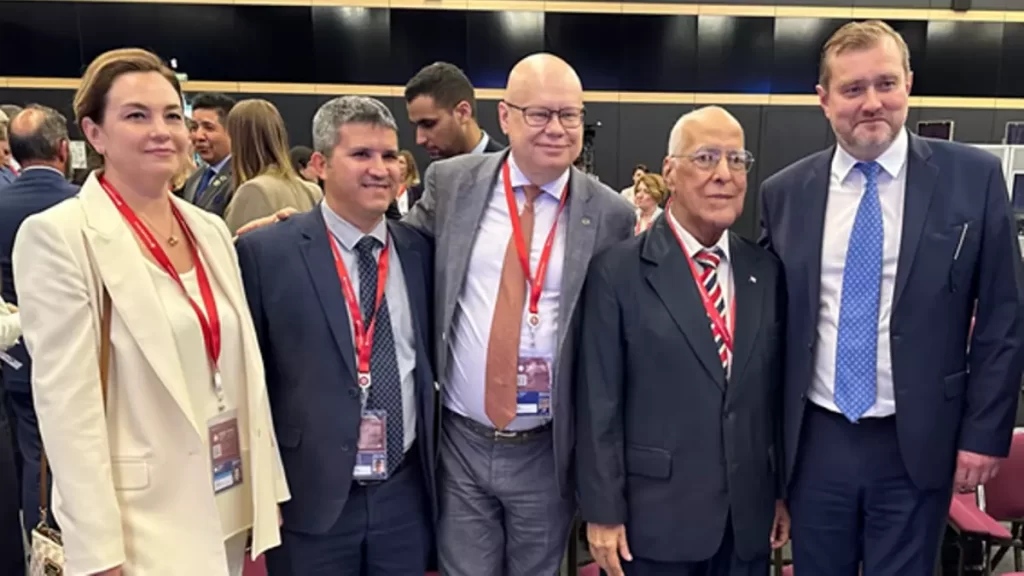
Ricardo Cabrisas (second from right), along with senior Russian officials and members of the Cuban delegation / Cubadebate

14ymedio bigger14ymedio, Havana, 8 June 2024 — During the tour carried out by Cuban Deputy Prime Minister Ricardo Cabrisas in search of funding for the Development Plan of Cuba until 2030, at the International Economic Forum of St. Petersburg 2024 (SPIEF), it was reported that exports of agro-industrial products from Russia to Cuba doubled last year, compared to 2022.

According to official data, the trade between Russia and Cuba in 2022 amounted to 451 million dollars, although Moscow intended to improve that number the following year. Most of the trade was agricultural, although the Russians also invested in construction and tourism.

According to the official press, the Russian Minister of Agriculture, Oksana Lut, indicated that Moscow believes that it is possible to further expand sales to the Island. Lut assured that her country has all the necessary resources to “guarantee the food security of the Cuban State.” continue reading

For Cuba it is important to attract business on Cabrisas’ tour, and this is why it is among the largest delegations to the forum

“Russia and Cuba are historically united by close relations. Not only is political dialogue developing, but economic-commercial cooperation is also gaining momentum,” Lut added.

For Cuba it is important to attract business on Cabrisas’ tour, and this is why it is among the largest delegations to the forum. It includes Eduardo Rodríguez Dávila, head of Transport; Julio Garmendía Peña, ambassador to Moscow; Carlos Luis Jorge Méndez, first deputy minister of Foreign Trade and Foreign Investment; Ileana Núñez Mordoche, director of Europe for the Foreign Ministry, and Inalvis Bonachea González, director of commercial policy in the region.

Last Monday, Cabrisas met with Grigori Karasin, head of the International Affairs Committee of the Council of the Russian Federation; Andrei Shevchenko, head of the cooperation group with the Cuban Assembly; and Senator Andrei Anatolyevich. But his agenda also has an important appointment ahead, with the meeting of the Intergovernmental Commission for Economic-Commercial and Scientific-Technical Relations, which he will attend with his counterpart, Deputy Prime Minister Dmitry Chernyshenko, to “review the fundamental issues addressed by this bilateral mechanism.”

Other areas in which Cuba seeks to secure support involve financing, tourism, the industrial sector, the purchase of Russian wheat and the possible lease of land in usufruct on the Island. To these is added the Cuban pharmaceutical sector, with the announcement this Friday of an investment of 11.3 million dollars in the state company BioCubaFarma.

This visit takes place as part of the announcement of the sending of warships from Moscow to Havana, next week, at a time when the Island is desperately looking for a partner to help it overcome an unprecedented economic crisis. In return, offers Russia a platform to challenge Washington in its own area of influence.

Translated by Regina Anavy

____________

COLLABORATE WITH OUR WORKThe 14ymedio team is committed to practicing serious journalism that reflects Cuba’s reality in all its depth. Thank you for joining us on this long journey. We invite you to continue supporting us by becoming a member of 14ymedio now. Together we can continue transforming journalism in Cuba.

With a House Full of Garbage in the Heart of the Capital, Havana Breaks Records for Unhealthiness

In Old Havana, on the corner of Aponte and Gloria, a building in ruins was the living image of the pestilence

A neighbor shouted at someone passing by: “Take a look, boy, at this plague, see how dirty everything is?” / 14ymedio

14ymedio bigger14ymedio, Juan Diego Rodríguez, Havana, 10 June 2024 — The stench was persistent throughout the capital this Monday. The day dawned cool and threatened rain from early on, but the air, instead of cleaning the odors, carried them and brought effluents of sewage, decomposing food and dead animals. In Old Havana, on the corner of Aponte and Gloria, a ruined building was the living picture of the pestilence. Uninhabited, roofless and with a large part of the walls collapsed, its ground floor is occupied today by heaps and heaps of garbage, wrapped in a cloud of flies and other insects.

Next to the house garbage dump, however, there is a property with residents. A neighbor shouted at someone passing by: “Take a look, boy, at this plague, see how dirty everything is?” Faced with the disgusted gesture of the young man, who was almost running to leave the place behind as soon as possible, he asked, “Give me a little help, I’m sick.”

“Oropouche, dengue and even the bubonic plague are going to take us away if this continues”

Another woman, who crossed the sidewalk in the face of the stench, murmured: “Oropouche, dengue and even the bubonic plague are going to take us away if this continues.” continue reading

The lack of fuel and the precarious Communal Services make the refuse flourish on every corner, not only in Havana, but in other places on the Island, including Matanzas, Las Tunas, Santa Clara and Manzanillo, as reported by 14ymedio.

A few days ago, the accumulation of waste in Havana Bay, to the point of preventing navigation, forced the authorities to suspend the service of the Regla ferry. This newspaper confirmed on Saturday that, although the route that connects the port of Havana with the other side of the bay was now operating, garbage was still floating in the water.

Translated by Regina Anavy

____________

COLLABORATE WITH OUR WORKThe 14ymedio team is committed to practicing serious journalism that reflects Cuba’s reality in all its depth. Thank you for joining us on this long journey. We invite you to continue supporting us by becoming a member of 14ymedio now. Together we can continue transforming journalism in Cuba.
Díaz-Canel Urges Cubans To Produce Their Own Food To Curb Imports

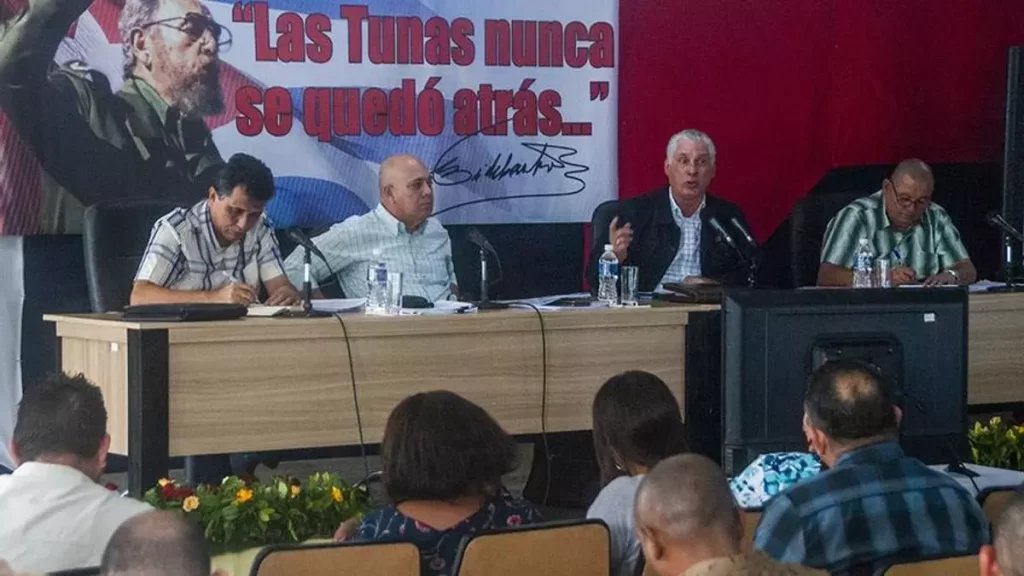
Miguel Díaz-Canel urged the cadres to work to achieve food sovereignty because he believes there are resources. / Periódico 26]

14ymedio bigger14ymedio, Madrid, 10 June 2024 — The echo of Miguel Díaz-Canel’s scolding this Friday in Majibacoa still resonates throughout the Island: “Here there is enough land to produce for the entire municipality, to give food to all of Las Tunas. Now, you have to work.” A few hours after that diatribe, which has become common in the president’s tours of the Island, the publication of data on chicken imports from the United States once again confirmed the dependence on the outside to feed the Cuban population.

Decentralization towards municipalities is part of the government strategy of recent years to dilute the responsibilities of the leadership of the regime. And Díaz-Canel turned to it again in the municipality of Las Tunas, where he called on the cadres “to work” to get results, while the officials took notes without raising their heads. The president accused the territorial leaders of spending time in offices and meetings and not going to the base.

“We are separated from reality and are not doing what we need to. We have to reach a time when this country is self-sufficient with food. That is what will give us real sovereignty, not being dependent on imports, but you have to believe that, and each municipality must provide its own food and not be thinking about what will come in from the [ration system family] basket. The basket will be for more.” continue reading

 “You have to believe that, and each municipality must provide its own food and not be thinking about what will come in from the [ration system family] basket”

The expression used by the one person ultimately responsible for the country, understood by thousands of Cubans as a call to take the chestnuts out of the fire by themselves, has not been well received. In reality, Díaz-Canel was shifting his responsibility to an intermediary, while, at the highest level, he continues to negotiate investments and imports, in addition to donations, from countries – partners or not – instead of allocating funds from the national budget for food security on the Island.

“We can’t come and tell you this; it must be you who find the solutions from the knowledge you have of your own reality. The economy must be analyzed from its indicators,” the president said on the same day that the data on chicken imports from the United States for the month of April were known.

This month, the amount of poultry meat acquired from the neighboring country fell sharply compared to the previous month. In April 15,169.6 tons of the product arrived on the Island, 42.6% less than in March, when the sum amounted to 26,413, and half as much as in January, when the total exceeded 30,000 tons.

Accordingly, the value was also reduced, although proportionally less (-38.2%), since it increased the price per kilogram. In the fourth month of the year, 18.17 million dollars were spent, with a cost of 1.20 dollars per kilo (8.1% more than last month, when that same amount was at 1.11 dollars). In March, $29.42 million was paid for chicken meat imported from the United States.

In general terms, the first quarter of this year exceeded the volume of purchases from the U.S. by 2.6%. As of April 2023, the Island had imported 86,277 tons of chicken meat compared to 88,505 this year. Since the statistics do not distinguish between what goes to the State and what goes to private enterprises, the increase in imports could be attributed to the latter.

 Since the statistics do not distinguish between what goes to the State and what goes to private enterprises, the increase in imports could be attributed to the latter

The increase in expenditure was 18.6%, due to the increase in the cost of the product, much more substantial than the volume, due to the average increase in weight. Thus, in the first quarter of 2023, 85,666 million dollars were paid by Cuba for the product, compared to 101,531 million in the same period in 2024. Payments, under the laws governing the US embargo, which since 2001 have authorized the sale of food and medical products to the Cuban population, must be made in cash and in advance, conditions that the Government points out as seriously harmful, although the history of non-payments by the Cuban State is one of the reasons for these demands.

Since this exemption was adopted, food products have been sold from the United States to Cuba worth $7,359,331,112, according to data from the Cuba-US Economic and Trade Council (CubaTrade) up to May of this year.

“U.S. chicken meat exports are the most consumed source of animal protein in Cuba and compensate for the acute national agricultural crisis, for which there is no light observed at the end of the tunnel,” said economist Pedro Monreal on Saturday when detailing the latest available figures.

Meanwhile, in Majibacoa, Díaz-Canel continued to take responsibility to the smallest possible scale. “The municipalities are the first that must defend the companies of their territory; otherwise, municipal autonomy does not exist,” he insisted.

 “The municipalities are the first that must defend the companies of their territory; otherwise, municipal autonomy does not exist”

Among the president’s companions were Roberto Morales Ojeda, Secretary of Organization of the Central Committee of the Communist Party, and the first secretary in the province, Walter Simón Noris. Neither of them understood, judging by their words, why there is no more control and “confronting illegalities” and why the membership of the party does not grow. “We can’t sleep with all the things left unsolved,” said Simón Noris.

No one questioned, at least out loud, whether the poor results of the agricultural sector have anything to do with the fact that the State’s investments in the first quarter of the year were just 559.7 million pesos (2.8% of the total), compared to the more than 6.7 billion pesos destined for tourism.

Translated by Regina Anavy

____________

COLLABORATE WITH OUR WORKThe 14ymedio team is committed to practicing serious journalism that reflects Cuba’s reality in all its depth. Thank you for joining us on this long journey. We invite you to continue supporting us by becoming a member of 14ymedio now. Together we can continue transforming journalism in Cuba.

Instead of Investments, the Cuban Government Offers Words for the Development of Science

The percentage of state investments in innovation fell from 1.14% in 2011 to 0.55% in 2023

Some 525 million pesos are included for the National Science and Innovation Fund and 100 million for the National Environment Fund / Cubadebate

14ymedio bigger14ymedio, Madrid, June 10, 2024 — The latest voluntary illusion that the Cuban Government seems to cling to in recent weeks is science, technology and innovation. The minister of the sector, Eduardo Martínez Díaz, a few days ago in a meeting led by President Miguel Díaz-Canel, insisted on this mantra: “The formula to get out of the situation that we have is by using science, introducing its results, applying technologies and innovating in all aspects.”

This Monday, the official press repeats the issue, in an article signed by the same Minister of Science, Technology and the Environment and his deputy minister, Armando Rodríguez Batista, where they explain the “priorities” when implementing the plan. Within an imprecise list of wishes – such as “orienting science and innovation projects more to the solution of specific problems,” “achieving greater interconnectivity between actors” and “enhancing incentives for innovation at different levels” – one objective stands out: “increase investment in research and development activity.”

In addition to including in this the “financing in convertible currencies,” the officials emphasize that at the same time it is necessary to “diversify the sources,” opening the door to private investment, although without saying it specifically. continue reading

At no time is it mentioned where and how that money could come from

Outside the text, in a graph, it is asserted that 2,184 million pesos are “planned” for “17 national programs, 10 sectoral programs and 63 territorial programs in the area of technology and innovation.” 525 million pesos are included for the National Science and Innovation Fund and 100 million for the National Environment Fund. At no time is it mentioned where and how that money could come from.

The Cuban economist Pedro Monreal has not been long in questioning the numbers, and demolishing, in a long thread on X, the plan of “improvement of the System of Science, Technology and Innovation,” which, it seems to him, “casts more shade than light.”

First of all, he asserts that with a national investment of almost 97 billion pesos in 2023 in all sectors – “a level in itself insufficient for economic recovery,” he clarifies -“the figures that are announced for ‘support for science and innovation’ are simply not relevant.” It is “one of the most insignificant sectors in Cuba,” Monreal continues, with an average of 0.81% between 2011 and 2023, “very distant from tourism investment.”

The economist concedes that the regime recognizes that the relative weight of investment in science and innovation is insufficient, but then, “the reasoning becomes confused by identifying it as a problem of statistical ‘underregistration’.” If the current weight were doubled, Monreal suggests, from 0.55% to 1.1%, “science-innovation would remain one of the five least relevant sectors in innovative investment.”

 If the current weight were doubled, Monreal suggests, from 0.55% to 1.1%, “science-innovation would continue to be one of the five least relevant sectors in innovative investment

In the graph shared by the economist, in fact, it is striking that the State dedicated only 0.55% of its total investments to that sector in 2023, much less than in 2011, when it gave it 1.14%.

Similarly, the specialist strongly states that “there seems to be some official difficulty in understanding the scale of the innovative investment deficit, the part of the institutional fabric where it should be concentrated, the high risk of that type of investment and the viability of possible sources of financing,” and he criticizes: “Assuming that in Cuba innovation would be promoted without a significant jump in investment in innovation at the company level (not only in research centers) is an incorrect assumption.”

Another “serious problem” of the official explanation observed by Monreal is that “the financing of innovative investment is mainly posed as one of abstract longing” and that the “key point” of “the sources of business financing” is not clear. “The profits would be insufficient,” he says.

A true investment in innovation, he says, “is a long-term, high-risk process, and therefore very difficult to predict in terms of results and return on investment. The Cuban business system has neither effective economic calculation, nor diversity of ownership in firms with scale, nor access to decentralized financing mechanisms, nor the competitive environment necessary for them to function as a locus of innovation,” Monreal concludes about the umpteenth hope to get out of the permanent crisis.

Translated by Regina Anavy

____________

COLLABORATE WITH OUR WORKThe 14ymedio team is committed to practicing serious journalism that reflects Cuba’s reality in all its depth. Thank you for joining us on this long journey. We invite you to continue supporting us by becoming a member of 14ymedio now. Together we can continue transforming journalism in Cuba.

After a Fall, the Dollar Gains Momentum in Cuba’s Informal Market

On the streets of the Island, the conviction grows that there will be no breaks on the rise of the US currency

The mass exodus that the Island has been experiencing for several years has also ended up crowning the “dollar emperor.” / EFE

14ymedio bigger14ymedio, Yoani Sánchez, Generation Y, Havana, 11 June 2024 — Like in those movies where the main character is injured, rolls in the mud and then gets up to say “it was nothing, just a scratch,” the dollar has begun to recover in the Cuban informal market after a fall that has lasted just a couple of weeks. On the streets of the Island, the conviction is growing that the stumble has only been to gain momentum and that there will be no breaks on the rise of the US currency.

At the beginning of the month of May, the dollar, or the fula as it is popularly referred to, reached close to 400 Cuban pesos in the clandestine currency purchase and sale networks. That figure, in addition to being unprecedented, revealed the weakness of salaries on the Island, where a health professional, with a specialty under their belt, barely earns the equivalent of less than 50 dollars per month. Nor did a drop in the value of what is also called, ironically, “the enemy’s currency,” mean a moderation in the prices of basic products.

Those who receive dollars from abroad held their breath and their wallets to avoid selling their currencies on the days when ‘the green’ experienced a fall

Those who receive dollars from abroad held their breath and their wallets to avoid selling their currencies on the days when ‘the green’ experienced a fall. But those who live only on a salary in national currency could not enjoy the fact that the bill with the face of George Washington could be exchanged for less than 350 pesos. No private business, of those that have begun to spread across the Island and which mainly offer imported foods, lowered the prices of their merchandise. No collective taxi driver, fruit and vegetable merchant, or produce hauler took a centavo off their fares. continue reading

Why this paralysis in the face of the decline in the value of the dollar? The reason points to the skepticism surrounding the weak Cuban peso and the popular conviction that, in addition to the oscillations and any setbacks that the US currency suffers, it is money backed by elements that those banknotes with the images of José Martí, Antonio Maceo y Calixto García are almost completely missing. The dollar enjoys everything that national money lacks: trust among those who use it, productive support and international financial entities that support it.

Another reason for not getting carried away by the setback suffered by ‘the green’ was the suspicion that its slippage was being influenced by false advertisements for the sale of foreign currency, at a lower price, coming from the Cuban regime’s bot factory. On the streets of the Island, many considered that officialdom had used force to adulterate the result of the algorithm that, on the independent site El Toque, calculates the value of foreign currencies on the Cuban black market. That intuition was accompanied by the conviction that maintaining that pulse was almost impossible for the Plaza de la Revolución and that it would end up losing it, as has happened.

This week, the dollar has once again touched 400 Cuban pesos and the short- and medium-term forecast is that its comeback will continue without major obstacles along the way.

This week, the dollar has once again touched 400 Cuban pesos and the short- and medium-term forecast is that its comeback will continue without major obstacles along the way. One does not have to be an expert in finance or a university graduate in Economics to conclude that the national currency is mortally wounded.

The low productivity of industry, the agricultural sector and other networks that generate goods and services have dug the grave of the peso. The restrictions on withdrawing cash from banks, partly motivated by the economic crisis but also by an official desire to collect money in circulation to force the decline of currencies, has increased suspicion about the currency in which Cuban salaries are paid. Informal dollarization has spread and entrepreneurs prefer to understand each other in the language of currencies. The few Cubans who maintain savings have understood that it is better to keep greenbacks under the mattress.

The mass exodus that the Island has been experiencing for several years has also ended up crowning the “dollar emperor.” The demand in the informal market for this currency is motivated, to a large extent, by the need to pay for tickets to emigrate and to finance the costs of transportation through Central America to the southern border of the United States. The bills with the face of Camilo Cienfuegos or Ernesto Che Guevara have no place in the pockets of these migrants; the paper money they carry has the penetrating gaze and stately bearing of Abraham Lincoln printed on it.

Editor’s Note: This text was originally published in Deutsche Welle in Spanish

____________

COLLABORATE WITH OUR WORKThe 14ymedio team is committed to practicing serious journalism that reflects Cuba’s reality in all its depth. Thank you for joining us on this long journey. We invite you to continue supporting us by becoming a member of 14ymedio now. Together we can continue transforming journalism in Cuba.
54,000 Laying Hens Are Slaughtered in Holguín, Cuba, Due to the Lack of Animal Feed

Egg production in Cuba has decreased from five million units a day in 2020 to 2.2 million in 2023

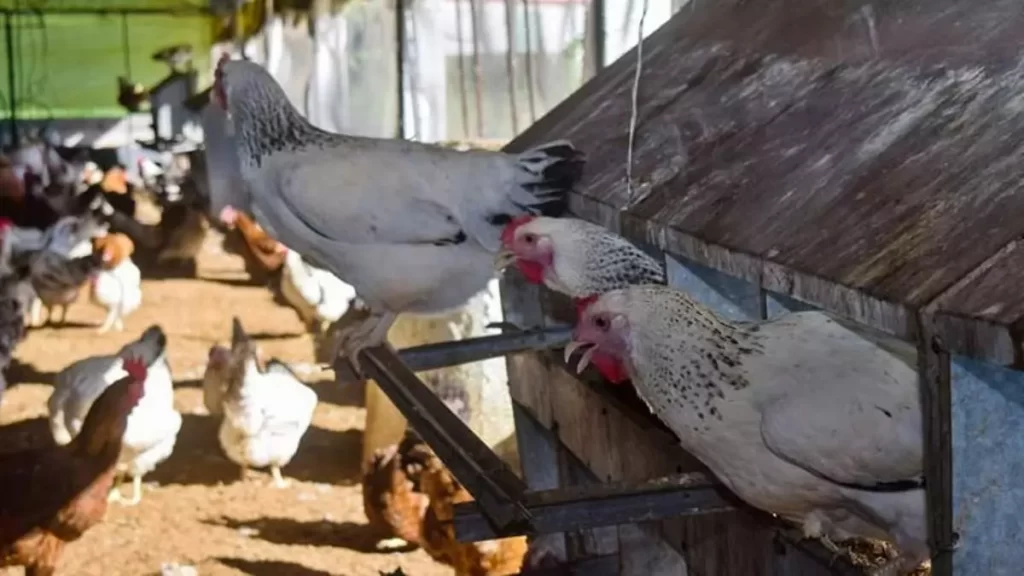
They slaughter them because, according to Avihol’s management, there is no food in Holguín,” a source linked to the company tells this newspaper/ Now/Archive

14ymedio bigger14ymedio, Miguel García, Havana, 10 June 2024 — At least 54,000 laying hens are being slaughtered in Holguín, a process that has begun due to the impossibility of keeping them due to the lack of animal feed. According to 14ymedio, the process started several weeks ago but had to be suspended when the production line of the slaughterhouse, located in San Rafael Adentro at kilometer 5 and a half on the road to Mayarí, broke down. However, the damaged parts have already been replaced and the plan has been resumed.

“They slaughter them because, according to the management of the Poultry Company of the province (Avihol), there is no food in Holguín,” said a source linked to the company who fears the situation will go further. “And if this is the case here, it may be the same in the rest of the country,” he speculates. The most serious thing, according to the same source, “is that there is no replacement, that is, they are slaughtering them without having spare hens.”

In just three years, Avihol has gotten into a catastrophic situation. The company not only surpassed egg production and supplied the province, but also served Santiago de Cuba and Las Tunas, earning the praise of former First Vice President José Ramón Machado Ventura in February 2020. At the end of that same year, a report in the pro-government newspaper Ahora recalled that this was the second largest in the country, being part of the National Program for producing five kilograms of protein per capita, including poultry. At that time, it produced about 426,000 eggs a day and 152.6 million eggs in a year. continue reading

In just three years, Avihol has gotten into a catastrophic situation. 

However, everything changed after the pandemic. In May 2023, Jorge Romero Marrero, director of the company, had to admit that the emergency required urgent measures. “The current financial situation does not allow us to acquire resources for the maintenance of the conditions that the sections require, and many units have deteriorated, which negatively impacts this line of production,” he said.

The manager said that the reduction in the feed had reduced the poultry population and decimated the hens, which in turn reduced the production of eggs. The price became completely unsustainable, which affected the workers’ wages. In fact, according to the source of this newspaper, the company was immersed in what the government jargon calls “availability process,” a euphemism to avoid the word “layoff,” only happening in its basic units, not in the headquarters.

Romero Marrero said that, despite the threat that was looming at that time on the company’s economy due to the low prices of eggs in the non-rationed market, there was a commitment to guarantee the rationed seven eggs per person and raise the price to the non-rationed commercialization carried out on weekends. In this case, the egg would be sold at 15 pesos, leaving the company’s profit at only 80 cents, but which would allow it, they believed, to sustain production.

Currently, the egg allowance on the ration book in the province has been reduced to five eggs per person per month.

The reality has been different and, currently, the number of eggs on the ration book in the province has been reduced to five eggs per person per month.

Chicken egg production, like so many other food sources, has plummeted in the country, which must resort to imports to meet demand. Just three days ago, the government press announced that Colombia would send about 40 million eggs to the island before the end of the year. As of today, 33 million units are still to come to comply with the agreement, since the first seven million arrived in Cuba in March. In May, the authorization was also granted for three companies from the Dominican Republic to export eggs to the island, in addition to other poultry products including meat and meat-based products.

Information about the pitiful state of the birds has multiplied in recent years and the causes are not only the price of animal feed. The lack of water and the blackouts, which interrupt the normal operation of the facilities thus harming the health of the hens, are also part of the problem. In November 2023, the Minister of Agriculture, Ydael Pérez Brito, reported that the production of eggs in Cuba has decreased from five million a day in 2020 to 2.2 million in 2023.

Translated by LAR

____________

COLLABORATE WITH OUR WORKThe 14ymedio team is committed to practicing serious journalism that reflects Cuba’s reality in all its depth. Thank you for joining us on this long journey. We invite you to continue supporting us by becoming a member of 14ymedio now. Together we can continue transforming journalism in Cuba.

Cuba’s Political Police Prevent the Departure of a ‘CubaNet’ Reporter Who Was Leaving for Nicaragua

Sardiñas was interrogated by the authorities at the airport / Facebook / Armando Sardiñas

14ymedio bigger14ymedio, Havana, 8 June 2024 — The Cuban Government prevented activist and independent reporter Armando Sardiñas from leaving the country when he was preparing to travel to Nicaragua this Thursday, according to what was reported on his social media the following day. Two State Security agents, who have been closely watching him for months, approached him at Terminal 3 of the José Martí International Airport, where they confiscated and destroyed his ticket. They also explained that he was “disqualified from traveling.”

“As he is a collaborator of an independent press that, according to State Security, responds to the interests of another country, he could not leave Cuba. Either as a tourist or to emigrate,” reads the activist’s Facebook post, in which he refers to himself in the third person.

As explained by CubaNet, the media outlet for which he collaborates, after a lieutenant colonel of State Security – whom he does not identify by name – arrested him at the airport, he was taken to a room where a brief interrogation took place that did not last more than 15 minutes.

During that time, the political police agents asked him if he “continued to do journalism” referring to his work at CubaNet, and asked him to “stop doing it” under the threat of imprisoning him again, because “they had something to accuse him with.” One of the agents called him a mercenary, continue reading

because he works for a press “paid by the empire,” according to the media.

In a conversation he had with his family moments after the incident, and from which his sister Jacqueline shared a screenshot, it can be read that the activist narrates the following: “It said on the computer (of the airport) that my exit from the country was disqualified, and then the two guanajos* (agents) arrived and told me ‘did you see that we do what we want?’”

The screenshot was accompanied by a text in which the 23-year-old’s sister laments that “beyond the pecuniary damage of 3,000 dollars (which we are going to claim) lost in a plane ticket impossible to cancel or modify an hour and a half before the departure of the flight, there is the clear and unpunished violation of the right to free movement.”

She added that the arrest of her brother and the restriction to leave Cuba occurred “without a valid argument, nor ongoing criminal proceedings, nor accusation, nor debts with the tax authorities.”

In October 2021, Sardiñas was sentenced to 10 months of correctional work with internment in the La Lima camp, located in the Havana municipality of Guanabacoa, for his participation in the anti-government protests of 11 July 2021 (11J).

“I do not lose hope, one day I will be free, I will be able to vent and get out all those feelings and anecdotes that I have been living since 11J and years before and after, the agony of living in a country under a dictatorship,” Sardiñas said through his social media after the incident was reported.

In recent months, this is not the first time that State Security has detained him. On April 14, agents arrested him while he was documenting the Dog Day march at the Colon Cemetery in Havana. On that occasion, he was held incommunicado and subjected to an interrogation that lasted seven hours. Another of his sisters, Yaima Sardiñas, was also summoned that same month.

*Translator’s note: “Guanajo” is used pejoratively to refer to someone foolish or stupid.

Translated by LAR

____________

COLLABORATE WITH OUR WORKThe 14ymedio team is committed to practicing serious journalism that reflects Cuba’s reality in all its depth. Thank you for joining us on this long journey. We invite you to continue supporting us by becoming a member of 14ymedio now. Together we can continue transforming journalism in Cuba.

Mexico Fills Positions for National Doctors With Cuban Specialists

A group of Cuban doctors in the state of Tlaxcala (Mexico)/@EmbaCuMex

14ymedio bigger14ymedio, Ángel Salinas, Mexico, 7 June 2024 — Cuban specialists are filling positions in Tamaulipas rejected by Mexican doctors because the work clinics are “far from the state capital,” said Marggid Rodríguez Avendaño, coordinator of the IMSS State Welfare. As the director of the Mexican Institute of Social Security (IMSS), Zoé Robledo, said last April, the salaries for these positions are 50,000 pesos ($2,732 per month), which includes a bonus of 10,000 pesos ($545).

A health source consulted by 14ymedio confirmed the hiring of 181 doctors and nurses in Tamaulipas. Among them “there are 27 Cubans who are registered as internists, ophthalmologists and surgeons,” the same source details, adding that 12 of them “are currently being trained in the state capital.”

The same official said that the island’s specialists “will be sent to hospitals located in San Fernando, Rio Bravo, Valle Hermoso and Victoria, where there are problems completing the medical staff.” He does not know if this group will be paid the $2,732 stipulated for those positions, considerably more than the$2,042 per month that Mexico pays the Government of Cuba for each specialist, according to information published by this newspaper, but he sees no impediment because “that money is already budgeted.” continue reading

Cuban doctors at a clinic in Manzanillo, in the state of Colima (Mexico) / Facebook/Manzanillo, Ciudad que Renace!

On the other hand, Rodríguez Avendaño indicated that they are in the “hiring stage” of doctors and nurses. In the state, 200 specialists and general practitioners have been granted jobs as part of the IMSS Bienestar, according to official data.

This Thursday, Andrés Manuel López Obrador´s administration granted more than 209,000,000 pesos ($11,397,277) to Tamaulipas as part of the La Clínica es Nuestra program. The money will benefit 400 health centers. Of these, 269 have a dispensary, 85 have two outpatient clinics, 20 have three to five rooms and 27 have six or more offices to care for insured patients and people without social security.

The hiring of Cuban doctors will continue during the government of newly elected Mexican President Claudia Sheinbaum. The agreement with the Island is to send 1,200 specialists, of whom 841 are already in the country. “We have signed an agreement with the Government of Cuba,”López Obrador confirmed last Tuesday. These doctors “are in the mountains, in Nayarit, in Campeche, in Colima, they are everywhere, and more are coming,” he said.

The most recent group of specialists from the island arrived at the Felipe Ángeles International Airport at the end of April.

Translated by LAR

____________

COLLABORATE WITH OUR WORKThe 14ymedio team is committed to practicing serious journalism that reflects Cuba’s reality in all its depth. Thank you for joining us on this long journey. We invite you to continue supporting us by becoming a member of 14ymedio now. Together we can continue transforming journalism in Cuba.

A Retired Restaurant Inspector Laments the Decline of Matanzas’ State-Owned Restaurants

Arístides admits that he can no longer afford to eat at these establishments since prices skyrocketed / 14ymedio

14ymedio bigger14ymedio, Julio César Contreras, Matanzas, June 1, 2024 — Since retiring, Arístides has gotten into the habit of going once or twice a month to have “a drink” or the occasional lunch at one of the local restaurants in Matanzas. However, it has been months since he has been to any of the state-owned businesses that he used to frequent. His return on Thursday to Casa del Chef left him perplexed. “Poor service, limited selection and a tasteless environment” is how he summarized his visit.

“I like going to that restaurant because the decor is nice and it feels cozy. But as soon as I got there, I saw four employees just sitting around a table, talking. Even though they were close, I had to try several times to get someone to wait to me. Since there was no one behind the counter and no headwaiter, the cook finally came over,” says Arístides, who worked as a restaurant inspector in the city for twenty-five years.

Arístides admits that he can no longer afford to eat at these establishments since prices have skyrocketed. Nevertheless, personal experience tells him that an increase in restaurant supply costs is not the only issue. “There is no point in restoring a place if customers are put off by supply shortages and indifferent staff,” he explains. continue reading

The cafe La Pelota offers two or three types of sandwiches and juice. / 14ymedio

Employee salaries, he argues, are a key factor that negatively impact workers’ performance and ultimately customer experience. “The current monthly salary tops out at 3,000 pesos. For workers it’s very discouraging to see that the price of a few dishes – between 80 and 160 pesos for sides and between 400 and 1,000 for a main course – is equivalent to their monthly salary.” He is referring to Casa del Chef, which has seen its staff turn over numerous times because employees left for jobs “at the privates.”

Put off by the poor service, Arístides heads for a nearby cafe. It is now 5:00 in the afternoon but the place is closed. “It would be preferable to rent out these establishments to individuals rather than go out of business because they’re empty or closed all the time,” he complains.

Arístides continues his journey until he arrives at Freedom Park, where he finds two places side-by-side: a cafe called La Pelota and a pizzeria. The first offers two or three types of sandwiches and juice. Though there are tables at which customers can sit, he is turned off by the bar’s greasy wooden countertop and a menu that offers more items than are actually available.

State-owned restaurants cannot compete with offerings at their private-sector counterparts. / 14ymedio

The pizzeria, with its door closed tight, is waiting on an “investment” it needs to reopen its doors.

“A few years ago, things weren’t too bad,” says Arístides. “But now you go to Coppelia and, instead of selling ice cream, they’re ’diversifying production.’ Bread and croquettes, or ten types of pizzas when they really only have two, and for a different price than what is shown on the board.”

When asked about the offerings at private restaurants, he says the “price barrier” has forced him to choose between the meager selections but lower prices at state-run places versus the better quality but higher prices at privately owned restaurants. In terms of what they can provide, state-owned restaurants cannot compete with their private-sector counterparts. That is why they will often illegally sell off their supplies to private business owners, balance their books and pocket the rest. “If that’s how they were going to run these businesses, better to have left them in the hands of their original owners,” he says.

Once-great old state-owned restaurants such as La Vigía, El Polinesio y El Bahía are, like their clientele, difficult to revive. It is not about inflation, the lack of equipment or the poor training provided by business and food service schools, claims Arístides. For him it all boils down to a truth so basic that every fast-food street vendor knows it: “There has to be a direct relationship between the price of what you’re selling and the quality, especially when you’re charging 1,200 pesos for a steak.”

____________

COLLABORATE WITH OUR WORKThe 14ymedio team is committed to practicing serious journalism that reflects Cuba’s reality in all its depth. Thank you for joining us on this long journey. We invite you to continue supporting us by becoming a member of 14ymedio now. Together we can continue transforming journalism in Cuba.

The Epidemiological Crisis of Oropouche Fever Worsens in Santiago de Cuba

The Ministry of Public Health has been cautious in offering the number of confirmed cases throughout the country

The accumulation of garbage and stagnant water is the environment conducive to mosquito infestation / Periodismo de Barrio

14ymedio bigger14ymedio, Havana, 9 June 2024 — Numerous complaints on social networks from Santiago de Cuba address the havoc caused by the Oropouche fever epidemic that the region is suffering. The reports speak of undiagnosed cases, outbreaks of mosquitoes in garbage dumps and stagnant water, and even the alleged death of a 22-year-old.

As a silent enemy, the virus is spreading not only through Santiago de Cuba, but also through Cienfuegos and more recently in Mayabeque and Havana, where cases have been reported in the municipalities of Diez de Octubre and Centro Habana, an expansion that the health authorities have not fully reported.

The presence of the fever in the Cuban capital, which was revealed by 14ymedio this Thursday, has not been confirmed by the Ministry of Public Health, which has also been cautious in offering the number of confirmed cases throughout the country, a complex record since most patients do not even go to hospital centers.

The situation seems to have reached such a level of severity that, last Thursday, the newspaper Sierra Maestra published a call to participate in “cleaning and sanitizing days” in Santiago territory. The justification for this mobilization is “the current epidemiological continue reading

situation, due to the increase in the rates of mosquito infestation,” says the appeal signed by the Committees for the Defense of the Revolution.

The newspaper maintained that the work of cleaning that the organization has called for “will allow us to take care of the health of all the inhabitants”

It also stressed that the days for cleaning extend “to all urban and rural communities, and work in all sectors is needed in order to achieve success.”

Meanwhile, social networks are a hotbed of commentary. This Saturday, independent journalist Yosmany Mayeta, a resident of the United States, reported on his Facebook profile the alleged death of a young man who spent three days hospitalized in a Santiago hospital because of Oropouche fever.

The information given by the reporter has not been confirmed by the authorities, but it has still caused a stir in the community of Santiago, where the residents of the region perceive an increase in infestation of the Culex mosquito, the main vector of Oropouche fever.

Only at the end of May did the Ministry of Public Health admit the presence on the Island of the viral disease, after numerous reports on social networks that warned of its incidence. The most severe symptoms of this fever include vomiting, headaches and joint pain, and in some cases, it can lead to death.

Several independent media have documented the growing concern in Santiago de Cuba about the cases of Oropouche and dengue. One of them is Cuba Alerts, which in a post this Friday on its Facebook page relates what was said by some parents in the area, who report that their children suffer from symptoms of the virus.

“It’s hard in the hospitals: the wards are full of patients, without medicine for the control of disease,” Magalis Cala told Cuba Alerts. She is one of the mothers debating whether or not to admit their children with symptoms of Oropouche fever to the North Children’s Hospital of the city, where she went after the symptoms worsened.

Meanwhile, Martí Noticias was able to talk to Father Leandro León Nun, parish priest of the San José Obrero Church, in Santiago de Cuba, who warns that the spread of the virus increasingly worries the population. They have decided to face it with natural remedies due to the lack of medicines, according to his testimony.

“Currently, with the people I can see, who are in my parish and who have been affected by the virus in the San Juan area, for example, or in the Seville area, people are now suffering from it. Generally, it is affecting a number of people, and just when you think that they have freed themselves from the virus, it returns, and they get weaker. Now my mom is in for the third time, it’s very bad,” complains Father Nun.

Translated by Regina Anavy

____________

COLLABORATE WITH OUR WORKThe 14ymedio team is committed to practicing serious journalism that reflects Cuba’s reality in all its depth. Thank you for joining us on this long journey. We invite you to continue supporting us by becoming a member of 14ymedio now. Together we can continue transforming journalism in Cuba.