The Failure of Cuban Athletes in Paris Confirms That the National Sport Is in a Coma

The official magazine ’Alma Mater’ analyzes the reasons for the collapse, from “the summit to the crisis”


Cuba no longer has the same level of classification, and officialdom considers “the number of athletes under other flags” a shame / Jit

14ymedio bigger14ymedio, Havana, 23 August 2024 — The equation that explains the failure of Cuban sport is simple: there is no “muscle” without money, and Cuba does not have – or at least that is the official version – the money they need to invest in the preparation of its athletes. They have to be sent to other countries to train, and very few resist the temptation to escape. The few who return do so because they prefer to escape in Paris rather than in Nicaragua or the Dominican Republic.

Alma Mater, the university magazine that has become lethargic since the defenestration of its director, dares to addresses a thorny topic. In a text that describes the path of Cuban sport “from the summit to the crisis,” the official publication analyzes why, in the last 20 years, sport has ceased to be a priority for the Government.

The two points of comparison are the 2004 Athens Olympics and the 2024 Paris Olympics. In the Greek capital, the Cubans, with a delegation of 151 athletes, occupied eleventh place in the medal table with 27 medals; in France, where the Island was in 32nd place, they only obtained nine medals, the same number as the exiled Cubans who played under other flags.

The problem could be seen coming, and each Olympic event in the last two decades presented louder warning signs

The problem could be seen coming, and each Olympic event in the last two decades presented louder warning signs. It was a “radical turn,” says Alma Mater, which spends several paragraphs praising the “sport power” that Cuba once was before going into the details. continue reading

Cuba no longer even has the same level of classification, and officialdom considers “the number of athletes under other flags” a shame. “This constant loss of talent, a well-known cause, distorts any type of medium- and long-term planning with those athletes whose abilities are ideal to offer high performance in more than one cycle. And this affects Cuba like nothing else,” Alma Mater admits.

“Seeing them triumph with other anthems on their lips makes one proud, but it hurts. Moving away is not a sin; it is understandable, and above all if stability in all its aspects is pursued as a reason,” it summarizes.

The key question – which closes the article without an answer – “is not why they leave, but why they don’t stay.” They leave because of the “understandable dissatisfactions of athletes and coaches,” the magazine acknowledges. “It is enough to listen to the statements of those who have remained on the Caribbean island, because it is almost impossible to manage being trained with scarce resources.”

Despite their talent, Cuban athletes are light years away from the type of training that their counterparts receive around the world. They do not enjoy the “strong investment” that all governments offer to the “muscle activity” that will give them important income – economic and prestigious – in the Olympics and other key competitions. “It does not require exquisite knowledge about the economy to conclude that in Cuba this issue goes down the path where the accounts don’t add up,” it argues.

Receiving good training is an aspiration that is, says Alma Mater, using a euphemism, a “distant modernity” for the humble Cuban athletes. It lacks “the technology in the development of plans to finish polishing the capacities, the updating in the methodology when applying the concepts necessary for the competitions and the specialization of the adjacent disciplines in the construction of the athlete.” Against these defects, no talent is worth it. After its analysis, Alma Mater has no choice but to enumerate past glories to give the measure of the debacle.

The flagship of Cuban sport – at least since Munich 1972 – was boxing. Thanks to its star quintet – Yan Bartelemí, Yuriorkis Gamboa, Rigoberto Rigondeaux, Mario Kindelán and Odlanier Solis – the Island took five of the nine gold medals in Athens 2004. Since Montreal 1976, boxers – it was the time of Teófilo Stevenson – had stood up for the country thanks to Soviet money, which Alma Mater remembers with nostalgia: “the context under the five (Olympic) rings was different.”

In Moscow 1980 the Island excelled, partly because “the great powers were absent in those games,” comments the magazine

In Moscow 1980 the Island excelled, partly because “the great powers were absent in those games,” comments the magazine, and the competition was not too strong. Politics continued to mark the paths of the sport and not a few athletes of the Island – the magazine regrets with a certain tone of resentment – were prevented from traveling to Los Angeles in 1984 and Seoul in 1988. The great return, they say, was Barcelona 1992, with 30 medals and the fifth place in the world. These were the last moments of fame.

With the Special Period, the consequences of the fall of the Soviet Union and the entry into the 21st century, Cuban sport went into a coma. In Beijing 2008, the Island was ranked 27th and demonstrated the unevenness of the athletes compared to international parameters. The country was saved by isolated names, such as Félix Savón in boxing, Javier Sotomayor in the high jump and Elvis Gregory in fencing.

It was a sign that the Island’s sport depended on a few exceptional athletes and not on an organized process. The bills will be paid now, Alma Mater evaluates, since the last athlete of that “legendary” era, Mijaín López, has just retired after his fifth consecutive Olympic gold.

The analysis ends with an image that strives to be poetic: the coach who finds “in the most remote place of our Island that boy or girl with the abilities of a future star.” But it will not do much good, because – as the stampede of baseball prospects shows – children and adolescents both yearn for “the usual departure in search of other horizons.”

Paris must be seen as a trauma and a sign of the unequivocal “situation of crisis” that Cuban sport is experiencing, Alma Mater says, although it soon covers itself and apologizes, because “the phrase sounds strong” despite the good intentions.

Translated by Regina Anavy

____________

COLLABORATE WITH OUR WORKThe 14ymedio team is committed to practicing serious journalism that reflects Cuba’s reality in all its depth. Thank you for joining us on this long journey. We invite you to continue supporting us by becoming a member of 14ymedio now. Together we can continue transforming journalism in Cuba.
Ozone Therapy, a ‘Miracle Cure’ in Cuba and a ‘Tremendous Deception’ in Europe

  • It helps cure diabetes, rehabilitates heart attack patients and increases libido, believers say
  • There are 16 centers on the island and Díaz-Canel wants to “massify” their therapeutic use
Taking three or four liters is free, although they have now placed a collection dish next to the church, “to contribute a little” / 14ymedio

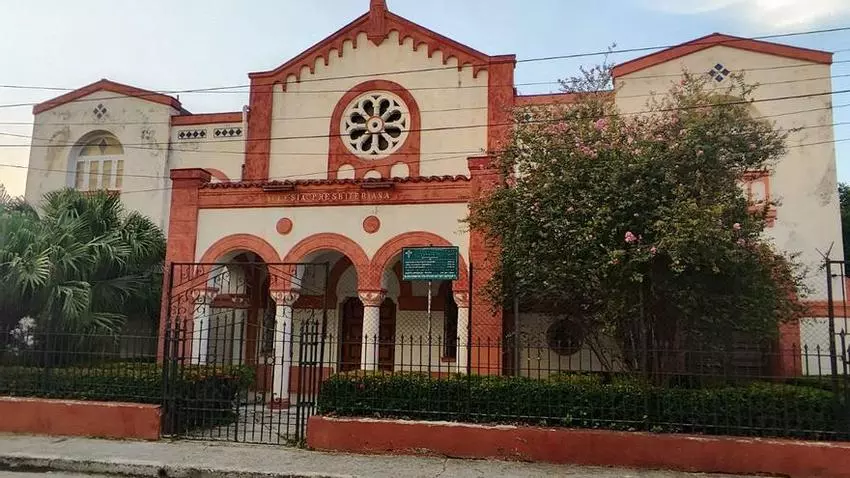
14ymedio bigger14ymedio, Juan Diego Rodríguez, Havana, August 13, 2024 — The line starts at seven in the morning, next to the Presbyterian temple on Reforma Street, between Santa Ana and Santa Felicia. The habaneros who get up early, however, do not come looking for the Lord – nor for the saints of both streets – but for the water that is dispensed in the church. More than blessed, it is “ozonized and purified,” and healing faculties that border on the miraculous are attributed to it.

Mercedes is one of the believers in the “properties” of ozone. “It’s good for everything, from parasites to bone problems,” she says, quoting her family doctor. For years, Mercedes has become – in her own words – an “ozone container.” She gets up early to go to the temple and guarantee “a few liters.” She drinks the water religiously and is unconditional about ozone therapy, which is available in almost any province of the Island.

“Ozone cures me of everything,” she says with fervor, like someone who invokes a healer or San Rafael, whom she does not deny either. For her, from the very Creole spell – a prayer to San Luis Beltrán for protection against the evil eye – to taping a ribbon around her waist to cure indigestion, “everything is natural medicine,” she explains, before finding her place in the line on Reforma Street.

The Presbyterian Church on Reforma Street, between Santa Ana and Santa Felicia, where water is dispensed / 14ymedio

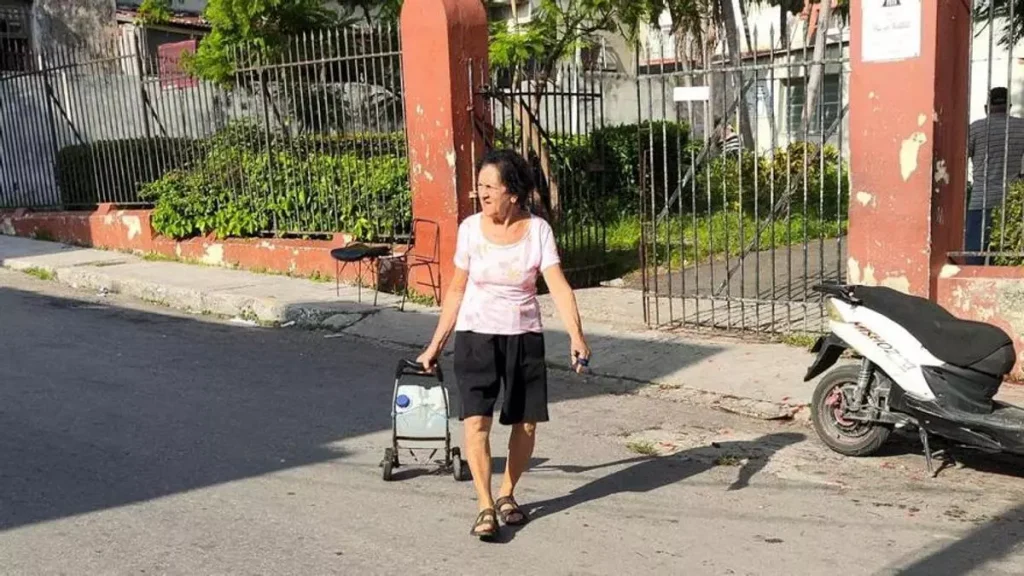
The morning shadow of the temple does not calm the spirits. A line is a line, and when Mercedes asks* who is last in line there is already an argument in full swing. An old man, who is carrying his wheelbarrow with several gallons, shouts and waves his arms to scare away a line-breaker : “I was there before you and so was he,” he exclaims, pointing to a fellow waiter. “There are some shameless people,” he grumbles, when the intruder is already far away. continue reading

Mercedes is used to this kind of scene. In a precarious environment like Cuba’s, with almost no medicines available, the ozone water is gold. A glance at the line is enough to see the profile of most of the believers: elderly, sick, people in pain from various ailments, poor people.

Genaro, a colleague of Mercedes in the line, tells us about everything that ozone relieves: “back pain, blood pressure and circulatory problems, diabetes, asthma, and it also works on hernias.” The 67-year-old man, who goes to church armed with several so-called cucumbers – one and a half liter bottles – and a gallon, considers himself a “historical figure” when it comes to “Presbyterian water.”

For twelve or thirteen years, since the time he estimates that the service at the temple began, Genaro has been coming to get water. The fact that it is cleaner there and without strange particles, in a country where the water supply leaves much to be desired, is “medicinal” for him and his family.

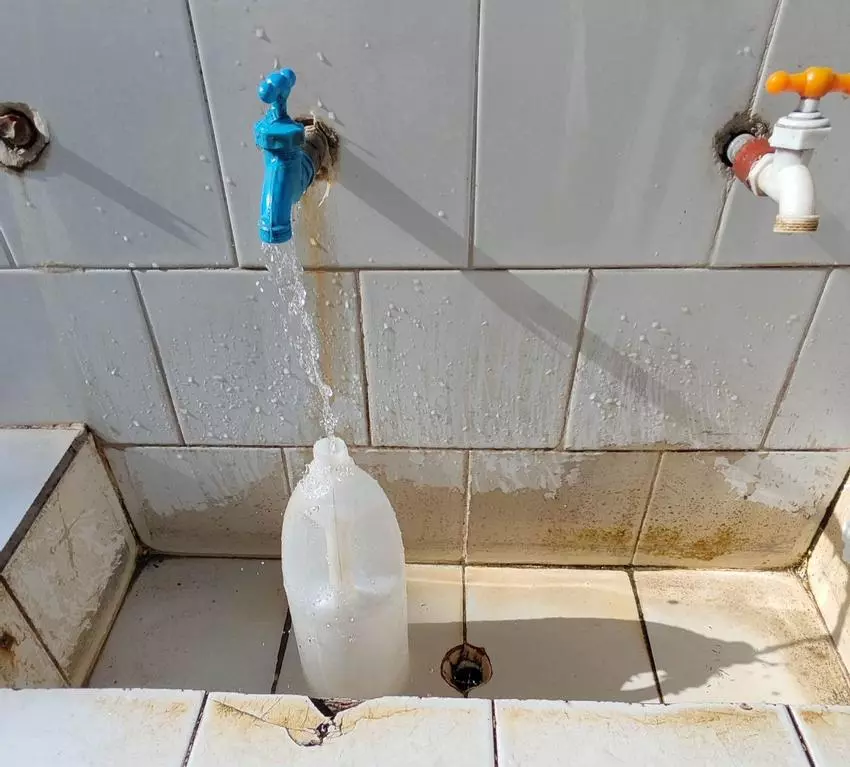
Usually, two people at a time approach the two plastic faucets that dispense the water / 14ymedio

The project of the Presbyterians – one of the Christian Churches that are on good terms with the Government, which lets it do this in exchange for its loyalty to the official Council of Churches – started thanks to American missionaries. The help “of the Americans” continues: they are the ones who, every year, come to repair and maintain the filters.

“The Americans built a cistern because there was a lot of demand,” Genaro explains. “They come every so often and look it over.”

None of the believers in line – neither Genaro or Mercedes – knows very well how the filtration and ozonization system works. The “apparatus,” as they call it, is safe inside the church facilities. No one is allowed to go in to see the equipment or loiter in the area where they keep it.

When there are too many people in line – the process gets slow sometimes, says Mercedes – they allow a group to fill their bottles from a faucet inside the church, but under strict surveillance. “It’s just that the residence is there, and they recently stole some sheets from the pastor,” Genaro confesses.

Usually, two people at a time approach the two plastic faucets that dispense the liquid, with all the calm in the world. The scene is repeated in many Cuban municipalities, where churches offer this service to help alleviate the hydrological debacle, one of many on the Island.

Taking three or four liters is free, although the Presbyterians now place a collection box next to the church, “to contribute a little.” There is a line until 11 in the morning, and then the “believers” return from three to four-thirty during the week and until six on Sundays.

“At the beginning of the project, people from the polyclinic came,” says Genaro. “They ruled that the water was perfect for consumption.” The old man alludes to the Ministry of Public Health as a global authority on ozone therapy issues, one of the alternative treatments that the Government has “expanded” the most – the term comes from the State newspaper Granma – throughout the globe.

Mercedes, for example, was referred to the Diez de Octubre hospital for a cycle of therapies. “First, a specialist, whether rheumatologist, ophthalmologist, etc., has to prescribe ozone therapy after an interview. You can’t have thyroid problems. Then they determine the frequency and method: there is rectal and paravertebral, that is, injections on both sides of the vertebrae,” the woman explains.

The doses increase. The initial is four weeks, every other day. Antioxidants must be removed during treatment. Suspend or eat less guava, tea, coffee, chocolate and fish. Your libido increases,” she explains mischievously, “your immune system improves, you eliminate parasites. You can immediately notice the improvement, although there are countries that do not accept it and say that it’s useless,” she says, before finishing with a fact: “Ozone is a very old project of the Revolution, and that’s why I have given it to myself all my life.”

Mercedes is not wrong. Not a month passes before the official press publishes one or two articles on the “results and horizons” of ozone therapy in Cuba, a treatment more than discussed by specialists around the world.

At the end of last year, Miguel Díaz-Canel himself was informed about the “positive impact” of the treatment. Its therapeutic use must be “mainstreamed,” the president then decreed, guaranteeing that its results “are proven.”

However, ozone therapy falls under the jurisdiction of the department of Natural and Traditional Medicine of the ministry, whose director – in that same meeting – had little to contribute, except for commonplaces and the fact that it is considered “preventive medicine” on the Island. There are 16 ozone therapy centers in the country, and a diploma is offered to study its effects.

The benefits that Cuban Public Health officially attributes to ozone are much more than Mercedes or Genaro imagine. Díaz-Canel was convinced that, with the treatment, fibromyalgia, chronic fatigue and diabetes can be faced; it rehabilitates those who have had aneurysms – no matter if it is heart or brain – and its rectal application “accelerated” the recovery of coronavirus patients in 2020. “We were very advanced,” the specialists congratulated themselves in front of Díaz-Canel.

The truth is that there is no scientific evidence that ozone – either in the “holy water,” by anal route or injected into the spine – has the high healing qualities attributed to it by the Public Health of the Island. Like the venom of blue scorpion, on which a dangerous pseudotherapeutic industry has been built, ozone therapy is one of the standards of regime medicine.

“Ozone therapy is not approved either by the European Medicines Agency or by the US Food and Drug Administration

“Ozone therapy is not approved by either the European Medicines Agency (EMA) or the US Food and Drug Administration (FDA),” Dr. Jerónimo Fernández Torrente, coordinator of the Observatory Against Pseudosciences of the Collegiate Medical Organization of Spain, clarified in 2018. “There is no credible scientific evidence that endorses the use of ozone as a type of medical therapy, much less for serious diseases such as cancer. In fact, medical reports and articles have been published on deaths of patients with this method.”

It is a “tremendous deception that we should denounce,” the doctor then said. “At the end of the day, ozone is a toxic gas; it is not harmless.”

These warnings do not discourage Genaro or Mercedes, who will return tomorrow to line up for the “holy water” of the Presbyterians. They follow the principle of Cuban domestic medicine to the letter: “What does not kill, fattens,” and – with their overflowing buckets and their immovable opinions – they continue to venerate San Ozono.

*Translator’s note: When Cubans join a line they ask “who’s last” and then, after the next person comes and they are now that person’s ’last’, they are free to wander around and can rejoin the line in ’their place’ at any time.

Translated by Regina Anavy

______________

COLLABORATE WITH OUR WORKThe 14ymedio team is committed to practicing serious journalism that reflects Cuba’s reality in all its depth. Thank you for joining us on this long journey. We invite you to continue supporting us by becoming a member of 14ymedio now. Together we can continue transforming journalism in Cuba.
The ‘Chinese Costco’ Arrives in Cuba and Everything Has Ridiculous Prices

The gigantic China Import warehouse opens in Havana, for minimum purchases of 50 dollars and in national currency

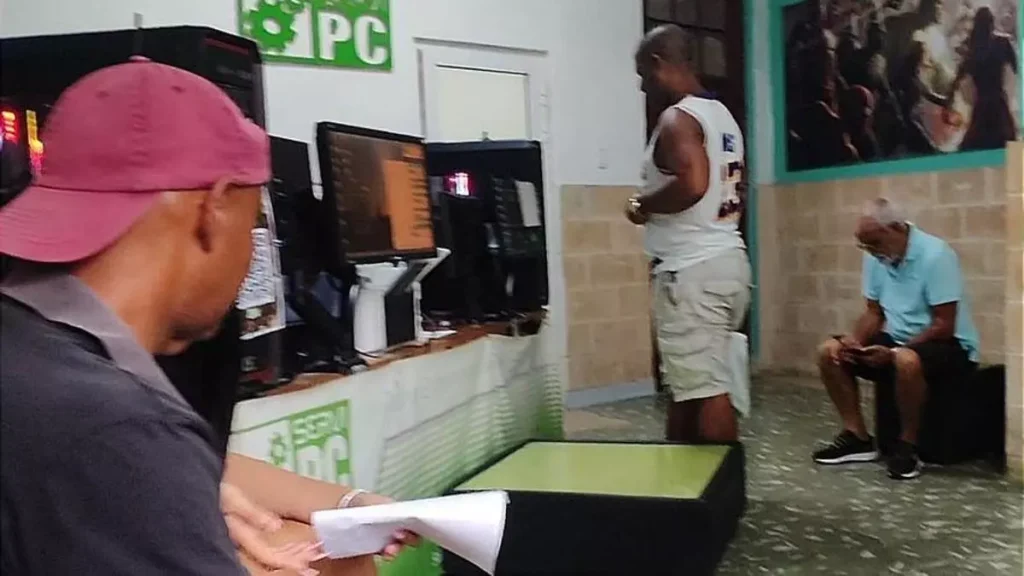
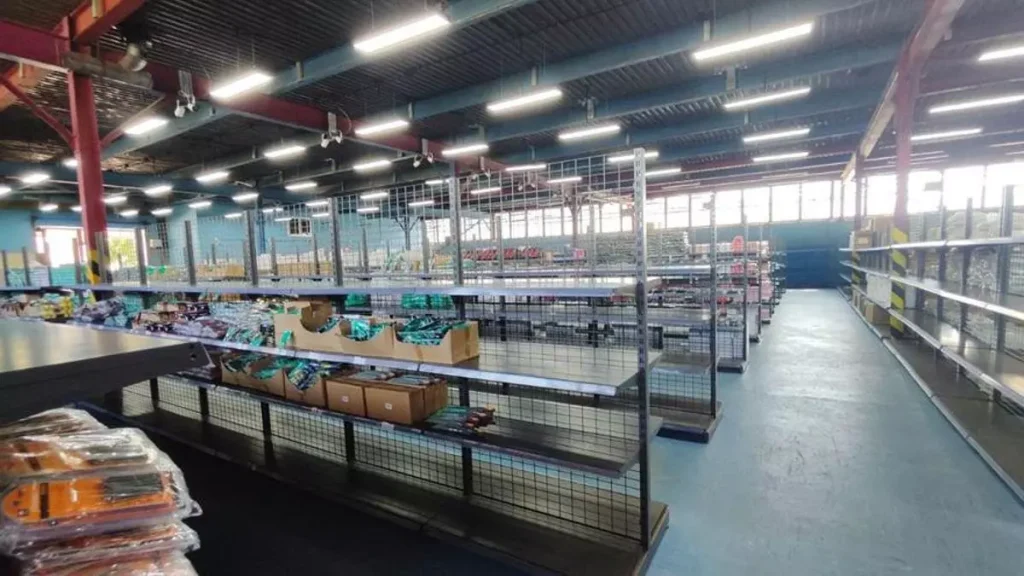
Inside the gigantic warehouse, the shelves with all kinds of products multiply / 14ymedio

14ymedio bigger14ymedio, Juan Diego Rodríguez/Olea Gallardo, Havana, 22 August 2024 — The new China Import store that opened just over a month ago at Manglar and Oquendo, very close to the Cuatro Caminos market in Havana, does not yet have many customers, but it soon will. Unlike the state shops, it offers everything, and in abundance; unlike the MSMEs or on the informal market, its prices are ridiculous.

Although the entrance sign says “wholesale selling” and offers its merchandise to retailers, it is open to the public. On one condition, however: you have to spend more than 50 dollars.

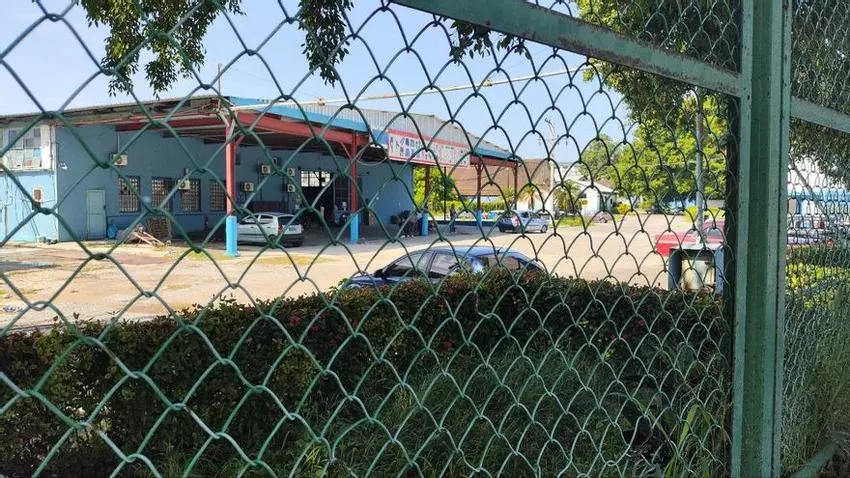
Inside the gigantic warehouse, which until a few years ago was part of the Sabatés soap factory – founded by two Spanish brothers, later sold to the multinational Procter & Gamble, nationalized after the triumph of the Revolution and, today, in ruins – the shelves are multiplying with all kinds of products, from clothing, footwear and perfumes to electronics and household items. In contrast to other large state spaces, such as those selling in freely convertible currency (MLC), let alone the dilapidated warehouses, there are few empty corners. Everything is clean and well lit.

The warehouse occupies part of the old Sabatés soap factory, very close to the Cuatro Caminos market in Centro Habana / 14ymedio

The store, the clerk told 14ymedio on Wednesday, has its prices in foreign currency and accepts national currency, “at the exchange rate of the day,” as the signs under the products say, referring to the informal rate, currently continue reading

around 320 pesos per dollar, and in no way in bills of less than 200 pesos .

They also accept electronic transfers in MLC, the employee explains, “but not today because we have connection problems.” It is not a “national private business,” she pointed out, but rather “a foreign investment business.” There were people with oriental faces around the place, presumably the owners.

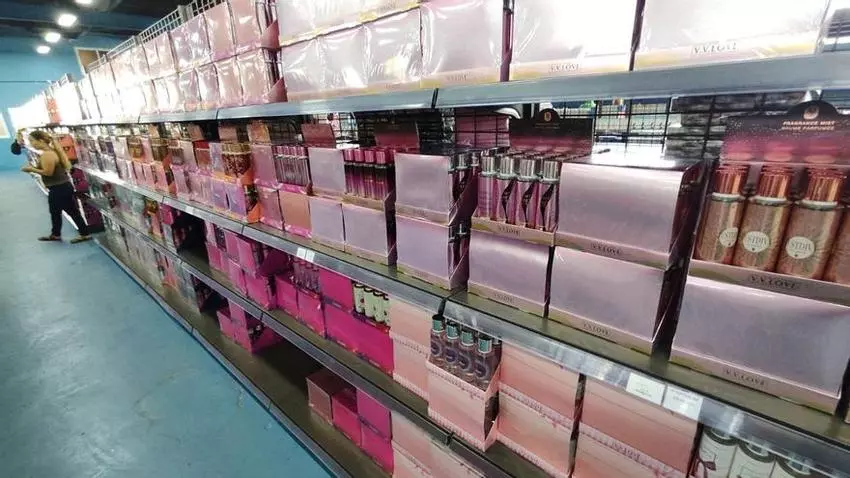
"Those colognes cost me two thousand and something pesos and here they cost three dollars" / 14ymedio
“Those colognes cost me two thousand and something pesos and here they cost three dollars” / 14ymedio

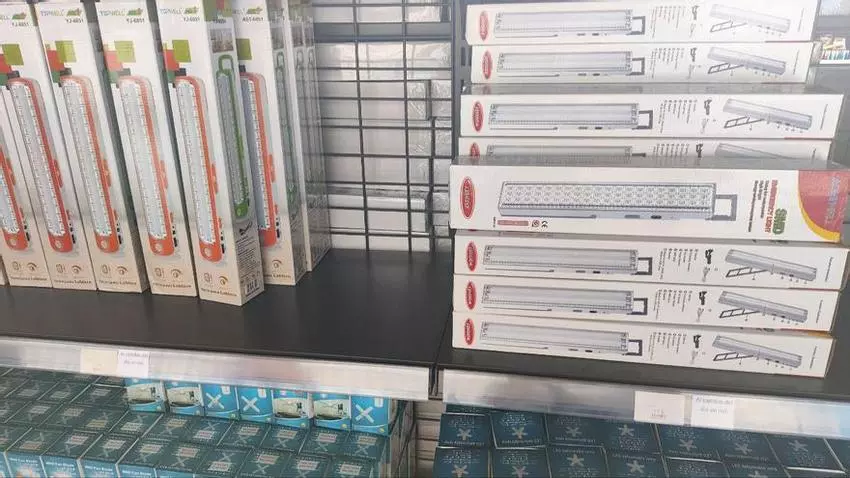
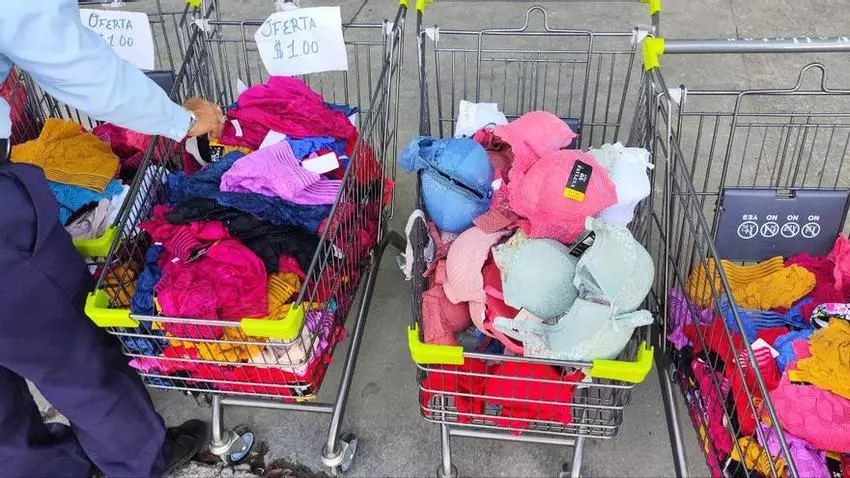
Headphones, $2.00; progressive glasses, $1.00; sun glasses, $1.50; LED lights, $4.50; mobile chargers, $4; cell phone holders for vehicles, $1.80; rechargeable light bulbs for times of blackout, from $11.50; imitation perfumes, $3.00; bras and panties – on sale for having some stains – $1.00; socks, 50 cents. The buyer’s eyes are lost in the abundance of items, but not only is the minimum purchase dissuasive – the equivalent of 16,000 pesos, five times the average monthly salary – but buying wholesale is also mandatory.

Items are not sold separately but in batches that, as a rule, contain a dozen pieces. “This is for those who have a store or receive remittances,” complained a customer who visited the store for the first time, alerted by a cousin who saw the information “on the networks,” and who had to leave empty-handed. “I don’t even have 50 dollars, and I wouldn’t know where to put all that if I bought it.”

Rechargeable light bulbs, highly valued in times of blackout, were sold from 11.50 dollars / 14ymedio

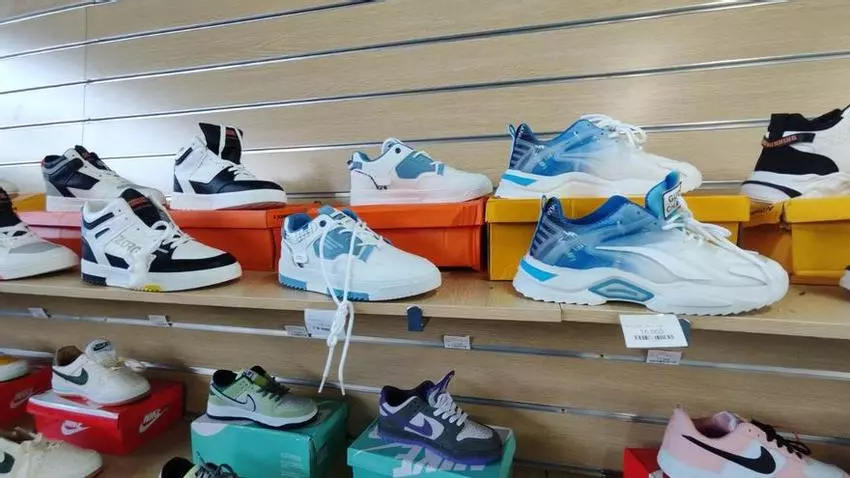
However, she was amazed at the prices: “Just Imagine, these same things on the street cost three and up to five times the prices here. These colognes cost me 2,500 pesos, and here they are at three dollars [960 pesos at the informal exchange rate]. I have seen the headphones at fairs at 5,000 pesos and the sneakers that here cost 16 dollars [just over 5,000 pesos] – you can’t find them for less than 17,000 pesos out there.”

The sneakers to which this Havana resident of the El Vedado district refers have brand labels, but they are clearly Chinese imitations, like all the merchandise. “They seem to be good quality, but you buy them and after two months have to throw them away because they fall apart.”

Bras and panties sell for one dollar at China Import /14ymedio

So far, no official media has mentioned the inauguration of the store, nor are there details about its owners. Chinese wholesale businesses had already been established on the Island but only online, such as Ninhao53 and Dofimall, a digital stationery store.

“You’ll see when all the resellers of Galiano or the El Curita park find out, then it will get bad, and this will have three-block lines like when there’s chicken for sale in the bodega [ration store],” said another buyer, a thirty-year-old from Central Havana. He did take a batch of magazines, some fly swatters, light bulbs and underwear of various colors and sizes – “to distribute to the family,” he said.

“The sneakers that cost 16 dollars here can’t be found for less than 17,000 pesos out there” / 14ymedio

The young man, who has family in the US, commented mockingly: “This is a ’Chinese Costco’ but with worse quality.”

Another store that received the nickname “Costco” but “Cuban,” the Diplomarket, closed at the end of last June. Its owner, the Cuban-American Frank Cuspinera Medina, was arrested along with his wife, and their whereabouts are unknown to date. In that store, however, only payment in dollars was allowed, and there was no minimum purchase or wholesale, although they did sell Kirkland products, the “real” Costco brand.

Translated by Regina Anavy

____________

COLLABORATE WITH OUR WORKThe 14ymedio team is committed to practicing serious journalism that reflects Cuba’s reality in all its depth. Thank you for joining us on this long journey. We invite you to continue supporting us by becoming a member of 14ymedio now. Together we can continue transforming journalism in Cuba.
Cuban Writer Reinaldo García Ramos, of the Mariel Generation, Dies in Miami

In order to leave the country, he had to go to a police station and declare himself “scum”

In the foreground, García Ramos in a boat with his friend Reinaldo Arenas, exile and literary companion / Reinaldo Cifuentes

14ymedio bigger14ymedio, Havana, August 20, 2024 — The signature of the poet Reinaldo García Ramos was the third in the inaugural issue of Mariel, the exile magazine that marked an entire generation of Cuban intellectuals and artists. This Monday, the writer’s family reported his death in Miami, at the age of 80, after months of worsening cancer. He was, along with Reinaldo Arenas, one of the most prominent authors of the so-called Mariel Generation.

His death was announced by Milkos D Sosa, García Ramos’ cousin and one of the people – along with the painter Sergio Chávez and his cousin Marianela F. Molina – who accompanied him in his last moments. Sosa described that the poet died “quietly” at 3:45 pm and that his final thoughts were about his books, in particular Una amiga en Paris (Ediciones Furtivas), published this year. “His only wish is that they honor his memory by keeping his literary work alive,” the message ended.

García Ramos defined the Mariel exodus as an “untimely decision of an absolutist ruler,” Fidel Castro. For his colleagues – such as Arenas and the Abreu brothers – exile marked not only their life but also their writing, which acquired a strong commitment to the denunciation of the regime, attested to by the magazine.

He defined the Mariel exodus as an ’untimely decision of an absolutist ruler’

Born in Cienfuegos in 1944, the son of Galician and Canarian emigrants, García Ramos studied French Language and Literature in Havana. A student of personalities such as Camila Henríquez Ureña or Mirta Aguirre – a staunch communist – he remained, in his own words, with a “low profile” so as not to risk the livelihood of his family, which depended on him. continue reading

In 1962, the poetry book Acta – the only book of his that saw light in Cuba – was published by the controversial El Puente project, which the regime dissolved in 1965. He worked for several publishers until his exile, in May of 1980, when he settled in New York. He was a translator at the United Nations headquarters until 2001 and continued his literary work.

He was the author of poetry books such as Caverna fiel and Espacio circular, the essay Una medida exacta and the autobiography Cuerpos al bordo de una isla. His last published book, Una amiga en Paris, collects his correspondence with Ana María Simo, one of the architects of El Puente, between 1968 and 1972.

The recovery of the letters had a great impact on the intellectual community of exile, which saw in the book – in the words of Enrique del Risco – an example of “restitution of the past” in a country like Cuba, of terrible memory. For the essayist, García Ramos and Simo left “an archaeological reconstruction” of a key era for the Island.

They are the years, lived intensely by García Ramos, of the Revolutionary Offensive, the Padilla Case, the fall into disgrace – the parametración – of many writers until then literary critics, the failure of the Ten Million Ton Sugar Harvest and the persecution of his homosexuality, scenes that remain in the 33 letters that García Ramos sent to Simo, who was trying to get him out of the country. Every season of his life realizes his radicalization, which already manifests itself with total freedom in the pages of Mariel.

In an interview he gave to journalist William Navarrete, García Ramos said that he managed to leave after three failed attempts: his aunt, a resident of Miami, had sent boats to pick him up three times, but they never told him. “A neighbor told me that in order to leave by the Mariel (boat lift) we had to go to a police station and declare ourselves ’scum’,” he said. He did so and they gave him a letter; days later, he boarded a bus to El Mosquito, an embarkation point for Florida.

Every season of his life realized his radicalization

He went to New York for Simo – who then lived in that city – to help him, because Miami, according to the writer, was “a city of little importance, not even similar to what it is today. There was a lot of recession and also a lot of drug-related crime.”

García Ramos said that Mariel’s great merit was to provide a space for Cuban exiles, to whom the American cultural world, which sympathized with Castro, closed its doors. It was also “a tribute to those who were part of that exodus of 125,000 people, who were not in their entirety, as the propaganda of Castroism affirmed, criminals and antisocials.”

He returned to Cuba three times, between 2002 and 2006, to see his father, who still lived in Cienfuegos. “My impression was of total sadness in the people,” he said. “Nothing that others have not already said: disappointment, destruction and decadence.”

Translated by Regina Anavy

_________________

COLLABORATE WITH OUR WORKThe 14ymedio team is committed to practicing serious journalism that reflects Cuba’s reality in all its depth. Thank you for joining us on this long journey. We invite you to continue supporting us by becoming a member of 14ymedio now. Together we can continue transforming journalism in Cuba.
The Actor Carlos Massola, Critic of the Cuban Regime, has Died in Havana

Hypovolemic shock was the cause of death at the age of 62, according to the death certificate.

Massola appeared in many TV series and soaps in Cuban Television  / Facebook / Carlos Mazzola

14ymedio bigger14ymedio, Havana, 3 July 2024 – Cuban actor Carlos Massola died on Wednesday in Havana, aged 62. The news was announced by friends on social media, and, although some publications suggest that the artiste “had not been well” for the last few days, the cause of death has not been clarified.

The news was originally spread on social media by his friends and the cause of death was confirmed this Thursday by the Cubanet portal as hypovolemic shock after having access to his death certificate. Hypovolemic shock causes the heart to be unable to pump enough blood to the body, which can lead to different organs ceasing to function properly.

Later, according to Cubanet, the actor’s body was cremated in the Berroa Incinerator, located in the capital, as was his last wish. Prior to that, some officials of Havana’s Necrological Services had denied the family’s wish to cremate him, justifying it by declaring the dimensions of the coffin were too large.

“Carlos Massola has died. It was a pleasure to direct him in Blue Heart (2021), his last film project. He always contributed so much: he loved to improvise – something which Cuban TV didn’t allow!”, director Miguel Coyula wrote on his Facebook page.

Besides his numerous television appearances in Cuba – mainly as a supporting actor in soaps and police dramas – Massola was also known, during recent years, for his opposition to the regime and for his support for political prisoners. continue reading

In October 2023, the actor posted on Facebook Live a video in which he questioned Miguel Díaz-Canel 

In October 2023, the actor posted on Facebook Live a video in which he questioned Miguel Díaz-Canel about political prisoners on the island and asked for their release: “Tell me, Diaz-Canel, if you’ve got everything solved for yourself and your fridge is full, what is this morbid interest of yours in making political prisoners and their families suffer?”

In this way the actor and humourist was criticising the leader’s management skills, alluding to the Cuban people’s difficulties in getting hold of basic food and necessities, as well as to the obstacles that he is imposing on private businesses.

Massola also met up with political prisoners, activists and their families on numerous occasions, to express his support. He also denounced “State Security harassment” a number of times in his public declarations.

In a 2023 interview with CubaNet, the actor called on other artistes to “get on the people’s side”

In a 2023 interview with CubaNet, the actor called on other artistes to “get on the people’s side” and to stop endorsing the regime’s repression. He also mentioned his relationship with his cousin, the television presenter Edith Massola, with whom he confirmed he’d broken all contact. A number of rumours have been linked to the presenter-actor and her family – in particular her daughter Paula – about high positions of power in the regime’s military.

In the same interview Massola said he had been waiting since the previous year for a permit to emigrate to the United States. The actor has appeared in films such as Juan de los muertos (2011), Pata negra (2001) and El Benny (2006), as well as numerous soap operas and series, funded by the Ministry of the Interior, such as Tras la Huella and Día y noche.

At the time of his death Massola was living with his mother, an elderly lady in need of medical support and for whom he was acting as principal carer.

Translated by Ricardo Recluso

____________

COLLABORATE WITH OUR WORKThe 14ymedio team is committed to practicing serious journalism that reflects Cuba’s reality in all its depth. Thank you for joining us on this long journey. We invite you to continue supporting us by becoming a member of 14ymedio now. Together we can continue transforming journalism in Cuba.
With 142 Migrants Dead at Sea, the Route From Cuba to the United States Is the Deadliest in America

So far in 2024 a total of 291 migrants have disappeared or died in Caribbean waters

Hundreds of Cubans leave the Island aboard precarious boats / Coast Guard

14ymedio biggerEFE (via 14ymedio), San José, Costa Rica, 30 August 2024 — At least 291 migrants have disappeared or died so far in 2024 on the dangerous maritime routes of the Caribbean, and international protection actions must be increased, according to the Program of Missing Migrants of the International Organization for Migration (IOM). It added that the route with the most victims is the one that goes from Cuba to the United States, with 142 deaths.

The program’s data indicate that, as of August 30, at least 291 migrants have disappeared or died in 2024, an 18% increase compared to the 247 recorded for all of 2023.

The second deadliest route by sea is the one taken from the Dominican Republic to Puerto Rico, with 91, followed by the route to the Canary Islands, with 15, and from Haiti to the Dominican Republic, with 1 death, according to the program’s data.

The deaths represent an 18% increase, compared to the 247 that were recorded for all of 2023

The regional monitor for the Americas of the Missing Migrants Project, Edwin Viales, said this Friday, in a working session with other similar organizations, that the dangerous natural and climatic conditions of these routes in the Caribbean, added to forced disappearances caused by traffickers, make the boats disappear without a trace. continue reading

“The outlook is not encouraging. Now, more than ever, the coordination of international efforts in the Caribbean is necessary to save lives,” he said.

Viales explained that these routes are used not only by migrants from Latin America and the Caribbean in their objective of reaching the United States, but there have also been cases detected of shipwrecks and disappearances of boats transporting Africans.

One of these cases was recorded on August 6, when the remains of 14 people from Senegal and Mauritania were found on a homemade boat off the coast of the Dominican Republic.

According to Viales, “these transcontinental shipwrecks have been increasing,” since April 13, when a boat was detected in Brazil with the remains of 9 people from Mauritania and Mali.

There is evidence of three similar cases between 2021 and 2022, with a total of 70 deaths in boats found in Trinidad and Tobago, Turks and Caicos, and Granada

In addition, there is evidence of three similar cases between 2021 and 2022, with a total of 70 deaths in boats found in Trinidad and Tobago, Turks and Caicos, and Granada. In 2023, there were also two shipwrecks found with supposed African migrants in Honduras and near Turks and Caicos.

Viales added that in 2023, there was also a complaint from key informants about 105 missing people on the route between San Andrés and the border area between Honduras and Nicaragua. It is suspected that there were two cases of enforced disappearance by groups involved in the trafficking of migrants, and two of shipwrecks.

In this Friday’s session, IOM presented three initiatives on migration in the Caribbean: “One by the Cuban newspaper El Toque, which collects information on the dead and missing; the Route of Life in the Dominican Republic, which aims to raise awareness and educate about the risk of irregular routes, and a project by the Hebrew Immigrant Aid Society (HIAS) to serve and support Caribbean countries.

Translated by Regina Anavy

____________

COLLABORATE WITH OUR WORKThe 14ymedio team is committed to practicing serious journalism that reflects Cuba’s reality in all its depth. Thank you for joining us on this long journey. We invite you to continue supporting us by becoming a member of 14ymedio now. Together we can continue transforming journalism in Cuba.
Castroism’s Interference in Venezuela

Hugo Chávez’s entering the Government turned Venezuela into the most loyal lackey of Castroism.

Hugo Chavez and Raul Castro, talking with Fidel Castro during one of his last public appearances / Granma

14ymedio bigger14ymedio, Pedro Corzo, Miami, 18 August 2024 — The totalitarian system that Cuba suffers and that threatens Venezuela if Nicolas Maduro and his henchmen are not removed from the government, has always been strongly attracted to the land of the liberator.

The tragedy afflicting Venezuela is the responsibility of Hugo Chávez and Fidel Castro. Both, with the support of stooges such as Maduro, conspired to rob the country of freedom and wealth and impose castrochavismo throughout the hemisphere.

The two revolutions were always different because there was a giant, a democrat, Rómulo Betancourt, who had the political courage to face the siren songs of Fidel Castro that enchanted the Ulysses wannabes.

With the support of stooges like Maduro, they conspired to rob the country of its freedom and wealth

After the turmoil of the first days filled with problems, upheavals and contradictions, Venezuela took a democratic course, Cuba marched towards totalitarianism.

From the beginning, the Pax Fidelista was imposed. Castroism was enthroned, which mutated into aggressive and expansionist absolutism that corresponded to the nature of the leader and the ideology he claimed to profess. continue reading

In Venezuela, many good people of dissimilar views were willing to work for the country’s progress. They were seduced by the promises of building a better society, even if the tools were machine gun chants and terrorism, advised by Che Guevara.

These men and women, in their eagerness to make their dreams come true, did not realize that they were submitting themselves to a foreign project in exchange for a little shrapnel and a rearguard in which part of the training consisted of learning to lose their freedom of judgment.

On March 13, 1967, Fidel Castro speaking from the former presidential palace in Havana said: “We proclaim once again our unwavering empathy and solidarity with the guerrillas fighting in the mountains of El Bachiller, with the fighters who in the cities defy the repression and the fury of the tyranny”. Castro qualified as tyranny the legitimately elected government of President Raul Leoni, not those of Maduro and Chavez.

July 26, 1960: the Cuban business representative in Caracas, Leon Antich, led a demonstration that threw stones at the capital’s cathedral. Antich was later accused of passing out 400,000 dollars to promote a conspiracy against President Rómulo Betancourt.

Castro defined as tyranny the legitimately elected government of President Raúl Leoni, not those of Maduro and Chávez

1961: Venezuelan authorities seize 500 Czech-made machine guns together with Castro-communist propaganda.

1962: A batch of weapons bearing the coat of arms of the Cuban Armed Forces were seized on the Falcón state beaches.

November 11, 1963: On the Paraguaná peninsula the authorities confiscated three tons of weapons coming from Cuba. Months later, Belgian weapons bearing the coat of arms of the Cuban Armed Forces were seized from Venezuelan guerrillas.

June 24, 1966: an expeditionary group composed of some 40 people, including thirteen individuals of Cuban nationality, among them General Arnaldo Ochoa Sánchez, who would be later executed by Castro, and General Leopoldo Cintas Frías – both were later heads of the Cuban occupation forces in Angola – landed in Tucacas. Specialists affirm that Castro himself said goodbye to the expeditionaries when they left Cuba.

May 8, 1967: the Cuban fishing boat Sierra takes an invading force consisting of Cubans and Venezuelans to the nearby areas of Machurucuto and Boca de Uchire. In the confrontation, Antonio Briones Montoto died and two other Cuban military men were captured: Manuel Gil Castellanos and Pedro Cabrera Torres.

1969: About thirty Venezuelans trained in Punto Cero, Cuba, landed in Venezuela to overthrow the government of Rafael Calderas. All of them were killed by the Army.

Despite all the blood shed by fire and shrapnel, the Castro project in Venezuela did not succeed. It is true that after the passing away of Presidents Romulo Betancourt and Raul Leoni, the Venezuelan leadership in the fight against Castro’s totalitarianism practically disappeared. Even so, the Venezuelan nation, its leaders and the Armed Forces condemned a political model that was against their democratic convictions.

The arrival of Hugo Chávez to the Government radically changed the situation. Venezuela is currently the most faithful lackey of Castroism and the best interpreter of the island’s totalitarianism regarding the plan to destabilize, to the point of destruction, the democracies of the hemisphere. For that reason, the Castroists are against Nicolas Maduro stepping down from power.

Translated by LAR

____________

COLLABORATE WITH OUR WORKThe 14ymedio team is committed to practicing serious journalism that reflects Cuba’s reality in all its depth. Thank you for joining us on this long journey. We invite you to continue supporting us by becoming a member of 14ymedio now. Together we can continue transforming journalism in Cuba.
A Cuban Baseball Player Expelled for Life Participates in a Softball Cup in Ciego De Ávila

Cuban baseball player Alfredo Fadraga with the Rangers softball team in Ciego de Ávila / Facebook/Jeordany Gutierrez

14ymedio bigger14ymedio, Havana, 23 August 2024 — The Cuban baseball player Alfredo Fadraga, who was suspended for life for an escape attempt in Mexico in 2022, reappeared in the Omar Carrero in Memoriam Cup that was held in Ciego de Ávila. The Avileño defended the colors of the Rangers, in the softball tournament, unofficial and organized by Miguel Mirelles, Jeordany Gutiérrez told Cubalite.

The event, much smaller, brought together “16 teams in five fields and everything that entails: referees, scorers, Red Cross, etc.” Gutiérrez said last Monday on the Facebook page of Locos del Softball. In that same publication, several images were shared, including one in which Fadraga appears with part of the Rangers squad. “Excellent tournament with a high-carat organization and the participation of many figures from our national series and the Major Leagues of the United States,” he said.

Cubalite stressed that the career of the Ávila catcher on the Island “is over” due to the severe sanction imposed by the Cuban Baseball Federation. The tournament was organized to honor Omar Carrero, who participated in 17 national baseball series and left a historic average of clean runs of 2.27 for every nine innings, with 149 wins, 105 defeats and 1,225 strikes. continue reading

Alfredo Fadraga in a March 2023 photo in the Dominican Republic, when he was declared a free agent / X/@francysromeroFR

Fadraga was punished in July 2022, and five months later he managed to legally leave the Island; he settled in the Dominican Republic in search of an opportunity with one of the Major League franchises. However, last June, journalist Yordano Carmona reported that an injury prevented the player from joining an unspecified Major League team, and he decided to return to Ciego de Ávila.

The story of Alfredo Fadraga has been closely followed by journalist Francys Romero since in June 2022, together with his teammate Yosvani Ávalos, he decided to jump the fence of the hotel where the Cuban team that participated in the Pan American U-23 Championship was staying in Aguascalientes.

The journalist denounced the capture of these players after the raid of the state police, as if they were criminals, in addition to his immediate return on a flight to Havana after the arrest.

Romero published videos of Fadraga in the Dominican Republic being watched by talent scouts. The level shown by the player led him to be invited to the Dominican Winter League training with the Eastern Stars.

Fadraga lived a dream in the Dominican Republic, and in March 2023 he was declared a free agent by the Commissioner’s Office. The catcher’s qualities attracted the interest – in August of that same year – of “more than five subsidiaries of Major League teams.”

Yosvani Ávalos also left the Island and, in January 2023, entered Mexico through Tapachula to try to reach the United States.

Translated by Regina Anavy

____________

COLLABORATE WITH OUR WORKThe 14ymedio team is committed to practicing serious journalism that reflects Cuba’s reality in all its depth. Thank you for joining us on this long journey. We invite you to continue supporting us by becoming a member of 14ymedio now. Together we can continue transforming journalism in Cuba.
Three Fatalities in Motorcycle Accidents in Havana and Santiago de Cuba

The accidents  also left five injured, one of them critically

A 22-year-old motorcyclist died last Sunday in the municipality of Boyeros / Facebook

14ymedio bigger14ymedio, Havana, 27 August 2024 — In less than 72 hours, three people have died in Cuba from traffic accidents involving motorcycles. Two of them occurred in Havana and a third in Santiago de Cuba. In all cases, the victims were young men, who died immediately at the scene of the accident.

On Tuesday morning, the first victim in Havana died after crashing into a vehicle while riding his motorcycle through an intersection at Fifth Avenue and 112th Street, in the municipality of Playa, not far from the Coney Island recreational park. Witnesses say that the accident occurred when an almendrón, operating as a collective taxi, stopped to drop off some passengers, and the motorcycle hit it from behind.

Although the identity of the victim is unknown, witnesses describe him as a young man who died immediately at the scene of the incident. The police cordoned off the area, one of the busiest avenues in Havana that connects the Miramar neighborhood, where dozens of embassies and hotels are located, with El Vedado.

Another 22-year-old motorcyclist also died last Sunday in the municipality of Boyeros, in Havana, after losing control of his bike. The mishap was recorded near a P10 stop that is on the bridge on 100th Street and Boyeros, according to a social media post. continue reading

The boy – identified as Yoan – was speeding and swerved to avoid a pothole. When he turned, he hit a curb and fell over on the street

A woman who witnessed the accident said in the comments that “the boy – identified as Yoan – was speeding and swerved to avoid a pothole. When he turned, he hit a curb and fell over on the street. He died instantly.” A few minutes after the accident “many people arrived, and there were relatives crying,” other witnesses added.

Also on Sunday, a Cuban teenager died after being hit by a motorcyclist in Santiago de Cuba. Identified as Kevin Quiala Suárez, 16, he was run over while leaving a bar, according to a report by journalist Yosmany Mayeta Labrada on Facebook.

A witness told the reporter that Quiala Suárez “did not realize that the motorcycle was coming, and it knocked him down.” The motorcyclist “was going too fast. It hit him so hard that the motorcycle went down a block later – it was instantaneous,” wrote another person. Mayeta, a U.S. resident, also reported that the motorcyclist “was injured after the impact and is in critical condition in a hospital in the city.” In addition, the accident left two others injured, who are reported stable.

This Tuesday, Mayeta also reported another accident that left two motorcyclists injured after crashing in the intersection of Calvario and San Gerónimo, in the center of Santiago de Cuba. The identity of both drivers, who were transported to the hospital, is unknown.

Motorcycles, scooters and pedestrians were involved in 55% of the accidents recorded in Cuba between January and October 2023

Motorcycles, scooters and pedestrians were involved in 55% of the accidents recorded in Cuba between January and October 2023, said the Island’s traffic authorities, who added that they were related to 59% of the deaths and 50% of those injured in that period.

Likewise, many of the accidents occur because, as the Minister of Transport, Eduardo Rodríguez Dávila, has recognized, 75% of the roads are in fair or poor condition. Given this, the State has justified its null maintenance by the limited availability of raw materials and parts in asphalt factories. Another factor is the significant percentage of vehicles in the country that are between 40 and 70 years old.

Last year alone, 8,556 traffic accidents were recorded that left 729 dead and 5,938 injured. The authorities have said that the main cause of the accidents is the human factor, to which they attribute 91% of the mishaps. “The frequency and dynamics of traffic accidents in the country continues to be marked by the irresponsibility of drivers and pedestrians,” the official newspaper Granma said last January.

During the first half of 2024, according to the Transit authorities of the Ministry of the Interior, accidents on Cuban roads decreased by 13% (543 less), compared to the same period last year, while the number of deaths and injuries fell by 23% and 5%, respectively.

Translated by Regina Anavy

____________

COLLABORATE WITH OUR WORKThe 14ymedio team is committed to practicing serious journalism that reflects Cuba’s reality in all its depth. Thank you for joining us on this long journey. We invite you to continue supporting us by becoming a member of 14ymedio now. Together we can continue transforming journalism in Cuba.
Activist Who Tried To Visit Alcantara in Hospital Sentenced to Seven Years in Prison

Adrián Curuneaux Stivens has been sentenced to four years for assault and aggravated contempt in addition to a previous sentence of four years for assault and battery.

With both sentences combined, the activist will spend a total of 11 years in prison / FNCA/X

14ymedio bigger14ymedio, Havana, 9 September 2024 — Activist Adrián Curuneaux Stivens, who was arrested after attempting to visit Luis Manuel Otero Alcántara in Havana’s Calixto García hospital in May 2021, has been sentenced to seven years in prison for two crimes of attempted assault and one of aggravated contempt. The sentence, to which CubaNet had access this Sunday, was issued after the trial he was subjected to in July.

According to the document, Curuneaux Stivens tried to enter the healthcare center, where the artist and leader of the San Isidro Movement – “with whom he had no relationship or friendship”, the text specifies – was being held after a hunger strike, and the employees explained to him that visits were not allowed because of the restrictions at the time due to the Covid-19 pandemic. The activist “ignored them and began to get agitated,” states the sentence.

When some policemen who were on the scene approached him and asked him for his ID, Curuneaux, 52 years old, began to record them, which is why they decided to detain him and transfer him to the nearest police station. Despite his being subdued and handcuffed, the two policemen involved, who identified themselves as Cristhian Damian Urquiza Fernandez and Diosbel Barreras Abad, claim that the activist assaulted them.

The activist is accused of ripping off the button of the right epaulette of the uniform worn by a policeman who was trying to subdue him

Once inside the police car, according to the policemen’s version, the activist began to kick Urquiza Fernandez, who was sitting next to him in the back of the vehicle, “without causing him any injuries and without causing any damage to the acrylic that divides the back from the front”. continue reading

To be able to subdue him, Barreras Abad decided to move to the back of the vehicle and it was at that moment when the activist allegedly “bit him on his right thumb” and “tore off the button of the right epaulette of the uniform he was wearing, resulting in damage to the epaulette”.

In their testimony, the policemen also state that when they were walking towards the police car, Curuneaux began to shout phrases such as “Down with Fidel” and “Down with Raul”. In addition, the document literally reads, he said: “screw them all and all the police officers who were all bitches, referring directly to the top leaders”.

In addition to the time in prison, he must “compensate his victim,” Officer Urquiza for 54 pesos for the damages caused, the Municipal People’s Criminal Court of Centro Havana ruled.

Curuneaux’s wife, Yurisán Valdés Pedraza, maintains that this is an injustice. “I don’t understand why Adrián is being sentenced to seven years. It is unfair what they are doing to him and I demand his freedom,” she said in a video.

For the organization Cubalex, the conviction of Curuneaux Stivens, vice-president of the “Movimiento Opositores por una Nueva República”, shows that there is a “repressive escalation” against him “ aimed at keeping him in prison as long as possible because of his political activism and his work in defense of human rights”. Moreover, it reflects a repressive pattern of the Cuban State, “which consists of falsely charging or provoking ordinary crimes against activists to cover up politically motivated repression”.

This is not the first time the regime has sentenced the activist who has been in court several times

This is not the first time that the regime has sentenced the activist, originally from Santiago de Cuba, who has a lengthy record before the courts for similar offenses. The list goes back to 1990, when he was fined 200 pesos for disobedience and, in a different criminal case, 300 pesos for theft. Later, in 1996, he was sentenced to three years in prison for assault in the People’s Provincial Court of Santiago de Cuba.

In 2021, he was again charged with assault, in March of that year, for allegedly assaulting a policeman. The regime punished him with one year of limited freedom. A few months later, in May, he was arrested again when he tried to visit Luis Manuel Otero Alcántara in the Calixto García hospital in Havana.

He spent a year and a half detained in Valle Grande prison without a conviction, and in November 2022 he was released pending trial. The trial took place just in July. However, another incident kept him in prison, serving a four-year sentence since April, along with his son, identified as Luis Enrique Fajardo Nápoles, for injuries against a third person.

Besides the four years he is serving in the 1580 penitentiary center in Havana for the crime of injury in the incident with his son, he is serving this last sentence of seven years which was ratified this Sunday. This means he will spend a total of 11 years in prison.

Translated by LAR

____________

COLLABORATE WITH OUR WORKThe 14ymedio team is committed to practicing serious journalism that reflects Cuba’s reality in all its depth. Thank you for joining us on this long journey. We invite you to continue supporting us by becoming a member of 14ymedio now. Together we can continue transforming journalism in Cuba.

Non-Payments Lead to a 97 Percent Decrease in Rice Production in a Cienfuegos Cooperative

The official press accuses 41% of Avila producers with electrified irrigation of “not contributing to the food of the people”

Non-payments have generated discomfort among producers, which is reflected in the decrease in production /EFE

14ymedio bigger14ymedio, Madrid, 9 September 2024 – “For three months they stopped paying us in the national currency, and they have never paid us what we are owed for over fulfillment,” complains Juan Carlos Durán Rodríguez. The rancher, owner of cattle and land in Cienfuegos, launched the claim in a debate between the authorities and local producers prior to the congress of the official National Association of Small Farmers (Anap), where the impact of these non-payments was verified, which contributed to rice production decreasing by almost 98% between 2018 and 2023.

The official press echoed his complaint this Sunday, saying that Durán complies with the agreed milk delivery figures to the Escambray Dairy Products Company, with between 13 and 18 liters per day. According to September 5, the “accumulation of non-payments to rice and milk producers, along with the inconveniences of banking” are the main concerns expressed by the farmers of the municipality of Aguada de Pasajeros.

“By not having this money on time, we are almost forced to cut back on our duties, because we live from milk production; this is how we maintain the family, pay for electricity and invest, for example, in the fences, something very expensive, because a roll of wire costs up to 18,000 pesos,” Durán argues. continue reading

Their situation is, despite this, better than that of the rice growers, who have accumulated four months of non-payment by the state-owned Granas Agroindustrial Company, which says it has no liquidity. And it is no exception.

“Already last year I went for months without getting paid, and now it’s the same. It’s a very difficult situation, because I’m a major producer”

“Already last year I went five months without getting paid, and now it’s the same. It’s a very difficult situation, because I’m a major producer. I own more than three cabalerrías (126 hectares) of land, with high production costs that are around four million pesos. In addition, I have a family, equipment to fix, and the repair of a tractor today costs between 200,000 and 300,000 pesos,” says farmer Pedro López Izquierdo. “I don’t care about the price, ten pesos more or less doesn’t hurt; the damage is that they don’t pay, because that slows down production, and one lives from what he produces,” he summarizes.

Taymí Torres Machín, president of the Pedro Filgueiras Solís cooperative – which manages to comply with the projections despite everything – puts figures on the damage caused by those non-payments.

“Otherwise, we would have increases in rice production, but the reality is that we do not see solutions, and the farmers are very upset with these issues. In 2018 we contributed 68,000 quintals, but in the recent campaign we delivered only 160 [metric] tons,” equivalent to 1,600 quintals, which reflects a 97.7% drop in production in just five years.

Among those present at the meeting was Caridad Capote Core, deputy director of the Agroindustrial Grain Company, who tried to calm the rice farmers by telling them that a credit has been requested, and she hopes that the Wholesale Company of Food Products will pay off a debt worth 16 million pesos with which they hope to be able to pay what is due.

“You go to the ration store and there is never money; in the Bank they don’t have funds either, and this creates a lot of limitations, because we have to pay for things in cash”

The cooperative members also mentioned banking as a problem, especially because of the lack of mobile coverage in the area, although much more so because of the limitations when it comes to obtaining cash. “You go to the ration store and there is never money, and the Bank doesn’t have funds either. This creates a lot of limitations, because we have to pay for everything in cash. Fuel, when it appears “on the left,” (on the black market) is 8,000 pesos cash in hand,” says Durán Rodríguez.

Non-payments by the State have been, for years, one of the most frequent complaints of Cuban producers, many of whom choose to stop making these contracts and/or live by the “informal” market, although with the sword of Damocles permanently hanging over their heads. However, the reproaches of the regime do not cease. This same Saturday, the provincial newspaper of Ciego de Ávila, Invasor, published an editorial in which it accused the farmers of benefiting from the electrified irrigation systems provided by the Government but who “do not contribute as they should or could, because having to do and being able to do are phrases that are similar but do not mean the same,” it says.

Ciego de Ávila produced almost 62,000 [metric] tons of crops up to June that do not seem to be enough for the editor because, he says, “with what you have, you can do more. ” However, he admits that the so-called “technological package” is not being delivered and that the fuel is insufficient. From 2009 to date, there are 362 “electrified” agricultural producers in this province, of which 41% – according to a commission that has supposedly evaluated it – “do not contribute to the food of the people,” starting with 75 of them who have not delivered anything and an equal number who have not delivered a single quintal to the Acopio Company.”*

Seventy-five of them have not delivered anything and “an equal number have not delivered a single quintal to the Acopio Company”

According to the newspaper, this is a brake on “the transition to food sovereignty,” and an impediment to increasing production and stopping the dependence “on the food imports, which costs Cuba, just for the basic basket, more than 1.6 billion dollars,” according to data from the Ministry of Economy and Planning.

Despite the fact that private farmers – owners, usufructuary or cooperative members – contribute around 75% of the food, fruits and vegetables and 40% of the rice, according to the most recent annual data (from 2021), the Government continues to strengthen state control over these productions. In the latest resolution for the contracting and marketing of these products for 2025, the preamble indicates that agriculture must be oriented to “support the Plan for the Economy.”

*Translator’s note: Acopio is the state-owned company that manages the procurement and distribution of food in Cuba.

Translated by Regina Anavy

____________

COLLABORATE WITH OUR WORKThe 14ymedio team is committed to practicing serious journalism that reflects Cuba’s reality in all its depth. Thank you for joining us on this long journey. We invite you to continue supporting us by becoming a member of 14ymedio now. Together we can continue transforming journalism in Cuba.

The First Secretary of the Party in Villa Clara Imparts ‘Edifying Lessons’ to the Farmers

The leader did not say where they could get the components of his detailed list, but he did recommend that his local subordinates “demand compliance”

Party official Osnay Colina (l) during his visit to Cifuentes / Vanguardia

14ymedio bigger14ymedio, Havana, 30 August 2024 — Escorted by a press team that could not be more loyal to him, the first secretary of the Communist Party of Villa Clara embarked on a journey to one of the great forgotten places of the province: Cifuentes. The tour – narrated in an almost evangelical tone by Vanguardia – describes Osnay Colina’s “edifying lessons” to the farmers, his diatribes against poor production and his “instructive demeanor,” an euphemism to describe his main objective: to scold.

Everyone has left Cifuentes, immersed in the “geographical dispersion” and without resources to guarantee this year’s agricultural goals, of which Colina reminded them insistently. There was no lack of the photographs that Miguel Díaz-Canel has tried to popularize: those of the leader with two or three farmers, who hear from the mouth of a bureaucrat how to do their work.

In the newly founded Agricultural Industrial Company, which was granted 10,000 hectares, Colina gave his first scolding: 10% of the land suffers a “heavy infestation of marabou,” and in the arable area only 72% of the plan has been sown, in “imminent closure.” To top it off, the Company abounds in illegalities, which he asked to be “contained,” and the stocks of milk and meat are plummeting. continue reading

There was no lack of the photographs that Miguel Díaz-Canel has tried to popularize: those of the leader with two or three farmers

Colina’s rigid face, his authoritarian gesture and his speech under the sun were highlighted by the newspaper photographer. Among his many utopian requests was “planting despite the limitations of resources and technological packages, machinery, fuels and the use of animal traction.” The leader did not say where the farmers could get the components of his detailed list, but he did recommend that his local subordinates “demand compliance.”

“A lot of food escapes to third parties,” he warned, alluding to Cifuentes’ black market. Colina asked to go to the farms to see “what happened” with the farmers who did not deliver what was due, and to help – although only “as far as possible” – the one who does comply with the State. To show his interest in the agreements between the producer and the Government, he had himself photographed reviewing the farmers’ contracts.

On paper was, precisely, what was agreed with the state company Acopio, said a delegate of the Ministry of Agriculture in Villa Clara during a meeting with Colina. Eighty-five percent of the farmers hired did not fulfill their agreements or delivered a minimum production. “Where is the other part going? That’s the one that escapes to different destinations,” he argued.

Vanguardia insisted that Colina went on his tour “without many warnings to the parties involved,” a way of saying that no one, supposedly, had time to “put makeup on” Cifuentes’ terrible situation. The “instructions” of his trip are quantified in lessons: if the payments are delayed, it’s because the municipality is “old-fashioned” and ignores the bancarización [banking reform]; if the production is not going well it’s because the “non-state actors” are murky in their management; if the money does not flow, it is because the farmers refuse to have tax accounts.

The situation is not exclusive to Cifuentes: only 21% of the farmers of Villa Clara, Colina complained, have a bank account, and about 200 markets – 23% – still do not have the means to make electronic payments.

Local leaders hoped an old pigsty converted into a “rustic milking shed” would impress Colina. It was a failure. While the official applauded the transformation of the premises, which now has 47 cows bought by the State, milk production is up to the annual plan nor are the animals fed properly.

Local leaders hoped that an old pigsty converted into a “rustic” milking shed would impress Colina

“And what about forage for the livestock?” asked Vanguardia. The answer: 13 hectares of cane and two of grass. Colina got angry again and said that improving the place was “critical. It has to change to achieve systematic improvements,” he said. The cows are “improving genetically, but they don’t have enough water, shade and, even less so, food.”

The worries that the newspaper’s story attributes to Colina have no end. The prose is not afraid to fall back on a kind of resentment toward the farmers who are making the leader suffer, and it asks questions that, like Colina, are also scolding: “Where are the sowing programs, with their respective seed banks? Of course they are null. That, along with the theft and illegal slaughter of livestock, impoverishment and deaths will be the order of the day if critical points are not corrected,” the report concludes.

With the fidelity of the Communist Party newspaper in Villa Clara – known for not departing one iota from orthodoxy or making space for excessive criticism – Colina practices a method that has given results to other colleagues, such as Liván Izquierdo: to be praised by the official press until the Government rewards him and “elevates” him to a post in Havana.

Translated by Regina Anavy

____________

COLLABORATE WITH OUR WORKThe 14ymedio team is committed to practicing serious journalism that reflects Cuba’s reality in all its depth. Thank you for joining us on this long journey. We invite you to continue supporting us by becoming a member of 14ymedio now. Together we can continue transforming journalism in Cuba.

Police Operations Begin Against Sellers of the ‘Weekly Packet’ in Cuba

Audiovisual copies, which have been widespread on the island for more than a decade and de facto permitted by the authorities, were specifically prohibited in the latest provisions against private individuals.

Audiovisual copy shop in Havana. / 14ymedio

14ymedio bigger14ymedio, Natalia López Moya, Havana, 9 September 2024 — The alarm has spread through the shops in Cuba that sell the paquete [the weekly packet], the compendium of audiovisuals that for years has served as an alternative to the scanty official television schedule. “This week’s is the last one I’m going to sell because the operations and confiscations have already begun,” a self-employed worker from Lawton, in the Havana municipality of Diez de Octubre, told 14ymedio.

“The police came down hard on the person who sold me the matrix, which I then copy and sell to my clients, and they took away his hard drives, computers and everything he used for this business,” the entrepreneur said on condition of anonymity. “They have already started to apply the list of prohibited occupations that was published in the Official Gazette,” the woman said, referring to the Official Gazette of August 19, a huge legislative package that included up to 19 provisions with the aim of tightening measures against private activity. Among them, increasing to 125 the number of economic activities prohibited for micro, small and medium-sized enterprises (MSMEs ), non-agricultural cooperatives (CNA) and self-employed workers (TCP).

In the report, under the heading “Information, communication and telecommunications,” number 61 prohibits “cinematic exhibition activities (5914), which include films, documentaries, series, soap operas or other similar works, as well as their availability to the public through computer media.” With a few sentences, the Cuban government put an end to a practice that has been spreading throughout the island for more than a decade. continue reading

“I don’t know what I’m going to do without my Turkish soap opera, that’s the only thing that keeps me sane, because the situation is so difficult that without it I’d go crazy”

“I don’t know what I’m going to do without my Turkish soap opera, that’s the only thing that keeps me sane, because the situation is so difficult that without it I go crazy,” says Marilyn, a resident of Nuevo Vedado and a regular customer of a copy shop near the Army of Youth Labor market on Tulipán Street. “Today I went to the pharmacy in the morning and everyone was talking about it, it’s the topic of the day.”

“My provider had already told me that he was not going to continue and that he had found another job in a pizzeria. The man had been in this business for more than eight years and everyone in the neighborhood knows him, he is very serious and very efficient,” she explains to this newspaper. “This makes no sense, it is not the time to be prohibiting more things, but to permit and open up.”

In the La Timba neighborhood, in the municipality of Plaza de la Revolución, inspectors visited several sellers of the weekly packet last week. “They told us that we couldn’t continue with this, that copying series, films, music and video games was never expressly permitted and that it was a distortion that had to be corrected,” explains Rubén, who also sells applications for Android mobile phones and software with language courses.

“Absolutely nothing, not even Little Red Riding Hood can be sold on video,” criticizes the packet seller. “Let’s see how they’re going to stop this because what’s going to happen is that people are going to close the shops and send the packet to the clients’ homes by courier. This only makes things more complicated for us, but people are going to continue to need to be entertained, these prohibitions are not going to make them watch the [State TV] Round Table.”

However, the weekly packet is not currently the main support for these audiovisuals censored on national television

The most widely held opinion among the sources consulted by this newspaper is that the measure is due to an attempt by the authorities to stop the flow of content which includes documentaries critical of the communist model, testimonies of Vladimir Putin’s excesses in the war in Ukraine, documents on Stalin’s crimes and a wealth of historical material on the repressive acts of the Cuban regime.

The weekly packet, however, is not currently the main medium for these audiovisuals censored on national television. Although the weekly compilation initially gave the government a lot of headaches, soon after those who operate the business instituted the rule of “zero politics, zero violence, zero pornography,” which allowed them to avoid official censorship, although it has never been well received by cultural institutions, which accuse them of promoting frivolity and bad taste.

The mochila [backpack] was the official antidote that the authorities found against the “poison that they are putting in the heads” of young people in the weekly packet. However, the underground choice won the battle. The alternative prepared by the Cuban State and distributed through the Youth Computer Clubs, despite its enormous resources, barely found an audience and was slowly languishing

Now the paquete has encountered a new enemy in the form of a new regulation, and no one knows whether it can be strictly enforced or whether it will become another absurd prohibition overtaken by reality.

____________

COLLABORATE WITH OUR WORKThe 14ymedio team is committed to practicing serious journalism that reflects Cuba’s reality in all its depth. Thank you for joining us on this long journey. We invite you to continue supporting us by becoming a member of 14ymedio now. Together we can continue transforming journalism in Cuba.

In Cienfuegos’ Pueblo Griffo Neighborhood, Water Comes Only Once a Month

Despite the announced investments, in Cienfuegos the lack of water extends from the center to the periphery

Outside a tenement on 35th Street, a water truck supplies water to residents. / 14ymedio

14ymedio bigger14ymedio, Julio César Contreras, Cienfuegos, 9 September 2024 — Three weeks have passed since the official press celebrated that water is flowing with less difficulty in Cienfuegos, thanks to the “execution of significant investments,” but the residents of the Pearl of the South do not perceive any change in a problem that extends from the center to the periphery, forcing them to seek solutions by their own means.

Outside a tenement on 35th Street, a truck supplies water to residents. “We had spent more than 15 days without being able to clean our houses. We could barely do the minimum things related to hygiene and consumption. With a lot of effort, we all managed to gather twenty thousand pesos so that this truck could bring us a few liters of water here,” explains Mercedes, a 49-year-old from Cienfuegos, who says she is living the worst time of her life, in this regard.

“I don’t know what they do with the money from the famous investment plans that supposedly would renew the water and sewerage network. As soon as they tell you that there are resources they tell you that there aren’t. It’s all a lie and the people are the ones who pay the price, in this case, the lack of water,” she complains. Mercedes adds that there is not even easy to access plastic or metal tanks to guarantee storage, since prices on the informal market are continually rising, in an uncontrolled manner. continue reading

Some people have to sweep the area between the curb and the street. Otherwise, the water builds up and the stench becomes unbearable

In contrast to the lack of water for human consumption, new leaks appear scattered throughout the city, which end up becoming small puddles or noticeably putrid lagoons. Mercedes explains how her sister, a resident of 54th Street, one block from Martí Park, has to sweep between the edge of the sidewalk and the public road. Otherwise, the water accumulates and the stench becomes unbearable.

Other, more fortunate Cienfuegos residents have hired “water thieves” to fill the tanks on the roofs of their houses. “In this neighborhood there was always water, but recently we only received it once every 15 days, approximately. I had no choice but to buy two prefabricated tanks. I had to spend forty thousand pesos to have that peace of mind,” says Amaury, a resident of Pastorita.

“There is no alternative but to resolve the problem at all costs. A friend of mine had to sell carpentry tools to buy a turbine. Now he can get the water up to the third floor. His situation is worse, because where he lives, in Pueblo Griffo, the water comes in only once a month,” he concludes. Several Cienfuegos residents speaking to 14ymedio said that, in certain places, such as La Juanita, people have taken to the streets to protest, complaints that are calmed by the government sending a tanker truck to pacify tempers, without giving a definitive solution to the matter.

As in other places where water has been arriving with difficulty, such as in Havana, quality is an added problem. “No one drinks the water that comes in from the aqueduct. The level of impurity is so high that it is not enough to filter it. You have to boil it to be able to consume it,” Damaris says without fear of being wrong. She lives on San Carlos Street and generally has to take a break from work to fill the tanks, since the water comes into her home for a short time, only at midday.

“The water that comes in from the aqueduct is undrinkable. The level of impurity is so high that it is not enough to filter it. It has to be boiled to be able to consume it.”

“I am a cleaning assistant at a state institution. I spend my life collecting water to keep my workplace and my house clean,” says Damaris, who moved to a central street thinking that she would not have problems with water resources there. However, at certain times of the month she has received drinking water only three times a week. “Those of us who cannot afford to buy a large tank or a turbine are at constant risk. We have to save that too,” she laments.

Authorities acknowledged on Tuesday that more than 600,000 people in the country are suffering from problems with their water supply. According to a note published in the state newspaper Granma, the number of people who lack adequate access to water in Cuba has been increasing to reach 7%. In November of last year, the regime acknowledged that there were 450,000 people affected throughout the country and by April the number was already around 500,000. Last April , the official press explained that, with data from the end of 2022, 5,689,476 Cubans did not have “decent access to water,” that is, half the population.

____________

COLLABORATE WITH OUR WORKThe 14ymedio team is committed to practicing serious journalism that reflects Cuba’s reality in all its depth. Thank you for joining us on this long journey. We invite you to continue supporting us by becoming a member of 14ymedio now. Together we can continue transforming journalism in Cuba.

The Silenced Voices of ‘Castrochavismo’

Despots, regardless of ideology or origin, deeply hate their fellow men

Part of a police operation in 2022 that surrounded the home of the Cuban reporter Luz Escobar, now exiled in Spain / 14ymedio

14ymedio bigger14ymedio / Pedro Corzo, Miami, 8 September 2024 — The vast majority of the political prisoners of the castrochavista regimes are young people, sometimes teenagers, who are practically beginning their lives and embrace, with full consciousness, the stanza of the Cuban national anthem that claims: “To live in chains is to live mired in shame and disgrace.” Despots, regardless of ideology or origin, deeply hate their fellow men, but there are two sectors of society that they especially despise: the young and the journalists.

The youth, because they know the willingness to take risks at that stage of life. Young people rarely properly assess danger, and that is probably what makes that period of our existence so magical and unforgettable.

There is a strong tendency to take risks, to defend ideals with sticks and stones, even if their enemies, like the serial killer Ernesto Che Guevara, enjoy the sound of machine guns.

The autocrats of castrochavismo, more than their military peers, like to censor and intimidate journalists and the media

The prisons of Cuba, Venezuela, Nicaragua and Bolivia are full of people sentenced for the honorable crime of justly claiming civil rights for themselves and the country.

In the homeland of the Liberator Simón Bolívar, despot Nicolas Maduro imprisoned around 100 young people between 13 and 17 years old for opposing electoral fraud. These teenagers were then released from prison with severe restrictions on their rights.

Nicaragua is not far behind. According to a report in the newspaper La Prensa, in May of this year, 66 of the 138 political prisoners were between the ages of 15 and 39. Even more tragic is the case of Bolivia, another autocratic state that does not recognize itself as such: its political prisoners, young and old, are barely documented. continue reading

However, in Cuba, the only country in the hemisphere where “real socialism” prevails, there are 1,119 political prisoners according to Prisoners Defenders, mostly young people, some sentenced to life imprisonment for illegally attempting to leave the country and others for participating in protest demonstrations.

The situation of journalists under these regimes of force is worse than what they suffered during the military regimes that overshadow the history of the hemisphere.

The autocrats of castrochavismo revel even more than their military peers in censoring and intimidating journalists and the media, with the ultimate goal of imposing permanent censorship until they achieve the ideal situation in which the communicators censor themselves.

Even more tragic is the case of Bolivia, another autocratic state that is not recognized as such: its political prisoners, young or old, are barely documented

The control or absence of the freedoms of expression and information is an almost constant practice in the countries of castrochavismo, Cuba again being the exception, because in that country all the media were confiscated in 1961 and remain under the absolute control of the Government 63 years later.

The rulers of these countries are ex officio censors, which is why they pay particular attention to the media, since they refuse to admit that information that refutes the official one is reported.

The situation in Cuba is quite unique. The censorship on the island is total. The media are controlled, and the journalists are officials, because they do not have the power to investigate or prepare a work that has not been previously subjected to censorship. Hence, on Castro’s island, independent journalism has emerged that involves great risks for the men and women who practice it.

The situation of journalists under these regimes of force is worse than what they suffered during the military regimes that overshadow the history of the hemisphere

In Venezuela, Nicaragua and Bolivia, the independence of the media has been severely restricted, to the extent that it is practically non-existent.

Nicolas Maduro, imitating a provision on the press issued by the Cuban dictatorship in 1999 – Law 88 on the Protection of National Independence and the Economy of Cuba – created the Strategic Center for Homeland Security and Protection (Cesppa), with the aim of “predicting and neutralizing potential threats from internal or external enemies.”

If Castro’s Law 88 was applied to the infamous Black Spring of Cuba, in which dozens of independent journalists were arrested, among other activists, Maduro’s Cesppa now provides invaluable services to the Venezuelan despot. The same happens in Nicaragua with a law of the Ortega-Murillo regime, which after controlling traditional media such as the distinguished newspaper La Prensa, intends to manipulate the Internet at will with its arsenal of legislation.

Translated by Regina Anavy

____________

COLLABORATE WITH OUR WORKThe 14ymedio team is committed to practicing serious journalism that reflects Cuba’s reality in all its depth. Thank you for joining us on this long journey. We invite you to continue supporting us by becoming a member of 14ymedio now. Together we can continue transforming journalism in Cuba.