Two officials told the newspaper that the president should resign, but they leave the subsequent steps in the hands of the regime.
The proposal would involve removing Díaz-Canel, but not necessarily modifying the structure of the current political system. / Estudios Revolución
EFE (via 14ymedio), Washington, D.C., March 17, 2026 – The administration of the President of the United States, Donald Trump, has raised the possibility that the Cuban leader, Miguel Díaz-Canel, will step down from power as part of contacts between officials from both countries about the future of the Island, according to The New York Times (NYT).
According to two officials cited anonymously by The New York Times, U.S. representatives have indicated to Cuban negotiators that the president should resign, although they have left the subsequent steps in the hands of Cuban authorities.
The proposal would involve removing Díaz-Canel, but not necessarily modifying the structure of the current political system, according to the newspaper.
The cited sources added that, for now, Washington is not pushing for measures to be taken against members of Fidel Castro’s family, who continue to be influential figures within the country’s power structure.
Some U.S. officials believe that the departure of the head of state could facilitate structural economic changes that, in their view, Díaz-Canel would be unlikely to support. continue reading
Some U.S. officials believe that the departure of the head of state could facilitate structural economic changes that, in their view, Díaz-Canel would be unlikely to support
Trump stated this Monday that it would be “a great honor” for him to “take Cuba,” amid tensions between the two countries over the energy blockade against the Island.
The Republican president has threatened in recent weeks to take control of the Island, whether in a “friendly” or hostile manner, and has repeated
The kits will be purchased directly from small local cooperatives on the Island to support local production.
Archive image of the arrival in Cuba of a shipment of Spanish humanitarian aid / EFE / Rolando Pujol
14ymedio /EFE/, Madrid, March 16, 2026 – The Spanish Agency for International Development Cooperation (AECID) is preparing to provide food and medicines to 5,000 people in Cuba, where the humanitarian situation has deteriorated as a result of the severe energy crisis affecting the island. About twenty photovoltaic panels will also be sent.
Specifically, according to the agency in a statement, a new aid package will be launched that includes 1,000 food kits and hygiene kits intended to cover the basic needs of about 5,000 people. These kits will be purchased directly from small local cooperatives in Cuba, helping to support local production.
In addition, the agency, which depends on the Ministry of Foreign Affairs, will send between 15 and 20 photovoltaic panels of 12 kW each to support the energy needs of social centers, such as schools or senior centers, benefiting approximately 15,000 to 20,000 people.
AECID emphasized that various international organizations have warned that the shortage of fuel and energy has reduced the operation of critical infrastructure, although it did not at any point mention the blockade on fuel shipments from Venezuela imposed by the United States, which has ultimately worsened a situation that was already complicated. continue reading
AECID will activate its emergency agreement with the Spanish Red Cross, valued at 160,000 euros, in order to contribute to the supply and installation
According to the agency, barely 500 health centers remain operational for emergencies, and millions of people have problems accessing drinking water and sanitation, with 4.5 million at risk of food insecurity.
Under these circumstances, Spain maintains close coordination with the Directorate-General for European Civil Protection and Humanitarian Aid Operations of the European Commission (ECHO), and with humanitarian actors present in the country to identify new opportunities for support that would expand assistance to the affected population, AECID assured.
In addition, AECID will activate the emergency agreement with the Spanish Red Cross, valued at 160,000 euros, in order to contribute to the supply and installation of photovoltaic systems in medical facilities, in collaboration with the Cuban Red Cross.
This new package adds to the one million euros announced last month to support the response of international organizations in the areas of food and essential medical supplies. That contribution has been channeled through the World Food Programme (WFP) and the Pan American Health Organization (PAHO).
Translated by Regina Anavy
______________________
COLLABORATE WITH OUR WORK: The 14ymedio team is committed to practicing serious journalism that reflects Cuba’s reality in all its depth. Thank you for joining us on this long journey. We invite you to continue supporting us by becoming a member of 14ymedio now. Together we can continue transforming journalism in Cuba.
The former president Andrés Manuel López Obrador reappears to ask people to deposit “whatever they can” into a bank account to help the Island
Mexico has funded the production of more than 22 million textbooks for Cuba. / Mexicans Against Corruption and Impunity
14ymedio, Havana, March 15, 2026 — Mexico delivered last January the final 2,992,844 copies of the 7,105,878 books promised and financed by the Government of Claudia Sheinbaum. According to the organization Mexicanos Contra la Corrupción y la Impunidad (MCCI), the shipment sent on January 7 was valued at $3.8 million, with a unit price of $1.30 per volume.
MCCI denounced the lack of transparency of the current administration for attempting to conceal that the books were destined for Cuba. The contract states “the acquisition of 7,105,878 copies of 144 educational materials for the improvement of the National Education System,” but never mentions Havana as the final destination.
State coffers were drained of $10,104,587, which adds to the $22 million spent by the administration of Andrés Manuel López Obrador (2018–2024) for 15 million copies.
The material left from the port of Veracruz and, according to data verified by MCCI from customs records reported by the authorities themselves, its destination in Havana was Editorial Pueblo y Educación, which used to print Cuba’s textbooks. continue reading
The material left from the port of Veracruz and, according to data verified by MCCI from customs records reported by the authorities themselves, its destination in Havana was Editorial Pueblo y Educación
The investigation reveals agreements and 13 shipments between 2023 and 2025 to supply books to Cuba through the Comisión Nacional de Libros de Texto Gratuitos (Conaliteg), a decentralized public body coordinated by the Secretaría de Educación Pública, headed by Morena politician Mario Delgado, whose purpose is to print, acquire and distribute free educational materials for Mexico’s national education system. The process also involves Impresora y Encuadernadora Progreso (Iepsa), responsible for producing the books.
Governments of the so-called Fourth Transformation (4T) have spent more than 576.8 million pesos (almost $33 million) on printing nearly 22 million textbooks for the Island, MCCI reported, noting that this figure does not include maritime shipping costs to Cuba.
Mexico’s support for the Cuban regime has also extended to oil supplies, the hiring of doctors and teachers, scholarships for students on the Island, and financing for projects run by the Cuban state company Neuronic.
Neuronic, which is also the regime-controlled company responsible for managing the funds and salaries that Mexico pays to Havana, received $29,938 in 2023 from the López Obrador government for research projects, mainly related to Alzheimer’s disease, and contracts with the Mexican company Birmex worth $5,880,398.
López Obrador himself appears on the front page this Sunday of the official Cuban outlet Cubadebate, having briefly ended his public retirement to ask for help for the Island.
“It hurts me that they seek to exterminate, because of their ideals of freedom and defense of sovereignty, the brotherly people of Cuba,” the former president wrote, adding that “to those who say it is someone else’s quarrel, I remind them of what General Lázaro Cárdenas said during the Bay of Pigs invasion: ‘It is not right to preach indifference toward their heroic struggle, because their fate is ours.’”
The man who promoted sending millions of dollars to the Cuban regime through various agreements has now called on supporters to deposit whatever they can into Banorte account number 1358451779 of the civil association Humanidad con América Latina
López Obrador himself is featured on the front page of the official Cubadebate this Sunday, having put his public retirement on hold to ask for help for the island.
The account, she explained, was opened by citizens, writers, and journalists “to buy food, medicine, oil, and gasoline, and to help the Cuban people. Let everyone contribute what they can!” The initiative was promoted by writer Laura Esquivel and painter Carlos Pellicer—nephew of the poet of the same name—and others, including Elena Poniatowska.
The signatories expressed their rejection of the US government under Donald Trump and its threat to impose tariffs on those who supply Cuba, which they consider an illegal, inhumane, and unjustified measure. They stated that this “latest escalation jeopardizes access to essential goods and services for the island’s inhabitants, harming their right to a dignified and healthy life.” Furthermore, they asserted that it restricts the freedom of other countries to decide on their trade, cooperation, and exchange relationships with this nation.
The letter stressed that respect for and sovereignty of countries – which originally and always resides in the people – must continue to be the cornerstone of coexistence between nations and of aspirations to achieve a more just and peaceful world.
Cuban President Miguel Díaz-Canel was quick to express his gratitude to López Obrador, whom he called brother. In a message on his social media accounts, he stated that he would never tire of “thanking Mexico for its generous solidarity and support of the heroic resistance of the Cuban people” and reaffirmed his “decisive support for strengthening this deep friendship” between Cuba and Mexico.
Meanwhile, the Cuban ambassador to Mexico, Eugenio Martínez , thanked López Obrador for the gesture and took the opportunity to express the “admiration” of the Cuban people, who “feel accompanied by the Mexican brothers and sisters who have confirmed that they are dignified and just in the face of the crime that the US commits against the Island.”
Translated by GH
______________________
COLLABORATE WITH OUR WORK: The 14ymedio team is committed to practicing serious journalism that reflects Cuba’s reality in all its depth. Thank you for joining us on this long journey. We invite you to continue supporting us by becoming a member of 14ymedio now. Together we can continue transforming journalism in Cuba.
The two Castro brothers committed crimes against the democratic countries of the hemisphere and directly against the United States on countless occasions.
Raúl Castro was the most loyal and efficient operator that Fidel had throughout his malevolent existence. / Cubadebate
14ymedio, Miami, Pedro Corzo, March 15, 2026 – It would be something like divine justice if the chief prosecutorial figure of Castroist totalitarianism were prosecuted by a U.S. court, considering that RaúlCastro was the most loyal and efficient operator Fidel had throughout his malevolent existence.
The two committed crimes against the democratic countries of the hemisphere and directly against the United States on countless occasions, such as the shootdown over international waters of the planes of Brothers to the Rescue, which caused the deaths of four activists: three U.S. citizens and one resident.
Indeed, we view with great satisfaction that the Attorney General of Florida has initiated an investigation into the downing of the two aircraft, a crime that would not have occurred if RaúlCastro, who at the time was Cuba’s minister of defense, had not authorized it. Furthermore, we suggest to the authorities that it would be very appropriate to bring to light the other crimes in which the executioner of Loma de San Juan was involved.
In 1993, RaúlCastro was investigated by another Florida jury for involvement in drug trafficking activities
For example, in 1993, RaúlCastro was investigated by another Florida jury for involvement in drug trafficking activities. However, the investigation was closed due to a lack of political will on the part of the Clinton administration. Raúl was also accused of being the leader of a conspiracy aimed at introducing tons of cocaine into the United States, with Cuba serving as the platform. continue reading
The Castro brothers supplied weapons and explosives to extremist groups, fostered espionage networks such as the Wasp Network, and seduced several U.S. officials into spying against their own country. Let’s not forget that the Castros are counted among the pioneers in organizing, with the backing of a government structure, the introduction and distribution of narcotics within the territory of the United States.
On the other hand, the system both brothers imposed in Cuba implemented a campaign of subversion and terrorism that affected the entire hemisphere, with repercussions in this country, including the assassinations of U.S. government officials, among them Dan Mitrione in Uruguay and Ambassador to Guatemala JohnGordon Mein, executed by subversive groups trained and supplied by the Castroist system.
A Castroist agent named Manuel Hevia Cosculluela provided information about Mitrione to the Tupamaros, the terrorist group that carried out the crime.
The case of Mitrione was the most scandalous. A Castro agent named Manuel Hevia Cosculluela provided information about Mitrione to the Tupamaros, the terrorist group that carried out the crime.
A sector of the Cuban exile community has always supported the international prosecution of the brothers Fidel and RaúlCastro, an effort that has produced no positive results because, despite the evidence, no government has shown the political determination to prosecute these criminals.
RaúlCastro, aside from being an executor, served as the prosecutor in all the major judicial proceedings carried out by Castroism. He orchestrated a spurious trial that ended in the 71 executions at Loma de San Juan on January 11, 1959, in Santiago de Cuba, and he performed the same role in the trial against Huber Matos and his companions in December of that same year.
Another trial in which he assumed the role of prosecutor, closely resembling Robespierre, was the case of the so-called “micro faction” in 1967.
It is appropriate to recognize that the bloodiest purge of Castroism took place in 1989 with the Ochoa case
That episode was an enormous scandal. The accused, more than thirty people, were sentenced to various prison terms, including one man who became deeply aware, perhaps more than most, of the damage the new system would cause the Cuban people: Ricardo Bofill Pagés, who years later, while in prison, would lay the groundwork for promoting new forms of struggle against totalitarianism.
The constant internal conflicts within Castroism, which were genuine fights among hyenas, led to the dismissal in 1968 of Ramiro Valdés, the once all-powerful and bloodthirsty minister of the interior, apparently as a result of his rivalry with the brother of the pharaoh. Nevertheless, “Ramirito” was irreplaceable in his role as a hardliner, which is why he has never ceased to be among the most notorious executioners of the system.
It is appropriate to recognize that the bloodiest purge of Castroism, aside from the numerous and unexplained deaths of generals and doctors in recent years, took place in 1989, when General Arnaldo Ochoa and three other high-ranking officers of the armed forces were sentenced to death and executed by firing squad.
Unfortunately, the Cuban people are not in a position to judge their executioners, so let us hope they will be prosecuted by our friends.
Translated by Regina Anavy
______________________
COLLABORATE WITH OUR WORK: The 14ymedio team is committed to practicing serious journalism that reflects Cuba’s reality in all its depth. Thank you for joining us on this long journey. We invite you to continue supporting us by becoming a member of 14ymedio now. Together we can continue transforming journalism in Cuba.
Now you can find out who has family abroad and has sent them a rechargeable lamp, who bought a generator that hums when it starts up, and who achieved their dream of owning a solar panel.
I enter soaking wet and apologize to the other travelers, whom I inevitably splash. / 14ymedio
14ymedio, Yoani Sánchez, Havana, 17 March 2026 — I leave early. Dawn is my ally because I know Havana wakes up later and later. This Tuesday, there are additional reasons to stay in bed: the city is paralyzed because the National Power System went down yesterday afternoon. Offices have closed, the electric tricycles that transport passengers have run out of battery power, and internet access is a mere whisper, only available on a few very central corners or by climbing to higher ground.
Last night the darkness was profound, but the city no longer looks like it did during the Special Period, when the blackouts would hit and people wouldn’t even have candles. Now you can tell who has family abroad and has sent them a rechargeable lamp, who bought a generator that hums when it starts and fills the building with the smell of burning fuel, and who achieved the dream we all long to fulfill these days: a solar panel.
On the 15th floor of that building, it’s clear they have resources. The whole living room is lit up, and I even notice a television on. Over here, however, the 12-story building on the corner is quite dull. They’ve always been the poorest in the neighborhood because those apartments weren’t given to members of the Ministry of the Armed Forces, nor to pilots, and certainly not to foreign affairs employees. They were workers for an institution with fewer privileges, and even today, they bear more burdens of poverty than the rest of the community.
I go to bed early because there’s not much to do at night without electricity. No one in my neighborhood has parties anymore.
I go to bed early because there’s not much to do on nights without electricity. No one in my neighborhood has parties anymore. Before, there were rumbas on Saturdays, drumming for the saints that lasted for hours, and the get-togethers we used to have in our apartment, even though all the guests had to climb the 14 flights of stairs because of the power outage. But not anymore. Now nobody’s in the mood for celebrations. There’s a feeling of mourning everywhere, but this funeral drags on too long, and it seems like the deceased refuses to be buried.
I wake up, gulp down my unsweetened coffee, and head out. I walk down Ayestarán Street. A man follows me for a few blocks, but I can’t tell if he’s with the political police or a stalker. I speed up and lose him, while I’m inspired by the story of a skinny, hungry, and tenacious marathon runner. His face is not on any banknotes, he doesn’t receive any official tributes, but I remember him every day of my life. My family calls me “Andarina Sánchez” to tease me about our similarities. We’re both adept at the same language: walking; at a way of knowing the world: traversing it on foot.
I love persevering people, and Félix de la Caridad Carvajal y Soto—mailman, billboard man, and athlete—embodies the perseverance I try to emulate every day of my life. So, thinking of Andarín Carvajal, I venture into Los Sitios. A grandmother has taken her grandson to elementary school, and the principal tells her no, she has to take him back home because “there are no classes today; the teachers couldn’t come because they don’t have electricity or water at home.” I see a pout on the little boy’s face, and it saddens me. I’ve always been “punctual”; a canceled school day was a tragedy for me.
I progress on to the ruins of the ISDi. I continue along Belascoaín until I turn onto Zanja. An elderly woman grumbles, annoyed by the lack of electricity, and suddenly bursts into a shout: “But the communists do have electricity!” It’s just the two of us on that stretch of street, but she shouts that phrase again with a rage that makes her hair shake and her chin tremble. It starts to rain. Just what I needed.
They say that when Andarín Carvajal arrived in St. Louis, USA, to compete in the Olympic Games, he showed up at the starting line wearing long pants and the boots he used as a mail carrier. Today I went out without an umbrella and in a dress that has left my legs at the mercy of the mosquitoes. Big mistake. I can’t afford to let dengue fever cross my path again. The last time it almost killed me. I couldn’t sit down for weeks because of the pain. Just remembering it makes me shudder.
People talk about hard, unadulterated politics. There’s no time for everyday conversation; we’re all walking parliaments.
Near Galiano, a pedicab driver is explaining to another that “Marx was a lazy bum and never worked a day in his life.” In a city without electricity and almost no public transportation, I’m constantly surprised by the topics people discuss. And no, it’s no longer the weather or how bad the asphalt is. People talk about hard, unadulterated politics. There’s no time for everyday conversations; we’re all walking parliaments, all of us have graduated as leaders and orators these days.
I’m walking through Fraternity Park when the downpour announces, “Here I am.” I try to catch one of the electric tricycles that make the trip back to my house, but there aren’t any. After waiting a long time, one finally appears in the rain. It’s missing a passenger, and the driver asks me for 300 pesos to Boyeros and Tulipán. I get in, soaked, and apologize to the other passengers, whom I inevitably drench. Andarín Carvajal would have already stripped down completely naked and continued walking along Reina Street and then Carlos III, on his way back. But today I haven’t been a good disciple of the tireless adopted son of San Antonio de los Baños.
As I get off the tricycle, I wish the other passengers a good day—”if that’s even possible under these circumstances,” I add. A chorus of indignation erupts. A young man dressed as a firefighter raises his voice even more, saying, “In this country, I don’t see that happening.”
COLLABORATE WITH OUR WORK: The 14ymedio team is committed to practicing serious journalism that reflects Cuba’s reality in all its depth. Thank you for joining us on this long journey. We invite you to continue supporting us by becoming a member of 14ymedio now. Together we can continue transforming journalism in Cuba.
Miguel Díaz-Canel says the goal is to “identify areas of cooperation” and “concretize actions for the benefit of the people of both countries.”
On the right, Raúl Guillermo Rodríguez, alias ‘El Cangrejo’ (The Crab), grandson of Raúl Castro, present at Miguel Díaz-Canel’s appearance. / Screenshot/Canal Caribe
14ymedio, Madrid, 13 March 2026 — Cuban President Miguel Díaz-Canel confirmed on Friday conversations with the US government to “identify areas of cooperation” and “define actions to benefit the people of both countries, to confront threats and guarantee peace and security in both nations and also in the region.”
The leader made these remarks in a room where Raúl Guillermo Rodríguez Castro, Raúl Castro’s grandson and presumed mediator of the talks, was present, according to leaks from the US press in recent days. Also present was another family member, Oscar Pérez-Oliva, great-nephew of Raúl and Fidel Castro and Deputy Prime Minister and Minister of Foreign Trade and Foreign Investment. Also seen in the room were Foreign Minister Bruno Rodríguez, Interior Minister Lázaro Alberto Álvarez Casas, and Army Corps General Roberto Legrá Sotolongo, among other high-ranking officials.
Díaz-Canel emphasized that the talks began inspired by the spirit of the Revolution and led by Raúl Castro. “And by me,” he stressed, in a context where there has been speculation that the president is being sidelined not only by the Trump Administration, but also by the regime itself.
“These conversations have been oriented toward finding solutions, through dialogue, to the bilateral differences we have between our two nations. There are international factors that have facilitated these exchanges,” the president said. continue reading
“These conversations have been oriented toward finding solutions, through dialogue, to the bilateral differences we have between our two nations.
For weeks, the contacts—which US President Donald Trump began mentioning in early January—have been denied by members of the regime, who limited the dialogue to the usual exchanges on security and immigration. Díaz-Canel alluded to this, saying that “it has not been, nor is it now, the practice of the leadership of the Cuban Revolution to respond to speculative campaigns on this type of issue.”
According to his version, the issue is very sensitive and is being handled with “seriousness and responsibility, because it affects the bilateral ties between the two nations and demands enormous and arduous efforts to find a solution and create spaces for understanding, which will allow us to move forward and move away from confrontation.”
Díaz-Canel insisted that “in the exchanges that have taken place, the Cuban side has expressed the willingness to carry out this process, on the basis of equality and respect for the political systems of both States, for sovereignty, and for the self-determination of our governments,” taking into account “reciprocity” and “adherence to International Law.”
In a press conference following his initial remarks, during which not a single question was posed regarding the dialogue with the United States, Díaz-Canel addressed the severity of the energy situation. The president stated that no crude oil tankers have entered Cuba in the last three months—despite reports indicating that the Ocean Mariner entered Cuban waters on January 9—and that the situation has worsened, particularly in March. Until then, Cuba had been operating with rationed crude oil, which was injected into the engines at the Moa and Mariel refineries, but that supply is exhausted. Aside from this, the only sources are thermoelectric plants—fueled by domestic oil—Energás, and solar power. He said that solar power sometimes provides up to 53% of the energy, but not all of it can be utilized, partly due to the necessary adjustments to balance the system. “There are 1,400 megawatts [of fuel] that cannot be used,” he lamented.
The president praised the workers of the Cuban Electric Union for their continuous efforts, as well as the population, whose daily services such as water, communications, and healthcare are affected. He also criticized those who “criticize” the situation. “The magnitude of the problem is so great that it cannot be seen,” he said, before listing the countless stopgap measures that have been implemented to alleviate the situation, from coal to solar panels in numerous locations. He also announced future photovoltaic parks, the progress of the supertanker construction in Matanzas, the increase in domestic crude oil production, and the commissioning of thermoelectric units by the end of the month.
Díaz-Canel also addressed the situation at universities this week, which has seen protests by several students demanding reforms. The president only made reference to the controversial hybrid learning model and, after acknowledging that the academic year could struggle to progress under these circumstances, rejected the idea of ending classes altogether. “What are we going to do, throw in the towel?”
The decisions will be announced on Monday in an appearance by Pérez-Oliva on a television program, which he said, though not entirely certain, could be the Mesa Redonda (Round Table) program.
When asked about Cuban-Americans who reportedly want to invest in the country, Díaz-Canel stated that a series of measures have been taken to ease current bureaucratic barriers and facilitate these practices. The decisions will be announced on Monday during an appearance by Pérez-Oliva on a television program, which, he said without complete certainty, could be the Mesa Redonda (Round Table) program.
At the press conference, there was also talk about donations from third countries and the interception of the Villa Clara boat: “In the investigation, everyone has admitted that they fired on our border guard service and have provided very important details that will be given below about who recruited them, who trained them… And they have given the names,” he said.
Only at that point did Díaz-Canel refer to Washington again, announcing that an FBI delegation would soon arrive on the island to investigate the case. “Yes, there is cooperation,” he affirmed.
Before concluding his remarks, in order to depart for “defense activities,” Díaz-Canel addressed the announced release of 51 prisoners, a process the Vatican confirmed its participation in on Friday. The president, aware that this would be interpreted as a concession to the United States, emphasized that the decision was made independently. “Now, prepare for the intoxication,” he added.
______________________
COLLABORATE WITH OUR WORK: The 14ymedio team is committed to practicing serious journalism that reflects Cuba’s reality in all its depth. Thank you for joining us on this long journey. We invite you to continue supporting us by becoming a member of 14ymedio now. Together we can continue transforming journalism in Cuba.
The UNE says that no breakdowns were reported at any of the thermoelectric plants that were operating at the time the system was disconnected.
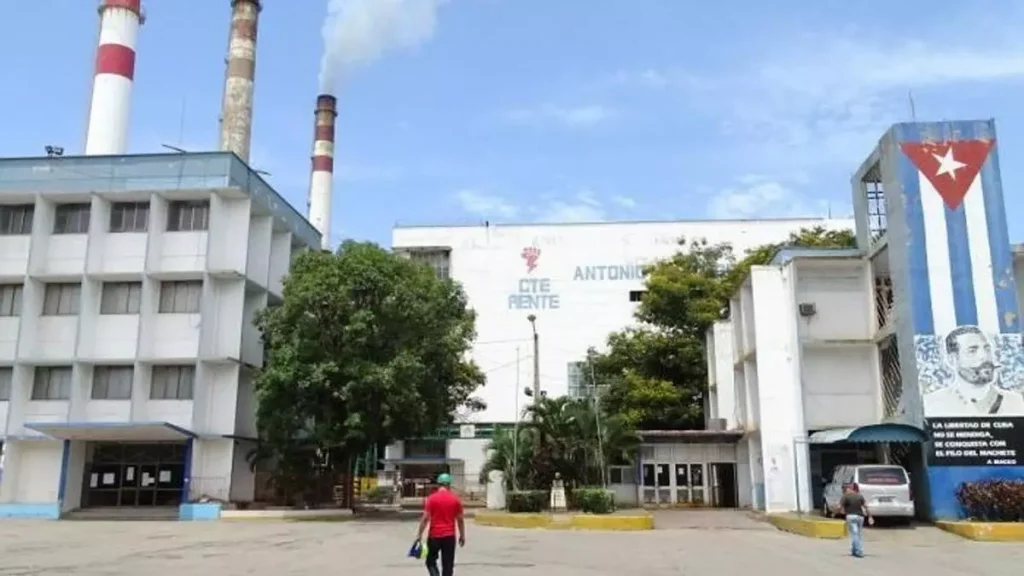
Archived image of the CTE Antonio Guiteras, in Matanzas. / Granma
14ymedio, Madrid, March 16, 2026 — A total shutdown of the national power grid (SEN) on Monday left the entire country in a simultaneous blackout around 2:00 PM. The Cuban Electric Union (UNE) reported the incident in a brief statement published on the Havana Electric Company’s Telegram channel, indicating that they were beginning to “implement restoration protocols,” but without providing any further explanation.
In the capital, the power went out in a strange way. “It was like turning off, turning back on, and then immediately turning off again,” said a resident of Nuevo Vedado. Residents in other provinces also reported the sudden power outage.
An hour later, in another message, the state-owned company detailed that no breakdowns were reported “in any of the thermal units that were operating at the time of the SEN disconnection.” It was precisely a breakdown at the Antonio Guiteras thermoelectric power plant (CTE) in Matanzas that caused the partial blackout on March 4, which left two-thirds of the country without power, from Camagüey to Pinar del Río.
“It was like turning off, turning on, and then turning off again immediately,” says a resident of Nuevo Vedado.
Monday’s outage was the first total collapse of the National Electric System (SEN) so far in 2026, and the sixth in a year and a half on the island. Between late 2024 and early 2025, five nationwide or regional blackouts were recorded, some caused by failures in key units and others by extreme generation deficits, which forced the shutdown of entire blocks to prevent further damage. On several occasions, the total collapse of the SEN left the country in darkness for hours, with restoration processes slow and phased by microsystems.
The recovery after the March 4th disaster was difficult, due to the lack of fuel – exacerbated in these two months of an oil blockade – which is necessary to operate continue reading
precisely those microsystems or “microislands” to serve specific areas.
Shortly after 3:30 in the afternoon, UNE reported that “microsystems in several territories” were beginning to operate, and twenty minutes later, they assured that the Energás plant, operated with the Canadian company Sherritt in Boca de Jaruco, already had “a generating unit in service.”
As is usual in similar situations, the authorities said that “the restoration will be done gradually as conditions in the National Electric System allow.”
The Mesa Redonda [Round Table] program announced that the interview with Oscar Pérez-Oliva Fraga would take place at 7:00 pm
The prolonged power outages since the most recent partial system failure, which have lasted more than three days in some areas, have reignited the flames of indignation across the island, which awoke this Monday after its tenth consecutive night of pot-banging protests. The climax of these protests occurred last Friday in Morón (Ciego de Ávila), where dozens of residents took to the streets chanting “Freedom.”
The march traveled through different areas of the city to the rhythm of banging pots and pans, reached a police unit and ended in front of the headquarters of the Communist Party of Cuba, where the protesters stormed the building, threw furniture and banners into the street and lit a bonfire in the middle of the public road.
The Mesa Redonda program announced that the interview with the Minister of Foreign Trade and Foreign Investment, Oscar Pérez-Oliva Fraga , announced last Friday by President Miguel Díaz-Canel, will take place at 7:00 pm, an unusual time, likely due to the total power outage. It is expected that during the interview, the Vice Minister, who is also the great-nephew of Fidel and Raúl Castro, will provide details about what he already confirmed to NBC News: that Cubans abroad, including those residing in the United States, will be able to invest in private businesses on the island.
Translated by Regina Anavy
______________________
COLLABORATE WITH OUR WORK: The 14ymedio team is committed to practicing serious journalism that reflects Cuba’s reality in all its depth. Thank you for joining us on this long journey. We invite you to continue supporting us by becoming a member of 14ymedio now. Together we can continue transforming journalism in Cuba.
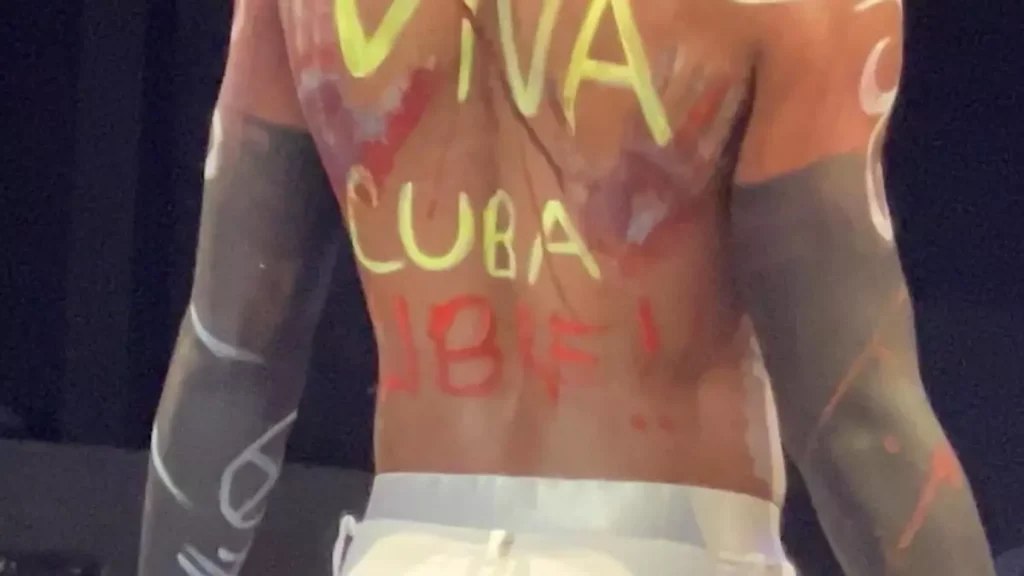
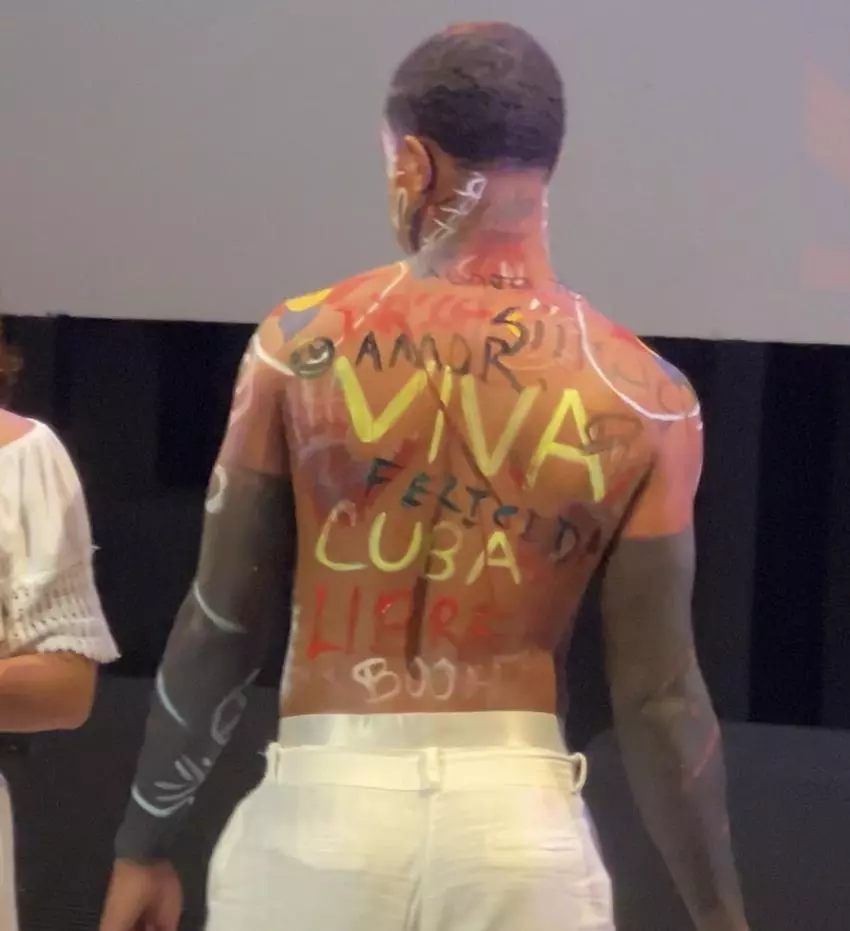
“Viva Cuba Libre” and “D-C singao” feature prominently on the back of the protagonist
“Viva Cuba Libre”, en una sesión de ‘body painting’ de este 15 de marzo de 2026 en la Fábrica de Arte Cubano (FAC), en La Habana. / 14ymedio
14ymedio, Darío Hernández, Havana, 15 March 2026 — Nothing suggested that the Lienzo Vivo event this Saturday at Fábrica de Arte Cubano (FAC) would be anything more than a gathering devoted to the art of body tattooing. But the invitation for the audience to take part in a body-painting session, led by artist Indira Bazail, turned it into a clearly political expression.
Standing before the bare torso of a young man, whose face was painted with the Cuban flag and whose back bore the words “Long Live Cuba!”, the presenter, Yoel Arturo Salazar Ponce, encouraged the audience to complete the “living canvas,” appealing to “freedoms.” “Because we all deserve, and always will deserve, to be happy and free,” he said, before announcing the surprise that the young man’s back would serve as a “free space” on which to write whatever they wished.
Artist Indira Bazail and the young man who served as her “canvas” at the Cuban Art Factory. / 14ymedio
“Libre” (“Free”) was the first word written, completing the slogan that was already there. Then, above it, came “D-C singao*,” referring to the insult directed at Cuban president Miguel Díaz-Canel — a phrase that has led to prison sentences for people who have shouted it or written it on public posters.
“Down with everything,” “DC singao,” “Love,” “Long live free Cuba,” the words on the “living canvas.” / 14ymedio
“Be free, because art leads the hand and the mind must be free,” the performance’s host continued to encourage. Someone added, “Down with everything,” to the neckline. Finally, a girl wrote, “Love.” The host congratulated her: “Love is the force for everything.”
As the crowd painted slogans on the young man’s back, “Toxicity ” by the American alternative rock band System of a Down played. The song, whose chorus shouts the word “disorder,” has a passage that perfectly captures the current state of Havana, shrouded in smoke from burning garbage and plagued by long blackouts: “Somewhere between sacred silence and sleep, more wood for their fires, noisy neighbors, waking dreams with a flashlight hit by truck headlights, eating seeds as a pastime, the toxicity of our city.”
That earlier decision by the National Center of Popular Music had been heavily criticized by members of the cultural community both inside and outside the island. Rosa Marquetti, a specialist on the life and work of the “Queen of Salsa,” said the “ban” on the tribute planned by the group El Público together with FAC added “one more chapter to the history of censorship and the use of political-commissar methods in Cuban culture.”
Translated by GH
*Translator’s note: “Díaz-Canel singao” is shouted and appears as graffiti. ‘Singao’ rhymes with Díaz-Canel, and is an epithet variously translated as ‘motherfucker’, ‘bastard’ and similar terms.
______________________
COLLABORATE WITH OUR WORK: The 14ymedio team is committed to practicing serious journalism that reflects Cuba’s reality in all its depth. Thank you for joining us on this long journey. We invite you to continue supporting us by becoming a member of 14ymedio now. Together we can continue transforming journalism in Cuba.
The privatization of sports on the Island, with the injection of capital that would entail, seems to be the only solution.
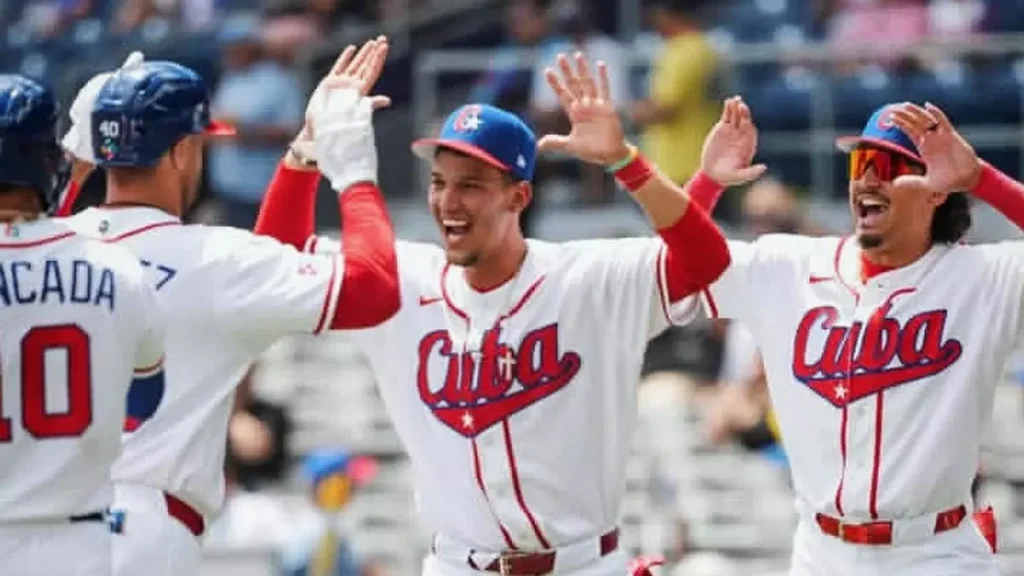
During the group stage, Cuba had the third-worst team batting average at .168, surpassed only by Czechia’s .167 and Brazil’s .130. / Instagram/Ariel Martínez
14ymedio, Matanzas, March 15, 2026 – Cuba’s baseball team recorded its worst performance in World Baseball Classic history by failing to advance past the group stage in the 2026 edition. The team managed by Germán Mesa finished third in Group A after starting with two victories against Panama (3–1) and Colombia (7–4) and ending with losses to Puerto Rico (1–4) and Canada (2–7), the latter with too many defensive errors in a key game for qualification to the quarterfinals.
Without a doubt, the lack of hitting limited the chances of victory for this Cuban squad. With bat in hand during the group stage, Cuba had the third-worst team batting average at .168, only by the Czech Republic’s .167 and Brazil’s .130 were worse.
In terms of on-base percentage (OBP), the Cubans ranked fourth worst at .277, behind Israel (.261), the Czech Republic (.230), and Brazil (.217). To make matters worse, together with the Czechs they were the third team that struck out the most, with 41 strikeouts, a negative statistic in which Great Britain (44) and Brazil (50) occupied the top spots.
Given this scenario, in which Cuba hit rock bottom on the biggest stage of international baseball, a series of reforms will be needed when assembling the representatives of the Four Letters for the next World Baseball Classic.
A first step would be to eliminate internal political restrictions that prevent access to the best available players
A first step would be to eliminate internal political restrictions that prevent access to the best available players. Although Cuba already calls up players from the U.S. Major League system, there is still reluctance to reintegrate players who have defected from sports delegations abroad, such as Lourdes Gurriel Jr., José Iglesias, and Aroldis Chapman, among others. In addition, players born outside Cuba but of Cuban descent who are willing to represent the Island are not included either. That was the case of Cuban American Zach Neto, whose father told 14ymedio that he wished to play in the Classic for Cuba but was not continue reading
allowed to.
As for athletes who left contracts under the control of the Island’s sports authorities, there is also no guarantee that all of them will be readmitted. Although Yariel Rodríguez was allowed to pitch again in a Classic after abandoning his contract with the Chunichi Dragons in the Japanese League, it was never clarified whether other baseball players in the same situation such as Oscar Colás or Julio Pablo Martínez would be allowed to wear the uniform of the Four Letters again.
Experience at the highest level of Major League Baseball (MLB) is not only needed among players, but also within the coaching staff. Having coaches familiar with organized baseball in the United States is vital to strengthen the team project and encourage the top stars to take part. Above all, Cuba needs to appoint a general manager who can operate in the United States, negotiate each player’s availability with the organizations, and meet face to face with the potential stars of a future roster. In that regard, it may be necessary to take lessons from other Caribbean baseball powers.
Last but not least, it is essential to restore the strength of the local baseball championship. In 2006, Cuba managed to finish as runner-up in the World Baseball Classic using only players from its National Series. However, over time, the massive exodus suffered by the country, its decline across all branches of the economy, and its political and social collapse have contributed to the deterioration of the state-run sports structure. Government funds have lost the capacity to sustain the training of high-performance athletes and to turn domestic tournaments into a spectacle.
For nearly seven decades, since the rise of Castroism to power, Cuban sports have suffered excessive government interference for propaganda purposes and have been stripped of professionalism. Today, the privatization of sports in Cuba, with the capital injection it would bring, appears to be the only solution to prevent national passions such as baseball from dying through neglect. And perhaps, to correct the taboos that persist in our sport, it will be necessary to correct the political system that gave rise to them.
Translated by Regina Anavy
______________________
COLLABORATE WITH OUR WORK: The 14ymedio team is committed to practicing serious journalism that reflects Cuba’s reality in all its depth. Thank you for joining us on this long journey. We invite you to continue supporting us by becoming a member of 14ymedio now. Together we can continue transforming journalism in Cuba.
A group called University Reform Action is formed, supportive of dialogue but also of democratizing the University Student Federation (FEU)
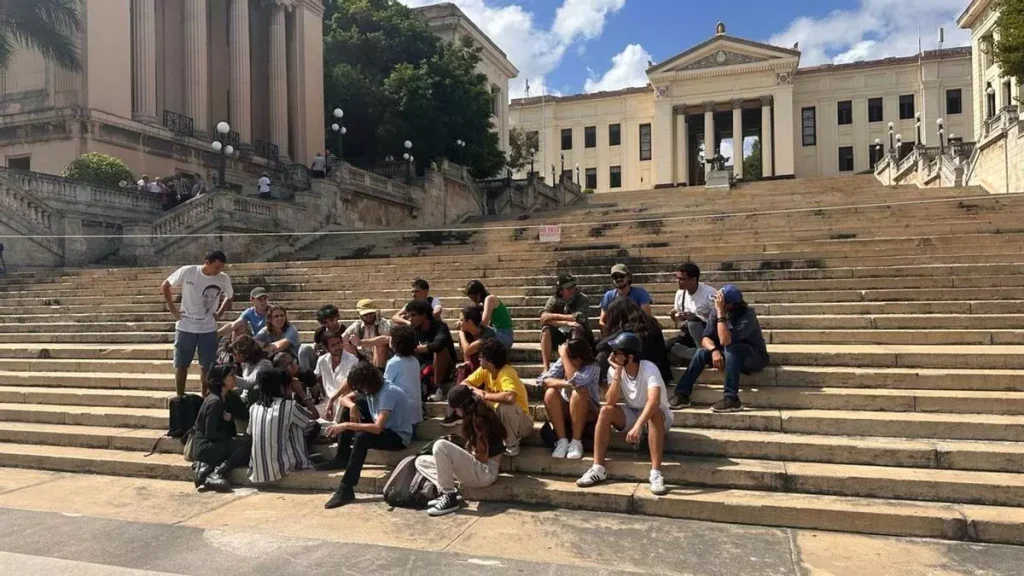
Image of students on the steps of the University of Havana, this Monday. / X/@CNN_Oppmann
14ymedio, Madrid, 12 March 2026 — University students have not buried the hatchet as it seemed they might have done on Tuesday, when the students who organized a sit-in the day before on the famous staircase of the University of Havana to make their complaints public agreed to continue meeting behind closed doors with the authorities. Far from that, they have now organized themselves under the name University Reform Action and have presented themselves as a collective in a statement outlining their upcoming plan of action.
The text contains a strong criticism of what happened last Monday, when the police cut off access to the staircase, preventing others from joining the initial group. That day, “one of them was physically subdued, identifications belonging to a group of students inside the university were withheld and taken away, and access to the area was blocked. We consider these actions absurd, unnecessary, and a flagrant violation of the right to peaceful demonstration established in Article 56 of the Constitution,” the manifesto states, calling for an end to any attempt at “deterrence, harassment, co-optation, disqualification, and sabotage.”
University Reform Action also expresses its discomfort with the fact that the meeting scheduled for the following day in Victor Hugo Park was “redirected to a university classroom, which violated the open spirit of this process.” From the very first lines of the statement, the students insist that their willingness to engage in dialogue should not be seen as “a sign of conformity or weakness,” and they warn that if their reform demands are not heard through dialogue they will again call for “alternative and forceful forms” of action. “We reject any act of violence and seek to ensure that none of our members take part in one. We demand the same treatment toward us.”
The collective also stresses from the outset that it represents the interests of students and not those of national or foreign political organizations. “We therefore do not accept the hijacking of our voice and opinion continue reading
by any institution or individual,” they warn.
The rest of the document focuses on the reforms they consider essential after gathering ideas in the meetings that have taken place. The first is the democratization of the University Student Federation (FEU), with candidates to be elected under a new electoral model that allows explanatory campaigning. “The possibility of being elected to a position within the organization should not be tied to academic results or to the candidates’ overall participation in extracurricular activities, but rather to their ability to represent the student body,” they argue. There should also be mechanisms for their removal and replacement if it is felt they are not fulfilling their duties.
“Once these reforms have been established and consulted on, immediate elections must be held under the new conditions to cleanse the organization of those leaders who currently make it up and who have shown themselves not to be reliable in defending the rights of their voters and those they represent,” they add bluntly.
The students also focus on two more practical issues. One is the need for a real solution to the situation created when Etecsa drastically raised its internet tariffs in May 2025. The dialogue that followed the student protests ended up papering over the crisis, since the well-known data package offered to students was already insufficient at the time and is even more so now “given the harsh conditions the country is facing.”
Another issue is the semi-remote format of classes, a measure adopted as part of a fuel-saving plan. The students believe a census should be carried out with “precise data on the availability of technological resources (devices and connectivity), stable access to electricity in students’ homes, and the geographic distance many students—especially those from other provinces—must travel to reach university campuses.” This is essential in order to determine whether conditions exist to maintain the current situation or whether the academic term should be suspended.
The statement also shows the collective’s goodwill toward the authorities by thanking the Minister of Higher Education, Walter Baluja García, for his willingness to listen and address their concerns. They will meet with him next Monday to present demands gathered nationwide, and they are asking other students to contribute. “Everyone’s opinion matters in pushing forward the changes we need so badly,” they conclude.
Translated by GH
______________________
COLLABORATE WITH OUR WORK: The 14ymedio team is committed to practicing serious journalism that reflects Cuba’s reality in all its depth. Thank you for joining us on this long journey. We invite you to continue supporting us by becoming a member of 14ymedio now. Together we can continue transforming journalism in Cuba.
According to the newspaper, the Government will announce it this Monday during a television appearance by Minister Oscar Pérez-Oliva.
Empresarios manifiestan interrogantes respecto de las garantías que La Habana estaría dispuesta a ofrecer / 14ymedio
14ymedio, Havana. March 15, 2026 – “Perhaps the time has come,” says Joe García, former Democratic congressman for Miami and former executive director of the Cuban American National Foundation, quoted by El Nuevo Herald. García is referring to an economic reform that could open the door to one of the most significant changes on the Island in decades: allowing Cubans living abroad, including Cuban Americans, to invest in and own private businesses in the country.
The announcement, according to the media, would come this Monday, the same day a public appearance is expected by Oscar Pérez-Oliva, the great-nephew of Raúl and Fidel Castro and vice prime minister and minister of Foreign Trade and Foreign Investment, as previously announced by Cuban president Miguel Díaz-Canel.
Sources cited by the newspaper say that Cuban authorities have prepared this package of reforms, which would also allow investment capital in the private sector, as a way to attract liquidity, technologies, and international experience that would benefit the Island. Currently, many private businesses in Cuba receive informal financing from relatives abroad, especially from the United States, something the reform would explicitly legalize.
These measures come amid pressure from the Trump administration, including the oil blockade following the U.S. military intervention in Venezuela last January, and at a time when talks between the two countries are taking place, as acknowledged by Díaz-Canel last Friday. continue reading
The president said that a set of measures has been adopted aimed at easing current bureaucratic barriers
During an appearance before state media and international outlets friendly to the Government, when asked about Cuban Americans who allegedly want to invest in the country, the president said that a set of measures has been adopted aimed at easing current bureaucratic barriers. The decisions will be announced Monday in an appearance by Pérez-Oliva on a television program that could be, he said without full certainty, the Mesa Redonda [Round Table] program.
“The return of the Cuban diaspora is imminent,” says a source familiar with the issue interviewed by the Herald, who also raises doubts about how quickly all the measures agreed upon behind closed doors will be implemented. Laws and regulations approved by the Cuban Government have sometimes taken months or even years to be fully developed.
Some entrepreneurs in Miami interviewed by the newspaper expressed questions about the guarantees Havana would be willing to offer to provide legal certainty to investors. Such guarantees would require modifications to Cuban legislation and, ultimately, to the Constitution itself. Without those guarantees, they expect the country to receive few large-scale investments.
On this matter, Sebastián Arcos, who directs the Cuban Research Institute at Florida International University, said in an interview with Local 10 News that “obviously, they are more interested in making money than in the freedom of the Cuban people.”
“Obviously, they are more interested in making money than in the freedom of the Cuban people”
The academic, born in Havana and experienced in monitoring human rights violations on the Island, also noted that “there cannot be an economic recovery unless there is first a political reform,” warning that doing business in Cuba “would be too risky” for now.
Carlos Giménez, a U.S. congressman of Cuban origin, also emphasized the importance of a profound change in the country. Through X, he stated that “there will be no investment from the United States unless a major political change takes place on the Island.” He also made it clear that “the regime needs us; the United States does not need them.”
Despite these warnings, some entrepreneurs say they are ready for the new opportunities that could open up in the country. That is the case for a group in Miami’s Little Havana.
“Hopefully now that things are changing very quickly,” says Fidel Asís López, owner of The Havana Collection on Calle Ocho, which specializes in guayabera shirts. When asked whether he would invest in Cuba, Asís López responded: “In a free Cuba, 100% for sure.”
Translated by Regina Anavy
______________________
COLLABORATE WITH OUR WORK: The 14ymedio team is committed to practicing serious journalism that reflects Cuba’s reality in all its depth. Thank you for joining us on this long journey. We invite you to continue supporting us by becoming a member of 14ymedio now. Together we can continue transforming journalism in Cuba.
The newborn was found inside a box, on Martí Street, between Máximo Gómez and Béquer.
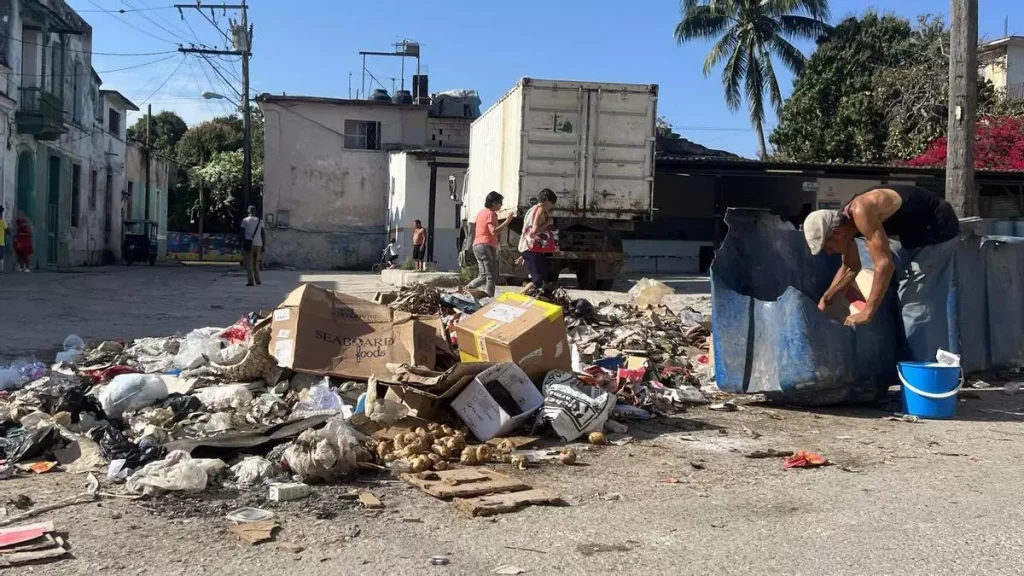
One of the many garbage dumps that fill the streets of Guanabacoa, in Havana / 14ymedio
14ymedio, Havana, March 15, 2026 – Residents of the Havana municipality of Guanabacoa found the body of a newborn baby in a garbage dump on Friday. According to residents of the area who spoke with 14ymedio, the baby was found inside a box on Martí Street, between Máximo Gómez and Béquer, by municipal sanitation workers who were collecting waste at the site.
The discovery occurred during the early hours of the morning, when workers were checking the garbage accumulated at the collection point. Witnesses say the baby still had the placenta when it was discovered, indicating that it had been born shortly before being abandoned.
“It was something very hard to see. Nobody expects to find a baby in the garbage,” said Yaneisy, a resident of the neighborhood who witnessed the aftermath of the discovery.
“It was something very hard to see. Nobody expects to find a baby in the garbage,” said Yaneisy, a resident of the neighborhood who witnessed the moment after the discovery. According to her testimony, several people began calling the authorities and medical services to come to the site. Some neighbors commented that the newborn may have been between eight and nine months gestation and weighed around seven pounds, although these details have not been officially confirmed.
So far, no details have been released about the identity of the mother or the circumstances under which the baby was abandoned. No public information has been provided about the condition of the baby or about the progress continue reading
of a possible investigation related to the case.
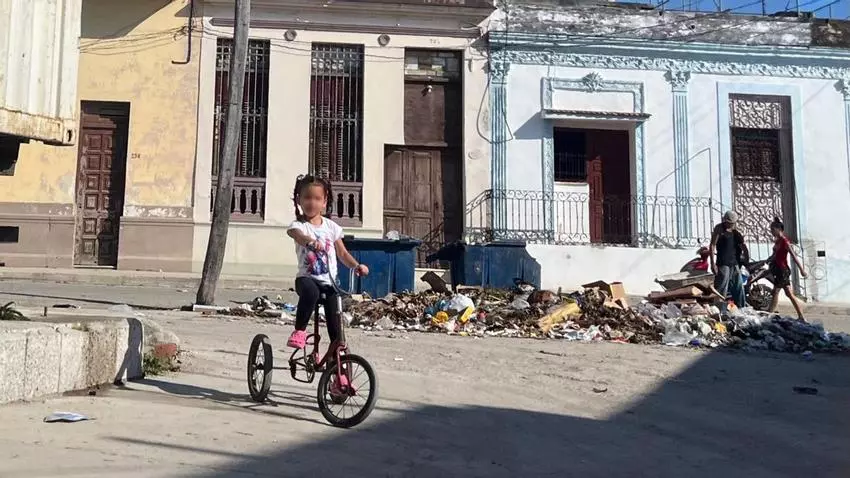
Children and elderly people live among garbage scattered throughout the municipality of Guanabacoa, in Havana. / 14ymedio
Similar cases have been reported in recent years in different parts of Havana, such as the case of a baby girl found in June 2025, still with the umbilical cord, in the municipality of Cerro.
Cuba was one of the first countries in Latin America to legalize abortion. However, today many of these procedures are carried out without anesthesia due to a lack of supplies and the precarious conditions of the healthcare system. This is compounded by the well-known shortage of condoms and contraceptive pills.
According to a report from the National Office of Statistics and Information published in May 2024, the capital recorded 27,864 deaths, almost triple the 10,783 births counted during the same period.
Translated by Regina Anavy
______________________
COLLABORATE WITH OUR WORK: The 14ymedio team is committed to practicing serious journalism that reflects Cuba’s reality in all its depth. Thank you for joining us on this long journey. We invite you to continue supporting us by becoming a member of 14ymedio now. Together we can continue transforming journalism in Cuba.
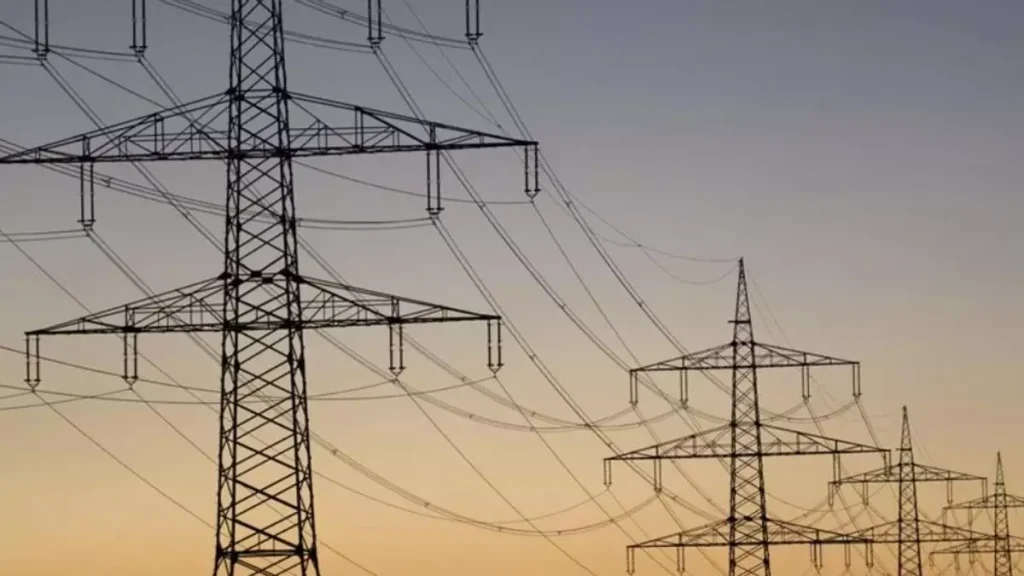
At the start of Saturday, the system had only 1,120 megawatts of generation available against a demand that reached 2,450.
In total, the limitations on thermal power generation represent approximately 336 MW. / EFE
14ymedio, Barcelona, March 14, 2026 — This Saturday, Cuba’s National Electric Union reported that service will be affected by a 65% drop in demand due to insufficient generation capacity in the national power grid, a situation that has been affecting a large part of the population for months. On March 6, the country reached a record deficit, with 67% of the country’s energy demand falling below peak hours.
At the start of Saturday, the system had only 1,120 megawatts of generation capacity available, compared to a demand of 2,450 megawatts (MW). This shortfall resulted in an immediate outage of 1,326 MW, causing widespread blackouts throughout the early dawn and into the morning, once again highlighting the fragility of an energy infrastructure that has been operating at its limit for years.
According to the official report, the following units are currently out of service due to breakdowns: Unit 5 of the Mariel thermoelectric plant; Units 1 and 2 of the Santa Cruz plant; Unit 2 of the Felton plant; and Units 3 and 6 of the Antonio Maceo plant in Santiago de Cuba. In addition, other units are shut down for maintenance, including Unit 6 of the Mariel plant, Unit 5 of the Nuevitas plant, and Unit 4 of the Carlos Manuel de Céspedes plant in Cienfuegos, highlighting the high degree of deterioration of the country’s main power plants.
In total, the limitations in thermal generation represent around 336 MW that the system cannot supply, further reducing the country’s capacity to meet electricity demand and maintain service stability.
On Friday, the power outages lasted for 24 hours and peaked at 7:10 p.m.
The previous day also reflected the severity of the energy situation. On Friday, the blackouts lasted 24 hours and reached their peak at continue reading
7:10 p.m., when the outage affected 1,977 megawatts. This figure even exceeded official forecasts due to the late commissioning of a generating unit at the Cienfuegos thermoelectric plant, another example of the instability that characterizes the system.
Although the government has repeatedly highlighted the contribution of renewable energy as part of its energy strategy, its impact remains limited compared to the system’s structural deficit. The 51 photovoltaic solar parks installed in the country generated 4,119 MWh during the day and reached a peak capacity of 600 MW at midday, which helped to partially alleviate the power outages during those hours, but was insufficient to compensate for the collapse of thermal power generation.
However, the forecast for Saturday afternoon and evening is even more complex. The National Electric Union estimates that demand could reach 3,130 megawatts during peak hours, between 5:00 p.m. and 9:00 p.m., while system availability would remain at just 1,120 megawatts. This would imply a deficit of approximately 2,010 megawatts and outages that could reach around 2,040 megawatts, one of the highest levels of service interruptions recorded in recent months.
The authorities, in official media, have attributed part of the blame to “thefts and acts of vandalism” against electrical infrastructure, such as the dielectric oil of transformers, an essential component for the cooling and safe operation of this equipment.
______________________
COLLABORATE WITH OUR WORK: The 14ymedio team is committed to practicing serious journalism that reflects Cuba’s reality in all its depth. Thank you for joining us on this long journey. We invite you to continue supporting us by becoming a member of 14ymedio now. Together we can continue transforming journalism in Cuba.
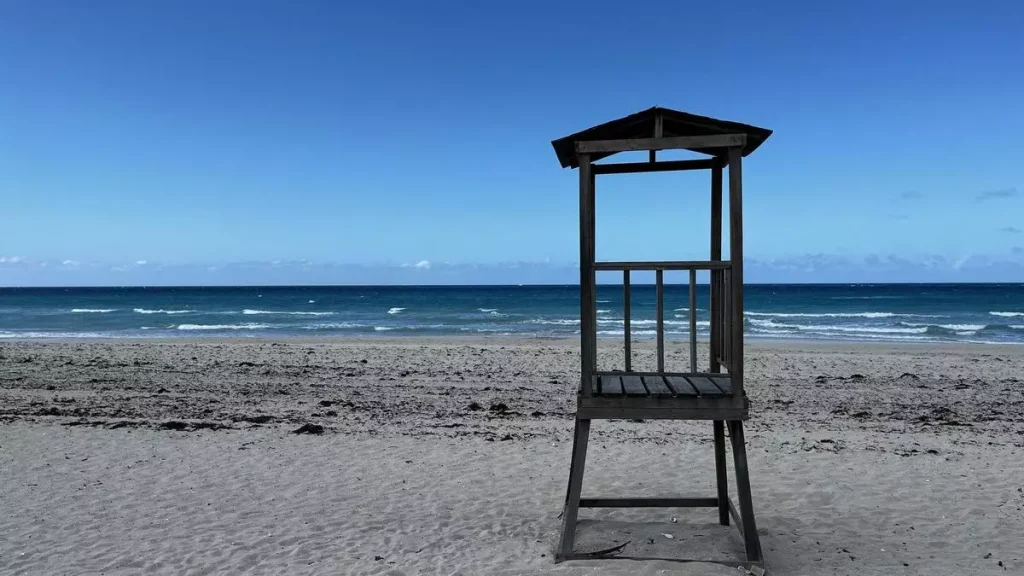
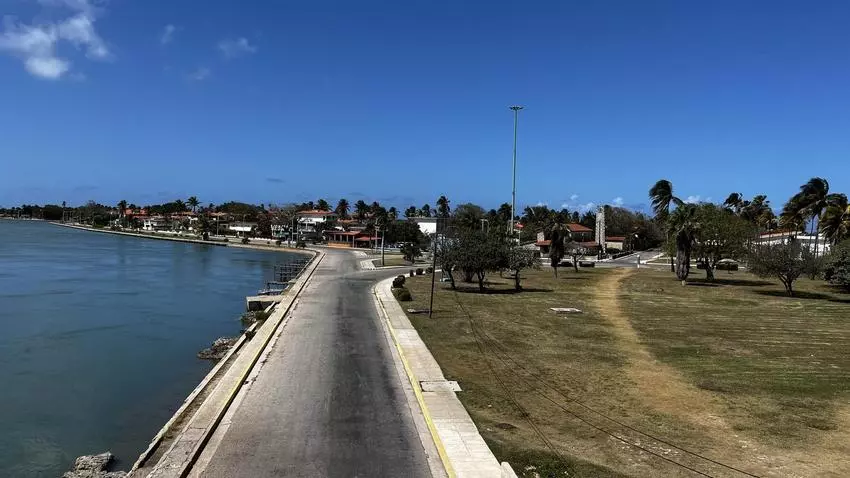
The wind and the occasional carriage drivers urging on their horses are the only sounds accompanying the decline of Varadero, once considered the best beach in the Caribbean islands. / 14ymedio
14ymedio, Pablo Padilla Cruz, Varadero (Matanzas), March 15, 2026 – If there are sectors where the deep crisis currently affecting Cuba is most painfully reflected, they are precisely those that were once the backbone of its economy. Tourism, for example, with the suspension of flights due to the lack of fuel, now threatens to become the same kind of corpse that the sugar harvest has turned into.
One of the most affected places has been the Island’s main international destination, Varadero. Over the last decade, the resort area of Matanzas prided itself on receiving more than one million travelers annually, but that figure has dropped drastically. Today, it faces a decline of 70%, a number that many workers in the sector never imagined they would experience.
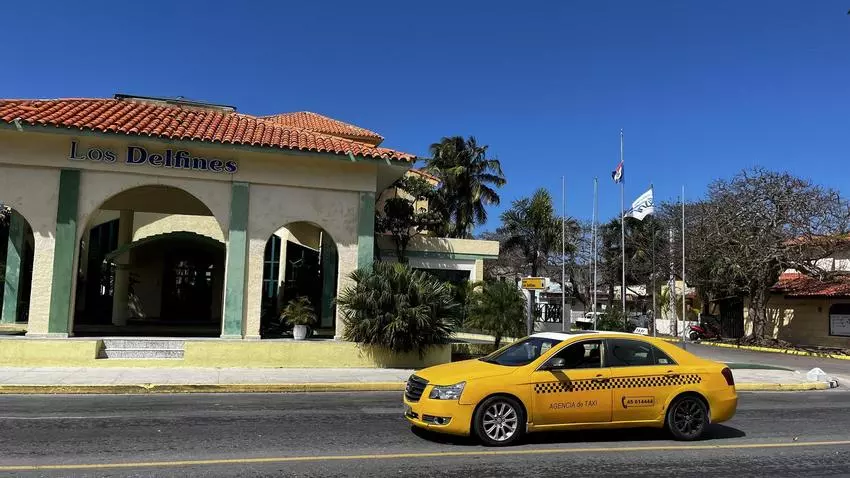
Hotel Los Delfines, on 32nd Street in Varadero, closed / 14ymedio
“Varadero is in chaos right now,” says a worker at the Hotel Los Delfines, on 32nd Street in the city. “There is no water in this area, the electricity goes out constantly, and that’s why they decided to close the hotel and concentrate the tourists in the Club Tropical hotel.” The closure of accommodations and the “compaction” of visitors in other hotels has been one of the measures taken by the regime following the blockade of all fuel entering the Island after the United States intervention in Venezuela on January 3, and the subsequent threat by Donald Trump to third countries that send oil to Cuba.
The employee’s words reflect the difficult situation the entire sector is experiencing. “At first they brought us to the hotel, and we stayed three days working, then they sent us home for another three days. But soon they started telling us, ‘don’t come anymore.’ That way, a month would go by without them calling me to work again,” he explains. This situation has become common in many hotels, where employees are sent home without prior notice, hoping to be called back when the situation allows.
Hotel Los Delfines, on 32nd Street in Varadero, closed / 14ymedio
The uncertainty is palpable. This worker, who prefers not to give his name, says that job options in this context are few. “They offered me jobs in Municipal Services or as a guard at the Matanzas cemetery, but that’s not continue reading
what I studied. It’s a job that not even the unemployed want to take, and the worst thing is that they present it as if it were a solution,” he says with frustration.
Maday, a clerk at a café in central Varadero, also recounts her experience with a mixture of resignation and concern. “Fortunately, I can still work, but the number of customers keeps getting smaller. Cubans, who used to help us on a bad day, hardly come anymore. Besides, I have to spend 200 pesos to get to Varadero from Cárdenas, and another 500 on an electric car to return home in the afternoon,” she says. That means a daily expense of 700 pesos, which is hardly compensated by the tips she receives. The tourists simply are not enough to maintain the flow of income.
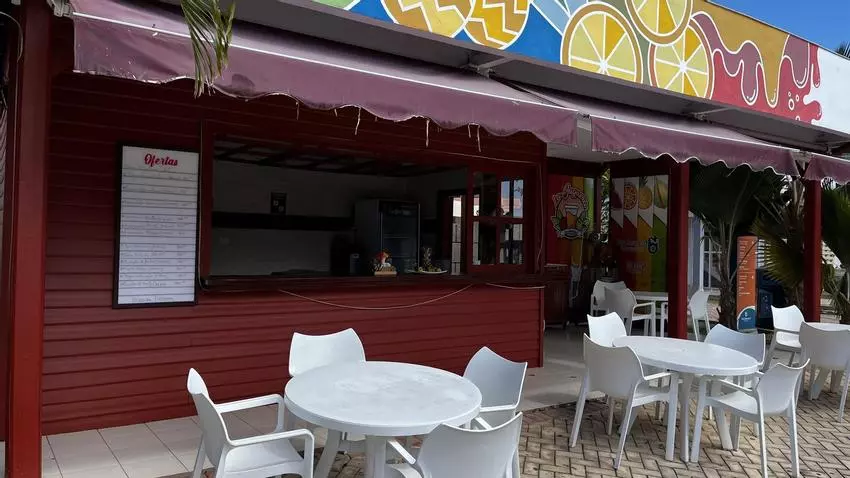
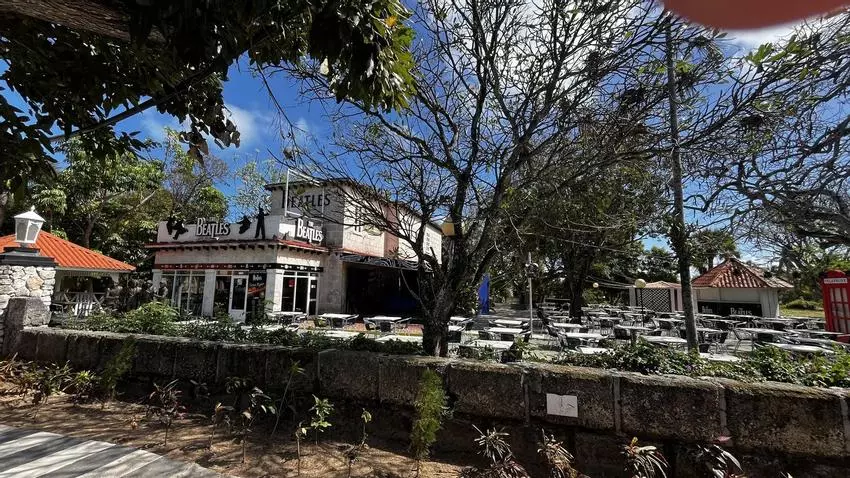
“The Beatles” Bar in Josone Park in Varadero (Matanzas) / 14ymedio
“If you want to be ‘interrupted’ [work on specific days], the job options they offer are in an organoponic garden or in municipal services,” adds Maday, sadly: “They offer me these positions just to complete the paperwork, but in reality I have no options.”
Meanwhile, buy-and-sell groups on social media in cities like Matanzas and Cárdenas have seen the demand for work multiply. Clerks, cooks, DJs, and artisans are trying to find their way in an oversaturated market, seeking to survive amid the uncertainty of the private sector. However, the situation becomes even more complicated for workers at craft fairs, who historically have depended on tourism to sustain their work.
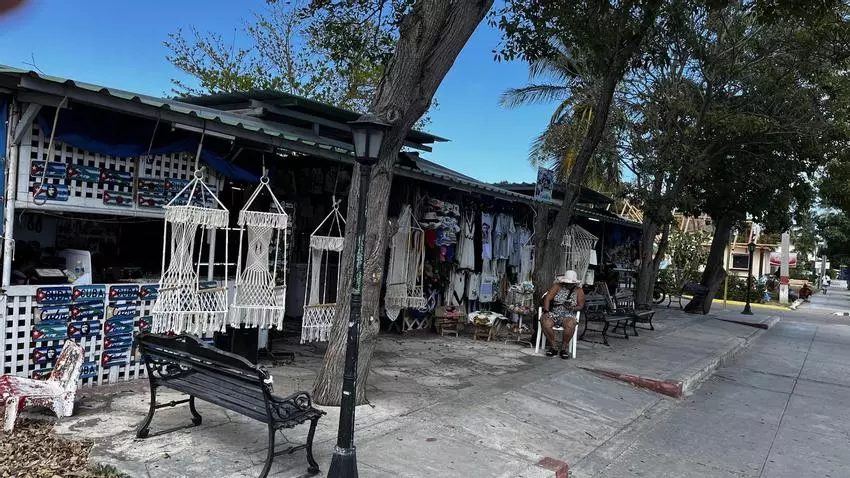
Raúl, a visual artist who has spent nearly two decades working in crafts, laments the crisis affecting his sector. “I’ve seen good and bad moments over the years, but what we’re living through now is unprecedented,” he says. “With Covid-19, we knew the situation would improve someday, but now we’re facing a crisis with no short-term solution.” Like other workers in the sector, Raúl notes that the Varadero craft fairs, which once received thousands of tourists, are now deserted. “Varadero adapted to receive more than one million foreigners a year, but now not even 250,000 arrive. The few who survive are those who have tables inside the hotels,” he points out.
“The Beatles” Bar in Josone Park in Varadero (Matanzas) / 14ymedio
Competition among artisans has increased significantly, making it even harder to generate sales. “When a tourist shows up, there are so many of us competing that we barely manage to make anything,” Raúl says. And, to make matters worse, the National Fund for Cultural Assets, which manages the spaces for the fairs, demands payments for the use of the space, another burden for the already impoverished workers in the sector.
Beatriz, a Spanish tourist who has been returning to Varadero for ten years, has also witnessed the crisis affecting the Island. “I knew the situation was difficult, but I didn’t think it was this bad,” she comments. Bea, as the workers at the Cuatro Palmas hotel call her, considers herself almost part of the family in Varadero, since she has returned year after year. “This beach is the best in the world, but the situation has become unsustainable. The electricity goes out too often, and I’ve even had to bring eggs from Spain,” she says with frustration.
Hotel Barlovento, in Varadero, also closed / 14ymedio
Beatriz also notes a change in her relationship with Cubans. “They no longer see me here as a foreigner but as an ATM,” she says regretfully. “No matter what I give away, they always want more.” The friendliness and warm atmosphere she once felt on the Island have been overshadowed by the desperation of those who depend on tourism to survive. “I don’t know if I’ll return next year. If I do, it will be for less time, or maybe I’ll change destinations,” she concludes, hinting that the crisis may have marked the end of her relationship with Varadero.
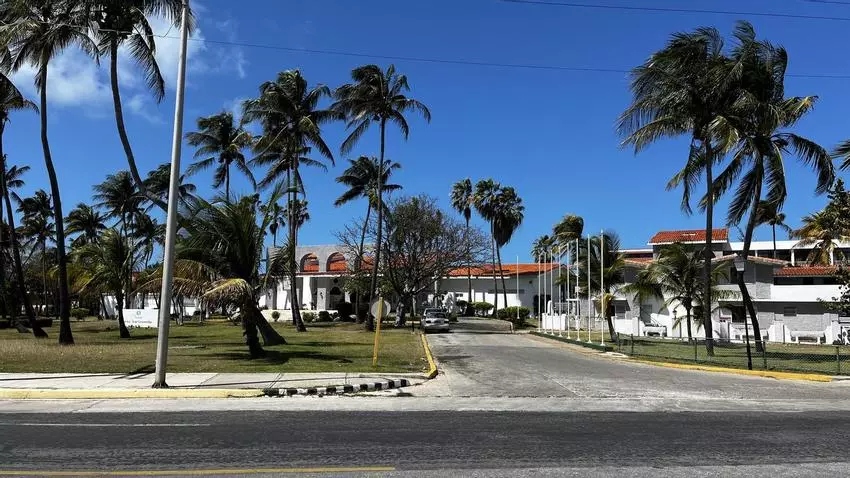
The city, which was once the locomotive of the Cuban economy, now lies almost empty. Buildings are half-repaired, the lack of potable water and electricity is constant, and only a few residents walk through streets once crowded with tourists. Hotels, private hostels, and recreational centers remain mostly closed. The laughter of tourists is gone, and the bustle of workers returning home has faded. Now, the wind and the occasional carriage drivers urging on their horses are the only sounds accompanying the decline of what was once considered the best beach in the Caribbean islands.
Hotel Barlovento, in Varadero, also closed / 14ymedio
Translated by Regina Anavy
______________________
COLLABORATE WITH OUR WORK: The 14ymedio team is committed to practicing serious journalism that reflects Cuba’s reality in all its depth. Thank you for joining us on this long journey. We invite you to continue supporting us by becoming a member of 14ymedio now. Together we can continue transforming journalism in Cuba.
The regime is mobilizing all its security forces with the order of “zero impunity” for the demonstrations
Yoani Sánchez, director of ’14ymedio’, with a State Security agent, in the basement of her building in Havana. / 14ymedio
14ymedio, Havana, March 15, 2026 — The regime has gone on high alert and increased its deployments following the intensification of protests in Cuba, especially the massive demonstration in Morón. Police are mobilizing operations throughout the country to prevent the demonstrations that have been taking place for more than a week.
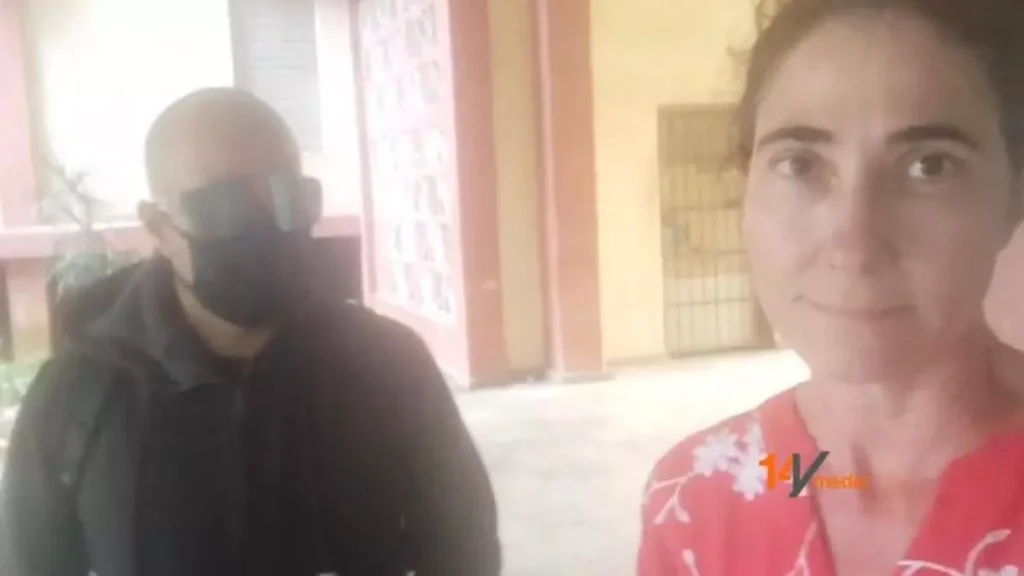
This Sunday, Yoani Sánchez, director of 14ymedio, is surrounded by a State Security police operation that prevents her from leaving her home. In a video she recorded herself, an officer, dressed in civilian clothes and with his face completely covered, explains the prohibition to her without giving a concrete reason.
“Tell me right here in front of the camera,” the journalist snaps, to which the man replies, “Is it necessary?” She continues, “Yes, it is necessary, because you’re violating my rights. I’m a citizen who hasn’t committed any crimes, hasn’t been tried in court, doesn’t have a restraining order or house arrest, so why won’t you let me go out? Taking all tha into account, what’s the reason? Why can’t I leave?” The officer, nervous, responds, “All I can tell you is that you can’t leave.”
When Sánchez asks him if he might be a thug or a criminal, the subject affirms, and to the question who is sending him, he answers: “You know who it is.”
When questioned about his identity, the individual refuses to answer, and when Sánchez asks him if he might be a thug or a criminal, the subject affirms, and to question who is sending him, he answers: “You know who he is.”
President Díaz-Canel’s response to the protests has been to label them “vandalism” for which “there will be no impunity.” Today, the National Police clearly illustrate these intimidating words—they do have electricity, fuel, and resources, as their own publications show—with the arrogant display continue reading
of their operations, which, without euphemism, aim to “maintain public order.”
In Villa Clara, Díaz-Canel’s home province, a “reinforcement group for surveillance and patrols” has been formed to “guarantee order.” The official publication shows that this reinforcement includes the feared ” black berets,” the Interior Ministry’s military units trained for “high-risk” situations, who have been at the forefront of violent repression during civil protests.
Videos circulating on social media show the deployment of police patrols in the streets of Havana and also report Black Berets in Old Havana.
Official institutions are echoing the attempts at intimidation and repeating the president’s threatening rhetoric. The state-run chain Tiendas Caribe (TRD) denounced the attack and vandalism of one of its stores’ windows during Friday’s protests: “Cuban society demands zero impunity for those who threaten public peace and collective property. A severe legal response is essential.”
Despite the deployment of security forces, new demonstrations took place yesterday, Saturday, for the ninth consecutive night.
Despite the deployment of security forces, new demonstrations took place on Saturday, for the ninth consecutive night. This newspaper reports loud pot-banging protests in the Nuevo Vedado neighborhood of Havana during another prolonged blackout. The sounds of similar protests reached the 14ymedio newsroom in Cerro, Playa, and, with greater intensity, in the Boyeros and Tulipán area. Finally, the authorities restored power, possibly fearing that the unrest would escalate, as is happening in the less privileged areas of the island.
In the provinces, where the energy situation is much worse – reaching only a couple of hours of electricity per day – strong protests were reported last night in neighborhoods of Santiago de Cuba and Holguín.
The authorities acknowledge that there was an incident between the police and residents of the Micro 9 neighborhood in Santiago de Cuba, although they describe the information disseminated on social media as “manipulation.”
The official statement describes the protest as “a very small group of people” who “decided to gather to express their dissatisfaction with the problems related to the electricity service.” It adds, referring to the police response: “As is completely normal […] law enforcement authorities arrived at the scene, engaged in dialogue with the residents, and the situation was resolved.” However, it continues: “Some chose the path of disobedience, something that will not be tolerated by those responsible for guaranteeing public order and tranquility.”
The testimonies also relate that the protesters shouted “Down with the dictatorship!” and “Freedom!”, which the government describes as “dissatisfaction with the electricity service”
The denial refers to a version circulating on social media in which, according to testimonies received from residents involved in the protest, the authorities’ response included a large-scale operation with patrol cars, armored vehicles, plainclothes State Security agents, and officers in black berets with their dogs, who blocked access to the neighborhood. According to these accounts, there were arrests and physical assaults by the authorities, including an assault on a young minor who was beaten while defending her father, and an assault on a pregnant woman.
The testimonies also relate that the protesters shouted “Down with the dictatorship!” and “Freedom!”, which the government describes as “dissatisfaction with the electricity service.”
The official statement concludes with a moral lesson that emphasizes the regime’s stance on public discontent: “We once again denounce the fact that individuals opposed to the values and principles of the Revolution and Cuban society are exploiting incidents like these to sow confusion and hatred through lies and manipulation, in order to foment conflict and undermine the people’s trust in the highest authorities of the country and the Ministry of the Interior.” The statement does not explain what these “values and principles of the Revolution” consist of, nor why they should be shared by all of “Cuban society.”
______________________
COLLABORATE WITH OUR WORK: The 14ymedio team is committed to practicing serious journalism that reflects Cuba’s reality in all its depth. Thank you for joining us on this long journey. We invite you to continue supporting us by becoming a member of 14ymedio now. Together we can continue transforming journalism in Cuba.

 EFE (via 14ymedio), Washington, D.C., March 17, 2026 – The administration of the President of the United States, Donald Trump, has raised the possibility that the Cuban leader, Miguel Díaz-Canel, will step down from power as part of contacts between officials from both countries about the future of the Island, according to The New York Times (NYT).