Blood for Export /Juan Juan Almeida

I was born in the bosom of power, a world of abundant lies. I was reared and educated among the corrupt who, even as they pretended to be simple guardians of virtue, in certain private circles often forgot to guard their terrible secrets and told horrific stories with tremendous ease. This is how I heard in detail about those sentenced to death and their physical condition as they faced the firing squad. They described men who were drowsy, sweaty, weak, whose breathing was irregular and whose color was corpse-like.

At the time I did not realize and even questioned how much the terror, the trauma, the effects and consequences of the perverse path that the dark mechanism they call “revolution” can have on an individual or group. While it was logical to think that having the nerves to confront death could lead to a collective symptomology, my obtuse non-conformity compelled me to find an explanation. Asking questions, I discovered an explanation that was both simple and terrifying. Before being executed — as though that were not enough — the condemned had their blood extracted.

I know this is hard to believe. Therefore, I would like to add that there are confirmed accounts and important testimony on Archivo Cuba, the website of an organization which, for reasons unrelated to financial gain, has carried out a serious investigation on the subject and tried to document the deaths and disappearances of men — guilty or not — whose biographies remain inconclusive; men whose broken lives once had owners; men who even today await the trial that will vindicate them.

My motive for writing this is not to lodge an accusation, though clearly that is what this is. It is somewhat more. It is to alert readers, scholars, jurists and investigators to a nebulous, little-discussed  subject that remains shrouded in secrecy. And I am not referring to some clumsy foible but to evidence of criminal actions. Unless a document exists that shows the condemned agreed to these procedures, this constitutes a crime against humanity according to the International Criminal Court’s Rome Statute.

Fidel Castro publicly acknowledged these actions when, in a long-winded speech on February 6, 1961, he said — and I quote — “Don’t think that just because counter-revolutionaries die in disgrace before a firing squad they are not of use to the Cuban revolution. The blood of these traitors is extracted before execution in order to save the lives of the many militiamen ready to die for the Fatherland.”

But wait, there is more. All Cubans know that to be admitted to a hospital on the island — whether it be for a simple check-up or a surgical procedure — or to even see a doctor or staff member, one is required to show proof of having donated blood. Only then may the patient make use of the benefits of free hospital care in Cuba. In most cases this blood is turned into a commodity to be sold overseas without the knowledge or consent of the donors.

The story is as real as the missiles hidden in containers of sugar. Just a few days ago, before the conclusion of an official visit by President José Mujica to the largest country in the Caribbean, the newspaper El País de Uruguay reported that the leading export in 2012 from Cuba to the honorable Oriental Republic of Uruguay was human blood, the kind with a Cuban surname.

8 August 2013

CUBA Journalism in the street / Ivan Garcia

Photo: Orlando Luis Pardo Lazo

Photo: Orlando Luis Pardo Lazo

Owing to the lack of statistics and figures, independent Cuban reporters have to reinvent certain rules when providing information. We don’t have access to government press conferences and no minister gives interviews or comments.

Nor can we rival the foreign agencies accredited in Havana. Not having technology, 24-hour internet access, being unable to cover official events, it is impossible to compete with the speed of the foreign press.

There are certain types of news which an independent journalist can put out faster than a correspondent from the BBC, EFE, or AP. Above all in relation to the world of opposition: a dissident’s hunger strike, an eviction, or one of the Ladies in White being beaten up.

But that’s not the best side of the field to be playing on. Cuba is an area full of stories that the regime tries to ignore. In the streets and shanty towns, chatting to ordinary folk, we always find good reports.

We have something to thank the poor work of the state journalists for. If Granma and Juventud Rebelde were in the habit of providing information about marginalization, ruinous infrastructure, or how Cubans manage to survive inside the socialist madhouse, there would not be much reason for independent journalism to exist. continue reading

We would limit ourselves to writing boring opinion pieces. Or cover opposition meetings. The official journalists have left the battle-field and left it open to the dissident journalists.

It was a major error not to provide information about day-to-day life, nor about the ills that afflict society, like drugs, prostitution and corruption at all levels.

The ideological Taliban like to sell their account of how the island is different from the rest of the poor capitalist nations of the American continent.

At one time it was. There wasn’t freedom of expression or of association, but the state, supported by the inflow of millions of Soviet rubles, guaranteed a grey kind of life with health and free education.

In return, we were supposed to be “Revolutionaries”. To applaud speeches about the “Maximum Leader” and condemn Yankee Imperialism. That was the deal. Political disagreements were restricted to our living rooms.

It was prohibited to ventilate them in public. Any criticism, we were told, had to be “constructive”. You were allowed to complain about poor food service or inefficient officials.

What you could never do was indicate that Fidel Castro was responsible for the economic disaster and the failure of a social project. The Comandante was like Zeus. God of gods. Untouchable.

The independent journalists crushed that myth. Not to be seen as heroes. Or martyrs. Just that one morning we crossed the borderline of what we were supposed to talk about or say laid down by the government.

And we know what enormous courage was required and that  there is a price to pay. From libel to jail. But here we are. Telling the stories of the man in the street. Everyday I talk to workmen, kids, the old and the marginalized, the tired and those disillusioned by 54 years of autocracy.

I am not writing about the human misery experienced by some of the people in order to damage the image exported by the government. Describing the lives of the losers, the ignored and forgotten is part of the commitment of a free journalist.

If the mandarins who control the media consider that “disseminating human misery helps the enemy”, that’s their problem.

It’s up to me to relate what happens in the place where I live and in the city where I was born. To give a voice  to citizens who don’t exist as far as the official press is concerned, And they are there. You only have to go out into the street.

Fat Antonio said “I’m fed up with it.”

(This anecdote was published 14 September 2009 in the blog Desde Havana.)

Antonio Mateo, felt he was about to go mad. Monday August 3, 2009 he woke up early, took his usual sip of bitter coffee and decided that on that Monday he would do something different. He wrote an open letter telling about his boring life and the bad state of his home.

Antonio, 46 years old, and 280 pounds, living next to Malecón 655, had had enough. The long-drawn-out bureaucratic processes for dealing with his problems were now just too much. For years he wanted to do an exchange — trade his home for someone else’s — but the rigid and absurd laws applied by the Housing Institute did not permit people to exchange in certain neighbourhoods.

Not even if they own their own houses, as in Antonio’s case. He knows very well that in Cuba the word proprietor is a bad joke. People who own their own homes, lose their rights if they decide to leave the country and have to go through long processes when they decide they want to exchange it. Selling the house to someone else is prohibited by the anachronistic Soviet-style statutes which still exist in Cuba.

Desperate, Antonio decided to cut things short. He moved his old bed into the middle of the public street and deposited his 280 pounds in it. It was his way of protesting. The fearless police were there for three hours, trying to find a way out of the conflict, unused to these signs of rebelliousness in a population that was generally very peaceful.

Of course, he was taken off to the police station. It is not known what sanction or fine was imposed. In one part of his letter, with a dose of anguish and anger Antonio says: “I address myself to you to set out my problem, in view of the fact that I have applied to other levels and had no reply. I live in a room, which I own, and when the Malecon Plan started, the zone was frozen, and I can’t move, or carry out maintenance, or have a wife and children living with me. I have realized that everything is an argument with lies and more lies. I don’t want a palace, I only ask that they come up with a solution. I am a sick man who needs peace and a place where I can live with my loved ones who could look after me and help me.”

Simple people, like Fat Antonio or Pánfilo, famous for exploding with anger a few months ago in front of the foreign press cameras, and as far as we knew, have been sentenced to two years in jail for the crime of “being dangerous”, show that something is changing in some people’s mentality in Cuba. For the moment, Fat Antonio says “I’m fed up with it”.

Translated by GH

14 July 2013

Prison Diary XLV: New Stage After the Latest Transfer / Angel Santiesteban

I know that my thanks will never be enough for the constant displays of support I receive after each of the regime’s injustices toward me.

On 2 August I was transferred to the place where I find myself now. They call it a “facility” because the the number of inmates in small. With my arrival there are twenty-two. The place is in one of the buildings of the Ministry of the Interior.

A prisoner, with regards to my leaving Prison 1580, assured me that they took me out of there so I wouldn’t be present at an inspection to be held on 8 August; he was given to understand it was going to be by the top leadership responsible for jails and prisoners.

On my arrival at this installation, it was explained to me that the telephone line wasn’t for the use of the inmates, just for the officials who run the place; and on asking if I could have visitors, they responded that the prisoners here go out on a pass every twenty-seven days, which will be 23 August, and for that reason they don’t authorize visits.

I don’t know what plans they have for me. In any event, I maintain my position of not eating the food of my captors. I continue writing, expecting perhaps another transfer, and I’m used to this.

Another prisoner also told me that they put him in the place to block his denunciations, but with regards to the prisoners selected, nothing happens here worth denouncing, and I’m grateful because it’s painful to be present at injustices. I’m adapting to this new stage of imprisonment. I observe, I wait, with gloves on and perennially on guard; the important thing is not to trust them.

The dictatorship lies in wait.

Ángel Santiesteban-Prats

MININT Facility

9 August 2013

Stone Dust / Yoani Sanchez

Photo: Silvia Corbelle

She gets up and has a little coffee. The concrete of the counter is still fresh. Magaly, her two sons and her husband live in a house under construction. They’ve spent seven years like this. Little by little raising the walls and installing some pipes. Every day that goes by they get closer to the end of the job, but they also live through another day of anxiety and risks to get the materials. Today they need stone dust and washed sand. They get their money together before heading out to the state supply center, inviting me to accompany them. We arrive at the central warehouse, but at the door an employee delivers the bad news. They haven’t stocked up, we’ll have to wait until next week.

We then dive into the world of resellers of cement fillers. Finding them is easy; haggling, impossible. The area around the Cristina railway workshop is the best supplied hardware black market in the whole country. You just have to walk through the doorways and gates for voices to call out asking, “What are you looking for?” We’re cautious, it’s not recommended to go with the first offer. Swindles are everywhere. One man, with a little table where he’s fixing lighters, looks at us and whispers, “I have everything for construction.” In a conjurer’s gesture he passes us a much-handled sheet that contains a list of prices: gravel and sand, 1.50 convertible pesos (CUC)* per sack; Jaimanita exterior stone, 7.00 CUC per square meter; and granite tiles, 10.00 CUC, also per square meter. “If you buy a large quantity transport is included,” he points out, while dismantling a lighter with an Italian flag drawn on the plastic.

My friends do the accounting. Acquiring surfacing for the entire floor would cost their combined wages for 20 months. The costs of the bathroom fixtures are enough to elicit a little scream from Magaly, but it’s barely audible, covered by the noise of the road. They decide to prioritize. Today they’ll take only some blocks, several sacks of sand, and two wooden doors. The vendor adds it up and rounds it off to everything Magaly and her husband earn for half a year’s work. “It will always be a cheaper option than the legal stores,” she says out loud to console herself.

Night falls and everyone’s fingers are covered with a gray layer of cement and dust. The children go to bed in the only room that has a roof. The counter has hardened and the dirty dishes are left on its rough surface because there are still no pipes to deliver the water to wash them. Tomorrow they’ll have to go out and get steel and some electrical switches. One construction day less. Twenty-four hours closer to having their house finished.

*Translator’s note: One Cuban convertible peso (known as a CUC and convertible only in Cuba), is worth roughly one US dollar (before exchange fees). The average monthly wage in Cuba is less than $20 US, and is generally paid in Cuban pesos (CUP); 24 CUP = 1 CUC. Many everyday items, and most “specialty” items are only sold for CUCs, including in State stores.

9 August 2013

The Visitors I Prefer / Fernando Damaso

Photo: Rebeca

If there is one thing that has always bothered me, it is the annoying habit that most politicians, scientists, cultural figures, athletes and others visiting the country at the invitation of the the authorities have of telling us Cubans how good we have it, how happy we are, what wonderful health care and education systems we enjoy, how productive and well-developed our agriculture is, how much we have achieved in culture and sports and other nonsense of this sort. This is like “showing a top how to spin.” They repeat the official propaganda lines like trained parrots, displaying a complete ignorance of our day-to-day reality and putting people off.

It is repeated so often that it seems to have become a global pandemic. The contagion has affected people from Latin America, the Caribbean, the United States, Europe, Asia, the Arab world and elsewhere.

At times I think it is nothing more than a “diplomatic wildcard,” a way to court those in powerful with the goal of securing more invitations and future support. A form of “I’ll scratch your back if you scratch mine.”

If they realized that these simplistic and irresponsible statements are immediately seized upon and repeated in the official media as part of its continuing and systematic ideological propaganda campaign against the population and how bad they sound to the citizens who have to put up with the system they are praising, perhaps they would act differently. But this would be like “trying to get pears from an elm tree.” It is precisely because they behave in this way that they are routinely invited back and find themselves on the “friends list.” That is to say, friends of the government, not really of the Cuban people, whom they do not know.

I prefer modest visitors, the kind with backpacks slung across their shoulders, who stroll through our city, dirty and in ruins, mingling with ordinary Cubans and asking them questions, eating ten-peso pizzas for which they have not paid in hard currency while sitting on a carton in the street, drinking from plastic water bottles because they are aware of the dangers of drinking from the tap, and using the inefficient public transport system. Those are the people who know us and can say who we are and how we live!

9 August 2013

My Youth Labor Army (EJT) / Mario Lleonart

They undoubtedly ordered the official press panegyrics in honor of the Youth Labor Army (EJT) for its forty years of existence. Between the two national newspapers they share the responsibility and take turns with articles such as, “At the end of the line,” “EJT: an undefeated army,” “Force for youth training,” and “Immersed in the EJT is the transformation of the Cuban economy.”

This same press hasn’t said a single work about the scandalous traffic in arms carried out by the founder (i.e. Fidel Castro) of the Military Units in Aid of Production (UMAP) and its successor, the EJT, in cahoots with his counterparts in North Korea; but that they carry on about a topic that concerns me because in one of those concentration camps they stole eight months of my life twenty years ago.

Colonel Pedro Duardo Mendez, Head of Territorial Headquarters of the Western Railway, quoted in one article, said that the EJT “was forces composed of Active Military Service (SMA) soldiers, usually with family or financial problems.” But they took me for the same reason they mobilized those in UMAP: my condition as an evangelical believer that meant I wasn’t reliable enough to be in the real army, the care and safeguard of the regime.

This same official said that the EJT recruits “have a salary that depends on their monthly production… They work in the interest of developing our country’s economy and at the same time receive a pay package for the solution of their economic problems.” But when I left the EJT I had to pay them a debt of almost 200 Cuban pesos to be released.

He said he also interviewed soldiers “recruited in places near their homes. to facilitate the work and the assistance,” but they took me 100 miles from my house and met young people in those camps who’s been brought from the easternmost areas of the country and could barely visit their homes once a year.

The journalist Eduardo Palomares in the 5 August edition of Granma (which, by the way has not dedicated a single word to the nineteenth anniversary of Maleconazo), said: “For a long time considered the country’s most productive force… they envisioned leading the way to the aspiration planned by Army General Raul Castro, in which the EJT will always be a highly efficient institution.”

And it’s undeniable, just like in the UMAP, the main objective of EJT is to make the most of young people forced to work, especially in forced labor in which it is not easy to voluntarily engage people, at least not with the paltry wages they earned.

It has to be efficient, this consortium provider of cheap labor to other companies, with the additional guarantee of total control of slaves without rights who are subjected to all kinds of abuse and harassment to perform the tasks that nobody else wants to do.

In this regard my twenty years of experience in the citrus groves of Jagüey Grand remains fresh in my mind, producing large gains for an Israeli company in dealings with the regime that served us to them on a silver platter along with our oranges.

But I know for a fact that the forced labor workers today are forced to work laying railway lines, performing specialized tasks of so-called regional companies of the Union of Railways, hard work and underpaid, done by these young people, some of whom, if they mange to finish the two years they “owe to the regime” unscathed, end up with their spines traumatized for the rest of their lives.

They end up “rallying the troops” after forcefully “squeezing them dry” in exchange for a measly cents to be investing in their own food and things which are deducted from their wages. That is our undefeated EJT.

7 August 2013

The 40th Anniversay of the Youth Labor Army (EJT) / Mario Lleonart

This week I will dedicate my post to what is called the Youth Labor Army (EJT), on the 40th anniversary of its creation, which is Saturday, August 3, and nineteen years since my release from its “ranks,” which occurred on July 28.

This so-called Army, created in 1973, it’s said, from a merger of the Centennial Youth Column (CJC) and the Permanent Infantry Divisions (DIP), had its true antecedent in the dark Military Units in Aid of Production (UMAP), which were dissolved in 1968 in the face of global condemnation given its undeniable and unmasked reality of being concentration camps in which the Cuban regime committed crimes for which they still haven’t answered, but for which they will undoubtedly have to pay one day, no matter how much they try to erase the traces of that terribly black period.

Five years after dismantling these UMAP camps, they were reorganized with the new euphemism of EJT. Of course, it wasn’t simply a change of initials, five years between death and resurrections were sufficient to draw the experiences and to try to do the same thing but with different appearances.

I experienced it first hand in the EJT, for almost eight months, exploitations and humiliations greater than any I’ve been subjected to in my life. Between 230 November 1993 and 28 July 1994, I felt like a real slave. When people ask me if I was ever a soldier I respond categorically no, but yes, I was a prisoner under the false facade of completing Active Military Service (SMA) in EJT Boom 400, a concentration camp located one mile from the 119 Kilometer mark on the national highway. The nearest community is called Soccoro, which belongs to the Pedro Betancourt municipality in the province of Matanzas.

Despite being there barely eight months I knew two other concentration camps to which we were sent to serve our “mission” on the part of Boom 400, one very close to Torrientes, and the other at San Jose de Marcos, two villages of the municipality Jagüey Grande.

In these three military units in support of citrus production we were cheap and safe manual labor for the regime which at that time had strong business in this area with Israeli companies.

One of the biggest contradictions I experienced, by the way, in those dark days was to constantly wonder why there was this Zionist capitalist complicity with the totally anti-Zionist regime that didn’t even allow an embassy from the State of Israel. For me, educated from my early childhood in a Baptist community that instilled in me a love for the Jews and taught me to pray for the peace of Jerusalem, this was one of the greatest tortures that accompanied every drop of sweat and cursing.

Reading the autobiography “After Captivity, Freedom,” by my friend Luis Bernal Lumpuy, which includes the traumatic experiences of the author in the UMAP camps forced me to remember, by association, my sad experiences in the EJT and therefore I dedicate to him my brief written this week, with the certainty that both of us will finally see a Cuba free of these gross violations of fundamental human rights. And also of tyrants bred to create concentration camps such as UMAP or EJT, taking advantages of the students of Stalin, who highlighted similar experiences in Siberia, and the partners of the current regime, experts in this type of prison where they perform cruel experiments on humans, such as North Korea, our currently favored ally, as confirmed by the warmongering world adventure laid bare in Panama.

5 August 2013

1. THE GREAT AMERICAN NOVEL I HAD TO WRITE / Orlando Luis Pardo Lazo

CHAPTER 1.

To enter the Metropolitan Museum in New York and be disappointed before the ruins and statues. Rags, stones that were columns, oxidized jewelry, masks of invaluable value.

To spit in a corner, in the corner most accessible to the security cameras. To be filmed. To be seen, detectable. What more can a newcomer ask for, if not the power to call attention to exactly one in the midst of a multitude passing by, grazing.

To expect, then, that the gendarmes of decency come for you. For me. To desire arrest, to provoke it. To prepare a speech of defense, which functions as performance in the headlines this same afternoon. To be read, commented on. Raw material for forums, fire of anathema for the prudish preachers who shape the concept of this nation. To become a cult author in the very heart of democracy. To be someone. To be. To become at least a carnival attraction, a circus creature. To discover that overnight we are a viral reference, virtual. America is the place where even fiction is truth.

To hawk. To spit with bad intentions. Not only on the immaculate tiles, but also on the wall. The next step would be to throw up on some pedestrian. But it is by choice. Nothing ever happens here. Like there, on the Island. Like everywhere.

The security cameras have also been abandoned at this brunch time. We live in a welfare state, half a century after the Welfare State. My poor spit. The saliva freezes, twists in the frost, appears out of the blue. It is Cuban saliva and still not adapted to the snow flurries of the USA.

In fact, it has been a long winter, very long. Almost half of the 2013. April is not enough for spring, we should expect the fall. The Weather Underground. Everything looks to be slightly out of time and yet, nothing provokes anything in this country. Nobody is the intimate and intimidating name of freedom Made in New York. Freedom, a despotic goddess imported from China, like each one of the objects that happen here. That happen to me here.

I think about the museum-worthy bodies of Tiananmen Square. Thousands of students on vacation for centuries and centuries, amen. Eternity begins in 1989, probably in summer. No one is guilty. The capital is unpunished, lewd, unpredictable. The comrades are involuntary executioners. Moreover, they themselves sought it, with their anti-tank flowers in exchange for a few Nobel Peace Laureates. Funeral flowers, like the gladioli that Sunday after Sunday some Ladies in White brandish to the sky of my country.

Today could be it, I don’t know. Sunday. Day of the Lord of History and the Son of Humanity. Please. Luckily, I no longer have any country. I am a ghostly lady-in-white, in white. No need even to be Orlando Luis.

You go to the Metropolitan Museum in New York and you’re disappointed before the ruins and statues. Rags, stones that were columns, oxidized jewelry, masks of invaluable value. Mummified residue. Debris, reiteration.

You look at each object as if History were still possible. As if Humanity were possible. As if the culture itself was nothing but the countless bodies of a children’s book called The History of Mankind.

To breathe. To walk through looking at rooms and spaces. Anachronistic lights. Alarms as futuristic as they are ineffective. Drains from before the founding of New York, in exchange not for a mirror but for an image (in all cases, delusions). Screens with movable maps and arrows and a wiki-chaos if audiovisual signals. Pixels without a country. Impossibly making themselves invisible in the Age of Google Maps. Impossible to be seen in the capital of the thousand and one Apps every 24 hours 7 days a week.

In the body not even a hint of the heating system. The body is pure numbness. Like the memory, like the silence. The Spring is almost over and still the cold penetrates. But everywhere those same dwarves in casual wear keep coming, smiling from their eight or nine years as if they really have their whole lives ahead of them They do not know, they do not come from where I come from. It is better not to know, not to go where I come from.

I look at them. Not with malice but with evil, which is the best way to impose on them the misery that is all mercy. They wear unnecessary little glasses. Chew aromatic gums, display tattoos from the recycle bin, drink a fuchsia liquid from a thermos capable of resisting nuclear winter. Take pills to pay even less attention to their surroundings and, yet, meticulously point out every detail. They type on their iPhones or iPads. They look like aliens who should rebuild our civilization on another planet or resign themselves to humiliatingly failing their homework.

Their jaws fall into aesthetic ecstasy or intellectual idiocy. The Ritalin Revolution, mouth breathing. They never stop moving between the paintings. When they suddenly crouch in some corner, then they carefully read — and will do so until the end of the universe — the most recent luxury edition of The Story of Mankind. Van Loon’s lunatics.

Hardcover and art paper. Flaps. These volumes should weigh more than a ton in their hands. Better not to think about the price. I observe them turning the pages, hyperkinetic, with the arrogance of someone who practices a perfect school diction. Ballet of barbarism. Surely born bilingual, trilingual, multilingual. They highlight sentences with aqua-colored markers, mnemonic devices to win the scholarship now that will open the doors to a PhD in copy-and-paste. From the cradle to the academy to the condominium.

To read at this age is, of course, to read aloud, to struggle between spelling and the obligatory orthodontia of dental insurance. They read like little magnets praying to a material god. The skin hyper-sanitized with synthetic alcohol, glory of the carcinogenic chemicals of this nation. The Age of Horror: who’s afraid of José Martí? They are not children, they are the hope of the world. Mankind is waiting to make History of them.

The smell of something aseptic emanates from each paragraph. From each image printed with organic, or maybe transgenic, ink, impossible to tell. Everything is impossible when they are hungry and the clocks just struck thirteen, although in all of the blessed Metropolitan Museum nobody would recognize William Smith in anyone.

In the United Stated the excess of public libraries guarantees the right to not have to read. Also, we Cubans, nobody calls us anything. We even passed the year 1984. We are anachronistic. To Cubans, at most, American children ask us if we are from Miami or from Fidel. As if the difference were possible. The exiles are easy targets for these American children who ask a politically improper question because there is no polite response. Pinga.

New York, New York: Why have you forsaken us?

My throat is dry. No more rudeness or phlegm. The April light is friendly. In Havana a few days ago a criminal sun beat down on me. An ahistorical light, unsupportive, transparent to the point of murder right on the Lord’s Sunday. Our daily and delirious Habanada. Fidelity, fascism, frames that soon become part of the most lying touristic museum tour of the fifty states of the Union.

6 August 2013

On Racism There is Still Much to Discuss / Dimas Castellanos

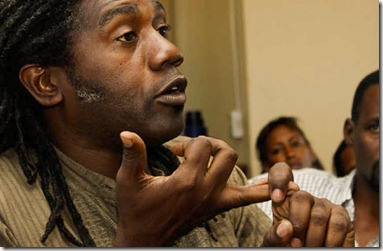
Roberto Zurbano
Roberto Zurbano

This past March 23, the prize-winning essayist, critic and literary investigator Roberto Zurbano, who up until this moment functioned as the director of the Editorial Fund of Casa de las Americas, was dismissed from the position.  This measure was taken a few days after the US newspaper “The New York Times,” published an article under the headline “For Blacks in Cuba the Revolution Hasn’t Begun.”  In an interview given to The Associated Press, in which he clarified that the headline he gave his article was “For Blacks in Cuba, the Revolution Hasn’t Ended,” Zurbano reaffirmed his essential ideas on the subject when he stated that, “on racism there is still much to discuss.”

Rather than driving an objective reflection on the subject, the aforementioned article unfortunately provoked a bit of throat-slashing on the part of some Cuban intellectuals who did not share his opinions.

As it is, the ensuing controversy tested Zurbano’s proposal about the survival of racism in Cuba.  As this thesis coincided with opinions that I have shown in various works on racial discrimination in Cuba, I took advantage of the opportunity to return to the vital point of social relations in Cuba and their effect on the life and social development of the dark-skinned population in Cuba and consequently on all Cubans.

The essential point is that throughout our history racism was not treated in the comprehensive way that such a complex phenomenon requires. This failure is one of the causes for its endurance and continuation throughout the 20th century, in spite of half a century of revolutionary power. To augment this claim, I will briefly list in the form of a thesis a group of key facts, aspects and moments related to this social phenomenon. continue reading

The concept of race as a group of hereditary characteristics is certainly without foundation. As a social construct it has a damaging effect on human dignity. In Cuba, it stems from a complex phenomenon intertwined with our economic, sociological and cultural history which is replicated over time.

From a sociological point of view the nation is the fusion of the principal social factors which make up a country, resulting from a long process of gradual cohesion as well as social, cultural, and economic integration that gradually moves, in time and at a given moment, towards unity across differences.

Black Africans appeared on the Cuban scene in the beginning of the 16th century, but it was towards the end of the 18th century that their massive entrance transformed the ethnic composition of the population, the geography, the history, the culture and the social structure of the country.

Not being the owners of their own bodies and subjected to inhumane living conditions, blacks responded by rebelling. They became runaways, formed apalencamientos* and staged uprisings. Through these rebellions blacks almost single-handedly wrote a chapter of our national history.

Faced with total inequality with respect to whites, blacks became creole, but in a different way from white creoles, which, to paraphrase Jorge Manach, precluded their a sharing common goal on top of the distinguishing features.

During the 10 Years’ War, begun in 1868, land-owning whites aspired to economic and political liberty while blacks aspired to the abolition of slavery. The simultaneous existence of these goals — independence and abolition — constituted the starting point for the formation of a national consciousness in a context where inequality and racial discrimination acted in opposing directions. This war, though it ended without fully achieving its objective, dealt a blow to the institution of slavery by liberating slaves who had participated in battle during the war and legally endorsed some liberties (contained in the Zanjon Convention), which gave birth to Cuban civil society.

In the interim between the 10 Years’ War and the start of the War of 1895, Juan Gualberto Gomez — supported by the colonial resolutions that limited exclusion from service due to race — introduced various principles similar to those that Martin Luther King would use six decades later in the civil rights struggle of American blacks and founded the Directorio Central de Sociedades de Color. From his position as a social activist he mobilized thousands of blacks to resistance. Facing arduous incidents while adhering to the law, he won access to spaces and facilities such as balcony and orchestra seats in theaters as well as to public classrooms, which until then had been limited to white children.

At the re-initiation of the war of independence, when slavery had already been abolished, blacks were newly incorporated, this time with an agenda of social equality. As before, due to their expertise in the use of machetes and living in the jungle, equality and solidarity between black and white fighters overcame racial prejudice.

With the coming of the Republic, where these skills were useless, a sociological program aimed at reducing the economic and cultural gap between whites and blacks was lacking. That lack was reflected in public office, in commerce, banks, insurance agencies, communications, transportation, tobacco stores and even the armed forces, which replaced the Liberation Army was made up mostly of whites, in a country where the 60% of the fighters for independence had been black.

The persistence of inequalities and the constant frustrations in the early republican years led to the founding of the Independent Party of Color in 1908 and the armed uprising of its members in May 1912. This last action ended with the most horrible crime committed in our history, because in addition to the thousands of blacks who were killed, killing happened between white-skinned Cubans against black-skinned Cubans, once again hindering the unfinished process of a common identity and destiny.

In the 1930s, various press organs, radio stations and leading figures in Cuban politics and culture engaged in a public debate against racism, thereby aiding the integration and social and cultural development of blacks, and as a result, strengthening the awareness of a common destiny. One of the results was the inclusion, in the 1940 Constitution, of a legal principle essential to the promotion of equality between blacks and whites, that stated, “all discrimination on the basis of race, color or class or any other cause harmful to human dignity is illegal.” However, this principle was left incomplete in the never enacted criminal law against discrimination.

In 1959, the Democratic and Popular Revolution dealt the most serious blow to Cuban racism throughout its history. However, with the dismantling of the existing civil society, in addition to its benefits also lost were the civic instruments and spaces that had contributed to the progress made so far. The mistake was to believe that racial discrimination existed as a result of social classes, so that once these were eliminated, they proceeded to announce its end in Cuba. Such a significant “achievement” led to the decision to remove the subject from public debate. Thus, racism, expelled by law, took refuge in people’s minds, waiting for better times.

The equality of rights among blacks and whites proclaimed by law had a weak spot: inequality that had been inherited and left unresolved. In other words the starting point, seemingly the same for both blacks and whites, put the former at a serious disadvantage. This explains why universities that had been primarily black and mulatto re-acquired their previous racial profile over time. Why was this? Among the reasons were that black families, with rare exceptions, could not give their descendents’ studies the importance they required given their own backgrounds. (I remember my father, the grandson of a slave, telling my mother, “Leave him be! He will study when he is big.”) In other words the familial support so necessary to success was missing, which facilitated a return to the former status quo.

Even during the very real crisis Cuban socialism experienced in 1989, blacks did not emigrate for well-known historical reasons and missed out on the much-anticipated cash remittances from relatives overseas. Evidence of this can be seen in the re-appearance of social inequities, in the high proportion of blacks in prison, in their significant presence during the mass exodus of 1994, in their concentration in poor, marginalized neighborhoods and subsequently in the re-emergence of discrimination.

In short, throughout our history racism was not treated in the comprehensive way that such a complex phenomenon requires. In colonial times there was no interest in solving the problems of the black man. The issue was recognized during the republican era, which allowed for the right of association and political debate, addressed it in the constitution and achieved certain advances. These, however, were not accompanied by corresponding institutional measures.

The consequences of racism are reproduced and continue to be present in our society, where the decision to increase the proportion of blacks and people of mixed race en some bodies, as has happened in the National Assembly of People’s Power, gives evidence that the problem is still present.  The most recent proof is exactly the controversy around the black intellectual Roberto Zurbano.

In this polemic there are two distinguishing aspects: one, whether racism is present in Cuba or no; the other, the treatment of the subject given by Zurbano’s critics.

Regarding the former, exactly related to the theories presented, I will only refer to the two basic questions posed by Zurbano:

The economic difference created two contrasting realities that persist today.  The first is that of the white Cubans, who have mobilized their resources to enter into a new economy driven by the market and to reap the benefits of a kind of socialism that is supposedly more open.  The other is the plurality of the blacks, which is witness to the death of utopian socialism.

This statement confirms the similarity between the situation between the blacks higher up in the Republic, lacking economic means and instruction, and the lack of positioning today, to participate under conditions of equality when faced with the measures of economic liberty that are being dictated.  One fact that reveals the reproduction of the causes, one of the sources of Cuban’s participation are foreign shipments, before which blacks are at a total disadvantage.  Therefore, dark-skinned Cubans continue to be unequal from the start.

Racism has been hidden and has been reinforced in Cuba in part because it is not talked about.  The Government has not permitted racial prejudices to be debated or confronted either politically or culturally.  Instead, they frequently pretend that it doesn’t exist.

Here lies another key to the continuation of racism.  They suspended debate on the subject and now, 54 years later, it’s not only uncomfortable to accept it, but a few of the intellectuals who have attacked Zurbano even go so far as to deny its existence.

Regarding the second aspect, referring to the treatment given the subject by Zurbano’s critics, what jumps out is an additional difficulty in the eradication of racial discrimination in Cuba: the absence of cultural dialogue and debate that has essentially nullified the social sciences.

In Cuba it’s not possible to have a basic, objective dialogue without transgressing the limits imposed by the dominant ideology.  This is a sufficient obstacle to destroy the effectiveness of debate over solutions to social problems.  In this sense the statement of Guillermo Rodriguez Rivera: The Cuban revolution not only began the struggle against racism and discrimination but nor can one can say that this struggle had never been so deep as in this moment of our history, it’s a proposal that completely lacks foundation.

In another part Rodriguez Rivera noted that Zurbano should investigate the subject with his elders.  This and other proposals of Zurbano’s critics reveal the limits established by the powers-that-be which comply in part with intellectuality; a behavior which tends to paralyze thought and debate, at the same time classifying within the absurd and worn down categories of friends and enemies those who think differently from what is permitted.

Without failing to recognize the role played by some emerging spaces for debate, the complexity of the subject of race in Cuba makes necessary public debate, where, paraphrasing Victor Fowler, all points of view participate.

Racial discrimination is and continues to be a serious obstacle towards sharing a common destiny among all Cubans.  For all of these reasons, the controversy provoked by Zurbano’s article should be converted into a road towards reaching a consensus among all possible solutions to the unresolved subject of racial discrimination in Cuba, whose fundamental lines  emerge  from studies, public debate and consensus.

No one holds the truth in his hands, but we can shape it among all of us.  What is clear, as history has shown us, is that eradication does not only depend on the proclamation of laws, which is what has been done since the birth of the Republic until today, but also from a multidisciplinary analysis of its origin, development and treatment, as in necessary projects directed to this goal.

* Apalencados, stable communities of runaway salves, were located in areas difficult for their persecutors to access, such as shantytowns. Made up of a series huts, they were characterized by economic self-sufficiency.

Published in Convivencia

8 July 2013

UN Experts Concerned About the Situation of Violence Against Women on the Island / Yaremis Flores

HAVANA, Cuba, August 1, 2013, www.cubanet.org.- The members of the Committee on the Elimination of Discrimination against Women (CEDAW) bluntly expressed their concern “with the persistence of violence against women, including domestic violence in Cuba,” says a report published last July 25 on its official web page.

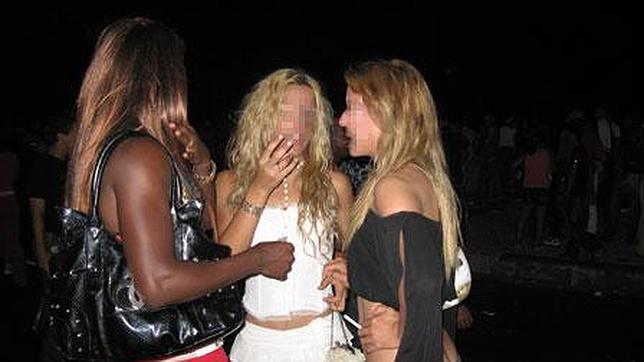
They said that the phenomenon remains underreported, “due to the prevalence of discriminatory socio-cultural norms and denial by the Cuban State of the existence of different types of violence.” Later in their report, they stated that Cuba does not recognize the exploitation of prostitution. This particular issue, was fully addressed in an article from the Spanish newspaper ABC published last Tuesday.

The critiques were reported following an examination of Cuba by the Committee, in a version edited and published not only in English.

The Committee was concerned by the lack of knowledge about the human rights of women in the national population and proposed firmly establishing a legal culture based on non-discrimination and equality of women.

CEDAW noted that although Cuban law prohibits discrimination based on gender and stipulates that all citizens have equal rights, they remain worried that Cuba “has failed to include in its legislation a definition of discrimination against women” nor is there a law specifically against domestic violence.

One of their suggestions was to ensure effective access to justice, including the provision of free legal aid programs and protection for victims of violence. They also recommended that the Cuban establish an effective and independent mechanism of monitoring for women detainees, which they can access without fear of reprisals. continue reading

Thus, they considered it important that Cuba provide mandatory training for prosecuting judges, police, doctors, journalists and teachers to ensure a raise in awareness of all forms of violence against women and girls.

The CEDAW Committee drew attention to the lack of a complaints mechanism for reporting cases of discrimination and violation of the human rights of women and the absence of a national human rights institution.

Although the report referred to the Federation of Cuban Women and the Houses of Orientation to the Woman and Family receiving complaints, the numbers of complaints received were limited and outdated. Actually, not all Cuban women identify these spaces as a possible solution to their problems and in some cases they simply transfer the case to another government institution.

With respect to non-governmental organizations (NGOs), the Committee noted that not all organizations could participate fully in the process. They urged the State to improve cooperation with NGOs.

In this last review only three aspects received positive mentions. Among them, the adoption of laws such as social security, the ratification of some international standards such as the Protocol to Prevent, Suppress and Punish Trafficking in Persons, Especially Women and Children, and the high representation of women in the National Assembly.

The number of recommendations and key concerns were almost double those from the previous periodic review. However, in a press conference given by the Cuban Minister of Justice, Ms. Maria Esther Reus González, to the media NOTIMEX and Prensa Latina, describing the CEDAW committee’s presentation as useful to Cuba.

Ms. Reus González said that this exercise “has allowed us to showcase the achievements and empowerment that Cuban women have achieved, while it has served to hear the suggestions, views and opinions of experts and the Committee experts, who will always assist in the improvement of the economic model and legislation that is developing in our country.”

After a thorough reading of the CEDAW report one understands their deep sense of concern about the situation of the island. On the other hand, the denial of some of the problems by the official Cuban delegation does not allow relieving the context of women.

According to the Committee, Cuba will have to inform in writing, within two years, the steps taken to implement the recommendations and they invited the State to submit to the next examination to be held in July 2017.

1 August 2013

Communication About the Whereabouts of Angel Santiesteban

After several days of uncertainty, we finally know the whereabouts of Angel Santiesteban Prats. They have him confined in a very small military installation that has no name, situated in the Lawton neighborhood, 10 de Octubre municipality, in Havana.

While his “whereabouts” are now known, this in no way changes his situation of being “kidnapped” because they have isolated him and are holding him incommunicado, without the right to phone calls or monthly visits, as reported unofficially by an official from Prison 1580 when he confirmed to his family that Angel had been moved from the that penal center.

The fact that he is in a military facility under such inhumane conditions once again confirms the violations committed by the authorities of the Ministry of Interior against the civil rights of Angel, who is not only serving an unjust prison for crimes he did not commit (crimes never proved and that never could be proved). Confining him in a military facility, in addition to showing that Cuba is now a military regime, violates civil law.

Once again, and until Angel is released and cleared of all the charges they invented, only to silence a voice you find uncomfortable, we remind Raul Castro Ruz that he is directly and totally responsible for the physical and moral integrity of this renowned writer, whose status remains at the center of attention of many people and institutions in the civilized world.

The Editor

8 August 2013

Maleconazo Photographer Shares Links / Karel Poort

Translating Cuba received this message and is posting it here because Karel Poort, its author, is credited with the photos taken of the Maleconazo on the 5th of august 1994.

Hello,

I am sending you a link about the events of 5 August 1994 that is known as “The Maleconazo.” I ask your help to spread the Facebook page “El Maleconazo 1994″ through the “like” button and to share it with allies and friends, both within and outside Cuba.

https://www.facebook.com/ElMaleconazo1994

Many thanks and greetings,

Karel Poort
The Netherlands