Former Mexican ambassador to Cuba Ricardo Pascoe says the reforms announced on the Island are a “desperate attempt” to buy time.
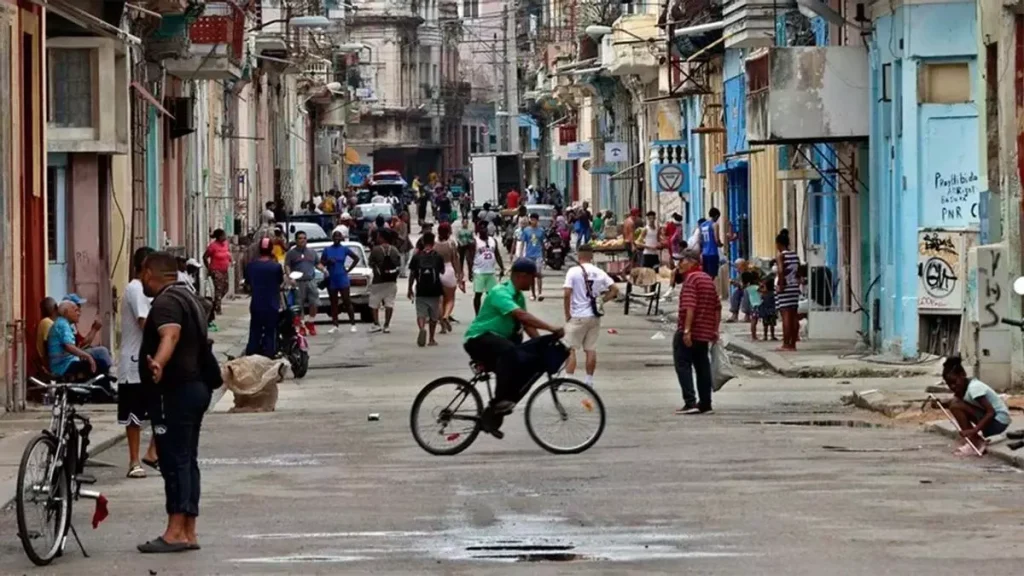
 14ymedio, Mexico City, Ángel Salinas, June 24, 2026 — “Cuba urgently needs to open its economy in a rapid manner because it is in a state close to extinction,” Ricardo Pascoe Pierce, who served as Mexico’s ambassador to Cuba between 2000 and 2002, tells 14ymedio. The political analyst spoke with this newspaper about the 176 reforms grouped into 23 areas, announced last week by the Regime in what he describes as a “desperate attempt” to steer its economy.
However, he adds, “the conditions are not in place for what they have proposed to work, and it is certainly not going to be enough to address the Island’s problems.”
The problem with the country, Pascoe says, is that “it no longer has time; the bell has already rung, the adventure is over, the model has failed for whatever reasons.” The Regime is backed into a corner: either it “implements a radical internal transformation, as Mikhail Gorbachev did in the Soviet Union, or Washington will do it.”
14ymedio. There is talk of deeper institutional changes and opening up to private investment in an attempt to mitigate the economic crisis. Are the conditions to attract foreign investors being created?
Ricardo Pascoe Pierce. What the Cuban leadership is trying to do at this moment is absolutely overdue. They are attempting, at a time when they are backed against the wall and drowning, a perestroika (the economic reform undertaken by Gorbachev in the former USSR) while trying to avoid political reform. The problem is that the Cuban proposal actually leaves intact the entire structure of control exercised by the Army and the Cuban State.
Who is going to be interested in investing as a capitalist in an economy with a rigid monopolistic structure?
In reality, no one is going to be interested unless they see, for example, a genuine possibility of generating an adequate return on investment. But that takes many years, and Cuba does not have years available. Cuba has months, possibly a year at best.
No one is going to invest in Cuba, much less Cubans in Miami, if there is nopolitical reform and change, especially regarding political prisoners, which is an open wound. Ninety percent of businesspeople simply will not do it, or if some naïve person does, it’s because they are willing to lose their money.
No one is going to invest in Cuba, much less Cubans in Miami, if there is no political reform and change, especially regarding political prisoners, which is an open wound
14ymedio. Nevertheless, some people are enthusiastic. In Mexico, President Claudia Sheinbaum says the opening represents an “important change” and has even spoken of incentives to encourage investment in the Island. Which Mexican sectors or companies would be interested?
Ricardo Pascoe Pierce. As ambassador to Cuba, I dealt with Mexican businesspeople from 2001 to 2003. Investors no longer saw investing on the Island as particularly attractive because there was no security of any kind. The Cuban government did not pay its debts and even appropriated their operations once they were established and officials saw how they worked. Sheinbaum can indulge in whatever fantasy she wants, but not even Carlos Slim, who supports Sheinbaum’s anti-liberal policies despite being Mexico’s richest businessman, is going to want to invest in the Island.
Carlos Slim accompanied then-President Vicente Fox when I was in Havana, and he told me: “There is no guarantee of any profitability here.”
Among other things, because the Cuban government’s practice has always been that when it sees a private business progressing and prospering, it immediately appropriates it. That model will continue because the reforms are not affecting the political structure, and while that may have worked, I insist, in China and Vietnam, which spent decades developing the model, Cuba does not have decades.
Sheinbaum’s proposal regarding Cuba is simply because she does not understand the situation and is promoting things based on the fantasies of advisers favorable to the Cuban regime, but it is not going to work. It is not realistic.
14ymedio. Mexico’s relationship with Cuba is more than close. Under Sheinbaum, oil shipments stood out, and now she has announced the resumption of crude deliveries through “private companies.” How would this work, selling fuel through private firms? Could Pemex be the seller, or would it have to create subsidiaries such as Gasolina Bienestar to avoid U.S. sanctions?
Ricardo Pascoe Pierce. First of all, what Mexico did was give oil to Cuba. It was not a sale, even though they said it was and claimed that somewhere in the Mexican Republic the invoices exist. No one knows where they are or for what amount. Obviously, it would be useless to try to look for those payments because they do not exist and never will because the Island does not have the purchasing capacity.
This idea that they are going to resume oil shipments through private companies simply means that the Mexican government is looking for some mechanism. However, they are not going to do it because there is currently no private company in Cuba capable of importing significant quantities of crude oil for its operations.
In reality, it would all amount to pretending that one private company is selling oil to another private company when neither of the two actually exists. I do not think Mexico will be able to do that. Furthermore, Washington’s scrutiny at this moment is such that there are really no conditions for carrying out an operation of that kind.
Ultimately, this is not going to solve the Island’s urgent needs, especially now that the U.S. has decided to seriously tighten the Cuban issue, particularly after what was voted on in the Senate, which already prohibited President Donald Trump from resuming the war in Iran, meaning they are completely shutting down that spectacle.
What Mexico did was give oil to Cuba. It was not a sale, even though they said it was and claimed that somewhere in the Mexican Republic the invoices exist
14ymedio. You say one option for Cuba is an internal transformation like the one carried out by Mikhail Gorbachev in the Soviet Union. Can you explain?
Ricardo Pascoe Pierce. We have to look at the historical experiences that transformed this peculiar phenomenon. Karl Marx would die again if he saw what is happening: countries that implement socialism returning to capitalism or a market economy. From a Marxist perspective, this is impossible, and yet we have seen it. We saw it in the case of the Soviet Union, which became Russia. China, which is largely a market-based economic model with a strong state presence but a one-party political system. And Vietnam as well.
The processes seen in those countries, although different, took years to consolidate, and the process was very complex. China, for example, began a transformation during the presidency of Deng Xiaoping that lasted more than 20 years.
The Gorbachev model involved his personal decapitation. In the last years of his life, he was repudiated by Russia’s new leaders, notably Vladimir Putin, who refused to attend his funeral. Gorbachev had to pay that price in order to make the change and break the system.
Gorbachev paved the way for the creation of the Russian Federation, as well as for his economic reforms (perestroika) and political reforms (glasnost).
The big question is whether Cuba’s political leadership is willing to be decapitated in order to save Cuba; that is, to carry out reform internally, without Washington’s intervention, which would involve both economic and political reform. In addition, they must change the Constitution themselves to create a democratic republic with guaranteed freedoms.
That is what the political leadership must do if it does not want Washington to intervene. They are trapped in that dilemma. I repeat, they do not have the 20 years that Deng Xiaoping had.
Fidel Castro explained to me, during a conversation in Havana in 2002, that Cuba “will never make Gorbachev’s mistake.” Therein lies the Island’s existential dilemma. The decision to change must come from the political leadership because, just as in Russia, there is no organized society in Cuba capable of rising up and changing things.
14ymedio. Is Cuba trying to buy time?
Ricardo Pascoe Pierce. These measures they have just approved are a desperate attempt to buy time they do not have. The political leadership has the same fantasy as the Mexican government, though it is a different matter. Both are fantasizing that things will change in November because Trump will suffer an electoral defeat and therefore change his policy. They are absolutely mistaken, especially in Cuba’s case.
The U.S. is not going to stop increasing pressure, so it seems to me that they are betting on an illusion, and it is not going to work.
The problem with the midterm elections is that Washington cannot reach any agreement with Havana that does not satisfy Miami, which is demanding both economic and political reform.
Translated by Regina Anavy
______________________
COLLABORATE WITH OUR WORK: The 14ymedio team is committed to practicing serious journalism that reflects Cuba’s reality in all its depth. Thank you for joining us on this long journey. We invite you to continue supporting us by becoming a member of 14ymedio now. Together we can continue transforming journalism in Cuba.