Sense and Sensibility / Regina Coyula

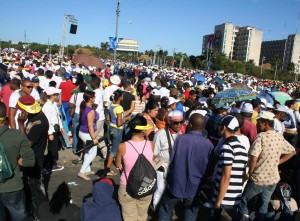
Translator’s note: At the end of this post is a video (without subtitles) of the State Security operation around Estado de Sats during the event Regina appeared in (shown in the above photo). It is this type of operation that she is referring to in the opening lines of her post.

It seems the Estado de Sats setbacks will become an ordinary thing: discouraging apocryphal messages, intimidating operations, unnecessary detentions. They are trying to prevent Estado de Sats from achieving a quorum, by my impression is that it has come to stay, satisfying a need not met by any institutional space, however open it pretends to be.

Invited to speak about self employment, I shared the panel presented by Antonio Rodiles with the journalist Orlando Freire and with Antonio Ocampo and Francisco Valido, engaged in private dining and transport respectively.

I believed that my foray as an “expert” on the topic would make me nervous, but not at all. A relaxed air connected with those present for more than two hours. Questions, opinions, laughter, and in the end, more questions and many compliments.

I had the pleasure of meeting in person a Cuban who lives in Spain whom I already knew virtually. All would have been very fine except for several people being prevented from coming.

At home, after breakfast, I undertook (or took on) the kitchen. A thorough cleaning, of the kind not done every day, in order to put the ego in its place, to remind myself that it’s not about speaking well on a panel, that I continue to be one more citizen.

[youtube=http://www.youtube.com/watch?v=5teUDeXNX3g&w=560&h=315]

Translated by mlk

2 September 2013

Prison Diary LIII: The Cardinal Cuba Needs / Angel Santiesteban

Bishop Siro and Father Conrado

Bishop Siro and Father Conrado

The first time I heard Father José Conrado Rodríguez, on a visit he made to Havana, I was among those at the back of the huge crowd surrounding him, hanging on to every word he said.

To be honest, I must I hung back, because I didn’t know his greatness. My disappointment with the hierarchy of the Catholic Church had caused me to distance myself, after five years of unconditional and consistent collaboration with the diocese of Pinar del Rio.

The last of the Catholics who had made me tremble in my own land, and whom I loved until his death, was my Pope John Paul II.

From the back of the crowd, I heard the words of the priest José Conrado, which immediately fostered a pleasant emotion, giving me goosebumps moved by his passion, his love for Christ and for family. His speech dealt with material deprivation, and strengthening the spiritual, the lack of unity for an inadequate government that could end the conflicts, misery and famine, especially in the east of the country after the devastation of Hurricane Sandy.

Without knowing how, my legs, responding to the call of my soul, carried me up to him and I was only conscious when I found himself looking into his eyes, completely entranced by a simple being, hence so extraordinary, not afraid to say what his heart was feeling. This is my true religion.

He called for an understanding between the government and the opposition, a meeting among Cubans, bringing together the differences and turning us into inhabitants of a prosperous country, with a religious and cultural history sufficient to direct the destiny of a nation.

He asked us to put aside personal ambition, and to respond to the multiple pleas of society to end political differences, that the only thing they have done is promote poverty in a country that had a future marked by the dream of José Martí.

His song healed my wounds, once again I felt hope; but above all my happiness was based on discovering that there was a man of the church who understood my conflicts, knew of my cries, sorrows, desires, shames and showed me solutions.
laura-pollc3a1n-alejandrina-garcc3ada-josc3a9-siro

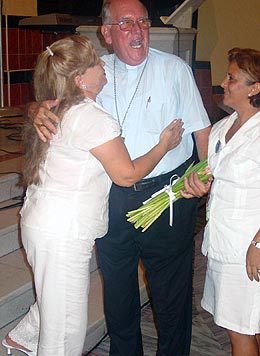
Bishop Siro with Laura Pollan and Alejandrina Garcia

After listening to him, I remember Bishop Siro, already retired to rest from political and ecclesiastical leadership, giving his efforts to Vitral magazine, directed by my beloved friend Dagoberto Valdes, and to maintain his courses and constant interchange with civil society.

From love and the direct work of Bishop Siro, from his cry for a new Cuba, transformed, evolutionary, in which the family unit is first, I learned to be free, to externalize my dreams and to fight for them without thinking of the sacrifice.

Inside the Cathedral of Pinar del Rio, my yearning for freedom grew, along with the the need to share it, to demand my rights and to fight to achieve them.

Father José Conrado, in his night of cries, made me travel, confusing their voices, at times seeming to hear the other, mutated, exchanged his religious and patriotic reasons, and for moments he was Bishop Siro, in another, definitely, Father Conrado, who joined the geography of the national Catholic map, beginning with Bishop Díaz de Espada, Father José Agustín Caballero, the priest Félix Varela, Bishop Siro, Monsignor Pedro Meurice, and now, with a candle in his word, Father José Conrado Rodríguez, Who from the first moment, irradiated by the brightness of his eyes, I discerned as the Cardinal Cuba needs.
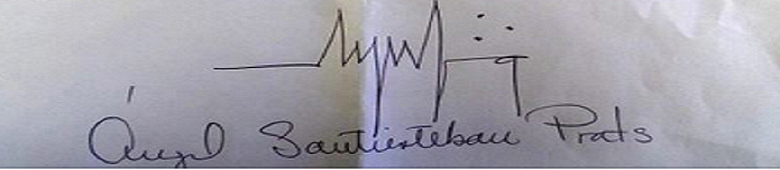
Ángel Santiesteban-Prats

Prison 1580. July 2013

Posted in The Children Nobody Wanted on 2 September 2013

The Story of the Good Pipe* / Fernando Damaso

Cuba has serious medical problems at home. There have been cases reported of cholera, tuberculosis and dengue fever — already at epidemic levels — and other illnesses that have not been seen for decades in this country. In towns and cities there is also a disastrous sanitation and epidemiological situation which has been exacerbated by inadequate health services in clinics and hospitals. Nevertheless, the government of Cuba has reached an agreement with its counterpart in Brazil to provide the services of four thousand doctors to that nation. As the saying goes, “streetlamps outside, darkness inside.”

Forget all the folderol from the publicity release which talks about “solidarity and friendship with the Brazilian people.” The reason this agreement came about is because it serves the interests of both parties. For Brazil it is political. Its government hopes it will help win votes in a future election. Economic reasons drive the Cuban government, which hopes it will bring in cold, hard cash.

It is no secret that this is a juicy business. Of the four thousand dollar monthly salary paid by the Brazilian to each physician, the Cuban government will expropriate three thousand five hundred. The rest is to be “enjoyed” by the employee, within rules and limitations established by the ministerial branch which handles these things. This is nothing new. It is how these missions work and have always worked in most of the fifty-eight countries in which they operate.

Since the production of goods for export has gone from bad to worse here — notwithstanding the “updating” (as Raul Castro’s economic reforms are known) — the business of exporting services has become one of the principal means for generating hard currency. Since most of what is collected remains in the coffers of the state, it can offer professional services at much lower prices than other countries, whose quality is often no better, giving it a competitive advantage.

Meanwhile, if you are over here, try not to get sick. But if it cannot be avoided and you want to get better, look for a doctor who is a friend, one of those who doesn’t give a hoot about “ideological orders” and is a “friend of friends.” But if you cannot find one, then look for a healer (every neighborhood has one) and plenty of herbal medicine, which some call natural. (And if you are a believer, it would not hurt to look to the supernatural as well.) Because the idea that this is a “medical powerhouse” is nothing more than a story as old as that of “the good pipe.”

*Translator’s note: A reference to a circular question that never gets answered, similar to “Who’s on first?” from an old American comedy routine.

30 August 2013

Half a Million “Crazies” Loom / Alberto Mendez Castello

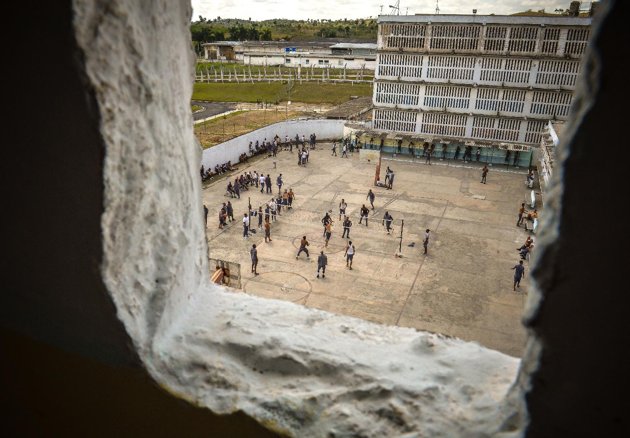
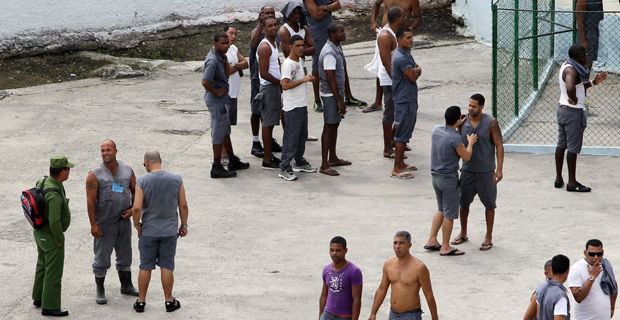
PUERTO PADRE , Cuba , www.cubanet.org – Dragged into the torrent of criminality by genetic defects or by a social environment prone to crime, not a few inmates who today form the very profuse Cuban prison population, have ended up contracting mental illness.

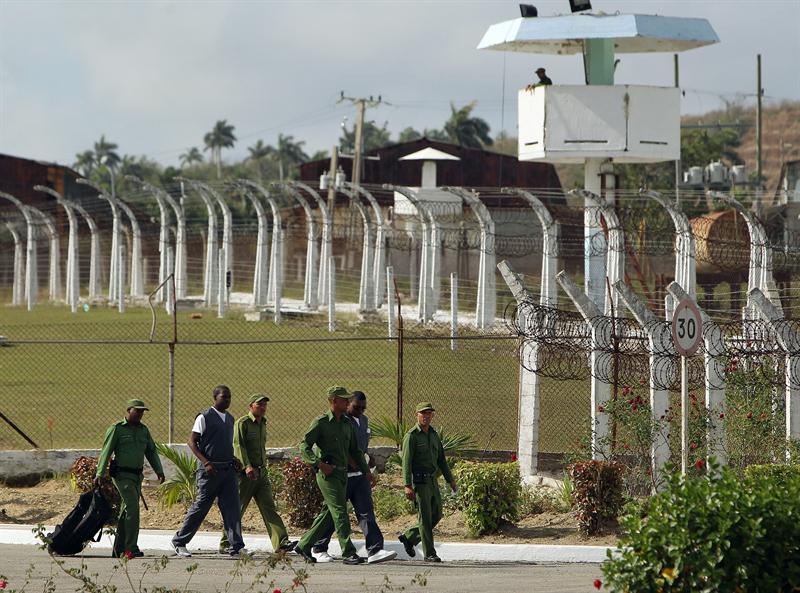
Five maximum security prisons and another 195 prisons form the penitentiary system of the island, where, according to official sources, about 50,000 souls re serving sentences, although human rights organizations place the figure between 60,000 and 75.000.

However, if we add to the above figures the detainees, those who for various reasons spend a few hours to a week in the cells of police stations, assuming only five arrested in each municipality each day, we see that about one thousand more Cubans daily, and that number would be multiplied by the 365 days in the year .

Are Cuban lawmakers action with a view to the future on dementia and crime? According to the Fifth Iberoamerican Congress on Alzheimer’s Disease, which met in Havana October 20-11, 2011, there are 130,000 people with dementia in Cuba. But if this figure is alarming the prognosis is even more so: according to experts, the number of demented could triple by 2040.

This means that in an aging population of about eleven million, almost half a million will suffer some kind of disease that makes it impossible for them to communicate with us and to think clearly.

The exemptions from criminal responsibility are well defined in two paragraphs of Article 20 of the Penal Code: a person is exempted from committing the crime in a state of insanity, temporary insanity or delayed mental development if because of any of these causes he does not have the ability to understand the scope of his action or omission or to direct his behavior.

Now these two sections do not apply if the person commits the crime was voluntarily placed in a state of temporary insanity by the ingestion of alcohol or psychotropic substances.

But if alcoholism is becoming a pandemic in Cuba, which is already having alarming influences on crime, the fractures and breaking up of families is doing no less.

“We would say that Cuba needs today, on the part of its specialists, the precision of a Swiss watch; each of us has as a priceless treasure and we should raise to the level of a national concern every family with a child in prison,” said a sociologist whom I had asked if there are too many prisoners in Cuba.

“The amendments to the Criminal Code, which will go into force from this coming October 1, to some extent will reduce the prison population, as the legislature has enacted the choice of a fine in lieu of imprisonment,” replied this notable criminal lawyer. But, he was wondering, what about those who are already in jail? What about future inmates?

Only an amendment concerning mental health has been considered by the legislature, to tailor the current criminal laws in Cuba: authorization for the Provincial Court of the territory where the inmate is serving his sentence, to make it so that without referring back to whomever executed the sentence, the prisoner can be referred to a psychiatric hospital.

A death now comes to mind: that of Harold Brito Parra, psychiatric patient in the provincial prison in Las Tunas. Dead not so much from delayed medical attention as from the crushing and inconsiderate legal attention. In the same circumstances, Harold would also die today, even with the very recent amendments to the Code and the Criminal Procedure Act.

About the Author

Alberto Mendez Castello (born Puerto Padre, Oriente, Cuba 1956).Degree in Law and Criminal Sciences, graduate in Operational Management. Although an Interior Ministry official from a very young age, professional inconsistencies with his ethical ideas left him no choice but to leave that institution in 1989 to engage in agriculture, literature and journalism. Nominated for the “Plaza Mayor 2003” Novel Award in San Juan Puerto Rico, and the “Max Aub 2006 International Stories Award in Valencia, Spain .

From Cubanet
30 August 2013

Inventory Adjustment / Frank Correa

HAVANA, Cuba , August, www.cubanet.org – Among the best thought-up institutional ways of stealing was, for a long time, the “Inventory Adjustment,” a concept introduced in commercial enterprises, which allowed them to absorb a kind of black hole of countless “oddities,” which were not being analyzed and much less being called by their name: Theft.

Inventory Adjustment was a standing item on the agenda of the Board of Directors. Masking multiple benefits through misappropriation, that no one dared to denounce, for fear of being frowned upon by the other leaders of the company.

At the end of the month, all the warehouses undertake a count of their products, but there was always a disconnect between the records of the department of Economics and what really existed. This is called “Inventory Difference,” a concept where losses occur due to deterioration, breakage, confiscation… in numbers that reached tens of thousands of pesos, which added up between all the companies in one province could amount to millions, and which grew each year, to an uncontrollable point.

The difference in inventory was a complex economic event where several factors converged. From broken roofs which let the rain in which in turn spoiled many products, with the reports doubling or tripling (and with the “losses” later sold on the black market), to unpunished “credit notes,” where the sole signature of the Head Manager justified spending money from a bill in the cash register directly to the pocket.

In the wholesale companies one anecdote became proverbial, which occurred in warehouse 637 in Guantanamo, when surprise inspection found a half ton of rice accounted for as “sweepings,”  that is not fit for consumption, having been spilled during the downloading. With irony, inspectors congratulated the warehouse workers, “for having collected the spilled rice to pack it back into the bags, and then seal them, as if they had just left the producer in Brazil.”

The ultimate of these company directors, deputy directors, accountants and financial managers, was to institute an internal call for “Inventory Adjustment,” which , at the end of the month, magically erased 14% of the difference issued in inventory. That is, of every hundred thousand pesos, twenty-eight thousand are automatically subtracted first day of each month.

Very few of these authors of authorized embezzlement ever paid for their crimes. Today almost all are retired, or dead. Those who survive look askance at the new Comptroller, and — although they know that corruption is alive and kicking —  the take as their greatest enemy the new discourse that calls for a fight against it. They dream of the happy times when no one talked about the issue, when everything was easy and everything was resolved with “Inventory Adjustments.”

About the author

Frank Correa, born in Guantanamo in 1963. Storyteller, poet and freelance journalist. He has won prizes in the Regino E. Boti, Ernest Hemingway and Thomas Savignon contests, all in 1991 . He has published a book of stories, La elección.  beilycorrea@yahoo.es

30 August 2013

Truth / Luzbely Escobar

1
The people have never been lied to. The unity of our people is not based on idolatry of an individual or in a servile cult to an individual, it is based in a deep and solid political political consciousness. And the relations between the leadership of our Revolution with the people are based on the consciousness, are based on the principals, are based on the proven loyalty, are based, among other things, on the fact that the people have never been lied to. Fidel, 18 July 1985
3
Five Heroes of the Nation. They will return!
7
The lie can travel very far, but in the end, the truth prevails. Long live Fidel.

2????????????????????????????????????????????????????????????????????????

30 August 2013

Petition To the National Assembly of People’s Power of the Republic of Cuba / Wendy Iriepa and Ignacio Estrada

Havana, 26 June 2013

To the National Assembly of People’s Power of the Republic of Cuba:

The Constitution of the Republic of Cuba in its Article 63, reads verbatim:

All citizens have the right to lodge complaints and petitions to the authorities and to receive attention or pertinent responses within a reasonable time, in accordance with the law.

And in accordance with its letter and spirit, we the undersigned are addressing that maximum level of government in the nation with the following.

CITIZEN PETITION

According to principles reflected in the Preamble to the Yogyakarta Principles with regards to the application of international law of human rights in relation to sexual orientation and gender identity, and establishing that:

“RECALLING that all human beings are born free and equal in dignity and rights, and that everyone is entitled to the enjoyment of human rights without distinction of any kind, such as race, colour, sex, language, religion, political or other opinion, national or social origin, property, birth or other status;

“DISTURBED that violence, harassment, discrimination, exclusion, stigmatisation and prejudice are directed against persons in all regions of the world because of their sexual orientation or gender identity…

“NOTING that international human rights law imposes an absolute prohibition of discrimination in regard to the full enjoyment of all human rights, civil, cultural, economic, political and social, that respect for sexual rights, sexual orientation and gender identity is integral to the realization of equality between men and women and that States must take measures to seek to eliminate prejudices and customs based on the idea of the inferiority or the superiority of one sex or on stereotyped roles for men and women…”

Considering that in our country such conceptions are still very far from being met within Cuban society and are not reflected in the legislation, we believe it appropriate to REQUEST:

  1. The official acceptance and compliance with the Agreements of Yogyakarta.
  2. That national authorities undertake a wide investigation of everything related to that negative event in our history known as Military Units to Aid Production (UMAP) and the results be published in the national media .
  3. That those responsible for these adverse events are brought to justice for the repeated and massive violation of human rights violation of an indefinite number of Cuban citizens.
  4. That the use and arbitrary application of the concept “state of dangerousnous” in the existing Criminal Code against persons for the sole “crime” of sexual orientation be publicly explained.
  5. That a public debate is opened on the forced exile many homosexual citizens were subjected to.
  6. That the violent deaths of some homosexuals on the streets or other locations be explained.

And, for your information, we are are submitting this issue to the People’s Power at that same time we open this document for signature by citizens who want to do so.

Wendy Iriepa Díaz
Ignacio Estrada Cepero

8 July 2013

The Same Dream, for Cuba / Mario Lleonart

1377651836_Una-de-las-diapositivas-de-mi-sermón-este-domingo-300x225Text of the poster: Christian Cubans also have received all the divine means Martin Luther King had at his disposition to combat evil. God willing we make use of them.  

This Wednesday, August 28 marks 50 years since the famous march on Washington lead by Martin Luther King Jr. (1929-1968) demanding the recognition of rights of African-Americans. From Cuba, I follow the example of this hero of faith. To these oppressors who constantly threaten and stalk beneath the taboo that Christians should not get involved in politics today I return to give the example of the life, work and homily of this pastor baptised as I am. And I warn you; watch out for me if God gives me the opportunity, as he had, some day to participate, too, in a march on Havana where I will express that I also have a dream, similar to that of Reverend King, “With all and for all Cubans.”

27 August 2013

Father Conrado: Evangelist or Politico? / CID

Padre ConradoBy Karel Becerra *

The compatriot José Conrado Rodríguez Alegre, known as Father Conrado, Catholic but above all Cuban, visited Argentina and among his activities he met in Buenos Aires with a group of Cubans and Argentinians who carry Cuba in their hearts.

I went to the meeting with great interest because the Father Conrado — who has been free to come and go from Cuba for years — knows the Cuban problem from different perspectives. The meeting lasted several hours, during which we talked about the Cuban Catholic Church, the opposition and the regime.

Father Conrado expressed “concern about the current situation of the Cuban people, social pressure has been increasing,” and he does not rule out the possibility of an explosion. According to what he said, this concerns the government, given the question of changes. On lifting the embargo the Father Conrad said, “we need some preconditions .”

On the role of the Catholic Church, he said that Francisco, “is a Pope we have been waiting for, the church removes the superfluous and comes down from the altar, the church is needed in Cuba. It is the church I want because I’m a priest of the people.”

He said Bishop Jaime Ortega and the Church have always been on the side of the Cuban people and that,”Bishop Jaime is really worried.” Father Conrado also referred to Jaime’s forthcoming retirement and his confidence that the Pope will bless us with the election of a new Cuban bishop; it seems that this is a question of months.

In his opinion, the place for the Cuban opposition is on the island where the people will have the last word. He highlighted the “opposition groups and leaders who today are making a move with perspectives of the future, members of UNPACU and opponents such as Jose Daniel Ferrer, Coco Guillermo Fariñas, Antonio Rodiles and the talented young Eliezer Avila.

He made a special mention of Yoani Sanchez for whom he “keeps a personal affection, along with her husband Reinaldo.” He spoke of the talent and dedication shown by Yoani, whom he considers a charismatic leader with a future within the island.

He didn’t address the potential for the Christian Liberation Movement (MCL) nor a mulatto doctor that one of those identified as Dr. Oscar Elias Biscet, nor did he mention the extensive organization of the Independent and Democratic Cuba (CID) in Cuba. I left that memorable meeting with the impression that the Father Conrado has already chosen his political activism.

Karel Becerra is the Deputy Secretary of International Relations and Coordinator of the blog CID Cuba Advisory

24 August 2013

Celebrating the Third Anniversary of the Founding of Free Peasants Committee of CID / CID

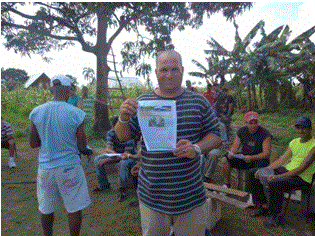
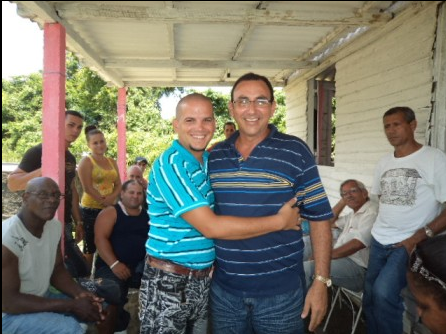
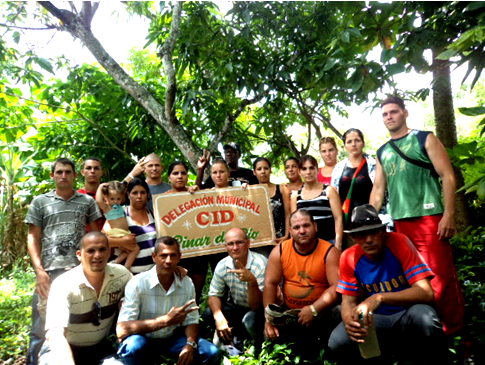
On the morning of Sunday August 25, 2013, members of different organizations met at the home of Rolando Pupo Carralero, President of the Committee of Free Peasants of the Independent and Democratic Cuba Party (CID), at the headquarters of this organization home to celebrate the third anniversary of its founding.

Several days earlier, it had already been decided by the members of the Committee of Farmers that celebrating this date was very important to them. Then the preparations began. Everyone was invited, with the news passing by word of mouth and with great care, so that it would not filter out to the repressive dictatorship.

With much work they managed to get everything they needed for a great celebration and finally the day arrived for everyone. From early in the morning, the dictatorship’s dogs were already circling, but the guests were smarter, they all came with muddy shoes and pants rolled up to the knee, as they had to leave the main road guarded by the henchmen, to take to the verges, ditches and rice fields and even crossing mountains, but in the end, all together as God intended.

The meeting began with the singing of the notes of our National Anthem, Rolando Pupo Carralero then spoke and said that the Free Peasants Committee is an organization which was founded on August 20, 2010, with the aim of bringing together all those peasants who one way or another do not want to remain under the yoke imposed by the Castro regime and who are willing to break the chains that binds them to a production model that has enslaved them for over 50 years.

He also listed the complaints and the needs of tobacco industry and the abuses of the farmers in the area. Also, Roberto Blanco Gil, Chairman of the CID Steering Committee Against Abuse took the opportunity to distribute 20 copies of the weekly The New Republic.

At the meeting Noralys Martin Hernández, provincial delegate to the Federation of Rural Latin AmericanWomen (FLAMUR) in Pinar del Rio, congratulated the members of the Committee of Peasants for all the work they’ve done in this time and urged them to continue fighting for a free and Democratic Cuba .

José Rolando Cáceres Soto, provincial director of the Cuban Revolutionary Party (PRC) congratulated all the farmers with a big hug and said he felt proud to know that there are peasants fighting for a Cuba of all and for the good of all. The meeting ended with cries of Down with Fidel! Down with Raul! LongLive the United Opposition!

Present at the meeting, all from CID, were Rolando Pupo Carralero, Yuliet Rivas Lugo, Yamilys Valdés Rodríguez, Yusniel Pupo Carralero, Luis A Ruiz Calderón,  Orleans Bentos González, Berta Irene González, Yordan Pupo Carralero, Islei Bentos Gonzáles, Pedro L Hernanz Rodríguez, Edisbel Forteza, Wibi Alvares Gonzalez, Domingo Hernández, Yoandris Hernández Ceballos, Andy González Hernández, Belkis Pérez Pérez, Víctor Pérez Martínez, Roberto Blanco Gil, Rogelio Loases Fuentes, Hermes Rodríguez and Vidal Barrios Pérez.

Guests from the People’s Revolutionary Party (PRC) were: José Rolando Cáceres Soto, Idalberto Abascal Quintana, Osnier Reyes Jaime, Pedro A Padrón Amor, Esteban Ajete Abascal, Luis A Hernández Arencibia, Danés Benítez, Rasbel Espinosa Caraballo, Lázaro León Alvares.

From FLAMUR  Noralys Martin Hernández, Olga Lidia Torres Iglesia, Ana Maris Mérida Serra, Irina C León Valladares.

From the Pedro Luis Boitel Party, Eliosbel Garriga Cabrera, Pedro L Sabat Valdés, Maikel A Hernández Perdigón, Aramis Hernández Perdigón, Yamirka Ledesma Santana, Yancarlos Hernández Perdigón.

From 10 de Octubre, freelance journalist José Martinez and Luis A. Hernández Marrero.

29 August 2013

Yelky Puig Released in Pinar del Rio After Eight Months in Prison / CID

In December 2012 the CID Provincial Coordinator in Pinar del Rio was sentenced to one year in prison in a trial that was a travesty. Yelky Puig was a member of the State Security who, after leaving their ranks, joined the CID and joined other former employees of the repressive apparatus of the organization.

The regime saw in Yelky Puig’s opposition activism a very dangerous precedent and decided to punish him no matter what.

Yelky Puig named Provincial Coordinator for  the Ricardo Medina National Executive Committee (CEN).

This past week Yelky was released on parole. Yelky expressed thanks for the support his family received during his time in prison and said that his faith in the CID is unwavering and that during his imprisonment he was about to mature ideas and projects.
After his conviction the CID responded with more delegations and further growth of activists in the organization.
The response exceeded expectations. So far in 2013 three successful projects have been implemented: The weekly The New Republic (LNR), the Ombudsman of the People of Cuba and the Cuba Advisor blog.

1) Ten CEN branches nationwide are given the responsibility of defending people with regards to on their most pressing problems, for which they have appointed ten regional ombudsmen. Work has been intense, consistent and successful.

2 ) Another ten delegations were made responsible for the weekly work party: The New Republic and this effort have been successful. Week after week this has been published weekly with news of interest to Cubans on the island.
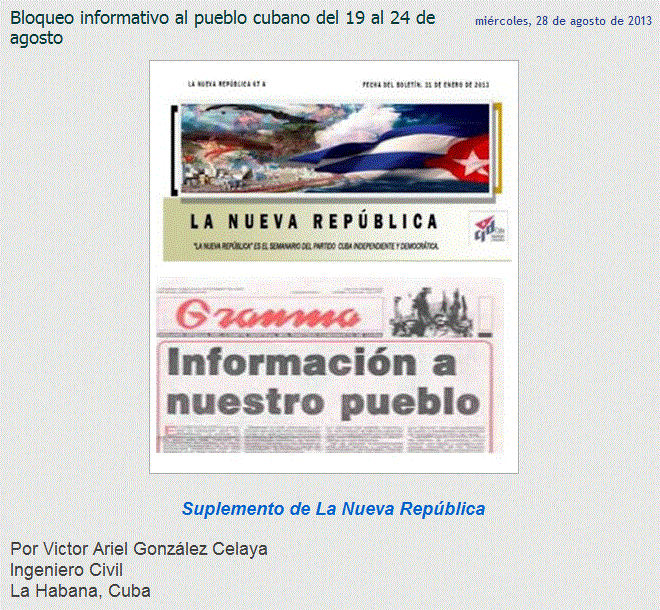
LNR has been reinforced by the supplement by the Information Blockade to the Cuban People, which consists of a critical analysis of the censored news published by the regime and others.

Simultaneous to this work another 10 delegations were held responsible for increasing the number of activists in their areas of influence and creating new delegations. We could not be more pleased with the results.3) The Cuba Advisory blog is a website where information is published weekly in English addressed to Canadians who may be interested in traveling to Cuba. This was a project carefully planned and has been a success since it was made public. Before the end of this season, and according to conservative estimates, the blog must have will have caused a loss to the Castro regime of two million dollars in four months.

If the dictatorship believed the Yelky Puig’s unjust sentence would weaken the CID organization they made a serious error in judgment. The CID has been consolidated in the westernmost province of Cuba through the efforts of delegates and activists and the dedication of the Ombudsman Onelsy Díaz Becerra and National Executive Committee member and Chairman of the Free Peasants of the CID Rolando Pupo Carralero.

1 September 2013

Orange Juice Runs Through My Veins / Mario Lleonart

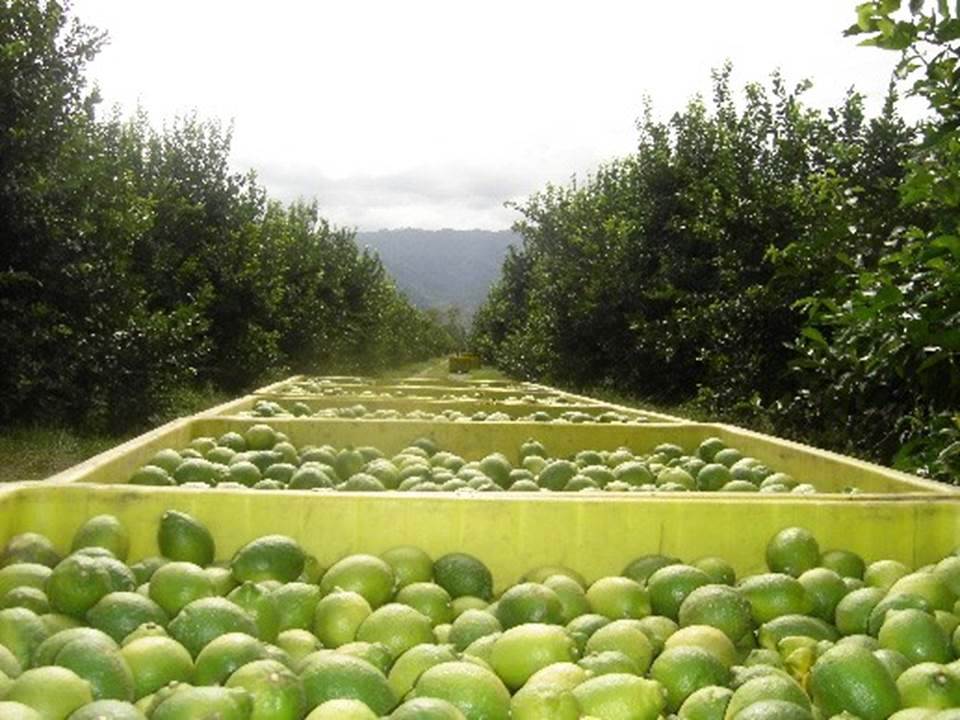
Not even I understand how much those nearly eight months — from 30 November 1993 to 28 July 1994 — affected the rest of my life. I was used as cheap and reliable labor, exposed to hard labor in the citrus harvest, to the substantial economic benefit of the Cuban regime and the Grupo B.M. y Waknine & Berezovsky Co. Ltd. Over the years now I hve come to understand that it was a chapter God had for me. The experiences I went through had to do with things far beyond what I imagine, given all that I have been and done since then.

My friend Omar Lopez Montenegro whom I met last June on my trip to Poland excitedly tells his experience at the famous Pre-University of de la Víbora, a site which has also been immortalized thanks to another of its graduates, the writer Leonardo Padura Fuentes, who turned this mythical place into the origin of the backstory of his character detective Mario Conde.

The joint non-violent resistence of Omar and other friends prevented some gatekeepers from cutting their long hair during a period of mobilization in the field. I lived something similar in Boom 400 of the EJT (Ejercito de Trabajo Juvenil, or the Youth Labor Army) and above all the vivid outrages will stay with me forever.

After walking for three months among the concentration camps adjacent to the towns of San Jose Torriente and San José de Marcos, they made us return to that of Socorro en Pedro Betancourt. Supposedly from this Boom 400, which was our original camp, the suppliies assigned to us should have arrived, but we received nothing during those three months during which we wandered on some supposed mission whose high work goals were never met.

During those three months we didn’t even get a pass to go to our homes. We felt sorry for ourselves. Our clothes were dirty and ragged as could be. Most of us were walking barefoot, a few with broken boots. One of the generals named Acebedos came by for inspections and called us “the shirtless”, and a relaxed captain in the camp next to Torrientes, seemingly moved by compassion, told us — pointing at his massive gut: “Don’t be discouraged boys, I lost this belly in the army”.

On returning to our original camp, we held out the hope that things might change, but on arrival, a new unit chief met us: a Navy captain whose punishment was being sent to the EJT. And I became aware of another characterisic of this invincible army: it was the punishment site for MININT, Armed Forces, and even Navy officers.

For us, the officer’s reception was to inform us that we’d just arrived at Boom 400, and we had to earn all we asked for. An additional answer to our worries was the delivery of immense Chinese machetes, and after a miserable lunch, he made us go to some place infested with the invasive marabú weed that we had to pull up and prepare for the planting of citrus.

That was more than a humiliation. Supposedly, in those conditions we didn’t cut even one marabú, our patience having completely dripped away, so even better we organized and so it was like that night in May 1994 when, in protest, the complete squad deserted and we agreed that nobody would return for at least a week. The silent exit from the camp and the trip, one by one, through the orange orchards towards the national highway where in a matter of minutes we undertook a course towards Las Villas, were the most glorious moments of those eight months of abuse.

On our return, at least those who returned — some never did — we were subject to trial in the camp’s ampitheater, seeking an answer: “Who had been the leader?” The end of the trial consisted in the delivery of the supplies they’d deprived us of for the last eight months, our manner of nonviolent protest showed the vulnerability of those who thought they had power and made us discover that power was really in our hands.

The en masse desertion of an EJT squad had made the news all over the island and uncovered corruption in high places. Although I was liberated, that unforgettable July 28, 1994, I can’t deny that since then, orange juice runs through my veins.

Translated by: JT

12 August 2013

To Live in a Tenement, Without Hope / Leon Padron Azcuy

Photos: León Padrón Azcuy

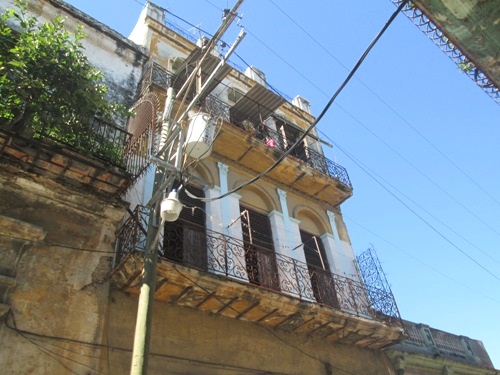
Havana , August, www.cubanet.org – Over a year ago, the Havana news channel reporter, Graciela Resquejo, tried to report the terrible living conditions, life-threatening, in which many families live in the solar — tenement — at No. 12 Jesus Maria between San Ignacio and Inquisidor, in Old Havana.

But to no avail. That report was censored by political commissars of Cuban television.

Resquejo apologized days later to neighbors and urged them to relentlessly pressure the institutions responsible for housing, so that one day they might get out of this hell.

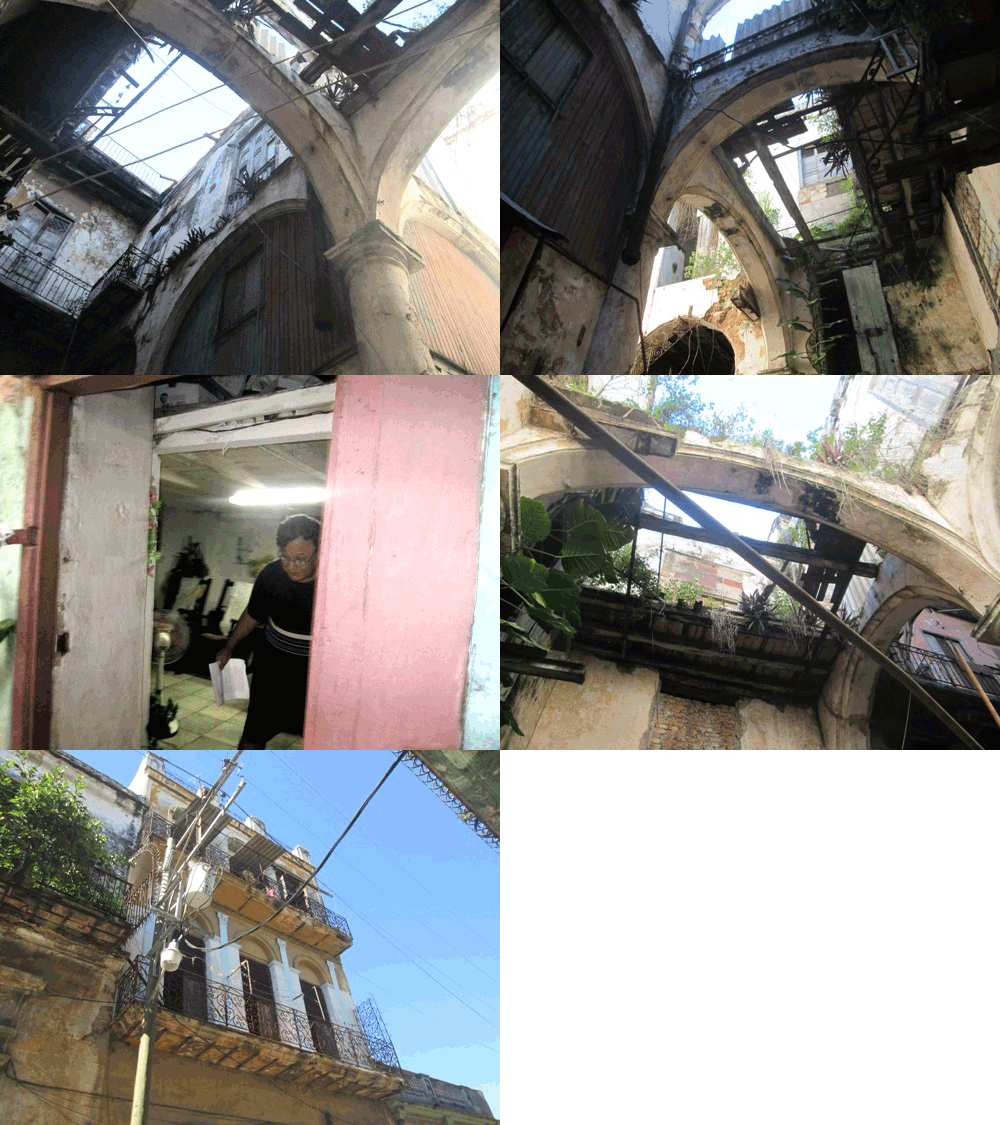
The solar at No. 12 Jesus Maria is a disaster. Its tenants live in fear of a collapse, or the spread of disease, because when it rains, the water penetrates the roofs and walls, leading to a steady drip, even hours after the sky clears. Nor do they have drinking water, which comes through a pipe installed between sewer pipes, and rats and cockroaches swarm everywhere.

Neighbors have appealed, time and again, to the government. But the problem persists in every session of the Popular Power. Finally they went to the Department of Citizens Support of the Central Committee of the Communist Party, who toss the ball back to the municipality.

One of the biggest frustrations of tenants, was in 2007, when they were assigned to some old offices in a four-story building near the tenement. They only had to wait until the bathrooms and kitchens were put in. But while waiting for the arrangements, the government itself gave these offices to other victims who had lost their homes because of a cyclone. Back to square one.

Year after year, this miserable citadel of San Ignacio Street waits for the fulfillment of the promises of the authorities. But promises are always empty .

One of the neighbors of the tenement, whose husband recently had a heart operation, said, “The authorities remember us every time a hurricane comes,” adding, “their cynicism knows no bounds, at times we’ve been asked to find our own shelters, on others they’ve taken us to a multipurpose room at Avenida del Puerto, and as soon as the weather improves, we returned to our citadel, ignoring the building collapses that happen when the sun comes out.”

A young woman who works as a waitress at the pizzeria at 264 Prado and who has lived in the tenement for seventeen years said, “We are not asking for a palace in Miramar or Vedado, we want at least a roof with better conditions, but we are always victims of deceit and manipulation.”

The nine families the No 12 Jesús María tenement, living without hope, victims of government neglect .

Leonpadron10@gmail.com

FLASH GALLERY photos Leon Padron Azcuy

29 August 2013

Some Uncertainties / Fernando Damaso

Though it has no leading role in socialism as it is practiced in this country, the self-described “new Cuban left” is trying to find its place in the current economic, political and social debate, one in which no one is participating. Perhaps it is inertia that leads it to simply repeat certain well-worn arguments put forth by the government, which are far removed from historical reality.

When referring to the Cuban Republic, the “new left” accepts as fact that it was a neo-colonial and subjugated pseudo-state, constrained by the Platt Amendment and subject to foreign interference. It assumes that only a tiny minority lived well while the rest of the population suffered in misery without education, health services or employment opportunities. It also believes that discrimination against racial minorities and women was rampant. The current authorities have been incessant in their demonization of past eras, facts and historical figures, while some have accepted these claims as absolute truths and go on repeating them.

The reality is that the situation was not quite so gloomy. Cuba was one of the most advanced countries in the world in terms of agricultural and industrial production, health services, education, salary levels and labor rights. Its gross domestic product was also one of the highest in the region, making it an attractive destination for immigrants from other countries. It had an established and thriving middle class, and both its population and cities were continually growing, both from an economic and urban standpoint as well as in terms of infrastructure.

In fact, most of what we still have of value we owe to the republican era. To ignore this truth — even keeping in mind the political situation as well as other shortcomings and problems that existed at the time, and that still have not been resolved — is like listening to only half the story.

When referring to the disastrous years of socialism, however, the new Cuban left characterizes it as true, authoritarian, statist and Stalinist. It focuses attention only on its distorted features, blaming them for all its failures, as though it were not the system itself — independent of its atrocities and its leaders — which has failed wherever it has been tried.

When discussing the future, the “new left” rejects a return to the past, presuming it might lead to something as ridiculous as a return to pre-1959 capitalism. It accuses those who propose abandoning Raul Castro’s model of being responsible for a possible loss of independence and sovereignty (language which daily falls further out of use in a globalized world) or for subjugation by the neighbor to the north. It is a perhaps unintentional reprise of an official rhetorical phrase: “You are either with me or against me.”

The only thing that Cuban socialism has distributed equally throughout the population — which does not include of the tiny elite which hangs onto wealth and power — is poverty. This is the equality that its domestic and foreign supporters applaud. Cuban socialism has enjoyed fifty-four years of missed opportunities, which makes it highly unlikely that the population will be inclined to give it further opportunities either in the present or in the future.

As the popular saying goes, the Castro model’s “last fifteen minutes are up.” Therefore, new opportunities present themselves to other political, economic and social initiatives which can and must include all citizens who care about Cuba. They cannot, however, impose narrow concepts, whether or not they are what we call socialists, democrats, participatives, critics, conservatives, liberals, capitalists, anarchists, rationalists, centrists, decentralists, pluralists, reformers, etc.

It is only natural that this political opening would occur after years of living under a single economic, political and social ideological mindset. The wide variety of new ingredients should produce a dish capable of satisfying the palates of most of our citizens. But this dish cannot be prepared by one single chef. It has to take into account the opinions and participation of those who will consume it, and must include economic development, freedom and social justice.

The goal is to enter the current global jet stream and advance along with it in ways to be determined by citizens exercising their full democratic rights, with participation by everyone but without new and ridiculous political, economic and social experiments or the kind of one-party nationalism that has left us light years behind the world’s democracies.

 29 August 2013

Shoal Philosophy / Miriam Celaya

miriamshoalclip_image001HAVANA, Cuba , August, www.cubanet.org – Every Cuban must have heard countless times a compilation of phrases that try to encompass all the Island’s popular wisdom: “don’t bother”, “you’re not going to solve anything”, “what the heck, you are not going to change anything”, “don’t look for trouble” , or this next one, which is the paradigm of evading commitment: “I don’t care about politics”, though the ones who utter it ignore that mere membership in the Committee for the Defense of the Revolution implies a direct relationship with the politics of government.

All of them, without exception, could be part of a manual on how to better serve the interests of the dictatorship because they appeal to passivity, to limitless waiting, to subordination, and to complicit subterfuge. But, without a doubt, the crown jewel and the one most frequently used is “don’t call attention to yourself”. It is the quintessential advice, and it serves to brake the spontaneous impulses of any dissatisfied individual in any circumstance, because “to call attention to yourself” in Cuba is to leave the flock, to rebel against absolute power, to fault at the most elementary prudence, and it can manifest itself even in the smallest sign that could set the individual apart from the rest.

It is interesting that such a no-nonsense phrase should be the currency in a country where people don’t think twice about hurling themselves into the sea and crossing the Florida Straits on board any artifact buoyant enough to take them to the other shore, to another realm, where calling attention to yourself isn’t necessarily an imprudence, but just the opposite, most of the time.

But let someone express his intention to stop paying the syndicate, the MTT (Territorial Troops Militia), not attending the May Day parade or the assembly of accountability for the well-known phrase “don’t call attention to yourself” to make its appearance.

Recently, a young man working in a private restaurant told me about a visit an official of the national union made to his place of employment, to educate employees about the importance of “creating” a union, affiliated to what she called” the national union movement”, to “defend the workers’ interests.”

It’s beyond the absurd, only possible in Cuba, that a State official will interrupt the work of a private business to encourage employees to organize to make a stand against management – the prime and essential reason for unionizing — with the complacent consent of that same management, and with the independence that a true syndicate must have as its premise the freedom to associate, which doesn’t exist in Cuba.  The strangest thing of the matter is that the vast majority of workers in those private businesses have joined the “syndicates” created from and by the same power that has unleashed a wave of layoffs at State workplaces.

My young friend insists that, initially, some workers were reluctant or undecided, and there were those who naively asked if membership was compulsory, but, here and there, an infiltrated delegate would drop the little phrase “don’t call attention to yourself” and the stirrings of rebellion were diluted, wrapped in the protective anonymity of the collective.

“It is the philosophy of the shoal, the school of fish,” says my friend, a definition that is based on the tactics of the sardine or anchovy in which the individual is diluted in the group so he’ll have a better chance at survival, which, however, does not prevent predators from feeding on them.

I acknowledge that my friend is somewhat cynical, but this does not negate the gist of his remark. And the civic abandonment and the lack of rights in Cuba is such that it has developed a kind of slavery syndrome of thought, so that when some people have a modicum of freedom, they refuse to make use of it and continue to be subjected to the snare and the master.

Nevertheless, the emergence of private initiative could mark a major turning point in the resurgence of sectors that might strengthen the weak fabric of civil society, a reality which the independent unions that exist in Cuba cannot ignore. This requires implementing a program, or at least for these groups to make specific proposals which are attractive to this new labor force. It would be an essential step to achieve union autonomy.

Government’s interest in keeping this labor force subjugated indicates the recognition of the risk implied by the potential autonomy of the sector; an opportunity that activists could well take advantage of in order to fight that widespread social evil, the shoal philosophy.

From Cubanet

Translated by Norma Whiting

29 August 2013