The decision opens the door to seeking compensation from the Cuban regime, which had previously relied on foreign sovereign immunity.
 14ymedio, Madrid, June 23, 2026 — The U.S. Supreme Court has ruled in favor of Exxon Mobil in its dispute against the Cuban state, opening the way for claims seeking compensation for properties confiscated in the 1960s. Until now, the Cuban government had relied on foreign sovereign immunity, but the justices of the Supreme Court decided, by a vote of six to three, that the very nature of the Helms-Burton Act already removes immunity for companies and entities of the regime, beginning with Cimex, which is the party involved in the case.
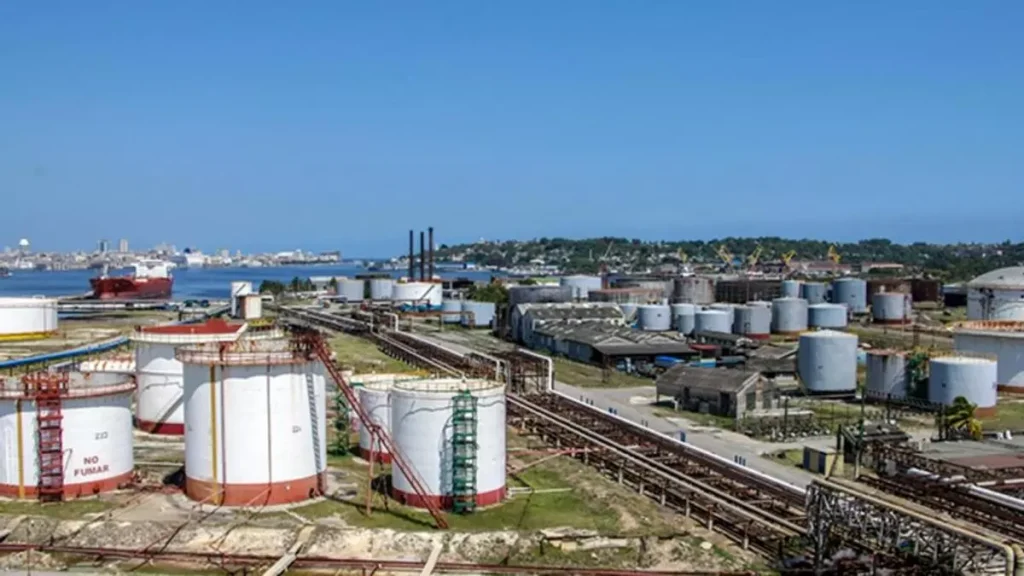
Exxon Mobil, formerly known as Standard Oil Company, filed a claim in U.S. courts over the expropriation of what is now Havana’s Ñico López refinery, as well as 117 gas stations that operated on the Island before Castro came to power. The lawsuit was brought against the Cimex Corporation and the Cuban Petroleum Union (Cupet) under Title III of the Helms-Burton Act. The law was approved in 1996, but the section allowing claims for compensation over confiscations carried out in the 1960s remained suspended until 2019, during Donald Trump’s first administration.
That move opened the door to dozens of lawsuits concerning those properties, although to date no final ruling has resulted in the recovery of any money. In Exxon Mobil’s case, one of the two major claims that have reached the Supreme Court, the company reported losses of $72 million at the time, an amount that today would be equivalent to more than $600 million.
In Exxon Mobil’s case, one of the two major claims that have reached the Supreme Court, the company reported losses of $72 million at the time, an amount that today would be equivalent to more than $600 million.
In 2024, an appeals court concluded that the American company could not sue the Cuban state because Cuban state-owned enterprises were protected by the sovereign immunity granted to foreign countries. Exxon decided to take the case to the Supreme Court last April, and the decision has favored its interests, making it easier for the case to return to lower courts so that the substantive issues can be examined.
The ruling was one of the most anticipated following the other major case of this kind, resolved last May, when the same court sided with Havana Docks Corporation in its claim against Royal Caribbean Cruises, Norwegian Cruise Line Holdings, Carnival Corporation, and MSC Cruises. The four companies had been ordered in 2022 to pay more than $400 million for profiting from properties confiscated in the 1960s, but an appeals court also blocked that judgment on technical grounds. In that case, the judges held that Havana Docks Corporation’s rights—since it was a lessee rather than the owner of the docks—had expired before the four cruise companies began using them.
The Supreme Court overturned that ruling a month ago, sending the case back to the lower courts for a final decision.
Exxon’s appeal had the support of the Trump administration, and this was reflected in the votes of the justices, as the six conservative members backed the American company. The decision, set out in a 35-page opinion, states that foreign governments, including their companies, enjoy a presumption of immunity from lawsuits in U.S. courts except under certain exceptions. However, in the case of the Helms-Burton Act, that immunity does not apply nor are plaintiffs required to prove that they meet the criteria for an exemption.
Several companies have filed lawsuits under the Helms-Burton Act against other businesses that have profited from confiscated properties, in addition to the cruise lines already mentioned. Among them are Expedia and Airbnb.
But the Supreme Court’s decision has broader implications because it opens the way to suing the Cuban state directly by holding that it cannot invoke sovereign immunity. In practice, this creates the possibility of recovering money—if the courts ultimately rule in favor of the claimant—by seizing assets abroad.
Even so, collecting any judgment will remain difficult, as demonstrated by a very different case: compensation for the prison killing of Rafael del Pino. Twenty-eight years ago, U.S. courts ruled that the Cuban state was responsible for paying damages for the death of the former pilot—and former friend of Fidel Castro—who was also a U.S. citizen and died in one of Cuba’s prisons. However, there are not enough attachable assets in the United States to satisfy the judgment, so his heirs have sought alternative avenues, including in Spain, where they have encountered bureaucratic obstacles for years.
Translated by Regina Anavy
______________________
COLLABORATE WITH OUR WORK: The 14ymedio team is committed to practicing serious journalism that reflects Cuba’s reality in all its depth. Thank you for joining us on this long journey. We invite you to continue supporting us by becoming a member of 14ymedio now. Together we can continue transforming journalism in Cuba.