Exiled Cuban Photographer Presents His Work at Estado de Sats in Havana / David Canela Pina

Alberto Maceo – taken from Facebook

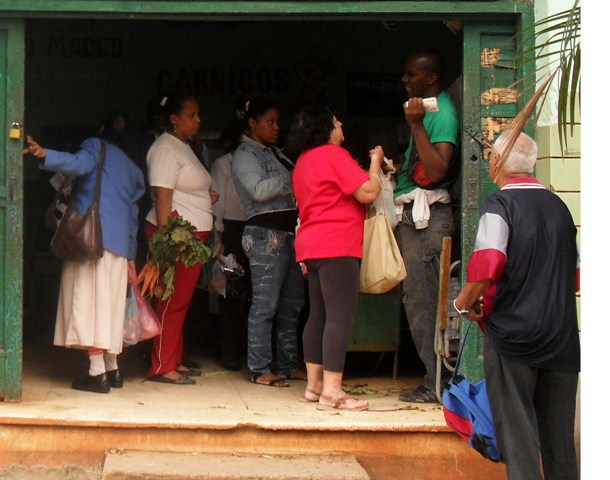
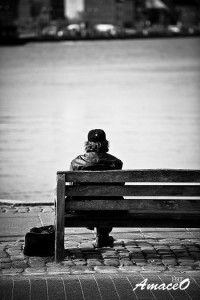
HAVANA, Cuba , September 9, 2012, David Canela Piña / www.cubanet.org.- Last Friday the civic project Estado de Sats put on, at its usual site, a photographic exhibition by Cuban artist Alberto Maceo, who currently resides in Flensburg, a small German town on the border with Denmark. The exhibition, entitled From Havana to Here, included thirteen portraits of ordinary people of the streets of Germany, and also to a Cuban woman looking to the horizon from the Malecon. The artist was not present at the exhibition.

Cubans have a cultural similarity with the German population: in both communities the people daydream looking out to the sea, breathing the sea air. Perhaps it was this reminiscence that inspired Maceo to search faces for something Cuban: a distant yearning, an introspective silence. The sharpest eye might discover that they are lower class people, but possessing of a certain dignity.

However, the attributes and attitudes revealed in the composition of these figures are not enough to evoke a defined psychological and social profile. The majority neither seduce nor move one. There is a lack of substance, an infinite projection. Some images look like studies: an expression, lacking temperament, delighting in the vanity of its pose.

 Woman on the Malecon - Alberto Maceo
Woman on the Malecon – Alberto Maceo

Very few manage to be a vehicle that leads to another universe: the Cuban woman, wrapped in a cloud of mystery, as if watching from the tower of a fortress; the young guitarist who seems to imagine or remember the verses of a song; and a man sitting on a bench, watching a fjord in the gloom. In the other images, it is difficult to guess at a story, an atmosphere, a conflict.

The quality of the photos is undeniable, but they lack character, uniqueness, and the prism of suggestion. It is true that not all photos can be iconic, like that of Sharbat Gula, the Afghan girl who was photographed in 1984 for National Geographic, but they should aspire to those reflections of the soul, and life experience.

Estado de Sats, builder of bridges

As Antonio Rodiles once said, the main objective of Estado de SATS is to create a public space within the Island. If voices that are pro-government (at least in appearance) are excluded or reject the invitation, either out of fear, convenience or laziness, it’s a personal matter for each person. But the space is open to all arguments, tendencies and attitudes, as long as they are defended with respect and rationality.

Public during exposition - Photo David Canela
Public during exposition – Photo David Canela

The second objective has been to build bridges of recognition and collaboration within civil society, some of whose members have been marginalized for their ideology, and for not worshiping a state that presents itself as the supreme idol. These, from their experiences and convictions (and I must say also , from poverty and homelessness), have decided to reclaim their dignity, and pay the price for their independence.

Perhaps the objective can be summarized as an opening new horizons, and between them, leading to healing through beauty, and refining the sensitivity of many people who have become accustomed to marginality, marginalization, beatings and jail cells. Estado de Sats is a path through the weeds, leading to democracy and reconciliation.

About the author

David Canela Piña. He was born on April 27, 1981 in Havana. He attended Fabricio Ojeda primary school and Otto Barroso secondary, both in the municipality of Habana del Este. He earned a scholarship to the V. I. Lenin Institute of Exact Sciences High School, graduating in 1999. In 2006 he graduated with a degree in Literature from the University of Havana, with a thesis on the poetic worldview of the Cuban writer Raul Hernandez Novás . He has worked as an editor, professor of grammar, literary scholar , and now as a digital media journalist. For seven years he lived in Diez de Octubre; he now lives in the municipality of Playa.

From Cubanet

9 September 2013
I am Malala, too!

“The Taliban’s greatest fear has turned out to be a 14-year-old girl armed with some books.” ENCOURAGE MALALA

Malala Yousafzai is a Pakistani girl from a Muslim family, who has become an activist for the right to education for girls, who are discriminated against and prevented from obtaining education because they are women or because of various cultural, religious, or political reasons. She also advocates for those who risk their lives, as she did, just by going to school. As a result of her activism, begun when she was eleven, at age fifteen she was attacked by a member of the Taliban who shot her several times; although she miraculously survived, she partially lost her hearing. So she has become the symbol of struggle for the other 57 million children in the world who have no access to education.

Malala has asked that we take a photo with a raised hand, addressed to the UN, and post it on the various social media networks to demand that education be considered a priority for the UN and all humanitarian organizations in the world. I invite you to join this campaign so we can become an extension of that brave young woman and help in her efforts to train children for life, which is making a better world.

With this writing I publish my petition, later I will place my picture in Facebook, Twitpic, Twitter, Windows Live, YouTube, etc., as well as on the right side of the blog to continuously ask the United Nations to institute education as a priority for everyone from early childhood. We support the work of this girl, as did the former British Prime Minister Gordon Brown, who was photographed with his hand raised, declaring “I am Malala.” Become an activist for the rights of millions of boys and girls children to education. Be more than an activist: Be like Malala! Join us!

Translated by Tomás A.

14 September 2013

Where Does That Leave Us? / Cuban Law Association

Wilfredo Vallín Almeida

I was flipping through a magazine. It’s called Current PC. It has caused me some anxiety about a reality I am just discovering: although the magazine is in Spanish, my native tongue, I can barely understand what it says; I don’t know the meaning of countless technological terms.

The person who gave me the magazine to browse receives it regularly at home. He’s not a computer specialist, but someone who wants to keep abreast of new developments in technology in a form that is accessible and understandable for him.

Some of the arrticles are:

– 10 Super Plug-ins for Google Chrome

– Mastering Evernote Completely

– Move from Windows 7 to New Windows 8

– Mega, 50 gigabytes of memory for free

– Obsessed with online security.

– How to leave Instangram.

– Redecorate your home with Home Designer.

Reading (or rather trying to read) the articles, I can’t avoid a troubling question: Where are we Cubans in relation to all this? As technological development advances at breakneck speed, how long will we Cubans be denied the right to have the internet at home?

To try to explain myseslf with an example, I quote the following small fragment of the article “When the Internet is Everywhere” from this magazine:

The future has a poetic name, the Internet of Things … Health is one of the sectors that can benefit from the Internet of Things. The right technology will make many doctor visits unnecessary. And doctors can know — in real time and from a distance, thanks to sensors that their patients carry — blood sugar, blood pressure or heart rate itself …

The article continues with a description that seems to me more science fiction than science fact and current technology.

And in the face of all this, where does that leave us?

3 September 2013

Papers, Papers / Regina Coyula

With satisfaction, I watched this week as a friend received an exquisitely wrapped gift. My friend took the package, looked at if for a moment, and tore the paper to take out the contents. Ripping wrapping paper is still a luxury, receiving a wrapped gift is a rare detail, receiving a gift…well, you can fill in the blank yourself.  But when there are gifts, most people give them in ordinary bags of those which have been substituted in many places for ones that are better for the environment, bags that blow away and get dirty, along with the little papers of pizzas or beer cans, until the night before some important anniversary of something that has to do with these past 70 years, when the “cederistas*” — the neighborhood members of the Committees for the Defense of the Revolution — sweep and clean the city and it looks decent for a few days.

Gift wrap doesn’t blow away. Wrapping paper is treasured and recycled to wrap new gifts. Here they sell a metallic paper which is very attractive but difficult to manage and very resistant which has been the solution a second time, a even a third time, for many. My mom who is from an earlier time than I, has always invented a way to make pretty wrappings in an age when without paper there were no gifts.  She saved thick catalogs of wrapping paper that measured, I don’t know, 8-1/2 by 11.  She has those allegorical papers for weddings, Christmas, births, birthdays, couples, and any other event imaginable, in addition to neutral papers and ones in solid colors.  With these little papers my mother wrapped her gifts and they looked great. The catalogs started to get thinner in an alarming way and the lean supply of second-hand paper began. Between the two we developed an efficient technique to hide the wrinkles and folds of their last mission.  It was a thing of trial and error, but we found a way to put the iron at the right temperature, and with a moist cloth in the middle, successfully press this brilliant metallic until it became more manageable.

My mother, poor thing, remained with this fixation. In 2000 she spent Christmas with her sister and nieces and nephews in California, and came back to Cuba with used papers, bows and ribbons that, there, no one understood why she wanted them. They were successful wrappings for the next year and everyone admired and thanked her for them.

It’s not just about the present. Nothing is more satisfying than receiving a gift and tearing the wrapping. Like in the movies.

*Translator’s note: The word “cederista” comes from the initials CDR. In Cuba acronyms are most likely to be pronounced as a word rather than as individual letters, similar to how Americans say “NASA” instead of “en – A – es – A.” So, for example, while Americans say “see – ay – A” for CIA,  Cubans say “seeah.”

13 September 2013

When “The Bad Guys” Carry Calculators / Yoani Sanchez

6a00d8341bfb1653ef019aff596ef3970b-550wiAmong the many phrases repeated over and over in the streets of Cuba, there is one that masterfully summarizes the affect of individual interests. Simply saying “they stomped on my callus,” is enough to let us know that they’ve touched someone’s soft spot, a part of himself that will make him jump, protect himself and go on the offensive. However, this same person will very likely remain silent when “they stomp on the callus” of someone else. Only his own pain will cause a reaction. A primer of human behavior, but one which, in certain circumstances,  fosters the selfishness of certain social sectors.

For months now, Raul Castro has unleashed a strong campaign against illegalities which has turned into a wholesale stomping on the calluses of those who, until now, had managed to keep their “feet” well protected. Thousands of inspectors in the street, tickets for fines being handed out right and left, and a general feeling that at any moment the police might show up. Resellers, the corner vendors, families remodeling their homes, self-employed workers and farmers, are  the focus of this crackdown. No one is safe. Dressed in plain clothes or uniformed, the soldiers of this new battle reinforce the feeling of constant surveillance.

Unlike other previous raids, this one has affected virtually the entire Cuban population. To the point that people are saying “the government has declared war on the people.” A crusade that breaks a tacit social compact, fragile, yet crucial to the survival of the current system. A certain level of permissibility for corruption, for the black market, and for the diversion of State resources has been built up over decades as a mechanism for political control. Faking an ideological loyalty to the regime has been the indispensable prerequisite to embezzlement, stealing, adulterating, without serious reprisals. However, the formula of screaming “Fatherland or Death” to ward off the inspectors and the police is no longer working. The stomp on the callus reaches even the publicly declared faithful followers of the Communist Party. Though it’s worth noting, not all calluses are equal… at certain heights, no one will stomp on your feet.

With this new offensive, Raul Castro’s government faces a growing unpopularity. It’s true that looking at the penalized illegalities, they are ethically and legally unacceptable, but anyone who respected the strict Cuban penal code, literally could not survive. Tolerating a certain level of transgression — or what we call “cimarronaje,” the culture of fugitive slaves — is an inseparable part of the the apparatus of subjugation to totalitarianism. Between the rulers and the ruled an tacit accord is established that implies ceding impunity in both directions. In a country where the president himself has had to recognize that salaries are not the principal source of income, the authorities know that tightening the screws against parallel paths of survival would, over the long term, be political suicide. The unwritten contract where citizens pretend to work and the rulers pretend to pay them is in crisis. The fight against corruption and indisciplines has touched a docile, but numerically very large, political sector.

A few days ago a street vendor of desserts, until recently a faithful follower of official politics, approached a human rights activist. With little preamble he snapped, “I want to make statements…” stunning the dissident, who considered this self-employed individual the Communist Party’s man. But the excessive taxes and the constant fines had caused him to change his ideas. “I can’t stop on any corner to sell my cupcakes because the inspector say I’m a roving vendor and I have to keep moving at all times.” Part of the absurdity that prevails in every State campaign is also evident in these raids against misdeeds.

They also “stomped on the callus” of Catalina when the police demanded “the papers” for the bricks and cement with which she and her family were remodeling their home. The illegal origin of all of it led them to offer to pay the official to forget about it. Because the fight against illegalities doesn’t take into consideration that the controllers, auditors and gendarmes also need to survive. Everyone has a price. Skipping a health inspection at a fast food business costs the owner between 200 and 300 convertibles pesos. A certain Housing Institute inspector is known as “Johnny 1500” for imposing fines of that amount, with the intention that the offender will offer a “bite” of at least half. The anti-corruption crackdown creates new forms of corruption.

For now, the alarm spreads, and the warning mechanisms for possible inspections and reporting become more sophisticated. Everyone passes on the alert when “the bad guys” — which is what we call those armed with calculators, ticket books, fines and the penal code — arrive in a neighborhood or workplace. They come ready to stomp on calluses, many calluses at a time. With each stomp, however, the Castro regime could be losing a pair of feet, many feet, which they rely on.

From El Pais

13 September 2013

The Donkeys of the Sand Pit / Lilianne Ruiz

Not one lonely statement from the Cuban intelligence services’ spy recently released from US prison after serving out his sentence regarding political prisoners in Cuba. Nothing regarding Kilo 8, Kilo 9, Boniato…[1]

A guy that calls for a campaign to create the illusion that an entire people expects and demands freedom for his 4 colleagues, could well be a man of peace, with empathy with all who are in prison for political reasons. But, it was not like that.

This is the government’s man. He looks like a carnival puppet, but he’s responsible for his actions for he articulates a message, and that message is always on the government’s side, a government that intends to be there always, without really consulting us.

That is why no one should believe that our people have come out to demand the release of 4 spies who tomorrow will ignore their suffering, their hunger, their fear of losing whatever little they have or the nothingness they possess; as does this already released spy, seen in public demonstrations carrying little children. He wants to make believe that this idea of the yellow ribbon was born from civil society, and not the government, as if this human tidal wave that refuses to acknowledge its right to deny itself could also be called a civil society. In slavery there is no power structure.

But, he is there, in that intermediate space. Between the powerless[2] and the State there is the political police, armed to prevent each group from assuming the powers that belong to them.

In school, during the morning assembly of children, a teacher admonished “Tell your parents to put a yellow ribbon in you tomorrow.  They are available for two regular[3] pesos at the neighborhood trinket store.”  I saw people in my building who are waiting for a US visa to leave this misery behind (and they think that they are leaving behind the only misery….but, there are miseries that cannot be left behind)…dressed in yellow.

Lastly, looking at the people dressed in yellow or wearing a yellow bow – people who did not have that air of the functionary trying to get ahead, simple people who do not want to know what they are doing – I remembered what I had been reading the previous night to my six-year-old daughter before bed, Platero y Yo (Platero and I).[4] I had taken in this entire quote of Juan Ramon Jimenez’s magnum opus:

“Look, Platero, at the donkeys of Quemado: slow, bent, with their pointed red load of wet sand in which they carry nailed, as if to their hearts, the green rod of the wild olive tree with which they are beaten…”


[1] These are the names of some of the most notorious Cuban prisons where political prisoners are kept in inhumane conditions.

[2] In English in the original text.

[3] As opposed to CUC or “convertible” peso, the other official currency of Cuba, artificially paired to the US dollar.

[4] Children’s book written by Spanish poet, professor and Nobel Prize laureate Juan Ramón Jiménez in 1917.  It narrates the relationship of a boy and his little donkey named Platero. It has remained extremely popular in Latin America and Spain to these days.


Translated by Ernesto Ariel Suarez

13 September 2013

About the Law of Property (IV) / Cuban Law Association, Mérida de la C. Pastor Masson

Lic. Mérida de la C. Pastor Masson

In terms of Civil Law, we have in our society an interesting daily theme which, because it is unknown, we are led to act unwisely on many occasions.

We have all once said “this is mine”, “this is my house”, “this is my car”, and these words cover in reality those assets which are intended to satisfy the material and spiritual needs of the holder of the item, that’s to say, its owner.

Included in personal property matters are your salary, the house which you gain some kind of legal title to, as well as vacant lots and personal and family-owned working materials (Art. 157, Section 5).

These resources (relating to work), are well-defined as being unable to be used to obtain income by way of exploiting the labor of another.

The state does of course also recognise property owned by societies, associations and charities as well as mixed and joint undertakings, as well as that belonging to other legal entities of a special nature, which are governed by the law and treaties as well as the statutes and regulations of the legal entities in question, which supplement the Civil Code.

As I said before, it’s an interesting subject and therefore I will continue on this property theme and in Chapter 3 will deal with the body of law dealing with shared ownership. In this manner we will carry on until we exhaust the commentaries relating to property in the current Civil Code.

Translated by GH

9 September 2013

Family Medical Practice: Mirror of Cuban Medicine / Orlando Freire Santana

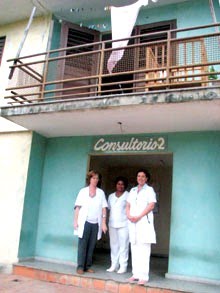
HAVANA, Cuba, September, Orlando Freire Santana, www.cubanet.org –The Cuban health system has a vertical structure that has its base in family run medical practices, followed by polyclinics and hospitals.

In the ’80s of the 20th century, when they were created, it was thought that all the problems of the population would be solved.

Soon after, patients lost faith in the practices. And today, the task of the family doctor has been reduced to taking blood pressure, prescribing medications, and sending patients to polyclinics and hospitals.

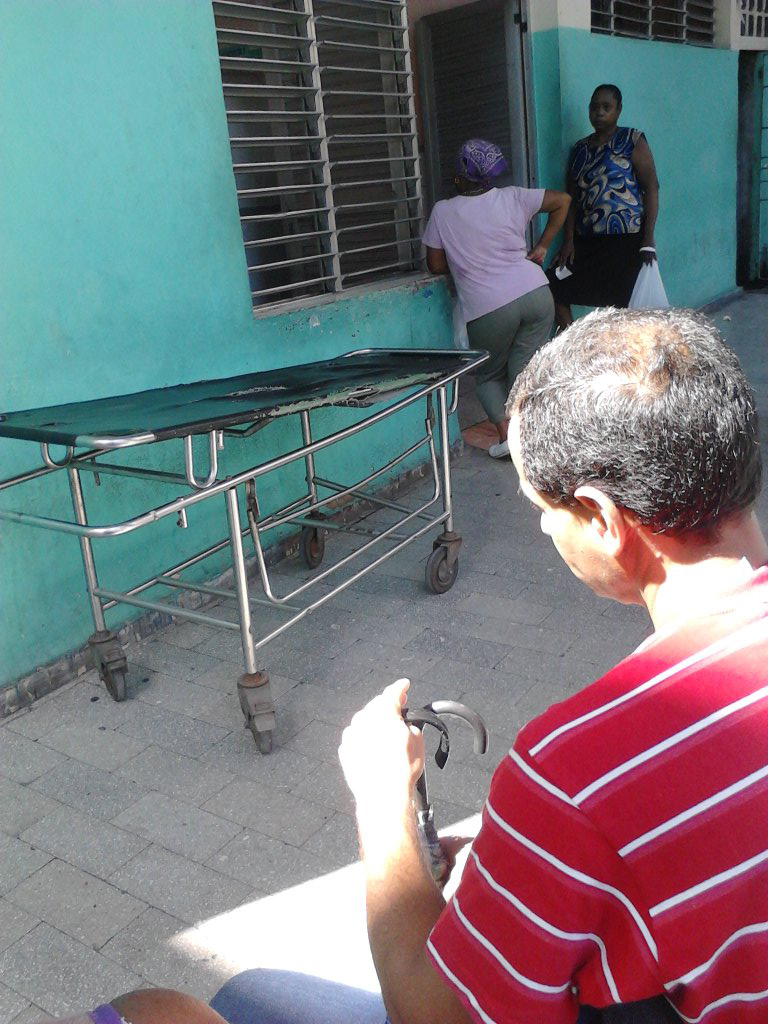
Isabel is an 80-year old woman, who never visits the family doctor in her neighborhood. It isn’t that the elderly woman doesn’t need medical care, just that she prefers to get it directly from hospitals because she has friends who “connect” her with specialists. What’s more–she tells us–many times the doctor’s office is closed and other times instead of the doctor there is a student who is only good for prescribing aspirin.

Ofelia, for her part, doesn’t want to be reminded of the family doctor. It turns out that her doctor doesn’t live in the housing annexing the doctor’s office. He left it to his daughter, son-in-law and grandson. And even though the doctor drops by the clinic in the day, he’s absent at night and in the early hours of the morning. What happens if there’s a medical emergency?

Ofelia’s father-in-law passed away suddenly at home, around 7 or 8 at night.  And since the family doctor wasn’t there to sign the death certificate they had to keep the cadaver in the house until the next day around mid-morning.

Photo: Orlando Freire Santana

Of course she has lived through lot.  Before the Revolution, she says, her family were members of the “Accion Medica” private clinic located in Cocos y Rabi, in the Havana neighborhood of Santos Suarez. For a monthly fee of 2 pesos they had access to all the clinic’s services, including admission to hospitals, in addition to any medications they needed. They could even ask for a doctor’s visit in their home, and the doctor would arrive at the latest only 15 to 20 minutes after the request was made.  Now, by comparison, Clara laments that the family doctor barely “shows up.” That is, he doesn’t visit the sick in their beds.  “Well,” Clara warns, “at least not unless he gets a little present.”

Amelia desperately hopes that they select her to complete a medical mission in any other country.  It doesn’t matter that the Cuban government keeps most of what doctors are paid abroad. But anything would be better than what they make in Cuba, from 15 to 20 dollars a month.  The doctor Amelia “makes do” with what is earned by her husband who, at night, being careful of the police, rents his car, illegally.

The patients are not the only ones who disagree with the family doctor’s offices.  A doctor who works in an office in Cerro –who asked to remain anonymous– showed herself to be overwhelmed:  “When one arrives at the office, within 15 days you know all the elderly in the neighborhood, they come every day, just for kicks, to stretch their legs, because they don’t have anywhere else to go.”

And how do medical students weigh in?  The other day several daring young women with the uniform of medical science, snacked on a bench in the park.  One of them highlighted the importance pf earning high grades from the first day of class, to form a record that guarantees a good placement after graduation. “Yes, of course,” another student asserted, “we can’t slide, they’ll punish us and send us to a family medical practice.”

From Cubanet

 11 September 2013
Exporting Doctors / Orlando Freire Santana

According to the government, there are 47,000 medical students in Cuba, and a doctor for every 137 persons. What is the real picture  on the national health service?

The popular Cuban refrain, when referring to the contradiction which presents itself when the person producing something hasn’t got that thing in his own home, employs the very handy saying, “In the blacksmith’s house, you find a stick for a knife.” Well, we can say the same thing on the big picture with the health service nowadays, with a large number of doctors and medical students, and on the other hand poor attention for the ordinary citizen.

A little while ago the French news agency France Press, basing its information on what appeared in the newspaper Granma, official organ of thee Communist Party, let it be known that more than 47,000 students — 10,000 of them foreigners — had enrolled in medical courses in Cuban universities in the academic year  2013/14. It then went on to emphasize that, taking into account that Cuba has more than 85,000 doctors for a population of 11.1 million inhabitants (data as at the end of 2012), which would represent a doctor for every 137 people, the island finds itself, in this sense, in a privileged position on the international level.

Nevertheless, such statistics contrast with the calamitous state of many of the health services on offer in our country. It’s the same in hospitals, health centers, dental surgeries, opticians and in the famous family health centers. These centers started up nearly three decades ago, with the intention of providing 24-hour primary health care in peoples’ home areas. But they function so erratically now that the intention in question has pretty well disappeared.

For example, in one of the constituencies covered by the Héroes de Girón health center, in the Council area of Cerro, Havana, out of four centers started in the ’80s, today only one remains offering services, leading to frequent overcrowding in the place, and the inevitable irritation both of the patients and the doctors.

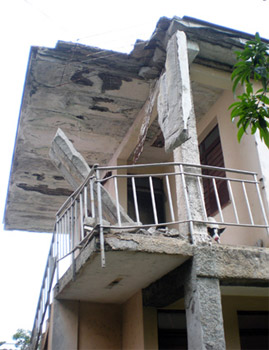
Note also the case of the doctors who move out of the houses annexed to the centers, for their relatives to live in. In those cases, although the doctor turns up for the day in the center, he doesn’t any longer live next door, leading to lack of attention for patients with emergencies in the night. You have to note also the dreadful state of the building in many of these centers, and the same is true in hospitals and clinics. There are propped up roofs, leaky walls, out of service toilets…

Not long ago the newspaper Granma reported on the complaint of a doctor about the breakdown of the ophthalmic service in the eastern province of Manzanillo. In its edition of Friday August 16, the official newspaper echoed the complaint of a surgeon in the Laser Surgery Service of the Celia Sánchez Manduley hospital. The doctor pointed out that for more than a year they hadn’t practiced optical surgery in that health center due to technical problems with the air circulation equipment in the operating theatres. That’s to say, while in the context of the so-called “Operation Miracle”, the Cuban doctors give back sight to people from various countries, more than a few Cubans lack such benefits.

They say that, on a particular day, on the balcony where an old lady lives, there appeared a sign with the following text, “I’m off to Venezuela.” It was, obviously, the cry of a desperate patient who could not see the solution to her health problem within the confines of our “medical power”.

Sometimes patients have to travel great distances to be attended to by particular specialists (dermatologists, ear nose and throat doctors, cardiologists, etc.) because the health centers in their health district don’t have such specialists. Many Cubans have to give a little gift to these doctors in order to receive a quality service. Moreover, there is a scarcity of medicines in the network of pharmacies accepting “national money,” also known as Cuban pesos. Clearly, you almost always find those missing drugs in the international pharmacies, who sell for convertible pesos, the currency in which most Cubans are not paid.

And while all this is going on in the country, the “Castrismo” is going on about having more than 40,000 doctors in 58 countries. It’s not a secret to anybody that those professionals work in difficult conditions in those countries where they offer their services, and that the Cuban government repays them just a tiny fraction of what the recipient countries pay for them. Nevertheless, every time we talk to a doctor who works in Cuba, his desire comes across to go abroad to serve on “a mission.” It’s logical, since, even bearing in mind the financial robbery referred to, there will always be more than is evident in the island. You mustn’t forget that a doctor in Cuba, on average, earns the equivalent of 25 or 30 dollars a month.

Obviously not everything is the color of roses for those doctors who are sent abroad. In many places they don’t recognise their professional qualification. Right now, the first 400 have arrived in Brazil; this is out of a total of 4,000 that will be in the South American giant by the end of the year. We know about the protests of that country’s Medical Union, an organisation that casts doubt on the skills of those doctors, at the same time as they accuse president Dilma Rousseff of getting up to political games, rather than acting to improve the country’s health. In the same way, more than a few countries require an ability test for the doctors who graduate from the Latin American School of Medicine (ELAM) based in the Cuban capital.

Nevertheless the Cuban authorities take into account the obvious judgement that this huge quantity has to be balanced with quality. Every year a larger number of students are summoned to study medicine, a course which they now run in all the provinces throughout the country. Here the utilitarian consideration far outweighs the functional. The foreign medical services have become the country’s principal source of income, more than tourism, nickel, tobacco and other things. Other considerations don’t appear to matter.

 Orlando Freire Santana

From DiariodeCuba.com

Translated by GH

10 September 2013

“Heroes” by Decree / Fernando Damaso

Archive Photo

The profusion of heroes by decree, both Heroes of the Republic and Heroes of the Workers, has always caught my attention, especially when from time to time there is a new crop. They are recognized for military actions, for spying, for cutting cane, for scientific achievements, for baking bread, etc.

Céspedes, Agramonte, Maceo, Gómez, Martí, and others, did not require any decree in order to be heroes: the people, who alone have this right, designated them. More recently this was repeated with Mella, Villena, Guiteras, Frank País, José Antonio Echevarría, Camilo Cienfuegos, etc. All of these, maybe some more than others, are enduring heroes.

Not so with those appointed by decree, who, for lack of a fixative, are perishable and tend to disappear along with the system that produced them. Where are the thousands of prefabricated heroes in the former socialist countries, mainly in the former Soviet Union? Hardly anyone remembers them, and most have been swept away by the wind of time, like dry leaves fallen from trees. So, with any luck, it will also happen here. In practice they are heroes unknown to most of the population, who had nothing to do with their appointment as such, made in response to the short-term political interests of the authorities in power. The few who are known can at most enjoy their fifteen minutes of fame while it is necessary to use them, requiring the constant inflation of publicity; when it stops, they deflate like a homemade hot-air balloon.

It turns out that those appointed by the people continue enlarging after death, while the others disappear and are forgotten. The problem of our heroes is too serious to be taken lightly. Just take a look at history!

Translated by Tomás A.

12 September 2013

Focsa Delirium / Rosa Maria Rodriguez Torrado

A few days ago the Cuban actress Diana Rosa Suárez appeared on a national television program. Chatting with the moderator and responding to his questions, she reported that — at last! – after ten years, they had finished restoring the Delirium cabaret, where she used to work before it closed. She noted that once again she could be seen there and invited viewers to pay a visit to the piano bar on the top floor of the National Theater of Cuba, located in the Plaza neighborhood.

Cynical humor aside, her comments masked a a feeling of relief and the inevitable comparison Cubans living in the capital will make to the Focsa Building. Located in Vedado and built in 1956, it is considered one of the marvels of Cuban civil engineering. At 29 floors, with a height of 121 meters and housing 373 apartments with views of the sea and the Malecon, it took only two years and four months to build. Talk about contrasts!

The Focsa Building, on the left. Photo: MJ Porter

The Focsa Building (L). Photo: MJ Porter

12 September 2013

Political Police Kidnappers Identified / Leon Padrone

agente-camilo-300x209
The political police agent known as Camilo followed the route of the P1 bus, on which the Ladies in White were traveling.

HAVANA, Cuba , September, www.cubanet.org – Recently , blogger and freelance journalist Joisy García Martínez  wrote via the phone to his account on Twitter, @criolloliberal: “Raul Castro ratifies the kidnappings in Cuba, but not the [UN Human Rights] Covenants.” The fact was related to the severe repression by the political police on about 30 human rights activists who, on the first Sunday in September were to provide support to the Ladies in White, during Mass and their traditional march down 5th Avenue in the Cuban capital.

Joisy own statements as well as those of Rubén Carthy, independent journalist and former prisoner of the Group of 75, and Eduardo Diaz Fleites, witness to the event, said that on that day,  at the end of the press conference with the Ladies in White, they and six other activists were arrested by the political police, when they were at the bus stop on 3rd and 20th in the Miramar neighborhood. Suddenly, they were surrounded by a large group of soldiers, most in plain clothes and supported by a caravan of several Lada cars, Suzuki motorcycles, two police cars and an 8-seat bus, intended as a cell during the kidnapping.

Several sources said that, subsequently, the entire repressive squadron under the command of the officer known as Camilo, followed the P1 bus route, on which several Ladies in White and other dissidents were traveling. All of them were arrested when they got off at different stops. The Ladies in White and other passengers who were also on the bus witnessed how agents violently forced the opponents into the vehicles.

Throughout the journey, which had its destination in a confusing area beyond Cotorro, far from the center of Havana, the cruelty of the Castro agents was clearly made evident. One of the soldiers who participated in the operation slapped the face of the young man Adrián Chirino García, a member of the Commission for Assistance to Political Prisoners and Families ( CAPPF ), who desperately asking them to open the window, as he couldn’t get any air. This officer was identified by his badge: No. 2228. The license plate of the Lada car was that driven by officer Camilo, HH122. In addition, the number of one patrol car was 529, and the badge of the driver was 00884.

This is not an isolated event, and it marks another black page in the history of the regime in terms of human rights. And it further confirms that during the presidency of Raul Castro he has maintained the method of kidnappings which, although not new the island — in the past many members of the democratic opposition have experienced it — is being reactivated as one of the main forms of repression  in the present.

Leonpadron10@gmail.com

From Cubanet

12 September 2013

Bochorno / Rebeca Monzo

I always heard since I was a child that, as the midday sun intensified, the leaves on the trees would not move. This they called a “bochorno.”

After taking our turns on the internet, my friend and I decided to go shopping at some nearby area stores to look for cleaning supplies. We were taken by surprise at a new store, dedicated exclusively to the sale of such products, when we saw a large yellow banner hanging near the entry. We immediately realized what it was all about. Paraphrasing Jose Marti, I joked to my friend, “I do not know, given the flag here, if I can enter…”

Practically pushing me inside, she said laughing, “It’s not a flag. It’s only some yellow rag they’ve been told to put up.”

We went inside, laughing to ourselves and in a joking mood.

We immediately went up to the first employee we saw. He was sporting a makeshift bow on his chest made of yellow ribbon (the kind used for wrapping gifts).

“You must be a disciple of Our Lady of Charity; yesterday was her feast day,” I said.

“No,” he replied, “They’ve ordered me to do this today for the heroes.”

“Oh, for the spies!” we said in unison.

He lowered his head, turning red.

We then went to the counter where they sell the hair dyes and did almost the same routine with the employee there. Her response was immediate: “My boss told me that, if I was a Revolutionary, I had to put it on. Remember, I work for the state.”

“Of course,” I said. “If you don’t put it on, then you’ll lose your job.”

She stood there in silence, looking at us with eyes that begged for mercy.

We left her since there were two customers behind us, looking in our direction while trying to stifle their laughter and nodding their heads.

We then went to a department store to see what they had, only to find ourselves face-to-face with the same spectacle. All the employees were wearing yellow ribbons and bows to match those displayed at the entry. We questioned the poor employee waiting on us, whose response was similar to the one we had heard before. It was then that I told her, a little impertinently, the way I saw it: “We should have decided to defend our real traditions instead, the ones that were stolen from us: Epiphany, Christmas, Christmas Eve…”

To that day’s “bochorno” we had to include our own. We had to acknowledge how we have inevitably let ourselves be manipulated for all these years, how most of our population continues to be submissive, subject to the induced fear which they have been feeding us for half a century. Unfortunately, we will be marking the twelfth like most people, submissively displaying something yellow, which also happens to be the color long associated with cowardice, now another one of our traditions.

10 September 2013

From State Security Agent to CID* Member / Yudel Rojas, CID

By Yudel Rojas**

I was born on December 24, 1980 in Manzanillo to a family committed to the Revolution. I always dreamed of being a member of the Special Forces and one morning they offered me a chance to work for the revolution.

You might ask how.

A captain in counter-intelligence, a man name Jorge Vázquez, told me I should join his agency as an undercover agent. I told him that, of course, I would do anything for the Revolution.

After a few days he came by on a motorcycle, took me to a Cuban Communist Party guesthouse and led me to a bedroom where I was to receive lessons in intelligence gathering. I was trained in debriefing and security monitoring, which meant having to meet people at various houses, where I was given information and instructions. Thus began my life as a G2 agent.

I had to memorize the phone numbers that the official in charge had given me. I felt very encouraged by the contribution I was making to the Revolution, to which I was told I owed a lot, even my existence as a human being.

One night I was taken to Vallespín Park, a place well-known to residents of Manzanilla, and was introduced to a man I was never to see again. We met up with a dissident known as Pascual. He headed the cell of a splinter group, whose members were known, in the language of counter-intelligence, as grupusculeros. My official let it be known these were people who posed a grave danger to the Revolution and who worked for the United States government.

This group had been infiltrated a year and a half earlier. At the time Pascual, who was married to Mirta, had been sentenced for committing a very dangerous crime. He served out his sentence and a few months later left for Spain.

The head of the Gulf of Guacanalyabo branch of the party was the dissident Tania de la Torre Montesino. Before leaving, Pascual suggested I begin working with Tania, through whom I would meet Nelson Virelles, Diéguez Segura and others.

During the meetings at Tania’s house the discussion was about human rights and the challenges facing the Cuban people. Listening to Tania talk about freedom and democracy, I began to have serious doubts.

I was confused and shared my doubts with the official with whom I worked. He told me it was all a lie. He said that, if these were good people, the Party would accept them as one more Cuban civic organization.

After five years problems began to crop up due to ideas about which I had learned from the dissident movement. After every meeting I would ask the official about the things that had been discussed, which led him to finally ask me if I was with the revolution or against it. I told him it was only a question and nothing to get upset about. Once I did not go to a meeting and was ordered detained by the police.

Things got worse. I learned not to trust anyone. Jorge, the official, told me repeatedly that my goal as an agent was to infiltrate these splinter groups, not to ask stupid questions. I stopped doing infiltration work but kept visiting Tania’s house and participating in various activities.

Over time I learned I had been mistaken, that State Security had confused me and that the truth was to be found there in the old house where the brave fighter known as Tania de la Torres Montesino lived.

I was arrested several times and the head of counter-intelligence, Alexis Díaz, threatened me, saying I might simply disappear if I kept visiting the grupusculeros’ house.

To be continued.

*Translator’s note: Acronym for Cuba Independent and Democratic. An organization founded in Venezuela in 1980, dedicated to “the struggle for the establishment in our homeland [Cuba] of a society committed to liberty and human dignity, completely democratic and sovereign, socially balanced and just.”

** Yudel Rojas is the author’s actual name. He is a member of the CID delegation in Manzanillo.

10 September 2013