No-one Knows What Fish They are Buying / Ernesto Garcia Diaz

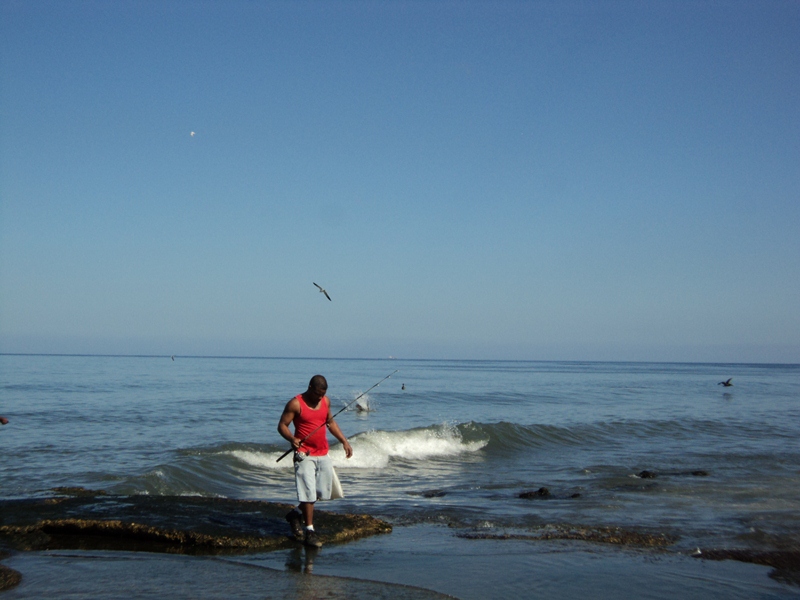
Fishermen at Playa de El Chivo - Photo Ernesto Garcia
Fishermen at Playa de El Chivo – Photo Ernesto Garcia

Havana, Cuba – At la Playa de El Chivo (El Chivo beach ), on the northeast coast of Havana, at the foot of the Castillo de los Tres Reyes del Morro (Three Kings Castle), people carry on fishing for sport and business, between the marine waters and sewage, without the health authorities, environmental authorities or the coastguards taking a responsible attitude. The zone receives thousands of cubic metres of polluted water and its sand dunes are deteriorating as a result of the man’s actions.

The grunt, snapper and barber fish, among others, turn the rocky beach into both a centre for boats which arrive every day to seek their economic support; and at best, some people who are enjoying their leisure and are fishing for sport.

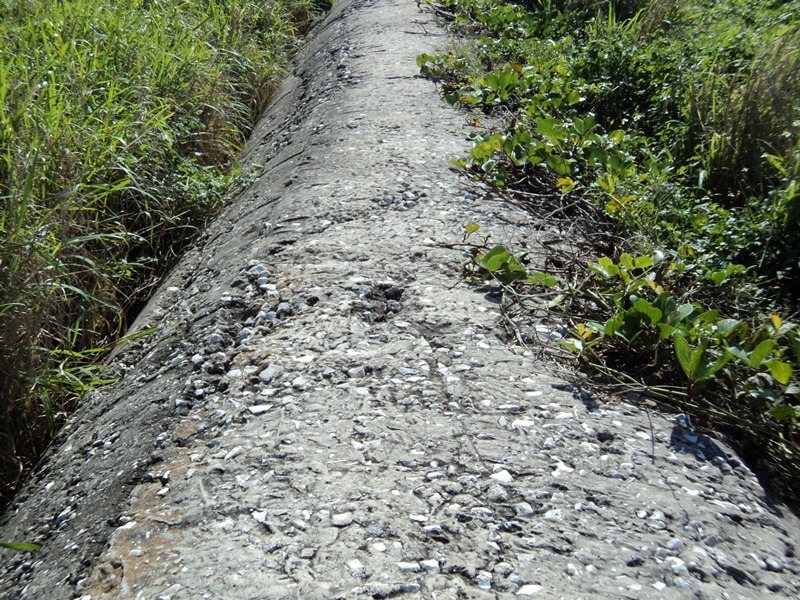
This is going on in the mouth of the submerged sewage outlet pipe which runs from the Havana sewage treatment plant, which filters the solid waste coming from the northern and southern collectors of the capital. A concrete pipe of about 375 metres in length crosses Havana Bay, as far as Casablanca, where they pump the dirty water up to La Cabaña, so that it then falls by gravity down to the El Chivo beach, about 150 metres along the coast.

The most astonishing thing is that many fishermen enter into the area of the lower reefs, without any protection, on the edge of where they are fishing in a contaminated area, breathing in the fetid smell from the drain, which keeps the coastal water cloudy with its permanent discharge from the Havana sewers, whose pipes and canals are not lacking in cracks and leaks. continue reading

When it comes to the end result of the activity, various fisherment indicate that they eat the fish themselves, and that they also sell some, but they don’t say where the fish come from.

These citizens, impelled by their desperate need to support themselves and their families, imperil the health of people who are unaware that they are buying a product of uncertain or unknown origin, as many are offered as skinned fillets, or say that they are deep sea fish, which prevents the consumer seeing the physiognomy of the species, so they can at least identify them, in order to avoid the “ciguatera” (tropical fishfood poisoning syndrome ) which is transmitted by the picúa or the aguají, among other species which it is forbidden to fish.

Murky waters at Playa de El Chivo – photo Ernesto Garcia

Additionally, on this beach’s rocky and sandy coast, the environment is being damaged by the dumping of plastic handles, fish-hooks, fishing lines, and other discarded items, which are thrown away by people living there or those passing through the area who don’t take any notice of the prohibitions.

Alberto, an ex-fisherman, known as “The Wizard”, admitted that he used to sell fish for a while, but that it was very hard work, always running the risk of a consumer falling ill, because the species caught in this area end up eating the discarded rubbish in the sewage, or a shoal of sardines who have also come over to eat toxic residues.

Concrete drain pipe in El Chivo beach – photo Ernesto García

El Chivo Beach, by the Castillo de los Tres Reyes del Morro, classified by UNESCO in 1982 as a World Heritage site, has been converted into a contaminated focal point of bacteria and micro-organisms which can affect the health of those who fish in its waters, pass through there, or consume its fish.

The authorities would be perfectly able to preserve the cleanliness and health of the ecosystem of this sandy coastline, which has been abused and is hardly a good example of sustainable development of a zone of natural, historical and cultural value which should be cared for.

Cubanet, 22 January 2014,

Translated by GH

Economic Independence? / Fernando Damaso

According to official propaganda — intended to validate the experimental economic measures taken during his early years in power and which is repeated incessantly — nationalizations and interventions were aimed at returning the wealth held by foreigners, mostly American, to the people.

Statistics show, however, that this was not exactly the case. Those most affected were in fact Cubans, who held between 82% and 85% of the nation’s wealth. This included the entrepreneurial and successful middle class, the principal generator of wealth and employment, most of which was liquidated during the early years. What little remained was finished off during the ludicrous “Revolutionary Offensive” of the 1970s.

In his book, The Owners of Cuba 1958, Guillermo Jiménez focuses on the island’s 551 most influential and powerful families. He notes that only 102 were foreign; the rest were Cuban. In most instances the foreigners were based in Cuba and had Cuban families, including all 65 from Spain. There were 24 Americans, some of whom had Cuban wives and lived in Cuba. At the time the nationalizations took place, the economy was largely in Cuban hands. Some 61.1% of bank deposits were held in Cuban banks, while Cuban-owned sugar processors accounted for 62.2 of daily production, with Americans accounting for 38.4%.

I bring this up because now much is being said and written about the importance of attracting foreign investment to shake the moribund Cuban economy out of its coma. The same government responsible for expelling Cuban investors (who were the majority) and foreign investors (who were the minority), now calls for their return. And what about Cubans? Priority should first be given to Cubans living in Cuba, then to Cubans scattered around the world, and finally to foreigners. Or is it that the authorities do not care about the vaunted economic independence?

It is true that in today’s globalized world no one can pursue economic development on his own, that capital is necessary, no matter where it comes from. But there must be some respect shown to one’s own nationals. At least that is what one expects of intelligent governments which actually look out for the interests of their citizens.

26 February 2014

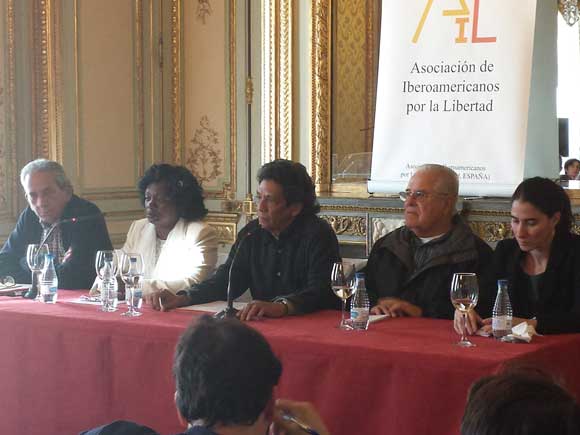
Declaration of Cuban Civil Society Activists Joining Forces in Madrid

ReunionenMadrid
Cuban activists meeting in Spain

Madrid, February 26, 2014

For recognition of the legitimacy of Cuba’s independent civil society

We, activists of independent civil society, have agreed to promote a representative group to act as a channel of dialogue with international institutions and other potential partners.

Since the ratification of our commitment to peaceful methods to achieve the Rule of Law, we demand from the government of Cuba and before the international community:

1.  The unconditional release of all political prisoners , including those under extra-penal license (on parole).
2.  The end of political repression, often violent, against the peaceful movement  for human rights and pro- democracy.
3.  Respect for the international commitments already entered into by the government of Cuba, the ratification – without reservations – of the International Covenants on Human Rights and compliance with ILO conventions on labor and trade union rights.
4.  Recognition of the legitimacy of independent Cuban civil society.

Subscribed:

Yoani Sánchez – Blogger

Berta Soler – Spokesperson of the Ladies in White

Elizardo Sanchez – President of the Cuban Commission for Human Rights and Cuban National Reconciliation

Juan Felipe Diaz Medina – Christian Liberation Movement (MCL )

Guillermo Fariñas – UNPACU

Manuel Cuesta Morúa – Progressive Arc

Reinaldo Escobar – Journalist

Antonio Guedes – President of Ibero American Association for Freedom (AIL)

Guillermo Gortázar – President of the Cuban Hispanic Foundation

Javier Larrondo – UNPACU Representative in Spain and EU

Virgilio Toledo – President of Coexistence Spain

Frisia Batista – President of Roots of Hope Spain

Elena Larrinaga – FECU

Alejandro González Raga – Cuban Observatory for Human Rights

Blanca Reyes – Ladies in White

Eduardo Pérez Bengoechea – Coordinator of International Human Rights Platform of Cuba

Tomás Muñoz and Oribe – Cuban Liberal Union

Shelves of Misery / Victor Ariel Gonzalez

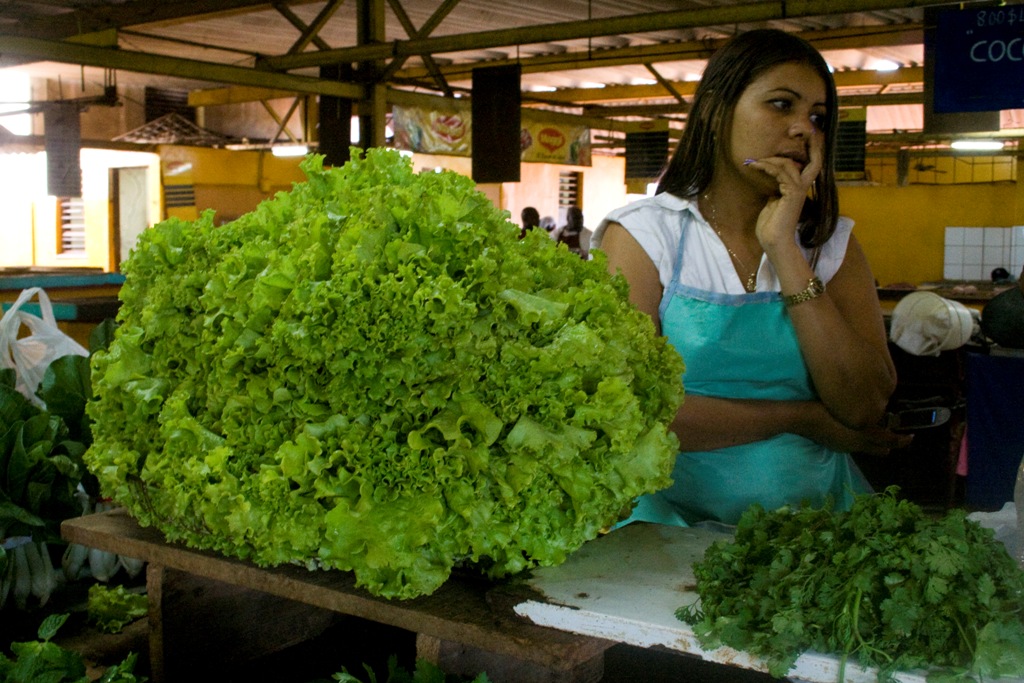
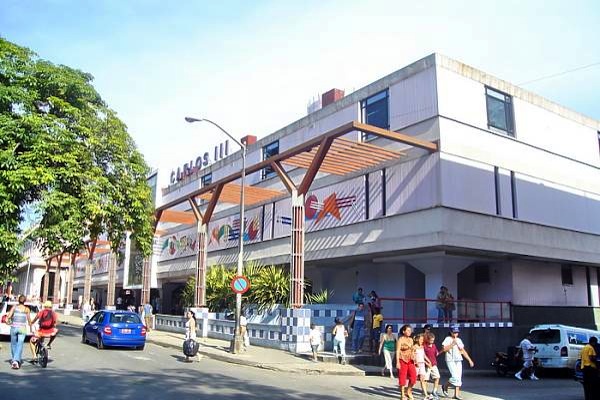
The old Carlos III market was transformed into a “mall.”  At the beginning, Havanans found a wide selection of merchandise (in CUC — hard currency); today the showcases are empty.

The shelves where the most common ingredients should be found often appear empty or offer only one product of its type without options of quality or size.  Those foods that Cubans eat the most are exhausted rapidly, sometimes missing from the shelves for weeks.  On the other hand, the most expensive foods stay for sale for so long that many wind up expiring.

Carlos III market, inaugurated in 1957 as Plaza de Mercado

Not to mention the toiletry section. This week there was only one kind of soap for sale, a small bar for 0.25 CUC.  The counter where there used to appear dozens of offers for varying budgets now presents a desolate emptiness. continue reading

Another features of the supermarket is the disorganization. It is no surprise that at midday the aisles are full of boxes, piled one on top of the other. “Don’t touch” has been scrawled on them by the establishment’s clerks, who also work as stockers and have neither time nor intention for assisting customers. The boxes that have been empty for hours still wait for someone to retrieve them.

That same disorder is expressed in that the supermarket’s departments have been inconveniently separated: on one side, the meat and dairy where the rotten odor is unbearable, and there are only two types of cheese. There a Cuban resident of Spain visiting the Island comments to this reporter that she has brought all her food from abroad for her stay, and that she is in the place just to buy something for a friend. “I don’t like the quality here,” she confesses is the motive. On the other side is the preserves department as in other stores where packets of coffee or cookies can be obtained. The products may repeat from one department to another.

The lack of sanitation is also seen in the dust on the bottles of wine in the liquor section, one of the most Cuban products offered. The main current suppliers for the shelves of Plaza Carlos III are the Spanish brands Gourmet or Spar, food of national production has almost disappeared.

In this atmosphere, when a humble and fortunate customer in the end has found what he needs, he must confront a long line to pay because one of the two cash registers never works. The difficult mission of obtaining food ends when, at the exit, a character sometimes not in uniform and with a very bad look on his face treats the clients like criminals, being able to search bags shamelessly.

This process is not applied to foreigner who visit the store. This is done to remind Cubans that, as miserable as the shelves of the supermarket are, also miserable is the spirit that the regime has developed.

Cubanet, February 25, 2014 / Victor Ariel Gonzalez

Translated by mlk.

Havana: Castro-McDisney Theme Park / Luis Cino Alvarez

HAVANA, Cuba- Some years ago the American sociologist George Ritzer adopted the perspective of the “McDonaldization of society.” Within this, and thinking of the Disney parks, he coined the term, “McDonaldization of tourism.”

It would be interesting to know Ritzer’s opinion about the great theme park that Cuban has been turned into. Or the several sub-parks that it’s divided into, according to the interests of the visitor.

For ideological tourism, Cuba continues to be the mecca of the world left, now before than yesterday, in the face of the proto-capitalist reforms, they call them “Guidelines,” updating the economic model or as they call it, taking it apart and auctioning off the pieces.

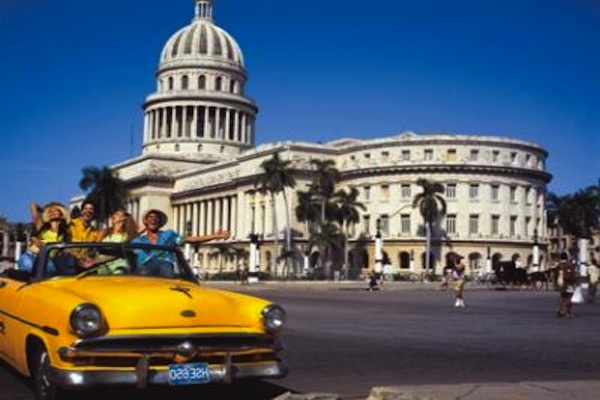
Then, they rush to make the pilgrimage before the Revolutionary story is exhausted, the almendrones (the old American cars) stop rolling, before they tear down the old buildings and the prostitutes and pimps adjust their rates to those of Bangkok or Amsterdam. continue reading

Of the Revolutionary utopia, all that’s left is what the tourists see, planned in advance, and that’s exactly what the guides show them. The tourists don’t like unpleasant surprises or upsets. Before, with unpredictable people, they could ruin their day talking about their troubles; the tourists prefer to talk with happy, helpful people, salsa dancers like they expect them to be, although they can get rude about the tip.

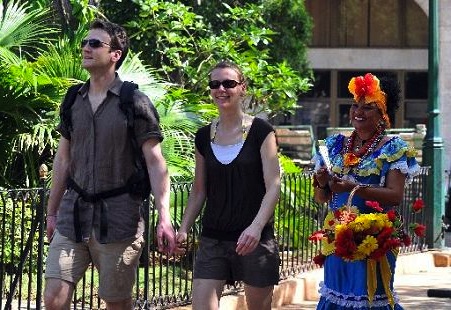
The do indeed assume that here the Revolution doesn’t abandon anyone to their fate, instead of certain crazies and beggars who roam the street, the tourists prefer to take pictures of those who resemble the Comandante, those old guys with the long beard, olive-green shirt, military cap, and licensed by the City Historian as “extras.”

The Havana on sale from Eusebio Leal is like that recorded by Landaluze. A shed to raise hard currency. Tourist postcard folklore. Orthodox mosque and cathedral without worshipers. A garden-cemetery for the rich, with colorful earth and the shadow of a convent. Black-robed fortune tellers with Bayajá scarves.

A virtual Havana, sepia, Technicolor or olive-green: of the wallet and the private taste of each person depending on how they color it.

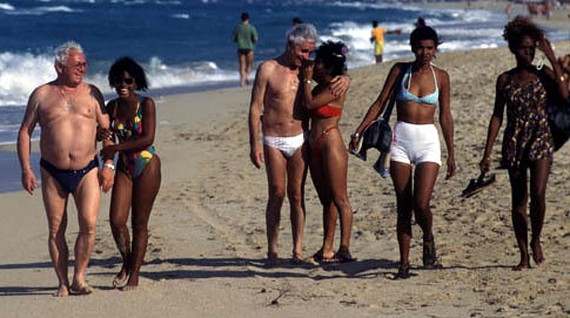
Cohiba cigars, mojitos and Cuba Libres without Coke. Artisans, guerrilla berets and posters and T-shirts with the fiercely dreamy face of Che Guevara. Pseudo postmodern and almost post-Castro art, just enough to sell well. Salsa and son. Girls and boys for rent: sexy, tanned, healthy and educated at bargain prices.

A picturesque scam just meters from the deep, real Havana. The one that talks loud and swears so as not to explode from rage. The city that smells of the rum and roast pig of hard currency restaurants, with stinking sewers, sweat, grease, coffee mixed with God knows what, dirty reefs and uncollected garbage.

In the midst of the Havana tournament for the crumbs of tourism, foreigners wander around sunburned and laughing, as if they were in the best of all worlds. That other that says it’s possible and that they seem to see embodied in Cuba, where the only annoying thing is the heat.

They roam between the columns, gratings, establishments with first world prices, and buildings in ruins. Dour police in black or grey berets everywhere they look, with their rubber nightsticks and unmuzzled dogs, keeping order. If they exaggerate the task, no matter. They are the guardians of the park, don’t forget, and the place is also under siege by the Yankees, which explains any inconvenience.

Cubanet, 25 February 2014 | 

luicino2012@gmail.com

Jurassic Cuba / Miriam Celaya

Mass demonstrations in Venezuela. Image taken from Internet

The news agencies don’t have a moment’s rest these days: a satrap in Ukraine has been overthrown through demonstrations and street protests amid the harsh winter, people stand on long lines to see with their own eyes the pomp and pageantry in which the ex-ruler, an ally of Russia, lived.

In Venezuela, student demonstrations continue, supported by opposition leaders finally came together to confront the Maduro government. In Ecuador, the opposition has just delivered a commendable blow to the government authorities by winning an unquestionable majority vote during local elections this Sunday February 23rd in important places like Quito and Guayaquil, putting the brakes on the rampant President of the “citizens’ revolution.”

The world is moving at breakneck speed, changing scenarios and uncovering new players, while we in Cuba remain in the political Jurassic era, with a government of dinosaurs perpetuated in power. continue reading

Judging by the official Cuban press, external reality does not seem to exist, so the “events” may be a gray “syndicate” congress in a country where no syndicates exist, a few “reforms” that do not reform anything, or whatever is dictated by a government that misgoverns a colony of ants that spends its days striving for sustenance, untouched by the joy of the liberated, ignorant of the will and courage of the opponents of Nicolas Maduro, the civility of Ecuadorians who opted for the polls to control the excessive power ambitions of a thug vested as president, and of everything that happens in the world beyond the reefs of a damned Island.

Venezuela hits us especially close, because of its shameless sponsorship by the Cuban dictatorship, obsolete and ruined, extending its evil shadow over a nation rich in natural and human resources. Fortunately for them and for us, Venezuela is not a country of zombies. Nevertheless, it causes sadness and apprehension all at once to see evidence that other peoples are capable of what we are not.

Pity our country, Cuba, whose children choose silence and flight instead of exercising their rights against the olive green satrapy that condemns them to slavery and poverty.

Translated by Norma Whiting
24 February 2014

Communique from the Venezuelan Resistance / Orlando Luis Pardo Lazo

Sunday, February 23, 2014

OFFICIAL COMMUNIQUE NUMBER 1 FROM THE VENEZUELAN NATIONAL RESISTANCE

Resolution concerning the position of Venezuelan citizens who continue street protests against the Castro-Communist regime that operates illegally in Venezuela.

WHEREAS:

The noble people of Venezuela, sick of the treason by the militaristic cabal and Castro-Communism agents who control power, went out February 2, 2014 in the state of Tachira to protest against insecurity, inflation, scarcity and plundering of Venezuelan resources and were repressed and attacked by the repressive forces of the regime, causing dozens of injuries and several detentions.

WHEREAS:

The national discontent, in the face of the oppressive economic crisis unleashed by the Castro-Communist Agent Nicolas Maduro Moros, after the devaluation of the currency, permitting the monthly plundering of a billion dollars in order to maintain and reconstruct the economy of the island of Cuba, attacking and destroying Venezuelan enterprises, subjecting the people to outrageous shortages that keep them demoralized and frustrated in long lines in order to obtain basic products, caused the rest of the country and some 50 cities to join a national protest today converted into a RESISTANCE. continue reading

WHEREAS:

The military, Diosdado Cabello, which occupies the presidency of the National Assembly and the engineer Rafael Ramirez, in the presidency of the PDVSA, are co-authors of the nation’s economic damage, after being the executive arms of each measure that directly benefits them and their corrupt groups embedded in the exchange control authorities.

WHEREAS

The protests that have had a peaceful character and that have been attacked cruelly by armed groups of mercenaries and assassins in the pay of the regime, gathered in the so-called social collectives, identified as Tupamaros, La Piedrita, Carapaicas, and another 92 groups with an average of 100 to 120 members each, have caused hundreds of injuries, damage to private property and residences throughout the country, student deaths, which demonstrates a Terrorist and Assassin State with the purpose of generating fear and chaos in the civil population that today heroically RESISTS in the streets the crimes against humanity to which they have been subjected.

WHEREAS:

Already ten Venezuelan citizens, students, have been assassinated in the streets of Venezuela in the middle of civil and peaceful protests.  Crimes committed by the regime’s mercenaries, calling themselves “collectives” or the Bolivarian National Guard, bodies that act together and are what sustain the criminal and traitorous cabal clinging to power.

WHEREAS:

There are hundreds of complaints of unlawful arrests, outside the legal order, warrantless searches, torture of detainees, students subjected to reporting regimes, the illegal incarceration of the citizen Leopoldo Lopez, national leader of the Popular Will party, attacks on political parties and persecution.

WHEREAS:

Amid the regime’s desperation it has sought to develop with the political agents of the opposition, gathered in the Board of Democratic Unity, who call for deposing the civil street protests, offering A DIALOGUE as the only exit from the massive social, economic and political crisis that Venezuela is living through and that said political agents have failed in those efforts.

WHEREAS:

The regime has implemented a ferocious censorship and media manipulation in order to prevent Venezuelan citizens from being up to date on the reality of events, subjecting dailies to newsprint shortages, purchasing through intermediaries audio-visual means of communication, radio and written, using Conatel as a censor entity and repressor of radio broadcasts in almost the whole country in order to try to hide from the world the crimes they are committing.

RESOLVED:

FIRST:

We decide to maintain, intensify and redouble the efforts of the protest action, now become NATIONAL RESISTANCE, until the following objectives are reached:

a) We demand that the members of the armed collectives and those loyal to Castro-Communism be disarmed, investigated and incarcerated and that the para-military action of these groups, which has cost lives, be stopped.

b) We demand that citizens Jose Gregoiro Vielma Mora and Francisco Ameliach, both governors from the states of Tachira and Carabobo, respectively, be subject to immediate investigation for being the masterminds and around whom revolve the action orders of the collective mercenaries who kill students in cold blood.

c) The RESISTANCE in the streets will continue in protest, the petition for SURRENDER AND JAIL for the citizens mentioned in point (b) of the First Resolution.

d) We demand at stop to the regime’s attack on all the productive enterprises established in the country, in all areas. The primary sector, manufacturing and commerce, so that the lines of production may be re-established and to avoid the famine that Venezuela has entered.

e) We demand the criminal and independent investigation of citizen Diosdado Cabello who has been at the front of the military operations of the Bolivarian National Guard against the noble people of Venezuela, committing crimes against humanity, registered and documented, carried out by officials of said repressive body.

f) We demand the removal of all the high command of the Bolivarian National Guard, chiefs of the various detachments, to submit them all to investigation as being suspected of committing war crimes against the people of Venezuela.

g) We demand the removal and criminal investigation of citizen Rafael Ramirez, president of PDVSA, primarily responsible for the economic debacle that lives on in the country, who is at the head of the regime’s economic decisions by being the vice-president of the economic area of the PSUV, singled out as promoting and being part of the corruption in Cadivi, the shipment of oil tankers without any record to criminal regimes like that of Syria, producing inflation and poverty in Venezuela.

h) We demand the irrefutable and non-negotiable surrender of citizen Nicolas Maduro Moros from position as president of the Republic, who must submit himself to investigation and first of all demonstrate his authentic Venezuelan nationality, clarifying to the country with reliable proofs all the events related to the physical disappearance of Lt. Col. Hugo Chavez who held the presidency in order to clear the legality of his ascendance to power being Vice President in the administration of the deceased President.  To be investigated in relation to Cuba and the rest of the Latin countries that receive oil perks from Venezuela in order to buy political consciousness and votes in the Organization of American States (OAS). To be investigated for his participation in orders centered on the mercenary collectives to massacre Venezuelan citizens.

i) We demand the FULL LIBERTY of all fellow students and civilians detained in the protests and the investigation of each case of torture, raid or persecution and to establish responsibility and criminal punishments for each soldier implicated.

j) We demand full freedom for all citizens considered political prisoners for years, including the leader of the Popular Will and the end of the persecution of the rest of the leaders of that party.

k) We demand the dismissal of the entire board of directors of Conatel and their prosecution for violating Human Rights in accessing the information of every citizen, after the repressive censorship that it has imposed on the people in the last two weeks.

l) We demand the mass surrender of the High Military Command, generals traitorous to the people of Venezuela, repressors and assassins, suspected of being narco-traffickers, submitted by the foreign military and civil forces of occupation from Cuba.

m) We demand the immediate expulsion from Venezuela of all the Cuban Castro-Communist agents present in the operations against civil, political and economic liberties of Venezuela.

SECOND:

We demand the creation of an Independent National Commission for Criminal Investigation, legally binding, with protection so that it may carry out the investigations that they manage to take before national and international justice according to each case of those responsible for the destruction of Venezuela and the crimes against humanity.

THIRD:

We declare that the Democratic Unity Board (MUD) is not representative of the NATIONAL RESISTANCE, we hold political support in that instance, nevertheless all the protest and resistance operations do not depend on any policy of MUD, by which none is authorized by the demonstrations in the streets to establish dialogues or negotiations with the regime in the name of the RESISTANCE. Any kind of decision that MUD wants to express before the regime must be framed with these points:  a through m of the Number One Resolution of this communique.

FOURTH:

We reaffirm that the RESISTANCE will not cede before any kind of negotiation that involves the traitorous members of the country maintaining their positions in power and establishing negotiating tables to investigate and establish penalties. The people of Venezuela remember that this tactic was applied in the 2002-2003 crisis, manipulated by José Vicente Rangel, when he established the Negotiating Table, not allowing the so-called “truth commission” to investigate the events of April 2002, rather they used it to unjustly imprison scapegoats, political prisoners today.

FIFTH:

We urge all civilians, doctors, teachers, professors, public employees, workers, employees, independent civilian, grassroots residents, middle class and wealthy to  maintain RESISTANCE IN THE STREETS WITH PEACEFUL PROTEST METHODS AND THAT ARE THAT ARE PART OF THE OPERATIONS THAT HAVE BEEN DEVELOPED TO RESIST THE CRIMINAL SCHEME OF THE CASTRO-COMMUNIST REGIME WHOSE FACE IN VENEZUELA IS NICOLAS MADURO MOROS.

In the streets of Venezuela, on the 23rd of February 2014

 Translated by mlk

24 February 2014

Havana Hustling / Ivan Garcia

oficios-de-buscavidas-620x330This time the phone call came in the middle of the night and the message was grim.

Edania, a retired teacher who has set up a small business of making phone calls and taking messages for the neighborhood, hurried to give the bad news to a family that lives two doors down from her house, in the rundown neighborhood of La Cuevita in San Miguel del Padrón, in the northern part of Havana.

“The thing is taking off like wildfire,” says Edania. “The retired people can’t afford it, so I decided to take advantage of the fact that I’m one of the few people with a phone in the neighborhood. I started charging one Cuban peso to pass on messages and two pesos for local calls in Havana. If the call is outside the city, I charge 3  pesos per minute. Many people are providing this service, which is one of the officially recognized self-employment businesses, but I have no intention signing up at the tax office. I only get 150 or 200 Cuban pesos per month [$6-8 USD], which barely supplements my meager pension. I don’t charge for funeral news.” continue reading

In the interior of the island as well as in the capital it has become common for neighbors who have telephones to charge for calls. Richard, a retired resident of the Diez de Octubre district of Havana, has a small money box next to his phone with a list of the various call charges.

“I also sell mobile phone cards. I buy them for 10 CUCs [about $11 USD] and sell them for 11; the ones that cost 5 I resell for 6. But apparently someone in the neighborhood has been talking, because the state inspectors have visited me, demanding that I legalize the business. I told them to go to government offices and demand better pensions for the old people, and then come back and see me,” says Richard.

After the vaunted economic reforms in Cuba—an exotic blend of wildly exploitative state capitalism mixed with Marxist speeches and slogans by Fidel Castro—a torrent of quirky trades flooded the Havana neighborhoods.

The elderly are the losers in this wild mixture of everything from sidewalk pastry vendors to high-quality eateries. In the world of self-employment, everything is available.

From people who offer pirated DVDs of Oscar-nominated movies for 25 Cuban pesos, to elderly public-restroom attendants.

In this spectrum of emerging trades, you find “experts” in umbrella repair, button-covering, funeral cosmetology, matchbox-refilling, and shoe repair. For 50 Cuban pesos they’ll carry buckets of water and fill your 60-gallon tank.

Havana is a tropical bazaar. A hive of hustlers. On the avenue that encircles the old port of Havana, a diverse group of citizens converges to try to earn a living.

Right next to Maestranza children’s playground, Delia, decked out in a floral costume, works as an itinerant fortune teller. “I charge ten Cuban pesos for each card-reading. If you want an in-depth session then the price goes up to 25. It’s even more expensive for foreigners, who can afford more.”

Several tourist buses stop at Avenida del Puerto. As the visitors take photos of the Bay and the Christ of Casablanca statue, street musicians sing old boleros and guarachas, trying to attract their attention.

Leonel is one of them. “For 20 years I’ve devoted myself to making soup (singing while the customers ate). There have been good and bad days. But I’ve always made more than the wages the state paid. When no one in Cuba remembered Compay Segundo, Ibrahim Ferrer, or Pio Leyva, God rest their souls, they also had to work as lunchtime entertainers, and to sing in seedy bars. They were lucky that a producer like Ry Cooder lifted them out of poverty,” Leonel said, playing a ranchera as he approached some Mexican tourists, hoping to pass the hat.

A dilapidated port-a-potty, serving as a urinal for the customers of three bayfront bars, is looked after by two rickety old men.

They charge one peso to urinate, three to defecate. “It’s because the toilet is clogged. We have to carry a greater quantity of water,” they say. They get the water for flushing right out of the bay, with a can tied to a rope.

“It’s hard work. We’re here up to twelve hours. But when I get home with 10 or 15 CUCs, I ask the Lord to give me strength to live a few more years so I can help my wife, who’s bedridden after a stroke,” says one of the old men.

The buses are now gone. A quartet of street musicians, all elderly, lean against the sea wall, waiting for new tourists.

“It’s been a long journey to return to the beginning. Before the Revolution I was already a soup peddler. For me nothing has changed. Except that life is more expensive and I’m older,” says the singer and guitarist. His dream is that on some tourist bus, a guy like Ry Cooder will come and rescue him from oblivion.

Iván García

Photo: In central areas of Santiago de Cuba, which like Old Havana are usually frequented by tourists, musicians also look for a living in streets and parks. Taken from Martí News.

Translated by Tomás A.

17 February 2014
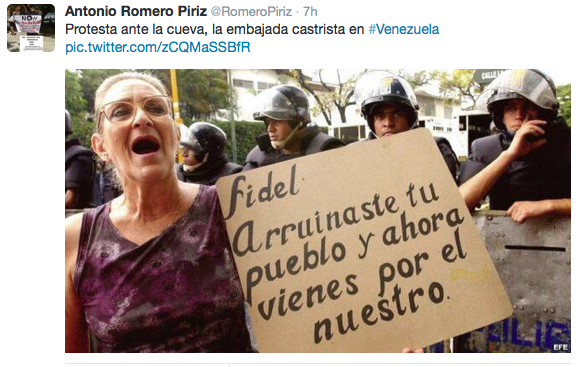
Venezuela Now Has Imported Blackouts / Ciro Javier Díaz Penedo

This video is under two minutes long.
We have re-posted it given what’s going on in Venezuela. The subtitles appear to have stopped working. Here are the lyrics in English:

IMPORTED BLACKOUTS – An original song by Ciro Diaz

Ohhh…. Fucking up a little island is nothing
Anyone can fuck up a little island
With few natural resources it was easy, to drown it in misery
But Fidel Castro loves the hardest efforts
That’s why he made friends with Chavez
To see if he could fuck up Venezuela

It looked like it would be hard
Because every time they dug a hole
They found every imaginable mineral
And the oil never stopped gushing

Only a president truly idiotic
Would allow his plans to embrace
The foolish ideas of Fidel and Cuban counter-intelligence.
And just like that ten years later, the job seems to be completed

Venezuela now has blackouts, blackouts imported from Havana
Venezuela now has blackouts, our experience was useless to them
Venezuela now has blackouts, blackouts imported from Havana
Venezuela now has blackouts, if they don’t hurry they will be left with nothing.

Another Inconsequential Congress / Fernando Damaso

One of the main problems confronting Cuban workers is low salaries, an issue that affects manual, service, technical and professional workers alike.

The current annual monthly salary of 440 pesos (some 20 dollars) means that many people are able to survive only by resorting to collateral activities, both legal and illegal. It matters little if there is more than one wage earner per family since, as the number of family members increases, so do the costs. As the saying goes, “If there is only enough for one, there won’t be enough for two, much less three.”

Until now the government’s response has been one-sided, claiming that “before raising salaries, production must first be increased.”

Among the issues to be addressed at the 20th Congress of the Cuban Central Workers’ Union (CTC), however, this does not appear to be one of them. It seems priority will instead be given to ratifying of the so-called Labor Code — drafted by government officials and put up for discussion by workers — though it is no secret that such discussions have always been and continue to be mere formalities. As in similar instances, once approved, it will be a dead issue. (Such was the case with the so-called Family Code, Civil Code and Governmental Ethics Code, among others now forgotten.)

The new CTC statutes to be discussed will address such things as how to increase production, conserve resources, replace imports, be more efficient, encourage strict compliance with existing legislation and collective agreements, fight corruption, restore discipline and preserve moral values — topics that address the interests of the State more than those of workers.

Cuban workers need labor unions that will truly represent them, with leaders that emerge from their own ranks and are democratically elected, not hand-picked by the Communist Party. Rather than be a governmental organization, the CTC should instead serve as a counterweight restraining the excesses of the state and its leaders who, even when drafting and implementing measures which disadvantage workers, claim they are acting in those same workers’ behalf.

Currently, the Cuban workers’ movement lacks a key battle weapon: the right to strike. Last used on January 1, 1959 to consolidate the gains of the insurrection, it was completely banned by the new authorities.

This is a one of numerous taboo subjects that will not be discussed at the workers’ congress.

It is striking that this has never been a cause of concern to the many union activists from overseas who have been invited to previous congresses, though it is a tool used routinely in their respective countries to defend their rights. It is safe to assume that it will be of no concern at this conclave as well. Do they really believe that here it is the workers who are in charge? Well, anything is possible in such a complex world.

Officially, the congress “will be a great success” and the workers’ delegates — carefully chosen by the party — will unanimously approve the accords being submitted to a vote, including the obligatory clauses calling for the release of “the Cuban Five” and a “lifting of the blockade,” in yet another “demonstration of the unbreakable bond between the “workers and their government.”

It will all be done for benefit of the authorities and their foreign guests who — after much celebration, special treatment, fine dining and sightseeing, with all expenses paid by Liborio — will return to their respective countries, touting the marvels of Cuba, of its unique system, of its “original workers’ movement” devoid of demands, demonstrations or anything of a similar nature.

This will ensure they are invited back to the next congress… assuming there is one.

Diario De Cuba, February 19 2014, Fernando Damaso

Tax Culture in Totalitarianism / Miriam Celaya

Estado-ladrón-MiriamApproximately four years into the process of the reinstatement of private labor in Cuba, official data acknowledges the existence of over 400,000 “self-employed” throughout the country, representing a percentage of workers that pay taxes to the State, a force to be reckoned with, given their great tax contribution to the State and the jobs they generate, that is, close to half a million individuals producing foods and services, offering income to others, and contributing to the country’s economy, supporting at the same time the State and its many institutions which are just as parasitic.

The authorities, through their media, have been insisting on how important it is for Cubans to gain experience and awareness regarding the “tributary culture” (paying taxes), since the era of “state paternalism” ended, along with its policies of subsidy; everyone should strive to earn a living based on their own capacity and resources to safeguard the revolution’s social benefits, namely the supposedly extraordinary standards of health and education that we enjoy on the Island.

Cynicism aside, the logic of the need for a tax culture is undeniable in any moderately functional society. But in the case of Cuba – are we ever going to stop being a “case”? — It appears that the tax culture that we now aspire to, which was destroyed by the government with the Revolutionary Offensive, is destined to flow in only one direction: from those who provide the tax to the tax institutions, but never the other way around.

Thus, a particular economic variant comes into play in virtue of which the producers must assume the burden of a heavy tax to the State, but the State is not required to report the amounts collected or the fate of the funds collected.

Silent tGaceta-oficialaxes

But there are longer standing taxes whose fate is also unknown. For decades, Cubans have contributed taxes to the Sate-party-government through a system of evaluations from multiple quasi-State organizations that it created.

For example, if we use the official statistics, which indicate there are about 3 million State employees whose average salary is 400 pesos, and if we consider that they are affiliated with the Workers Center of Cuba and, as such, they donate one work day each year destined for a non-existent territorial militia, their contribution in this context would be about $50 million annually — about 16.66 pesos per capita — not counting what they pay in dues to their unions, which, paradoxically, represent the interests of employers, who benefit both from what the employees produce as well as what they pay into the unions.

Recently a friend and colleague speculated about the contributions of the 800,000 members of the ruling and only party. Using an extremely conservative estimate, my friend found an estimated 50 pesos per year per militant, which produced $40 million annually in contributions to the State.

In addition to these estimates, there are taxes collected from mass organizations, such as the Committees for the Defense of the Revolution and the Federation of Cuban Women, a minimal amount, but significant because of large number of their affiliates, or the Young Communists Union, “the revolution’s youth vanguard”, in which both students and workers are active.

National Tax Administration Office

All these organizations, in turn, are supported by a monstrous (and expensive) infrastructure ranging from office buildings, furniture, fleets of vehicles, employees, materials and resources, even wages, fuel costs and electricity, etc., producing absolutely nothing.

As for the huge bureaucratic apparatus of government and its repressive forces, it is impossible to calculate their living costs. In this sense, many Cubans, especially the so-called “self-employed”, have begun to do their accounts and they wonder if it is not too much of a contradiction to help support the same system that plunders and represses and that, in addition, continues treating them like lepers.

Because, at the end of the day, the tax culture is not — as the government pretends — the imposition of a consciousness of servitude to the Master State in order to keep supposed supreme ideals that, so far, only benefit the State. The tax culture is born and consolidated from the self-awareness that individuals acquire when they reach economic independence, a road that sooner, rather than later, will have to start to flow in both directions.

Cubanet, 20 February 2014, Miriam Celaya

Translated by Norma Whiting