The National Crisis Forces Cuban Children To Work Says the Official Press

The newspaper Sierra Maestra assures that the child labor cases are the childrens’ own exceptions to “the complexity of context”


Children and adolescents who work are treated in the article as the children’s own exceptions “to the complexity of context” / 14ymedio

14ymedio bigger14ymedio, Havana, 19 June 2024 — One of the pillars of social welfare that for years the Cuban regime has defended as one of its greatest conquests collapsed this Monday, when the official press recognized that in Santiago de Cuba – as in the rest of the Island – there are cases of child labor. Children and adolescents in this situation are treated in the article as the children’s own exceptions to “the complexity of context” – a new euphemism for the economic crisis – and, although on no occasion are figures or statistics mentioned, officialdom insists that there are few.

The Sierra Maestra newspaper begins by talking about Luis, a sixth grader (between 10 and 11 years old) who sells bread in the mornings to help his mother and is also in charge of his three-year-old brother. The international regulations and charters that speak of children’s rights, of which Cuba is a signatory, speak of categorically proscribing child employment, but the newspaper says that “currently there are some cases, typical of the complexity of the context, that deserve to be evaluated differently, as a preventive policy and effective action.”

The idea, however, is nothing more than a suggestion that does not delve further into the problem and remains half-baked.

The article, which addresses a problem that is often ignored by officialdom, also cuts through the debate with a string of documents and articles that regulate work at an early age. On the Island, in the case of adolescents who continue reading

finish compulsory education and want to start working, the State has rules and permits so that they can access jobs suitable for their age.

Among the most common jobs are the sale of bread, gardening work or remuneration for tasks such as throwing away garbage

Attention to employees between 15 and 18 years of age is strict, and it is always required that the work is not carried out in difficult or stressful environments. However, and although Sierra Maestra recognizes that these are ages in which social pressure begins to arise because the adolescent assumes certain responsibilities, the issue is still not addressed thoroughly.

The official press focused on the work of educational institutions and mass organizations – such as the Committee for the Defense of the Revolution – which, it says, often discover cases of child labor when children and adolescents begin to miss school. Among the most common jobs are the sale of bread, gardening work or remuneration for tasks such as throwing away garbage.

For those who hinder the development of minors, the penalties can range from fines to prison. Families were also identified as the main ones responsible for the care of minors.

However, some “educational” policies that parents and students have been complaining about for decades, such as the so-called Schools in the Countryside or early entry into Military Service, are not included in the report although many consider them forms of “exploitation.”

On the contrary, the article talks about less pressing issues, such as university students who work and study at the same time. Although having both responsibilities can take these students away from their studies, the situation is not seen as harmful by society or the laws.

In fact, the State itself often promotes the employment of higher education students to fill teacher positions or other occupations in key sectors that suffer the stampede of professionals, and it pays these substitute teachers less than the conventional salaries of the sector.

At the beginning of the 2023-2024 academic year, several newspapers on the Island announced the formation of “quotas” of students to fill empty places in schools throughout the country. Likewise, it is common that in times of “crisis” students of health-related careers are asked to carry out vector control – Hygiene and Epidemiology tasks – as part of their work practices.

Many students also manage their own job search and end up prioritizing employment that gives them economic independence over options would define a career. According to Israel Riverón Sánchez, provincial deputy director of Employment in Santiago de Cuba, at the end of May more than 400 university students were working, of which only 120 did so in the state sector.

Translated by Regina Anavy

____________

COLLABORATE WITH OUR WORKThe 14ymedio team is committed to practicing serious journalism that reflects Cuba’s reality in all its depth. Thank you for joining us on this long journey. We invite you to continue supporting us by becoming a member of 14ymedio now. Together we can continue transforming journalism in Cuba.

Cuba Receives a Donation From Spain as an Area Affected ‘By Natural Disasters and Conflicts’

 The project, financed by Unicef ​​and the Government of Extremadura, was also intended for Haiti and the Palestinian territories

Part of the donation to Cuba from Unicef and Aexcid were 21 incubators / Unicef Spain / Screen capture

14ymedio bigger14ymedio, Madrid, 19 June 2024 — Up to nine neonatal care units have been given to Cuba from a project of the United Nations Children’s Fund (UNICEF) in Spain and the Extremadura Agency for International Cooperation (AEXCID). These were also given to Haiti and Palestine (both Gaza and the West Bank).

The three territories, UNICEF said in a press release, are considered “debilitated” after the Covid-19 pandemic and are “areas affected by natural disasters and conflicts.”

The agreement, signed in July 2022 and finalized a few months ago, indicates that the total cost of the operation was 1,259,666 euros. Of these, 9,666 were contributed by UNICEF and the bulk, 1,250,000 euros, by the Junta de Extremadura, on which AEXCID and one of the poorest Autonomous Communities in Spain depends. The Island received one third, that is, 419,889 euros, the same as each of the parties.

UNICEF shared an inventory of what was donated to the provinces of Pinar del Río, Havana; Mayabeque, Ciego de Ávila; Holguín, Granma, and Santiago de Cuba. Among all the hospitals, such as the Abel Santamaría Cuadrado and the Pepe Portilla of Pinar del Río, and the Manuel Fajardo of Havana, 21 incubators, 8 neonatal cardiomonitors, 2 “non-invasive” ventilators continue reading

and 8 portable monitors of vital signs were distributed, as well as digital scales, thermal blankets, oximeters and antiseptic cloth. This is, the text says, something “critical for the care of the newborn at risk.”

Training workshops were also given to about 5,000 specialists

Training workshops were also given, explains UNICEF Spain, to about 5,000 specialists, on care for newborns in critical condition and nutritional follow-up “during the first thousand days of life, which contributes to raising the quality of health care for pregnant women, girls and boys from the early stages.”

Infant mortality is one of the health measures that has worsened most dramatically in recent years in Cuba, which for decades has boasted of being a medical power. From 2018 to 2021 it grew by no less than 91.77%, from 3.9 children per 1,000 live births to 7.6 dying by twelve months of age, according to official data. Although in 2023 there was a slight improvement, with 74 fewer babies dying than the previous year, the rate at the end of the year remained ominous: 7.1 deaths per 1,000 live births. (For many years, even before the triumph of the Revolution, it remained at a rate of 5 per 1,000).

According to an article published by Escambray, the “stability in infant mortality rates” was precisely one of the reasons to name Sancti Spíritus as the headquarters of the upcoming celebrations for 26 July. The province has a current rate of 3.8 deaths per 1,000 live births, slightly lower than that in 2023, of 4.7 per 1,000.

“Improvisation, which allows surprising results to be composed on the fly, has nothing in common with strategic Cuban Health services, such as neonatal care and other factors that directly affect the infant mortality rate,” says the official newspaper.

The article emphasizes that the “growing adversities” were “aggravated” by Covid-19, precisely the reason for the subsidized action of UNICEF and AEXCID. The pandemic, the organizations say in their joint statement, highlighted “the fragility of health systems in many countries, overwhelmed by a health crisis that was added to existing ones, such as humanitarian or natural disasters.” One of those countries is, officially and internationally, Cuba.

Earlier this month, UNICEF published its report on serious child poverty, in which it included the Island for the first time. The document pointed out that 9% of minors up to five years of age suffer from severe poverty; that is, that they have a maximum of only two of the eight foods considered necessary for a healthy life. In addition, it pointed out that 33% of children suffer from moderate poverty, which means they have between three and four of these eight foods available to them.

Translated by Regina Anavy

____________

COLLABORATE WITH OUR WORKThe 14ymedio team is committed to practicing serious journalism that reflects Cuba’s reality in all its depth. Thank you for joining us on this long journey. We invite you to continue supporting us by becoming a member of 14ymedio now. Together we can continue transforming journalism in Cuba.
A Woman Injured in a Building Collapse on the Lethal Stretch of a Street in Havana

The property seems abandoned, but more than a dozen families live inside.

Number 425 of Monte Street, between Ángeles and Águila, in Old Havana, this Wednesday / 14ymedio]

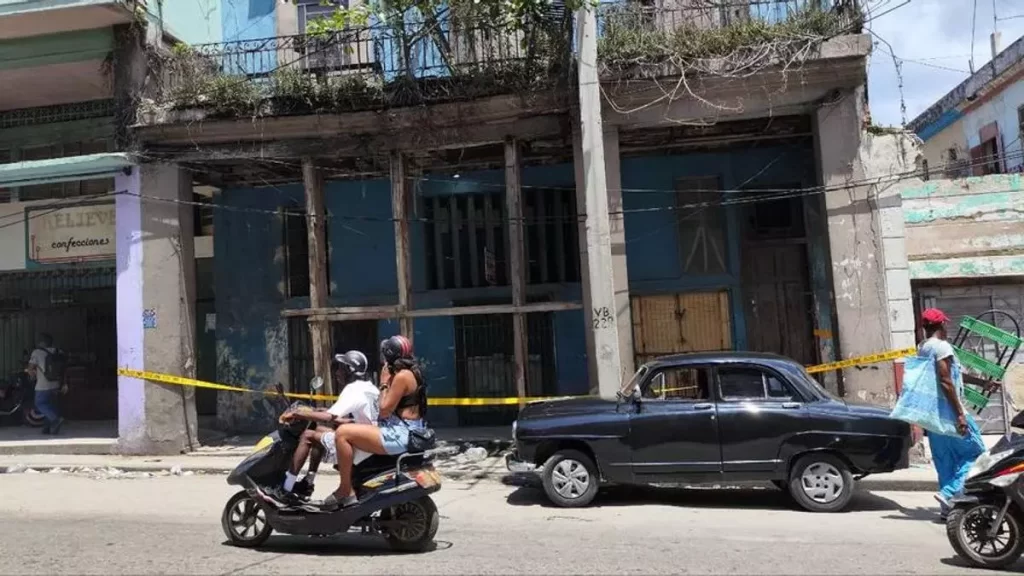
14ymedio bigger14ymedio, Natalia López Moya, Havana, 19 June 2024 — At noon this Wednesday, a yellow tape blocked the passage to the entry of the building at 425 Monte Street, between Ángeles and Águila, in Old Havana, where last night a partial collapse left a young woman injured. The adjacent property at number 423 had claimed the life of a man three years ago, when one of its side walls collapsed.

“We can’t even sleep here, all of us who live on this piece of street are in danger,” a neighbor who went to the place to get information about the injured woman tells 14ymedio. “We don’t know anything; we have called the Emergency Hospital [General Freyre Andrade], but they say that they don’t treat patients in Old Havana and they don’t have a trauma ward either.”

This newspaper’s attempts to know the state of the young woman, through the information numbers of the Calixto García Clinical Surgical Hospital, were also unsuccessful. A video of the moment she was evacuated shows the woman passed out and being put into a police patrol in the absence of an ambulance for her transfer. This Wednesday, among the neighbors, her situation was still a question mark.

“It’s been raining for many days and tragedy could be smelled in the air”

With the door closed, the facade in a calamitous state and the roof of the entrance propped up with thick wooden beams, the building where the collapse occurred seems abandoned, but inside there are still more than a dozen families crammed into small apartments. For years, the residents have feared that a wall or one of the middle floors will collapse. This Tuesday, part of the nightmare became a reality. continue reading

“It’s been raining for many days and tragedy could be smelled in the air,” said an old man who lives on Ángeles Street. In December 2021, the residents in the surrounding area heard a roar and, when they looked out of their doors, they saw that the side wall of the first floor of number 423, which is on the corner, had fallen, filling the entire passage with debris. Under those bricks, the body of a passer-by who lost his life was recovered.

The section of Monte Street where both affected properties are located is a very busy area and one of the most important commercial routes in the Cuban capital. Despite the “Don’t Pass -PNR*” signage that surrounds the building where the most recent collapse happened and the images of the accident that have been circulating for hours on social networks, this afternoon vehicle traffic and pedestrian crossing on the avenue were maintained.

The balcony of the collapsed building is full of vegetation that has grown between the cracks

Above the heads of passersby, the balcony of the collapsed building is full of vegetation that has grown between the cracks and through the bars. The trunks of bushes and weeds extend throughout the terrace. On the facade of the ground floor a colorful sign announces “Cell phone repair,” and there is often a line of people waiting to access the service.

After the previous collapse, less than three years ago, the corner building, 423, has been left with only a flat floor where there is currently a small sale that exhibits its goods on a table at the door. Moisture stains rise on the walls and columns of all the buildings on the block, and in the air the most persistent smell is that of sewer water.

The neighbors of the area fear that the deterioration is now so advanced that repair is not an option for some properties, most of them from the first half of the twentieth century but showing decades of neglect, lack of resources to carry out restoration and the overpopulation of families of up to three generations, who have had to divide the space with improvised walls and lofts that have added weight to the structures. [A set of photos of the site is here.]

In December 2021, 14ymedio interviewed several neighbors of nearby buildings and talked to some of the inhabitants of numbers 425, 427 and 429 of Monte Street. Aramirta Castan then warned that the danger continued: “Here in my dining room pieces of the roof are falling, everything is shaking, it seems that we are in an earthquake,” complained the woman, then 77 years old. “That door out there is in the air, everything is falling.”

*Partido Nacional Revolucionario

Translated by Regina Anavy

____________

COLLABORATE WITH OUR WORKThe 14ymedio team is committed to practicing serious journalism that reflects Cuba’s reality in all its depth. Thank you for joining us on this long journey. We invite you to continue supporting us by becoming a member of 14ymedio now. Together we can continue transforming journalism in Cuba.
The Hidden History of the Trinidad, the Cigar That Fidel Castro Gave to Heads of State

A documentary by specialist Kirby Allison reveals details and curiosities of “the Commander’s favorite tobacco”

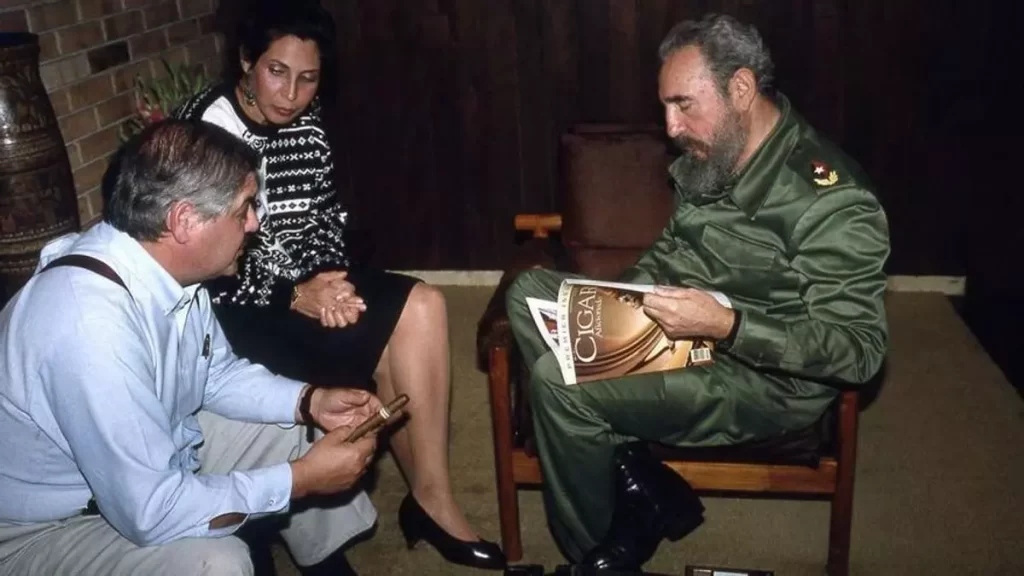
Marvin Shenken, editor of Cigar Aficionado, interviews Castro in 1994 / Cigar Aficionado

14ymedio bigger14ymedio, Juan Izquierdo, Havana, 18 June 2024 — In 1994, Fidel Castro gave an interview to the American Marvin Shenken, editor of the prestigious Cigar Aficionado magazine. “We know that there is a cigar called Trinidad and that it is only obtained in Cuba as a gift,” he said bluntly. According to rumors, the brand had been secretly manufactured since 1969 without a band, but Castro had denied its existence several times. With a smile, his answer was: “I don’t know what you’re talking about.”

That year, during the so-called Dinner of the Century – a luxurious banquet of millionaires held in Paris while Cubans went hungry in the Special Period – several boxes of Trinidad with the signature of Castro were officially auctioned, which were served after the meal with a 1982 Château Mouton Rothschild wine.

Born to dethrone the Cohiba, the story of how the “Commander’s favorite cigar” began to be sold was revealed by David Savona, current director of the magazine, to the specialist Kirby Allison during a miniseries about the brand that has just been uploaded to YouTube. In 1991, Shenken made a trip to Cuba on the trail of the Trinidad. He was about to publish the first issue of Cigar Aficionado magazine, and no one wanted to give him information about the “best kept secret” of the Island

“We were all a family. We thought the same thing: we all wanted to make a cigar for Fidel.”

He had to settle for a small article, which was enough to whet the appetite of the millionaires. When the terrain was prepared and everyone wanted to smoke a Trinidad, Castro admitted that the cigars existed and that they were for sale. continue reading

Ultimately, the Trinidad failed to dethrone the Cohiba, which is still the best-selling cigar on the Island. But the state corporation Habanos S.A. does not give up: Allison’s series is part of a promotion package, with new cigar bands and tools of the trade, in tribute to the 55th anniversary of the brand.

For Allison, if Cohiba is the flagship of Cuban cigars after 1959, Trinidad is the “special jewel in the crown” for its “unparalleled mystical aura.” The golden cigar with a blue band was given to diplomats and ordinary guests, but the triple T was reserved for very high officials, who were required not to disclose their consumption beyond the “corridors of diplomacy,” says the expert.

Trinidad, the Cuban city that the brand evokes, is for Allison the summary of everything the tourist seeks: colonial architecture, the convergence between Spaniards, Africans and “natives” and quality tobacco, whose cultivation method was perfected by Canarian immigrants in the central provinces of the Island.

The series points to the utmost secrecy in which Castro maintained the El Laguito factory since 1959, where the Trinidad and the Cohiba are manufactured. The president, he believes, “gave the diplomats the opportunity to show Cuban cultural wealth to the world.” Juana Ramos Guerra, one of the first cigar rollers of the factory, explained to Allison that all the employees entered the factory thanks to a family tie with the regime, since it was Celia Sánchez who was in charge of the selection process in 1972.

Before its launch, the Trinidad was marketed without a name or cigar band. Fidel Castro’s signature was on the very luxurious boxes / Screen Capture

“The cigar that was made here was the one made for Fidel,” Ramos adds. “We were all a family. We thought the same thing: we all wanted to make a cigar for Fidel.”

The greatest tribute that Ramos received from his bosses had to do with the Trinidad: the best cigars of the brand came out of his hands in 1998. The Trinidad, he recalls, “was the cigar that Fidel gave to presidents and important people who came to Cuba. It had no mark or bands, it was very simple but very tasty. Everyone wanted Fidel to give him one.”

The person who received the cigar found out from Castro what kind of cigar he was smoking, so that if the specimen left Cuba, no external sign would reveal it. “The Trinidad is our ambassador to the world,” says Ramos. By 2003, the brand had expanded to create new shapes and calibers: Founders, Colonials, Kings, Robusto Extra.

The worldwide relaunch of the brand took place in London that year, sponsored by Hunters & Frankau. Now, two decades later, Habanos has declared a “Trinidad tasting time,” with tastings in several places, so that millionaires can get excited again about cigars and their new brand, Cabildo, whose name evokes the relationship between tobacco and the “primary forms of government” of the colonial era. A link that recalls the principle formulated by Fernando Ortiz: “Whoever rules in Cuba, rules in cigars.”

Translated by Regina Anavy

____________

COLLABORATE WITH OUR WORKThe 14ymedio team is committed to practicing serious journalism that reflects Cuba’s reality in all its depth. Thank you for joining us on this long journey. We invite you to continue supporting us by becoming a member of 14ymedio now. Together we can continue transforming journalism in Cuba.

A Bill Proposes To Abolish the 24-Month Limit for Cubans Abroad

Cubans will be able to renounce their nationality and enter the Island with their new passport. / EFE

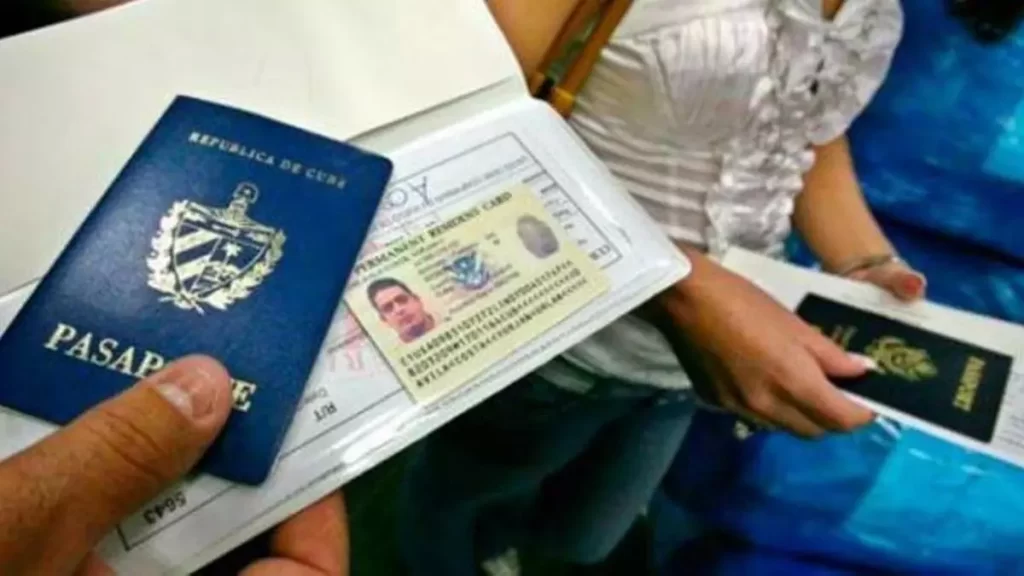
14ymedio bigger14ymedio, Madrid, 18 June 18, 2024 — Cubans abroad will retain their rights to residence and will not lose their properties regardless of how long they have been out of the country, according to the new Migration Law, whose preliminary draft was published this Monday on the Parliament’s page along with that of the Aliens Law. The law also proposes another outstanding novelty: the possibility of renouncing Cuban nationality and entering the Island with a passport that accredits a new citizenship.

Currently, Cubans who leave the country and do not return in 24 months lose their status as residents and, with it, many inherent rights, from medical care to owning properties. However, they were obliged to enter the Island with their Cuban passport, one of the most expensive in the world, at a cost of 180 dollars per year.

With the new law, the category of effective migratory residence is created, “a condition that affects Cuban citizens and resident foreigners, when they spend most of their time in the national territory, or through a combination of a period of permanence and other material evidence that demonstrates roots in the country.” Those who obtain this category have the rights that the Cuban Constitution reserves for nationals. continue reading

As for residents, they are divided into two: residents in the national territory (which can be temporary or permanent) and residents abroad

As for the residents, they are divided into two: residents in the national territory (which can be temporary or permanent) and residents abroad. In the latter are those who live outside Cuba, who before this law were considered emigrants. They will be able to apply for their new status, as well as investors and businessman who participate in the Cuban economic model.

Article 56.1 addresses the situation of those who renounce Cuban citizenship, to whom the immigration law would apply once such a waiver is recognized. The text says that these people “cannot identify themselves in Cuba as Cuban citizens, and for the purposes of entry and exit to the country they are subject to the presentation of the corresponding foreign passport, visa requirement and travel documents.” In the case that they have more than one citizenship, “they must identify and leave the country with the passport they used at the time of entrance to the national territory.”

The law also regulates the conditions of entry and exit, as well as the limitations, among which there are still the reasons of security and national interest and some other reasons of a discretionary nature, as well as others usual in international laws that include reasons of a criminal nature.

In the case of entries into the country, the fact of having a criminal record for terrorism and other internationally prosecuted crimes also appears as limiting, a section that can be a nod to Washington, which keeps the Island on the list of State sponsors of terrorism precisely because of the protection it has given to some people involved in this type of serious crime.

The law also regulates the conditions of entry and exit, as well as the limitations, among which are still reasons of security and national interest

The 65-page regulation also establishes legal frameworks for crimes related to migrant smuggling and human trafficking, as well as sanctions for non-compliance. According to the press release of the National Assembly, which received the preliminary draft after years of study, the publication is made with “the objective of promoting citizen participation in this legislative process and contributing to the legal culture of the population.” To that end, several emails have been enabled to which citizens can send their impressions.

However, the regulation must be in an almost final version, according to its own preamble, which emphasizes that in March it was presented to the Council of Ministers “and some other entities” that asked questions and made observations now resolved, “so there are no discrepancies on the project,” from which it is inferred that the Assembly will make few or no modifications.

The Migration Law – “aimed at achieving a regular, orderly and safe flow” – will repeal the current one, of 1970, as well as the subsequent decrees that modified aspects such as travel regulations, among the most important. The change will radically break with the model in force until now, which entailed the loss of a huge amount of rights, in addition to the properties, that Cubans were rushing to bequeath to their relatives to manage them.

The regime has been trying for several years to approach Cubans living abroad in order for them to invest in Cuba

The regime has been trying for several years to approach Cubans living abroad in order for them to invest in Cuba, something that the law prevented emigrants in the United States from doing until now, although sometimes it ended up being carried out on the margins. With this modification, and thanks to the maintenance of Cuban nationality, this situation is put to an end in an emergency context for the Island.

However, U.S. experts warn of the instability to which this situation could lead. “If a person is applying for asylum in the United States and is suddenly receiving an inheritance or intends to return, this can definitely be alarming for the U.S. authorities, because it means that there was fraud in that asylum,” immigration lawyer Gladys Carrederguas told Telemundo Miami last night.

Translated by Regina Anavy

____________

COLLABORATE WITH OUR WORKThe 14ymedio team is committed to practicing serious journalism that reflects Cuba’s reality in all its depth. Thank you for joining us on this long journey. We invite you to continue supporting us by becoming a member of 14ymedio now. Together we can continue transforming journalism in Cuba.
Nicaragua Once Again Prevents the Entry of Another Cuban Activist

Ramón Fuentes Lemes was taken off the plane at the Bogotá airport, where he made a stopover, and returned to the Island

Immigration control at Terminal 3 of José Martí International Airport / 14ymedio

14ymedio bigger14ymedio, Havana, 18 June 2024 — Daniel Ortega’s regime added another Cuban this Sunday to its blacklist of people who cannot travel to Nicaragua: the opponent Ramón Fuentes Lemes. The activist, a member of the Pinero Autonomous Party, on the Isla de la Juventud, had traveled to Bogotá, Colombia, where the airport authorities prevented him from boarding the flight due to Managua’s refusal to let him enter the country.

Fuentes Lemes told CubaNet that his trip to Nicaragua, from where he planned to continue to the United States, included several stopovers. First he would travel to Colombia with Avianca, then to El Salvador and, finally, to Nicaragua. However, at the Bogotá airport, an official made him get off the plane and informed him of Managua’s decision not to let him in.

The opponent tried to ask for asylum at the airport but was denied, CubaNet says, and he was deported to the Island. “I know that it is the Cuban dictatorship that is behind all this, because the authorities of Nicaragua do not have to know me, or know who I am enough to deny me entry to the country as if I were a terrorist,” Fuentes Lemes told the media on Monday from Havana. continue reading

The opponent tried to ask for asylum at the airport but was denied, says CubaNet, and he was deported to the Island

“When I arrived in Havana I called the Nicaraguan Embassy but they told me that they had nothing to do with it,” said the opponent, who added that he has no savings left after selling his house to pay for tickets and other expenses to emigrate.

According to Fuentes Lemes, this is not the first time he has had problems leaving the country. On two other occasions, he says, they prevented him for being “counter-revolutionary.” “Now they let me out but then did this to me. I’m afraid of what might happen now in Cuba. My life is in danger; these henchmen are capable of doing anything,” he added.

“I stand firm, no one is going to change my way of thinking, nor am I going to collaborate with them [the political police]. I will always demonstrate against the dictatorship in Cuba and in favor of freedom for the Cuban people,” he concluded.

Days before, Nicaragua had also banned the entry of another Cuban dissident. Bárbaro de Céspedes, known as El Patriota, learned of the measure “while on the bus heading to the airport [of Havana]. They sent me a message saying that the Government of Nicaragua denied my entry into that country,” he reported on social networks.

The activist explained from Camagüey, where he resides, that he had managed an expensive passage with several stopovers for June 13 with the intention of emigrating. “State Security has tried to make life impossible in Cuba, for my family and me,” said De Céspedes, who spent two years in prison for demonstrating peacefully on 11 July 2021.

The activist explained from Camagüey, where he resides, that he had managed an expensive passage with several stops for June 13

These are not the only cases of Cubans who have not been able to enter Nicaragua due to regulations of the Ortega Government. Journalists Héctor Luis Valdés Cocho and Esteban Rodríguez, members of the San Isidro Movement, and doctor Alexander Figueredo, were also stopped by Managua.

Another case was that of Yailén Insúa Alarcón, former director of the Cuban Television News and the morning program Buenos Días, to whom Managua denied entry when the woman and her husband were at the Bogotá airport, ready to continue the journey to Nicaragua and then to the United States, as she recounted in an interview with 14ymedio.

Translated by Regina Anavy

____________

COLLABORATE WITH OUR WORKThe 14ymedio team is committed to practicing serious journalism that reflects Cuba’s reality in all its depth. Thank you for joining us on this long journey. We invite you to continue supporting us by becoming a member of 14ymedio now. Together we can continue transforming journalism in Cuba.

The Battle Between Bacardí and Cubaexport for the Rights to Havana Club Revives After a New Judicial Decision

A Virginia court revokes the dismissal of a complaint brought by Bacardí

A man prepares a drink with Havana Club rum. / EFE

14ymedio bigger14ymedio, Madrid, 18 June 2024 — The Bacardí company will be able to continue fighting for the registration and marketing rights for the Havana Club rum brand in the United States, which are currently in the hands of the Cuban Government through the state-owned Cubaexport. The Court of Appeals of the Fourth Circuit for East Virginia has revoked, Reuters reported, the previous decision of a district court by which the lawsuit of the rum maker, based in Bermuda, was dismissed for “lack of jurisdiction.” The legal battle for the right to use the name began when the Bacardí family, who produced the drink on the Island, decided to leave the country after Fidel Castro came to power in 1959. The company says that it bought the rights for Havana Club from the Arechabala family, which produced the rum until its distillery was confiscated by the Cuban Government.

Cubaexport owned the marketing rights in the United States since it registered the trademark in 1976 until, in 2006, it was denied a renewal in accordance with the embargo laws that prevented it from paying the license without first obtaining an authorization from the Office of Foreign Assets Control (OFAC) of the Department of the Treasury, which had not been granted.

Cubaexport owned the marketing rights in the United States since it registered the trademark in 1976 until, in 2006, it was denied a renewal in accordance with the laws of the embargo

Cubaexport challenged before the courts the denial of the permit, which it lost after a 2012 ruling. Later, in January 2016 and during the thaw that occurred with Barack Obama’s mandate, OFAC changed its decision and issued a specific license that authorized Cubaexport to “make all transactions” and make the payments “necessary to renew and maintain the registration of the Havana Club brand.”

Bacardí counterattacked and filed a lawsuit that sought to reverse the measure, contrary to its interests, through an appeal to the court of the continue reading

district of Columbia in which the company accused the United States Patent and Trademark Office (USPTO) of making a decision in a “fraudulent way.”

In the lawsuit, Bacardí accused the senior officials of USPTO, including its director, Kathi Vidal, of violating current legislation by renewing the registration of the disputed trademark ten years after its expiration.

The Court of Appeals has now admitted this complaint and revoked the previous judgment, reopening the battle for the rights to the rum.

The (Cuban) state is “confident that the renewal was valid and that the court will agree when it arrives at the substance of this dispute

The defense of Cubaexport, argued by David Bernstein of the firm Debevoise & Plimpton, said that the state-owned company is “confident that the renewal was valid and that the court will agree when it arrives at the substance of this dispute.”

For its part, Bacardí told Reuters that the company is satisfied with the decision, while USPTO declined to comment on the process.

In 1960 the distillery of the Arechabala family, which had produced rum since at least 1930, was confiscated by the Government of Fidel Castro along with some other assets, without receiving any kind of compensation.

Ramón Arechabala, the company’s sales manager, who spent some time in prison after the expropriation ordered by Castro, escaped from the country and arrived in Miami in 1966 with the secret recipe for Havana Club rum. After a few years, he sold the rights to the brand and the original recipe to the Bacardí family.

In 1974, Arechabala’s trademark registrations in the United States for Havana Club rum had expired, and that’s when Cubaexport registered the brand. The business has very juicy figures. In 2021, the company’s international marketing director, Sergio Valdés, said that the company sold more than 4.4 million cases of rum (with 12 bottles to a case) the previous year, 1.7 million of them in Cuba.

Translated by Regina Anavy

____________

COLLABORATE WITH OUR WORKThe 14ymedio team is committed to practicing serious journalism that reflects Cuba’s reality in all its depth. Thank you for joining us on this long journey. We invite you to continue supporting us by becoming a member of 14ymedio now. Together we can continue transforming journalism in Cuba.

Only Four Cuban Judocas Will Compete at the Olympic Games in Paris

The Judo Federation, a declining sport on the Island, expected at least seven of its athletes to qualify

Idalys Ortiz has won medals at the Olympic Games in Tokyo 2020, Rio 2016, London 2012 and Beijing 2008 / JIT

14ymedio bigger14ymedio, Havana, 18 June 2024 — Cuban judo is crumbling. Of the seven athletes that the president of the Cuban Federation of this sport, Rafael Manso, intended to qualify for the Paris 2024 Olympic Games, only Idalys Ortiz, in the 78-kilogram category, Maylín del Toro (63 kg), Andy Granda (100 kg) and Iván Silva (90 kg) got their tickets. The hope of success for the regime is focused on the four-time Olympic medalist Ortiz. The 34-year-old from Pinar del Río was in the nineteenth position of the Paris 2024, qualifying with 2,983 points.

Maylín del Toro will perform in Paris after an outstanding performance at the World Judo Championship, which took place last May in Abu Dhabi. However, her chances of a medal are reduced against competitors such as the French Clarisse Agbegnenou.

Cuban judo “is going through a worrying stage of decline,” said Play-Off Magazine. This discipline, which has awarded 37 Olympic medals to the Island throughout history – 6 gold, 15 silver and 16 bronze – has also been affected by departures.

This discipline has awarded 37 Olympic medals to the Island throughout history: 6 gold, 15 silver and 16 bronze

Pan American and Central American judo champion Magdiel Estrada, 29, fled the Cuban delegation in Brazil last April. With his leave, “judo and the Cuban sports movement lost a prominent figure less than three months away from the great appointment in the French capital. A phenomenon that doesn’t stop,” Play-Off Magazine warned that month. continue reading

Between July and September of last year, nine judocas ended their relationship with the Cuban sport.

The bronze medalist at the Budapest Judo World Championship (2017), Kaliema Antomarchi, boarded a flight to Serbia in September, a route followed by many Cubans to access the European Union. This athlete’s departure coincided with the escape in Canada of Samarys Gregorio, Odelin García and Yurisleydis Hernández, after winning second place in the Pan American and Oceania Championship held in Calgary.

Vanesa Godinez, Mellisa Hurtado, Santa Virgen Romero, Blanca Elena Torres and Lutmary García also left the Cuban team in May, during their training in France.

To the escapes is added the “inattention and lack of maintenance” denounced in an interview with Cubanet by the bronze medalist in Central American games and coach of the Judo Academy in Havana, Yosvani Pérez Hernández. “It’s obvious that they are not doing their job. The health of judo is being lost,” he said.

Translated by Regina Anavy

____________

COLLABORATE WITH OUR WORKThe 14ymedio team is committed to practicing serious journalism that reflects Cuba’s reality in all its depth. Thank you for joining us on this long journey. We invite you to continue supporting us by becoming a member of 14ymedio now. Together we can continue transforming journalism in Cuba.

Russian Warships Leave Havana After Their Five-day Stay

One of the tugboats that escorted the Russian ships, this Monday, returning to the port of Havana / 14ymedio

14ymedio bigger14ymedio, Juan Diego Rodríguez, Havana, 17 June 2024 — Shortly before 12 noon, one of the tugboats that had accompanied the departure of the Russian warships anchored in Cuban waters since last Wednesday entered the bay. At that time, none of the Russian boats were visible on the horizon. The flotilla, consisting of the frigate Groshkov, the nuclear-powered submarine Kazan, the oil tanker Pashin and the rescue tug Chiker, left quickly in the morning. “More than sailing, they flew,” said a resident of Central Havana who went unsuccessfully to the dock to say goodbye. The image of the capital’s port this Monday, empty, contrasted with that of Saturday, when dozens of Cubans lined up to go on board the ships, in the only visit scheduled for the public.

The port of Havana this Monday, almost empty, looked very different from Saturday / 14ymedio

According to the North Russian Fleet in a statement on Monday, “after the departure from the territorial waters of Cuba, the naval group will continue to carry out missions in accordance with the plan of its crossing.” Although Washington initially said that the Russian flotilla did not pose a threat to its national security, two days after the arrival of the Russian ships, the U.S. Southern Command reported the presence of one of its submarines in Guantanamo Bay. “We will always monitor any foreign ship operating near our waters,” the U.S. authorities said.

Translated by Regina Anavy

____________

COLLABORATE WITH OUR WORKThe 14ymedio team is committed to practicing serious journalism that reflects Cuba’s reality in all its depth. Thank you for joining us on this long journey. We invite you to continue supporting us by becoming a member of 14ymedio now. Together we can continue transforming journalism in Cuba.

The Youth Computer Club in Matanzas, Cuba, Doesn’t Even Have Internet

“There are no parts or budget for the computers, the equipment is broken or obsolete,” explains an inspector

Another problem of the Youth Club is that, in addition to the lack of customers, no one wants to work on the computers / 14ymedio

14ymedio bigger14ymedio, Julio César Contreras, Matanzas, June 15, 2024 — In the city of Matanzas there are three Youth Computer and Electronics Clubs that, although they seem few for such a large population, are actually superfluous due to their lack of customers. The offices, where young people used to go to play online or to access computers that they did not have at home, have become empty spaces that depend on someone leasing them to survive.

The first Youth Club on the Island was inaugurated in 1987 by Fidel Castro, when money from the Soviet Union was still flowing. Since then, and with the successive crises of the country, what began as a computerization project ended up being a hall to access games such as Dota, Age of Empires or Call of Duty – to mention the most popular. Then it was transformed into a point of sale for phone recharge cards, and now its workers limit themselves to updating antivirus products for a few customers.

“The other day I arrived at Joven Club III, which is on the road of El Naranjal. The only technician there had been talking to two people. I asked him to show me the registration of clients who, at the end of the month, did not total even fifty visits,” Alejandro, a specialist of the Provincial Directorate of the Youth Club and in charge of inspecting them regularly, tells this newspaper. continue reading

The technological obsolescence of these premises frightens the customers / 14ymedio

Another problem of the Youth Club is that, in addition to the lack of customers, no one wants to work on the computers. Almost always the technicians are young boys who use the position as a springboard for other better-paid jobs. “It is true that they do not have good opportunities to develop professionally. So, as is logical, they go to some private company or better-paid state position,” says Alejando, 36, from Matanzas. As a young man and a graduate of the University of Computer Science (UCI), Alejandro says he understands his colleagues when they leave the staff. “If you have at least a little interest in what you do, being in a place that still uses computers from a decade ago and a tape printer kills your desire,” he reflects.

Alejandro explains that technology has advanced rapidly, “but what has not evolved is the institutional conception of what these places should be. Most people have at least one modern cell phone with which they can do almost everything, including access to artificial intelligence. Here, however, they don’t even allow internet access. The supposed online games we offer have to be played here, with the internal network of computers, when young people in the whole world can use their phones for that,” he adds.

In addition, continues the inspector, “there are no parts or budget for computers. Much of our equipment is broken or obsolete, and there is no money even to give a coat of paint to the facade. In those conditions it is very difficult to maintain the operation of the facilities in the province. Some have even had to change their corporate purpose or remain closed while waiting for a solution, which could be a definitive closure.”

This is the case of the Joven Club II, which has had to rent an area of the premises to a private business that repairs cell phones and other electronic devices. Many of these workshops perform functions (installing antivirus, downloading programs or installing applications) that make them direct competitors of the state center, but unlike the workshops, the state centers don’t attract customers.

Joven Club II rented an area of the premises to a private business that is dedicated to repairing cell phones / 14ymedio

“It’s curious, if not worrying, that their computers are more advanced than ours. People arrive asking directly about the workshop, and I would not be surprised if in the future it will expand to the entire place,” says Alejandro. “It’s a shame to say, but the computer scientist who is at the door (of the Youth Club) spends more time explaining how to get to the cell phone workshop than doing his real job. If someone comes specifically to the Youth Club, the answer is almost always one of these three: We don’t have it. It’s broken. That service is not provided here,” he adds. Joven Club I, close to René Fraga Park, is the only one to which some elderly people go sporadically. “They are people who, since they do not master some technical aspects well, seek advice to update programs, install applications on their phones or obtain some specific information.”

Seen from the outside, the network of Joven Club de la Isla does not seem to be in such a precarious state. If you access its website, there are an infinity of community services and projects for students, the elderly and people with disabilities that are theoretically developed successfully. In practice, however, “they are only taking up space.”

Translated by Regina Anavy

____________

COLLABORATE WITH OUR WORKThe 14ymedio team is committed to practicing serious journalism that reflects Cuba’s reality in all its depth. Thank you for joining us on this long journey. We invite you to continue supporting us by becoming a member of 14ymedio now. Together we can continue transforming journalism in Cuba.

Only 30 of 3,082 Cuban Applicants Obtained Asylum in Spain in 2023

This represents less than 1%, while Nicaraguans obtained 30%

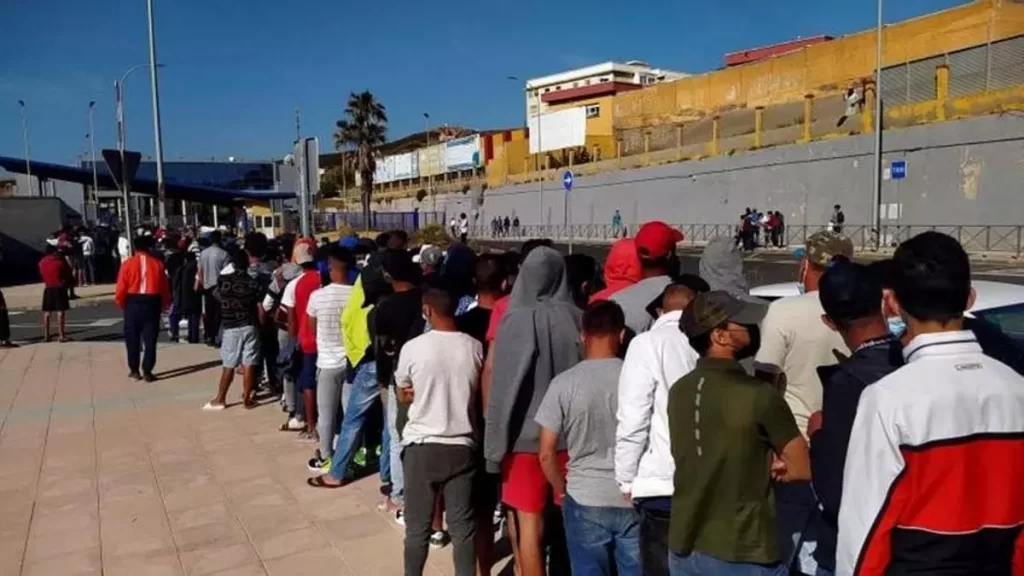
Archive image of a group of immigrants waiting at the Asylum and Refuge office of the Tarajal border in Ceuta to request an appointment to request asylum / EFE/Reduan Dris

14ymedio bigger14ymedio, Madrid, 17 June 2024 — Cuban refugee applications in Spain more than doubled in 2023 compared to the previous year but very few obtained favorable resolutions. While in 2022 there were 1,392, last year 3,082 were formalized. According to the annual report of the Spanish Commission for Aid to Refugees (CEAR), published on Monday, not only an increase of 54% but also that Cuba is now in the fifth position among the nationalities that applied for asylum in the European country.

CEAR says that the numbers are “a reflection of the political and humanitarian crisis that this country is going through,” but the Island registers one of the lowest protection rates of all those reported, 3.7%. Less than half of the petitions submitted have been resolved (1,157), and of them only 30 received refugee status. A total of 1,127 did not receive any protection, 777 due to an unfavorable resolution and 350 due to rejection of their application.

For Morocco, its citizens occupy sixth place in asylum applications in Spain, with 3,076, 21% less than those registered in 2022 (3,905), but nevertheless these are resolved favorably in a much higher proportion than those of Cubans. In 2023, 4,435 requests from Moroccans were resolved – not only from 2023 but from previous years – of which 273 received refugee status. continue reading

In 2023, 4,435 requests from Moroccans were resolved, of which 273 received refugee status

More favorable are the numbers for Nicaragua, in seventh place in number of applications. Out of a total of 2,759 (30.3% more than the previous year), protection was granted to 837 people.

In the list of the top ten nationalities, Russia enters for the first time in its history (in ninth place), with 1,694 applications in 2023, more than double the 684 in 2022. Among the reasons based on the petitions are the “forced recruitment” for the war initiated by Putin in Ukraine as well as the deterioration of human rights, especially for “reasons of religion and gender identity and sexual orientation.” Of the 1,132 applications received from Russian nationals, 647 received refugee status, and eight, “subsidiary protections,” which represents a spectacular protection percentage of 59.7%.

This is a rate well above the Spanish average (12%) and even the European average (42%). CEAR indicates that Spain, being the third country in the European Union in refugee applications, is, at the same time, the one that least grants them. In 2023, it recorded the highest number of protection requests in its history: 163,220, an increase of 37.3%.

Venezuela is, for the eighth consecutive year, the country of origin with the highest number of asylum applications (60,534), compared to 45,748 in 2022, an increase of 32.32%. It is followed by Colombia, Peru and Honduras. The first three nationalities account for 78.7% of the total registered requests.

“None of these measures has improved access to the international protection procedure in Spain”

The Commission also criticizes the Spanish system of prior appointments, whose “poor availability and unpredictability” caused the existence of “an irregular market for sale.” This system, explains CEAR, “became practically the only way to access the procedure, after payment of 30 to 500 euros, an amount impossible to raise on many occasions by people who have had to invest all their assets to reach a safe place to apply for protection.”

It also recalls the operation carried out in May 2023 against one of the criminal networks that captured appointments with a bot and later resold them (about 69 people were arrested). “None of these measures has improved access to the international protection procedure in Spain,” the organization protests, which indicates that the system even violates European regulations.

The CEAR report also reflects the situation of displaced people around the world, which in 2023 surpassed historical records with more than 110 million people forced to flee their homes, according to figures from the United Nations High Commissioner for Refugees (UNHCR).

Similarly, it dedicates a chapter to the main migratory corridor for Cubans — ‘mesoamerica’ — from Nicaragua to the United States. CEAR notes that in 2023 the record of arrests on the southern border of the United States was broken, with almost two and a half million people arrested (2,475,669, an increase of 4% compared to 2022). In Mexico, 140,982 migrants applied for refuge, the highest number ever recorded, of which 18,386 were Cubans (in third place behind Haitians and Hondurans).

Translated by Regina Anavy

____________

COLLABORATE WITH OUR WORKThe 14ymedio team is committed to practicing serious journalism that reflects Cuba’s reality in all its depth. Thank you for joining us on this long journey. We invite you to continue supporting us by becoming a member of 14ymedio now. Together we can continue transforming journalism in Cuba.

Mexico Frees 10 Cubans Kidnapped With Ransom Demands of $5,000

As of May, 8,029 Cubans have applied for asylum. Migration reports the irregular transit of 27,404 Cubans in five months

Several migrants rest at the Jesús El Buen Pastor shelter, located in Tapachula (Chiapas) / EFE

14ymedio bigger14ymedio, Ángel Salinas, Mexico City, 18 June 2024 — The authorities of Quintana Roo, in Mexico, freed 10 Cubans who were kidnapped last Friday. The victims, including a woman and nine men, said that armed people had held them for several days in a house located at Supermanzana 26 and “demanded a ransom from their relatives.” However, the Police “found no evidence about the alleged kidnappers that could confirm what was said by the foreigners,” according to Ulises, an agent of the Prosecutor’s Office, who held back the identity of the migrants, who were under the protection of the National Migration Institute.

According to the official, the alleged kidnappers demanded a payment of $5,000 from the woman’s relatives. In case “it’s not paid, she would have to work in bars.” However, it is still not corroborated “if there had been contact” in Havana.

The Police “found no evidence about the alleged kidnappers that could confirm what was said by the foreigners”

Ulises stressed to this media that the Cubans’ version is being investigated to know how long they have been in Mexico and how they arrived in the state where they were kidnapped. He rejected the possibility that these people arrived on the fishing boat with registration PR5348F5a, which was abandoned the first week of June in Isla Mujeres. continue reading

“A witness says that he saw the boat with several people pass by Playa de Mascotes. The maritime authorities have already offered details about the boat to Havana,” said the same official.

The Cubans rescued in Quintana Roo requested advice to apply for asylum. According to data from the Mexican Commission for Aid to Refugees (Comar), the number of Cuban immigrants has decreased by 41.9% in the first five months of the year.

With regards to requests for asylum, Cubans are second, with 8,029 requests. Honduras tops the list with 15,389 recorded; then come Haiti (3,353); El Salvador (2,896); Venezuela (2,068); Guatemala (2,014); Colombia (1,010); Nicaragua (456); Ecuador (337); and Chile (192).

However, attorney José Luis Pérez Jiménez considers that the figures offered by Comar “are a mirage.” The asylum seekers on the southern border have the same numbers as for 2023, but Comar takes so long to help them that it does not later record the asylum requests in its statistics, he says.

“By the time Comar notifies the migrant to go to his eligibility interview, four months have passed,” and these foreigners are already on the border with the United States

Pérez Jiménez explains to 14ymedio that “by the time Comar notifies the migrant to go to his eligibility interview, four months have passed,” and these foreigners are already on the border with the United States. “There has not been a reduction in applications for asylum or refuge. It’s still the same; what exists is procrastination at a turtle’s pace.”

Migration announced this Sunday that in the first five months of this year, the irregular passage of “1,393,683 migrants from 177 countries” was recorded. Of this group, 27,404 are from the Island.

For those months, migrants from Venezuela are the largest group with 377,401; followed by Guatemala (209,540); Honduras (144,499); Ecuador (136,699); Haiti (107,432); and Colombia (70,371).

The report does not detail the number of deportations made by Mexico. As of April, 783 migrants had been deported to the Island on commercial flights.

Translated by Regina Anavy

____________

COLLABORATE WITH OUR WORKThe 14ymedio team is committed to practicing serious journalism that reflects Cuba’s reality in all its depth. Thank you for joining us on this long journey. We invite you to continue supporting us by becoming a member of 14ymedio now. Together we can continue transforming journalism in Cuba.

The Havana Biennial of Political Humor, at the Service of the Communist Party of Cuba

Some 46 cartoonists from 22 countries, including Venezuela, Mexico, Russia, China, Iran, Turkey and Syria, attended the biennial / 14ymedio

14ymedio bigger14ymedio, Juan Izquierdo, Havana, 15 June 2024 — With Milei, Netanyahu, Hitler, the CIA, Trump and the other “usual suspects,” in addition to a good number of commonplaces – swastikas, missiles, Mickey Mouse – the cartoonists who aspired to participate in the first Political Humor Biennial in Havana had their work cut out for them.

The limits of “political humor” were set this Friday by the cartoonist and cultural commissioner Arístides Hernández (Ares): the event aspires to the “plurality of speech,” as long as no one offends the leaders – historical or current – of the Revolution. “In Islamic countries it is impossible to paint a caricature against the prophet Muhammad, and in the case of Cuba there are limits to humor in relation to the historical figures of the Revolution; that type of satire does not appear in the media here nor in Spain, with the kings,” Hernández alleged.

Cartoonist Alen Lauzán, exiled in Chile and one of the most recognized Cuban graphic humorists of the moment, agrees completely with Ares. “The Islamics would never call for a Festival of Humor about Muhammad; nor in today’s Cuba could one be held satirizing Fidel Castro or the Revolution. As far as I know, we Cubans are not Muslims, nor was Fidel a prophet, nor is the revolution a religion,” he said ironically.

Many works satirize political characters such as Javier Milei, Benjamin Netanyahu and Donald Trump, the usual suspects of the regime / 14ymedio

According to Lauzán, one of the pencils behind the Mazzantini* magazine – a reference for the graphic humor of Cuban exiles – “humor should not have limits, only those that each humorist creates according to their moral and political values, not those that governments and institutions impose. From there to whether it is good or bad, correct or profane, is something else. Even the worst humor has its audience.” continue reading

Hernández, for his part, was right to put tolerance for critical humor in Cuba at the level of Muslim countries such as Iran, but he was wrong to reference Spain, where artists are free to ridicule both the royal family and the Government and its opposition.

Throughout the free world, Lauzán believes, “there have been salons, biennials, humor and political satire contests, but of course, always from the interest of what the organizers of these events understand as convenient and/or politically correct.” But, unlike Cuba, one can also organize an exhibition without asking the State for permission on what topics to deal with or which humorists are allowed to participate.

Despite the restrictions of the biennial, graphic humor made by Cuban authors is booming, and Lauzán, along with group featured in Mazzantini, is one of those responsible. His magazine “of bulls [Tijuana baseball team], goats [Guadalajara soccer team] and cuckolds, of strains and crossbreedings,” and the biennial project, “more than incomparable, they are incompatible.”

“They have nothing to do with each other because they have different concepts of creation and ways of interpreting freedom, not only of expression, but also of creativity. One is governed by what the one-party Ideological Department imposes on all media, and the other by what each publisher understands must be the editorial policy of each publication,” he explains to 14ymedio.

“As far as I know, we Cubans are not Muslims, nor was Fidel a prophet, nor is the revolution a religion”

In the biennial, he concludes, they communicate “the sacred commandments of the PCC* (’Koranist’ Party of Cuba),” but Mazzantini “is governed by another concept: everything that is against the Superior Leading Force of Society and the State.”

This Saturday, only two tourists visited the Gallery on 23rd and 12th Street, one of the venues of the biennial. The international leaders that the official press describes as enemies were repeated in each vignette, but the local authorities or allies were not.

Within the strict thematic channels of the biennial, the jury could only reward works on common themes, such as television criticism, hunger and money. The declared enemies of this “diverse space”: the “ultra-right” governments, which “rewrite history” and promote “neo-fascism,” a sack in which the Argentine president and the Israeli prime minister fit.

About 46 cartoonists from 22 countries – including Venezuela, Russia, China, Iran, Turkey and Syria, nations with very little or no freedom of expression – attended the biennial, convened by the Ministry of Culture, whose head, Alpidio Alonso, was at the presentation this Friday. Other spaces in El Vedado, such as the Riviera cinema, project “classics against fascism” such as ’The National Shotgun’, by the Spaniard Luis García Berlanga, and ’The Great Dictator’, by Charlie Chaplin.

The Ministry of Culture aspires for Havana to become, until June 28, the “world capital of political humor.” However, it has ended up creating an inoffensive world for Cuban leaders. An ideological truce that, after the lashing by more than 40 of Mazzantini’s numbers, they undoubtedly need.

Translator’s notes:
* Mazzantini is a magazine published by The Foundation for Human Rights in Cuba – Subscriptions (PDFs via email) are free.
**PCC is the Spanish initials for “Cuban Communist Party” and would also be, in Spanish, the initials for the “Cuban Koranist Party”

Translated by Regina Anavy

____________

COLLABORATE WITH OUR WORKThe 14ymedio team is committed to practicing serious journalism that reflects Cuba’s reality in all its depth. Thank you for joining us on this long journey. We invite you to continue supporting us by becoming a member of 14ymedio now. Together we can continue transforming journalism in Cuba.

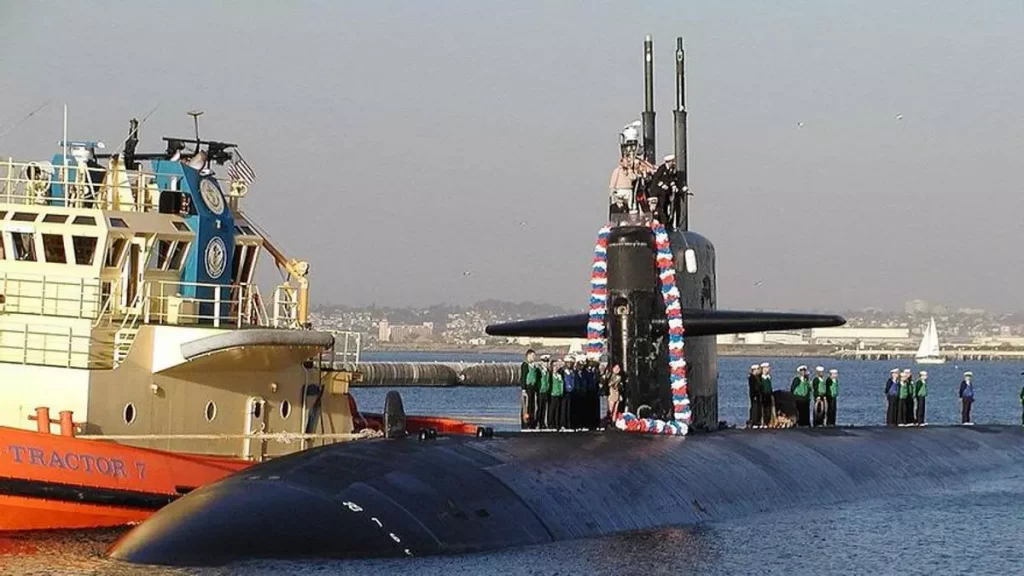
The Cuban Regime Expresses Its Displeasure About the Arrival of a U.S. Submarine in Guantánamo

The ’USS Helena’ is on the Island “as part of a routine port visit,” says Washington

The visits of naval ships such as the ’HSS Helena’ are the result of “an invitation, and this is not the case,” says the Foreign Ministry

14ymedio biggerEFE (via 14ymedio), Havana, 15 June 2024 — The Government of Cuba declared this Friday that it dislikes the presence of a United States war submarine in Guantánamo Bay because the naval visits are the result “of an invitation, and this is not the case.” The Deputy Minister of Foreign Affairs of the Island, Carlos Fernández de Cossío, said: “Obviously we do not like the presence in our territory and transiting through our waters of a medium of that nature, belonging to a power that maintains an official and practical policy that is hostile towards Cuba.”

“We knew of its presence, because according to procedures that we have followed for years, the United States informed us in advance,” he said in statements to the official state media Cubadebate.

He also pointed out that “the important thing to remember is the illegal and unacceptable nature of the occupation of a part of our territory by a foreign power against the will of the Cuban people. It’s an illegitimate military occupation and that’s what makes the difference.” continue reading

“Obviously we don’t like the presence in our territory and transiting through our waters of a medium of that nature

The U.S. Southern Command reported that a war submarine of its own is in the Cuban bay of Guantánamo, where the United States has maintained a military base since 1903. The Government of Havana demands the return of that territory, which it considers illegally occupied.

According to the report, the fast-attack submarine USS Helena is in Guantánamo “as part of a routine port visit.” The presence of the American submarine coincides with the visit made to the Island by a flotilla of the Russian Navy last Wednesday.

The Russian fleet, which includes a nuclear-powered submarine, a modern frigate, an oil tanker and a tugboat, has generated great expectation in the Cuban capital where it will remain until next Monday on a visit classified as “protocol” by the Ministry of the Armed Forces of Cuba.

The U.S. Department of Defense pointed out that it had been following the movements of the Russian flotilla for days, and it does not pose a threat to U.S. national security.

“We will always and constantly monitor any foreign vessel that operates near territorial waters of the United States. Obviously we take it seriously, but these exercises do not pose a threat to the United States,” said the Pentagon’s deputy spokesperson, Sabrina Singh.

Translated by Regina Anavy

____________

COLLABORATE WITH OUR WORKThe 14ymedio team is committed to practicing serious journalism that reflects Cuba’s reality in all its depth. Thank you for joining us on this long journey. We invite you to continue supporting us by becoming a member of 14ymedio now. Together we can continue transforming journalism in Cuba.
Mexican Police Find the Missing Young Cuban Woman and Return Her to Her Family

Located in Guerrero, Lismailen Galbán Gil, 15, said that she left of her own free will

The Cienfuegos teenager Lismailen Galban Gil / FEM

14ymedio bigger14ymedio, Mexico City, 16 June 2024 — Lismailen Galbán Gil was located this Saturday in the Mexican state of Guerrero. The young woman, 15 years old, told the authorities that “her absence was voluntary” and denied that she had been a victim of a crime.

Galbán Gil, originally from Cienfuegos, was reported by her relatives as missing in Chihuahua on June 9. According to the report, the family had been living in the Mexican state for seven months and had a home and a job.

According to data offered by the Red Lupa [’Magnifying Glass Network’] platform, as of May 16 of this year, 470 people were under 18 years old when they disappeared, and 63.6 percent were children.

Taking into account that 27.61% of the cases of missing and unlocated women are in the age range between 15 and 19 years, the authorities launched the Alba Protocol. The sharing of information between the security units made it possible to locate Galbán Gil and return her to her family.

Katerin Rodríguez Vázquez has not had the same fortune. The 19-year-old girl disappeared on March 23 on the journey from Tapachula (Chiapas) to Mexico City.

The case of Rodríguez Vázquez was reported by her grandfather, former soccer referee Ramón Rodríguez Cordero. The young woman had recently arrived in the state on the border with Guatemala, after flying to Nicaragua, like thousands of Cubans, and starting the crossing to the United States.

Last February, relatives of the Cuban Melissa de la Caridad Blanco González, who disappeared in Tapachula (Chiapas) in the middle of that month, started a campaign on social networks to find her. The 22-year-old, who was waiting for an immigration appointment to continue her journey through Mexico, was alone and had rented a room.

Galbán Gil, originally from Cienfuegos, was reported by her relatives as missing in Chihuahua on June 9

Mexico continues to be a transit country for Cubans, with several waiting for an appointment with the U.S. immigration authorities. However, last Friday Washington reported that it does not plan to increase the number of daily appointments available in the CBP One application, which allows migrants arriving at the southern border to present themselves at a port of entry to request protection, asylum and access to the country.

In statements to a media group, the Secretary of National Security, Alejandro Mayorkas, said that the Government has a “limited capacity” for processing the cases of migrants.

Currently the United States only offers 1,450 daily appointments through this application for the entire southern border.

After the entry into force of a series of asylum restrictions for those who cross the border irregularly, the US Government said that the CBP One application is now the only tool that migrants in transit have to apply for asylum in the country.

The secretary stressed that, every year, CBP One allows more than 500,000 people to reach U.S. border points to file their applications for protection.

Translated by Regina Anavy

____________

COLLABORATE WITH OUR WORKThe 14ymedio team is committed to practicing serious journalism that reflects Cuba’s reality in all its depth. Thank you for joining us on this long journey. We invite you to continue supporting us by becoming a member of 14ymedio now. Together we can continue transforming journalism in Cuba.