Negligence or Sabotage, the Readers of ‘Cubadebate’ Comment on the Fire at the Guiteras Power Plant

The fire has already been extinguished by firefighters, and “an immense layer of foam covers the place,” according to the official press


The press has avoided alluding to the history of accidents in Matanzas and has downplayed the severity of the latest incident / ACN

14ymedio bigger14ymedio, Havana, 15 June 2024 — “We are still waiting for the official reports of the disasters and accidents in the last five years,” complained a reader of Cubadebate this Friday, at the bottom of the announcement of the extinguishing of the fire in a fuel tank of the Antonio Guiteras thermoelectric plant. The accident at the Matanzas power plant is the most recent in a list, from the explosion in the Saratoga hotel to the destruction of the Supertanker Base, about whose causes the Cuban authorities have maintained a strict silence.

The official story is that the latest fire has already been extinguished by the firefighters of Matanzas, Havana and Mayabeque. They claim that it “originated in one of the fuel tanks,” but they do not say what could have unleashed it. Ernesto Torres, the head of the firefighters in the city, limited himself to saying,”We are investigating the cause. There was a repair process on the ladder of that tank, necessary to access its own operation, and this fire arose.”

For his part, Duanys Moreno, the young man who called to report the fire, is suspicious, because such “dangerous” areas suffer accidents so often. “Several fires have happened in that area and it’s not normal. That area must be strictly monitored and millions of dollars had to be invested in the security and maintenance of that infrastructure,” says the young aeronautics fan, referring to the report of a fire in the vicinity of the Supertanker Base that the authorities ruled out as dangerous. continue reading

The burned tank could store 10,000 cubic meters of Cuban crude oil, but it has not been clarified how much fuel was lost

“Those tanks must be prepared to automatically put out any fire from the first moment. That the entire Matanzas fire department, Varadero Airport staff and support from other municipalities had to show up in the area is a sign that those crude oil deposits don’t have the ability to solve an unforeseen event. The entire industrial area of the province needs external support in the face of any incident due to the lack of logistics and equipment,” he says.

The burned tank could store 10,000 cubic meters of Cuban crude oil, but it has not been clarified how much fuel was lost even if they allude to a “considerable level.” “It was practically full,” a local radio station said this Friday. The Guiteras already “stably generates” its usual 260 megawatts of electricity, they pointed out, with the help of the “twin” tank that caught fire this Friday. Now, “an immense layer of foam covers the place.”

The press has avoided alluding to the history of accidents in Matanzas and has downplayed the severity of the latest incident. Torres admitted that it was a fire of “operational complexity” but of”regular” dimensions. “It takes time and strategy to be able to put it out,” he explained.

Luis Guzmán, head of the Cuban Fire Department, says that “so far it is not suspected that it was provoked (intentionally)” and admits that the fire “brought to mind some very difficult days of the past.”

This Saturday, the article about the fire had taken a back seat on the front page of Cubadebate, but readers continue their discussion. “The factor of human negligence” is a constant, they say. “The level of qualified strength in all branches of society has been lowered,” observes another. There are those who dare to speak of “the hand of the enemy,” which sends to the Island “sabotage groups, recruited by the capitalist intelligence operatives based in the embassies and all those who cooperate with the counterrevolution.”

“I do not rule out the possibility of sabotage at all, but we have become accustomed to blaming others. Also, look at the bad condition of our facilities and the difficulties with which we work,” reasoned another reader. Some wanted to lock up “the counterrevolutionaries” as was done during the October 1962 Missile Crisis “in the Sports City,” and send them to “Compulsory Work Farms” to avoid more “misdeeds.”

The fire in the Guiteras began between 10:00 and 11:00 in the morning, according to Televisión Cubana

The fire in the Guiteras began between 10:00 and 11:00 in the morning, according to Televisión Cubana. During the initial phase of the accident, a column of dense black smoke could be seen from several kilometers away, not far from the Matanzas Supertanker Base. The Ministry of Energy and Mines, quoted by the state press, stressed that the workers of the plant were evacuated.

This Friday, the Facebook profile of the official radio station Radio 26 speculated that the flames could have originated from the “maintenance work that was being carried out in the area.” For his part, Ruben Olmos, director of the plant, alleged that “any situation can ignite this fuel.”

The country’s energy situation couldn’t be worse, with eight units out of service due to breakdown, maintenance or lack of fuel (in the thermoelectric plants of Mariel, Santa Cruz, Renté, Felton, Nuevitas and Cienfuegos). This Friday there was a deficit of 972 megawatts (MW), one of the highest values recorded in recent weeks, although the day before it was even worse, with an impact of 1,270 MW.

Translated by Regina Anavy

____________

COLLABORATE WITH OUR WORKThe 14ymedio team is committed to practicing serious journalism that reflects Cuba’s reality in all its depth. Thank you for joining us on this long journey. We invite you to continue supporting us by becoming a member of 14ymedio now. Together we can continue transforming journalism in Cuba.

Cuban Entrepreneurs Opine About US Measures That Benefit the Private Sector

The guidelines allow Cubans to open, maintain and remotely use bank accounts in the United States

There are more than 11,000 small and medium-sized businesses in Cuba, mostly private, authorized since September 2021 / IPS

14ymedio bigger14ymedio, Luis Brizuela/IPS, Havana, 15 June 2024 — Cuban entrepreneurs are cautious when evaluating the practical applications and sustainability of the new measures of the United States Government to favor the private sector on the Island, especially in the face of a possible change of administration in the neighboring country and the persistent bilateral dispute.

“I believe that all the measures that contribute to the development of commerce from entrepreneurship will always be welcome, but we need to materialize them,” says Suselmis Martín, general director and founder of the small private company SMG Branding, focused since 2019 on the creation, development and positioning of Cuban brands.

Martín highlighted the opportunity for Cuban entrepreneurs without a tourism or business visa to travel to the United States to open and use accounts remotely. “It is a facility both for the export of services and those of my company, or for colleagues and businesses to import equipment and raw materials from a very close market, with better prices and faster delivery times. But it is often difficult to pay” due to the provisions of the embargo, she claims.

Engineer Pavel Sánchez, general administrator of the medium-sized private company Ecomadeira Cubana, agreed that import and export activities “are made complex for us, especially in relation to financial movement to and continue reading

from Cuba. Finding solutions to this situation is an everyday headache.”

Engineer Pavel Sánchez agreed that import and export activities “become complex for us”

Sánchez also emphasized that Washington’s measures “change some rules of the game, and although we would like a greater scope, it opens other channels for commercial operations. That is where we could benefit if, ultimately, they are implemented.”

Located in the municipality of Fomento, in the province of Sancti Spíritus, Ecomadeira Cubana has stood out since 2014 for the production of plastic or eco-wood, the result of the processing of different types of polymers with which boards, columns, rafters and beams suitable for different constructions are made.

Although the measures were announced two years ago, on May 28 the United States Department of Treasury’s Office of Foreign Assets Control (OFAC) authorized the access of independent Cuban entrepreneurs to internet services, applications and e-commerce platforms, along with channels for electronic payments and commercial activities with the US.

The guidelines allow independent Cuban private sector entrepreneurs to open, maintain and remotely use bank accounts in the United States. They also authorize services with operations on the Internet such as social media platforms, video conferencing and those that operate in the cloud. Likewise, they restore the authorization – suspended in September 2019 – for “U-turn” transactions, which are transfers of funds that originate outside the United States and also end outside the United States, in which neither the source nor the beneficiary are subject to the jurisdiction of that country.

According to the provisions, some officials and members of the Communist Party of Cuba (PCC), included on Washington’s regulatory lists, are excluded from the benefits.

In addition to considering them “limited” and seeking to “put the private sector in a situation of advantage,” a statement from the Cuban Ministry of Foreign Affairs stressed that the decisions “do not touch the fundamental issue of the blockade* against Cuba or the additional sanctions that make up the policy of maximum pressure” towards the Island. However, the Cuban Government indicated that “it will study these measures, and if they do not violate national legislation and if they create an opening that benefits the Cuban population, even if it is for only one segment, we will not hinder their application.”

For economist Omar Everleny Pérez Villanueva, “it is always complex to interpret any flexibility measure” from the United States towards Cuba “because the blockade is maintained, with a very complex legal framework, and the Island remains on the list of countries that sponsor terrorism.”

For the Cuban Government, such a designation, established in January 2021, seeks to justify the approval of sanctions. In addition to financial prohibitions and penalties for people and banks that carry out certain commercial exchanges with those included on the list, the risk for commercial operations increases.

For the Cuban Government, such a designation, established in January 2021, seeks to justify the approval of sanctions

Pérez Villanueva pointed out that the new measures come less than six months before the presidential elections in the United States. “In order for Cuban businessmen to open bank accounts, many legal aspects would have to be modified that may have to be changed if a new administration takes over. I doubt that they will materialize now – perhaps after the elections, depending on the party that wins,” the expert said.

The decisions of the White House are “a first step of many that must be taken,” says civil engineer Yulieta Hernández, president of the private medium-sized company Pilares Construcciones, specialized since 2021 in the construction, maintenance, repair, rehabilitation and remodeling of buildings.

Hernández told IPS that many Cuban entrepreneurs “do not have access to business visas that allow them to look for opportunities in the United States. It is something that these measures do not contemplate.” She also wonders “how many banks will allow the opening of accounts for Cuban entrepreneurs in the face of the perception of high risk for carrying out financial operations with the Island.

“There is a distinct probability that the commissions will be very high. In current conditions for the private sector in Cuba, this can have a negative impact, and the measure will not be used to the fullest,” the businesswoman argued.

The growth of the private sector in Cuba, a country of 11 million inhabitants with a centrally planned economy, has experienced advances, setbacks and criticism of its management from various ideological spectrums. Some have a grudge against the sector by considering it an instrument of groups in the United States to dismantle the political system on the Island and advance a process of the restoration of capitalism.

Others point to the import activity developed by some companies and the sale of final products without added value. There are even those that argue that their authorization serves to create private companies through “frontmen” as a “cover” for the Government to import products, circumvent the embargo and obtain foreign currency.

The creation of micro, small and medium-sized enterprises (MSMEs) is limited to non-strategic sectors. They are economic actors legitimized in the governing documents of the PCC and in the Constitution, as part of the socialist model of development. Their activity is considered complementary to that of the socialist state enterprise, classified as the driving force of the internal economy.

There are more than 11,000 enterprises, mostly private, authorized since September 2021 in an environment marked by COVID-19, the shortage of food and essential supplies, and the failed monetary system that accentuated the partial dollarization of the economy and caused a skyrocketing inflation .

The authorities have affirmed that the MSMEs act on equal terms with the rest of the recognized economic actors and that there will be no setbacks or obstacles to the opening of the non-state sector. However, many economists stress the absence of wholesale markets to supply the private sector, the lack of real incentives to export, the payment of high taxes on sales and profits, and the elimination of a tax exemption in the first year. In addition, unlike state entities, the private companies are not subsidized in case of losses.

The realization of an official foreign exchange market where mipymes acquire foreign currencies sufficiently and without irregularities remains unresolved

The realization of an official foreign exchange market where MSMEs acquire foreign currencies sufficiently and without irregularities, in order to carry out foreign trade activities through intermediary state companies, remains unresolved.

Official statistics indicate that the non-state sector on the Island represents 15% of Cuba’s gross domestic product (GDP) and accounts for 35% of the country’s employment. As for foreign trade activities, in 2023 these realized imports of more than $1 billion, but exports did not exceed $200 million, equivalent to 20% of the total exported.

“Not only does the United States Government have to respond affirmatively to banking institutions. We also have to see how Cuba expresses itself in the day-to-day of commercial operations and takes advantage of this small gap in the blockade to implement measures that benefit the Cuban business community,” said Pérez Villanueva.

In the economist’s opinion, “it’s not just about saying that Washington’s measures benefit a part of the private sector. The Cuban Government can also relax the Gordian knot it has on state companies to favor it.”

*Translator’s note: There is, in fact, no US ‘blockade’ on Cuba, but this continues to be the term the Cuban government prefers to apply to the ongoing US embargo. During the Cuban Missile Crisis the US ordered a Naval blockade (which it called a ‘quarantine’) on Cuba in 1962, between 22 October and 20 November of that year. The blockade was lifted when Russia agreed to remove its nuclear missiles from the Island. The embargo had been imposed earlier in February of the same year, and although modified from time to time, is still in force.

Translated by Regina Anavy

____________

COLLABORATE WITH OUR WORKThe 14ymedio team is committed to practicing serious journalism that reflects Cuba’s reality in all its depth. Thank you for joining us on this long journey. We invite you to continue supporting us by becoming a member of 14ymedio now. Together we can continue transforming journalism in Cuba.

The British Company Small World Suspends the Sending of Remittances to Cuba From Europe

Fincimex suggested that senders from Europe use other routes

So far there is no known on-line version of Small World that explains the reasons / EFE

14ymedio bigger14ymedio, Havana, June 15, 2024 — Remittances that were sent to Cuba from Europe through Small World Financial Services have been stopped. Since 2011, the British company has been dedicated to sending remittances to the Island. This was reported by the Cuban State-owned company Fincimex through a statement that was released this Friday on all its social networks, and that in turn was replicated by the profiles of some Cuban banks, such as the Metropolitan of Havana.

The financial institution belonging to the Cimex Corporation pointed out that so far they do not have an official statement from Small World that explains the reason or the extent of the interruption in its operations.

Nor does the English company’s website contain any statement from its press team. However, some local media have echoed the news confirming the cessation of operations. If a person tries to send money to Cuba from the Small World portal, a legend appears that says “country not available.”

Small World’s operations to Cuba are not available / 14ymedio

Fincimex explained that “they will keep consumers informed about any news of interest” in relation to the interruption of operations by Small World, which was described as “unexpected.” “This financial service was in high demand from Europe, for its stability, security and immediacy. It is continue reading

confirmed that there are no operations in transit or pending at the time of the closure of the operations,” the statement says.

 Fincimex recommended looking for other alternatives for sending remittances from Europe

Given the situation, Fincimex suggested that senders from Europe use other official channels to send their remittances to Cuba. It mentioned several services such as tocopay.com, grupotitanes.com, moneyexchange.es and fonmoney.com through oceancard.com. It added that “these routes guarantee direct remittances to bank accounts, Classic cards and AIS in just 7 minutes and with competitive prices.”

At the beginning of May, after remaining inactive for a few months, Western Union’s remittance service to Cuba from the United States resumed “with immediate effect,” according to Fincimex, “in coordination with its counterpart, Orbit S.A.”

At the end of that same month, Western Union announced its partnership with the virtual shopping site Katapulk, owned by the Cuban-American Hugo Cancio, owner of the Fuego group of companies. In a statement, the American financier explained that the motive behind the union is to create “an additional channel to send money to close relatives in Cuba” and “offer its customers a first-class experience.”

Translated by Regina Anavy

____________

COLLABORATE WITH OUR WORKThe 14ymedio team is committed to practicing serious journalism that reflects Cuba’s reality in all its depth. Thank you for joining us on this long journey. We invite you to continue supporting us by becoming a member of 14ymedio now. Together we can continue transforming journalism in Cuba.

With the Arrival of a Submarine From the United States in Guantánamo, Cuba Returns to the Cold War

 The ‘USS Helena’ arrives at the Island one day after four Russian military ships

The visit of the USS Helena is “routine” says the South Command / X/@AirAssets

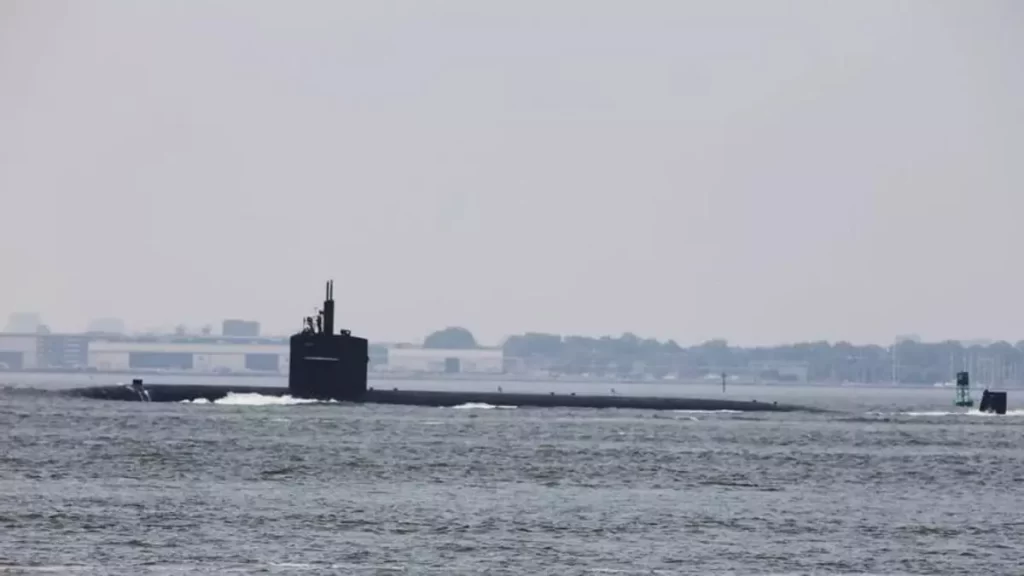
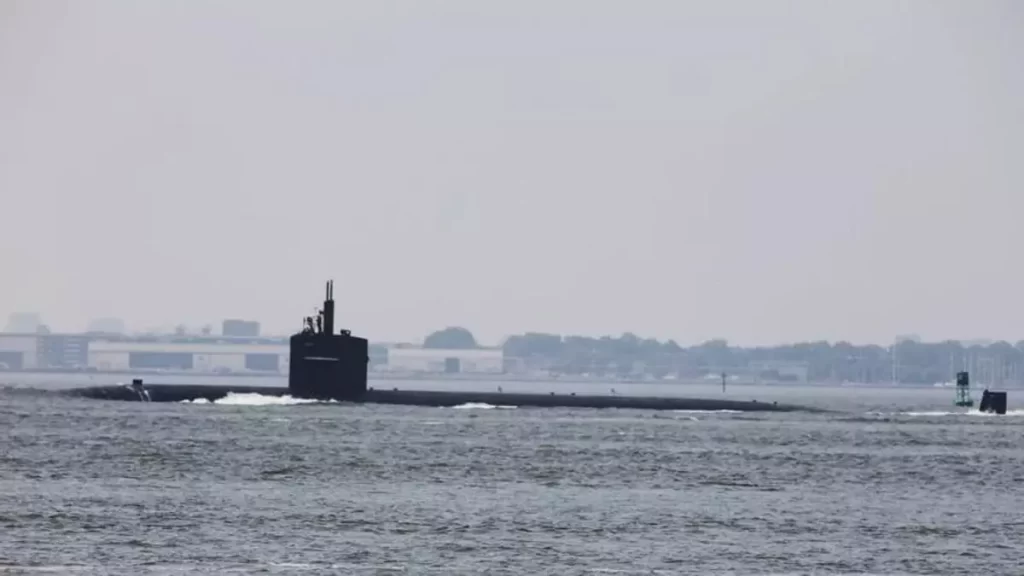
14ymedio bigger14ymedio, Madrid, 13 June 2024 — The U.S. Navy announced that one of its fast-attack submarines arrived in Guantánamo Bay this Thursday. The presence of the USS Helena, with nuclear propulsion, is part, says the Southern Command in a message published on its X account, of a “routine port visit” while “carrying out its global mission of maritime security and national defense.”

Although the ship arrives just a day after four Russian warships docked in the port of Havana, the Navy says that “the location and transit of the ship were previously planned.”

The Miami Herald reported on Wednesday that the United States followed closely, with several warships and planes, the arrival of the Russian ships, which passed less than 30 miles off the coast of Florida on Tuesday.  The American deployment includes three guided missile destroyers (the USS Truxtun, the USS Donald Cook and the USS Delbert D. Black), as well as a coastguard vessel, the Stone, and a Boeing P-8 maritime patrol plane.

“We will always monitor any foreign ship that operates near our waters“

Although the U.S. authorities have insisted that the presence of Russian ships in Cuban waters “does not pose a threat,” they also clarified: “We will always monitor any foreign ship that operates near our waters.” continue reading

After several days insisting that the Russian naval detachment came in peace, Sputnik interviewed a specialist who thinks otherwise: “I think we can see this [the sending of the flotilla to Cuba] as a direct Russian response to the U.S. announcement about the so-called Freedom of Navigation exercise,” said Mark Sleboda, an expert in international relations and security and a regular defender of Putin’s policy. The arrival of Russian ships in Cuba is “a reminder to the United States that both [countries] can play this game,” he added.

On the other hand, the Russian Ministry of Defense on its Telegram channel uses a much more diplomatic tone and limits itself to saying that the entry into Havana of the frigate Gorshkov represents the end of a “high-precision missile exercise” executed in the Atlantic. The visit to the Island is “informal” and part of Russia Day, which was celebrated yesterday, June 12, they added.

The “exercises” that the Russians carried out in the Atlantic come less than two weeks after President Joe Biden authorized Ukraine to use weapons provided by the United States to attack inside Russia with the aim of protecting Kharkov, the second largest city in Ukraine.

Translated by Regina Anavy

____________

COLLABORATE WITH OUR WORKThe 14ymedio team is committed to practicing serious journalism that reflects Cuba’s reality in all its depth. Thank you for joining us on this long journey. We invite you to continue supporting us by becoming a member of 14ymedio now. Together we can continue transforming journalism in Cuba.
The Situation in Cuba ‘Is Terrible’ Whispers Silvio Rodríguez in an Interview

The troubadour, 77 years old, releases a new album with 11 songs under the title ’Quería Saber’ – ‘I Would Like to Know’

’Quería saber’ — I Would Like to Know’ — released this June, is the 22nd album of Silvio Rodríguez, who will be 78 years old in November. / EFE/ Kaloian Santos/ Office of Silvio Rodríguez

14ymedio bigger14ymedio, Madrid, 14 June 2024 — “To pronounce the ‘we’, to complete the unity, we will have to count on the other, the lights and the darkness,” reads one of the lyrics of Silvio Rodríguez’s latest album, Quería Saber — ’I would like to know’ — recorded between 2019 and 2024. The 77-year-old troubadour spoke to the Associated Press agency, in an interview in which other very indiscreet verses are revealed. “And while they imagine themselves clear of conscience, reality is a relaxation of inefficiency. The young flee en masse and are upset because a mouth makes no distinction between race or gender.” In the conversation, which took place in his recording studio, Rodríguez confesses he is horrified by the situation on the Island, specifically with regard to inflation, the lack of food, mass migration and the deterioration of social security.

“The current situation undermines any ideal conviction. The reality is hard for most of our people, very hard. And that starting with the number of old people who dedicated their lives to the Revolution in body and soul and who now, imagine, with retirement they don’t even have enough for a carton of eggs,” he says.

“I don’t like absolutisms, I don’t like isms”

The singer-songwriter, who was a deputy in the National Assembly of People’s Power and actively participated in international missions of a cultural type, claims that he has not stopped being a man of the Left, with dreams of a “more humane and just” society, but rejects that this is “an excuse to hide criticism or ignore the negligence” of the system. continue reading

“I identify with what has been called the Left. I don’t like absolutisms, I don’t like isms,” he emphasizes.

The conversation is sprinkled, according to the agency, with exclamations about how “terrible” the situation on the Island is. “Most people, everywhere, want to live their lives peacefully, progress a little, have some possibilities,” he admits. Despite this, he does not cease to vindicate the achievements of the Revolution, in recent decades, in terms of Education and Public Health. “They are unquestionable,” he says.

The Associated Press points out that the album is, despite the presence of a couple of intimate subjects, eminently social and political, like most of the troubadour’s discography, and he is indifferent to the criticism of those who accuse him for his affinity with the regime. “I don’t care about what they think,” he argues.

Born in San Antonio de los Baños – where the demonstrations of 11 July 2021 began – on 29 November 1946, Rodríguez now presents his 22nd album and follows a life of routine, answering emails, composing and recording.

The troubadour says he is indifferent to the criticism of those who accuse him for his affinity with the regime

“I’ve never taken myself very seriously,” he says, asked about fame. “It’s the result of work. The virtue of songs is that they accompany people. If any song of mine is good for that, who can want more?” he concludes.

A still confessed fan of Fidel Castro, Rodríguez has progressively increased, in recent years, his criticism of the Díaz-Canel government, although without abandoning his ideological positions. Just three months ago, in an interview with Spanish media, he insisted on the worrisome, but understandable, exodus of the youth, in addition to affirming that Vladimir Putin is very far from the values of communism. However, he refused to classify Russia’s action in Ukraine as an invasion.

He has also positioned himself against the current leadership by opposing the repression of the demonstrations of 11J, whose penalties he considered disproportionate, and the protests over the lack of electricity.

In 2022 he also admitted that “the various real experiences of socialism show that, as it was conceived, it is impracticable,” and he proposed to reformulate the model with “socialist governments directing capitalist economies.” At the beginning of that year, in an interview with an Argentine media, he considered that the Revolutionary Offensive had done a lot of damage to the Cuban people. “We can’t spend our lives believing that everything we cannot do is the fault of a very powerful neighbor who blocks us and prevents us from doing things. If in 60 years we have not been able to develop a creativity that overcomes the blockade, that is our fault,” he said.

Translated by Regina Anavy

____________

COLLABORATE WITH OUR WORKThe 14ymedio team is committed to practicing serious journalism that reflects Cuba’s reality in all its depth. Thank you for joining us on this long journey. We invite you to continue supporting us by becoming a member of 14ymedio now. Together we can continue transforming journalism in Cuba.

Cuba Prepares for a New Shipwreck Because ‘There Is No Sugar Harvest Without Fuel’

The Melanio Hernández sugar mill has ground only 30% of its capacity. / Escambray

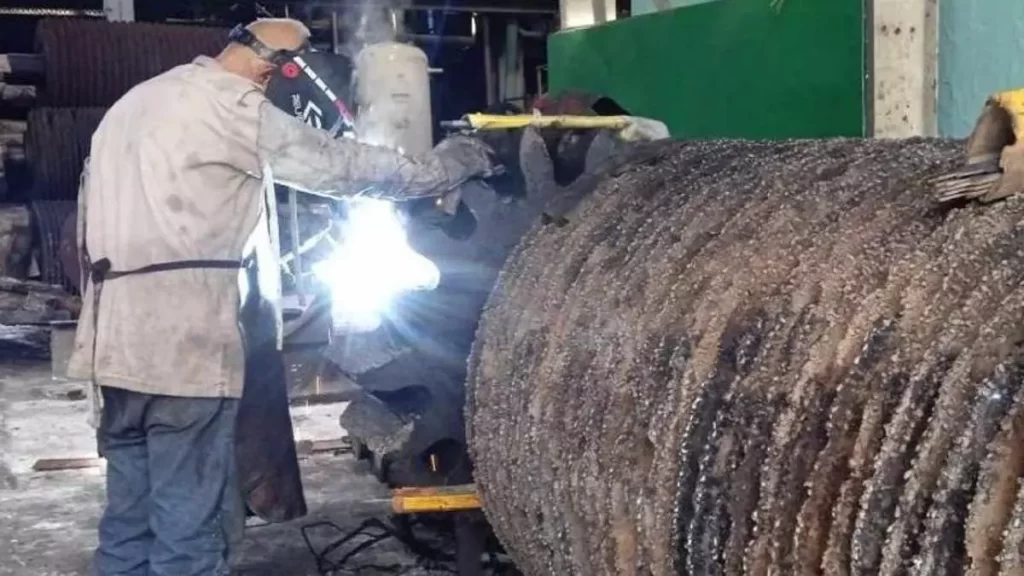
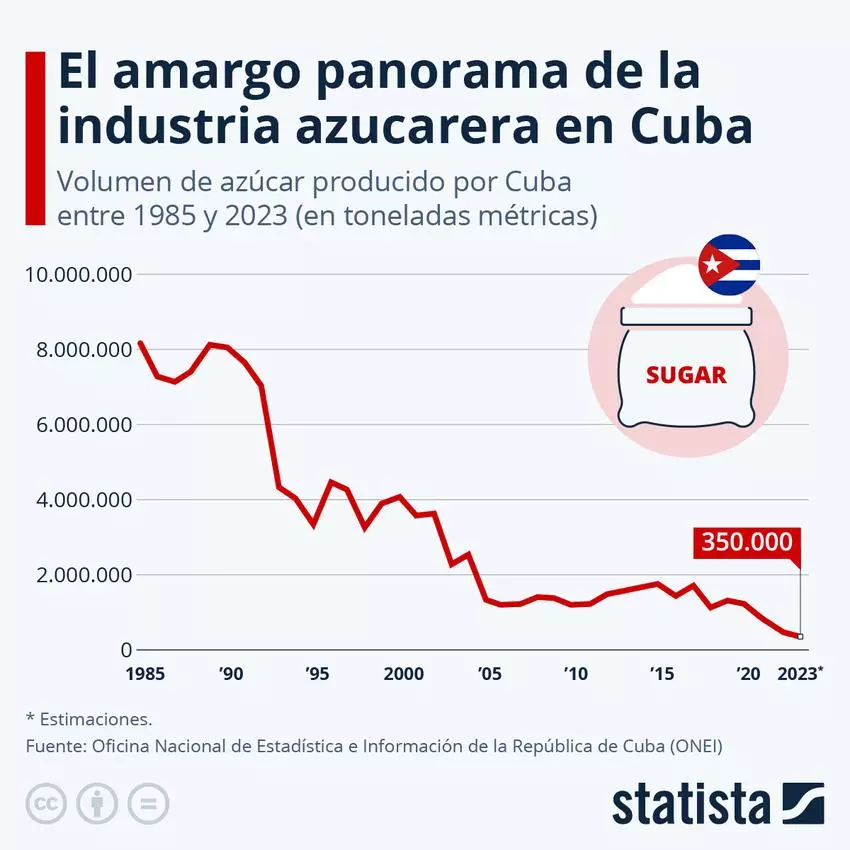
14ymedio bigger14ymedio, Madrid, 14 June 2024 — Two weeks ago, Cuba’s 2023-2024 sugar harvest officially concluded, and it is not yet known what the amount projected for this year will be beyond the fact that it would be “higher than the previous one,” according to Julio García Pérez, director of Azcuba, in December. With 350,000 tons of sugar, the record was again negative, but the well has no bottom, and judging by the data of Sancti Spíritus, a new shipwreck is expected. The province harvested around 16,000 tons this week, approximately 75% of what was planned, the Escambray newspaper said on Thursday.

Many provinces prolonged the harvest beyond the formal calendar this year, in the words of the media, “given the interest of raising the inventory of crude oil for national distribution,” so the results are not final, and those of the rest of the Island remain to be known, but the partial data speak for themselves. In May the cane was only ground for 13 days, and there are many factors that contribute to the disaster, including that the mill grinds at 30% of its capacity, half of what was expected, and that there is still “an appreciable amount” of cane to be cut, almost six months after the beginning of the process.

“The mill is not working, and the sugar plan is small, synonymous with a simple harvest,” the newspaper says, returning to the words of the president of Azcuba, who advanced a new, modest but efficient, plan – something that already happened in 2022-2023, with the same result. The newspaper maintains that there is a lack of resources and the sugar is made “in drips,” while the grinding is reduced to a few hours “every two or three days,” sometimes only twice a week.

A great human job has been done “for organizing a harvest that had lost the match before it even began and will end in the middle of spring with the lowest production in provincial history”

The article praises the workers for making do with little fuel to grind the cane, which shows “decent indicators, some of which are registered as the best at the country level.” The phrase, devastating, warns of how the harvest is going on a national scale, since, the media insists, a great human continue reading

job has been done “for organizing a harvest that had lost the match before it even began and will end in the middle of spring with the lowest production in provincial history.”

The Melanio Hernández sugar mill, in Tuinucú, solely responsible for the grinding, began badly, with a breakdown that kept it paralyzed in December, but this was the least of its problems. “For most of that time without grinding, there was a lack of fuel and oil for the engine, and the rains had an impact on the fields,” reports Escambray, which concludes that if the Uruguay sugar mill were active — the so-called Colossus of Jatibonico, which is being repaired with an investment and the help of Russian engineers — things would not only not be better, but could be worse.

“It has not been possible to cut the little cane that the territory has, and it only managed to plan a sugar production of about 21,000 tons, lower than the previous harvest,” admits the article, which attributes part of the evils to the “lack of financing and external measures designed to suffocate the economy,” although it does mention the lack of resources. Those resources could be greater if the Government invested in the sugar industry, which in 2023 obtained only 369 million pesos, compared to 410.1 million in 2022.

The collapse of the harvest since 1985. / statista /Onei

Escambray does not skimp on the characterization of the disasters: “The harvest has been bad because of the greatest weakness so far this century, the lack of raw material. It is impossible to grind the cane,” and “there is no harvest without fuel,” which is never guaranteed for transport – neither by truck or train – from the farthest cane field.

The worst is yet to come. According to Escambray, the need to extend the harvest to June is obvious, but at the same time the schedule of repairs and maintenance for the mill is being affected, and it could collapse. In addition, the planting of the next cane is now in danger. “It is enough to know that the province is utilizing only 40% of the area dedicated to cane and, of that, one part is of poor quality.”

Last year, Cuba was very far from the half-million tons of sugar it needs for national consumption, while its export commitments of 411,000 tons failed, with the consequent loss of foreign exchange

Mario Amador, president of the Nicaragua’s National Committee of Sugar Producers, announced on Thursday that their harvest closes with 1,777,210 tons of sugar, only 500 less than the best harvest in the country’s history

On the other hand, the Nicaraguan producers hope to get 220 million dollars thanks to a harvest that is nearing the record. Mario Amador, president of that country’s National Committee of Sugar Producers, announced on Thursday that their harvest closes with 1,777,210 tons of sugar, only 500 less than the best harvest in the history of the country.

The businessman celebrated the data, which were accomplished “despite the adverse weather conditions.” “We could say that it has been a record in all aspects of production. We had a record production of cane with more than 8,400,000 tons,” he said.

To this will be added the 294,467 tons of molasses, which if exported will amount to 50 million dollars more, a total of 270. Amador indicated that the sector, one of Nicaragua’s main exporting sectors, employs 136,000 people and that the fabulous production has led to the incorporation of 970 million kilowatt hours (KWh) in renewables thanks to biomass; that is, a contribution of 20 percent to the national energy consumption.

Translated by Regina Anavy

____________

COLLABORATE WITH OUR WORKThe 14ymedio team is committed to practicing serious journalism that reflects Cuba’s reality in all its depth. Thank you for joining us on this long journey. We invite you to continue supporting us by becoming a member of 14ymedio now. Together we can continue transforming journalism in Cuba.
Cuba’s Zaza Reservoir Is Exhausted: Where There Used To Be Fish There Now Are Grazing Cattle

The drought threatens to make the largest reservoir in Cuba disappear for good

The volume of the reservoir is below 13% of its capacity / 14ymedio

14ymedio bigger14ymedio, Mercedes García, Sancti Spíritus, 14 June 2024 — If anyone in Cuba is enthusiastic about the current hurricane season, which is predicted to be active, it is the authorities of Hydraulic Resources in Sancti Spíritus. It has been five years since the Zaza dam opened its gates – that is, since it has been completely filled – and the lack of forceful downpours in recent months has made the drought critical. Where before fishermen slipped in to get some tilapia, now there are cows. “All the land you see should be covered with water at least up to the height of the bridge,” says a resident of the area, who arrived on the La Sierpe road to check the state of the reservoir. “This is in very bad condition, and the water has receded so much that the farmers now use the reservoir for their animals,” he says, counting 70 or 80 cows.

“In the end, the drought has had its profitable side, and the cattle feed on that green grass because they are close to the reservoir. The bad thing is that many people have become accustomed to the fact that no water passes through here, or downstream,” reflects the neighbor, although he acknowledges that “what’s worse is that it doesn’t rain.”

“All the land you see should be covered with water at least up to the height of the bridge

The authorities, even at the national level, have a similar concern. It’s been five years since the dam released water, and many residents have established fields and other structures in what used to be the bed of the Zaza River. Although now the largest reservoir on the island holds just 13% of the 1,020 million cubic meters of water it can store, that could change this summer, and the lives of many residents would be in danger. continue reading

On June 8, Inés María Chapman, Deputy Prime Minister of Cuba, took a tour of the dam. The intention of the entourage, also composed of the national president of Hydraulic Resources, Antonio Rodríguez Rodríguez, was to alert the provincial authorities because, if there are heavy rains, “there are no conditions as at other times to provide solutions to those problems,” Chapman said.

The official arrived in Zaza two days after an article in the local newspaper, Escambray, announced the desperate measures that were taken so that the reservoir did not become totally empty. It has not been in such a hopeless situation since the 1980s, when it dropped to 100 million cubic meters.

The water has receded so much that several farmers let their cattle graze on the land / Escambray

According to Escambray, on that day the volume was 121 million thanks to the rains that occurred in part of Sancti Spíritus. Until that moment, the official press admitted, the water was maintained with transfers from the Tuinucú, Dinorah and Felicidad reservoirs. In May alone, the rainfall was below the historic record low of 98 millimeters (mm), and about 54 mm was reported, just over half. The drought affecting Zaza, which also nourishes other territories such as Ciego de Ávila, has considerably affected other economic lines, beyond the water supply to the population. According to the newspaper, with the decrease in volume, the water was limited to the agro-industrial grain company Sur del Jíbaro in La Sierpe, a rice-producing area that has since seen its production decline.

At the beginning of May, when the press first warned of the complex situation in Zaza, the issue revolved around the fishermen who work in the reservoir, who had to start a frenetic catch before the fish died from the drought.

Zaza is “dying,” said Armando García, a fisherman interviewed by Cubadebate at the time. “You don’t have to throw bread in the water; you can catch fish with your bare hands.”

The authorities have placed their hope on the rains predicted for this month, and that a passing hurricane will bring enough water for the dam to reach a volume that allows it to be used all year round. Last season Zaza was only filled at 40%, and the consequences have been widely seen this 2024.

At the moment, the dam gates have dry walls, the puddles of stagnant water have begun to turn green, and in what used to be the bottom of the reservoir the cattle have created paths in the grass.

Translated by Regina Anavy

____________

COLLABORATE WITH OUR WORKThe 14ymedio team is committed to practicing serious journalism that reflects Cuba’s reality in all its depth. Thank you for joining us on this long journey. We invite you to continue supporting us by becoming a member of 14ymedio now. Together we can continue transforming journalism in Cuba.
The Number of Political Prisoners in Cuba Continues To Grow: 1,113 in May

Only five political prisoners were released, “after full compliance with the sanction or measure imposed,” said Prisoners Defenders

Of the 19 Cubans imprisoned in May, 11 were arrested after the protests in Juraguá /Daniel Benitez / X

14ymedio bigger14ymedio, Havana, 13 June 2024 — With the arrest of 19 people in May, the Cuban regime has a total of 1,113 political prisoners, according to the most recent report by Prisoners Defenders (PD) published this Thursday. Of the cases listed for the month, 11 are protesters of the Juraguá protests, in Cienfuegos, on May 28. In the same period, only five political prisoners were released, “after full compliance with the sanction or measure imposed,” said PD. Likewise, Lisdani Rodríguez Isaac, of Villa Clara, was released with an extra-criminal license granted for her pregnancy, which will last a year, after which she could return to jail.

According to the organization, based in Madrid, the month of May was characterized by “repression against peaceful demonstrators, large-scale repressive operations against independent journalists, torture of prisoners with psychiatric conditions and the denial of prison benefits for political prisoners entitled to them,” such as parole or the suspension of correctional work, according to the statement.

On May 20, the political police also arrested, interrogated, summoned or prohibited other independent journalists from leaving their homes

In the specific case of the detainees in Juraguá, who took to the streets in protest of the prolonged blackouts and the lack of other essential services, “the authorities imposed a bail of 200,000 Cuban pesos – 530 dollars in the continue reading

informal exchange market in Cuba, an unattainable figure for most Cubans. They are being prosecuted for the alleged crimes of public disorder, contempt or attack,” the organization explains.

Erich González Lima, a journalist residing in the Nuclear City of Juraguá, is one of the demonstrators arrested by the Cuban authorities for participating in the protest. On May 20, when the Day of the Republic* was being commemorated – which the regime does not celebrate – the political police also arrested, interrogated, summoned or prohibited other independent journalists such as Juan Manuel Moreno Borrego and Antonio Suárez Fonticiella from leaving their homes.

Jorge Luis Boada Valdés was also sentenced in May to nine years in prison for the crime of “propaganda against the constitutional order.” Boada had been imprisoned in the Combinado del Este for more than two years for having written on a wall several phrases insulting Cuban President Miguel Díaz-Canel.

PD also warned about the violation of the rights of prisoners in Cuban prisons and gave as an example the case of Adel de la Torre, a young man who suffers from paranoid schizophrenia and who, at the age of 25, “was imprisoned for demonstrating peacefully” during the social protests of July 11, 2021, and sent to prison 1580, located in San Miguel del Padrón, Havana. The organization denounced the “violent beatings by the guards” that the young man has suffered.

The relatives of most of these inmates have tried to negotiate with the authorities for better medical treatment and shorter stays in prison

Other political prisoners have been denied transfer to less severe disciplines or other relief to which they should have access. This is the case of Luis Robles Elizastigui, the “young man with the banner,” sentenced to five years in prison for raising, in 2021, a poster asking for the release of rapper Denis Solís. According to PD, the young man was denied parole because, “although he satisfies the minimum term required and maintains adequate conduct in a state of imprisonment, the Court took into account the seriousness of the matter, in addition to the influence it had on the population and the tranquility of the citizenry, being necessary to ratify his confinement so that he reflects on the criminal action or actions carried out,” according to the aforementioned court.

The monthly report of the Cuban Center for Human Rights, led by the opponent Martha Beatriz Roque, offers a similar assessment. The document denounces the mistreatment of prisoners with psychiatric or chronic conditions, including, as more “difficult” cases, Alexander Díaz Rodríguez – cancer patient; Abel Lázaro Machado Conde – psychiatric disorders and epilepsy; Dayron Martín Rodríguez – psychiatric patient with suicidal behavior; and Ismael Rodríguez González – psychiatric conditions.

The relatives of most of these inmates have tried to negotiate with the authorities for better medical treatment and shorter stays in prison. Many are even obligated to take medications to the prisons to treat their family members, and the authorities have ignored their requests that the rights of prisoners be respected.

*Translator’s note: The Day of the Republic commemorates 20 May 1902, the day Cuba officially acquired independence from the United States.

Translated by Regina Anavy

____________

COLLABORATE WITH OUR WORKThe 14ymedio team is committed to practicing serious journalism that reflects Cuba’s reality in all its depth. Thank you for joining us on this long journey. We invite you to continue supporting us by becoming a member of 14ymedio now. Together we can continue transforming journalism in Cuba.

In May, a Significant Part of Venezuelan Crude Oil Arrived in Cuba Aboard Two ‘Ghost’ Ships

The ships Athenas and Tina 5 made several deliveries of crude oil without their movements being detected by maritime tracking applications.

The Tina 5, built in 2002, sails with the flag of Panama / Vesselfinder

14ymedio bigger14ymedio, Havana, June 13, 2024 — At the beginning of June, experts wondered where the British agency Reuters had obtained the data that allowed it to say that Venezuela had tripled its shipments of crude oil to Cuba in May, compared to the previous month. The answer came in the form of a hypothesis that has yet to be confirmed: two large “ghost” ships, the Athenas and the Tina 5, made several deliveries of Venezuelan crude oil without their movements being detected by maritime tracking applications. There is very little information about these tankers that Caracas uses to send oil to allies such as Cuba. More than discreet, the movements of both ships are invisible, although their sporadic appearances on the radar account for their activity in the Caribbean

Sources for 14ymedio indicate that Venezuela resorted to both ships to transport part of the 70,000 barrels per day (bpd) of crude oil that it sent last month to the Island. They disconnected their transponders to dodge the radar and “transferred their cargo to smaller ships in the bay of Nipe, in the provinces of Holguín and Matanzas,” says an expert who closely follows oil shipments to Cuba.

There is very little information about the tankers that Caracas uses to send oil to allies such as Cuba

However, in the port of Matanzas there were signs of the tankers Primula, the Marianna V.V. and the Caribbean Alliance having docked in the last 30 days, in addition to the tugboat Karadeniz One, which is part of the fleet of Turkish patanas on the Island. This Thursday, the tankers with the Cuban flag Sandino, María Cristina and Alicia were at the terminal. In Nipe, on the other hand, there is no information about the movement of ships, although continue reading

the tracking applications showed an unidentified tanker in the middle of the bay this Thursday.

The Athenas and the Tina 5 are oil tankers of considerable size. The Tina 5, built in 2002, sails with the flag of Panama. The latest information indicates that it left Trinidad and Tobago for an unknown destination.

As for the Athenas, which sails with the Liberian flag, it was located this Thursday on the northern coast of Venezuela, heading to the port of Scarborough, in Trinidad and Tobago.

Some 10% – 708,900 bpd – of the total shipments in May of PDVSA, the Venezuelan state-owned oil and gas company, went to Cuba, according to Reuters. The main destination of crude oil, more than a third of total exports (250,000 bpd), was Asia. The United States follows, with an average of 205,000 bpd sent by the American Chevron, and Europe, with 129,000 bpd.

A study published at the end of May by the Elcano Institute, based in Madrid, analyzed this increase in Venezuelan exports in light of the announcement of the return of Washington’s sanctions after the non-compliance, by the regime of Nicolás Maduro, with the agreements made in Barbados to guarantee free elections.

The investigation analyzed the extent to which the imposition of sanctions had benefited Cuba. The PDVSA has progressively increased its shipments to the Island through its subsidiary PDV Marina to circumvent Washington’s measures.

The sale of Venezuelan oil, since then, has been characterized by the increase in corruption and the lack of transparency “in response” to the United States. The PDVSA has not published financial reports since 2016. It uses the black market and sells to “companies willing to take the risks,” with the mediation of Cuba, Russia, Iran, Malaysia and the United Arab Emirates, which have “secondary sanctions” from Washington. Russia and Iran influence the PDVSA when making oil decisions.

Russia, the investigation explains, managed 60% of the PDVSA’s financial operations before the invasion of Ukraine and delivered dollars in cash to Venezuela. As for Iran, it is known that it sends technical support, engineers, thinning substances and spare parts.

Meanwhile, the American network CNN published on Tuesday a report on the debacle of the Venezuelan economy since 2013 – when Maduro took office – and contrasted the oil exports at the time – 2.4 million bpd, on average – and the current ones, which in March reached 895,000 bpd. According to CNN, Venezuela exploits 42% of its production capacity.

“The collapse of the sector precedes the strategy of maximum international pressure on the Maduro regime and finds its cause in the deficit of governance that has accompanied the country for at least a decade”

The Elcano Institute’s investigation coincided with the chain of events in which the future of oil in Venezuela faces difficulties that are too difficult to solve in the current political situation: “The short period of détente [the six months of lifting of sanctions] has shown that, regardless of the political future of Venezuela, the recovery of its oil sector will be difficult. The collapse of the sector precedes the strategy of maximum international pressure on the Maduro regime and finds its cause in the deficit of governance that has accompanied the country for at least a decade,” they explained.

In addition, Venezuelan crude oil itself has technical drawbacks. Orinoco crude, the Institute analyzes, is extra-heavy and has “less attractiveness” for international companies due to the high cost of its refinement. In addition, the PDVSA has been delegitimized internationally after “two decades of inefficient management, corruption and looting,” not to mention the infrastructure, which was noticeably damaged.

With the progressive debacle of the oil industry, Cuba has a lot to lose. Shipments from Venezuela – along with those of other key allies, such as Mexico and Russia, which the Pashin tanker, escorted by a war fleet, has just sent to the Island – are indispensable to operate the country’s deteriorated energy system.

Hit by a new blackout season, Cuba faces a generation deficit of 1,240 megawatts this Thursday. The Electric Union, which has not raised its head for months, stressed on a daily basis the precariousness of its facilities and the lack of fuel on which it blames all its ills. In addition, it reported that several units of its key thermoelectric plants – Mariel (Artemisa), Felton (Holguín), Nuevitas (Camagüey) and Renté (Santiago de Cuba) – are out of service.

Translated by Regina Anavy
_______________________

COLLABORATE WITH OUR WORKThe 14ymedio team is committed to practicing serious journalism that reflects Cuba’s reality in all its depth. Thank you for joining us on this long journey. We invite you to continue supporting us by becoming a member of 14ymedio now. Together we can continue transforming journalism in Cuba.

With the Arrival of a Submarine From the United States in Guantánamo, Cuba Returns to the Cold War

The ‘USS Helena’ arrives at the Island one day after four Russian military ships

The visit of the USS Helena is “routine” says the South Command / X/@AirAssets

14ymedio bigger14ymedio, Madrid, 13 June 2024 — The U.S. Navy announced that one of its fast-attack submarines arrived in Guantánamo Bay this Thursday. The presence of the USS Helena, with nuclear propulsion, is part, says the Southern Command in a message published on its X account, of a “routine port visit” while “carrying out its global mission of maritime security and national defense.”

Although the ship arrives just a day after four Russian warships docked in the port of Havana, the Navy says that “the location and transit of the ship were previously planned.”

The Miami Herald reported on Wednesday the the United states followed closely, with several warships and planes, the arrival of the Russian ships, which passed less than 30 miles off the coast of Florida on Tuesday. The American deployment includes three guided missile destroyers (the USS Truxtun, the USS Donald Cook and the USS Delbert D. Black), as well as a coastguard vessel, the Stone, and a Boeing P-8 maritime patrol plane. continue reading

“We will always monitor any foreign ship that operates near our waters“

Although the U.S. authorities have insisted that the presence of Russian ships in Cuban waters “does not pose a threat,” they also clarified: “We will always monitor any foreign ship that operates near our waters.”

After several days insisting that the Russian naval detachment came in peace, Sputnik interviewed a specialist who thinks otherwise: “I think we can see this [the sending of the flotilla to Cuba] as a direct Russian response to the U.S. announcement about the so-called Freedom of Navigation exercise,” said Mark Sleboda, an expert in international relations and security and a regular defender of Putin’s policy. The arrival of Russian ships in Cuba is “a reminder to the United States that both [countries] can play this game,” he added.

On the other hand, the Russian Ministry of Defense on its Telegram channel uses a much more diplomatic tone and limits itself to saying that the entry into Havana of the frigate Gorshkov represents the end of a “high-precision missile exercise” executed in the Atlantic. The visit to the Island is “informal” and part of Russia Day, which was celebrated yesterday, June 12, they added.

The “exercises” that the Russians carried out in the Atlantic come less than two weeks after President Joe Biden authorized Ukraine to use weapons provided by the United States to attack inside Russia with the aim of protecting Kharkov, the second largest city in Ukraine.

Translated by Regina Anavy

____________

COLLABORATE WITH OUR WORKThe 14ymedio team is committed to practicing serious journalism that reflects Cuba’s reality in all its depth. Thank you for joining us on this long journey. We invite you to continue supporting us by becoming a member of 14ymedio now. Together we can continue transforming journalism in Cuba.

Cuba’s Official Press Requests a Hard Hand With the Ranchers of Camagüey Who Aren’t Delivering Milk

Almost 1,800 producers in the province have not supplied a single liter of milk so far this year

The province at the moment can only guarantee milk to children under the age of seven / Adelante

14ymedio bigger14ymedio, Havana, June 7, 2024 — Of the 8,023 farmers who signed a contract with the State this year in Camagüey, more than half – about 4,198 – have failed to comply with the daily delivery of milk to the province, and, of them, 1,792 “do not deliver a single liter.”

The situation, which aggravates the already declining production of the livestock territory par excellence on the Island, was denounced this Thursday by the official press.

“The province continues to bet on increasing the delivery of milk to the industry, although at the end of May it has not achieved the definitive takeoff that was expected,” the local newspaper Adelante reports, launching an attack that does not forgive the “apathetic” farmers or the authorities, for letting the farmers get away with it and not demanding “an increase in delivery.” At the top of the list is the municipality of Guáimaro.

“The negative trend goes up. From January to May, the volumes collected in 2024 were 11,158,000 liters compared to 13,320,000 last year on the same date,” says the media. The reason for the fall by more than two million liters, it adds, is that the authorities aren’t hard enough on the farmers, continue reading

“even though they know the people in each territory of the province who show apathy or disinterest for their respective contributions to the national economy.”

The newspaper even states that “the prices paid to the producers cannot be the reason,” despite the fact that on numerous occasions the farmers themselves have pointed out that the low amounts paid by Acopio* is one of the fundamental causes why livestock is unprofitable for them. But Adelante insists: they are paid 38 pesos, “the maximum per liter,” and there is even a stimulus for those who overcomply, of 70 pesos per liter.

However, the media is aware of the price of milk in the informal market, which brings more benefits to the farmers

However, the media is aware of the price of milk in the informal market, which brings more benefits to the farmers and allows them – contrary to the prices of Acopio – to face the expenses they incur on their farms. “It will be necessary to review why those who don’t comply are charged 114 pesos for each liter not delivered, because it is no secret that they can sell in the informal market at 160-170 pesos per liter, and even on some streets of the city, such as Industry, at 200 pesos, taking advantage of prices in their favor,” says the article.

In addition, it points out, the “ups and downs” of production and problems in refrigeration due to blackouts have caused the milk from the ration system’s standard family basket to be delivered only to children under seven years of age, while the product has disappeared from medical diets.

The authorities, according to the media, still hope that in the rest of the year and taking advantage of the spring – the optimal stage for production – the industry will increase from the 200,000 liters per day that are currently delivered to the 360,000 that have been achieved on other occasions. The situation, however, leaves on the ground the expectation of being able to reach the proposed 52 million liters by 2024, a goal well below that of 2023, which foresaw 69 million, although only 42 million were produced.

At the beginning of this year, when Adelante revealed those figures, they gave other reasons for the decline in the 2023 production: the salary in the industry “is much lower than what is offered by other forms of economic management, especially non-state ones.” Specifically, the authorities had promised an average monthly salary of about 5,000 pesos that ended up being less than 3,400** pesos. “Productivity was at 25%,” the provincial newspaper said at the time. Wages have not changed, but this year it is the producers who are responsible.

Translator’s notes:
*Acopio is the Cuban State Procurement and Distribution Agency
** To put this salary in perspective, the current price of a single carton of eggs (30 eggs) in Cuba is more than 3,000 pesos.

Translated by Regina Anavy

____________

COLLABORATE WITH OUR WORKThe 14ymedio team is committed to practicing serious journalism that reflects Cuba’s reality in all its depth. Thank you for joining us on this long journey. We invite you to continue supporting us by becoming a member of 14ymedio now. Together we can continue transforming journalism in Cuba.

Twenty Six Percent of the Farmers of Las Tunas Refuse To Sell Their Products to the Cuban State

Local leaders have proposed a “broad plan of visits” to persuade the farmers

The official press explained that the Dairy and Meat companies in the province have been failing to comply with their contracts for years

14ymedio bigger14ymedio, Havana, 12 June 2024 — The authorities of Las Tunas have proposed to carry out a “wide plan of visits” to the farmers who refuse to deliver their agricultural products to the State. The contracts in the province, which should have ended in 2023, were completed in May by only 74% and, according to the official press, since the beginning of the year the progress to solve this situation has been “tiny.”

An article published this Wednesday by the local media Periódico 26 gave the measure of the situation: “In one way or another there are delays in all the municipalities, but those that make the least progress are Puerto Padre, Majibacoa and Jobabo, in which an extensive plan of visits to owners or usufructuaries [a form of leasing], both private and state, is imposed to expedite what should have been completed a long time ago.”

Of the total number of producers in the province – the figure is around 20,000 – only 16,326 have signed contracts with the State to deliver products this year. The refusal of the farmers, which the newspaper attributes to the “insufficient control of the real potential of livestock owners” and the lack of demand and dialogue of the institutions with the producers, has repercussions for several essential food industries.

For the dairy farmers, for example, the goal was to provide 25,931,800 liters in 2024, but so far they have only managed to get farmers to commit to continue reading

delivering 22,024,253 liters, 85%. The most backward municipalities are those of Manatí and Jobabo.

The same goes for meat deliveries, which of the 5,263 tons per year projected, barely 4,074 were delivered

The same goes for meat deliveries, which of the 5,263 tons per year projected, barely 4,074 were delivered. The most indebted territories were once again Manati, in addition to Majibacoa and Puerto Padre, the territories with the worst management according to Periódico 26.

Whether or not the farmers comply with the milk and meat plans is still to be seen, although the authorities are not very optimistic. “For several years, the Las Tunas Meat and Dairy companies have failed to comply with their contracts in the established time, and, although there are constant extensions, several agricultural producers evade their responsibility or deliver quantities lower than those agreed,” says the media.

“Recovering what has not been contracted is one of the goals for June, which implies reaching every corner of the province, wherever there is a farm. Only in this way will the process be successful and, along with the prevention of illegalities, there will be more beef, milk and other products,” the newspaper concluded. However, on this last point, the Las Tunas authorities don’t seem to have much luck.

As reported by the media itself a week ago, in the first quarter of the year the province had 1,954 cases of theft and slaughter of livestock. The authorities then blamed the farmers for not taking proper care of the cattle and said these crimes were the main cause of the calamitous decrease in the livestock mass in the province.

As for agriculture, Periódico 26 published on Wednesday an article saying that the delivery of land in usufruct to state and private entities was a “promising” area in the territory. According to the media, so far this year 3,900 applications have been approved, totaling about 47,430 hectares.

So far this year, 3,900 applications have been approved totaling about 47,430 hectares

“In order to gradually eliminate idle lands with potential for agriculture and livestock, 4,885 files were processed, which guarantees a remarkable growth for six consecutive years,” the media said, although it did not reveal the figures for past years.

The authorities foresee a growing interest in this type of contract between state companies for the second half of the year and explained that the applications of 46 entities for self-consumption have been approved so far. “However, these numbers are still ephemeral, since the intention is to link one hundred percent of all entities,” the official newspaper added, without giving figures on the private sector.

The announcement comes a week after the Government reported a new rule that, as of last Tuesday, allows companies, both state and private, and cooperatives of the agricultural system and the Azcuba group to create “self-consumption and livestock modules” to “contribute to the food of their workers, members or associates” and their families.

The measure aims to improve the food situation of employees in the sector through self-sufficiency and includes the delivery of land in usufruct to those who request it for this purpose even if the social purpose of the companies is not agricultural, forestry or fruit production.

Translated by Regina Anavy

____________

COLLABORATE WITH OUR WORKThe 14ymedio team is committed to practicing serious journalism that reflects Cuba’s reality in all its depth. Thank you for joining us on this long journey. We invite you to continue supporting us by becoming a member of 14ymedio now. Together we can continue transforming journalism in Cuba.
Cuba: Ciego De Ávila’s Desperate Race To Finish an Aqueduct by July 26

The order came from the head of the Civil Defense, despite the lack of progress on the work to bring water to the inhabitants of Florence

On site were only seven bricklayers from the Bécquer company, which had committed to the Communist Party and the provincial government to fulfill the “task” / Invasor

14ymedio bigger14ymedio, Havana, 12 June 2024 — The Cuban military showed up this Monday at the works of the Florence aqueduct, in Ciego de Ávila, to persuade the builders to finish it for the greatest anniversary of the regime, on July 26.* The urgency has an explanation: the municipality, which has never had a reservoir of that magnitude, sees how its current reservoir – at 24% of its capacity – is following the same path as the Zaza dam, about to dry up completely.

As verified on Tuesday by 14ymedio, the Sancti Spiritus reservoir – which is, at least in structure, the largest dam in Cuba – does not even reach the bottom of the water gauge, and the authorities place the state of the dam at only 13%. In Zaza, they opted for frenetic fishing, while in Ciego de Ávila the Government invested 25 million pesos in plan B, which is the aqueduct. However, there has been no progress, and the works are barely halfway through the plan. Alarmed by the delay, the national head of Civil Defense, the octogenarian General Ramón Pardo Guerra, traveled to Florence this Monday with an entourage. His message: we have to finish the aqueduct “in time to celebrate July 26.”

Reaching the goal set by the military seems, at the very least, difficult. Judging by the images published in the official press, a few days ago only the foundations had been laid and a quadrant of steel bars had been arranged. On site there were only seven bricklayers from the Bécquer company, who, however, committed themselves to General Pardo, the Communist Party and the provincial government to fulfilling the “task.” continue reading

The Bécquer company collaborates with the Cuito Cuanavale Base Business Unit, whose “inaction” caused the delay in the aqueduct

The Bécquer company collaborates with the Cuito Cuanavale Base Business Unit, whose “inaction” caused the delay in the aqueduct. Interviewed by Invasor, the delegate of Hydraulic Resources in Ciego de Ávila, Edwin González, listed everything that remains to be done: the Bécquer company must install a floating raft and the Cuito Cuanavale a 160-millimeter pipe.

They will also place two submersible pumps, build three watering units and expand the hydraulic network by 6.2 kilometers. “They have most of the resources,” they assured, to complete in just over a month what was required by the General.

Florencia is the only municipality of Ciego de Ávila that does not have an aqueduct. A mountain town with fewer than 20,000 inhabitants, about 1,515 of whom depend on the tanker trucks going – in “very elongated cycles” – to the most complex areas to bring them water. In fact, they admit, “most of the time the three trucks don’t even fulfill their assignment.” Another 5,302 people depend on the hydraulic network that feeds on the dam, which has been plagued for months by drought.

Built more than 30 years ago, the reservoir now has only 14 million cubic meters of water

Built more than 30 years ago, the reservoir now has only 14 million cubic meters of water. The emergency is clear if we compare the data with what the dam managed to record in May 2018: 91 million cubic meters. The following month, the figure was 86.4 million, which represented 108% of its capacity. The dam then enjoyed a rainy season and the “draining” of the Jatibonico River, which was beneficial for the small hydroelectric plant of Florence, which the official press doesn’t mention.

This year, taking into account the drought forecasts, the dam is on its way to reaching its lowest level, the 10 million cubic meters recorded in 2017. Between the unfinished aqueduct and the reservoir, the people of Avila are the ones who carry the worst burden. In the main municipality there are four pumping stations with solar panels and two tanks of 55 cubic meters that are used to store water, but this is not enough.

In the highest and most intricate part of the municipality, about 300 houses have not received water for a month. The farmers of the area have complained about the impact that the lack of water has had on their crops and warned that, as long as the supply – even with the water trucks – is not stable, they will not be able to meet their deliveries.

For her part, Deputy Prime Minister Inés María Chapman, who visited Florence in April, was categorical about the issue and said that “the use of water trucks should be eliminated as soon as possible, because they consume too much fuel.”

To the situation is added the fact that the area, historically, has suffered long droughts. With blackouts and an aqueduct project in the mountains that has not taken shape, it is trusted that at least the law of gravity will be favorable to the residents of the municipality of Avila. The opinion of the official press is not very optimistic: “Florence is in a race against the clock,” it says. “The locals will either cross the finish line soon or they will faint.”

*Translator’s note: The date commemorates the 1953 attack on the Moncada Barracks, led by Fidel Castro. While the attack ‘failed’ at the time, the date is commemorated as the start of the Revolution.

Translated by Regina Anavy

____________

COLLABORATE WITH OUR WORKThe 14ymedio team is committed to practicing serious journalism that reflects Cuba’s reality in all its depth. Thank you for joining us on this long journey. We invite you to continue supporting us by becoming a member of 14ymedio now. Together we can continue transforming journalism in Cuba.

The Cuban Regime Signs the Social Communication Law One Year After Approving It

The rule formally penalizes the mere interaction of users on social networks / 14ymedio

14ymedio bigger14ymedio, Madrid, 5 June 2024 — The Cuban Government “officially” presented this Wednesday the Social Communication Law, signed on May 25, one year after it was approved by the National Assembly of People’s Power. The text, included in the Official Gazette with minimal changes with respect to the last draft published, is accompanied by two regulations that complement it, one for the Law itself and another for the exercise of advertising and sponsorship, whose obligations are also included in the same law.

In a presentation to the government media, the vice president of the Institute of Information and Social Communication, Onelio Castillo, who was also a member of the drafting committee of the Law, said that the rule “has the spirit of dialogue and supports the political will of the nation that defines social communication as a pillar of its development.”

However, from Article 5, it is clear what the regime understands by that ‘spirit of dialogue’ and that ‘political will’: “The Social Communication System acts in accordance with the socialist state of law and social justice, democratic, independent and sovereign, expression of the thought and example of Martí and Fidel and the ideas of social emancipation of Marx, Engels and Lenin.” continue reading

Numerous independent activists and journalists have seen their work denounced in official programs precisely under these accusations

Likewise, some of the purposes of the law are explicit, and far from the functions of social communication in a democracy, such as “to contribute to the fulfillment of legality, the strengthening of legal culture and institutions, the defense of public heritage, the protection of the environment and the promotion of social discipline; to promote an emancipatory thought that sustains the continuity of the socialist project of a nation and critically confronts the offensive of cultural colonization,” and “to contribute to the prevention, timely confrontation and mitigation of crisis situations.”

As also stated in the draft released last year, the new rule, another of whose objectives is to “stimulate the inclusive, ethical, responsible and safe use of the internet, as a way for the defense and consolidation of socialist society,” formally penalizes the mere interaction of users on social networks.

In its chapter IV, which addresses social communication in cyberspace, it provides that the people covered by the law (all, as specified in article 2) must “respond to the content they generate, select, modify, interact with and publish.”

Some of the characteristics that disseminated content must have, according to Article 13, are reasonable, such as having to “check, contextualize and contrast as a guarantee of veracity,” adhere to “ethics and responsibility” and “observe the rules of the Spanish language.” But along with this, it tackles: “The contents in no case can be used with the aim of subverting the constitutional order and destabilizing the socialist state of law and social justice, sustaining the communicational aggression that takes place against the country or instigating terrorism and war in any of its forms and manifestations, including those of cyberwarfare.”

Numerous activists and independent journalists have seen their work denounced in official programs such as Hacemos Cuba or Con Filo precisely under these accusations.

The Social Communication Law does not detail the possible sanctions that would apply from violating these precepts and vaguely refers to other legal instruments (“Non-compliance with what is regulated in the preceding article implies the requirement of responsibility, in accordance with the laws and other regulatory provisions”). In the Criminal Code approved in 2022, for example, the punishment of ten years in prison is provided for anyone who receives funds or finances “activities against the State and its constitutional order,” something similar to some of the provisions of the Social Communication Law.

The Social Communication Law does not include the possible sanctions that would apply to violating these precepts and vaguely refers to other legal instruments

The regulation that accompanies the rule does not refer to these infractions but to others and is understood as administrative, such as “exposing messages on public or external roads on any medium, with content not approved or without complying with the corresponding tax obligation; disrespecting in the contents the rights of girls, boys and adolescents, older adults and those who are in a situation of disability; disseminating discriminatory content,” and “managing and socializing content through a serial publication or website that is not inscribed in the registry enabled for such purposes.”

The management of this registry, according to the Law, is handled by the Cuban Institute of Information and Social Communication, created in 2023.

As for advertising and sponsorship, something that the official press has already begun to incorporate, there is no change with respect to the draft. Section II of the Law provides that although the fundamental financing of social media comes from the State, these “media can assume different forms of economic management” (state or private, it infers) and “can complement the financial and material assurance of their activities with the commercialization inside and outside the country of their productions and services, the sale of advertising spaces, sponsorship, national and international cooperation projects and other ways, all legally recognized, provided that the fulfillment of their public function is not compromised.”

Of course, in order for the medium to benefit from this, “it requires the endorsement of its owner and the approval of the agencies of the Central Administration of the State in accordance with their respective competences,” and in any case they must receive funds “whose origin does not aim to subvert the constitutional order established in the country.”

According to the provisions of the legal document itself, the Law will enter into force 120 days after it is signed; that is, in August.

Translated by Regina Anavy

____________

COLLABORATE WITH OUR WORKThe 14ymedio team is committed to practicing serious journalism that reflects Cuba’s reality in all its depth. Thank you for joining us on this long journey. We invite you to continue supporting us by becoming a member of 14ymedio now. Together we can continue transforming journalism in Cuba.

Russia Will Invest 11 Million Dollars in the State-Owned BioCubaFarma To Develop Medicines

Cuba’s Minister for Foreign Affairs Bruno Rodríguez will visit Nizhny Novgorod and Moscow next week, the Kremlin spokesperson announced on Friday

The volume of investments in BioCubaFarma can be increased to 113 million dollars. / Granma

14ymedio biggerEFE (via 14ymedio), Moscow, 7 June 2024 — The Russian Direct Investment Fund (RDIF) will invest, in an initial phase, $11.3 million for the Cuban state-owned company BioCubaFarma to develop medicines against geriatric and oncological diseases.

This investment is part of the cooperation agreements signed between the RDIF and a consortium made up of the Cuban firm and Russian pharmaceutical companies during the International Economic Forum now being held in the Russian city of St. Petersburg, according to the official press.

When making the announcement this Thursday, the general director of the RDIF, Kiril Dmitriev, explained that the volume of investments can be increased to 113 million dollars.

Kiril Dmitriev explained that the volume of investments can be increased to 113 million dollars

“BioCubaFarma has become the first partner of the RDIF in Cuba. Combining our efforts and knowledge will allow us to develop and bring to the market innovative medicines against the most complex types of diseases caused, among other things, by age-related changes,” he said. continue reading

He also indicated that the Fund is focused on attracting the best pharmaceutical manufacturers in the world to the Russian market in order to locate the research and production of medicines, replace imports and create a base for its own production. “In Russia, BioCubaFarma has registered several companies that develop drugs for the treatment of Parkinson’s and oncological diseases,” he added.

In addition, Cuba has agreements for the development of innovative products with the Academy of Sciences and the main scientific institutes of Russia. Bilateral trade increased nine times in 2023 compared to 2022, when the exchange was 450 million dollars, according to official Russian figures.

A delegation from the Island led by Deputy Prime Minister Ricardo Cabrisas is participating in the St. Petersburg Economic Forum and includes representatives from the Ministries of Transport, Foreign Trade and Foreign Investment, and Foreign Affairs.

The trip is part of the growing contacts between the two parties, which next week will see a new episode with the visit of Cuba’s Minister of Foreign Affairs Bruno Rodríguez to Russia to attend a ministerial meeting of the BRICS group* in the city of Nizhny Novgorod and meet with his Russian peer, Sergey Lavrov, in Moscow, official sources from this country reported this Friday.

“From June 10 to 12, the Minister of Foreign Affairs of the Republic of Cuba will make an official visit to Russia,” the spokeswoman for the Russian Foreign Ministry, María Zakharova, said at a press conference on Friday. Zakharova specified that first Rodríguez – who is currently in China – will leave for Nizhny Novgorod, 400 km east of Moscow, and from there travel to the Russian capital, where on June 12 he will hold negotiations with Lavrov.

“From June 10 to 12, the Minister of Foreign Affairs of the Republic of Cuba will make an official visit to Russia”

During the meeting, both diplomats will address issues related to “a greater strengthening of the strategic partnership in the political, economic-commercial, scientific-technical, cultural, humanitarian and other fields.

The ministers will also talk about international affairs, the sanctions imposed on their countries and the interaction between Russia and Cuba at the UN and other international platforms.

Rodríguez’s visit to Russia comes after the Cuban Government confirmed on Thursday that a Russian naval detachment of three ships and a nuclear submarine will visit the port of Havana between June 12 and 17.

The Ministry of Foreign Affairs reported in a statement that the “visit corresponds to the historic friendly relations between Cuba and the Russian Federation and strictly adheres to the international regulations” signed by Havana.

The statement does not mention military exercises, although recently published American sources pointed out that Russian ships were traveling to the Caribbean Sea to participate in maneuvers and that they could stop at ports in Cuba and Venezuela.

*Translator’s note:  An acronym for Brazil, Russia, India, China and South Africa, which created an economic cooperation group to counter the traditional Western-led global order.

Translated by Regina Anavy

____________

COLLABORATE WITH OUR WORKThe 14ymedio team is committed to practicing serious journalism that reflects Cuba’s reality in all its depth. Thank you for joining us on this long journey. We invite you to continue supporting us by becoming a member of 14ymedio now. Together we can continue transforming journalism in Cuba.