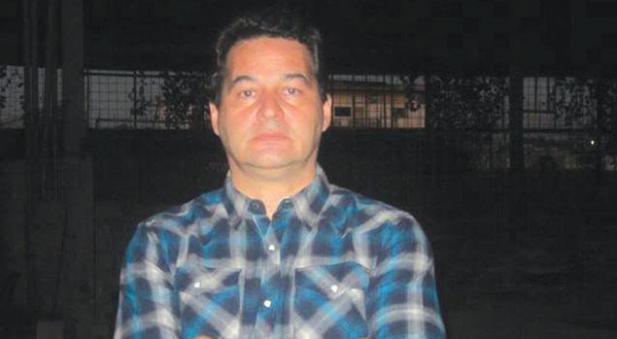
Castro Logic? Covering up an Injustice by Making it Worse / Angel Santiesteban

Neither the righteous nor the sinners

The settlement where I find myself detained is a fine example of the slave labor that exists in the Castro brothers’ dictatorship.

The prisoners are up at five in the morning, and they keep them going almost until midnight, or perhaps longer, according to the immediate work needed. The food, in addition to being scare, is poorly prepared and sometimes rotten: acid picadillo, raw undercooked chicken and, countless times, stale bread. Eggs, rice and a tasteless, colorless soup is the constant menu.

These prisoners endure the long march because it offers them the possibility of visiting their family every 27 days for 72 hours. They go from one pass to another, moreover enduring bad treatment and the usual blackmail that can make them lose the pass if they don’t complete their work in the time demanded.

In my case, as I don’t collaborate with the reeducation program, my regulation pass for my punishment is for every 70 days. State Security suspended my last passes. They don’t want me immersed in civil society; I represent a great danger. It wasn’t just for the fun of doing it that they constructed my crime.

Really, as I made known to Major Cobas and the rest of the repressors who accompanied him, “You will not be able hurt my ideas in any way.” When I preferred to be taken prisoner rather than emigrate on a boat to Miami, it was because I felt fortified for the experience that awaited me. The worst thing about hired assassins is that their injustice is without limits, and to justify my not leaving, they have withheld the pass from these ruined hands that remain captive, without carrying about the extreme submission, that they accept full-time.

To cover up the injustice committed against me, they have made it greater. I would have to decipher the true intention they pursue; perhaps it’s to provoke criticism of me by those prisoners and at some moment generate some retaliation upon seeing me at fault for their punishments. I remain alone awaiting their reactions. The dictatorship observes. They are interested only in maintaining power for the dynastic clan of the Castro brothers. What’s certain is that nothing provokes me to break. Their abuses redouble my resolve.

Ángel Santiesteban-Prats

Lawton Prison Settlement, February 2014

Please follow the link to sign the petition to have Angel Santiesteban declared a prisoner of conscience by Amnesty International.

Translated by Regina Anavy

7 February 2014

Cuba and Its Parts in Conflict / Angel Santiesteban

We know that in more than a half century of command, the only thing that has interested the Castro brothers is to keep their damn power. For that they have submerged the nation in profound poverty. In order to maintain their prolonged rule, they have converted the country into a state of terror.

They have filled the prisons with young people who, not having another option, have preferred to become delinquents rather than becoming submerged in the profound, generalized economic crisis. Also the professionals, after pursuing advanced degrees and becoming professionals who would be in high demand in any other country, are obligated to commit crimes of embezzlement. The lucky ones have found a way of leaving the country definitively, or by employment contracts between the states in question, and with meager pay, which helps them to moderate their miserable lives.

Another part keeps hoping to emigrate, and while that wait goes by, they repress their longing to think, criticize, demand better, because they fear reprisals from the political police for daring to dissent from the government program, and they survive on remittances received from the exterior.

The minority remain, those who don’t have even a remote possibility of emigrating or receiving remittances, and although they may also dissent like the rest, they have no other option but to cling to the structures of power to receive the inferior surplus that they let escape for those who get close, which is barely sufficient to breathe and to survive.

Power is maintained thanks to the blackmail of this minority, which they use as a repressive force. The so-called “white collar” crimes are very common, because they toil like prisoners, in economic control or directing construction works.

Ángel Santiesteban-Prats

Lawton Prison Settlement, January 2014

Please follow the link and sign the petition to have Angel Santiesteban declared a prisoner of conscience by Amnesty International.

Translated by Regina Anavy

15 February 2014

Details of Insularity / Angel Santiesteban

Historically, we Cubans have been separated politically, and although diversity is healthy for free thought and democracy, we have been marked by the extreme of what we wish to attain and defended it at all costs.

José Martí never was understood by those upper military leaders who accompanied him, and his death, in a certain way, was caused by them. Before, Carlos Manuel de Céspedes also had his political enemies inside the mambisa rebels, until he was removed as the President of the Republic in Arms, and replaced with Salvador Cisneros Betancourt; then they left him alone and without protection in San Lorenzo, and there is a version of someone confessing at some moment that it was a betrayal of the high command of the insurrection.

Political struggle has been a constant in Cuban history; inequality existed even within the same parties. The day that we learn to listen and understand one another will be the day we have the force to change our society. But first we have to start with ourselves, an unfinished subject for all Cubans. Until then, unity is till a pending issue, and the freedom of Cuba is compromised.

Ángel Santiesteban-Prats

Lawton Prison Settlement, February 2014

Please follow the link to sign the petition to have the dissident Angel Santiesteban declared a prisoner of conscience by Amnesty International.

Translated by Regina Anavy

Cuba Makes Claims to UNESCO Contrary to Common Sense / Angel Santiesteban

How do you explain to Mr. Herman Van Hooff, Director of the UN Regional Office of Culture for Latin America and the Caribbean for UNESCO, that Cuba lies in all its public statistics?

Director Van Hooff declared this past Wednesday, February 5, that “Cuba holds a recognized position at the world level with high indices of implementation of the objectives of education for all.” (As reported in the newspaper Granma.)

To read the official reports and be guided by them is to fall into a fraudulent game. For a full appraisal, if you want an honest one, I advise you to read the blogs and news reports of independent journalists, who by practicing ethical principles in writing the truth, are beaten, harassed and imprisoned, for writing about the prevailing daily reality in the Cuban archipelago.

Those of us who have kids can say how truthful the daily journals are, making us the unique source able to bear witness, only to take the chance — without any interest other than expressing the truth — of being put in a punishment cell: The schools lack teachers from the primary levels, the great majority of them without skill or the base of minimal knowledge indispensable for the job, to such a degree that the pupils correct the teachers’ basic spelling mistakes on the blackboard.

This began with the great fiasco of “Emerging Teachers” — luckily the last of the mega-plans of Fidel Castro, who thought that only by having the idea occur to him and his fondness for incentives for the pedagogues would the country’s grave problems in education be solved with these “teachers.”

They were a force of teenagers without a base of knowledge facing the classrooms. They committed the most brutal crimes of a human being, like killing a pupil by beating him with a chair in the basic secondary school Domingo Sarmientos, in the Havana neighborhood of Lawton, which only came to light through independent journalism. continue reading

Minors were raped, teenagers got pregnant, they committed thefts in the same schools where they were assigned, as well as  pederasty, bribery, and  fraud at levels never before seen.

I can assure the UNESCO representative that in a great part of the educational centers, which I know in Havana by witnessing these arrangements, any student who presents 5 CUC automatically passes; that the “teachers” who receive special attention, invitations and generous gifts from the parents give preference to these kids, according to the scale of the acquisitive level that they present, preventing disciplinary action by giving gifts of more money, although really the kids have been suspended.

Photo: “Down with the blockade.”

Mr. Herman van Hooff, I claim it’s not a fallacy or a hoax: the actual president of Cuba, in his speech this past July 26, 2013, recognized and corroborated the abysmal education of the youngest generations, because a large part of those who went before found themselves imprisoned for various crimes, sometimes the only path taken to alleviate the general crisis, when emigration wasn’t possible for them.

Mr. van Hooff, when Fidel Castro came to power, one of his most sensationalist media slogans was, and I recognize that it was laudable, “to convert military barracks into schools.”

Today some of those schools “in the countryside” are converted into prisons, spaces of savage humiliation for those young people who lost their way toward doing good, or really the offered political circumstances suppressed in them all possibility of surmounting obstacles and improving their lives.

These schools are perfect concentration camps, centers of forced labor, cheap labor in the style of colonial slavery, with no medical attention, overcrowding and starvation. They are places where the officials teach them what they need to later exploit them, and which follow the civil tradition of bribery to receive the diploma for the courses studied, and they can receive as a benefit the reduction of two months a year.

For a climax, Mr. Van Hooff, you make this official declaration on the only days that the dictatorship used a group of kids dressed in the Pioneer uniform to repress, in a crowded public street, the political opposition, surrounding the house where they exercise the right to think freely, which heightens my attention and makes me doubt your honesty and sense of justice, since your duty, not only as a member of UNESCO but also as a human being, perhaps as a father, should be that of protesting because the kids are so young, and the event is worthy of the best times of Hitlerian fascism.

Civil servant Van Hooff, I have no reference to your ideological inclinations, but good feelings don’t have political affiliations; thus, we have to agree that if the Cuban state says publicly that “the universities are for revolutionaries,” and by having adverse opinions, different ways of thinking that don’t support the regime’s plans, students are expelled, which happens habitually, this prevents those young people from being educated. Surely, looking at the inside reality of what occurs in the country, we can agree that this is a Nazi position.

No, Mr. Herman van Hooff, in no manner can we consent to your complicity in the misrepresentation of our reality, making yourself an echo of that which isn’t true, of your appalling work as director of the so-called Regional Office, especially when stating the truth is costing us human lives, family divisions, and pain in dungeons of punishment.

You, intending no offense, repeat like a parrot that which the totalitarian regime delivers to you to read. Please! Go see the Cuban people yourself, walk their streets, earn the money that is contributed to your organization, don’t accept easy answers or a lack of impartiality, and then report what you have accomplished with what they entrusted you with. I assure you that your irresponsibility provokes major evil in Cuban society, and in our search for the dream of freedom.

If you respect the dictatorship, as you insist, prove for yourself that these statistics are true, and then the rest will respect it. In no way Mr. Van Hooff, should you be guided by those romantic dreams of the 1959 revolution, the excessive personal ambition of Fidel Castro that truncated and killed the hope of a nation, by putting into practice his dictatorial system that keeps him in power, by the mediation of his brother, Raúl Castro.

The three most important factors, health, education and sports, were flags that for years “justified” or hid the true interest of the government from outside view. The initial enthusiasm stopped, and today the hospitals resemble the catastrophe in Haiti after the devastating earthquake. In the same way follows the inefficiency of the education system and the abandonment of sports centers and attention to the athletes, so that abandoning your country and family members has become common among the most important sports professionals.

Finally, Mr. Van Hooff, you more than anyone should know that in Cuba for several decades they have imparted indoctrination, and thus this society is missing spirituality. Education is directed to the unique end of rejecting all philosophy except the Marxist one, which is nothing more than the armor which the monarchy, the Castro family, has been hiding behind for more than half a century.

Some day we’ll know how and why the dictatorship made it so easy to manipulate international institutions and manipulate them to its own vision, when the truth could be found in many reports. Let’s hope it was by from gullibility and not from what I suspect

Ángel Santiesteban-Prats

Lawton Prison Settlement, February 2014.

Let’s urge Amnesty International to declare the dissident Cuban, Angel Santiesteban, a prisoner of conscience. SIGN HERE

Translated by Regina Anavy

13 February 2014

The Common Position and Selective Blindness / Angel Santiesteaban

The worst blind spot is the one you don’t want to see.

While the European Union was planning to change its Common Position, the totalitarian Cuban regime was imprisoning the opposition on the eve of receiving the presidents for the CELAC Summit.

In these moments of economic crisis, there is no greater urgency for the European countries than to address and to reverse their rates of inflation and unemployment. They’ve thrown aside ethics and scruples in order to decide to open up relations with the Cuban regime, never mind the fact that there are violations of human rights, imprisonment of the opposition, violent beatings of those who demonstrate peacefully and assassinations of the most outstanding leaders.

We know that the Castro brothers won’t permit any imposition that would give space to the dissidence. They won’t even sign the United Nations Covenants on Civil and Political Rights and on Economic, Social and Cultural Rights, which in this 21st century, should be the minimal condition of any State to earn respect from the international community. That would be the small contribution that the European Community could give to the Cuban people, and it would be the only credible step for Raúl Castro if it’s really his intention to offer openings and improvements to Cuban society in general.

Ángel Santiesteban-Prats

Lawton Prison Settlement, January 2014

Please follow the link to sign the petition to have Amnesty International declare Angel Santiesteban a prisoner of conscience.

Translated by Regina Anavy

10 February 2014

Books in Cuba: When a Preface Steals the Limelight / Juan Juan Almeida

Over-fulfilling the goals of the books programmed to be delivered to the printer, now they’re regulating the presence of the second edition of “History of a Liberator, 1952-1958″ in all the independent book stalls, libraries, whether they’re provincial, scholastic, universities and even childcare centers, bookstores and Cuban consulates abroad.

The reason: Ex-president Fidel Castro edited the preface of this sleep-inducing volume that, boring as a funeral, was written by Georgina Leyva Pagán, the wife and life companion of Julio Camacho Aguilera, a member of the Central Committee of the Party and octogenarian constituent of the so-called Rebel Army, whom many people from Santiago surely remember for his inefficient management as first secretary of the party in Santiago de Cuba, between 1985 and 1987, as much as the fact that he generated a contagious conga popular in the teasing style that said, “Ay Camacho, Camacho, we are drunk all the time”.

Such an epic reference book isn’t an analytical study (or auto-analytical) about the harmful consequences that the indiscriminate use of alcohol causes to the intellectual health of a state official. It’s a selective compendium and testimony in which, scarcely separating guilt and innocence, emerges a series of data that with extraordinary invention, stained with something of imagination, permits the reader to confuse once again the spirit of that group of men who decided to twist the economic, political and social direction of our Caribbean island in an evil direction.

With theatrical gestures, like some impressive disciple of Bertolt Brecht or Konstantín Stanislavski, the publisher of such an ominous tome didn’t read the fragments of the same but centered her attention on the ceremonial torch of an inevitable preface. “Gina, in her book, helped me to remember and understand with more precision the thinking that propelled me in those intense years I lived, although, yes, I’m aware that more than a preface I’m writing a chapter of history.”

Anyone could predict what would happen later. The ex-leader and convalescent, but still powerful preface-writer, usurped with grotesque impertinence the leadership of the author, who, trembling, could only conclude, “The Commander-in-Chief, with his prologue, saw the long view of my humble book.” And naturally, the surrounding biodiversity, with its habitual dose of consideration and drama, applauded.

It was no surprise that the launching of the deafening preface, since the book passed to a second level, was attended by José Ramón (El gallego) Fernández, the ex-minister of education and immodest professional wreck, José Ramón Balaguer, an excellent practitioner of karate, but a man skilled in measuring the pressure of national politicking; and Guillermo García Frías, who in reality, owing to his constant lack of literary receptivity, no one knows even what he’s doing in a bookstore, which he proved by serious cracks in his strategy of control.

Perhaps Guillermo only was practicing his usual quiet subversion.

Also present were Miguel Barnet, Abel Prieto, Rafael Bernal and other exploiters who, captive of a useless sytem, in order to coexist at the margin of popular necessity, opt for pretending and/or forming part of that great herd of sheep who obey the voice of the shepherd, even when he is absent.

Translated by Regina Anavy

3 February 2014

The Submissive Members of the National Union of Writers and Artists of Cuba / Angel Santiesteban

Abel Prieto is second from left.

What could you hope for from an intellectual movement of a country that is convened to sign a book supporting the shooting of several youths who tried to abandon the country by taking boat passengers hostage? It’s worth adding that they didn’t hurt anyone, and that the foreigners who lived through the experience later demonstrated against the death penalty for those who were sentenced. However, through telephone calls, cited them to provide their signatures, nothing more and nothing less, to show they accepted these deaths.

The cowardice of the Cuban cultural movement was never more miserable than in those days. When I received the call and said no, I could note the confusion of the functionary who called. It was as if he didn’t understand the forthright negative answer with which I answered him, and taking advantage of his hesitation I told him to let me know if other books to sign for those who didn’t agree. Precisely in his confusion, I understood that prior to this he hadn’t received any other negative response. At most, some shielded themselves behind the invitation and accepted, saying they’d to to UNEAC (National Union of Writers and Artists of Cuba) office at some point.

I didn’t have to assure myself that many who signed were in total disagreement with the extreme measure. But — miserably — they confessed to me, and thus I make it known, that many recognized and signed because the measure augured extremism and possible persecution against those who didn’t show their sympathy and support for the plans of the Castro brothers. The majority justified that the measure was to save the “Revolution,” since if plane and maritime kidnappings continued, it could start an invasion of the island. In a certain manner, all the signers splashed themselves with blood when the bullets were fired and broke the skulls of the prisoners.

But no one was like the poet Roberto Fernández Retamar, a member of that Council of State, and thus one of those who pulled the trigger against those young people, who didn’t have any other longing than to attain a future far from the misery they lived in their short years of life, understanding that the future didn’t look any better.

From that same house of the mentioned poet, UNEAC planned the public attack against me at the suggestion of the ex-minister of culture, today the advisor to Raul Castro: Abel Prieto, who obscurely handled and manipulated the cultural sector in order to counteract international discomfort at my imprisonment.

Before long they will celebrate another Congress of UNEAC, like the ones that went before, and no substantial change will happen beginning with the proposals that they will discharge there. “It will pass through our lives without knowing what they passed.”

As the great writer Virgilio Piñera predicted, FEAR has been the spirit that has accompanied the cultural sector for the last 55 years.

We already know the answer to the initial question.

Ángel Santiesteban-Prats

Lawton Prison Settlement, January 2014

Please sign the petition below to have Amnesty International declare Angel Santiesteban a prisoner of conscience. Follow the link here.

Translated by Regina Anavy

5 February 2014

Cuban Cynicism as a Form of Survival / Angel Santiesteban

“In each neighborhood revolution” CDR (Committee for the Defense of the Revolution)

Pretending has been the best weapon of survival developed against the dictatorial model of the Castro brothers. Lying was a requirement that always made them happier than constructive and professional criticism, which was not in favor of their caprices. Thus they educated our post-revolution generations to exercise and perfect the art of lying.

A friend’s CDR president maintains herself through the family remittance sent from the north, after her sons reached that country on a raft. Nevertheless she is ready to snitch on someone who defends a social change, not for ideology — she has no opinion of this — but to assume the role that she has played and to exercise the saying “Every man for himself.” The important thing is to survive. Some benefit could come from harming other people. This has been demonstrated in most of the mid-century dictatorships, through vigilance and persecution.

Beginning with the decade of the ’70s, disguising what you think and feel has been the theater of the Cuban human species. From those flags that they hand out to receive the presidents of the socialist camp beneath the sun — bearing up under thirst and hunger, without the right to abandon the scene and return home because you would be branded an enemy and a traitor for the sole fact of being tired and trying to return to your famiy — amorality began, along with the loss of social and individual values. continue reading

Many of those who abandoned the country faked a posture of sympathizing with the regime until the day they emigrated, “in order to not call attention,” they say. Worse even are those who abandon their country, their house and family, and today say that they are economic emigrants, in order to not recognize that Fidel and Raúl Castro, with their bad administration, are guilty of their fates. Fear still chases them. Amorality is in their education, and still they want to obtain benefits, like visiting the country without problems. These are the people we have to deal with.

Ángel Santiesteban-Prats

Lawton Prison Settlement, February 2014

Have Amnesty International declare Ángel Santiesteban Prats a prisoner of conscience.

To sign the petition click here.

Translated by Regina Anavy

3 February 2014

The Cuban System Isn’t That Absurd / Angel Santiesteban

Slogan on billboard is “We’re doing fine.”

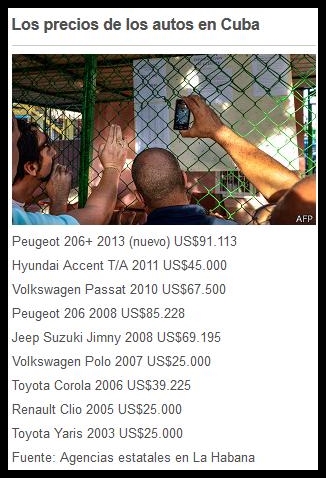
There are few times in a nation’s history when the inhabitants of a country agree unanimously. Now with the prices of cars for sale, one of those scant opportunities has occurred.

Many have drawn upon Kafka, Cortázar, and Virgilio Piñera, but I guarantee that this is even further removed from reality.

The first question Cubans ask is if the person who has enough money to waste on a car would be able to go in person to the sales agency, since they know that they would be captured there. If no one, with the highest salary possible, can save this money, then it necessarily means this is black-market money from some lucrative business, like drug trafficking. You would have to come to the conclusion that the cars are a special offer for these traffickers, and an offer of paradise for prosecutors, the most unequal in the hemisphere.

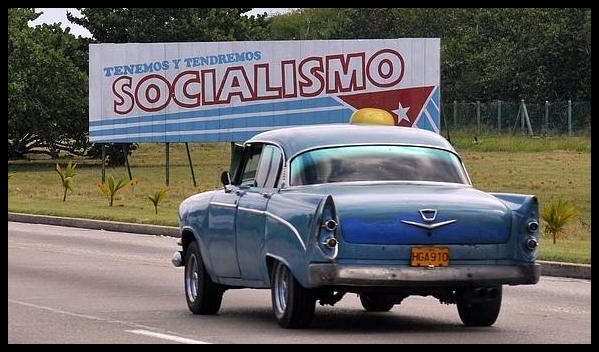
We have and will have socialism

Cuba is a plaza for criminals, prohibited for honest Cubans.

Ángel Santiesteban Prats

Lawton Prison Settlement. January 2014

Translated by Regina Anavy

29 January 2014

Farewell To Revolutionary Sport / Angel Santiesteban

Life gives us the opportunity to use it at the whim of our possibilities of talent, for personal gain. In life we engage in a search for what we can be as good professionals, if it makes us happy to do it, and in doing so we discover that we add glory to the society around us, and we make our family proud. This is the perfect formula to feel fulfilled, amen, if we are also well-remunerated.

The outstanding sportsman, Lázaro Rivas, ¨Illustrious son of de San Nicolás de Bari,” could feel like that (except for feeling well-remunerated). He gained the world title in his weight class, in Greco-Roman wrestling, among other awards. He brought glory to his town and to Cuba, until his official retirement in 2011.

In recent days he disappeared physically as a consequence of a brawl with another sportsman. His family members came to say goodbye to his body, as did two trainers and some friends. The corresponding sports officials were not present, nor was the government. That was, in sum, the gesture of gratitude that the State awarded him for his efforts.

The precarious infrastructure on which sportsmen count is no secret to anyone, above all those at the bottom layer, to accomplish their feats. Your would have to appreciate more their human capacities and persistence to achieve such rewards, a great part of those being at the top and refusing opportunities in professional sports where they could earn large sums of cash, the only thing that would guarantee them economic sustenance after the official retirement pension given by the Cuban authorities.

I was witness to seeing the legendary boxer, Teofilo Stevenson, roaming the city to find ingredients for a sancocho (a type of soup), that some shops kept for him, to feed the pigs that he raised in the swimming pool of his house. He also participated in the familiar theater of pleasing foreigners who visited him and were itching to pose for a photo with their idol, after coming to an agreement to pay 100 euros, to put on the table some bottle of good whiskey, and in the best of cases, moreover, invite him to a restaurant, to obtain this souvenir.

The also distinguished fighter, Félix Savón, has had to accept this manner of survival. Visitors leave with his photo and a gesture, or a stench of knowing that their admired gladiators live off handouts. I got to know a Czech who visited them. Many ballplayers live off public charity; they eat and drink at the expense of their fan club.

Thanks to the opening of the State, above all in baseball, those older players with fewer performances are permitted to go to small clubs that can pay for them in some way, either as athletes or as trainers, so they can live of their savings, some years without destitution.

Among them are the pitcher Lazo, today contracted by a club in Mexico, and before that Victor Mesa in Japan. At least the most distinguished athletes have that opportunity of survival. The others, those whose names have been erased from the collective memory, today are ghosts lost in society, sons whom no one wants. That’s the destiny that revolutionary sports assures.

We would say that a large part of the most talented have made the most difficult decision: to abandon their country and their families, without knowing when they will return. A sad fate for Cuban sportsmen.

Ángel Santiesteban-Prats

Lawton Prison settlement. January 2014

Translated by: Shane J. Cassidy and Regina Anavy

10 January 2014

Traitors to the Thinking of Marti / Angel Santiesteban

If José Martí warned that “capitalism is the superior phase of slavery,” how can those who belong to the Communist Party, beginning with Fidel Castro, call themselves followers of Martí? It’s no secret that when the Comandante of the bearded ones came to power he said on several occasions, in Cuba and in the United States, that the Revolution was not communist, that this possibility was a campaign to discredit them.

Caption on video: “I’ve said very clearly that we are not communists.”

Videos exist where he denies he’s communist. And from night to morning, he declares the Marxist character of this social movement that catapulted him to power in the nation. I always wonder how great the despair of Cubans was that they forgave him and followed all his nonsense. Of course many glimpsed what would come and so resigned, like Comandante Huber Matos, Eloy Gutiérrez Menoyo, William Morgan, among others who were disillusioned that after putting their lives on the line, they understood they had been betrayed by personal ambition. continue reading

Fidel Castro never put the people before his insatiable appetite for power. All the social power that at first he obtained was to mask his image of a dictator. Above all because then, economically, we didn’t depend on our own attempts, on the skill of investments, but we did have the teat of the Soviet Union and the rest of the socialist camp to satisfy his insanity and his plans for conquering the rest of the world.

If those countries didn’t exist who shared “ideology,” his mandate to govern wouldn’t have lasted more than five years, precisely by the great defect of not knowing how to listen to his specialists, to those who were suddenly removed if they didn’t agree with his dreams and his inconsistent, baseless mega-plans that always ended in failure.

Knowing this defect, his “collaborators” became adulators who lied in order to continue receiving the benefits of power. In spite of everything, he has been a brilliant manipulator who knows where to get resources for staying in power, now making his brother, Raúl, head of state.

At the end of this cursed cycle, the only thing that assures us is that José Martí is renewing himself, that his prophecies acquire more timeliness, and that for many years the Cuban people have been slaves, surviving in order to continue breathing, always scared of being whipped by the officials for any criticism or demand for improvement. We are a people basically seeking refuge in being run-away slaves, dispersed throughout the hemisphere.

Let’s hope that this 21st century will be prosperous for the Cuban nation and reunite its families, and that we will be capable of achieving a free and democratic society that assures and balances the needs of its people.

Ángel Santiesteban-Prats

Lawton Prison Settlement. January 2014

Translated by Regina Anavy

25 January 2014

The Attendees of the II CELAC Summit Should Know the Authorities’ Deception / Angel Santiesteban

Disgracefully the image of José Martí (January 28, 1853) has been used from one side to the other, for one thing or another, thanks to its universal meaning. And his great image.

Tomorrow will be another one of those days when the Castro brothers use the birth of the Apostle to dirty his ideas.

To assume that Marti would support the “revolution” is one more of the frauds to which we are accustomed. It’s no secret to anyone that they are taking up the old practice that “the university is for revolutionaries,” so those who don’t participate in the political convocations are stigmatized as being against the regime, disaffected from the regime, and therefore will suffer the consequences. Secondary-school and pre-university students will never reach a higher level, and those who now have finished their studies could lose their graduation certificate.

But the blackmail won’t end even after graduation, because they won’t get the degree until two years later, after they’ve completed their military service. Then they will need an endorsement of good behavior and political participation to be situated as qualified professionals in suitable positions.

Nor will the odyssey end there, because the threat and constant blackmail of being unemployed is permanent. Maintaining a correct affiliation with the Castro brothers is the only indispensable requirement for surviving on the Cuban archipelago.

The presidents who attend CELAC should know this. We are a repressed people, with a guillotine hanging over our necks, and with the least breath, whatever the capacity for respiration, the bloody blade will come down. Keeping sight of that cutting blade creates major fear for Cubans. Their perpetual torment.

Ángel Santiesteban-Prats

Lawton Prison Settlement. January 2014

Translated by Regina Anavy

27 January 2014

Angel Santiesteban Asks the CELAC Summit not to convert their visit into support for Raul Castro’s regime

From Prison:

Cuban writer sends message to the attendees at the CELAC Summit.

Ángel Santiesteban, sentenced to five years in prison, asks the leaders invited to the meeting to not convert their visit into an act of support for Raúl Castro’s regime.

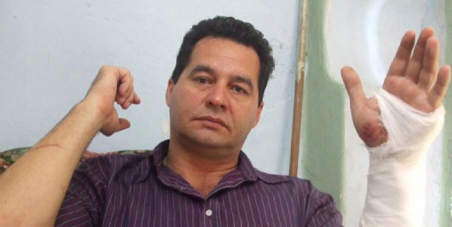
The writer Angel Santiesteban is sentenced to five years in prison (Cortesía).

Luis Leonel León / Special

The Cuban writer, Ángel Santiesteban, sentenced to five years in prison, asks the presidents and international political figures invited to the Second Summit of the Community of Latin Amerian and Caribbean States (CELAC) in Havana, that they not convert their visit into an act of support for Raúl Castro’s regime.

“The Castro brothers have been the most skilled manipulators in the hemisphere. Their political astuteness has kept them in power for more than half a century. To support relations with the dictatorship is a shameless act that the attendees will add to their curriculum vitae,” Santiesteban declared, in a message sent from the Lawton Prison Settlement in Havana.

Santiesteban, one of the most prominent contemporaneous writers of the island, affirmed that Cubans could never resolve their internal problems by way of civic protest, since any popular demonstration would be suppressed in hours, as happened on August 5, 1994. continue reading

“We don’t have the possibility nor the way to decide our future. All of us who have taken this step find ourselves in prison or obligated to abandon the country,” the intellectual pointed out.

The CELAC Summit will take place in Havana on January 28 and 29, with the attendance of some 20 heads of state and governments, including the Secretary General of the United Nations, Ban Ki-Moon, and the Secretary General of the Organization of American States, José Miguel Insulza.

Santiesteban, 48 years old, was condemned under charges of “violation of domicile and injuries” against his ex-wife in a controversial judicial process. He entered prison on January 28, 2013, and since then has gone on hunger strikes to protest the conditions of his detention and “a fabricated trial.”

“My crime has been to write what I think about Cuba and its dictatorship, something that I’m not going to stop doing,” said Santiesteban in an interview granted from prison to Diario Las Americas.

A few days ago, several officials violently ransacked his cell, since they presumed he could be preparing to make a statement to the foreign press.

During the search, they confiscated the magazines and books they found, among them the Universal Declaration of Human Rights, the by-laws of Amnesty International and a story that he hadn’t finished writing.

Although other Cuban intellectuals have been interested in his case, the government continues to keep him isolated “hoping that they forget about me.”

During the beating that a group of agents from State Security gave him before he was sent to prison, one of them warned him that he could have something happen to him like the opposition leader Oswaldo Payá, who died in a controversial accident in July 2012.

“When you get out of prison, you could die as if it were an accident,” Santiesteban remembered an agent warned him while they were beating him in November 2012.

That year Santiesteban also wrote an open letter to Raúl Castro, in which he accused him of intensifying the repression against the opposition. Days after sending it, they charged and condemned him for the supposed crime of domestic violence, which under a normal proceeding would have been sanctioned only with a fine.

“Since I began my blog they always told me to give it up and occupy myself with literature. As I didn’t stop, they fabricated a case of domestic violence in which they alleged that I entered the house of my ex-wife, the mother of my son, to beat her. They used false witnesses, hoping to silence the true reason they were prosecuting me, which is my dissidence,” argued the writer.

Amnesty International 

Intellectuals, activists and human rights organizations have requested that Amnesty International recognize Santiesteban as a prisoner of conscience, but up to now the organization hasn’t responded.

However, he considers that “something strange has happened.”

“I don’t know what purpose those lists serve,” he declared. “Except to support a cause and offer cover to someone in the claws of a totalitarian power, to more or less assure his life.”

He remembered that two days before going to prison he received a call from Amnesty International assuring him that they recognize his cause, but that they couldn’t add his name to the list until he was in prison. Later he learned that someone in Cuba had bothered to puruse it, because the organization had placed his name on the list of political prisoners without consulting him.

“However, it doesn’t make me lose sleep. I can’t turn back from the road I took. Everything started when I expressed ideas that were adverse to totalitarianism. My crime has been to think differently.”

False proofs, manipulations and silences

To reveal the falsity of the judicial process they planned against him, Santiesteban used the collaboration of a friend who pretended to be a prosecutor and demanded that the false witness tell her the truth about what she maintained about the accused.

“The conversation with the supposed prosecutor was recorded,” he said. In it the witness confesses that she had been pressured and bribed to testify against me.”

He described that during his presentation in court, searching for arguments to condemn him for the supposed maltreatment of his ex-spouse, they ordered him to write a sentence extracted from the newspaper Granma (the official organ of the Communist Party of Cuba).

“After analyzing my handwriting, a proficient calligrapher dressed as a soldier certified my guilt, saying he found a certain inclination and a suspicious size in my letters. It would be a joke if I weren’t in prison,” he commented.

Six months ago, the request for review of the case was delivered to the Minister of Justice, where they allege that the documents have been lost and that they don’t know who removed them. Recently the attorney who represents Santiestbean discovered that some of the documents had been extracted from the file.

“The regime is hoping that they will forget about me, in order to kill me later,” reported Santiesteban. “They’ve threatened me with that on multiple occasions,” he pointed out.

Published in Diario las Americas

Ángel Santiesteban, a victim of the repressive politics in Cuba

The Cuban writer is in the Lawton Prison Settlement, in Havana.
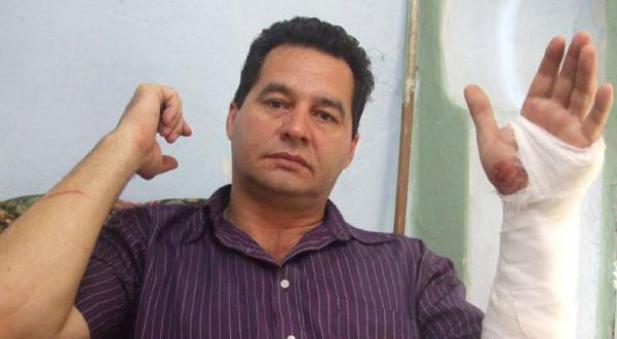
Ángel Santiesteban, Cuban writer. (otrolunes.com)

Iliana Lavastida/Special 

@IlianaLavastida

Destroying the image of their political adversaries is a tactic of regimes that want to control the masses. The same as the Nazi ideologues, who achieved the manipulation of the minds of million of followers, totalitarian governments like the Cuban one use the method to destroy the figures who oppose them.

Ángel Santiesteban, winner of various Casa de las Américas prizes and winner of such prestigious competitions as Juan Rulfo and Alejo Carpentier, is recognized as one of the strongest voices in contemporary Cuban literature. However, his decision to dissent and to dare to question the repressive methods of the regime and open up through his blog on the Internet, which he considers “a space for constructing free thought,” implicated him in a judicial trial, after which he ended up being condemned for a common crime.

After a rigged trial, the prosecutor came forward with an order of 15 years of privation of liberty against the intellectual, who was accused of rape, robbery and attempted murder against his ex-spouse, the mother of one of his two sons, and they also prohibited him from approaching her for two years.

In these moments, the writer is in the Lawton Prison Settlement, in the Cuban capital. From one of his cells, thanks to the collaboration of activists inside and outside Cuba who support the dissident, the photos of Santiesteban behind bars accompany as graphic testimony the interview he granted to Diario Las Americas.

The five years of prison he is serving, according to the figureheads of power, are intended to make him desist from his interest in writing about the truth, but the same declaration of principles published by Santiesteban while he awaits sentencing define exactly what he has chosen as his lifeline.

“Since I undertook my journey with the blog, I felt the energy of a liberty that I didn’t know. And once it’s tried on, now it can’t be missed. It’s as essential as oxygen itself.”

Published in Diario las Americas

Translated by Regina Anavy

24 January 2014

My First Book in Exile / Luis Felipe Rojas

FEEDING THE FIGHTING DOG, new poems by Luis Felipe Rojas. Now for sale on Amazon.

Poster designed by Rolando Pulido (cover designed by Idabell Rosales).

Here is the link for my book, “Feeding the Fighting Dog,” published by NeoClub Press under the direction of Armando Añel and the talented hands of Idabell Rosales. This poster would not have been possible without the work of Rolando Pulido, under the original cover. My first book in the land of liberty. Thank you, everyone who has bought it, you have been very generous. In a couple of weeks we will be giving a public presentation, which will be dedicated to my brother in prison, Angel Santeisteban. What better homage could I make for a colleague who continues writing and doesn’t stop telling the truth, no matter where he is.

Translated by Regina Anavy

11 March 2013

They Criticize Corruption and Traffic in Diamonds / Juan Juan Almeida

From the same instant in which General Raul Castro was enthroned as President, he hasn’t stopped warning that “The battle against crime and corruption has no room for doubt.” On many occasions he has been seen at the podium exhorting publicly the members of his cabinet to maintain an “implacable” conduct against the mentioned scourge.

It’s difficult to convince that popular body that for lack of confidence, without realizing it, passed from alarming sloth to heartless hibernation.

In order to execute his crusade and give veracity to his words, in the year 2009 he created the Controller General of the Republic of Cuba, an organ that until today has carried out audits on all the State institutions and brought before tribunals those accused of economic crimes and corruption, a good number of functionaries, employees and directors of state enterprises, an ex-minister and an ex-vice minister of the food industry, foreign businessmen, an ex-son-in-law of the above-mentioned General President and family members who, confused, wealthy or followers of a lucrative ideology, one day swore loyalty to the revolutionary process.

For some citizens, the General represents a Caribbean Grim Reaper with a collapsible neck, who, with an olive-green cowl and a scythe in his hand will put an end to the kleptocracy. “The struggle against corruption” is an epic banner that the First Secretary of the Communist Party decided to raise, and to hoist it more, he named as gonfalonieri his son the Colonel, a middle-aged man who is a specialist in judging everything and an expert in looking after personal objectives.

Certainly, the law is the only form of giving an effective and round answer to the problem of corruption; but sadly, the publicized content is one more myth, which isn’t precisely destined to eradicate the matter from the Cuban horizon, but rather will concentrate the country’s resources and total power of the State in the hands of the most corrupt, most restricted, most faithful, and even most compromised group belonging to the Castro Espin clan.

Why didn’t the General say anything when the Cuban government was discovered attempting to transport military materiel through the Panama Canal hidden under tons of sugar in a North Korean ship?

If this isn’t muddy, then there’s the possibility that before the unpolluted island ruler, neither was it corruption that a group of “cooperating Cubans” engaged in bringing in contraband diamonds from Ghana and Namibia to Havana, stones that later were sent by air to a beautiful port city in northeast Belgium, Amberes, casually known as the world center of diamond trafficking and commerce. How could that happen without the approval of the State that sees everything, like Big Brother?

I also recall very well that some years ago, in 1989, a group of high military officers were punished for similar acts. And look here, curiously, these trafficking specialists, whom the Cuban government feigns not to know, are all ex-military man and civil workers of the army that works for ANTEX S.A., an anonymous society of Cuban capital located on the African continent, with offices in Angola, whose initials mean strangely (and excuse me for the use and intentional abuse of these adverbs) the name of General ANTonio Enrique (Lusón) EXportations. A Raulista convert who not only is corrupt but also basks in it.

Translated by Regina Anavy

15 August 2013