Panama Extends the Transit Visa Requirement for Cubans

The measure, in force since March 8, caused hundreds of people to camp for several days in front of the Panamanian embassy in Havana. (14ymedio)

14ymedio bigger14medio, Havana, June 8, 2022 — The Panamanian authorities have extended the transit visa requirement for Cubans passing through their territory for three months, until this coming September. This measure, in force since March 8, caused hundreds of people to camp for several days in front of that country’s embassy in Havana.

The new decree, dated June 6, extends the visa application period to 30 days before the trip, unlike the previous one, which established 15 days. The cost remains the same, $50, and the procedure must be carried out at the Panamanian embassy in the applicant’s country of residence.

To do this, you must fill out a form accompanied by two photos, a photocopy of your passport, a flight reservation, a copy of the identity document of your country of residence and proof of payment of consular fees.

The extension also exempts Cubans returning to Cuba from the visa requirement, a provision in force since March 17, in the face of protests in front of the diplomatic headquarters, which also didn’t please the crowd too much, since what they are looking for is to leave the island.

The transit visa requirement affected all citizens who planned to fly to Nicaragua via Panama with the Copa Airlines, the only one that keeps the island connected to Managua and that, since November, when the regime agreed with President Daniel Ortega on the “free visa” for Cubans, has become the main land exit route to the United States.

Translated by Regina Anavy

____________

COLLABORATE WITH OUR WORK: The 14ymedio team is committed to practicing serious journalism that reflects Cuba’s reality in all its depth. Thank you for joining us on this long journey. We invite you to continue supporting us by becoming a member of 14ymedio now. Together we can continue transforming journalism in Cuba.


U.S. Embassy in Cuba will Process Visas for Immediate Family Members

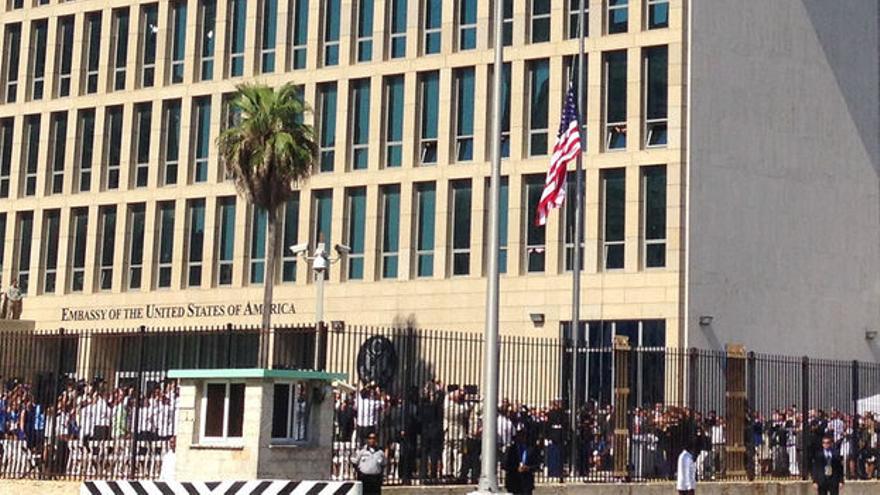
“We will continue to evaluate, as conditions permit, a further expansion of visa services in Havana,” the Embassy said. (14ymedio)

14ymedio bigger14ymedio, Havana, 9 June 2022 — The U.S. Embassy in Cuba continues to expand the categories of immigrant visas that it will process in Havana. On Thursday, it announced that by July, immediate relatives of U.S. citizens, including spouses and children under the age of 21, will be able to be interviewed in the island’s capital.

Immediate family visa applicants who will be processed in Cuba must be notified beginning June 9 by the National Visa Center or by the Embassy itself that they “will have their interview scheduled in Havana, and not at the consular headquarters of Georgetown, Guyana,” the legation clarified on its website. Applicants who were informed of their interview before that date “will continue to be processed in Georgetown.”

This expansion of services, “follows the steps taken in May to start the processing of all IR-5 cases, or parents of U.S. citizens, for interviews in Havana,” the Embassy said.

“Preferred family immigrant visas for Cubans will continue to be processed in Georgetown,” the diplomatic headquarters also reported. Within this group are “brothers and children over the age of 21” of U.S. citizens and some relatives of permanent residents.

Regarding the decision to work only with the categories selected so far, they indicate that they recognize “the importance of family reunification for U.S. citizens” and insist that they understand “that other applicants may have difficult circumstances,” but “the Havana Embassy is still unable to accept applications for transfer of other visa categories.” continue reading

Twitter text above: 1/2) Starting in June 2022, the Department will schedule all immigrant visa appointments at @USEmbCuba for immediate relatives, including spouses and children under the age of 21 of U.S. citizens, with interviews scheduled for July 2022.

“We will continue to evaluate, as conditions allow, a further expansion of visa services in Havana,” the legation said, while recalling that its consular staff in the Cuban capital “continue to provide essential services to U.S. citizens and the limited processing of emergency visas for non-immigrants.”

The U.S. Embassy in Havana resumed the processing of visas for immigrants on May 3, processing only the IR-5 category.

Both on that occasion and in its announcement this Thursday, the legation insisted that while work continues to expand services on the island, the headquarters in Guyana “will continue to be the main processing place for all Cuban applicants for family preference immigrant visas and cases of immediate relatives who are already scheduled to be processed in Georgetown.”

The resumption of consular processes “is part of a general expansion of the functions of the Embassy to facilitate diplomatic and civil society engagement,” the legation said at the beginning of last month.

The U.S. reduced the staff of its embassy in Cuba in 2017, after about thirty of its diplomats suffered mysterious health incidents known as “Havana syndrome,” and whose causes have not yet been clarified. Since then, Cuban visa applicants have had to travel to a third country to process their documents such as Guyana, where hundreds of island nationals have to wait for the resolutions of their visas, not exempt from irregularities.

Translated by Regina Anavy

____________

COLLABORATE WITH OUR WORK: The 14ymedio team is committed to practicing serious journalism that reflects Cuba’s reality in all its depth. Thank you for joining us on this long journey. We invite you to continue supporting us by becoming a member of 14ymedio now. Together we can continue transforming journalism in Cuba.

Flights from the United States to Santa Clara and Holguin, Cuba will Resume on June 16

Charter flights from Sagua Travel will fly to Santa Clara, Cuba on Thursdays and Sundays, and to Holguín, Cuba on Mondays and Fridays. (Sagua Travel)

14ymedio bigger14medio, Havana, June 8, 2022 — Flights from the United States to Cuban provinces will resume on June 16, and the first locations went on sale this Wednesday.

Yfrain Villazón, a representative of Café Travel, told Miami-based journalist, Mario J. Pentón, that next Thursday, Sagua Travel will begin charter flights to Abel Santamaría Airport in Santa Clara, and on Friday, to Frank País International Airport in Holguín. Flights will go to Santa Clara on Thursdays and Sundays, and to Holguín on Mondays and Fridays.

Tickets for travel to the Cuban provinces are already available, and, so far, other commercial companies, such as American Airlines, JetBlue and Southwest, according to Villazón, have not yet announced flights.

The resumption of travel from the United States to the provinces comes after Washington’s announcement, on May 16, to resume the family reunification program and remove the limit of $1,000 per quarter to send remittances to the island.

These measures, imposed two and a half years ago by then-President Donald Trump, in retaliation for the collaboration of the Cuban government in the repression in Venezuela, were aimed, according to the United States, at restricting the economic resources of the Havana regime.

Flights to the remaining airports that were affected by the restrictions have not yet been announced, including to: Camagüey, Santiago de Cuba, Cayo Largo, Cayo Coco, Manzanillo, Cienfuegos and Matanzas.

Translated by Regina Anavy

____________

COLLABORATE WITH OUR WORK: The 14ymedio team is committed to practicing serious journalism that reflects Cuba’s reality in all its depth. Thank you for joining us on this long journey. We invite you to continue supporting us by becoming a member of 14ymedio now. Together we can continue transforming journalism in Cuba.

Agricultural Cooperatives as an Example of the Internal Blockade

Empty pallets in the EJT market on 17 and K streets in El Vedado (Havana, Cuba). (14ymedio)

14ymedio bigger14ymedio, Elías Amor Bravo, Economist, June 7, 2022 — If 90% of Cuban food production originates from agricultural cooperatives, this figure must be reviewed as soon as possible. Cooperatives in the Cuban communist regime don’t fulfill their function of meeting the population’s food needs. In addition, at first glance they are very different from those that exist in other countries, such as Spain, where the cooperative movement reaches very prominent dimensions and relevance in terms of production and employment. Cuban agricultural cooperatives are unproductive and inefficient.

The authorities of the Ministry of Agriculture (MINAG) and the National Association of Small Farmers recognize that the model doesn’t work and that they can’t find the solutions they need in the implementation of the 17 measures approved for their strengthening and consolidation within the economic plan.

Perhaps cooperatives in Cuba don’t work because of the plan and the measures that are designed by communist bureaucrats, completely removed from reality and the needs of the cooperatives. Cuban cooperatives, led by communists and with the forced participation of private actors, have very little in common with these legal entities in other countries, where the worker takes precedence over capital, can make personal decisions and is free of interference. The origin of their failure is the economic and social model.

I insist, the supposed recognition in the National Economy Plan is useless to the agricultural cooperative sector if it then doesn’t work efficiently and can’t produce enough to feed all Cubans. If cooperatives represent 90% of food production in Cuba, and it’s not enough for everyone, something doesn’t work and has to be fixed as soon as possible. The problem of malfunctioning cooperatives can’t be fixed with either “recognitions” or with access to resources for production and investment.

According to the State newspaper Granma, the authorities have tested the implementation of solutions for the strengthening of agricultural cooperatives in 77 cooperatives (26 UBPC, 18 CPA and 33 CCS) belonging to 19 municipalities in five provinces (Holguín, Granma, Havana, Mayabeque and Artemisa). As a result, as of last April, 7,084 unresolved issues were identified in the cooperatives. These  were related to questions that, from a technically productive point of view, have little or no interest.

I will quote them, as listed in Granma. Some of them are amazing. continue reading

For example, the lack of presidents and economic managers has been detected among the “pending issues,” which, according to Granma, “translates into incomplete boards of directors, poor planning, poor financial status and lack of areas of collective use.” In other words, agricultural cooperatives don’t produce due to corporate and organizational problems. Is this really credible, is it really the cause of unproductivity?

Let’s continue with the “unfinished business” relationship. Granma cites, nothing more and nothing less, than “the need to implement a communication and education system that contributes to the promotion of the values and principles of cooperativism in Cuban society, through the national, provincial and municipal media, and education centers at all levels of education.” Well, that sounds good, but can it really be accepted that this is necessary to increase production in the furrow? Do the principles and values of cooperativism serve to produce more cassava and malanga to feed people? The truth is, I don’t know.

In addition, considered essential for the authorities, is “the completion of an awareness process with presidents, boards of directors and assemblies of cooperative members; and the consultation process on competencies.” To this end, 2,200 leaders of 550 cooperatives are being investigated as a baseline. Wouldn’t it be better if, instead of so much awareness, they were left alone to produce and dedicate themselves to harvesting crops instead of so many surveys and questions?

And to close the list of “pending issues,” the authorities highlighted the importance of the “procurement process, statistical control, the creation of a contract proforma (SIPA) for the procurement process in 2023, as well as the inclusion in the new Decree-Law of the cooperative method on what is related to the election of leaders.” Bureaucracy, hierarchy, control and communist interference in the lives of these organizations that, by their nature, should be free.

The leaders didn’t mention a single word from the regime about property rights, free choice and decision-making by the cooperatives about production and pricing or, for example, how to achieve continuous supplies of products and tools that can be bought with the national money [Cuban pesos].

Nor did they mention the need to ensure the existence of a competitive and flexible distribution market, capable of meeting the needs of urban consumption, much less talk about the necessary flexibility and autonomy of current cooperatives so that they can decide on all kinds of issues, including their structure and legal future, partnership with other entities, the entry of foreign capital or the free contracting of the market.

It’s not surprising that Cuban agricultural cooperatives don’t produce food and function so badly. They’re an obvious example of the regime’s internal blockade of everything that represents independent private economic activity.

Translated by Regina Anavy

____________

COLLABORATE WITH OUR WORK: The 14ymedio team is committed to practicing serious journalism that reflects Cuba’s reality in all its depth. Thank you for joining us on this long journey. We invite you to continue supporting us by becoming a member of 14ymedio now. Together we can continue transforming journalism in Cuba.

Perpetual Inventories, When Scarcity and Paranoia Come Together in State Enterprises

The solution to preventing theft in community canteens is to have a perpetual inventory. (14ymedio)

14ymedio bigger14ymedio, Juan Diego Rodríguez, Havana,5  June 2022 — The crisis hits all of Cuba, but the state sector suffers twice. In addition to the lack of raw material, looting by employees is added. The most recent solution to reduce these robberies has been to apply the so-called “perpetual inventory” in the community canteens in Havana, which means supplying the goods daily instead of storing them for several weeks.

In El Cubano, belonging to the Family Care System (SAF) and located on Aguiar Street, between Obispo and O’Reilly in Old Havana, “since this week the perpetual inventory has already been put into practice,” says a worker in the canteen, which is mainly attended by the elderly and people with disabilities. “Now, the products that are going to be consumed will enter the warehouse daily, not like before, when they came in for two weeks or the month,” he explains.

“This is a diabolical invention and, although we knew that the concept of perpetual inventory or perpetual warehousing, as it is also called, existed, it had never been implemented here. We have a worker who now, every afternoon, has to go by bicycle to the central warehouse of the Gastronomy Company, to inventory the merchandise that will be cooked the next day,” he explains.

“There they must give him the products for the number of people who eat in our place every day, about a hundred.” The employees of El Cubano attribute the measure to the new municipal director of the SAF, who previously worked in the Ministry of Commerce. “This is overcontrol for the super-poverty that exists,” the source says.

“This means more work and more paper; now we have to make double and triple delivery entries but they don’t give us paper. In the first column we have to put the products, another for the price, another for the quantity that came in and another for what went out. With this new mechanism there is nothing left, it remains at zero.” For three days, the dining room has only sold “rice and a small piece of chicken, in addition to pea soup.” continue reading

In Cuba there are about 76,175 people registered with the SAF who attend 445 canteens of this type on the island. Users of this service often complain about the poor quality of the food, which often lacks spices, oil or fat. The deterioration of the dishes is due, to a large extent, to the looting of products by the employees themselves.

Although the variety of ingredients has decreased significantly in recent years, SAFs maintain a basic offer that includes rice, some grains and a little animal protein that is often diluted with croquettes or tasteless hamburgers. Prices range from 1.55 pesos for a ladle of black beans to 2.15 pesos for a boiled egg or a peso for a small roll.

Although the prices seem economical compared to other gastronomic premises, the majority of SAF consumers have minimum pensions that don’t go beyond 1,500 pesos. Most of them are also elderly people who live alone and have to pay out of pocket for electricity, transportation and other expenses.

“This is a very sensitive system, because any failure directly affects people who have no other chance of putting some food in their mouths,” admits another employee of El Canciller, a SAF near the Havana neighborhood of La Timba. “People believe that we steal and that’s why the food is so bad, but here I have colleagues who even bring seasonings from their house so that lunch tastes like something to the old people.”

The employee doesn’t look favorably on the new measure of limiting the number of products they receive on a daily basis and also having to account for the use of these foods. “What it is going to bring is more bureaucracy, and we won’t be able to plan how to stretch some ingredients,” he laments.

“If this is designed for more control, we will go crazy, and the food quality will be even worse, because the day that we don’t get protein, we won’t have any for lunch, whereas now we always try to intersperse and distribute what we have in the warehouse during the week to achieve a menu as varied as possible.”

“More workers are planning to leave because it’s not worth the effort to come in, even less so because salary payments tend to be delayed in Gastronomy. The administrator has already started the paperwork to retire from the career because he says he can’t work like this,” he adds.

However, the reason for applying this method differs if staff members are asked. While in places such as El Cubano and El Canciller workers have been informed that this measure prevents the diversion of goods and maintains more effective control over resources, sources from the Ministry of Agriculture and the state company Acopio, interviewed by this newspaper, point to other reasons.

“We can’t know how much food we’re going to get to take to Gastronomy and then to the canteens in a week, much less in a month,” warns an Acopio official linked to the supply of these community premises. “We aren’t getting much merchandise, especially rice, beans and meat, so we’re going to distribute it little by little.”

Problems with fuel also aggravate the situation. “We have less than half the trucks we used to have to bring merchandise to the city, because the lack of parts and fuel are affecting us a lot. When we get a little something we have to deliver it the same day, it’s like that.”

Translated by Regina Anavy

____________

COLLABORATE WITH OUR WORK: The 14ymedio team is committed to practicing serious journalism that reflects Cuba’s reality in all its depth. Thank you for joining us on this long journey. We invite you to continue supporting us by becoming a member of 14ymedio now. Together we can continue transforming journalism in Cuba.

The Cuban Regime’s Media Publish False Data on Biological Weapons in Ukraine

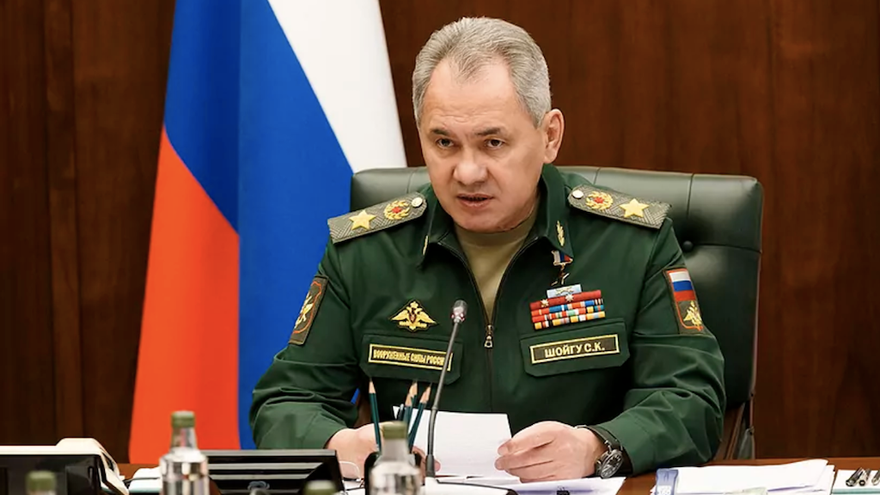
The publications echo statements by the Russian Ministry of Defense according to which Ukraine develops pathogens for military use to spread through the migration of ducks and bats. (EFE/Russian Defense Ministry Press)

14ymedio bigger14ymedio, Alejandro Saavedra, Havana, 1 June 2022 — The Cuban official press has spent months supporting the Russian narrative that there are secret laboratories sponsored by the United States in Ukraine that are dedicated to the production of biological weapons, although there is no evidence in this regard.

In at least five articles published since the end of March, media such as Cubadebate, Granma and Visión Tunera affirm that there are more than 30 laboratories in Ukraine that carry out large-scale military biological activities. However, the aforementioned facilities are not secret, nor is there evidence that they carry out any military research.

The publications echo statements by the Russian Ministry of Defense according to which Ukraine develops pathogens for military use to spread through the migration of ducks and bats. Its only source is Russian military reports.

“The objective of this biological research funded by the Pentagon in Ukraine is to create a mechanism for the secret spread of deadly pathogens,” says one of the articles published by Cubadebate.

“During its special military operation in Ukraine, Russia found numbered birds produced by Ukrainian biological laboratories, financed and supervised by the United States,” Granma says, in an article entitled: Numbered birds, a weapon to kill without firing a single shot, among other biological experiments.

Various western media, such as BBCEFE y Polifact, have already verified that Russian claims are unfounded. continue reading

First of all, the laboratories are not secret. On the contrary, it is public knowledge that Ukraine has a network of laboratories that investigate diseases dangerous to human and animal health, such as anthrax and hemorrhagic fever.

Nor is it a secret that these facilities receive financial support from the United States. On the website of the U.S. Embassy in Ukraine there is a section that includes all the details of this collaboration. Some of the laboratories are also supported by the European Union and the World Health Organization.

Another relevant aspect is that Russia hasn’t presented any evidence that these laboratories are used for military research or that the facilities have the necessary capabilities for the development of weapons.

“There is no indication that Ukrainian laboratories have been involved in any infamous activity, or in any research or development that contravenes the Biological Weapons Convention,” Filippa Lentzos, a biosafety expert at King’s College London, told the BBC.

“The reality is that a true biological weapons program has additional requirements, such as the formulation of an agent that can be mass-produced and stable enough to be stored and disseminated,” the director of the Postgraduate Program in Biodefense at George Mason University, Gregory Koblentz, told Politifact.

Ukraine also submits, on a regular basis, voluntary reports on compliance with the Biological Weapons Convention, which prohibits the development, production and possession of biological weapons. Nor does the United Nations have any report from the Office for Disarmament Affairs that indicates suspicion about the research carried out in Ukrainian laboratories.

Finally, the United States Department of Defense reported on March 11 that when the Russian attacks began, the Ukraine Ministry of Health ordered the safe disposal of the pathogen samples that were stored in the laboratories, with the aim of preventing any type of accidental release generated by the attacks.

Translated by Regina Anavy

____________

COLLABORATE WITH OUR WORK: The 14ymedio team is committed to practicing serious journalism that reflects Cuba’s reality in all its depth. Thank you for joining us on this long journey. We invite you to continue supporting us by becoming a member of 14ymedio now. Together we can continue transforming journalism in Cuba.

At the Summit of the Americas, the United States Will Promote a Migration Pact Without Cuba

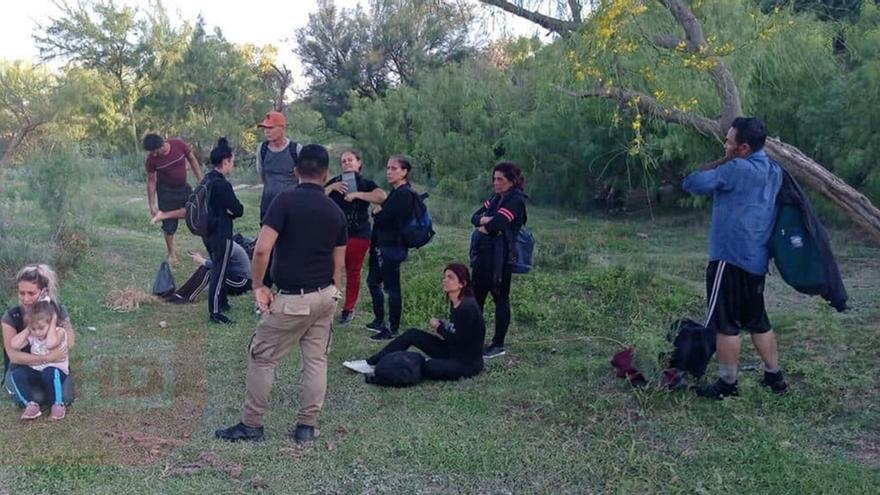
Migrants from Cuba, Nicaragua and Venezuela arrested before crossing the Rio Grande and reaching Eagle Pass. (INM)

14ymedio biggerEFE/14ymedio, Havana, June 5, 2022 — While some analysts think that the absence of Venezuela, Nicaragua and, probably, Cuba have made next week’s Summit of the Americas in Los Angeles meaningless, others think that there will be no consequences and that it won’t overshadow the plan of the United States to promote a migration pact, as contemplated in the official agenda.

To date, the government of President Joe Biden has avoided publishing the list of guests for the event, which will take place from June 6 to 10, amid warnings from countries such as Mexico, Honduras and some territories of the Caribbean Community (Caricom), which could boycott the summit due to absences.

Washington has been categorical regarding the non-participation of Venezuela and Nicaragua, and has been lukewarm about that of Cuba, despite the fact that in recent weeks it has resumed contacts with Havana on migration and has withdrawn some sanctions on Caracas to facilitate dialogue with the opposition.

Atlantic Council expert Jason Marczak, who directs the Adrienne Arsht Center in Latin America, a laboratory of ideas, told EFE that it would have been “very difficult” for the United States to invite the presidents of Venezuela, Nicolás Maduro, and Nicaragua, Daniel Ortega.

In his opinion, these two rulers are not interested in working together with other nations to reach an immigration agreement, since they carry out actions that destabilize the continent. continue reading

Therefore, it makes more sense to Marczak for Washington to promote a pact with the countries receiving migrants in order to coordinate their policies on this matter.

“Migrants and refugees leave Nicaragua and Venezuela, not because of Maduro’s or Ortega’s immigration policy, but because of political and legal repression and the economy,” said the analyst. Neither Maduro nor Ortega will modify the actions that cause citizens to leave their countries.

Meanwhile, in the absence of confirmation of attendance at the summit of a Cuban delegation, the US expert remarked that for some countries in the region it has been “a priority” to promote the participation of “some level of the Cuban Government.”

Given the lack of clarity on the part of Washington, the Cuban Government seems to have removed itself. The president himself, Miguel Díaz-Canel, said last week that he would “in no case” participate in the summit.

The possibility of a second-tier government delegation or a representative of Cuban civil society coming to Los Angeles has been fading as the date approaches.

The Cuban regime prevented activist Saily González from attending the IX Summit of the Americas to which she was invited as a representative of Cuban civil society. She let her know through her family that she could not pick up her visa at the U.S. Embassy in Havana, and State Security summoned her to remind her that she had an open criminal investigation against her.

The activist Aimara Peña was informed that “no one would participate” in the IX Summit of the Americas. As she denounced this Saturday on her social media, State Security “did not allow me to travel to Havana and kept me imprisoned in a dirty dungeon after threatening me.”

The final Cuban slamming of the door came with the recent celebration in Havana of a summit of leaders of the Bolivarian Alliance of the Peoples of Our America (ALBA), which included Cuba, Venezuela and Nicaragua, its main members, who  could puff out their chests in the face of exclusion.

For Mexican academic María Cristina Rosas, of the National Autonomous University of Mexico (UNAM), the Biden Administration has put itself in a predicament no matter what final decision it makes.

“Biden is on bad terms with God and the devil: the Republicans and a part of the Cuban community in the United States. On the other hand, he is giving many weapons to Cuba to continue blaming him for the evils there,” she said in an interview with EFE.

In the same vein, former Cuban diplomat Carlos Alzugaray pointed out Washington’s position as a mistake. “There’s no middle ground with Cuba. (Barack) Obama realized it perfectly. (Bill) Clinton paid dearly for having tried to swim between two waters,” he argued in statements to EFE.

In his opinion, the United States is reoffending with the veto on “failed policies” and diverting attention from the important problems of the region: “That is not convenient for anyone,” he said. Rosas highlighted at this point the “power” of the Cuban-American lobby, which she considers to be the “best” among Hispanic communities in the United States when it comes to influencing the country’s foreign policy.

Alzugaray said that Cuba is being harmed by not being able to participate in the hemispheric forum, but at the same time it benefits politically from exclusion, because of the regional support it has gathered — especially from Mexico — and the demonstration of Washington’s “inefficiency.”

He also pointed out that Cuban migration to the United States — which has increased significantly in recent months — is an issue that can be discussed in a regional forum, but one that must be addressed bilaterally.

The self-exclusion that Cuba seems to have chosen was not an option for Venezuela and Nicaragua, since the White House made the resounding and irrevocable decision not to include them in the list of invited countries.

Of the three, Ortega was the one who showed the greatest disinterest in participating in the summit and downplayed the event that — he believes — “does not exalt anyone.”

“We have to make ourselves respected, we can’t be asking the Yankee, begging him to go to his summit. We are not inspired by his summit,” Ortega argued on May 18 during a government event in Managua.

However, Maduro is convinced that his voice will be heard in Los Angeles, “whatever the host says,” whom he despises, by disavowing his will and ensuring that the marginalized will also be there.

“Whatever happens in Washington, the voice of Venezuela, the voice of Cuba and the voice of Nicaragua will be heard in Los Angeles in the great protests of the people and our voices will be in that room (…) we will be there with our truth,” the president said on May 24 in Caracas.

As Benigno Alarcón, director of the Center for Political Studies of the Andrés Bello Catholic University, explained to EFE, it’s most likely that Maduro’s words hide the plan to organize protests in Los Angeles, in parallel with the summit, as both Venezuela and Nicaragua did on previous occasions.

“What they’re going to try to do is what they’ve done on other occasions, which is to fund some groups to protest at the place where the summit is held. They’ve done it other times and under other circumstances. They’ve funded groups that join a protest,” Alarcón said.

But neither the absence of these countries nor the demonstrations that can be organized around the summit will overshadow, in his opinion, the plan to promote a migration pact, as contemplated in the official agenda. On the contrary.

For Alarcón, it must be the countries that receive migrants from the three excluded nations, with the United States at the head, that must address any issue that has to do with the agreement, so it will not matter that those countries are absent.

Those who have to agree on that pact are the recipient countries, to see how many each receive and how they can help, and what capacity each country has to receive and other issues of interest in this matter,” said the Venezuelan expert.

Translated by Regina Anavy

____________

COLLABORATE WITH OUR WORK: The 14ymedio team is committed to practicing serious journalism that reflects Cuba’s reality in all its depth. Thank you for joining us on this long journey. We invite you to continue supporting us by becoming a member of 14ymedio now. Together we can continue transforming journalism in Cuba.

Cuba’s Central Bank Denies That it is Selling US Dollars

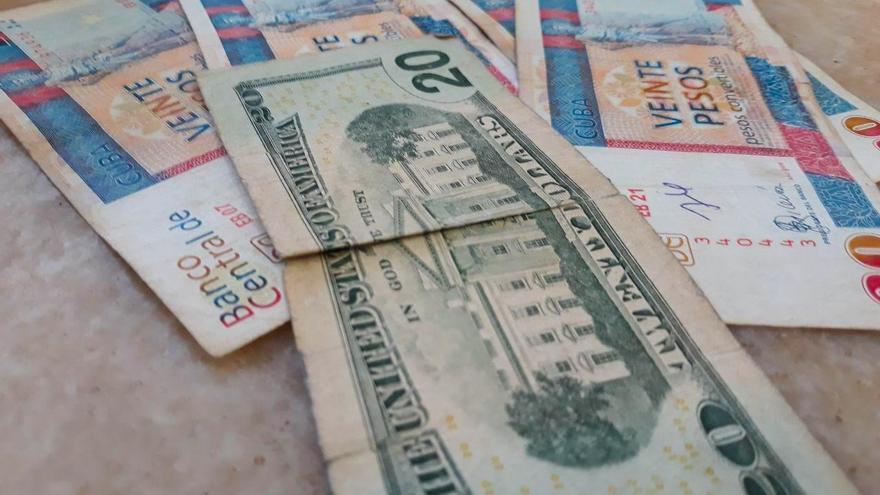
The depreciation of the dollar is linked, according to some experts, among other issues, to the announcement made by the Cuban Minister of Economy. (14ymedio)

14ymedio biggerEFE/14ymedio, Havana, 31 May 2022 — The Central Bank of Cuba (BCC) denied on Tuesday that it is selling, to individuals, U.S. dollars and freely convertible currency (MLC, the Cuban virtual currency backed by hard currencies). According to the official newspaper Granma, the monetary authority has thus responded to rumors that have arisen after an announcement by the Cuban Government that it would sell dollars to economic actors under certain conditions, a measure that has not yet been applied.

The BCC assured that this is “fake news” that is circulating “on social networks and digital media.” “Don’t be fooled, follow our official channels,” the BCC wrote on Twitter.

The newspaper criticized that “it is the second time this year that an attempt has been made to manipulate the issue.”

It argued that there are those who take advantage of the impact of inflation derived from the scarcity caused by the pandemic and the tightening of U.S. economic sanctions on Cuba.

The country temporarily suspended bank deposits of dollars in cash in June 2021 due to “obstacles” from the U.S. embargo, although banks continued to accept other cash currencies such as euros, pounds sterling, Canadian dollars and Japanese yen. continue reading

In mid-May, the Cuban government announced that it would sell MLC to some state and private economic actors, without specifying the conditions.

The Cuban Minister of Economy and Planning, Alejandro Gil, said that this sale would be “gradual and selective,” at a rate higher than the official rate (24 Cuban pesos, CUP) but without exceeding the informal rate (currently around 100 CUP).

For the first time since January, the dollar traded this week below 100 CUP in the informal market, a depreciation that some experts link, among other issues, to this announcement by the Cuban Government.

This exchange rate is the calculation made daily by the independent media El Toque, which weighs the figures of hundreds of ads for the sale of foreign currency on several websites in the country, and which many experts take as a reference value. For their part, the euro and the MLC maintained values of 110 and 106, respectively.

Alejandro Gil’s statements immediately aroused criticism from experts, such as the economist, Pedro Monreal, who called it “one more nail in the coffin of the ’Order’ and a possible source of illegalities.” In any case, the collapse of the MLC, since last week, seems to be a direct consequence of those statements.

Another factor that has influenced the fall in currencies is the new measures announced by the U.S. government of Joe Biden last week, on May 16, among which is the elimination of the remittances limit of $1,000 per quarter and per person.

This restriction had been in force since 2019, when it was promulgated by then-U.S. President Donald Trump along with other provisions that largely paralyzed the official business of foreign exchange, such as the prohibition of doing business in which the Cuban military was involved. This was the case of Fincimex, blacklisted by the U.S. Treasury in June 2020, which managed remittances up to that time.

Translated by Regina Anavy

____________

COLLABORATE WITH OUR WORK: The 14ymedio team is committed to practicing serious journalism that reflects Cuba’s reality in all its depth. Thank you for joining us on this long journey. We invite you to continue supporting us by becoming a member of 14ymedio now. Together we can continue transforming journalism in Cuba.

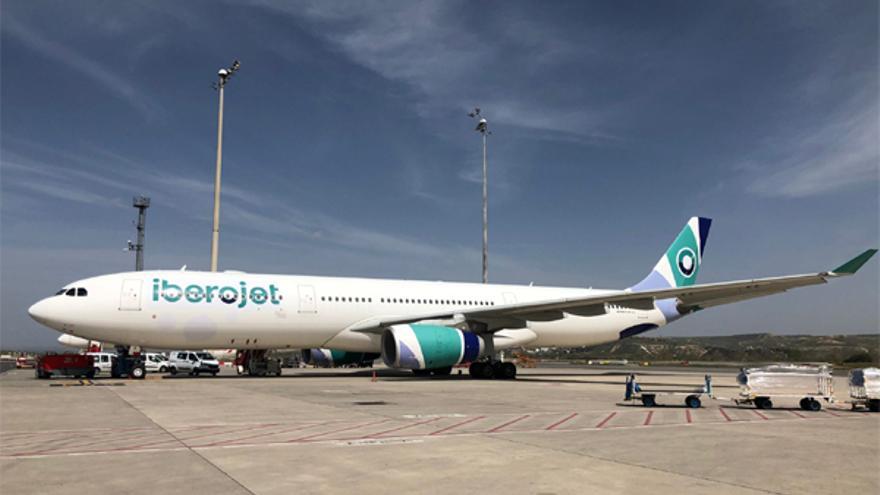
Iberojet Will Launch a Direct Flight Between Madrid and Santiago de Cuba in November

The Iberojet flight from Madrid to Santiago will be direct and non-stop and will take place once a week on board an Airbus 330. (Avoris)

14ymedio biggerEuropa Press/14ymedio, Madrid, 1 June 2022 — Iberojet, the Spanish airline of Ávoris Corporación Empresarial, has announced a new route beginning November 11 that will connect Madrid with Santiago de Cuba. The date coincides with the start of the high season in the Caribbean.

This flight, which will be direct and non-stop, will occur once a week on board an Airbus 330. The flights will be able to be booked as of Wednesday on the Iberojet website and on all official channels for sale to the public, and will cost from 283 euros each way.

This direct flight route to the second most important city on the island, by number of inhabitants, will be operational throughout the year.

In addition to operating this direct flight from Madrid to Santiago de Cuba, for travelers who decide to get to know the country in depth, Iberojet offers the possibility of combining the airports of Santiago de Cuba and Havana to enter and leave.

Last December, Iberojet opened its first office at the Miramar Trade Center in Havana. In addition, it has increased the number of flights planned for this summer from three weekly flights Madrid-Havana to five, plus one from Lisbon to Varadero, in high season. continue reading

The strengthening of the connectivity of Santiago de Cuba, made possible thanks to collaboration with the Cuban State, seeks to attract more travelers and promote the economic development of the destination, which hasn’t recovered from the harm it suffered during the COVID-19 pandemic.

Despite the fact that Cuba received 313,908 visitors between January and March, the figure is very far from the 1,470,457 tourists that the island registered in the first quarter of 2019.

Just a few days ago, the British airline Virgin Atlantic decided to postpone the return of its flights to Cuba, scheduled for November 1. Without going into detail, through a statement, it argued that the decision was due to the “complexity of the operation.”

Translated by Regina Anavy

____________

COLLABORATE WITH OUR WORK: The 14ymedio team is committed to practicing serious journalism that reflects Cuba’s reality in all its depth. Thank you for joining us on this long journey. We invite you to continue supporting us by becoming a member of 14ymedio now. Together we can continue transforming journalism in Cuba.

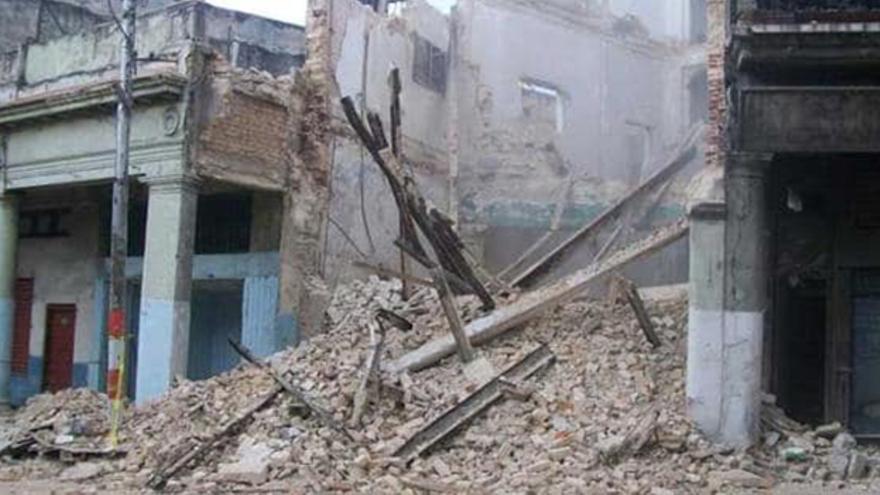
Heavy Rains Leave Around 300 Buildings Collapsed in Western Cuba

One of the collapsed buildings in Havana after the rains. (EchezabalJD)

14ymedio bigger14ymedio, Havana, 5 May 2022 — The formation of Tropical Storm Alex has already left about 300 buildings collapsed with the main impact in Havana, where 148 of these were reported as of Saturday night, according to the State newspaper Granma. At least 53 building collapses have also occurred in Pinar del Río, 32 in Mayabeque, and another 47 in Artemisa.

This has led to the evacuation of more than 8,500 people; some 7,750 were placed in the homes of relatives, and about 800 are in evacuation centers. There are also 321 affected by the interruption of electricity service in Pinar del Río and more than 450 in Havana, where there are four primary and five secondary lines that are out of service. Meanwhile, in Artemisa, there are about 116 customers without power.

On Sunday, Minister of Economy Alejandro Gil pointed out that the main damage was to housing, agriculture and electricity, with about 750 houses affected and 3,200 hectares of tobacco, sweet potato, cucumber and pumpkin crops damaged. He also said that there are 158,000 customers experiencing power outages. Minister of Energy and Mines Livan Nicolás Arronte said that about 4,487 customers in Pinar del Río and Artemisa still don’t have electricity. continue reading

The areas most affected by building collapses in Havana are in La Polar, El Fanguito and El Pentón, all very poor neighborhoods with homes made of light materials.

So far, two deaths have been reported in Havana, a 69-year-old man in Central Havana, who died as a result of a building collapse, and a 54-year-old, who drowned in Boyeros.

A third death was reported in Pinar del Río, where the lifeless body of Yosvel Cabrera Álvarez, 44 years old, who fell into a swollen creek and drowned, was found near the ESPA in the Diez de Octubre neighborhood. Since Saturday night, another person has been missing In this same neighborhood.

Heavy rains have continued to cause flooding throughout western Cuba, and weather stations reported accumulations that exceeded a foot of water.

In the early hours of the morning, authorities pointed out the formation of Tropical Storm Alex, with winds of 80 kilometers per hour and located 1,110 kilometers southwest of Bermuda. Despite the departure of the first cyclone of the hurricane season, the rains will continue to affect the island.

By Sunday, the rains are expected to be more intense in the mountainous areas and on the south coast, while in the west, it will be cloudy with some storms in the afternoon. In southeast Cuba, there will be abundant cloudiness and rain.

Translated by Regina Anavy

____________

COLLABORATE WITH OUR WORK: The 14ymedio team is committed to practicing serious journalism that reflects Cuba’s reality in all its depth. Thank you for joining us on this long journey. We invite you to continue supporting us by becoming a member of 14ymedio now. Together we can continue transforming journalism in Cuba.

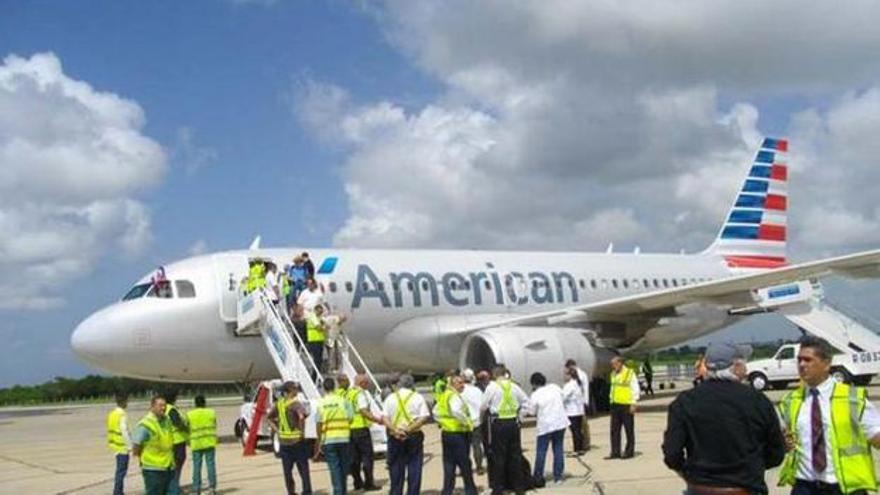
The Biden Government Officially Revokes Restrictions on Flights to Cuba

A flight of the U.S. company American Airlines during a commercial trip to Cuba. (EFE)

14ymedio bigger14ymedio, Havana, 1 June 2022 — The Biden administration announced on Wednesday that it is reestablishing commercial flights to Cuba, which until now could fly only to Havana. The U.S. Department of Transportation issued the order at the request of Secretary of State Antony Blinken.

According to Reuters, Blinken said that the action was “in support of the Cuban people and in the interests of U.S. foreign policy.”

Until now, U.S. airlines could only fly to Havana, leaving Cuban Americans with few options to visit their relatives in other parts of the island.

The measure is part of a policy change towards the island announced in the middle of last month, which includes the resumption of the family reunification program and the suspension of the limit of $1,000 per quarter on remittances, thus reversing some of the toughest measures of former President Donald Trump. It is not known when these last two measures will go into effect. continue reading

The Government of Cuba described Washington’s decision as a “limited step in the right direction.” The Ministry of Foreign Affairs regretted in a statement, issued just over an hour after the U.S. announcement, that the Joe Biden Administration hasn’t eliminated the economic embargo, in force since 1962.

In 2019, the Trump Administration banned commercial flights from the U.S. to all cities in Cuba with the exception of Havana and, in August 2020, went further by suspending private charter flights to all airports on the island, including that of the capital.

These charter flights were used by many Cuban Americans to travel to the island from Miami.

Translated by Regina Anavy

____________

COLLABORATE WITH OUR WORK: The 14ymedio team is committed to practicing serious journalism that reflects Cuba’s reality in all its depth. Thank you for joining us on this long journey. We invite you to continue supporting us by becoming a member of 14ymedio now. Together we can continue transforming journalism in Cuba.

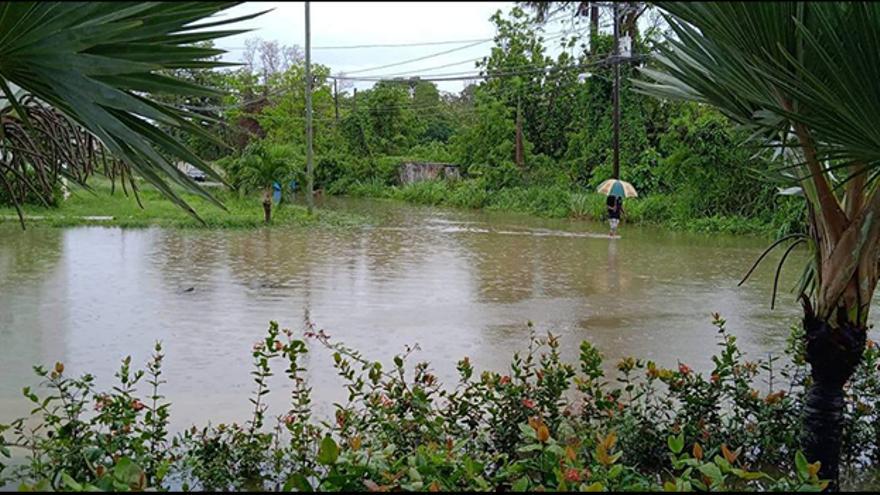
Floods, Landslides and Thousands Sheltered from the Rains in Western Cuba

Floods have left some communities incommunicado. (Cortesía)

14ymedio bigger14ymedio, Havana, 4 June 2022 — Havana reports the greatest damage due to the heavy rains associated with the large area of low pressure in the southeast of the Gulf of Mexico that affects western and central Cuba. The authorities of the capital describe the conditions in the city as becoming “complex” and report two deaths, 111 building collapses, of which two are total, more than 4,500 evacuees and 23 flooded areas.

In addition to “the heavy rains, the floods,” they said the damage was due to “the age of the city,” according to the Cuban Presidency’s Twitter account with a source at a meeting of the National Civil Defense General Staff.

The rise of the Almendares River, the main one in Havana, has forced the evacuation of almost 50 people in the communities of El Fanguito and La Polar, neighborhoods where most of the houses are made of wood and other light materials. The waters rose quickly, and when they withdrew they left a thick layer of mud and garbage, according to Tribuna de La Habana.

The president of the Municipal Assembly of People’s Power of Plaza de la Revolución, Osmani Arcia Peñate, reported that 48 people were evacuated from El Fanguito this Friday to the nearby Pioneer Palace, including six minors and two infants. Vicente Ponce Carrasco Elementary School was was also able to accommodate another 300.

In Pinar del Río, where the rains have caused flooding in several locations, the disappearance of citizen Yusiniel Cabeza La Rosa was reported yesterday afternoon. According to the state radio station Radio Guamá, the 21-year-old, resident of the Ojo de Agua farm belonging to the Santa Lucía popular council north of the municipality of Minas de Matahambre, was swept away by the strong currents of a river that he tried to swim across. continue reading

“Since then, combined forces of the Ministry of the Interior together with inhabitants of the surrounding communities are carrying out search work,” reported the Municipal Civil Defense, which added that “the spillage from the Nombre Dios dam makes it difficult to search.”

Provincial authorities also say that 11 communities continue to be incommunicado, and they ask the population to “maintain discipline” and not cross rising rivers to “avoid the loss of human life.” On Friday afternoon, the body of Yosvel Cabrera Álvarez, 44, who fell into a swollen creek hours earlier, was found.

In Pinar del Río, 4,480 people continue being evacuated, and there have been 302 reports of damage to the electricity service.

“In the provinces of Cienfuegos, Villa Clara and Sancti Spíritus, the rains have been beneficial and so far no major damage has been reported,” reported Presidencia Cuba, while noting that in Mayabeque 17 homes were damaged and the cucumber, melon and corn crops were affected.

On the Isle of Youth, four families were helped, and the biggest problem “is the leaks in buildings,” while in Matanzas the return to their homes of about 250 people who were evacuated began and, in addition, there are 14 homes damaged. In Artemisa, “a severe local storm occurred in the municipality of Candelaria, which affected the roofs of 22 homes,” the local authorities said.

The Institute of Meteorology of Cuba predicts for this Saturday that in much of the western and central regions it will continue to be largely cloudy “with showers, rains and some thunderstorms that will be strong and locally intense,” in some territories, although it predicted that the rains “will gradually decrease in the west in the afternoon.”

He also warned of tidal waves on the south-west and central coast and on the north west. “In the areas of showers and thunderstorms, both the strength of the winds and the height of the waves will increase.”

The heavy rains so far have left three dead in western Cuba and one missing.

Translated by Regina Anavy

____________

COLLABORATE WITH OUR WORK: The 14ymedio team is committed to practicing serious journalism that reflects Cuba’s reality in all its depth. Thank you for joining us on this long journey. We invite you to continue supporting us by becoming a member of 14ymedio now. Together we can continue transforming journalism in Cuba.

Freedom, Private Property Rights, Market and Profitability in the Cuban Countryside

Cooperatives are one of the forms of agriculture in Cuba. (Bohemia)

14ymedio bigger 14ymedio, Elías Amor Bravo, Economist, 30 May 2022 — Cuban president Díaz-Canel wants to sound like Fidel Castro, but it’s hard. That way of approaching problems, as if he had a magic wand and the solution to everything, is leading him along the path to perdition. Castro did the same thing. Even when a threatening cyclone was coming, he became the television meteorologist to explain where it was going to go and where it was not going to go. Díaz-Canel has done the same with agriculture, and from there came a front-page report by the State newspaper Granma entitled “Producing food efficiently is the challenge,” which directly talks about how to feed Cubans every day.

Díaz-Canel met with agricultural producers to convey his impressions on what to do to “advance the processes of production, better use of land and promote the diversification of agricultural products; the objective is not to reduce production and planting but to do them in the most efficient way possible.” But you have the impression that he isn’t on the right track, that he’s not connected to reality. More or less like Castro, but look, it’s not the same. No one blamed Castro for his extravagances, like a deceptive cyclone that changed its trajectory and in the end went another way. Díaz-Canel should be careful.

No one at this point can have the slightest doubt. The Cuban communist regime may have two or three heartbeats left if it doesn’t find a solution to increase agricultural production. That is, so that a Cuban family can normally have three meals a day.

But any idea that occurs to the communists goes right in the opposite direction. With nothing better ahead, that idea of banishing food imports, because there is no foreign currency to pay for them, may end up creating more hunger problems and a terrible food crisis that blows everything up. In the short term, there is no choice but to import food and pay any price, no matter how high. The fault, as you know, lies with an ally of the Cuban regime: Putin, with his expansionist adventures in Ukraine.

Díaz-Canel speaks in an inappropriate way of “banishing the import mentality in an effort to meet the food needs of our population,” but he knows very well that, under current conditions, the agricultural sector is unable to feed the population. It may be very good to break that dependence in the medium and long term, but tomorrow, next month, things will be more complicated than ever.

And he doesn’t blame the bureaucracy and the obstacles that prevent the management of companies in this area, because he is solely responsible for that internal blockade, which we have denounced so many times in this blog. Freedom, private property rights, market and profitability are the principles that must be restored in the Cuban countryside, and in the economy as a whole, if it is to move forward.

But Díaz-Canel turns a deaf ear to these calls and remains silent on the subject of the application of science and innovation, which may be very good, and no one disputes it, but it must be raised over a longer time horizon. Tomorrow when they want to eat lunch and don’t have enough of what they need, Cuban families will not remember science and innovation at all. continue reading

He also spoke of “advancing production processes, better land use and boosting the diversification of agricultural products,” but this is impossible if the producers don’t own the land they cultivate. No one aspires to leave their mark on something that will never be theirs. Working for the communist state came to an end. Production and planting can only be increased and done in the most efficient way possible with private land-ownership rights, markets for the purchase and sale of plots and land, and private management of the agricultural sector. The land should belong to those who really work it. There is no other way; even the Vietnamese did it, and it was a wonder for them.

And then he talked nonsense at that moment, about “protein plants to increase the obtaining of animal feed, the production of feed with our own resources, or the development of mini-industries to take advantage as much as possible of agricultural production.” These are also things that don’t serve to solve the problem of tomorrow’s lunch.

The same is true of the use of bioproducts, even when the possible decrease in intermediaries between producers and agricultural markets is cited, and the speeding up of marketing in this area. No farmer supports the ideas that are included in the “63 measures.

Díaz-Canel knows that there is no point in publishing a Law on Food Sovereignty and Food and Nutrition Security or the 63 measures, if the crops aren’t harvested and the population can go to the points of sale. Something so simple and so easy to achieve in Cuba becomes, thanks to the communist economic model, a thankless task.

Hence, in the face of such a difficulty, which could be solved with the aforementioned recipe of freedom, private property rights, market and profitability, principles that must be restored in the Cuban countryside and in the economy as a whole, Cuban communists start rehearsing other collectivist experiments to see what comes out. Díaz-Canel is irresponsible, getting into these types of stories that lead nowhere. I am referring to the 19 “productive poles” that have been created throughout the country.

According to Granma, these poles are made up of 86 basic business units, 54 basic cooperative production units, 45 agricultural production cooperatives and 190 credit and service cooperatives, with an arable land area of 151,829 hectares.

Can these poles really solve the problem of tomorrow’s lunch? They are clear about it. The estimated production at the end of 2021 reaches a total of 706,200 tons of agricultural items,, only a quarter of the planned production. Honestly, such a bureaucratic and organizational effort to achieve only that percentage of agricultural production is unjustified. If private tenants obtained from the communist regime the same amount as these collectivist-inspired poles, they would surely produce much more than that quarter, and they would also do so more efficiently.

But the communist regime is more interested in poles and municipalities, in the commitment to transfer to the local representatives the responsibilities that the central government is unable to achieve because it has failed again and again. The local authorities are not in favor. This strategy that can even be counterproductive, but it offers an idea of how lost they are for not giving up failed ideological principles.

Especially worrying was Díaz-Canel’s message to the attendees: “We are called upon to train and mobilize government structures from the municipal level so that they are in a position to lead this production process with popular participation in the local stages and, in addition, to promote an intense process that reaches all local producers, both state, cooperative and private, the state enterprise and even the last farm, the agroindustrial productive pole, each local development project, favoring agroecology as a necessary alternative for agricultural production in the current circumstances.” What does this sound like?

In the midst of all this, Díaz-Canel called for “increasing exports, achieving the linkage of all producers through a state company, or in other cases of cooperatives and new economic actors also closely linked to production.” Not a single reference was made to the values of freedom, private property rights, market and profitability in the Cuban countryside. As if he were talking about another country, at another time. You have the feeling that every day that passes he is further away from the reality in which he lives, and it is not known if it is his fault or the court of party and regime sycophants that surround him. The same as Fidel Castro.

Translated by Regina Anavy

____________

COLLABORATE WITH OUR WORK: The 14ymedio team is committed to practicing serious journalism that reflects Cuba’s reality in all its depth. Thank you for joining us on this long journey. We invite you to continue supporting us by becoming a member of 14ymedio now. Together we can continue transforming journalism in Cuba.

One Missing Person and Dozens of Residential Areas Flooded by Rainstorms in Cuba

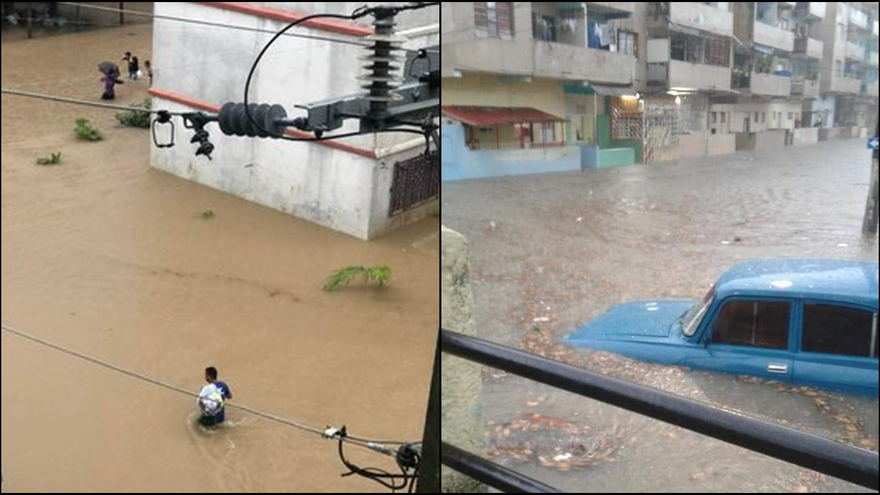
The rains are linked to the low-pressure zone that moves slowly over the southeast of the Gulf of Mexico. (Social Networks/Collage)

14ymedio bigger14ymedio, Havana, 3 June 2022 — A resident of Pinar del Río fell into a swollen creek in the district of Diez de Octubre and is reported missing by local authorities after heavy rains that mainly affected the west and center of the country.

According to what neighbors told the official media, the man “didn’t manage to get out of the water,” and agents of the Ministry of the Interior and neighbors are searching for him.

Several residential areas, both in Pinar del Río, as well as in Havana, Sancti Spíritus and the special municipality of Isla de la Juventud, have been flooded with water by the rains associated with an extensive area that covers the northwest of the Caribbean Sea and western Cuba.

The climatic phenomenon is linked to the low-pressure zone that moves slowly over the southeast of the Gulf of Mexico and has caused the evacuation of families in several territories, falling trees, landslides and overflowing rivers. Interruptions in electricity service are also reported in Pinar del Río, large areas of Artemisa, Havana and other provinces.

In the Cuban capital, neighborhoods and areas near the Plaza de Cuatro Caminos have been affected, an area that normally reports flood problems and where neighbors, in the last few hours, are living with water above their knees. continue reading

The corner of Infanta and Amenidad is seriously affected by the rains, and the water even covers part of the vehicles parked nearby. The same panorama is experienced in the lower areas of Centro Habana, especially in the neighborhood of Los Sitios, very close to the El Pontón Sports Center.

According to the latest report from the Institute of Meteorology of Cuba, the territories with the highest record of rainfall are the weather station of Embalse Cuyaguateje in Pinar del Río with 176.0 millimeters, followed by the INRH Municipal Delegation of Isla de la Juventud with 160.0 and the Jarahueca Telecorreo station located in Sancti Spíritus with 156.5.

A month ago, the Institute of Meteorology recalled that June is considered the rainiest month of the year in Cuba. “A considerable part of the accumulated precipitation occurs associated with rainy events of several days duration, which occur mainly in the first twenty days of the month.”

He then anticipated that “the precipitation depends on the influence of migratory systems in the tropical zone, such as tropical storms and low pressure systems and their important interaction with mid-latitude systems,” while recalling that this month “the period of high thunderstorm activity” begins.

This Wednesday, June 1, the new tropical cyclone season in the Atlantic began, which will close on November 30, and in which up to 17 cyclones are expected to form, of which nine could reach hurricane status.

With this perspective, the Forecast Center of the Institute of Meteorology has predicted an 85% chance that one of these hurricanes could affect Cuba in the coming season.

The official institution called for attention to the persistence of rainfall, due to the saturation of soils mainly in low-lying and poorly drained areas.

The new cyclone season is favored by the presence of warmer than normal sea temperatures in the tropical strip of the North Atlantic and the Caribbean during the first months of this year, according to observations by Cuban meteorologists.

Translated by Regina Anavy

____________

COLLABORATE WITH OUR WORK: The 14ymedio team is committed to practicing serious journalism that reflects Cuba’s reality in all its depth. Thank you for joining us on this long journey. We invite you to continue supporting us by becoming a member of 14ymedio now. Together we can continue transforming journalism in Cuba.

Cuban Doctors Arrive in Mexico Without Waiting for a Court’s Decision on Their Hiring

A judge in Puebla will decide whether to suspend the hiring of 500 Cuban doctors. (Vladimir Molina / El Diario)

14ymedio bigger14ymedio, Madrid, 1 June 2022 — Health workers from Cuba arrived in Mexico on May 31, a few hours before a judge in Puebla was to decide if Mexico could hire 500 Cuban doctors under the conditions agreed upon by the governments of both countries.

“They have already arrived and are in Mexico in three hotels; whether they are doctors or not, we don’t know, but they are here,” confirmed Éctor Jaime Ramírez Barba, deputy of the National Action Party (PAN) for Guanajuato. The politician argued that, taking into account the number of health workers that the federal government plans to hire, Cubans do not represent a disproportionate amount, although at one time he opposed the agreement.

“If they are doctors, there is no formal decree that prevents the President from incorporating them today. If he doesn’t comply with what the court orders, we will be making the corresponding complaints,” Ramírez Barba told the local press. If the data available to the opposition, provided by the Government, are true, the number of Cuban health workers in Mexico would equal for every 10,000 national health workers.

However, the complaints are focused on issues such as whether the group is made up entirely of health professionals, whether they are properly trained and whether working conditions are respectful of the law, which is very doubtful considering the number of complaints charging that agreements of this type are a semi-slavery relationship.

The anonymous whistleblower who is trying to paralyze the incorporation of the 500 doctors stated in the application that the Mexican Government has not demonstrated that the doctors have the adequate capacity or training to practice medicine in Mexico and that the remuneration that the Mexican government will pay for these health workers could go, as in all agreements of this type, to the Cuban Government rather than to the contracted professionals themselves. continue reading

The judge denied the provisional suspension because “so far it’s not determined that the agreement signed by the federal government contravenes provisions of public order,” but he gave a deadline of May 31 for the authorities to present their arguments and is scheduled to announce his decision on June 1.

On May 31,  the PAN deputy explained that the model in which Cubans will work is the one planned for “dispersed areas,” which are organized by health communities. The politician commented that Mexican doctors who go to those areas do so temporarily, with a one-year contract that provides them with points for their next destination, so they are not classified as “places.” However, national health workers refuse to occupy these areas.

By virtue of the agreement announced by Mexican President Andrés Manuel López Obrador, during his visit to Havana on May 8, Cubans will be sent to these places, some of them in very dangerous areas, such as the Montaña de Guerrero, one of the most conflictive points in the country, due to the presence of several cartels that dispute drug trafficking.

The profession of doctor in Cuba, which was once the jewel in the crown, is losing its appeal and not only within the island, since the foreign missions, often used by the doctors to earn more money but also as a springboard to emigrate, are becoming more complicated. On Tuesday, news broke on social networks that at least 17 Cuban doctors sent to Venezuela were arrested while trying to leave for Colombia.

Doctor Miguel Ángel Ruano said on Facebook that some have been sent back to the island as prisoners and threatened with the application of article 176 of the new Criminal Code, which punishes with between three and eight years in prison anyone who “on the occasion of the fulfillment of a mission abroad and against the express order of the Government, moves to another country.”

Emilio Arteaga Pérez, a member of the Free Cuban Medical Association like Ruano, confirmed the facts and said that the rest of the 20,000 Cuban collaborators in Venezuela have also had their passports taken away as retaliation and as a preventive measure.

Under these conditions, it’s not surprising that the majority of Cubans who still have a vocation for public health choose the only way that opens the door for them to leave the island, which is to practice “Integral General Medicine.” Medical specialists have been regulated since 2015 and are prohibited from leaving the island for five years, after which they can request their “liberation” by the authorities.

The advice not to specialize so as not to close the door to emigration circulates in several medical forums, one of them based in Spain, where many Cubans fight to validate their degrees in a country where more and more doctors are imported while nationals emigrate.

In the last five years, 20,608 foreign doctors have had their degrees validated in Spain. Cubans were in the top tier of the most professionals admitted in 2018, 2020 and 2021, with 342, 598 and 564 respectively. Most know that in order to work in a European country they need the permission of the Cuban Ministry of Foreign Affairs, from which they must ask for the required documentation to be able to validate their degrees. To do this, they must have performed their required social service and, of course, not be “regulated” [banned from leaving the country] or marked by “desertion”; otherwise they will never get the papers.

In addition, they often need to complement their studies to equate their level with that required and pass the MIR (Internal Resident Doctor) exam in case they want a specialty other than family medicine.

Trade unions in Spain warn of the shortage of doctors in the country, where wages are low and the workload very high, especially compared to some of the neighboring European countries, where there is more stability and better conditions. In the last five years 11,506 Spanish health workers applied for the certificate of eligibility to leave, while, in the same period, almost twice as many foreign graduates validated their degree: 20,608.

Translated by Regina Anavy

____________

COLLABORATE WITH OUR WORK: The 14ymedio team is committed to practicing serious journalism that reflects Cuba’s reality in all its depth. Thank you for joining us on this long journey. We invite you to continue supporting us by becoming a member of 14ymedio now. Together we can continue transforming journalism in Cuba.