Almost Half of the Cuban Karate Team Whose Trip was Paid for by Guatemala Escapes

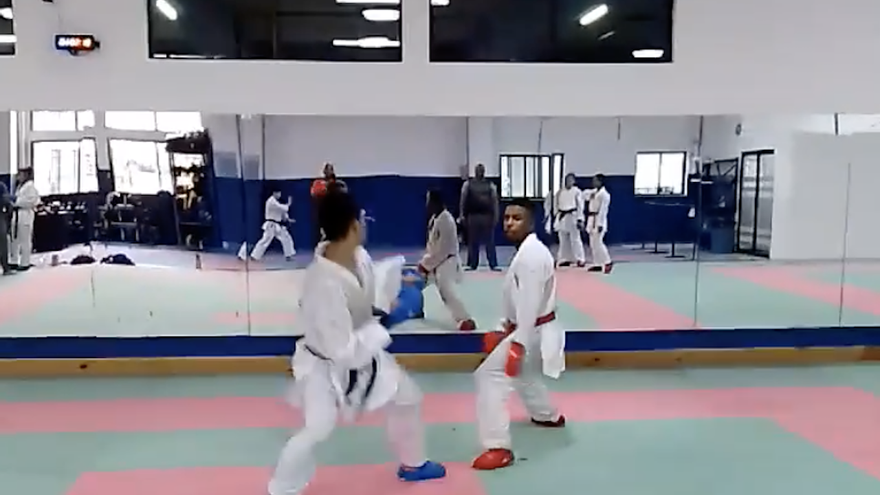
The coach of the Cuban karate team, Eliecer Llamos, referred to those who “for one reason or another” decided to abandon them and hoped that “life smiles at them.” (Capture)

14ymedio bigger14ymedio, Havana, 14 June 2022 — Four Cuban karatecas have left the team while they were in Guatemala. As confirmed by Swing Completo on Monday, they are Darían Díaz, Yaidel Hernández, Sunilda Ventosa and Gerardo Almenares, almost half of the group made up of nine athletes and the coach, Eliecer Llamos.

All of them arrived in Guatemala last Wednesday to take part in training in the cities of Escuintla and Mazatenango.

The publication points out that the athletes “decided to leave the group before the end of the event” that began this Sunday. It will culminate on the 20th and will serve as preparation for the Central American and Caribbean Games in San Salvador in 2023.

The team’s trip was financed by the Executive Committee of the Guatemalan Olympic Committee with $11,186.12, so that Cuban athletes could cover the cost of air tickets, food, drinks and travel insurance.

Cuban karateca Elisabet Vasallo had warned in March of this year that this discipline was in “decline.” The athlete complained through her social networks: “For a long time generations of high-performance karatecas, athletes with talent and special conditions have been destroyed.” continue reading

The bronze medalist at the 2018 Central American and Caribbean Games in Barranquilla pointed to the selection by “trainers” and said that they weren’t “fair or neutral” in the choice of athletes.

Although the specific day of the escape of the four athletes is not known, on his Facebook account, Eliecer Llamos posted a message on Thursday, June 9, in which he refers to those who “for one reason or another” decided to abandon them and said he hopes that “life smiles at them.” Of the nine who traveled to Guatemala, Vivian Prada, Baurelys Torres, Bárbara Lynn, Maikel Noriega and Lázaro Chapman remain.

Originally from Cienfuegos, Darían Díaz, one of the escapees, was selected as the best karateca on the island in 2020. In that year he also won gold in the Cardín Cup and won the Elite National Tournament.

The karate commissioner in Cienfuegos, Bernaldo Pérez Román, highlighted the work of Yaidel Hernández, which led him to be one of the four prominent representatives of the province.

Cuban sport is experiencing an alarming drain of athletes. The escape of players has spread to other disciplines. In May, the abandonment by five members of the wrestling team was confirmed: the two-time world champion Ismael Borrero, Leonardo Herrera, Amanda Hernández, Cristian Solenzal and Yolanda Cordero, during their stay in Mexico for the Pan American Wrestling Championship.

Translated by Regina Anavy 

____________

COLLABORATE WITH OUR WORK: The 14ymedio team is committed to practicing serious journalism that reflects Cuba’s reality in all its depth. Thank you for joining us on this long journey. We invite you to continue supporting us by becoming a member of 14ymedio now. Together we can continue transforming journalism in Cuba.

The United States Restricts Entry to Five Cuban Officials Due to the 11J Protests

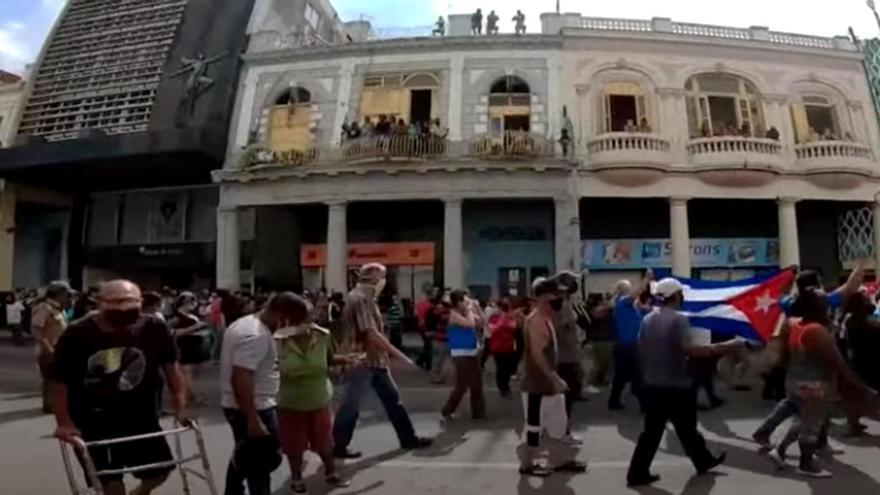
The sentences of the 11J (July 11th) protesters in La Güinera are still among the most severe. (Capture)

14ymedio biggerEFE (vía 14ymedio), Washington/Havana, 17 June 2022 — The United States Government announced on Thursday that it has taken measures to impose restrictions on the visas of five unidentified Cuban officials due to their links to the trials and imprisonment of demonstrators who took part in the protests of July 11, 2021 (11J) on the island.

In a statement, the State Department headed by Antony Blinken announced the sanctions, which respond to Presidential Proclamation 5377, by which the United States can suspend the entry into the country of Cuban government officials and employees.

According to the statement, these five officials are linked to “unfair trials” and the sentences and imprisonment of Cuban protestors who took to the streets on July 11, 2021.

The U.S. Government claimed that the Cuban authorities “deny citizens their basic human rights and fundamental freedoms.”

The incident occurred almost at the same time that the Attorney General’s Office issued a new statement reporting four final judgments against 33 11J participants who had appealed.

Of these, “30 were punished with prison sentences (20 are between five and ten years, and 10 are between ten and 18 years), while two were sentenced to correctional work without internment and one to limitation of liberty.”

The sentences were handed down on June 14 and 15 for people convicted of sedition, sabotage and public disorder in Havana and Mayabeque. continue reading

One of the judicial appeals reduced the sentences to up to 15 years in prison for 17 people who demonstrated in the Havana neighborhood of La Güinera, but the sentences were so harsh that  they still face a high number of years in prison, a total of 206, with individual cases of up to 17 years.

As reported by the Prosecutor’s Office three days ago, the country’s courts have issued 76 final sentences against 381 people for the protests, not counting those it announced on Thursday.

The NGO Prisoners Defenders pointed out on June 8 that a total of 168 protesters have been prosecuted for the crime of sedition alone, and 246 have final prison sentences of 10 years or more.

Translated by Regina Anavy

____________

COLLABORATE WITH OUR WORK: The 14ymedio team is committed to practicing serious journalism that reflects Cuba’s reality in all its depth. Thank you for joining us on this long journey. We invite you to continue supporting us by becoming a member of 14ymedio now. Together we can continue transforming journalism in Cuba.

In the Midst of Daily Blackouts, Cuba Organizes a Renewable Energy Fair

The Government’s goal was to reach 24% of electricity generation from renewable energies by 2030, but at the beginning of 2022, the progress is only 5%. (Sierra Maestra)

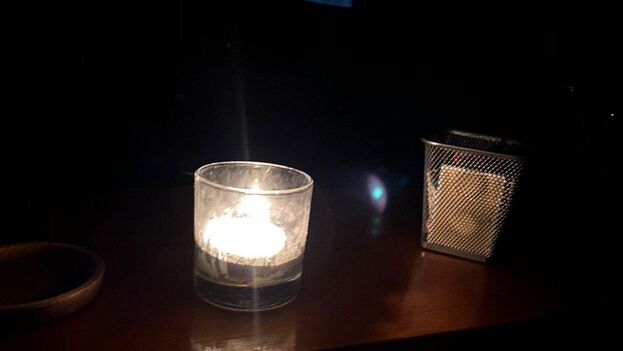
14ymedio bigger14ymedio, Havana, 16 June 2022 — The Cuban population’s weariness of a summer without power grows and jumps from social networks to the streets. If Tuesday was a day of protest for the university residents of Camagüey, on Wednesday came the banging on pots through the streets of Manzanillo, in the province of Granma. The prolonged power cuts threaten a protest a day.

In the midst of this storm, the ruling party has promoted a space for the celebration of the International Renewable Energy Fair, which is held in Havana between June 22 and 24.

“Cuba needs to catapult the use of renewable energies,” is the headline in the State newspaper Granma. In 2014, the island approved a policy for the development of these energy sources, which then accounted for 4.3% of the electricity generation of a country extraordinarily dependent on fossil fuels. The goal was to reach 24% by 2030, but at the beginning of 2022, the halfway point, the progress seemed like a mockery. Only 5%.

“The implementation of the FRE (Renewable Energy Sources) Policy is behind schedule; at the end of 2021 we should have had 649 MW/h in operation, but today it reaches only 47% of what was expected, 304 MW/h,” Rosell Guerra, director of Renewable Energy at the Ministry of Energy and Mines, said in an interview with IPS at the beginning of 2022.

The explanation is very simple. Public policies need funding rather than voluntarism, rather than fantasies. In the same article, the official pointed out that since 2014, $500 million has been invested in renewables, a figure that contrasts with the $1.5 billion invested in hotels.

Guerra attributed the lack of progress to U.S. sanctions and the current bad economic situation, although the Cuban government didn’t take advantage of the chance to invest more even in the best years of that period, when the thaw in U.S. relations with Cuba relieved the perpetual crisis on the island. On the other hand, the regime has not stopped attracting financing for tourism, a sector that makes money easily and quickly, and which collects foreign currency that, according to the authorities, is indispensable for imports. What is not clear is what can be imported if industries stop producing due to lack of energy, as is already happening in Sancti Spíritus. continue reading

In its 2014 plan, Cuba had foreseen that $3.7 billion would be needed, most of which would go to bioelectric plants, key to the renewal of the Cuban energy combination, thanks to the bagasse of sugar cane. The plan was good on paper: the cane went to sugar production and the bagasse went to the electricity system, to which it had to contribute 14% in 2030.

The reality is different: not only has the planned conversion not been made, but the industrial failures leave dramatic episodes such as the loss of 300 tons of bagasse this April due to a fire at the Mario Muñoz sugar plant in Matanzas: precisely the one that delivers the most energy to the national system.

The rest of the amount (and for a 10% contribution to electricity) had to go to the construction of wind and photovoltaic parks. Cuba, with a radiation of more than 5 kilowatts per square meter per day, has a high potential to produce solar energy and, in fact, this is what has advanced the most. The parks that have been built contribute more than 78% of the country’s renewable energy, 238 megawatts per hour. But the amount, once again, is insignificant, and furthermore, the necessary investment figures have increased.

By 2022, officials in the sector had already put the foreign investment indispensable for the change of the energy matrix at $6 billion. Despite the fact that the authorities have introduced some tax exemptions for companies that want to invest in renewables on the island, the money has not yet arrived and is not expected to arrive right now when the international economic crisis is tightening. Cuba, in particular, has had to renegotiate its debts due to the defaults of the last two years, both with the Paris Club and with its main partner, Russia.

In any event, Cuba is very late in updating its energy system. According to Cuba Energía, between 2016 and 2019, 95% of production came from fossils that, in addition to being highly polluting, are finite: 52.3% were extracted from crude oil and 17.6% from gas. The remaining 30.1% came from the burning of cane (27.1%), firewood (2.7%) and hydropower (0.2%). The remaining 5% is attributed to renewables, which is made up of more than 45% solar, more than 30% hydropower, 14% wind and almost 8% biogas.

Renewables in Spain, a country that receives a large amount of solar radiation as well, accounted for 46% of electricity generation in 2021, although the greatest weight was carried by wind, with more than 23%.

Cuban thermoelectric plants, with more than 30 years of operation and a well-known lamentable state, don’t produce much, and the country allocates about $2.8 billion a year to the electricity sector, which includes the purchase of fuels, despite the fact that it obtains large quantities for free — which have been decreasing — from Venezuela, as a result of its personnel agreements (the sending of Cuban doctors and security services mainly) for oil.

The island’s plants are generating less than 40% of their installed power. The reserves are at zero, and the scheduled blackouts exceed the limits of the trained patience of Cubans, with cuts that exceed 12 to 14 hours. The day before yesterday, the protests forced the restoration of electricity in Camagüey. Last night, in Manzanillo, the effect of the pan-banging also worked to restore power. The authorities are managing the discomfort, but Cubans are realizing that their screams can change things.

Translated by Regina Anavy

____________

COLLABORATE WITH OUR WORK: The 14ymedio team is committed to practicing serious journalism that reflects Cuba’s reality in all its depth. Thank you for joining us on this long journey. We invite you to continue supporting us by becoming a member of 14ymedio now. Together we can continue transforming journalism in Cuba.

The Left Hand of Latin America

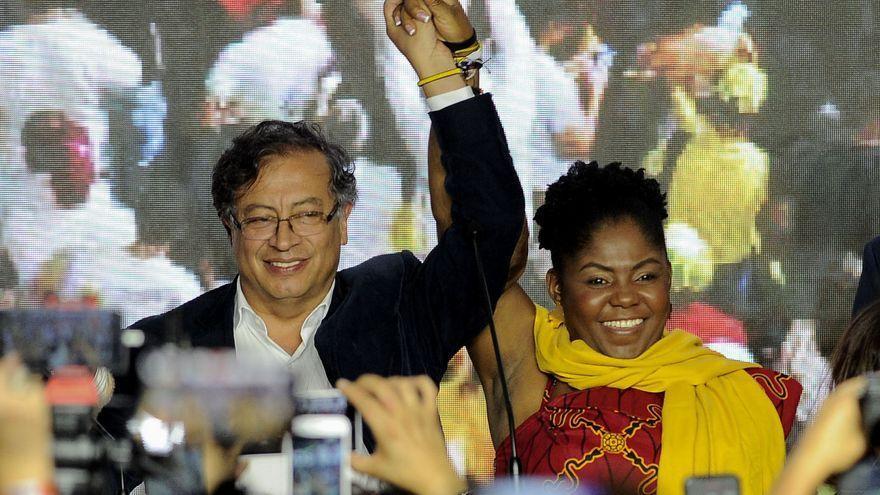
Gustavo Petro with his future vice president, Francia Márquez. (EFE)

14ymedio bigger14ymedio, Yunior García Aguilera, Madrid, June 21, 2022 — Latin America has voted again with its left hand. Gustavo Petro’s victory in Colombia breaks a historic wall that had kept his country on the right for 200 years. Among the causes of his unprecedented triumph is the deterioration of traditional political forces, unable to reinvent their proposals in the face of a completely new reality.

Nor can the impact of the pandemic, which accelerated popular discontent and caused a social explosion between April and June 2021, be ruled out. In addition, the Uribe leadership didn’t know how to handle the complexities of the peace process that, in the end, have placed Petro in the presidential sash. The Colombian left has achieved with the polls what it could not achieve with weapons. And society has not voted with its brain or heart, not even with its stomach: it has voted with its liver.

During the 20th century, there were several times when the left about to govern by electoral means, but in the context of the Cold War, the United States wasn’t willing to allow it. Latin America was shaken by various coups d’état that installed far-right dictatorships. Pinochet, Somoza and Videla caused panic in the face of possible communist expansion and shed rivers of blood in order to defend their notions of freedom.

At the opposite extreme, the Cuban dictatorship shot, imprisoned or banished anyone who dared to express an opinion against its doctrine, while exporting armed revolutions from the Rio Grande to Patagonia. With the collapse of the USSR, the United States softened its positions to the south and stopped seeing the victories of the left as threats to its national security. Fidel Castro, for his part, could no longer continue investing in expensive rebel enterprises and decided to use his tentacles to put his allies in power through a more sustainable path: the ballot box.

Then came the “pink tide” headed by Chávez, Lula, Evo, Correa and the Kirchners, among others. The Cuban regime was appointed as official guru and used its very long experience in propaganda and its romantic-mystical speech. The new great enemy would be neoliberal globalization. The successful formula was to shout to the four winds that the identity of the oppressed peoples was in serious danger. The ideologues of Castro-Chavism reformulated the proposals of 21st Century Socialism, presented in 1996 by the German sociologist Heinz Dieterich Steffan.

The São Paulo Forum was joined by ALBA and UNASUR, regional institutions opposed to the Washington Consensus and created with the purpose of establishing, on firm ground, the roots of the socialist clan. The wave advanced as much as it could, although it didn’t reach a tsunami. The deterioration of economies, the fall in the prices of raw materials, the corruption scandals, the death of leading figures, as well as the democratic inadequacies of Bolivarian theory, caused the decline of that crest, tearing it apart against the electoral reef. continue reading

However, at the end of the first quarter of a century, the Latin American left hand rises again. It does so in a post-pandemic context, in the midst of Putin’s war, with China pretending to be Swedish as it moves towards becoming the world superpower, with the United States weaker and more ignored than ever, and with the European Union frightened by the winds blowing from the other side of the planet. Global institutions responsible for ensuring peace, democracy and human rights now have symptoms of obsolescence. Humanity is on the verge of radical change, which could lead to a new order or the extermination of the species.

So far, the new Latin American left remains fragmented into three blocs. On the one hand, there is the Cuba-Nicaragua-Venezuela triumvirate, fossils that have survived embedded in the rock of authoritarianism, with strident discourses and policies. Very close to them, but with a more moderate tone, are López Obrador [Mexico], Xiomara Castro [Honduras] and Luis Arce [Bolivia]. All three were absent from the Summit of the Americas and have openly defended the triumvirate. In a third group we see Alberto Fernández [Argentina], Pedro Castillo [Peru] and Gabriel Boric [Chile], somewhat more correct than the previous ones and critical of the dictatorships in the region with which they are ideologically related.

It remains to be seen if Petro’s victory or Lula’s possible triumph unify these blocs and resurrect a cycle that pushes the left to its most sinister side. Among so many waves, there are already those who call our Macondian piece of world “América del Surf.”

Translated by Regina Anavy

____________

COLLABORATE WITH OUR WORK: The 14ymedio team is committed to practicing serious journalism that reflects Cuba’s reality in all its depth. Thank you for joining us on this long journey. We invite you to continue supporting us by becoming a member of 14ymedio now. Together we can continue transforming journalism in Cuba.

Police Threaten Young People in Sancti Spíritus to Prevent a New 11J (July 11th Protests) in Cuba

Alexander Fábregas and his mother, Luisa María Milanés. (Courtesy)

14ymedio bigger14ymedio, Havana, June 17, 2022 — Alexander Fábregas Milanés has not had peace since he was released last April, after serving nine months in prison for convening a demonstration on July 11, 2021, through social networks.

The young man from Sancti Spíritus, 32, is being harassed by State Security and, on Tuesday, was threatened in an interrogation with a return to prison if he continued to publicly show his activism, which in any case he had announced that he would not renounce.

Cited to appear at the police station at one o’clock on Tuesday afternoon, Fábregas and his mother, Luisa María Milanés, who accompanied him, decided to leave because they were not being attended. They had not gone even three blocks, when a State Security car stopped them and took them back to the police station.

There, the young man explains, “They told me that if I continued to be an activist on social networks, I would be sentenced under the new Criminal Code to 20 years of deprivation of liberty.” The rule, approved by the National Assembly last May, will enter into force 90 days after being published in the Official Gazette.

According to Fábregas, in front of an investigator who was filling out the corresponding forms, a woman dressed as a nurse and “a new officer”  by the name of “Lusito” assigned to his case, “Lieutenant Colonel Wilfredo Pérez, with a lot of cynicism, told me that he was already doing the paperwork to send me back to prison, that he was going to do it well for me, just as he did on July 11, and this time it wasn’t going to be the same as the previous conviction.”

Fábregas was arrested at his home on the night of July 11 for transmitting on social networks a call to take to the streets of Sancti Spíritus, to join the protests that occurred during that day in other provinces of the island.

Nine days after his arrest and in a summary trial, Fábregas was sentenced to nine months in prison for the crime of incitement to commit a crime, although he didn’t set foot in the street on July 11. He only managed to have a lawyer one day before the trial, his family said at the time.

Although the young man belonged to the United Anti-Totalitarian Forum at the time of his call to take to the streets, he was a “self-employed opponent,” according to his mother. In December 2020, he had already spent three days under arrest, after he posted a photograph on social networks where he appeared with a sign that said: “No More Misery.”

Fábregas’ mother, who along with her son has suffered pressure from State Security all this time, was also interrogated on Tuesday, despite not being summoned. continue reading

“I think that they’re trying to prevent a new July 11 in Cuba and are beginning to threaten all those they believe have the courage to demonstrate,” is the spirited young man’s explanation for the harassment they are suffering. “Also because I have appeared on television in Miami, on América TeVé, and because since I got out of my unjust confinement I have continued my activism on social networks and have contributed to helping my brother prisoners.”

In this regard, he mentions Luis Mario Niedas, sentenced to three years in prison for continued contempt, who is serving his sentence in Nieves-Morejón prison. “We are not allowed to approach the family of Luis Mario Niedas,” says Fábregas. “They want us to stop supporting him and they are trying to isolate him and make him feel lonely and forgotten.”

Neither in prison nor outside it, has Alexander Fábregas ever renounced his dissent. “I will continue to be a human rights defender in Cuba and, especially, here in Sancti Spíritus,” Fábregas said in an interview with 14ymedio after being released, although he took into account that “I have to be cautious, because I already have a criminal record and for sure they will want to continue summoning me to the police and harassing me.”

This same Thursday, the Cuban Prosecutor’s Office reported four other final sentences, against 33 participants of July 11, in this case in Havana and Mayabeque. The defendants were convicted, “fundamentally,” according to a note in Granma, for crimes of sedition, sabotage and public disorder.

A total of 30 young people received prison sentences; 10 of the sentences are between 10 and 18 years, and 20 sentences are between 5 and 9 years, says the official report, without further details. It adds that two others were sentenced to “correctional work without internment” and a third to “limitation of freedom.”

Four days ago, the Prosecutor’s Office estimated the number of people convicted after the 11J demonstrations at 381. In an official notice, the Prosecutor’s Office indicated that 76 sentences are no longer subject to appeal and have resulted in sentences of deprivation of liberty for 297 people, of whom 36 committed a crime of sedition, according to Cuban judges. All those convicted of these acts received between 5 and 25 years in prison.

The NGO Prisoner Defenders (PD) then attacked the data of the Prosecutor’s Office, which they described as “biased” and “fake news.” “It’s suspicious that the Prosecutor’s Office in charge of prosecuting the 11J protesters doesn’t talk about those who have been processed and limits its report, as they explicitly say, to 76 sentences that have become final,” Javier Larrondo, President of PD, told this newspaper on Monday. He denounces the fact that they have stopped reporting about the “hundreds of defendants and even hundreds of those sentenced, who are already languishing in prison.”

The objective, according to Larrondo, is to “deceive the press and make it communicate that there are only 381 people sanctioned in Cuba.” And he affirms, “There are more than 1,000 defendants, 726 sentenced.” He says that the NGO has all the documentation.

Translated by Regina Anavy

____________

COLLABORATE WITH OUR WORK: The 14ymedio team is committed to practicing serious journalism that reflects Cuba’s reality in all its depth. Thank you for joining us on this long journey. We invite you to continue supporting us by becoming a member of 14ymedio now. Together we can continue transforming journalism in Cuba.

The Blackout is the Essence of the Cuban Communist Revolution

The problems in the electricity supply continue to worsen. (Yoani Sanchéz)

14ymedio bigger14ymedio, Elías Amor Bravo, Economist, 17 June 2022 — The social pressure cooker is about to explode. This kind of thing has not been seen in Cuba since the time of the maleconazo. Unexpectedly, Díaz Canel appeared along with other senior officials of the regime and directors of the sector, simultaneously on Cubavisión, Cubavisión Internacional and Caribe, as well as the radio stations Radio Rebelde and Radio Habana Cuba, to publicly recognize that the blackouts will continue, that they have no solution at least for the time being, and that the national energy situation will not change. There’s an extensive report in today’s edition of Granma to justify the unjustifiable.

Really, can you imagine Macron, Sánchez, López Obrador, I don’t know, even Biden, in a similar situation? Impossible. In all those countries of the world, the electricity supply, although more expensive due to the war in Ukraine, doesn’t stop. There are no blackouts, and the people and industry live normally.

The blackout is the essence of the Cuban revolution. And it isn’t a  recent phenomenon. Already in the 1960s, many Cubans went to bed without knowing the end of the television series of that time, because the electricity was cut off, unexpectedly. Afterwards, the blackouts became daily existence during the Special Period, and now they have returned again, creating a growing discomfort in the population, which is no longer willing to accept silly explanations from their leaders.

Díaz-Canel, for whom the communist state press spares no flattery and usually presents him as the fighter he isn’t, continues to insist that the problems of the electrical system come from the American blockade [i.e. embargo], or from flaws in the work, but he never recognizes his direct responsibility in the facts, In his analysis of the problems.

And so, boring everyone, Díaz-Canel unloads a whole theory about “peaks and valleys” that shouldn’t occur in supply, and consumption during the hours of the day, which explains, according to him, what is happening. What happens is the same thing that happens in other countries, such as Spain, for example, where the intense heat of summer forces air conditioners to be turned on, but electricity continues to work. No one there thinks of unexpected blackouts. continue reading

Now Díaz-Canel wants consumers to use electricity at other times, outside the “peaks,” to mitigate demand. According to him, thermoelectric plants have the capacity to generate what the country needs when there are no peaks, and they do so with national fuel, a product that is also available to work for stability. The solution seems clear.

The problem is that the thermoelectric units of the Felton and Guiteras plants don’t function continuously because they’re obsolete and require investments and maintenance that weren’t carried out at the time, and now they fail continuously and unexpectedly. In the absence of such a supply, the “peak” reappears at any time of day and after a blackout because there is no other source of electricity. No one in 62 years has really thought about how to improve the energy supply in Cuba, by resorting to renewables, for example.

And at this point, Díaz-Canel’s explanations went in other directions, such as the signing of agreements to establish three new power plants and the possible future growth with a fourth plant. However, this isn’t an investment that can be made in the short term, and solutions such as mobile power plants won’t solve the problem either.

He even referred to the boiler deposits that are created by the national fuel, which, if not taken care of, could cause the loss of generation capacity. Even distributed electricity generators that consume large amounts of diesel aren’t the solution to the problems of crude oil supply.

Recognizing the seriousness of the problem, what can be done? You can’t stand idly by.

The proposed solutions are also enough to keep you up at night.

It is intended to use tourism revenues to finance investments. But, of course, the tourists who arrive are still few, and the income is small, so this route is impractical. Before the solution was to build hotel rooms, it seems. The same happens with the revenue in MLC [freely convertible currency] stores, which, despite the commercial margins of 200% and 300%, is barely enough to replace products. Hence, the shortages that we see in these stores. The money raised from tourism and MLC shops has barely helped to buy fuel and allocate resources to maintenance and repairs. The beans have been counted.

The other solution is to fix first what gives more generation capacity to the electrical system, which has led to the prioritizing of the Felton and the Guiteras, with all the difficulties derived from the obsolescence of these plants.

And then Díaz-Canel proposed energy savings, transferring the problem to individual and collective responsibility. It’s the same populist argument as always, as if three million of the four million homes were to turn off a 20W bulb that may be unnecessarily lit, that would instantly represent a power of 60 MW, the same as a generation block of Renté or one of October 10. It’s incredible that such efforts are requested from the victims of the blackouts.

After Díaz-Canel, Liván Arronte, Minister of Energy and Mines, spoke. He referred to what he called “the cyclical situations that have occurred in the electrical system, causing the worsening of the situation in recent days.”

And he returned again to the incidents of Unit 2 of Felton, which is nothing more than an accumulation of nonsense derived, as already mentioned, from the lack of investment and attention in recent years. He likewise referred to the Guiteras thermoelectric plant, which is equally affected by the same maintenance problems.

The minister went so far as to say that the 200 MW of reserve of the electricity system, often due to instability and problems, are not reached, which at any time causes blackouts. But he said nothing about what to do to overcome these problems.

What Arronte did talk about is the burning of national crude oil in thermoelectric plants, which although it gives sovereignty from the energy point of view because it’s our fuel, its high sulfur content causes the dreaded fouling and corrosion in the boilers, which has to be compensated for with systematic maintenance, like cleaning and replacement of parts and aggregates.

That is, using national crude means that we have to do more maintenance, but it’s the available fuel, and in the face of the high prices of the international market, it’s the country’s solution to be able to guarantee electricity generation. In other words, there will be more blackouts.

Arronte did not miss an opportunity to remember that the electrical problem has a lot to do with the blockade, not only for the acquisition of fuels, but also for the resources needed to repair the units, requiring the purchase of parts through second countries.

Omar Ramírez Mendoza, the Deputy Director of the Electrical Union, participated after Arronte and advanced much more technical issues that were interrupted by Díaz Canel.

Ramírez was very clear. Maintenance is done, but not always with the depth it takes because there is no time available to meet demand and avoid blackouts. The other reason is that the teams that need the resources to intervene don’t have them available, so using them runs the risk of increasing the damage, or resulting in a greater need for intervention than expected.

At this point, Díaz-Canel recognized that there is a state of discomfort in the population that he described as “logical, and that had two dimensions: one on a personal and collective level in the population, who suffer directly from blackouts, and the other is that the economy is affected, which has to do with guaranteeing services and goods to people.”

And, in this regard, he pointed out that “states of opinion express discomfort, but also understanding, so it is necessary to highlight the way in which the people, living in a rigorous, demanding situation of limitations, have been able to understand for the most part that this is not the fault of a government that doesn’t occupy itself or a weakness in the work of the institutions, but has to do with the aspects addressed.” In this regard, Díaz-Canel is wrong, because most Cubans know who is responsibile for the blackouts. What they don’t understand is that they continue to occur, despite the fact that, as Díaz-Canel says, “a lot of work is being done to solve the problem.”

After briefly referring to the difference between real power and the available power of the plants, he spoke of an accident that occurred at the Máximo Gómez plant in Mariel, which caused Unit 6 to now need (and this is being addressed) the import of components needed to bring it to 100 MW, while Unit 7, which produces 90 MW, was completely lost.

Then came explanations for accidents and similar events at the CTE Otto Parellada, Tallapiedra, and Ernesto Guevara power plants in Mayabeque, the CTE Antonio Guiteras and the Felton in Holguín, and the Renté in Santiago de Cuba. Speaking of the plants in service and those that are paralyzed, and the planned entry into operation of the plants, Díaz-Canel threw out even more confusion and, of course, if he wanted to give peace of mind to the people who watched the program, forget about it. The live connection during the program with the authorities of different thermoelectric plants in the country did very little to give that peace of mind to the people. There was only some positive news about the Nuevitas thermoelectric power plant that apparently is overcoming its problems.

At this point, Mario Pedroso, Director General of the Company of Generators and Electrical Services, referred to the actions that are being taken with the diesel groups to make up the deficit of thermoelectrical generation with distributed generation.

Geysel is an electric generator maintenance and operation company that has representation in all the provinces of the country, and whose fundamental task is aimed at working on the peaks, to evacuate contingency in the system or to guarantee amendment during a natural disaster. To do this, they have 943 generator sets of different technologies and an installed power of 1,334 MW. In these cases, breakdowns due to lack of maintenance accumulate and increase their frequency due to common use.

Of the 943 electric generators, there are only 579 MW available and 348 MW of the 1,334 potential ones. The availability of diesel will be compromised in the coming months if the forecasts of the world economy are met, and that may be even worse for this energy option. They recognize it themselves. There are difficulties with the supply of diesel fuel, and in many cases the fuel needed for power generation hasn’t been delivered in a timely manner, which has strained the country’s fuel distribution system. In other words, the possibility of a quiet summer is increasingly in the air.

Later, Pedro Sánchez Torres, Director of the Oil-Fuel Electric Generator Maintenance Company, announced that they have some 950 MW installed as part of Cuba’s base generation in 489 machines in 33 power plants, located throughout the country.

In this case, he explained that the company is going through a complex situation today with respect to spare parts that in recent years they haven’t been able to acquire, not only because of the financing, but also because of the complexities in access to the factory where they can be supplied, since they have been forced to use third-party suppliers. This has meant 506 MW in breakdowns, more than 200 MW that they haven’t been able to recover and 163 MW in maintenance that they haven’t been able to recover. Nor should there be favorable expectations.

In the end, Ramiro Valdéz, who had been listening to the entire program in silence, but with obvious blushing, said something like “we need to work in function of living from the electric-energy point of view in a balance with the budget of each household” and closed. The historic generation has less and less confidence in the heirs, and they realize that it’s over.

Translated by Regina Anavy

____________

COLLABORATE WITH OUR WORK: The 14ymedio team is committed to practicing serious journalism that reflects Cuba’s reality in all its depth. Thank you for joining us on this long journey. We invite you to continue supporting us by becoming a member of 14ymedio now. Together we can continue transforming journalism in Cuba.

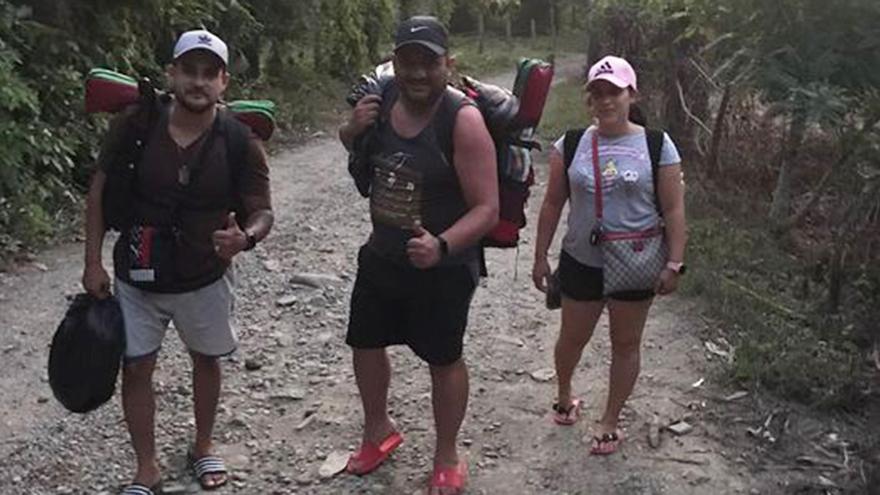
‘A Part of Me Died in the Darien Jungle’ says Dr. Figueredo on His Crossing to the United States

Doctors Alexander Pupo (far right) and Alexander Jesús Figueredo (far left) on their passage through Colombia. (Facebook/Alexander Jesús Figueredo Izaguirre)

14ymedio bigger14ymedio, Havana, 20 June 2022 — Dr. Alexander Jesús Figueredo Izaguirre, who lost his job due to his stance against the Cuban government and after being systematically harassed left the island, shared part of his journey to the United States on his social networks.

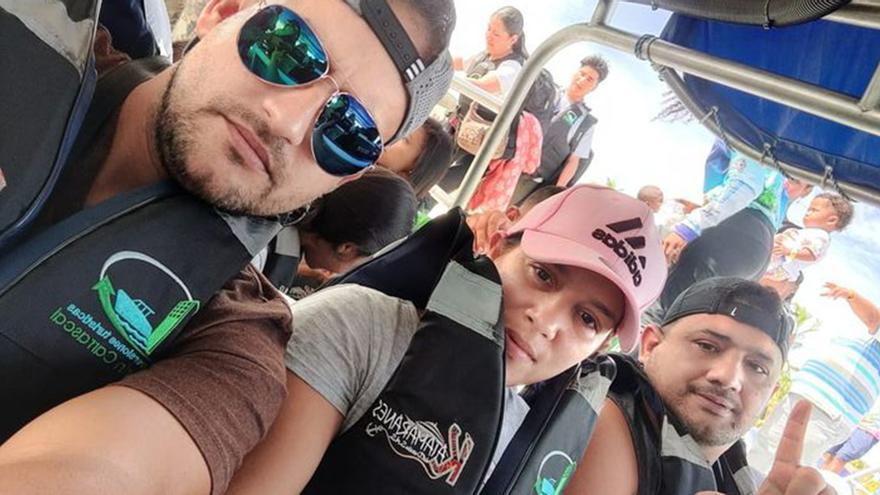
“A part of me died in the Darién jungle seeing lost children, drowned and dead people and unable to do anything but just look and continue,” published the Cuban health worker who along with his colleague Alexander Pupo Casas left Cuba and took the route from Guyana. “To think that the next one could be me, my physical and human strength was at the limit.”

According to official figures from the National Migration Service as of April of this year, 11,487 irregular migrants had crossed the Darién jungle, of which 15 were Venezuelans, 6,803 Haitians and 1,885 Cubans.

Figueredo says that “even my hair hurt,” and he faced temperatures below 32F and of more than 100F. He walked sections of more than 60 miles, “sleeping on the ground, in a church, crossing trails, rivers, seas and jungles.” continue reading

Cuban health workers Alexander Pupo and Alexander Jesús Figueredo in Capurganá (Colombia). (Facebook/Alexander Jesús Figueredo Izaguirre)

“The adversities I have had to overcome,” he says, have made him “stronger physically and ideologically.” In his message he points out that “God doesn’t give anyone more than they can bear. I let Him carry the weight, from the permanent harassment in Cuba to my profession and my family.”

The Cuban doctor hopes that as a reward he will have “strength and life to fight for a free Cuba and embrace my family again.”

On his Facebook page he also shared other images together with Dr. Pupo of the route they took to reach the United States and why they had to go through Brazil, Colombia, Bolivia, Peru, Ecuador. And one more, Capurganá, a village in the municipality of Acandí, belonging to Chocó (Colombia), an obligatory point before going into the Darién jungle.

“We are right now at the border between Peru and Ecuador,” he narrates in another video published on the same social network by Dr. Alexander Pupo, which records part of the journey before arriving in Colombia. “We are passing through; we had to come here because we are going to get on a bus that will take us out of this area.” And Figueredo says: “Homeland and life in Peru and Ecuador.”

Last May Dr. Pupo published an image at the foot of the InterCaribbean Airways plane with the text “Goodbye, my beautiful Cuba.” The doctor pointed out in a video his pain for leaving the island, “but I hope that one day I’ll be able to return when I’m free to fight for a free Cuba.”

Translated by Regina Anavy

____________

COLLABORATE WITH OUR WORK: The 14ymedio team is committed to practicing serious journalism that reflects Cuba’s reality in all its depth. Thank you for joining us on this long journey. We invite you to continue supporting us by becoming a member of 14ymedio now. Together we can continue transforming journalism in Cuba.

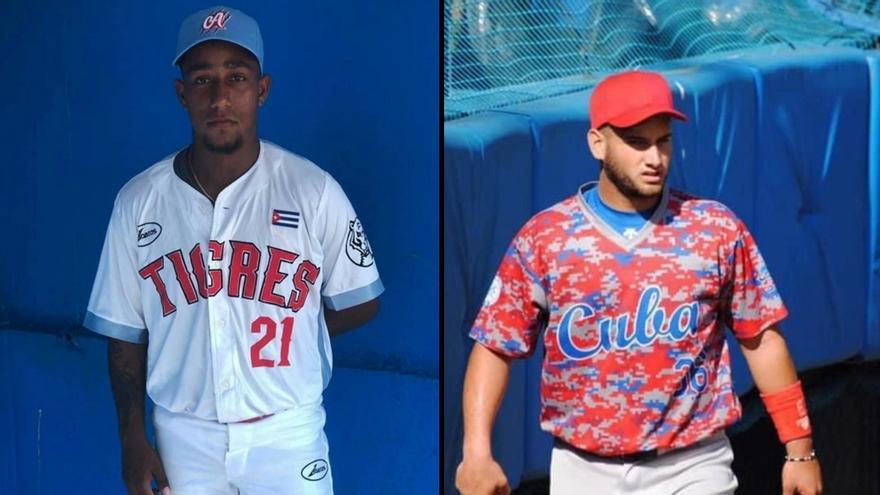
The Two Cuban Players who Escaped in Mexico are Arrested and will be Returned to the Island

The players Yosvani Ávalos and Alfredo Fadraga were arrested by the Mexican authorities. (Collage)

14ymedio bigger14ymedio, Havana, 17 June 2022 — The players Alfredo Fadraga and Yosvani Ávalos, who 24 hours earlier had abandoned the Cuban team that plays in Mexico in the Pan American Under-23, were “arrested by the authorities” of the state of Aguascalientes and returned to their hotel. According to journalist Francys Romero, they have already been “transferred to an airport in Mexico to be returned” to the Island.

“They will have to face a terrible reality upon returning to Cuba,” he warned. “This is a fundamental decision that both not try to leave again until the team finishes the competition on June 19.”

Sources revealed to the journalist that Fadraga and Ávalos “did not return of their own free will.” The information, says the informant, was shared with him around 11:30 p.m. on Thursday night. A whistleblower disclosed their location, and they were arrested.

“They were in the house of a relative,” according to Romero, who has the most reliable version. “Someone called the police and they were arrested,” he said in a video uploaded to his social networks.

After the alleged return was reported, “this type of news seemed more fiction than reality,” Romero said. For José Alejandro Rodríguez Zas, a reporter for SwingCompleto, several questions arose: “They returned of their own free will? Any regret? What about the authorities?” continue reading

The Cuban Baseball Federation, which confirmed the escape of the players by “incurring reprehensible acts,” has not offered a position on the return of Fadraga and Ávalos to the Ramada hotel where the team is staying.

The abandonment of these athletes was confirmed in the early hours of Thursday. Rodríguez Zas reported that the escape occurred by taking advantage of the rest day of the national team, although he couldn’t give more details “at the express request of sources.”

This Friday, Francys Romero revealed that the athletes “jumped over the hotel fence,” unfortunately were arrested, and “it ended badly for them.” He also recalled that the members of the team don’t have access to their documents.

“If they return to Cuba,” the journalist said, “they will surely face sanctions for years or for life. There are people who believe that they could face criminal charges; I’m not really sure about this.”

Translated by Regina Anavy

____________

COLLABORATE WITH OUR WORK: The 14ymedio team is committed to practicing serious journalism that reflects Cuba’s reality in all its depth. Thank you for joining us on this long journey. We invite you to continue supporting us by becoming a member of 14ymedio now. Together we can continue transforming journalism in Cuba.

Very Cruel and Painful Days are Coming in Cuba

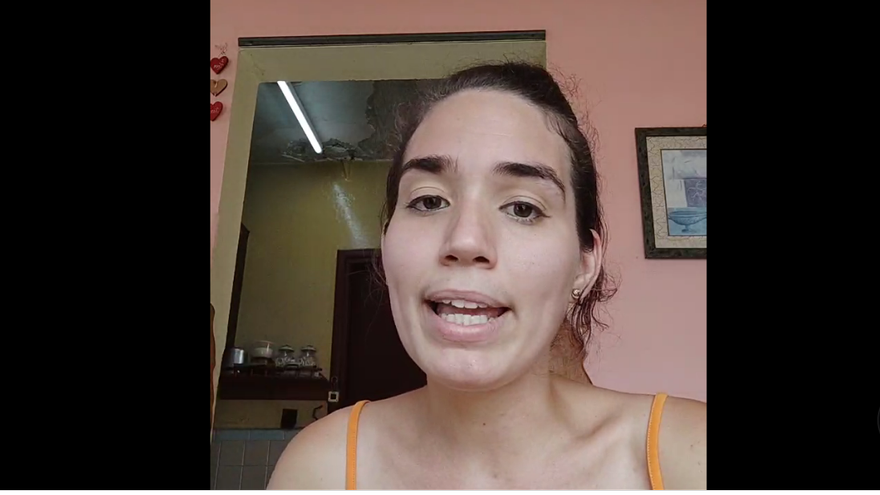
Amelia Calzadilla*, in her second video, also denounced the shortages experienced by the Cuban people. (Facebook)

14ymedio bigger14ymedio, Pedro Corzo, Miami, 19 June 2022 – “I don’t care about your fear”: I heard this phrase in a film from Cuba. A woman’s voice that synthesized the feelings of many others, all fed up with a cocktail that has lasted 63 years, in which only repression and misery are mixed. An expression that reflects, in my modest opinion, the probability of very cruel and painful days that should lead to a new homeland where there are no executioners or perpetrators.

That was one of the voices I heard on social media this week. A comment that only occurs in a frightened society like the Cuban one. Where terror prevails, people censor themselves and ensure that their loved ones don’t break the circle of fear because of the harm that could happen to them.

Another heartbreaking testimony I had the opportunity to see was that of a mother of three who denounces the precarious situation she faces with her family. A forceful and irrefutable evidence of the failure of Castro totalitarianism, in addition, to show the useless sacrifice of large segments of several generations of Cubans to work in favor of a project that has devastated the island and many of the values of its citizens.

Castroism in any of its derivatives, Venezuelan, Nicaraguan, Bolivian and an eventual Colombian if Gustavo Petro comes to power, only leads to failure and frustration. It is an inefficient proposal in all its expressions, except for its undeniable ability to impose strict social control based on repression and disinformation. continue reading

Young people should consider miraculous political proposals with great deliberation. It’s true that in politics there are very bad things that must be eradicated, but they shouldn’t be a reason to blindly believe in an enlightened person who only assures that he will change everything to build a bright future. You have to educate yourself, know the past and learn that “my rights end where those of others begin.”

The example of Cuba, Venezuela and Nicaragua should serve as a model for new generations who hope to “conquer heaven” without understanding that a comfortable life within justice is only achieved with work. The rest remains to be seen.

Cubans overwhelmingly embraced their Messiah and repudiated those who denied him. In that commotion of unbridled hysteria, as the historian and journalist Enrique Encinosa described it, representatives of all generations closed their eyes and lent themselves to hunt down those who disagreed. They were the ones who helped destroy the country, leading the emerging generations to the degree of despair that this mother shows when, aware of the reprisals she may suffer, she accuses the Government of being inept, corrupt and complacent, with everything badly done.

It’s true that it has been the Castro leadership and all its officials, including police and military, who have supported the disgraced regime for more than six decades, but they have also contributed to the support and formation of the colonies of Venezuela and Nicaragua, who have lent their skills and talents to disseminate and convince the so-called silent majority of the justice and profitability of the totalitarian project.

A totalitarian regime doesn’t allow fiefdoms; only those who oppose it are relatively free of its mandates. However, the rest of the citizenry must behave as ordered by the authorities, which motivates a very high level of complicity and an understanding of the fear that transcends the individuality of the person, a syndrome of defenselessness that transforms citizens into a herd without will, but that reaches a moment of rupture as happened with this mother, who asks to be arrested and urges the rest of the mothers of the island to unite, to demand once and for all respect for their rights and a dignified life.

This anguished mother* calls the regime a liar when she exposes one of its fundamental falsehoods that says the “goods belong to the people.” We all listened and read, repeated ad nauseam, “this belongs to the people,” and we must have the courage to deny it as this lady, who is suffering numerous reprisals and abuse from the authorities, has done. All that remains is to trust that more mothers, citizens, will join her call to achieve a country “with all and for the good of all.”

*Amelia Calzadilla

Translated by Regina Anavy
____________

COLLABORATE WITH OUR WORK: The 14ymedio team is committed to practicing serious journalism that reflects Cuba’s reality in all its depth. Thank you for joining us on this long journey. We invite you to continue supporting us by becoming a member of 14ymedio now. Together we can continue transforming journalism in Cuba.

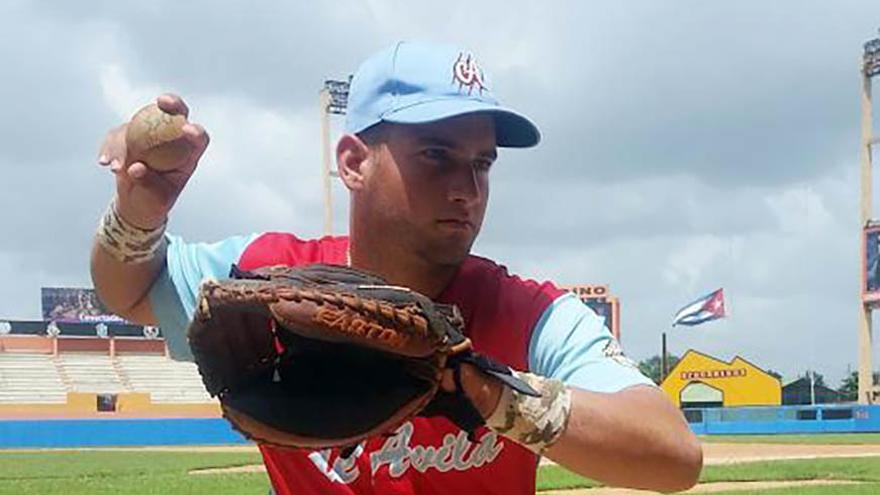
Two Players Leave the Cuban Team that Plays the Pan American Under-23 in Mexico

Alfredo Fadraga, one of the escaped players, was considered one of the most talented of his generation. (Play Off Magazine)

14ymedio bigger14ymedio, Madrid, June 16, 2022 — Ávila players Alfredo Fadraga and Yosvany Ávalos abandoned the Cuban team that is competing in the Pan American U-23 Championship held in Aguascalientes, Mexico.

The news was confirmed in the early hours of Thursday on social networks by the Cuban Baseball Federation (FCB), which explained that the flight took place on Wednesday night. “In leaving like that, they have reneged on the commitment made to the delegation and the homeland,” says the FCB on its Twitter account.

José Alejandro Rodríguez Zas, reporter for Swing Completo, was the first to publish the information, confirmed by his sources in the competition. The journalist explained that the escape occurred by taking advantage of the national team’s rest day, although he wouldn’t give more details “at the express request of the sources.”

The Cuban team had a placid tournament until it qualified to play this Thursday with the host, Mexico, on the last day of the qualifying phase, and with a view to obtaining first place ahead of the semifinals. continue reading

Last Monday, outfielder Roidel Martínez requested his dismissal from the headquarters of the National Institute of Sports, Physical Education and Recreation (INDER) after being excluded, specifically, from this Under-23 team, which competes in Aguascalientes.

It’s been less than a year since the Cuban U-23 team selected for the World Championship, which was held in the Mexican state of Sonora, returned with half of the players who left, 12 out of 24.

Despite the fact that the massive escape captured international attention, to the point that official sports journalists drew attention to a problem that demanded political changes in the sports field, nothing has changed since then, and at each exit from the island the challenge of not losing members is now greater than that of winning the tournament.

Translated by Regina Anavy

____________

COLLABORATE WITH OUR WORK: The 14ymedio team is committed to practicing serious journalism that reflects Cuba’s reality in all its depth. Thank you for joining us on this long journey. We invite you to continue supporting us by becoming a member of 14ymedio now. Together we can continue transforming journalism in Cuba.

The UN Asks Cuba to ‘Punish Those Responsible for Child Abuse’ on July 11 (11J)’

The Committee urges accountability against those who used force in the detention of minors on June 11. (EFE)

14ymedio bigger14ymedio, Madrid, June 10, 2022 — The United Nations Committee on the Rights of the Child urges the Cuban State to review the penalties imposed on minors “declared guilty of exercising their right to freedom of peaceful assembly in the context of the July 2021 protests.” This is one of the conclusions of the periodic report carried out by this body, based in Geneva, which was issued this Thursday.

In the 14-page document, the UN expresses its concern about several issues since the 11J demonstrations, which are mentioned again in the section on rights violations and torture. Although the committee considers that, in general terms, Cuba doesn’t have problems of this type, “it is very concerned about the complaints received about abuse and ill-treatment during the arrests of children and adolescents that occurred as a result of the protests of 2021.” For this reason, the report urges not only to investigate them, but also to “identify, prosecute and punish those responsible (…) and offer reparation” to the victims.

Freedom of association and peaceful assembly are also of concern to the UN, which considers that the rights of minor political activists and their children are severely restricted. In addition, focusing again on 11j, it highlights that some, “just 13 years old, were violently detained, stolen from their homes during the night without their families being informed of their whereabouts, held incommunicado and transferred to different facilities for lengthy interrogations after participating in the protests. Some of them, it emphasizes, continue to be deprived of their liberty, and the committee is concerned about the “criminal prosecution” of these children under the age of 18, several of whom are sentenced to between five and 15 years in prison for exercising their rights peacefully.

For all these reasons, the Government is urged to put an end to arbitrary restrictions and the criminalization of the right of assembly, in addition to taking measures to prevent the excessive use of force and allow minors to freely associate. continue reading

The Committee considers it positive that the age of criminal responsibility is 16 years and not less, as is the case in some countries, but this doesn’t prevent it from recommending an end to the preventive detention of minors, reducing their sentences and establishing a better system of access to justice, which must comply with the norm. They also call for the acceleration of the juvenile penal system, so that appeals, “in particular those for surveillance and detention” linked to 11J are rapidly reviewed and completed.

Beyond the repression of protests, which are new in this period’s report, the document focuses on some other issues. One of them is linked to forced separations from the family due to “international missions.”

The text calls for the amendment of article 135 of the Criminal Code, in order to eliminate obstacles to family reunification, which provides for penalties of between three and eight years in prison for “the public official or employee in charge of carrying out a mission in another country who abandons it or, having completed it and required at any time to return, refuses.”

In addition, and it’s symptomatic, the UN is concerned about the “negative effects” on children whose mothers have been deprived of liberty and urges the Government to look for alternatives for internment of pregnant women and mothers of children.

On another matter, the Committee’s concern about the nutrition problems of Cuban minors is noted. In the midst of a terrible shortage of food products of all kinds, ranging from animal proteins to dairy fats, fruits and meats, and beginning to affect even beans, traditionally used to assuage hunger, the UN warns that despite positive state policies concerning children’s health, the high and growing rate of iron deficiency, as well as childhood obesity, attributed to poor nutrition and excess sugar, is beginning to be very worrying.

In the same section, maternal and child health (PAMI) programs are praised, but strengthening the prevention of prenatal deaths and “promptly addressing the shortage of medical supplies and personnel to care for children” is recommended.

In the last two years, Cuba has worsened in these indicators, which have been partially influenced by the pandemic, but also by the abandonment of programs due to lack of funding and the flight of doctors, which affects the country. Thus, and although the island maintains good rates in relation to the continent, some provinces have higher infant mortality data than other globally worse countries, such as Mexico or El Salvador. Ciego de Ávila, in particular, is the worst, with a rate of 13.8 babies deceased per thousand births in 2021, almost double the island’s average, with 7.6 per thousand.

Translated by Regina Anavy

____________

COLLABORATE WITH OUR WORK: The 14ymedio team is committed to practicing serious journalism that reflects Cuba’s reality in all its depth. Thank you for joining us on this long journey. We invite you to continue supporting us by becoming a member of 14ymedio now. Together we can continue transforming journalism in Cuba.

Jose Basulto, Leader of Brothers to the Rescue, Sues ‘The Wasp Network’ Film for Defamation

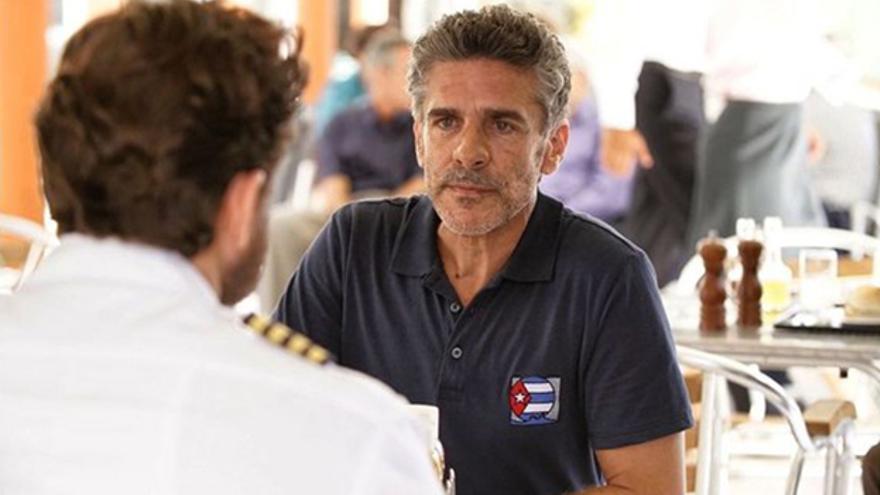
Leonardo Sbaraglia plays José Basulto in the production. (Fotograma)

14ymedio bigger14ymedio, Havana, 14 June 2022 — In the second lawsuit for La Red Avispa, “The Wasp Network,” José Basulto, leader of the Brothers to the Rescue, has sued the Netflix movie that portrays the story of the five Cuban spies, considered heroes by the Havana regime, who were released at the end of 2014 after an exchange with the Barack Obama Administration. Basulto states that the film defames him, spreading a false image of him as a “U.S. puppet,” while idealizing the activities of Cuban agents.

According to the complaint, which was filed on Monday and to which The Hollywood Reporter magazine had access, “this representation of Mr. Basulto, Brothers to the Rescue, and the Cuban exile community was deliberately calculated to create two clear and unmistakable villains for the film.” The lawsuit is addressed to the French director and screenwriter, Oliver Assayas, and to Netflix, the owner of the distribution rights.

The lawsuit indicates that in the film says explicitly that José Basulto was “trained by the United States as a terrorist” and calls Brothers to the Rescue a “militant organization.” The Cuban activist expresses his particular disagreement with a scene in which the association’s planes are shot down for violating Cuban airspace, when, according to his version, they were shot down in international airspace.

The complaint is in addition to the one filed in 2020 by Ana Margarita Martínez, former wife of former Cuban spy Juan Pablo Roque, who allegedly hid his duties and ties to the Wasp Network from her before secretly returning to Cuba. The Cuban wife, whose character is played in the film by Havana actress, Ana de Armas, said that she was portrayed as promiscuous and self-indulgent, which doesn’t correspond to her reality as a mother in Miami. continue reading

Two years have passed, and now this new complaint is added, which states that “the film is an obvious attempt to rewrite and whitewash history in favor of the Cuban communist regime and is inaccurate in terms of the facts. (…) It portrays the five as brave heroes who simply defended their homeland when, in reality, they were part of an espionage network that allowed the Cuban government to commit extrajudicial executions.”

“The Wasp Network” is an adaptation of The Last Soldiers of the  Cold War, a book by Fernando Morais, starring the Spanish actress, Penélope Cruz,  the Venezuelan actor, Edgar Ramírez, the Mexican actor, Gael García Bernal, and the Brazilian actor, Wagner Moura. Basulto was played by Argentine actor Leonardo Sbaraglia. Basulto, a Cuban exile, says that the film implies that his organization, Brothers to the Rescue, whose purpose was to provide humanitarian aid to Cuban rafters, had terrorist overtones, in order to justify the espionage of the Cubans, who were convicted in 2001 of conspiracy to commit murder and espionage, in addition to being unregistered agents of a foreign government.

In the complaint, Basulto maintains that the Cuban Government interfered in the filming, recalling that on the island it’s not allowed to film scripts “harmful to the image of the country and the people of Cuba.”

“These requirements are particularly important when it comes to a defamation lawsuit, since the Communist Party of Cuba exercises prior censorship. It requires that the ’script, storyboard or synopsis of the project’ be presented and expressly establishes that any project that shows something negative about Cuba will be denied permission,” the complaint says. “Filming true and accurate history was never an option.”

It is unknown why Basulto has taken more than two years to file this lawsuit, although he says that it has had a great emotional impact on him and asks that the dissemination of the film be banned, or that certain scenes be edited or deleted. According to his version, Netflix wrote to him after receiving the notification of the lawsuit stating that “modern docudrama audiences understand that they are watching dramatizations, not strict recreations of the facts.”

The film was in the eye of the hurricane after its premiere in 2020 and opened an intense debate between Cubans who considered, like Basulto, that the film gave a good image of the Cuban regime and should be censored and those who defended it, saying that although there were inaccurate events, you shouldn’t try to intervene in an artistic creation.

Translated by Regina Anavy

____________

COLLABORATE WITH OUR WORK: The 14ymedio team is committed to practicing serious journalism that reflects Cuba’s reality in all its depth. Thank you for joining us on this long journey. We invite you to continue supporting us by becoming a member of 14ymedio now. Together we can continue transforming journalism in Cuba.

Cuban Regime Expels an American Journalist who Wrote a Book about Guanabacoa

Anthony DePalma, American journalist and writer of books about Cuba. (Facebook)

14ymedio bigger14ymedio, Havana, June 12, 2022 — American journalist Anthony DePalma was arrested at José Martí International Airport in Havana on June 8 and later expelled to his country after being declared “Inadmissible,” according to a document that was given to him before taking the flight back to his country.

DePalma, who worked for The New York Times, told CiberCuba that the officers who arrested him at the terminal didn’t explain the reason for preventing him from entering the island. When he went through the health checkpoint and presented his passport to Migration, he was separated from the line and interrogated.

“I was ordered to stay in a corner of Terminal 3 for almost six hours, without giving me an explanation or offering me a glass of water, or the possibility of making a call to notify the people who were waiting for me about what was happening,” said the journalist, who has written about the Cuban reality.

“After several hours of psychological torture, he was informed that he wouldn’t be allowed to enter the island and that he must return to the United States on the next flight,” his friend Jorge García, whom he visited on his return from the island, said on Facebook.

The journalist said he was carrying two suitcases with medicines, humanitarian aid and copies of his book The Cubans: Ordinary Lives in Extraordinary Times, which collects the life stories of five Guanabacoa natives. His wife, Miriam Rodríguez DePalma, who left the island as a child, is from that Havana neighborhood.

After waiting at the terminal, DePalma was returned to the United States on another flight at 6:15 p.m. that same day, without his suitcases. “After several hours of total abandonment, a couple of officers came and took him as a prisoner to the plane. And the suitcases were forgotten,” García said on his social network. continue reading

The suitcases later arrived in Miami. “Everything is intact, but the reality is that the people who needed it will not have it for now,” the journalist adds.

CiberCuba says that the medicines and supplies that DePalma carried in his suitcases were intended for his friends in the Guanabacoa neighborhood, who inspired him to write his book.

He added that for more than 40 years he has traveled to Cuba without a problem, but after the publication of his book the incident occurred. “I think it was the result of the book,” he says.

The shortage of basic products, such as food and medicine, was one of the main economic elements in the anti-government protests of last July 11, the largest in decades.

After these demonstrations, the Cuban government opened the possibility for travelers to bring food, toiletries and medicines to the island without tariff limits, “such as accompanied luggage.” In May of this year, it extended this provision until December 31, 2022, according to General Customs on its website.

Now, the ministry assures that they maintain this temporary decision of flexibility “taking into account that the conditions that underpinned this measure are maintained.” The Cuban biopharmaceutical industry also announced that it only produced 59% of the basic catalog of medicines destined for the public health system.

DePalma is a professor at Columbia University, and in 2001 he published A Biography of the New American Continent. in 2003, he began work on The Man Who invented Fidel: Castro, Cuba and Hebert L. Matthews, which was finally published in 2006.

After the September 11 attacks in New York, he dedicated himself to writing almost 100 profiles of the victims, which led him to win the Pulitzer Prize for Public Service.

In 2009, he received the Maria Moors Cabot Award, and in 2011 he released his third book, City of Dust: Illness, Arrogance and 9/ll, which was the basis of a CNN documentary.

Translated by Regina Anavy

____________

COLLABORATE WITH OUR WORK: The 14ymedio team is committed to practicing serious journalism that reflects Cuba’s reality in all its depth. Thank you for joining us on this long journey. We invite you to continue supporting us by becoming a member of 14ymedio now. Together we can continue transforming journalism in Cuba.

Cuban Regime Has No Idea What To Do With Private Entrepreneurs

“If my prosperity bothers you, do as I do: Work,” wrote this entrepreneur, known as El Pata, from the town of Alquízar. (14ymedio)

14ymedio bigger14ymedio, Elías Amor Bravo, Economist, 12 June 2022 – Does the Cuban communist regime really know what it wants to do with the new economic actors? There are serious doubts. The best thing the regime can do for them is to forget that they exist, let them function in the most free and autonomous way possible and, above all, provide an adequate legal framework so that they can face their challenges and contribute to the national economy, which is undoubtedly a lot and of high quality. But it doesn’t seem that the regime is going in this direction.

This can be concluded from the exchange held between representatives of private entrepreneurs and authorities of the Ministry of Internal Trade and the Ministry of Tourism last Friday. At that meeting, reports Granma, “several of the main problems that hinder the development of new economic actors, micro, small and medium-sized enterprises (MSMEs); non-agricultural cooperatives (CNAs), and the self-employed, limiting their contribution to the nation” were reviewed. One question: did anyone think of the interventionist communist state as the main and only problem for private actors? No? Well, then, with all due respect, they wasted their time.

To think that right now the global crisis, the increase in the blockade and especially the current situation with certain basic consumer products has some kind of impact on the activity of Cuban entrepreneurs is not true. The proof is that, in the U.S. State Department’s package of measures to soften the dispute, there are some that, without a doubt, are aimed at supporting Cuban private entrepreneurs from the United States. The regime short circuits them, due to its sick obsession against the generation of wealth by private initiative. That is where the problem must be solved, because there is no point in creating more and more MSMEs and CNAs, if the framework in which they must work is full of impediments and obstacles.

Several examples can illustrate the terrible influence that the regime exerts on private activity; for example, forcing informal exchange markets to pay prices for currencies that don’t correspond to the official exchange rate of 1×24. The efficient performance of the new economic actors requires that a formal foreign exchange market be consolidated, especially if the regime continues to sell all kinds of items in the supply markets in MLC (freely convertible currency), which requires the prior holding of foreign currency.

Above all, private actors need to eliminate the suffocating bureaucracy created by the regime to manage business procedures, including registration, as well as review the high taxes they have to pay, which could put the survival of the companies at risk. In that sense, the ONAT [National Tax Administration Office] announcement to start investigating private actors has set off alarms. continue reading

The supply of intermediate goods must be solved, not only because of their prices in MLC, but also because many economic actors face problems of scarcity, especially with imports, which prevents them from meeting their commitments to customers. Private actors are asking the state to authorize importation independently of the state, but the regime doesn’t want to lose the business that allows it to withdraw foreign currency for the state coffers.

The Minister of Internal Trade, Betsy Díaz, pledged to eliminate the obstacles that have an impact on the performance of new economic actors and their contribution to the nation’s economy, but she knows that, for ideological reasons, she will not be able to do so. And that is why they use the global crisis as justification and especially the current situation with certain basic consumer products that also affect Cuba. These are false justifications, because the minister knows that Cuban private entrepreneurs, in agreement with their compatriots in the United States, could solve these problems if they could establish agreements and businesses freely, which the regime does not allow.

For the regime, the solution is to invent greater preparation of the municipalities with regards to new economic actors, adequate legal advice, as well as in the knowledge that state companies have the power to carry out certain activities, which could be used to take advantage of eliminating some obstacles. It’s just more of the same, now seasoned with the role of municipalities. They have no remedy. Things will get much worse.

And, in addition, not satisfied with making things increasingly difficult and obstructing any private wealth creation project, now the regime wants Cuban private entrepreneurs to develop policies on social responsibility.

No one is going to question that this is not important, but can anyone in their right mind think that the Cuban private business sector in its current condition of precariousness and weakness can dedicate itself to these policies? In other words, does the communist regime perform any social responsibility with its state enterprises? Let them give just one example.

As if the prohibitions on the exercise of certain activities or the obstacles and complications in developing free foreign trade activities were not enough, it occurred to someone in the regime that it is necessary to create policies related to social responsibility for all economic actors. How can it be understood that there are fundamental sectors and activities in which the regime has not authorized a single MSME or CNA, such as financial and insurance activity? The lack of chains, even innovation, something so hackneyed by Díaz-Canel in his famous doctoral thesis, escape, at least for the time being, from the private projects of MSMEs or CNAs.

They conclude that what needs to be done is to create an “institute of new actors,” envisaged in the law. More bureaucracy.

Translated by Regina Anavy

____________

COLLABORATE WITH OUR WORK: The 14ymedio team is committed to practicing serious journalism that reflects Cuba’s reality in all its depth. Thank you for joining us on this long journey. We invite you to continue supporting us by becoming a member of 14ymedio now. Together we can continue transforming journalism in Cuba.

Cuban Soft Drink Can Factories, Another Victim of the ‘Ordering Task’

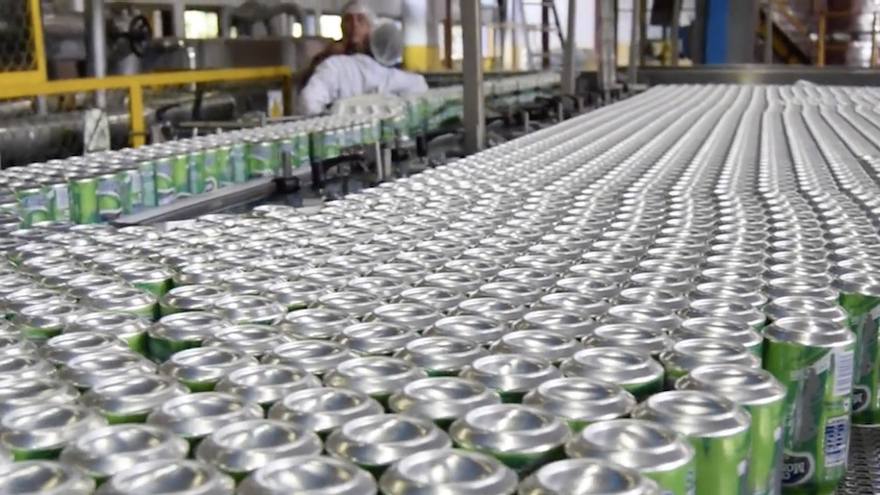
Los Portales Factory, located in Guane, Pinar del Río. (Capture/Guerrilla)

14ymedio bigger14ymedio, Havana, June 9, 2022 — Since the beginning of January, the official press has reported the lack of cans and containers for soft drinks in Los Portales, the main company on the island, associated with Nestlé. The factory, which renovated its machinery in 2018 after a Swiss investment, went from 278 million units that year to only 86 million in 2021. But it isn’t the only one going through a disastrous moment. Las Lomas manufactured 184,000 boxes out of the 4,500,000 planned for 2021, and a similar situation is expected this year.

Edelvy Valdivia Gonz, deputy director of the company, spoke with Cubadebate, which just two weeks ago reviewed the bad data of Los Portales, released in January, to warn that what 2022 presented is unchanged. This Thursday he addressed Las Lomas, which produces Fiesta and Dely soft drinks and which, together with Los Portales and Ember, is one of the three main suppliers of packaging on the island.

The lack of liquidity and the high costs of importing cans are among the causes cited by the staff member to justify the debacle. “The intensification of the blockade, the contraction of markets, the shortage of aluminum and the increase in its price on the international market have made it impossible to have the necessary foreign exchange to increase the levels of production that had been planned,” says Valdivia.

Although, following the official speech, he puts U.S. sanctions and the pandemic in the lead, with the disappearance of tourism as a result, the official doesn’t deprive himself of pointing out the ‘Ordering Task’* as one of the greatest, purely national, distortions that strangle the island. The process caused “a marked increase in costs, since soft drink production has a high percentage of imported inputs and its prices multiplied by 24,” he says.

Valdivia Gonz finds more internal reasons to blame: the interruption of payment mechanisms backed by liquidity. The measure, which was part of a resolution of the Ministry of Economy, was intended to give guarantees of payment to companies, but the lack of solvency led to its suspension. continue reading

“Although the company started almost from scratch, it managed to start producing and selling a few products in the best markets and to get paid with the support of a liquidity charter to start maintaining a production cycle. But then, from the lack of liquidity due to the crisis and the pandemic, it was interrupted.”

Las Lomas produces only canned soft drinks, whose outlook at the international level is already bad due to the high price of aluminum. “On the other hand, shipping companies, due to the blockade, limit themselves to disembarking through Cuban ports, which forces us to hire several to import the raw materials. Added to this is the limitation of the acquisition of spare parts for scheduled maintenance and breaks that have occurred,” he continues.

The company has tried, says the manager, to expand its market through online sales, which provides it with the necessary foreign exchange to continue buying raw materials. In addition, it has begun to sell carbonated soft drinks in bulk in Cuban pesos, a product that, according to Valdivia Gonz, has been well accepted.

Las Lomas is looking for more solutions, such as the acquisition of a filling line of dispensed soft drinks or productions in other systems, such as nylon bags.

However, bulk soda lends itself more to adulteration, a manipulation that diminishes its quality and often provokes rejection by consumers. Stored in tankers or in the so-called thermoses that also move on vehicles, this type of dispensed drink has traditionally been the preferred target for the diversion of resources.

Hygiene is another of the weak points of bulk sales. Customers often complain about the lack of cleaning of the tanks, the handling without taking into account hygienic standards with the consequent gastrointestinal problems. This form of sale also forces the buyer to carry his own container so it works in neighborhoods or around homes but less so in recreational places where many don’t carry a thermos or glass of their own.

*Tarea ordenamiento = the [so-called] ‘Ordering Task’ which is a collection of measures that include eliminating the Cuban Convertible Peso (CUC), leaving the Cuban peso as the only national currency, raising prices, raising salaries (but not as much as prices), opening stores that take payment only in hard currency which must be in the form of specially issued pre-paid debit cards, and many other measures related to the economy. 

Translated by Regina Anavy

____________

COLLABORATE WITH OUR WORK: The 14ymedio team is committed to practicing serious journalism that reflects Cuba’s reality in all its depth. Thank you for joining us on this long journey. We invite you to continue supporting us by becoming a member of 14ymedio now. Together we can continue transforming journalism in Cuba.