Some companies already badly weakened by blackouts fear that the new measures will affect production.
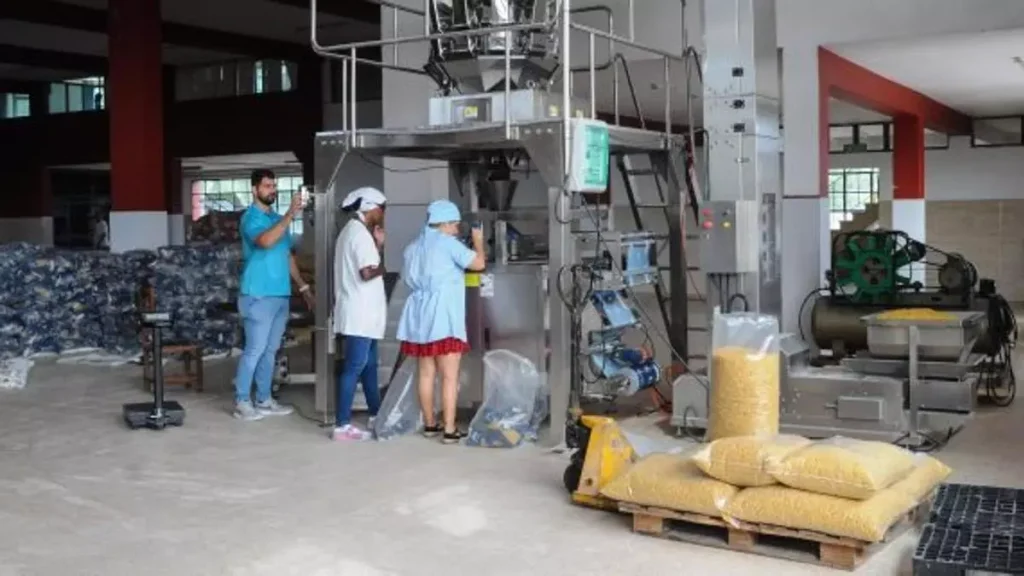
 14ymedio, Madrid, March 11, 2026 – The 470,000 private entities currently operating in Cuba, including companies, self-employed workers, and cooperatives, must submit to the monthly energy-saving plan determined by the State. Of these, 110,089 have already been officially notified of the consumption they are allowed to use, and although authorities claim that most are willing to cooperate without problems, they also admit there is concern that the limitations may be “so rigid” that they affect productive capacity.
The measure represents an extension, throughout the last quarter of 2025, of the plan announced at the end of 2024 for electricity savings under Decree 110. That regulation established the need to control and efficiently use the national energy system because it is a limited resource and highly subsidized in Cuba. The strictest conditions were aimed at high consumers, equal to or greater than 30 MWh or 50,000 liters of fuel, who had to immediately apply the savings plan and have a self-consumption system ready to cover 50% of their needs by 2028 (or immediately in the case of newly created companies).
In recent months, consumption limits apply to all economic actors without exception, explained Welner Collejo Jerez, deputy director of the National Office for the Control of the Rational Use of Energy (Onure), in an interview with Cubadebate. The measure is taken, he noted, “under the socialist principle of consuming only what is necessary for production and services.”
The calculation until now has initially been simple: the limit equals the same consumption used in the same month of the previous year. The exception has been Havana and Varadero, which must adjust to 15% less “because this year the level of disruption in those places was not as significant as in the rest of the provinces.”
Collejo recalled that one way to increase potential consumption is self-sufficiency, preferably with solar panels.
In any case, the official said that “the process of requesting, approving, and assigning the plan is a flexible process” and that, since each territory has prioritized activities, it can and should review allocations according to municipal needs. Collejo also noted that one way to increase potential consumption is self-supply, preferably through solar panels, which do not require the scarce fuel available in the country.
During visits to nearly 340,000 private businesses to establish the limits, Onure technicians found that some, without knowing the measure would affect them, had changed their conditions compared with the previous year, due to increases in personnel or equipment with higher consumption. In these cases, he said, the plan is being adapted to their new circumstances.
“Although this is a flexible process, it always begins with planning and daily control of consumption levels, which will allow municipal energy councils to foresee and warn about compliance with the plan,” he said. Companies themselves must carry out a daily self-reading that will be compared with the electric company’s billing at the end of the month. Sanctions for those who exceed the cap are those established in Decree 110, ranging from “publicizing bad practices, identifying non-compliant entities or those where violations occur, preventive notification, fines, and suspension of the license.”
Collejo insisted that the measure will be accompanied by training and information for those affected, as well as encouragement to acquire solar panels through loans, something that currently does not appear to be working very well, as the official press itself has acknowledged on several occasions and as this same report notes.
Her company has had to modify work shifts and move them to night and early morning hours, when electricity supply is more stable.
“So far the experience is that non-state economic actors are fully aware of the situation and therefore maintain behavior aligned with the measures adopted,” the official said. But Cubadebate spoke with some of the business owners subjected to the limits, and the mood is not as optimistic.
Anabell Meléndez, director of the dairy products SME Delola, is already recognizing that Miguel Díaz-Canel’s instructions to contribute through production to the country’s social commitments “clash with reality.”
“We practically have no electricity,” she confirms. Her company has had to modify work shifts and move them to night and early morning hours, when the electrical supply is more stable.
“Last week, the partial collapse of the National Electric System caused the loss of 1,000 liters of milk in the maturation process. They were lost. We couldn’t recover them because we don’t have energy backup,” she regrets. Attempts to install renewable energy to change the situation have also been unsuccessful.
“They tell me that to apply for a loan you must have a project endorsed by a certified company in the country that prepares lending projects. Then that project must be certified, and only then can we go to the bank,” she explains.
In addition, in her case she had to dismantle all the machinery she found in the factory when she arrived, which previously produced white ceramics and was classified as a high-consumption facility. Delola now uses only 30% of what its predecessor consumed, but Onure has still not assigned it a new cap, and she fears it will be too low.
“We need eight hours of electricity, with the equipment operating at one-third of its capacity. Otherwise we cannot sustain production. If they reduce that consumption too much, it will be very difficult to produce.”
“Any power outage damages the quality of the product and halts the process.”
Although she believes the future lies in installing solar panels, she is still waiting for authorization for the 80 million pesos she needs to install 120,000 kilowatts.
Others interviewed by Cubadebate are more relaxed, such as an SME that repairs machinery in the municipality of Cotorro or the owner of a shop, bar, and ranchón restaurant in Boyeros who, although he has had to reduce refrigeration consumption, believes the effort is necessary.
However, a sales representative from Confecciones Entaya in Camajuaní (Villa Clara) says they have had to obtain generators that operate throughout the workday, so they are involved in “advancing the process of importing fuel,” in addition to acquiring solar panels.
More frustrated is Jorge Félix Peraza Noriega of the widely promoted food company Jolyni, which partners with the state enterprise in whose factory it operates but is still not spared from blackouts.
“Any power outage damages the quality of the product and halts the process. After that, if we don’t have diesel for the generators, production stops completely. The lack of energy and fuel to produce food has negative effects. The only result is having to import more food and making the country spend more.”
Translated by Regina Anavy
______________________
COLLABORATE WITH OUR WORK: The 14ymedio team is committed to practicing serious journalism that reflects Cuba’s reality in all its depth. Thank you for joining us on this long journey. We invite you to continue supporting us by becoming a member of 14ymedio now. Together we can continue transforming journalism in Cuba.