A Cuban Rafter Dies of Hypothermia and Hunger in Search of the American Dream

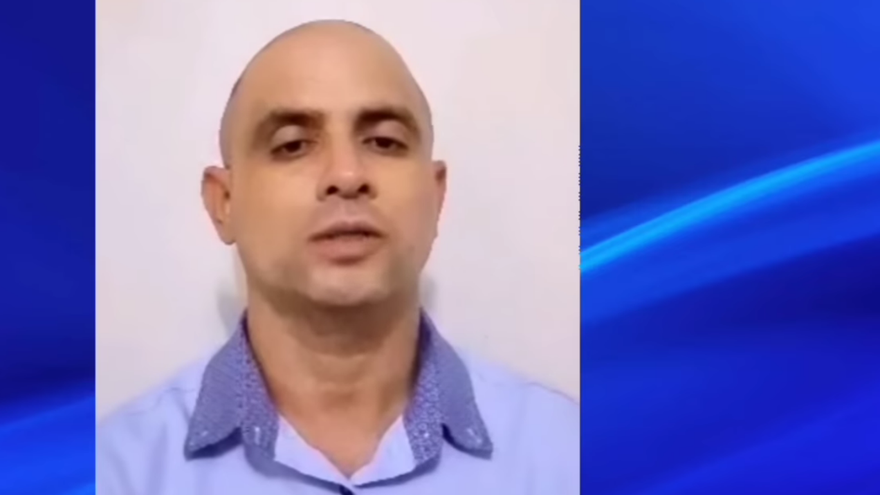
The family had a photo at the wake of Raúl Martínez, the rafter who died in search of the American dream. (Osiel Hernández)

14ymedio bigger14ymedio, Havana, 31 January 2024 — Raúl Martínez Torres, the Cuban who went missing from the group of 13 rafters who were rescued this Monday by a cruise ship and taken to Mexico, died during the trip. “He died of hypothermia and hunger on January 16 during the crossing,” Osiel Hernández told 14ymedio, explaining that the young man’s body “was thrown into the sea” on the crossing. On Tuesday, his family had “a photo of the boy to keep watch over him,” he adds.

Before he left the Island, Martínez Torres had doubts but decided to go on the raft in search of the American dream despite the fact that he “didn’t know how to swim.” The others took care of him as far as possible, but “his health deteriorated even more due to the lack of food,” explained Hernández, who is in now in Mexico, waiting for a response from Customs and Border Patrol (CBP) to be able to travel to the United States.

They ran out of food and relied on fishing for several days. However, Martínez Torres stopped eating. He was shivering and not making any sense before he died. They kept his body for days, “but it began to decompose,” and they decided to throw it into the sea, says Hernández continue reading

Hernández regrets the death of his compatriot. “Unfortunately,  Cuba forces us to do these things. Because of the dictatorial government we have, we prefer to risk our lives instead of fighting to get rid of [the regime].”

They took care of him as far as possible, but “his health deteriorated even more due to the lack of food”

The group of Cubans, made up of five women, one of whom was pregnant, and seven men, was assisted on the high seas, near the coast of Cancun by the Norwegian Prima cruise ship, which left Texas bound for the Caribbean. Currently, the migrants are at the Chetumal migratory station (Quintana Roo), from where on Tuesday they made a video call with one of the families and told them what happened to the deceased migrant, a native of Holguín, who would have turned 25 in May.

According to a statement from Migration, the corresponding procedures were initiated to give these Cubans “the necessary attention to regularize their immigration situation” in Mexico.

Last November Mexico suspended the deportations of Cubans, which it called “legally assisted returns.” Cuba accepted the returns of its nationals from the month of October, as long as the transfer expenses were covered by the Government of Andrés Manuel López Obrador. Each person returned to the Island costs Mexico 4,000 pesos ($237).

While the deportation flights to Havana were underway, Mexico used the services of the Viva Aerobús airline. In total, it transferred 435 Cubans in five connections.

This Wednesday, the release of three Cubans who were kidnapped in Tijuana, a city bordering the United States, was also confirmed, while waiting for a response from the migration authorities. According to the Univisión journalist, Javier Díaz, the amount of ransom demanded from each family was $5,000.

The reporter identified two of the victims: Yandy González Darías and Yandy David Mengana Abreu. Through his social networks, Díaz indicated that their belongings were taken from them, but he did not say if the families paid the ransom.

Translated by Regina Anavy

____________

COLLABORATE WITH OUR WORKThe 14ymedio team is committed to practicing serious journalism that reflects Cuba’s reality in all its depth. Thank you for joining us on this long journey. We invite you to continue supporting us by becoming a member of 14ymedio now. Together we can continue transforming journalism in Cuba.

‘Military Force Is the Basis of Political Relations Between Cuba and Belarus’

López Miera decorated Jrenin on Tuesday with the Playa Girón order, granted with the consent of Miguel Díaz-Canel. (Telegram/Ministry of Defense of Belarus)

14ymedio bigger 14ymedio, Havana, January 31, 2024 — The visit to Havana of the Minister of Defense of Belarus, Víctor Jrenin, resulted in speeches, medals and many photographs, but no relevant agreements. In contrast to the discretion of the official Cuban press, the media of the European country have followed step by step the journey of the Belarusian entourage through facilities of the Armed Forces of the Island and have celebrated the “approach.”

Jrenin, who has been in Cuba since last Saturday, signed with his Cuban counterpart, General Álvaro López Miera, a “military cooperation document” similar to the one that, last June and after the uprising of the Wagner group of mercenaries against Moscow, both ministers signed in Minsk. The brief statement of the Belarusian military does not reveal any of the points of the agreement but is accompanied by a video of the ceremony.

López Miera decorated Jrenin on Tuesday with the Playa Girón* order, granted with the consent of Miguel Díaz-Canel, as shown on the Telegram channel of the Belarusian military. Jrenin received the distinction, which he attributed to the good “daily martial work of all the soldiers of the Belarusian Army” and promised to do “everything possible to guarantee peace and security.”

The highlight of the visit was Jrenin’s speech at the Máximo Gómez Academy of the Cuban Army, where he met with “cadets who studied in Minsk” – it is not revealed when – whom the minister “personally” invited continue reading

to visit the Belarusian capital soon to “remember their years as students.”

The highlight of the visit was Jrenin’s speech at the Máximo Gómez Academy of the Cuban Army. (Telegram/Ministry of Defense of Belarus)

In his press conference with Cuban journalists, Jrenin also did not reveal the reason for his stay in Havana and limited himself to emphasizing that the Island is “a strategic ally in the western hemisphere,” a phrase that has been interpreted as a geopolitical warning to the United States and other NATO countries.

About his “important partner” in the Caribbean, the minister added that Cuba and Belarus are “very similar countries” and “do not give up their objectives.” At one point in the speech, quoting Belarusian President Alexander Lukashenko, he alleged that it was important for the armies of both nations to have good communication, since “military force has become the basis of political relations between countries. Therefore, it is important that the defense agencies build those relationships so that they meet the demands of our people, so that people feel safe,” he added.

Two months ago, the ministry headed by Jrenin announced that the Havana regime was interested in buying Polonez-M missiles from Belarus, with a range of 185 miles and a reputation for being “the most dangerous artillery system in Europe.” In a statement, it said that the acquisition of the weapons, actually manufactured by China, would be under negotiation outside a cooperation agreement with Minsk that Cuba’s military signed, during a meeting held in Havana. The Cuban authorities, in the meantime, remained silent on the subject.

The Belarus New agency (Belta) said at the time that this purchase of weapons was part of a bilateral plan that would be executed beginning this year.

Cuba has also been in the headlines after a senior Duma official alluded to the “need” to deploy nuclear weapons on the Island

In June 2023, after the Wagner Group’s rebellion against Moscow – which ended with the death of its leader, Yevgueny Prigozhin, under suspicious circumstances – López Miera made a trip to Moscow and Minsk. On that occasion, the agreement that both parties signed promised “ways” to develop and “intensify military contacts,” without going further.

Cuba has also been in the headlines this week after a senior official of the Russian State Duma – the lower house of the Parliament – alluded to the “need” to deploy nuclear weapons on the Island, in addition to Nicaragua and Venezuela, before the supposed threat that the United States and other NATO countries represent for Russia.

The comment has motivated multiple – and often nonsensical – analyses, but the truth is that Havana knows what geopolitical buttons to push when it comes to war rumors. A recent example was the transmission of the first part of a documentary about the underground arsenals of the Cuban Army. The Russian channel Zvezda showed the world, last December, missile launchers, war tanks and the day-to-day life of elite Cuban soldiers. The documentary, “unique” according to Russian propaganda boasts, never saw its second part released.

*Translator’s note: Referred to as “Bay of Pigs” by the United States

Translated by Regina Anavy

____________

COLLABORATE WITH OUR WORKThe 14ymedio team is committed to practicing serious journalism that reflects Cuba’s reality in all its depth. Thank you for joining us on this long journey. We invite you to continue supporting us by becoming a member of 14ymedio now. Together we can continue transforming journalism in Cuba.

The Leaks From a New Pipe Are the Only Source of Water for the Population of Las Tunas

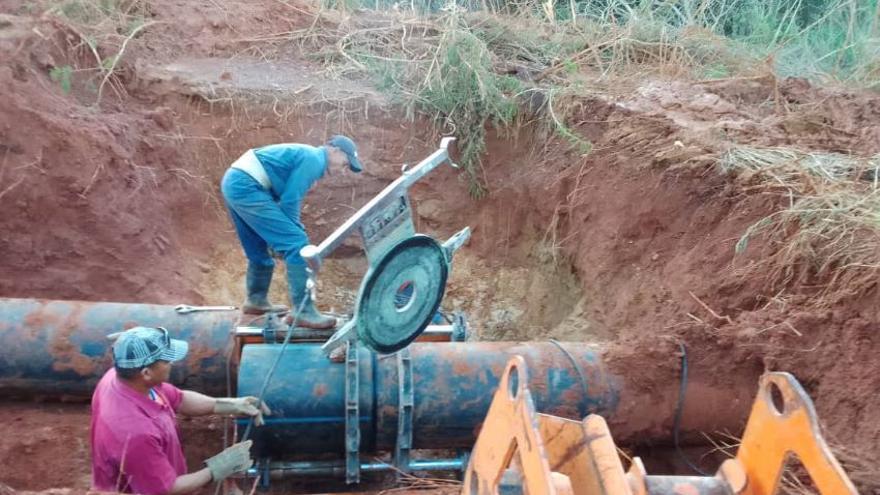
The authorities say that the pipe itself is not broken; it’s the connections that don’t contain the water. (Periódico 26)

14ymedio bigger14ymedio, Havana, 1 February 2024 — The families of Las Tunas “have continually sore arms from carrying so much water.” This was the statement on Wednesday in the local press for the umpteenth time about the water situation in the province, which has still not been resolved. On January 28, several leaks in the new water pipe – which came into operation only last October – caused the supply to stop arriving at the Piedra Hueca station.

The “ephemeral stability” of the service, according to Periódico 26, has broken down again along with the pipe, which was installed in 2021 and which the inhabitants hoped would be the definitive solution to the desperate water situation.

“A week after being in operation, we found six leaks, and they were all resolved in a short time,” Piedad Herrera, director of Aqueduct and Sewerage, told the newspaper, but she admitted that since then, leaks continue to appear from time to time without the state-owned company having the resources to repair them. “Since September 7 they have not given us fuel, and that, together with the fact that we did not want to stop the service to make adjustments, were issues that delayed the repair,” the director added. continue reading

Despite the fact that the maintenance work is now being carried out, the authorities predict that the service will remain disabled at least until the weekend. “The work is complicated because there is a lot of mud, but I think that this situation can be resolved by the weekend. We are doing everything possible for that, without rest,” said Herrera. She clarified that the brand new pipe is not broken; it’s the connections that seal it that fail to contain the water.

The neighbors of Molinet showed us, for example, how they went there in cars and on bicycles to load water from the leaks themselves, since there is no other possible option

Despite the insistence of the authorities that everything possible is being done to alleviate the situation, the media emphasized that the people in the province are having a hard time.

“We note, with great regret, how complex the situation has become in the vicinity of Piedra Hueca. The neighbors of Molinet showed us, for example, how they went there in cars and on bicycles to load water they would use at home — from the leaks themselves — with no other possible option,” the newspaper said.

The Piedra Hueca pumping station is not the most important in the province, says Periódico 26, but the cessation of its operation has an impact on the drinking water service, which has been reduced especially in the provincial capital, with the neighborhoods of the Airport, Sosa, Casa Piedra and Buena Vista being the most “vulnerable.”

The situation of the wells near Piedra Hueca is not ideal either. “Only one of those (five) wells has an assigned generator set,” and of the five electropumps that the station should have, only one works, despite the fact that last December Periódico 26 itself reported that they had been “mended” to keep them active.

The media itself puts its hope in the promise of the authorities to re-establish the flow for this weekend although, it regrets, “no one can guarantee us that the situation will not be repeated later, but they did tell us that they have high hopes that the solution, this time, will be lasting and even final.”

Six months after declaring that the situation was “somewhat critical,” the provincial authorities no longer find words to describe the drinking water deficit. For its part, the population, which in some cases spends weeks without receiving the service, no longer hesitates to launch criticism and complaints to officials on social networks. Meanwhile, managers are content with the fact that it is not “raining now,” something that would make the repair even more difficult than it already is.

Translated by Regina Anavy

____________

COLLABORATE WITH OUR WORKThe 14ymedio team is committed to practicing serious journalism that reflects Cuba’s reality in all its depth. Thank you for joining us on this long journey. We invite you to continue supporting us by becoming a member of 14ymedio now. Together we can continue transforming journalism in Cuba.
The Cuban Government Postpones New Fuel Prices Due to a ‘Hack’ From ‘Abroad’

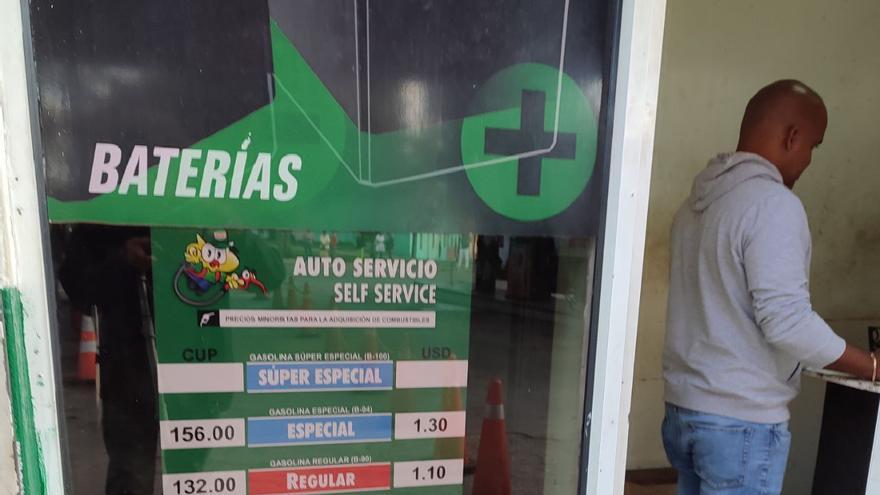
The new prices are already listed at the Rancho Boyeros and Ayestarán gas station. (14ymedio)

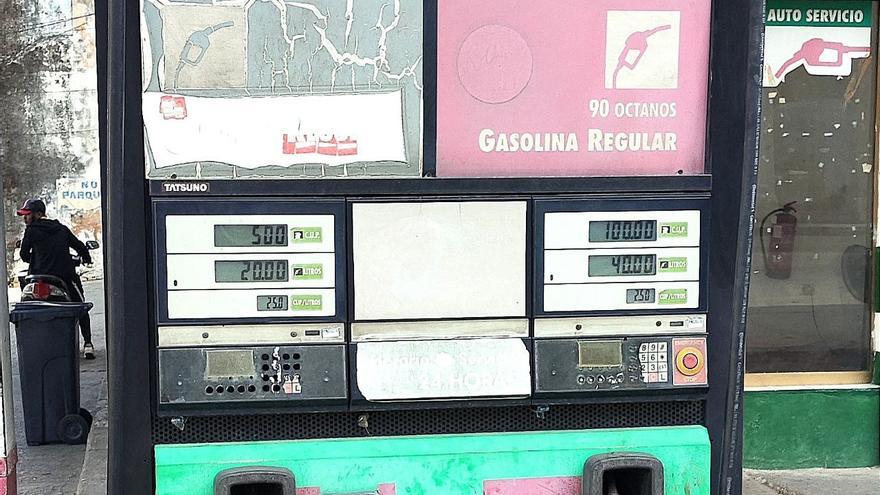
14ymedio bigger14ymedio, Havana, 31 January 2024 [translation updated with added text 1 February 2024] — In national currency and also in USD – a great novelty of the reform announced in January – the new fuel prices appeared this Wednesday on the pumps at the gas station at Rancho Boyeros and Ayestarán, in Havana. However, drivers are alarmed when they see those rates in pesos and dollars – five times more expensive than the previous ones – and the employees explain that the change will take effect tomorrow, Thursday, February 1. However, the official media reported this afternoon that the implementation of the new rates is postponed.

“The government’s projections to correct distortions and re-boost the economy during 2024 will only be implemented if the conditions for this are created,” Mildrey Granadillo de la Torre, first vice minister of Economy and Planning, told national television. “Defending this principle” it is decreed to postpone the implementation of the “price update” of gasoline, said the senior official, who added that “this decision includes the occurrence of a cybersecurity incident in the computer systems for the commercialization of fuels whose origin has been identified in a virus from abroad.”

It was also reiterated by Esther, the person in charge of organizing the queue to buy fuel in Guanabacoa via Telegram: “The update of fuel prices and its marketing in USD is extended. The decision is due to a cybersecurity attack in the marketing system of Cimex.”

The Cuban influencer Manuel Milanés alluded to this on Tuesday in a tweet from Miami: “The Cimex de Gaesa Corporation had its entire management system erased and they had no backup, they are doing a general inventory to be able to have some control.”

Asked by 14ymedio, a driver from the state-owned Copextel says that the new measure does not worry him. Premium gas is at 156 pesos or 1.30 dollars instead of 30 pesos, regular and diesel at 132 pesos or 1.10 dollars, continue reading

and diesel at 114 pesos or 0.95 dollars (instead of 25 and 20 pesos, respectively), he recites, while filling the tank of his truck. “I don’t care what it costs, because the company where I work pays for it. If I don’t have the money to pay for fuel, I’ll stay home,” he adds.

Private car drivers, however, do not show the same peace of mind. After spreading the word that the service center at 25 and G, in El Vedado, would be dispatching gasoline this morning, dozens of boteros (taxi drivers) and car owners gathered in a line that stretched for several blocks on both sides of F Street.

A line stretched for several blocks this morning on F Street to buy gas in the service center at 25 and G. (14ymedio)

“I’m behind that Kia and he’s behind the red Peugeot,” a driver shouted. “No one wants a mess here; that’s why everyone who gets in line takes a photo of the license plate of the car in front of him, so those behind don’t cut in with two other people,” one of the boteros tells this newspaper.

Uneasy about the change of prices, with which they predict irregularities and preference of the Government with foreign exchange services, many of those who wait at 25 and G will try to buy as much fuel as they can this Wednesday. “I already emptied the little gasoline I had in the car to be able to fill the tank to the top. I also always bring a few gallon containers in the trunk in case I can buy more,” says one of the drivers, who complains that the line isn’t moving. “My brother-in-law, who is a few cars ahead, even went to his oncology appointment at the hospital, and when he returned the line had barely moved.”

Another of his concerns, not far from reality, he says, is that the new card payment systems do not work in a country with constant power cuts and frequent drops in the electronic collection system. This same afternoon, the two gas stations in Guanabacoa warned that payment was only possible with the cards issued by Fincimex and that the QR code did not work.

Many drivers, annoyed by the delay and noon hunger, complain about the way the government is handling the price change, knowing that the demand for fuel will skyrocket. “It’s going to go on,” one said, “and the dollar keeps rising, you don’t even know where it’s going to go.”

“That guy you see there on the motorcycle,” he continued, “has been walking around the street all morning. It seems that they sent him to make sure everything is quiet. You notice them right away by the mask, the dark glasses and the cap they wear so that you don’t recognize them,” he says. “They have fuel for those guys.”

Regular gasoline will no longer be sold at 25 pesos and will now cost 132 pesos or 1.10 dollars a liter. (14ymedio)

In the few hours left before the prices change, there are more incidents than usual, both in the payment systems and the suspension of service, because no technician appears to fix the supposedly damaged gas pumps.

The rest of the signs that the habaneros have learned to decipher, such as the smoke of the patana (floating Turkish power plant) anchored in the bay or the fire of the Ñico López refinery, do not give indications that oil is circulating in the city. This morning, neither of them had the chimneys lit.

Cuban ports, however, report the entry of oil tankers such as the Alicia and the Chemical Contender in Havana; the Lourdes, the Ocean Mariner and the Sandino in Matanzas; the Esperanza in Cienfuegos; and the LPG Emilia in Santiago de Cuba, where they also expect the Aquila this Wednesday.

Translated by Regina Anavy

____________

COLLABORATE WITH OUR WORKThe 14ymedio team is committed to practicing serious journalism that reflects Cuba’s reality in all its depth. Thank you for joining us on this long journey. We invite you to continue supporting us by becoming a member of 14ymedio now. Together we can continue transforming journalism in Cuba.
Even Honey, Cuba’s Star Product and a Great Source of Foreign Exchange, Suffers a Collapse

In 2021, Cuba produced more than 10,500 tons of honey, a figure not seen since 1962, when it produced 10,215 tons. (Capture)

14ymedio bigger14ymedio, Havana, January 30, 2024 — Despite the declared optimism of the Cuban authorities about the potential of beekeeping, honey production is no longer free from the general collapse of the national economy and registered data lower than official forecasts in 2023.

According to the information published by the newspaper of Las Tunas, this province recorded a production of 275.7 tons last year, less than half of the production for 2020 and barely 53% of what was planned.

Cuban honey and derived products are recognized for their high quality. It is estimated that this is a unique product due to its condition, and, in addition, the Government knows how to obtain notable revenues through its commercialization. The farmers sell it to the Cuban Beekeeping Company (Apicuba), which evaluates the quality and determines the price. continue reading

Honey receives better remuneration than other products, but the payment to producers is not exempt from prolonged delays of up to six months

Thanks to the embargo by the United States and the loss of the Soviet aid which had flooded the Cuban field with agrochemicals, national honey producers have developed biofertilizers and biopesticides, allowing them to get rid of the pests that are killing the bee colonies in much of the world.

Honey receives better remuneration than other products, but the payment to producers is not exempt from prolonged delays of up to six months, and the amount is still negligible in relation to the economic benefit that the regime obtains. While the Cuban State pays 600 in foreign currency per ton of honey to the producer, it sells it on average for more than 4,000 euros and, in some cases, for 20,000 euros per ton.

In 2021, Cuba produced more than 10,500 tons of honey. According to official figures, the Island has not known a similar figure since 1962, when it produced 10,215 tons.

That year, the Island’s authorities indicated that they were among the main honey-producing countries in the world, occupying the 15th position. Revenues from exports reached about 20 million dollars, and projections for 2030 suggest exports close to 50 million dollars annually.

It is a product that is successfully exported given the demand for Cuban honey in Europe. The most interested buyers are German, Dutch, French and Spanish.

On the other hand, official sources pointed out, in other areas of the same sector, such as wax, pollen and propolis, the initial expectations were more than met and even set records

As has happened for decades and repeatedly, to explain the decline of once successful sectors such as sugar and coffee, it was indicated that the causes of the poor results in Las Tunas had to do, on the one hand, with the intense drought in the first of the year and, on the other, with the loss of 311 hives due to the June rains in the southern municipalities.

On the other hand, in other areas of the same sector, such as wax, pollen and propolis [a resin bees produce to seal gaps in the hives], initial expectations were more than met and even set records. Likewise, the regime celebrated the advances in the production of organic honey and Melipona bees with the genetic improvement program, an obsession that accompanies the regime from the time of the prodigious White Udder cow.

Regarding the number of hives, the claim is that 2023 concluded with 300 more hives than in 2022 in Las Tunas, and this year it will reach 12,530, adding 730 more. The focus will be on enhancing the training of beekeepers, sanitary standards and planting flowers for honey production. In any case, the projections for 2024 are modest and below the 2020 production.

Translated by Regina Anavy

____________

COLLABORATE WITH OUR WORKThe 14ymedio team is committed to practicing serious journalism that reflects Cuba’s reality in all its depth. Thank you for joining us on this long journey. We invite you to continue supporting us by becoming a member of 14ymedio now. Together we can continue transforming journalism in Cuba.
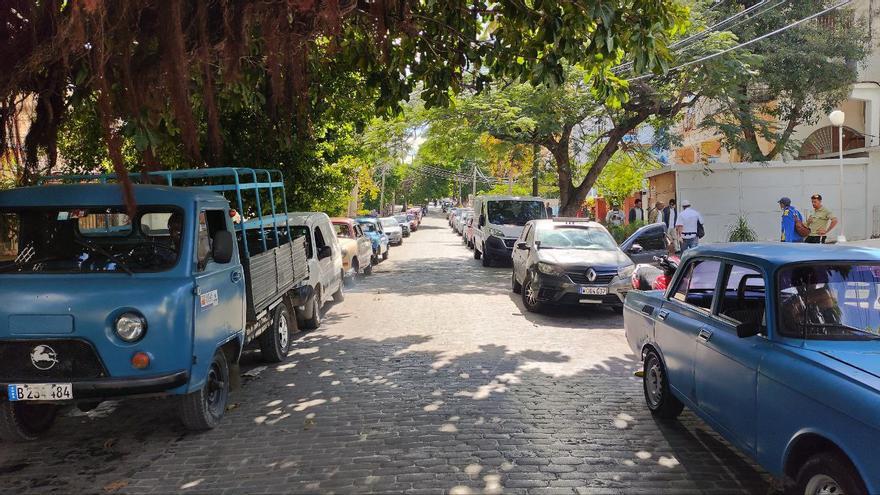
Cuban Authorities Blame the ‘Human Factor’ for the Increase in Deaths From Road Crashes

Last October, the Minister of Transport admitted that he does not have the equipment or funds to repair the roads. (ICRT)

14ymedio bigger14ymedio, Havana, January 30, 2024 — When reporting the causes of traffic crashes, the Cuban authorities have two big favorites: the violation of the right of way by drivers and lack of attention to the vehicle. In both cases, the driver is always responsible while the poor condition of the roads – denounced again and again by the population – does not even appear among the main causes of crashes and is mentioned as a secondary factor.

“The frequency and dynamics of occurrence of traffic crashes in the country continues to be marked by the irresponsibility of drivers and pedestrians, with the human factor being responsible for 91% of these events,” said the official newspaper Granma in January, which placed the number of accidents in 2023 at 8,556, with 729 deaths and 5,938 people injured.

The overall figure is lower than that of 2022, when the number of crashes was 9,848; however, the number of deaths increased by 24 from one year to the next. continue reading

Granma recognizes, although obliquely, the precarious condition of the roads, caused by “the limitations on investments for their improvement”   

Granma recognizes, although obliquely, the precarious condition of the roads, caused by “the limitations on investments for their improvement.” The same thing was declared last October by the Minister of Transport on Cuban Television, when he alleged that the roads deteriorate faster than the State is able to repair them. To this is added the limited availability of raw materials and parts for the asphalt factories, which are currently working at a minimum to cope. According to official data from last July, 75% of the Island’s roads were in average or poor condition.

Interviewed by the newspaper, Roberto Rodríguez Fernández, head of the Specialized Traffic Body of the Police, also admitted that “the economic situation and the deficit of parts and pieces continue to have a negative impact on the technical status of the vehicles” and that, although the crashes caused by this factor registered a decrease, the number of deaths increased. “Accidents accounted for 10% of the total” deaths in 2023, he said.

This January, an article published in the newspaper of Las Tunas, Periódico 26, again drew attention to the indiscipline of both drivers and pedestrians. “The unfavorable state of the roads in the province is one of the causes in Las Tunas for the poor condition  of vehicles, and drivers are urged to use caution to safeguard life,” the media said, without pointing out that repairing the roads could reduce the number of crashes.

According to the media, in 2023 the province had on average “one accident per day, one death for every 15 accidents and 33 accidents every month,” which translates into 373 accidents and a mortality rate of 4.6 per 100,000 inhabitants.

The only discordant note in the official speech was given last March by the newspaper of Ciego de Ávila, Invasor, which questioned why, with more than 65% of the roads in the province in regular or bad condition, the authorities of the region preferred to dedicate their resources to the roads of the tourist enclaves.

“Prioritizing tourist spots was not the only reason why the rest of the provincial territory was not paved”   

“Prioritizing tourist spots was not the only reason why paving was not done in the rest of the provincial territory. The  plan of 56.1 million pesos for investment was carried out by only 53%, roughly due to the lack of fuel, specifically for the contracted forces,” said the newspaper. It also pointed out that the causeway bridges leading to Jardines del Rey and the keys of Villa Clara require constant repair and million-dollar investments due to the batterings of the sea.

In the same period, the runway of the Cayo Coco airport in Ciego de Ávila was paved with 11,000 tons of asphalt. Meanwhile, for the critical four-mile stretch of the Central Highway between this province and Camagüey, where cracks and landslides were reported, barely 4,000 tons were used, far from what is necessary to definitively repair the road.

The same thing happened, the newspaper reported, with many of the potholes and cracks in the roads that, in the absence of resources and attention, ended up being filled with gravel, debris and ash from the sugar mills.

Translated by Regina Anavy

____________

COLLABORATE WITH OUR WORKThe 14ymedio team is committed to practicing serious journalism that reflects Cuba’s reality in all its depth. Thank you for joining us on this long journey. We invite you to continue supporting us by becoming a member of 14ymedio now. Together we can continue transforming journalism in Cuba.
The Cuban Authorities Arrested a Dozen Ladies in White, Says Berta Soler

Ángel Moya and Berta Soler at the exit of the headquarters of the Ladies in White this Sunday, when they were arrested by the police. (Facebook)

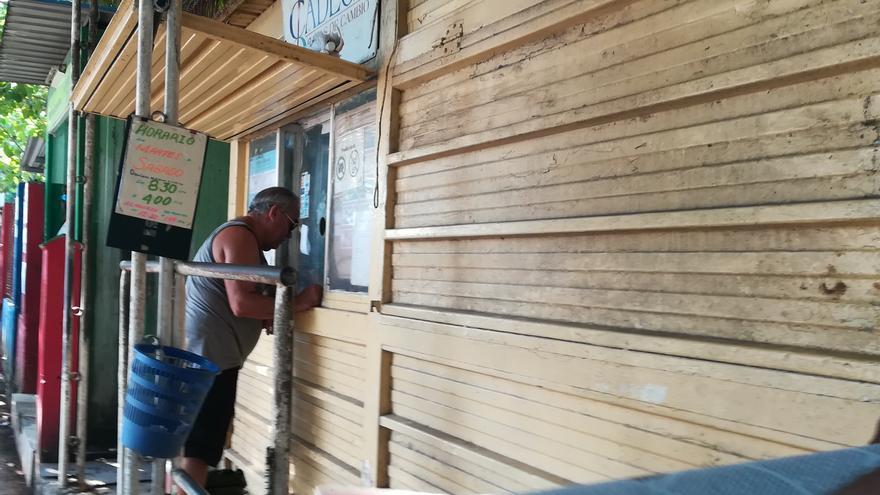
14ymedio biggerEFE (via 14ymedio), Havana, January 30, 2024. — The leader of the Cuban opponents Damas de Blanco [Ladies in White] Berta Soler, denounced on Monday that she was arrested for hours along with her husband, former political prisoner Ángel Moya, and a dozen other members of the group in Havana and Matanzas. Soler reported on social networks the arrest of a member of the Ladies in White in the Havana neighborhood of Calabazar and others in Perico and Colón.

For his part, Moya posted a note on Facebook accompanied by a video in which he said that they were “intercepted and arrested” after leaving the headquarters of the Ladies in White on Sunday morning, in the Havana neighborhood of Lawton, which he counted as the “72nd repressive Sunday” against the collective.

Then, according to his account, they were transferred separately to the police stations of the El Cotorro and Guanabacoa municipalities, where they remained until almost 7:00 a.m. on Monday morning. Soler was fined 150 Cuban pesos. continue reading

Soler was fined 150 Cuban pesos

The Ladies in White  is a women’s movement that emerged on the initiative of several women relatives of the 75 dissidents and independent journalists – including Moya – who received long sentences in 2003 during the repressive wave known as the Black Spring.

Since then, this group, composed of wives, mothers and relatives of the prisoners, has been identified by always being dressed in white and holding Sunday marches after attending mass in a Catholic church to ask for the release of political prisoners.

The European Union and the NGOs Human Rights Watch and Amnesty International criticized the wave of arrests and convictions, calling them political. The Cuban authorities alleged that the accused dissidents violated national sovereignty under orders from the United States.

In 2005, the Ladies in White received the Sakharov Prize for Freedom of Conscience from the European Parliament.

Translated by Regina Anavy

____________

COLLABORATE WITH OUR WORKThe 14ymedio team is committed to practicing serious journalism that reflects Cuba’s reality in all its depth. Thank you for joining us on this long journey. We invite you to continue supporting us by becoming a member of 14ymedio now. Together we can continue transforming journalism in Cuba.

As the Dollar Approaches 300 Pesos, the Cuban Government Talks About ‘Intervening’ in the Informal Market

The Government is preparing measures for February to control the foreign exchange market. (14ymedio)

14ymedio bigger14ymedio, Madrid, 30 January 2024 — Economic reforms are coming together for the Cuban Government, which is expected to announce changes in the foreign exchange market this February. In the first Council of Ministers session held this year, the Minister of Economy, Alejandro Gil, set an immediate date on a priority issue for the country, although the words he chose for the announcement sowed more doubts than clarifications.

“It is said that the Cuban Government’s projections include intervention ’from the’ informal foreign exchange market, but it is not clear if it meant intervention ’in’ the market. Perhaps it expresses a confusion between intervention and exchange policy,” Cuban economist Pedro Monreal wrote in his X account.

In Monreal’s opinion, expressed in a second message, “intervention (an instrument) can be useful to contain fluctuations in the exchange rate and stabilize it, but it is not effective for making permanent changes in rates resulting from an exchange rate policy that is not compatible with general macroeconomic policy.” continue reading

A lot of work is being done on this because of the impact it has on promoting a productive stimulus”

Gil announced that regulations will be announced in February to “reorder local development projects” and decentralize the price approval of natural and traditional medicine. Then he talked about what is really important. “In that month, progress will also be made in the presentation of proposals to restructure the foreign exchange market, intervene in the informal market and control the type of exchange in the country, which includes the determination of the exchange rate and the formation of prices. A lot of work is being done on this because of the impact it has on the promotion of a productive stimulus,” the minister said.

A month ago, during the joint television appearance of Gil and the Minister of Finance and Prices, Vladimir Regueiro Ale, to announce the first changes of the complicated package to stabilize the economy, the official had already referred to the great importance of the foreign exchange market, which he considers “one of the main distortions that the economy is facing.”

The ministers specified that private individuals buy foreign currency in a parallel market that allows them to import goods while the State sector is left without that currency. But they didn’t mention that State companies have access to the official exchange rate (1 dollar x 120 pesos), while those who are forced to resort to the illegal market find the dollar being paid at almost 300 pesos.

“Why is the State sometimes not able to be an offerer of goods and services as it should be? Some of those currencies move in the other circuit. If there were for both… But there isn’t. (…) That has to be corrected,” said Gil, who neither then nor now said anything that could allow us to glimpse the measures to be taken.

“Why is the State sometimes not able to be an offerer of goods and services as it should be? Some of those currencies move in the other circuit. If there were for both… But there isn’t”

In September 2023, two extensive articles published in Cubadebate and signed by an official of the Ministry of Economy, Joel Ernesto Marill Domenech, addressed the economic situation and launched a series of proposals that could help – or not – the authorities, if they allowed themselves to be advised by these experts. The specialist suggested a national currency flotation system similar to the model applied with the euro, although Monreal considered at that time that the idea was “unviable” because the country has no foreign exchange reserves or production to support its own currency.

Monreal’s proposal was, rather, a foreign exchange market of “two levels: business operations with banks and retail operations in Cadeca [currency exchanges] (using the official exchange rate)” and a mobile parity regime (which combines a fixed nominal value that is adjusted by factors such as inflation and a floating rate). In his opinion, that would allow more flexibility to control the small devaluations that occur.

The two experts clashed over a main issue. For Marill, it was essential to stabilize the economy before proceeding with the exchange rate reform, while Monreal considered this dangerous because of the delay it could entail.

The Government seems inclined not to let more time pass than already has. However, the economist also warned of something: “The first step of the sequence should be to support the transformation of the small private commercial production component of the agricultural system into a more diversified private component with the greater weight of national capital. Without an increase in the national food supply, there can be no material backing of the national currency. The rest would be like pouring water into baskets,” he said. None of that is being done.

That idea has come, without being experts in economics, to many readers of Cubadebate, who have reminded the Government that no measure will work in the current supply conditions and they even remind readers that the inflation rate – which is expected to increase as soon as fuel prices rise in two days – gets worse almost by the hour. In the words of one of them: “When someone from the Government said that the State would recover the exchange rate, which was supposedly in the hands of the online site El Toque*, the dollar was quoted at around 270 pesos. It is already quoted at around 280. In a few days, Health and Education workers have lost the increase that has not yet reached them.”

*Translator’s note: El Toque is an independent digital newspaper that provides daily  exchange rates for the Cuban peso in all markets, including that of cryptocurrency.

Translated by Regina Anavy

____________

COLLABORATE WITH OUR WORKThe 14ymedio team is committed to practicing serious journalism that reflects Cuba’s reality in all its depth. Thank you for joining us on this long journey. We invite you to continue supporting us by becoming a member of 14ymedio now. Together we can continue transforming journalism in Cuba.

The Cuban Doctor Convicted of Negligence Points Out That the Patient’s Death Was Inevitable

Ristian Solano is sentenced to three years of deprivation of liberty and disqualification. (Capture)

14ymedio bigger14ymedio, Madrid, January 30, 2024 — Ristian Solano, the doctor at the Carlos Manuel de Céspedes hospital in Bayamo (Granma) who was sentenced to three years of deprivation of liberty for negligence resulting in death, has broken his silence. His penalty is the highest of those imposed on the six health workers tried in this case, in which only one of those involved, radiologist Elizabeth Silvera, was acquitted.

The doctor has been disappointed by the lack of support from the Ministry of Health, when he and his colleagues denounced their poor working conditions for lack of resources and when they were convicted in a procedure that was full of irregularities.

Solano says that three commissions participated in the investigation to clarify the facts – one from the Provincial Directorate of Health, another from Manzanillo and, finally, the National Health Commission. They determined that from the time of his admission to the hospital, the patient had “elements incompatible with life regardless of medical action. This patient, unfortunately, was condemned to a sad outcome.” continue reading

Solano says that three commissions participated in the investigation, which determined that from the time of his admission to the hospital, the patient had “elements incompatible with life”

The doctor describes in great detail, as his colleagues also did, what happened two years ago when the now deceased patient entered the emergency room. His name has never been revealed, but at the time of his arrival, he was accompanied by another person who could speak and answer questions. The 23-year-old patient did not actively cooperate in the interrogation, not because of disability but because he had participated in an illegal race and did not want to have problems.

At that time, when the patient barely revealed that he had fallen off a motorcycle, he had a back injury that was assessed with an apparently normal x-ray and ultrasound. However, he was sent to the multipurpose room to coordinate more specialized tests, two of them (thorax plate and tomography) were declined by radiology due to lack of film and technical defects. A puncture was chosen as an alternative, which could not be done normally either due to the lack of a bladder catheter that, finally, was delivered through coordination with the Urology service. In addition, all the specialists in that unit were busy with surgeries, so they could not perform the test.

“All these inconveniences, so to speak, are reflected in a chart for this purpose,” says Solano, who considers that the patient was adequately cared for within the limitations, and they even explained the situation to him.

Everything changed completely when “around 12:45 in the afternoon a family member brought me the ultrasound result – apparently performed at 8:50 in the morning – in the emergency room, where I was on duty. I reviewed the report and was diametrically opposed to the conclusion.” The doctor explained that he quickly went with the relative to where the patient was while explaining the changes that were seen between the tests. On arrival the patient showed normal vital signs and no problems physically, while now the ultrasound indicated the need for an urgent intervention because of an intra-abdominal injury.

It was at that moment, when he was being prepared for the operation, that the patient confessed to the anesthesiologist that he had participated in a race at 100 miles per hour

It was at that moment, when he was being prepared for the operation, that the patient confessed to the anesthesiologist that he had participated in a race at 100 miles per hour and was thrown over the motorcycle, landing on the curb. According to Solano, the tests carried out by the anesthesiologists revealed normality, with the exception of a ” bilateral decrease in the vesicular murmur in both lung fields.” The injury observed during the surgery was finally located in the kidney.

The autopsy performed subsequently revealed the cause of death as a gastric perforation with a subsequent peritonitis of approximately 20 ounces of free gastric content in the cavity, in addition to ischemia of the tail end of the pancreas. According to Solano, this condition is fatal in 98% of cases, and the patient had already arrived at the hospital with those elements, so nothing could have been done to save him.

The doctor says that the reports confused the terms “polycontusioned”, as the patient was classified, with “polytraumatized,” his real condition, judging by the results of the autopsy. “The elements that the patient provided once he arrived at the Carlos Manuel Céspedes hospital,” along with a “completely negative physical examination” that did not suggest injuries like those found later, made his outcome unpredictable.

Solano says that everything that happened, detailed in the patient’s medical history, damaged the image of the hospital “and, consequently, the image of the department and of the Provincial Directorate of Health, and it was not permissible for one of the doctors to say all this.”

The doctor again points out Dr. Ingris Porto Mateo (allegedly a relative of the deceased) as responsible for a “totally misguided and superficial investigation”

The doctor again points out Dr. Ingris Porto Mateo (allegedly a relative of the deceased) as responsible for a “totally misguided and superficial investigation,” contrary to any scientific basis, and of “encouraging and disclosing falsehoods” against the medical team in charge of the patient “in order to divert attention to what we had actually raised in the first place; that is, the shortcomings of institutional resources that interfere with adequate patient care.”

The doctor ends the video, delivered to Ernesto Morales, regretting that the many pieces of evidences he and his colleagues provided to clarify the situation have been ignored and dismissed. “But, above all, the main irregularity that this process presented is the lack of support from the Ministry of Health, which simply avoided this whole process until it reached the present dimensions. Not because of their lack of support but because they looked the other way.”

The five convicted – along with Solano, Rafael José Sánchez and Henry Rosales Pompa sentenced to two years; Yoandra Quesada Labrada, sentenced to one year and six months; and William Pérez Ramírez, sentenced to one year – will be disqualified for the same period of time that the sentence lasts, although they still have the option to appeal, something they have announced that they will do and for which they have the support of many doctors.

Translated by Regina Anavy

____________

COLLABORATE WITH OUR WORKThe 14ymedio team is committed to practicing serious journalism that reflects Cuba’s reality in all its depth. Thank you for joining us on this long journey. We invite you to continue supporting us by becoming a member of 14ymedio now. Together we can continue transforming journalism in Cuba.
In the Middle of January, Cuba Has the Same Energy Deficit It Had in August

In the middle of January, the energy deficit reaches levels not seen since summer. (14ymedio)

14ymedio bigger14ymedio, Madrid, 29 January 2024 — “The blackouts are aggressive and extreme.” The population reacts to the energy deficit announced for this Monday with astonishment and anger, like this resident from Sancti Spíritus. “They are turning it off twice a day, in the morning and at night. According to the frequency that is planned in ’the blocks’ but in those time slots. It’s unforgiving, like it’s the middle of August. In my neighborhood I’m fine, but  some people are experiencing blackouts of nine and ten hours.”

In the middle of January, with temperatures that dropped again this morning, the Electric Union of Cuba (UNE) has once again foreseen a deficit of almost 1,000 megawatts (MW), on the third consecutive day. The official journalist Lázaro Manuel Alonso elaborated this Sunday: “The breakdowns in several units and the lack of fuel continue to be the causes. In the last days of January the effects are similar to those reported last summer.”

This highlights the seriousness of the energy situation on an Island that no longer needs to wait for hellish heat to have 12 to 14 hours of blackouts. But now, in the month when greater relief is expected, the figures are unprecedented. continue reading

Despite this, the deficit during yesterday’s peak time was 975 MW, above the 952 MW that had been predicted

The situation was aggravated on Sunday. The Antonio Guiteras thermal power plant, in Matanzas, the most important in the west of the country, was synchronized with the National Energy System (SEN). Despite this, the deficit in yesterday’s peak time was 975 MW, above the 952 MW that had been expected.

For Monday, the UNE announced that 991 MW will be missing, even with the entrance for the peak hours of unit 4 of Energas Varadero and the distributed generation engines that were stopped for maintenance and those that have been authorized for support. According to the state company, unit 5, the Diez de Octubre power plant, in Nuevitas (Camagüey) and the 2 of Lidio Ramón Pérez, in Felton (Holguín), are out of service, while unit 6 of the Máximo Gómez thermoelectric plant, in Mariel, is under maintenance.

The joint exit from the system of the two main thermoelectric plants of the east and west of the Island (Felton and Antonio Guiteras), one due to breakdown and the other for scheduled maintenance, was key. On Friday, after several days of complaints reported in several provinces, the record of electricity deficit was announced, with 1,010 MW planned for peak time, which finally reached 1,032 MW.

On Saturday the prediction dropped to 890 MW, but once again, the reality was worse than imagined, with 959 MW of deficit.

The return of the Antonio Guiteras, which on Sunday around 1 p.m. properly synchronized with the system, suggested that the most recent episode of blackouts had passed. But the announcement that the plant was contributing about 200 MW to the SEN was not reflected in the comments of customers from all over the Island, outraged once again with the favored treatment they consider to exist towards Havana, the province least affected by the lack of electricity.

What kind of math are the bosses of the Energy and Mines cartel applying to give such a high indicator?”   

“Sancti Spíritus is at the forefront of the blackouts while the capital enjoys a sweet croquette,” said one user. The few optimists who dared to vigorously congratulate “the Revolution” received a flood of criticism. “The same Revolution that gives you 8 hours of blackout,” one wrote. “What Revolution? Its meaning is to revolutionize something, to move forward. What progress is there in this country? Where is the restored electrical system, when today the whole day has been spent without power, with practically more blackouts than electricity?” added another, indignant.

The hope that the situation would calm down today, which began with cool temperatures in much of the Island, was frustrated when, after 10 in the morning, the state company announced its forecast, again close to 1,000 MW of deficit.

“What kind of math are the bosses of the Energy and Mines cartel applying to give such a high indicator? Why is there only Nuevitas, that breaks down every day, and Felton 2. Speak clearly and say that it’s because there is no oil, so that we can understand,” wrote a user of the many who complained to the UNE. Another joked with resignation: “We have continuity, we remain in the dark.”

Translated by Regina Anavy

____________

COLLABORATE WITH OUR WORKThe 14ymedio team is committed to practicing serious journalism that reflects Cuba’s reality in all its depth. Thank you for joining us on this long journey. We invite you to continue supporting us by becoming a member of 14ymedio now. Together we can continue transforming journalism in Cuba.
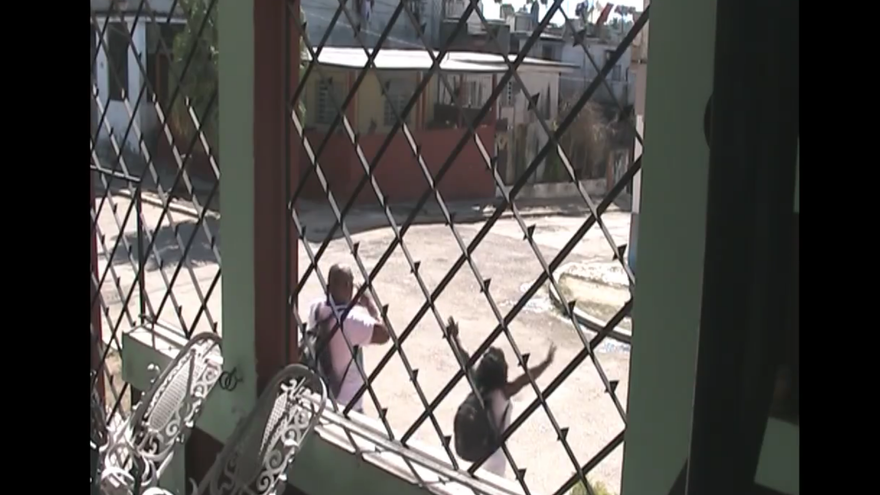
Multiple Gangs ‘Implement Terror’ in Santiago de Cuba, Admits the Ministry of the Interior

The lieutenant colonel stressed that the assault had ended with several wounded. (Capture)

14ymedio bigger14ymedio, Havana, 27 January 2024 — Young people, armed with knives and machetes, and organized into violent gangs. These are the members of the multiple “groups” that, according to a lieutenant colonel of the Ministry of the Interior during a recent public appearance, “implement terror” in Santiago de Cuba.

video of the meeting, released by independent journalist Yosmany Mayeta, shows dozens of neighbors of the Abel Santamaría neighborhood in Santiago listening to the officer’s speech, surrounded by other police agents. The purpose was to report on the arrest of five young members of a gang who, wielding knives, assaulted a cafeteria in the early morning of January 7.

The lieutenant colonel stressed that it was an “organized group,” and that the assault ended with an employee – from whom they took clothes and money – receiving minor injuries, and a customer whose “right hand was amputated” while trying to escape from the assailants with another person. The mutilated person – whom the officer does not identify – is, according to Mayeta, a lineman from the Santiago Empresa Eléctrica, David Enrique Perdomo Álvarez. According to the recording, “he is still recovering.” continue reading

For the soldier, this “unfit behavior” of the five gang members is shared with many other criminals from Santiago de Cuba

For the soldier, this “unfit behavior” of the five gang members is shared, he insisted, with many other criminals from Santiago de Cuba. “We know who they are and we are going to get them,” he promised, speaking on behalf of “all the organs” of the Ministry of the Interior that accompanied him. He added that, after the interrogation of the five detainees, they gathered more information about “the different groups that operate in these places” and “beyond, in the city of Santiago.”

The lieutenant colonel spared no promise to the population. “We can’t keep having this type of thing. We are going to act severely. They will be sanctioned, have confidence,” he said, before a woman interrupted his speech to take the floor and say that her confidence in the police was only “up to a point.” She then told the story of her son, a university professor who lacks a leg, and who on May 7, 2023 was assaulted by two hooded people. “They covered him with a sheet, tied it around his neck and pulled him” out the door of his house, she said.

“Until now, no one has ever come to my house to tell me ’this has been done, that has been done,’” complained the woman, who said she had taken the case to the Prosecutor’s Office, in the face of the inaction of the police. “I come back and repeat: I trust [the authorities], but right now I don’t even know what to say,” she finished.

That was “a negative experience,” minimized the lieutenant colonel, who muttered that he had no knowledge of the situation and promised to review the case. The woman’s response to the officer’s promise was categorical: “Right now I don’t believe anyone.”

“They have not solved the cases that have happened; how do they expect the people to trust them?”

In his comment on the video, Mayeta claims to have interviewed one of the attendees at the meeting in Abel Santamaría, a Public Health worker who asked not to be identified, and who affirmed that in that area “there is not only one gang but several.” “They have not solved the cases that have happened; how do they expect the people to trust them?” Mayeta asked.

The escalation of violence in Cuba has gotten out of the hands of the authorities, who opt in most cases for inaction and establish zones of “tolerance” for crime in the cities, where patrols do not dare to circulate.

On January 5, when the police celebrated the anniversary of its founding, the deputy head in Sancti Spíritus asked that, in order to face the “current context of the country,” the State provide the officers with “new instruments, equipment, vehicles and technologies to perfect the mechanisms of the surveillance and patrol system.” Similar requests were made in acts of tribute to the police throughout the country.

The growing insecurity on the streets of the Island is impossible to disguise and demands more and more space in the official press. Curfews are a reality in several locations, despite the fact that the police deny it. In Alquízar, in the province of Artemisa, the authorities denied that people had to stay inside after midnight. However, this newspaper gathered multiple testimonies about the prohibition and confirmed that patrols circulated through the municipality to make sure it was respected.

However, the curfew is increasingly a self-preservation measure by the neighbors themselves. Whether or not the police recommend it, no Cuban dares to walk the streets alone in the early morning hours.

Translated by Regina Anavy

____________

COLLABORATE WITH OUR WORKThe 14ymedio team is committed to practicing serious journalism that reflects Cuba’s reality in all its depth. Thank you for joining us on this long journey. We invite you to continue supporting us by becoming a member of 14ymedio now. Together we can continue transforming journalism in Cuba.
Migrants Pay Up to $40,000 for Amparos – Protection Orders – To Reach the Northern Border of Mexico

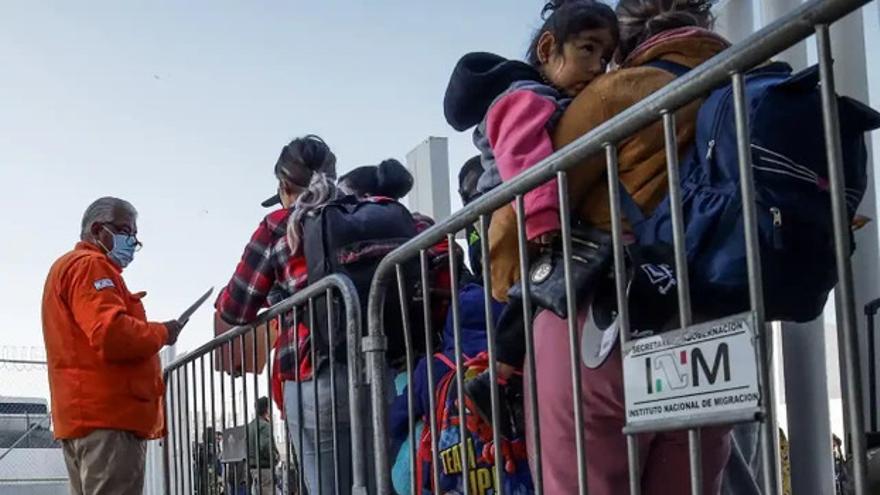
The amparos (protection orders) do not exempt illegal travelers from being arrested by the immigration authorities. (EFE)

14ymedio biggerEFE (via 14ymedio), Tijuana, 27 January 2024 — Authorities on the northern border of Mexico warn that at least 8,000 migrants a month pay up to 40,000 dollars to coyotes (traffickers) for a “package of amparos” (protection orders) with the promise to protect them from deportation for free transit through the country.

David Pérez Tejada, head of the National Institute of Migration (INM) in Baja California, said in an interview with EFE that the number of people who arrived with these amparos rose in the last quarter of 2023, with a monthly trend of 8,000 on average; that is, about 300 people per day.

The representative of Migration in the state, bordering California, explained that these amparos are usually promoted in Tabasco, Veracruz and other cities in the center of the country.

There, the coyotes trap them with the idea of an “all-inclusive” package to reach border cities, such as Tijuana, and from there to cross irregularly to the United States. continue reading

He explained that some people, after crossing the southern border of Mexico, “already have this kind of package, as if it came from a travel agency.”

“They now fly them from their country of origin to a jungle they must pass through and promise that they will protect them when they cross the border irregularly,” he said.

These packages include a plane ticket from Tapachula or from Mexico City to Tijuana

He added that these packages include a plane ticket from Tapachula, on the border with Guatemala, or from Mexico City to Tijuana.

Once they arrive at this border city, he said, they show the protection order for their free transit to an “alleged taxi or Uber driver, who takes them to a safe house or somewhere else to accommodate them for 24 hours or less. The next day they are already on their way to the United States.”

Investigations show that “each package has a different cost depending on the situation of the migrants.”

“If it is a family nucleus, if they bring minors, if they come alone, depending on this and the place of origin, the method and rate change. For example, those from Uzbekistan pay up to 40,000 dollars, the Chinese 20,000, those from Central America 7,000 dollars and the Ecuadorians 10,000,” he said.

Pérez Tejada pointed out that those who most come to Tijuana with these amparos are the Uzbeks and the Chinese.

But the representative of the INM warned that, although they have this legal instrument, that does not exempt them from an administrative procedure if the agents intercept them, in which they must comply with a maximum of 36 hours detention before their release.

Even if they have this legal instrument, that does not exempt them from an administrative procedure

For the INM delegate, this situation represents “a problem” because it complicates the work of the immigration authorities.

“They are the ones who are crossing irregularly (to the United States) and we want to know how to approach them with the help of lawyers, legal associations and research institutes so that we can see how to deal with this protection order,” he said.

The arrival of migrants under amparos had its peak in November last year, when the INM in Baja California registered 13,600 protected migrants. The number has decreased in this January.

Nicole Ramos, director of the organization Al Otro Lado (To The Other Side) in Tijuana, responded to EFE in writing that “it is questionable for the delegate (of Migration) to send the message that the only way to cross (to the United States) is through CBP-One,” the official American application for migrants.

“We all know that it is used to limit the number of asylum seekers who can cross and that CBP (the Office of Customs and Border Protection) refuses to prosecute asylum seekers when they arrive without an appointment, regardless of the person’s circumstances,” he said.

He added that “telling immigrants to use CBP-One, while actively helping the United States to violate the law, is a bit dishonest.”

“We wouldn’t see unscrupulous lawyers in Mexico or organized crime profiting from the desire of migrants to have safe transit to the border to seek asylum if Mexico didn’t act as a watchdog for the U.S. Government,” he said, accusingly.

Translated by Regina Anavy

____________

COLLABORATE WITH OUR WORKThe 14ymedio team is committed to practicing serious journalism that reflects Cuba’s reality in all its depth. Thank you for joining us on this long journey. We invite you to continue supporting us by becoming a member of 14ymedio now. Together we can continue transforming journalism in Cuba.

Jose Marti, in the 21st Century

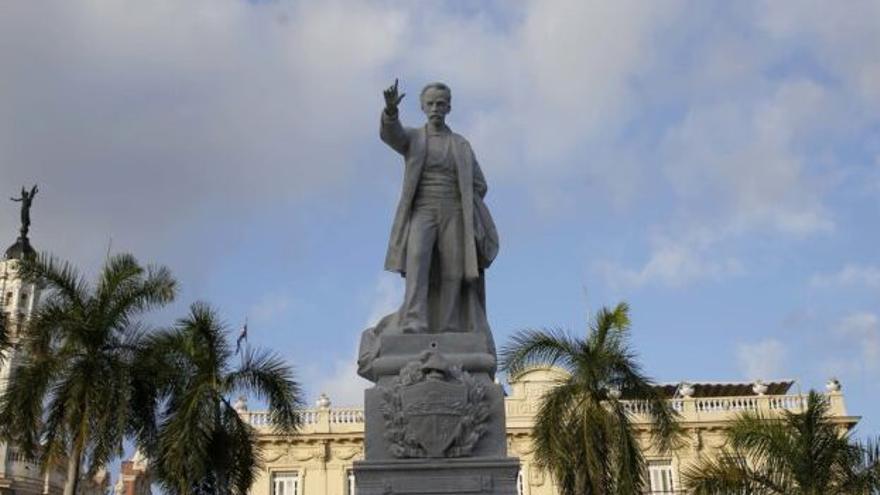
The statue located in the Central Park of Havana, was the first erected in Cuba in honor of José Martí. (Trabajadores)

14ymedio bigger14ymedio, Pedro Corzo, Miami, 28 January 2024 — To mark an anniversary of the birth of the most notable of all Cubans, Jose Martí (January 28, 1853), many of us who honor that gentleman do everything possible to remember such a great date, based on an unwritten commitment that we have contracted.

That tradition was partly carried out by the Pen Club of Cuban Writers in Exile, chaired by the writer Luis de la Paz, celebrated with the participation of Santiago Cárdenas and Emilio Sánchez, two notable intellectuals who have a profound knowledge of Martí’s work. Both were assisted by two other great admirers of the apostle, Julio Estorino and Sara Martínez Castro, who read Martí’s poems.

Martí’s first action in his struggle for independence is not associated with war, as happened with most of our heroes. His activities began by publishing writings against Spain and by calling a fellow student who had enlisted in the Spanish Army to fight the Mambises of the Ten Years’ War a traitor. For that reason he went to prison and was later exiled to Spain.

It must be recognized that most of the notable personalities who fought for the independence of Spain, members of a glorious and abundant heritage in which Simón Bolívar and Jose de San Martin stand out, patricians of strong continue reading

national convictions, leadership and indisputable military talent, left indelible traces by establishing the foundations of several republics in the hemisphere.

Martí, we all know, was not a warrior but, by far, the most important promoter of Cuba’s independence from Spain

That glorious group is mainly made up of men of arms. However, we must include other heroes who, although they did not stand out for their talent as warriors, were great thinkers and efficient organizers, capable of cementing new republics, as was the case of José Martí, a hero whose life’s work led Cuba to independence.

Martí, we all know, was not a warrior, but, by far, the most important promoter of Cuba’s independence from Spain and the most notable organizer of the “just and necessary war,” an expression which shows that he conceived of military conflict as the only way to achieve emancipation of the homeland.

He fell in his first fight, facing the sun, as he had requested in his Versos Sencillos, contrary to the most distinguished military leaders in the hemisphere who did not die in the heat of the battle. His death in Dos Ríos, at only 42 years old, left the Cuban independence fighters orphaned by their most lucid thinker, the only man, as history has shown, capable of working in a republic “with everyone and for the good of all.”

Despite his early death, he left a vast and profound work that remains current and valid. Reading Martí in the present is to access a fresh and contemporary knowledge. All his work exudes sensitivity and neighborly love, as he wrote in another simple verse: “I cultivate a white rose in July as in January, for the sincere friend who gives me his hand freely, and for the cruel one who tears out the heart with which I live, neither thistle nor arugula do I grow, I cultivate a white rose.”

Reading Martí in the present is to access a fresh and contemporary knowledge, which is that all his work exudes sensitivity and neighborly love

Martí’s thought is deeply human. “There is no better homeland, Cubans, than the one that is won with one’s own effort. The foreign sea is made of blood. No one loves or forgives if not our country,” he wrote.

Martí’s work retains relevance and validity. It has not lost strength; it has not aged; it remains as vibrant as ever. “Whoever wants a secure homeland must fight for it. Whoever doesn’t will live under threat of whip and banishment, considered a wild beast, thrown from one country to another, smiling before charity, earning the disdain of free men and the death of his soul.”

And in these times in which the fragmentation of our rights and the respect that both minorities and majorities deserve are appreciated, what is better than this: “Man does not have any special rights because he belongs to one or another race; call him a man and all his rights are already given. The black man, by being black, is not inferior or superior to any other man: the white man who calls me a black man sins by being redundant; the black man who calls me a white man sins by being redundant. Everything that divides men, everything that specifies, separates or encloses them, is a sin against humanity.”

Translated by Regina Anavy

____________

COLLABORATE WITH OUR WORKThe 14ymedio team is committed to practicing serious journalism that reflects Cuba’s reality in all its depth. Thank you for joining us on this long journey. We invite you to continue supporting us by becoming a member of 14ymedio now. Together we can continue transforming journalism in Cuba.

Cuban Police Dismantle an Illegal Sale of Fuel a Few Steps From a Gas Station

Photo of the police operation released by State Security. (El Cubano Fiel/Facebook)

14ymedio bigger14ymedio, Havana, January 28, 2024 — The sale of fuel has become a picturesque business in the Havana municipality of Guanabacoa but, above all, an illegal trade that, in plain view, has grown. This Saturday, a “Cupet house” was dismantled by State Security and the police. An individual, identified as Ángel, was engaged in the resale of gasoline and diesel. The arrest happened a few days after 14ymedio pointed out multiple irregularities in the management of the gas stations.

“He thought he had a gas station in his house and could continue to profit from the needs of the people, but the police pounced on him,” El Cubano Fiel (the Faithful Cuban) published on his Facebook page, managed by State Security, and this was later reposted by the Council of the Municipal Administration of Guanabacoa.

“Neighbors on San Francisco Street between Máximo Gómez and Corral Falso commented that Ángel wanted to continue selling the fuel illegally, and when he loaded the fuel as usual in a vehicle, the police arrived and stopped him.” continue reading

Ángel “was wheeling and dealing for a while, selling fuel ’on the left’ without standing in the annoying lines at the gas stations like other drivers,” says State Security. The post also shows photos of police officers in the home of the reseller, who had “a large amount of fuel and plastic containers for storage.” You can also see some sealed boxes guarded by police officers, but no more details of the arrest have been offered.

Ángel “was wheeling and dealing for a while, selling fuel ‘on the left’ without standing in the annoying lines at the gas stations like other drivers”

The text, in addition, was shared on Telegram by Esther, the boss of the Guanabacoa gas stations, in charge of organizing the fuel line and the subject of several 14ymedio reports. The drivers, in order to buy fuel, must be noted down on a detailed list that the local government ordered prepared during the June 2023 crisis, she said.

For Esther herself, as for the hundreds of Guanabacoa customers, Ángel’s arrest is not a surprise. On the same Telegram channel, several customers complained that the workers at the gas station ignore the endless line of drivers, and that “they have accepted money even from tourists, mocking those who stay there” night and day said one customer last week.

But the illegalities start from the same list that Esther manages. For example, in the document that collects the more than 3,600 customers of the Los Paraguas gas station, on January 11, this newspaper found that 114 are repeated up to four times and 77 do not have a license plate – a requirement that the woman always demands. In the case of the Corral Falso service center, where almost 3,000 names were registered, there are 168 that are repeated up to four times and 40 without a plate. About 1,003 customers appeared on both lists.

According to Esther herself, days later, “the government of Guanabacoa took control of the line” after there “were too many profiteers, plus no one denounced them.” The organization was reactivated shortly before the announcement of the increase in fuel prices, which will come into force next week.

The price of gasoline and diesel on the Island will be five times greater from February 1. The cost of premium, gasoline will go from 30 pesos per liter to 156 ($1.30, at the official exchange rate) while the diesel will rise from the current 27.5 pesos to 150 ($1.25). Vicente La O Levy, Minister of Energy and Mines, said that the new measures will “gradually achieve a stable supply,” although he added that “it cannot be insured from the first day of implementation.”

Translated by Regina Anavy

____________

COLLABORATE WITH OUR WORKThe 14ymedio team is committed to practicing serious journalism that reflects Cuba’s reality in all its depth. Thank you for joining us on this long journey. We invite you to continue supporting us by becoming a member of 14ymedio now. Together we can continue transforming journalism in Cuba.
Only One of the 20 U-15 Cuban Players Who Won Silver in the 2022 World Cup Remains in Cuba

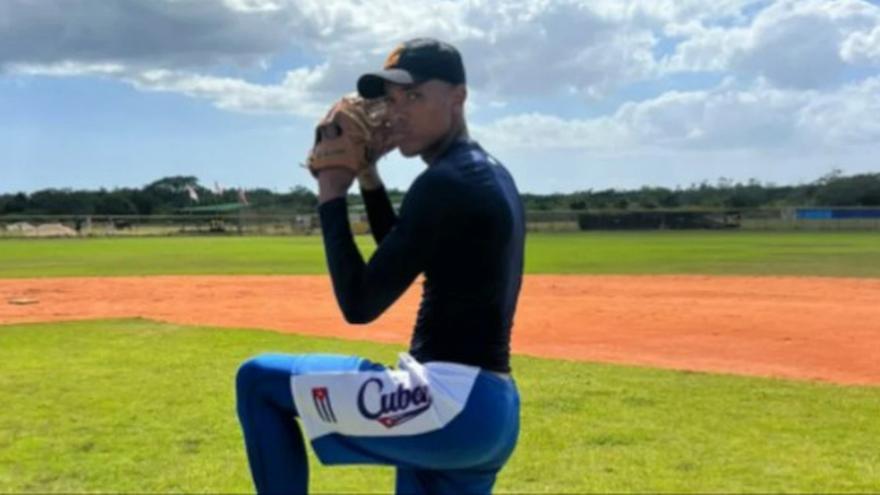
Yordan Rodríguez traveled to the Dominican Republic with the purpose of signing with the MLB. (Facebook/Francys Romero)

14ymedio bigger14ymedio, Havana, 28 January 2024 — With the departure from Cuba on January 26 of the prospective pitcher Yordan Rodríguez, only one of the members of the under-15 baseball team that attended the World Cup of that category in 2022, held in the State of Sonora, Mexico, remains on the Island.

According to journalist Francys Romero, the athlete traveled to the Dominican Republic where he seeks to sign a contract with a Major League Baseball organization [MLB]. Rodríguez, a native of the province of Guantánamo, has an excellent physical condition: a height of 6 ’4″ and pitches that reach 89 mph.

Yordan Rodríguez, in the last U-15 Championship in Cuba, offered a no-hitter, and some time after the World Cup he led the pitchers of his category in strikeouts (58). In addition, he averaged 2.66 effectiveness. continue reading

The massive exodus of the members of the team that won the silver medal in the 2022 event deals a hard blow to the future of national sports in Cuba

The massive exodus of the members of the team that won the silver medal in the 2022 event deals a severe blow to the future of national sports in Cuba, by directly undermining its reserve of young players. Just three days ago, 14ymedio published the departure from the Island of outfielder Maikol Rodríguez, also to the Dominican Republic.

Romero explains that the figures for this team represent “something unprecedented.” In just 14 months, 95% of the roster has left the country (19 out of 20 players). “Previously, almost all the national teams had players in lower categories who left, but not in such a short period of time or in such a high percentage as that of this Cuba U-15 of 2022,” adds the sports journalist.

In the text The dream and reality. Stories of the emigration of Cuban baseball (1960-2018), Romero says that every year the average age of the baseball players who leave the Island decreases. The average age was 24.4 years in 2015; three years later it was reduced to 17.9.

Romero explains that the figures for this team represent “something unprecedented”

With his departure from the Island, Yordan Rodríguez joins the list of former members of his team who left Cuba with the aspiration to enter the MLB and thus improve their economic and professional training conditions.

Until the 25th, in addition to Maikol Rodríguez, the following members of the U-15 team had left Cuba: Alejandro Cruz, Mailon Batista, Robier Hernández, Alex Santiago, Pedro Danguillecourt, Jaider Suárez, Dulieski Ferrán, Ernest Machado, Yosniel Menéndez, Roberto Peña, Segian Pérez, Alejandro Prieto, Danel Reyes, Ronald Terrero, Jonathan Valle, Yunior Villavicencio and Cristian Zamora. Only the catcher, Yaidel Ruíz, has remained in the country.

Translated by Regina Anavy

____________

COLLABORATE WITH OUR WORKThe 14ymedio team is committed to practicing serious journalism that reflects Cuba’s reality in all its depth. Thank you for joining us on this long journey. We invite you to continue supporting us by becoming a member of 14ymedio now. Together we can continue transforming journalism in Cuba.