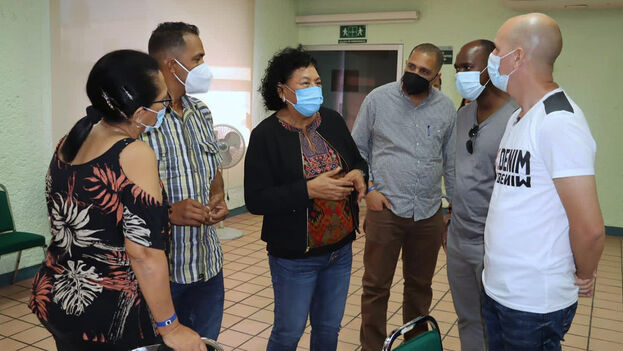
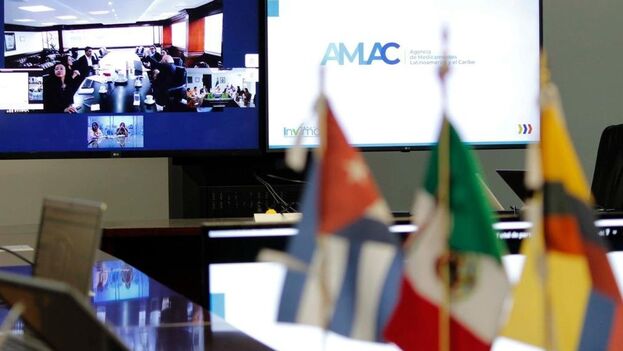
At this Thursday’s meeting between the drug regulatory agencies and the foreign ministries of Cuba, Colombia and Mexico, the creation of the joint body was announced. (Government of Mexico)
14ymedio, Madrid, 17 March 2023 — Mexico, Colombia and Cuba announced the creation of a Medication Agency of Latin America and the Caribbean (AMLAC), with which they plan to emulate the European Medication Agency (EMA). The initiative aims to “consolidate the self-sufficiency of strategic inputs in the region” and strengthen the authorization of drugs and vaccines during health emergencies through common regulatory frameworks.
The project had been proposed in January of this year by Mexico during the Summit of the Community of Latin American and Caribbean States (CELAC), and although at that meeting many countries expressed their desire to join — Bolivia, Dominica, Ecuador, El Salvador, Honduras, Jamaica and the Dominican Republic — yesterday’s virtual meeting including only the Cuban, Colombian and Mexican health authorities, who announced the initiative.
The meeting was attended by directors of the National Institute of Drug and Food Surveillance (IMVIMA) of Colombia, the Center for the State Control of Medicines, Equipment and Medical Devices of Cuba (CECMED); and the Federal Commission for Protection against Health Risks (COFEPRIS) of Mexico, in addition to the foreign ministries of the three countries, according to a statement by the Mexican Secretary of Health.
The new organization, they added, also seeks to encourage and facilitate research and development of innovative projects. In this way, an attempt will be made to cover “the technological and organizational capacity gap for the development of raw materials, pharmaceuticals and health technologies to better respond to public health needs.” continue reading
In the absence of specifics, yesterday’s information points to a cooperation mechanism that would allow Cuba to have the resources that its economy — in critical condition — and the embargo complicate, and to obtain them through other countries that don’t have those impediments. In addition, regional regulation would facilitate the sale of drugs and vaccines to the Island.
In the same way as the EMA, all countries would maintain their own regulatory agency, but AMLAC would be responsible for centralizing the evaluation of medicines that, once they are are approved, could be marketed in all member countries without waiting for the approval of each and every one of the national regulators.
In addition, the approval of the World Health Organization (WHO) would not be a prerequisite for commercialization, as has happened with Cuban vaccines against COVID-19, which Havana has sold to several countries without the endorsement of the international regulator. The approval of several national regulators has allowed the Island to place its preparations, with the case of Mexico at the forefront. COFEPRIS gave the green light in December 2021 to Abdala, the Cuban vaccine, and bought at least nine million doses. However, a year later, Mexico had barely used 262,540 doses, less than 3%.
This integration process takes place at the beginning of the anti-inflation summit, also devised by Andrés Manuel López Obrador, which was planned for Friday but yesterday was confirmed for April 5. The virtual meeting was revealed by Argentine President Alberto Fernández — who is recovering from a herniated disc operation this Wednesday — on February 26 to the press, and it was planned that Brazil and Colombia — the other two large economies of the region — would unite together with Cuba to create a product exchange mechanism in order to contain inflation.
Finally, the meeting will be online and the guests are multiplying, according to López Obrador speaking this Thursday in his daily conference. In addition to those already mentioned, there will be the presidents of Bolivia, Chile and Honduras, as well as the prime ministers of Belize, Johnny Briceño, and of Saint Vincent and the Grenadines, Ralph Gonsalves.
Those present have the mission of “advancing the agreement,” said the Mexican, who responded that the list of countries “is going to be expanded little by little” when asked about some absentees, such as Peru.
López Obrador insisted that the objective is “to achieve good prices for the domestic markets of the countries, through the reduction of tariffs and other trade barriers,” and that the price of food plays a very important role in the second meeting. In addition, he stated that the Development Bank of Latin America (CAF) will provide “technical assistance” to the participating countries.
Christian Asinelli, corporate vice president of Strategic Programming of the entity, confirmed it on Twitter, where he said that the CAF “will continue to strengthen cooperation and financing to the countries of the region, in order to address inflation and its impacts.”
Pending more details on how they intend to coordinate the mechanism, the disparity in the economies of the member countries will be one of the main burdens, as well as debt, very different inflation rates and almost no trade exchange between the different countries.
Translated by Regina Anavy
____________
COLLABORATE WITH OUR WORK: The 14ymedio team is committed to practicing serious journalism that reflects Cuba’s reality in all its depth. Thank you for joining us on this long journey. We invite you to continue supporting us by becoming a member of 14ymedio now. Together we can continue transforming journalism in Cuba.
The serial number was the same on all the false $100 bills: ME42703207A.
14ymedio, Havana, March 14, 2023 — Three people were arrested in Sancti Spíritus for selling counterfeit dollars, but the report published on Tuesday in the official press suggests that there may be more involved in the scheme.
According to Escambray, the detainees earned about 160,000 pesos [$1,000]* for each operation, using counterfeit $100 bills. The provincial newspaper also says that each victim was given between 800 and 1,500 of these dollars at the exchange rate on the informal market (between 160 and 170 pesos per dollar), and for each transaction the profit was between 128,000 pesos [$800] and 255,000 pesos [$1,594].
Four people were affected, the newspaper continues, and it asks readers for help in finding other possible victims.
The scammers, accused of the crime of counterfeiting, advertised themselves as a couple through the Revolico classified ads portal, and once the potential victim was contacted, they were sent to a fake Facebook profile. continue reading
Using Messenger and a phone number, says Escambray, served to establish “a climate of greater trust.” For transactions, the woman used to go to the homes of those who wanted to buy. “She always tried to look friendly and dressed in a sporty style; to hide her identity she wore glasses and a backpack. But the final convincing touch was that she wore a doctor’s gown to the meetings,” says the provincial newspaper, which does not specify the presumption of innocence that should apply to every accused. “She arrived on time like a Swiss watch; sometimes on a bicycle and at others in a rented car. Now in the victim’s home, she did her job so well that none of the ’customers’ stopped to look closely at the American bills they had just bought.” The serial number was the same on each one: ME42703207A.
Escambray continues the story by quoting a source in the headquarters of the Criminal Investigation Department of the Ministry of the Interior: “Once the victim was swindled, the accused returned home to safely call the supplier of the counterfeit bills. She then gave him between 20,000 and 50,000 pesos [$125-$312], depending on the amount sold, as a reward for getting away with the scam.”
*Using the rate of 160 pesos to one dollar.
Translated by Regina Anavy
________________
COLLABORATE WITH OUR WORK: The 14ymedio team is committed to practicing serious journalism that reflects Cuba’s reality in all its depth. Thank you for joining us on this long journey. We invite you to continue supporting us by becoming a member of 14ymedio now. Together we can continue transforming journalism in Cuba.
The services sector is confirmed as the leader among the new companies created on the Island, with 3,014 companies, 45% of the total. (EFE)
14ymedio, Madrid, 17 March 2023 — Cuban authorities were clear when they announced the creation of micro, small and medium-sized enterprises (SMEs) and non-agricultural cooperatives: the priority would be food production. The reality is that, despite the indication of preferentially authorizing these companies, only 15.3% (1,029) of the 6,704 created, up to the end of January, were involved in food. They were surpassed by gastronomic premises or supermarkets, grouped as food marketers, which with 1,273 reach 19% of the total and highlight the scarce contribution of private individuals to a state sector that has collapsed.
The services sector is confirmed as the leader among the new companies created on the Island, with 3,014 companies, some 45% of the total. “Other productions” comes in last at 21%, with 1,388 new businesses.
The data come from an analysis published this Friday by the official press in which the numbers for SMEs and non-agricultural cooperatives created through January 31, 2023 are broken down. On Thursday, more were added to a list currently composed of 7,225 businesses.
Among the most enigmatic data is that of employment. The figures indicate that 179,317 jobs were created, a figure celebrated by the report, which indicates that “development will tell if they are more or less than those required by each business or project. In any case, it is relevant for bringing in family income.” continue reading
However, to know the scope of this data it would be necessary to know how many of those jobs have been deducted from self-employment, since 3,310 of these new entities are repurposed self-employed businesses. The scale, in this sense, is balanced, since there are already 2,302 newly created jobs, when initially they were a small percentage.
The most prominent data indicate that only 42 of these businesses are engaged in exports — always through a state entity. This is even more serious if you take into account that last year when there were only 1,286 SMEs, there were already 32 that did business abroad. The exponential growth of authorized enterprises is not reflected in their contribution to the foreign sector.
By province, and as expected, Havana is ahead as a center for new initiatives, of which 2,631 are private, 43 are state and 24 are private cooperatives. The western area of the Island accounts for 62% of these businesses. Granma province has 608 private, 6 state and 5 private cooperatives, and is the province that has the most, although it is a great distance from Havana. Santiago de Cuba, Holguín and Matanzas now have around 400.
“There are fewer in Artemisa and Sancti Spíritus. The concentration of SMEs and non-agricultural cooperatives is observed in the capitals,” says the report, which highlights the importance of the 1,080 local development projects — mostly located in the center of the Island — which, in its opinion, “can increase the supply of goods and services to the population; in particular, of food.
Although the authors of the text — Doctor of Science Victoria Pérez Izquierdo and a work culture research team from the Cuban Institute of Anthropology — tend to be optimistic when pointing out that the dizzying increase in “economic actors occurs despite an unfavorable economic context, which affects access to basic inputs for the development of enterprises,” their doubts are visible.
“The questions would be,” they conclude, “when will these actors generate greater availability of food in the medium term? What obstacles do they have today in the production and sale of their goods and services? What can be transformed or modified so that these actors can increase their productive results?”
Cubadebate believes that the data reveal the need for a “better articulation” of new SMEs, as well as increasing their access to the foreign exchange market, lessening bureaucracy and designing public policies for international trade, among other steps.
The optimism generated by the timid openness to the private sector through micro, small and medium-sized enterprises has been drifting among the population and the entrepreneurs, who themselves fear or are suspicious of those who manage to create a prosperous business, since their proximity to the Government is systematically perceived.
A report by Cuba Siglo 21, a center based in Miami, entitled “Entrepreneurship in Cuba suffocated by Gaesa,” describes the SME law as “false openness,” which has served to “drown” the private sector that was beginning to emerge on the Island after the reforms of Raúl Castro, to create a kind of caste that is close to the regime, to attract foreign investment and facilitate a new rapprochement with the United States.
The same organization pointed out in January that the meetings between the Governments of Cuba and Russia confirm that the transition from a “model with a nationalized economy” to the “Russian mafia market” scheme is being implemented.
Translated by Regina Anavy
____________
COLLABORATE WITH OUR WORK: The 14ymedio team is committed to practicing serious journalism that reflects Cuba’s reality in all its depth. Thank you for joining us on this long journey. We invite you to continue supporting us by becoming a member of 14ymedio now. Together we can continue transforming journalism in Cuba.
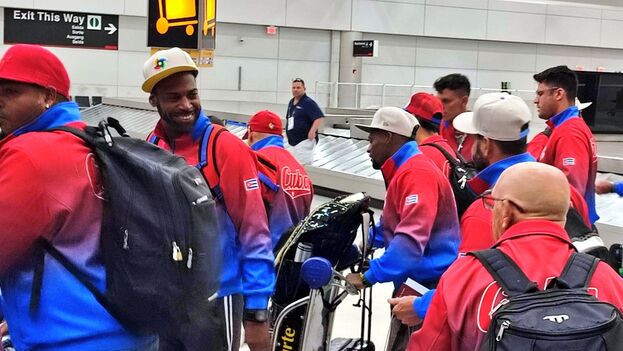
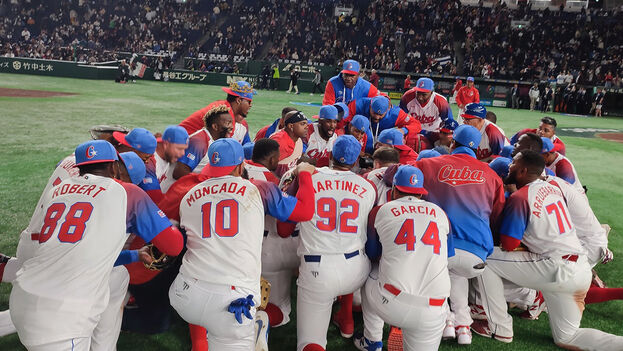
Cuba’s team upon arrival in Miami, where it will face the United States or Venezuela. (Jit)
14ymedio, Havana, 16 March 2023 — Cuba’s baseball players have already arrived in Miami. Since the 4-3 victory over Australia, everything has been “joyful.” The “dancing” spread to the clubhouse, said manager Armando Mandy Johnson. On the charter flight from Japan to Miami, the “shouting” never stopped.
The team will play at the headquarters that the Díaz-Canel Government has tried to avoid since the birth of the World Baseball Classic, according to Diario Libre journalist Nathanael Pérez Neró. “To the point that he asked to play the first rounds in Asia.”
On the streets, there is indignation about the cost of tickets. Tickets are sold at up to $1,229, and the cheapest price is $289, very high for a Cuban who earns on average between $500 and $700 a week.
Some workers of Cuban origin wanted to see the Cuban baseball team but “were appalled at the prices of the seats,” says José, an Island national who emigrated in search of better living conditions for his family and now works in a restaurant. “None of us had any intention of protesting or anything like that.”
José mentioned that “the restaurant managers were upset” with the Cuban team in Miami. The main topic of discussion was the demonstrations against Team Asere, the team reinforced with Major League players, which represents the Regime.
The Cuban team is in Miami, where thousands of Cubans emigrated after continue reading
Fidel Castro’s revolution in 1959. The largest group of exiles opposed to the Regime is also concentrated in this city and it is where, according to the 2019 American Community Survey, 999,602 inhabitants are of Cuban origin, which represents 36.2% of the total of 2,761,581 people.
“At least it will be an interesting spectacle to see Cuba, because a team from the Island has never played a tournament of such magnitude,” wrote Jorge Ebro, a journalist from Matanzas with ElNuevo Herald. “Some insist that this group has nothing to do with politics.”
A constant concern for the Regime has been the desertions of athletes; however, even if there were some in this group of players, they would be few. Several of these baseball players do not have ties with the Cuban National Institute of Sport, Physical Education and Recreation (INDER) because they are independent players. In addition, those who play in the Japanese league, such as Liván Moinelo, Yariel Rodríguez, Raidel Martínez, Yurisbel Gracial, Ariel Martínez and Alfredo Despaigne, must have the permission of their clubs in order to be hired by a Major League team.
Another of the fears is the controversy that has occurred on social networks, which has called for a demonstration against the national baseball team.
Cuba’s next game will be on Sunday at LoanDepot Park, home of the Marlins, located in Little Havana. The team will have to deal with an environment of protests.
As if the sports panorama were not already controversial, Cuban president Miguel Díaz-Canel finished politicizing it on his social networks. “March 15, such a special day. Cuba had to win,” he posted on his Twitter account after the triumph over Australia.
Díaz-Canel counted on the participation of Lis Cuesta, his wife, who posted an image on Twitter with the caption: “Babalaos get going!!! Water and eggshells on the ground.” [An appeal to the priests of Santería and an offering for positive energy]
This politicization led former spy Gerardo Hernández to quote José Martí when referring to Team Asere: “Patriotism purifies and exalts men.”
The team of coaches took a day off on Thursday. According to the official media Jit, “They will spend the day completing their analyses in relation to the game between the United States and Venezuela on Sunday. The winner will face Cuba in the next round.”
The preparation game prior to the semifinal was ruled out, and in the next few hours the starter will be made official for Team Asere, the first chance for Cuba since 2006, when it celebrated a run-up in the first edition of these battles.
Translated by Regina Anavy
____________
COLLABORATE WITH OUR WORK: The 14ymedio team is committed to practicing serious journalism that reflects Cuba’s reality in all its depth. Thank you for joining us on this long journey. We invite you to continue supporting us by becoming a member of 14ymedio now. Together we can continue transforming journalism in Cuba.
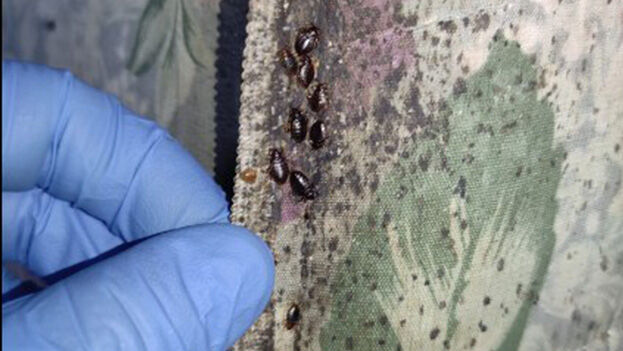
Some social media users sell insecticides to fight bedbugs. (Lázaro Javier Flores)
14ymedio, Havana, 16 March 2023 — Families in Santiago de Cuba must resort to home methods to fight bedbugs due to the lack of chemical insecticides to eliminate them, said biologist Mirtha Pérez Menzies in an interview with Sierra Maestra. Until now, the Government had remained silent about the proliferation of the plague in the province, which in recent weeks has invaded schools, hospitals and prisons.
According to the expert, who has studied the plague in the most infested areas, five years ago it was “rare” to receive reports of the presence of bedbugs in the province, but from 2016 the infestation began to grow and has recently caused the temporary closure of schools for fumigation.
Pérez Menzies believes that the proliferation of the pest is associated “with an increase in trips abroad” and the import of packages with clothes, backpacks or shoes, places where insects easily hide. The biologist pointed out that, according to an epidemiological survey, many of the affected families had imported packages that remained for days in airport warehouses, although she admitted that when visiting homes rented by international travelers they did not find the presence of the insect. continue reading
It was also found that some families had bought a handmade mattress and the filling was contaminated. “Sometimes, unscrupulous people make them with rags and other fabrics from the garbage dumps,” the biologist said.
Santiago de Cuba has been one of the provinces with the most health alerts in recent years. In the midst of the increase in COVID-19 infections in 2021, it faced an outbreak of scabies and another of lice, while in 2022 it registered record numbers of dengue fever cases. The authorities recognize that they do not have enough resources to deal with the diseases, so they spread quickly.
To eliminate bedbugs, the health units recommend that families place footwear, sheets, towels, curtains and any other product made of fabric in a nylon bag. Leave it closed for a while, according to the authorities, and the insects will be asphyxiated and die. Families should also remove cardboard boxes or any item that facilitates a hiding place.
Since high temperatures kill the insect, one option is to pour hot water with soap on the bed, mattresses, sofas and walls, which are then left to dry in the sun. Another alternative is to apply petroleum jelly on the legs of furniture to make it difficult for them to climb, and alcohol or any insecticide, but the biologist does not recommend using these products since the insects are resistant and adapt to chemical substances.
The expert in medical entomology explained that bedbugs reproduce in both clean and dirty places, because what they really need to survive is a host and hiding places. She recognized that they proliferate more easily in spaces with dirt.
This insect is also known as a bedbug in reference to its preferred habitat. They usually feed at night, attracted by the heat of the human body and animals. Pérez Menzies explained that its saliva has an anesthetic effect, so people do not feel discomfort when they are bitten.
Once they reach their habitat, the specialist added, they can go for a year and a half without feeding. In addition, they lay five to 10 eggs a day, 500 in their entire life.
Translated by Regina Anavy
____________
COLLABORATE WITH OUR WORK: The 14ymedio team is committed to practicing serious journalism that reflects Cuba’s reality in all its depth. Thank you for joining us on this long journey. We invite you to continue supporting us by becoming a member of 14ymedio now. Together we can continue transforming journalism in Cuba.
Meeting of Cuban doctors in the Mexican state of Guerrero. (Facebook/Salud Guerrero)
14ymedio, Havana, 14 March 2023 — Mexico extended its health agreement with Cuba and will hire another 600 specialists from the Island. As announced on Tuesday by the director of the Mexican Social Security Institute (IMSS), Zoé Robledo, the agreement was finalized with the Cuban Medical Services Marketer, responsible for selecting the health group and defining the salary issue.
Their hiring is part of the Health Plan for Wellbeing implemented by the Mexican Government in 2022, which aims to provide medical services to those who do not have social security. As part of this strategy, workspaces were also created for 27,398 retired doctors to work with IMSS.
Xavier Tello, a consultant and graduate of the National Autonomous University of Mexico, reacted to this announcement on his social networks: “Wouldn’t it be easier to simply offer more decent salaries (90,000 net pesos/month), with permanent contracts and an excellent benefits package?” he asked, referring to active Mexican doctors.
Last February, Tello warned the EFE agency about the hiring of doctors from the Island, which represented, in his opinion, “a terrible forecast of where we want to take health policies. (Cuban doctors) are taking away the possibility of having a decent job from Mexicans and are not solving the basic problem, which is raising the level of Mexican medicine.” continue reading
The health specialist described this arrival of Cuban doctors as a “patch” to fill the places that Mexicans, due to low salaries and transfers to unsafe areas, will not cover. “What [the Government of Mexico] has to do is inject resources. Mexicans should have higher pay and a better job offer. And what López Obrador wants to do is continue paying little and stigmatize Mexican doctors because they don’t want to accept poorly paid jobs.”
Zoé Robledo also mentioned that “another 188 Cuban health workers who were recruited in the national calls” will begin to provide services in the month of April, without specifying the states to which they will be sent. With this, Mexico expects to have 1,429 specialists, who have been hired under the argument of providing care in areas far from Mexico City.
Last October, the Government of Andrés Manuel López Obrador launched a call to cover another 749 spaces with foreign specialists, in which health workers from the Island were also registered. According to what was specified, the selected doctors would be paid $2,600 a month.
Without becoming official, this amount would be the what the Cuban government would pocket for each of the 188 specialists on the Island, who in reality, as various organizations have denounced, will receive only a small percentage.
According to data provided by the federal official, so far 610 Cuban specialists are working in 12 Mexican states. The agreement points out that these doctors would offer consultation in remote areas, such as the Montaña de Guerrero, one of the most dangerous regions in Mexico due to the presence of organized crime groups.
For each of the 641 specialists sent in the first group from Cuba, Mexico pays the Government of the Island 2,042 dollars per month, while the payment for each general practitioner is 1,722. In practice, Cuban physicians are only granted a small stipend during the year in which they work.
Translated by Regina Anavy
____________
COLLABORATE WITH OUR WORK: The 14ymedio team is committed to practicing serious journalism that reflects Cuba’s reality in all its depth. Thank you for joining us on this long journey. We invite you to continue supporting us by becoming a member of 14ymedio now. Together we can continue transforming journalism in Cuba.
After Argentina, Cuba is the country with the most Spaniards residing outside Latin America. (14ymedio)
EFE (via 14ymedio), Madrid, March 16, 2023 — The number of people with Spanish nationality residing abroad reached 2,790,317 as of January 1, 2023, which represents an increase in one year of 47,712 people, 1.7%, according to data published this Thursday by the National Institute of Statistics (INE). Cuba is the sixth country with the most Spaniards: 160,833.
The foreign country where the most Spaniards live is still Argentina (477,465), followed by France (297,142), the United States (192,766), Germany (182,631), the United Kingdom (which despite Brexit has continued to rise, 2.9% in 2022, to 181,181), Mexico (155,543), Brazil (136.611), Venezuela (the only one of the first 10 that has decreased, by 2.8%, to 136,145) and Switzerland (132,384).
In addition to Venezuela, the Spanish population has decreased in Peru (–1.6%), Morocco (–0.9%), Chile (–0.7%), Argentina (–0.6%), Uruguay and Ecuador (–0.1 % in both cases). continue reading
The Census of Spanish Residents Abroad also reveals that of the total, 166,728 were new registrations in 2022, and that 43,593, or 26.1% of these were born in Spain; 98,428, 59.0%, in the country of residence; and 24,797, 14.9%, in other countries.
Almost nine out of 10 of the 43,593 new foreign residents born in Spain registered in European or American countries: 26,430, 60.8%, in European countries and 12,347, 28.4%, in the Americas.
Returning to the entire population of Spanish nationality residing abroad, 1,407,081 are women and 1,383,236 men.
In addition, 1,753,155, 62.8%, are between 16 and 64 years old; 616,798, 22.1%, are 65 or older; and 420,364, 15.1%, are under 16 years old.
Some 58.7% have fixed their residence in America, 37.7% in Europe and 3.6% in the rest of the world, although the largest increases in registrations during 2022 occurred on the European continent, with 32,589 more, ahead of the American, with 19,698 more.
According to this INE statistic, 844,660, 30.2% of the total of almost 2.8 million were born in Spain; 1,626,079, 58.3%, in the country of residence; and 314,532, 11.3%, in other countries (in 0.2% of cases that information is not recorded).
That proportion is similar in the case of those who live in Africa but changes for the rest of the continents: in Europe, Asia and Oceania, because there are more people born in Spain, and in America, because there are more born in the country of residence.
Translated by Regina Anavy
____________
COLLABORATE WITH OUR WORK: The 14ymedio team is committed to practicing serious journalism that reflects Cuba’s reality in all its depth. Thank you for joining us on this long journey. We invite you to continue supporting us by becoming a member of 14ymedio now. Together we can continue transforming journalism in Cuba.
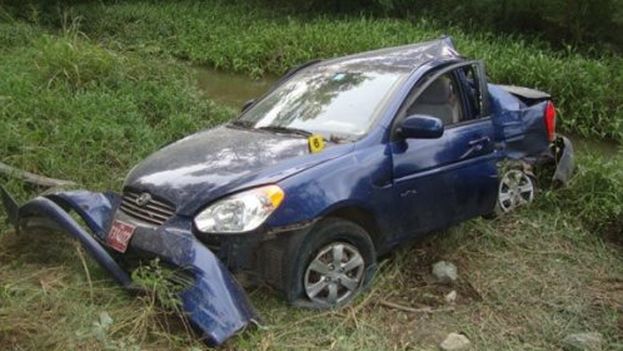
The state in which the car was left in which Oswaldo Payá and Harold Cepero lost their lives more than ten years ago.
EFE (via 14ymedio), Miami, 7 March 2023 — A group of bipartisan senators, led by Democrat Dick Durbin, sent a letter to Tania Reneaum Panszi, executive secretary of the Inter-American Commission on Human Rights (IACHR), to “accelerate the progress of the investigation into the murder” of Cuban opponents Oswaldo Payá and Harold Cepero.
The group includes Senators Marco Rubio (Republican, Florida), Tim Kaine (Democrat, Virginia), Bill Cassidy (Republican, Louisiana), Bob Menéndez (Democrat, New Jersey), Ted Cruz (Republican, Texas), Ben Cardin (Democrat, Maryland) and Mark Warner (Democrat, Virginia).
“We are writing to you to request an update of the investigation into the suspicious and tragic death of Cuban political reformer Oswaldo Payá Sardiñas in 2012. In the more than 10 years since his car fatally left a Cuban road, little or nothing has been done to punish those responsible,” begins the letter dated this Monday, March 6.
Payá’s family denounced from the first moment that it was an attack in which another vehicle intervened and, in 2013, along with Cepero’s family, filed the complaint with the IACHR, which has taken nine years to convene the first public hearing, although it has had the information of the case for a long time. continue reading
“We continue to believe,” the letter adds, “that, even without the cooperation of the Cuban Government, the Inter-American Commission on Human Rights is the most appropriate body to carry out this necessary investigation and accountability. We are concerned about the persistent delays in this effort.”
On December 13, 2021, in an interview with EFE on the eve of the first hearing of “case 9,416” before the IACHR, Rosa María Payá, daughter of the Cuban opponent Oswaldo Payá, stressed that an acknowledgment — and condemnation — by the organization of the responsibility of the Cuban State in the crash in which her father and Harold Cepero lost their lives in 2012 would be “very important” for the families.
“Payá’s work, the sustained threats against him and the key circumstances of the day he died are well documented,” the senators say in their letter.
“The Commission has shown from previous investigations, such as the 2019 High-Level Commission on Nicaragua, that it can carry out its critical work even if the State in question does not cooperate,” the letter reads.
It also adds that “investigations such as that of Payá’s death bring to light not only human rights problems of the past, but also help deter new acts of repression,” the senators wrote in the official communication from the office of Senator Durbin, a democrat for the state of Illinois.
According to the American politicians, “the Payá family and the lawyers of the R.F. Kennedy Center filed the lawsuit with the IACHR more than 9 years ago and have been updating the Commission with all the evidence discovered during this time.”
According to a statement from Senator Durbin’s office, “in 2002 Payá initiated the Varela Project that sought greater political freedom in Cuba through a campaign of peaceful petition and a referendum process, as allowed by the Cuban Constitution.”
“The Cuban government not only rejected the historical effort and blatantly changed the constitutional provision that allowed such a public method for change, but also began a decade of shameful harassment of Payá and his movement,” the statement emphasizes.
“The members of the Organization of American States and the international community expect protection, accountability and justice from the Commission. Therefore, provide us with a timely update on the ongoing and future efforts in the Payá case,” the senators asked Reneaum Panszi.
For the crash in which Payá and Cepero lost their lives, the driver of the vehicle, the Spanish conservative politician Ángel Carromero, was convicted in Cuba and sentenced to four years in prison in Cuba for reckless driving resulting in death. Most of his sentence was served in Spain after the governments of both countries agreed to his return.
Carromero was driving the car without a valid permit in Spain, since he had run out of points after accumulating 42 traffic violations, as revealed by the newspaper El Mundo.
Translated by Regina Anavy
____________
COLLABORATE WITH OUR WORK: The 14ymedio team is committed to practicing serious journalism that reflects Cuba’s reality in all its depth. Thank you for joining us on this long journey. We invite you to continue supporting us by becoming a member of 14ymedio now. Together we can continue transforming journalism in Cuba.
Yariel Rodriguez during this Wednesday’s game with Australia, in which Cuba managed to qualify for the quarterfinals in the World Classic. (EFE)
14ymedio, Rolando Gallardo, Quito, 16 March 2023 — I once heard an influencer, whose name I don’t want to remember, say that the “Cuban opposition was facing a scientific regime using improvisation.” This idea may have arisen creatively and spontaneously or come from the argument of Gene Sharp [an American political scientist]: “The idea that improvisation will give you great success is absurd; it’s exactly the opposite. If you don’t know what you’re doing, you’ll most likely get into serious trouble.”
This is the story of the Cuban opposition’s wild goose chase, always unscientific, far from the clear minds that make it up. There is so little of our awareness of real power that we end up acting without the nobility of victors. This visceral and predictable form of the brothers in opposition to the dictatorship is our Achilles’ heel, because the Regime, scientific, methodical and equipped with propaganda resources, comes, punctures us and already knows what leg we are going to limp on.
The ball is round and comes in a square box, and so is the world, full of supposed contradictions and logical solutions. But if you don’t stop to observe with Buddhist discipline the real problems that happen in front of your nose, they will continue to fuck you adinfinitum. You may not see it yet, but the decrepit Regime and Díaz-Canel passed you a cat for a hare.
The Cuban government is in a clear crisis of prestige, with its symbols and slogans crumbling. The opposition, by chance or persistence, has managed to impose new stories, raised new flags and imprinted new slogans and goals on the Cuban mentality. For the Regime, seeing its ideological edifice built with Soviet cement fall must not be a good sign. They may be singaos [motherfuckers], but they are not fools. So they have given themselves the task of fabricating new victories and feeling renewed pride, flavored with the Cuban Communist Party (PCC). continue reading
The World Classic was the best place to have this little cultural battle. They send the Asere Team with the “mission” of bringing victory to Cuba, “the victim of the blockade,” to the “oppressed people” who made an unforgivable socialist revolution just 90 miles from the largest empire… Well, you know how the propaganda goes. They do it, in addition, knowing how we will act in the face of such a provocation. We will take improvisation out of our pockets and begin to form campaigns without sustenance or empathetic content, to boycott underpaid players who, as history has shown, take advantage of these contests to negotiate the contract-signing of their lives that will take them forever out of that hell in which they live.
Without the slightest attachment to the bases of propaganda, without understanding that marketing, whether commercial or political, seeks to empathize, attract, fall in love with and engage the receiver, we lend ourselves to the Cuban Communist Party’s game. Divide and win, they poisoned the team with Díaz-Canel’s outstretched hand and made the great debate begin of whether or not it was ethical to bite the hand of the “communist stepmother.”
We accept the facts that the official narrative presents to us. We don’t try for a moment an elastic withdrawal and counterattack strategy. We entrench ourselves in the predictable discourse and begin to act on impulse. We start the smear campaigns of a ball team, of people who suffer from inflation like anyone else, who have cousins or acquaintances imprisoned for the demonstrations on July 11, 2021 [11J], Cubans like many others, closer to us than to them, and we made them the embodiment of evil.
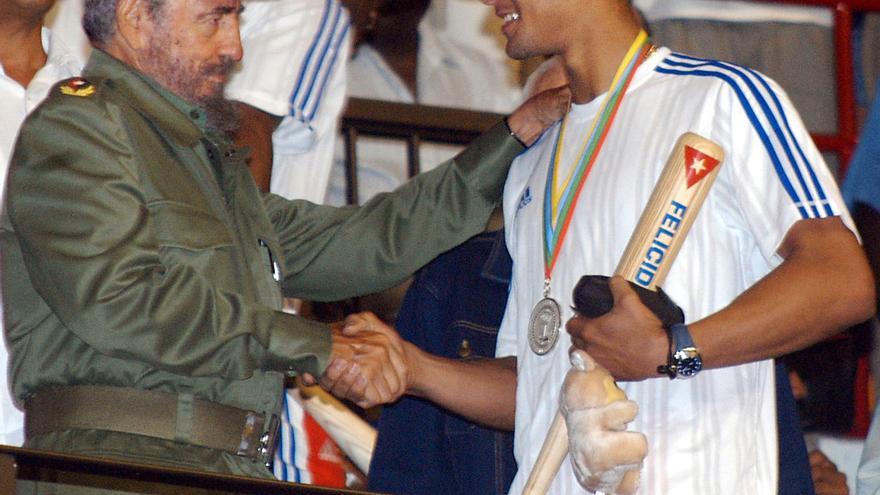
Yulieski Gurriel receiving an award from Fidel Castro in 2006. (Granma)
In this propaganda distraction we were not creative. I think it might be better to give them support, to rob from them the idea that the team is the property of the dictatorship. We could forgive them for any statement. In the end, thousands of Cubans have had to support the Regime circumstantially, while they prepare their getaway. It would be more stoic to reaffirm that sport belongs to the Cuban people and that no sectarian party could abolish that. Aren’t there photos of Yulieski Gurriel receiving awards from Fidel Castro? Isn’t the Gurriel family now a symbol of free and prosperous Cubans in the United States? Aren’t thousands of Cubans going to applaud him and take pictures with him?
We have time to receive Team Asere in style in Miami, the land of free Cubans, the home of the Cuban family. The Cuban team that presents itself in South Florida is always a Home Club. If we were an intelligent opposition, we would fill the stadium with the flags of Cuba, of the United States, with Patria y Vida [Homeland and Life] posters. We would bring shouts of victory and support, so that they feel at home. It is very likely that they will move here soon. I would like to see how the fuck they are going to broadcast on Cuban television a stadium full of happy Cubans, anti-communists and baseball players to the core, supporting the Cuban team and shouting “freedom”! That’s what it’s all about, that’s how you play with science.
Translated by Regina Anavy
____________
COLLABORATE WITH OUR WORK: The 14ymedio team is committed to practicing serious journalism that reflects Cuba’s reality in all its depth. Thank you for joining us on this long journey. We invite you to continue supporting us by becoming a member of 14ymedio now. Together we can continue transforming journalism in Cuba.
The Cuban team will travel to Miami for the semifinal round. (Jit)
14ymedio, Miami, 15 March 2023 — The Cuban baseball team qualified for the semifinal round of the World Classic after beating Australia 4-3 in this Thursday’s game. The so-called Team Asere was among the four best teams of the tournament for the first time in 17 years, despite the absence of two of its star players, Yoenis Céspedes and Andy Ibáñez.
The monumental Tokyo Dome stadium in Japan was the stage in which the team, led by Armando Johnson, achieved success after an uncertain start. Australia put a number on the board in the second inning thanks to Darryl George, who managed to reach second base without being put out, and Aaron Whitefield connected with a sacrifice hit so that his teammate could advance, all this in the face of the pitching by Cuban Yariel Rodríguez.
Team Asere’s reaction came in the third inning. Against Australian relief player Mitch Neunborn, Moncada reached second base from left field, and Luis Robert tied the game.
The Cuban counterattack occurred in the lower part of the fifth inning with three runs. Santos started with a hit and managed to get Moncada and Robert to fill the bases. Alfredo Despaigne connected with a deep high and prompted the run of advantage. Then came two singles in a row from Erisbel Arruebarrena and Yoelkis Guibert, who managed to raise the score to 4-1, in favor of Team Asere.
When everything suggested that the triumph was more than certain, a technical decision made Cuba tremble. Armando Johnson took out Miguel Romero to replace him with the left-hander Roenis Elías. A hesitation of the Cuban in the upper part of the sixth inning allowed Rixon Wingrove to hit a home run, and two runs brought Australia closer.
“Cuba’s leadership improvised in the sixth, and it cost them two runs,” journalist Francys Romero wrote on his social networks. “The replacement of Luis Miguel Romero (35 pitches), the best Cuban pitcher of the tournament, was illogical. Romero had to deliver in the seventh to Moinelo and then to Martínez in the end.”
Roenis Elías adjusted and was able to get out of the sixth and seventh innings without much difficulty, while Livan Moinelo went out to the mound for the eighth inning and, together with Raidel Martinez who closed the game, they were in charge of extinguishing the Australian push.
The next game for the Cuban team will be in Miami on March 19 at 7:00 p.m. at LoanDepot Park, home of the Marlins. The rival has yet to be defined.
Translated by Regina Anavy
____________
COLLABORATE WITH OUR WORK: The 14ymedio team is committed to practicing serious journalism that reflects Cuba’s reality in all its depth. Thank you for joining us on this long journey. We invite you to continue supporting us by becoming a member of 14ymedio now. Together we can continue transforming journalism in Cuba.
The team led by Armando Johnson got two wins for two losses in the first round of the World Classic. (Jit)
14ymedio, Havana, 12 March 2023 — Cuba beat Taiwan 7-1 on the last day of Group A of the World Classic. The result made them dream about the second round of the tournament that takes place in the United States, China and Japan, said the official newspaper Cubadebate. “This is what happened,” said the player from Matanzas, Yadir Drake. “We came to qualify and today we took a big step.”
Enthusiasm reached the Jit newsroom, which pointed out that the team was reinforced for the first time with players from the Major Leagues of the United States, who “don’t believe in the pressure of ’life or death’ duels” and have now qualified for the next round. The media repeated the statement of manager Armando Johnson: “We always said that the team would end up responding, and so it did, first against Panama and now in this game.”
The performance of the athletes led by Johnson was summarized by the Swing Completo portal as that of a team that “did the job” before a weak host, Taiwan. This was demonstrated from the first inning with four home runs that broke the rhythm of the Asians at the Intercontinental Stadium in Taichung.
The Cuban offensive distinguished itself. Yoan Moncada connected with a double to center field. Luis Robert Jr. reached first base after an error by shortstop Kun Yu Chiang. Alfredo Despaigne hit a two-run double. In this way, Cuba got four runs with one out.
The second inning was more measured for Team Asere with two runs. Yoan Moncada had a solo home run, and Roel Santos added one more run with a single. The seventh inning took place after a combination between Yadir Drake and Roel Santo. Taiwan scored after a hit by Wei-Chen Wang.
The Cuban pitching responded with Elian Leyva, who threw 2.1 innings without allowing a run, while Miguel Romero, who was a relief player, got 2.2 innings, also without scores, with four strikeouts in each; Onelki García got none in two innings.
Until that time, there was a good chance that Cuba, which began with defeats against the Netherlands and Italy, would be in the next round. These selections closed the activities of Group A with a 7-1 win by Italy against the Dutch .
Fortune touched Cuba, which ended up as the leader in Group A, with Italy in second place. In the next round the rivals could be Australia or South Korea, and the stage will be at the Tokyo Dome.
The triumph of Team Asere comes after the release of the song MVP, written and performed by rapper Wilger Luis Aranda Campuzano Casdapro and produced by Josh López. The theme, according to the Cuban rapper, is in support of the Cuban national team that is competing in the World Classic.
“It is wrong for some of the fans to put so much pressure on the Cuban team, even many times showing personal disrespect for the players,” Casdapro said. “It’s unfortunate that they are only waiting to see those who are representing the nation fail, when they have so much pride, honor and respect for the flag.”
Translated by Regina Anavy
____________
COLLABORATE WITH OUR WORK: The 14ymedio team is committed to practicing serious journalism that reflects Cuba’s reality in all its depth. Thank you for joining us on this long journey. We invite you to continue supporting us by becoming a member of 14ymedio now. Together we can continue transforming journalism in Cuba.
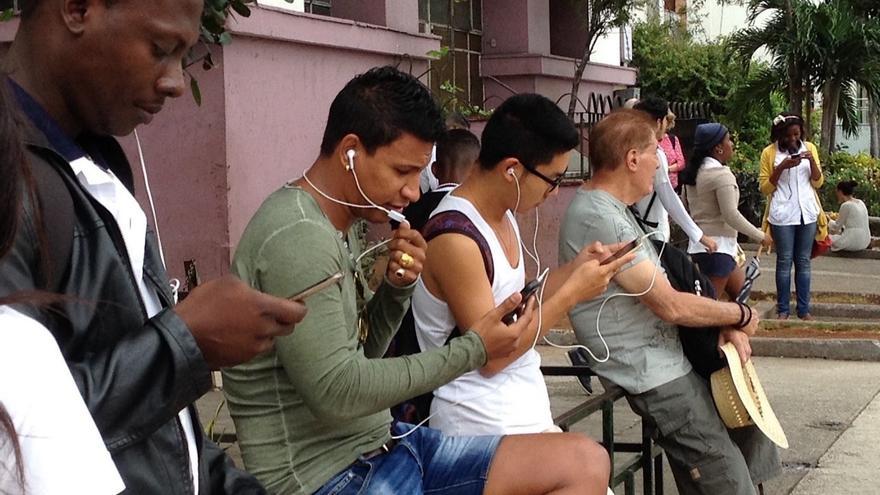
Many times rumors posted online end up being confirmed by independent media or by the authorities themselves. (14ymedio)
14ymedio, Havana, 13 March 13, 2023 — Since the end of 2020, attacks on freedom of expression have increased, and access to information in the country’s online space has been reduced. The Government blocks social networks and independent media, interrupts mobile data connections and resorts to fake profiles on social networks for its disinformation campaigns, which consist of altering public debate and introducing other topics through the massive and aggressive sending of tweets and retweets.
Online propaganda in the country is increasingly becoming an information control tool to silence independent voices and spread disinformation and erroneous information. The control of technologies and social networks provides the Government of the Island with a powerful tool to shape public debates and disseminate information online, while monitoring, censoring and restricting digital public spaces.
14ymedio and Yucabyte collaborate with the aim of collecting and analyzing the information and rumors shared online by the population and the Government of Cuba, to better understand the online space and how it is affected by the different actors. The collection of information and rumors online is not exhaustive; it reflects only a part of the Cuban online space. During this time of collection, 14ymedio and Yucabyte have noticed that many times rumors shared in the online space end up being confirmed by the independent media or by the authorities themselves, but that in the beginning they are just that: rumors.
14ymedio and Yucabyte want to make these analyses available to Cubans and independent organizations so that they can improve the ability to identify, evaluate and counteract disinformation and erroneous information in the online space.
The analyses will be available on the websites of these two media and may change format and length depending on the comments received from readers.
I. Top list of rumors for the month of January 2023
A. Debt in London
B. Hacking of official accounts
C. Poverty – food shortage
D. Violence – crime/theft – femicides
E. Health – hospital conditions and access to medicines.
II. General analysis of the most relevant trends and rumors collected during January 2023
The main rumors collected during the month of January 2023 can be organized into three groups. First, those that register cases of violence on the Island, including robberies, increased crime and femicides; second, those that collect examples of food shortages, scarcity and poverty; and, finally, those that denounce the unsanitary conditions in Cuban medical facilities.
A. Violence, robberies and femicides
The alarm over the escalation of violence in Cuba has been a constant in the reports of rumors since at least November 2022. Although many users argued that crime was a feature of the year-end “environment,” at the end of January it was found that the complaints did not decrease but showed a tendency to be even more serious than those recorded in the second half of last year.
One characteristic of these reports is that they always contain a reference to continue reading
the inaction of the police, the clumsiness or apathy in their investigations and the lack of action before reporting the crime. Another factor, pointed out with the same frequency, is that the crimes are only reported in the official press belatedly and with a note from the Ministry of the Interior, after both the complaints of users and the independent press report them.
Among the most serious rumors of violence in January are the theft of luggage from the Transtur interprovincial buses; the armed robbery of pension money from retirees; the murder perpetrated by a motorcycle police officer of his ex-wife; and the theft and resale of regulated products. In addition, users point out that many of the criminals act with the complicity of local police units, which offer them immunity under certain conditions.
Users point out that many of the criminals act with the complicity of local police units. (14ymedio)
B. Shortages and poverty
In addition to the criminal situation, there are reports about the poverty on the Island. Shortages and rising prices are the starting points for many of the complaints on social networks. In addition, photos of Cubans have been circulating, particularly of the elderly, rummaging through garbage containers in search of food. Images were shared about the sale of products in poor condition and their transfer in terrible hygienic conditions.
The issue of food was talked about on social networks, in addition to the sale of food in online stores that, according to users, are businesses protected by the Regime and the United States Government itself, through one of the most controversial figures, the businessman Hugo Cancio. On the other hand, the terrible diet in schools — small portions of white rice and tomatoes, in many cases — has also been documented.
C. Unhealthiness
Health and hospital conditions, as well as access to medicines, are now common in rumors. In addition, in the first week of the year, several rumors circulated on the networks about the lack of medical personnel in polyclinics and hospitals, presumably due to the unprecedented exodus that the country suffered in 2022. From the shortage of supplies to the terrible state of building construction, criticism also reaches the community services. Notifications about the lack of transportation in funeral homes, the desecration of cemeteries and the delay in funeral services were repeated throughout the month.
In addition to these three groups of rumors, the trial for the non-payment of debts of the Cuban Government in London, the hacking of several official pages and accounts related to the Regime, and the exodus of professionals were also constant topics in January.
III. Most used platforms and format of content
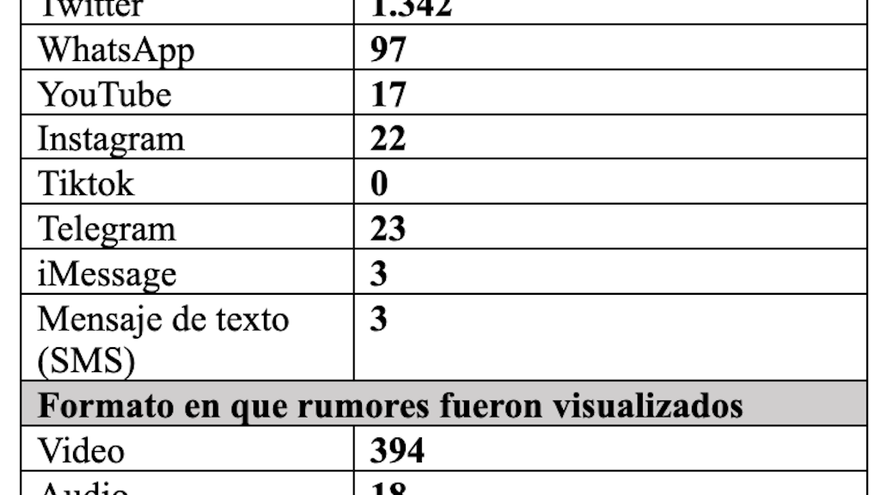
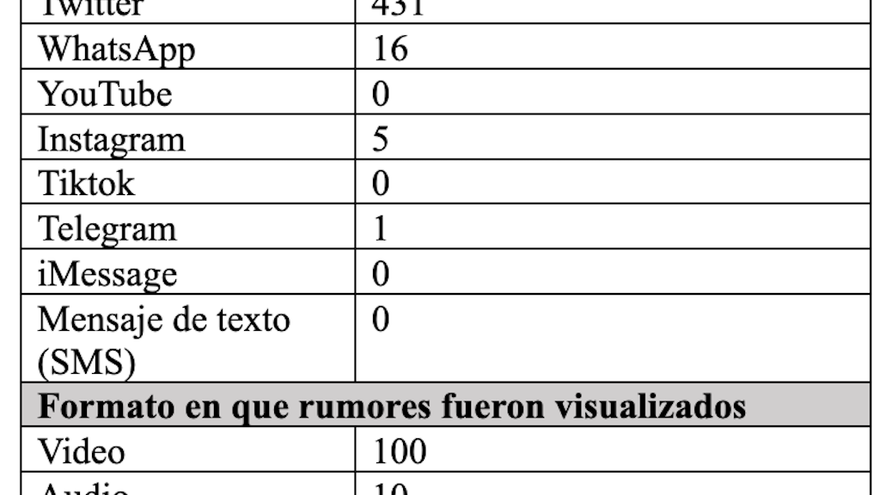
Number of rumors reflected by platform and number of rumors seen.
(14ymedio/Yucabyte)
Format and source of the information
The social networks on which these rumors circulate influence not only the format of the information but also the number of users who receive them. Although Facebook is still the most used platform by Cubans (most of the rumors collected appear in buying and selling groups), it is on Twitter that the most elaborate rumors circulate, usually in threads or screenshots, accompanied by an explanation. Also on Twitter there are numerous profiles that Cubans follow, which recycle the same information that their own followers send them. These accounts expand the scope of the rumors and generate a certain amount of feedback.
It is less common for rumors to be collected on networks such as Instagram or TikTok, which are generally for videos and photographs. The least used source of information is still personal messaging, through applications such as WhatsApp or Telegram.
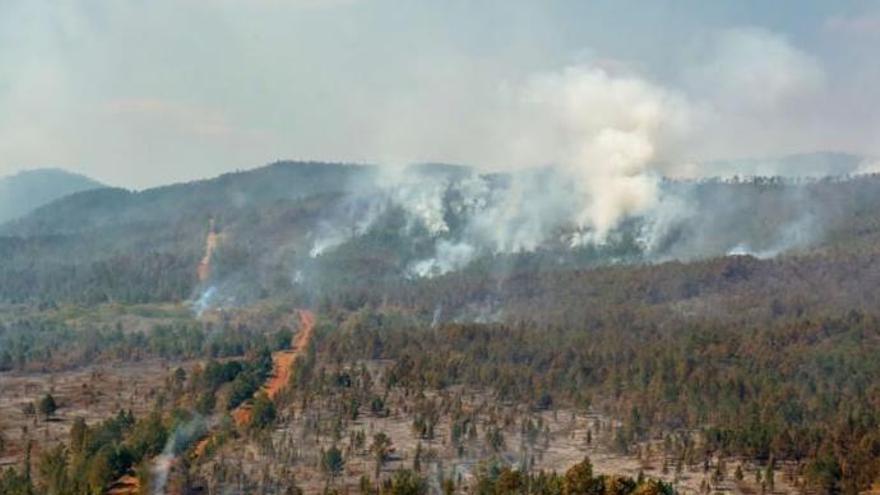
To date, the largest fire is that of Pinares de Mayarí, in the eastern province of Holguín. (Granma)
I. Top list of rumors for the month of February 2023
A. Fires
B. Repression: response to demonstrations, regulations, release of political prisoners
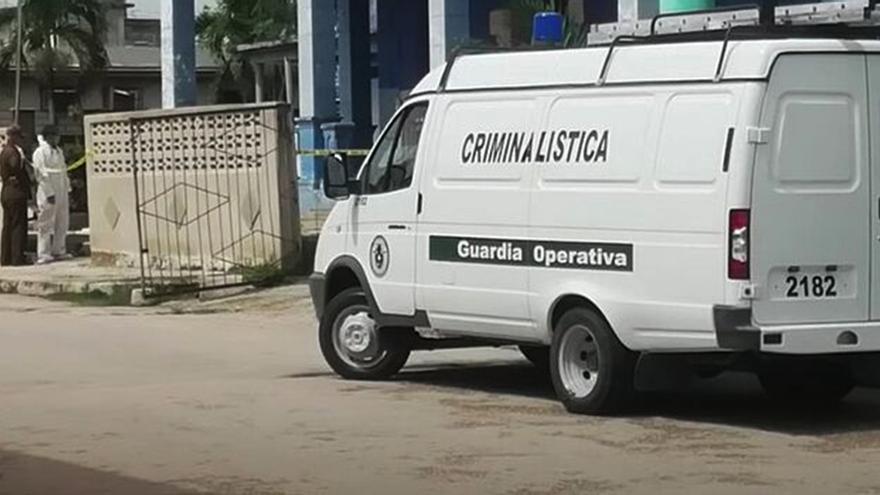
C. Crime: robberies and femicides – concealment of cases
D. Poor conditions: Education and Health – lack of supplies, unsanitary conditions – abandonment of the elderly.
II. General analysis of the most relevant trends and rumors collected during February 2023
The main rumors collected during the month of February 2023 can be organized into three topics. First, those who report fires, including explosions; second, those who report cases of repression, responses to demonstrations, prohibitions on leaving the country (regulations) and the release of political prisoners. Third, there are the rumors that collect cases of crime, including robberies and femicides.
A. Fires
This month, multiple reports of fires across the Island circulated on the networks. To date, the largest is that of Pinares de Mayarí, in the eastern province of Holguín. Apparently, this forest fire originated as a result of the severe drought that affects the country and the speed of the winds. Much of this mountainous area has been on fire for more than 15 days. Some media report that about 3,600 hectares [8,896 acres] of forest have been lost. Several users have shared the comment of a pilot from the area, who said that “it will burn until there is nothing left to burn,” since there are no resources to put it out.
Likewise, rumors were collected about several small fires in green areas of Havana, specifically in the vicinity of road 100, the highway to Pinar del Río and the area of Tulipán, in Nuevo Vedado. So far these have been controlled without major damage. Some users reported the presence of soot in the city, apparently as a result of these fires.
In addition, two other allegedly intentional fires were registered. The first, in a bodega (ration store) in Marianao, in Havana, where it is said that a manager caused the fire to hide the theft of products from the “basic family basket” which is sold through these stores. And the second, in a cane field in Banes, Holguín. A user who calls himself Clandestino Mayor affirms that this fire was “an action taken against the dictatorship.”
To this situation are added other rumors about an explosion, at the beginning of the month, in the historic military park Morro Cabaña, in the capital. Allegedly, one of the cannons used for the historic nightly 9:00 pm cannon shot caused the explosion, generating a small fire that was controlled at the time. Similarly, in the last week of February an explosion was reported in Old Havana, as a result of the handling of a gas canister in a workshop for refrigeration technicians. In the incident, one person died and another, who was seriously injured, died shortly after.
B. Repression: response to demonstrations, regulations, liberation of political prisoners
With the growing exodus that the Island is experiencing, there is a rumor that regulations will begin for workers in “strategic sectors” whom the Government cannot afford to lose. Almost all publications in this regard indicate an increase in travel restrictions for doctors and other health personnel.
During the month, the rumor about the release of Cuban political prisoners was also recurrent, with the mediation of the Catholic Church and several embassies. So far, there have been no clear signs of this possible release (which was already ruled out by Oscar Silvera, Cuban Minister of Justice). Another rumor says that the amnesty could be extended to ordinary inmates, as long as they “have not committed serious crimes or murders,” according to several users.
In this context, and as a result of the deprivation of nationality that the government of Nicaragua applied to its political prisoners and journalists, rumors were raised about the possibility that those imprisoned after the 11 July 2021 protests [11J] will have their citizenship taken away before being banished.
To this situation are added several complaints about the suicide of an 11J protester, 18, allegedly hanged in his cell at the Placetas police station. In addition, it is said that another young protester threatened to take his life after the authorities denied him the medicines he needs for treatment of his mental illness.
Many users also denounced the arrest of protesters in Guanabacoa at the beginning of the month. It was declared on social networks that the demonstration was peaceful, which did not prevent the participants from being arbitrarily detained. Similarly, several users pointed out the apathy of the Cuban people in the face of the claims and demonstrations of the mothers of the political prisoners, activists and relatives.
In mid-February, an alarming wave of rumors circulated about summons for interrogations, some official and others without official notification. The target of these citations were young 11J activists from San Antonio de los Baños, who were released.
The government blocks social media and independent media, disrupts mobile data connections and uses fake social media profiles. (14ymedio
C. Crime: robberies and femicides – concealment of cases
Rumors about assaults and robberies have been the most frequent this month, which respond to an escalation of violence on the Island. In this sense, the number of reports on the actions of gangs in different provinces such as Havana, Mayabeque and Las Tunas is remarkable. Most of them, according to users, are made up of groups of teenagers and children who carry out assaults, in some cases with knives. As a result, injuries and at least one death have been reported.
Among the most serious rumors of violence this month are the attempts to rape and assault minors, perpetrated by men and during daytime hours, in the municipalities of Santa Clara (Villa Clara) and Nuevitas (Camagüey). In addition, it is said that a group of thieves in the Havana municipality of Guanabacoa carried firearms, and that its members were captured by the police. Other rumors were also collected about the thefts from transport and tourism buses in the east of the Island, and about several children who were stabbed, according to a user, “by a madman who was passing” through the place.
The growing number of femicides was also a source of alert on social networks this month. The report of the murder of a 17-year-old teenager at the hands of her 50-year-old partner inside a police station in Camalote (Camagüey) went viral. Likewise, other cases of femicide were reported in Matanzas and Granma, where a woman was killed on a public road by her ex-partner with a firearm.
III. Most used platforms and format of content
Number of rumors collected by platform in February
Translated by Regina Anavy
____________
COLLABORATE WITH OUR WORK: The 14ymedio team is committed to practicing serious journalism that reflects Cuba’s reality in all its depth. Thank you for joining us on this long journey. We invite you to continue supporting us by becoming a member of 14ymedio now. Together we can continue transforming journalism in Cuba.
Cuba is failing to recover the tourism lost in the pandemic, compared to Western Europe and the world as a whole. (14ymedio)
14ymedio, Elías Amor Bravo, Economist, 14 March 2023 — The analysis of the tourism sector in 2022 can be gleaned from the data of the publication “Tourism. Selected Indicators” of the National Office of Statistics and Information (ONEI), which has just been released.
In it, data are presented for income, overnight stays and occupancy rates, among other indicators of the businesses served by MINTUR [Ministry of Tourism], Gaviota and Palco, which involve accommodation, retail trade, gastronomy, transport, recreation and other income generators.
When an analysis is carried out with respect to the previous year, significant growth in tourism activity is contemplated, but since 2021 was a very bad year for tourism due to the outbreaks of COVID-19 that continued to affect international tourism.
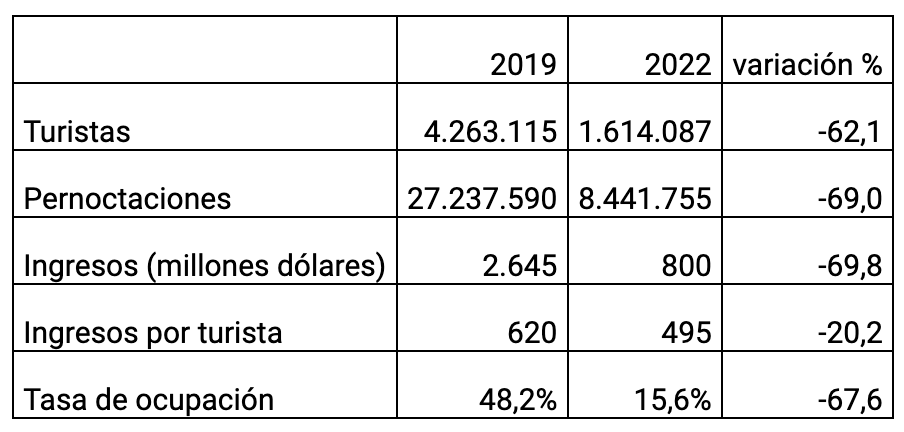
Therefore, and with the aim of carrying out an adequate analysis of the trends in the sector in 2022, it is advisable to use 2019 as a reference, since it was the last “normal” year before the pandemic. International tourism data are shown in the following table. continue reading
Translator’s note: Decimal points translate to commas in American English notation. Pernoctaciones = overnights. Ingresos = Income. Tasa de ocupación = Occupancy rate.
The number of international tourists stood at 62.1% less than the 2019 data, but the indicator of overnight stays that combines the number of tourists and days decreased even more, by 69%.
This is a lower percentage than that experienced by the occupancy rate, which fell from 48.2% in 2019 to 15.6% in 2022, a collapse of 67.6%. It offers an idea of the direct impact that this will have on the profitability levels of hotel management.
Tourism income (applied to the official exchange rate of the regime) did not exceed 800 million dollars, 69.8% less than in 2019, and income per tourist stood at 495 dollars, 20.2% less than in that year. These numbers could be even lower if the alternative exchange rate (between the dollar and the peso) of 1×120 or the one that governs the informal market is applied.
If the comparison of data was made with respect to 2021, as they do in the ONEI report, the panorama changes, because 2021 was a very negative year, in which only 356,470 tourists arrived in Cuba, and revenues did not exceed 365 million dollars.
While tourism in Cuba fell behind, other competing countries in the Caribbean recovered to the levels they experienced before 2020. In such conditions, the 2022 recovery in Cuba is insufficient, and there are reasons to think that the distances that have to be traveled to return to a normal scenario are still very important. What is worse, it does not seem that in this year, 2023, the gap will be closed.
To cite an example that shows the difficulties the sector has in recovering, it is important to take into account that Canada, the main tourist market for the Island, barely contributed 532,487 tourists in 2022, a figure that is nowhere near the one for 2019, when 1,120,077 Canadians arrived on the Island. Canadian tourism is 52.2% below the 2019 figure.
Certainly, those responsible for tourism in Cuba must be very concerned with figures like these. That only 9% of Canadians who came in 2019 did so in 2022 is, to say the least, alarming. There is a lot to do. But it’s the same in other geographical markets that offer similar signs of collapse, with problems that will have to be overcome.
For example, the second market in origin, the Cuban community abroad, fell from 623,972 tourists in 2019 to 333,191 in 2022. The Russians, with their transportation difficulties, from 177,977 in 2019 to 54,383 in 2022. And so, on. The declines are significant, and no market shows symptoms of recovery. In 2023, the levels before 2020 will not be reached, and this will have very negative repercussions on the entire economic activity of the Island.
Translated by Regina Anavy
____________
COLLABORATE WITH OUR WORK: The 14ymedio team is committed to practicing serious journalism that reflects Cuba’s reality in all its depth. Thank you for joining us on this long journey. We invite you to continue supporting us by becoming a member of 14ymedio now. Together we can continue transforming journalism in Cuba.
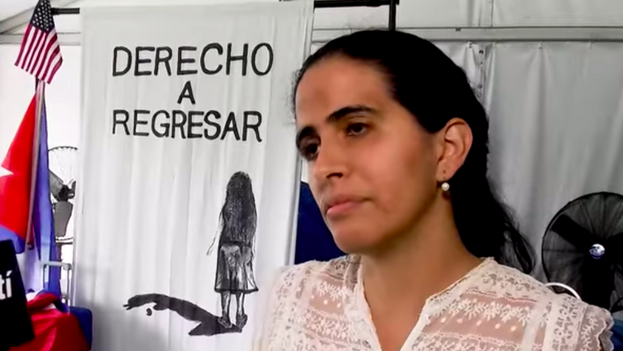
The activist Anamely Ramos was not allowed to return to Cuba in February of last year, after a three-month visit to the US. (Captura)
EFE (via 14ymedio), Los Angeles, March 10, 2023 — Several Cuban activists denounced this Thursday before the Inter-American Commission on Human Rights (IACHR) the violations of the right to movement of people on the Island, as well as the ban on the return of many citizens.
The complaints of these “forced expatriations” were made on the fourth day of public hearings of the 186th session of the Inter-American Court of Human Rights (IACHR), which takes place this year in Los Angeles (California, U.S.)
The testimonies presented agreed that the right to movement of people has been one of the most violated in recent years by the authorities of the Island and has been used to repress people who participated in mass protests such as those of July 11, 2021.
The activists highlighted that, despite the fact that this right is enshrined in the 2019 Cuban Constitution, several decrees on national security have been used to limit the free movement of people, including the prohibition of departure or entry into the country of Cubans who represent “a danger,” despite the fact that there is no legal accusation against these individuals.
“It’s a tool of control to prevent the work of defending human rights in the field,” said Cuban lawyer Laritza Diversent, director and legal advisor of Cubalex, about the decrees, which also deny the issuance of passports. continue reading
The proof of the extent of these violations was the physical absence, during the hearing, of Juan Antonio Madrazo, coordinator of the Citizens’ Committee for Racial Integration of Cuba, who was not allowed to leave the country to participate in the meeting.
“There is a permanent threat that the situation may worsen if we do not comply with the police provisions that would result in criminal proceedings,” Madrazo warned through a video. He also said that these travel bans are affecting the mental and physical health of activists.
The participants denounced practices of the Cuban government to force the banishment and exile of opponents and human rights defenders, as is the case of activist Anamely Ramos, who was not allowed to return to Cuba in February last year, after a three-month visit to the United States.
In her testimony before the IACHR, Ramos said that she is in the United States “contrary to her will,” and there is no reason beyond her activism not to be allowed to return to her country.
In this sense, Soledad García, a member of the NGO Justicia 11J, referred to the expulsion of 222 Nicaraguan politicians who were removed from their country by the regime of Daniel Ortega a month ago, and stressed that although this practice has been used by the Cuban Government for decades, in the “last years it has become visible.”
Ramos, who also presented the cases of writer Carlos Manuel Álvarez and professor Omara Ruiz Urquiola — who has tried to return to Cuba four times — also drew attention to the U.S. airlines that have executed these return bans.
“The protocol that exists between the airlines and Cuba is not public, so we cannot rule out that flights to Cuba go through a political filter commissioned by the Cuban State; this must be reviewed,” Ramos urged.
The commissioners of the IACHR, an autonomous body of the Organization of American States (OAS) based in Washington, highlighted the importance of the testimonies given at the hearing because it helps them to continue with the work they are doing in defense of human rights in Cuba.
They regretted the absence of the representatives of the Cuban State at the hearing. However, they assured that they will continue to demand answers on the complaints and to process the precautionary measures.
Commissioner Edgar Stuardo Ralón Orellana called for the creation of an international protocol to help people forcibly expelled from their countries.
This Friday, the IACHR concludes a round of 17 public hearings, covering human rights that affect migrants, the LGBTI community, women, indigenous peoples, human rights defenders and journalists in the OAS member countries and the Americas as a whole.
Translated by Regina Anavy
____________
COLLABORATE WITH OUR WORK: The 14ymedio team is committed to practicing serious journalism that reflects Cuba’s reality in all its depth. Thank you for joining us on this long journey. We invite you to continue supporting us by becoming a member of 14ymedio now. Together we can continue transforming journalism in Cuba.
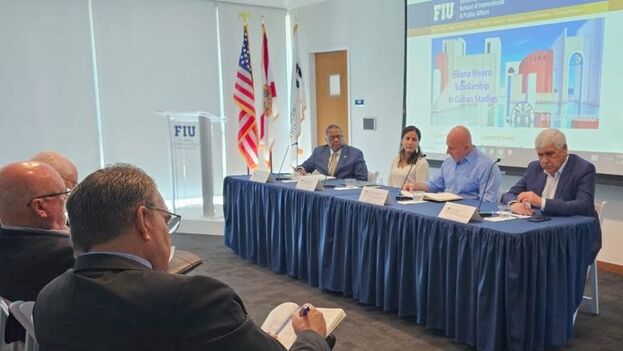
U.S. Undersecretary Brian Nichols, on the far left, during his speech on March 7 at Florida International University, in Miami. (Twitter/@WHAAsstSecty)
14ymedio, Miami, 10 March 2023 — “Although we firmly oppose forced exile, the United States will not turn its back on political prisoners, and if they want to come to the United States, we will explore the avenues available under US law to welcome them.” The Undersecretary of State for Western Hemisphere Affairs of the United States, Brian Nichols, expressed himself forcefully at Florida International University, in Miami, where on Tuesday he met with members of the Cuban-American community to present the policy towards the Island by the Joe Biden Administration.
In his speech, published on the website of the US Embassy in Havana this Wednesday, the official assured that “publicly — and privately in conversations with Cuban officials — the United States Government continues to call for the release of political prisoners, and we always emphasize that the Cuban people must be able to choose where to live and the Government must allow its citizens to return to Cuba.”
Nichols emphasized that “the economic situation is even worse than that of the so-called Special Period of the 90s, and the human rights situation is more bleak than it has been in decades.”
The “feeling of desperation and the longing for greater freedoms,” Nichols noted, led to the July 2021 demonstrations, which were answered by the regime “with the characteristic repression, sentencing hundreds of protesters to prison with sentences of up to 25 years.” continue reading
The repression in the almost two years since those “historic protests,” the undersecretary insists, has doubled, and “more than 700 demonstrators are among the more than 1,000 political prisoners who remain behind bars today.”
With their families and with the “dissident community” of the Island, says the official, the U.S. Embassy maintains “constant communication.” “They are a group of incredibly brave people, who face extremely difficult conditions,” praises Nichols, who outlined the two “key aspects” of the current Administration in Washington.
The first is to “promote accountability for human rights abuses,” and the second, “to explore significant ways to support the Cuban people while limiting the benefits for the Cuban regime.”
Among the first objective are the “selective sanctions against officials and security forces involved in abuses related to the July 11 [2021] protests and visa restrictions on officials involved in attempts to silence the voices of the Cuban people.”
Within the second, for example, support for “family reunification through legal migration,” alluding to the humanitarian parole launched at the beginning of this year and that, also aimed at Venezuelans, Nicaraguans and Haitians, allows up to 30,000 of those migrants to enter legally if they have a “sponsor” who supports them financially and covers their health expenses for two years. “To date, about 10,000 Cubans have successfully used the program to enter the United States,” he explains. “Cubans have benefited from all conditions, including members of the human rights community.”
Since the implementation of this permit, he explains, “the number of Cuban migrants attempting a dangerous irregular migration has plummeted.”
Nichols also referred to other measures by the Biden government, such as flights between the United States and cities outside Havana, which operate for the first time since 2019, and the elimination of the limit on remittances, whose “direct flows” resumed in November 2022, after being suspended for two years.
In addition, he stressed that they are “exploring the expansion of access to cloud-hosted services and other development tools for the Cuban people.” These tools, he explains, “will help activists and civil society connect with each other and facilitate the flow of information on and off the Island. They will also help the Cuban people to access more services, including those that circumvent censorship.”
The undersecretary had words for the current inflation and the chronic shortage of food, medicines and electricity that Cuba suffers. “The Cuban government rushes to blame others for its economic ills without recognizing the decades of mismanagement that led to the current crisis,” he said, alluding to the US embargo, which Havana waves like a flag to justify all its failures. “We continue to ask the Cuban Government to implement economic policies that improve the situation in the country, such as greater freedom for private sector agents and the much-needed agricultural reforms.”
While these measures are being applied, Nichols said, “we will continue to ask the Cuban regime to respect the human rights and fundamental freedoms of all Cubans and unconditionally release all political prisoners.”
Translated by Regina Anavy
____________
COLLABORATE WITH OUR WORK: The 14ymedio team is committed to practicing serious journalism that reflects Cuba’s reality in all its depth. Thank you for joining us on this long journey. We invite you to continue supporting us by becoming a member of 14ymedio now. Together we can continue transforming journalism in Cuba.
 14ymedio, Madrid, 17 March 2023 — Mexico, Colombia and Cuba announced the creation of a Medication Agency of Latin America and the Caribbean (AMLAC), with which they plan to emulate the European Medication Agency (EMA). The initiative aims to “consolidate the self-sufficiency of strategic inputs in the region” and strengthen the authorization of drugs and vaccines during health emergencies through common regulatory frameworks.