
Spain Warns Tourists About Violent Robberies and Health Problems in Cuba

The new recommendations for Spanish travelers from their foreign ministry are not very encouraging for the promotion of tourism. (14ymedio)

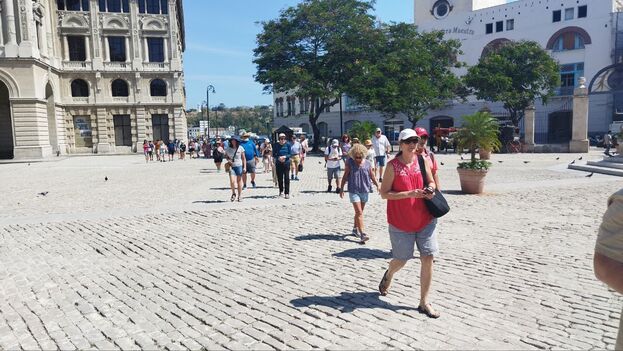
14ymedio bigger14ymedio, Madrid, 23 March 2023 — The updated  recommendations of the Spanish Ministry of Foreign Affairs for tourists going to Cuba, released this week, are not very encouraging for the promotion of tourism. Despite the fact that the official website indicates that “there are no specific restrictions” for trips to the Island, it dictates “special precaution regarding possible thefts from tourists, dengue disease and the hurricane season.”

The most relevant novelty is the warning that, if a Spaniard intends to go to the United States after having visited Cuba, even if it is on a separate trip, he will be obliged to apply for a U.S. visa to enter that country. Therefore, the presentation of the electronic authorization (ESTA), the simple requirement in force under normal conditions, will not be enough.

Likewise, tourists to Cuba have to apply and pay for the “tourist card” that serves as a visa, either at a Cuban consulate in Spain, or at any travel agency that offers Cuba as a destination. This visa “allows a single entry into Cuba and entitles the holder to a maximum stay of 90 days, extendable only once for the same period.”

The Island’s fame as a peaceful place for foreigners is beginning to collapse with these recommendations. Spain concedes that Cuba is “generally a safe destination, especially when compared to most of the countries in the region,” but warns that “with the recovery of tourism, robberies have been reported that can sometimes be committed through the use of violence.”

The document describes as “frequent” the “theft of bags and other personal belongings on the beaches” and mentions that “burglaries can occur at gas stations, mostly in cases of rented vehicles with ’T’ (tourist) plates and on the roads to the Keys.” continue reading

The Ministry advises against picking up hitchhikers in any case, “especially outside the cities or near the beaches.”

Another common problem on the Island mentioned in the report is that of health. “Health care in Cuba is not comparable to European standards,” the text states. “There may be a shortage of certain medicines and a lack of equipment in hospitals.” For those who need a specific medication, they suggest “taking it with you and not to trust being able to find it on the Island,” as well as “a minimum first aid kit (analgesic, disinfectant, dressings, etc.) and, in the current circumstances, medications necessary to treat diseases with high incidence in the country.”

Health recommendations continue to warn of the cost of medical care for foreigners: “In the most important cities, tourists are cared for in the best hospital centers. The invoice must be paid in cash, at high prices and, frequently, in advance.”

The document even mentions what those exclusive centers are: the Cira García Clinic and the CIMEQ Hospital, in Havana. And they warn: “The Cuban authorities prohibit foreigners from leaving the country as long as there is an outstanding debt for health care.”

It will be mandatory, they also instruct Spaniards, to present proof “of having taken out travel insurance with medical coverage that includes possible contagion by COVID-19 and the repatriation of the corpse in case of death regardless of the cause.”

Another serious warning is about “the important rebound” of dengue fever and, especially, of hemorrhagic dengue, for which they recommend using insect repellent on the skin “especially at dawn, dusk and during the night.”

Given the risk of contracting this disease, they suggest traveling with oral rehydration salts and paracetamol.

As for the measures against COVID-19, the page includes the link that leads to the health form that must be completed to enter Cuba, with a QR code downloaded, and to remember that no negative PCR is required, no vaccination certificate, no quarantine upon arrival and no masks (except in hospital centers).

Finally, they warn that the hurricane season begins on June 1 and ends on November 30 and specify that the “most problematic period” usually occurs between August and October, coinciding precisely with the summer holiday season of the Spanish people.

“The Cuban authorities will, if necessary, evacuate the affected areas, and depending on how the hurricane evolves, they will adopt  measures as needed. In such circumstances, all Spanish citizens who are in Cuba are recommended to follow the recommendations of the Civil Defense, which are widely disseminated by the Cuban media (mainly radio and television) and by the hotels where they are staying, as well as the tourist agencies that have organized the trips,” they say, while referring, for more information, to the page of the National Hurricane Center of the United States.

Translated by Regina Anavy

____________

COLLABORATE WITH OUR WORKThe 14ymedio team is committed to practicing serious journalism that reflects Cuba’s reality in all its depth. Thank you for joining us on this long journey. We invite you to continue supporting us by becoming a member of 14ymedio now. Together we can continue transforming journalism in Cuba.
Cuba and the United States Cooperate on Infectious Diseases in a Meeting in Havana

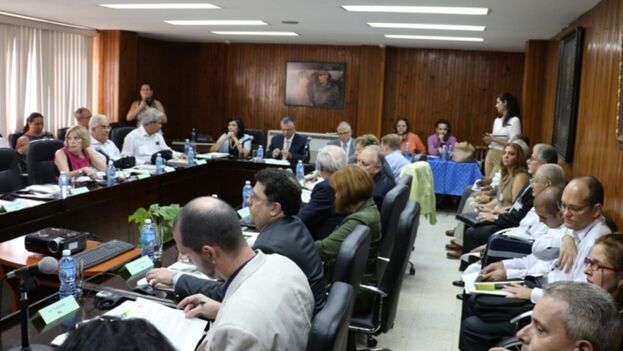
This type of meeting has been taking place since 2016, as part of an agreement on health matters. (Archivo)

14ymedio biggerEFE (via 14ymedio), Havana, 24 March 2023 — Health officials from Cuba and the United States met in Havana to strengthen their cooperation in the fight against infectious diseases, including COVID-19, the Ministry of Public Health of the Island reported on Thursday.

The meeting was part of what was agreed in the Memorandum of Understanding signed in 2016 by the Cuban Ministry of Public Health and the U.S. Department of Health and Human Services (HHS), according to a statement.

Cuba reported that both parties agreed to “continue working on the implementation of the Memorandum.”

Specifically, they advocated “promoting technical exchanges related to research on arbovirosis (a group of diseases caused by viruses transmitted by arthropods), experiences of COVID-19 and other related topics.”

The visitors, members of the HHS and the National Institute of Allergy and Infectious Diseases (NIAID), met with specialists from the Pedro Kourí Institute of Tropical Medicine (IPK) of Cuba, as well as directors and scientists from the Center for Genetic Engineering and Biotechnology (CIGB) and the state pharmaceutical group BioCubaFarma. continue reading

The meeting was attended by the Deputy Minister of Public Health, Carilda Peña García, and the director of the Global Research Office of the IAID, Joyelle Kalei Dominique, according to the official report.

Despite the fact that Washington has on numerous occasions cooled the expectations of the Cuban side for a reissue of the thaw, the technical meetings have not stopped being held. They even continued during Donald Trump’s term.

At the beginning of March, the trip of Cuban officials to the United States unleashed a wave of protests among Republican politicians who rejected these meetings for security reasons. However, the Administration argued that the meeting was part of the International Port Security Program and that they have taken place in recent years, including, most recently, in 2019.

In November 2022, US officials traveled to Havana to hold a meeting on immigration, during which the Cuban side “highlighted areas of successful cooperation on migration, while identifying problems that have been obstacles to meeting the objectives of the Agreement.”

Translated by Regina Anavy

____________

COLLABORATE WITH OUR WORKThe 14ymedio team is committed to practicing serious journalism that reflects Cuba’s reality in all its depth. Thank you for joining us on this long journey. We invite you to continue supporting us by becoming a member of 14ymedio now. Together we can continue transforming journalism in Cuba.
Cuba’s Prime Minister Suggests ‘A Government in the Street’ To Look for Solutions to the Economic Crisis

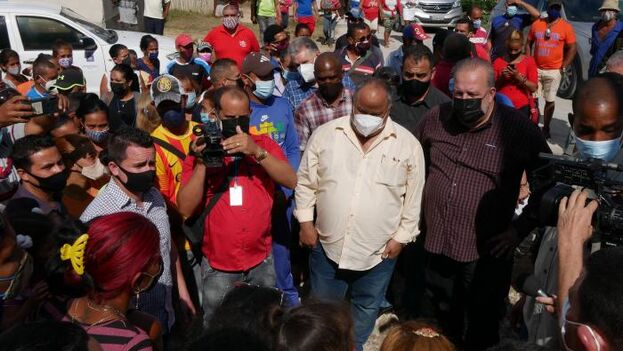
Cuban Prime Minister, Manuel Marrero (on the right, wearing a plaid shirt and a black mask), at a ceremony in the street. (Granma)

14ymedio bigger14ymedio, Havana, 23 March 2023 — Some of the country’s top leaders met this Wednesday to confirm evidence: the indicators of the economy are bad. What’s the reason? The embargo. The forecast? The same, 3% growth. Solutions? “Organize a government in the street.” That was one of the suggestions of the Prime Minister, Manuel Marrero, who summarized his call to “unite all collective intelligence and achieve unity to find solutions.”

Although Marrero wants to “change things,” if the meeting was characterized by anything it was for the usual mentions, including the stubbornness of Alejandro Gil, Minister of Economy and Planning, who maintained his tourism projections last year until October, when the numbers were clearly irreversible. This year he does not plan to move the growth forecast either, which in December 2022 he calculated at 3%. The calamitous data of 2022 could help him, in this case, to get it right. Or not, just like tourism.

They will bet on the tourism sector again, both leaders said at yesterday’s meeting, although the priority will be to “advance in the macroeconomic stabilization of the country,” a point to which abundant words were dedicated that did not clarify too much.

The plan will include, he said, a “fiscal reform, the recovery of monetary equilibrium, macroeconomic planning and coordination, the development of markets and monetary-commercial relations, the increase in the inflow of foreign exchange, the de-dollarization and convertibility of the national currency and the mitigation of social impacts.” To paraphrase Marrero, these are goals, not solutions.

To this vagueness, Gil added something more concrete: the creation of a new law for companies and fiscal stimuli for those who want to import, but the “socialist enterprise” will be maintained, as always, as the main actor in the production of goods and services. From what was said in yesterday’s meeting, one can sense that the private sector, even when it’s not evident, will continue to support the state. continue reading

Among the evils that afflict the country, Gil mentioned the partial dollarization of companies in the non-state sector, inflation, centralized access to the currencies of exporters, the lack of “effective insertion” of the private ones — for which they plan to create an Institute and a General Directorate — and the poor results of the state business sector that, despite the diagnosis, they insist on privileging.

However, Marrero did not attribute those bad results to an inefficient sector or government measures, but, once again, to external agents. “We cannot fail to recognize and denounce that, among all the occurrences that have led to the situation in the country, the blockade* has had a definitive impact,” he complained. And his lament was followed by Gil’s who, in addition to the embargo, cited the pandemic as the cause of the lack of hard currency.

In the midst of the hackneyed speech, there was also no mention  of responsibility for inflation. The Minister of Economy said that prices are abusive and have a direct impact on the population, but he didn’t offer a single solution.

While dozens of countries affected by inflationary rates infinitely lower than those of Cuba — where food already costs 73% more than a year ago, without taking into account the prices in the informal market — have been trying different measures to control prices for months, the top managers of the Island are limited to mentioning the problem as if it were a natural force.

One of the possible materializations of the fuzzy words of Marrero and Gil is the “experiment” — as the provincial newspaper Vanguardia refers to the measure — that will be carried out in six state companies in Villa Clara. Foreign currency will be sold at a rate of 1 dollar for 120 pesos to buy supplies and raw materials destined for the manufacture of products that will be marketed in national currency.

It will be a privilege because, although before the rate was officially 1 for 24, the possibility of obtaining foreign currency was almost nil by legal means. At the moment, the concession is for the Porcine Company of Villa Clara ($700,000); the Fisheries of Caibarién and Villa Clara, Pescavilla, ($500,000); the National Production Industry of Domestic Utensils 1st of May ($700,000), and the Textile Company Luis Turcios Lima ($200,000).

With those amounts approved, the entities will have to increase their production of meat, fish, pots or blankets, as the case may be, all of which are scarce in the country. Finally, Minerva Cycles also has an amount assigned or in process, but not yet indicated.

“This is the result of one of the ideas aimed at making 2023 a better year, meeting the needs of the people and combating the scourge of inflation through the production of goods and services, which constitutes the most feasible economic mechanism,” said the governor of the province, Alberto López Díaz.

*Translator’s note: Cuban officialdom routinely refers to the U.S. embargo as “the blockade.”

Translated by Regina Anavy

____________

COLLABORATE WITH OUR WORKThe 14ymedio team is committed to practicing serious journalism that reflects Cuba’s reality in all its depth. Thank you for joining us on this long journey. We invite you to continue supporting us by becoming a member of 14ymedio now. Together we can continue transforming journalism in Cuba.
The Official Press Announces a Terrible Tobacco Harvest in Cuba

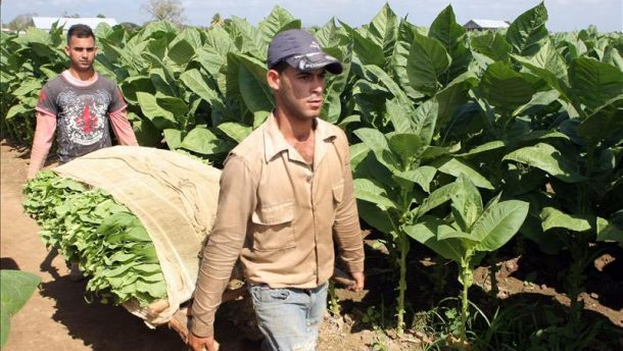
The main tobacco cultivation areas are located in Vueltabajo, in the province of Pinar del Río. (EFE)

14ymedio bigger14ymedio, Havana, 23 March 2023 — Pinar del Río has not produced even half the tobacco that was planned. The main Cuban export will now have, without a doubt, what the official newspaper Granma describes as “the smallest [harvest] in history” in an area that produces between 60% and 70% of the national production.

While 27,675 acres were planned for planting in Vueltabajo, the total barely reached 12,730, or 46%, and there are just days left to finish this step.

As a consequence of the disaster, of the 4,556 farmers who were going to start planting only 3,456 have done so, while some 1,100 have not, and the number is not expected to increase.

Osvaldo Santana Vera, coordinator of the Tabacuba group in Vueltabajo, explained to the official newspaper Granma that the plan has been readjusted twice since the impact of Hurricane Ian last September destroyed 90% of the province’s tobacco drying sheds, more than 10,000 of the total 12,000.

“Given the impossibility of rebuilding them all again in a matter of a few months, in time to protect the leaves of the current harvest, the Tabacuba Business Group decided to prioritize the highest quality plantings to ensure export demands,” the article explains.

But even so, it has not been possible to salvage the situation, and the lack of wood has had repercussions. Of the 3,977 curing sheds that are needed, and with readjustments based on the planting, more than 1,400 still need to be built. continue reading

All this led to a reduction of the plan to 15,793 acres, but  that amount was excessive, so it was reduced again to 14,275 acres, extending the plan by 50 days. The figure is still remarkably far from what is needed.

To this must be added the farmers who have refused to sow because the State still owes them money, according to 14ymedio sources in San Juan and Martínez. Tobacco producers in the province told this newspaper that there have been several meetings to try to convince the farmers to plant by stating that the payment would be made as soon as possible, but many are suspicious and have reverted to the cultivation of flowers, peanuts and fruits of shorter cycles or that need fewer resources.

Granma’s version, however, attributes the crisis of the sector to the climate and the “demolishing blow that nature dealt” to the producers, and the article ends with a call for epic resistance, although they will have to wait another year. “The men and women who produce the best tobacco in the world claim that this is just a skirmish (…) and say that another cock will crow in the next harvest.”

The passage of the hurricane and the destruction of the drying sheds meant that tons of tobacco leaves had to be sent to other provinces to try to safeguard them. About 6,000 tons were transferred to Matanzas, Sancti Spíritus, Villa Clara and Cienfuegos, in addition to “about 11,000” that were already in the dryers and, after getting wet from the rain, had to undergo a new process or be discarded.

Just a week ago, a dryer in Jovellanos, Matanzas burned more than 11,300 bundles of freshly harvested tobacco. The firefighters were able to put out the fire and prevent it from spreading,  but the loss is one more nail in the coffin of the sector.

Translated by Regina Anavy

____________

COLLABORATE WITH OUR WORKThe 14ymedio team is committed to practicing serious journalism that reflects Cuba’s reality in all its depth. Thank you for joining us on this long journey. We invite you to continue supporting us by becoming a member of 14ymedio now. Together we can continue transforming journalism in Cuba.

The (Un)popular Power of Castroism

Díaz-Canel goes along under pressure, from platform to platform, taking advantage of anything, even if it’s a defeat in baseball with a score of 14 to 2. (PL)

14ymedio bigger14ymedio, Yunior García Aguilera, Madrid, 23 March 2023 — Next Sunday the Cuban regime will hold “elections” where 470 candidates for Parliament will “dispute,” nothing more and nothing less than 470 seats. When you try to explain this process to any citizen of a democratic country, their brain usually short-circuits. But that’s the scheme, as absurd and brazen as it sounds. The people choose absolutely nothing; they simply ratify a decision that has already been made previously by the single party.

To carry out this esoteric trap, they resort to the “united vote.” The Government itself will be in charge of spending millions of resources on propaganda to convince you that you should vote for everyone, as if it were a combo. If in Stalin’s USSR the ballots presented a single candidate, then in the Cuba of the Castro brothers they save paper. Just put a jumble of names on a ballot and add a circle on top of it that summarizes them all. By the way, you also save ink.

Fidel himself expressed in February 1993 that the ’united vote’ was not a technical issue, but a political issue, that it was “the strategy of patriots, of revolutionaries.” In reality, it was simply his strategy to play at voting, once every five years, without risking absolutely anything.

No candidate, obviously, can be suspected of having divergences in official thinking. All have passed through several filters to reach the final list and will continue to be watched with a magnifying glass, in case they present any ideological deviation along the way. They will be allowed to have some corrupt behaviors, of course. Cuba is a country where corruption is called “fight” and everyone knows “how bad it is.” But State Security will keep in its drawers any material that can compromise them, just in case they have to “be ruined” to make an example of them, as they did with Carlos Lage and Felipe Pérez Roque.

When I lived in Cuba, I was close to several deputies, and the truth is that the vast majority are indistinguishable. They dedicate themselves to attending endless meetings; they will unanimously approve any decision that comes from above, and they will enjoy some privileges that the position affords them. continue reading

That’s why the electoral campaigns are superfluous. There is no need to have or present any project. All you need is a poorly printed biography showing your photo, the morning assemblies at school in which you participated during your childhood and the mass organizations to which you belong. Hardly anyone will stop to read this nonsense, which is usually identical. That is also why the ballot boxes are guarded by children. After all, what could go wrong?

But Cuba is no longer the place where people used to vote like automatons, to “get it over with.” On recent occasions, the number of abstentions, canceled and blank ballots has increased dramatically. Díaz-Canel goes along under pressure, from platform to platform, taking advantage of anything, even if it’s a defeat in baseball of 14 to 2. What does it matter? He and his bosses (generals with more stars than principles) know perfectly well that this March 26 could break the mold: the rejection of a rigged, grotesque and undemocratic model.

Even seeing it from the perspective of those who sympathize with the Revolution, this management has been, by far, the worst in decades! They have not fulfilled any of the projects that were drawn up (like that plan of 1.7 homes a day); inflation rises at a quadrangular rate; hunger lurks in every corner of the country; repression is more guaranteed than the bread of the quota; the blackouts are a joke; the young people leave, and the violence expands in an alarming way.

To make matters worse, the visible figures of the system could not be more gray or unpleasant. Díaz-Canel and his “wife who works at her work” (as he himself called her) have shone in the art of cantinfleo (with the pardon of Cantinflas*). I’m not sure if they try to emulate Maduro, but their clumsiness is about to set a Guinness world record.

What should we Cubans do? Regardless of everyone’s ideology, we have to be honest with ourselves. It would be enough to look around and understand that the night cannot be eternal. This Sunday we can show them and the world that this obsolete and decadent system does not have our support. We can leave them alone in their circus, without being able to boast of a power that is completely unpopular.

Translated by Regina Anavy

____________

COLLABORATE WITH OUR WORKThe 14ymedio team is committed to practicing serious journalism that reflects Cuba’s reality in all its depth. Thank you for joining us on this long journey. We invite you to continue supporting us by becoming a member of 14ymedio now. Together we can continue transforming journalism in Cuba.
The Illegal Entry of Cubans to the United States Fell From 44,069 in December to 753 in February

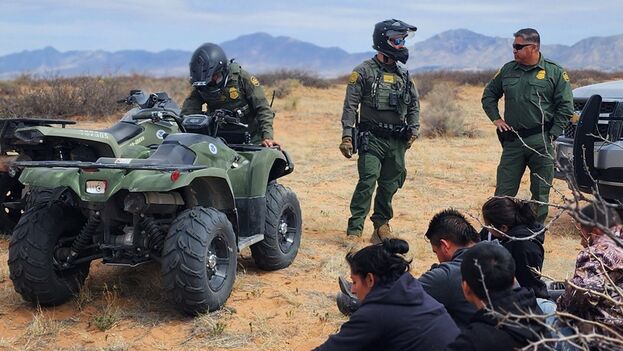
The Border Patrol during the detention of a group of irregular migrants on the southern border of the United States (Twitter/@USBPChief)

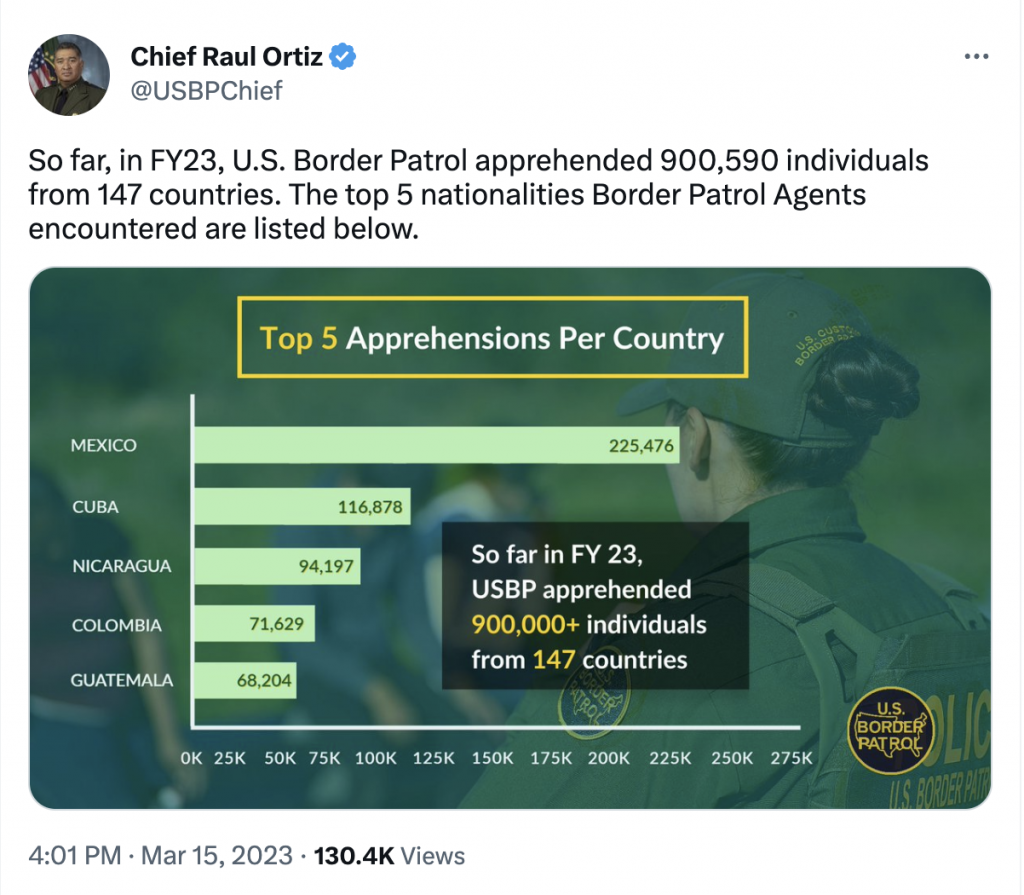
14ymedio bigger14ymedio, Havana, 21 March 2023 — Data provided by the United States Border Patrol indicate that from October last year to March of this year, 116,878 Cubans have been arrested on the border between the United States and Mexico. However, the data for January (6,433) and February (753) indicate a drastic reduction in illegal entry since the humanitarian parole policy came into effect.

The head of the Border Patrol, Raúl Ortiz, specified that in the last five months, US officers have arrested 900,590 irregular migrants, with Cubans being the second largest group to cross the border after Mexicans (225,476).

Although US authorities have insisted that there has been a decrease in the crossing of Cubans since the Biden Administration launched the so-called humanitarian parole last January, the numbers of Island nationals who crossed illegally and surrendered to the Border Patrol are still significant, with 6,433. Forty percent of these people were expelled. continue reading

Ortiz highlighted on his social networks that this group and 753 other Cubans, who were returned to Mexico in February, lost eligibility for the CBP One program.

According to figures from the Customs and Border Protection Office (CBP), 44,069 Cubans were handed over to the US authorities in December 2022.

During the hearing on March 15, which took place in Texas and was organized by the U.S. National Security Committee, Ortiz warned that some areas of the agency he directs “face a crisis situation” due to the “challenges” represented by the “migration flow.”

Republican Mark Green, president of the National Security Committee of the US House of Representatives, attributed part of this migration crisis to the Mexican cartels. “They are earning billions by bringing people to the United States, many of whom have to pay with forced criminal labor.”

Translated by Regina Anavy

____________

COLLABORATE WITH OUR WORKThe 14ymedio team is committed to practicing serious journalism that reflects Cuba’s reality in all its depth. Thank you for joining us on this long journey. We invite you to continue supporting us by becoming a member of 14ymedio now. Together we can continue transforming journalism in Cuba.
Some 50 Kenyan Doctors Live in ‘Deplorable Conditions’ in Cuba

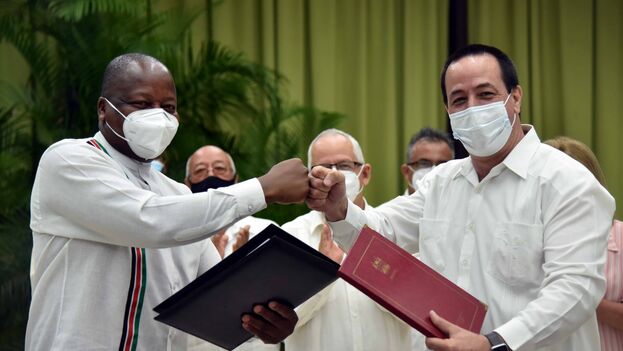
Cuba and Kenya signed a health agreement in 2017, which will end this June if it is not renewed. (Ministry of Health)

14ymedio bigger14ymedio, Madrid, 22 March 2023 — Kenyan doctors who complete their training in Cuba “live in deplorable conditions,” according to the Union of Doctors, Pharmacists and Dentists of Kenya (KMPDU), which has placed approximately 50 residents in Cuba, who are currently studying a specialty.

The message was heard even louder in the Health Committee of the Kenyan Senate on Tuesday, where the secretary general of the organization, Davji Bhimji Atellah, said bluntly: “Kenyan doctors in Cuba are suffering.”

There were no more specific details about the complaint, whose objective is to put an end to the agreement that the governments of both countries have maintained since 2017, and according to which Cuban doctors occupy several vacant positions in hospitals in Kenya, and Kenyan medical students go to Cuba to train. The agreement expires this June, and the union demands that it not be renewed.

However, the claim is not something new. In 2019, when the situation on the Island was far from the critical state it is in now, the same union denounced the suicide of one of its students, Ali Juma Hamisi, which friends in Kenya attributed to the “terrible living conditions” that he complained about in his calls.

Among the most frequent complaints was the poor quantity and quality of the food. In addition, the money provided to cover the doctor’s expenses was slow to arrive or never did, and it turned out to be negligible compared to the cost of living in Cuba. Also, the tickets to travel home once a year were canceled. The lack of air conditioning in the heat and the uncomfortable rooms did the rest.

It can be assumed, although Atellah did not say it, that these bad conditions are the currently same, and even worse. The trade unionist explained in the House that the agreement turned out to be a “waste of human resources,” and he pointed out the case of those who have already returned.

“After the training in Cuba, they returned to Kenya and had to undergo two years of training here for the Medical Council to authorize them to practice as family doctors. The scope of the practice of family medicine in Kenya is different from the Cuban one; hence the need to train doctors, so that they acquire skills that allow them to practice,” he said. continue reading

The same applies to the reverse case. “Cuban doctors who came to Kenya also faced challenges. The expectations were different. A family doctor trained here can perform emergency obstetric and gynecological surgeries, as well as surgical emergencies. Cuban family doctors are not prepared to do surgeries because it is not part of their training,” he added.

To all this is added the language barrier, in both cases.

Atellah has asked for an audit to analyze the cost-benefit of the program, which, in his opinion, is not positive.

“Cuban doctors are in the Kenya School of Government at the expense of taxpayers instead of being in hospitals, while there are about 100 unemployed Kenyan family doctors who could be incorporated into primary care,” he said.

According to the trade unionist, the counties have also taken care of accommodation and provide them with a driver and security that local doctors do not have. In addition, he said, they receive three times the salary of Kenyans. He omitted, however, that this money is not  paid individually to each worker, but to the Government of Cuba, which gives the doctors themselves a minimum percentage, as has been denounced on numerous occasions.

The health agreements between Kenya and Cuba led to the kidnappings on April 12, 2019, of the surgeon Landy Rodríguez Hernández and the specialist in general medicine Assel Herrera Correa by alleged members of the Somali jihadist group Al Shabab, while they were on their way to work in the hospital in Mandera, in the northeast of the country.

After four years, the triangulated negotiations between the governments of Cuba, Kenya and Somalia were unsuccessful in freeing the two doctors. On two occasions they were close to success, the first only a month later, when traditional leaders of the area traveled to negotiate and were offered the prisoners in exchange for a payment of 1.5 million dollars, according to the local press.

In October 2020, the release of the doctors was announced by different press agencies, which cited a senior official of the Somali intelligence services as a source. Hours later, he explained that the delivery of the two hostages had been frustrated at the last moment after a “filtration” paralyzed the “safe transfer.”

Translated by Regina Anavy

____________

COLLABORATE WITH OUR WORKThe 14ymedio team is committed to practicing serious journalism that reflects Cuba’s reality in all its depth. Thank you for joining us on this long journey. We invite you to continue supporting us by becoming a member of 14ymedio now. Together we can continue transforming journalism in Cuba.
The Documentary ‘Dos Patrias’ About Human Rights in Cuba Is Presented in Miami

Frame provided by filmmaker Hilda Hidalgo where imprisoned activist Aymara Nieto Muñoz appears, during a scene from Dos patrias [Two Homelands]. (EFE)
14ymedio biggerEFE (via 14ymedio), Miami, 18 March 2023 — The documentary Dos patrias [Two Homelands], a work by Costa Rican filmmaker Hilda Hidalgo that addresses the violation of human rights in Cuba based on the testimonies of three Cuban activists, was presented on Friday, 17 March, at Florida International University (FIU), in Miami.

Hidalgo, 52, said in statements to EFE that the documentary is based on the testimonies of three Cuban activists “who have in common that they were accused of crimes they did not commit.”

The filmmaker, who knows the current situation of the Island well after studying in the 1990s at the International School of Film and Television in San Antonio de los Baños, Cuba, said that people who reside in countries with freedom “do not really know what it is to live in a dictatorship.”

“The three cases are emblematic, and I discovered them after an investigation,” she explained.

Sebastián Arcos, associate director of the FIU Institute of Cuban Research, told EFE that they have organized, together with the International Institute on Race, Equality and Human Rights, based in Washington, the presentation of the documentary in Miami. continue reading

The work of Hidalgo, director of the feature film Del amor y otros demonios [Love and Other Demons] (Costa Rica-Colombia, 2010), based on the novel by Gabriel García Márquez, presents the stories of three Cuban activists born on the Island who reveal their problems after confronting the Government of Havana.

The activists are Aymara Nieto Muñoz, currently imprisoned, Xiomara Cruz Miranda and Eduardo Cardet, a doctor who is a member of the Christian Liberation Movement. “This is a very topical issue,” Arcos said, after the Institute of Cuban Research joined for the human interest of the documentary, to be presented today at the FIU’s Graham Center.

Together with Cardet, the documentary collects the testimony of activist Aymara Nieto Múñoz, who in 2018 was sentenced to four years of deprivation of liberty for the crimes of “attack” and “property damage,” to which was added a new sentence of 5 years and 4 months for the charge of “public disorder” in prison.

The third person is the Lady in White Xiomara Cruz Miranda, who lives in the United States and is waiting for the approval of her permanent residence in this country.

The program coordinator for Latin America of the International Institute on Race, Equality and Human Rights, Johanna Villegas, said in an interview with Radio Martí, from Miami, that the documentary “is an effort to highlight the situation of prisoners deprived of political liberty in Cuba.”

Villegas said that Dos patrias is part of the organization’s initiative to reach different audiences and publicize the human rights violations that occur in Latin American countries.

The documentary was supported by Producciones La Tiorba of  Costa Rica, where Hidalgo works as a director and screenwriter.

Hidalgo’s career includes the feature film Violeta al fin [Violeta at the End] (Costa Rica-Mexico, 2017), along with television series and documentaries on social, gender and sustainable development topics filmed in Costa Rica, France, Italy and Bhutan, among others.

Translated by Regina Anavy

____________

COLLABORATE WITH OUR WORKThe 14ymedio team is committed to practicing serious journalism that reflects Cuba’s reality in all its depth. Thank you for joining us on this long journey. We invite you to continue supporting us by becoming a member of 14ymedio now. Together we can continue transforming journalism in Cuba.
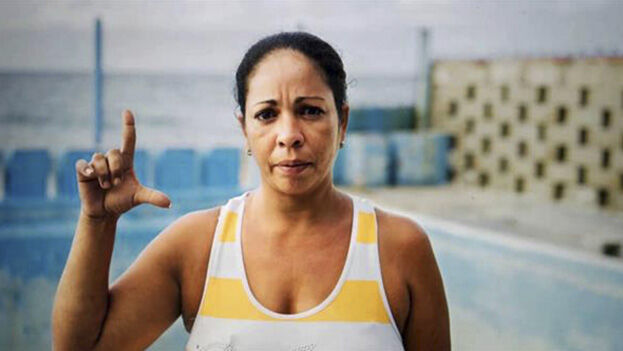
Cuba’s ‘Most Efficient’ Sugar Mill Has Ground Only 56 Percent of the Cane Planned for the Current Harvest

The Primero de Enero [First of January] mill has experienced delays in the plan for the province of Ciego de Ávila. (Invasor)
14ymedio bigger14ymedio, Havana, 21 March 2022 — The preliminary results of the 2022-2023 sugar harvest continue to deepen the failure of the planned resuscitation of the sunken sugar sector, which was once the engine of growth for the Cuban economy. The latest press reports in Santiago de Cuba, Las Tunas and Ciego de Ávila indicate that none of the three provinces has met the production plan.

Irayaselis Bandera, an official of the Agroindustrial Company Azucarera Dos Ríos, located in the Santiago municipality of Palma Soriano, acknowledged to the provincial newspaper Sierra Maestra that the situation is “complex,” as 10,577 tons of raw sugar have been produced, 53.7% of the 19,321 that it must achieve for this year.

Bandera explained that the production of sugar has been interrupted by a deficit of cane seed. The lack of fuel and parts for the means of transport, as well as breakdowns in the mill equipment, add to the list of problems.

Despite the meager results, Osvaldo Arias Quezada, the mill administrator, argued that “efforts are aimed at supplying enough for the basic basket” of Cuban families. The official pointed out that 500 workers “manage solutions” for breakdowns of machines, some of which have had more than half a century of operation.

The only achievement highlighted by Arias Quezada is energy self-sufficiency and its contribution to the National Energy System in two Soviet turbogenerators with an installed capacity of four megawatts (MW) each. continue reading

In the province of Las Tunas, the Majibacoa mill also got off on the wrong foot, and preliminary results indicate that it will not be able to meet the production goal. David Puig Brito, general director of the sugar company, told Periódico 26 that as of March 18, the mill had generated 13,000 tons of raw sugar, 55.9% of the 23,227 tons that must be delivered by April 19.

Puig Brito believes that if the mill has enough cane “we will fulfill the plan even before the scheduled date,” but this means that they must produce a similar amount of sugar as that generated in the last three months, since the milling work began in January.

Majibacoa along with Antonio Guiteras are the only mills of the four active in the province assigned to the milling of sugar for this cycle, while the Colombia and Amancio Rodríguez sugar mills were relegated only to obtaining cane syrup and clarified juice.

Puig Brito acknowledged that recently they had to stop the machines, for up to a week, due to a broken mat in February. Despite “the problems,” the director added, the plant is considered to be the most efficient in Cuba with an industrial yield of 12.75 metric tons of sugar per 100 tons of ground cane. “We are taking advantage of the cane like no other in the country,” he said with a triumphant tone.

But the improvement in performance is not enough to alleviate the problems of the mill, which is working with 32 of the 47 machines. It also does not have tires or batteries for vehicles, in addition to the fact that seven of the vehicles do not work due to technical problems. However, the note of the official newspaper minimizes the crisis by assuring that the mill collective “feels optimistic” and “enthusiastic” because it knows “the vital importance of producing sugar today.”

Also far from the goal of the production plan, with a compliance of 50.9%, is the Azcuba Sugar Group, in Ciego de Ávila. Eduardo Larrosa Vázquez, director of the company, acknowledged on March 17 that there are “tensions” among the workers because they have only managed to produce 28,000 tons of the 55,000 required.

“There is no room for expansion,” added Larrosa Vázquez, who said that in the next 60 days “all available resources plus incentives for workers” will be used to reach the pledged amount of sugar.

The director defended the delays at the Ciro Redondo mill, saying they are due to the breakdowns of the boilers of a bioelectric plant due to the shortages of power of the Electrical System at the beginning of February. Only this mill, he continued, has “a debt” of almost 17,000 tons for the current harvest and, to date, it has produced more than 14,000 tons.

Cuba began the 2022-2023 sugar harvest last November with the goal of producing 455,198 tons of sugar, below the 473,720 tons obtained in the previous cycle. Most of it will be used for the family basket, tourism and the production of medicines and industrial products. It is not yet known if the country will be able to respect the agreements signed with its usual international buyers.

The results of the other 23 sugar mills for this cycle have yet to be known, but Azcuba acknowledged last February that the deficit was 95,000 tons of sugar.

Translated by Regina Anavy

____________

COLLABORATE WITH OUR WORKThe 14ymedio team is committed to practicing serious journalism that reflects Cuba’s reality in all its depth. Thank you for joining us on this long journey. We invite you to continue supporting us by becoming a member of 14ymedio now. Together we can continue transforming journalism in Cuba.
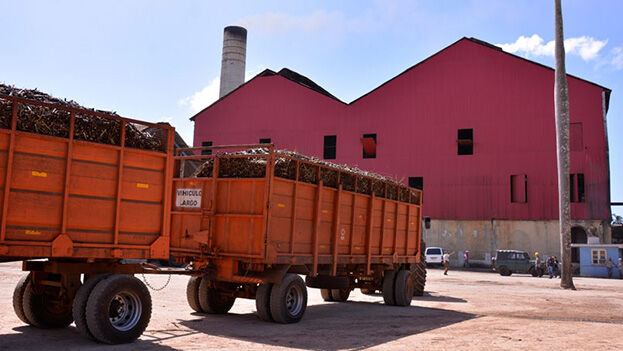
The Cuban Players Returned From Miami Without the Cup but With a Lot of Purchases

The Cuban delegation to the World Baseball Classic returns to Cuba from the Miami airport. (Collage)

14ymedio bigger14ymedio, Havana, 20 March 2023 — The players of Team Asere, the Cuban team that lost its pass to the final of the World Baseball Classic to the United States, returned to the Island this Monday without the event’s cup but loaded down with purchases.

Flat-screen televisions, air conditioners, car tires and many, many suitcases: this is how the representatives of the Island were captured before boarding their flight back to Havana this Monday morning.

The luggage to Cuba is very different from the few suitcases they carried when they entered the United States and arrived in Miami on March 16, as seen in the images of reports from several Florida media outlets.

According to the La Familia Cubana [The Cuban Family] page, directors of the Cuban Baseball Federation, the team’s management body and the players residing on the Island returned on the flight.

The catcher of the national team, Iván Prieto, was the only one who did not board the plane after escaping from the hotel where the group was staying, as confirmed by several sources from Miami. The native of Holguin  became “the first player to leave the Cuban national team in a World Baseball Classic,” journalist Francys Romero posted on his social networks.

On the other hand, it is still not known how the 1,500,000 dollars that Cuba obtained for having reached the semifinal of the World Classic will be distributed. According to the journalist of Pelota Cubana [Cuban Baseball], Yordano Carmona, the Cuban Baseball Federation (FCB) “cannot collect anything from that money” and “it is in writing.”

The sanctions of the United States Treasury Department do not allow payments to institutions on the Island. Given this, the 50% that corresponds to the FCB will go to the organizers of the tournament. continue reading

The rest, 750,000 dollars, must be distributed among the 30 members of the sports delegation, that is, $25,000 for each one. For professional athletes, Carmona explained, these amounts are deposited, but those who returned to the Island do not know if they will be given the money and under what procedures.

For the second and third editions of the World Baseball Classic, according to data from the Ministry of Foreign Affairs, the players “are owed $2,300,000” because “the blockade prohibits transferring money to Cuba.” What was awarded to the Cuban baseball team was donated to the victims of Hurricane Katrina.

Cuban athlete Sergio Reinaldo González Bayard could not receive 28,000 dollars, which he won as a prize at the World Beach Volleyball Circuit. Other cases include referees Ricardo Borroto Iglesias and Lourdes Ester Pérez who were unable to receive 9,282 and 8,680 dollars, respectively, for their services provided at different international events.

Meanwhile, the Cuban Volleyball Federation could not access the prizes obtained by the men’s team in the Challenger tournaments held in Portugal (4th place in 2018) and Slovenia (2nd place in 2019), for a total of 7,000 dollars.

Translated by Regina Anavy

____________

COLLABORATE WITH OUR WORKThe 14ymedio team is committed to practicing serious journalism that reflects Cuba’s reality in all its depth. Thank you for joining us on this long journey. We invite you to continue supporting us by becoming a member of 14ymedio now. Together we can continue transforming journalism in Cuba.
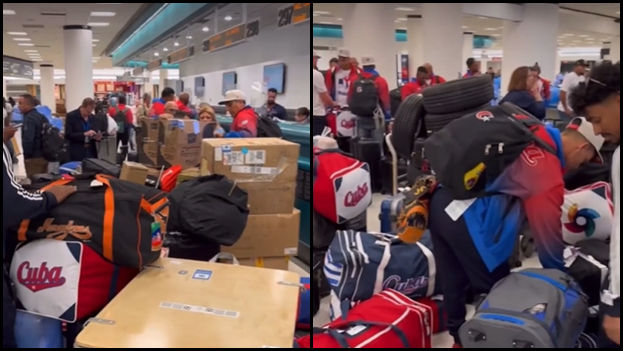
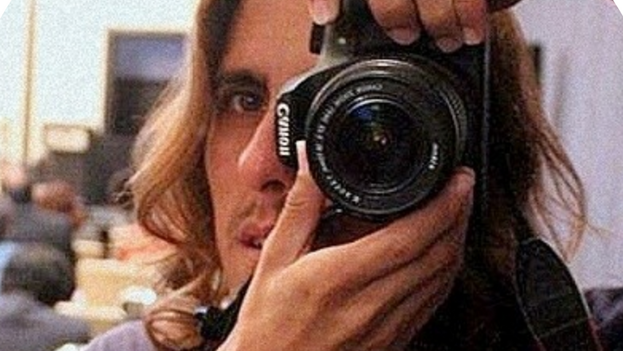
Former Cuban Collaborator of ’14ymedio’ Hector Reyes, Robbed and Murdered in Mexico

Journalist Héctor Darío Reyes collaborated with 14ymedio between 2014 and 2015. (H.R.)

14ymedio bigger14ymedio, Havana, 21 March 2023 — Cuban photojournalist Héctor Darío Reyes, who collaborated with 14ymedio at its beginning, was found dead in his home in Mexico, according to his friends on social networks. The version that circulates among his acquaintances is that he was killed by some strangers whom he had invited to his house and who stole his phone and computer. The killers are allegedly on the run.

Reyes, originally from Santa Clara, studied journalism at the Faculty of Communication of Havana and took his first steps in the official press, working at the Cuban News Agency and the Villa Clara newspaper Vanguardia.

At the end of 2014 he began a series of collaborations with 14ymedio, expressing his passion for photography with photos of the deplorable condition of the streets in Camagüey, and another series on the Island’s satellite dishes. Among his articles published by this newspaper are some that reveal the stormy life and personality of the author, who is remembered by his friends.

Reyes was a great traveler and lived almost like a nomad in many countries, passing through Spain, Russia, China, Laos, Cambodia and Thailand, where he said he had arrived by swimming across a river. In 2015, Reyes left Cuba and lived in different Latin American countries, from Ecuador to the jungle of Peru and Mexico. continue reading

In an interview in 2019, he declared his love for this lifestyle. “There is still a long way to go, to photograph and write about,” he said, adding that he preferred to go on his way “without credits or a fixed salary. With my tent and my backpack in search of other frontiers, like a Cuban whose profession is to be a backpacker.”

His body was found by his partner and buried in Mexico, apparently in a mass grave.

“He was a great friend; I was talking to him two days before that tragedy happened,” wrote the Cuban poet Ibis Martín. “We had a joint project, which will come to light one day. I will do as much as I can to make it happen. He was very good as a poet, not to mention his chronicles. I just hope that those murderers are found and pay for what they have done. Wherever he is, may he rest in peace and know that I loved him, because with me he was always super kind and respectful.”

Translated by Regina Anavy

____________

COLLABORATE WITH OUR WORKThe 14ymedio team is committed to practicing serious journalism that reflects Cuba’s reality in all its depth. Thank you for joining us on this long journey. We invite you to continue supporting us by becoming a member of 14ymedio now. Together we can continue transforming journalism in Cuba.
A Beating of Home Runs and Posters for the Cuban Baseball Team in Miami

The cameras avoided focusing on part of the public behind home plate, but posters saying “Cuba Libre” and “Down with the Dictatorship” could also be read. (14ymedio)

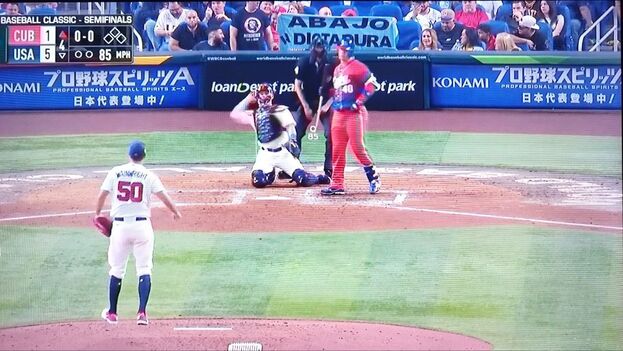
14ymedio bigger14ymedio, Havana, 19 March 19, 2023 — Rain splashed down on the game between the United States and Cuba in the World Baseball Classic. The match took place this Sunday afternoon at LoanDepot Park in Miami, but for Cuban spectators the intense downpours in Havana, together with the blackouts, made it difficult to enjoy a game that ended 14-2 in favor of the United States. The most important “plays,” however, did not take place on the ground.

A “beating” of posters was seen throughout the game, and an important moment occurred when the artist Danilo Maldonado, El Sexto, threw himself onto the field to protest, with a sign that said: “Freedom for the Cuban prisoners of July 11.” Instantly, hundreds of people began to shout “Freedom” to support the artist, who was quickly taken off the field by stadium security.

Almost at the end of the game, the writer and journalist Carlos Manuel Álvarez also ran a stretch on the field raising the Cuban flag. At another moment a fan came onto the field but did not carry anything in his hands. Both were approached by security personnel and referees and escorted off the field.

The artist Danilo Maldonado, ’El Sexto’, launches himself onto the field to protest with a sign that said: “Freedom for Cuban prisoners on July 11.” The current score: #Cuba 2 #USA 13

Meanwhile, in Cuba since the day before, the sky did not portend  anything good in Havana. The constant rain sunk the official plan to install giant screens in key points of the city. La Piragua* was a flooded area with kiosks closed just a few minutes before the start of the game, while some spectators took refuge in the closed room of the Yara cinema to follow the historic confrontation on its big screen. continue reading

“There were a few minutes left; friends were already gathered and we had even made an effort and bought some beer, but the power went out,” lamented Joseíto, a resident of the neighborhood of La Timba in the municipality of Plaza de la Revolución who had spent “a week planning to have no interruption” this Sunday afternoon and enjoy the World Baseball Classic, but the lack of power canceled his plans.

Shortly after the start of the game, the shouts of “Patria y Vida,” “Libertad” and “Díaz-Canel singao [motherfucker]” could be heard through the transmission of the Tele Rebelde channel, and despite the fact that the camera zoomed out and avoided focusing on part of the public behind home plate, posters could also be read with the phrase “Cuba Libre.” Between pauses in the game, the regime constantly transmitted advertising about the upcoming elections.

When the United States scored 9 runs at the end of the fifth inning, influencer Alex Otaola was also seen on national television behind the home plate area carrying a sign in his hands with the phrase “The street is the way.” Shortly after, the singer Dianelys Alfonso, La Diosa [The Goddess], was in the same place with another message in her hands: “Freedom.”

Before the start of the game, about 50 people demonstrated against “the dictatorship and in favor of the people of Cuba” in the vicinity of the stadium.

The Democracy Movement, organizer of the protest, placed a series of photographs of children with their names and white crosses, and a banner that read: “Castro, do you recognize these children? You must recognize them because you murdered them,” in reference to the “March 13 tugboat massacre” as it is called.

Another banner in English, with a heading that said “dictator Castro and President Biden,” included the petitions of the Democracy Movement and other exile organizations: freedom for all political prisoners, including “children,” free elections and the end of the division of Cuban families.

If those requirements are met, “then we will play too,” the poster said, referring to the World Baseball Classic in Miami with the participation of Cuba for the first time in more than two decades.

After this semifinal between the United States and Cuba, Mexico and Japan will play on Monday to define the other team that will contest the final on Tuesday.

*Translator’s note: La Piragua is a large plaza-type open space along Havana’s Malecon overlooked by the Hotel Nacional.

Translated by Regina Anavy

____________

COLLABORATE WITH OUR WORKThe 14ymedio team is committed to practicing serious journalism that reflects Cuba’s reality in all its depth. Thank you for joining us on this long journey. We invite you to continue supporting us by becoming a member of 14ymedio now. Together we can continue transforming journalism in Cuba.
High Tension a Few Hours Before the Cuba-US Semifinal in the World Baseball Classic in Miami

Cuban baseball player Yoenis Céspedes joined Team Asere’s training this Saturday at Miami’s LoanDepot Park. (Jit)

14ymedio bigger14ymedio, Havana, 19 March 19, 2023 — Cuba’s official press doesn’t  hide the tension before the semifinal of the World Baseball Classic, which will take place today in Miami when the Cuban national team faces the United States team, which beat Venezuela yesterday by 9 to 7. The day has already taken on political overtones, and Cubans from both the Island and the exile have been fully engaged  to answer several questions: What should be the attitude of the exile community towards the so-called Team Asere? Is the Cuban team an example of national reconciliation? Who will win or fail today?

The Cuban government seems to have made things clear: musical themes, speeches, tweets, uniform raffles, analyses that promise the victory of the Island’s team and proclamations of several leaders are part of the team’s presentation machinery as an initiative of the regime, which needs a hit of popularity a few days before the election of deputies to Parliament.

Knowing that several exile activists have called for protests in the vicinity of the stadium, the official press has also released “messages” to counter these calls.

Both President Miguel Díaz-Canel and his wife, Lis Cuesta, have tweeted several times a day about the Cuban national team. The president transcribed the lyrics of the official theme of the selection, interpreted by the singer Alexander Abreu, while Cuesta motivated the criticism of users by asking that “water with eggshell powder” — ritual elements in Santería — be thrown on the field. continue reading

The project related to the regime’s Puentes de Amor [Bridges of Love] intiative, led in Florida by Carlos Lazo, declared that the game was a “historic event” and that the organization rejected “the attempts of individuals or groups to organize protests,” and “politicize or sabotage the event.” “We have already won!” Lazo said in his statement, in line with the Government’s forecasts.

Cubadebate promised a shirt and a cap from the Cuba team, in addition to a cellphone recharge of 125 pesos — in collaboration with the state telecommunications monopoly Etecsa — to whoever could answer a trivia question about Cuban baseball.

However, the readers continued to be suspicious of the announcement, by Etecsa, of a maintenance scheduled for Sunday on the telephone lines and Internet: “While these technical actions are being carried out, it may affect the operation of services, so the work will be carried out at the times with the lowest voice and data traffic.” “They’re going to take away our Internet so we don’t see what’s going to happen in the ball stadium. Miami warmed up,” a Facebook user joked.

Another controversial announcement was the placement of screens in parks, theaters and squares in different provinces, considered insufficient by readers; strong police surveillance is predicted. It is also expected that the game will not be broadcast live, but that the authorities will leave a margin of time to censor any problematic event or image.

Several fans and intellectuals recognize that in Team Asere there is a paradox that will have to be solved in Miami: Who does the team really represent?

“This is a country that doesn’t want them to take away the only thing it no longer has, but that it counts on,” Cuban translator Jorge Ferrer said on his Facebook profile. “The name of Team Asere for the hybrid team is a semantic, sociological and even poetic finding of enormous caliber.”

Writer Carlos Manuel Álvarez, for his part, pointed out that “people don’t know where to classify them right now, when a type of national series drives a major league series. It can be said that they generated an identity from the mixture, which is the only possible identity.”

Journalist Gilberto Dihigo complained that, as in all the “Byzantine fights” in which Cubans are involved, the one that takes the best advantage of the division is the Government of the Island, which washes its hands and places the responsibility of the national division in the hands of the people themselves, both inside and outside the country.

“Cuba belongs to everyone and has nothing to do with that outdated and oppressive system of opinions; therefore, the ball team does not belong to Castroism,” he said.

Translated by Regina Anavy

____________

COLLABORATE WITH OUR WORKThe 14ymedio team is committed to practicing serious journalism that reflects Cuba’s reality in all its depth. Thank you for joining us on this long journey. We invite you to continue supporting us by becoming a member of 14ymedio now. Together we can continue transforming journalism in Cuba.

A Fire in Matanzas, Cuba Wipes Out 11,300 Tobacco Drying Sheds

The residents themselves warned of the fire in the tobacco sheds. (Yosier Argüeso)

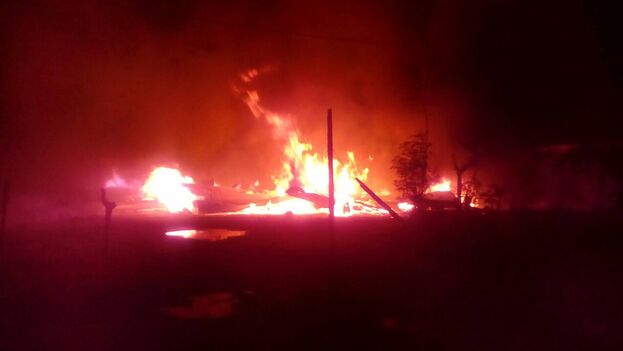
14ymedio bigger14ymedio, Havana, 16 March 2023 — More than 11,300 drying sheds of recently harvested tobacco burned in a fire on Wednesday night in Jovellanos, Matanzas. The official press confirmed the news, advanced by a user on social networks, which shattered the calm of the neighbors of District 5 of the San Carlos People’s Council.

According to the author of the information, Yosier Argüeso Miranda, an official of the Gelma group who is dedicated to agricultural logistics and is a resident of the area, it was the neighbors of the drying sheds, who belong to the Matanzas Tobacco Collection and Benefit Company, who realized that they were burning around 10:00 at night.

Rolando Tirse Fernández, of the Fire Department, explained that coordination with the firefighting forces of the neighboring municipalities allowed the fire to be controlled relatively quickly. Together, the main tasks focused on cooling down the premises and the surrounding structures to prevent a spread, according to the expert.

They could not, however, prevent up to 100 homes from being affected by the incident. They lost power due to the overheating of the network and the damage to the power lines that the Unión Eléctrica de Cuba is working to solve. continue reading

With regard to the events, several things remain unclear, such as the number of tobacco sheds that burned and how the fire could have started. Although the damage is only preliminary, the loss of such a number of drying sheds, from which between 2,300 and 2,800 cigars could be produced, has had a great impact on the local company.

The national panorama with respect to the tobacco harvest is also bleak, after the disaster caused in September 2022 by the passage of Hurricane Ian, which was particularly damaging for Pinar del Río, the island’s leading province in the sector, from which about 65% of the leaf comes.

The damages were described as “the largest in history” for Cuban tobacco by the provincial Agriculture delegate, Víctor Fidel Hernández, who found 90% of the drying sheds affected by the hurricane, out of a total of 12,000. In addition, “about 11,000 tons of tobacco” that were already in the dryers got wet, and had to undergo a new process or be discarded.

Much of that leaf, about 6,000 tons, was taken to other provinces to continue the process, including Matanzas, Sancti Spíritus, Villa Clara and Cienfuegos.

At the end of the year, the Government estimated that some 12,544 tons of the damaged leaves were recovered, and more than 1,640 hectares were planted, only 26% of the 6,300 planned for a cycle that closed in January.

In November 2022, a fire also swept through the cargo of a train that transported Pinar del Río leaf, although the amount of tobacco lost in the event was not offered to the public.

This product is one of the most profitable for the Cuban Government, which last year pocketed 545 million dollars, thanks to the exports of Habanos S.A. Only one year before, the earnings were 568 million dollars (with these figures affected by the change in the value of the dollar).

At the recent Cigar Festival, February 27 to March 4, the Government raised the “record figure” of 11,220,000 euros for the auction of six humidors, one of them signed by Cuban President Miguel Díaz-Canel, which sold for 4,200,000 euros.

Translated by Regina Anavy

____________

COLLABORATE WITH OUR WORKThe 14ymedio team is committed to practicing serious journalism that reflects Cuba’s reality in all its depth. Thank you for joining us on this long journey. We invite you to continue supporting us by becoming a member of 14ymedio now. Together we can continue transforming journalism in Cuba.
Three US Senators Ask Biden To End the Embargo and To Help the Cuban Private Sector

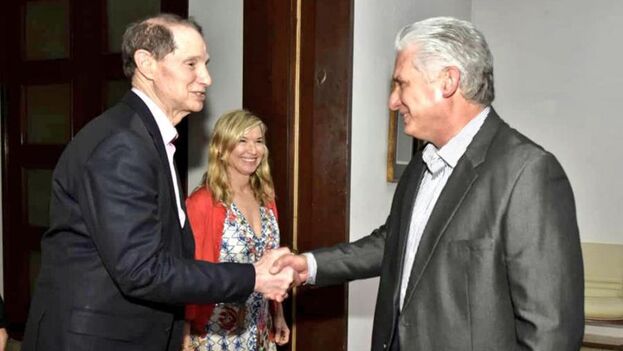
US Senator Ron Wyden and Cuban President Miguel Díaz-Canel, at their meeting in Havana last December. (Minrex)

14ymedio bigger14ymedio, Havana, 17 March 17, 2023 — The letter sent on Wednesday to US President Joe Biden by three senators, calling for the end of the embargo on Cuba and more aid for the private sector of the Island, was answered the next day by the US-Cuba Commercial and Economic Council (Cubatrade), with several clarifications.

“The US embargo against Cuba has failed,” categorically affirmed the letter signed by Democrats Ron Wyden (Oregon), Chris Van Hollen (Maryland) and Republican Cynthia M. Lummis (Wyoming). The legislators believe that the measure, in force for 60 years, “has not facilitated regime change nor promoted any notable improvement in human rights, democracy or economic freedom in Cuba.”

On the contrary, they say, “it has limited the capacity” of the United States Government to defend its interests in Cuba, has stifled opportunities for American companies, farmers and ranchers and has harmed “both Americans and Cubans” on the Island. In addition, they consider it to be an easy “scapegoat” for the failures of the Cuban government.

Faced with this, they propose a series of measures, in addition to the lifting of the embargo, among which are supporting small Cuban private companies by providing “specific access” to US financial services, increasing trade in food and agricultural products between both countries and supporting access to information and “person-to-person” contact in Cuba. continue reading

While the senators claim to have “serious concerns about the Cuban Government’s repression of peaceful actions in favor of democracy” and to support the Biden Administration’s efforts “to hold the Cuban Government accountable for violations of human rights, civil rights and workers’ rights, including forced labor,” they insist that “unilateral sanctions have not caused democratic change.”

This Thursday, Cubatrade responded in a statement to several of the points in the letter, emphasizing that much of the regulatory changes in the trade relationship with Cuba depend on Havana’s decision. Thus, he suggests that they also send a letter to the Cuban president, Miguel Díaz-Canel.

For example, to the request of legislators that the United States make “specific efforts” for Cuban small private entrepreneurs to access US financial services, they state that in May 2022, the Biden and Harris Administration already authorized the first direct investment and direct financing to a private company in Cuba  owned by a Cuban. “Unfortunately, the Government of the Republic of Cuba has been two years — and counting — without specifically authorizing or publishing regulations for the delivery of direct investment and direct financing to private companies in the Republic of Cuba owned by a national of the Republic of Cuba.”

On the other hand, to the senators’ claim to establish a specific license from the Office of Foreign Assets Control (OFAC) to allow US banks to provide financial services to small Cuban companies in the private sector, the Council concedes that they are right to ask for “efficient banking” for micro, small and medium-sized enterprises and regrets that the Biden government continues to refuse to authorize correspondent banking*.

Incredibly, the Obama-Biden Administration (2009-2017) has authorized financial institutions based in the United States to have correspondent accounts in financial institutions located in the Republic of Cuba, but it did not authorize financial institutions based in the Republic of Cuba to have correspondent accounts with financial institutions located in the United States,” explains the organization, led by businessman John Kavulich.

It would be useful, the statement continues, for the three senators to advocate before the Government of the Republic of Cuba on the lack of regulations on investment and financing, because “to be issued” they must address the elements referred to in the letter to President Biden, which would be an incentive for him to authorize direct correspondent banking.

Another of the points made by Cubatrade is that part of what they are looking for, such as promoting the use of funds provided for in the programs authorized by the Agricultural Law of 2018 for US farmers and ranchers who want to export to the Cuban market, is not the responsibility of the US Department of Agriculture, but of those who requested it and haven’t used it.

It’s not the first time that Ron Wyden has made moves to bring the United States closer to the Cuban regime. Last December, the senator visited Havana, where he held a meeting with Díaz-Canel.

Two days later, he also met with opponents Martha Beatriz Roque Cabello and Julio Ferrer Tamayo. Roque, who recalled that the senator from Oregon is “one of the people who wants rapprochement with the dictatorship.” She said that the topic of conversation on that occasion was the political prisoners and that she had the confidence that the senator “will not leave out this issue and will bring it up in the different committees of the Senate in which he is going to participate.”

Wyden is also the president of the Senate Finance Committee, and in February 2021 he presented the United States-Cuba Trade Act to repeal sanctions against the Government of the Island and to try to normalize relations between the two administrations.

*Translator’s note: A correspondent bank is a financial institution that offers services to another financial institution, usually in a different nation. 

Translated by Regina Anavy

____________

COLLABORATE WITH OUR WORKThe 14ymedio team is committed to practicing serious journalism that reflects Cuba’s reality in all its depth. Thank you for joining us on this long journey. We invite you to continue supporting us by becoming a member of 14ymedio now. Together we can continue transforming journalism in Cuba.