

The Government Extends the Import of Generators From Cuba Until December 2023

Despite the high prices, these devices are not a luxury on the Island because of the constant blackouts. (14ymedio)

14ymedio bigger14ymedio, Havana, 31 March 2023 — The Cuban authorities have extended until December 31, 2023 the permit for the non-commercial import of generators of more than 900 watts. In the run-up to the hottest months of the year, the measure — approved in August 2022 and reactivated last December — tries to guard against a summer of new blackouts and the usual breakdown of the National Electricity System (SEN) in the face of high demand for electricity.

The extension was announced this Thursday in an extraordinary edition of the Official Gazette, through a resolution of the Ministry of Finance and Prices. The sections of the document recall that this government agency is authorized to reauthorize the measure as many times as it deems necessary, and considers that the acquisition of the generators has brought notable “benefits for the residential sector,” in the face of the “contingencies” that have affected the SEN.

Initially approved after the energy debacle that the Island suffered during the summer of 2022, the measure expired in December of that year. However, the authorities extended the deadline for three months, until March, and this Thursday it was decided to extend it for another nine months.

Since last August, Cubans have taken advantage of this law to import generators of more than 900 watts, although the increase in the number of these devices has not meant a total solution to the energy problem. The lack of fuel, indispensable for the operation of the generators, and the strict control and registration that the Government maintains for the owners, have hindered their role in Cuban houses. continue reading

The rule, which promised a “special treatment” for equipment importers, was the continuation of a set of measures approved in July 2022, in order to make the non-profit import of several items more flexible. The inventory ranged from cell phones and computers to appliances, sporting goods and spare parts for cars.

At that time, the import of generators of up to 900 watts was also authorized for a price of 200 dollars, from 900 to 1,500 watts for 500 dollars, and more than 1,500 watts for 950 dollars. However, the authorities understood that the document underestimated the price of the devices and, therefore, attributed an erroneous number that affected the possibility of import. In the US market — where most of them are usually bought — the cost of a generator of more than 900 watts not only exceeded 200 dollars but could reach 500 dollars for each unit.

“When assessing the effects on the residential sector that still persist, as a result of the energy deficit caused by the breakdowns in the national electroenergy system, it is necessary to authorize, on a temporary basis, the import of generators with a power of more than 900 watts,” they agreed.

There was no shortage of complaints and comments about the opportunism of the measure. On the other hand, the noise of the machinery during the nights of blackout also caused discomfort in the neighbors of the “lucky” owners.

The dissatisfaction increased after the announcement that the generators had to be registered in the local service stations as a condition to be able to buy 2.6 gallons of gasoline to jump-start the equipment.

The owners of the generators faced new difficulties due to the need to “register” them, a requirement that also raised suspicions. The Government, said several users on social networks, also intended to carry out a strict “census” of the equipment and its owners, noting their identity card and the serial number of the machine.

As if that were not enough, the lines of customers in front of the service stations and the usual shortage of fuel were other obstacles to achieving the efficiency of the generators during a situation that the authorities had to qualify as “the worst in the history” of the SEN.

Miguel Díaz-Canel’s promise that the blackouts would stop by the end of the year was fulfilled for only a few weeks. At the beginning of this year, Vicente de la O Levy, Minister of Energy and Mines, anticipated that the blackouts would return, although initially he assured that they would be for only a couple of hours. A few weeks later he extended the period to 3 or 4 hours that, in practice, have been exceeded in some areas. Not to mention that half of the Island has already experienced four serious energy collapses in just three months.

The extension approved this Thursday will also reactivate the market for generators in the United States, where Cubans living in Florida will try, once again, to get their relatives on the Island a generator for the long nights of blackout that, according to the Government itself, are far from being an outdated reality.

Translated by Regina Anavy

COLLABORATE WITH OUR WORKThe 14ymedio team is committed to practicing serious journalism that reflects Cuba’s reality in all its depth. Thank you for joining us on this long journey. We invite you to continue supporting us by becoming a member of 14ymedio now. Together we can continue transforming journalism in Cuba.
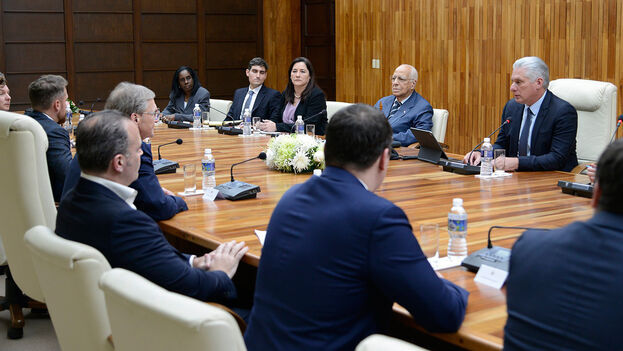
Russia Will Continue To Strengthen Its Strategic Cooperation With Cuba After the Elections

Cuban President Miguel Díaz-Canel with a Russian delegation in Havana. (Presidency)

14ymedio biggerEFE (via 14ymedio), Moscow, 30 March 2023 — Russia will continue to strengthen its strategic cooperation with Cuba after the recent legislative elections on the Island, which demonstrated the “maturity of Cuban society,” the spokeswoman of the Russian Foreign Ministry, María Zakharova, said on Thursday.

“We confirm our principled approach of continuing to strengthen the strategic interaction between Russia and Cuba,” said the representative of Russian diplomacy, highlighting the elections to the Assembly of People’s Power held on the Island last Sunday.

Zakharova celebrated “the successful completion of the electoral process in Cuba,” in which the 470 proposed deputies were elected.

“We value this as a new testimony of the support of the Cuban population for the Government’s efforts to solve the current tasks facing the country,” she said.

The Foreign Affairs spokeswoman added that “this process showed the maturity of Cuban society, its consolidation based on the line promoted by Havana in defense of the country’s national interests and sovereignty.”

Although Cuban President Miguel Díaz-Canel described the elections as a “clean home run” despite “the fierce campaign and the calls for abstention” of dissident sectors, the turnout was 75.92%, a historically low figure for what is customary in the country.

An abstention of 24.08% is low compared to other Latin American countries and some liberal democracies.

However, this is the largest abstention recorded in the parliamentary elections in Cuba since the triumph of the revolution in 1959.

Between 1976, the date of the first elections of the socialist stage, and 2013, it remained below 10%, and only in 2018 did it rise to 14%.

Translated by Regina Anavy

_________________

COLLABORATE WITH OUR WORKThe 14ymedio team is committed to practicing serious journalism that reflects Cuba’s reality in all its depth. Thank you for joining us on this long journey. We invite you to continue supporting us by becoming a member of 14ymedio now. Together we can continue transforming journalism in Cuba.

Cuban Baseball Player Roel Santos Stranded in Miami Will Be Able To Join the Olmecas of Tabasco

Cuban baseball player Roel Santos is in Miami and will travel to Havana to recover his documents that were stolen from him. (Instagram)

14ymedio bigger14ymedio, Mexico, 30 March 2023 — The theft of his passport, with a U.S. and Mexico visa, in addition to his work permit, prevented Cuban baseball player Roel Santos from joining the preseason with the Olmecas of Tabasco.

However, a source within the Mexican team confirmed to 14ymedio that the player “already received permission in the United States to travel to Havana,” where he will be able to retrieve his documents and travel to Mexico before April 20, in time for the start of the Mexican Baseball League.

On Thursday morning, Santos was in Miami, where he was the victim of a robbery for which no details have been given, but a  source on his team says that “he is expected to be here in the coming days” and that his participation “is in the plans” of Mexican managers. On the Facebook profile Estadio Centenario 27 de Febrero, a video was uploaded in which the Cuban athlete invites fans to attend the  Tabasco team’s headquarters to learn about the new attractions.

Through the publication by Olmecas New Times, it was reported that Santos would take between a month and a half to two months to recover his documentation, during which time “he could not leave the United States.” However, after a few calls from the baseball player, the situation changed, and Havana is already working on the recovery of his documents. continue reading

The specialized media Pelota Cubana confirmed that the baseball player, a native of Granma province, had not been able to leave Miami after his participation with Team Asere, which finished fourth place in the World Classic after a controversial match in which the Cuban team faced the United States. This Thursday, the athlete shared a video on his Instagram account in which he is seen on a yacht, as well as some images of his stay in Florida.

Santos started playing for the Olmecas de Tabasco in 2019. At that time he had experience in the Independent Canadian-American League, in the Professional League of Japan and in the Colombian Professional Baseball League.

Play-Off Magazine revealed in 2020 that Roel Santos had a salary of $7,000 per month. In the same publication, the then-president of the Cuban Baseball Federation, Higinio Vélez, assured that the entire amount of the money was received by the athlete, and the Federation received the equivalent of 20% of the club’s contract.

The numbers for Santos in the summer with the Olmecs were phenomenal. After 68 games he had a batting average of .411. In 253 turns at bat, he hit 8 home runs, had 104 hits and assisted 30 runs.

During the winter he played with the Naranjeros de Hermosillo of the Arco League in Mexico and reached the semifinals. In the regular tournament he was a star in 58 games, with a batting average of .303, and he excelled in the left and center fields.

Translated by Regina Anavy

____________

COLLABORATE WITH OUR WORKThe 14ymedio team is committed to practicing serious journalism that reflects Cuba’s reality in all its depth. Thank you for joining us on this long journey. We invite you to continue supporting us by becoming a member of 14ymedio now. Together we can continue transforming journalism in Cuba.

In the First Public Auction in Cuba, a Repossessed Hyundai Is Sold to a Company

A white Hyundai Accent similar to the one being auctioned in Havana. (Auto Motor)

14ymedio bigger14ymedio, Havana, 30 March 2023 — The Provincial Court of Havana has disclosed the first call for public auction that will be held in Cuba, a measure introduced in the Code of Process approved at the end of 2021, which allows enforcing a judgment when the guilty party lacks funds to make a payment.

In this case, the auctioned goods is a 2006 Hyundai Accent vehicle that starts with a minimum price of 64,051.03 Cuban pesos (about $2,700 at the official exchange rate of 24 pesos to $1, or 24 to $366 on the informal currency market). This is the appraisal value, and as usual, it is much lower than the market price, since used cars sell for at least $20,000.

The vehicle, white and with a 5301811 gasoline engine, was owned by the company Pleatex Company INC, based in the British Virgin Islands with a branch in Havana, dedicated to the marketing of industrial products and articles. The car was seized to satisfy a debt with the allegedly Spanish Blue Capital Partners S.L., which was represented by a Cuban lawyer and of which there are currently no concrete signs of existence, except in Romania and Israel, where a company with the same name is registered.

Any natural or legal person can participate in the auction, as long as they are not a court official or a lawyer for any of the parties involved in the case. To do this, they must be of legal age and resident in Cuba; meet the specific requirements to acquire goods of this type; accept the existing title, the charges and encumbrances; declare that they know the conditions of the process; and guarantee the deposit in Cuban pesos of the bond ordered by the court — equivalent to 30% of the appraised value or, in this case, 19,215 pesos. continue reading

Potential interested parties must submit their applications to the Commercial Chamber of the Provincial Court of Havana within 20 days from March 29, when the edict has been published. In addition, they will be able to inspect the vehicle and its state of conservation, the document indicates, adding that any payment must be made by bank transfer and never in cash.

The auction will put an end to a conflict that goes back a long way, since the lawsuit was filed five years ago. It has amazed countless citizens who have created a parallel debate in the networks of the official press about the relevance of an auction in a communist system that some consider typical of other systems. Other readers defend the appropriateness of public auctions as a way of enforcing judgments, something not intrinsic to capitalism, and most are astonished at the publicity that this procedure has been given.

Translated by Regina Anavy

____________

COLLABORATE WITH OUR WORKThe 14ymedio team is committed to practicing serious journalism that reflects Cuba’s reality in all its depth. Thank you for joining us on this long journey. We invite you to continue supporting us by becoming a member of 14ymedio now. Together we can continue transforming journalism in Cuba.
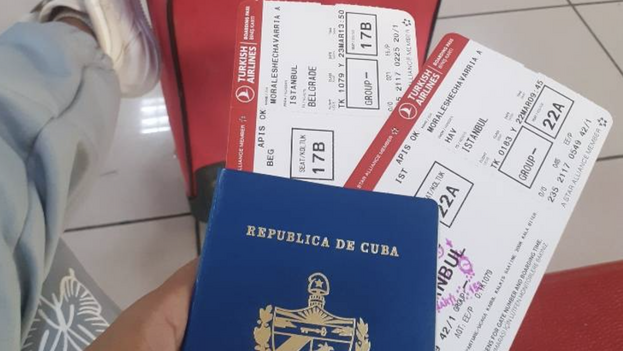
Serbian Authorities Confirm to ‘14ymedio’ That They Will Require a Visa From Cubans as of April 14

It is the first time since 1966, after the signing of an agreement between Belgrade and Havana, that Serbia demands this document from Cubans. (Facebook/Cubans in Serbia)

14ymedio bigger14ymedio, Havana, 30 March 2023 — The consul and political advisor of the Embassy of Serbia in Havana, Jelena Zivojinovic, confirmed this Thursday to 14ymedio that as of April 14, Cubans will need a tourist or work visa to travel to the country. The measure, aimed at containing illegal emigration, may be revoked “in the future” if the citizens of the Island “demonstrate” that they can travel to the Balkan nation and return to Cuba, the diplomat said.

“We had to demand the visa,” says Zivojinovic, after explaining that the immigration situation has become unsustainable. For several years, Serbia has become the springboard for many Cubans to illegally access the European Union. “Cubans emigrate a lot,” he says, and they have reached the “category of red illegal migration”; hence, the country decided to put a stop to the free visa procedure.

Despite the restrictions, Zivojinovic recalled, “with a letter of invitation from someone in Serbia the visa will still be granted, in addition to the fact that there are many Cubans who travel for work.” The Secretary of the Embassy added that they will soon make available to interested parties, on their website, the forms and requirements to apply for the visa.

It is the first time since 1966, after the signing of an agreement between Belgrade and Havana, that Serbia demands this document from Cubans, although it is not known if Cuba will take a “reciprocity measure” and demand, in turn, a visa from the Serbs. At the end of 2022, when the Government of Belgrade withdrew the free visa to several countries such as India, Guinea Bissau, Burundi and Tunisia, it began to be suspected that the Island might enter the list of nations for which the demands would increase, as a result of pressure from the European Union. continue reading

In December 2022, after an incident in which a group of Cubans were prevented from traveling from Frankfurt (Germany) to Belgrade, the diplomatic headquarters assured this newspaper that there was no change in the immigration rule between the two countries and held the airline responsible.

This year, the situation of several groups of Cuban passengers has been reported who have not been allowed to enter Serbia, and who have remained for days in overcrowded conditions at Belgrade International Airport. Since March 24, twenty-three Cubans have been detained in shelters at the air terminal, according to YouTuber MH Europa.

The Cubans, who “intended to enter the country as tourists,” had their passports and were asked for 300 euros to process “a visa.” “The reality is that Serbia no longer wants more Cubans,” he said.

Last week, this newspaper reported that the immigration authorities of Serbia allowed the entry of 19 Cubans who were detained at that same airport. Eight others were deported, and the fate of at least eight others was unknown.

The establishment of the visa coincides, however, with several steps of economic rapprochement between the two countries. On Tuesday, the Island’s ambassador to Serbia, Leyde Ernesto Rodríguez Hernández — who took office just a few days ago, on March 16 — paid a visit to Jiri Marex and Bosko Rupic, executive and trade directors, respectively, of the Air Serbia company. According to a note from the Ministry of Foreign Affairs, Rodríguez visited the airline’s headquarters to evaluate “the possibilities of establishing a direct flight between Belgrade and Havana.”

In addition, they agreed to stay in communication about “possible direct flights by tour operators in Serbia to the Cuban tourist market.” Other notes from the Cuban Foreign Ministry attest to the excellent state of trade relations between the two nations.

Asked about this contact of the island’s diplomats with Air Serbia, precisely when the access of Cubans to that country is restricted, Zivojinovic argued that “one thing has nothing to do with the other.” The project to establish a Havana-Belgrade connection “has been in the works for a long time,” he said. “Now it’s being finalized,” especially to stimulate Serbian tourism to Cuba.

In addition to tourism, Rodríguez has begun negotiations with entrepreneurs from Serbia in the industrial, agri-food and transport spheres and plans, together with the director of the Dynamic Elchem company, Milos Stefanovic, to achieve an investment to assemble “all the equipment for chocolate production.”

Translated by Regina Anavy

____________

COLLABORATE WITH OUR WORKThe 14ymedio team is committed to practicing serious journalism that reflects Cuba’s reality in all its depth. Thank you for joining us on this long journey. We invite you to continue supporting us by becoming a member of 14ymedio now. Together we can continue transforming journalism in Cuba.
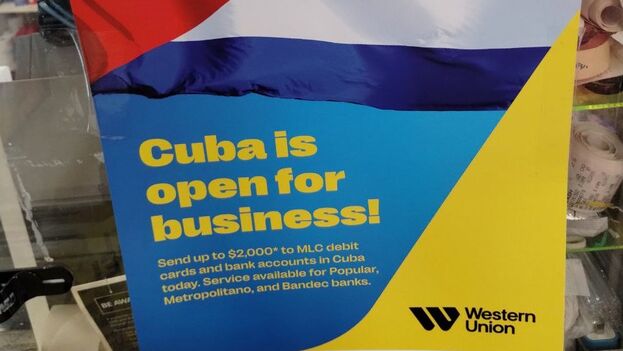
Western Union’s Outrageous Poster: ‘Cuba Is Open for Business!’

Western Union office in Miami with the controversial poster. (14ymedio)

14ymedio bigger14ymedio, Miami, 31 March 2023 — The sign in front of the Western Union office located at 6590 Pembroke Road, in Miami, has raised the indignation of its Cuban customers. “Cuba is open for business!” says the poster in English; it is illustrated with a flag of the Island and also reminds people that remittances are limited to $2,000 for debit cards and Cuban bank accounts. The service is available, it continues, for Banco Popular, the Metropolitan and Credit and Commerce (Bandec).

“What do you mean that Cuba is open to business? That’s a lie,” an émigré from Havana scolded the employee on Thursday, who was given a number of reasons: “There is a dictatorship; it is a totalitarian, oppressive, repressive, murderous regime.”

The worker, embarrassed, kindly agreed with him, but argued: “I think it refers to the fact that unlike the time when Western Union was closed for Cuba, now you can send money.” For the client, that was a very different thing from what the poster suggested, which he called “a lack of respect for the exile community.”

Earlier this month, Western Union announced that it was open for sending remittances to Cuba from any of its offices in the United States, after a two-month pilot program in Florida. The payment channels used are those of the official Cuban agency Orbit, through which Cubans receive their money in dollars. continue reading

Western Union suspended remittances to Cuba — the country’s second source of income, behind the sale of medical services and ahead of tourism — in November 2020, after the government of then-President Donald Trump sanctioned Fincimex and AIS, two remittance processing entities, for their links with Gaesa, the conglomerate of companies led by the Cuban military.

A month earlier, the United States Government had formally banned remittances to Cuba sent through companies controlled by the Armed Forces. According to the available data, 51.3% of the companies that then offered financial services in Cuba had contracts with Fincimex.

Translated by Regina Anavy

COLLABORATE WITH OUR WORKThe 14ymedio team is committed to practicing serious journalism that reflects Cuba’s reality in all its depth. Thank you for joining us on this long journey. We invite you to continue supporting us by becoming a member of 14ymedio now. Together we can continue transforming journalism in Cuba.
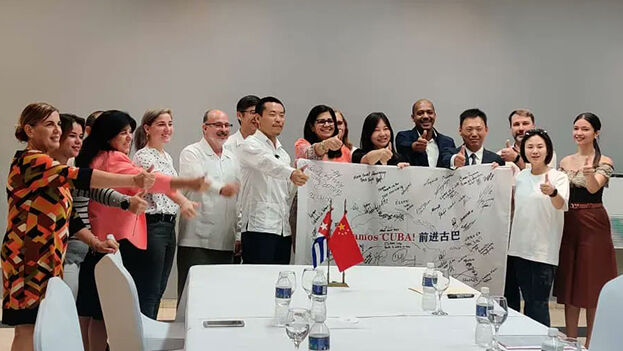
Havana and Beijing Sign an Agreement To Promote Chinese Tourism in Cuba

Signing of the agreement in Havana between Havanatur and Tumei to promote Cuban tourism in China. (Havanatur)

14ymedio bigger14ymedio, Havana, 30 March 2023 — The rapprochement between Cuba and China takes a new step with the signing of an agreement, this Wednesday, between Havanatur and the Chinese tour operator Tumei International Travel, which will promote the Island as a “reliable and safe destination” for travelers of the Asian giant.

According to the official press, Rodrigo Wen, the deputy general manager of Tumei, said during the signing of the agreement in Havana that Cuba is “a priority destination” and is among the “preferences” of the customers of his company, which is based in Hong Kong.

This week, a delegation from the agency toured Havana, Varadero, Cienfuegos and Trinidad as possible destinations for the arrival of Chinese tourists. The first deputy minister of Tourism in Cuba, María del Carmen Orellana, said that the city of Baracoa, in Guantánamo, is more in line with the needs of the Chinese market with the renovations of hotels after the COVID-19 pandemic. Likewise, she assured that the Cuban side has prepared and studied the characteristics and demands of Chinese travelers to welcome them “with the best service.”

More than sun and beach, tourists from the Asian giant usually travel in groups and are interested in the cultural heritage of the countries they visit, such as museums and galleries. In addition, they allocate a good part of their budget to shopping and prefer places with Internet connections and electronic payment systems. continue reading

For Orellana, the “conditions are created for Chinese citizens to feel that Cuba is their second homeland during their stay,” while Tumei’s spokesman pointed out that his company had understood the “concept of a single Cuba.” The signing of the agreement was also attended by Alberto Blanco, director of Asia and Oceania of the Ministry of Foreign Affairs, and Chou Quan, economic adviser of the Chinese Embassy in Havana, who “agreed” on the “excellent state” of relations between the two countries, according to statements repeated in the official press.

After almost three years of border closures, China put an end to its “zero covid” policy in January, by allowing travelers to enter its country without a mandatory quarantine. According to an interview given in February to the Prensa Latina agency, the deputy manager of Tumei said that Cuba is among the 20 countries approved by the Chinese government for the resumption of group tourism. “So there is no time to lose and we must act now. We hope to be able to see some results within this year,” he said.

The tentacles of the Chinese Government on the Island extend from small industries, such as footwear, to key areas of economic activity such as the generation of renewable energy and the modernization of the official media. China was among the countries that Miguel Díaz-Canel visited during a tour in November last year in search of funding and new cooperation, in which his counterpart Xi Jinping pledged to deliver 100 million dollars as part of an “emergency donation.”

Deputy Minister Orellana also said that tourism “is beginning to take its first steps to recover” after the crash generated by the pandemic.

However, official data confirm that tourism is still far from recovering its pre-pandemic levels. Between January and February 2023, 489,000 tourists arrived on the Island, barely half (51%) compared to the same period in 2019.

Translated by Regina Anavy

____________

COLLABORATE WITH OUR WORKThe 14ymedio team is committed to practicing serious journalism that reflects Cuba’s reality in all its depth. Thank you for joining us on this long journey. We invite you to continue supporting us by becoming a member of 14ymedio now. Together we can continue transforming journalism in Cuba.
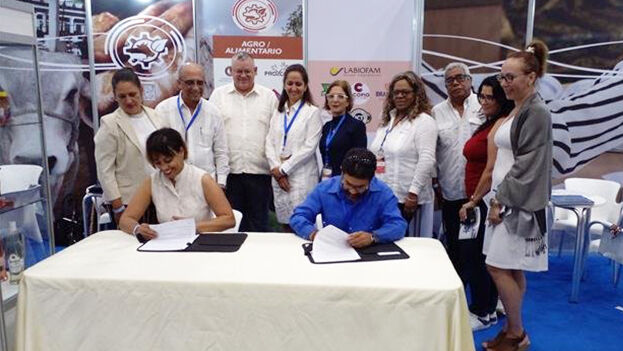
Cuban State-Owned Company Alimpex Will Import Food From Panama

Signing the contract between Panama’s Belraysa and Cuba’s Alimpex companies. (Prensa Latina)

14ymedio bigger 14ymedio, Havana, 31 March 31, 2023 — Flours, vegetables, yeasts, meats and dairy products from Panama will be brought to Cuba by the Import and Export Company of the Ministry of Food Industry (Alimpex) through a contract with the Belraysa tourism group, the representative in Panama of the Cuban state group Palco.

The signing of the agreement was held during the 39th International Trade Fair held in the Central American country, where other Cuban institutions also signed agreements for the marketing of their products abroad, reported the official news agency Prensa Latina.

The agreement was signed by Jorge Guerra, general manager of Belraysa, and Doralis Velázquez, business director of the state company. According to the agency’s report, both managers “praised” the scope of the new exchange, which occurs in the midst of a shortage of food and supplies for daily use on the Island.

The agreement includes the import of key raw materials for state industries, cooperatives and small private companies. Velázquez assured that a “stable supply of goods” will be facilitated, along with a reduction in supply cycles. continue reading

Alimpex is one of the state companies that acts as an intermediary with SMEs to import raw materials and export their productions. Unable to trade directly with foreign customers or suppliers, private businesses are obliged to use official channels to get hold of raw materials or place their goods on the international market.

Alimpex’s agreement with Belraysa expands the food inventory that the state company will have at its disposal to sell to its national customers, but it maintains the official monopoly on international trade, a condition that has been harshly criticized by Cuban entrepreneurs who want to trade without state intermediaries.

Belraysa is a travel agency based in Panama that offers packages to several destinations in Latin America, including the Island as a medical tourism destination. It also has a business arm as an organizer of international congresses and fairs. On its website it describes itself as “the host of the largest events in Cuba,” and it officially represents the Palco Business Group.

While the Cuban authorities assure that the country advances in food security, the data tell a different story, since in reality it is the second country in Latin America and the Caribbean that is most deficient and dependent per capita on imports of agricultural products, only surpassed by Panama, which makes it vulnerable to the sway of the international market and the supply capacity of its trading partners.

In an effort to mitigate the supply crisis, the Cuban government has signed several agreements with friendly countries for the supply of food. Thus, last January, the National Center for Animal Health of Cuba authorized the import of meat and dairy products from Colombia, a permit that adds to the marketing of poultry meat, although its supply depends mostly on the United States, whose sales to the Island in 2022 reached 295 million dollars.

At the fair, which brought together delegations from 30 countries, the Pharmaceutical Laboratories Company (Labiofam) also signed a letter of intent with Corpomesdcal S. A. to register and market its  homeopathic product Vidatox 30 CH, which is used in complementary therapies in the treatment of cancer. (Homeopathy is not recognized as a medical specialty in many countries.) Similarly, the Center for the Promotion of Foreign Trade and Foreign Investment (ProCuba) has initiated efforts to renew a memorandum with its Panamanian counterpart, the agency said.

Translated by Regina Anavy

____________

COLLABORATE WITH OUR WORKThe 14ymedio team is committed to practicing serious journalism that reflects Cuba’s reality in all its depth. Thank you for joining us on this long journey. We invite you to continue supporting us by becoming a member of 14ymedio now. Together we can continue transforming journalism in Cuba.

A Young Cuban’s Life Is Saved After He is Attacked by a Shark on a Beach

A (different0) shark caught on a Cuban beach by fishermen. (Screen capture)

14ymedio biggerEFE (via 14ymedio), Havana, 29 March 2023 — A young Cuban was seriously injured, although his life was saved, after a shark attack on the southern coast of the province of Artemisa, state media reported on Tuesday.

The incident occurred last weekend when the 17-year-old was fishing with some relatives a few kilometers from the coast, near the town of Majana.

After the attack, he was transferred to a hospital in the area where he received first aid, according to the local newspaper El Artemiseño.

“He arrived in shock, with a lot of blood lost; the first thing was to give him a blood transfusion. Then he went to the operating room for a complex surgery due to the serious vascular damage to the arm and forearm,” the director of the center, Niurka Larrionda, explained to the provincial media.

After the intervention, the young man was transferred to the Juan Manuel Márquez pediatric hospital in Havana, because “his situation requires the intervention of specialists in angiology, orthopedics and traumatology,” the doctor explained. continue reading

Shark attacks in Cuba are unusual, although some cases are remembered, such as the surprise that some swimmers received last November by the appearance of a trio of sharks on the shore of a beach in the province of Camagüey.

In 2017, a 22-year-old swimmer died after a shark attack on the shore of Guardalavaca beach, in Holguín.

According to statistics cited by the official newspaper Juventud Rebelde, between 1956 and 2014, 44 attacks on humans were reported (39 unprovoked and five provoked), with 22 confirmed deaths.

In the seas that surround the Island, there are some 54 species of sharks, and most of them do not pose any danger to humans, but the three most dangerous for people are also present: the white, the tiger and the bull.

Translated by Regina Anavy

____________

COLLABORATE WITH OUR WORKThe 14ymedio team is committed to practicing serious journalism that reflects Cuba’s reality in all its depth. Thank you for joining us on this long journey. We invite you to continue supporting us by becoming a member of 14ymedio now. Together we can continue transforming journalism in Cuba.
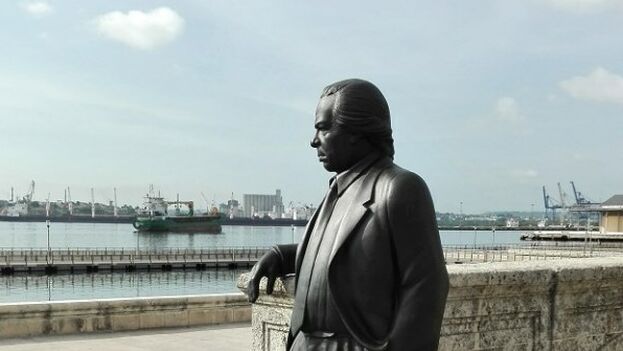
And Now, the Commodification of Cuban Music

“They achieved the miracle of turning Nicolás Guillén into another person,” an Internet user said echoing many others who claim the newly inaugurated sculpture looks nothing like the man.  (Art for Excellencies)

14ymedio bigger14ymedio, Elías Amor Bravo, Economist, 30 March 2023 — The Ministry of Culture (MINCULT) says that it is being “improved,” but don’t believe it. What it really wants is to be an agent for artists and musicians. Late post-castrism has hung the “For Sale” sign on the entire productive and obsolete apparatus of the Marxist-Leninist economy built over six decades. It is not a real and effective privatization, as perhaps would be desirable, but something worse and more opportunistic.

They have already started with the commodification of universities, which I discussed in my previous post, and now they continue with culture and music. And if in the first case the Ministry of Higher Education was the architect of stepping on the accelerator, now it is the turn of MINCULT, which, according to the state press, is “currently involved in the complex task of improving the business system of music, a process necessary to articulate the promotion and development of musical talents throughout the country.”

They say this “process” is necessary, but it has been non-existent for six decades, when Cuban musicians and performers were forced to live a miserable existence on the Island, seeing that their works reached value mainly abroad, where popularity led them, in many cases, to flee the country with the punishments that the regime later applied for deserting. And now, when the economy is in danger, the Castro leaders remember Santa Barbara, the saint of protection. They have to get money any way they can. What they get from doctors hired out to other countries and tourism, it’s not enough to reach the end of the month. That’s where the musicians come in. continue reading

This controlled peddling by the state experienced a significant acceleration in 2022, as recorded in MINCULT’s annual balance sheet meeting. After the pandemic, with the return to normality and in-person meetings, cultural activities increased. Not surprisingly, they served the regime to balance the figures of the economic growth of 2022, along with other state programs.

In this sense, according to MINCULT, celebrations such as the 120th anniversary of the birth of Nicolás Guillén and Wifredo Lam and the centennials of Haydee Santamaría, Carilda Oliver, Jesús Orta Ruiz and César Portillo de la Luz were accompanied by traditional events such as the Havana International Book Fair and the Jazz Plaza Festival, which reached high levels of participation thanks to a growing presence on social networks and digital platforms.

At the balance sheet meeting, more than 900,000 cultural activities were reported in the country, aimed at eight million spectators, including the plastic arts exhibitions that toured the Island, more than 300 record productions and dozens of concerts. Likewise, it was a year of intense exchange with international personalities and officials who visited the Island, from Mexico, Venezuela, Paraguay, Serbia, Benin, the United Arab Emirates, South Africa, Spain and France.

And of course, this deployment of activities that doesn’t seem to skimp on expenses that have to be paid has left a worrying mismatch in the accounts, recognized by the Ministry itself, and they point out that the territorial budget has been insufficient to design the cultural programming. They also complain about the lack of coordination with the Ministry of Education to make schools reference cultural centers in the community, and the poor conditions of houses of culture, cinemas and theaters have also appeared among the main problems.

All this causes a lack of money and, as a result, insufficient management of cultural heritage and historical memory. Despite the deployment of expenses and activities, 62 museums remain closed, and 77 monuments are threatened with deterioration. Local governments did not advance during the year in the search for funding and equipment to increase the number of interactive museums; technological deficiencies affected the digitization of documentary heritage; and inputs for the conservation and restoration of heritage assets were not enough. The panorama is not flattering.

Therefore, at the balance sheet meeting, it was considered urgent to solve these pending problems by increasing the necessary funds with the promotion of artistic creation and the culture-tourism relationship, which is considered important for the economy. In addition, actions were announced to promote cinematographic and audiovisual creation, a protocol to improve the conditions of conservation of documentary heritage, an increase in the realization of tours of groups and shows, and work to make film presentations in the communities. More spending, more money needs. Where are the funds going to come from?

It was then that the key moment arrived, when the Ministry of Culture announced that it is immersed in the complex task of improving the business system of music. What is this? Well, basically make money by selling Cuba’s musical talent. And for this, the Ministry, as if it were an agent of artists, will be tasked with the promotion and development of musicians throughout the country. State business is in sight.

Cuban music has a great international acceptance. Styles are changing and modernizing, but the ability of Cuban artists to reach mass audiences has always been there. There are great prospects of obtaining income that, applying the “improvements” by MINCULT, can end up in the state coffers but not fully benefit artists and performers. The regime’s decision has caused surprise, but not so much.

Those who include in their agenda such state issues as the strengthening of the National Program against Racism and Racial Discrimination have set as a priority for the Ministry in 2023 to increase foreign exchange income through the export of goods and services (the sale of artists and their productions) in the same way that has been done with other professionals, such as doctors, security agents and certain athletes.

MINCULT’s “improvement” or commodification of Cuban music by the state also involves promoting alliances with new economic actors and, in addition, encouraging foreign investment aimed at the substitution of imports and the expansion of markets, applying strategies that allow the self-financing of events. More doubtful is what can be achieved in this area, but the bet is made. That said, the Ministry of Culture has become an agent of artists and wants to earn money at any price.

Translated by Regina Anavy

____________

COLLABORATE WITH OUR WORKThe 14ymedio team is committed to practicing serious journalism that reflects Cuba’s reality in all its depth. Thank you for joining us on this long journey. We invite you to continue supporting us by becoming a member of 14ymedio now. Together we can continue transforming journalism in Cuba.
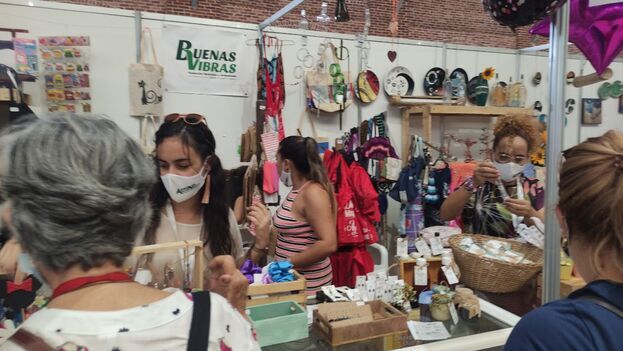
Russia Suggests to Cuba More Support for Small Businesses and Less Currency Control

Self-employed people with more than three employees must create a company, according to a 2021 reform. (14ymedio)

14ymedio bigger 14ymedio, Havana, 31 March 2023 — Putin’s adviser has a plan for Cuba that specifically involves ending the “strict control” over currency exchange. The consequence of this disastrous government policy is “the low profitability of companies, the deficit of commodities” and the black market, according to Boris Titov, president of the Cuba-Russia Business Council, as the Russian news agency Sputnik reported on Thursday.

In an interview with Sputnik, Titov reveals some details already intuited in previous meetings and statements, such as that Russian economists have proposed to the regime to develop small and medium-sized enterprises, known as mipymes [SMEs] in Cuba, fundamentally through a fiscal reform that lets the informal economy emerge.

“Economic reform can and should be promoted by small and medium-sized enterprises. In Cuba, SMEs are equivalent to private companies, since the state controls all strategic areas,” Titov told Sputnik. continue reading

Currently, the adviser to the Kremlin adviser — and, for practical purposes, also the Havana regime — said that the private sector contributes 7% to the Gross Domestic Product (GDP) and 11% of the tax revenues, in addition to employing a quarter of the country’s workers (1,600,000 according to the latest data from the Ministry of Labor, compared to 3,160,000 linked to the state sector).

“They face many problems: the difficulty of accessing credit, high taxes, problems with the rate of return due to the prices of some goods, which are fixed by directives, and the price of other goods, limited by low wages in the public sector. In many ways, Cuban SMEs are in the shadows,” Titov emphasizes.

The expert believes that making the tax system more flexible can help the private sector emerge and give the expected results, which are none other than an increase in the production of food and basic products, but he recommends that it not be carried out in a crazy way, unlike how it happened, in his opinion, in his country.

“Unlike the ’shock therapy’ that took place in Russia, the transition to a free price formation in Cuba must be carried out gradually, and it has to be well prepared,” the counselor adds.

In January of this year, Cuba and Russia agreed to create an Economic Transformation Center during a meeting between Titov and Miguel Díaz-Canel. The objective, according to the Russian agency Interfax, was to prepare “economic transformations in Cuba based on the development of private enterprise.”

This idea was described from the Cuba Siglo XXI center of ideas, based in Miami, as an attempt to go from a “model with a nationalized economy” to the “Russian mafia market” scheme.

To date, the SMEs that have been created in Cuba total 7,325. However, the government’s claim to prioritize food production companies has been surpassed by reality, and in practice, according to the latest data, only 15.3% are dedicated to it, being surpassed by locals or food stores, which exceed 19% of the total. On the other hand, the service sector is confirmed as a leader, with 45% of SMEs, while the category “other productions” remains at 21%.

All this, despite the fact that the state has controlled not only the sectors that were going to have preference for activity, but who was given the authorization, with the result of a multitude of businesses in the hands of relatives and friends of senior officials, as well as foreign businessmen well-linked to the regime.

Earlier this week, Titov also announced two new projects with Cuba in Moscow. The first, the creation of Rusmarket, a joint venture of food, chemicals and other household items with the Cuban state-owned Cimex whose contract is in the process of being signed. The second is yet to be specified, but there was talk of a hotel for the exclusive use of Russians, arguing that Russian tourism is returning  to the Island, a fact belied by all the official data.

Translated by Regina Anavy

____________

COLLABORATE WITH OUR WORKThe 14ymedio team is committed to practicing serious journalism that reflects Cuba’s reality in all its depth. Thank you for joining us on this long journey. We invite you to continue supporting us by becoming a member of 14ymedio now. Together we can continue transforming journalism in Cuba.
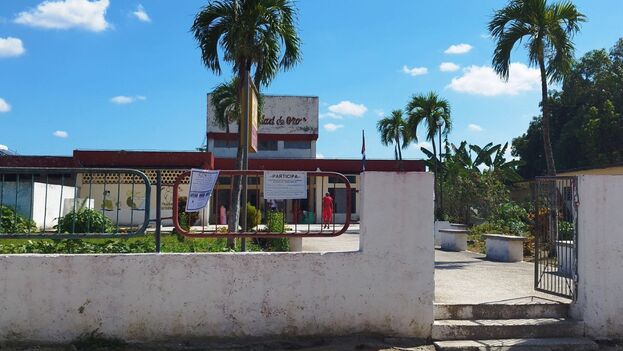
Official Silence on Electoral Abstention Data in Havana and Santiago De Cuba

“More than 78%” of voter participation was registered by the authorities in Sancti Spíritus, almost the same as in Villa Clara, 78.08%. (14ymedio)

14ymedio bigger14ymedio, Havana, 27 March 2023 — The suspicions raised in the Cuban population by the 76% participation number in the parliamentary elections on March 26, as reported by the Government, do not make a dent in the provincial official press, which pulls out all the stops and registers even more participation.

Thus, as read in Invasor, Ciego de Ávila breaks the record, with an attendance at the polls to elect its 23 deputies for the National Assembly of People’s Power of more than 86%.

The province of Matanzas follows closely, with a record — always according to official figures — of “more than 83.86%” of the electoral roll. For the regional newspaper of Artemisa, the figure of 81.15% is compared to “the heroic moncadista [attack on the Moncada barracks] feat of seven decades ago.”

In Pinar del Río, officialdom reports an 80.93% participation, and in Camagüey, 79.51%. “More than 78%” registered in Sancti Spíritus, almost the same as in Villa Clara, 78.08%.

The province of Granma limited itself to replicating the national figure of 75.92% attendance to report that its 34 deputies were elected.

Unlike these provinces, the highly populated provinces of Mayabeque, Cienfuegos, Holguín and Guantánamo haven’t released their figures. But the most eloquent silence is that of the two main regions of the country, Havana and Santiago de Cuba, which have not yet given specific results. continue reading

Meanwhile, the two main national official media, Granma and Juventud Rebelde, have been out of service since the early hours of this Monday.

President Miguel Díaz-Canel, who had described the elections as a “revolutionary victory,” expressed himself on social networks about the results. “Despite the draconian US measures, despite the fierce campaign and the calls for abstention, Cuba won,” he wrote via Twitter, specifying the official figures.

“There are numbers that say more than words: 70.92% of participation and 72.10% UNITED VOTE [sic], in the midst of so many difficulties, is a clean home run,” he said in baseball language, just a week after the defeat of the Cuban team against the U.S. team in the semifinals of the World Classic in Miami.

Citizen distrust is based on the observation of the polling stations, almost empty throughout the day on Sunday. And after the closing of the polls, officials did not put the preliminary results in each establishment on the doors. “Is there a site or place where you can check the results at the provincial and municipality level, even at the electoral college level?” asked a Cubadebate user on Monday.

Another reader answers: “You can go to your municipal assembly to find out, in addition you could be there at the time of counting in your electoral college, because, by law, anyone can participate and observe if they want.”

One of the complaints of the international organizations against these elections is, precisely, that the regime did not allow the presence of independent observers, and even more, it harassed the activists who announced that they would monitor the polling places.

Translated by Regina Anavy

____________

COLLABORATE WITH OUR WORKThe 14ymedio team is committed to practicing serious journalism that reflects Cuba’s reality in all its depth. Thank you for joining us on this long journey. We invite you to continue supporting us by becoming a member of 14ymedio now. Together we can continue transforming journalism in Cuba.
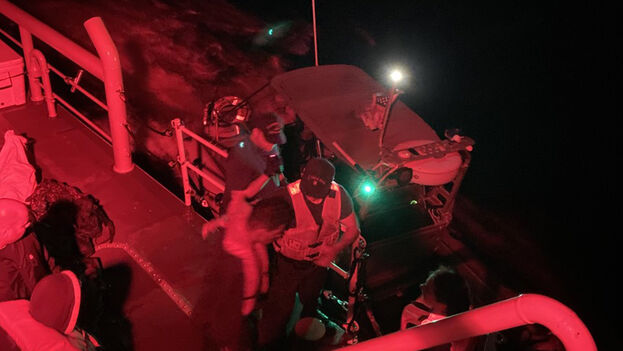
The US Coast Guard Returns 83 Cuban Rafters in Four Days

The US Coast Guard prevents a group of rafters from disembarking in Florida. (Twitter/@USCGSoutheast)

14ymedio bigger14ymedio, Havana, 29 March 2023 — The United States Coast Guard continues to repatriate Cuban rafters who are intercepted on the high seas. This Tuesday, 29 nationals of the Island were returned. The agency insisted that “they work 24 hours a day to prevent people from disembarking illegally in the United States.”

According to official data, since October 2022, the crossing of 6,107 Cubans has been stopped, which almost equals the 6,182 rafters of the previous fiscal year.

The US authorities indicated that, despite the fact that since January the White House and the Department of Homeland Security announced new legal avenues to enter the United States, the number of rafters detained on the high seas and illegal landings  in Florida continue.

Between March 17 and 24, the Coast Guard reported the repatriation and transfer of 82 migrants who tried to reach the United States on four rustic crafts. Of this group, 15 rafters, without specifying their nationality, were transferred to the Bahamas, and three more remain in custody. continue reading

The other 64 of Cuban origin were returned to the Island last Friday on the ship Bernard Webber. Captain Robert Kinsey, of Coast Guard District Seven, said in a statement that in the last five months “15 people have died by taking unnecessary risks” on their crossing of the Florida Straits aboard boats “not suitable for sailing without security equipment.”

Reference was made to the rescue, last Tuesday, of 28 rafters who were adrift, 10 of them in the water. Two of these migrants had to be hospitalized and one disappeared.

The U.S. Coast Guard reiterated that detained rafters are provided with medical assistance, food and are returned to their country of origin, in addition to the fact that they will not be eligible for the humanitarian parole program.

Meanwhile, in Florida this Wednesday there were protests against two bills, SB 1718 and HB 1617, presented by Republicans Blaise Ingoglia and Kiyan Michael, which seek to “severely restrict” the movement of irregular immigrants within the state, as well as track their information in hospitals.

One of them, SB 1718, is under discussion in the Senate Substitute Committee, while the other, HB 1617, is in the Commerce Committee of the House of Representatives.

Similar legislation enacted in Georgia and Alabama more than 10 years ago was declared unconstitutional by an appeals court, recalled the SPLC Action Fund, which defines itself as an organization that “works with communities to dismantle white supremacy.”

Translated by Regina Anavy

____________

COLLABORATE WITH OUR WORKThe 14ymedio team is committed to practicing serious journalism that reflects Cuba’s reality in all its depth. Thank you for joining us on this long journey. We invite you to continue supporting us by becoming a member of 14ymedio now. Together we can continue transforming journalism in Cuba.
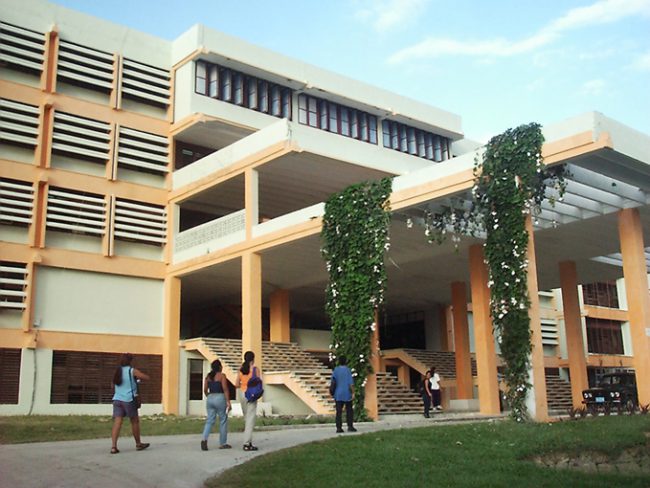
The ‘Commercialization’ of Cuban Universities

Universidad de Granma (lademajagua.cu)

14ymedio bigger14ymedio, Elías Amor Bravo, Economist, 29 March 2023 — The latest news that comes to us from the Island, amazing as it may seem, is of public universities engaging in private business. Post-Castroism wants universities to compete with companies — state and non-state — to earn money by selling the services that have previously been financed through the state budget, and to get into an “every-man-for-himself-situation” that no one knows how to  get out of, if they can.

There will be fierce competition among organizations that have little profit, and it’s enough to make one tremble. In short, Cuban communists want universities to look for commercial formulas. They will soon do the same with the private sale of the “achievements of the revolution.” The regime is not holding up and needs resources and, above all, foreign currency from anywhere. There is no time, and placing a value on the activity of universities is a controversial step. Are we facing a covert privatization? Let’s see.

The formula devised consists of creating a state small- and medium-sized enterprise (SME) to, they say, complement budget management and support the financial development of the university. This is the case of the University of Granma (UDG), in the province of that name. It won’t be the last.

The measure, according to the state press, is inspired by some alleged “transformations made in the management model of the Cuban government based on science and technological innovation (obligatory doctoral thesis earned by Díaz-Canel) that have allowed the country’s universities to create business parks and company interfaces to transfer their research results to the country’s economic-productive system, with the purpose of contributing to promoting the development of the nation. But of course from parks and interfaces to competitive companies, there is a long way to go, and the void is just below. continue reading

The Ministry of Higher Education, which is behind this initiative, has begun to promote “new economic forms of management aimed at generating income for higher-education institutions and thereby expanding the link between universities, companies and other entities of the territories, in order to articulate and strengthen local development programs and municipal autonomy.”

Are they kidding?

Well, it looks like it’s going to happen and, not only that, quickly. When communist leaders want to, they can promote changes in reality as owners of all the nation’s productive capital. In this case, a state SME has been created at the University of Granma, the third of its kind in the country belonging to the sector, with the name ‘Innovaudg’, whose main purpose is “the selling of professional, scientific and technical services to natural and legal persons.”

This is full-fledged subcontracting, which makes available to this SME a proposal of commercial value that has previously been generated with the public resources that Cubans contribute to the state budget. A private business for a public offer, which is supposed to belong to everyone. Contradictions and even illegalities are already beginning.

If the university SME financed with its own resources the professional, scientific and technical services that are going to be sold to society, there would be nothing to object to. However, the problem is the origin. That professors or research fellows, who receive a salary from the state for their products and services, participate in a private company for their commercial sale, is at least questionable and opens a space that should deserve a little more attention, because it borders on the misuse of public resources, which have a legal, administrative and political responsibility.

However, Cuban communists have stepped on the accelerator in this area, and they want the University of Granma to manage its services through the SME, while the employees receive their salaries from the university. At the moment, the SME has five professionals based on the UDG campus in Bayamo, but, according to the state press, it will have highly competent staff from the university itself, who will be hired as a workforce through multi-employment. That is, not only does it use state personnel, but the SME also takes advantage of the facilities, equipment and means that are supposed to be financed by the state.

The university SME projects all kinds of services, including accounting, bookkeeping and management consulting, as well as activities to support agriculture, post-harvest, and seed treatment for propagation. A real hodgepodge of offers where one can earn pesos or foreign currency. And as if that were not enough, it contemplates the realization of “professional improvement actions, the organization of conventions and commercial exhibitions, the rental of physical spaces, machinery and equipment, among other things.” A whole privileged university business will compete, evidently, with other entities and economic actors that do not have the advantage of selling what is produced with public salaries. Something doesn’t sound right here, and sooner or later, it will blow up.

The SME has studied its relationship with the university “from the financial point of view, and it has designed an agreement with the university that foresees the contribution of 50% of the profits in national currency and 60% of the income in foreign currency to the university’s self-financing account, which will allow it to use the money not only for its current expenses, but also for future investments, both technological, constructive or otherwise.” And it adds that “in accordance with the development of business and the liquidity capacity available, capital contributions can be made that include technologies or assets. That relationship is bilateral; that is, similar shares can be received from the university.”

It doesn’t stop there, because UDG took advantage of the inter-institutional relations already established between the university and the business sector of the province, as well as with the government and other entities, so it will be able to carry out the process of commercial identification of the demands and needs existing in the territory. In addition, UDG has integrated, according to the state press, “in parallel, the already existing agreements of business opportunities that promote the implementation of the results of science and technology in the business, governmental and budgeted spheres, and in actors of the economy constituted as natural persons, while the free access of professionals in the state sector to postgraduate courses and other actions of improvement and training is not limited.”

UDG has had a strong start and already has its first contract with the Agroindustrial Grain Company, the largest rice producer in the country, by providing services and advice to strengthen the economic growth of the entity, through a feasibility study to diagnose which of its basic business units had the conditions to become a state SME.

Behind these approaches, the application of science and innovation in production processes is again detected (again, Díaz-Canel’s doctoral thesis). The University of Granma continues to advance this entrepreneurial initiative. As one might suppose, UDG defends and justifies itself by saying that there has not been the same impact on all sectors and entities of the Cuban economy, “because not all companies in the territories identify the business options offered by these new policies, and they are still waiting for guidance from higher agencies.”

Universities that create state SMEs to market their products and services and ultimately make money can introduce controversial elements into the weak Cuban economy that distort competition between economic actors and will end up subtracting market opportunities for private and even state initiatives. Something doesn’t work in this accounting, and at some point it will fall apart.

Translated by Regina Anavy

____________

COLLABORATE WITH OUR WORKThe 14ymedio team is committed to practicing serious journalism that reflects Cuba’s reality in all its depth. Thank you for joining us on this long journey. We invite you to continue supporting us by becoming a member of 14ymedio now. Together we can continue transforming journalism in Cuba.

The Cuban Baseball Federation Will Demand 10 Million Dollars From Yariel Rodriguez

After breaking with the Chunichi Dragons, Yariel Rodríguez is in the Dominican Republic seeking an agreement with the Major Leagues. (Dragons of Chunichi)

14ymedio bigger14ymedio, Madrid, 29 March 2023 — The reaction of the Cuban sports authorities to Yariel Rodríguez Yordi’s breakup with his Japanese team, Dragones de Chunichi, and the Cuban Baseball Federation itself (FCB) has not been long in coming. The organization will avail itself of a clause in the baseball player’s contract to demand 10 million dollars from the athlete.

In a statement released to the official press, the FCB alleges that its demands are those set forth in the agreement. “The athlete acknowledges and accepts that the fulfillment of this contract begins from the moment he leaves Cuba for Japan and ends on his return to Cuba. He also accepts that in case of breach of the contract on his part without justified cause, at the discretion of the Federation, he may not be hired by any other club or third parties without the express authorization of the Federation,” reads the baseball player’s contract.

According to the FCB, the text also made it clear that “in case of abandonment the FCB will require the figure of 10 million dollars for damages,” and the sports organization will demand the relevant “rights and responsibilities.”

In its statement, the FCB regrets the decision taken by the athlete, who according to journalist Francys Romero is in the Dominican Republic “seeking to be hired by some team from the Major Leagues” of the US. In Romero’s opinion, this “contradicts the efforts made for Yariel to develop in a high-level league like the Japanese one, and from there to support the Cuban national team.” continue reading

For the organization, his act “constitutes a serious failure to what was agreed for the period 2023-2024 between the Dragons, the athlete” and the Federation itself, which acted as his representative in the agreement.

Rodríguez was one of the players recognized by the Communist Party after being part of Team Asere, which achieved a fourth place in the World Classic, a great position if one takes into account that something similar has not been achieved for almost 20 years.

Francys Romero, who reported yesterday on the departure of the pitcher, stressed that “he will not be subject to the restrictions of international firms because he has been in international baseball for over 25 years and six seasons.” The reporter also noted that there are several players who have left the FCB after signing for Japanese teams.

“The organizations of the Professional League of Japan know that signing a Cuban through the Federation is always risky,” he continued. Rodríguez was preceded by pitchers Héctor Mendoza and Andy Rodríguez, and outfielders Adolis García and Oscar Colás.

The athlete, originally from Camagüey, was part of the list of the top 10 prospects of the World Baseball Classic, according to Baseball America, so Romero predicts that Rodríguez “will get a multi-year agreement for a figure in the millions,” and that “it would be in the range of 50 million dollars for five or six years.”

The specialized publication Swing Completo has also highlighted that “his talent and conditions could lead him to find an excellent agreement,” so the fine for failing to meet his commitment would not hurt the player.

Translated by Regina Anavy

____________

COLLABORATE WITH OUR WORKThe 14ymedio team is committed to practicing serious journalism that reflects Cuba’s reality in all its depth. Thank you for joining us on this long journey. We invite you to continue supporting us by becoming a member of 14ymedio now. Together we can continue transforming journalism in Cuba.