The Island faces in 2026 the same structural crises that the US military occupation found in 1899. A thorough review of what that administration did reveals a historical parallel so precise that it is difficult to ignore
 14ymedio, Rolando Gallardo, Alicante (Spain), May 30, 2026/ The image is the same, even though the century has changed. In the Havana of 1899, US sanitary brigades moved through neighbourhoods devastated by war, destroying breeding grounds of the Aedes aegypti mosquito and fumigating homes to combat the yellow fever that was decimating an exhausted population. In the Havana of 2026, those same neighbourhoods accumulate tonnes of refuse on every corner, while dengue, chikungunya and the Oropouche virus spread unchecked under the same vector that Cuban physician Carlos J. Finlay identified more than a century ago. The mosquito has not changed. Nor has the neglect.
This parallel is not a metaphor: it is a diagnosis. Cuba today faces the same structural urgencies that the US military occupation found when it landed in January 1899, when General John R. Brooke inherited a territory in absolute ruins. The war of independence and the scorched-earth tactic had displaced hundreds of thousands of peasants towards the cities and shattered the Island’s economic foundations. Infrastructure was destroyed, public finances were non-existent, and institutional order was an aspiration more than a reality. What that administration had to build from scratch, incredibly in 2026, a third US intervention in Cuba would have to do exactly the same thing.
Brooke’s successor, General Leonard Wood, was a physician by training. He understood from the first day that no political order is sustainable over a sick population. Drawing on Finlay’s theory – who had spent decades trying to convince the scientific world that yellow fever was transmitted by mosquito bite – the Army organised an unprecedented environmental sanitation campaign: drainage of pools, destruction of Aedes aegypti breeding grounds, fumigation of homes, closure of insanitary cemeteries, construction of sewerage systems in Havana. The result was historic: in September 1901, the city recorded its last indigenous case of a disease that Spanish colonial rule had been unable to eradicate in four hundred years.

Today, the water and sewerage networks modernised in the early years of the revolution and left to their fate since the 1990s have collapsed in most provinces. The unofficial rubbish dumps that the State lacks the operational capacity to clear are feeding arbovirus outbreaks that spread without restraint. Any external stabilisation would have to launch, from day one, exactly the same all-out offensive that Wood and Dr Walter Reed carried out with the tools of 1900: elimination of breeding grounds, mass public hygiene, reconstruction of sanitary infrastructure. The difference is that in 1899 there was a three-year war to account for the destruction. In 2026, there are six decades of socialism and mismanagement.
The war had destroyed bridges, ripped up rails and left the roads in a state that made it impossible to move agricultural produce to the ports. The Wood administration undertook the repair and expansion of the rail network, restoring the connections between the sugar-growing zones and the export ports. The logic was impeccable: without logistics there is no economy, and without economy there is no republic.
Cuba’s roads in 2026 are, across wide stretches of the interior, obstacle courses where metre-deep potholes coexist with stretches that are simply non-existent. The railway, which at the beginning of the twentieth century was one of the most modern in Latin America, today operates with Soviet rolling stock from the 1960s and 1970s on routes that take double or triple the reasonable journey time when they manage to function at all. A new administration could not repair this infrastructure: it would have to rebuild it. The accumulated deterioration far exceeds what a three-year war caused; it would demand an effort proportional to what Wood carried out, but incomparably more complex in technological and budgetary scale.
One of the least celebrated – but perhaps most decisive – chapters of that occupation was the dissolution of the Cuban Liberation Army
The Cuban sugar industry – the most sophisticated in the world in its day – had been dismantled by the conflict. The occupation administration actively fostered foreign investment to rebuild the sugar mills and modernise the machinery. Sugar began to flow again, and with it the fiscal revenues that would finance the rest of the reforms. In parallel, Wood reorganised the banking system and laid the groundwork for a currency that would be, in the following decades, on a par with the dollar: a reflection of an economy that, when operating under predictable market rules, was capable of generating real prosperity.
Cuba’s sugar output today does not reach 150,000 tonnes, compared to the ten million that the great epic harvest of 1970 attempted without success. The financial system operates with a schizophrenic monetary duality that has destroyed any external investor confidence. A hypothetical stabilisation would have to open to private capital – both domestic and international – the only sector with a proven track record of performance, while unifying and restoring credibility to a currency whose worth is not decreed: it is built with institutions that function.
One of the least celebrated – but perhaps most decisive – chapters of that occupation was the dissolution of the Cuban Liberation Army. Heroic in war, dysfunctional in peace, it was discharged in an orderly fashion, with compensation payments that allowed soldiers to reintegrate into civilian life. In its place, professional armed forces were built, sized to meet the real needs of the republic rather than the political appetites of strongmen. A nation cannot build democracy when it has an army that surpasses it in actual power.
The current Armed Forces, together with the Ministry of the Interior and the constellation of repressive entities that sustain the regime, are oversized relative to any real defensive need. They constitute, in practice, an apparatus of political control rather than an instrument of national defence, and a budgetary burden that the economy simply cannot bear.
A new administration would have to undertake, as Wood did with the Liberation Army, an orderly discharge process with the civilian reintegration of personnel. This chapter also has a geopolitical dimension that deserves to be named: Cuba is a North Atlantic nation, was an ally of the United States in the Second World War, and its position at the entrance to the Gulf of Mexico makes it a strategic actor of the first order. A professional, modern Cuban army aligned with democratic standards could, in the medium term, present solid arguments for integration into the security architecture of the Western Hemisphere.
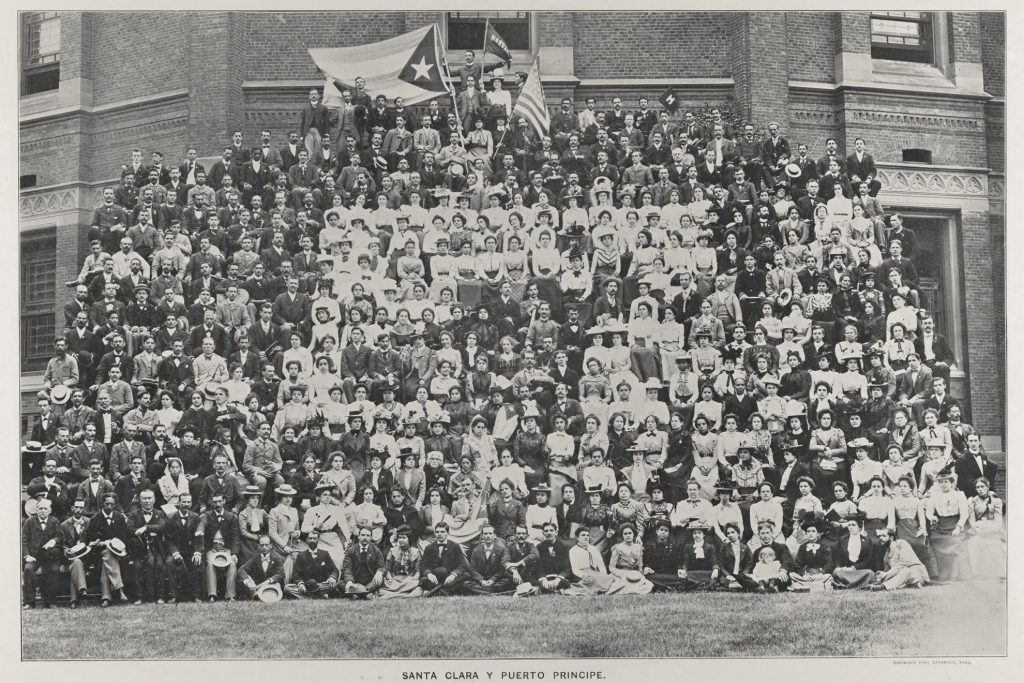
Wood imported the US educational model with an ambition unprecedented in the region. Cuba went from having barely a few hundred operational schools to more than two thousand in three years. More than a thousand Cuban teachers travelled to Harvard in the summer of 1900 to be trained in modern pedagogical methods. It was the most lucid wager of the entire occupation: nations are sustained by educated citizens, not by ignorant subjects.
A nation that in the twenty-first century faces the same structural urgencies as in the nineteenth century has paid an extraordinary historical price for its political experiments
The paradox of 2026 is that the revolution achieved high literacy rates only to then produce decades of single-party thinking, intellectual hollowing-out and a brain drain that has left the Island without its best-trained generations. More than two million people have left Cuba between 2020 and 2024, a proportion of the population without precedent in peacetime. The reconstruction of a free, pluralist education system connected to international standards would be, as in 1900, the most worthwhile investment of any process of national reconstruction.
To name this scenario is not to desire it. It is to measure honestly the depth of the accumulated failure. A nation that in the twenty-first century faces the same structural urgencies as in the nineteenth century – the same diseases transmitted by the same mosquito, the same broken infrastructure, the same dependence on an external order to provide what the State cannot – has paid an extraordinary historical price for its political experiments.
The Cuban republic was born under the tutelage of a power that knew how to act as the adult when the Island could not yet be one. It grew up denouncing that tutelage as an affront, without ever building the institutional consensuses that make guardians unnecessary. And it reached old age – more than six decades of revolution – with the same shortcomings of its infancy, magnified by the pride of one who has not learned from its mistakes.
The true emancipation of Cuba will not come from any occupation or any tutelage, however well-intentioned. It will arrive on the day when its society, with its own institutions and its own democratic consensus, is capable of providing its citizens with the clean water, electricity, healthcare and freedom they have been waiting for across generations. Until then, history will continue doing what it does best: repeating itself, with a faithfulness that no longer surprises, but that still hurts.
Translated by GH.
______________________
COLLABORATE WITH OUR WORK: The 14ymedio team is committed to practicing serious journalism that reflects Cuba’s reality in all its depth. Thank you for joining us on this long journey. We invite you to continue supporting us by becoming a member of 14ymedio now. Together we can continue transforming journalism in Cuba.