The Forgotten Prisoner / Lilianne Ruiz

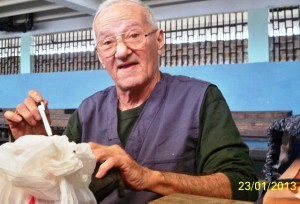
Armando Sosa Fortuny. Photo by Alexis Zabaleta, courtesy of the author

Havana, Cuba, August 2013, www.cubanet.org- Armando Sosa Fortuny has turned 71 in the prison known as Kilo 9, in Camaguey province.

In the photo, which was secretly taken by a member of the Committee for the Liberation of Political Prisoners (CPLPP) who visited him this past January, you can see that he looks like someone’s grandfather.

He has been in prison for 18 years. He was sentenced on April 25, 1996, to 30 years in prison on charges of “infiltration”, “illegal entry into Cuba” and “other acts against the security of the state.”

He is a man from another time, from a time when armed struggle was presumed to be an acceptable alternative for overthrowing dictatorships. So he seems left behind, obsolete in this age when civic struggle and nonviolent resistance garners greater sympathy.

Recently, in a telephone interview from prison, he told this reporter: “It was a different era. If I were in the streets now I would be struggling for recognition of the civil and political rights of the Cuban people.”

His diabetes is being controlled with insulin. Ironically the poor prison food keeps his blood-sugar levels stable. After having gone from bad to worse for years, he says candidly:

“The food is OK.”

A sister who used to visit him died in Miami. Now only the members of the CBLPP come to see him, once a month. They bring him a box with the food that they are allowed to bring in, and talk with him for a few hours.

As he tells it, early last month, July, he was taken to an office where an immigration officer was waiting to tell him that he and his comrades-in-arms were included in the Cuban government’s immediate-release program, on the condition that they left the country at once.

“That’s what I want. It’s been many years,” he said.

Then, State Security came to visit him later that month, two weeks after the first visit, to tell him  signs were appearing, written in crayon, saying “Free Fortuny!”, or “Castro, free Fortuny!” on the walls in some parts of the city of Camaguey. Paradoxically they told him that this was not much of a problem, because it was a simple matter for the CDR to cover over the posters.

Sosa Fortuny interpreted both visits as “a psychological game, maybe because they wanted me to tell the boys not to put up any more posters.”

Other causes from the early Castro years

This is not the first case for which Sosa Fortuny has spent prison time. In 1960 he was tried on similar charges for having come with 25 men to fight in the mountains against the recently-established dictatorship. Many of those convicted on that occasion were immediately executed by firing squad.

That first case ended with his release in 1978, as part of an amnesty that benefited over three thousand political prisoners, accomplished through international pressure in the face of human rights violations in Cuba.

He only spent 15 years in freedom in the United States, returning on October 15, 1994, when he decided, in his words, “to create an Eastern Front to overthrow tyranny.”

But the night of the landing, a member of the infiltration team fired a shot that killed the Party Secretary of Villa Clara Province, and that provoked a firefight in which he and some of his companions were wounded.

“We saw the car coming from the causeway and our intention was to get the occupants out so we could go down the Yaguajay road to Escambray. But as Humberto motioned at them to get out of the car, it was so dark that when I passed between them the noise startled Humberto, who fired the shot accidentally,” says Sosa Fortuny.

Regardless of the responsibility that they blamed him and his companions for, the punishments — imprisonment of up to 30 years, and a sentence of death by firing squad for Humberto Real Suárez — were excessive.

Until 2012, when they commuted Real Suárez’s death sentence to 30 years in prison, he suffered for 17 years the torture of attending the mock firing squads of those who came back shouting anti-government slogans, as related by former political prisoners who shared a cell with him.

In the Cuban prisons there are many testimonies of cruel, inhuman, and degrading treatment to which the prison population is subjected. Everything indicates that the guards are given carte blanche to carry out beatings and abuse that have come to infuriate many.

Sosa Fortuny and his companions have not accepted the government’s political-ideological re-education:

“In Kilo 7 we’ve had to scream a lot against beatings of other prisoners. They abandoned a boy in a wheelchair. There you have to take a stand, and cause a problem. That cost us punishment cells, but I’m not sorry. I always express my ideas, wherever,” he added.

Finally, Sosa Fortuny hopes to convey a message to Cubans inside and outside the island:

“That I send a hug. On my wounds I bore the pain of the Cuban people.”

He also says he is awaiting a decision by the Cuban government to release him.

Others who are still prisoners from Sosa Fortuny’s case are Miguel Díaz Bauzá, age 70, and Humberto Real Suárez, 42. We will be updating them in the next few days.

From Cubanet

Translated by Tomás A.

22 August 2013
More Theft and More Corruption / Gladys Linares

Havana, Cuba, August, www.cubanet.org — More than a month has passed since the words of army general Raul Castro Ruz in the first ordinary session of the eighth legislature of the National Assembly of Popular Power in the Convention Hall, July 7, 2013.  If some believed that after that discourse things were going to improve, they were wrong.  Time has passed and still no measures have been taken to support the population.

To cite just some of the vicissitudes that confront the Cuban day after day, we have the worst quality of bread, the price changes in the Hard Currency Stores (TRD), as well as the lack of nylon bags in which to pack purchases, that nevertheless are sold on corners by individuals; the scarce and deficient repairs of leaks by Havana Water, the theft in the farmers markets, the long lines of pensioners on the sidewalks, in full sun and sometimes in the rain, to collect their pensions, and the impediments imposed by many officials of state agencies — like the Civil Registry and Housing — in hopes that the applicant will offer gifts or money in order to streamline management.

Meanwhile, the administrators and public officials, the vast majority militants of the Communist Party (PCC) — an essential requirement to occupy management positions — remain insensitive before this situation.

The absence of directors or administrators when some client requires his presence to express a complaint is common, and in the face of the frustration, it is frequently heard:  “There is no one here to fix it.”  Others allege that the indolence of these is supported by the corruption of many inspectors.

Tita also heard the words of Raul and thought that things soon would change. Therefore, when she bought 10 pounds of yams at the farmers market and ascertained that they had shorted her on the weight, she went to see the administrator. This one listened to her without saying a word, and left walking with her to the platform where the offender was selling, and ordered him to fulfill the weight for the woman without even verifying if she was right. Then he did nothing else except turn and return to the office as if it was nothing.

My neighbor Robertico keeps buying breakfast bread quite early in the morning.  On asking him why he does not buy it the day before, in order not to get up early, he answers me that if he does so, the next day the bread has mold.  Several consumers have complained, but the administrator ignores them time and again.

Many bothered consumers ask themselves if among the Physical Planning regulatory violations which Raul spoke about, they will include the dwellings that, in order to facilitate certain blocks of commerce, they are constructed in spaces seized from butchers, bodegas, dairies and vegetables stands.

More than words are needed to end theft and corruption, two of the greatest causes of moral and material damage that our society suffers.

About the author

Gladys Linares. Born Cienfuegos, 1942. Primary teacher. She worked as a geography teacher in different schools, and as the director of some of them, for 32 years. She joined the Human Rights Movement at the end of the 1990s through the Humanitarian Feminine Front organization. She actively participated in the Cuban Council and the Varela Project. Her reports reflect the daily life of the population.

20 August 2013

Note from Estado de SATS

Phone screen: On the way with a friend I got a message that said SATS is suspended today, is that true? / It’s false, State Security sent it; yes there will be Estado de SATS / Thanks, we’re coming there without fail and will be in SATS.

On the afternoon of August 16, State Security deployed an inordinate operation at intersections and around the site of Estado de SATS to stop the public from coming to the screening of the documentary Ai Weiwei Never Sorry, at our usual audiovisual space, Cinema at All Costs.

Earlier, with the complicity of the telephone companies ETECSA And CUBACEL, they blocked the cellphone service of all members of the Estado de SATS working team, and sent false messages announcing the suspension of the event using Antonio G. Rodiles’ cellphone, in a serious act of identity theft, punishable internationally as the crime of fraud.

Despite this, 33 people came, as many others were detained on the way and coerced to return home, some beaten and handcuffed were “freed” later on the highway heading to Pinar del Rio.

Days ago, on August 5, they had mounted a first operation and threatened and intimidated young people leaving Estado de SATS after the first day of a Playback Theater workshop.

The next day, two of these students could not attend as they were arrested, forced to ride in a police car, and abandoned in a distant city.

In recent days there have been similar brutal acts of abuse against activists and Ladies in White in the province of Matanzas. The constant violation of individual rights is routine in Cuba, and the regime aims using violence to silence any dissenting voice.

Over the past year the operations and arrests around Estado de SATS were  increasingly violent, reaching its climax with the beating and detention for 19 days of Antonio G. Rodiles last November.

Now, they are starting again.

We are continuing to exercise our liberties. We will sustain our civic work anchored in respect for the human rights contained in the Universal Declaration of Human Rights and the UN Covenants, whose ratification and implementation we are demanding through the Campaign For Another Cuba.

Our commitment in the face of mediocrity and totalitarianism will continue to be creativity and talent.

Our responsibility, a better country

Estado de SATS team

17 August 2013

Cholera Spreads Through Cienfuegos Province / Alejandro Tur Valladares

Patients
Cholera Patient in Cienfuegos Hospital

CIENFUEGOS, Cuba, www.cubanet.org – The first case of infection was discovered last August 8 in the peripheral district of San Lazaro and although at the beginning epidemiologists thought that the virus could have been transferred from the city by Havana by Juan Arbolay Águila, who works as a driver in the port of Mariel, studies could not prove it, arousing suspicion among the specialists that it could be endemic form of cholera.

This August 16, a week later, we have verified that evil has spread to the districts of Reina and La Juanita, the latter the most populous neighborhood in the city. Reina presents a complex situation with the network of sewers and the water supply, many nearly a century old, causing contamination of water consumed and wastewater leaks into the road, both of which often facilitate viral infection.

Pacientes-con-còlera-en-el-hospital-de-Cienfuegos-300x225In La Juanita the “Sunshine Cuba” State snack bar on Gloria Street was closed. Cubanet learned through one of the workers there that one of the cases in the area was reported in a kitchen worker there.

Reports broadcast on Radio Martí by independent journalist Arévalo Padrón reported that in the city of Aguadas de Pasajero at least five infections have been reported. Cubanet has not been able to verify this.

The perception of risk is still very low in the population as the government media have reported nothing, limiting its actions to disseminating prophylactic messages about maintaining sanitary measures to avoid what they call acute diarrheal diseases.

19 August 2013

Peaceful Protest at Fraternity Park / Victor Ariel Gonzalez

Police Taking Demonstrators. Photo: Victor Ariel Gonzalez

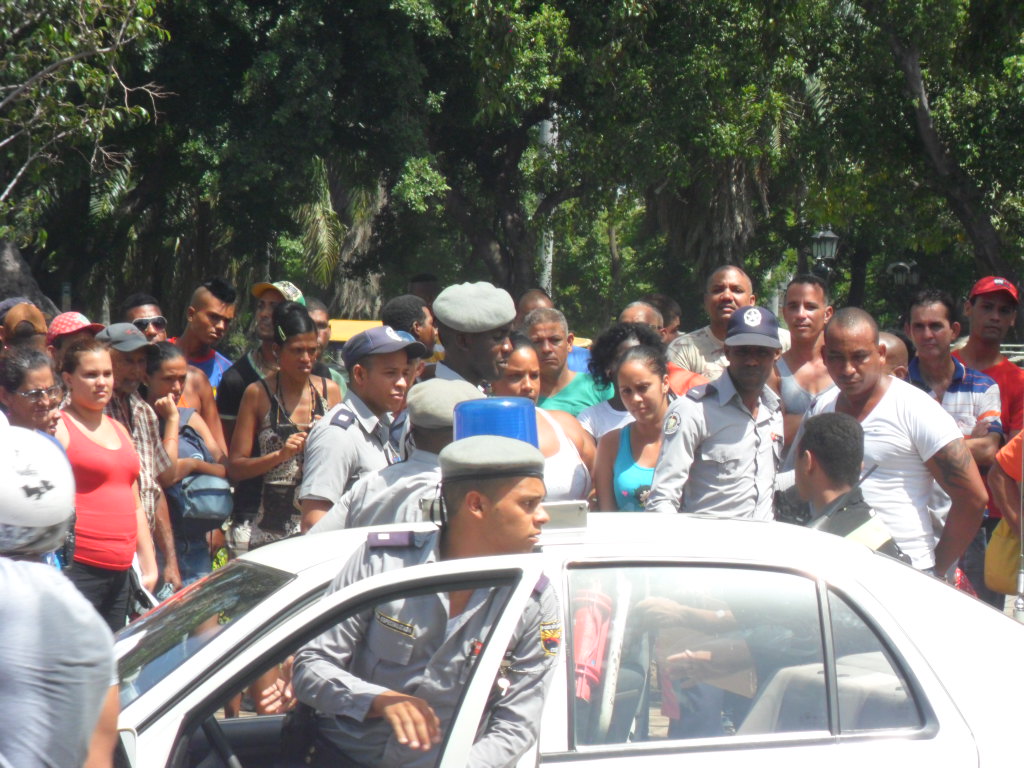
HAVANA, Cuba, 19 August 2013, Víctor Ariel González / www.cubanet.org.- Last Saturday, August 17 at midday, a peaceful protest — pro Human Rights and against the Castro regime — took place in Fraternity Park, next to the Capitol Building in Havana.

At the time of this writing, this reporter did not know to which group the opposition protesters, about four people, belonged. The activists carried two signs made of cardboard and written in pen, where you could read the slogans: DOWN WITH THE DICTATORSHIP and LONG LIVE HUMAN RIGHTS. They also proclaimed similar phrases.

During the brief period of the event, before being repressed by the police, a crowd of onlookers stopped in front of the Island of Cuba store, where the event occurred. Many of them took the opportunity to document it on their mobile phones or digital cameras.

The deployment of law enforcement officers was disproportionate to the number of activists and the nature of the demonstration. They received no verbal or physical abuse in public, but were handcuffed and taken away in police cars almost immediately.

From Cubanet

19 August 2013

Public Trials, a Clear Message to Citizens / Alejandro Tur Valladares

Public outdoor trial. Photo by Alejandro Tur

CIENFUEGOS, Cuba, August, www.cubanet.org- As if it were serialized novel, the Public Prosecutions in the city of Cienfuegos just started what we could say is their third season, when on August 6 two citizens were processed and convicted in one of those covens — taking as its amphitheater the crowded Calzada de Dolores Avenue — for having stoned a passenger bus.

The practice of punishing presumed lawbreakers outside the courtroom is not new; it goes back to the beginning of the communist government in the late fifties, when elements linked to the repressive apparatus of the Batista dictatorship, first, and political opponents emanating from the ranks of the rebel army or organizations related to the July 26 Movement later.

Trials were held in public plazas so that the enraged masses could frenetically shout: “Paredón*! Paredón!”; trials without the benefit of the most basic procedural safeguards. The fact is that this did not matter then and does not matter now, as the main task of this process is to instill revolutionary terror in a particular sector of the population, not justice.

During the decade of the ’90s, the repressive tool was unsheathed again, this time seeking to silence popular dissent following the growing hunger, extreme shortages and endless blackouts that darkened the island from one end to another in what has been known as the “Special Period.”

Dozens of individuals, seeking an outlet, threw stones against the windows of shops, passenger buses, or simply damaged to public telephones; they were then paraded like animals in a fair before an audience far less effusive and committed to the powers-that-be, people who were limited to looking on silently, not daring to announce their disagreement with the way the revolutionary process was going.

The just concluded trial is part of the new government campaign calling for us to combat social indiscipline; it was given a push after Raul Castro’s speech last July 26. Since then, there has been a marked interest in reviving old methods of social coercion directed, not only at damming the waters not only of legitimate discontent, but especially the downright antisocial behaviors that are on the rise due to the loss of values that afflict our society. And in this strategy, Public Prosecutions play a fundamental according to the ideologues of the Castro regime.

I’m not trying, here, to justify unhealthy behaviors such as damaging a bus, obviously a social good, especially if those who carry it out have extensive criminal records and admit to having acted motivated by alcohol and the heat of a fight.

It is about understanding that justice must have as a priority the social rehabilitation of the individual, as a last resort isolating them from the community to which they cause injury, without taking on, as an additional burden, character assassination of those who commit crimes.

In short, if we think carefully we will see that this distorted form of administering justice involves more than a demeaning form of prosecution. It is not only that the procedural guarantees of the accused are weak, or that holding a trial in a public street in front of hundreds of bystanders involves additional punishment outside the framework of laws stipulating penalties, at the moral cost of infringing on the process, and on those who haven’t yet been judged.

The presumption of innocence is thrown into the trash, because I know of no similar experience in which those implicated have ultimately been declared innocent. What it’s really about is sending a clear message that is heard loud and clear in society, so that people can understand the risk of any attempt to undermine the Socialist order.

The treatment in this case is the same for career criminals, as for those who offend from necessity; for the discontented subject who breaks a window or posts a dissident sign as a single act of relief, as for the political opponent who systematically disobey laws that violate universally recognized human rights.

And this is well understood by the population. It is not by chance that one of those present at the scene told me, disgusted, “These are the ones who are making us starve. Why didn’t they hold similar trials for the corrupt Felipe Perez Roque and Carlos Lage? Why when a Party First Secretary is fired from his job for stealing is he not given the same treatment?”

The major emphasis of the lawyers is to try to prove the “Revolutionary” character of those they are defending, to ask for mercy because they were affiliated with the Committees for the Defense of the Revolution and paid their dues.

They were content to base their efforts on an attempt to gain the favor of the “magnanimous revolutionary justice.” There was nothing of a brilliant defense or calling out suspicious allegations. Everything following a predetermined script. The defendants, before passing through that avenue to have their blind date with the scales of justice, knew that they were already condemned.

ABOUT THE AUTHOR

1376629443_alejandro-tur-valladares.thumbnailAlejandro Tur Valladares. Cienfuegos. Independent journalist since 2005. He founded the Cubanacan Press Agency, directed also by José Moreno. He has collaborated with various media such as Misceláneas de Cuba, Primavera, Radio Martí, Radio República. He is the director of the Jagua Press agency.

*Translator’s note: “Paredón” — To the wall — was the shout of the mob demanding the prisoners be executed.

15 August 2013

Cow Siezed and Peasant Fined / CID


In the town of Playita in Jamaica Beach area in the municipality of Antilla* in the province of Holguin, the peasant Israel Cardoso Gonzalez had two cows of which one has been confiscated by the delegate of the municipality, and in addition they have fined Cardoso 500 pesos.

Israel laments that his cow gave milk for the three minor children of the family. “They said the cow was a danger because it was near the street. That’s not true I had it tied up and there are other cows are running loose here.”

The Defender of the People of Cuba, Manuel Martínez León, who attended the denunciation of the humble peasant, explained that this is a remote area that is three miles from the road, where there are reeds that the government leaves uncared for, and a dirt road where cars don’t travel frequently.

The Defender prepares action for the cow to be returned to the family. Manuel said, “We can not allow this to happen here, we are going to do whatever we have to end this arbitrariness because they take advantage here of any nonexistent breach to steal from people what is theirs.

Report #10 of the Defender of the People of Cuba (CID) of Velasco, Holguin.

*Antilla is the smallest municipality in the province of Holguin, 40 square miles in size. It’s between the Bay of Nipe and the Bay of Banes, on the El Ramon peninsula.

3 August 2013

Why Does the Communist Party Control the Churches? / Lilianne Ruiz

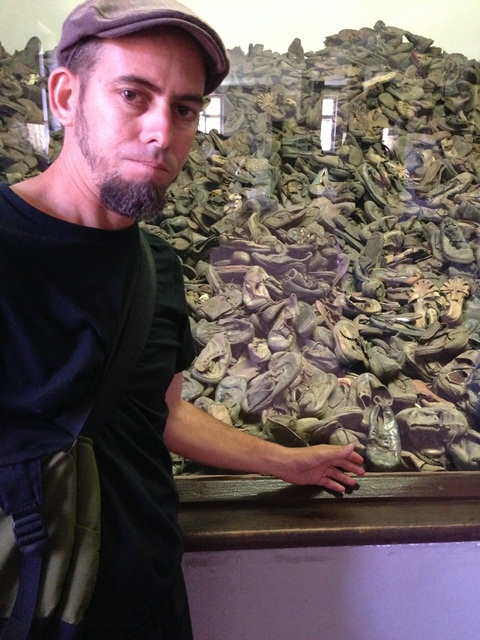
Pastor Mario Felix Lleonart in front of a pile of shoes in Auschwitz. Photo: Lilianne Ruiz

Havana, Cuba, August of 2013, www.cubanet.org — “As long as the Office of Religious Affairs of the Communist Party’s Central Committee exists to monitor pastoral work, one cannot speak of religious liberty in Cuba.” So said Pastor Mario Felix Lleonart from the Baptist Church of Taguayabon to Cubanet in the province of Villa Clara.

The absence of a religious law offers an opportunity for the Office of Religious Affairs to control the churches, driving them toward the political goals of the only party. If there were a law regarding religion, churches would be able to count on a legal foundation with duties and rights. All those religious who do not threaten the society in which they live could be legalized, but this message of non-violent resistance could bury the ideological pillars of the dictatorship.

Monitoring by the Office of Religious Affairs translates into rigorous control over those who have been chosen, or appointed, as leaders of legally recognized religious institutions, and into maintaining strict contact with them. “Faced with any matter that they think requires them to put pressure on a religious denomination, they quickly call its leader. They coerce him, they blackmail him, they manipulate him, depending on his reaction,” commented Pastor Lleonart.

“Many enter into open plotting with this office, and there’s suddenly a divorce between these religious guides and the people of this denomination. They take advantage and make business deals out of the perks that the government can give them, while the people suffer from shortages and lack of liberty,” he added.

The good pastor

Lleonart is a human rights activist and from his Twitter account he was the first to break the news of the political beating in Santa Clara, which caused the death of the political opponent Juan Wilfredo Soto in 2011.

Everything indicates that the approximately $27,000 bank account of the Baptist Seminary of Santa Clara, which is frozen by the State, is being used, among other reasons, as a means of coercion to keep Pastor LLeonart and his wife on the school’s faculty and Reverand Homero Carbonell as its president. These two figures, who are active members of Cuba’s persecuted and authentic civil society, are not to the liking of the Office of Religious Affairs. For this reason, they are pressuring them to abandon their positions of influence.

This bank account is the result of the generosity of other Baptist churches in the United States, but they are not in communication with the Cuban government. “Maybe if the churches making the donation had come to say ’Liberate the Five’* or gave the regime what it wanted, then they would have maintained good relations, but that is not the case.”

The Baptist Convention of Western Cuba, founded in 1905, does not submit to the interests of the government. The church in Santa Clara, which is a member of the Convention, opened its account with the International Financial Bank (BFR), which assumed they had been able to use the money. That is until one day when the government declared that, because of “political sanctions,” it would be frozen. The following was the BFI’s response when asked why the funds were not available: “These are directives from the Party in Havana, from the Office of Religious Affairs.”

When the Latin American Council of Churches (CLAI) held its seventh General Assembly a few months ago in Havana, the government made a show of unfreezing the seminary’s bank account. But it was a farce, as noted by the pastor:

“We cannot withdraw so much as a penny. They let it be known through the BFI that the account would be unfrozen, but only for construction purposes. Who are they to tell the church how to use its money? Or that to withdraw a penny we have to verify that it was used to buy a brick and not cement? Even then we have not been able to withdraw one cent because we are waiting for a signature that never comes.”

State Security, in the person of one of its agents, told Pastor Lleonart on one occasion that he “would not be treated like a pastor but like a counter-revolutionary.”

Another agent told the pastor while in detention that he had heard very good things about him from the community he had gathered together through his pastoral work in Taguayabón, but that there was no reason for him to be in Santa Clara, spending time with “those blacks,” a reference to the province’s opposition leaders, who for the most part are black, such as Guillermo Fariñas, Jorge Luis García Perez (aka Antúnez) and Damaris Moya Portieles.

“The agent from State Security took the liberty of briefing me on what I should do in my pastoral work, presenting it as though it were completely divorced from my work in the field. His briefing is the same as that of the Office of Religious Affairs which — though perhaps not using the same words he did but with the same goal of limiting one’s rights — asks pastors in Cuba to be calm, to focus on singing, on prayer, on giving sermons only within our four walls, to do our part to keep the people calm and to distance ourselves from the reality outside,” says Pastor Lleonart.

In 2009 the prestigious magazine Christianity Today chose for the cover of its July issue a photograph of Lleonart with a quote from him: “Here I am, easing the suffering of my people.”

On July 7, 2013 a religious service was interrupted by a man suffering from mental disabilities. As he was being led out of the church, he shouted death threats against the pastor. The man’s family regularly attends the church and described how he was locked up for twelve days, but was returned home without having received medical treatment and in worse shape that when he left, still threatening the pastor and his family.

“It is not my own life that concerns me, nor that of my family. I hope and trust in God that absolutely nothing will happen. But for me the evidence that State Security is indeed involved is when I realized that — even though everyone knows about the incident and it has even been discussed on Twitter — the authorities have done absolutely nothing. They have let it be known that this matter does not interest them.”

Wednesday, August 14, 2013 | by Lilianne Ruíz

From Cubanet

*Translator’s note: A reference to five Cubans convicted in the United States of espionage and held in detention.

15 August 2013

The Revolution Might Have Leaked Out the Sewer / Manuel Cuesta

HAVANA, Cuba, August ,  www.cubanet.org. Revolutionary tourism is a first world practice. It’s like it is the tourism-tourism. The second and third world revolutionaries don’t have the time or money to travel all over the globe to idealize the misery produced by the violence which triumphs in the name of the people.

I ought to make it clear right away that first, second and third world aren’t geographical notions, as I see it. All countries have their own particular combinations of them, and always in relative terms. In Cuba too there is an element of first world. So that those people who are involved in the tourism of the revolution come from all over the place, all of them sharing three things: a blindness in regard to social reality, an anthropological disapproval of the poor people who inevitably generate the revolutions, and a bulging wallet.

But recently a piece of information drew my attention: the loss of hygienic awareness on the part of the revolutionary tourists. Because Cuba is the dirty country of tomorrow. I wonder, therefore, how from the status of the first world can you defend a filthy revolution. You can be on the side of nationalism, populism or indigenousism, regardless of their aseptic quality. Of unhygienic revolutions, no.

Cuba, hygiene and revolutionary tourism

Anyone visiting any part of Cuba should be frightened, except in small towns or small cities like Cienfuegos, by their foul odors. It’s as if Cuba were uninterruptedly evacuating the gases of a slow digestion, hearty and heavy in virtue of the food it eats. Except that in this case the public waste system is broken and doesn’t have the capacity to resist an environment of putrefaction.

A country without bathrooms for pedestrians, without water or soap to wash your hands after going to cafes or restaurants, no napkins nor toilet paper in public places, without even slightly effective garbage collection, with doorways that accumulate three decades of dirt, with half-collapsed buildings serving as “motels” for young couples without private spaces for sexual pleasure, with steambath-buses in the morning, with hospitals and polyclinics ready to transmit infection, all in a hot climate that synthesizes natural outgrowths between the heat and humidity, such a country can not treasure its own future.

What distinguishes utopias is hygiene. If you think of the funding vocabulary  of revolutions: throughout history it has associated with the past destroyed by rot, with trying to start some kind of sanitization of society to build the beautiful country of tomorrow. Everything about them seems to come down to health and hygiene: mental hygiene, the difficult relationship of totalitarianism with the madness that equates aristocracy with the plague; of social hygiene, separation and isolation of the offender are also pathological reactions for the construction of utopias; and body hygiene,which we see in  the obsession with health in a type of society that thinks its subjects are always sick.

These hygiene are basically totalitarian techniques of control and discipline where no cracks are permitted. However, all these areas of health-related work are collapsed. The number of mentally ill continues to grow, the population is almost endemically criminal and the sick crowd the statistics. And let’s not even talk about the language.

Unthinkable development

That utopias are unproductive, well that’s not a big problem, the stresses of productivity and consumption are theoretically alien to the revolutions of the future. They are unimaginative, it does not matter;  imagination is an individual trait that, in essence, threatens the coherence and rigid core of the powers-that-be of the builders of peoples. What should be an alarming signal prosaic filth of the Cuban utopian city. As a sign of its health, its people should be wearing patched clothes, but clean, as recommended by my grandmother.

And worst of Cuba is not the stench of daily work, but a type of medieval dirt shows in four features: the accumulation of filth, the indifference as if everyone is immunized against the city’s garbage, the proximity of the centers for processing the population’s waste, and the lack of modern infrastructure for the recycling of waste. As in the Middle Ages, the septic tanks are very close to the bedrooms and it’s easy to confuse drinkable water with sewer water.

Why doesn’t revolutionary tourism realize that the Cuban Revolution might have leaked out the sewer? Getting to Havana, Holguin and Santiago de Cuba and having to drink bottled water, sold at prices inaccessible to those who supposedly made the revolution, should be the supreme test that without hygiene it is impossible to see the outlines of the streets of the future. Also broken and filthy.

Manuel Cuesta Morúa

From Cubanet

12 August 2013

Translated by GH

The Ground Soy Generation Remembers / Frank Correa

HAVANA, Cuba, August, www.cubanet.org — Perhaps at the moment the reader reads this, it will have been twenty years since the beginning of the Special Period, the major event to befall Cuban history in the last century.

It began in August of 1993 when the former secretary of the Council of Ministers, Carlos Lage, announced that the Cuban economy had hit rock bottom and with it all of our precepts and attitudes. Store shelves began to empty. The value of the Cuban peso relative to the dollar turned once again into a joke, becoming both a dream and a nightmare simultaneously.

Having dollars was treated like a contagion. All individually held dollars were decommissioned. Some people received long prison sentences for their possession. Though it was decriminalized in 1994 as a result of popular pressure stemming from the “Maleconazo,” or the Malecon uprising, paradoxically some of those sentenced remained in prison because they committed crimes endemic to prisons during their incarceration.

In those days George Washington’s green face journeyed hand to hand with extreme urgency, with stealth, with fear, hidden in socks or shoes, behind toilets tanks or imprisoned inside underwear. You had to find a foreigner willing to buy the prohibited goods for you in hard-currency stores.

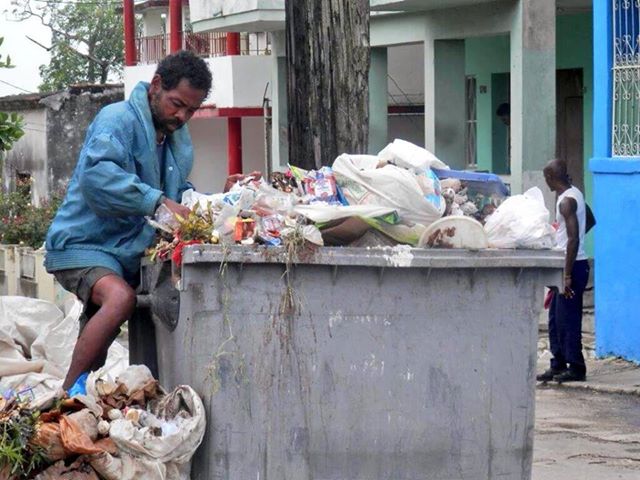
To use a colloquial term, we could say that many Cubans became rats. They ate garbage, rummaged through trash cans, scarfed down pizzas topped with melted condoms instead of cheese and ate “steaks” breaded with towel mops, according to urban legends of the times. The level of predation reached extremes. Dogs, cats, buzzards, wild cuckoos, moray eels. Even the lionfish, a strange species from the Indian Ocean that dared to go near the edge of a country engaged in a pitched battle for survival. It was made extinct.

Homelessness multiplied, along with madness and suicides. The disease of alcoholism began to grow and take root in society as a means of escape from paths with no exits. The high cost of living forced fathers, who could not buy good rum to help them forget their problems, to drink alcohol from the pharmacy. There appeared a clandestine manufacturing system to produce bootleg atrocities with names such as train spark, gualfarina and calambuco. These frustrated drunkards — those with neither strength nor character nor incentives to educate their children — neglected them. They in turn lost any hope for a future at an early age and followed their fathers down the road of alcoholism, sealing their fates.

Some called them the Ground Soy Generation. They caused statistics for swindling and petty theft to shoot up astronomically. Shady dealings and illicit sales increased. The state imposed two currencies: a weak one it used to pay salaries and a demeaning one it used to sell things. Suddenly everything on the black market had a very high price. A used fish tank went for eighty pesos and a pound of rice for fifty-five. Inflation.

In the countryside a pile of clothes would be traded for a mutton, a pair of boots for a hog. Many individuals travelled in caravans through the fields of Pinar del Río like zombies, trading soap and detergent for rice and vegetables. Barter.

Before the farmer’s market opened in Marianao in 1994, you had to get in line the night before to buy meat when someone in the neighborhood slaughtered a pig.

To board a city bus, actual storylines from tragic films were re-enacted. Cooking oil intended for the production of breads and sweets ended up for sale on the black market. The same thing happened with salt, sugar and anything else that could generate money. The most sought-after jobs were those where one could steal or load up on food. Jineterismo* revolutionized the conception of the family. Travelling overseas became one of life’s necessities.

Getting a job in a workplace related to tourism suddenly had a price. A gas station attendant: three-hundred dollars. A salesclerk in a hard-currency store: two-hundred. A cook: one hundred. The different ways for dealing with the crisis — between those who had access to dollars, now called CUCs, and those who had to be inventive to get them — created a divide in the Cuban identity.

In 1997 former secretary Lage said in a public appearance that the Cuban economy had finally hit bottom and was starting to improve. Later Machado Ventura and Marino Murillo repeated this many times, but in reality people still waited for a miraculous upswing. Today half of working-age men — those being called upon to bring about the recovery — “work” while seated on stools in the doorways of their houses selling sweet snacks made by self-employed workers using materials stolen from the state or brought in from overseas by smugglers.

We deserve a medal for pawning ourselves in order to survive those ridiculous twenty years.

About the author

Frank Correa, born in Guantánamo in 1963, is a storyteller, poet and independent journalist. In 1991 he won the Regino E. Boti, Ernest Hemingway and Tomás Savigñón prizes for his short stories. He has published a book of stories called La Elección. beilycorrea@yahoo.es

From Cubanet August 9, 2013

*Translator’s note: Sometimes translated as “hustling,” it is a category of illegal or quasi-legal economic activities related to tourism in Cuba that often involves prostitution.

13 August 2013

Look! Look how the people support us! / CID

“Look! Look how the people support us! You say that the people condemn us…look how the people support us.”  This is what Zuleidys Perez Velasquez repeated on Monday, August 5th to the members of the State (In)Security when the bus that carried 14 detained opponents passed through the center of Holguin.

The opposition leaned their heads out of the windows and yelled “Down with the dictatorship, Down with the Castros, Long live human rights!” and the majority of the people on the sidewalks and streets supported with their cheers, arms and jumps.

Zuledys Perez Velazques, national president of CID (Independent and Democratic Cuba) and a group of activists from various organizations had gone to the provincial offices of State (In)Security in Agramonte street between Area and Libertad in front of the San Jose Park, to protest the abuse against Ramon Zamora Rodriguez and other members of the opposition.

When they arrived, a mob of more than 200 people waited for them with an act of protest.  Zuleidys, Danai Mediola Duquesne and Julio Cesar Ramos Curbelo, as representatives of the group, headed to the offices of Stte (In)Security to demand an explanation for the act of protest.  Major Eliseo ordered that they could not be there.

Zuleidys responded that they were not going to leave until they were given an explanation of those who the henchman said were people who had gathered on their own accord and that they (State (In)Security) were there to protect the opponents to public disturbance.

She responded that they wouldn’t move until they received an explanation and that she had video and witnesses that it had been he who had taken workers out of La Casona (a business of construction materials and an adjoining bakery) so that they would protest.

Realizing that he’d been discovered, the henchmen Eliseo made a signal to the mob to start up again.  The opponents linked arms together.  In response to this attitude, he gave orders for the arrests and the men and women were put onto the bus with punches and pushing.

When they arrived to the Center of Operations in Pedernales they were detained for three hours in the summer sun inside the metal bus.  Later they were let off one by one to be interrogated. They were put into very cold and very hot rooms until 9 at night when they began to be released.  Julio Cesar was threatened, told that they would go to his house and give him a beating.

They savagely beat Juan Zacarias Verdecia, 63 years old and nearly blind. Zacarias’s mouth is destroyed and his ribs are bruised and he was released 8 kilometers away in the neighborhood of Guirabo.  Since he can barely see, he walked for three hours to arrive back to Holguin.

Zuleidys stated that the meeting had been called for all the organizations to come to an agreement to support each other in cases of repression and in reality the agreement  was accomplished through action, it was a success that they facilitated with their abuse.

The reuinion was celebrated in the house of Ramon Zamora Rodrigues, representative of the Orlando Zapata Tamayo National Front for Civic Resistence. Before all the opponents arrived the dictator had  assembled an act of protest and the henchmen took several out of the house by force, among them Zamora, and terrorized the women and children.

The 43 opponents detained on Monday, August 5th, 2013 in Holguin were:

Zuleidy Lisbet Pérez Velázquez
Carmen Oropesa Ramírez
Rosa María Naranjo Nieves
Danai Mendiola Duquesne
Yolanda Pérez Días
Marisol Pupo Rodríguez
Damaris García Martínez
Berta Guerrero Segura
Magdelivia Pelegrino Guerrero
Liliana Campos Bruzón
Livia Hernández Pérez
Maidolis Leiva Portelles
Julio Cesar Ramos Curbelo
Alexander Marrero De La Rosa
Alexei Jiménez Almarales
Jorge Luis Recio Arias
Emir José Bermúdez Pérez
Julio Cesar Albares Marrero
Luis Jaime Meriño
Mauricio Martínez Días
José Luis Ricardo Soberats
Yuri Miguel Carralero Vázquez
Bernardo Cintero Gonzales
Gilberto Solí Gonzales
Ramón Zamora Rodríguez
Maylin Ricardo Góngora
Pedro Leiva Góngora
Juan Sacaría Verdecía
Rafael Leyva Leyva
José Isidoro Urbino Zaldívar
Mairin Pozo De La Torre
Yosbanis Pupo Pérez
Fidel García Roldan
Franklin Pelegrino Del Toro
Rubier Cruz Campo
Yolangel Pupo Pérez
Ricardo Rodríguez Feria
Amauri Güero Mora
Roberto Gonzales Hernández
Eladio Pupo Nieves
Arlenis Rodríguez Ávila
José Luis Mir Cruz
Amilkar Pérez Riverón

7 August 2013

CDR: The Number of Spies is Not Rationed / Tania Diaz Castro

In Every Neighborhood, Revolution

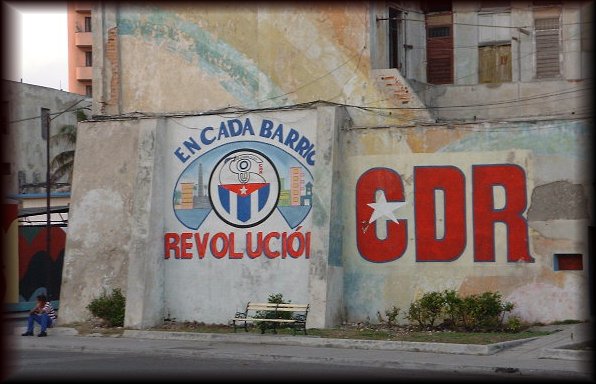
HAVANA, Cuba, July, www.cubanet.org. Cubans know that Fidel Castro’s government, since its inception, violated citizens’ right to privacy of. On September 28, 1960 he founded the Committees for the Defense of the Revolution (CDR), an organization with fascist roots, whose program is “Everyone spies on each other.”

I know — because I worked as a young woman in that organization for four years — that even Raul Castro himself did not like the idea of the CDR.

This organization not only served to divide the people, but also to systematically violate the privacy of everyone, to end the right of each individual to his or her own privacy.

Perhaps Mr. Edward Snowden, fugitive ex-CIA agent, as they say here, for trying to alert Americans about government wiretapping, does not know much about the history of our dictatorship, nor is he interested to know. But what is incomprehensible is that it is definitely the Cuban government and its unconditional friends of ALBA, who are the most ardent supporters of this man, who supposedly fights to defend the right of individuals to privacy.

The history of the CDR has left a bitter taste in Cuban society. Gossip, slander, envy, lies and hatred all proliferated.

From the 1980s, the phones of those of us who are in the peaceful opposition, along with those of hundreds of thousands of citizens who do not support the Castro regime, were tapped through a listening center of the Interior Ministry, a program widely criticized by civil rights advocates, in clear violation of the Constitution.

I remember in 1987, my little girl picked up our home phone and heard a man say he was going to crush me with his car, because I was a counterrevolutionary cockroach — as Fidel Castro publicly called those who opposed him. My daughter, crying, could barely repeat the words of that person who was complying with an order from State Security.

Then there were no more threats. The phone service that I had since long before the Revolution was suspended, along with that of all those who belonged to the Human Rights Movement in Havana. And to make us feel watched, a video camera operated 24 hours a day in front of our houses.

This organization of tips or snitches even has its museum, Fidel Castro’s idea, for anyone who wants to know its entrails. It is located on busy Obispo Street, at number 310, in Havana. Exhibited there are historical documents which reflect the spying of some CDRs, with multiple complaints to neighbors, humble people, so-called internal enemies of the Revolution.

This ancient and valuable building on the capital boulevard today represents one of the most unfortunate and unsuccessful stories of Castro, in which a good part of the people served as volunteer protagonists, to police one another, in order to prop up a bankrupt regime.

The significance of this organization in times of structural changes, occurring now under the Raul Castro regime, remains to be seen. The neighbors are no longer the “eyes and ears” of the Revolution, the fundamental element for detecting the unhappy. Today almost everyone is unhappy. So the question is who spies on whom, if everyone sees that Fidelista socialism is dissolving, like a handful of salt in a toilet bowl.

Monday, July 29, 2013 | By Tania Diaz Castro

From Cubanet

12 August 2013

The Suicide of Haydee Santamaria / Tania Diaz Castro

HAVANA, Cuba, August, www.cubanet.org -The suicide of Haydee Santamaria Cuadrado continues to be a problem for Fidel Castro.  The tragic event, which happened July 26, 1980, doesn’t appear in the 2007 chronology edited by the government. The official media almost never reviews the tragic incident.

The so-called “Heroine of Moncada” not only choose this very significant date to shoot herself in the mouth with a 45 caliber bullet, but it also coincides with certain events that had occurred days before, which perhaps could have been influential.

From April 6-9, her Revolution suffered a blow which had no precedent in history: more than 10,000 people penetrated the Peruvian embassy of Havana with the aim of fleeing Cuba, and only a few days later, another 125,000 left the port of Mariel, in boats heading to Florida, during a continuous 5-month exodus.

Did Haydee know that Fidel Castro himself gave the order to carry out “acts of repudiation” against those immigrants, that he offended their dignity by calling them scum, or that two boats, the Olo Yumi and the Veinte Aniversario, were rammed and fired-upon by military forces, to the North of Mariel and Canimar River, where 50 men, women, and children were killed trying to reach the shores of the United States?

I knew Haydee in the sixties. I heard her talking many times, she facilitated meetings with Cuban intellectuals and foreigners. She was a tremendously unassuming and humble woman, with only a 6th grade education in a small rural school.

Far from being a truly bossy type, such as Margaret Thatcher, it was evident that it didn’t matter much to her to have climbed the steep heights of Cuban politics: she was a member of the Central Committee of the Cuban Communist Party and Advisory Council of the State, as director of Casa de las Americas.

In no way was her manner that of an important woman.  She dressed like any other small town woman and assumed without vanity the title “Great Heroine of the Revolution” which was awarded her for having transported a couple of suitcases with firearms to Santiago de Cuba and for having completed six months of jail in 1953.  Also for contributing to the assault on the Moncada Barracks.

Someone told me that at times she cried in her office, when her son, Abel Enrique, confessed that he had hated Fidel Castro from he was young, because when she had promised to take him for an outing she had to cancel because of a meeting with Fidel.

This past July 28, sixty years since that bloody traitorous terrorist act, carried out in the early hours of the morning while the soldiers slept, Fidel Castro himself confessed that it wasn’t a rational act, “….given the low accumulated experience it would have been much more realistic and secure to start that battle in the mountains.”

Perhaps Haydee had noticed that the attack on Moncada was a crazy idea on the part of Fidel, for whose cause she had lost her boyfriend* and Abel*, the brother she loved most dearly?

Maybe the day of her death she felt remorse to think of the young soldiers in the army who, friendly and gentleman-like, helped her step down from the train with her heavy suitcases full of firearms, who perhaps were also killed by her friends dressed as soldiers?

Bibliography:
Letter from Fidel Castro to the foreign leaders who visited the country, July 28 2013, Juventude Rebelde.
The “strange” suitcases of Haydee and Melba, June 30 2013, Juventud Rebelde.
– Cuba Chronology, Editorial Ciencias Sociales, 2007.

*Translator’s note: They both died at Moncada, reportedly tortured to death in the immediate aftermath of the attack.

ABOUT THE AUTHOR

Tania Díaz Castro
Tania Díaz, Villa Clara, 1939. Founder of the National Writers and Artists Union of Cuba. Poet. She has published five books. Worked as a reporter for 23 years on several magazines in the country. Spent a year and a half in prison in the mid-eighties for her activities in the Human Rights Party. Since 1998, writes for CubaNet.

Wednesday, August 7, 2013 | By Tania Díaz Castro for Cubanet

Black Market is Profitable for Doctors / Julio Cesar Alvarez

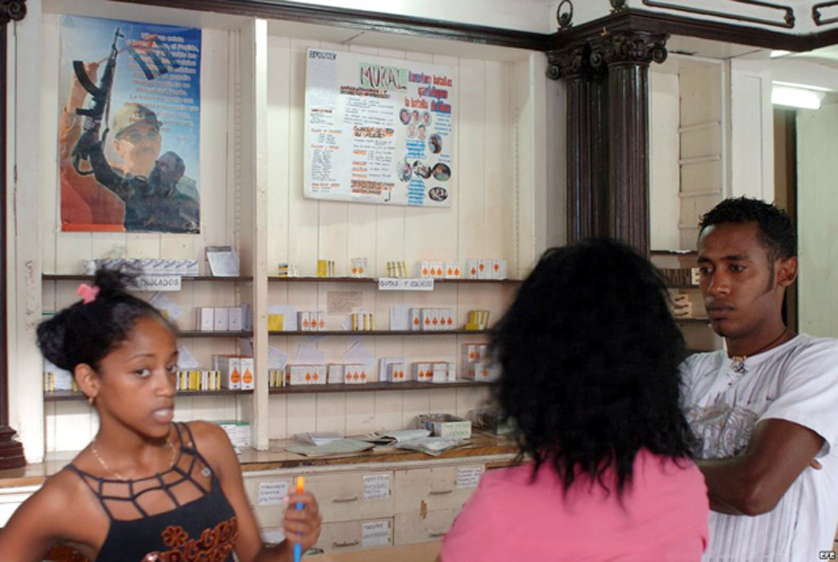
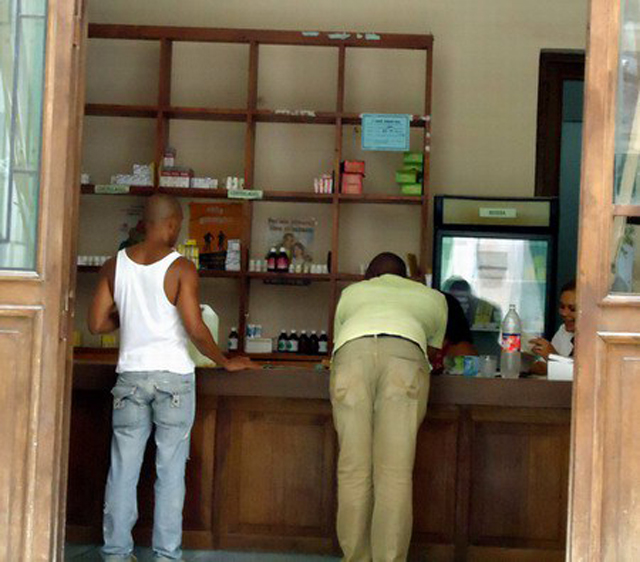
HAVANA, Cuba, August www.cubanet.org. A good part of the staff in the network of Havana pharmacies, in collusion with doctors in medical offices, clinics and hospitals, sell the medications from these establishments at a premium price, as if they were private businesses.

The lines in doctors’ offices, hospitals or hospital outpatient services, coupled with the lack of doctors, who are serving on “missions” in other countries*, contribute to turning any kind of pain into a difficult problem. To get a prescription for a painkiller can be half a day’s work.

To resolve this problem, many staff at the pharmacies offer an alternative but illegal service: They sell drugs without proper prescriptions. Thus, patients avoid having to go through the doctor’s office. All they have to do is buy the medicine at a higher price.

The client

Jose Manuel, self-employed in the municipality of October 10, woke up a few days  ago with pain in the neck. Neither he nor his neighbor had any painkillers. He went to the family doctor’s office, but the doctor was “on a mission” in Venezuela. The nurse told him the new doctor hadn’t come to work. At another doctor’s office they told him they only saw pregnant women. Then he went to the pharmacy to try to negotiate for some painkillers. The clerk said that without a prescription he couldn’t supply them; however, as he knew he was a regular customer, he said he had a solution for him.

The solution for José Manuel was to pay four times the price of the drug. The blister-pack of 10 tablets of pain medication that would cost 0.70 cents in local currency with a prescription, could be had now without prescription for 5 pesos.

The clerk

According to a source who works in a Havana pharmacy (who declined to be identified), she can earn more than 150 pesos, national currency, in one day**, selling drugs without prescriptions. “The thing is not so complicated. We have doctors who supply our prescriptions. They charge us 1 Cuban currency for each prescription. That way we can sell ’under the table’ all the medicine we want, because they are backed by a medical prescription.”

She further claims that most of the clerks take the prescriptions home for family and friends to fill them out. Thus, they avoid that these documents show the handwriting of the pharmacy workers. They also try to find different doctors who sell prescriptions, so as not to repeat too much the stamp of the same doctor. Although among the doctors who engage in this activity they exchange prescription pads, so that their identity does not appear too often in the same pharmacy.

The source added that to avoid getting caught, each clerk serves a known clientele. The rest of the medicine they take home and give them to third parties to sell. A pack of 150 grams of cotton can cost $2 on the black market. A tube of Micocilén powder, $1. Creams and ointments, 10 pesos a tube. The Meprobamate blister-pack with ten pills, 10 pesos.

Another opinion

Dr. Silvia recognizes that there are patients who need medications, and find it difficult to access a prescription, for one reason or another, but she considers that the majority of consumers who access medicine in this way are those who self medicate: “There people who need to have a kit with the full range of potential drugs, and not just because they think they will be unavailable, but because today they take Duralgina for one pain, and tomorrow Ibuprofen or Paracetamol because they believe that Duralgina no longer has any effect. Some people take Meprobamate, then say they can not sleep, and there are an endless number of examples like this.”

But whatever the reasons that patients take the medications, the fact is that this market in Cuba is profitable for the white coats.

CLICK IMAGE FOR SLIDE SHOW

Translator’s notes
*Doctors on missions: A main source of income to the Cuban State is the money charged for doctors and other medical personnel who are sent abroad “on missions.” The State collects many times what it pays each doctor.
**150 Cuban pesos is roughly $6.25 US, which is more than a week’s average salary in Cuba.

About the author

Julio César Álvarez López (b. 1968) Graduated in 1990 from the Hermanos Martinez Tamayo School of Counterintelligence. Arrested in 1992 for collaborating with Human Rights Groups and sentenced by a military court to 19 years, of which he served 16, seven of them in the Maximum Severity Prison of Camaguey. He was paroled in April 2008 and studied computing and digital photography at St. John Bosco church. He speaks English and is currently studying German. He lives in Havana.

From Cubanet

5 August 2013

We Are Still Olive Green* / Yusimi Rodriguez Lopez

On Saturday July 20, as I was getting ready to go out with my niece, among the TV news items I heard was a piece about a town that was going to celebrate the provincial commemoration of — at this point I assumed it would be Children’s Day, which was to take place on the following day, Sunday the 21st, but I was mistaken — July 26, the Day of National Rebellion.

This year is the sixtieth anniversary of this sad event which, since I was a child, has been seen as a occasion for celebration. I remember that the Committee for the Defense of the Revolution (CDR) had a party. The state provided some things and I believe money was collected from neighbors. It was a party similar to that of September 28. Over time the state stopped subsidizing the food, which was sold at modest prices, that allowed every CDR to celebrate the anniversary. I imagine that people also were no longer able or willing to donate money.

I do not know if the newspaper Tribuna de La Habana, the Party or UPEC (the Union of Cuban Journalists) will continue supplying workers with a basket of pork, cooking oil, rice, beans, cookies, a dessert and a bottle of rum. The one from UPEC used to come with chicken, if I remember correctly, and a package of sausages along with a bottle of brand-name rum, but that was only for the journalists on staff.

I think that in this country there is so much eagerness to celebrate, to enjoy the holidays, so much need for something extra that will stretch people’s monthly food budget, that it does not matter what the reason is for celebrating.

The fact is we are celebrating a bloody event that, even if it had not been a defeat from a military point of view, even if the assailants had managed to reduce dictator Fulgencio Batista’s troop strength, would have been paid for in a river of blood. We are celebrating the death of many young men, people who left behind parents, siblings, girlfriends, wives and perhaps children.

“Let us go marching towards an ideal.” But which one? We will never know. I suppose they died to achieve what we have today, which I have been told since I was little, but undoubtedly I will never know. They will never be able to say in their own voices if it was for this, for today’s Cuba, that they died.

Not long ago there was talk on televsion about one of these martyrs. He once had a family and a job, but sacrificed a large part of his income and sold his household possessions for the cause. Later they said he was one of the first to fall in battle. At the time it seemed so sad to me. And so ridiculous.

I later felt that this showed a lack of respect for those young men, who did what they felt they had to do at the time. It required a high degree of courage, of commitment, the willingness to die for a cause. The awful thing is that those who are willing to die in combat are also willing to kill. We often hear our soldiers say they are willing to die (and of course to kill) to defend us, the people. But are they willing to defend the people even if they are no longer in agreement with their leaders? Does a person cease to be one of the people if he or she becomes a dissident or even an opponent?

Those young men, to whom the country has paid homage for many years, saw no other alternative but to overturn a dictatorship through violent struggle. Even Nelson Mandela, whom I deeply admire, was convinced that armed struggle was the only way to overturn apartheid in South Africa.

But I ask myself if in this country where — according to what I have been told — a free press existed even during the Batista dictatorship, there was not some other way to overturn the dictator and restore the constitution of 1940. Was restoring this constitution not specifically one of the goals of those who attacked the Moncada Barracks? Yet it never again became this country’s constitution.

Perhaps not. Perhaps there was no means other than violence to overturn the dictatorship.

I, however, prefer the methods of Ghandi, of Martin Luther King. I prefer that innocent blood not be shed. Or guilty blood. I am sure that what is obtained through violence can only be maintained through violence, through making the defeated fearful.

There is a quote in a letter from José Martí to Manuel Mercado which has remained in the minds of Cubans for years . It was even the title of a successful television series in the 1980s called In Silence It Had to Be. I prefer to think “without violence it must be.”

Nevertheless, this society has exalted and continues to exalt violence. Those who left the country after January 1, 1959 were its victims. Those involved in peaceful opposition to the government are its victims as are those with no intention of assaulting a military barracks of any kind.

Yusimí Rodríguez López | Havana | July 26, 2013

 From Diario de Cuba

*Translator’s note: A reference to the color of the combat fatigues worn for years by Cuba’s top echelon of leaders.