
‘Cubadebate’ Exhumes Fidel Castro’s Speech That Gave Way to the UMAP Camps, and Removes it Hours Later

On Tuesday morning, the publication had been removed without explanation.

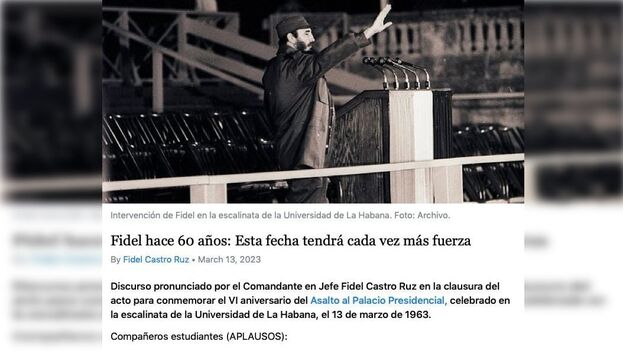
14ymedio bigger14ymedio, Xavier Carbonell, Salamanca, 14 March 2023–Universidad de la Habana, March 13, 1963. Fidel Castro leaned on the podium, at the top of the stairs facing thousands of students. Dressed in a suit, grimacing, are: President Dorticós; the adventurous geographer Antonio Núñez Jiménez; youth director José Rebellón; and the parents of Camilo Cienfuegos, who had died just a few years earlier. He gives a long speech. The next day, the press repeats the same headline, Castro promises a “firm hand” for the “weak,” the “lazy,” the “religious,” the “blue jeans,” the “lumpen,”and all kinds of “worms.”

Sixty years later — this Monday — the regime’s press dusted off what was one of the most sinister speeches given by the caudillo after 1959. On Tuesday morning, the publication, shared as a special in Cubadebate, had been taken down without explanation. The speech, however, remains accessible at this link there is the cached version created by Google which Cubadebate cannot erase.

Attempts have been made to tone down or even justify the so-called “speech at the staircase,” which gave way to the creation of what were called Military Units of Support to Production (UMAP) and the persecution of homosexuals, members of several religions and “off-track” intellectuals.

Personalities like Mariela Castro Espín, the leader’s niece and founder of the National Center for Sex Education (Cenesex) have not viewed Castro’s assault on homosexuals favorably and try to attribute his intolerance to “the times” and not to a political strategy.

Why are they interested in rescuing the regime from an oratory piece which ends by requesting the assassination of Jehovah’s Witnesses and capital punishment for common delinquents? The answer, given the context of ideological radicalization pushed by the Communist Party nowadays, is unsettling. continue reading
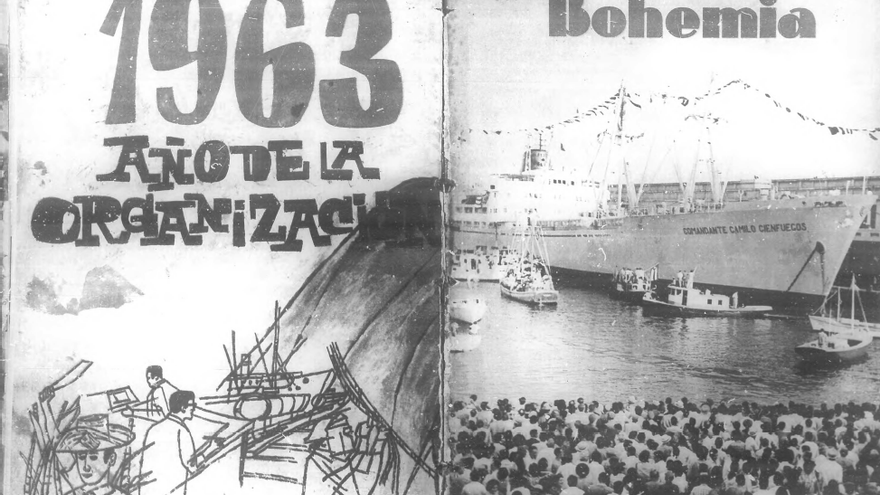
Leafing through the newspapers of the time or the popular “Bohemia” magazine allows us to take the pulse of the era. (“Bohemia” March 22, 1963)

Leafing through newspapers of that time or the popular Bohemia magazine allows us to take the pulse of that era. Military slogans, threats against any “Elvispreslian” attitude — one of Castro’s barbarisms that went down in history — interviews with leaders and news from the Soviet Union. Even the comics are eminently misogynous and sexual, to confirm the leader’s mandate: 1963 must be, even “by force,” the Year of Organization in all areas of life.

When Castro rose to the university podium, he was supposed to commemorate the sixth anniversary of José Antonio Echeverría’s death and the young men who took control of the Presidential Palace and the Radio Reloj station in 1957. After the failed assault against dictator Batista, the group was brutally assassinated.

However, the comandante dedicated a mention to Echeverría — a Catholic leader with a strong personality, whom Castro always viewed as a rival — to “apologize” for having allowed a group of radicals to erase from his statement “an invocation to God.” That act, he said was “erroneous and not revolutionary.”

Then, the “commemorative” speech took a spectacular turn and centered on the problems of the present. The recurring theme was Echeverría’s own religiosity: “Today, I will speak about others who, invoking God, want to make a counterrevolution.”

In a couple of phrases he neutralized the hierarchy of Catholic bishops who had published furious letters against the infiltration of Soviet communism on the Island. His government, he stated, “did not close churches, did not create obstacles for any priest willing to carry out his proper religious functions, and it could even be said that conflicts between the Revolution and the Catholic Church have begun to disappear.”

The waters have “leveled” with the bishops, Castro lied. His true objective was another, the Jehovah’s Witnesses, the Gideon Evangelicals, and the Pentecostal Church, three “Yankee sects” that had penetrated the Cuban countryside and that, to the chagrin of the military, proposed peaceful civil disobedience.

They drove him crazy, he admitted. “When it is time to harvest cotton, coffee, or sugar cane or when special work is required and the masses are mobilized on a Sunday, or Saturday, or any day, then they come and say, ’Do not work on the seventh day.’ And then they start with the religious pretext to preach against voluntary labor,” or they say, “Do not use weapons, do not defend yourself, do not be a militant.”

Castro accused them of being superstitious, of offending the homeland and the flag, and later asked what should be done with them for “preaching idiocies.” None of the young people hesitated, “Paredón!” — To the wall! That is the firing squad

It was just the beginning of the speech. The then Prime Minister continued talking about the ills they had inherited from the “capitalist past” and how they must draw a line between that and the present revolution.
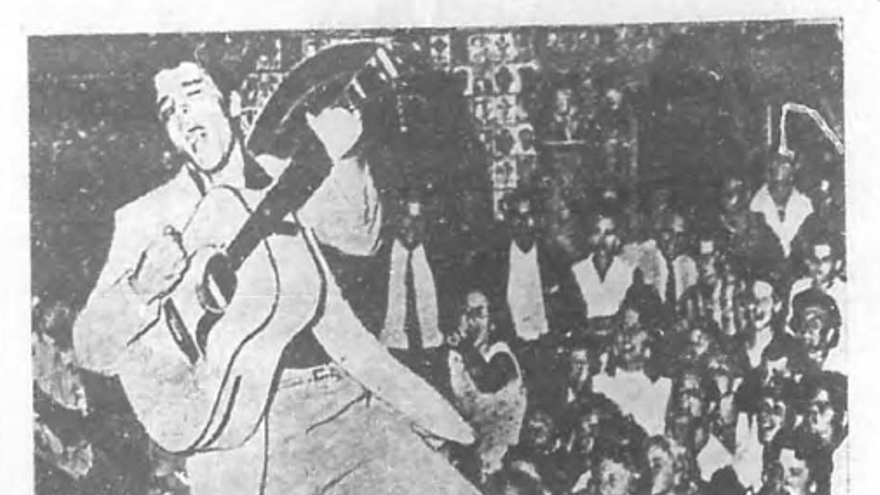
“Many of those young slackers, children of the bourgeois, go around with their pants that are too tight; some of them with a guitar and their ’Elvispreslian’ attitudes.” (’Bohemia’ March 22, 1963)

Several “infectious focal points” remained, composed of “antisocials, thieves, pickpockets and parasites.” He stated that the police had been corrupted and the judges were soft in their sentencing. “The result: the need to take harsh measures,” he said, and asked the crowd what measures should be taken. Once again, drunk with enthusiasm, the university students responded, “Capital punishment!” and also, “Fidel, paredón for the thief!”

Satisfied, Castro increased the response. What can be done, then, with the young men who gather in the “pool halls” and other recreational establishments, “full of slackers and lumpen”? With the prostitutes, dedicated to the “repugnant profession”? And with the rest of the religious? He invited those who wished to leave to the United States to walk away. “What do they expect?” he asked and his audience broke out in laughter.

The “soft” who dare to complain, he dug in, “we understand they should undertake physical labor, which is the type most needed at the moment, and that they should go work in agriculture,” as a “little reinforcement, but not much!”

He then stated the most famous phrase from that speech, the one that would decide the fates of thousands of young people in the sixties and that today the official press repeats intentionally, about what he called a social “subproduct” of 15 or 16 years: “Many of those young slackers, children of the bourgeois, go around with their pants that are too tight; some of them with a guitar and their “Elvispreslian” attitudes, and they have taken their debauchery to extremes, wanting to organize their feminoid shows freely in public.”

With the spiel against those with “weak legs” and the “crooked trees” he abandoned the podium. He’d leave them, he said, with a big lesson, “All the worst comes together.  Don’t ever forget that, don’t ever forget it.”

In 1965, the UMAP system was already operating in Camagüey. “We have made our calculations,” warned Castro about that measure and its impact on “the New Man” that the Revolution desired. Thanks to that speech of 60 years ago, notable cultural figures paraded through the UMAP, such as future cardinal Jaime Ortega, troubador Pablo Milanés, and author Reinaldo Arenas.

On December 31, 1963, Arenas — an aficionado of “the world of Havana show business” — hugged his lover, a young man named Miguel and wished him a Happy New Year despite the “sexual persecution.” Miguel returned the hug through tears and said, “It’s unbelievable that Fidel has already been in power for four years.”

“Wretched,” wrote Arenas as he recalled that hug. “I thought that was too much time. He ended up arrested and taken to one of the concentration camps. I never saw him again.”

Translated by: Silvia Suárez

__________________

COLLABORATE WITH OUR WORKThe 14ymedio team is committed to practicing serious journalism that reflects Cuba’s reality in all its depth. Thank you for joining us on this long journey. We invite you to continue supporting us by becoming a member of 14ymedio now. Together we can continue transforming journalism in Cuba.

Cuba is Classified as the Group Leader in the World Classic Thanks to a Win by Italy

The team led by Armando Johnson got two wins for two losses in the first round of the World Classic. (Jit)

14ymedio bigger 14ymedio, Havana, 12 March 2023 — Cuba beat Taiwan 7-1 on the last day of Group A of the World Classic. The result made them dream about the second round of the tournament that takes place in the United States, China and Japan, said the official newspaper Cubadebate. “This is what happened,” said the player from Matanzas, Yadir Drake. “We came to qualify and today we took a big step.”

Enthusiasm reached the Jit newsroom, which pointed out that the team was reinforced for the first time with players from the Major Leagues of the United States, who “don’t believe in the pressure of ’life or death’ duels” and have now qualified for the next round. The media repeated the statement of manager Armando Johnson: “We always said that the team would end up responding, and so it did, first against Panama and now in this game.”

The performance of the athletes led by Johnson was summarized by the Swing Completo portal as that of a team that “did the job” before a weak host, Taiwan. This was demonstrated from the first inning with four home runs that broke the rhythm of the Asians at the Intercontinental Stadium in Taichung.

The Cuban offensive distinguished itself. Yoan Moncada connected with a double to center field. Luis Robert Jr. reached first base after an error by shortstop Kun Yu Chiang. Alfredo Despaigne hit a two-run double. In this way, Cuba got four runs with one out.

The second inning was more measured for Team Asere with two runs. Yoan Moncada had a solo home run, and Roel Santos added one more run with a single. The seventh inning took place after a combination between Yadir Drake and Roel Santo. Taiwan scored after a hit by Wei-Chen Wang.

The Cuban pitching responded with Elian Leyva, who threw 2.1 innings without allowing a run, while Miguel Romero, who was a relief player, got 2.2 innings, also without scores, with four strikeouts in each; Onelki García got none in two innings.

Until that time, there was a good chance that Cuba, which began with defeats against the Netherlands and Italy, would be in the next round. These selections closed the activities of Group A with a 7-1 win by Italy against the Dutch .

Fortune touched Cuba, which ended up as the leader in Group A, with Italy in second place. In the next round the rivals could be Australia or South Korea, and the stage will be at the Tokyo Dome.

The triumph of Team Asere comes after the release of the song MVP, written and performed by rapper Wilger Luis Aranda Campuzano Casdapro and produced by Josh López. The theme, according to the Cuban rapper, is in support of the Cuban national team that is competing in the World Classic.

“It is wrong for some of the fans to put so much pressure on the Cuban team, even many times showing personal disrespect for the players,” Casdapro said. “It’s unfortunate that they are only waiting to see those who are representing the nation fail, when they have so much pride, honor and respect for the flag.”

Translated by Regina Anavy

____________

COLLABORATE WITH OUR WORKThe 14ymedio team is committed to practicing serious journalism that reflects Cuba’s reality in all its depth. Thank you for joining us on this long journey. We invite you to continue supporting us by becoming a member of 14ymedio now. Together we can continue transforming journalism in Cuba.

Users of the Russian Credit Card Mir Can Now Get Cash from Cuban ATMs

The logo of Russia’s Mir payment system on a Cuban ATM screen. Its card will allow Russian tourists to withdraw cash, converting their rubles to pesos.

14ymedio bigger14ymedio, Juan Diego Rodriguez, Havana, 14 March 2023 — Cuban ATMs have started accepting the Mir card, part of a Russian payment system akin to Visa or Mastercard, that was launched by the Kremlin in 2016 to get around looming economic sanctions. Mir’s press office told the Russian news agency Sputnik that it is working on getting the cards accepted in “friendly countries, including Cuba, which is very popular with Russian tourists.”

When asked about this by 14ymedio, an employee at a branch of Banco Metropolitano in Havana said she believed this was the case but was not sure.

What is certain is that the Mir logo can now be seen on Cuban ATMs. The payment system will allow Russians to withdraw cash, converting their rubles into pesos.

Cuba’s ambassador to Moscow, Julio Garmendía, said on Tuesday that he hoped Russian tourists would be able to use this type of card to make purchases on the island by this summer. According to an article by the state-run Prensa Latina news agency, the ambassador hopes that “all the difficulties with the introduction of the Russian payment system will be resolved soon.”

In any case, users will still face the same problem that Visa and Mastercard holders have had in many small private businesses in Cuba: these establishments do not have the POS terminals needed to read the cards, forcing their customers to pay for their purchases in cash. continue reading

For now, at least, most high-end establishments do not seem to be aware of this new system. At the Grand Aston, for example, 14ymedio was told that the hotel does not accept Mir cards. The problem, they say, is not on their end. It is because “Russian banks are blocked worldwide.”

Russia created the Mir system after the annexation of Crimea in 2014 and two years later began issuing cards for use within the country. In 2022 it tried to expand Mir’s reach beyond the country’s borders after Russia was locked out of the international banking system following Vladimir Putin’s invasion of Ukraine.

Among the countries that accept the cards are South Korea, Uzbekistan, Vietnam, Armenia, Belarus, Turkey and Tajikistan. However, the service was suspended in the latter two countries last September because ATMs and card readers were not working.

Cuba has advocated for the use of Mir cards since sanctions on Russia were tightened last year and has promised to accelerate implementation of the system. In early March, Russia’s ambassador to Havana, Andrei Guskov, said that the adoption of Mir is part of a significant number of financial and energy projects the two countries agreed upon during Miguel Díaz-Canel’s visit in November 2022.

In an interview with Sputnik, Guskov stated that plans are being discussed for the construction of new operating units at the Maximo Gomez and Habana del Este electric power plants. Cuba has been in the midst of a severe energy crisis, experiencing ongoing blackouts of up to twelve hours in 2022, with more expected this year.

Russia also has a presence in the automotive sector, with the GAZ automotive company assembling its GAZelle, Ural and PAZ vehicles in Cuba. Among the new projects, Guskov added, are plans to set up an import/export company to promote Russian products in the Cuban market.

Guskov also indicated that a project to modernize the Antillana de Acero metallurgical plant, made possible by a 111-million-dollar loan from Russia in 2017, is in its final stage .

During the pandemic, when many countries’ borders were closed, Russia supplied the bulk of the island’s foreign tourists. The numbers plunged, however, after the invasion of Ukraine due to sanctions, which closed European air space to Russian carriers. Figures from Cuba’s National Statistics and Information Office [ONEI] indicate that, by the end of 2022, only 6,623 Russian travellers had visited Cuba, a drop of 54.7% from 2021.

An article by the organization Cuba Siglo 21 [Cuba 21st Century] suggests that a visit to Cuba and Venezuela in early March by Nikolai Patrushev, secretary of the Russian Security Council, was essentially military in nature and not related to economic and scientific development projects, as reported by state media.

The article, authored by former Cuban general Rafael del Pino, speculates that Russia is edging ever closer to a humiliating defeat in Ukraine and is, therefore, trying to burnish its image in the region by establishing a naval military presence in the Caribbean, as happened during the 1962 Missile Crisis.

____________

COLLABORATE WITH OUR WORKThe 14ymedio team is committed to practicing serious journalism that reflects Cuba’s reality in all its depth. Thank you for joining us on this long journey. We invite you to continue supporting us by becoming a member of 14ymedio now. Together we can continue transforming journalism in Cuba.

Rumors on Social Networks in Cuba Tend to be True

Many times rumors posted online end up being confirmed by independent media or by the authorities themselves. (14ymedio)

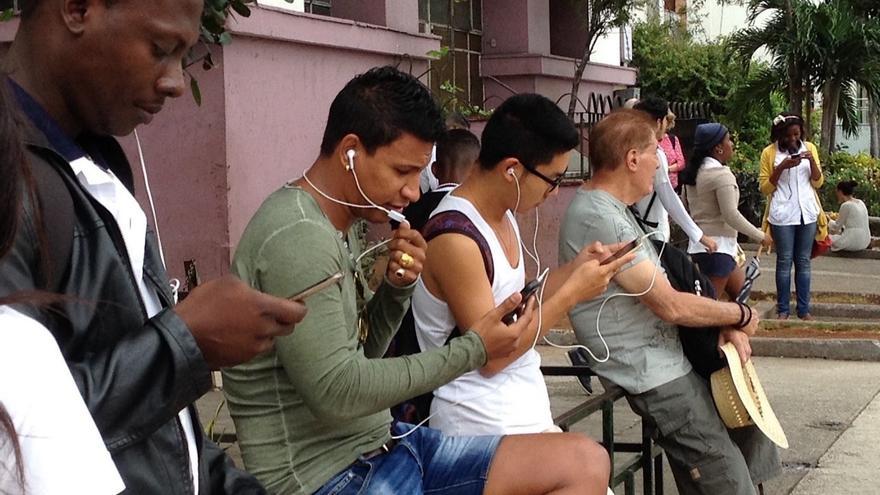
14ymedio bigger14ymedio, Havana, 13 March 13, 2023 — Since the end of 2020, attacks on freedom of expression have increased, and access to information in the country’s online space has been reduced. The Government blocks social networks and independent media, interrupts mobile data connections and resorts to fake profiles on social networks for its disinformation campaigns, which consist of altering public debate and introducing other topics through the massive and aggressive sending of tweets and retweets.

Online propaganda in the country is increasingly becoming an information control tool to silence independent voices and spread disinformation and erroneous information. The control of technologies and social networks provides the Government of the Island with a powerful tool to shape public debates and disseminate information online, while monitoring, censoring and restricting digital public spaces.

14ymedio and Yucabyte collaborate with the aim of collecting and analyzing the information and rumors shared online by the population and the Government of Cuba, to better understand the online space and how it is affected by the different actors. The collection of information and rumors online is not exhaustive; it reflects only a part of the Cuban online space. During this time of collection, 14ymedio and Yucabyte have noticed that many times rumors shared in the online space end up being confirmed by the independent media or by the authorities themselves, but that in the beginning they are just that: rumors.

14ymedio and Yucabyte want to make these analyses available to Cubans and independent organizations so that they can improve the ability to identify, evaluate and counteract disinformation and erroneous information in the online space.

The analyses will be available on the websites of these two media and may change format and length depending on the comments received from readers.

I. Top list of rumors for the month of January 2023

A. Debt in London

B. Hacking of official accounts

C. Poverty – food shortage

D. Violence – crime/theft – femicides

E. Health – hospital conditions and access to medicines.

II. General analysis of the most relevant trends and rumors collected during January 2023

The main rumors collected during the month of January 2023 can be organized into three groups. First, those that register cases of violence on the Island, including robberies, increased crime and femicides; second, those that collect examples of food shortages, scarcity and poverty; and, finally, those that denounce the unsanitary conditions in Cuban medical facilities.

A. Violence, robberies and femicides

The alarm over the escalation of violence in Cuba has been a constant in the reports of rumors since at least November 2022. Although many users argued that crime was a feature of the year-end “environment,” at the end of January it was found that the complaints did not decrease but showed a tendency to be even more serious than those recorded in the second half of last year.

One characteristic of these reports is that they always contain a reference to continue reading

the inaction of the police, the clumsiness or apathy in their investigations and the lack of action before reporting the crime. Another factor, pointed out with the same frequency, is that the crimes are only reported in the official press belatedly and with a note from the Ministry of the Interior, after both the complaints of users and the independent press report them.

Among the most serious rumors of violence in January are the theft of luggage from the Transtur interprovincial buses; the armed robbery of pension money from retirees; the murder perpetrated by a motorcycle police officer of his ex-wife; and the theft and resale of regulated products. In addition, users point out that many of the criminals act with the complicity of local police units, which offer them immunity under certain conditions.

Users point out that many of the criminals act with the complicity of local police units. (14ymedio)

B. Shortages and poverty 

In addition to the criminal situation, there are reports about the poverty on the Island. Shortages and rising prices are the starting points for many of the complaints on social networks. In addition, photos of Cubans have been circulating, particularly of the elderly, rummaging through garbage containers in search of food. Images were shared about the sale of products in poor condition and their transfer in terrible hygienic conditions.

The issue of food was talked about on social networks, in addition to the sale of food in online stores that, according to users, are businesses protected by the Regime and the United States Government itself, through one of the most controversial figures, the businessman Hugo Cancio. On the other hand, the terrible diet in schools — small portions of white rice and tomatoes, in many cases — has also been documented.

C. Unhealthiness

Health and hospital conditions, as well as access to medicines, are now common in rumors. In addition, in the first week of the year, several rumors circulated on the networks about the lack of medical personnel in polyclinics and hospitals, presumably due to the unprecedented exodus that the country suffered in 2022. From the shortage of supplies to the terrible state of building construction, criticism also reaches the community services. Notifications about the lack of transportation in funeral homes, the desecration of cemeteries and the delay in funeral services were repeated throughout the month.

In addition to these three groups of rumors, the trial for the non-payment of debts of the Cuban Government in London, the hacking of several official pages and accounts related to the Regime, and the exodus of professionals were also constant topics in January.

III. Most used platforms and format of content

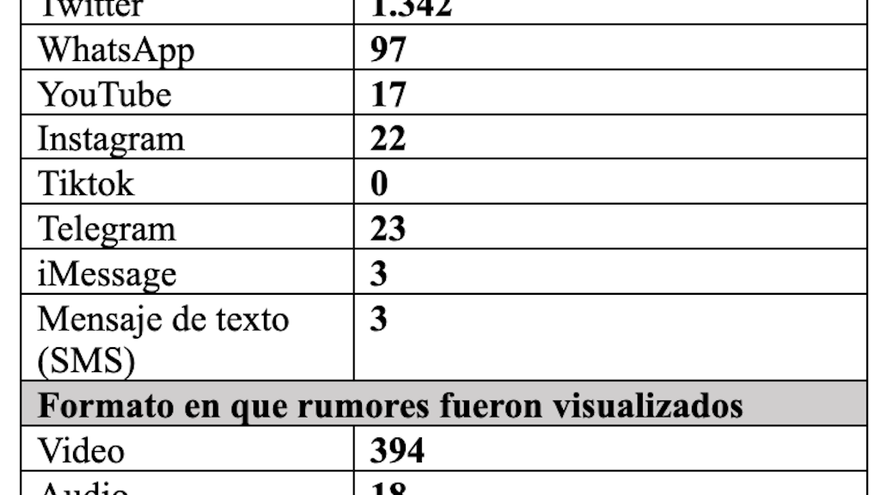
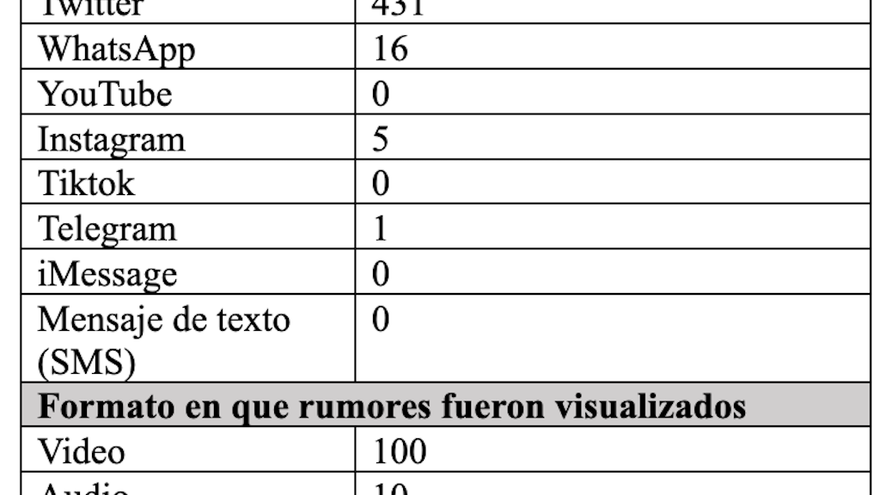
Number of rumors reflected by platform and number of rumors seen.

(14ymedio/Yucabyte)

Format and source of the information

The social networks on which these rumors circulate influence not only the format of the information but also the number of users who receive them. Although Facebook is still the most used platform by Cubans (most of the rumors collected appear in buying and selling groups), it is on Twitter that the most elaborate rumors circulate, usually in threads or screenshots, accompanied by an explanation. Also on Twitter there are numerous profiles that Cubans follow, which recycle the same information that their own followers send them. These accounts expand the scope of the rumors and generate a certain amount of feedback.

It is less common for rumors to be collected on networks such as Instagram or TikTok, which are generally for videos and photographs. The least used source of information is still personal messaging, through applications such as WhatsApp or Telegram.

To date, the largest fire is that of Pinares de Mayarí, in the eastern province of Holguín. (Granma)

I. Top list of rumors for the month of February 2023

A. Fires

B. Repression: response to demonstrations, regulations, release of political prisoners

C. Crime: robberies and femicides – concealment of cases

D. Poor conditions: Education and Health –  lack of supplies, unsanitary conditions – abandonment of the elderly.

II. General analysis of the most relevant trends and rumors collected during February 2023

The main rumors collected during the month of February 2023 can be organized into three topics. First, those who report fires, including explosions; second, those who report cases of repression, responses to demonstrations, prohibitions on leaving the country (regulations) and the release of political prisoners. Third, there are the rumors that collect cases of crime, including robberies and femicides.

A. Fires

This month, multiple reports of fires across the Island circulated on the networks. To date, the largest is that of Pinares de Mayarí, in the eastern province of Holguín. Apparently, this forest fire originated as a result of the severe drought that affects the country and the speed of the winds. Much of this mountainous area has been on fire for more than 15 days. Some media report that about 3,600 hectares [8,896 acres] of forest have been lost. Several users have shared the comment of a pilot from the area, who said that “it will burn until there is nothing left to burn,” since there are no resources to put it out.

Likewise, rumors were collected about several small fires in green areas of Havana, specifically in the vicinity of road 100, the highway to Pinar del Río and the area of Tulipán, in Nuevo Vedado. So far these have been controlled without major damage. Some users reported the presence of soot in the city, apparently as a result of these fires.

In addition, two other allegedly intentional fires were registered. The first, in a bodega (ration store) in Marianao, in Havana, where it is said that a manager caused the fire to hide the theft of products from the “basic family basket” which is sold through these stores. And the second, in a cane field in Banes, Holguín. A user who calls himself Clandestino Mayor affirms that this fire was “an action taken against the dictatorship.”

To this situation are added other rumors about an explosion, at the beginning of the month, in the historic military park Morro Cabaña, in the capital. Allegedly, one of the cannons used for the historic nightly 9:00 pm cannon shot caused the explosion, generating a small fire that was controlled at the time. Similarly, in the last week of February an explosion was reported in Old Havana, as a result of the handling of a gas canister in a workshop for refrigeration technicians. In the incident, one person died and another, who was seriously injured, died shortly after.

B. Repression: response to demonstrations, regulations, liberation of political prisoners

With the growing exodus that the Island is experiencing, there is a rumor that regulations will begin for workers in “strategic sectors” whom the Government cannot afford to lose. Almost all publications in this regard indicate an increase in travel restrictions for doctors and other health personnel.

During the month, the rumor about the release of Cuban political prisoners was also recurrent, with the mediation of the Catholic Church and several embassies. So far, there have been no clear signs of this possible release (which was already ruled out by Oscar Silvera, Cuban Minister of Justice). Another rumor says that the amnesty could be extended to ordinary inmates, as long as they “have not committed serious crimes or murders,” according to several users.

In this context, and as a result of the deprivation of nationality that the government of Nicaragua applied to its political prisoners and journalists, rumors were raised about the possibility that those imprisoned after the 11 July 2021 protests [11J] will have their citizenship taken away before being banished.

To this situation are added several complaints about the suicide of an 11J protester, 18, allegedly hanged in his cell at the Placetas police station. In addition, it is said that another young protester threatened to take his life after the authorities denied him the medicines he needs for treatment of his mental illness.

Many users also denounced the arrest of protesters in Guanabacoa at the beginning of the month. It was declared on social networks that the demonstration was peaceful, which did not prevent the participants from being arbitrarily detained. Similarly, several users pointed out the apathy of the Cuban people in the face of the claims and demonstrations of the mothers of the political prisoners, activists and relatives.

In mid-February, an alarming wave of rumors circulated about summons for interrogations, some official and others without official notification. The target of these citations were young 11J activists from San Antonio de los Baños, who were released.

The government blocks social media and independent media, disrupts mobile data connections and uses fake social media profiles. (14ymedio

C. Crime: robberies and femicides – concealment of cases

Rumors about assaults and robberies have been the most frequent this month, which respond to an escalation of violence on the Island. In this sense, the number of reports on the actions of gangs in different provinces such as Havana, Mayabeque and Las Tunas is remarkable. Most of them, according to users, are made up of groups of teenagers and children who carry out assaults, in some cases with knives. As a result, injuries and at least one death have been reported.

Among the most serious rumors of violence this month are the attempts to rape and assault minors, perpetrated by men and during daytime hours, in the municipalities of Santa Clara (Villa Clara) and Nuevitas (Camagüey). In addition, it is said that a group of thieves in the Havana municipality of Guanabacoa carried firearms, and that its members were captured by the police. Other rumors were also collected about the thefts from transport and tourism buses in the east of the Island, and about several children who were stabbed, according to a user, “by a madman who was passing” through the place.

The growing number of femicides was also a source of alert on social networks this month. The report of the murder of a 17-year-old teenager at the hands of her 50-year-old partner inside a police station in Camalote (Camagüey) went viral. Likewise, other cases of femicide were reported in Matanzas and Granma, where a woman was killed on a public road by her ex-partner with a firearm.

III. Most used platforms and format of content

Number of rumors collected by platform in February

Translated by Regina Anavy

____________

COLLABORATE WITH OUR WORKThe 14ymedio team is committed to practicing serious journalism that reflects Cuba’s reality in all its depth. Thank you for joining us on this long journey. We invite you to continue supporting us by becoming a member of 14ymedio now. Together we can continue transforming journalism in Cuba.
Tourism in Cuba in 2022: Its Darkest Hours

Cuba is failing to recover the tourism lost in the pandemic, compared to Western Europe and the world as a whole. (14ymedio)

14ymedio bigger14ymedio, Elías Amor Bravo, Economist, 14 March 2023 — The analysis of the tourism sector in 2022 can be gleaned from the data of the publication “Tourism. Selected Indicators” of the National Office of Statistics and Information (ONEI), which has just been released.

In it, data are presented for income, overnight stays and occupancy rates, among other indicators of the businesses served by MINTUR [Ministry of Tourism], Gaviota and Palco, which involve accommodation, retail trade, gastronomy, transport, recreation and other income generators.

When an analysis is carried out with respect to the previous year, significant growth in tourism activity is contemplated, but since 2021 was a very bad year for tourism due to the outbreaks of COVID-19 that continued to affect international tourism.

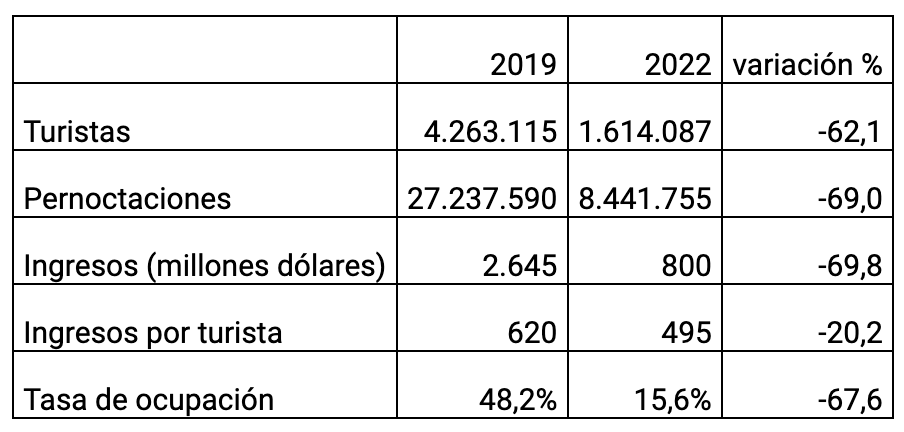
Therefore, and with the aim of carrying out an adequate analysis of the trends in the sector in 2022, it is advisable to use 2019 as a reference, since it was the last “normal” year before the pandemic. International tourism data are shown in the following table. continue reading

Translator’s note: Decimal points translate to commas in American English notation. Pernoctaciones = overnights. Ingresos = Income. Tasa de ocupación = Occupancy rate.

The number of international tourists stood at 62.1% less than the 2019 data, but the indicator of overnight stays that combines the number of tourists and days decreased even more, by 69%.

This is a lower percentage than that experienced by the occupancy rate, which fell from 48.2% in 2019 to 15.6% in 2022, a collapse of 67.6%. It offers an idea of the direct impact that this will have on the profitability levels of hotel management.

Tourism income (applied to the official exchange rate of the regime) did not exceed 800 million dollars, 69.8% less than in 2019, and income per tourist stood at 495 dollars, 20.2% less than in that year. These numbers could be even lower if the alternative exchange rate (between the dollar and the peso) of 1×120 or the one that governs the informal market is applied.

If the comparison of data was made with respect to 2021, as they do in the ONEI report, the panorama changes, because 2021 was a very negative year, in which only 356,470 tourists arrived in Cuba, and revenues did not exceed 365 million dollars.

While tourism in Cuba fell behind, other competing countries in the Caribbean recovered to the levels they experienced before 2020. In such conditions, the 2022 recovery in Cuba is insufficient, and there are reasons to think that the distances that have to be traveled to return to a normal scenario are still very important. What is worse, it does not seem that in this year, 2023, the gap will be closed.

To cite an example that shows the difficulties the sector has in recovering, it is important to take into account that Canada, the main tourist market for the Island, barely contributed 532,487 tourists in 2022, a figure that is nowhere near the one for 2019, when 1,120,077 Canadians arrived on the Island. Canadian tourism is 52.2% below the 2019 figure.

Certainly, those responsible for tourism in Cuba must be very concerned with figures like these. That only 9% of Canadians who came in 2019 did so in 2022 is, to say the least, alarming. There is a lot to do. But it’s the same in other geographical markets that offer similar signs of collapse, with problems that will have to be overcome.

For example, the second market in origin, the Cuban community abroad, fell from 623,972 tourists in 2019 to 333,191 in 2022. The Russians, with their transportation difficulties, from 177,977 in 2019  to 54,383 in 2022. And so, on. The declines are significant, and no market shows symptoms of recovery. In 2023, the levels before 2020 will not be reached, and this will have very negative repercussions on the entire economic activity of the Island.

Translated by Regina Anavy 

____________

COLLABORATE WITH OUR WORKThe 14ymedio team is committed to practicing serious journalism that reflects Cuba’s reality in all its depth. Thank you for joining us on this long journey. We invite you to continue supporting us by becoming a member of 14ymedio now. Together we can continue transforming journalism in Cuba.
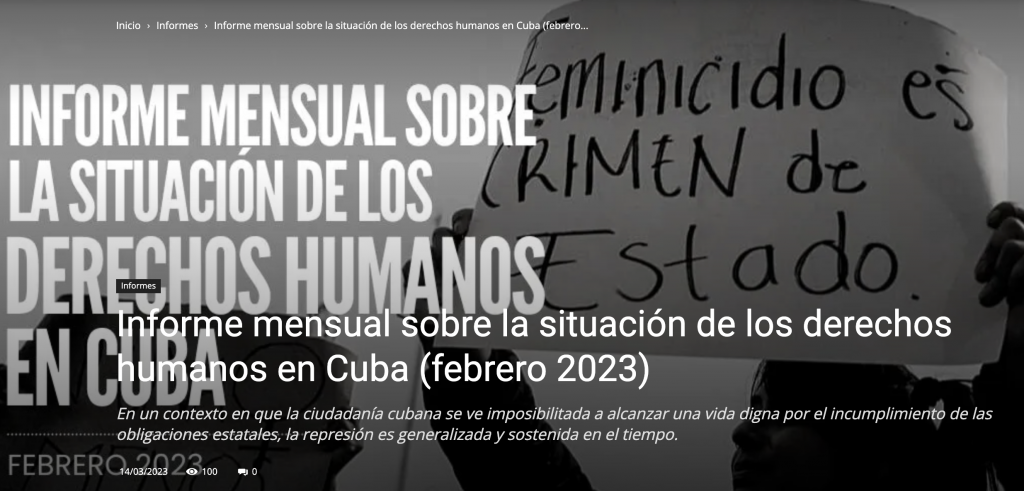
Monthly Report on the Situation of Human Rights in Cuba (February 2023) / Cubalex

Cubalex, 14 March 2023 — In February 2023, the human rights situation in Cuba continued to worsen. The two most frequent factors were state repression and the authorities’ inability to satisfy basic social needs such as provision of electricity, medicine and food. In a context where Cuban citizens are unable to achieve a decent life due to the failure of the state to meet its obligations, repression is generalized and sustained over time.

Among the incidents recorded by Cubalex the applied practices of state agents are notable. Most of the acts were documented in Havana, although some also occurred in Matanzas, Camagüey and Mayabeque. In February we documented an increase in repressive practices.

The full report can be read and downloaded here.

Translated by: Silvia Suárez

To Vote or Abstain on March 26? For Once Cubans Are on the Same Page

Those who go to the polls on March 26 will do so for three different motives: conviction, inertia or fear. (Xinhua)

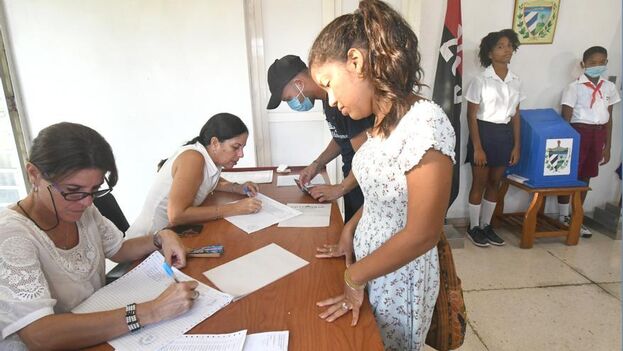
14ymedio bigger14ymedio, Reinaldo Escobar, Havana, March 13, 2023 — It can be said that, for the first time in more than sixty years, Cubans opposed to the regime have (almost) unanimously agreed that abstention is an appropriate response to the Communist Party’s call for a “united vote” on March 26 in favor of the list of candidates that will make up the tenth Parliamentary Legislature.

I say “almost” because, on an individual level, there are citizens who would like to show up just so they can cancel, or not fill out, their ballots. Some even want to make the defiant gesture of not going into the voting booth, where the right to secretly mark one’s preference with an X is exercised. “I’m going to tell the people at the table that I don’t believe in this process and drop a blank ballot into the box in front of them,” a friend promises.

Those who do go to the polls will do so for three different motives: conviction, inertia or fear. Of the five or four (or perhaps only three) million who go to their polling stations, most will do so out of fear, or because of that defense mechanism masked as inertia. “I don’t want to get into trouble,” say the fearful. “Why make a fuss if they’re going to do whatever they want anyway?” ask those who vote out of inertia.

Who are the true believers? (I say this in all seriousness.) They are the ones who feel the candidates who appear on the ballot actually represent them. True, they do not know what these people think because candidates are prohibited by law from coming up with proposals or campaigning on platforms that might make an electorate swoon. But for reasons I cannot fathom, they deduce from head shots and biographical data that these men and women will raise their hands in Parliament to vote in favor of what matters to their constituents. continue reading

There are others, less naive but more disciplined, who are also convinced. They are the ones who, if the party tells them they must vote for the entire ticket, they will do so, without their blind obedience weighing on their consciences.

Among the dissenters’ motivations for abstaining, one has to consider the lack of alternatives.

On previous occasions, especially for elections on a municipal level, some were incentivized to get out and vote for a candidate who was, or seemed to be, at odds with the government. That can be ruled out in this case because the list of candidates submitted by the Commission of Candidacies for the National Assembly is airtight. Not a single suspect among them.

In the last two elections, the referendum on the constitution and on the Family Code, there were also different options.

In the case of the former, there was the idea that voting a resounding NO would signal one’s refusal to accept the dominance of the Communist Party and the irrevocability of the system. Others, however, believed that voting — even if it was in the negative — gave legitimacy to a bogus referendum. No consensus was reached and the division between the NO supporters and the abstainers weakened their message.

In the referendum on the Family Code, official propaganda had people believe the only option was to vote for it. And since it addressed the specific interests of the LGBTI community, as well as those who sought a legal pathway for surrogate pregnancies, neither a NO vote nor an abstention could be read as a clear expression of disagreement with the government.

This time is different.

Neither supporters of strong-man rule, nor those with generational prejudices, nor even those with a propensity for notoriety and who always have something different to say; neither Trumpists nor Obama-ists;  neither radicals nor moderates have come forward to argue for voting NO, for abstaining, for staying home, or for whatever else you want to call it.

When Fulgencio Batista organized sham elections in 1958, Cuba had 2,310,262 citizens with the right to vote. Only 46% of them went to the polls. None of those elected to public office managed to take up their positions because there was, what appeared to be at the time, a popular revolution.

The triumphant regime never forgave the roughly million-and-a-half citizens who went to the polls that year out of conviction, fear or inertia. They were not allowed to join the sole political party or hold important public office. In the tell-all forms that had to be filled out for almost anything, there was always the question about whether or not one had participated in the 1958 elections.

I hope that, in a future democratic Cuba, this is never allowed to happen again.

COLLABORATE WITH OUR WORKThe 14ymedio team is committed to practicing serious journalism that reflects Cuba’s reality in all its depth. Thank you for joining us on this long journey. We invite you to continue supporting us by becoming a member of 14ymedio now. Together we can continue transforming journalism in Cuba.
China Comes to the Rescue of Cuban Military Shoe Company

The Orthopedic Laboratory in Camaguey produced only 164 of the more than 2,000 pairs of shoes it was supposed to deliver in 2022.

14ymedio bigger14ymedio, Havana, 10 March 2023 — The Cuban footwear industry stands to benefit from an injection of Chinese capital. The Asian giant has been investing increasingly more in the island’s industry and in the Combell footwear company. The business, located in Santiago de Cuba, will be one of the first to reap the benefits of this investment according to the company’s director, Zoe Cabello.

After Miguel Díaz-Canel’s visit to Beijing in November, Cuba entered into what Xi Jinping called a “community with a shared destiny.” Both presidents signed agreements in which the Chinese agreed to provide funding into areas as dissimilar as biotechnology, economics, cybersecurity and espionage. Additionally, Xi provided Díaz-Canel with an emergency donation of 100 million dollars, which the Cuban government received in January.

Since then, the already important Chinese presence in key sectors of the Cuban economy — everything from locomotive repair to information sharing at the highest level — has only increased.

Chinese investment, along with recently signed Cuban military contracts for “new services,  is the company’s the last hope for staying afloat. continue reading

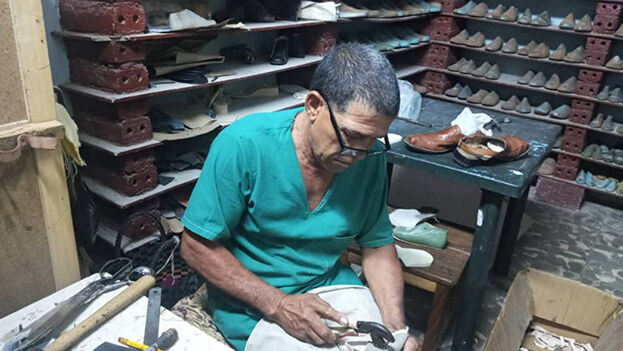
Combell operates three plants — one each in Palma Soriano, Contramaestre and Santiago de Cuba — at which it has agreed to repair Colossus-brand boots* used by the Cuban military. It has also committed to manufacturing 5,000 pairs of women’s shoes, essential components of military uniforms, notes Cabello.

However, they are in need of threads, jigs, fabrics and needles, which they also hope China will provide. This would allow them to overcome what Cabello describes as “the greatest difficulty in light industry today”: the lack of resources. Similarly, they hope a leather producer and shoe-sole maker in Villa Clara, as well as a private businesswoman who manufactures saddle sheets in Camagüey, can provide the factory with raw materials.

In addition to profits from retail sales, the goal, says Cabello, is to earn 50 million pesos from the repair and manufacture of footwear.

The shortage of materials also upended the 2022 production schedule of the Provincial Technical Orthopedics Laboratory in Camagüey, which met only 6.7% of its target. Officials laid the blame for the company’s financial difficulties squarely on the U.S. embargo.

Its shoe manufacturing business has been the most affected, explained Jorge Guerra Ruiz, the operation’s director. It was able to deliver only 164 of the 2,425 pairs of shoes it had planned to produce. It also halted production of corsets and prostheses due to a shortage of raw materials such as resin and powdered gypsum.

Guerra Ruiz said the company made prostheses from reused parts of older models and came up with other innovations thanks to the inventiveness of the National Association of Innovators and Rationalizers, and the Youth Technical Brigades.

The official press pointed to Francisco de Jesus Rodriguez, who suffers from coxarthrosis of the hip due to the shortening of one leg. He needs special footwear but has been unable to obtain it because the lab lacked the necessary materials to customize his shoes.

The money sent by China in early November, which coincided with Diaz-Canel’s “beggar’s tour” to Beijing, guaranteed school uniforms would be delivered this academic year. Facing a cash shortfall, the president of the Light Industry Business Group, Mirla Díaz Fonseca, pointed out that, without Chinese investment, it would have been impossible to distribute 1,274,000 garments to students. However, 2,153,310 uniforms are still needed throughout the island.

At the beginning of the year, Cuba promised China quarterly accounting statements to systematically monitor implementation of the agreements Díaz-Canel signed in November.

*Translator’s note: A line of footwear produced by Bata Industrials, a manufacturer of safety footwear based in the Netherlands.

____________

COLLABORATE WITH OUR WORKThe 14ymedio team is committed to practicing serious journalism that reflects Cuba’s reality in all its depth. Thank you for joining us on this long journey. We invite you to continue supporting us by becoming a member of 14ymedio now. Together we can continue transforming journalism in Cuba.
Prohibitions on Free Movement Inside and Outside Cuba are Denounced to the Human Rights Commission

The activist Anamely Ramos was not allowed to return to Cuba in February of last year, after a three-month visit to the US. (Captura)

14ymedio biggerEFE (via 14ymedio), Los Angeles, March 10, 2023 — Several Cuban activists denounced this Thursday before the Inter-American Commission on Human Rights (IACHR) the violations of the right to movement of people on the Island, as well as the ban on the return of many citizens.

The complaints of these “forced expatriations” were made on the fourth day of public hearings of the 186th session of the Inter-American Court of Human Rights (IACHR), which takes place this year in Los Angeles (California, U.S.)

The testimonies presented agreed that the right to movement of people has been one of the most violated in recent years by the authorities of the Island and has been used to repress people who participated in mass protests such as those of July 11, 2021.

The activists highlighted that, despite the fact that this right is enshrined in the 2019 Cuban Constitution, several decrees on national security have been used to limit the free movement of people, including the prohibition of departure or entry into the country of Cubans who represent “a danger,” despite the fact that there is no legal accusation against these individuals.

“It’s a tool of control to prevent the work of defending human rights in the field,” said Cuban lawyer Laritza Diversent, director and legal advisor of Cubalex, about the decrees, which also deny the issuance of passports. continue reading

The proof of the extent of these violations was the physical absence, during the hearing, of Juan Antonio Madrazo, coordinator of the Citizens’ Committee for Racial Integration of Cuba, who was not allowed to leave the country to participate in the meeting.

“There is a permanent threat that the situation may worsen if we do not comply with the police provisions that would result in criminal proceedings,” Madrazo warned through a video. He also said that these travel bans are affecting the mental and physical health of activists.

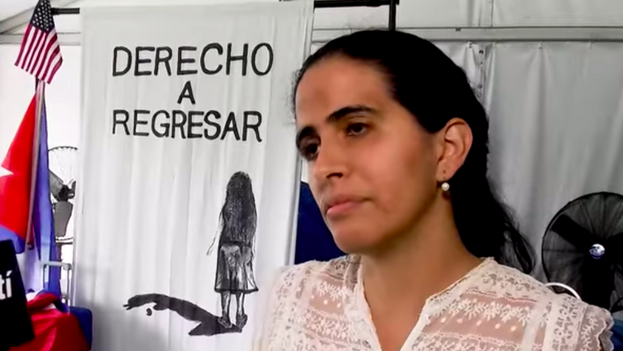
The participants denounced practices of the Cuban government to force the banishment and exile of opponents and human rights defenders, as is the case of activist Anamely Ramos, who was not allowed to return to Cuba in February last year, after a three-month visit to the United States.

In her testimony before the IACHR, Ramos said that she is in the United States “contrary to her will,” and there is no reason beyond her activism not to be allowed to return to her country.

In this sense, Soledad García, a member of the NGO Justicia 11J, referred to the expulsion of 222 Nicaraguan politicians who were removed from their country by the regime of Daniel Ortega a month ago, and stressed that although this practice has been used by the Cuban Government for decades, in the “last years it has become visible.”

Ramos, who also presented the cases of writer Carlos Manuel Álvarez and professor Omara Ruiz Urquiola — who has tried to return to Cuba four times — also drew attention to the U.S. airlines that have executed these return bans.

“The protocol that exists between the airlines and Cuba is not public, so we cannot rule out that flights to Cuba go through a political filter commissioned by the Cuban State; this must be reviewed,” Ramos urged.

The commissioners of the IACHR, an autonomous body of the Organization of American States (OAS) based in Washington, highlighted the importance of the testimonies given at the hearing because it helps them to continue with the work they are doing in defense of human rights in Cuba.

They regretted the absence of the representatives of the Cuban State at the hearing. However, they assured that they will continue to demand answers on the complaints and to process the precautionary measures.

Commissioner Edgar Stuardo Ralón Orellana called for the creation of an international protocol to help people forcibly expelled from their countries.

This Friday, the IACHR concludes a round of 17 public hearings, covering human rights that affect migrants, the LGBTI community, women, indigenous peoples, human rights defenders and journalists in the OAS member countries and the Americas as a whole.

Translated by Regina Anavy

____________

COLLABORATE WITH OUR WORKThe 14ymedio team is committed to practicing serious journalism that reflects Cuba’s reality in all its depth. Thank you for joining us on this long journey. We invite you to continue supporting us by becoming a member of 14ymedio now. Together we can continue transforming journalism in Cuba.
The Man Arrested for the Murder of a Nurse in Sancti Spiritus, Cuba, Has a History of Rape and Robbery

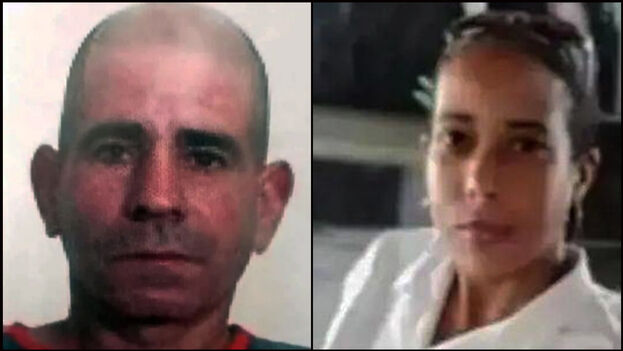
Liván Reinaldo Mora Pérez was arrested for the femicide of Vanelis Macola. (Collage)

14ymedio bigger14ymedio, Havana, 5 March 2023 — The authorities of Sancti Spíritus, Cuba, confirmed this Saturday the arrest in the municipality of Taguasco of Liván Reinaldo Mora Pérez ’El lento’, who is accused of stabbing Vanelis Macola to death on February 28 in the town of Tuinicu.

According to information offered by the Head of the Criminal Investigation Body of the Ministry of the Interior to the official newspaper Escambray, Mora Pérez has “multiple criminal priors for the crimes of threat, injury, theft, rape and robbery with force, among others.”

It is confirmed that Mora Pérez had a relationship with the victim, who worked as a nurse in the Nieves Morejón provincial prison and left an orphaned son.

The increase in femicides on the Island with a total already for 2023 of 16, “is alarming, worrying and hopeless,” said the independent feminist platform Alas Tensas. This is even more alarming because of “the immobility of the Cuban authorities.”

According to the records of the Alas Tensas Obervatory, so far a total of 32 cases were verified in 2020, followed by 36 femicides in 2021 and another 36 in 2022.

“Faced with the State’s denial of the problem, we continue to bet on the citizen response for the prevention of gender violence, specifically femicides,” said the Yo Sí Te Creo [Yes I Believe You] platform in Cuba. “This is a problem of the whole society and so we must face it.”

The demand of independent organizations and media raised the voice. Alas Tensas and its Gender Observatory have demanded that the Cuban government “declare a State of Emergency due to the growing escalation of sexist intimidation,” but so far these efforts have been unsuccessful.

Last February, the Gender Observatory denounced the lack of interest in the issue and showed that initiatives such as the Women’s Advancement Program and the Strategy have remained only as promises. “The promised Gender Violence Observatory has not yet arrived, and the [gender violence reporting phone] Line 103 has not been active for a year,” it said in a statement. “They are killing us because we lack effective protocols and prevention mechanisms in Cuba.”

Translated by Regina Anavy

____________

COLLABORATE WITH OUR WORKThe 14ymedio team is committed to practicing serious journalism that reflects Cuba’s reality in all its depth. Thank you for joining us on this long journey. We invite you to continue supporting us by becoming a member of 14ymedio now. Together we can continue transforming journalism in Cuba.

The US Opposes the ‘Forced Exile of Cuban Political Prisoners’ and Seeks ‘Ways to Welcome Them’

U.S. Undersecretary Brian Nichols, on the far left, during his speech on March 7 at Florida International University, in Miami. (Twitter/@WHAAsstSecty)

14ymedio bigger14ymedio, Miami, 10 March 2023 — “Although we firmly oppose forced exile, the United States will not turn its back on political prisoners, and if they want to come to the United States, we will explore the avenues available under US law to welcome them.” The Undersecretary of State for Western Hemisphere Affairs of the United States, Brian Nichols, expressed himself forcefully at Florida International University, in Miami, where on Tuesday he met with members of the Cuban-American community to present the policy towards the Island by the Joe Biden Administration.

In his speech, published on the website of the US Embassy in Havana this Wednesday, the official assured that “publicly — and privately in conversations with Cuban officials — the United States Government continues to call for the release of political prisoners, and we always emphasize that the Cuban people must be able to choose where to live and the Government must allow its citizens to return to Cuba.”

Nichols emphasized that “the economic situation is even worse than that of the so-called Special Period of the 90s, and the human rights situation is more bleak than it has been in decades.”

The “feeling of desperation and the longing for greater freedoms,” Nichols noted, led to the July 2021 demonstrations, which were answered by the regime “with the characteristic repression, sentencing hundreds of protesters to prison with sentences of up to 25 years.” continue reading

The repression in the almost two years since those “historic protests,” the undersecretary insists, has doubled, and “more than 700 demonstrators are among the more than 1,000 political prisoners who remain behind bars today.”

With their families and with the “dissident community” of the Island, says the official, the U.S. Embassy maintains “constant communication.” “They are a group of incredibly brave people, who face extremely difficult conditions,” praises Nichols, who outlined the two “key aspects” of the current Administration in Washington.

The first is to “promote accountability for human rights abuses,” and the second, “to explore significant ways to support the Cuban people while limiting the benefits for the Cuban regime.”

Among the first objective are the “selective sanctions against officials and security forces involved in abuses related to the July 11 [2021] protests and visa restrictions on officials involved in attempts to silence the voices of the Cuban people.”

Within the second, for example, support for “family reunification through legal migration,” alluding to the humanitarian parole launched at the beginning of this year and that, also aimed at Venezuelans, Nicaraguans and Haitians, allows up to 30,000 of those migrants to enter legally if they have a “sponsor” who supports them financially and covers their health expenses for two years. “To date, about 10,000 Cubans have successfully used the program to enter the United States,” he explains. “Cubans have benefited from all conditions, including members of the human rights community.”

Since the implementation of this permit, he explains, “the number of Cuban migrants attempting a dangerous irregular migration has plummeted.”

Nichols also referred to other measures by the Biden government, such as flights between the United States and cities outside Havana, which operate for the first time since 2019, and the elimination of the limit on remittances, whose “direct flows” resumed in November 2022, after being suspended for two years.

In addition, he stressed that they are “exploring the expansion of access to cloud-hosted services and other development tools for the Cuban people.” These tools, he explains, “will help activists and civil society connect with each other and facilitate the flow of information on and off the Island. They will also help the Cuban people to access more services, including those that circumvent censorship.”

The undersecretary had words for the current inflation and the chronic shortage of food, medicines and electricity that Cuba suffers. “The Cuban government rushes to blame others for its economic ills without recognizing the decades of mismanagement that led to the current crisis,” he said, alluding to the US embargo, which Havana waves like a flag to justify all its failures. “We continue to ask the Cuban Government to implement economic policies that improve the situation in the country, such as greater freedom for private sector agents and the much-needed agricultural reforms.”

While these measures are being applied, Nichols said, “we will continue to ask the Cuban regime to respect the human rights and fundamental freedoms of all Cubans and unconditionally release all political prisoners.”

Translated by Regina Anavy

____________

COLLABORATE WITH OUR WORKThe 14ymedio team is committed to practicing serious journalism that reflects Cuba’s reality in all its depth. Thank you for joining us on this long journey. We invite you to continue supporting us by becoming a member of 14ymedio now. Together we can continue transforming journalism in Cuba.
Cuba’s Victory over Panama in the World Classic Revives Hopes

Taiwan’s comeback against Italy was combined with Cuba’s triumph against Panama, and Cuba remains with possibilities in the World Classic. (Jit)

14ymedio bigger14ymedio, Havana, 11 March 2023 — The Cuban team “woke up” in the World Baseball Classic this Friday after beating Panama 13-4 in Taiwan and connecting with 21 hits. The performance of the national team, which could guarantee its classification in the next round of matches, was celebrated by the official press, which in recent days harshly criticized its defeats.

The offensive of the so-called Team Asere in this Classic match — held in the United States, China and Japan from March 8 to 22 — almost equals the record of 22 hits in Australia, in 2009. Cubadebate and Jit proclaimed the results of the game and noted the favorable changes in the lineup, designed by manager Armando Mandy Alonso, who replaced the players Yoenis Céspedes and Lorenzo Quintana with Roel Santos and Ariel Martínez.

Jit described the game as a “home run party” where eight of the members gave their best. Of them, seven “got at least two hits,” the magazine said, which highlighted the role of Yoan Moncada, a Major League baseball player (MLB, who hit 5-3 and boosted the advance of four other players to home). Moncada had been one of the most remarked on — along with Luis Robert Jr. — by the official media, which pointed out his poor performance in the matches against the Netherlands and Italy.

Despite the praise, the analysis of the game itself was more measured. The game was separated into two parts, according to journalist Renier González Jr., a contributor to Play-Off Magazine. Before the sixth inning, he said, the team reached the performance of the “last times,” with an “improved” selection that can compete.

Francys Romero highlighted the score of 4-4 achieved by outfielder Yadir Drake. The result placed him as the leader of Team Asere’s offensive. “He becomes the second Cuban player with 4 hits in a World Classic since Yoandy Garlobo (2006),” noted González, who said he was waiting for “other favorable results.” continue reading

At the end of the game at the Intercontinental Stadium in Taichung, Taiwan, manager Alonso appeared before the media accompanied by MLB players Yoan Moncada and Luis Robert Jr., to address the lack of results at the international level.

According to the coach, this “drought” is due to “the newest athletes at a level,” where “they are not very focused on what we want.” For Alonso, “there are baseball players who are young and perhaps do not have the mastery” of Major League players. That, he said, was the goal of the tour prior to the World Classic, in “that the boys saw throws that sometimes we don’t see in the National Series.”

The last time Cuba won a global title was in 2016, when it won the Under-15 World Cup. For this reason, the inclusion of players from international teams — especially from the MLB — has aroused the interest of thousands of followers.

Johnson put forward that they must win the confrontation with the Taiwan team and then wait for the results to see if they qualify for the next round. “The starter must be Elián Leyva. The lineup is going to be the same because, as they say, you don’t touch a winning line-up.”

The one victory that Cuba obtained this Thursday over Panama doesn’t seem enough to get excited about the classification, since this came after the comeback of Taiwan 11-7 against Italy. The Netherlands continues to lead group A of the World Classic (2-0), then Panama, Taiwan and Italy (1-1), with Cuba closing the list (1-2).

Now Cuba must win over Taiwan, but it depends above all on whether Italy continues to lose, whether the Netherlands continues to win and whether Cuba’s classification is defined against Taiwan or Panama. “All this, of course, is if Team Asere wins in its last challenge of the World Classic,” published Swing Completo.

Translated by Regina Anavy

____________

COLLABORATE WITH OUR WORKThe 14ymedio team is committed to practicing serious journalism that reflects Cuba’s reality in all its depth. Thank you for joining us on this long journey. We invite you to continue supporting us by becoming a member of 14ymedio now. Together we can continue transforming journalism in Cuba.
Cuban Singer Leoni Torres Releases ‘Corazon Roto’, Salsa With an ‘Urban Touch’

Cuban singer Leoni Torres will release his next mini album at the end of April. (MS Agency)

14ymedio bigger14ymedio, Havana, 8 March 2023 — Cuban singer and songwriter Leoni Torres released on his digital platforms the video clip Corazón roto [Broken Heart], one of the songs that will be part of his next mini album, which will be premiered at the end of April.

The singer collaborated with Raúl del Sol, Ángel Pututi, Beatriz César, Alba María Espigares Herrero and Francisco Belisel Valdivia. The video, directed by Adrián Sánchez Ávila, has received more than 175,000 views on YouTube in its first seven days of release.

Torres pointed out that the album is “completely salsa” but with “an urban touch,” and it includes collaborations with music producer Arbise González, known by his stage name as “Motiff.” “This is a new stage in my musical life,” said the 44-year-old performer, who has recently maintained a critical attitude against the Cuban government due to the crisis on the Island.

The singer has six solo albums, in addition to collaborations with renowned artists outside the Island such as Pablo Milanés, Rosario Flores, Gilberto Santa Rosa, Beatriz Luengo, Pancho Céspedes, Willy Chirino, Carlos Varela, Kelvis Ochoa and Cimafunk.

In 2017, the American Society of Composers, Authors and Publishers (Ascap) gave him the award for Best Composition of Tropical Music for his song Traidora [Traitor], performed by Marc Anthony and Gente de Zona. continue reading

His song Alma cubana [Cuban Soul] was among the nominees for the Latin Grammys of 2021, in the category of Best Traditional Tropical Album. In 2022, he was also nominated for Canten [Sing], a tribute to Polo Montañez.

Since his debut on Billboard Tropical Songs, with his song Me quedo contigo [I’m Staying with You], the Cuban singer has performed several annual concerts at the James L. Knight Center in Miami and is one of the most popular singers currently on the Island.

In May 2021, Torres was the target of an intense social media campaign by State Security for his collaboration in the song Para mi viejo [For My Father] with singer Willy Chirino, although both musicians stated that the project “had nothing to do with politics or ideologies.”

A few weeks later, the singer also showed his support for the July 11 protests and wrote on social networks at that time: “Cubans fill the streets. It’s time to listen to your people!”

At the end of that year, Torres arrived in Miami with actress Yuliet Cruz and their two children, to “establish themselves for a long time.”

Translated by Regina Anavy

____________

COLLABORATE WITH OUR WORKThe 14ymedio team is committed to practicing serious journalism that reflects Cuba’s reality in all its depth. Thank you for joining us on this long journey. We invite you to continue supporting us by becoming a member of 14ymedio now. Together we can continue transforming journalism in Cuba.
Nancy Pena Denounced her Ex-Partner and He Killed Her Four Days Later

Nancy Peña, 49, was murdered by her ex-partner last Sunday at her home. (Facebook/Nancy Peña)

14ymedio bigger14ymedio, Havana, 9 March 9, 2023 — Nancy Peña’s is the first femicide recorded in Cuba in March. The 49-year-old woman was murdered by her ex-partner last Sunday at her home in the Alcides Pino People’s Council, in Holguín, according to CubaNet.

She herself, the independent newspaper documents, had published on social networks her fear that something would happen to her. “I feel threatened by a man,” Peña wrote on March 1, saying she wrote it “in case something happens to me,” since she had reported it to the police and the individual had not been arrested. “What a country I live in, that doesn’t care about the life of a Cuban citizen,” she lamented.

A friend of the victim told CubaNet that the killer, who used a knife and had previously assaulted Peña, waited for her son to leave the house to attack her, and that he also stabbed a neighbor who was talking to her. “Nancy was killed simply because she didn’t want to continue with him, as if he owned her, and the neighbor because he was unlucky enough to be there,” the source told the media.

So far in 2023, there have been 17 women killed at the hands of their partner, ex-partner or sexual aggressors, according to the reports on independent platforms and media, in the absence of official data.

On March 5, authorities reported the arrest of Liván Reinaldo Mora Pérez, accused of stabbing Vanelis Macola to death, on February 28, in the town of Tuinicú, in Sancti Spíritus. According to the official newspaper Escambray, the detainee had “multiple criminal offenses for the crimes of threat, injury, theft, rape, robbery with force, among others.”

At the beginning of this month, the organization Yo Sí Te Creo [Yes, I Believe You] in Cuba had identified Isabel Rodríguez Díaz as the victim of a femicide that took place  on February 11 in Camagüey. continue reading

On March 8, when International Women’s Day was commemorated around the world, the group of activists who planned to hold a peaceful demonstration had to protest in silence.

The National Assembly did not accept the letter sent to them by the women, and some of them were later harassed by State Security and detained. Two initiatives did take place: wearing a black ribbon on the wrist as a sign of mourning and a “virtual March” to continue asking the Government to protect women.

Translated by Regina Anavy

____________

COLLABORATE WITH OUR WORKThe 14ymedio team is committed to practicing serious journalism that reflects Cuba’s reality in all its depth. Thank you for joining us on this long journey. We invite you to continue supporting us by becoming a member of 14ymedio now. Together we can continue transforming journalism in Cuba.
The United States Offers 20 Scholarships to Promote Business Projects Led by Women in Cuba

According to Jiménez, the launch of the first AWE course on the Island caused a controversy, as several independent media accused the first promotion of seeking ways to leave the country. (Screen capture)

14ymedio bigger14ymedio, Havana, 11 March 2023 — On Thursday, the US State Department launched the call for a free online entrepreneurship course promoted by the Academy for Women Entrepreneurs (AWE). It is the second time that this program has been launched in Cuba, with the support of the US Embassy in Havana, and its objective is to advise on “the development of business projects that are led by women.”

Twenty women from all over the Island, chosen by the Heroikka Association — a Spanish company dedicated to women’s “empowerment” — will enjoy the educational resources offered by AWE, the advice of mentors and communication with other women entrepreneurs through the “existing exchange programs.”

According to the call, AWE is part of the Initiative for Women’s Development and Global Prosperity, conceived by Washington so that 50 million women “around the world by 2025” can reach their “economic potential,” “stability, security and prosperity.” The application forms are open from March 7 to 28.

One of the beneficiaries of the first launch of the program, the entrepreneur and journalist from Villa Clara, Yinet Jiménez, posted a video at the end of 2022 about the characteristics of the AWE course and pointed out that the program would be carried out by the Thunderbird Business School in the United States, under a program called DreamBuilder.

Among the participants in the first course of AWE are project managers such as Humidores Duyos, which offers boxes for storing tobacco to embassies and companies, the El Bazar de Tito store, La Casa del Jabón, the Casa Dagda hostel, the Decoluz handmade lamp store and the audiovisual company Wajiros Films.

According to Jiménez, the launch of the first AWE course on the Island caused a controversy, since several independent media accused the participants in the first program of looking for ways to leave the country through the resources of the State Department, when the call specified that it was an online course. continue reading

In addition, AWE’s support was looked at with suspicion by the Cuban Government, which has limited the options of the private sector and closed numerous initiatives. Jiménez herself, who runs a YouTube channel and had a small advertising advisory agency, ended up going into exile in Montevideo, Uruguay, at the end of 2022.

Other U.S.-based institutions have offered opportunities to both Cubans living on the Island and exiles. This is the case of the Cuban American Alliance for Leadership and Education scholarship, also called Pinos Nuevos, which offers $10,000 to students born on the Island or descendants of Cubans for university studies.

Translated by Regina Anavy

____________

COLLABORATE WITH OUR WORKThe 14ymedio team is committed to practicing serious journalism that reflects Cuba’s reality in all its depth. Thank you for joining us on this long journey. We invite you to continue supporting us by becoming a member of 14ymedio now. Together we can continue transforming journalism in Cuba.