
2021 in Cuba, Goodbye to the Revolutionary Mask

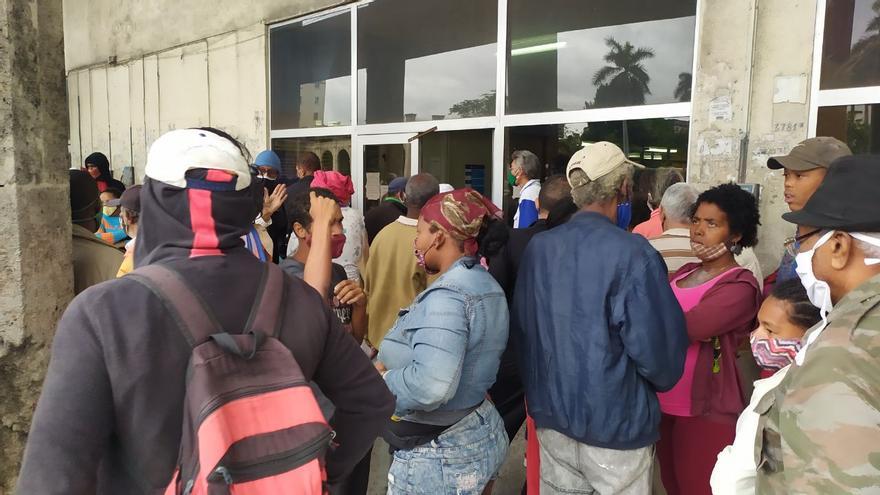
Many lost patience to invest, prosper, and chart their dreams in Cuba. A quarter of a century lost for true change. (EFE)

14ymedio bigger14ymedio, Yoani Sanchez, Generation Y, Havana, 31 December 2020 – Cuba is going through a very difficult time. What is problematic this December lies not only in the economic crisis expressed in an 11% fall in the gross domestic product, nor is it entirely due to the confinement and pain imposed by the pandemic. The year 2020 says goodbye in dark hues for the Island, particularly in the uncertainty, the inability of its 11 million inhabitants to make plans for their near and medium term future.

In the face of this description, some will respond that there have been worse moments in our recent history. However, in the so-called Special Period of the 1990s — when the cutting off of the Soviet subsidy was followed by long blackouts, cuts in transport and food shortages — there were reserves of change that gave hope to the reformists and nurtured citizens’ dreams. In the midst of the collapse, there was a feeling that some political decisions taken in high places could unblock the productive forces and bring material relief to the people. There were even those who fantasized about a popular revolt that would finally bury, once and for all, the authoritarian model.

Although the only insurrection that occurred was that of thousands of desperate Cubans who tried to escape from the island during the day of the popular uprising known as the Maleconazo, those who bet on the long-awaited economic easing were not wrong. When the situation reached rock bottom, some of these transformations were a bitter pill that the ruling party had to accept: the dollarization of trade, the permission for agricultural markets to exist outside the ration system, the authorization to exercise private work, and the opening to foreign investment. For the first time in a long time, onions were once again seen on the market stands, private taxis filled the streets, and in restaurants run by the self-employed, known as paladares, some lost recipes from the national cuisine were recovered. continue reading

Now, unlike then, the capacity of Castroism to transform itself without breaking completely is very limited, almost nil. The system reaches 62 years of existence fossilized in its political core, lacking ideological magnetism to attract new followers and having wasted its wealth of reforms in half-done modifications, lukewarm transformations and steps that once looked forward but had to be turned back. In the time that separates both crises, the one caused by the collapse of the socialist camp in Eastern Europe and the current one, many lost the patience to invest, prosper and chart their dreams in Cuba. A quarter of a century lost for true change.

Today, up against the ropes, the authorities have proposed a package of measures to try to re-float the country in 2021, but so far the announced decisions are oriented more to the loss of subsidies and the cutting of budgets than to the deployment of formulas that promote entrepreneurship, trim nationalization and remove partisan politics from central decision-making. Because to do any of those things would seriously endanger the continuity of Castroism, although not doing them is also anticipating the date for its funeral.

Reactionary and immobile, fearful of news and distrustful of everything that has not come out of the laboratories of the Communist Party, all that remains of the current Cuban model is to repress. For the coming year it will finally set aside its mask of revolution and social justice to show itself as it is: a twentieth century dictatorship that geopolitics, chance and fear have allowed to get this far. Without results, all it has left to show is its teeth, and that further complicates any prognosis.

________________________

This text was originally published  in Deutsche Welle for Latin America.

____________

COLLABORATE WITH OUR WORK: The 14ymedio team is committed to practicing serious journalism that reflects Cuba’s reality in all its depth. Thank you for joining us on this long journey. We invite you to continue supporting us by becoming a member of 14ymedio now. Together we can continue transforming journalism in Cuba.
The Perfect Storm: San Isidro and Currency Unification

“You cannot do currency reform without providing goods and services. The viability of any currency is decided in the marketplace, not in some bureaucrat’s office,” asserts Jorge Hernandez Fonseca. (14ymedio)

14ymedio bigger14ymedio, Jorge Hernández Fonseca, Havana, 27 December 2020 — The abolition of the Cuba’s dual currency system is, as we all know, essential to the development of a healthy economy on island. It is a reform the Communist nomenklatura has said it will adopt but which it is reluctant to undertake for fear of losing the political power it holds by force. Nevertheless, the Castro regime decided to go ahead with the so-called “ordering task” at the worst possible moment for the economy. It did so to play down and distract attention from the government’s reaction to a grassroots movement which has sprung up spontaneously in opposition to the dictatorship. This has only added fuel to an already out-of-control wildfire: rebellion.

You cannot do currency reform without providing goods and services. The viability of any currency is decided in the marketplace, not in some bureaucrat’s office. In essence, the market is about supply and demand for goods and services, exactly what universal socialism cannot provide. There can be no “ordering” possible without first offering goods and services. However, the problems caused by the government’s attempts to suppress the San Isidro Movement and clumsy public missteps by top officials of the Ministry of Culture have continued unabated.* The disruptions brought about by the ordering task will have dire consequences when chaos and disorder increase in 2021.

Additionally, there is the underappreciated level of expectation in Havana in regards to support the the regime might receive from the incoming American administration. In any case, economic support will not be forthcoming during first phase of a new relationship with the Biden administration, which will be faced with both repression in the streets of Havana and chaos caused by a disorderly currency unification process in an economy with few goods or services. This creates a situation in which the most vulnerable sectors of society — retirees, the elderly and the underprivileged — will undoubtedly suffer the most harm. continue reading

It is clear that, for a variety of reasons, the bipartisan establishment in the U.S. is not interested in defeating and replacing the Cuban dictatorship right now. However, the disorder that the island’s own authorities have planned for the beginning of next year could jeopardize this stance. One thing the American establishment does value is the island’s stability, which could be threatened by the perfect storm of political challenges posed by the San Isidro Movement and the economic disruption Cuban officials have planned.

For the first twenty days of January the U.S. government will still be led by Donald Trump, who will not hesitate to react forcefully to any possible violations of civil and political rights which the Cuban regime refuses to respect. In the event of blatantly repressive moves, the new Biden administration will be forced to take action against the regime. Civil recognition is one thing but support for a repressive dictatorship in full attack mode against a people without food or freedom who are demanding their rights is quite another.

*Translator’s note: The San Isidro Movement (MSI) begin in September 2018 as a protest against state censorship of artistic works and has become a platform for Cuban dissidents both at home and abroad. In November 300 MSI members and supporters, surrounded by police, demonstrated outside the Ministry of Culture, demanding dialogue with its vice-minister, who met with them for five hours.

____________

COLLABORATE WITH OUR WORK: The 14ymedio team is committed to practicing serious journalism that reflects Cuba’s reality in all its depth. Thank you for joining us on this long journey. We invite you to continue supporting us by becoming a member of 14ymedio now. Together we can continue transforming journalism in Cuba.
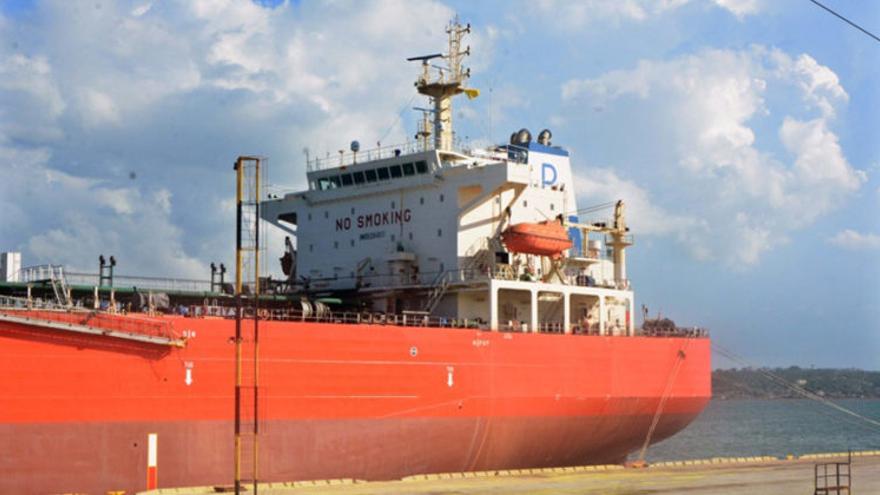
The Russian Ship ‘Alicia’ Participates in Cuba’s ‘Looting’ of Venezuelan Oil

The oil tanker ‘Alicia’ was renamed after the legendary Cuban dancer Alicia Alonso last year. (Trabajadores)

14ymedio bigger14ymedio, Havana, 29 December 2020 — On Tuesday the Alicia, an oil tanker with a Cuban flag but owned by a Russian company, is heading to the Venezuelan refinery in Amuay on its usual route to bring fuel to the island. It is not the only cargo ship that will bring supplies from the partner country of the Cuban regime. The Sandino, which left Cienfuegos on the 22nd, is heading to the same port.

The operation is one more among the usual crude transfers between  the allied countries as denounced this Monday by Julio Borges, commissioner for Foreign Relations of the Government of Juan Guaidó, recognized by more than 50 countries. The politician assured that Venezuela’s Chavismo regime delivers up to 10% of the country’s daily oil production to the Cuban regime.

“Despite the PDVSA (state oil company) crisis, Nicolás Maduro delivers up to 10% of our daily oil production to Cuba,” Guaidó wrote on Twitter.

Borges, who is exiled in Colombia, cried out against Maduro for what he considers “one more example of his submission to Castroism” and expressed his annoyance in another message on the social network. continue reading

“Outrageous! Yesterday the tanker Alicia arrived in Amuay, a ship operated by a Russian company that transports crude oil to Havana. It is the second trip of that ship this month,” he said, without knowing that, probably at same time, the Sandino is also on its way to his country to load oil destined for Cuba.

The information was provided on Monday night by the oil expert Armand Delon, who gave the position of the ship and stated that on December 18 the Sandino left Puerto de La Cruz with 390,000 barrels of crude “for the sanctioned military mafias Cubametales/Cupet.”

For Delon, who also asked his followers not to confuse Cubans who support the regime with the “majority” that is against the two dictatorships, this continuous coming and going of ships reflects that both governments are mocking US sanctions that prevent them from trading.

According to the Venezuelan press, gasoline consumption has increased in Venezuela in the last month by 20,000 barrels per day and PDVSA’s production amounts to between 70,000 and 80,000. In the previous months, when Venezuelans were in quarantine, consumption was about 130,000 barrels a day; in December, with a certain normalization of life, 150,000 are being consumed, according to the figures of the Oil Chamber of Venezuela.

“The world and Venezuelans must join forces to stop this looting,” said Borges, alarmed by the possibility that shortages continue to increase in Venezuela as crude oil is given away to Cuba.

In September, seven ships left the Caribbean country bound for Cuba. At the beginning of October another two joined, Ícaro and Sandino, the latter, in particular, has loaded in Venezuelan refineries to return to the island every month since July.

Both the Alicia and the Sandino are owned by Caroil Transport Marine LTD, a company registered in Cyprus and under the control of the brother of Brigadier General Luis Alberto Rodríguez López-Callejas, member of the Central Committee of the Communist Party of Cuba, head of the V Department of the Revolutionary Armed Forces (FAR) and director of Gaesa, the economic emporium of the island’s military. He is particularly affected by individual sanctions, but also by Caroil Transport Marine LTD itself, which, nevertheless, has spent the whole year bringing crude from Venezuela, including some supplied by Iran, a country also affected by being on the United States Foreign Assets Control (Ofac) list.

The tanker Alicia, formerly known as the Kriti Amber, was renamed in honor of Cuba’s late prima ballerina Alicia Alonso. Previously, the ship also received the names Oriental Emerald and Ocean Globe. It was built at the SLS Heavy Industries shipyard, (Busan, South Korea), has been operating since 2005, and is currently owned by the Russian company Sovcomflot.

____________

COLLABORATE WITH OUR WORK: The 14ymedio team is committed to practicing serious journalism that reflects Cuba’s reality in all its depth. Thank you for joining us on this long journey. We invite you to continue supporting us by becoming a member of 14ymedio now. Together we can continue transforming journalism in Cuba.
Among the Lines / Regina Coyula

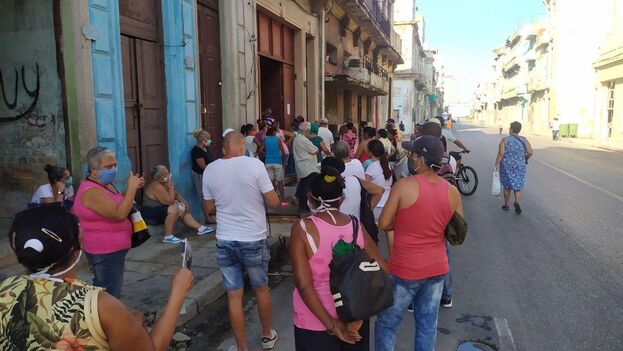
Cubans routinely spend hours a day standing in lines. (14ymedio)

Regina Coyula, 27 December 2020 — “Among lawyers you see yourself,” that curse from the movies, would be readapted for Cuba as “Among the lines you see yourself,” exact, comprehensive.

I’m going through paperwork, a brutal exit after the isolation of the pandemic. But in addition to the exercise of patience, long hours of waiting are much better than Granma* or Cuba Dice*, as the states of opinion go.

After the first hours, the complicity of suffering the transitory common destination of the solution (or not) of the procedure, no longer cautious, the irritation, discontent and suspicion faced by the advent of 2021 emerge.

The new prices take up far more space than the wage increases; one does not have to be a mathematician or an economist, everyone who complained in my line at the Civil Registry — which was not a few — assumed that life was not just paying for food and energy, and that those normal extras are clearly not a problem for those who “ordered” the “Ordering Task” [Tarea Ordenamiento**].

I saw serious doubts with the phrase “no one will be left homeless,” as more than one case of continued homelessness was narrated in the line.

As always in Cuba, the jokes, now also in the form of memes, were shared with that ability to laugh at our misfortune, an escape valve also to wow “all those leaders who appear on television whose appearances deny any food difficulties.”

As a background note: in that line of anxious people, and in those at the fosca Bank, the currency exchange, the ration store at N and 21, the Coppelia ice cream parlor, the agricultural markets at 17 and K and at 26 and 41, the foreign currency store at 12 and Linea and State TRD chain store at La Mariposa, the 12 and 25 market, the former Pain de Paris at 26 and Kohly, and on the A27 bus; social distancing is an entelechy, something that, like the general discontent, television journalists fail to capture for their year-end triumphalism.

Translator’s notes:
* State newspapers.
**The so-called “Ordering” or “Statutory” Task will begin to be implemented on 1 January 2021 with the elimination of Cuba’s dual currency system, the revaluing of the Cuban peso, increases in pensions, wages and prices, and other actions.

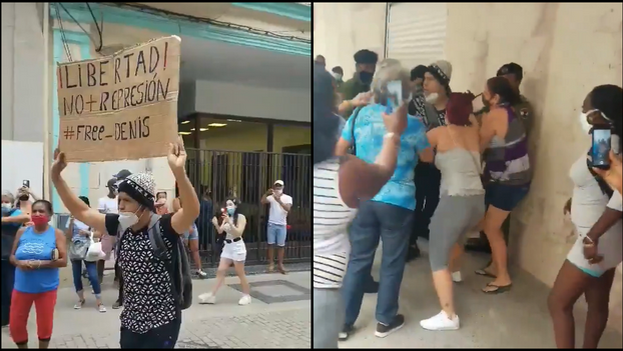
Luis Robles, the Young Man Who Peacefully Protested With a Poster In Havana Vieja Who is Under Arrest / Cubalex

Luis Robles Elizastigui protesting in Havana against the imprisonment of the rapper Denis Solis

Cubalex, 16 December 2020  — On December 5th, Luis Robles Eliazastegui demonstrated in Blvd. San Rafael in central Havana. Various people videoed his protest and also the moment in which police officers arrested him without any opposition or resistance on his part.

According to information we have received he has been held at the State Security headquarters in Havana, known as Villa Marista, accused of disregard of the legally-constituted Authority and of terrorism. In Article 56 of the present Constitution, the state recognises the right to licit and peaceful protest, which does not breach public order and accords with established legal precepts.

The right to protest  is an element of freedom of expression, but in Cuba it is criminalised in relation to those who criticise the government. But, on a discretional basis, the Penal Code considers participation in protests to be an offence against public order if there is infringement of the regulations pertaining to the exercise of such rights. continue reading

To date, there is no law which protects our right to demonstrate. Nor are there legal or administrative procedures for notifying or requesting authorisation for a demonstration, nor legal mechanisms for appealing against decisions to deny permission for a demonstration. While it is clear that the exercise of human rights may be restricted in order to safeguard public order and the general wellbeing of a democratic society, it is not acceptable in international law to impose restrictions on human rights based solely upon motives of discrimination.

Discretionally, and based upon political motives, demonstrations in defence of government ideology are permitted, such as in the case of Trillo Park a few days ago, and this constitutes discrimination institutionalised by political motives.

We would remind the Cuban government that no state or group of people is permitted to undertake or develop activities or take actions intended to suppress any of the rights or liberties recognised in the Universal Declaration of Human Rights. We demand the immediate release of Luis Robles Eliazasteguis.

Translated by GH

What Are the Guarantees of Due Process in Cuba? / Cubalex

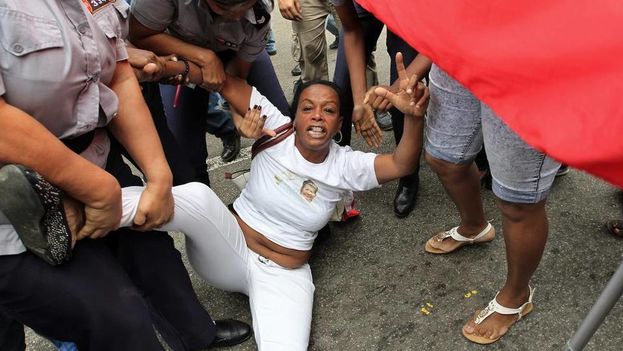
Arrest of a member of the Ladies in White in Havana. (EFE)

Cubalex, 24 December 2020 — A person’s right not to be subject to torture and other forms of treatment is connected with the right not to be required to self-incriminate or to confess guilt. This right extends to any form of exercise of duress.

Rights before and during interrogation

To be informed of the basis upon which one is considered to have committed an offence covered by the criminal code (section f, Art. 95 of the Constitution).

To remain silent, without such silence being construed as a determinant of one’s innocence or guilt.

To be advised that anything that the accused may say may be taken down and used as evidence.

That a spouse, partner or relative extending as far as the fourth degree of consanguinity and second degree of affinity; (section e, Art. 95 of the Constitution) may not give evidence against them. continue reading

The right to a lawyer of their choice, or officially provided without charge, and to be questioned in their presence, unless they have previously rejected such assistance (section b, Art 95 of the Constitution).

To enjoy the assistance of an interpreter.

That all persons present at an interrogation shall be identified.

That a true and complete record is to be kept of any interrogation, preferably in audio and video form.

The right to medical examination and services.

Translated by GH

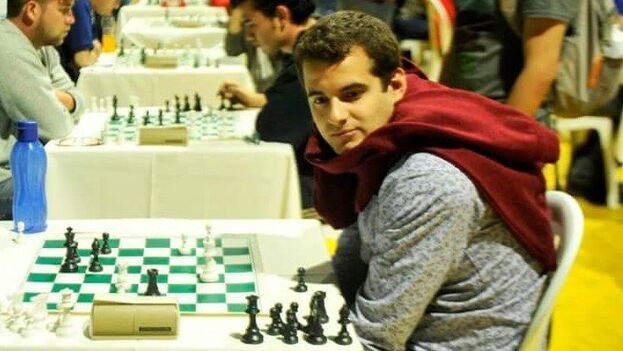
14ymedio’s 2020 Faces: Roberto G. Pantoja, Chess Grandmaster

Pantoja was removed for denouncing the non-payment of the ‘stimulus’ that was owed to him as a Chess Grandmaster. (Asere)

14ymedio bigger14ymedio, Havana, 28 December 2020 — Cuban Grandmaster (GM) Roberto García Pantoja made news in 2020 beyond his triumphs on the board. On June 29, the chess player denounced on his Facebook wall that the National Institute of Sports, Physical Education and Recreation (Inder) had not made the payment of 100 CUC that was owed to him for nine months for being a GM.

Far from rectifying the error and paying him what he is owed, the Inder summoned him to a disciplinary court, where they reproached him for making his case public through social networks.

The president of the Cuban Chess Federation, Carlos Rivero González, even published a letter in which he said that the Grandmaster faced an “open process” for various “indisciplines,” and that no athlete in that case can be approved a “stimulation” to receive payments.

In response, Pantoja, who had already mentioned that his case was not the only one, requested his separation from the Federation.

Cuban chess thus suffered the loss of another Grandmaster, adding to others who emigrated and now play under the flag of other countries, such as Lázaro Bruzón, Leinier Domínguez Pérez and Yuniesky Quesada.
Several chess players on the island, did express solidarity with Pantoja. This was the case of Yuri González Vidal, winner of the national championship in 2018, and Yusnel Bacallao, the second best Cuban player in the international ranking, who withdrew in protest from the World Chess Olympiad.

See more 14ymedio’s series Faces of 2020

____________

COLLABORATE WITH OUR WORK: The 14ymedio team is committed to practicing serious journalism that reflects Cuba’s reality in all its depth. Thank you for joining us on this long journey. We invite you to continue supporting us by becoming a member of 14ymedio now. Together we can continue transforming journalism in Cuba.
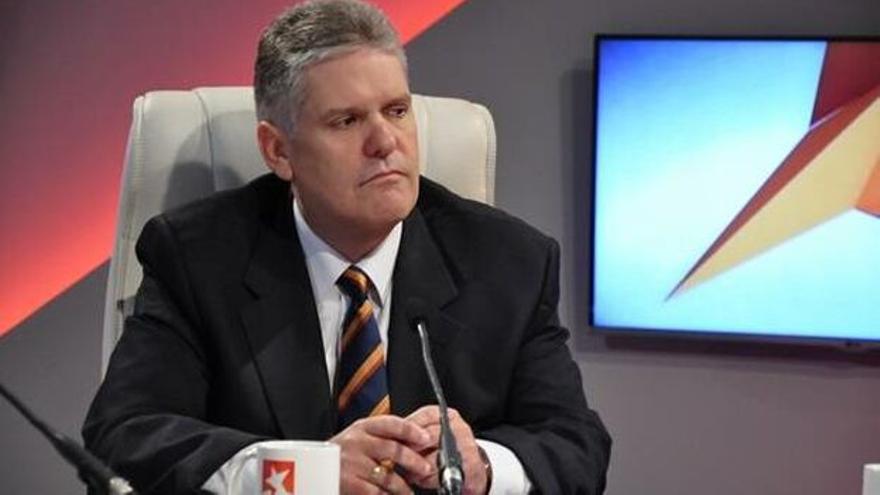
14ymedio’s Faces of 2020: Alejandro Gil, Minister of Economy

Alejandro Gil, Minister of Economy, in one of his many appearances on the Roundtable TV program.

14ymedio bigger14ymedio, Havana, 26 December 2020 — Almost unknown when Miguel Díaz-Canel appointed him Minister of Economy and Planning of Cuba, he has become a key man on the island in a year in which the pandemic has finished sinking an economy that was already in a coma.

Of the same generation as the president, Alejandro Gil has always been a civil servant and held the position of vice minister when the octogenarian Ricardo Cabrisas was in charge of the portfolio.

From his personal life it is known that he is the brother of Cuban television presenter Vicky Gil, now a resident of Spain, who has described the minister in his social networks as “a brilliant, simple, dedicated, studious, intelligent and self-sacrificing man” who “lives with his family in the same dilapidated apartment as always. He does not benefit from his position. He only lives to work and to support a dying economy. He changed his life of privilege in England as manager of the mixed company Seguros Caudal to return to Cuba and work from dawn to dusk without perks or comforts. “

Whether or not this is the case, Cubans have seen him recite the official discourse without any news of the great deal that could be expected for a man at the helm of the economy at a key moment. The most far-reaching reforms carried out this year, with monetary unification at the head, have been reserved for Marino Murillo, while he has been in charge of minimizing criticism of the expansion of foreign currency stores, which since this year sell food and personal hygiene and cleaning products, to the annoyance of citizens.

In May he dared to spill the beans at a meeting of the Council of Ministers in which he admitted the seriousness of the crisis. His words were picked up by the official press, which was forced to withdraw the article, letting the orthodox version of avoiding pessimism prevail.

See more 14ymedio’s series Faces of 2020

____________

COLLABORATE WITH OUR WORK: The 14ymedio team is committed to practicing serious journalism that reflects Cuba’s reality in all its depth. Thank you for joining us on this long journey. We invite you to continue supporting us by becoming a member of 14ymedio now. Together we can continue transforming journalism in Cuba.
14ymedio’s Faces of 2020: Ruhama Fernández, Youtuber

The young ‘youtuber’ Ruhama Fernández knew that she was banned from leaving the country when she went to get her passport. (Facebook/Ruhama Fernández)

14ymedio biggerRuhama Fernández became known in March, when she won the contest for influencers organized by the ‘Red Cuban Power’ platform, in the category “future society, dreams for Cuba.”

On her YouTube channel, the 21-year-old former medical student from Santiago de Cuba talks about political and social issues, always from a critical point of view towards the regime.

After winning the award she was a victim of harassment by State Security. Just one month later, she was summoned by the police in her hometown and, in July, the authorities forced the interruption of the internet service she received through an informal network managed by one of her neighbors. The police visited the neighbor and threatened to cancel all her service if she continued to facilitate the connection for Fernández.

When she went to get her passport to travel to the United States, where her parents live, in August, she discovered that she is regulated – the island’s authorities euphemism for being banned from traveling – for reasons of “public interest” and was prohibited from leaving the country.

In recent months, the authorities have continued to summon her frequently. In one of her last interrogations, in early November, she reported that a State Security officer sexually harassed her. “Do you know how beautiful you are to be involved in that?” the agent told her, Fernández said, disgusted.
Her case, reported by the independent media, was put forward by Human Rights Watch (HRW) as an example of the harassment to which the Cuban government is subjecting influencers , who have become a new target of repression on the island.

See more 14ymedio’s series Faces of 2020

____________

COLLABORATE WITH OUR WORK: The 14ymedio team is committed to practicing serious journalism that reflects Cuba’s reality in all its depth. Thank you for joining us on this long journey. We invite you to continue supporting us by becoming a member of 14ymedio now. Together we can continue transforming journalism in Cuba.
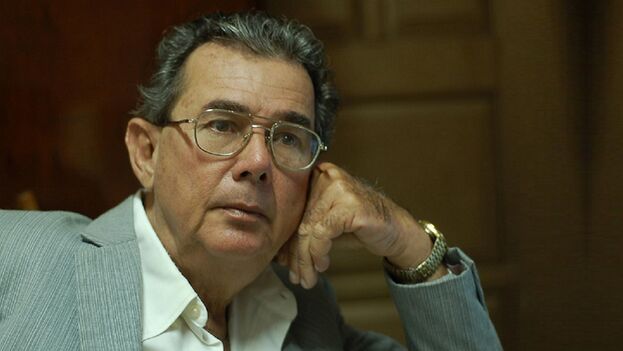
14ymedio’s Faces of 2020: Pedro Junco, Writer from Camaguey

Pedro Junco López was expelled from the Cuban Writers and Artists Union in August (Courtesy)

14ymedio biggerPedro Armando Junco (b. Camagüey, 1947), was one of the most successful writers and intellectuals in Cuba. But as he became more belligerent in his political demonstrations, his luck changed, to the point of being expelled from the Union of Writers and Artists of Cuba (Uneac), to which he had belonged for dozens of years and which had distinguished him with the National David Prize in 1987 for his book La furia de los vientos (The Fury of the Winds).

As early as 2015, Junco began to commit himself with more of an emphasis on politics. That year, his son, the rocker Pedro Mandy Junco, was murdered in an unfortunate event that led the author to become involved in a campaign in favor of tougher penalties for this type of crime in Cuba.

But the radical change came this year, when he addressed an open letter to Miguel Díaz-Canel in which he lamented the sale of food and hygiene products in stores in freely convertible currency and claimed the right to question political decisions without being branded as enemy, as should happen in a democratic country.

The text annoyed, according to the author, due to its wide repercussions, which led to his expulsion from Uneac. But that was only the first step. Junco then began to sponsor a literary club that was held in August and September, not without problems, since in the second meeting a woman participant backed out, a sign that the intellectual did not know and did not want to see.

The suspension of the third meeting was already accomplished. An official telephoned one of the guests to warn him that it was best not to attend. Although Junco decided to go ahead, he was summoned by the authorities and told that the event was not going to take place. A new demonstration that censorship does not stop even with those who once were the standard bearers of culture.

See more 14ymedio’s series Faces of 2020

____________

COLLABORATE WITH OUR WORK: The 14ymedio team is committed to practicing serious journalism that reflects Cuba’s reality in all its depth. Thank you for joining us on this long journey. We invite you to continue supporting us by becoming a member of 14ymedio now. Together we can continue transforming journalism in Cuba.

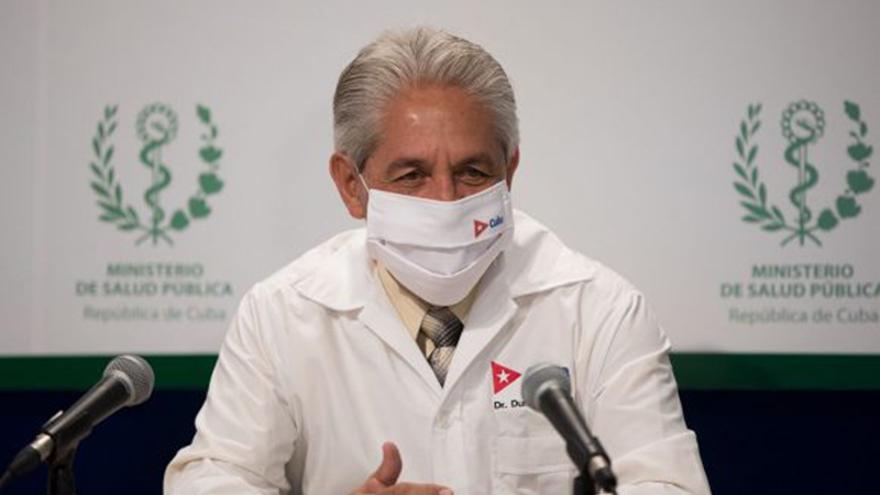
14ymedio’s Faces of 2020: Francisco Duran, Director of Epidemiology

Francisco Durán has been the visible face of Covid in Cuba, as well as the strategist of epidemiological decisions.

14ymedio bigger14ymedio, Havana, 26 December 2020 — Originally from Santiago de Cuba, the person in charge of leading the response to Covid-19 in Cuba seemed predestined to be a doctor by family tradition, since he is the son of a psychiatrist and a stomatologist.

He graduated in Medicine in Havana in 1975 and began his professional work at the Military Hospital of Camagüey, although it was not until 1980 that he began to specialize in the field that he commands today. Then he began his work in the Provincial Budget Unit of Hygiene and Epidemiology in Santiago de Cuba, where he ended up being the deputy director.

In 1991 he took charge of the AIDS Sanatorium, and in 1994 he was appointed rector of the Higher Institute of Medical Sciences of the Province of Santiago de Cuba, of which he was the director of Health until 2014. In 2018 he was elected national director of Epidemiology of the Ministry, which has led him to be  the person responsible and the visible face of the fight against the pandemic on the Island.

With Durán at the helm, Cuba has managed to successfully emerge from a disease that has cost the lives of millions of people arund the world, according to some experts due to a combination of factors that especially relate to prevention rather than the treatment of those affected. The widespread primary care, epidemiological surveillance, the early closure of borders and the ease of limiting public liberties have contributed to the good official data.

On the negative side, Durán has had to face criticism from those who have rejected his constant appeals to responsibility and individual fault in a public health problem.

See more 14ymedio’s series Faces of 2020

____________

COLLABORATE WITH OUR WORK: The 14ymedio team is committed to practicing serious journalism that reflects Cuba’s reality in all its depth. Thank you for joining us on this long journey. We invite you to continue supporting us by becoming a member of 14ymedio now. Together we can continue transforming journalism in Cuba.
Pork Available with Ration Book, Stamp and ID Card

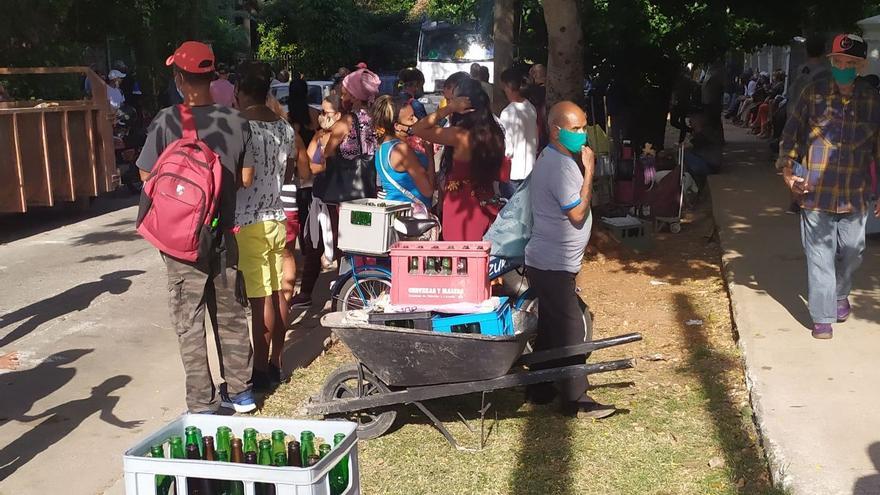
A line in Havana on Tuesday to buy pork. (14ymedio)

14ymedio bigger14ymedio, Luz Escobar, Havana, December 23, 2020 — “Three hours in line for a couple of pounds of pork is crazy. I have never waited in line to buy pork. They used to bring it to my house from Cienfuegos but, since the pandemic started, not anymore,” laments Teresa Crespo on Monday afternoon before she left the line at the market on 17th and K streets in Vedado where, for three days, the state has been selling the product there for forty pesos a pound.

“I waited in line because this year I wanted to have a proper [holiday] meal and there’s no other way to do that. You have to bring your ration book and your ID card. And when you buy it, they stamp your hand so you can’t come back and buy more,” she said.

The coordinator of provincial government programs, Julio Martinez, admitted to official media outlets that, although they are “very far from meeting public demand” they have created various networks to sell fresh and smoked pork, cured sausages, other meats, frozen fish and “a level of beer” in a controlled way. continue reading

He also said the items could be purchased from December 20th to 31st, from 9:00 AM to 6:00 PM, “in an unrestricted but controlled manner,” Buyers are required to present a ration book and ID card. The goal, he said, is to limit each household to one purchase in order to avoid hoarding.

With Christmas and New Year’s Eve just around the corner and the country facing severe food shortages, many family members leave home early in the morning in search of these commodities, hoping to get them before supplies run out. In some neighborhoods people wait in lines several kilometers long.

“The worst thing about it is I get in line without a guarantee that I’ll even be able to buy anything,” says one customer. “It’s nerve wracking. My neighbor waited in line for four hours and left empty-handed.”

The situation is the same in neighborhoods throughout the city, including Central Havana. “At the moment I’m in a line that’s full of police and they don’t allow photos. But it’s very crowded. They’re also giving out cases of beer but you have to return the empty bottles,” a young man told this reporter.

“Before, if you wanted to buy something at this price, between forty and forty-five pesos, all you had to do was go to the market and, presto, the meat was in your bag, ready to take home. Not anymore. Now you have to wait in a very long line,” says a retiree from the same area.

“What’s bad for me is that they’re not selling it at neighborhood stores. They’ve set up a couple of places in different areas and it’s difficult for older people who live alone to get there to buy it,” the woman said.

____________

COLLABORATE WITH OUR WORK: The 14ymedio team is committed to practicing serious journalism that reflects Cuba’s reality in all its depth. Thank you for joining us on this long journey. We invite you to continue supporting us by becoming a member of 14ymedio now. Together we can continue transforming journalism in Cuba.
Reporters Without Borders: Cuba 2020

Constant ordeal for independent media. (Reporters Without Borders)

Reporters Without Borders, December 2020 — A self-styled socialist republic and one-party state, Cuba has continued year after year to be Latin America’s worst media freedom violator. Miguel Díaz-Canel’s election as president in April 2018, after 59 years of repression under the Castro family, has made no difference. The regime maintains an almost total media monopoly and the constitution prohibits privately-owned media.

The few Cuban bloggers and independent journalists are threatened by the government and watched by security agents, who often take them in for questioning and delete information in their devices. Journalists regarded as especially troublesome are often arrested and jailed.

The authorities also control the coverage of foreign reporters by granting accreditation selectively and expelling those regarded as too “negative” about the government. The gradual improvement in Internet access nonetheless constitutes grounds for hope about the future of press freedom in Cuba.

Cuban Police Seize Seven Tons of Meat Products in an Illegal Mini-industry in Matanzas

The supplier of the business was a driver from the Construction Services Company in Varadero. (Screen capture)

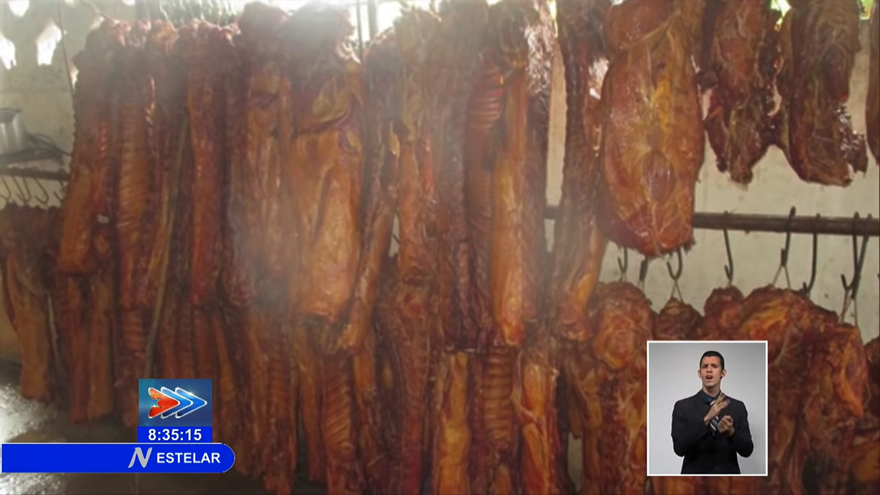
14ymedio bigger14ymedio, Havna, 25 December 2020 — A mini-industry that was dedicated to the sale of meat and the production of sausages was dismantled by the police in the municipality of Jovellanos in the province of Matanzas, according to Cuban Television. In the operation, seven tons of meat products were seized.

The supplier of the business was a driver from the Construction Services Company in Varadero who is in provisional prison. The objective of the precautionary measure is to find others involved in the criminal network, the official media reported.

Although no details were given about the owners of the mini-industry or how many people worked there, it was learned that they did not have a license to carry out the activity and they are being prosecuted for the crime of illicit economic activity. continue reading

Those responsible for the business bought some meats at a lower price and then resold them, an official from the Interior Ministry said in the report. They also did this with chicken, a product of which 162 imported boxes were seized.

Among the violations that were detected and that were reported by the criminal investigator in charge of the case, is the theft of electricity for not having a meter installed. The debt with the Electric Company for the electricity they used without paying amounts to more than 700,000 pesos.

The police also seized equipment from the mini-industry and several bags of polyphosphate that were used in the manufacture of the sausages.

For some months now, the official media have been publishing information related to criminal acts in state institutions or that involve the participation of their officials and workers. A new way of reporting robberies to the State itself, which in other times were kept out of the official press.

This Wednesday, the National Television Newscast reported that the Police detained four workers from the Lactea Company in Holguín province for stealing 1,336 kilograms of industrial cheese to sell in the informal market.

At the beginning of the week in the same space it was learned that several Aerovaradero workers were arrested for an alleged crime of theft and misappropriation, in a new episode within the Government’s strategy of showing its “relentless fight against corruption.”

This end of year, meat products are among those with the highest demand, highest prices and the greatest shortage in Cuba. The authorities have tried to alleviate this deficit by selling pork at subsidized prices but the distribution of the limited supply has brought long lines, crowds and fights.

____________

COLLABORATE WITH OUR WORK: The 14ymedio team is committed to practicing serious journalism that reflects Cuba’s reality in all its depth. Thank you for joining us on this long journey. We invite you to continue supporting us by becoming a member of 14ymedio now. Together we can continue transforming journalism in Cuba.
Cuban Professor Harassed by Political Police Manages to Make His Walk ‘For Freedom’

Physics professor Pedro Albert Sánchez was able to carry out his peaceful walk this Thursday. (Screen capture)

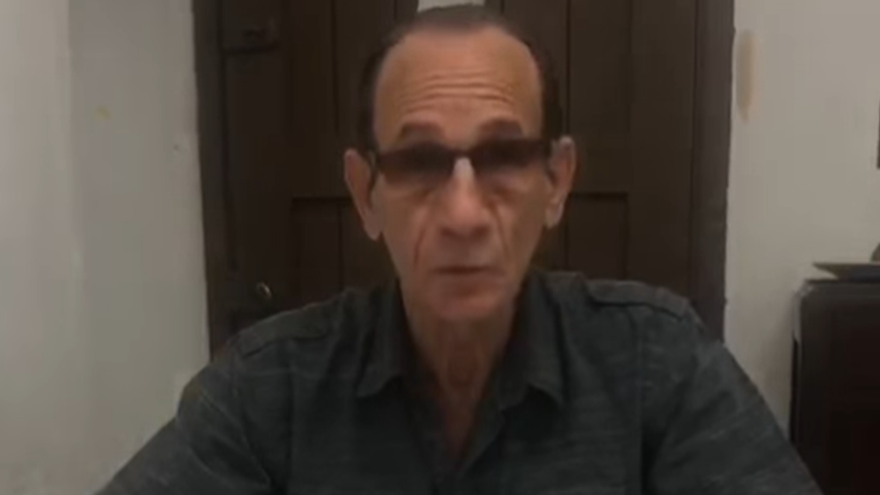
14ymedio bigger14ymedio, Havana, 26 December 2020 — Physics professor Pedro Albert Sánchez was able to make his peaceful walk this Thursday “in honor of freedom” from the sculpture dedicated to the Knight of Paris, in Old Havana, to the El Quijote park in El Vedado, after the last Sunday when he was detained for 24 hours after launching the call.

“As I had promised, I made my walk in honor of the freedom of expression of all of us who feel excluded from this regime. Despite not being interrupted while I was walking, I did notice a lot of tension around,” Sánchez commented on his Facebook account.

Internet users responded to Sánchez with words of support and encouragement. “Professor, I hope there will be more walks and that you will do them accompanied by those who identify with your ideas. We have only one life and we deserve to live it with dignity,” said a profile who identified himself as “all Cubans.” continue reading

Other commentators congratulated the professor on the initiative and recommended that he take special care in case of possible reprisals that the Cuban political police may take against him and his family.

“I can even say that someone recorded me, the question would be which side is that person on, whether on the side of freedom or repression,” the professor inquired. “My position before the political police remains the same, I have no accounts to render to injustice and to them as human beings I tell them that the security of the State does not depend on the abuse of power they commit, but on the dignity with which they carry out their work.”

Sánchez also referred to the confiscation of his mobile phone during his arrest: “Those bunglers taking a phone from an old man who wants to tell four truths added to everything they have done for more than 60 years that does not guarantee the security of the State, which guarantees is the absolutization of the power of the elite.”

“My mission is to demonstrate as long as I have the strength that what they are doing is not for the good of the Cuban people, they are guaranteeing the power of an elite that uses the people as hostages. I, like many Cubans, wish to safeguard the true conquests of our people and not the nonsense of the elite.”

The 62-year-old professor was arrested last Sunday for calling for a peaceful walk in Havana demanding freedom of the press and expression. He was not heard from again until the police decided to release him. “They took away his phone, the only thing he has to communicate with and without the chance of having another one. He is already at home, but in solitary confinement,” his former student Ileana Medina said at the time.

Shortly before the arrest, Sánchez, who does not consider himself an opponent, released a video from John Lennon Park in which he called for the unity of people “excluded from socialist society” and asked the president, Miguel Díaz-Canel, “to be responsible for a situation that could turn dangerous.”

In his message, Sánchez demanded the immediate mobilization of “those who understand this, those who want to feel themselves to be civic human beings even though they are apolitical. This is the beginning of a process, but not 40 years from now, when my granddaughter is 15 years old, no, it is for now.”

The teacher had previously released a video from his home in which he said he felt a lot of pressure, but was not afraid; and he demanded the help of the press to spread what he considers “the truth of what is happening,” in addition to calling the State repudiation rallies state terrorism. “If they think they are doing those things for the love of the people, for the love of all society, they are making love to us by force.”

Sánchez, in another video published this Wednesday on this Facebook  profile, said that if necessary, on 31 December there would be another walk for freedom on the Island.

The professor’s arrest was one more case among the many arbitrary arrests made by the political police lately. Following the hunger strike organized in November by various artists to demand the release of rapper Denis Solís for the crime of “contempt,” most of these young people are forcibly confined to their homes and immediately detained every time they try to go out.

____________

COLLABORATE WITH OUR WORK: The 14ymedio team is committed to practicing serious journalism that reflects Cuba’s reality in all its depth. Thank you for joining us on this long journey. We invite you to continue supporting us by becoming a member of 14ymedio now. Together we can continue transforming journalism in Cuba.