Message From Juan Antonio García Borrero / Polemica, The 2007 Intellectual Debate

See here for background information on this series of posts.

Your message to Desiderio has motivated me to add some ideas to this debate, which, to my taste, has left us with an excess of words in the middle of a desert of actions. Compared with the richness of ideas and reflections that have been heard, the last UNEAC declaration borders on the outrageous, due to its greyness and shallowness. On the other hand, I think you are the only one from the critics’ guild who seems to have gained a level of sensitivity regarding the controversy, such that I am grateful that in your writing you make it clear that what you call civic responsibility also concerns those of us who are trying to be mindful about Cuban cinema.

I wish to ponder a couple of the things in your reflection. Those that are not concerned with the anecdote, but rather to that way of assuming our lives which has become for us something natural. I think that a hundred years can go by and still no Cuban (be he or she from Havana or Miami, Camagüey or Madrid) will ever leave aside that Hollywood-style vision of life, where those who don’t agree with our own opinions are the villains, and only the ones who think exactly like us are the only ones to be trusted. We all know that this is nonsense, but we have become hardline with regard to that concept. It is almost an addiction. continue reading

I would like to speak, as you have, of Cuban cinema. I think it is still a pristine terrain for discussion. Generally, we discuss with more vigor the pertinence that Forrest Gump obtained so many Oscars, rather than discussing the effectiveness of our own cinema. This does not mean that it is not important to talk about the Oscars, as long as it is examined from a critical perspective and as a cultural phenomenon. Gratuitous Oscarphobia is as harmful and petulant as Oscarmania.

I still insist that Cuban cinema is studied much better outside of Cuba (for example in France or the United States), than in our country. This is because to speak critically about the history of Cuban film means to subject to physicalization the relationship that this artistic expression maintains over nearly five decades to the political vanguard. And from Cuba, that’s quite complex to undertake, because it can upset that vanguard. You mention the case of “Alice in Wondertown,” but you have to go back to “PM”* and even take into account “Memories of Underdevelopment,” and the reaction of certain political commissars when, in the height of the pavonato, “A Day in November” was made, but only released six years later. Or, equally, you can talk about “Glass Roof.” Or of “The Enchantment of Return,” never shown despite having won the Caracol Prize or something like that.

The example of the Cuban cinema during the Five Grey Years is no less paradoxical. It is true that a film like “A Day in November” was held for six or seven years without being released, because it  was completed in that time when the cultural politics represented by Pavón (notinvented by him) became natural law, and the first charge that since the “First Congress on Education and Culture” was assigned to the Cuban Institute of Cinematographic Art and Industry (ICAIC) was still sounding, which is the increase in historical films that would help legitimizethose hundred years of struggle for national independence.

A story like that of [Humberto]Solás, for all its more edifying end, seemed doomed not to fall within the permissible parameters of the censors, who were more attentive to the protests of the intellectuals in the case of Padilla, that the potential criticism could come from within. Only Titón [filmmaker Tomás Gutiérrez Alea’s nickname] was shrewd enough to turn the storyline of “A Cuban Fight Against Demons” into a contemporary analysis of what could be ideological intolerance; and the same with The Last Supper,” in which one can see a portrait of something that we have never shaken off: the double standard. Titón himself would later say, during one of his final interviews, that because the Church and the Party had so many things in common, the story of “The Last Supper” could be extrapolated without much effort.

I believe that the responsibility around this lack of debate about Cuban cinema in the country is a shared one. In this, I could seem incendiary. But it’s not just about those who do the censoring on television, even though the responsibility borne by these individuals is certain. There is also much responsibility borne by critics and filmmakers, who may have preferred to ensure our next book or shoot before discussing ad nauseam what is obviously an outrage: the censoring of national films on our own national television.

I recall that I once took part as a delegate in one of the UNEAC Congresses, and the point that I wanted to make was precisely that: the absence of Cuban cinema on television. The official in charge of the event at the time told me that there were more important things to discuss, and suggested “other problems” to highlight. I also remember that during this same event, Rolando Pérez Betancourt brought up the same issue, arguing in great detail and very intelligently every one of those matters you  outline. And nothing happened.

“Strawberry and Chocolate” continues to be excluded from our domestic television, although Cubavisión Internacional does broadcast it regularly. Somebody has decided that the Cuban television viewer (the domestic one) is an intellectual minor and, despite so much instruction and level of education, is not competent enough to view such a film. This way of thinking reminds me of an ingenious phrase by Julio García Espinosa, when he speaks of “cinema’s double standard.”

Even so, my question goes deeper: amidst all this, whither the Cuban filmmakers? We already know that the critics cannot schedule “Strawberry and Chocolate” to air on television, because rules are rules, and they must be followed. They are not in charge–although, of course, they do have a voice, and that privilege of public declaration that has been granted them should be exploited for reflecting on what is really lacking in society, and not about what the media bosses want discussed. All things considered, the existence of Cuban cinema within a television framework seems crazy, for it is as if two conversations in different languages were going on. On the one hand, television, with its inveterate celebratory tradition; on the other, Cuban cinema, with its tendency to show a more complex view of reality, and to humanize the image of a country which, as all others that I know, contains much that is of pain and laughter.

That filmmakers exert no real influence on Cuban media is obvious. What is not clear to me is to what point filmmakers appear determined to denounce this situation, to oppose it, and to not become accomplices to the absurdity. I have defended a viewpoint that has garnered me a plethora of detractors. Some time ago, I published a little essay that I titled, ” ‘The Confiscated Utopia’: From the Gravity of Dreams to the Lightness of Realism,” which, unmistakably sought to promote an “intelligent” discussion amongst filmmakers and critics. The essay was barely answered (considered) by a pair of producers (Arturo Sotto, Jorge Luis Sánchez), considering the many rumors and “hallway gossip” written, as I always say, on rolling paper. In my opinion, this was proof that intellectual organicness had been confiscated within Cuban cinema. And I speak not of common intellectual organicness, but that of the artist who, being heretical by nature, opts for silence, which is not a natural condition, but rather an imposed one.

The thesis of “The Confiscated Utopia” also spoke to the need of leaving aside those false divisions in which creators and critics see themselves as irreconcilable antagonists. As far as I know, this thinking is not exclusive to critics, and criticism can be creative. But this creative thinking starts at home, and perhaps this is a hasty judgment, but filmmakers in Cuba at some point gave up that common goal which used to be associated with a Titón, a García Espinosa or a Solás, so as to be able to face a more difficult survival.

The impulse to survive makes us selfish, because what it imposes is “every man for himself,” and measured thinking is left by the wayside. I still insist on the thesis, then, until such time I am convinced otherwise.

I admit that what I’m saying is no more than a personal impression. The grave matter is that almost nobody in Cuba is interested in discussing this. In our collective imaginary, the ICAIC continues to be an island within the Island, which influences even the way in which filmmakers conceive their works.

No few of these films still use the same model of portrayal that was in vogue in the early ’60s. As if time had stood still. As if it were Robinson Crusoe filming himself. Or as if 1959 were around the corner. Nor is it about trying to make another “Memories of Underdevelopment” or “Lucía,” but rather of feeding from that same heretical animus that mobilized production during that decade, that impulse that went beyond the ideological function to transform itself into the paradigm of a cultural phenomenon (the new Latin American cinema), which lives on in memory.

Outside the country, many criticize the ICAIC because they consider it a mere propaganda machine for the system, but the demand for a national cinema was already present in the ’50s, and it was that combination of yearnings (aesthetic and ideological) that facilitated the rapid ascension of our cinema to a position of leadership in the continent. Today that leadership is non-existent. It is enough to compare the gross of more recent Cuban films with Latin American films that are currently at the top of certain innovative movements, and one will see to what degree we have remained isolated in this domain, too. Not even good political cinema (such as the documentary by Santiago Alvarez), nor innovative cinema in the esthetic sense.

The only way to recapture that creative animus of yesteryear is having dialogue ad nauseam, deploying the narrative arsenal, converting the hallways of the ICAIC into a mobile cinematheque wherein people live cinema, not live off it. And above all, learning to debate each other, because amongst ourselves (filmmakers and critics) there still predominates that primitive feeling that makes us think that any disagreement is a personal problem, if not a political one.

Although I am interested in the culture of polemics, I do not like gratuitous argument. I believe that there are many people living off that ancient tool which is the insult flung at he who does not think like you. That is not the case with us. Your piece has made me think, and that is what matters. Unfortunately, the controversies surrounding Cuban cinema have swirled around other interests besides those of cinema itself. And almost always they have ended silenced by circumstances that tomorrow will cease to exist, while influencing too much the actual lives of filmmakers.

Nobody can give back to Daniel Díaz Torres (not the filmmaker, but the human being) the peace that was taken from him during those bad times of “Alice in Wondertown,” just as nobody can return to Titón and Tabío their tranquillity after Fidel’s public criticism of “Guantanamera.” Or to Solás for his disagreements following “A November Day,” or “Cecilia.” That is perhaps the saddest thing that happens with those “cultural policies,” designed with apparent good intentions, policies that speak much about collective principles, and very little about flesh-and-blood beings. They are policies which, as all such policies do, eventually dehumanize art and its reception by the public.

Because I am still interested in supporting the idea of critical thinking on the inside (which, for some, is symptomatic of the most decadent naiveté), then I want to applaud your text as one of the most lucid connected to Cuban cinema that I have read in a long time. And I am gladdened that it comes from someone who works within the ICAIC–that is, from an artist who can think. Would that this be the prelude to that day in which debate in Cuba (the nation, and not just the physical island) will become what it should be: the way to our common betterment.

A hug,

Juan Antonio García Borrero

Another Message from Juan Antonio García Borrero, to Gustavo Arcos Fernández-Brito:

My Dear Gustav:

Like everything in this life, the Internet has its indisputable advantages, but also its dark side. If, on the one hand, thanks to the Internet, the public sphere appears to recover some of its autonomy (as is demonstrated by this debate that right now keeps us occupied and which, fortunately, nobody can control or maneuver towards an expressed end), on the other it runs the risk of total dispersion. I admit, then, that it has been error to say that Colina is the only Cuban critic showing himself to be sensitized to the matter. I should have said that he was the only one I knew, and thus avoid that simplistic vision that I myself have tried to combat with the previous writing. I would appreciate, then, if you would send me Luciano’s thoughts, those of Frank, and yours, which surely will be most useful to me. As the best philosopher to have ever peeked out from a screen has said, “Nobody’s perfect.”

Another aspect that I should qualify is that reference to critical thinking “on the inside.” It is a statement that appears to say that those of us who inhabit the Island have the monopoly on truth, when, in fact, there are all kinds in the Lord’s Vinyard. There is one who lives in Miami and has never left the pre-revolutionary Vedado district. There is another one who lives in Upper Mayarí and who from there can perceive with much more clarity what the current state of the world is, especially when he goes to a grocery store that is nothing like the ones in Vedado.

But there is one who lives in some uncertain place in the Cuban nation, not the physical but the imagined one, and he knows that this is not a movie about good guys and bad guys, but rather something more complex. Critical thinking (if it is real and tries to adjust to the rigor of contrasts) surely benefits adversaries, and causes them to discover completely new areas of controversy, be it in Havana or Madrid. In the end, nobody makes an argument to impose a vision for life, but rather so that those who come later will achieve a superior point of view.

But, let us speak of cinema, which is what interests me right now (even when I know that cinema is not the most urgent problem that this country needs to solve). I see that on his blog, Duanel Díaz argues against my vision of revolutionary cinema. His is a view I respect, even though I don’t share it. I don’t want to be too naive, but neither do I want to be ungrateful. I admit that no film is no film is innocent, and since “Juan Quin Quin” up to today, passing “Strawberry and Chocolate” and reaching “Havana Suite,” Cubans of my generation have been trained by the worldviews articulated in those films.

And I am grateful for this, because it has allowed me to take part in a cinema that is not simple evasion, that is not a substitute for that trash that they try to uncritically sell us on “The Saturday Movie,” and which rather than stimulate a critical sense in the spectator, what it does is contribute to his alienation. I don’t have anything against entertainment, for without this insurance we would go straight to suicide, but what does leave me unsatisfied is this attitude on the part of national television, which on the one hand hurls invective at imperialism on The Round Table, and two hours later, on the same channels, shows the worst of “the Enemy’s” cinema? Or that censors the films of the ICAIC, and converts into a “free zone” of the most questionable Hollywood ideas the majority of its film timeslots (there are always exceptions, and we know of colleagues who insist on promoting another type of cinema, be it Latin American, Iranian, European or North American).

I have defended and will continue to defend the cinema of the ICAIC, because films have been made under its auspices that will endure beyond our isolated conflicts. Because in many of their narratives can be found the uncertainties of an age, and not only the strict anecdotes of a Revolution that, as do all, leaves in its wake winners and losers, joys and sorrows. Those who insist on attacking the cinema of the ICAIC for its ideological suppositions are losing sight of the fact that we speak of a production that was (is) conceived by human beings, and not by machines that say “yes” or “no” to everything. A simplistic apologia for the system? Then where would we leave the irreverence of Guillén Landrián? The disturbing questions posed by Sara Gómez in those documentaries about “An Island for Miguel”? The banishment of Fausto Canel? The absence of Alberto Roldán? The uninhibitidness of “Memories of Underdevelopment”? The existential doubts of the main character in “A Day in November”?

If this had been only a reaffirmative production, then the cinema produced by Cubans in the diaspora would have had better results, taking into account that it has enjoyed a greater freedom of expression. But what has happened is that the cinema of the ICAIC has been produced with another kind of intentionality: the ideological was converted to the aesthetic from the moment in which it coincided with a time that demanded these changes, and more. The cinema of the ICAIC was one more within that cinematic group (such as the Polish cinema, the “Free Cinema,” the “Cinema Novo,” or Solana and Getino’s “Third Cinema”) which intended to blow up the more-usual model of portrayal. It is true that the ICAIC’s cinema with a violent rupture in the political sphere (the Revolution), but even before then, the dissatisfaction with the Cuban cinema of yesteryear was well-known. Even “PM” was part of this desire to experiment with the language of film.

To attach the ICAIC solely from the ideological point of view reduces the analysis to just the backing that its production has had from the State. The thing is, this backing has not been so transparent, if we review the relationship that this institution has maintained with the political vanguard: at least three or four films have caused major disagreements (think of “Cecilia,” “Alice in Wondertown,” or “Guantanamera”)–while others, such as “Parting of the Ways,” “Supporting Roles,” “Glass Roof,” and “Think of Me,” have incited more than one official resentment.

On the other hand, to judge Titón’s body of work–to mention one–only from the standpoint of political militancy, is to lose what is human about that creation. Whoever reads his letters knows that Titón posed the same questions during the 1950s, because he was already interested in the finiteness of being; thus the almost constant presence of Death in his films. But upon ignoring that matter it could be that the interpretation [of his work] leads to the political observations we already know from “Guantanamera.”

I think that within this cinema of the ICAIC, many times, beyond ideology, it is possible to detect the behavior of the more common mentalities; while at other times I have noted that it’s necessary to speak of Cuban cinema in general, and not only that of the ICAIC, because in this underground cinema not mentioned by Colina, which is ommitted on television (and to which Belkis Vega makes reference in her reflection), we can also sense many of the hopes and dreams of the Cuban.

I do not doubt that the ICAIC has its questionable aspects, and that some of its films militate for the most Manichean viewpoint, but I don’t believe that this has been the rule. Actually, what should be most of interest right now to the historian of Cuban cinema is exploring those hidden tensions between the individual and society, and which have made possible so many films that have more than one message. This will to explore is yet unseen, perhaps because prudence is outweighing defiance. Or because that deceitful and often visceral message is predominating that alerts us that, still, “now is not the time.”

Even so, the urgency of this necessary debate about our cinema has been postponed vis-a-vis the evidence of a mystery that I confess is really absurd: What is the exact motive that impedes that a good portion of Cuban cinema is not broadcast on national television? For those who have systematically attacked the Revolution for what it represses, it is clear that the issue is a problem of freedom of expression. I refuse to believe that it is something this vulgar, because it is obvious that these films are not counterrevolutionary. I mean to say, they are not, “Bitter Sugar” or “The Lost City.”**

However primitive might be the mentality of a bureaucrat in power, he knows that this is not the best way to protect the Revolution–or, at least, he will have advisers sensitive to cultural matters who will bring him up to date on those international prizes won by “Strawberry and Chocolate” and “Havana Suite” [by Fernando Pérez], which makes it a true blunder to make into hostages of the shadow these things are so well-known internationally.

It is true that these functionaries have the power to make decisions, but I also like to remember that when the dissolution of the ICAIC was announced almost by decree following the “Alice in Wondertown” brouhaha, it was those very filmmakers (on the inside) who rejected that decision, which had come from very high levels. One proof that the power of reason cannot always be silenced by reason of power.

My suspicion is that right now, filmmakers and critics are divided over questions of survival more than of thinking, and that is something that the bureaucracy knows how to exploit. Everyone pursues his own interests, because it is more important to obtain financing for the film itself than to support, at any cost, a national cinema project (because only the showing of our films on television would confirm that this film project exists). And, after all, this does not fall within the priorities of a filmmaker anxious to demand that our films be shown to the public for whom these works have been originally conceived: for the domestic audience. Neither does fostering spaces where thought and systematic debate will make life intellectually impossible for that bureaucracy. It’s a matter of a time, they’ll tell me, and this is true. An ICAIC production center is no longer essential to propel a project. Because, although production has been democratized, showings have not.

Filmmakers who are not from Hollywood still depend first on festivals, then on the support of their respective countries (filmmakers outside of Cuba don’t enjoy much of this–just look at the case of Cuban filmmakers in the diaspora), and finally, on the television channel interested in broadcasting that type of product. Therefore, the problem is a really important one that has to do with our audiovisual memory (wherever Cubans may be), and which would be worth discussing by those who examine “political cultures” in general, or by political antagonists who try to invalidate each other because of irreconcilable differences. It cannot even occur to us to believe that Cuban television could not be proud to show on its screens that which in other places is assumed to be part of the revolutionary culture. In fact, it will be difficult to explain to our grandchildren why a film such as “Strawberry and Chocolate” took more than a decade to be seen on television, despite the Revolution’s fervor for the national [film] project. If it seems absurd, in five decades it will seem pathetic.

I’m sure I’ve left out a thousand things, and I don’t doubt that opinions will emerge that will try to discredit what I’ve expounded-on here to you. But as I think I told you in another message, I am not interested in uttering ultimate truths, only in sowing a few concerns surrounding this that we barely know: the history of Cuban cinema. This is only my version of the problem, one of many which, according to the moral of [the Kurosawa film] Rashomon, could explain the matter. New opinions will surely improve it, and hopefully more than one colleague will feel inspired to participate.

Another Hug,

Juan Antonio García Borrero

Translated by: Alicia Barraqué Ellison, and others.
Translator’s Notes:
* “PM” is “Pasado Meridiano,” a 1961 documentary of Havana nightlife which, among other factors, provoked Fidel Castro’s “Speech to the Intellectuals“. 

** Both of these films were made by Cubans in exile.
Cane Cutters Complain about Their Working Conditions / 14ymedio, Fernando Donate Ochoa

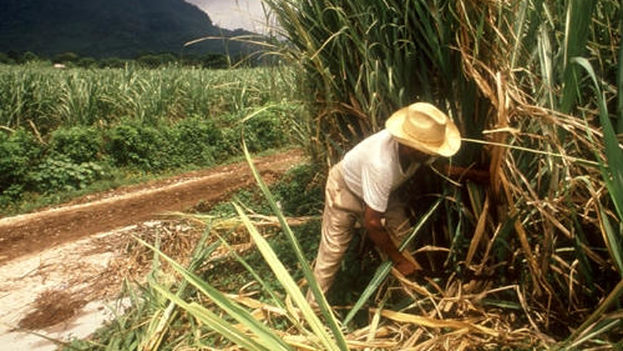
Cane cutting in Cuba (Conexion Cubana)

14ymedio bigger14ymedio, Fernando Donate Ochoa, Holguin, 31 May 2015 – The recently concluded sugar harvest failed to fulfill production forecasts. Analysts have struggled to explain the reasons for the repeated failure and have spoken of incomplete or ineffective repairs and poor organization, but none have mentioned the social factor.

Workers involved in cutting cane in Holguin complained of the abandonment to which they were subjected and multiple violations of their labor rights during the harvest that just ended.

Members of the Basic Economic Unit from the Loynaz Hechavarria center from the Cueto municipality say they worked more than 16 hours a day beginning at five in the morning during the four months of the harvest. continue reading

Heriberto Cuenca Tamayo, operator of a cane combine, told 14ymedio that his brigade had been victim of labor law violations and they were the group that suffered most: in spite of intense heat during these months, they had no cold water for lack of ice. Nor did they receive the promised work clothes, and they ate what they could manage on their own since they were not even provided coffee.

He mentioned that the enterprise is still in default on the incentive pay in convertible currency that is due the members of the team under the labor contract. He also lamented the lack of technical assistance that would have helped with the combine breakdowns during the cane cutting. They are only paid as operators, but they also had to act as mechanics, work for which they are not qualified.

“We were on our own when the machines broke, and in order to continue working we had to personally manage the parts and the repair,” Cuenca Tamayo told this daily.

Together with his companions, he said he felt unprotected. The bosses only speak of obligations, order, discipline and demands. “When they say to do more with less, it seems that they are thinking of more effort and worse conditions, more duties and fewer rights.”

“Neither the Constitution nor any other Cuban law legally establishes the right to strike, but nor did the union solve our problems in spite of raising them on several occasions,” said this cane worker.

For his part, Mario Gonzalez, harvest boss for the Azucarera Company, said that Holguin failed to meet the sugar production plan by not reaching the projected figure of 207,801 tons, lacking almost 4,000 tons to achieve the goal. In this harvest the province milled with only five of the ten sugar refineries it has had since 2002.

The official explained that among the causes that led to the failure are the breakdowns of the combines, the refinery stoppages for lack of cane caused by the late arrival of squads to the cutting fronts, and others of an organizational nature. “There was enough cane in the fields, but it was not known how to get it to the centers,” asserted Mario Gonzalez on a local radio program.

Translated by MLK

The Sugar Harvest Grows But Fails to Meet the Plan / 14ymedio, Orlando Palma

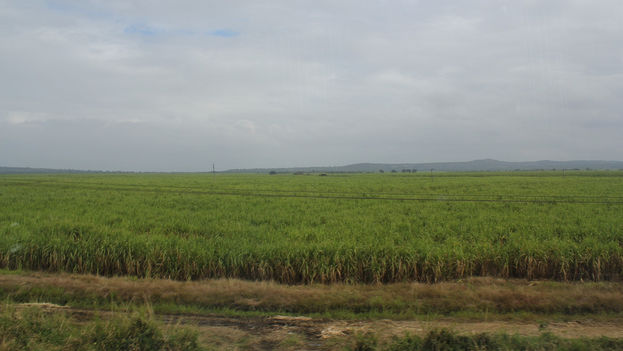
A sugar cane field in Cuba. (Flickr / CC)

14ymedio bigger14ymedio, Orlando Palma, Havana, 29 May 2015 – As has already become a tradition, Cubans will not know how many tons of sugar are ultimately produced at the end of the 2014-2015 harvest. A summary of the report prepared by the Azcuba Sugar Group, published by the newspaper Gramna, limits itself to saying that, although the “plan is 45% below expectations,” production “experienced an 18% growth relative to the prior year’s milling.”

According to the report, sugar production grew for the fifth consecutive year but has not reached its target for a series of reasons. Among them, the delay in making repairs, attributed to the late arrival of certain resources, due in turn to the lack of deliveries on the part of the importing countries. This detail alone had as a consequence that 11 sugar mills didn’t start on time, “or started without testing the machinery in advance, which increased the breakdowns during the milling.” continue reading

A report by Azcuba president Orlando Celso Garcia to the Workers Center of Cuba Plenary at the end of 2014, said that the mistakes of the past would not be made again and announced that 15 million dollars were invested in importing equipment for irrigation. He added that the reception capacity in the collection centers will be increased and more than 3,400 trailers will be added with a capacity of 20 tons each, along with 80 re-engined Kamaz trucks and another 287 trucks without trailers.

Despite these forecasts, the main problem was the low capacity utilization of the mills in the industry, which did not exceed 65%, caused by downtime, plus missing the quantities in the cutting and throwing of cane. On the other hand, performance improved as 100 tons of cane crushed yielded an average of 10.27 tons of sugar, 0.77 more than in the previous harvest. It is to this that the increase in total production is due.

The report mentions the most outstanding provinces and sugar mills and announced that, according to estimates, sugarcane mass will increase between 15% and 20% annually in the coming years. Maybe by the end of 2015, when speaking of the next harvest, we will get to know how many tons were produced in the harvest now ending.

Rebellion in Platanal / 14ymedio, Reinaldo Escobar

Santa Isabel de las Lajas.

14ymedio bigger14ymedio, Reinaldo Escobar, Havana, 28 May 2015 – Just a mention of the name Santa Isabel de las Lajas, a town in the province of Cienfuegos, recalls one of the greatest of all Cuban musicians, Benny Moré, the “Barbarian of Rhythm.” Dancing and fun, joy and youth.

But on the night of May 16 the El Platanal de Bartolo discoteque, in the little homeland of the greatest sonero, was the scene of a minor quarrel of which no one now wants to remember the origin. “Drunkenness,” said a waiter. The point is that someone with sufficient authority decided to end the day on the stroke of midnight, an hour earlier than usual. Hundreds of young people gathered there protested against the measure with all the energy of their age and, in addition, with every right. continue reading

From El Platanal they went toward Marti Park, one of the many in the major towns that serve as a point of rendezvous and conquests. When the police patrol passed through the area in their Chinese-made jeep Number 553, tempers were still running high, so always ready to repress anything that looks like a protest, the uniformed officers warned the boys they were making the rounds and on their return they didn’t want to see anyone there.

Those who had gone out without their IDs, those with something to lose or something to hide, went to their homes, but some 60 preferred to stay… and the patrol car returned. In retaliation for what they interpreted as unspeakable disobedience, they imposed a fine on every person, but there were three who did not accept the outrage and were threatened by one of the police officers with his regulation pistol.

Neither Yoexis Llorente, nor Oscar Luis Santana, nor Miguel Armenteros felt intimidated. They took off their shirts as a sign of protest and told the cops, “Shoot here, in my chest.” Brute force prevailed – on this case the force of arms – and the three were handcuffed and taken to the police station. It’s been 12 days, they still haven’t been formally charged in court, and they remain detained. It’s been said they will be charged with resistance and contempt.

The apparent abyss that separates popular discontent from the political opposition can be leaped in a minute and for unforeseen reasons

Jorge Luis Oliver, an activist in the Reflection Movement in Santa Isabel de las Lajas, said that Miguel Armenteros’s mother told the town’s Communist Party Secretary that she would turn in her Party membership card if her son, recently demobilized from military service, was legally affected by any measure, and that she and the mothers of the other two would take the matter wherever necessary. Including to the “Human Rights people.”

Among the topics discussed at the Tenth Congress of the Young Communist League, there was one identified as “Cultural consumption and recreational options.” Except in some of the provincial capitals, the only thing left for young people in the small towns is walking in the park and drinking alcohol.

There will be no uprising in Lajas, nor any uncontrolled social explosion because a discotheque closed an hour earlier than planned; but the apparent abyss that separates popular discontent from the political opposition can be leaped in a minute and for unforeseen reasons. And no one wants to be the “the fundamental clay” of any experiment in social engineering. At any moment El Platanal de Bartolo, that mythical site of Cuban enjoyment, could be registered as a center of conspiracy.


The Order To Kill a Serial Killer / Angel Santiesteban

Ángel Santiesteban-Prats, Prison Border Unit, Havana, 13 April 2015 –– I declare myself the enemy of any act that generates violence, above all those where lives are snuffed out. In the recently concluded Summit of the Americas in Panama, the gang sent by Cuba to violently destabilize the forums that they could not once again manipulate, inflicted beatings.

One of the justifications was the presence of Felix Rodriguez, who was in charge of the capture of Ernesto Guevara (as the Cuban writer Felix Luis Viera says: I say his name and not his nickname because he was not your friend, let alone mine), and who also gave the order to execute the guerrilla commander, who like the phrase “He who lives by the sword dies by the sword,” received the same formula that he sometimes used, as when he arrived at La Cabaña in 1959, where he caused rivers of blood to flow in the trenches of that fortress, built during colonial times to protect from the attacks of privateers and pirates, without giving the condemned the opportunity to receive a defense by lawyers representing them in a fair trial.

It is also true (without intending to defend anyone, because one life is worth as much as thousands), that in ten lifetimes Felix Rodriguez could not match the number of dead that the Argentine commander dispatched by the firing squad.

Every time I see a person wearing the guerrilla’s image, I wonder if they are naive or if they know the rap sheet of cold-blooded murders that he authorized and committed, as recounted in the book by commander Benigno.

The official delegation of the Castro regime shamelessly displayed the flag, making it a shame for all Cubans.

Ángel Santiesteban-Prats

April 13, 2015, Border Prison Unit, Havana

Mariel, the Past and Present of an Exodus / Cubanet, Camilo Ernesto Olivera

Fishing school, El Mosquito camp in 1980, seen from the point of view of the River Homonimo (photo by the author)

“They left through here and will never return,” recited a sign on the wall of the power plant. Nevertheless, those who “left” became the support of those who stayed. Today many share the Miami exile with those who said goodbye to them by throwing eggs or rocks

cubanet square logoCubanet.org, Camilo Ernesto Olivera Peidro, Havana, 28 May 2015 – In the town of Boca del Mariel there is a small beach preferred by the locals. Next to it are the facilities of the former bulk sugar terminal. A little further beyond operates the Maximo Gomez power plant.

One Sunday in mid-April 1980 the beach-goers saw four boats flying the flag of the United States enter. They observed how they were directed toward the area of the neighboring pier. At that time the presence of armed Cuban officials became apparent. Later it was learned that there, in a sugar storage warehouse, was the temporary headquarters of the captaincy.

In the days following, the presence of boats and yachts from the north increased. The people from the town of La Boca as well as Mariel were taken militarily by army troops and police personnel. continue reading

Fifteen years earlier the Cuban government had equipped the port of Mariel, located 20 miles to the west of Havana, as an embarkation point for a migratory bridge leading through Boca de Camarioca in Matanzas. Between April and October of 1980, 125,000 Cubans left for Florida, in what came to be known in the United States as the Mariel Boat Lift.

The way of the cross of the Marielitos

The Cuban government announced that all who wanted to do so could leave. But, as a condition, they had to apply for permanent dismissal from their places of work or education. With this safe-conduct pass, many who had taken refuge in the Peruvian embassy went out. They were victims of fascist acts of repudiation in favor of the regime.

Many Cubans carried out diverse actions in order to visit relatives who were waiting for them in that port. Men, women and children arrived there with visible signs of the humiliation suffered at their places of origin.

But something as bad or worse awaited them at the last stop.

At the corner of the Wakamba pizzeria, the mobs armed with sticks and iron bars lurked, cheered on by local government officials. Those who arrived were hunted down and beaten with a vengeance. Then the police “intervened.”

Little beach near the mouth of the port, town of Boca del Mariel (photo by the author)

Those attacked were taken to the Border Guard Unit known as El Mosquito, located at the mouth of the river of the same name four kilometers from Mariel. They were confined there for days or weeks. The conditions in the barracks were inhumane. They mixed the families with criminals or prisoners taken from penitentiaries, sent to this checkpoint to then be deported. The place was guarded by armed military personnel and trained dogs.

On the trip back, the buses took a route to Mariel crossing the bridge. At the end of this, the authorities posted children brought from the schools of Baracoa and Henequen. The teachers passed out eggs and rocks for the students to throw at those in the vehicles.

Currently, on this site, where so many Cubans suffered, is a school that teaches fishing.

The threshold of freedom

The pier of the Camaronera Flota (today the Astilleros Astimar Company) was the last step in the way of the cross. Those who were leaving were concentrated there on two boats next to the pier, at that time, empty and half finished. They waited to be called from a list. Then on boarding they passed through another control.

As a condition of being able to take their relatives, those who came with the boats had to permit themselves to let their decks be stuffed with other people of various kinds. There were those who chose refuge for their families in the cabins.

When the boats pulled away from the coast, the last image, from afar, was of the columns of smoke coming from the chimneys of the Mariel power plant.

Entry point of the former Mosquito Camp, currently a fishing school (photo by the author)

On a stretch of the perimeter wall of that plant, there was for many years a sign that said: “Through here they left and they will never return.”

The sign disappeared during the nineties. That was when the crisis increased. Those who “left” turned into the support for those who stayed.

Today those who left in 1980 share exile in Miami with many who said goodbye with eggs or rocks and later fled in the raft stampede of 1994.

The dictatorship that made them abandon the country still governs with an iron fist poorly disguised with a fine silk glove.

Pizzaria Wakamba in Mariel where the trip ended on Route 218 from Miramar (photo by the author)
Warehouse where the registry of the Port Captaincy was located during the Mariel exodus (photo by the author)
Muro-de-la-refineria-Maximo-Gomezen-este-tramo-existio-este-cartel-Por-aqui-salieron-y-jamas-volveran-Foto-Camilo-Ernesto-Olivera-722x505
Section of the Maximo Gomez refinery wall where the sign existed (photo by the author)

About the author

camilo-ernesto-olivera.thumbnailCamilo Ernesto Olivera Peidro – City of Havana (September 14, 1970) – Screenwriter and Researcher – He has participated in theorist events in almost all the rock festivals that have taken place in Cuba from 2001 to the present – Workshop for screenwriting, production and staging of musical events (UNEAC, CARICATO) 2004 Graduate of television script and drama course (ICRT Teletransmisora training department) 2006 collaborator on Cuban non-official publications concerning the rock genre like “El Punto G,” “Insanedrac,” “Ilusion.” Since December 2007, he has been part of the Cuban Rock Agency where he works as a cultural promoter and member of the editorial board of the magazine “Rock del Patio” (in process). His texts are published in “La Corchea” (ICM), websites AHS, maximrock.com, cubametal.com, esquife.cu, Cubaencuentro, Voces, Cubanet and Diario de Cuba.

Translator: MLK

Occupations (?) You Can Find in Cuba / Ivan Garcia

recoge-todo-lo-que-se-encuentra-en-la-calle-_mn-620x330Ivan Garcia, Havana, 4 May 2015 — In a wide, dusty, half-paved alleyway very near an old slaughterhouse with a faded sign that reads “Socialism or Death,” lives Reinerio, a gentleman who, in addition to repairing zippers and umbrellas, also sells earthworms.

In the corner of a dark room, with a piano in need of tuning and a molting parrot who reluctantly drinks water from a soda can cut in half, sits a mountain of umbrellas, pants and handbags, all thrown into a pile, waiting to be repaired. Wearing crudely made eyeglasses, Reinerio expertly unlocks the zipper of a purse.

“Professions like mine are typical in poor countries where people have to recycle things out of necessity and extend their use beyond what would normally be possible. It seems foolish but many handbags, umbrellas and pants cannot be used once the zipper is broken or the parasol’s spring clip splits,” he explains. continue reading

He is a man who knows a little about everything. Reinerio makes a living solving people’s problems. “A few pesos here, a few there, but I take pride in repairing things that would normally be tossed in the trash,” he says while handing over half a kilogram of earthworms to some neighborhood kids.

On the streets of Republican Cuba, a legion of vendors — among them knife and scissor grinders, tamale makers, ice-cream sellers — hawked their wares with inventive sounds and cries.

In 1968 Fidel Castro outlawed informal small businesses by decree. No longer to be heard were the cries of street vendors and cobblers, who were forced to go underground.

With the collapse of communism in Russia, however, the island saw the return of old-fashioned professions which extended the lives of cigarette lighters and disposable razors.

Havana has more in common with Gabriel Garcia Marquez’ fictional Macondo than with a modern metropolis. Daniel, who repairs cigarette lighters in the city’s Tenth of October neighborhood, explains, “A friend who lives in Costa Rica sends me compressed natural gas and flints. When a disposable lighter is empty, I make a tiny, microscopic hole in the bottom and refill it. Then it’s as good as new.”

Remberto restores plastic disposable razors. “With a special file I sharpen the edges of the razor blades. People thank me, remember that a package of these little razors costs up to 11 CUC.”

Wherever you look in the national geography, you find people whose “business” is the purchase of empty glass containers, plastic bottles, used clothing or gold jewelry, be it a piece of a chain or a single earring. Also, mattresses repairers, sellers of saints and plaster figures, or of ice cream scoops.

Jose sells bags of ice for five pesos apiece. “Almost everyone has a refrigerator and a lot of people like to buy ice to make milkshakes, fix drinks or treat an inflammation,” he notes.

Teresa, a half-blind hunched-backed old woman, supplements her meager monthly pension of $8 selling fruit popsicles for two Cuban pesos. “The children buy an incredible amount from me. In this frightful heat a popsicle is always welcome.”

Rosa, a former seamstress, collects old towels and sheets. After cutting out the most worn parts, she takes the best pieces remaining and with her old Singer machine constructs a towel or blanket. “I try to combine fabrics and colors. I don’t throw away what’s left over, I sell it to a mattress repairer who uses it as padding “.

For a while, Luisa cleaned rice at home. “She charged two Cuban pesos for every pound of rice. Now I devote myself to washing and trimming dogs, the price ranges between 50 and 100 Cuban pesos.”

But none are as popular as Magalis. Though her face was not shown, she became famous on January 9, 2009 when the online edition of Cubaencuentro published a photo of  a window in her home with a sign that read, “Fleas and ticks removed. Magalis.”

It is likely there are “lice removal experts” in all the captial’s neighborhoods if not in the rest of the country. Keep in mind that in Cuba high temperatures, a shortage of water and shampoo, and poor scalp hygiene have led to the proliferation of these insects.

Havana looks like a giant bazaar of bizarre trades. In the corners, there are carts with avocados, sweet potatoes and bananas. And everywhere, old men are selling roasted peanuts and single cigarettes.

An interest in the occult has led to an explosion in the number of Cubans adopting Santeria. Dunier quit his first year of university studies to sell animals that babaloas, or priests, use in their rituals.

In a multi-colored dress Eulalia has made a living through tarot cards. She uses them to consult with passers-by on busy Obispo Street in the old section of the city.

“People want to hear good news, that they will come into some money, that they will travel overseas or hook up with a yuma (foreigner). A glimpse into the future costs twenty pesos, or two CUC (fifty pesos) for tourists.” And with the agility of a professional poker player, she then lays out a deck of cards.

It has also become common in the capital to see middlemen known as buquenques, referred to as “travel managers” by government bureaucrats. These are guys who organize lines of people waiting for privately owned taxis. Reinaldo earns 200 pesos a day on Acosta Avenue, hawking and soliciting customers for the Viper-Vedado route.

A water shortage in many Havana neighborhoods has led to the proliferation of aguateros or water vendors. Niosber is one of them. He came to Havana six years ago, fleeing from rural poverty and a bleak future in a mountain hamlet in Santiago de Cuba.

“It’s a job I inherited. My father worked as a waterboy on the sugar plantations and now my oldest son and I are in the business of selling water,” he explains while seated  outside a convenience store.

Niosber’s tool is a primitive contraption with ball bearing wheels and two blue plastic tanks that were originally cooking oil containers but which have been recycled to carry water.

“At five in the morning I get to an old sports complex in La Vibora and hook my machine up to a spigot on the side of the building. I walk three or four kilometers every day from the building where I live. I can’t keep up with the demand,” he says.

It would be a stretch to describe those who survive by working in informal occupations, whether secretly or legally, as small business people.

It would be a stretch to describe those who survive by working in informal occupations, whether secretly or legally, as small business people.

Throughout Havana there are swarms of street musicians serenading tourists having dinner. Or guys like Reinerio who fix zippers and umbrellas. Or those who treat lice like Magalis.

Ivan Garcia

Photo: In Cuba many people live off what they find in the trash and on the street, including plastic bottles, empty soda and beer cans, or old clothing and underwear, such as this man, photographed by Juan Suarez for an article on the collection of raw materials published in Havana Times.

About 60,000 Havanans Receive Water via Tanker Trucks / Rosa Lopez, 14ymedio

At the end of February the situation got worse because of leaks and electrical problems (14ymedio)

14ymedio bigger14ymedio, Rosa Lopez, Havana, 25 May 2015 – A sound that is inseparable from the streets of Habana Centro (Central Havana) is the screech of the trucks filled with water, with their metal wheels on the asphalt. This symphony of necessity has become more intense in recent months because of the frequent cuts in supply that the city has undergone due to repairs, breakages and a drought affecting the entire country. More than 58,760 people receive water through tanker trucks, as affirmed, this Monday, in the Trabajadores (Workers) newspaper.

In Havana more than half of the water being pumped is lost in leaks, 20% of which are located in the so-called household networks, inside homes and buildings. For the engineer Antonio Castillo, Deputy Director of Operations for the Havana Water company, the situation is unsustainable in the medium and long term. “Supply basins are like bank accounts. If you deposit, but take out more than you deposit, you have less and less, and if you stop saving, one day you’ll have no money. That happens with the water,” he declared to the official press. continue reading

In late February the situation began to worsen because of the disastrous combination of leaks and electrical problems that caused large losses at La Cuenca Sur reservoir. About 45,000 residents of Habana Vieja, Plaza de la Revolución, Diez de Octubre, Centro Habana and Cerro municipalities in Havana were severely affected.

In order to reduce leaks, sector specialists propose to continue with network rehabilitation plans and impose a new fee on the charge for service for the residential sector. Meanwhile, capital residents are demanding shorter water delivery cycles and a higher quality of the precious liquid. “The water is very hard and this damages the pipes and bathroom iron fittings, that’s why there are so many leaks,” says Ruben, a self-employed plumber in La Lisa municipality.

Capital residents are demanding shorter water delivery cycles and a higher quality of the precious liquid

Others demand, as soon as possible, the enactment of a water law to regulate the consumption of this important natural resource. “Although in December the Council of Ministers approved a stricter policy, they are still indiscriminately wasting something that should be treated as a real treasure,” expressed Yaquelin de la Osa, engineer and promoter of a more focused policy on caring for the environment and natural resources.

Apart from the specialized opinions or those with in the environmental field, the main demands come from a population sector that needs to bring the water into their homes with wheelbarrows, buckets and bottles. “I don’t remember when was the last time that I could take a shower, because for several months I have had to bathe with a pitcher,” says Xiomara, resident of a tenement room at Marqués González street in Centro Habana.

Everyone agrees that repairs to the hydraulic networks are necessary, but the slowness and lack of efficiency with which they are tackled causes discomfort among many Havanans.” This seems like a city after a bombing,” said an owner of rooms for rent for tourists located in Amargura street in in Habana Vieja, who must deal with the holes and trenches in the street every day to find customers. The municipality is being subjected to a replacement of the water networks which will be completed in 2017 and which has a budget of more than 64 million.

I don’t remember when was the last time that I could take a shower, because for several months I have had to bathe with a pitcher

The water that should fall from heaven hasn’t performed as expected in this rainy period. Downpours that flooded parts of the city in late April and early May failed to fill the cachement areas supplying the city. Precipitation was not abundant in the southern provinces of Artemisa and Mayabeque, which are the main sources of supply, nor in the Almendares-Vento basin, which supplies 47% of the water which is destined to Havanans.

As the situation worsens, Havanans wake up trying to detect clouds on the horizon and fall asleep with the sound of the trucks on the pavement.

Translated by Alberto

Art and Necessity / Yoani Sanchez

Installation on the Havana Malecon for the XII Havana Biennial
Installation on the Havana Malecon for the XII Havana Biennial(14ymedio)

The man approaches and pulls a fork from the work Delicatessen that is being exhibited on the Havana Malecon during the XII Havana Biennial. Nearby, two neighbors speculate that, at the end of the event, the sand used in Resaca (Hangover) will be given to the surrounding residents to repair their homes. To art appreciation are added hardships and daring, incorporating the spectators into a show they want to make their own, by taking it home and reusing it. continue reading

The arrival of the Biennial to our city is a good time to enjoy the aesthetic surprises that await us around every corner, but it also confirms the collision of art and need. Near the artworks employing major material resources the inquisitive eyes of a guard are always watching. The protected works, with their “Don’t touch” signs or surrounded by closed perimeters, abound on sidewalks and in parks, more than they should. A contrast between the interaction sought by the artists who place their works in public spaces, and the excessive protection to which they are subjected, precisely so that this public doesn’t end up taking them away in their pockets, piece by piece.

The guard who prevents vandalism or looting also adds an ideological curator who ensures that no installation, performance or show deviates from the official script. A group of watchdogs of the artistically correct impeded Tania Bruguera from entering the Museum of Fine Arts at the end of last week. These censors of free creation also forced Gorki Aguila into a car, after preventing him from hanging the face of the graffiti artist El Sexto on the same walls where he had left us his indelible signature.

Need marks each work of art of the Havana Biennial. Material need, where a screw used in some pedestal could end up in the door of a home, or in a chair or even in the bed where four people sleep every night. And the other need, that of freedom, makes us approach the art to take for ourselves a piece of its rebellion, before the guard blows his whistle and we leave, empty handed.


Laritza Diversent, the Cuban Lawyer who met with Obama / Cubanet, Manuel Guerra Perez

Laritza Diversent independent lawyer (Internet photo)

cubanet square logoCubanet, Manual Guerra Perez, Havana, 30 April 2015 — Laritza Diversent is a lawyer and director of the Cubalx Center of Legal Information, an independent office that has offered free legal advice since 2010. She graduated from the University of Havana in Law (2008), she is married and has a 16-year-old son.

What exactly is Cubalex and for what purpose did this project come about?

Cubalex is an office that specializes in human rights issues, focusing on national law and the conventions of international laws, which Cuba supposedly relies on. We try to document violations of Human Rights, but our core business is to provide free legal advice to citizens.

The legal advice is for citizens who are ignorant of the law with regards to disparate issues, topics as diverse as housing, criminal, immigration procedures, in short, the varied issues we face daily. Always in legal terms.

Do you collaborate with lawyers from the collective law firms to represent your clients? Who makes up Cubalex?

Our organization is composed of several lawyers, human rights activists, a medical assistant, paralegal and secretary, here in Havana. We also have offices in Camagüey, Granma and Las Tunas. We received requests from the Isle of Youth and to the East, from Baracoa for example. continue reading

We do not work with lawyers from the collective law firms, although we do work with other independent lawyers. They don’t allow us to represent our clients in court proceedings, so we have no link with lawyers from collective law firms.

Should Cuba modify the current judicial system?

The Cuban judicial system needs many reforms. Many articles of the Universal Declaration of Human Rights are not addressed in national legislation. There are no laws to exercise the right to complain, protest, freedom of speech, nor for the protection of women, or people with disabilities.

Cuba has signed many international treaties that have no direct application within the system. The National Assembly (Parliament) has had no interest in legislating on human rights issues. This is a very difficult issue for the government. To date it has not evidenced any intention to provide protection or guarantees for citizens’ rights.

Recently you lost a lot of information from computers in this center

There was a robbery in our office where they stole all the computers, all the mass storage media with all the information of years of work.

It was an intentional theft, with a specific order to take only what contained information. My husband and I were abroad and my son had gone to school.

At that time part of the team was undertaking a training abroad. Inside the house there was valuable equipment that wasn’t stolen. This incident resulted in our being unable to serve the public for a month.

Why are people flocking to Cubalex and not the collective law firms?

I think in collective law firms they don’t give the required attention to their clients. They do not provide the free legal advice they offer and we do.

The lawyers of the collective law firms have a conflict of interest because they act on behalf of an individual and the state at the same time.

The Ministry of Justice has established fees for legal service contract but the lawyers of the collective firms charge extra to try to complement the service they offer. The people who usually come to us are poor and are unable to pay those extra fees a lawyer asks. If a customer does not pay those fees, there is a complete lack of interest and motivation that results in little or no results.

In many cases, lawyers for law firms act more like judges and prosecutors than like defense lawyers. They are also ignorant with regard to Human Rights, which is where we specialize. ”

Cubalex office in Havana (photo by the author)

Cubalex collaborates with international organizations

We collaborate on Human Rights, information and complaints to agencies of the United Nation. With the Office of the High Commissioner for Human Rights or the Inter-American Commission on Human Rights, through the provision of injunctions, presenting petitions, hearings. We also have contacts with other international organizations specializing in human rights and other related organizations.

We had to go to these institutions because we are not educated on Human Rights. Although we studied law we were not given adequate training on the subject and so we had to go to these organizations to give us tutorials, information to present strategic litigation at the international level on this issue, as we do the State. If this does not resolve it, then we present them to international organizations. This is the kind of relationship that we have these bodies.

Do you feel satisfied with the work done Cubalex?

We have grown from the legal, personal and cognitive point of view. We have been able to learn more about the concerns of the population, to know what are the main violations toward society. In 2013 we went to the United Nations and participated in report to the Cuban State on the convention on discrimination against women. We have presented reports on people with disabilities, the situation of human rights defenders such as the Ladies in White and independent journalists at hearings of the Inter-American Commission. We want to give a minimum of information to the majority who do not know that Human Rights are violated in Cuba. We live in a society almost closed in terms of information, with limited access to the Internet.

Have Cubalex members been assaulted or harassed by the authorities?

Assaulted, not directly, but they have been visited by the Department of State Security (DSE) members working here. Our lawyers in Eastern Cuba have received a lot of pressure because the authorities say they will not allow a site like we have here. Authorities also increased the smear campaigns in digital media.

We have requested an injunction from the Inter-American Commission on Human Rights that was given to us to protect our work team. The State must follow the recommendations of the Commission although we know that they do not do so but have responsibilities toward the commission. Therefore we ask for our lives and our personal integrity. Everyone knows that the Law 88 remains in force, it has not been commuted, or suspended, so we fear that they could take any legal action against us.

What are your thoughts on the resumption of relations between the governments of the United States and Cuba?

On a personal level I am in favor of this reset because I think it’s the first step to end the conflict. This is a conflict between governments and those who principally suffer are the Cuban people.

On the other hand, the new policy published by the White House on the issue of the private sector, human rights, support for civil society and communications, we still have reservations about, in the sense that there is a legal system of citizen control that prevents this development. Because I believe it is a necessary step does not mean I agree with everything or believe that it will be effective.

It is the responsibility of civil society to find information on these legal restrictions that exist and prevent the politics of goodwill of the United States toward the private sector (which I still insist this sector does not exist in Cuba), Human Rights and civil society, to warn about the dangers could represent, because here there is a blockade of the government against its citizens.

The contact between the two governments has awakened civil society, which sees that change in Cuba is not dependent on any foreign government but on Cubans themselves. We are preparing ourselves, therefore to seek ways to put pressure on the government, if they do not want to talk to us we have to out pressure on them to do so.

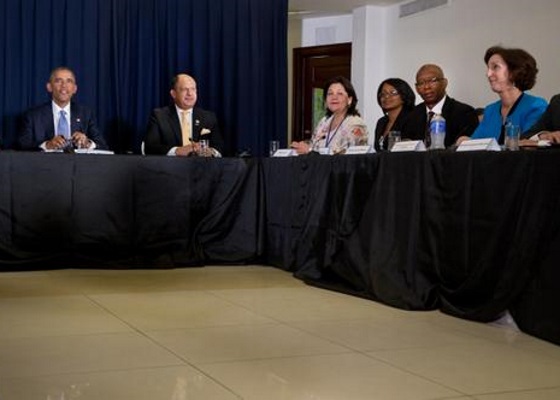
Barack Obama meet in Panama (Internet photo)

How would you describe VII Summit of the Americas in Panama, where you participated?

In general terms the summit was a positive balance for independent Cuban civil society, and I had the opportunity to participate on an equal footing with others in Latin America. This was very helpful to make it known that there are people in Cuba who think differently than the government, who want democracy and respect for human rights.

Moreover, the Cuban State showed its own nature, violent and intolerant.

Describe your meeting with US President Barack Obama, in the forum of civil society in Panama

“Firstly I should clarify that I didn’t participate in the forum of civil society, as I was not accepted by the Panama NGO that selected the participants.

I was in a private meeting by invitation, where the dissident Manuel Cuesta Morua and 13 other leaders of Latin American civil society were also present. There President Barack Obama expressed his support to foster the development of civil society in the region, and invited those present to say in which way they (also there were the the presidents of Uruguay and Costa Rica) could support us and encourage the Latin American civil society. Venezuela and Cuba were the ones who began to offer recommendations because both countries have the most repressive contexts in the entire region. Most agree that civil society must have sources of funding to develop and to carry out their projects.

In my particular case I called attention to the dangers that surround the Cuban legal system with regard to the policy that the US government intends to develop with Cuba on the issue of the private sector, communications and everything else. It is impossible to obtain any financial or material resources through donations or any other kind of help that can be given by current banking regulations within Cuba.

‘El Sexto’ dedicates his award to his jailers to show them that he is not alone / 14ymedio

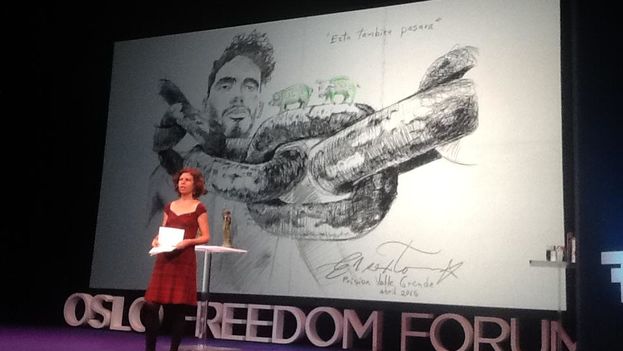
Lia Villares collects the award for Danilo Maldonado, "El Sexto” Wednesday in Oslo. (MileydiMC)
Lia Villares collects the award for Danilo Maldonado, “El Sexto” Wednesday in Oslo. (MileydiMC)

14ymedio bigger14ymedio, Havana, 27 May 2105 – The Cuban artist Danilo Maldonado, known as El Sexto, could not collect the 2015 International Vaclav Havel Prize for Creative Dissidence, in the ceremony organized by the Oslo Freedom Forum. The prize, awarded by the Human Rights Foundation (HRF) of New York, was received by the activist Lia Villares, since the graffiti artist has been in prison since last December, charged with contempt, for trying to stage a performance with two pigs decorated with the names “Fidel” and “Raul.”

After presenting a brief music video, with the refrain repeating “Three years [in prison] for two pigs, no,” and closing with the images of a rally to demand freedom for the artist and the phrase, “Contempt should never be avoided,” Villares read a letter written by El Sexto from Villa Marista penitentiary. continue reading

“I want to dedicate this prize also to those who have me in prison, to remind them that I am not alone,” the artist said. The graffiti artist also thanked the Ladies in White, his daughter, the writer Angel Santiesteban (who is also in prison) and the artist Tania Bruguera (arrested this Sunday in front of her house and released shortly afterward).

The other award winners, members of the Sudanese non-violent resistance movement and the Indonesian comic Girifna Sakdiyah Ma’ruf, personally received a representation of the Goddess of Democracy, the iconic statue erected by Chinese students during protests in Tiananmen Square in June 1989.

The Oslo Freedom Forum, which opened Monday in the Norwegian capital and will close on Wednesday, gathers the proponents of freedom and human rights from several countries. This year’s gathering is the Freedom Forum’s seventh, and focuses “on those places where it is impossible to stage protests, which are silenced or attacked, as in Cuba and Russia,” according to its founder, Thor Halvorssen.

Visits by Americans to Cuba rose by 36% between January and May / 14ymedio

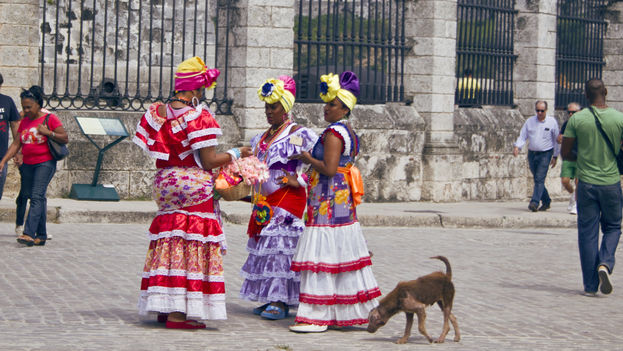
Female entertainers take photos with foreign tourists to earn a few convertible pesos. (14ymedio)

14ymedio bigger14ymedio, Havana, 26 May 2015 — The number of visits by US citizens to Cuba has increased 36% in the first five months of the year compared to the same period of 2014, according to data released Tuesday by the Associated Press. The figure, which includes travel through third countries to circumvent restrictions on tourist travel, comes from statistics provided by Jose Luis Perello Cabrera, professor at the University of Havana.

In the months that have followed the announcement of restoration of diplomatic relations between Washington and Havana and easing of the rules governing the travel of US citizens to the island, Cuba received 51,458 visits from its neighbor to the north. Of this total, 38,476 traveled directly from the US, while another 12,982 did so through a third country (57% more than in 2014), mainly from Mexico, the Bahamas, Jamaica and the Cayman Islands. continue reading

Between January and early May, visits to the Island from international travelers also rose, for an increase of 14% compared with the same period last year. A total of 1,547,104 tourists came from 206 regions, led by Germany (+ 22%), France (+ 25%), Great Britain (+ 26%) and Spain (+ 16%).

Americans who want to travel to the island must certify that their trip falls into one of 12 categories permitted by law, such as family visits, professional research and support for the Cuban people.

Travel between Cuba and the United States is facilitated by new air links, with maritime routes expected to join them shortly.

Reporters Without Borders to Hollande: “Mr. President, France should…”

Reporters Without Borders to Hollande: “Mr. President, France should seek the immediate and unconditional release of Yoennis de Jesus Guerra Garcia, Juan Antonio Torres, and Angell Santiesteban-Prats.”

Note: This post was written by the editor of Angel’s blog.

Once again, Reporters Without Borders (RSF) demonstrates its commitment to the serious situation in Cuba and writes an open letter to French President Francois Hollande.

On the occasion of the upcoming visit of Hollande to Cuba, they asked him to live up to the pledge he made in 2003 in a column in Le Nouvel Observateur, “Tell the Truth”, and asked him:

“Mr. President, France should seek the immediate and unconditional release of Yoennis de Jesús Guerra García, Juan Antonio Torres, and Ángel Santiesteban-Prats. France can do no less than urge the Cuban authorities to stop the repression and censorship of purveyors of independent information.” continue reading

Thank you from here on behalf of Angel Santiesteban-Prats for the relentless support provided by RSF for all those in Cuba who suffer the consequences of exercising the right to freedom of expression and information inside a dictatorship.

Eternal gratitude,

The Editor of Angel’s blog

arton47860-2268c

Cuba: “The silence of the friends of Cuba would be a form of complicity.” (Francois Hollande, 2003)

Published Thursday, May 7, 2015

On Monday, May 11, 2015, French President Francois Hollande will be the first French head of state to visit Cuba since 1959, and the first Western leader to do so since the announcement of the resumption of diplomatic relations between the US and Cuba, announced last December 17. A historic visit, and a historic responsibility: to “tell the truth,” as in the title of the column about Cuba written by François Hollande (attached here) published in Le Nouvel Observateur in 2003. Reporters Without Borders (RSF) sent an open letter to the President requesting him to urge his counterpart Raul Castro to improve the situation—which is dire—of the freedom of information on the island.

François Hollande
President of the Republic
Elysée Palace
55 Rue du Faubourg Saint‐Honoré
75008 París

May 7, 2015

Mr. President,

Before you make your trip to Cuba, Reporters Without Borders (RSF), an organization that defends freedom of information, would like to call your attention to the situation—which remains very critical—of professional and amateur journalists in Cuba. This country, which every year ranks last in the Americas in the 2015 Worldwide Classification of Freedom of the Press by Reporters Without Borders, ranked 169th out of 180 countries. This position reflects the apparent lack of pluralism and the difficult and dangerous situation in which journalists and independent bloggers operate in order to evade censorship and to publish independent information.

With a historic visit comes a historic responsibility: in the column you wrote and which was published in Le Nouvel Observateur on February 27, 2003, entitled “Telling the Truth,” you stated bluntly: “Silence by the friends of Cuba would be a form of complicity facing a system that we condemn elsewhere,” and you urged “supporting the Cuban people to the end and telling the truth about the inhumanity, both of the embargo and of the Cuban regime. Both are unjustifiable.”

You had no doubt about the role of France: “We demand the release of all political prisoners and the abolition of censorship.” In the name of these principles, France cannot remain silent.

Mr. President, despite the desire for openness that the Cuban government now displays in the diplomatic arena, it retains an almost complete monopoly on information and does not tolerate the existence of any independent media on the island. The traditional press and online media remain censored; the internet remains under close surveillance.

An exception to this lead cloak: the website of the independent news agency Hablemos Press. Since 2011 Hablemos Press was inaccessible on the island, but last March 12th, as part of an anti-cybercensorship operation, Reporters Without Borders unlocked its website. The Cuban government did nothing, an exception that should be the rule. Mr. President, France cannot forget that an opening can only be real and beneficial to the population if the island is also open to plural and independent information.

Independent journalists and bloggers continue to exercise their profession in the midst of a difficult and dangerous situation: their computers are confiscated and their mobile phones are disconnected; they are cited by the State Security Department and ordered to change their editorial slant. Also, they continue to suffer intimidation, smear campaigns, death threats, assaults, arrests and arbitrary detentions.

Even the World Day of Press Freedom on May 3rd served as a pretext for repression. Three independent journalists covering the march of the Ladies in White were arrested in Havana. They had distributed the Universal Declaration of Human Rights. Mr. President, France cannot continue to be silent about the arbitrary imprisonment of journalists.

Cuban authorities seem to increasingly prefer arbitrary detentions of short duration to prevent purveyors of information from doing their jobs and to keep them quiet. Yoeni de Jesús Guerra García (a blogger from Yayabo Press sentenced to seven years in prison in 2014), Jose Antonio Torres (a journalist from the official newspaper Granma, who was sentenced in July 2012 to 14 years in prison) and the blogger Ángel Santiesteban-Prats (author of the informative blog The Children Nobody Wanted, sentenced to five years in prison in 2013), are all currently serving long prison sentences.

Their crimes? Having spread information considered “anti-revolutionary” or “slanderous.” Ángel Santiesteban-Prats was sentenced to five years in prison for “domestic violence with injuries;” he was charged with a common criminal offense to reduce the political impact of his imprisonment. Since entering prison he has suffered ill-treatment and torture. A lack of legal clarity clouds his situation. Mr. President, France should seek the immediate and unconditional release of Yoennis de Jesús Guerra García, Juan Antonio Torres, and Ángel Santiesteban-Prats.

France can do no less than urge the Cuban authorities to stop the repression and censorship of purveyors of independent information. France should also intervene with the Cuban authorities and ask them to allow access to Cuba by international organizations defending human rights and freedom of expression and information, such as Reporters Without Borders. This, keeping in mind your desired objective: “to tell the truth.”

Thanking you for your attention to this request, Mr. President, I send my warmest greetings.

Sincerely,

Christophe Deloire

Secretary General

cuba_dire_la_verite_francois_hollande-2-15fd3

Published in Reporters without Borders

Orbiutes / Maykel Gonzalez Vivero

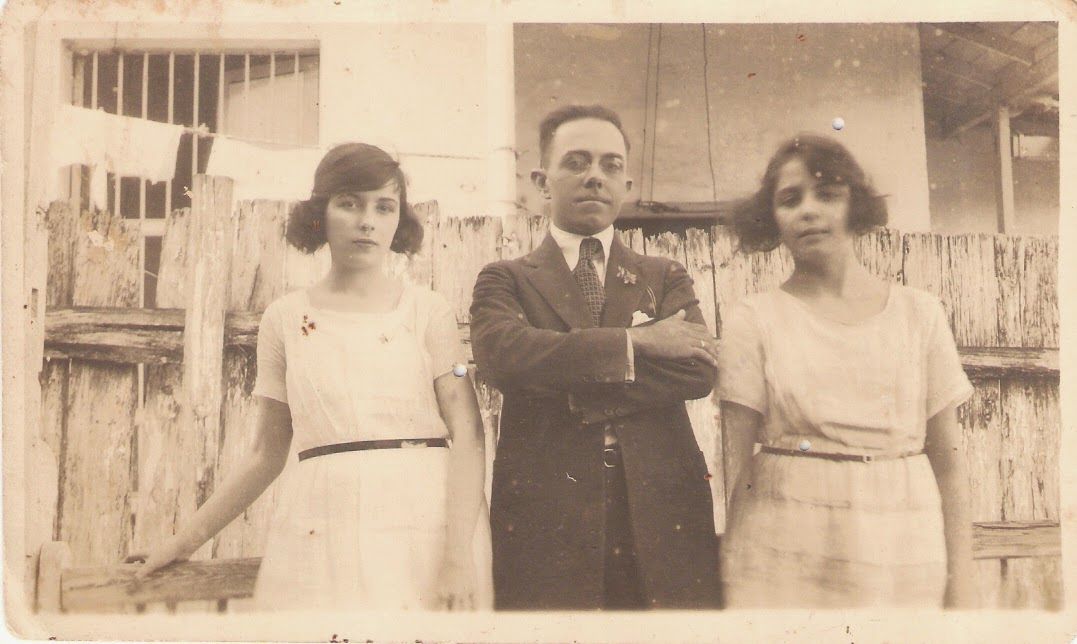
escanear0005

Maykel Gonzalez Vivero, Sagua la Grande, 20 May 2015 — My sister is telling me about what she just read: the unpublished autobiography of an elderly doctor in Camaguey. The memoir writer was an octogenarian when he wrote down his memories. The coming of electricity to the village of Cascarro, for example, figures in his review. A Galician installed the generator, pushed a lever, something trembled and there was light. I felt like I was there, my sister concluded.

I also enjoy reading memoirs. I value the survival of time as much as Proust. I’ve been obsessed with lost times since I was a child, when I would ask my grandmother to tell me something about “the olden days.” What came before, with its character of unknown certainty fascinates me, it motivates me more than now. continue reading

The old people of the family, settled in their present, are used to entertaining us with news from the past. Often, I guess, they’ve forgotten, and I remember a passage in Cintio Vitier referring to the mysterious capacity for forgetfulness. I, perhaps to my regret, can’t erase anything. Memory weighs me down, ties me to this forgotten city, to its disturbing cemetery of images.

Here’s an example that surprised my sister: inexplicably I remember what she was wearing almost twenty-five years ago, when we woke up on the morning to go to our grandfather’s funeral. I don’t remember how we made the journey, or what I myself was wearing. It was winter, we weren’t allowed to approach the tomb, and my sister, very small, was wearing a pleated skirt. Abounding in mournful red, it was probably a curtain or velvet crepe, like the brown of the jacket.

My sister reasoned, with alarm, that we know nothing of our ancestors. We go back a couple of generations and lose the trail. Unlike the elderly doctor, no one left memoirs. There is an explanation: we are descended from inevitably illiterate people. An old entry that our great-great-grandparents didn’t sign recording the birth of their children because they didn’t know how to write. Classified among the so-called “people without a history” that has confounded contemporary historians.

Appearing there, among the anonymous, doesn’t imply that they lived outside the vicissitudes of their times. During the famous strike of 9 April 1958, my grandmother hid her progeny under the bed. In the face of the anti-Machado revolution, in 1933, my great-grandfather forbade his offspring to leave the house. In 1896, after the Weyler proclamation, our relatives complied with the lethal order to leave their village. The site of our ancestors, I explained to my sister, was a hole, a hideout, an intrahistorical stronghold. The few exposed lacked experience in dealing with History and didn’t know what to do.

From the family forgetfulness and the biased stories, from the partiality of numerous historians, a late and peculiar compensation has come to us: my sister spent her teenage years collecting volumes about the Second World War; I assumed I had legitimate ancestors in the memoirs of Madame de Sevigne, Hans Christian Andersen, George Sand, Lola Maria de Ximeno and Renee Mendes-Capote. To Sand I owe the recovery of a memory, one word: orbiute. I thought there was no term to refer to the spots the sun leaves in your eyes after you have stared at its radiance for a while. Many summers I saw them. They stayed with me, unnamed. And it exists in Berry: orbiute. And it is not indelible, like memory.

maykel M4Maykel Gonzalez Vivero, Sagua la Grande, Cuba

“It was the night I desired and now I have it.”

State Inefficiency, Convenient Business / Cubanet, Ernesto Perez Chang

Selling yields no benefits (photo by the author)

cubanet square logoCubanet.org, Ernesto Perez Chang, Havana, 22 May 2015 — Attestations about poor or non-existent attention in Cuban state businesses are so abundant that few pay attention to them. In order to offer a response to the indignant, the island’s official press searches for causes of such abuse not in the inefficiency of the state enterprise but in other absurd factors like poor education or lack of professionalism, which do not reveal the corrupt essence of a system that, in spite of the proof of its uselessness, will be kept in place by government will, as is expressed in the Guidelines of the Sixth Congress of the Communist Party.

Why do we receive better treatment in a private restaurant or cafeteria? Why do customer demands bother the clerk and managers of a state eatery and why do they not improve the quality of their offerings? Why do they hide behind any justification in order to remain closed or to reduce their public service hours to the minimum?

According to Vladimir Rodriguez, owner of a busy little restaurant in downtown Vedado, the problem is in the objectives of each:

“As the owner of my business I seek to attract more customers, to offer more variety. I listen to the opinions of the people, the suggestions, I serve them like they were kings because it winds up as earnings. In a state restaurant the earnings do not come from the clients’ consumption and satisfaction but in that quite miserable thing that happens in the warehouse, in the sale to the black market of everything that arrives to be produced and sold to the customers, who turn into a nuisance. What little gets to the table is only to justify the work in case an inspector comes, but the clerks as well as the manager live on the black market. continue reading

“That is something everyone knows. (…) I worked for years in restaurants in Havana, even in luxury hotels in Varadero, and what I saw in the kitchens is nasty. (…) Rice that customers leave on their plates went back in the casseroles, a bit of meat, salads, the olives, everything that people leave on the plates is served again. That is way of dealing with leftovers. That’s why I left and opened my own business. I would not be caught dead in a State restaurant; God only knows what they are serving you.”

For Iraida, a clerk in a private cafeteria in Arroyo Naranjo, the matter is more complicated: “It is a secret to no one that in the stores as well as in all the state enterprises the people do not work, they are going, as they say, to struggle, that is to say, to steal. And the worst is that the government knows it and “plays the silly goat” [pretends not to know]. (…) Why? Because it is convenient for them. If they attack the black market the people will rebel because everyone lives off that, even them. There, yes, the revolution is over. They promised to create a wholesale market for the self-employed and even now we continue in the same way, buying on the black market because there is nothing in the stores or if there is, it is hidden in the warehouses, so that you have to buy from a warehouseman, who has a fix with the manager, and so forth and so on. There you realize that the government is involved in that mess (…) if it does not benefit with money, at least it does by leaving it to the people ‘to struggle’ so that they see the ‘blessings of socialism.’ In troubled waters, fishermen gain.”

Marta Li, owner of a café in Vedado, illustrates for us with her own examples what she considers the superiority of private enterprise. “In a State café no one worries about serving the customer well because it does not end up as earnings. They sell or not, the salary is the same for the manager as well as for the sales clerk. They care about what is left from a liter of oil and the chicken, to resell the cheese and the spaghetti; they are not sold because no one would buy them. I, on the other hand, have to constantly create sales strategies; my objective is that nothing is left, not in the pots or in the freezers, to sell everything because what I have paid is quite a lot. (…) Since I am close to the university, I make offers to the students who present their student ID, I discount the price. Sometimes for someone who buys more than one pizza or for a repeat customer I give them a free drink. People come because they know that they will receive good attention. It is not about lowering prices but giving good service.”

Customers do not matter; what’s good is what happens in the warehouse (photo by the author)

A former civil servant of a business enterprise in Havana, who wishes to remain anonymous because she is currently the owner of a restaurant, tells us of her experiences in a state business:

“Satisfying the customer is the last of the priorities [of a state enterprise]. Whatever it may be. They all work in order to steal everything that can be stolen and in the least time possible. One enters with good intentions and ends up coming to terms with the corruption because there is no other path. (…) The socialist economy has neither feet nor head. When I studied [economics] at the university the professors themselves said that there is no way to explain the Cuban economy. And when you try to apply any model you realize that they all fail. (…) It is not that you propose to steal, it’s that you have to do it because everyone is out for himself. It didn’t matter to me or to any of the workers in all the stores where I worked, which were more than twenty; it didn’t matter if the wages were low or not, not even the bonus, the salary was a formality, the true earnings are not even on the counter as many think. Where the money comes from (…) is not the counter. And be careful with making yourself the conscious one [honest] because you wind up blaming yourself for everything.”

Will they be able someday to prove the efficiency of the socialist state enterprise, as Cuban leaders claim, based on a couple of suspicious exceptions? According to the recent statements by Miguel Diaz-Canel, this “demonstrative work” is one of the main undertakings of “the country’s leadership with the Cuban people.” As if half a century of failures that we Cubans currently suffer did not matter, the government pushes to prolong an economic experiment behind which is hidden a vast fabric of corruption.

Against that piece of nonsense, for years it has been very common to hear on the street a phrase that sums up the inefficiency of state enterprises: “The government pretends to pay us, and we pretend to work.”

Outside the businesses, in the doorways, people resell products on the black market, in view of everyone (photo by the author).
Iniciativas-a-favor-del-cliente.-Una-paladar-privada-en-el-Vedado.-Foto-P.-Chang-722x505
Initiatives in support of the customer. A private restaurant in El Vedado (photo by author)
This snack bar gives students 5% off (photo by author)
Satisfying the customer is the objective of private business. There are more menu items than in State companies. This snack bar gives students 5% off (photo by author)
Guarapera-estatal-cerrada-en-horario-laboral.-Foto-P.-Chang-722x505
A State business closed during working hours (Photo by author)

About the Author
448.thumbnailErnest Perez Chang (El Cerro, Havana, 15 June 1971). Writer, graduate in philology from the University of Havana. He studied Galician Language and Culture in the University of Santiago de Compostela. He has published the novels: Your Eyes Are in front of Nothing (2006) and Alicia under Her Own Shadow (2012). At the end of 2014, the publisher Silueta, in Miami, will publish his most recent novel: Food. He is also the author of books of stories: Last Photos of Mama Nude (2000); Sade’s Ghosts (2002); Stories of Silk (2003); Variations for the Preliterate (2007), The Art of Dying Alone (2011) and One Hundred Deadly Stories (2014). His narrative work has been recognized with prizes: David de Cuento of the Cuban Gazette twice, 1998 and 2008; Julio Cortazar Latin American Story prize on its first call in 2002; National Critics Prize in 2007; Alejo Carpentier Story Prize in 2011, among others. He has worked as editor for numerous Cuban cultural institutions like the House of the Americas (1997-2008), Art and Literature Publisher, the Center for Research and Development of Cuban Music. He was Chief Editor for the magazine Union (2008-11).

Translated by MLK