Increase in Penal Cases Filed in Courts of the Capital / Cuban Legal Advisor, Yaremis Floris / Laritza Diversent

By Yaremis Flores

The increase in police reports and criminal trials held in the capital, were among the topics discussed a few weeks ago in a meeting among presidents of municipal courts in the former Audiencia de la Habana*, facing the Capitol.

A judge who participated in the meeting and requested anonymity, said that the filing of cases has doubled. “One of the objectives of the meeting was to strategize about the increase in crime in the capital Havana” he said.

“The Municipal Court in Central Havana has the most cases reported in the country,” confessed another judge, on condition of anonymity. However, according to figures from the National Statistics Office, until 31 December 2011, Centro Habana ranks eighth in population density, with 149,995 inhabitants.

“The Criminal Chamber of ordinary procedure (crimes carrying sentences of 1-3 years in prison) settled 132 cases this year, by July 2, similar to the number filed in 2011 up to December 12 of that year.”

“In the same court, the Criminal Chamber of summary procedure (offenses punishable with from 3 months to one year imprisonment) has already had 212 cases filed, while in 2011 it closed the year with 240 criminal cases, excluding 53 cases of complaints that are pending review,” the source said.

Police stations in Central Havana receive a total of 900 crime reports a month, the judge said, with threats, robbery with violence, theft between homosexuals, and carrying a weapon, are the most common crimes.

“By way of a solution, the police applied excessive fines to prevent cases reaching the Court. But they have imposed this measure on ex-offenders, contrary to the provisions of the Legal Code,” he said.

According to unofficial forecasts crime is expected to keep growing, with the celebration of carnival in Havana starting in mid-July. Traditionally in these celebrations, injury offenses and public disorder predominate even more.

*Translator’s note: The “Real Audiencia de la Habana” was a crown court established in 1838 when Cuba was under Spanish rule.

July 18 2012


First International Congress for Public Law Firms will be held in Cuba / Yaremis Flores. / Laritza Diversent

ImagenBy Yaremis Flores

The National Organization of Legal Collectives (ONBC) announced this past Tuesday,June 5th, on the official radio its first international congress: Advocacy 2012. The event will take place from the 19th to the 21st of September at the Conventions Palace, in Havana.

Co-sponsored by the National Union of Jurists of Cuba and the School of Law of the University of Havana, the event will host all legal operators and law students. However, the organization did not communicate to the public the registration fees:

Delegates:$240USD (approx.)

Presenter and students: $180 USD (approx.)

Guests: $80 USD (approx.)

According to the ONBC’s website, registration will be open to the last day of the month. Fifty papers, from throughout the nation,have been pre-selected to present. Ariel Mantecón, President of the National Executive Board of the ONBC, highlighted that the theme of the event will be “Management and Solutions for Legal Disputes.”

“The event will empower the commercial contracts sphere through the exchange with professional of Latin America, North America, and Europe”, said Mantecón. The procedural protection laws in agrarian-legal relations, the efficiency of the economic processes, and the new technologies in the notarial field are among the main topics for debate.

Nonetheless, after discussion with several attorneys not affiliated with State sector, they all agree that legal practices in Cuba demand immediate attention towards other issues. The delayed intervention of lawyers in the criminal process and the free exercise of law are among them. In Cuba only those who belong to the ONBC are legally recognized as lawyers.

Translated by Chabeli

July 9 2012


OMNI-ZONA FRANCA Back in Cuba After Touring the U.S. / Laritza Diversent

by Yaremis Flores

Amaury Pacheco del Monte, coordinator of the cultural project,OMNI-ZONA FRANCA, returned this Wednesday to Havana after an artistic tour that included several cities in the U.S.

Invited by the group of contemporary art, Pirate Love and Links Hall, the Center for Independent Dance and the Art of Performance, the alternative group shared its talent in festivals, concerts and universities, together with Cuban and North American artists. During their stay they were invited to local radio and television programs.

“We were on television shows and on the news on Channels 41, 51, and Radio Marti,” said Amaury, who confessed that “until this moment I didn’t understand the importance of a minute on television.”

“In the recording studios we felt at home, surrounded by Cubans almost the whole time, especially in Miami. But we also shared time with Cubans in New York, Washington, D.C., Chicago, and New Orleans. It was a fantastic experience. We were well received, and people accepted our art,” said Amaury.

One of the things that made the most impact on the leader of the project was the diversity in the U.S. “We met every type of person with different views. After this experience, today I feel changed,” he pointed out.

“I was surprised to meet Cubans who live there and their kids, who have never visited the island but have been brought up in the Cuban tradition, eating bread with guayaba. They feel they are Cuban, without being in Cuba,” he added, moved “by the separation that our people suffer.”

OMINI-ZONA FRANCA today constitutes the vanguard of alternative Cuban art. Its coordinator anticipated future projects “to continue working on Poetry without End, acknowledging ourselves through our artistic work and creating bridges among Cubans in every part of the world.”

Translated by Regina Anavy

June 25 2012


They Steal Cows From a Commander of the Revolution / Yaremis Flores

Yaremis Flores

Last Saturday, May 5, in the nighttime hours, at least three cows were taken from a farm belonging to Commander Guillermo Garcia Frias, located southeast of the capital. At dawn the next day, three patrol cars and two Forensic Medicine vehicles were observed.

The non-commissioned officer Alexander Borrero, one of those charged with the investigation, exclaimed, “The people do not learn, they dare to steal from a Commander.” The investigators took pictures and videos of the place. They also gathered statements from some neighbors.

Although some farmers in the community have reported the theft of their animals –a frequently-occurring crime in the area — the police have paid no attention. “Last Monday, May 7, they took one of my horses; I told the police unit, and I am still awaiting the investigation,” said Alfonso Chaviano, better known as Chichi, who added that a horse on the island can reach a value greater than $1000 US.

The cooperative Fernando Garcia Rosales, with more than 400 hectares, belongs to the National Company for the Protection of Flora and Fauna, directed by Garcia Frias. Located in Murgas, a rural neighborhood of the Municipality Boyeros, it counts on all kinds of resources. It is dedicated to some crops, among them sugar cane and moringa, but its basic work is cattle raising.

Osiris, one of the inhabitants of the place, who asked that his last name not be published, spoke two months ago with Miguel Vale, administrator of the farm. “He gave me a lift in his own Willy jeep, identified himself, and bragged about his constant travels to Mexico and Brazil for the purpose of buying heads of pure bred cattle.”
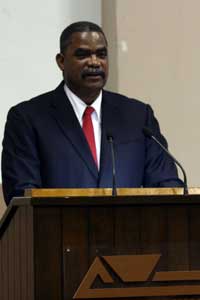
Cuban citizens have no possibility of controlling the profitability or lack thereof of the country’s investments.Much less of deciding the fate of this farm’s production, when it operates with the approval of Fidel Castro, the Cuban ex-leader, who visited the property last January.

In keeping with worldwide farming statistics,average cattle prices at auction fluctuate above $1,300 US. According to the non-commissioned officer Borrero, the head of cattle were pure-bred specimens and weighed between 350 and 450 kilos. Up to now, they have not detained any suspect.

Translated by mlk

May 23 2012


Without Justice and Without Rights / Yaremis Flores

The Havana capital will welcome the sessions of the Sixth International Meeting of Justice and Law in the Conventions Palace the next 23rd to25th of May. More than 500 delegates will meet; of those, 300 are foreign jurists from 14 nations.

Among the prioritized themes to be discussed are found access to justice on the island, the re-education work in Cuban prisons and criminal due process, according to the note published on the website www.gpalco.com. As with earlier editions, there will be an official presentation about the case of the five Cubans sentenced in the United States for spying for the Cuban government.

Ruben Remigio, president of the Supreme Tribunal, sponsor of the event, said in a press conference offered last Thursday, that the meeting will permit Cuba to show the advances in its judicial plan, in the process of procedures and the transparency of the administration of justice.

“The meeting will be a ’sounding board’ to present a counteroffensive against the orchestrated campaigns for the major press, that tries to discredit Cuba and silence its achievements in the administration of justice,”added the jurist.

Remigio boasted of the victories of the Cuban Revolution in justice as”favoring the exchange of experiences among different judicial operators.” Nevertheless, not all jurists will be represented in this debate. Only lawyers from state sectors have access to the convention. Also, an Organizing Committee is charged with selecting those reports related to political concepts of the government.

Laritza Diversent and this writer, though we are both lawyers, have never participated in this kind of event. “I have not attended the convention. The only objective of the organizers is to paper over the chinks in the Cuban judicial system,” commented Diversent.

Among the missing matters of the congress are the inadequate assessment of proof on the part of the Tribunals, the forced or slave work of the prisoners of the island and the advantages of an independent judicial power. Maybe a deep analysis of these topics will avoid another international meeting without justice and without rights.

Translated by mlk

May 21 2012


Elderly Fired in Matanzas / Yaremis Flores

Yaremis Flores

At least 25 retirees were fired by the Chief of the Basic Unit of Cooperative Production (UBPC), located in the town Merceditas, in Matanzas, 2 weeks ago. “The reason for the dismissals was the death of one of the elderly, after being trapped in a fire in the cane-growing area of the cooperative,” said Silvia, daughter of one of the unemployed.

According to the source, the deceased worker was trying to create a backfire (the method used to prevent the spread of the flames). But a wind gust spread the fire to surround him. “The firefighters never came. When they managed to put out the fire the man was already incinerated,” he said.

Enrique, age 60, is one of those affected by the layoffs. He had a monthly salary of 700 Cuban pesos (25 U.S. dollars). “We made up more than 70% of the workforce of the cooperative,” he said and asserted that the response of the managers, before the fatal incident occurred, was to fire the retirees. “Other UBPCs (basic units of agricultural production) like Hoyo Colorado in the town of Marti in Matanzas, have also initiated some unfair dismissals.”

The laid-off worker argued that “the bosses fear that there will be another death, or we will cause losses through carelessness.” But he claimed that he has never been disciplined for any misconduct during his employment.

Enrique receives monthly support of 300 Cuban pesos, about $10, as his pensionfrom the State. Senior citizens on the island have to subsist on a “little extra work” because the pension does not cover their basic needs.

In general, retirees in Cuba are hired for a limited time period. However, the labor law does not empower the managers to end the employment relationship without legal justification.

May 18 2012


Rastafarian Community on the Island and the "Celebration" of May Day / Yaremis Flores

Yaremis Flores

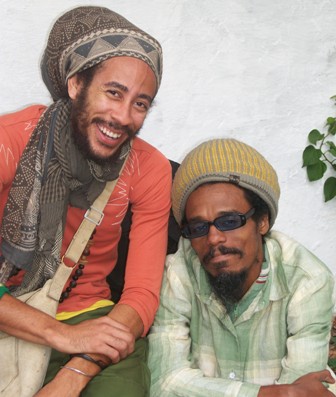
Sandor Perez, A 29-year-old Rastafarian, had no reason to celebrate this May 1st. In February he was dismissed from the Communal Services of Havana East, where he worked as a street sweeper. His boss told him: “If you don’t get a haircut, you can’t keep working with us.” Sandor had bought with his savings his own little cart for picking up trash.

His long hair curled under a turban does not meet the ’good behavior and appearance’ requirement for belonging to a state entity. Graduated with an associate degree in Naval Construction; he did not exercise thattrade because of the institutional rejection of his beliefs.

“I have applied for several jobs,and generally they don’t choose me because of my appearance,” said Sandor. “The only possible optionsfor the Rastas in Cuba are to work cleaning streets, in agriculture or in construction. I don’t know anyone who is a doctor, teacher or delegate of the National Assembly,” he added.

A four-year old girl depends on the young Rasta. During the month of March he sought work on the ’Hanoi’ Organoponico in the capital neighborhood of Alamar (a place where agricultural products are cultivated and sold), but the answer was, “Come another day to see if something appearsfor you.” He went 10 consecutive days, with the hope of getting a job.

On the morning of the eleventh day, the boss of the Organoponico told him, feigning sadness, “The job vacancy is already filled; if you had come yesterday. . .” Sandor replied: “Look, don’t pay me with money; I can do with a daily bundle of lettuce for my I-tal (natural foodproper for the Rastafarian diet).” The proposal was not accepted.

Carlos Cantero, a Rasta of 36 years of age, also worked as a trash picker some weeks ago. “I was expelled because of my dreadlocks” (Rastafarian hair style). Moreover, he assured that some of his Rasta brothers have not withstood the pressure and have had to cut their hair, which goes against thecommands of the religion.

Without precise official statistics, some Cuban Rastas affirm that the unemployment rate of the community is high. In order to subsist, they are obliged to fulfill the stereotypes imposed by the socialist society. Is it for everyone, the happiness of celebrating the work of the Revolution on the International Day of the Workers?

Translated by mlk

May 16 2012


No Punishment for Police Brutality Against a Young Holguin Man / Yaremis Flores

By Yaremis Flores

The fate of Alberto Lairot Castro changed on August 28, 2007, when he was just 28 years old. Two soldiers, Hector Luis Osorio and Frank Ochoa Pérez Angulo, applied a technique not allowed in the self-defense programs of the Ministry of the Interior. It caused irreversible consequences.

The young man was celebrating that day at the Calixto Garcia Baseball Stadium in his native Holguin. He had drunk some alcoholic beverages, but had no weapons and hadn’t bothered anyone. He had a confrontation with some police officers and was taken to the city jail for an alleged crime of resistance.

At the station, the policemen took Lairot Castro to the holding area. Alberto refused to enter the cell. His large size necessitatedaction by several guards. Second Lieutenant Frank grabbed him from behind and immobilized him with a “Double Nelson” hold. Hector, the captain, took him by the feet. Both placed the prisoner in the call.

Llave Doble Nelson aplicada a Alberto

“I felt my neck snap. After a few minutes I started to scream because I didn’t feel my legs,” admitted Alberto, who had surgery immediately.

Medical terminology does not adequately convey the seriousness of the matter. It might be more understandable if I said that Alberto has a spinal cord injury and cannot move his legs. His muscles have atrophied. Immobilityhas predictably resulted in the appearance of bedsores.

The Military Prosecutor considered sufficient a sentence of 2 years in prison -conditionally suspended – as punishment for the police officersfor the crime of Serious Injury. At the hearing, doctors Jaime Oliveros and Frank Fernández concluded that the injury was caused by the use of the “Double Nelson” and the subsequent transfer to the jail cell.

But these statements were dismissed. The judges of the Military Court of Holguinnoted in their decision “the police applied the technique in a timely and professional manner.” They added that Lairot Castro caused his own injury bystruggling and resisting placement into the cell.

The defense attorneys invoked the innocence of the officers. They took refuge in the argument that “causing injury in the line of duty does not carry criminal responsibility.” That is the moment when any lawyer can be ashamed of their profession.

There was no shortage of praise for the accused. Referring to Perez Osorio the judges state “he fulfilled his duties as Deputy Chief of Police ofHolguín, has been a disciplined soldier, and is not violent.” As for Ochoa Angulo, “he enjoys prestige and authority, outstanding in the struggle against crime.” The opinion of the judges about Lairot Castro was different. “He was aggressive, well-known in the neighborhood for his physical strength, and wearing tight clothes to show off his muscles.”

The court acquitted the policemen. Nearly five years later, Alberto Lairot is still not well. His strength is deteriorating day after day, under the pained gaze of his mother, who remains with him in the hospital. His days as an athletic youth are past. But the deed remains unpunished.

May 14 2012


To be "a tiempo" (on time) and the fulfillment of legal terms / Yaremis Flores

By: Yaremis Flores

Mabel, the wife of Raúl Rodríquez Soto, incarcerated at Guanajay Prison, this past October, submitted a petition for parole to the Provincial Court of Artemisa. To date, no response has been received.

In Anglosaxon culture, punctuality is an inevitable custom. On timeis an expression in English whose meaning is “at the exact time”. If a reporter arrives late to an particular place, he loses the exclusive. If someone in search of a job arrives late to a job interview, it’s certain that they won’t be hired. If the goal is to maintain a friendship, a good job, or gain opportunities in life, one must understand this maxim.

In our country, to be “a tiempo” is complicated. However, Cubans must learn the honorable necessity of being punctual.

What’s worrisome is that the “relaxing” of schedules doesn’t occur only in the social sphere, Concerts, solemn ceremonies, meetings and other organized activities of state institutions never begin at an establish hour but rather “around ten in the morning” or “at about five this afternoon” as is habitually stated. The only exact times are closing times.

Within the offices of Judicial Administration, the same thing happens.The judges almost never hold court starting at 9:30 in the morning; the legally established hour. Neither is there given an official explanation to those present when there is a delay as prescribed by the rules of procedure. The announcement of sentences is late and the procedural terms are often incomplete.

These delays are symptoms of a weak etiquette or lack of respect for the citizen. Yet judges are not flexible when such terms are violated by others. Because if an individual not in compliance with a resolution appeals before a court a day after the expiration of the time limit, whether it be for any reason whatsoever, the appeal is rejected.

When a lawyer from the Legal Office is late with a file because more time is required to complete an analysis, the court imposes a fine of 25 pesos for each day of delay. I wonder what fine the Court will pay for the days that it delays in responding to Mabel’s petition?

Translated by William Fitzhugh

April 26 2012


Government Reponse to an “Occupier” / Cuban Law Association

Amaury, Iris and 5 of their (now) 6 children. FotosCubaHoy

By Yaremis Flores.

On Tuesday, March 6, Iris Ruiz, wife of the Omni-Zona Franca cultural project coordinator Amaury Pacheco, received the response of local government of Alamar, a neighborhood located in Havana del Este, which confirms their status as an illegal occupier and warns her to “leave the premises of her own will.”

Iris, her husband, and their 6 children under 12, were living in appalling conditions and so, 4 months ago, took over an apartment in Building E-83, Zone 9 of Alamar, that is “Cuban state-owned” according to Rita Hernandez Batista , President of the Government of the municipality.

Iris Ruiz knew from the neighbors that the officials of the Municipal Housing Office (DMV) of Habana del Este, showed the apartment to prospective buyers when such a procedure was not yet authorized because there was no paperwork, which left the apartment in legal limbo. “This ‘property of the State’” allowed them to destroy her plans and the sale was illegal. However it is Iris whom they recommended to “mediate on the consequences of your improper proceeding.”

Iris confesses to feeling punished by the State institutions for having so many children. “On one occasion the Director of the DMV questions me about having so many,” she said. She said this contradicts the concern that the birthrate has fallen from 12.18 in 2004 to 9.99 in 2011 (births per 1,000 people), which is exacerbating the aging of the population.

Although the birth rate depends largely on the level of fertility, in our country a decisive factor in the decision to have children is the economic instability and the homelessness, causal determinants for various forms of birth control.

According to Rita Hernandez, Iris’s family “is not a ‘social case’ and its remaining in the building contributes to the worsening health status of children.”

Iris thinks the possibility of their being “extracted” (by force) from the property, along with their 6 children, is high. “Maybe after the Pope’s visit and taking advantage that my husband is traveling abroad.” But the president of the Government of Alamar said in response: “In our society no one is left to die, especially children.”

25 April 2012


El Ñaño in Prison / Yaremis Flores, Cuban Law Association

By Yaremis Flores

Members of the Rastafarian culture on our island are discriminated against by society and by the authorities. They are often linked to crime and deprivation. The Rasta Hector Riscart Mustelier, was arrested at dawn on November 16, 2011, as he left the National Cabaret, across from Central Park, after a performance of the musical group “Herencia” which he directs. The reason: an alleged crime of drug trafficking and resisting arrest. Possible punishment: 10 years in prison.

“The guards wanted to search me front of everyone. I asked them to handcuff and take me to the station. I am an artist and that is a violation of my honor,” said Hector, better known as ‘El Ñaño’. “A policeman was upset, he hit me and handcuffed me on the ground. My turban had fallen to the ground,” he said.

Law enforcement officers in Old Havana, participating in the arrest, acknowledged that the suspect that offered his identity card and then “in order to prevent the operation, he wriggled away, jerking his body. His turban covering his ‘dreadlocks’ (as Rastas wear their hair) came off, revealing two wrappers with 65 grams of marijuana,” according to the provisional findings of the Prosecutor, dated January 30, 2012.

The accusation relied on the statements of the policemen; according to them they had an undercover cop in the cabaret. However, Riscart said there were other interests that led to his arrest: “An officer of the National Drug Task Force identified as Yoandris, proposed that I work with him, I refused and he warned me that I was going to be sorry.”

Other “evidence” for the prosecution, is the detainee’s urine sample, the result confirms the consumption of marijuana — not punishable under Cuban law — but nothing proves the crime he’s charged with.

El Ñaño said his statement can be corroborated by the security cameras where he was arrested. “I demand the presentation of the film, which should be at the service of the citizens,” he said. But it is rumored that, coincidentally, the security cameras did not work that night. El Ñaño also reported that his lawyer was afraid to challenge the authorities.

The prosecution says the accused “was marketing the addictive substance inside the cabaret” but no money has been seized as a result of the apparent business. Neither did they find any drugs in a raid on his home. The prosecutor also said that the accused meets many drug traffickers, but omitted their names and as well as why these so-called “capos” are not in prison.

Yaremis Flores

The trial, held behind closed doors despite being a criminal offense not classified as closed to the public, was concluded on Friday April 13 at the Diez de Octobre Municipal Court rather than the Provincial Court of Havana, although this offense is its jurisdiction. It is expected that there is no new arbitrariness in the application of the law.

19 April 2011


Condemned for Rape Without a DNA Test / Yaremis Flores

Yaremis Flores

On the tenth of January 2006, the Provincial Court of Las Tunas condemned Ramos Utra to 20 years in jail for the rape of a six-year old girl. The accused, 46 years old, declared himself innocent. Nevertheless the judge sentenced him convinced that “the facts occurred in this way and no other, according to the testimony of the minor”.

The victim recognized as hers underwear found in the home of the accused, with which she was supposedly tied and gagged. But the investigation found no physical evidence corroborating that it was this underwear and no other, that used in the crime.

According to judicial authorities, the convicted took advantage of his having found himself alone with the child and “giving free rein to prurient impulses, penetrated her, performing movements pertinent to the act”. The following day, the child told her mother what had happened and “she alerted the authorities”.

It turned out to be credible to the judges that although and when the accused had “aberrant desires”, it was the child alone who presented with raised fissures in her genitals, unnoticed by the mother who did not suspect what had happened.

Although three witnesses testified that the accused was not alone with the minor at any time, they were dismissed by the Court “not for being favorable to the accused but for showing a marked interest in helping him” the judges confirmed at the time of sentencing, when they also threw out a laboratory test that affirmed that there was no match between the semen found and the blood of the accused.

The lawyer for the defense proposed a DNA exam of the underwear that the minor was wearing on the day of the crime. The judges denied this and validated what had been declared by a police investigator who assured a match between the semen and the blood type of the supposed guilty, insufficient evidence in any just legal system, to overturn the presumption of innocence of the accused

Cuban judges judge sheltered in a “free” assessment of the test. A flawed assessment allows that “you may arrive at any decision but justify it well” according to the President of the Chamber of the Court of Havana which conveys its “insights” to the less experienced. In this manner, the accused must bet on the good faith of those who judge them.

“A delayed examination of DNA, beyond 24 hours, successfully revoked a wrongful judicial finding in the United States, in the case of one sentenced to life imprisonment for sexual assault” according to a press release published in the official press Granma on the 12th of December, 2005. More than 160 people have been freed thanks to the test, in this country.

Ramos Utra has slept more than two thousand nights in prison and insists on his innocence. The possibilities that a trustworthy laboratory analyzes the genetic information of his blood at this point are zero. This is because the Court ordered the destruction by burning of the underwear containing the semen and the panties found in his home.

Translated by: William Fitzhugh

March 27 2012