Street Sense / Orlando Luis Pardo Lazo

COWBOY POET Orlando Luis Pardo Lazo

It’s called  Street Sense,  which is sort of like El Sentido de la Calle in Spanish, which is a much better title than any Cuban magazine or newspaper has got; and that obviously includes the ones published abroad.

It comes out fortnightly in Washington D.C., which isn’t just the capital of the empire, but it’s also North America’s Homelessness Central. I have never seen so many homeless as I have here. Mostly, they are in the subway stations, where they take up residence according to some kind of timetable, and where, according to Wikipedia,  they have the world’s longest escalators. But I also see them out in the open, exposed to the dreadfully cold springtime rain. And, before that, out in the worst of this city’s infinite winter.

You never come across the same homeless people, not even if you pass by the same place two thousand times. They have either moved, or they have died. No other possibility.

Many of these humble homeless guys get published in Street Sense. Those of them who have not been eaten up by hate, crime or illness. Those who have retained enough mental clarity and nobility of spirit. Those who are trying, as best they can, to get back into the machine that once vomited them out, or who were crushed by it, possibly because they tried to resist the hypocritical mediocrity which comes with any kind of success. continue reading

I have kept one of those newspapers dating from the month of March 2013. That was the month and year in which I arrived, stunned by the sleepless early mornings of Washington D.C., in the mercenary luxury of the Hotel Dupont. I had just got off a Megabus when I bought it from a street vendor who turned out to be an author published on page 9. A roofless poet, like me. Who had nothing else apart from his words. Like me. A shabby-looking old boy, who had a proud and absolutely not despondent appearance. The opposite of me. He was outside Union Station. He thought I looked like a friend, and he came over to me. He said:

“I’m published here. Wanna buy it?”

It was true. It turned out his name, or literary pseudonym, was Chris Shaw, The Cowboy Poet. My colleague’s poem, which was illustrated with ice crystals, was called The End of Winter. And that’s what it’s still called, I presume. My poet and promoter was afraid of winter. In barely 11 single word verses, and in spite of the opinions of the global warming experts, Shaw complained alas I fear it will be back!

A very terrible poem, which was appropriate, just as awful as the return of another winter at the end of the following year, 2013, although DC didn’t experience then the murky version it had gone through in 2012.  The one I largely missed. When I had to put up overnight in a homeless shelter, I was able to feel in my bones the sense of the street in Shaw’s poetry. Or next to the unbearably thick walls of a subway station, it’s possible to cover yourself with the newspapers you couldn’t sell. Apart from me, nobody bought one, while we were both waiting for them to come and collect just me (because in March 2013 I was a Cuban counter-revolutionary from Cuba and I qualified for a visa and a temporary resident permit).

I paid the two dollars which is the amount recommended on the first page. I then discovered that the majority of the contributors to Street Sense sign their articles as Vendors. They are vendors of these desperate printed sheets. They sell their poor words, printed in a newspaper, just as others do at every level all over the United States, but these people sell them for a negligible ridiculous amount: the amount which is their hope, which nearly got a second chance. Nearly.

Now I am someone without a home. And, more than that, without a country. I know that one day I am going to decide to sell these sheets to strangers going into or out of railway stations. El sentido de la calle in the United States of Nothing America.

I came from Cuba without wanting to, swept away by too many people being bumped off while the world looked on, and consumed, in secret, by love. The academy of the left filled me with friendly disgust. I was bored by earning money. The right wing is a delusion of the academy. But I am never going to go back to my island, the island that we love, which is intact in our most personal and most aggressive imagination.

My dear Cubans, I am not going to return, even in the event of God or Google restoring democracy there, whether it is with or without the destruction of the corpses of the dictators. I would find it impossible to see my home without me in it, or my mother left to die alone on the hundred year old boards of 125 Fonts and Beales, or my loves dying of my indifference and desperation, although never because I have forgotten, to realise back in Cuba that the United States was an acceptable nightmare and that Cuban exile is an evanescent eternity, and to then live in my ever-present homelessness, in my arrogant foolishness as a free healthy man in the only city I understood while I was alive, and also after that, when I died spitting fuck-words in the face of the tyranny in power: Havana.

Because that’s all totalitarianism is: a sick relay race. And, you know what? I am going to hold onto the baton, because it suits my hatred, or my crime, or my sickness. I am not going to pass it on to any other Cuban. I’m sorry, but you people and me are no longer contemporaries.

Translated by GH

2 July 2014
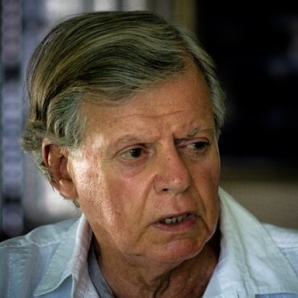
Cuban Architect Mario Coyula Cowley Dies

mcoyula070714In the early hours of Monday, architect Mario Coyula (16 June 1935 to 7 July 2014), winner of the National Architecture Award, died of cancer, according to the island’s official press.

Born in 1935, Coyula directed CUJAE’s School of Architecture, he was the Director of Architecture and Urbanism for Havana, for the Group for the Integral Development of the Capital, and first president of the Havana Monuments Commission.

Among the “most notorious” of the works he participated in was the Mausoleum of the March 13th Heroes, located in the Colón Cemetery, as well as the Martyrs Park at Infanta and San Lazaro, “considered the first major monument after te triumph of the Revolution.”

He also did the Duplex House in the Camilo Cienfuegos City School and the conversion of the of the former Caballero Funeral Home into a House of Culture. continue reading

Coyula was editor-in-chief of Architecture-Cuba magazine, and he was a member of the editorial boards of Architecture and Urbanism, Temas, and Revista Bimestre Cubana.

He published more than two hundred articles, prologues, essays and reviews in several Cuban and foreign journals. He gave lectures, workshops and critiques in more than forty universities and cultural centers in twenty countries.

He was designated a Fellow of the SIGUS program at the Massachusetts Institute of Technology (MIT) in 1990, and since 2001 was the member of the International Research Group on Architecture and Infrastructure (GRAI), currently LIAT (Research Laboratory on Infrastructure, Architecture and Planning ), based in Paris.

He was also a visiting professor at the Graduate School of Design at Harvard University and of Urban Strategies at the University of Applied Arts in Vienna.

At the University of Havana he presided over the granting of teaching positions, and was a member of the Scientific Council of the Faculty of Architecture of the University of Havana. He was also vice president of the permanent national tribunal for Scientific Degrees for Architecture of the Ministry of Higher Education and was a member of the Scientific Advisory Committee of the Technical Council of the Ministry of Construction.

In addition to the National Architecture Award, he received the Cultural Heritage Award, the Joaquin Weiss Critics Award, the Essay Prize from the International Association of Art Critics, “Choice” Award for academic books of relevance in the United States.

According to his family, his body will be cremated.

From DiariodeCuba.com

Note: Cuban filmmaker, and occasional TranslatingCuba.com blogger, Miguel Coyula is Mario’s son.

Miami: Diverse and Pluralistic

somersault1403737414_img_00702Just by strolling through, you can see the diverse medley that everyone has described Miami to be. A girl pirouettes in a public square; exiled Cubans peacefully protest in a major street within the city; a Muslim woman takes a rest away from the incessant heat on a Saturday morning; and the Marlins Park opens to avid baseball fans. This is Miami.muslim1403737415_img_07752

writers happy hour1403737415_img_0232Miami: “Happy hours” on Thursday. Writers. Photo: Luis Felipe Rojas

hunger strike1403737416_1Democratic Movement – Hunger Strike. Photo: Luis Felipe Rojas.

marlins parkmg_0270Marlins Park.

Translated by: Bianca Martinez

8 June 2014

Cuba is Going, But into Exile* / Juan Juan Almeida

According to the authorities, Cubans are now allowed to travel, they can own businesses, and now Cuba is the world champion of freedom. However, even so, desertions from the country continue apace. Within the span of a few hours, ten dancers from the National Ballet of Cuba via Puerto Rico, two tennis players who competed in the Davis Cup, and the members of the women’s Cuban field hockey team, all decide to cross the border to the United States.

Raúl can say what he wants, but judging from events, things — meaning Cuba — are going from bad to worse.

* Translator’s Note:  The first part of the title of this post, “Cuba Va”,  is a play on the title of – and lyrics in – a song by Cuban folk singer Silvio Rodriguez. In the sense that Rodriguez uses the phrase, it can be interpreted as “Cuba will survive” or “Cuba will prevail”.  But the phrase can also be read literally, as in “Cuba is Going” — which is the sense in which the blogger is using it.

Translated by:  Alicia Barraqué Ellison

13 June 2014

Repaying Debts With Loyalty / 14ymedio, Reinaldo Escobar

14ymedio, Reinaldo Escobar, 4 July 2014 – The Cuban government has sided with Russia on every vote in the United Nations that has concerned Ukraine. It is a surprising outcome in a country that has traditionally defended concepts such as the self-determination of peoples, sovereignty and territorial integrity as key survival issues; a country which now looks kindly on the transfer of immense and rich Ukrainian territories to the control of Moscow.

Also noteworthy is the attention the government has devoted to discrediting its peaceful opponents, labeling them “mercenaries in service to the empire,” given that it has coined the term “independent militias” as a part of its official language, targeted to those who, with the undeniable support of Russia, are leading an authentic operation of imperial expansionism.

But loyalty is profitable and on Friday the lower house of the Russian parliament ratified the cancellation of 90% of Cuba’s debt with the extinct Soviet Union. The gesture will save the Island from a payout of 31.7 billion dollars.

The Russian-Cuban accord, now ratified by the Duma, also provides that the remaining 3.5 billion that makes up the old debt will be paid over ten years and that the amount will be placed in special accounts dedicated exclusively to investments in the Cuban economy.

He who pays with loyalty runs no risks. The one left in a delicate position is he who collects under this concept, because once the debts are settled, the insolvent debtor can suspend his commitments without anyone being able to claim anything.

When Vladimir Putin steps foot on Cuban soil this coming 11 July he will sign the agreements and joint statements, none of which will compel a future commitment to vote for or against Russia in international forums. Clearly I’m speaking of that future we so greatly desire, that future after the change.

4 July 2014

I Would Not Accept Trading My Freedom For That of the Spies / Angel Santiesteban

I hope that President Obama does not have the card up his sleeve to exchange Alan Gross for the three spies who are fulfilling their sentences in the United States. The dictatorship is aiming for that to happen. We all know – by the actions of more than a half-century of totalitarianism – that the régime survives on media circuses, the most remembered of them being the one that concerned the child Elian.

The latest theme that they have chosen was that of the “ZunZuneo”, which sought to raise dust in front of the calamities and the strict censorship in a country that is sinking but — incredibly — without even touching bottom, precisely, thanks to those life with those who manipulate the media of the Fourth Estate.

Fidel Castro, Champion of Disinformation

The Castro brothers, wise in foreign policy in terms of deception, blackmail and economic vampirism, understood – ever since the trial against began in Miami of the agents of Cuban Security – that they would have a cause, a slogan and entertainment for a while. Fidel Castro, invariably, has been the champion of disinformation, always making a defeat seem like a victory; that is what he has been doing since he failed in the attack on the Moncada Barracks.

Since his last lights and years in Government, he planned this blackmail of the United States. He tried also with the imprisonment of 75 dissidents, which later was called the “Black Spring” and paid a high price for it with the attitude taken by the European Community and its “Common Position”.

Alan Gross, hunted rabbit

Cuban State Security waited a long time for an opportunity to seize an American spy who had no diplomatic rank, and seeing that it was not going to happen, manufactured one, as suits its political ability.

The Obama government has not recognized the contractor Alan Gross as a spy for his country, although, on humanitarian grounds such as his age and state of health, it has asked Havana to release him.

Of course, Cuba has played all the cards, because if their prey were to die for whatever reasons, it would create a conflict of major proportions. But the Castros needed a victory to result, especially if it concerns their historic enemy, and so, winding the watch of their power and extending it for a while longer.

To top it off, as if it had to do with cattle, and seeing that a single hostage is not enough incentive, the political police has seen fit to apprehend four residents of Miami on serious allegations of terrorism, as a desperate gesture to undermine influences and press for the exchange.

Media campaigns that are bleeding us dry

One day it will be known the economic amount the media campaigns of Fidel Castro cost, but only the campaigns of the child Elian and the Five Spies have deeply bled the Cuban economy.

To maintain committees in dozens of countries, and elderly people paid at the service of the political police of the Island, they constitute an army that not even a prosperous state would be able to afford.

The paid publications in newspapers of great importance, the billboards along the highways — even in Miami itself — the payment for lawyers and constant travel of relatives around the globe, are only some of the costs of the infinite list that the Cuban citizen pays.

An exchange would be a setback for the United States

If President Obama, in the two years remaining to him, exchanges the spies for a maligned civilian, it would harm the Cuban vote, so important in Florida, and would lose that place for the candidate of his party.

In addition, Hillary Clinton just acknowledged — in her book of memoirs — that “she advised Obama to ease the embargo”, by which it can be inferred that she is willing to exchange them, which would be a major setback for the United States in terms of its position in defense of human rights in the Island, even more so, because these spies are related to bloody deeds — such as the shooting down of the small plane of the “Brothers to the Rescue” (Hermanos al Rescate) — and it would be a Pyrrhic victory with regard to policy, for their inhuman actions.

They should be incarcerated and with long sentences – the three who are left — should it be exclusively pride of Fidel Castro, who did not hesitate to expose his men in “enemy” territory. It was he who slaughtered and betrayed them.

An exchange would stain Gross

If the U.S. Government has maintained until today that Gross is not an agent, exchanging him would be a deadly act, first, because it would be recognizing him as such, after several years of ordeal as a hostage; second, it would be to accept that they have sacrificed it for nothing, because they could have exchanged him from the beginning; by the way, it would strengthen the Cuban dictatorship, and would weaken the effort for human rights that the American administrations have pursued for decades.

And lastly, by carrying out an exchange, it would pass into history as an act of cowardice by, a high cost that perhaps he is not willing to pay. To exchange a civilian for spies sentenced because of acts of blood, is to muddy Alan Gross, As the US President, maybe he is willing to pay that price, not exactly as a fighter for liberty, which does not at all have to do with the exchange of Sergeant Bowe Bergdahl for five Afghan prisoners at Guantanamo, as a result of the war against Taliban extremists.

In my case in particular, as a civilian, artist and civil rights activist, I would prefer to die in Cuban jails before being so stained by history, by the simple and reasonable fact that I am innocent, as corroborated by my evidence, as should be Alan Gross, as has government has said so far.

Ángel Santiesteban-Prats

Lawton Prison Settlement. June 2014.

7 July 2014

Response to my Blog Readers / Angel Santiesteban

Messages come to my blog mail, some elegant with congratulations for “my upright position” before the dictatorship; others, interested in my health, like this one that I answer in which they ask questions because they don’t understand why I’m in prison, then recognize that sometimes there are contradictions. And of course, this happens so much that I thought I needed to answer. With the most possible brevity, I’ll try to answer many questions in one single answer: this post.

Everything that is sanctioned in Cuba with a maximum sentence of five years is recognized as a “minimum severity” conviction. There are three types of sentences: “maximum”, “medium” and “minimal severity”. As my punishment was for five years, according to the present laws for prisoners condemned for “minimal severity”, they had to place me in a settlement.

The prisoners of “prioritized” character (meaning the most dangerous, condemned for murder, trafficking of people or drugs, economic crimes, rape, pederasty, etc.) are always sent to prisons. continue reading

But those like myself with a sentence of “minimum security” and furthermore, with a first offense, are transferred to a camp or a settlement, which is the same thing but with the difference that the second group contains fewer inmates. For example, if in a camp you can have little more than 100 prisoners, in the settlements (like the one I am in, in Lawton) they can only crowd together around some 20 inmates.

When they transferred me on April 9, 2013, from the camp of La Lima to Prison 15-80, the truth was that they were trying to hide me from that group of international journalists, and for that reason, unjustly, they changed my penitentiary regimen from minimum severity to medium severity. They held me there until August 2, the date when they brought me to this place: a settlement.

Once you are in the camp you are confined for the first three months. As indicated in the penal code, the prisoner has a right to a pass of 72 hours every 70 days. In the camp of La Lima, they transferred me at two months, one month before what could have been my first pass.

After arriving at the present Lawton settlement, they gave me a pass at the beginning of October. But in that release, according to the dictate of my principles, I met with the dissidents Antonio Rodiles and Jose Daniel Ferrer, among others, and I suppose that this was the reason, a fair decision, that they took away my pass authorizations, although it’s another one of their flagrant violations.

But they are so many and they have continued for so long, that it’s not worth the bother to complain, and up to this date, they have denied me a pass on five occasions.

Since the last year, exactly on July 4, 2013, the Petition for Review of my case was presented to the Minister of Justice. There they archived said petition for six months. Later they communicated that they did it for lack of a paper that the lawyer did not send.

She returned again to present the Review, and after some months, they answered that the court did not find similarity between the number of case 444/12 and my name. My lawyer returned to meet with the corresponding officials and showed them the papers that corroborated that there was no mistake, and then they recognized it.

All the times that I called this department, they assured me that they were doing what they could, and in their tone of voice, I didn’t suspect pressure on the part of State Security.

But once they told me, almost one year later, that they found the file in their offices; finally now the tone was abrupt and not friendly, and the experience that I had (forcibly), of recognizing when someone is afraid or pressured, made me intuit that this tone signaled the subsequent proceeding with my case.

Knowing their methods, I dare say that now the political police reported to this department and exposed the rules of the game. This is nothing new: It’s always been them, the omnipresent and omnipotent State Security.

First, they were the ones who decided to start the accusations against me. Later, they imposed a bond on me. After that, they sanctioned me through a manipulated trial, and, finally, they sent me to prison as a punishment for thinking differently. Now they are busy trying to detain me.

I don’t expect justice from that review. They, the judges, prosecutors and the rest of the officials who are busy imposing the law, do not govern themselves, just as no other institution of the country is auto-governing.

It’s not for pleasure that we live in a totalitarian regime. I only have accepted doing all these negotiations using the existing official channels to demonstrate clearly that I live in an inhuman and all-powerful system, which mocks the legal and judicial norms established internationally in order to truly defend the integrity of citizens.

I hope that the people who are interested in me feel that I have answered their questions. However, I take the time to insist, always, that the intentions of concern be honest. Thank you very much.

Ángel Santiesteban-Prats

Lawton prison settlement, June 2014.

Please sign the petition to have Amnesty International declare the dissident Cuban Angel Santiesteban a prisoner of conscience.

Translated by Regina Anavy

28 June 2014

Alienation / Fernando Damaso

Photo: Rebeca

The subject of lost values, poor education, a lack of respect, coarse and vulgar language, violence in the street and a lack of social discipline remains a popular topic in our impoverished society.

Though late in coming, calls by the authorities to reverse this situation continue to be made through official mass media outlets but the population seems not to be taking notice. Rather than getting better, the situation continues to deteriorate. For evidence of this one need only walk through any neighborhood and stroll through its streets to find raucous screaming across street corners, swear words and obscenities, badly dressed people, filth and environmental degradation.

There are those who argue that one has nothing to do with the other, but that does not quite seem to be the case. Normally, people are formed by their surroundings, though — as with anything — there are exceptions to the rule. When vulgarity gets confused with modernity and becomes customary, it becomes very difficult to eradicate it.

Poor education over the course of many years — both in broken homes as well as in schools — combined with an official culture of intolerance and violence, which has been both widespread and supported by the general population, has helped in the establishment and consolidation of these many ills.

Today we are concerned, but the concern has come quite late. It will take many years of peaceful coexistence, of citizen involvement, and of education by both families and schools to achieve results. The existence of a truly democratic society is also essential, a society where the rights and responsibilities of citizens are respected.

5 July 2014

Opportunistic Foreigners Who Suck the Dictatorship’s Tit: Alessandra Riccio, the Most Castroite of All the Neapolitans / Angel Santiesteban

Alessandra Riccio, a Neapolitan who resides in Cuba, knew how to live, like so many leftist foreigners, from the benefits that the totalitarian regime offered them. I don’t know if she came to be one more of the secret collaborators of State Security, captured by Commander Manuel Pineiro “Red Beard,” of course, dead in suspicious circumstances at a time when that death was very convenient for the Castro brothers, because with his secrets as Fidel’s private scribe he could sink them before international justice.

What is certain is that the lady in question has written a book about her memories of Cuba, at least those that she can or they permit her to tell, because if she tells some others she would be catalogued as a traitor by those who helped her out for so many years on the island. continue reading

Without seeing the book — really among the list of texts that I need to read, I don’t plan to give it space — I am sure that she did not tell, logical with her usual lack of honesty, that when she was a juror of the story genre in the “Casa de las Americas” prize in 1992, together with the Cuban and great writer Abilio Estevez, and the fabulous Argentine writer Luisa Valenzuela, State Security prohibited them from awarding my book “South: Latitude 13,” because of the heartbreaking stories of the internationalist Cubans in Africa.

She will not tell that they, as jurors, gave into those “extraliterary” demands because, according to Abilio, the political police officials told them that if they gave me they prize they would do me much harm. Coincidentally, an aide to Riccio told me that a little later she left Cuba disappointed and hurt for having seen herself “obliged to commit such injustice;” so much so, according to what they told me, that she had denied meeting me because of the shame that she felt because of her actions.

Abilio and Valnezuela, on the contrary, did decide to confront their guilt and tell me what happened. The first one explained to me what happened; then he did it with others, above all several years later on a trip to the Dominican Republic, when he told that shameful incident to several colleagues and editors, who corroborated their pain and shame because of that literary assassination.

For her part, on meeting me, Luisa Valenzuela was surprised by how young I was (I remember that she exclaimed that I was the same age as her daughter), and immediately proposed to take me to Argentina, a gesture that I appreciated although I refused.

For further embarrassment, last year, at the beginning of my incarceration, Riccio appears in a grisly list of “women against violence,” supporting the government’s injustice which sentenced me without evidence, in a biased trial where nothing that my lawyer did to demonstrate my innocence with five witnesses, videos, and documentary proof, which Riccio could have easily consulted on the internet, did any good.

But as in old times from the already mentioned Commander Red Beard, she prefers to attend swiftly to the call of the tyrant to shape her signature, as if it were not enough already to shoulder the weight of the shame of that other literary injustice that she had committed against my person and my literary career.

Now nostalgia has made her write a book remembering the authorized part that she can narrate, and the newspaper Granma has gotten a photo and a report about her love for Cuba (although I would dare to correct and change Cuba for dictatorship).  Do not worry, Riccio, your role as bootlicker has suited you well, and the tyrant rewards you.

Congratulations!

Angel Santiesteban-Prats

Lawton prison settlement.  May 2014.

Follow the link to sign the petition for Amnesty International to declare Cuban dissident Angel Santiesteban a prisoner of conscience.

Translated by mlk.

2 July 2014

At Any Price / Wilfredo Vallin Almeida, Cuban Law Association

José Triana
José Triana

Wilfredo Vallín Almeida — On various occasions, I have seen a video depicting a meeting between economist Jose Triana from the Center for Studies of the Cuban Economy and officials from the Interior Ministry.

In the video, Triana explains his point of view regarding the necessity of certain changes that, in his opinion, are indispensable to the country’s ruling political system.

In particular, I liked the material that recognizes and tries to explain the imperative necessity of such transformations.  Speaking with others, I have received without a doubt, different assessments of this material: some approve of it, others are critical of it, another third say it is nothing but “more of the same.”

Diverse opinions aside, I believe that, as it relates to an economist, there is something fundamental missing in the explanation which Mr. Triana, in my opinion, does not very successfully avoid, which is none other than the famous and trite cost-benefit analysis to which this important discipline has so often returned since the time of Smith and Richard.

At one moment of his intervention, the speaker says almost literally that the important thing is, despite the errors that may have been committed, (which is to say, without considering the cost), we are here and we will stay here and that is what is important.

Independent of the ways these words can be read, my interpretation is as follows: I agree, there has been a high cost (on occasions exceptionally high because we are talking about the unrepeatable lives of millions of people)… but what has been the benefit for the same millions of people that have paid such a cost?

If the benefit can be calculated obviously in the loss of societal values, in the ruin of our cities, in the demolition of the Cuban sugar industry, in the mass exodus of its citizens, especially the young, in the fraud in educational institutions, in the detention and indictment of judges, prosecutors and lawyers and countless others, of what benefit can we speak?

Who are we apart from the remorse, and should we be content with the way it is?

And, in the case that it was that way, what is very clear is that not everyone is prepared to pay indefinitely some benefit, as satisfactory as this may be…at any price.

Translated by: D. Andrews

23 June 2014

Producers of Shoddy Work: Beware! / 14ymedio, Katia Tabares

Wooden toys (14ymedio)
  • The 2014 ONDI Awards to outstanding Cuban designers cause us to reflect on the limitations suffered by these professionals.
  • Several winners from years past no longer live in Cuba – they have moved on in search of new professional horizons.

14ymedio, Katia Tabares, Havana, 27 May 2014 — Within the first minutes of conversation with a designer, one realizes that caution is in order. Just as if, while facing a dentist friend, we might smile on just one side of our face so that our cavities wouldn’t show, when we find ourselves around these design professionals, it is best to watch ourselves. Their trained eyes will spot the poorly-lettered sign we’ve hung on the door, the kitschy centerpiece on the table, and the cut of our shirt that binds our arms. Then will we have fallen under the “dictatorship” of visual, functional and decorative quality. May Design have mercy on us!

This is how I felt this past weekend while viewing winners of the 2014 ONDI Awards, given every two years by the National Office of Industrial Design. Exhibited in the gallery of La Rampa cinema, in the capital neighborhood of El Vedado, these images represent a wide variety of conceptual and esthetic solutions. The first prize went to Luis Manuel Ramirez who developed a lighting system and other objects for the home, featuring quality, good taste and potential adaptability to multiple circumstances.

If we attend the exhibition accompanied by the smallest members of the household, they might remain attached to the toys designed by Adriana Horta Ramos and Eduardo Velazco Alvarez, who won the prize in the student category. Using wood as their primary material, these novelties for children ages 3 to 6 are a major cut above the plastic and tacky products that populate the display windows of our stores. continue reading

There is much to admire, as the laurels were distributed among various categories, such as Visual Communication Design, Industrial, Furniture and Apparel, in addition to a Design Project Award. From simple pieces for daily living such as Ernesto Iglesias Diaz’s functional spice containers that won Honorable Mention, to the interior design of the New Varadero International Hotel by Carla Oraa Calzadilla, recognized for its optimum use of space, lighting and furniture selection.

One of the honors went to the project to update the interface of the Infomed digital portal, used by Public Health professionals. It is accessible from the so-called “intranet”, for those users who possess an email connection and nationwide navigation capability. For years this portal has been crying out for an upgrade to its disheveled appearance and is now on its way to achieving it. Yondainer Gutierrez Fernandez and Yelene Bequer Crespo have taken on this task, although the actual carrying-out of their proposal remains to be done.

Cuban design is trapped between two contrary forces: the quality of its professionals and the few opportunities for these professionals to make their ideas reality.

Cuban design is trapped between two contrary forces: the quality of its professionals and the few opportunities for these professionals to make their ideas reality. The exodus of a good portion of the graduates of the Institute of Industrial Design (ISDI) points to the dearth of possibilities for the professionals of this field in our country. If right now there were a celebration in the works to bring together previous years’ winners of the ONDI Awards, we would have to await their arrival from all latitudes of the planet where most of them reside.

The material restrictions, the devaluing of good design in projects ranging from a cafeteria interior to a school uniform, make it so the graduates of this specialization see little hope of gaining true recognition for their work, beyond prizes and awards that hardly make good living room decorations. At certain levels, our society underappreciates the detailed work of these adepts in typography, color schemes and drafting. Bureaucrats and high-level officials don’t seem willing to bend toward the “exquisiteness” of good taste. They inhabit the realm of shoddiness, improvisation and arbitrary form.

Our streets are filled with political billboards that look like they came out of a word processor equipped solely with Times New Roman font, bold, red only, and exclamation points galore. Coarse writing, overused symbols, out-of-date visual cues that don’t even work on children, continue to permeate televised ideological propaganda and the design of many public places. Timid official discourse is accompanied by an equally moth-eaten esthetic.

However, a breath of hope traverses these days on 23rd Street in the area around La Rampa cinema. If at least half of the design projects exhibited within these walls were carried out, we would no longer be ashamed to stand before a designer and smile, show off our shirt, the home decoration, the recently painted sign. We would have gained at least a few centimeters on that bad taste that extends in so many directions.

Translated by: Alicia Barraqué Ellison

Another Day Without His Children / Angel Santiesteban

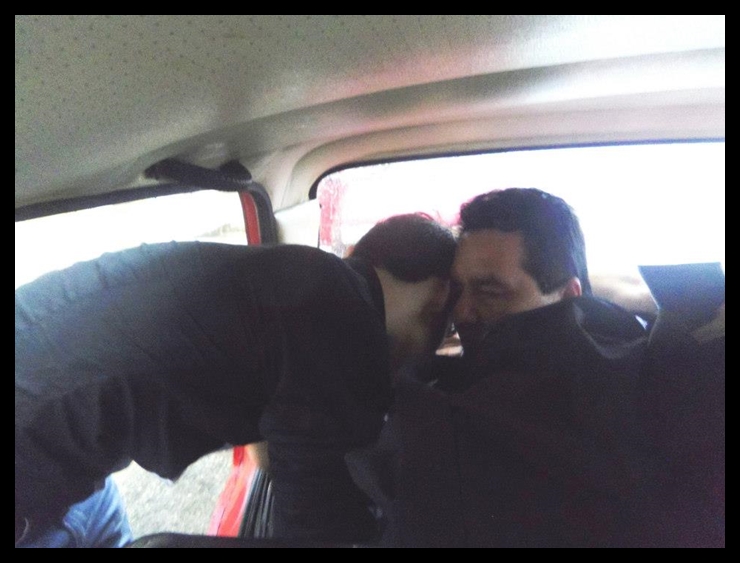
Angel saying goodbye to his son in the police car taking him to prison

Today is the second Father’s Day that two teenagers will spend without their dad, like many; they will throw him a kiss through the bars of the Lawton prison settlement, if the strict vigilance that the dictator dedicated to Angel Santiesteban doesn’t prevent it.

Three guards and some officials, just for him, watch him constantly. This “common inmate” must be very important to make the Cuban people pay for such “guarding.” Every official costs more than a thousand pesos, and there are three trios taking it in turn over 24 hours, generation a cost of more than seven thousand pesos a month, plus the gasoline for their transportation, and that of the bosses who come daily to check in person how the guarding of Angel is going.

Also today, there are many dads who will miss the warm kiss of their children, from the capricious vengeance of a dictator who violently represses and imprisons all those who fight peacefully for freedom.

Ramón Muñoz, Alan Gross, Jorge Cervantes, just to mention some of the many political prisoners of the Castro dictatorship, will, like Angel, spend another day without their children and many of them will spend the day without their parents.

Raul Castro with his family

The dictator brothers will celebrate — with their children and grandchildren — gobbling and drinking with no limits everything forbidden to Cubans, while pretending to the world to be everything they aren’t, laughing at the thousands of families separated by the distance of exile for over half a century.

The mother of his child, along with the Political Police, managed to imprison him on false charges, all of which accusations were not proven, not the guilt of her ex-husband — she never proved that anything happened — rather her own guilt was proved because a false accusation is a crime and harms the reputation of another person. But the mother of his son didn’t manage to turn her son against his father; he is as attached to him as ever. Angel will receive the kiss that his son blows him from a distance, a kiss that will deservedly caress his heart, because for Angel Father’s Day is every day, and his children show how incredibly proud they are of him.

I lost my father many years ago and the best way I can honor him is to live the ethical teachings and principles he passed on to me. I know that he — wherever he is — is proud that I am doing what I’m doing for Angel.

The Editor

Sign the petition for Amnesty International to declare Angel a prisoner of conscience.

15 June 2014

Money Bristles, Yesterday and Today / Miriam Celaya

About the previous post, which -as expected- elicited many well and ill-intentioned comments, I noticed one in particular, a reader commenting about what used to be our digital magazine Consenso, which the commentator himself referred to as having opened a Cuban window on the world. I happen to agree with him and, as part of the management group and the editorial board of that magazine, I thank him for the memories and the praise.

But the truth is that his comment inspired me to search through those articles that were published at the time in Consenso, among which I found one from my friend and colleague Reinaldo Escobar relating to the subject of the debate: money. Because, though some were biased in reading my post and tried to twist the meaning of what I said, attributing it to my personally attacking those “who did not like14ymedio.com”, when read correctly, it shows that what I attack is the vice of envy, questioning other’s finances, exactly the same matter that Reinaldo Escobar discussed in Consenso in 2007.  Contrary to my habit of not posting here articles I have not authored, I reproduce it today, with the previous authorization of the writer. You be the judge about its worth, and I hope you enjoy it.

Money Bristles

Reinaldo Escobar

It seems almost superfluous to explain that any political activity generates costs, from the essential existence of a professional staff, dedicated to party work on a full time basis, to the development and dissemination of documents, including trips involving transportation, food and lodging outside the cities where they reside; organizing seminars, meetings or press conferences, or simply connecting to the Internet. Can you think how it would be possible to carry out politics without these things? continue reading

There isn’t the slightest possibility for an entity in the nascent Cuban civil society to establish anything like a lucrative business to cover the costs of political work. There are no cafeterias, rental rooms, bicycle repair shops or birthday clown entertainers willing or able to meet those expenses. Not even one of the leaders of the internal opposition has his own resources, family assets from before the revolution, or has jewelry to sell or an inheritance to enjoy; most of them do not receive a salary, they are unemployed. However they engage in politics in a professional manner, they secure their own transportation and stays away from home, they undertake conferences, print documents, receive and send emails. Where does the money come from?

The Cuban government’s answer to this question is that the money comes from the US, be it Florida exiles, independent foundations, or the American government itself, which, if there ever was any doubt, has just approved an $80 million budget to this effect. It is known that some EU or Latin American countries also contribute, but it is clear that, according to the official interpretation of the facts, this last source of funds is, when all is said and done, from the US, by way of an extensive and tangled pathway.

Perhaps the most interesting question is not where the money comes from, but under what conditions it is received.

José Martí raised funds for Cuban independence from selfless Tampa cigars manufacturers, but also from wealthy American, Mexican and Cuban philanthropists. There used to be a picture at the Museum of the Revolution, long ago removed, where Fidel Castro was seen sitting at a table in front of a mountain (a small mountain) of dollars. The photo was taken in New York, while raising funds to buy the yacht Granma, plus weapons for the 82 revolutionaries. Were these donations subject to any conditions? Of course they were! The funds were donated, in the first case, to end the humiliating Spanish colony and in the second, on condition to overthrow Batista’s dictatorship. There is no evidence, not even hallway gossip, giving the impression that the money was used for the personal benefit of the apostle [as Cubans call Jose Marti], who always wore the same threadbare black suit, or on luxuries of the foremost leader, who, it is rumored, did not cross his legs in public so none could see the holes on the soles of his shoes.

The triumphant Cuban revolution received lots of aid from the Soviet Union and other socialist countries, and I am speaking just of what is euphemistically called “fair trade between poor and developed countries”. I’m talking about ships full of weapons and other war supplies, about college scholarships, technology transfer, collaboration of police intelligence, even of space travel, which would have never happened if Cuba had not complied with the condition of becoming the first socialist country in the Western Hemisphere. It is a historical fact that when Che Guevara traveled to China, a joint communique was issued on completion of his trip, as is the custom, in which the Chinese, bragging with sincerity, objected to the qualification of “disinterested” made by the Cubans about the support the Asian giant was giving the small island.

In those early years, parallel to the subsidy of the revolution, the financing of the counterrevolution began. It is well documented that at least between 1959 and 1965 almost all the opposition activities were directly funded by the CIA, the Pentagon, and the US State Department. The central characters themselves have stated so, and all of them justified this financing, so obviously stipulated by the fact that the government of Fidel Castro was supported by Communist powers.

Today, Cuban dissidents are imprisoned when it is shown, or when there is a conviction, that they have received money from the US. That was, in every case, the heaviest accusations resulting in disproportionate sentences to which the 75 of the Black Spring of 2003 were subjected. This went as far as to include in the same boat journalists receiving payment in exchange for articles in foreign newspapers. It led, among other consequences, to new divisions among the internal opposition: those not receiving money and receiving it through the U.S. Interests Section, and those who did not receive funds from the US, but from independent institutions in Europe and Latin America.

What almost no one asks is where the money comes from today to publish all those costly national and provincial newspapers, organs of the Communist Party, of the Union of Young Communists, or the Central Cuban Workers Union. How were the open forums financed all this time, the militant marches, the whole material base of the “Battle of Ideas”, the campaigns for the rescue of the five combatants of the Interior Ministry, jailed in the United States, the trips abroad, the foreign guests at political events, billboards on highways, t-shirts with slogans, or the little flags.

Would it be possible to pay all that with the monthly member contributions to these organizations, which isn’t even enough to pay the salaries of thousands of professional cadres scattered throughout the whole country, in every province, in every municipality, occupying premises that do not pay rent, where water and electricity are consumed, where there are phones and secretaries, gas-guzzling cars that include a chauffeur?

Political work involves disbursements, be it from the opposition or the government. If the party in power has at its disposal boxes of public funds to cover  expenses and those in the opposition, besides not having even legal recognition, also don’t have, literally, a place to drop dead, what is the recommendation? To let the government do whatever it wants without offering the slightest resistance, or to limit the action only to within earshot, without even a megaphone to amplify it?

The only option the members of the opposition on the island have been cornered into, in order to be able to exercise their specific political tendency, is that of accepting financing from whomever offers it, unless they are OK with being a “family faction” without the least echo in society.  This is part of the deliberate intention on the part of the government to disallow any alternative of political change in Cuba. This intention stretches from a long series of die-hard slogans (socialism or death, we are ready to shed the last drop of blood, the Island will sink in the sea first…) to the modification of the constitution to enact the immobility of the system. The harder it is to dissent, the better for the government. If the material and legal obstacles aren’t enough, if fear of going to jail is not enough, that’s where the ethical scruples (prejudices?) come in, preventing decent people from accepting funds that automatically turn them into mercenaries of the imperialism.

Ideally, the Cuban media should not be the party’s fiefdom, but a public space for all political persuasions; with the state budget partially allocated to fund the work of civil society and of political parties duly registered under the law. If the state, instead of distributing all these funds and resources in an impartial manner, funds that proceed from the working class, monopolizes them only for the favored party, it loses its moral right to ask where the opposition’s money comes from. Additionally, it should not deny anyone the possibility of becoming a disinterested donor or a calculating investor. The state should protect those citizens who have a political proposal, the right to defend it and have it compete publicly and on equal terms, without being forced to sell their souls to the devil.

Translated by Norma Whiting

Posted 9 June 2014 by Miriam Celaya

If the Shoe Fits… / Miriam Celaya

As expected, the birth of the new site 14ymedio.com attracted immediate attacks from the servers of the Cuban regime. A few hours after the media’s first appearance, it was redirected by official cyber-hosts to a dedicated page (oh, the satrapy’s supreme homage!), not to the disqualification of counterrevolutionary journalistic medium as such, but to its “insignificant” manager, the multi-award-winning — and multi-abominated — Yoani Sánchez-Cordero, evil among the worst.

Interestingly, the essence of the invectives against Yoani the terrific is not the legitimacy of exercising the right to free opinion, of creating an information media to and from Cuba, or of the desire that the media become, in addition to a source of diffusion, an enterprise producing income to Yoani and her associates, paying for her collaborators, promoting independent journalism and creating sources of employment. “The chicken in a chicken and rice meal”, as the ever soporific Lázaro Barredo might say, who had been director of the libelous “Granma” for a brief period, but who has currently disappeared from the public scene. It is about questioning what capital this blogger has available to fund such an enterprise, whether or not she deserved the awards she has received, and about the nature of her fabulous emoluments, which, in the imaginary collective of her embittered detractors is close to half a million dollars.

However, what is truly amazing is that there are some petty characters in the internal dissent (and even more conspicuous, characters of “the external”), who have joined the same chant, thus indicating that the perverse nature of the olive green autocrats has soaked into the conscience of Cubans beyond suspected limits, also poisoning a sector of those who call themselves – and indeed are — enemies of the Cuban dictatorship. continue reading

This virulence has reached such magnitude that it instills pity. How mediocre can an individual be who even feels threatened in the presence of the mere presumption of the success of others? Why must the prosperity or the awards and recognitions received by others be a cause for concern, especially when those “others” not only were and are our fellows in the cause, but at times have opened space and have shared with us their fortunes and misfortunes? What dark Cuban trait deprives us at times of the greatness of rejoicing in the victory of others?

In recent days I have been a witness to, not surprisingly, attacks launched on the new newspaper 14ymedio.com from our own “trenches” as if we were their worst enemies. Fortunately, many more words of praise and encouragement have been sent from the most diverse points, than the sour bile generated by the ever resentful.

The most poisonous reviews, of course, come from the most mediocre subjects. Some of these consider themselves “journalists”, perhaps in response to some magical genetic inheritance, though not necessarily from qualifications or pedigree, or because they feel they have exclusive rights of “antiquity”. If the latter were true, then we would have to recognize the special rights of the political power of the regime that has been exerting them for over 55 years in Cuba.

Also not missing in this sui generis repudiation meeting are certain top dogs inflamed with messianic aspirations, those who always know how, when, and where things should be done, and who cannot conceive, much less tolerate, something that is as healthy as it is helpful for the development of freedom which is simply called competition.

There are those who claim that competition, in order to be healthy, must have fair opportunities, which remedies the disastrous (and false) vulgar egalitarianism imposed by the Castros, whose deplorable consequences we know so well. They are clueless, despite living on “information” that such a thing as “equality” does not exist in any part of the world, and that one has to go out and seek the “opportunities”, such as wealth, they have to be conquered, creating them by intellect and efforts, because they do not fall from heaven, like divine grace, on anyone’s shoulders. And when one reaches them, there is absolutely no obligation to share them. In fact, it is morally harmful to do so.

Believe it or not, there are individuals from the Cuban dissidence who — in tune with the government itself — consider others’ successes as an obstacle to their own fulfillment, and, in the licentiousness of their personal frustration, they take hold of what action they deem appropriate, including complaints and catharsis about the hardships of the “un-rewarded” or the “unfunded for professional performance” –what we often call a cry baby — with such resentment that it reminds us of the national motto: “I don’t want to be as well-off as the Joneses, I just want for the Joneses to be as fucked up as me.”

These kind of individuals don’t consider talent, hard work, drive, courage, will power or – let’s say it brazenly and give it its due –ambition. For them, from 14ymedio.com, there is “unfair competition”, just because Yoani Sánchez has received funding (oh, what a damn word!) and because she can count on a decent enough comfortable place to work, so she doesn’t need to use the conjugal bed as a sofa. I would consider this an advantage a bit more hygienic than a status symbol, but – of course — I understand that we don’t all think alike. What is true is that, for some of the more stubborn enemies of the Castros, comfort and money (other people’s) are as dirty as for the olive green elite itself.

However, many conveniently ignore that they have received (or are receiving) financial help — something that I sincerely admire and hope never runs out — way before 14ymedio, before someone was awarded, and certainly, before the independent Cuban blogosphere was born and developed, otherwise they could not have sustained their newspapers or magazines, a reason for having allowed payment for collaborations for some time now. And congratulations.

That’s something, for instance, that the magazine Consenso, and later Contodos (2004-2007), could never do just because they lacked financing, a reason why many of them did not collaborate with that project, since they have always worked for money, as is normal and reasonable, though there have always been romantics that do certain things for free. It is understood that nobody is obligated to do it. So what’s the problem? Why are they wearing themselves thin attacking other independent projects? Isn’t it better that we have the greatest possible number of publications in order to continue penetrating the wall of the regime’s information monopoly?

Another practice that the “pure ones” demonize is marketing. They call it “media hype” as if it were something obscene, and they talk about “inflated ego”, “lack of humility” (a special merit that they apparently believe abounds among them). Because, at the height of perfidy, Yoani Sánchez is not settling for creating a newspaper, period, but she aims to “create the best newspaper”, states a critic (or should I say a criticizer?). And the question arises, what harm is there in pursuing perfection? Why shouldn’t anyone wish to reach that goal at a healthy pace, particularly when they work so hard to that end?

Personally, as a citizen journalist, I am in the habit of believing that the better I do my job, the more my readers appreciate it, whether or not they are in agreement with my opinions. So, with every effort I undertake, I go beyond, getting close or not to a certain extent, the perfection I aim for, why settle for less? Why should this be a flaw?

It is curious that certain people often parasitize on the opinions of others and present them as their own (which in itself is unfair, and even fraudulent), people who lack education, training or qualification — academic or self-taught — people who “decorate” with lies or hype the information given to them, who make up non-existent people in interviews they publish and limit their relative success in the overwhelming mediocrity (even more) of those around them – which, de facto, melds them into mediocre individuals — might seek to establish themselves as champions of honesty and virtue as well

And, since excessive vanity inevitably leads to the ridiculous, the sorrowful orphans lie or misrepresent reality: 14ymedio.com has never claimed to be the first independent digital medium in Cuba, or declared itself “anti-Castro” (or “anti” anything, but rather, “pro” rights, although it seems that the same is not equal), which is why, from the opposite ends, Yoani is accused of falling into “ambiguities” because there is always some moron who, despite lacking his own projects, feels he has the right to issue guidelines about what the projects of others should and must be.

And, finally, to finish off so much Castro-socialist drivel, designed for those masterfully defined as “perfect Latin-American idiots” by three academics a lot wiser than I am, let’s leave, once and for all, the eternal posture of the mentally herniated poor little victims, who will have to be fed and subsidized forever. Neither Yoani Sánchez nor 14ymedio.com, nor absolutely anyone else, other than the same individuals, are responsible for their own lack of success or of “financiers” to overcome their woes.

The formula for prosperity, dear idiots of this island village, is not to wait for generous patrons to appear, but to have something to offer. You should not have to sit down and wait for some bored mogul to want to “do justice” and throw you a financial bone.

Perhaps the wailing crew of the day should use the energy they employ in lamentations to work more efficiently and creatively. Incidentally, it would not be a bad idea for them to get up to date with the present. Don’t feel put out, none of that! These are only a few suggestions. That said, be adventurous, take risks. I am referring, in particular, to financial and professional risks, so don’t come back again with the morsel that this one or that one was taken prisoner, or that they take their lives into their own hands “on the street”, because that is a risk that all of we Cubans take, from the daredevil who establishes a political party or who writes independently to the poor devil who steals three pounds of meat from a warehouse. This is another one of our best entrenched myths. In Cuba, jail does not depend on anybody’s merits, but on the whim of the satrapy.

And if someone chooses to be personally offended by this post, know that I can’t be bothered with such tackle, but I respect all your conscious choices. If I have not mentioned names, is not to evade confrontation, but because I will not give them a single hit or a smidgen of brain cells, to a debate that, in addition, would be useless. We know that some people are hopeless. Time is usually a wise judge. Also know that making enemies does not move me, but false expectations are not believable: I pick my enemies. I don’t know if the recipients of this post are at the height of the conflict or in the process of getting there. At any rate, I wish you much success.

Published June 2nd, 2014, by Miriam Celaya
Translated by Norma Whiting

Note to my Readers / Miriam Celaya

In recent months entries in Sin_EVAsión have been sparse. I beg the readers to excuse my absences from this blog. Contrary to what may seem, such “gaps” are due to the increase in volume of my work. As you know, though this blog was not exactly the digital place where I started as a citizen journalist, it did contribute significantly to the dissemination of my work. It opened several possibilities for publication elsewhere, in which articles I wrote regularly appear.

Recently I also began to work with the new newspaper 14ymedio, an opportunity I could not pass up and a space where I will continue to work with opinion work, analysis, or reporting. In the blogger platform of that medium, my son, Victor Ariel and I have also started a collective blog. The title of this new blog is “A Pie y Descalzos” (On Foot and Barefoot), which aims to provide an overview of Cuba “from a viewpoint at ground level” i.e., from the common people. As a result, I’m often overwhelmed with work, which consumes my time and energy, affecting updates to this site.

I also have to ensure my regular income, because one cannot live by just romance and good intentions. If, however, in previous years I wrote for Sin_EVAsión almost exclusively, for some time I have had the opportunity to make some money writing for other media publications, so I am doing that. I am not the New Man, so my critics may vent their fury on this note and with a statement I make without a hint of pretense (as is my style): I love the money I get from the fruits of my labor and with my limited talents; I owe it to nobody, and I don’t intend to be embarrassed by it. To hell with the parasites and the envious ones. As an addendum, I will say I don’t get remittances, which fills me with satisfaction.

As for my friends I know they don’t need any explanations, but my respect and affection, so I address this note to them as well, to let them know that I’m still with them.

However, Sin_EVAsión will continue as my personal platform, the most intimate and beloved, the space of my own individual “me”. If my work has been of any value in this site, I owe it to my readers. Thanks for following, and don’t leave me. I won’t leave you either.

Eva-Miriam

Published in Sin EVAsión, 23 May 2014 by Miriam Celaya

Translated by Norma Whiting