The ‘Pajama Plan’ and Other Ways to Disappear in Cuba

The euphemisms of dismissals in Cuba


Former Cuban Foreign Minister Felipe Pérez Roque, “dismissed” in 2009, recently seen on the streets of Havana / Facebook / Siro Cuarte

14ymedio bigger14ymedio, Yunior García Aguilera, Madrid, June 23,2025 — The Cuban regime, after more than six decades in power, has developed an enormous fondness for the use of euphemisms. Even to dismiss their bureaucrats, ambiguous terms and encrypted phrases are common, as if each token move, rather than a routine partisan maneuver, was a riddle for “the enemy”. And when power is held by force, that enemy can be everywhere, in the streets or within their own ranks.

Also, the graduates of the Ñico López -University of the Communist Party (PCC)- sometimes find it difficult to hit the target when some official note announces the “release” of a Party cadre. Some speculate that there are subtle differences in the language used, which do not mean the same as “duties,” “positions,” “responsibilities,” and “functions.” Each could hide a different cause and effect, as if it were a secret code.

It is here that the parallel euphemisms used in the bread lines and bus stops come into play. If it is a cadre that is promoted to a higher position, on the street it’s called “falling up.” If we never see his face again or hear his name, they have put him on the “pajama plan.” If his dismissal conceals the possibility of an error or a slight suspicion of disloyalty, he was “dethroned.” continue reading

Now the destroying bolt of lightning has hit Roberto Morales Ojeda, although he did not inherit the official title of “second secretary”

During the years 2011 to 2021, the person in charge of “enthroning” was José Ramón Machado Ventura, number two of the PCC’s Central Committee, after Raúl Castro. Now the destroying bolt of lightning is in the hands of Roberto Morales Ojeda, although he did not inherit the official title of “second secretary,” which Machado intends to keep symbolically and for life. The royal hierarchies of power in Cuba are today an undecipherable puzzle.

From his position as head of Organization and Cadre Policy, Morales is responsible for boxing ears, offering promotions and cutting off heads, but some decisions are made over his head.

The year 2024 was his year of glory. He moved his chips in at least seven provinces, replaced three ministers and swept away two deputy prime ministers. Bald and discreet like his predecessor, Morales passes the sword quietly and opportunely. If there is any scandal in sight, the cadre in question must be kept in place at all costs. No “giving weapons to the enemy” or pleasing the dissatisfied plebs. Then, when the waters calm down and no one expects it, the time will come to settle accounts. The best example is, perhaps, Alpidio Alonso -Minister of Culture-,who has survived in office against the current and without any favorable result. They must wait for an independent newspaper to mention him, then “release” him from his responsibilities.

It is necessary to be absolutely inexpressive, repress any aspiration to occupy first place and avoid standing out at all costs

The one in charge of putting someone on the throne must meet some basic requirements. It is necessary to be absolutely inexpressive, repress any aspiration to occupy first place and avoid standing out at all costs. Charisma is a remnant of the era of Fidel Castro, skillfully exterminated by his younger brother. Raúl took it upon himself to annihilate that generation of screamers that emerged during the Battle of Ideas and the Open Forums. Now is the time for Machado’s pupils: disciplined 50-year-olds, preferably mediocre and without any oratory skills.

Some of the cadres removed in 2024 were relocated to other provinces or to the higher structure of the Central Committee. But not all. Luis Antonio Torres Iribar -former first secretary of the PCC in Havana- was “released” in April with the semantic novelty of a “renewal,” something that was not used in other provincial releases. Although he maintains activity on Facebook and X, his agenda is in deadlock: he only shares institutional publications, and no new posts appear on his profiles.

The phrase “release for renewal” was also used in the cases of two other dismissed ministers: Elba Rosa Pérez Montoya -Science, Technology and Environment- and Manuel Santiago Sobrino Martínez -Food Industry. The first one has no profile on X. The second one does, but he hasn’t published anything since 2022. No official media has mentioned them again. Journalists in the State apparatus soon learn not to dig into the names of any released cadres.

“Committed errors in the performance of his duties”

The one seen a few weeks ago was Jorge Luis Perdomo Di-Lella, former deputy prime minister. He appeared for two seconds in the Noticiero del Mediodía, in a report on a tribute to Fidel Castro, where his widow and some of his children were also present. The official note of Perdomo’s dismissal used the expression “removal from office,” and added something worse: “he committed errors in the performance of his duties.”

Translated by Regina Anavy

____________

COLLABORATE WITH OUR WORK: The 14ymedio team is committed to practicing serious journalism that reflects Cuba’s reality in all its depth. Thank you for joining us on this long journey. We invite you to continue supporting us by becoming a member of 14ymedio now. Together we can continue transforming journalism in Cuba.

The Electricity Deficit in Cuba Maintains an ‘Upward Trend’ According to the Electric Union

Sunday saw the second-worst record in history, just 21 megawatts shy of the record set on April 23.

Thermal generation has more than 300 megawatts affected, and the distributed generation almost triples this deficit / 14ymedio

14ymedio bigger14ymedio, Madrid, 23 June 2025 — The night has not given respite to Cubans anywhere on the Island. All the gossip centered on the second historic event for electricity deficit, reached on Saturday and recognized this Sunday by the electric company of Villa Clara, although it affected the entire country. At peak time, the deficit was 1,880 megawatts (MW), only behind April 23, when it reached 1,901 MW.

The data was accompanied by a series of brutal statistics. Five of the 12 worst records in 2025 were in April, and the current month accumulates three “serious events” on June 17, 20 and 21, which mark, says the electric company from Villa Clara, an “upward trend.” In addition, all these data are even worse than those of 2024, including the critical month of November, when one of the three total disconnections from the national electricity system occurred.

The information was shared on the Facebook page of José Miguel Solís, a journalist specializing in energy who is often on social networks, popularizing what until then had a smaller audience, just the followers of the company of Villa Clara. The flood of comments was instantaneous, with endless reproaches from those who questioned the graph that reflected with two very distant upward lines the concepts of consumption and deficit. The tone of the response was: How can you talk about consumption when you have up to 22 hours a day without light?

“The high peaks occur after a blackout, since people have everything connected waiting for the current to arrive so consumption rises at that precise moment,” argued a Cuban living in Miami. “Get your neurons to work. This high continue reading

consumption is from the favored circuits of the Party and the dance venues of Varadero and Havana, which are consuming the little current that is generated,” another refuted.

“The blackouts were horrible in the provinces, of course. Here they removed it three times, and we are on the same circuit as the hospital. They took it off, put it on, took it off, put it on…” says a Havana resident in Cayo Hueso. In the newsroom of 14ymedio, located in Nuevo Vedado, the power was cut off at dawn this Monday.

Monday is another day without news. The Electric Union (UNE) confirmed that on Sunday there was a deficit of 1,650 MW at 9:50 pm, the hour of greatest demand, although the contribution of the 16 solar parks was more than 1,800 MW. One customer was wondering how investments in solar are helping, and another answered, saying that everyone in the country had the same issue, and that those who have solar panels use them during the day and get enough power, but at night they have nothing.

Today, the maximum demand is estimated at 3,550 MW, while generation will remain at just 1,850 MW, which means a peak deficit of 1,770 MW. In addition to the failures of units 6 and 8 at Mariel and 2 at Felton (Holguín), maintenance work was carried out on units 2 at Santa Cruz del Norte (Mayabeque), 4 at Cienfuegos and 5 at Renté (Santiago de Cuba), for a total thermal deficit of 390 MW.

But in addition there are 96 distributed generation plants out of service due to lack of fuel, a total of 738 MW of deficit to which are added 97 MW that are not available due to lack of engine oil

But in addition there are also 96 distributed generation plants out of service due to lack of fuel, a total of 738 MW of deficit to which are added 97 MW, not available due to lack of engine oil.

The situation is alarming and customers are wringing their hands thinking about the possible repercussions of the closure of the Strait of Hormuz, through which large quantities of crude oil pass for everyone, as a result of the open conflict between the US and Iran. The decision is pending approval by the Supreme Council, but the concern is extreme. “If the oil that was coming into Cuba was from Iran, we will have some dark vacations,” says a customer.

“So many meetings of collaboration with countries like Russia and China, so many agreements to be signed, so many trips abroad for officials to ask for help, and we don’t see the results. They distributed only a little propane in each province, and in many places only very few people received it. “When will the others? “someone asks. For the moment, complaints are once again limited to social media, but the straw that breaks the camel’s back may be coming.

Translated by Regina Anavy

____________

COLLABORATE WITH OUR WORK: The 14ymedio team is committed to practicing serious journalism that reflects Cuba’s reality in all its depth. Thank you for joining us on this long journey. We invite you to continue supporting us by becoming a member of 14ymedio now. Together we can continue transforming journalism in Cuba.

An Old Havana Resident Blocks His Street in Protest Against the Poor State of his Home

Aguilar Medrado asked to speak with the mayor, but they sent him the police and state security.

After one o’clock in the afternoon, when we visited the scene, Aguilar had already been detained by officials. / 14ymedio

14ymedio bigger14ymedio, José Lassa, Havana, 19 June 2025 – Lázaro Aguilar Medrano’s patience came to an end this Thursday. The resident of Calle Aguiar/Muralla in Old Havana cut off the traffic in the morning demanding a reply from the authorities to his claim about the poor condition of his home. However, in place of council officials it was the police and State Security who turned up, this newspaper was able to confirm.

Aguilar Medrado stopped the traffic using an old armchair, a mattress, a bed frame, a washing machine, a sign containing his demands, a motorcycle and some containers that his family uses for stockpiling water in this, one of the municipalities worst affected by poor water supply in the whole city. “I want the government here. Because it’s got beyond a joke now and I’m not going to talk to anyone else”, he declared in a video released by CubaNet.

In the recording, Aguilar Medrano demands the presence of Alexis Acosta Silva, administrator for the Old Havana district, as well as the city’s governor Yanet Hernández Pérez. “The block is going to be closed off until the government comes here”, he insisted. The man referred to the lack of replies to his requests for solving his family’s problems on the part of the Institute for Housing, the Communist Party and other provincial and municipal bodies.

The protestor’s things had been removed from the street and stacked on the pavement in front of his house. / 14ymedio

The man also made mention of his mother, Estrella Medrano López. According to him, the woman obtained numerous medals and awards throughout her life: “And Estrella has a thousand medals, a thousand pieces of s**t, a thousand… Well, F**k all that” and he went on to say how abandoned the people feel who, in their younger days, actually helped to build the current political model of the country. “And for what party? For which government? Close them down. Because they don’t function. They don’t function”, he said. continue reading

After one o’clock in the afternoon, when we visited the scene, Aguilar had already been detained by officials and a police car remained parked outside his house. Some graffiti on the front of a neighbouring building almost on ruins assured us: “All we need is love”.

The deployment command post was located in the local Municipal Electoral Commission, right on the corner. / 14ymedio

The protestor’s things had been removed from the street and stacked on the pavement in front of his house. Although the man was no longer present, his neighbours remained watching the scene of the police operation which included patrol vehicles, uniformed and plain clothes officers who watched from the street corners. The deployment command post was located in the local Municipal Electoral Commission, right on the same corner.

The exterior of Aguilar Medrano’s home, probably built at the start of the last century, shows the poor state of construction in which he is living – after decades of neglect, lack of resources available to the inhabitants, and overcrowding owing to housing problems. In a photo posted to his Facebook page you can see that his building also makes use of an old makeshift wooden “barbecue” [a sleeping platform built inside the room] to maintain the vertical space. On the same block there are also signs of multiple building collapses.

Calle Aguiar isn’t just any old Havana street. From its beginnings at the Avenida de las Missiones it goes into the city via some fifteen blocks. In its early days it was home to the headquarters or branches of at least nine banks, such that it became one of the epicentres of the financial district of Cuba’s capital, the little Wall Street of the island. All of these businesses were nationalised after Fidel Castro came to power in January 1959.

The street was one of the epicentres of the financial district of Cuba’s capital, the little Wall Street of the island, before 1959. / 14ymedio

There were also numerous insurance companies in Calle Aguiar, as well as various commercial associations like the British Chamber of Commerce, the Association of Cuban Banks and the National Chamber of Business and Industry. In its buildings, up to 105 law firms, beauty salons, small tailors and sheet manufacturing industries were located. Its commercial and financial activity was so great that it earned the name “money street“.

The blocking off of streets, be it to protest the poor state of housing or to protest the lack of water supply, has become increasingly common in Cuba in recent years. In Havana it is common to see lines of women who block the traffic to demand either a solution to their housing problems or the provision of a water truck to alleviate the lack of mains supply.

Translated by Ricardo Recluso

____________

COLLABORATE WITH OUR WORK: The 14ymedio team is committed to practicing serious journalism that reflects Cuba’s reality in all its depth. Thank you for joining us on this long journey. We invite you to continue supporting us by becoming a member of 14ymedio now. Together we can continue transforming journalism in Cuba.

Cuban ‘Provincials’ Banned From Attending U.S. Embassy for July 4th

Cuban State Security summons Dagoberto Valdés to warn him that this is a response to Mike Hammer’s “actions.”

The head of the U.S. mission in Havana, Mike Hammer, with the director of Caritas Cuba, Carmen María Nodal, this Monday. / Facebook/U.S. Embassy in Cuba

14ymedio bigger14ymedio, Havana, 23 June 2025 — Cuban State Security harassed the two main members of the Center for Coexistence Studies, Dagoberto Valdés and Yoandy Izquierdo, on Monday, interrogating them for an hour and a half at the Immigration and Foreigners Office in Pinar del Río. In a statement released on its social media, the organization indicated that the purpose of the “meeting” was the pair’s recent trip to the United States last month to participate in the Study Meeting of the Itinerary of Thought and Proposals for Cuba at Florida International University (FIU).

Regarding this annual meeting, the text indicates, “Major Ernesto” asked them about “the number of participants, the atmosphere of the meeting, their opinions on the quality, and their evaluation of the event.” He also inquired about “other public events” they had held in Florida, aside from their personal ones.

The agent then told them that “although it was not the purpose of this meeting, it conveyed a higher-up decision”: due to the “actions” of the head of the US mission in Cuba, Mike Hammer, and the “international situation,” “people from the provinces” will not be allowed to attend the reception held every year at the US continue reading

ambassador’s residence to celebrate the 4th of July, the country’s Independence Day, which will be held on the 2nd.

The agent told them that “although it was not the purpose of this meeting, it conveyed a higher-level decision.”

The “major” referred to Hammer’s travels throughout the island and, specifically, to his visits to opponents and activists, whom the agent referred to as “counterrevolutionary elements.” He also claimed that he communicated this “to avoid actions on the road like those that occurred with both members of Convivencia on the eve of May Day of the previous year, when they were returning from a Church event.”

“Not only does the harassment of Coexistence continue, but they also regulate freedom of movement,” the Center denounces in its statement.

This is not the first time that, on the occasion of the 4th of July the political police have coerced members of the group to prevent them from reaching the reception in Havana. However, it is unprecedented that they associate the warning with the actions of the US Chief of Mission, attempting to discredit them by calling them “interventionist,” “provocative,” and “irresponsible” behavior.

The “discomfort” that Hammer has caused in the regime is thus once again confirmed. On June 18, Deputy Foreign Minister Carlos Fernández de Cossío , when asked by the Spanish news agency Efe if he would declare the diplomat persona non grata , said: “We are not going to rule out any action to the extent that we think what he is doing is dangerous—if we reach that conclusion, which we have not reached—and to the extent that we pay close attention to what he is doing.”

Despite the campaign against him, the head of the US mission remains committed to his work. This Monday, he met with the executive director of Caritas Cuba, Carmen María Nodal Martínez. In a brief social media post, the Embassy reported that “they spoke about the tremendous work Caritas does across the island to help the most needy and vulnerable Cubans.” And on Saturday, he visited the Santa Susana Convent in Bejucal, Mayabeque, “to observe how the nuns support and feed the neediest.”

There have been consequences, however—although the regime has not linked them to Hammer’s visits at any point—for some of the activists who met with the diplomat. Three of them have so far returned to prison after being released: Donaida Pérez Paseiro, José Daniel Ferrer, and Félix Navarro.

____________

COLLABORATE WITH OUR WORK: The 14ymedio team is committed to practicing serious journalism that reflects Cuba’s reality in all its depth. Thank you for joining us on this long journey. We invite you to continue supporting us by becoming a member of 14ymedio now. Together we can continue transforming journalism in Cuba.

Rafael Rojas: “Despite Everything, It Still Makes Sense To Talk About Left, Right, and Center”

The essayist warns that there is authoritarianism on all three sides and is pessimistic about the current situation.

Rojas published “History as a Weapon,” an essay that analyzes the role of Latin American intellectuals in the Cold War. / EFE

14ymedio biggerEFE (via 14ymedio), Gustavo Borges 23 June 2025 — Cuban-born essayist Rafael Rojas asserted this Sunday that despite the tendency toward authoritarianism on all three sides, it still makes sense to talk about left, right, and center in analyzing world politics.

“It still makes sense to talk about left, right, and center, more due to geography than ideology, because we find conservative traits, tendencies toward authoritarianism or autocracy, both on the left, the right, and the center,” the academic said in an interview with EFE.

Rojas, winner of the 2006 Anagrama Essay Prize, published History as a Weapon, an essay that analyzes the role of Latin American intellectuals in the Cold War and examines works such as Eduardo Galeano’s Open Veins of Latin America and Ángel Rama’s The Lettered City.

The text, published by Siglo veintiuno editores, analyzes the debates of the British publication New Left Review, reviews the reflections of intellectuals such as Alejo Carpentier and Marta Harnecker and reveals the symbols, myths and strategies of the Latin American narrative in the dispute that divided the world into two blocks.

“I’m talking about how difficult it is to talk about a left when we’ve had such diverse leaders in the same movement, such as Mujica, Boric, and Lula, and at the same time Maduro, Ortega, and Díaz-Canel.”

“In this essay, I talk about how difficult it is to talk about a left when we’ve had such diverse leaders in the same movement, such as José Mujica in Uruguay; Gabriel Boric in Chile; Lula da Silva in Brazil; and Nicolás Maduro in Venezuela; Daniel Ortega in Nicaragua; and Miguel Díaz-Canel in Cuba,” he observed.

For Rojas, a full member of the Mexican Academy of History, the Cold War was the third world war, and if we’re talking about the fourth, the world is already experiencing it, with simultaneous conflicts in several places.

“The third was the Cold War. The fourth is ongoing with Russia in Ukraine; Israel in Gaza; and in its disputes with Iran, Syria, and continue reading

Lebanon. We also have the conflict between China and Taiwan, which could escalate at any moment,” he stated.

The academic sees no signs of optimism regarding these wars because international organizations, starting with the UN and specifically the Security Council, are unable to put a stop to them.

“These wars are fueled by global geopolitical failures; the deterioration of the alliance between the United States and Europe; Europe’s internal crises with the rise of nationalist, neoconservative governments opposed to the idea of ​​a united Europe; while China and Russia are going their own way,” he reflected.

While accepting that there is little reason for optimism in today’s world, the editor of Historia Mexicana magazine considered that in some places pessimism could be tempered; for example, in the United States, where President Donald Trump doesn’t hold all the cards in his numerous disputes.

“Trump doesn’t have all the cards in his favor in his project to dismantle democracy. We’re seeing resistance at all levels, against the immigration raids, the military deployment, and judicial resistance from institutions, universities, and the public,” he noted.

“Trump doesn’t have all the cards in his favor in his project to dismantle democracy. We’re seeing resistance at all levels.”

The academic does not see any country led by a leader currently, although he observes democratic forces in Europe resisting the advance of new conservatisms, new nationalisms, and nostalgia for fascism.

“There are no leaders, but there are currents, and from them come leaders. The political power plays are gradually adjusting, shifting from one side to the other, and I wouldn’t rule out the emergence of democratic leaderships in the transition from the first quarter to the second of the 21st century,” he opined.

Regarding humanity’s tendency to follow alpha males, he said it has been a constant throughout history and that we only have to remember “the era of fascism, of left-wing and right-wing totalitarianism, with great warlords like Stalin, Hitler, Mussolini, and Franco, which was reproduced in the Cold War, and the long tradition of caciques [chieftains] that has existed in Latin America since the 19th century.”

____________

COLLABORATE WITH OUR WORK: The 14ymedio team is committed to practicing serious journalism that reflects Cuba’s reality in all its depth. Thank you for joining us on this long journey. We invite you to continue supporting us by becoming a member of 14ymedio now. Together we can continue transforming journalism in Cuba.

Presentation in Arenales of the Novel ‘La Grieta’, by Reinaldo Escobar

Promotional poster for the event / Courtesy of ’Forma Foco’

Date: 06-26-2025 / 7:30 pm – 9:30 pm

Address: Vallehermoso 110, Chamberí, Madrid

14ymedio, Havana, 23 June 2025 — The 11th and penultimate edition of the first season of Lecturas Al Fin, organized by the creative collective Forma Foco, arrives with “Cuco the Union Leader,” an excerpt from the novel La Grieta (Verbum Publishing, 2018) by Cuban journalist and writer Reinaldo Escobar, winner of the 2018 Ibero-American Verbum Novel Prize.

About La Grieta, Yoani Sánchez said: “In the style of a tropical Milan Kundera, Escobar unravels the successive masks that many of the characters put on to survive professionally and socially. Opportunism, indolence, and even radicalism are some of the obligatory masks for the political carnival of which he is a part.

Sometimes he manages to glimpse the face beneath and feels the overwhelming desire to flee in terror. […]// This novel is, for all that, the description of a professional and social suicide. The timely narration of how the flame of a utopia scorched the wings of a generation of Cubans, with the consent and approval of many of them. Reinaldo Escobar, who burned in that fire, has had the courage to tell it.”

Reinaldo Escobar (Camagüey, 1947) is a journalist and editor of the online newspaper 14ymedio. He was expelled from official journalism in Cuba for “ideological weaknesses” and has since been a key figure in independent Cuban journalism, having practiced the profession for over 50 years. His first novel, “La grieta,” was written in 1993, confiscated by State Security, and rewritten from memory more than two decades later.

The reading will be shared by the journalist and daughter of the author, Luz Escobar.

____________

COLLABORATE WITH OUR WORK: The 14ymedio team is committed to practicing serious journalism that reflects Cuba’s reality in all its depth. Thank you for joining us on this long journey. We invite you to continue supporting us by becoming a member of 14ymedio now. Together we can continue transforming journalism in Cuba.

Cuban Band ‘Porno Para Ricardo’ to Perform in Prague

Promotional poster of the event / Facebook

14ymedio, Prague, 23 June 2025

Date: 06-26-2025 / 8:00 pm – 10:00 pm

Address: Vinohradská 63, Prague / Doors open at 7:00 pm

14ymedio, Prague, 23 June 2025 — Porno para Ricardo emerged in late 1998 in Havana, bringing a casual, entertaining, and, above all, provocative and critical voice to the island’s very small punk-rock scene. Their lyrics frequently allude to sexual and libertarian themes and are primarily directed against the Cuban regime. Despite police harassment and censorship by the authorities, the band managed to reach an audience that would otherwise have virtually no access to their music: fans discovered their work primarily through the underground distribution of recordings.

The group became especially known for their rare live performances, where they combined music and theatrical elements with a single purpose: to connect and build a relationship with the audience through a wild and highly interactive experience.

See here for performance video with lyrics: No Coma Tanta Pinga Coma Andante / Porno Para Ricardo, Gorki Aguila

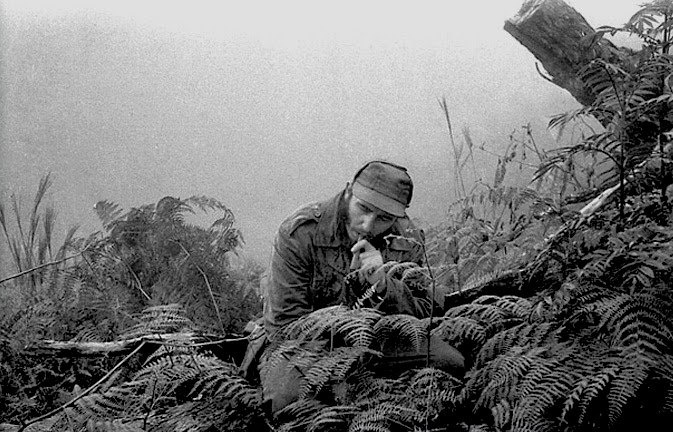
The Battle of El Uvero, a Simple Skirmish Turned Into an Epic

The Revolution has been an expert in turning defeats into victories – that is, in lying – and in exaggerating its triumphs, however small they may have been.

The survivors, including Fidel Castro, took refuge in the Sierra Maestra, where they began to reorganize and recruit new members. / EFE

14ymedio bigger14ymedio, Yunior García Aguilera, Madrid, May 30, 2025 — On May 28, 1957, in a far-off nook of the Sierra Maestra known as El Uvero, a skirmish took place that the official Cuban narrative has elevated to the altars of revolutionary epic. Historians of the regime describe it as “heroic,” and Díaz-Canel insists that today’s youth view it as a battle of titans, aware that many of them are more familiar with Marvel movies than with Cuban history itself.

The Revolution has shown remarkable skill in transforming defeats into victories—essentially, in distorting the truth—and inflating even the smallest triumphs. The battle of El Uvero has been portrayed as a turning point, the coming of age of the fledgling Rebel Army, and a display of exuberant courage by a few aspiring bearded fighters. Yet, when the events are examined more closely, a less heroic and far more grounded version of that encounter comes into view.

To grasp the true significance of El Uvero, one must situate it within its historical context. In late 1956, the 26th of July Movement suffered a disastrous landing at Alegría de Pío, where the majority of its fighters were either killed or captured. The few survivors—including Fidel Castro—sought refuge in the Sierra Maestra, where they began regrouping and recruiting new members.

What was a military barracks doing there? Primarily, it served to monitor the coastline and secure the area against smuggling. But above all, it was tasked with controlling a modest, makeshift airstrip.

In 1957, El Uvero could scarcely be called a “town” in the conventional sense. It was a fleeting settlement of perhaps fewer than 200 souls (a generous estimate), made up of a handful of shacks, a general store, a rural school that functioned sporadically, and a military barracks housing several dozen of Batista’s uniformed men. What was a military barracks doing there? Primarily, it served to monitor the coastline and secure the area continue reading

against smuggling. But above all, it was tasked with controlling a modest, makeshift airstrip.—useful for resupplying troops or dispatching goods like tobacco and timber, which did, in fact, circulate through the region.

The name hides no secret symbolism or conspiracy theory: simply, the area was rich in trees known as beach grapes (Coccoloba uvifera), which produce small, grape-like fruits. The name wasn’t the brainchild of a revolutionary poet, but rather of farmers with practical botanical acumen.

According to official accounts, the so-called “army” led by Fidel Castro launched an assault on a Batista regime garrison composed of just 53 soldiers. With roughly 80 fighters, the rebels managed to force the surrender of the barracks after nearly three hours of combat. The outcome: seven rebels killed and eight wounded, while government forces sustained 14 fatalities and 19 wounded.

When these figures are placed under scrutiny, an uncomfortable question emerges: can it truly be considered a heroic feat when a numerically superior force, bolstered by the element of surprise, overcomes a smaller, poorly equipped garrison?

In a recent television report, propagandist Gladis Rubio described El Uvero—her voice lofty, set against a swelling soundtrack—as a mighty bastion, complete with “fortresses made from the thick trunks of the oldest trees in the Sierra Maestra.” The flourish of language, however, was a transparent attempt to obscure the actual conditions: a ramshackle wooden barracks, scarcely fortified and feebly defended. She conveniently avoided mentioning the soldiers’ lack of training and the fact that they were taken by surprise. Yet even under such circumstances, it took Castro’s 80 combatants nearly three hours to subdue them.

Revolutionary propaganda has done what it does best: distort reality, creating a narrative that serves political ends more than historical truth.

Today, El Uvero remains a remote and semi-forgotten place, unnamed on Google Maps, only reached after hours of trail and patience.

While the victory was a modest achievement for the rebels, it is difficult to call it a feat. The numerical superiority of the attackers and the limited strategic importance of the barracks undermine any grandiloquence. In military terms, it was more a tactical operation than a decisive battle.

Today, El Uvero remains a remote and largely forgotten spot, unmarked even on Google Maps and accessible only after hours of arduous trail travel—and a good deal of patience. A modest monument commemorates the so-called “battle,” erected by the Revolution to ensure that the site wouldn’t fade from official memory, unlike so many others that never drew the glare of television cameras. A rural school bears a date as its name—a common stand-in when imagination runs short—and here and there, faded graffiti still clings to walls, quoting Fidel or Raúl. As for the uvero trees themselves, few have survived; coastal erosion and years of neglect have quietly erased them.

Díaz-Canel, however, seems desperate to claim—at the very least—his own Uvero. The gray-haired, clean-shaven successor can’t even muster a Pyrrhic victory. With the population teetering on collapse, the nation unraveling, and generals clamoring for a flicker of hope or a miracle, the hand-picked president might have no choice but to call on Gladis Rubio again—to craft a pseudo-poetic report extolling the monumental feat of… a lineman, perhaps?

Translated by Gustavo Loredo

____________

COLLABORATE WITH OUR WORK: The 14ymedio team is committed to practicing serious journalism that reflects Cuba’s reality in all its depth. Thank you for joining us on this long journey. We invite you to continue supporting us by becoming a member of 14ymedio now. Together we can continue transforming journalism in Cuba.
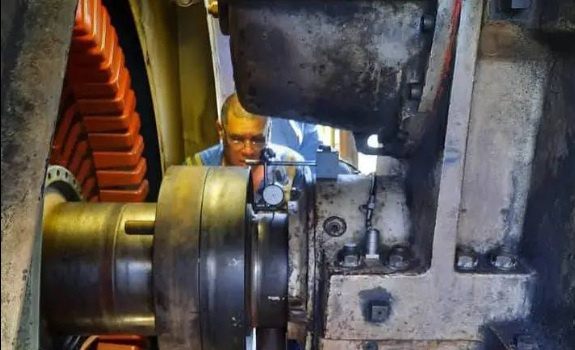
Cubans Suffer Another Sunday With Long Blackouts

This Saturday, the Santa Cruz thermoelectric plant went out of service, joining four other units, and 93 power generation motors due to a lack of fuel.

The Energás Varadero generating unit is expected to contribute 90 megawatts to the National Electric Power System in early July. / Girón Newspaper

14ymedio bigger14ymedio, Havana, 22 June 2025 — Cuba’s energy deficit will reach alarming levels this Sunday. According to forecasts by the Electricity Union (UNE), peak availability is estimated at 1,820 megawatts (MW), compared to a demand of 3,500 MW.

The gap between supply and demand will reach 1,680 MW and eventually 1,750 MW. UNE acknowledged that the blackouts affected “services around the clock on Saturday and continued throughout the night.” It also confirmed the “unscheduled shutdown of Unit 1 of the Santa Cruz Thermoelectric Plant.”

The outlook for this Sunday offers no improvement, as five of the 20 thermoelectric generation units (spread across seven plants) are out of service. The UNE confirms outages at Unit 6 of the Mariel Power Plant and Unit 2 of the Felton Power Plant. In addition, Unit 2 of the Santa Cruz Power Plant, Unit 4 of the Cienfuegos Power Plant, and Unit 5 of the Renté Power Plant are undergoing maintenance. In addition, 93 power generation engines are out of service due to a lack of diesel or fuel oil. The 16 solar parks created this year partially compensate for the shortage during daylight hours, but cannot store energy because they are not equipped with batteries.

The island’s energy crisis has worsened since mid-2024, with blackouts now exceeding 20 hours in several parts of the country. Last May, President continue reading

Miguel Díaz-Canel summarized the energy problem as the island’s extremely high demand, contrasting with the limited fuel availability.

The island’s energy crisis has worsened since mid-2024, with blackouts now exceeding 20 hours in several parts of the country.

According to a report published last year by Cuba Siglo 21, repairing the island’s aging electricity-producing infrastructure would take between six and ten years and require a colossal investment of $10 billion.

Furthermore, frequent blackouts are weighing down the Cuban economy, which contracted 1.9% in 2023 and did not grow last year, according to government estimates, EFE reported. According to these figures, the island’s GDP remains below 2019 levels and will not surpass them in 2025, a year for which the Executive branch forecasts a 1% growth.

Four national blackouts have affected electricity service since the end of last year. The last was in March, when most of Cuba’s nearly 9.7 million residents were left without power for an entire weekend.

The energy crisis has reached Isla de la Juventud. The territory, which had been spared from the planned blackouts due to its own grid, suffered power outages this week lasting approximately five hours per block, although many customers report up to 10 hours.

____________

COLLABORATE WITH OUR WORK: The 14ymedio team is committed to practicing serious journalism that reflects Cuba’s reality in all its depth. Thank you for joining us on this long journey. We invite you to continue supporting us by becoming a member of 14ymedio now. Together we can continue transforming journalism in Cuba.

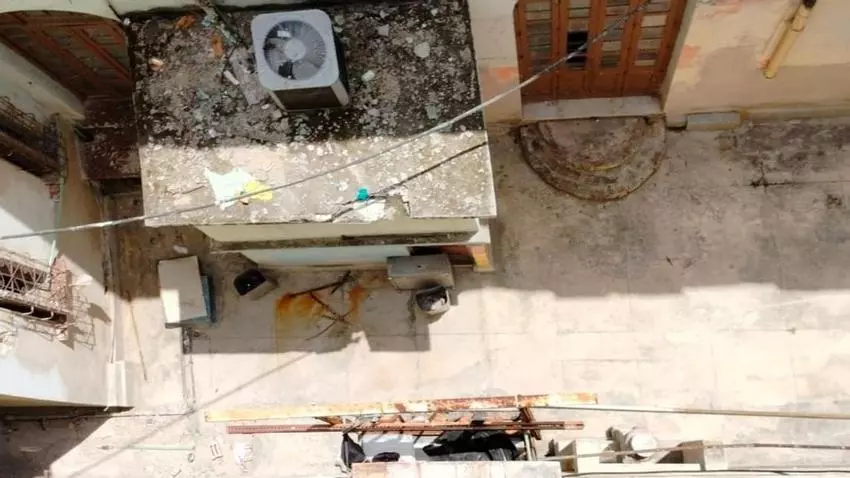
Despite an Investment of 90,000 Euros, the Casa Canaria in Havana Remains a Ruin

There is concern about the use of the Canary Islands government subsidy, which claims to have received supporting documents.

“Fernando Rojas has exterminated the Canarian community in Cuba; he has disarticulated the little autonomy we had left” / 14ymedio

14ymedio bigger14ymedio, Natalia López Moya, Havana, June 21, 2025 — The descendants of Canary Islanders (Canarians) in Cuba have been crossing the desert for more than three years. The accusations of corruption within the Leonor Pérez Cabrera Canary Island Association and the closure of its main headquarters in Havana adds to the despair of many elderly people, who now have more difficulty in receiving the direct aid offered by the government of that Spanish autonomous community.

“The closure of the Casa Canaria has dispersed a lot of people, and the elderly are the most vulnerable,” says José, a descendant of migrants from Tenerife. He believes that with the 2023 closure of the Association’s house at 258 Monserrate street in Old Havana, part of the glue that held the Canarians together in Cuba has been lost.

In 2022, the Cuban government intervened in the Association after numerous complaints of malpractice, and they created a management commission chaired by the then deputy minister of culture, Fernando Rojas, whose grandmother is from Arucas (Las Palmas). The group, which presented itself as a transitional entity, has ended up monopolizing internal decisions, appointed like-minded people to head several local associations and manages, without transparency, the renovation of the emblematic building on Monserrate Street.

“No progress has been made in the electrical system nor have hydraulic improvements been made”/ Courtesy

José Luis Perestelo Rodríguez, deputy councilor of Foreign Affairs for the Canary Islands, tells 14ymedio that the government of the Canary Islands “provided a grant of 90,000 euros for the restoration of the building that housed the Casa Canaria, a grant that, as of today, is currently executed and justified.” However, traces of that money are  barely perceived in the interior of the building, according to statements collected by this newspaper. 

“No progress has been made in the electrical system, nor have hydraulic reforms been made. So far, the only thing that has been achieved is to demolish some structures, built arbitrarily, and throw away garbage and rubble,” says a source close to the restoration process. “Restoration students linked to the Office of the City Historian helped to clear the rubble but were not paid even one peso,” he adds. continue reading

Walls corroded by moisture, damaged framework and wooden doors, roof leaks and deteriorating pipes, especially in bathroom areas, are still present. “From the outside you do not notice any change but inside is where you can see how little has been done. Three years and 90,000 euros later the place is a ruin, and the schedule of repair and reopening is a mystery. They tell us nothing,” he complains. 

Even a musician has joined the complaint and, with the refrain of “return the Canary House,”  has recorded and broadcast a theme about the current situation of the property. ” They tricked us with false meetings, empty promises, false choice,” he exclaims in his song. “They occupy our place as if it were their own,” says the young man who identifies himself as a “guanche* and mambí rapper.”

Even a musician has joined the complaint with the refrain of “return the Casa Canaria”

Perestelo Rodríguez, in reply to this newspaper, says that “the government of the Canary Islands at this moment is not interested in the recovery of the building. The priority is to meet the needs of the Canarians and their descendants in Cuba, for which we provide individualized assistance to people directly.” He claims to be “in dialogue with the current management of the Casa Canaria to proceed with the renovation by the governing bodies, in a process that must be open to all members”.

The delay in the renovation of the premises causes problems that go beyond not being able to count on the large rooms where meetings, dances and concerts were organized, and in which a restaurant also functioned.

“Not having a place to meet up has greatly weakened the bonds among the Canarians,” reflects José in reference to the 50,000 migrants or descendants of Canarians who in 2023 were estimated to live in Cuba, a figure that may be lower today due to the mass exodus experienced by the Island. For his part, “Fernando Rojas continues to pressure the government of the Canary Islands to convince them that he is the only one who can handle Canarian matters in Cuba”.

“Rojas is an official and responds to the Cuban government, not to us”

“We cannot meet, because without the Havana headquarters we have to depend on the management commission to provide a place, but they have  done very little in all these years,” adds José. “Rojas has exterminated the Canarian community in Cuba, has disarticulated the little autonomy we had left and has turned it into his private estate because he is an official and responds to the Cuban government, not to us”.

In a WhatsApp group, to which this newspaper had access, Dayamí Blanco Jorrín, the right hand of Rojas, announced the celebration on May 30 of the Day of the Canary Islands. In her message she said that “the event will take place during a very difficult time for Cuba, marked by economic difficulties and a constant and escalating aggression that does not know justice”. 

As a finale, Blanco wrote that the Canary Islands government had not delivered the funds in 2025 intended for the Leonor Pérez Cabrera Association Canaria, but on the official site of the entity appears an allocated grant of 20,000 euros for that period. José explains that it has not been possible to obtain this money, and the Association remains without a leader after postponing the electoral process in order to elect a government that Rojas has tried unsuccessfully to form with people sympathetic to his policy. 

To elect a president, member meetings must first be held, followed by convening an extraordinary general meeting and forming the electoral board. Only that entity can update the membership register. However, the sequence has not been followed, and the association remains without a leader since May 2022, when Lázaro Rivero was removed from the presidency by the management committee due to financial irregularities. 

Those who have taken the brunt of the paralysis of the Association, the closure of the Casa and the loss of social activities have been the elderly. Not only do they not now have some of the cultural and recreational events that added some diversion to their lives, but they also don’t receive advice from the institution and other younger Canarians who helped them on important issues, like knowing about announcements  and filling out forms for receiving financial aid distributed by the Canary Islands government. 

“Most of those who need the aid couldn’t even fill out the application”

The Vice Councilor of Foreign Affairs of the Government of the Canary Islands awarded this year “a grant to 149 Canarians resident in Cuba, for a total of 29,800 euros, 200 euros per person, in order to alleviate the precarious health and socio-economic situation in which they are living,” explains the entity. But the number of beneficiaries seems like a drop in an ocean. “Most of those who need the aid couldn’t even fill out the application,” says José. “When the Casa was functioning, the younger people helped the elderly, but now the only ones who can get help are those who have a son or grandson to help them with the paperwork,” says the descendant of Canarians.

“There is very little information on aid, and, with the problems of connecting to the internet, an elderly person who lives here has a lot of difficulty in completing the paperwork for receiving aid,” says a daughter of 72-year-old Canarians living in the town of Cabaiguán, Sancti Spíritus. “Here, in addition, there are many who managed to get Spanish citizenship and left. There are only a few of us who stayed.”

The woman, who prefers to remain anonymous, obtained a Spanish passport through the Democratic Memory Act but has not left the Island because she takes care of an older sister, who is bed-ridden and in need of constant care. “Most old people cannot fill out the forms and send them in on time, and they don’t want to be kept hanging wondering if they’ll get the money or not.”

“The only thing that has been achieved so far is to demolish some structures, built in an arbitrary way, and to throw away garbage and rubble” / Courtesy]

The problem, however, does not end when the person is approved for financial aid. “The bank gives us the money in national currency, at an exchange rate of 1 euro for 120 pesos, but on the street the euro is worth three times more”, she says, referring to this Tuesday’s informal exchange rate, which is 1 euro for 410 pesos.”You’re supposed to be able to withdraw that money in foreign currency, but in my branch they always tell me that they don’t have it”.

The Canarian descendant lists the process of being attentive to new calls, filling out the forms, printing them for signature, re-digitizing the documents and finally sending them by e-mail. ” Before, the grassroots organizations provided the forms already printed and helped the elderly to fill them in, but now everything is in chaos: the management commission is not fulfilling any role; it does not inform us, does not manage and does not keep the community organized and united”. 

“Only four of the basic organizations are functioning, and badly; the rest are deactivated,” says the woman. “Many of those who ran them have gone to the Canary Islands and from there do nothing for us here”, she says. ” The Association has become the private business of some, no longer fulfilling the function of representing all of us”.

* Genre of music in the Canary Islands.

Translated by Regina Anavy 

____________

COLLABORATE WITH OUR WORK: The 14ymedio team is committed to practicing serious journalism that reflects Cuba’s reality in all its depth. Thank you for joining us on this long journey. We invite you to continue supporting us by becoming a member of 14ymedio now. Together we can continue transforming journalism in Cuba.
A Commandante Hits the Screens

Pavel Giroud talks about his new film, ’Comandante Fritz,’ inspired by Fidel Castro’s gift of a Cuban island to the GDR.

Cuban film director Pavel Giroud during filming. / Courtesy

14ymedio bigger14ymedio, Jorge Fernández Era, Havana, 22 June 2025 — If any film in recent years starkly depicts the political exclusion following Fidel Castro’s revolutionary triumph, it is The Padilla Case. Despite being a documentary in the technical sense of the word, the suspense of its staging keeps viewers on edge and confronts them with one of the most repugnant events orchestrated against critical thinking and freedom of expression.

From Madrid, its director, Pavel Giroud, continues to delve into little-known chapters of Cuban history, as he recently did with the publication of the novel Habana Nostra . Now he promises to spark new debate with the film Comandante Fritz , which delves into a gift given by a similar leader to the German Democratic Republic in the 1960s, when the Union of Soviet Socialist Republics, Eastern European socialism, and the CMEA stepped in to support the Cuban Revolution after the failure of the 1970 Sugar Harvest.

Jorge Fernández Era: Is your novel Habana Nostra [Our Havana] a frustrated film project or the validation of Pavel Giroud as a writer?

Pavel Giroud: To define it as a failed film project is something that could very well appear on my death certificate. As long as I’m alive, I’ll try, because it is a story I’m passionate about. I’m as saturated with the American vision of the mafia in Havana as I am with the official Cuban one. And I don’t want this to be perceived as a disdain for what has already been done—which has also nourished me—but rather as a complement, another approach, with a keen eye on facts and figures that until now had been treated with kid gloves or were merely occasional mentions. I believe I’ve achieved a depth of investigation that, combined with the experience I’ve accumulated over all these years as a filmmaker, could result in an engaging film.

I am as fed up with the American vision of the mafia in Havana as I am with the official Cuban one.

While I’ve enjoyed—and suffered, because nothing has been more exhausting—the process of writing this book, I don’t consider myself a writer in the strictest sense of the word. It’s a profession I respect with the same vehemence with which I demand respect for my own, in an age when anything audiovisual is defined as a film. I feel like a filmmaker who has written a novel. In any case, I feel more comfortable with the term “narrator,” a narrator who switches media to say what is on his mind.

You were one of the first to read and correct it before submitting it to the Azorín Prize, where it was a finalist. I vividly remember the relief I felt continue reading

when you told me how impressed you were, because I’ve never felt the sensation of creative nakedness like I felt it when presenting this book.

Jorge Fernández Era: Is the Cuban Institute of Cinematographic Art and Industry currently a hindrance or a boost to audiovisual creation?

Pavel Giroud: Neither one nor the other, because they no longer know how to do either. In the times of Alfredo Guevara and Julio García Espinosa, they achieved both goals: they promoted a certain type of cinema and, with a certain skill, stifled unconventional cinema.

With Omar González, who was the one who first started filming with the institution, there was an unexpected turn of events. He understood that it was necessary to empower a new generation, as the sacred cows were dying or going into exile; a void was looming. But what happened was that he expected blind loyalty from us, and that didn’t happen. Even so, he drove more than he held back. He deserves credit for creating the Young Film Festival, in whose first edition I participated and which opened the doors to Tres veces dos [Three Times Two], and then to La edad de la peseta [The Age of the Peseta].

Today, the ICAIC lacks the capacity to promote the films it produces or to curb those produced on its margins. In fact, a phenomenon is occurring that, while not new, is stronger than ever: Cuban exile cinema. I myself have made more films outside of Cuba than when I lived there. The score is 4-3. All of them have had a more than decent run, and they haven’t been able to stop it.

Decades ago, a film like El Caso Padilla [The Padilla Case] wouldn’t have won the Platinum Award or been included in university curricula in France. It would have been boycotted at more than half the festivals it has been presented at, because the ICAIC, as an institution, and the so-called Cuban Revolution, as a symbol, held that power.

In the times of Alfredo Guevara and Julio García Espinosa, it achieved both missions: it promoted a type of cinema and, with a certain skill, stifled inconvenient cinema.

Jorge Fernández Era: The Padilla Case revolves around the self-incrimination of an intellectual in the face of harassment by the state’s repressive forces. Your most recent film, Comandante Fritz, is based on another true story from the 1960s: Fidel Castro’s gift to the German Democratic Republic of an island south of the archipelago. To what extent do you find Cuban absurdity obsessing?

Pavel Giroud: The Padilla Case occurred in 1971, and Commander Fritz in 1972, the year I was born. I’m not obsessed with absurdity; I’m obsessed with Cuba. The fact is that Cuban history—especially post-revolutionary history—is full of absurdities.

I remember that when we began the first readings of Comandante Fritz , the team—made up of Germans, Spaniards, some Cubans, and people of other nationalities—called the script surreal. And I told them, “No, it’s 100 percent realistic.” If I have one predisposition as a creator, it is to immerse myself in our history to explain its present.

Jorge Fernández Era: In a recent article, Abel Prieto refers to the so-called Five Grey Years as a period in which “mediocre and dogmatic people betrayed Fidel’s policies.” Could an exclusive cultural policy have been implemented without the Commander’s approval?

Abel Prieto is no fool; he knows this wasn’t a one-off mistake by a few agents

Pavel Giroud: I remember when I read the book Abel Prieto published on the Padilla Case, half a century after the incident, and saw that his thesis was intended to be the final straw on the subject, referring to specific errors by State Security agents, I said to myself: “You have no idea what I’m about to spill.” I think there’s sufficient evidence that Fidel Castro was involved in everything, and it’s not about the cultural policy of the Revolution; it’s about a very well-planned strategy of absolute power.

Abel Prieto is no fool; he knows this wasn’t a one-off mistake by a few agents. He knows this because he’s a conscious part of that Mussolini-style operating system, in which the State is everything and against the State, nothing. If anyone has championed this “cultural policy,” it’s him.

The difference between him and those he accuses isn’t precisely mediocrity or dogmatism; in that, they’re equal. The difference is that he chose to be faithful to that which grants him privileges. He’s as mediocre and dogmatic as the others he criticizes, and I dare say he’s even worse, because many of those he singles out today did believe in the value of the process they defended. And there’s a big difference between defending an ideal—even if it’s out of naiveté—and defending something to preserve the privileges it grants you. His attitude is miserable.

____________

COLLABORATE WITH OUR WORK: The 14ymedio team is committed to practicing serious journalism that reflects Cuba’s reality in all its depth. Thank you for joining us on this long journey. We invite you to continue supporting us by becoming a member of 14ymedio now. Together we can continue transforming journalism in Cuba.
When the Cocktail Gets Cold: The Decline of the Art of Serving in a Cuba Without Tourism

Bartenders and maître d’s trained in schools such as the Hotel Sevilla or La Ferminia return to oblivion or exile, dragging with them the lost legacy of Cuban cocktail making and hospitality.

Constante Ribalaigua preparing his famous daiquiri frappé at El Floridita, circa 1935. / Historic photograph in the public domain

14ymedio bigger14ymedio, José A. Adrián Torres, Malaga (Spain), 21 June 2025 — In Cuba, there was a time when serving well was an art. Not a mechanical gesture or a hollow formula, but a form of dignity: serving with elegance, speaking with restraint, presenting a cocktail with precision and courtesy. That art was gradually lost after the 1959 Revolution, marginalized by ideological prejudices that associated professional hospitality with the bourgeois and the foreign.

Decades later, with the rise of tourism in the 1990s, the island attempted to recover this invisible heritage. Hospitality schools retrained service professionals, historic bars were restored, and, with discretion, many anonymous workers restored Cuba to an international standard of hospitality. But today, this rebirth is in danger: the crisis, the exodus, and the lack of succession once again jeopardize the art of serving.

This is a story of loss, recovery, and perhaps, new forgetting.

A shared history: from Ribalaigua and Chicote to the Creole soul of the cocktail

The art of serving—like the art of mixing rum and lime with precision—didn’t come to Cuba through tourism or foreign investment. It was part of its tradition. In the 1920s and 1930s, Havana was one of the world’s epicenters of cocktail making. At El Floridita, a Spanish immigrant with a Cuban heart named Constante Ribalaigua perfected the daiquiri as if it were a work of liquid engineering, creating the famous daiquiri frappé. In Madrid, Perico Chicote founded the bar that would bear his name and which would eventually be considered the world’s first “cocktail museum.”

The two met. They shared ideas, recipes, and even a trip to Varadero in the 1950s to visit the Arechabala distillery, the birthplace of Havana Club rum. The friendship between Chicote and Ribalaigua was more than a professional gesture: it symbolized a brotherhood between two mutually admired bartending cultures. In his recipe books — My 500 Cocktails and The Wet Law — Chicote included versions of the mojito and the daiquiri, helping to preserve Cuban recipes even when ingredients and bartenders — in plain English, or cantineros, in Spanish — became scarce on the island.

This hybrid tradition—Creole in its roots, Spanish in its method—survived for decades in manuals, in technical gestures, in the way of twisting a lemon peel or presenting a wine list. It was this imprint that inspired, in the 1990s, an attempt to recover lost excellence: recovering cocktails wasn’t about importing a foreign fad, but rather about rediscovering the best of themselves.

The rebirth of good service: Hotel Sevilla, La Ferminia, and the discreet masters

When tourism returned to Cuba in the 1990s, it wasn’t enough to restore facades and fill menus with rum and lobster. Something more difficult was needed: recovering the dignity of service, the art of providing good continue reading

service, lost after decades of neglect and official disdain. It was then that hospitality schools re-emerged—with state support, international agreements, and a great deal of individual commitment—especially those at the Sevilla Hotel and La Ferminia in Havana.

The Sevilla Hotel’s Tourism Training School (Formatur), active since 1969, had quietly survived, training generations of waiters and bartenders for formal events, embassies, and official events. Its classrooms taught much more than techniques: they taught a code of composure, precision, and courtesy that contrasted with the neglect prevailing in many sectors. There, service was spoken of as a culture, not as servitude.

Something similar happened at La Ferminia, a former mansion belonging to the wealthy Montalvo family, converted into a state culinary school under the name “Sergio Pérez.” It trained chefs, waiters, and maîtres d’s who would later work at the Council of State, the Convention Center, or in restaurants designated by the government to serve heads of state and distinguished visitors. The standard was high. Many former students still remember with respect the meticulousness of their instructors, their careful presentation, their mastery of languages, and their attention to detail.

From these centers emerged the professionals who would restore Cuba to an international standard of hospitality, especially in emblematic establishments such as El Floridita, La Bodeguita del Medio, the bar at the Hotel Nacional, and the now legendary Café del Oriente, a symbol of the restoration of Havana’s historic center.

And among all these professionals, maître d’ Dionisio Hernández holds a special place. Since arriving in Havana in the 1960s, he worked in numerous iconic restaurants and cabarets—from El Encanto and the Paradise Club to the 1830 and the Tropicana—where he rose from clerk to maître d’. In 1972, he joined the Sevilla Hotel School as a trainer and later joined La Ferminia, where he also served as assistant director of Gastronomic Services. A key figure in the Café del Oriente protocol team, he was responsible for serving state figures—including monarchs, such as the former King of Spain—with quiet, unpretentious elegance. He wasn’t celebrated, nor did he receive any revolutionary merit, but those who trained under his guidance remember him as a true master: for what he taught without raising his voice. Even after his retirement in 2005, he continued to teach at Café del Oriente until 2018.

Like him, many anonymous professionals silently maintained what the system failed to appreciate: the art of attention to detail, of the proper greeting, of a well-poured glass, of a well-explained dish or dessert, of respect for the customer as a guest. Without them, the rebirth of the 1990s would have been a mere facade.

A new blackout: apathy, exodus, and the loss of a legacy

That renaissance of the 1990s, so labored over by discreet figures and institutions that revived the tradition of good service, is beginning to fade again today, the victim of a bitter cocktail: the economic crisis, the collapse of tourism, and the disenchantment of those who professionally sustained it for decades.

It is enough to walk through the rooms of yesteryear to notice the difference. At Café del Oriente—once a beacon of elegance, impeccable service, and the setting for official receptions—today, both customers and trained professionals are scarce. The schools no longer retain the best. Iconic bars survive more out of nostalgia than excellence. And the bartenders and maîtres d’s who once learned to serve kings now wait in lines at consulates or dream of Yuma.

The term is popular on the island: to go to Yuma means to leave the country, to seek one’s fortune in the United States or any other place where the craft has value. Many self-employed workers in the restaurant sector, who once opened small private restaurants, signature bars, or cafes with carefully crafted cocktails, have had to close or reinvent themselves with the bare minimum. Others haven’t even had that option: they emigrated. The dignity of service cannot be eaten, especially when everything else is missing.

In Cuba, serving with care is no longer taught as it once was. Or it is taught, but with resignation, knowing that those who know how to do it well are probably already thinking of leaving. And what was once a symbol of national culture—the impeccable bartender, the elegant waiter, the invisible and efficient maître d’— is once again left out of the official narrative. As if it didn’t matter.

And yet, it matters. It matters because the art of serving is also a form of mutual respect, of civility, of memory. Because Cuba was great not only for its cocktails or its flavors, but for the way it presented them. Because attentive service is also a cultural heritage, and losing it—once again—is letting a country die that could still have proudly served its best drink.

____________

COLLABORATE WITH OUR WORK: The 14ymedio team is committed to practicing serious journalism that reflects Cuba’s reality in all its depth. Thank you for joining us on this long journey. We invite you to continue supporting us by becoming a member of 14ymedio now. Together we can continue transforming journalism in Cuba.

Fidel Castro is Resurrected With Insulting Graffiti in Sancti Spíritus, Cuba

“Right now, it’s full of police officers, and there are 40 informants watching everything.”

New signs against the Cuban regime have appeared on the boulevard of Sancti Spíritus. / 14ymedio

14ymedio bigger14ymedio, Mercedes García, Sancti Spíritus, 20 June 2025 — This Friday morning, new posters against the Cuban regime appeared on the boulevard of Sancti Spíritus. Near the shopping plaza, one of those spaces beautified with a brushstroke by the authorities to mask urban decay, two phrases appeared that were impossible to ignore: “Down with Fidel” and “Down with the Revolution.”

The scene, amid the morning shopping rush, sparked a wave of murmurs among the neighbors. And, as expected, it also provoked an immediate response: a spectacular surveillance operation. continue reading

“I thought it was a joke, until I saw what they were saying: ’Down with Fidel and Down with the Revolution.’” / 14ymedio

“I went to the plaza, as I do almost every day,” a witness who preferred not to give her name told 14ymedio. “I saw they were painting a wall and thought it was maintenance. But as I was leaving, I heard a woman say they had put up signs. I thought it was a joke, until I saw what they said: ‘Down with Fidel and Down with the Revolution’.”

The plaza where the slogans appeared sells agricultural products during the day and is padlocked at night, indicating that the author or authors acted early, when the gates are already open to the public. “If it had been nighttime, they wouldn’t have let the people see them,” the woman reflects. On the yellow-painted wall, the marks of the letters scraped with some tool can still be seen. If the original graffiti was precarious, the action of concealing it was more improvised.

Despite attempts to quickly delete the messages, several witnesses managed to read them and, most feared by those in power, comment on them. What followed was almost a caricature of policing: dozens of police officers, plainclothes officers who make no bones about it, and a swarm of cadres and community officials patrolling the area. “Right now, it’s packed with police, and there are 40 informers watching everything,” the source added. “I had to pretend, because they stared at me as if I were the culprit.”

“The funny thing is that they resurrected Fidel Castro… at least to insult him.”

What was scandalous wasn’t just the content of the graffiti—already a deadly taboo in official discourse—but its symbolic audacity. In a country where even mentioning Fidel Castro critically can still be considered heresy, reading his name after “down with” is a mortal sin. “The curious thing is that they’ve resurrected Fidel Castro… at least to insult him,” the witness notes sarcastically.

The appearance of these signs reflects growing popular discontent. It comes amid marathon blackouts, an acute economic crisis, and a clear rise in popular discontent. “A neighbor told me that it seemed incredibly strange to have electricity from six in the morning until ten. Until recently, they were barely given an hour and a half of electricity a day,” she adds.

Sancti Spíritus, traditionally seen as one of the country’s most peaceful provinces—at least on the surface—is no longer immune to the contagion of weariness. And this isn’t an isolated graffiti: just a few weeks ago, another subversive slogan appeared at the intersection of Carretera Central and Avenida de los Mártires. There, on a Jaimanita paving slab, someone wrote “Down with the dictatorship” near the inscription: “Sancti Spíritus continues the march.” It didn’t take long for the people to find the irony: “The stain continues.”

The problem is not a “situation”, as the official script repeats, but a chronically failed system.

Holguín was not far behind. Similar messages appeared in the Lenin neighborhood and on the wall of the Mayabe cemetery. In Guanabacoa, one was written on the wall of a medical post near a military neighborhood. And defiant signs have also been reported at several universities across the country—where protests against the Etecsa rate hike — the so-called ‘tarifazo’ — have been most intense.

But this Friday, the people of Sancti Spiritus didn’t target Díaz-Canel, who for many is merely a figurehead within Cuba’s power structures. They went straight to the ideological heart: to Fidel and the Revolution, as if they were crystal clear that the problem isn’t a “situation,” as the official script repeats, but rather a chronically failed system. A tired model that can’t even cover up the growing crack in the walls with a single stroke.

____________

COLLABORATE WITH OUR WORK: The 14ymedio team is committed to practicing serious journalism that reflects Cuba’s reality in all its depth. Thank you for joining us on this long journey. We invite you to continue supporting us by becoming a member of 14ymedio now. Together we can continue transforming journalism in Cuba.
Etecsa Manages To Intensify the Indignation of Cubans With Two New Internet Plans

“It’s still cheaper to buy a 6GB package on the street for 1,000 or 1,500 pesos, not this 2GB scam for 1,200 pesos.”

The State monopoly recognizes that 38% of users in Cuba consume more than 8 GB / 14ymedio

14ymedio bigger14ymedio, Havana, 19 June 2025 — The new data plans for web browsing of the Cuban Telecommunications Company (Etecsa), announced on Thursday — after three weeks of student protests over the price increases — the so-called ‘tarifazo‘ — imposed on May 30 — have not taken long to awaken indignation.

As explained by the state monopoly, one of them is called the Additional Plan, through which you can buy 2 gigabytes (GB) for 1,200 pesos — added to the basic 6 GB for 360 pesos and 30 days — “once a month and with a validity of 35 days.” The second, the Sector Plan, is exclusively for students and offers an additional 6 GB for 360 pesos. Both will be available starting this Friday.

In the report published by official media, Etecsa recognizes that 38% of users in Cuba consume more than 8 GB. They therefore apologize: “Our company is aware that there are sectors with greater consumption needs and that this Additional Plan will be insufficient for them; but in the current conditions, it is the solution that can be provided to increase the level of connectivity of our customers.”

The new rates provide for “extra” plans in dollars at a cost unpayable by the average Cuban

Likewise, they allude, without specifying it, to the discomfort caused by the prices established at the end of May: “Etecsa reiterates its commitment to the search for solutions to overcome current challenges, working hand in hand with the people, supporting education and the construction of the Cuban digital society.” The new rates provide for “extra” plans in dollars at a cost unpayable by the average Cuban: 3 GB for 3,360 pesos, 7 GB for 6,720 pesos and 15 GB for 11,760 pesos.

The more than 100 comments on Cubadebate spoke for themselves. Arturo Hernández Valle stated: “My retirement is not enough to eat, let alone buy, with my pension of 1,528 pesos, a similar plan of 1,200. Nor the other ’basic’ plan. Please! If Etecsa is losing, we retirees are lost.” continue reading

Ibrahim pointed out: “I think neither of the two offers solves anything. For the first, they multiply by 10 the plan of 120 pesos for 2 GB. I think it’s still a mockery of the people if we take into account the purchasing level of our wages according to the spiral of rising prices of food and basic necessities, which the State has not been able to control. The second one benefits only a sector of the population and does not include the rest of the professionals in this country who need the internet to work and can’t get recharges from abroad.”

“Do they really call that an improvement”? wrote Alejandro

“It’s a joke, right? 2 GB for 1,000 CUP? Do they really call that an improvement?” wrote Alejandro, who pointed out that the students of the Central University of Las Villas have not been contacted “at all,” and the professors “less.” The rest of the population has been hit by a bolt of lightning.” Lemon added, “They do not realize that 2 GB is nothing.”

User Sachiel observed: “It turns out that Etecsa, after approving the measures and implementing them without 30 days’ notice, now reaches an agreement with the students, who depend on their parents’ salary to approve measures, rates and packages.”

Many of the messages were answered by employees of Etecsa – who called themselves Layla or Lara – somewhat automatically: “We continue to advance in the configuration of the lists and update the ownership of the mobile service in the universities. As this process is completed, each student will be notified by an SMS,” they replied to Alejandro.

For his part, ‘Machete Afilao’ said: “It is still cheaper to buy it on the street, where they sell you a pack of 6 GB for 1,000 or 1,500 pesos and every time you want, not this scam of 2 GB for 1,200 pesos. I think sometimes that these people underestimate the intelligence of the Cuban people.”

‘Machete Afilao’ said: “It’s still cheaper to buy it on the street “

This is a practice that the Government has already warned will have legal consequences. This Wednesday, the spokesman of the regime, Humberto López, gathered guests from the Ministry of the Interior, the Public Prosecutor’s Office and the telecommunications monopoly Etecsa on the Hacemos Cuba site, to threaten anyone who participates in “frauds.” They can be accused of the crime of “sabotage,” one of the most serious in the Penal Code.

The most common way to operate in these cases is that a family member abroad buys a recharge through some site where he finds lower prices than those offered by Etecsa. These offers are simultaneous to those announced by the state monopoly with special promotions for recharges from abroad -with benefits such as free night browsing or unlimited WhatsApp, among others – which invites the buyer to believe that the family member in Cuba will receive these advantages. However, they say, the owner of the site keeps the hard currency and deposits the money or balance to an intermediary account on the Island to make the refills in national currency.

According to the explanation of Colonel Marcos Giovanni Rodríguez González, second head of the specialized body dealing with crimes against the economy, networks usually involve “people who have a license as a telecommunications agent of Etecsa,” which allows them to make numerous recharges in national currency without the constraints of customers. At the price of the US currency in the informal market – 370 pesos, they admitted in the program – the recipient of the foreign currency needs only one dollar to make, for example, three refills of 110 pesos.

“They were taking fewer dollars, but only and exclusively because they wanted him to keep taking 25”

In Cuba, the population has a very different view of what the authorities consider “fraud,” and they think that the scam is actually committed by the telecommunications company. “They charge the dollar at 25 pesos, but the dollar is over 370,” explained a user on X. “To avoid being scammed by Etecsa many people began to create a business that, from abroad, could put 20 dollars in their foreign account, and I, from here, use Transfermobile to give you 6.000 Cuban pesos’ worth of recharge on your cell phone.”

His interlocutor asked: “Then it was better to recharge from Cuba with Cuban pesos than from outside. That is, they were really taking fewer dollars?” And he said, “They were taking fewer dollars, but only and exclusively because they wanted him to keep charging 25 dollars and ripping off buyers from abroad. No one is more at fault than Etecsa. That scam benefited from crumbs taking the dollar at 25 when it trades at 15 times that price.”.

Translated by Regina Anavy

____________

COLLABORATE WITH OUR WORK: The 14ymedio team is committed to practicing serious journalism that reflects Cuba’s reality in all its depth. Thank you for joining us on this long journey. We invite you to continue supporting us by becoming a member of 14ymedio now. Together we can continue transforming journalism in Cuba.
Hack Latino, an App To Warn About ‘Migra’ Raids in the US

Initially created to promote Latino businesses, the app already has more than 100,000 downloads.

“It is helping many of us to be alert and take precautions,” says another of the migrants with Form I220A / 14ymedio

14ymedio bigger14ymedio, Miami, 19 June 2025 — The maps in the Hack Latino app were originally created to discover places, businesses and restaurants, and to share them with the Latino community in the United States. Happy destinations, very different from what its users are seeing these days as an addition: indications about where raids of the Immigration and Customs Control Service (ICE) are being carried out in real time.

The app already has more than 100,000 downloads in the Play Store and in WhatsApp groups among Cubans with Form I220A: it is “the theme of the moment,” says Pedro, from Havana. He arrived in Florida more than three years ago by the “route of the volcanoes,” via Nicaragua. Now awaiting a hearing in the Immigration Court since he arrived in 2022, he is part of a group at risk of detention and deportation, among which the use of Hack Latino is multiplying.

“It was a lot of work and took us so much work to get to a country where we thought we would be safe”

“It is helping many of us to be alert and take precautions,” another I220A migrant who prefers anonymity tells this newspaper. “It took us a lot of work to get to a country where we thought we would be safe,” he says, complaining about the tightening of immigration policies by the Trump Administration, which includes increased surveillance, the ability granted to ICE agents to detain foreigners in any city of the country and the order for mass deportations. continue reading

The man, who gradually managed to bring his wife and children from Cuba, continues: “We are living in a horror movie. I understand that they want to clean up the country, but I think they should do it with criminals, not family people who are working just to bring a put a plate of food on the table.”

Among the “I220As”as they call themselves, there is the same mood, not only of concern but also of disappointment. When Trump took office, the general opinion of those who had this type of permission was favorable to the new president, full of hope that he would regularize their situation. They have been in migratory limbo since Trump canceled the policies of his predecessor, Joe Biden, and now their tone has changed completely.

“This crazy old man is leading the country to chaos and ruin. This is not defending the republic! This is racism followed by oligarchy with a view to forced dictatorship,” says one of the comments that can be read in a group of migrants. “What matters is to satisfy the whim of that madman in the White House,” replied another.

“This crazy old man is leading the country to chaos and ruin”

These are some of Hack Latino’s new clients. Created as “a community of Latinos in the US to connect businesses and highlight the importance of Latin America,” the new use given to its interactive maps actually connects with the story of its founder, Adrián Lozano Jr., a Mexican emigrant to the United States.

In an interview with Factor de Éxito [Success Factor], the entrepreneur, born in the Mexican city of Torreón, Coahuila, recounts how he became aware of the needs of migrants “by performing traditional jobs for the Latino community, from construction to catering.” His app, he explained, “seeks not only to provide critical information, but also to empower the Latino community to actively participate in the economy and be successful in its journey through the United States.”

Lozano also shared “a key experience that marked his commitment to the Latino community”: the deportation of a relative when he was nine years old, which left him with “a deep scar, but also strengthened his determination.”

Translated by Regina Anavy

____________

COLLABORATE WITH OUR WORK: The 14ymedio team is committed to practicing serious journalism that reflects Cuba’s reality in all its depth. Thank you for joining us on this long journey. We invite you to continue supporting us by becoming a member of 14ymedio now. Together we can continue transforming journalism in Cuba.