In Cuba Everyone Expects Favors From Trump / Iván García

In Cuba everyone expects favors from Trump

Ivan Garcia, 28 January 2017 — Betting political capital or relying on such an erratic guy as Donald Trump is not good business. Only the desperate, shameless and amoral could argue that the New York magnate is a convinced altruist or humanist.

Expecting the enraged Trump to negotiate strategies that address the inefficient Cuban economy, or open doors to unstoppable emigration, or give a blank check to the local opposition, is like throwing dice in a casino to get national prosperity.

Until Wednesday, 25 January, when Raul Castro spoke at the 5th CELAC Summit in the Dominican Republic, and said he was willing to maintain a respectful dialog with Donald Trump, “but without making concessions,” no official statement had been released in Cuba about the attitude of the new president of the United States. continue reading

The silence of the state media and government spokespeople in the face of Trump’s insane projects was already embarrassing.

That a president, like the unpresentable Maduro or grizzly Castro, who present themselves as socialists and communists, as a political strategy would shut up or celebrate (in the case of Venezuela when Trump took possession) the most retrograde and conservative of US presidents in the last 30 years, was a contradiction.

On the other hand, where is the so-called “Latin America solidarity” towards a nation like Mexico, at this moment when it is experiencing an authentic low-intensity war, unfounded accusations and threats on the part of Donald Trump.

Much of the current Latin America Left now in power is a fraud with no more ideology or convictions that those emanating from its corrupt power and the looting of the public treasury. Which is why they remain silent. They prefer to establish a friendship with Trump to please their ally Vladimir Putin, with an imperial strategy without dissembling, that defends his fake doctrines of “humanism and social justice.”

The new tenant of the White House has overturned the world order. He has discredited many institutions, in his own country and internationally, except those of the Kremlin. He is a threat to everyone. For the establishment, the Republican Party and for liberal trade agreements like the Trans-Pacific Partnership (TPP) and the North American Free Trade Agreement (NAFTA).

Trump is not a Democrat. He is him. A great manipulator who has conquered half of the American people with half truths and lies without fundamentals. With his isolationism and protectionism, if he manages to do it, the United States will regress to the level of Spain, at least. His journey into the past is suicide.

People and societies grow. We no longer live in the stage of the industrial revolution. The world has become a global village. Whether Mr. Trump likes it or not.

A friend of mine who resides in Miami, a homeowner in the south of the city, told me that she voted for Trump so that the clothing and toy factories that once employed thousands would return to Florida.

To exemplify the horror of the new times, she mentioned that even the fruit cocktail sold at Publix Supermarket is made in China. I am afraid that this segment of deep America is rightly observing with dismay the decapitalization of its cities and low wages.

But when the iPhone comes to be assembled in Cupertino, Apple’s California headquarters, and Fords are built in Detroit, then do not complain about the skyrocketing prices. Global industries and brands move to other countries because of the low costs.

Let’s hope Trump solves the problem. Concerned as he is about fixing the world in his own way and making America great again, he won’t have much room on his agenda for the Cuban issue.

Cuba is no longer a problem. Fidel Castro died and for decades the regime has not subverted central America or Africa with arms and guerrillas. The main ruling clan, five or six elders, who together have been alive almost five hundred years, continue to hate “Yankee imperialism” and bet on the end of modern capitalism.

They are by the book dictators. But power, money, family and the biological factor have called them to change or come up with new strategies. For one simple reason: if Cuba is still stranded between the invasive marabou weed and lack of productivity, at some point social conflicts will begin.

To pull the car forward you need a locomotive. Once it was Russia. Then it was Chavez’s petrodollars. Now they sigh for the green cash of the former American enemy.

Meanwhile, on the Island, a wing of dissent is celebrating with the arrival of Trump. With their political naivety they think that the new president will increase the flow of dollars to the opposition and gain them international recognition.

A serious error of not a few opponents: to believe that the problems in Cuba can be solved by the United States. I tell you one thing: if we are not able to conquer our universal rights, no one will do it for us.

Dependence always creates compromises. The fate of Cuba is a matter for Cubans. Those of the diaspora and those of the island. No one else’s. It would be good for Trump to understand this.
Cuba Seeks to Have Defecting Physicians Return to Work in the Island / Juan Juan Almeida

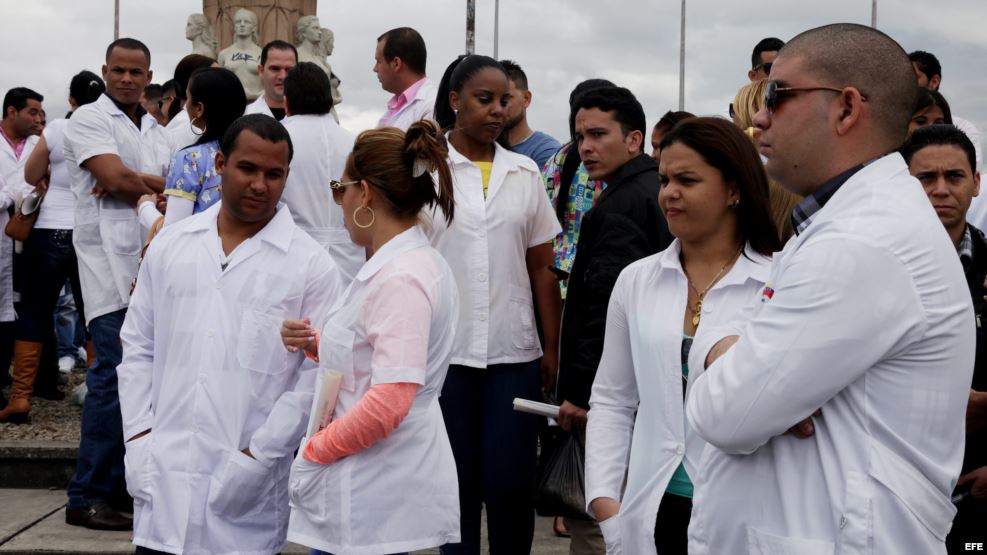
Cuban doctors who defected from medical missions in Venezuela protesting in Bogota (Archive)

Juan Juan Almeida, 27 January 2017 — With notable determination, the Cuban government seeks to lure, or rather rope-in, physicians, nurses and other healthcare workers who have defected while serving on medical missions outside Cuba.

To this end, it has sent out a flyer in which it assures that the right of return is guaranteed–just as long as they maintain a respectful attitude toward the Revolution and have not joined counter-revolutionary organizations.

Everyone knows that healthcare is a strategic factor in the development and wellbeing of any society. The diplomacy of white coats, as the export of medical services is also known, is among the principal revenue sources of the Cuban state, and a very effective tool for political influence. continue reading

Cuban medical doctors serve in remote areas. Cuba’s contribution to the fight against the Ebola virus in West Africa still resonates in the memory of European, and even North American, politicians. For this reason, any defection or escape poses a concern for the Island authorities.

A medical defector, besides becoming a bad investment for the country’s economy, also symbolizes the unquestionable link in the chain of failures of the Cuban healthcare system. But a traitor who returns signifies a social, economic and public relations triumph.

They must be induced to return. To this end–and to take advantage of the tremendous uncertainty planted by the announced end of the “wet foot, dry foot” policy and the Cuban medical professional parole program–the government has started a campaign that covers every municipality of the Island, visiting the families of every ungrateful malcontent health worker, making them complete a form and using it as a communication link or bait.

The form is as follows (“collaborator” in this case being a positive term):

Proposal to Exchange Information with Relatives of Ex-Collaborators

Date:               Location:

Name and surnames of the ex-collaborator:

Name and surnames of the interviewed relative:

Relative’s political affiliation:

Degree of kinship with the ex-collaborator:

Duty to Inform:

The family member is to inform the ex-collaborator regarding the Cuban Government’s disposition to guarantee the right of return to the country, according to the requirements of the Migration Law, as long as individual maintains an attitude of respect towards the Revolution, and has not joined a counterrevolutionary organization.

 Translated by: Alicia Barraqué Ellison

Tania Bruguera Withdraws Her Work From the Bronx Museum: ‘A Moral Decision’ / 14ymedio

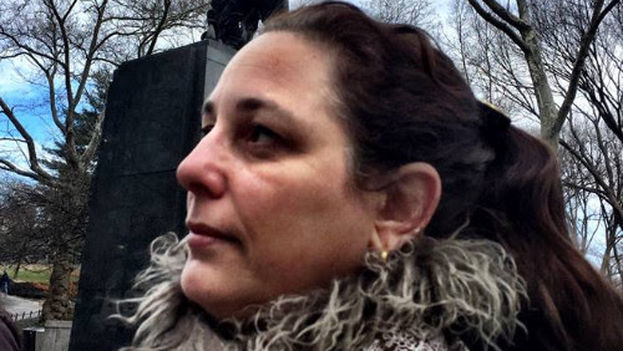
Tania Bruguera during the press conference this Friday at Central Park in New York. (INSTAR)

14ymedio bigger14ymedio, 27 January 2017 — The artist Tania Bruguera said Friday that her withdrawal from the exhibition Wild Noise at the Bronx Museum “is a moral decision.” During a press conference in New York’s Central Park, the director of the Hannah Arendt International Institute of Artivism  (INSTAR) reported that “in Cuba there are artists who are ignored for saying what they think.”

This week Bruguera (born Havana, 1968) asked to withdraw her work Upside Down in the exhibition that will open on Friday, February 17, which includes pieces from some 30 artists from Cuba, including Los Carpinteros, Glenda León, Ana Mendieta, Kcho, Wilfredo Prieto and Humberto Díaz. continue reading

Initially the show was to be made up of works that Havana was going to lend to the New York museum, but in the end it decide not to allow them to be sent to the United States. US organizers tried to save the situation with the presentation of 60 pieces of Cuban art collected from other parts of the world.

Bruguera said it would be hypocritical that she is not allowed to exhibit her work in Cuba, but that her work would be used to clean up the image of what is happening on the island.

Bruguera said it would be hypocritical that she is not allowed to exhibit her work in Cuba, but that her work would be used to clean up the image of what is happening on the island. The artist pointed to the director of the Holly Block museum, for playing an important role in everything that happened.

This Friday, the artist stressed that her withdrawal from the show is part of “a long tradition among artists in the case when a context implies complicity or a political alliance that endangers the meaning of the work.”

“Being in this exhibition would be to obviate a part of history” that of the censored. “The Wild Noise exposition  is contaminated by the political interests that hide the censorship that exists in Cuba,” the artist said.

At the press conference, Bruguera proposed donating to the victims of Hurricane Matthew the $2.5 million that the Bronx Museum, along with other institutions and individuals, “are collecting to reproduce a sculpture in Central Park and donate it to a country which already has a Martí on every corner.”

“If it is to help the Cuban people, it is not helped by projects of personal vanity,” said Bruguera, who asked for “institutional transparency from the Cuban government regarding the use and destination of donations and aid from governments, non-governmental institutions and individuals.”

January Notes / Fernando Dámaso

Fernando Damaso, 26 January 2017 — While the Cuban authorities exhaust the citizens by talking about the past and the future, they are worried about the absurd present, which they want to leave as quickly as possible.

Against it conspires the totalitarian regime in the country, and the old age of the majority of its main leaders, clinging to power as if it were a divine gift with an eternal character.

Nearly 58 years of demented experiments and failures, under the banner of a “Biran-style*” tropical socialism, have permeated the personality of Cubans, making them docile and fanatic, applauding those who oppress them and thanking to those responsible for their misfortunes. continue reading

It is an unfortunate situation that, when these times are past, it will take time to be overcome. Sometimes it even seems to strike a national cowardice, which limits any action to change it.

Its main manifestation is widespread pessimism, the reacting to tensions through flight, alcoholism, drug addiction, personal violence, antisocial attitudes and disrespect. All this directly attacks the health of society, making it an easy prey to extremisms and dogmatisms of all kinds.

The lack of the components of a civil society, outside the officialdom, such as independent social and political organizations, free unions and legislative and judicial powers, independent of the executive, makes the situation more complex.

*Translator’s note: The Castro brothers were born in the town of Biran in Eastern Cuba.

Juvenile, Always Juvenile / 14ymedio, Reinaldo Escobar

Josefina Vidal last October when the Government provided free Wi-Fi at the University of Havana for young people to show their opposition to the “blockade”. (@JosefinaVidalF)

14ymedio bigger14ymedio, Reinaldo Escobar, Havana, 27 January 2016 — An old Soviet joke from the time of Leonid Brezhnev relates his attempts to enthuse young people to celebrate the six decades of the October Revolution in the autumn of 1977. The septuagenarian leader entrusted to his friend, Aleksei Kosygin – who had a reputation of being a liberal – to take charge of organizing the celebrations with a renewed touch to attract to the new generation.

Later, when reading the reports denoting the absolute indifference of the young Muscovites for the commemoration, the secretary general of the Communist Party of the Soviet Union called his man of confidence to explain to him on the causes of the failure. “I can’t explain what happened, but I put the ‘girls from the 17th’ in front,” said Kosygin, annoyed, referring to the enthusiastic Komsomols who, 60 years previously, had chanted slogans and sang revolutionary hymns. continue reading

The humorous anecdote is once again relevant in Cuba. The first secretary of the Young Communists Union (UJC), Susely Morfa, has called for the celebration of the 55th anniversary of the organization she leads and the “further strengthening, mobilizing and including of our new generations.” To connect with this sector of society she proposes “a fresh, revitalized, approach that responds to their interests and will leave an impression on them.”

The first point on the agenda of the UJC, to meet her objective, will happen on Friday night, with “the traditional March of the Torches” that will recall the 164th anniversary of the birth of José Martí. In February the “historic routes will begin and in March we will begin a tour of the Moncada and Buena Fe groups.”

It seems that the novel plan to attract the young has been designed by “the girls of ’59,” those who climbed the trucks to kiss the bearded men coming down from the Sierra Maestra nearly 60 years ago.

The silliness of the plan continues with the Necessary Connections spaces for exchanges in the mass organizations where, according to Morfa, they will attempt to “reach every participant with a copy of the concept of Revolution from our Commander in Chief.”

The “casual wave” of the UJC will continue in April with “an anti-imperialist encampment in Santa Clara.” Probably in May there will be a parade for Labor Day. It is expected that similar events will occur during the next eight months.

The summer will be full of anniversaries, such as the birth of Antonio Maceo and Ernesto Guevara, the assault on the Moncada barracks or, in August, Fidel Castro’s first birthday after his death. The Committees for the Defense of the Revolution will also play a leading role in September.

The disappearance of Camilo Cienfuegos will be remembered the following month, and then, in November, will be the first anniversary of the death of Fidel Castro. There will still be time, near Christmas, to celebrate the 1959 of the coming of the Revolution.

Yomil and El Dany, the most popular reggaetoneros of the Island, are not included in the novel proselytizing project. Nor has the organization of young communists ever thought of setting up a wall for spontaneous graffiti, or even implementing a Wi-Fi zone with free internet access to flood social networks with teenage energy.

It seems that the novel plan to attract the young has been designed by “the girls of ‘59,” those who climbed on the trucks to kiss the bearded men coming down from the Sierra Maestra nearly 60 years ago.

The Gran Teatro De La Habana Is Guarded Against Ticket Scalpers / 14ymedio

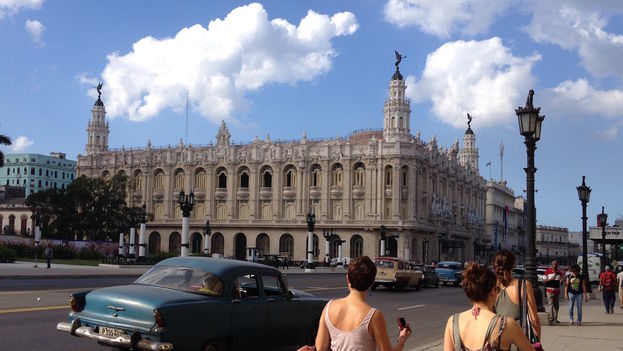
The Gran Teatro de La Habana received the name of Alicia Alonso after its re-opening on 1 January of 2016. (Luz Escobar)

14ymedio bigger14ymedio, Havana, 26 January 2016 — The National Council of the Performing Arts has taken measures against the resale of tickets at the Alicia Alonso Gran Teatro de La Habana. The Ministry of Culture, which controls the theater, emphasized that the new controls have been established jointly with the venue to eliminate “the unscrupulous action of the resellers.”

Each person who lines up to get seats can appear at the window only once and must show their identity card. From now on, an individual can only buy four tickets to one performance, or two for each event if they are buying for two different events. continue reading

The Security and Institutions of Culture Company will increase the number of agents around the ticket window and the theater doors when there is a show of great interest to the public. In addition, the National Revolutionary Police will identify possible resellers.

“We are confident that the planned measures will help us stop the speculators in a decisive way, we will work so the Alicia Alonso Gran Teatro de La Habana remains a referential place for young people,” the venue has stated in a note published in Juventud Rebelde (Rebel Youth) newspaper.

Resellers offer tickets at 20 CUC (about $20 US) while the price is 30 CUP (about $1.20 US) according to reader’s letter published in the government press

Earlier this month, in the Letter to the Editor section of that newspaper, the journalist Jose Alejandro Rodriguez complained that “the Cuban State has financed an extremely costly repair of the Alicia Alonso Gran Teatro de La Habana” and “it no more than reopens the doors of the venue, and the traditional claque of resellers has regrouped and exercises their hegemony in the line at the entrances for the performances of the Cuban National Ballet.”

The reporter published the letter of an indignant reader who explained how the resellers would offer tickets to the place for 10 Cuban convertible pesos (CUC – about $10 US), when the official price is 30 Cuban pesos (about $1.20 US). “If they try to sell them right before the performance starts, it’s 15 CUC,” she complained.

In October of last year this newspaper mentioned an ad on the popular classified site, Revolico, saying that “reasonably priced tickets for the Ballet Festival” were for sale. In that case, in addition to those sold by the so-called coleros (people at the line), tickets were also available from ones given to intellectuals, artists and people linked to the Cuban National Ballet, at a cost of between 20 and 25 Convertible pesos.

We are very afraid / Cubanet, Augusto Cesar San Martin and Rudy Cabrera

cubanet square logoCubanet, Augusto Cesar San Martin and Rudy Cabrera, Havana, 23 January 2017 – In 2014, Cuban doctor Nelson Cabrera Quinta, his wife and two teenage children were declared illegal occupants of his home located at No. 1705 – 200th Street in the Havana neighborhood of Siboney. The house has been part of the family patrimony for 40 years and they have been been permanently residing in it for 12 years.

Six months after Dr. Cabrera left on an official Cuban medical mission in Saudi Arabia, his wife Bisaida Azahares received a notification from the Ministry of Construction to evacuate the house immediately. continue reading

“In the resolution it says: Leave the house [and go to] to your place of origin. We do not have options and much less a place to go… We are afraid, we have been told so many things about the eviction, that they are very violent people who open the doors, they break them down, they come in and they just put you out and that’s it. Imagine yourself, alone with two children,” says Bisaida.

Dr. Cabrera was warned that when he traveled abroad as a health worker, that they were going to evict his family from the house. For a long time that was the reason he rejected the chance to serve on several collaboration missions, and continued to direct one of the polyclinics in the Playa municipality. The doctor lowered his guard when the municipal president of the People’s Power assured him that while he was on a government mission, there would be no “forced extraction” at his house.

The right to reside in a garage

The resolution of “forced extraction”, the Cuban “neo-eviction,” is the result of a claim filed five years ago by the University of Medical Sciences of Havana (UCMH) against Nelson Cabrera Quintana and his family. According to the institution, the family lives in one of the 17 houses owned by the school in the residential division of Siboney, considered a “frozen zone,” which means the family registered as living in the residence must be “officially verified.”

The Cabrera family resides in the garage of a mansion, divided into three units. One-third of the house was granted in 1979 to the grandfather Gilberto Falcón Darriba, because of his work; he was a founder of UCMH, then the Institute of Medical Sciences of Havana, where he worked for more than 40 years.

Falcón lacked the mental and physical health to claim his property rights when he arrived at the end of 15 years residing in the garage. According to the provisions of the Ministry of Public Health, the houses are granted after having been leased for 15 years, giving the property to the lessee. Librada Arancibia, Falcon’s wife was on the verge of gaining title after her husband died in the United States, afflicted with Parkinson’s Disease.

“My grandmother was not recognized as the owner even though she initiated the process. I have documents from various UCMH lawyers who explicitly say that they were being deprived of the house they lived in for more than 20 years, and that they had paid the bank for in full,” says Nelson.

However, UCMH recognized the right of the elderly woman to live until the last day of her life in the residence transformed into a fortress.

Siboney, residential enclave

Each third of the residence has a different history, tied to its being property of the UCMH. On the main floor of the house, lived Dr. Caridad Dovale, retired from the UCMH, who emigrated to the United States in 2012. According to a document from the university center, her husband stayed in Cuba, managing to obtain the right to the property. In 2016 Dovales returned to Cuba, was repatriated and regained ownership of the house, as a university doctor.

The so-called “part behind,” belonging to the third, was claimed by the educational institution in 2013. Nelson affirms that Armando Hart Dávalos (former Minister of Education and Culture) and his wife interceded for those residents, and managed to get the eviction process cancelled.

The Cabrera family asks: Why if Falcón emigrated to the US, his wife did not get the benefit of housing, like the neighbors above? What has more value in Cuba, citizen rights or a good godfather in the government?

The answer is clear in the ​​Siboney area, a neighborhood full of mansions built before 1959 by the so-called “bourgeoisie,” but which today is dominated by the government upper class.

Havana ’Paladares’, Between Glamor and Poverty / Iván García

Madonna celebrated her 58th birthday, on 16 August 2016, at the paladar La Guarida, at 418 Concordia between Gervasio and Escobar streets, located in one of the poorest and roughest neighborhoods of Central Havana. Screen capture from Youtube video.

14ymedio biggerIvan Garcia 25 January 2017 — In the poor and mostly black neighborhood of San Leopoldo, cradle of the picaresque, clandestine businesses and the sex trade in Havana, is found La Guarida, probably the best private restaurant in Cuba — which are known as “paladares.

The business is run by Enrique Nunez, a telecommunications engineer converted into an empresario of the ovens, and dinner for four people, wine included, is no less than 160 dollars, from the wallets of some tourists dazzled by the opening of small family businesses on the part of the Communist regime.

Folklore, poverty and glamor at times click. La Guarida is flanked by a rundown tenement of narrow rooms and an ostentatious central staircase with hints of art deco. continue reading

On the same street, where the neighbors sit in iron armchairs and on little wooden benches in the doorways of their houses, brand new cars with diplomatic plates park, with tourists or government heavyweights.

Romello, 65, born and raised on Virtudes Street, very close to the prestigious paladar, remembers when “the Queen of Spain, Maradona and a ton of famous people have come here to eat.”

But asked if he has ever dined or had some drinks in La Guarida, the guy smiles and shakes his head. “What it is man, this paladar is for millionaires. They tell me a beer costs five bucks and a plate of shrimp is no less than 15,” he says, while walking over to the wall of the Malecon with an improvised fishing pole.

Reservations at La Guardia can be made on the internet. “But it’s a hassle to book a table. It’s always full,” says a Spaniard. In paladares like San Cristóbal, La Guarida or La Fontana, recommended by international haute cuisine magazines, and where a family dinner can cost more than 200 dollars, it is almost mission impossible to reserve a table the same day.

There is a route in Havana, inserted into the usual tourist itineraries, whether it is the area of the old city, El Vedado or Miramar, where lunch in a private restaurant is at least 25 dollars a person.

The success of the paladares on the island is a combination of the tenacity and creativity of their owners. Despite the scarcity of supplies, traditional or international cuisine is given a touch of the gourmet with a certain level of quality.

They have been catapulted to success thanks to the thunderous failure of the state food service, full of idlers and thieves who are profiting from the food they can steal from the diners.

Thomas, a Swiss tourist, says that in the Parque Central Hotel restaurant, supposedly five stars, “a dinner for four people, with tomato soup and sirloin steak which did not stand out in its presentation, cost me 120 dollars. So when I visit Cuba I prefer to eat in the paladares. Although the prices go up every year and sometimes the quality doesn’t. But it is always preferable to the state restaurants.”

According to information published on 20 October 2016 in the state newspaper Granma, in Havana there are more than 500 private restaurants. But around 150 of them would be classified in the category of most demanding and successful paladares.

And it is precisely in this category where the prices have increased by 30 percent in the last six years. “And if we compare the prices to 15 or 20 years ago, then it’s an increase of 50 percent. In 2000, a person could eat in a good quality paladar for 8 or 10 dollars. Now there’s nothing under 20 or 25,” says an Italian married to a Cuban.

If a segment of tourists, businessmen and diplomats complain about the rise in prices in the private restaurants of the capital, imagine the Havanans. Most have never sat at a table in a five-star paladar. Many can’t even go to the smallest cafe. In Havana there are private food businesses in classes A, B and C, depending on one’s wallet.

Anselmo, retired, sells loose cigarettes in a nursing home just a stone’s throw from Villa Hernandez, a paladar next to Parque Córdoba, in the populous neighborhood of La Viñora. “I’ve never bothered to look at that paladar. What for, with my shitty pension I could never eat there. What remains for us old people and those who earn miserable wages is eating bread with a speck of fish or death-like pizzas from the little stands run by the state.”

In state coffee shops, almost always dirty, with poor service and poorly prepared food, a pizza costs five Cuban pesos (about 20 cents US) and it’s fifteen pesos for a serving of congrí rice with a chicken thigh. “That’s the food bought by beggars, alcoholics, the old and retired. Quality leaves a lot to be desired,” says Mildred, a high schoo student.

In the food businesses further away from Old Havana, Vedado or Miramar, the areas most visited by tourists, the menu is usually cheaper but the choices are very limited.

In general, plates are based on smoked chicken and pork. “But it is common that the waiter, taking your order, tells you that ‘off the menu’ there is seafood, beef, good fish, lamb and even loggerhead,” says Dianelis, a hairdresser, who usually eats at paladares in Santos Suarez, Lyuano and Lawton — Havana neighborhoods farther from the center.

And there is a wide sector of private businesses, who, to improve their profits, use double bookkeeping or financial tricks as a way to avoid taxes.

To eat even medium quality food in Cuba it is recommended you visit a private restaurant. At special dates — birthdays, weddings, quinceañeras, families go to paladares to celebrate. If they are short of money they go to the cheapest ones or places that serve more food.

“Gourmet food is for foreigners. When we Cubans have to eat on the street, we want to fill our bellies,” says Ignacio. But there are not many who can afford to do so.

Taking Stock of the Flood Damage in Havana / 14ymedio

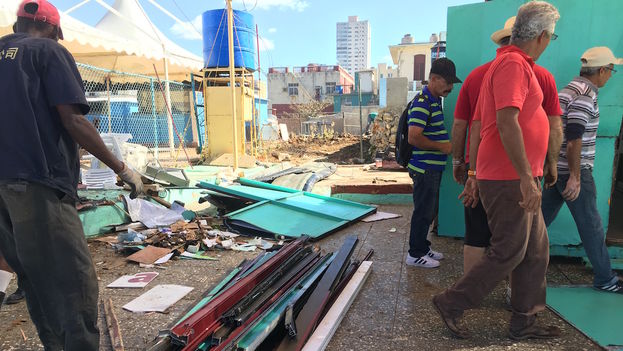
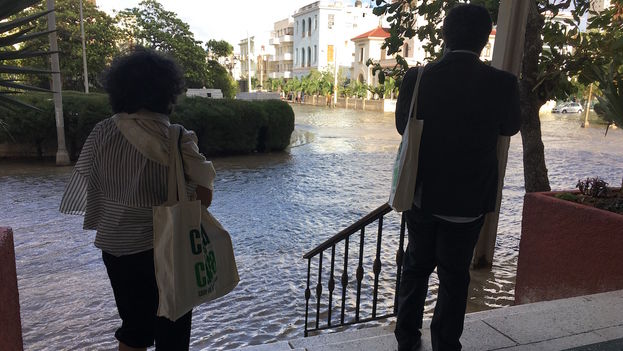
Havana is recovering after the strong flooding from the sea along Havana’s Malecon. (14ymedio)

14ymedio bigger14ymedio, Luz Escobar, Havana, 24 January 2017 — The hectically busy residents of the areas bordering Havana’s Malecón, on Tuesday, tried to repair the damages left by seawater flooding over the seawall the previous day. The strong northwestern winds associated with an extensive extratropical low pressure over the state of South Carolina have submerged the dreams of many families.

“It was strong and very fast, not as moderate as they said on television. There was a lot of water flowing,” says Lázaro, a resident of Arcos Passage on 3rd Avenue and A Street in the Vedado district.

“It was not like other years because this time they did not warn us in time and the team of people who always help with the evacuation did not show up.” continue reading

Victoria, a resident of the same street, is sweeping the sand that reached to her doorway. At the same time last year there was something similar in the area, “but not so intense,” she says, tired of all the hustle and bustle.

Wet mattresses, refrigerators damaged by salt and humidity,and the lamentations of the unprepared state, are part of the scene along the Malecon

Wet mattresses, refrigerators damaged by salt and humidity, and the lamentations of the unprepared state, are part of the scene along the Malecon.

While taking a break, Victoria tells her neighbor that the water once again reached Calzada but this year it also got as far as Linea Street. She says that in her house “all night I couldn’t sleep because of the beating of the waves,” and regrets that “they have not cleaned the streets as they are doing in front of the Meliá Cohiba hotel.”

The floods went from moderate to strong in a few hours on the north coast, including the Havana Malecon, taking many unawares. Just after four in the afternoon one could see cars drifting on the water, and the sewers were black holes where the currents swirled.

In the afternoon the tides continued high on the Havana coastline. (14ymedio)

On A and B Streets water penetrated more than four blocks into the city. Several warehouses, like the one at 3rd and C, lost part of their merchandise because the workers did not have time to raise up all the sacks of rice, sugar or beans.

One family has lost everything because their house was a garage turned into a home because of the deficit of housing. “We didn’t see it coming and by the time we realized, everything was underwater,” was all that the woman managed to repeat, as she rescued swollen chairs from a mixture of seawater, mud and garbage.

Victoria, a resident, regrets that “they have not cleaned the streets as they are doing in front of the Meliá Cohiba hotel

In front of the Labiofam offices at 1st and B, cars “had all four tires in the air,” explains Ramiro, a resident, while pumping out the water that entered his garage. The man, who lives in the 110 building behind the Presidente Hotel, complains that those in charge of decontaminating the water tanks are “delayed” and in similar situations “they let some three days go by to force the residents to solve the problems on our own.”

In many private businesses the employees were busy from the early hours of the morning cleaning, getting the water out, and trying to save what wasn’t washed away with the current, while repairing the damage.

A group of people who had approached the seawall to enjoy the waves breaking over it were alerted by the whistles of police officers who guarded each block; the law enforcement officials explained to the reckless that it is very dangerous because “a stone can fly up and hit you.”

As reported by the Forecast Center of the Institute of Meteorology, coastal flooding began to decrease “gradually” from this morning, but in the early hours of the afternoon there were still heavy tidal waves.

Cuban State Telecommunications Company Used to Accuse Challenger in Brazil’s Presidential Elections of Drug Trafficking / 14ymedio

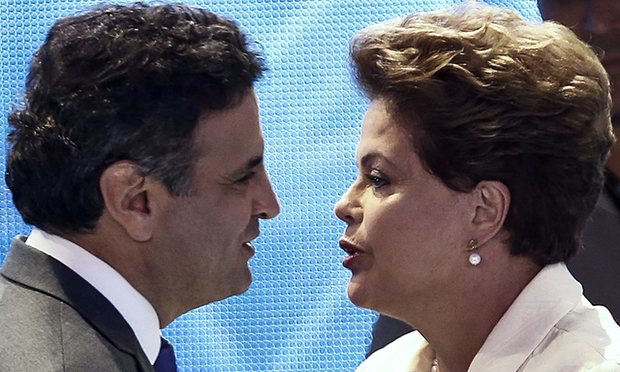
Aécio Neves, the Social Democrats’ candidate, greets Dilma Rousseff, of the Workers’ party, before a televised debate. Photograph: Miguel Schincariol/AFP/Getty

14ymedio bigger14ymedio, Miami, 25 January 2017 – The services of the Telecommunications Company of Cuba (ETECSA) were used to attack Brazilian Congressman Aécio Neves, when he ran for president against Dilma Rousseff, as reported Wednesday by the Brazilian newspaper Folha de Sao Paulo.

Neves, a member of the Brazilian Social Democracy party, began a judicial process more than three years ago that allowed him to uncover the internet provider responsible for the false profiles that sought to undermine his image on social networks.

The São Paulo court ruled in favor of the deputy and required the companies providing internet to disclose the identity of 20 profiles used to attack the former presidential candidate. One of these profiles used the services of the Cuban state network, which has raised suspicions about who is behind the defamatory campaign. continue reading

The profile connected to Cuba was used by three different people, according to the newspaper

The profile connected to Cuba was used by three different people, according to the newspaper. The main attacks against Neves are related to accusations of gender violence and drug trafficking.

So far, it is not possible to know the real identity of the false profiles that attacked Neves, although his lawyers are studying the possibility of filing a lawsuit in Brazilian or Cuban courts to require the company to deliver the data.

It is also not possible to establish whether access to the network was made from a state institution, a hotel or a Cuban Wi-Fi zone.

ETECSA has not answered questions sent by Folha de Sao Paulo and the Cuban embassy in that country has refused to provide statements.

Mexico Deports Another Group Of Cubans / 14ymedio

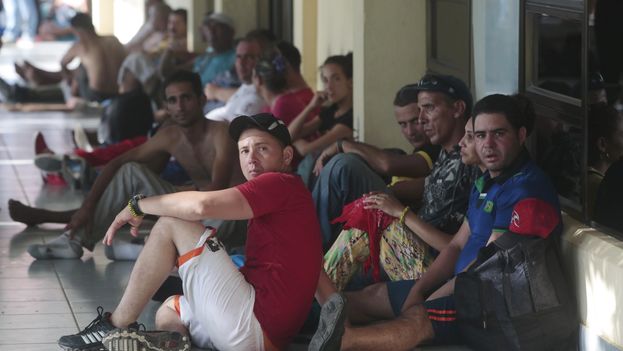
Hundreds of Cubans have been stranded in various Latin American countries on their journey to the US. (Archive)

14ymedio bigger14ymedio, Chiapas, 25 January 2017 — Mexican Government authorities have reported the deportation of 70 Cuban migrants who were in the country without visas or transit permits. Among the deportees were 22 women and 48 men who were sent back to Cuba on Wednesday on a plane belonging to the Mexican Federal Police.

The returnees from the southern border of the country were gathered in the state of Chiapas before being deported.

All of them were waiting to obtain the exit permit that allowed them to travel freely and legally through Mexican territory for 20 days, in order to reach the United States. The new US immigration policy, initiated two weeks ago by the former Obama administration eliminated preferential status, encapsulated in the wet foot/dry foot policy – which was cancelled – and the Cuban Adjustment Act (which remains in effect as only Congress can repeal it), which provides special benefits to Cuban migrants once they reach the country. continue reading

With this latest deportation 161 Cubans have returned to the island since January 20

Since the suspension of the previous immigration policy, the Mexican Government offers Cubans without a visa the exit permit that would allow them to reach the United States. In contrast, Mexican authorities have since implemented the bilateral agreement with Havana, which allows the return of citizens of the Caribbean country if the Cuban consulates in Mexico agree to recognize them as Cuban citizens.

According to the National Institute of Migration (INM), all migrants were deported “in good health and provided the necessary assistance in strict compliance with their human rights.”

With this latest deportation 161 Cubans have now been returned to the island since January 20 when 91 other migrants were deported by the Mexican INM following the same procedure.

Former Political Prisoner Arturo Pérez De Alejo Dies / 14ymedio

Cuban dissident Arturo Pérez de Alejo died Wednesday in Miami. (EFE)

14ymedio bigger14ymedio, Miami, 25 January 2017 — The former political prisoner Arturo Perez de Alejo, who was part of the Group of 75, died Wednesday in Miami at 66, as reported by MartíNoticias .

Pérez Alejo was born in Manicaragua, in the then province of Las Villas, on 23 May 1951 to a peasant family.

During the nineties, in the middle of the Special Period, he began his dissident activity. He participated actively in the Democratic Action Movement, the Nationalist Action Party and the Independent Democratic Front.

In addition, he founded the Escambray Independent Organization For The Defense Of Human Rights, of which he held the presidency, and he was noted for his dissemination of the Varela Project, a civic initiative promoted by the late Oswaldo Payá to demand more liberties in the island.

In 2003 he was imprisoned in the repressive wave known as the Black Spring. He was imprisoned for five years, and the conditions of his imprisonment greatly undermined his health

In 2003 he was imprisoned in the 2003 repressive wave known as the Black Spring. He was imprisoned for five years, and the conditions of his imprisonment greatly undermined his health.

During his imprisonment he was recognized as a prisoner of conscience by Amnesty International. In June 2010, through the efforts of the Catholic Church, he was released and exiled to Spain.

He later moved to Miami, where he resided until his death. He spent his last years closely linked to the work of organizations of the Cuban exile.

Leaving Cuba But Stranded on Another Island / 14ymedio, Yoani Sanchez

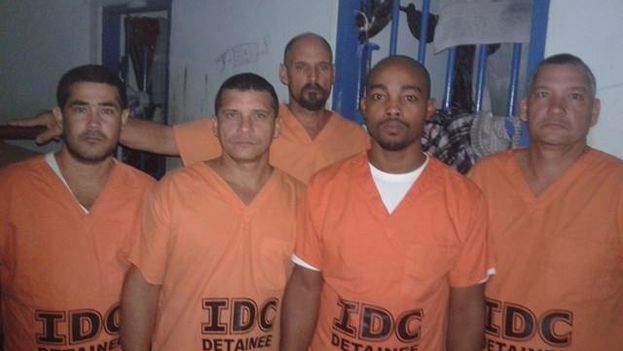
A group of Cubans detained in Trinidad and Tobago by immigration authorities. (Courtesy)

14ymedio bigger14ymedio, Yoani Sanchez, Miami, 25 January 2017 — They left Cuba before January 12 and are now stranded on the island of Trinidad and Tobago, northeast of Venezuela. They arrived with the advantage of not needing a visa, but they have lost hope of reaching the borders of the United States after the cancellation of wet foot/dry foot policy.

Unofficial figures estimate that more than a thousand Cubans have arrived in Trinidad and Tobago and are waiting to be able to leave for the United States. Some received refugee status in this time, conferred by the Office of the United Nations High Commissioner for Refugees (UNHCR), but have difficulty obtaining a work permit.

Recently 15 Cubans detained in Trinidad and Tobago for being undocumented, including 12 men and 3 women, stated that they would rather die than return to their own country

Zenaida, a fictitious name, still has a son in Cuba and fears to give her real identity to the story she has experienced in recent months, but her desire to tell what happened demonstrates, at times, a touch of recklessness. continue reading

“The word that they are offering asylum has gotten out, and if the immigration authorities hadn’t turned back a large number, there would be considerably more of us.” Those stuck there when their visas expire are sent to jail.

Recently, 15 Cubans detained in Trinidad and Tobago for being undocumented, among them 12 men and 3 women, declared that they would rather die than return to their own country. They are trapped on one island and trying to avoid being returned to another.

Zenaida had a job with the Cuban Workers Center (CTC) – nominally a labor union, but entirely controlled by the government – but was disillusioned with the official ideology. “Despite experiencing the time of the mass exodus in the 1990s, I never thought to leave the country because I’m very attached to my family and my only daughter,” she says.

Her nonconformity started from the time she was a member of the Young Communist Union. “I realized that Robertico Robaina, our leader at the time, obeyed the principle of ‘do what I say and not what I do’.” Zenaida worked on a poultry farm and one day discovered, “a great embezzlement of the birds, where the records were falsified.” On confronting the people involved she learned that among the embezzlers was the director general of the enterprise. Frustration washed over her.

She decided to attend the course for political cadres to get away from the poultry farm. “I couldn’t imagine I would go from one hell to another.” After being a witness to the opportunism and the double standards of many of her colleagues, the little faith she still had in the system was completely destroyed.

“I requested to be released from my job after witnessing the outrage that the opposition figure Jorge Luis Perez ‘Antunez’ and his family were subjected to,” she tells 14ymedio. “That was the trigger that made me decide not to continue there.

“I started working secretly in my aunt’s paladar (private restaurant). There they offered me 100 Cuban convertible pesos (roughly the same in dollars) and the cost of my passport if I would go to Trinidad for seven days in order to import clothing,” she said.

But the fate of the “mule” took a turn when, passing through the airport in Havana, she happened to greet and speak with the author of this article. One of the women she was traveling with, who had witnessed the exchange, returned to Cuba before her, and told one of Zenaida’s neighbors that she was now “one of those human rights people.” “Small town, big hell,” she says, recalling that incident, “the news spread like wildfire and even my husband was called in by State Security.”

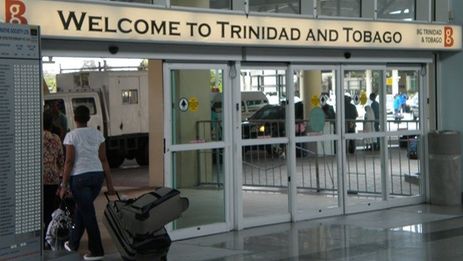
Trinidad and Tobago Airport

“My mother and my son were also questioned about my behavior,” she says. “I was aware of the consequences I would have to face if I returned to Cuba.”

“There are families who have been stranded here  waiting for a host country for more than two years. I think the world is not aware of the drama Cubans experience”

She applied for political asylum and now her legal situation is complex. “Immigration took my passport and gave me a card that’s called a supervision order, that allows me to be in the country freely, but doesn’t allow me to work.” Zenaida has to work in the shadows to survive. “I do it on my own and I do the hardest cleaning jobs that the natives here reject.”

For the moment, she is receiving some help from a Catholic organization, Living Water Community, which consists of a food allocation that includes rice, sugar, grains, flour, toilet paper, soap and some clothing donated by others.

After some time she will have her first interview with United Nations representatives and only then will she be able to obtain refugee status. “There are families who have been stranded here waiting for a country to take them for more than two years. I think the world isn’t aware of the drama Cubans experience,” says Zenaida.

Although Zenaida has been optimistic since reuniting with her husband and celebrates not being alone, her feelings are contradictory with respect to emigration “I do not know if we are living in limbo, but only now do I know that fleeing resolves nothing. We are left without our customs, our families, our roots, and clash with the hard reality of the immigrant. We will only be free when we don’t cross jungles and oceans looking for an answer that is only inside ourselves.” And she concludes with regret, “What a pity that it is only now that I understand all this!”

Gandrilla Launches His Mandate at MINIT With New Orders / Juan Juan Almeida

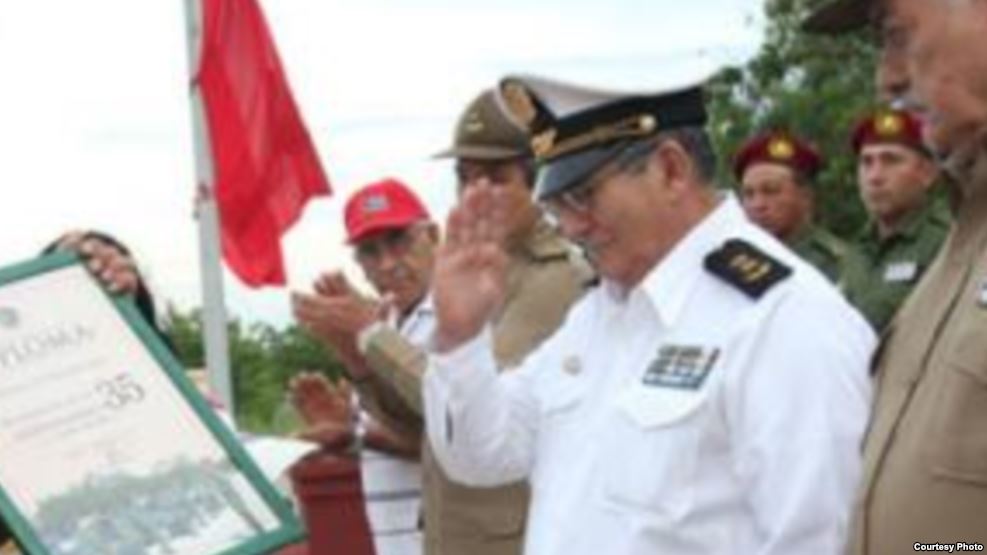
Juan Juan Almeida, 24 January 2017 — Hours after the Obama administration said good-bye to what was the “wet foot/dry foot” policy, in Cuba the recently named Minister of the Interior, the new man in charge of guarding the secrets and security of the State, Julio Cesar Gandrilla Bermejo, orders a braking, a review and punishment of all those officers who, in complying with the law, commit excesses and/or abuses in their treatment of the population, of those charged, imprisoned, and even those the government calls “members of little counter-revolutionary groups.”

The surprising directive not only comes within the framework of normalizations of relations between the United States and Cuba, and also appears at exactly the time when the uncertainty of many Cubans was triggered when, out of the blue, they closed the valve and reduced the escapes. continue reading

The news of the “wet foot/dry foot” repeal had barely been announced, intended to stop the exodus of Cubans to the United States, but the pressure within the island didn’t wait. This opportune measure, or opportunistic reaction, aims to take advantage of the change to protect the system and national security, silence those who attack the government showing the constant violations of individual justice, and avoiding at all costs popular discontent.

Although today everything appears to be in Gandrilla’s favor, some turbulence of opinion arose among the officers who mocked the vice-admiral saying that he is the only sailor who doesn’t know how to swim, and that his vertiginous ascent is due to a personal relationship with general Raul Castro, who — after testing his trustworthiness as a partner in marathon domino tournaments, and evaluating his active participation in important hunts and risky fishing expeditions — first appointed him chief of the Department of Personal Security (DSP) of the Revolutionary Armed Forces (FAR) (which should not be confused with the group of the same name in the Ministry of the Interior), and then made him Chief of Military Counterintelligence (CIM), and later first vice minister of the Ministry of the Interior and ultimately the Minister, taking the same route as his predecessor, the deceased general Carlos Fernandez Gondin.

Can the new minister enforce the new provision? 

Julio César Gandarilla is a “cadre” of Raul’s.  He lives with a certain modesty, along with his children (one a cardiologist and the other in the military) at number 44 on La Torre Street in the capital district of Nuevo Vedado, almost directly across from the building occupied for years by the Castro Espín clan.

He is not known for excesses, he is a solitary man, suspicious, slow to laugh and a good eater. It is opportune to know that when he was chief of the CIM he came on the scene because of his critical interest in reforming the methods that have created overflowing prisons in Cuba, with a total absence of social rehabilitation for the prisoners.

Personally, I don’t think he has the power to stop the repression, like many, and with great care he may be able to control the excesses committed by hundreds of repressors.

He has a great deal of experience in pursuing soldiers, comes from CIM with a doctorate in Internal Control; but the Ministry of the Interior is not the Revolutionary Armed Forces, it is one of those territories where it is not easy to impose new norms.

The Havana Seawall Floods After Heavy Flooding From The Sea / 14ymedio

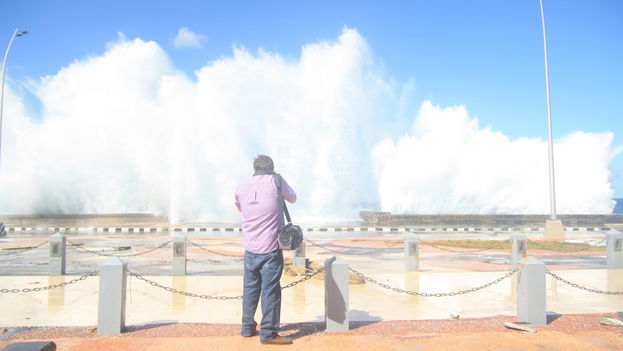
“I will stay here until [the water] goes down because I’m afraid to leave when it is like this,” says an elderly person who had arrived this afternoon at the Presidente Hotel. (14ymedio)
14ymedio bigger14ymedio, Havana, 23 January 2017 — As it happens each winter just a few minutes have been enough for the Havana Malecon and its environs to be flooded by the sea, after the arrival of a strong and extensive extratropical low in the west of Cuba.

The Forecast Center of the Institute of Meteorology issued its special Number Three Advisory at noon this Monday to warn of floods along the northwest coast. Cars and people have been trapped by the sudden arrival of the waters that with all their force break against the Malecon and flood important Havana arterials with the peculiar smell of algae. continue reading

Strong winds of the Northwest region between 15 and 25 miles per hour, with gusts that can be “over 35 miles per hour, make many neighbors worry about the possible collapses of buildings approaching 100 years of age, which have barely been maintained over the intervening decades.

“I will stay here until [the waters] come down because I’m afraid to leave when it is like this,” says an elderly person who had arrived this afternoon at the Presidente Hotel to connect to the internet and talk to his family in the United States.

Within a few minutes of three in the afternoon the sea began to overlow the Havana Malecon. Close to 4:00 pm, the water reached G Street and Linea and some passers-by who tried to arrive at their destination had to take off their shoes and to turn up their trousers to be able to advance.

This meteorological situation, according to specialists, will begin to decrease gradually from Tuesday morning, when the winds turn to the north and diminish in their intensity.