“We’re Not Going To Be Like Cuba,” Promises an Honduran Minister Indoctrinated on the Island

Educational programs exported by Havana arouse suspicions of ideological manipulation.
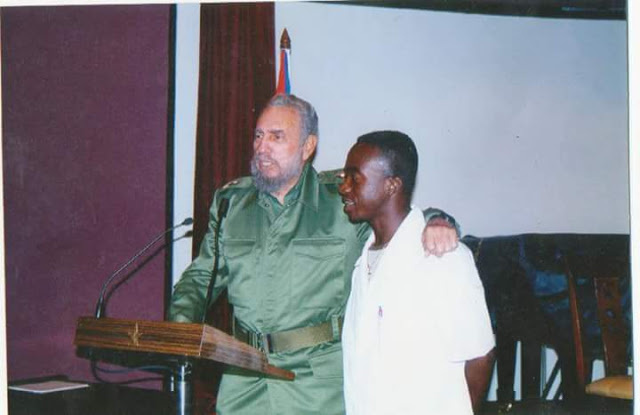

Luther Castillo Harry has had a close and public relationship with Cuba since 1999. / Cubadebate

14ymedio bigger 14ymedio, Havana, 21 August 2025 — Honduras and Colombia are opening their doors wide to Cuban “literacy” programs, just when local voices are warning about ideological indoctrination and agreement opacity. Honduras’s own Secretary of State for Science, Technology and Innovation, Luther Castillo Harry, mocked those who criticize the government for “turning the country into Cuba.”

Castillo Harry defended the so-called “Cuban Scientific Pole” and played down the poverty that is observed on the Island. “The same conditions are found in Honduras and any developing Latin American country,” he said. He also claimed that Cuba created “five vaccines” with which it immunized its population free of charge, without mentioning that the country had one of the highest mortality rates in the region during the Covid-19 pandemic. The minister attributed all the hardships of the Cubans to the “inhuman genocidal blockade,” and, as a finishing touch, closed his speech with a raised fist: “¡Hasta la victoria siempre, compañeros and compañeras!”

In 2024, he declared to his country’s press that “Cuba is the beacon that lights the way for the world.”

The Garifuna* doctor and current official of the Honduran Executive, Castillo Harry has maintained a close and public relationship with Cuba since 1999. That year he began his training at the Latin American School of Medicine, in Havana, and since then has maintained full political harmony with the regime, with constant praise for the Revolution. He has been interviewed by the Round Table and other official media, where he has defended Cuban medical cooperation with militant fervor. In 2024 he declared to the press of his country that “Cuba is the beacon that lights the way for the world.” Now in office, he has relentlessly continue reading

promoted bilateral agreements to facilitate the entry into Honduras of more “missions” from the Island.

In 2023, the Honduran newspaper El Heraldo revealed the literacy agreement signed with Havana: 123 Cuban teachers for 10,000 lempiras a month (about $400), for an amount exceeding 14.7 million annually (more than half a million dollars). The newspaper also noted fears that the plan would include “ideological indoctrination” and “political proselytism” in Honduran classrooms. Added to this are the international allegations of “modern slavery” that weigh on professionals exported by the regime.

The myth of the Island as a pedagogical reference does not hold up in concrete results.

While in Tegucigalpa the Cuban brigades defend themselves with Castrist slogans, in Colombia they are also given the red-carpet treatment. A commission headed by the National Director of Adult and Youth Education of the Cuban Ministry of Education, Maura Tomasén Leon, and the Doctor of Pedagogical Sciences, Aida Terrero Lafita, arrived in the capital of the department of Magdalena, with the goal of teaching literacy to 30,000 older adults.

The goal, according to the organizers, is to “strengthen” Phase 2 of the Yo Sí Cambio, Todos Alfabetizados program. The reception was enthusiastic: “a world power country in education,” proclaimed the local administration about Cuba. However, the myth of the Island as a pedagogical reference is not supported by concrete results.

Shanghai University’s Academic Ranking of World Universities, also known as the Shanghai Ranking, published this August its list of the 1,000 best universities on the planet, selected after evaluating more than 2,500 institutions with objective indicators such as Nobel prizes, highly cited researchers, publications in Nature and Science and per capita academic performance. The list included 18 universities in Brazil, four in Chile, two in Mexico, two in Argentina and even one in Colombia. No Cuban university appeared in the famous ranking of Shanghai.

Colombia boasts of “learning” from the Island’s educational model, but local media and opposition groups demand content controls, transparency in contracts and guarantees against sectarianism in classrooms. It is not a question of rejecting literacy, they say, but of preventing the entry into schools of closed packages of Cuban State pedagogy, which, according to critics, includes textbooks, teachers and political narratives.

* Wikipedia: People of mixed free African and Amerindian ancestry that originated in the Caribbean island of Saint Vincent and traditionally speak Garifuna, an Arawakan language.

Translated by Regina Anavy

____________

COLLABORATE WITH OUR WORK: The 14ymedio team is committed to practicing serious journalism that reflects Cuba’s reality in all its depth. Thank you for joining us on this long journey. We invite you to continue supporting us by becoming a member of 14ymedio now. Together we can continue transforming journalism in Cuba.
Bringing Drinking Water to Hotels in the Keys Is a Costly Operation

Tens of kilometers of pipeline in poor condition and four pumping stations serve the tourists.

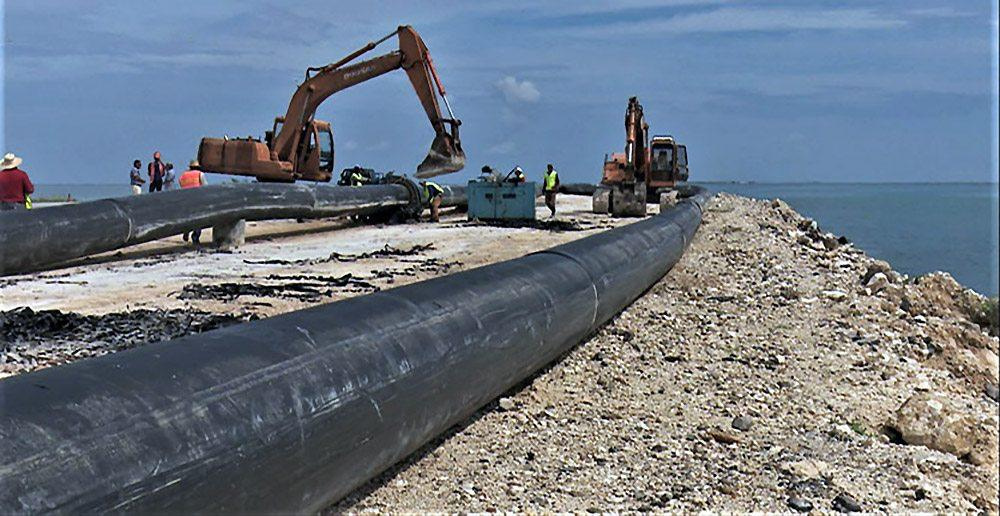
File photo of repairs to the pipeline of the Ciego de Avila causeway / Gobierno de Ciego de Ávila

14ymedio bigger14ymedio, Havana, July 20, 2025 — In Cuba, tourists also should be grateful for the Revolution. This, at least, is the suggestion of the news media Invasor, which this Wednesday defended the titanic task of bringing water from Ciego de Ávila to the hotels on the north coast. Behind the simple gesture of opening a tap in one of the spas are dozens of kilometers of pipelines built with the “sacrifice” of the country, says the newspaper, a service which is taken for granted by vacationers, who are very busy enjoying their rest.

The article comes one day after 14ymedio gave the news of the closure of the hotels, all luxury, of Cayo Cruz in Camagüey, because of problems with the water supply, and the transfer of guests to other facilities of Ciego de Ávila. However, the official newspaper never mentions the incident and instead presents its report in a triumphalist tone.

Invasor exhausts itself exposing numbers and data to show that, in practice, the supply to the keys is big enough for the province. The water, it explains, comes from the municipality of Morón, specifically from the basins of Patria III and Los Satos, which face “the strategic challenge of responding to the demand of 1,831 users, of which 1,665 are nuclei of the residential sector based in the popular council Turiguanó and the rest are real estate or State structures: 24 hotels, two villas and 140 non-hotel facilities.” continue reading

167.9 kilometers of water pipes and other supply networks have been installed “all along the causeway and beyond.”

In total, it adds, 167.9 kilometers of pipeline and other supply networks have been installed “all along the causeway and beyond.” In recent years they have repaired about 64 kilometers, plus 48.7 kilometers of sewage networks.

To move that amount of water, it points out, four pumping stations are needed, located in Cayo Coco (two units), Cayo Guillermo and Cayo Romano. They are all “properly equipped,” the newspaper claims, and can store together up to 5,000 cubic meters.

In the high tourist season, during the winter months when demand grows, the key can need up to 200 liters per second. “Patria III and Los Satos, however, are able to contribute 140 and 210 liters per second, respectively, a flow rate that could respond even to the demands of the area with the insertion of new facilities provided for in the territorial management plan,” says Invasor.

If the situation is optimal, as the provincial newspaper argues, and the same is expected of other hotel facilities, what happened then in Cayo Cruz? Invasor does not say, but it’s bombastic defense makes two things clear: even with the necessary means, bringing water through a causeway exceeds the capacity of Water Resources, and in the midst of a disastrous drought and with most supply systems interrupted or broken, tourism remains a priority.

Just yesterday the newspaper reported on the water situation in the province, describing “ruptures, hydrological drought -on average, dams are 41% filled- and important complications due to the energy crisis.” As a result, in Havana alone the water supply comes only every nine days, and in any one day up to 10,000 inhabitants can be affected.

“The fuel deficit also has other implications, such as the water pressure per tanker truck.”

According to the general manager of Aqueduct and Sewage, Miroslava Reyes, out of 196 water pumps in the territory, five are “inoperative due to technical problems.” The number is not significant, says the local newspaper, but “exacerbates a situation riddled with problems.”

Alternative sources do not solve anything either: “The fuel deficit also has other implications, such as the limitation of water pressure per tanker truck. To ensure supply, up to 15 tanks are used during a day, especially for vital services, without meeting the entire population’s demand,” the newspaper admits.

However, while the pipelines for the keys are regularly renewed and the pumps work like Swiss clocks to bring water to tourists, the only solution found by Aqueduct and Sewage for the poor supply to the population has been to fix drains -300 in the last two months- to avoid further wasting of water.

The situation in Cayo Cruz is therefore surprising and has not been explained. A post this Wednesday from Dairon Castro, social media administrator of one of the enclave’s luxury establishments, Sanctuary White Sands, regrets that the situation remains the same.

“It is with great regret that I inform you that, despite the efforts made, it has not yet been possible to solve the problem of water supply at the Cayo Cruz tourist center. Intensive work continues. The guidance so far for foreign customers is to keep in touch with their travel agents, who will explain how to proceed; and for domestic customers, they should contact the bureaus where they made their reservations to give them information about everything,” he wrote.

Translated by Regina Anavy

____________

COLLABORATE WITH OUR WORK: The 14ymedio team is committed to practicing serious journalism that reflects Cuba’s reality in all its depth. Thank you for joining us on this long journey. We invite you to continue supporting us by becoming a member of 14ymedio now. Together we can continue transforming journalism in Cuba.
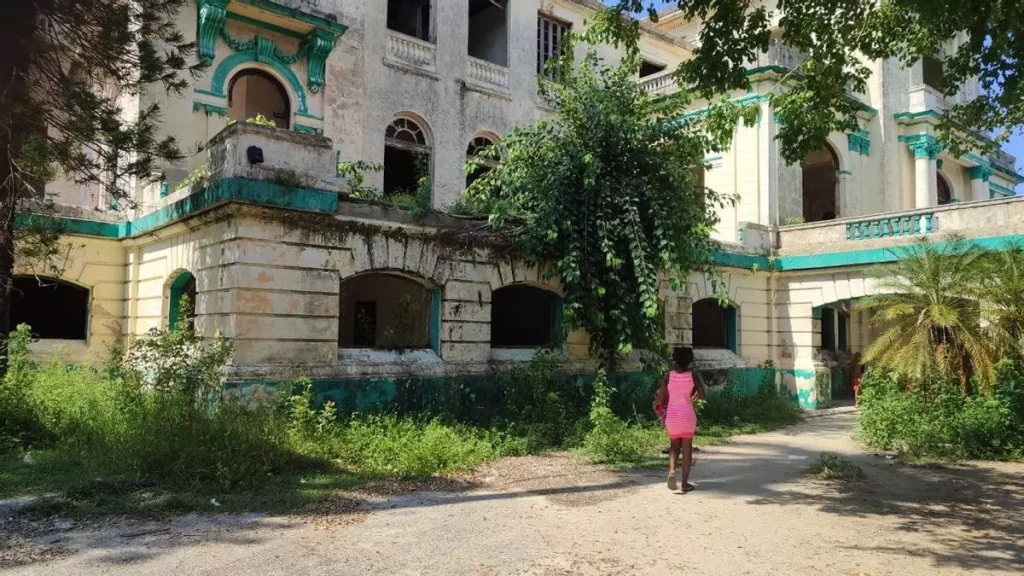
Cuba’s Tabacuba Aims To Encourage the Vegueros With More MLC, a Devalued Currency

The state company wants to sow 20,000 hectares nationwide, of which 14,623 -70%- will be in Pinar del Río.

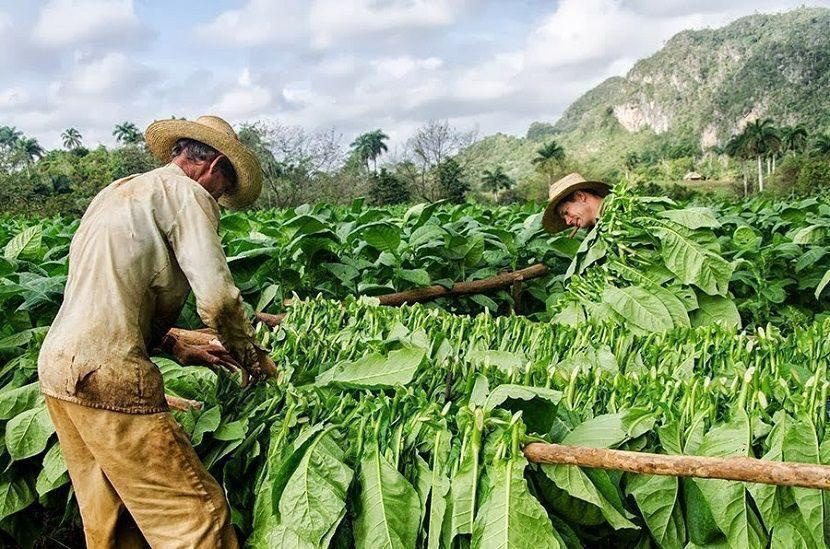
Tabacuba has not been able to guarantee the wood for building the necessary drying barns. / / Tele Pinar

14ymedio bigger14ymedio, Havana, August 23, 2025 — Desperate to boost a sector that is not doing as well as they hoped, the authorities of Tabacuba told the official press this Friday that for the new 2025-2026 campaign, they have planned incentives for the vegueros (tobacco growers) to produce more. Not only will they increase the freely convertible currency (MLC) payment to producers by 3.6 per cent, but “inputs in MLC will not be charged.” The catch, however, is that they will continue to be paid for part of the harvest in this currency, which is increasingly devalued and on the way to disappearing.

In the informal market, the MLC, which was created in 2019 as equivalent to the dollar, was quoted on Sunday at 195 Cuban pesos, while the dollar continues to rise and exceeds 400 Cuban pesos. Its purchasing power in the State’s own shops has weakened, and with it the confidence of citizens and producers themselves, who continue to receive part of their payments in that virtual currency.

What Tabacuba offers is not so much an incentive as an unequal treatment in which the farmers accumulate devalued MLC, which they can’t spend.

The incentives are also not for everyone but for tobacco companies that are dedicated to the cultivation of second-growth tobacco (lower quality leaves, used for the filler of cigars) and the so-called sun-on-stick tobacco, and it includes a 30 percent increase in the collection payment for those who incorporate themselves into this system before May 31. New producers or those moving from shaded tobacco to sun-on-stick will not be charged for MLC inputs or materials in that currency to build drying barns.

In short, what Tabacuba offers is not so much an incentive as an unequal treatment in which the farmers accumulate devalued MLC, which they can’t spend, since the shops that sell in this virtual currency are increasingly undersupplied. continue reading

The news comes at a time when Cuban tobacco is not exactly experiencing a golden age. The previous campaign, 2024-2025, which is in its final stretch, left rather modest figures: 10,459 hectares were planted in Pinar del Río -fewer than those planned for the next campaign- of which about 15 million cujes (sticks of tobacco) were harvested. For the time being, with some companies having already closed their plan and others about to do so, 90.7 percent of the planned 10,536 tons has been collected.

Production increased last July by 357 tons of tobacco compared to July 2024.

After a 2023-2024 campaign that did not meet expectations for the sector, which is one of those that supplies the most foreign exchange deliveries to the State, the authorities tightened their belts and decided, as of now, to motivate the farmers by creating an “exceptional stimulation system.” It consists of selling food products monthly to those who work on tobacco selection and destalking.

With the new system, production increased last July “by 357 tons of tobacco compared to July 2024, and by 180 tons more than the previous month,” applauded the tobacco authorities. That putting food on the table of workers would increase the profit so much is an eloquent statement about the needs of Cuban workers, even in a sector as lucrative–at least compared to others–as tobacco.

For this campaign the hope is more ambitious: sowing 20,000 hectares nationwide, of which 14,623, 70%, will be in Pinar del Río. The irrigation of seedlings will officially begin on September 6, although companies such as Viñales, La Palma and Consolación have already started the process, said Granma. Some 120,000 plots out of a total of 269,400 are expected to be irrigated during the month. Sowing will be divided between October (10%), November (55%), December (30%) and the first days of January (5%).

Tabacuba will also install 40 new irrigation tunnels in Vueltabajo.

Not willing to lose more ground, perhaps under pressure from its foreign partners, Tabacuba will also install 40 new irrigation tunnels in Vueltabajo to ensure that the covered (shaded) tobacco receives water.

However, 7,876 drying barns are needed to cover the more than 14,000 hectares in Pinar del Río. Most of them, 6,175, have already been built, but the missing ones are stalled due to lack of wood. “Here is the fundamental problem of the increase in planting in the province, because despite the links with agroforestry companies, we still do not reach the daily average of 5,000 pieces” of wood to support the planned hectares of tobacco, said Tabacuba.

There are more than 3,000 tons of fertilizer available.

For once, said the company’s managers, there will be no problems with fertilizers, a resource that has disappeared in the furrows: there are more than 3,000 tons available for seedlings, and those intended for planting must arrive between the end of August and the beginning of September.

At the beginning of August, 14ymedio reported on the difficulties faced by the vegueros in Pinar del Río due to the fall in value of the MLC. The currency functioned as a kind of backup against the increase in the price of materials to construct tobacco plantations and the accumulation of debts. Until recently, one of the producers confessed, it was “the only incentive for farmers, so we built the economy on the informal value of MLC. Today, it has fallen dramatically due to the latest changes in the country by the partial dollarization of the economy.”

Translated by Regina Anavy

____________

COLLABORATE WITH OUR WORK: The 14ymedio team is committed to practicing serious journalism that reflects Cuba’s reality in all its depth. Thank you for joining us on this long journey. We invite you to continue supporting us by becoming a member of 14ymedio now. Together we can continue transforming journalism in Cuba.
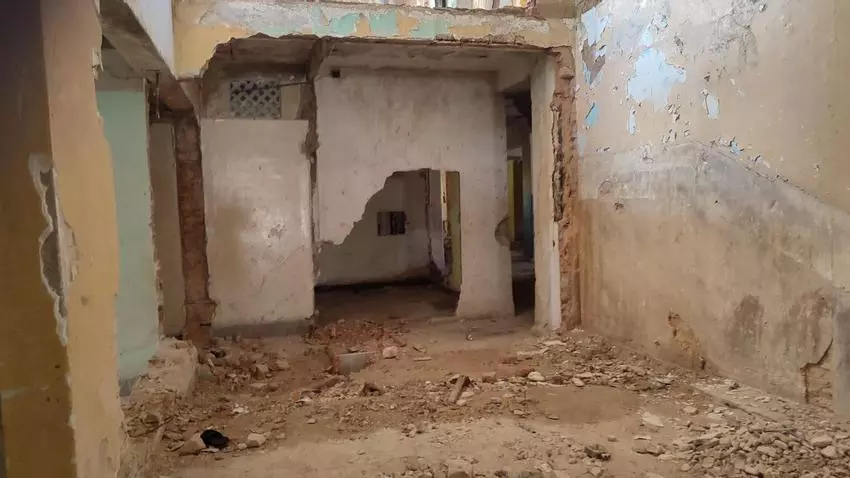
At the Havana Yacht Club, Luxury Turned to Rubble

If a visitor with no knowledge of Cuban history were to arrive at the dilapidated building that stands on the seafront near Miramar’s Fifth Avenue, they would hardly imagine they were standing before the old and glamorous Havana Yacht Club. / 14ymedio
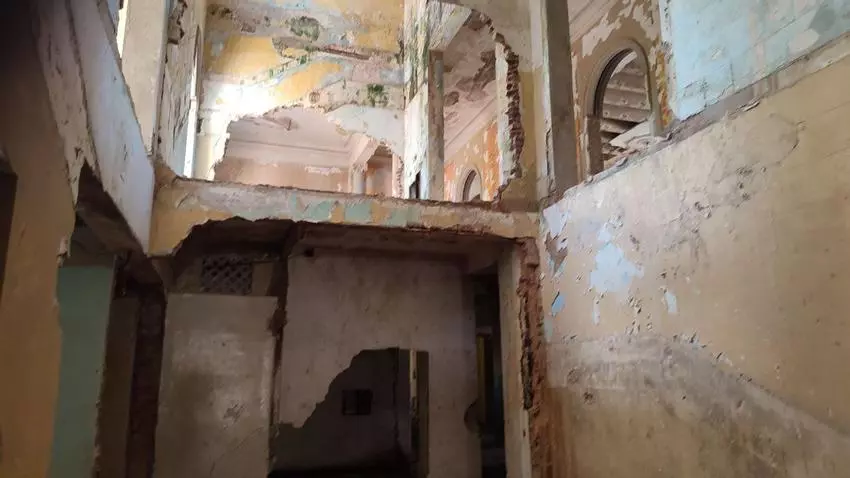
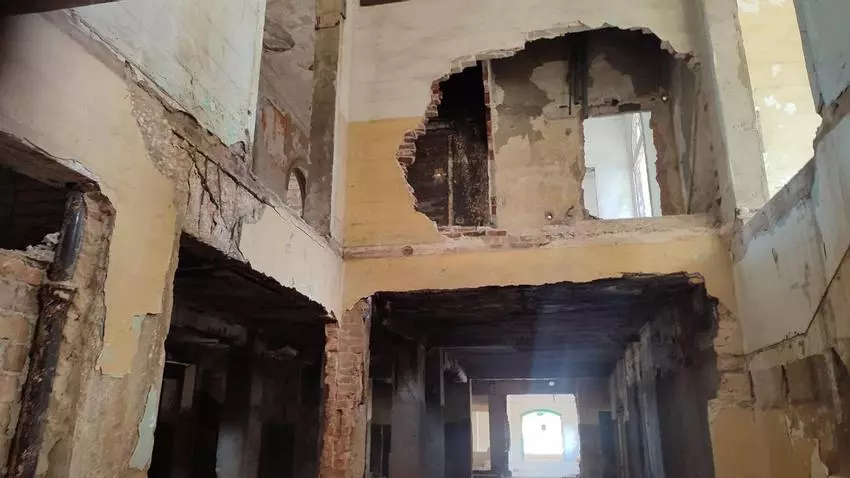
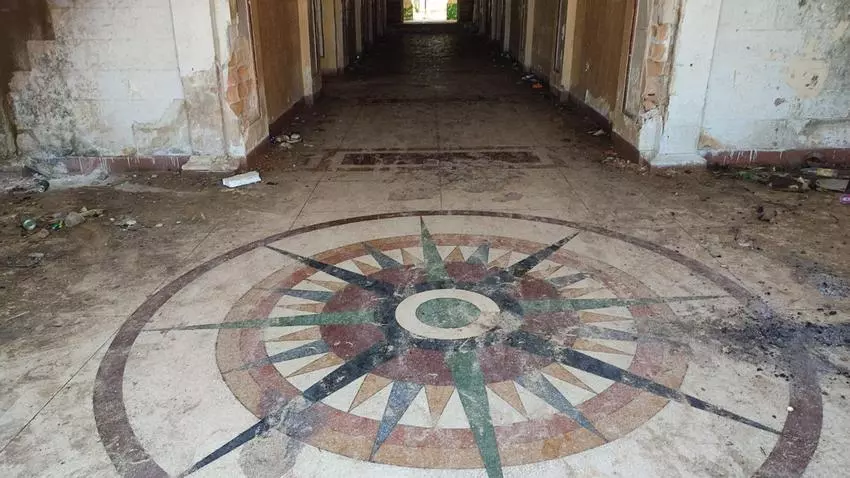
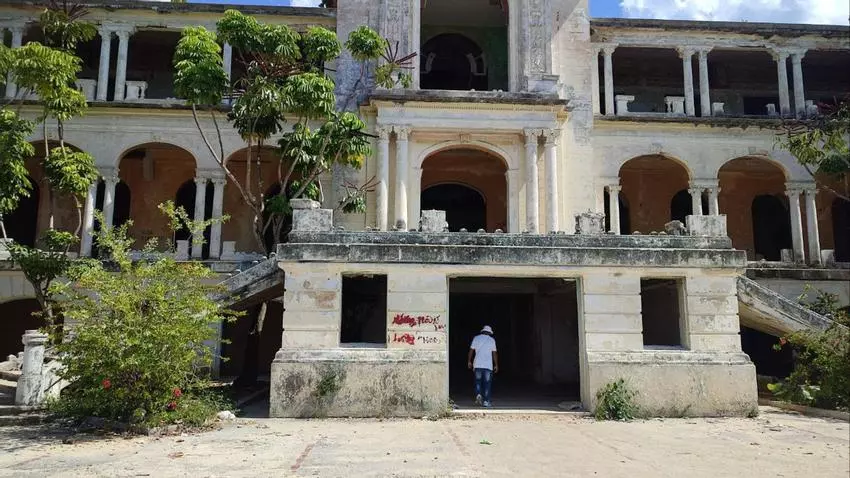
1/8 The walls show the plunder of those who tore away bricks to build their homes. The interior now serves as a public urinal. The doors and windows are only hollow, and the stained-glass windows are a mere memory. Part of the roof has also collapsed, completing the landscape of ruin.
2/8 Founded on October 27, 1886, and moved to its current location seven years later, it became one of Havana’s most prestigious clubs. Its lounges and terraces, with privileged views of La Concha Beach, were for decades a symbol of luxury and exclusivity for the Cuban and foreign elite.
4/8 Today, the building is abandoned and in ruins. It is frequented only by curious onlookers seeking to witness its deterioration, homeless people using it as a shelter, or passersby in need of a makeshift bathroom.
5/8 Traces of its former grandeur can still be seen on the floor: a large mosaic in the shape of a nautical rose and several fleur-de-lis motifs inlaid on the floors, ornaments that looters have been unable to remove.
6/8 The walls, erected under the supervision of Mexican architect Rafael Goyeneche, are now covered with shrubs and climbing plants that advance over the structure.
7/8 Walking inside the building involves constant risk: some upper walls seem to be holding up only by sheer miracle, after the looters’ sledgehammers and hammers tore away entire sections of the structure.
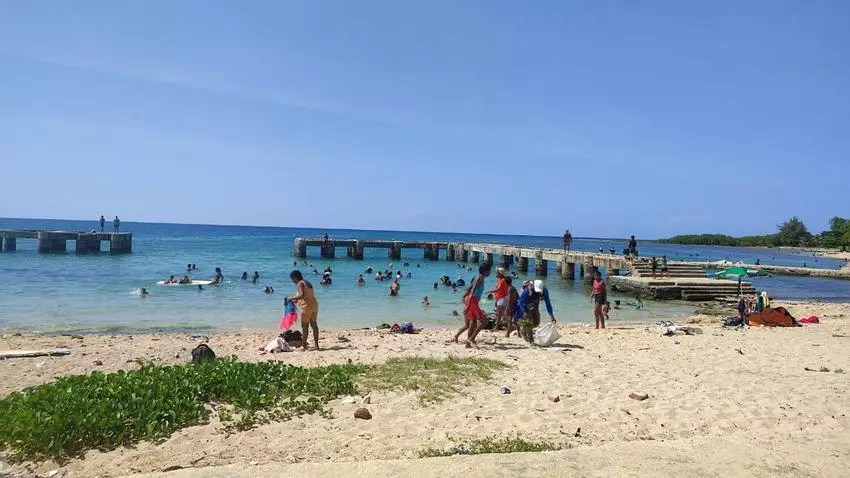
8/8 Beyond the old Havana Yacht Club lies a blue sea, serene under the August sun. There, the remains of a staircase and a ruined dock survive, now converted into a diving board by children who dive into the water, not even knowing the name of the building crumbling behind them.

____________

COLLABORATE WITH OUR WORK: The 14ymedio team is committed to practicing serious journalism that reflects Cuba’s reality in all its depth. Thank you for joining us on this long journey. We invite you to continue supporting us by becoming a member of 14ymedio now. Together we can continue transforming journalism in Cuba.
The Ground Floor of Havana’s Focsa Building Becomes Dollar Territory

  • The new CIMEX-GAESA supermarket is operated in partnership with the Spanish-owned Panamanian company IPSA.
  • On Tuesday, cashiers were only accepting cash because card readers lost their internet connection.
The newly opened market is jointly managed by Cimex, a subsidiary of the military-run conglomerate Gaesa, and Inversiones Pucara S.A. (IPSA), a Panamanian company founded by Spanish shareholders. / 14ymedio

14ymedio bigger14ymedio, Natalia López Moya, Havana, 20 August 2025 — Dollars in hand, Marcial entered the newly opened dollar store on the ground floor of Havana’s Focsa Building on Tuesday. The store is part of a government effort to dollarize the Cuban economy, which began in earnest in January. Even with U.S. greenbacks, however, customers still face obstacles. With no coins to give customers their change, and with internet bank connections often disrupted, retail stores like this one are operating at half speed.

“We are handing out pieces of candy as change,” explains a uniformed cashier at Supermix Market, a recognizable brand name in Havana since the opening of another such store on 20th Street between Third and Fifth streets. In this new location in Focsa, the name is now on the walls, the shopping carts are brand new and the shelves are packed with merchandise, all signaling to anyone who might not have noticed that this is U.S. dollar territory.

“I haven’t been here in awhile so I was surprised to see that everything was painted and the entrance was clean. But if you walk a few yards from the front door, the spell is broken,” said a local resident who stopped in to buy some ground chicken. To reach the market, the woman had to dodge a man sleeping on the sidewalk right in front of the entrance to the Focsa Building, a structure considered one of the Cuban capital’s architectural marvels since the 1950s.

“I haven’t been here in awhile so I was surprised to see that everything was painted and the entrance was clean. But if you walk a few yards from the front door, the spell is broken”

The newly opened store is jointly managed by CIMEX, a subsidiary of the military conglomerate GAESA, and Inversiones Pucara S.A. (IPSA), a Panamanian company founded by Spanish shareholders which as been operating in Cuba since 1997. The company boasts on its social media platform of being “one of the most respected and prominent importers of quality food and beverages on the island.” A quick glance at the shelves reveals that it imports everything from wines to basic foodstuffs to pet food.

“It’s well stocked and prices are on the moderate to high side,” notes an elderly woman who has come here with her partner to buy yoghurt and powdered milk. Her tab comes to $9.65, which she pays with a ten-dollar bill. Instead of change, the cashier hands her a chocolate candy. “There’s not a lot of it,” the cashier says, an explanation that does not entirely satisfy the customer though it comes as no surprise. continue reading

“I’ve been told that the store at 3rd and 70th streets is also like this but hearing is one thing and seeing is another,” says the woman before leaving. Right behind her in the checkout line, a Cuban man from Miami is paying for his items with a hundred-dollar bill, which slows down the line. On a multi-column form, the cashier writes down his full name, passport number and the address where he will be “staying for the next few days.”

The recently opened supermarket is operated by CIMEX, a subsidiary of the military-run business conglomerate GAESA, in partnership with Inversiones Pucara S.A. / Facebook

“There’s lots of products on display but no machine that can do a quick scan for counterfeit bills,” the man complains. He had previously asked if he could pay with a Visa card issued by a Spanish bank. “No, the POS (electronic point of sale) hasn’t been connected to the bank since yesterday,” the employee explained. “We don’t know what’s going on. We are only accepting cash for now.”

The supermarket offers products from brands such as El Pozo, Pascual and La Menorquina from Spain, Parmalat and Ferrero Rocher from Italy, and Pringles from the United States. IPSA is also one of the main distributors of the Spanish beer Belgastar, a major rival to Cuba’s own Bucanero and Cristal brands, whose operations have been greatly curtailed.

IPSA’s Spanish general director in Cuba is Fernando Rovira Murillo, who has become a darling of state media both for his work at Pucara as well as for his participation in the 2023 International Wine Festival. He is described in official press reports as a “reliable partner” and “highly professional.” The company, which employs more than 100 people, also has agreements with local private businesses, to which it provides wholesale services.

” I just came in for a little fresh air from the air conditioning and was amazed by all the lights”

Faced with a 1,820-megawatt power shortage, the entire country can be plunged into darkness for hours at a time on any given day. In contrast, all the light fixtures at the Vedado store lend a certain surreal quality to a business located in an area plagued by ongoing blackouts. “I just came in for a little fresh air from the air conditioning and was amazed by all the lights,” a customer comments ironically to one of the employees. “You can tell it’s a dollar store because you don’t see this in peso stores anymore,” he concludes before leaving.

Others are carefully inspecting every shelf, mulling over future consumer choices. “There’s lots of options but I also see things that are very exclusive while some basic foods aren’t even available,” says one customer near the meat section. “There don’t seem to be many meat options. I also thought they would have a wider variety of cured meats.” A young employee explains to her, “This is just the beginning. There’s more merchandise on the way.”

The location of the new dollar store could not be more telling. The Focsa Building was one of the symbols of the Cuba’s once thriving bourgeoisie. With Fidel Castro’s rise to power, however, many of its luxurious apartments were nationalized and reallocated to trusted officials, government ministers and people close to the supreme leader. Soviet technicians, Latin American guerrilla fighters, and foreign artists committed to the revolution all lived here.

Now, however, the supermarket on the ground floor of the architectural colossus only accepts dollars, the currency many of those former inhabitants once said they hated.

____________

COLLABORATE WITH OUR WORK: The 14ymedio team is committed to practicing serious journalism that reflects Cuba’s reality in all its depth. Thank you for joining us on this long journey. We invite you to continue supporting us by becoming a member of 14ymedio now. Together we can continue transforming journalism in Cuba.
In Addition to Being Cuban, the ‘Former Bodyguard’ of Fidel Castro and ‘Terrorist’ Is Ecuadorian and Lives in Mexico

Ex-major Rogelio Enrique Bolufé Izquierdo, detained with cocaine, has no legal status in the U.S.

Bolufé was transferred to a migrant detention center in Texas. / Facebook

14ymedio bigger14ymedio, Havana, August 23, 2025 — Held in a Texas detention center in the custody of the Immigration and Customs Control Service (ICE), a former Major in the Cuban Ministry of the Interior, Rogelio Enrique Bolufé Izquierdo, faces potential deportation after being arrested in Florida for possession of cocaine. With Ecuadorian nationality and legal residence in Mexico, both countries are among the possible destinations if an immigration judge orders his departure from the U.S., where he has no legal status, instead of sending him to the Island, where he is officially considered a terrorist.

The information was disseminated by Martí Noticias, which cited sources close to Bolufé and the case, including his son, who described the arrest of the former soldier on August 17 as “odd.” “It’s weird that he was arrested for drugs. He drinks alcohol, but I didn’t know about the drugs,” said Carlos Rogelio Bolufé García, a close friend of Sandro, Fidel Castro’s grandson/influencer.

According to the media, Bolufé does not have a work or residence permit in the U.S., but he did in Mexico, where he ran a bar in Yucatán called La Nota before emigrating to the U.S. in January 2020. The former soldier also has Ecuadorian nationality after marrying a citizen of that country. continue reading

Although there is no court decision yet on his future, his transfer from Florida to a Texas detention center and the reports collected by Martí Noticias suggest that he may be deported.

His transfer from Florida to a Texas detention center and the reports collected by Martí Noticias suggest that he may be deported.

Further details about his arrest, which took place in Hialeah during a routine police check, were also revealed. The agents stopped his vehicle and searched it, finding in his pants a bag with white powder that looked like cocaine. According to the authorities’ report, Bolufé offered no resistance.

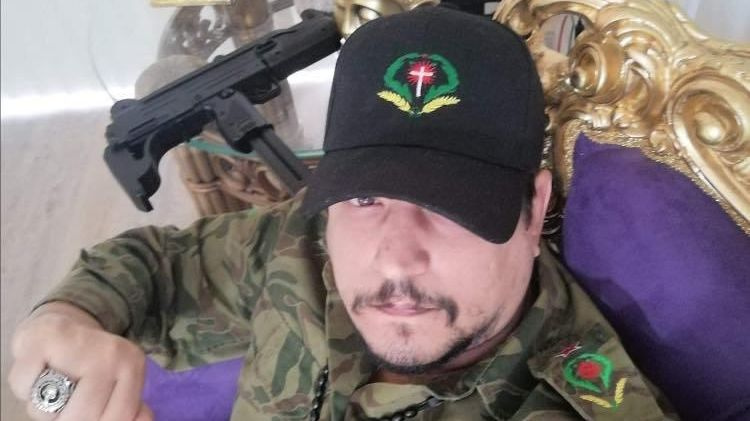
The case of the former soldier has gained public attention for his alleged history within the security apparatus of the Island regime. He said that he lived for awhile in the home of Fidel Castro and that he is included on the terrorist list published by Havana, in which they describe Bolufé as a “ringleader” of the organization La Nueva Nación Cubana, which orchestrated sabotage against the national electricity system.

However, many doubt that Bolufé is really a deserter from the Ministry of the Interior, for which he declared having worked for 15 years, and they point to him as a possible spy or “double agent” of the regime in Miami. In the ex-soldier’s own statements after arriving -with a tourist visa – in the U.S. in 2020, he said that he had not deserted and that, nevertheless, he would be the “liberator of Cuba,” fueled suspicions.

He commented in an interview with a Miami media, “I have not deserted and will not desert, because I am proud of what I am.” He also claimed that many military personnel on the island are aware that they were working for a dictatorship and disagree with the government.

Translated by Regina Anavy

____________

COLLABORATE WITH OUR WORK: The 14ymedio team is committed to practicing serious journalism that reflects Cuba’s reality in all its depth. Thank you for joining us on this long journey. We invite you to continue supporting us by becoming a member of 14ymedio now. Together we can continue transforming journalism in Cuba.
Cuba: A Mother Denounces the Abandonment of Children of the Canoeing Team at a Train Station

The woman accused INDER of neglecting the children after they participated in events by not covering the cost of tickets and transport.

Members of the group of canoeists between 13 and 15 years old at the train terminal in Santa Clara / Facebook

14ymedio bigger14ymedio, Havana, August 6, 2025 — The National Institute of Sports, Physical Education and Recreation (INDER) on the Isle of Youth abandoned a group of canoeists aged 13 to 15 at the Santa Clara train terminal after they participated in the National School Games. Arianny, one of the mothers of these athletes, reported that they went “more than 20 hours without food or water.”

The woman reported on the Dporto Sports LLC Facebook page that the children on the canoeing team, the flagship sport of the municipality, slept on the floor “for lack of management on the part of INDER.”

The group ended their participation on July 31, but because they did not have transport for their return, their only option was to wait for the train that would pass around two o’clock in the morning. Faced with the claims of some parents, an INDER official promised them that after the event, “when they arrive at the transit school of Mayabeque more than 300 kilometers away, they can eat and rest.”

The woman also denounced the shortcomings of INDER on the Isle of Youth. The athletes do not have a K4 canoe to compete. “INDER has not wanted to buy from a private company that makes them in Villa Clara,” she said. Neglect has led the canoeing team to be unable to participate in events. The authorities do not manage the “transport to move the canoes (in a truck rented by INDER) nor a bus that can take them, in addition to the tickets.” continue reading

The woman also denounced the shortcomings of INDER on the Isle of Youth. The athletes do not have a K4 canoe to compete.

The complainant regretted that the sports development of children is not in the interest of INDER. “The principal does not pick up the phone” to meet the training needs in schools.

“The effort of coaches and parents is overshadowed by the lack of support and resources from INDER, which creates a disconnect between sacrifice and institutional abandonment,” denounced activist Yamilka Lafita. “Why organize sporting events if the minimum conditions for athletes are not guaranteed, not even when they are children?”

The activist questioned INDER for “hiring high-level foreign coaches, such as the Brazilian Luiz Omar Moura (whom I know perfectly well),” when “they should prioritize the basic well-being of their own athletes.”

Athletes, coaches, circus artists and users denounced on social networks the abandonment by the Ormani Arenado School of Sports Initiation School (EIDE), the ’19 NovemberMultipurpose Room’ (both in Pinar del Río) and the ’Manuel Fajardo Faculty of Physical Culture’ (Santa Clara).

The teacher of the National Institute of Sports, Physical Education and Recreation, Adriana Lazaga, recognized that EIDE has been forgotten for years. “Nobody cares about sports anymore, let alone the well-being of our athletes. When I entered in 1997, at the height of the Special Period, it was 100 times better than now, 28 years later.”

Translated by Regina Anavy

’The Rock’, the Cuban Fighter Who Has Been Waiting for a House and a Car for 30 Years

Last year he went to the Commission of Attention of Athletes to request a change of housing, and they argued that there was no housing fund.

Roberto Limonta Vargas, ’The Rock,’ says that he lives in “abandonment and oblivion.” / Facebook/Roly Dámaso

14ymedio bigger14ymedio, Havana, August 5, 2025 — Roberto Limonta Vargas, “La Piedra” (The Rock), is experiencing “abandonment and oblivion.” The history of the retired wrestling multi-medallist joins that of other athletes who have been relegated to the shadows by the National Institute of Sports, Physical Education and Recreation (INDER). In three decades none of the promises made to him by the authorities after his retirement have been fulfilled.

“When I retired from the national team in 1995, I was promised many things: a change of house, a vehicle… but none of that has happened up to today,” Limonta told retired athlete Roly Dámaso. “Nobody remembers; no one responds,” he says, to the requests he has made to the authorities.

La Piedra lives among the nostalgia of his achievements, in Santiago de Cuba, on the fifth floor of a building in the Abel Santamaría neighborhood. It’s a nightmare for a man with two hip prostheses as a direct consequence of his life in sports.

Last year, the wrestler posted on the Facebook page for DPorto Sports LLC that he approached the Athletes’ Care Commission to request a change of housing, because the injury prevents him from climbing the stairs, but continue reading

the authorities said that “there was no housing fund.”

The Olympics portal recognizes his career in the category of 90 kilograms, in which he won the national championship 15 times, as well as two medals at the Central American Games and three others at the Pan American Games. He also has five gold medals in the Pan American Championship, six silver and four bronze medals in World Cups, a fifth place at the Olympic Games and multiple trophies in Grand Prix tournaments and international preparatory events.

Roberto Limonta has among his achievements 15 world wrestling championships in the category of 90 kilograms. / Facebook/Roly Dámaso

Despite his physical limitations, Limonta keeps his spirits up and, supported by a walker, he manages to take some steps. Limonta sees with sadness the case of the coach of the five-time Olympic champion Mijaín López and other medalists, like Raúl Trujillo. Despite his achievements, Trujillo was given a car with more than 190,000 kilometers on it and worn-out and mis-matched tires, three 14-inch and one 16-inch. Yilian Rondón Velázquez, the captain of the Granma and Cuba softball team, was given a run-down house of poor construction, that appeared more like a warehouse.

A similar case is boxing champion Idel Torriente Sáez, who a few months ago denounced the lack of attention. “They have me on the sidelines waiting for me to retire,” said the coach, who survives on 7,690 pesos monthly (approximately $20 at the current informal exchange rate).

Torriente spends his days at the Casino Deportivo, in the municipality of Cerro, Havana. In 2022 the Kid Chocolate and judo boxing gym was reopened, where they placed a ring and a punching bag. However, the site requires gloves, shorts, bandages and helmets. “We lack many things -sports equipment, transport, food: the sport of boxing has gone downhill.”

Translated by Regina Anavy

____________

COLLABORATE WITH OUR WORK: The 14ymedio team is committed to practicing serious journalism that reflects Cuba’s reality in all its depth. Thank you for joining us on this long journey. We invite you to continue supporting us by becoming a member of 14ymedio now. Together we can continue transforming journalism in Cuba.
Drought, Breakdowns and Blackouts Leave 2.9 Million Cubans Without Water in August

If it doesn’t rain, Water Resources authorities warned, the situation will be serious at the end of the month.

Archive photo of people stocking up on water from a tanker truck / 14ymedio

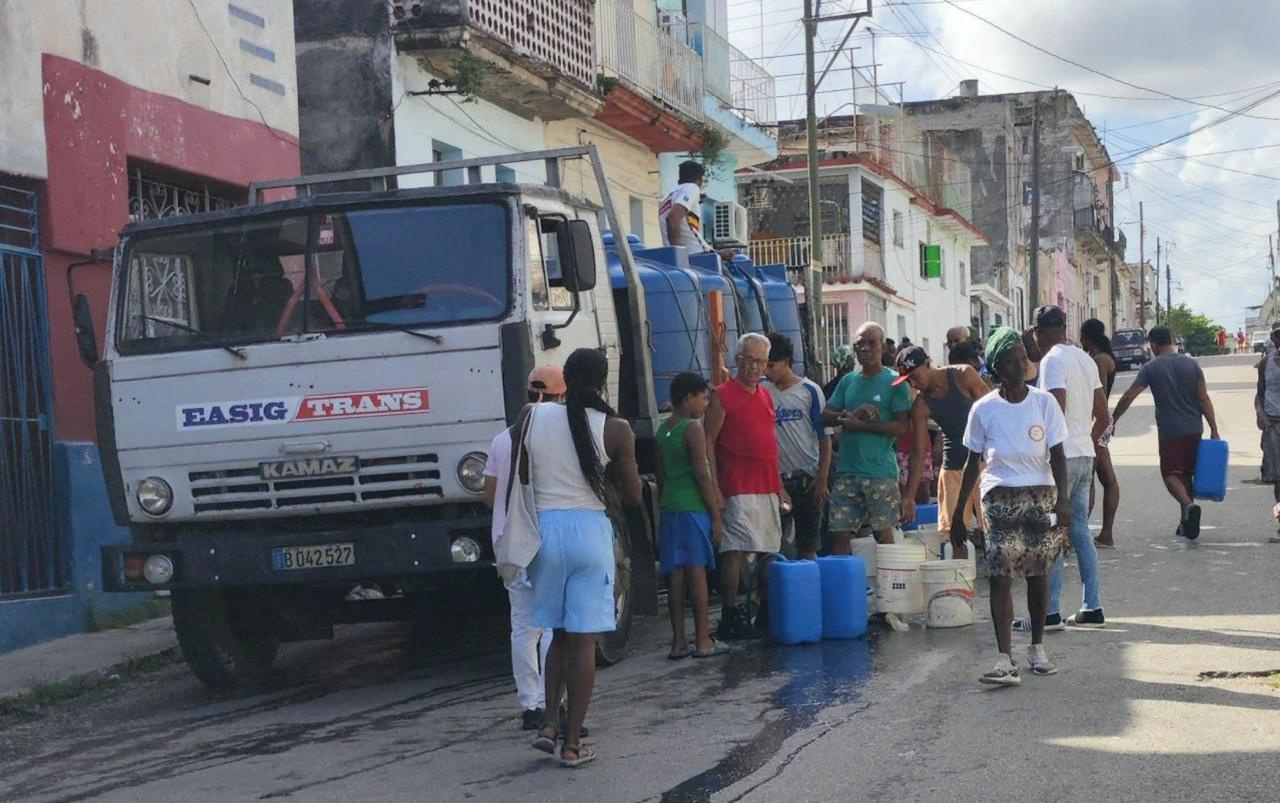
14ymedio bigger14ymedio, Havana, August 22, 2025 — Many Cubans had hoped that Hurricane Erin’s passage through the Caribbean would bring some relief to the country’s reservoirs. But it barely rained on the island, and far from improving, the water situation has become more critical. This Thursday, on Cuban Television news, the Water Resources authorities reported that 2.9 million people have been affected, totally or partially, by the low supply of water, mainly due to the drought.

Other causes mentioned were equipment failures and electricity shortages, which severely limited the operation of conductors and pumping stations. The authorities acknowledged that the current scenario is “critical” and warned that if there are no significant rains by the end of August, the situation at the end of the month will be similar to that experienced in 2004 and 2005, when the drought hit hard.

The president of the National Institute of Hydraulic Resources (INRH) also confirmed in the news that only four territories are currently free of drought impacts: Pinar del Río, Artemisa, Isla de la Juventud and Matanzas. Even in Havana, which was also on that list, the use of wells has already begun to be regulated.

Other provinces, such as Santiago de Cuba, Holguín, Las Tunas and Ciego de Ávila, currently face the worst scenario.

In Sancti Spíritus province, the Aqueduct and Sewage Company reported on Thursday that 111,590 inhabitants have service interruptions. The causes are broken pumps (18,557 people affected), partial drought (35,686) and energy deficit that prevents pumping (56,851). According to Roberto Nápoles Darias, director of the company, several key pumping stations are also paralyzed due to lack of spare parts.

In many areas the supply depends exclusively on tanker trucks, but those available are barely sufficient to supply in cycles of 15 and 18 days.

The volume of water in rivers and reservoirs has also dropped dramatically. The San Juan de Letrán springs, which supplies 42% of Trinidad, went from 80 to 90 liters per second to only 15 to 20. And in La Yaya, which serves almost half the city of Sancti Spíritus, water can only be pumped between 5:00 and 11:00 in the morning. As warned by Nápoles, in many areas the supply depends exclusively on tanker trucks, but those available are barely sufficient to supply in cycles of 15 and 18 days.

Two weeks ago, a report from Escambray exposed the quality of the water that the residents were receiving: dirty, with mosquito larvae and a bad smell. Faced with the situation, the authorities admitted that the problem was out of their hands. Until it rains, they will continue to pump what little water remains at the bottom of the reservoirs.

In Las Tunas, Periódico 26 confirmed that more than 90,000 people in the capital city are suffering from the drought. According to David Legrá Hernández, local director of Aqueduct and Sewage, pumping from sources such as Piedra Hueca or the Cayojo reservoirs is slow and constantly interrupted by blackouts. Electrical failures are frequent, and sometimes the pumping stations spend the whole night without power. This delays distribution cycles and leaves much of the city without water for hours.

Legrá explained that, although critical areas are prioritized, there are places like the La Cana basin, where it has rained “very little, almost nothing,” and precautions are useless against the lack of water. He also regretted that the supply mechanisms have become obsolete in the face of a “city that has grown, in which its sources of supply and distribution mechanisms now fall short.”

The lack of drinking water in homes has even triggered protests, such as the one last Tuesday in Centro Habana.

The drought, which had been causing alarm for months, has taken a critical turn in recent weeks. The lack of drinking water in homes has even triggered protests, such as the one last Tuesday in Centro Habana, where a group of people with buckets cut off Reina Street in protest after going more than seven days without water.

Earlier this month, another popular protest took place in Cajimaya, a village in the municipality of Mayarí, in Holguín. According to reports on social networks, where videos and images were also shared, several people were arrested by the police.

While families are desperate to find a neighbor with a well or a relative who is still getting water through the pipes, the authorities do not seem to have a coherent plan. On the one hand, they acknowledge the alarming water shortage, and on the other they persecute those who complain in the streets that their wells have been dry for weeks.

Translated by Regina Anavy

____________

COLLABORATE WITH OUR WORK: The 14ymedio team is committed to practicing serious journalism that reflects Cuba’s reality in all its depth. Thank you for joining us on this long journey. We invite you to continue supporting us by becoming a member of 14ymedio now. Together we can continue transforming journalism in Cuba.
Sherritt Registers Losses in Nickel and Must Import Foreign Technical Personnel to Cuba

Businessman William Pitt says Canada will send food aid to improve the company’s image in the areas where it operates.

The Comandante Ernesto ’Che’ Guevara plant has even turned to university students to fill technical positions /Ecg Minera

14ymedio bigger14ymedio, Holguín, August 5, 2025 — The collapse of nickel and cobalt mining in Cuba is proceeding apace, with direct consequences both for the economy of the island and for Canada’s historic mineral extraction partner, Sherritt International. According to its most recent quarterly report, the company is experiencing multi-billion dollar losses, a drastic reduction in production and major cuts in its workforce in Canada, while operating conditions in the country are deteriorating.

Sherritt’s second quarter 2025 revenue fell to $43.7 million from $51.4 million in the same period of 2024.

Pitt Wasmer is the heir of one of the families that owned mines confiscated by the Cuban government in 1960.

Businessman William Pitt Wasmer, heir of one of the families that owned mines confiscated by the Cuban government in 1960, shared with 14ymedio a detailed analysis of the crisis facing the nickel industry on the island. The document reveals that the production of mixed sulphides, the base for refining nickel and cobalt, did not meet expectations due to worsening conditions on Cuban territory. Renewed pressure from U.S. measures, shortages of skilled labor and frequent blackouts have contributed to the degradation of results.

The situation led Sherritt to lay off more than 10% of its staff in Saskatchewan (Canada), where it operates the refinery, and another 10% in its corporate office in Toronto. The executive leadership has also been continue reading

reduced from seven to five members, and several expansion plans in both Cuba and Canada have been postponed.

Following these announcements, the value of shares fell by 3.45%, closing at 0.14 Canadian dollars, very close to its low in the last 52 weeks (0.12). This represents a fall of 63 per cent over the previous year, reflecting the sustained deterioration.

Environmental sanctions in Indonesia and the closure of operations in the Democratic Republic of Congo could reduce global competition.

Sherritt revised downwards its 2025 production forecast from 33,000 to 27,000 tons of nickel and from 3,600 to 3,000 tons of cobalt. Even so, the company clings to a moderate optimism based more on external factors than on local improvements. The imposition of environmental sanctions in Indonesia and the closure of operations for labor conditions in the Democratic Republic of Congo could reduce global competition, thus providing a respite.

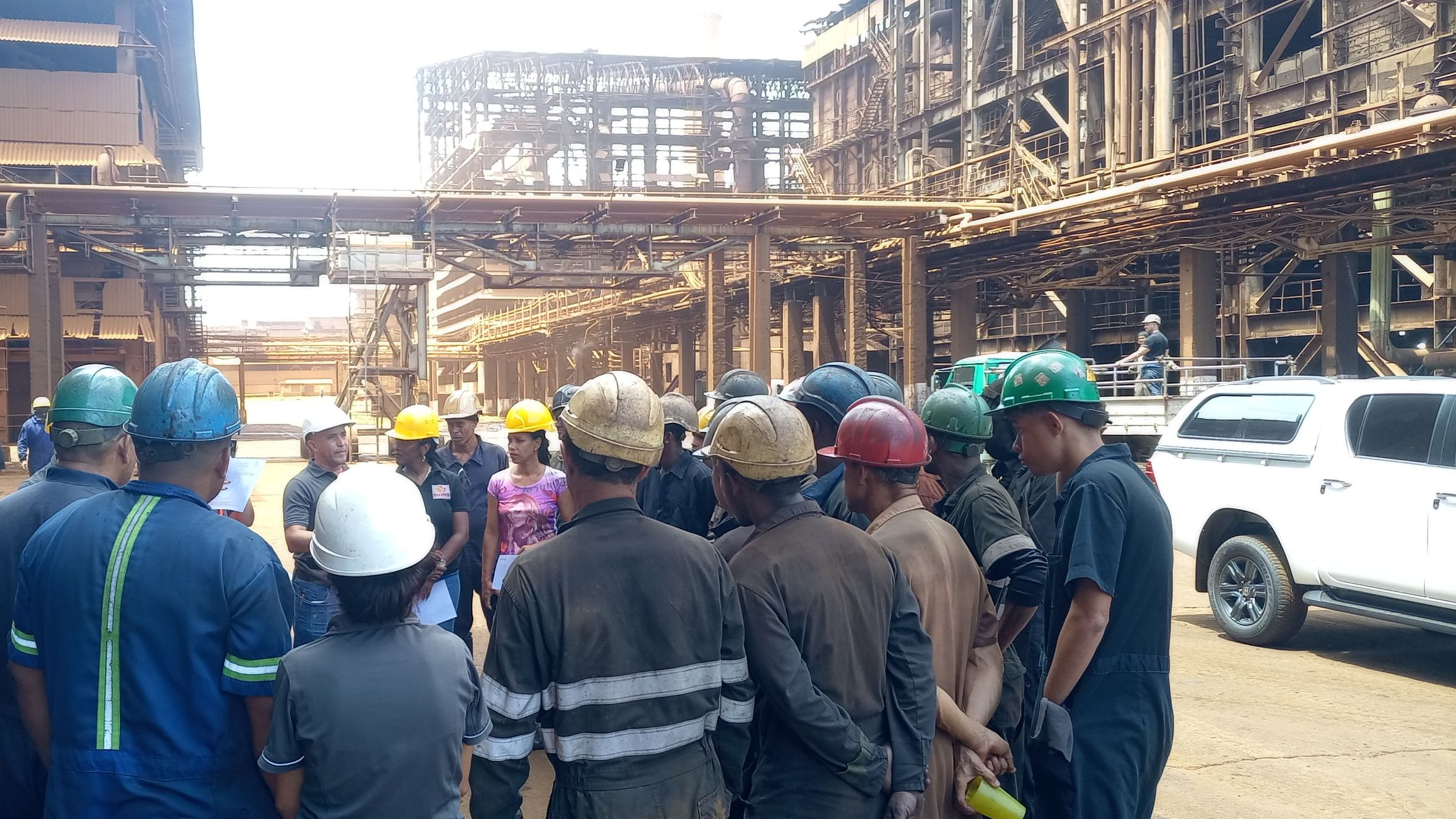
The company has admitted, for the first time in direct terms, that the situation in Cuba is critical. The lack of trained workers has forced it to import technicians from outside to ensure maintenance at the Moa mine, while electrical instability has forced the company to operate with limited resources. Sherritt maintains its own generation capacity, but the availability of diesel and petrol remains uncertain, and a complete shutdown of the system would seriously affect the chemical refining process.

Nickel revenues fell by 15% in prices and 14% in volume.

The situation affects not only the Pedro Soto Alba plant in Moa but also the operations in Punta Gorda, and the Comandante Ernesto Che Guevara plant has even turned to university students to fill technical positions.

Nickel revenues fell by 15 per cent in prices and 14 per cent in volume. Cobalt reported a 27 per cent increase in prices but failed to offset the lower volume losses. According to Yasmin Gabriel, chief financial officer of Sherritt, combined revenues were lower mainly due to the decline in nickel sales, which has pushed the company into an aggressive cost-containment policy.

The availability of gas has also been limited by problems in the extraction wells.

In the electricity sector, the plants operated by Sherritt in conjunction with Energas continued to face setbacks. In particular, the Varadero plant operated with frequency control to stabilize the national network, which reduced production but kept revenues stable thanks to agreed offsets. However, the availability of gas has also been limited by problems in the extraction wells.

At the same time, the Canadian Government announced that it will provide food aid to more than 78,000 people in areas where Sherritt maintains energy and mining operations on the island. The decision raises questions: Why now? Why right in these locations? Pitt Wasmer suggests that Ottawa is seeking to dampen social rejection of Sherritt because of the polluting effect of its activities and to avoid further erosion of the Canadian image among the Cuban population.

Translated by Regina Anavy

____________

COLLABORATE WITH OUR WORK: The 14ymedio team is committed to practicing serious journalism that reflects Cuba’s reality in all its depth. Thank you for joining us on this long journey. We invite you to continue supporting us by becoming a member of 14ymedio now. Together we can continue transforming journalism in Cuba.

‘La Libertad Es Un Verbo’ (Freedom Is a Verb), an Intimate Look at the Art of Cuban Artist Edel Rodríguez, Now Launching

“I wanted this story to be told because in places like Spain and other countries in Europe they think that Cuba is an ideal country”

Rodriguez usually depicts the US president’s face completely orange and always without eyes / EFE

14ymedio biggerEFE (via 14ymedio), Hugo Barcia, Miami, 8 August 2025 — Illustrator Edel Rodríguez, known for his covers of Time, The New York Times and Der Spiegel magazines, is used to portraying what is happening around him, but in the documentary ‘Freedom is a Verb’, which will be released digitally next Tuesday, he is the one being portrayed.

Edel Rodriguez: Freedom is a Verb

His time in Cuba, where he was born in 1971, his exile to the United States during the Mariel exodus in 1980 and his progressive path to his current fame have been compressed into just 18 minutes to create a documentary that reviews Rodríguez’s artistic career. “The documentary tells a lot about the Cuban experience, about what it is like to be a Cuban born in Cuba and to be a refugee”, the artist told EFE in a virtual interview.

“I wanted this story to be told because in places like Spain and other countries in Europe they believe that Cuba is an ideal country and that the Revolution was very good for the country,” Rodríguez added.

Freedom has always been the artist’s driving force. It was what pushed his family to leave the island when Rodríguez was a child and it is what now influences his covers, which are seen all over the world. “When I do my work I always have that in mind: people in Cuba are looking at me, people in Iran are continue reading

looking at me. I have friends in Iran who write to me in secret,” the illustrator admitted.

And while he fled Cuba in search of freedom, Rodríguez said that in recent months, after President Donald Trump came to power, he has been reacquainted with an old friend in the United States: fear. “It’s not Cuban-style fear of a dictatorship that is going to lock you up”, Rodríguez said, but it is a kind of self-censorship for fear of “pissing someone off” and that it might affect his work or the funding a gallery or media outlet receives.

 It’s not a Cuban-style fear of a dictatorship that you will lock you up,” Rodriguez said, but it is a kind of self-censorship for fear of “pissing someone off”.

The artist regretted having witnessed this fear first-hand, assuring that “there have been several situations” in which galleries or media have been reluctant to publish his work, although he maintains that he knows how to deal with it. Trump has been the subject of some of Rodríguez’s most famous covers, and in the documentary he tells how he usually depicts the US president’s face completely in orange and always without eyes. “I want people to pay more attention to what he is doing. When you make eye contact with someone, you have more empathy with that person or with the illustration,” the artist is heard saying in the documentary.

The artist regretted having witnessed this fear first-hand, assuring that “there have been several situations” in which galleries or media have been reluctant to publish his work, although he maintains that he knows how to deal with it. Trump has been the subject of some of Rodríguez’s most famous covers, and in the documentary he tells how he usually depicts the US president’s face completely in orange and always without eyes. “I want people to pay more attention to what he is doing. When you make eye contact with someone, you have more empathy with that person or with the illustration,” the artist is heard saying in the documentary.

‘Freedom is a Verb’ was released in November 2024, but until now it has only been available at festivals in the United States and Europe. From next Tuesday it will be available in digital format on YouTube. “The film invites you to reflect on the fragility of democracy, censorship (…) and the value of activism, of people taking to the streets”, said Creus.

Translated by GH

____________

COLLABORATE WITH OUR WORK: The 14ymedio team is committed to practicing serious journalism that reflects Cuba’s reality in all its depth. Thank you for joining us on this long journey. We invite you to continue supporting us by becoming a member of 14ymedio now. Together we can continue transforming journalism in Cuba.

Sheep Thieves Kill One Custodian and Seriously Injure Another in Santiago De Cuba

Authorities presumably arrested the six responsible “in less than 24 hours.”

Authorities at UBPC Fidel Domenech Rizo, from Pueblo Nuevo, in Contramaestre (Santiago de Cuba), the day after the event / Facebook / Heroes of the Moncada

14ymedio bigger14ymedio, Havana, August 7, 2025 — A caretaker was killed and another seriously injured when six individuals raided a state cooperative in Santiago de Cuba to steal sheep. According to a brief statement released on Wednesday by the official press, the events took place on Monday night when “unknown persons” entered the UBPC Fidel Domenech Rizo, in Pueblo Nuevo, belonging to the municipality of Contramaestre.

From there they left with 13 animals, the text says, and “objects of the entity,” after killing one of the guards and inflicting “serious injuries on a second, to the point that he thought he would die.” The Ministry of the Interior’s statement says that early on Tuesday “investigations began,” and “within a few hours” they identified “several recipients of the stolen meat, as well as citizens associated with the commission of the act.”

The report does not give more details of the victims or the possible perpetrators, but an official profile on Facebook of Heroes of the Moncada gives complete information. The suspects are six men, between 33 and 43 years old, who have already been arrested. The post, which differs by one in the number of stolen sheep -12-, presumes that the security forces “solved the crime in less than 24 hours, putting behind bars the aggressors, who will be tried by the courts with the severity continue reading

that such a reprehensible crime requires.”

Several comments offer condolences for the murdered caretaker, whom they call Ismael.

Similarly, the publication reports that the animals were recovered and “slaughtered in gastronomic and recreational facilities of the municipality.”

In the comments, several users offer their condolences for the murdered caretaker, whom they call Ismael, a local resident. As usual in this type of crime, which is increasingly common on the island, commentators also call for the death penalty for those responsible.

Last October, three people were sentenced to life imprisonment and a fourth to 30 years in prison for the murder of the custodian of the Industrial Forestal de Mayarí economic unit, in Holguín, Orlando Pérez, who surprised them while they tried to steal the batteries from several vehicles of the state company.

Deputy Víctor Manuel Montesinos, from Contramaestre, denounced in July before the Agroalimentaria Commission of the National Assembly that of every 100 cases of livestock theft, “only one or two are solved.” That session of the Parliament exposed the debacle of the sector, which has only decreased, by leaps and bounds, since 2019. Additional data provided is that 84.5% of the livestock mass is in the hands of private producers while the government continues to prioritize the state sector, unable to guarantee even the shade under which their cows graze.

Translated by Regina Anavy

____________

COLLABORATE WITH OUR WORK: The 14ymedio team is committed to practicing serious journalism that reflects Cuba’s reality in all its depth. Thank you for joining us on this long journey. We invite you to continue supporting us by becoming a member of 14ymedio now. Together we can continue transforming journalism in Cuba.
The OECD Estimates That Cuba Will Leave the Group of Countries Receiving Development Aid

  • The latest ECLAC report predicts that the economy of the island will remain negative for at least two years.
  • The agency believes that between 2025 and 2035, Cuba will be among the countries with sufficient per capita gross national income to be left without these funds.
Cubans buying at a market stall at 17 and K / 14ymedio

14ymedio bigger14ymedio, Madrid, August 6, 2025 — At least two years of suffering remain for the Cuban economy. According to the latest report of the Economic Commission for Latin America and the Caribbean (ECLAC), Cuba’s gross domestic product (GDP) will fall in 2025 by 1.5%, more than in the previous year (-1.1%), remaining alone in this situation of decline. Its only companion is neighboring Haiti, whose GDP will decline by 2.3%, although in its case there is an improvement, since last year it declined by 4.2%.

For 2026 the forecasts are less gloomy, as Cuba will remain negative, but only by 0.1%.

Despite this, the ECLAC report contains relatively positive medium-term data, although with uncertain results. Cuba is in the group of future graduates, a block of countries that will move to the category of high “per capita gross national income,”which in practice means leaving the list of those eligible for Official Development Assistance (ODA). In other words, if this forecast is maintained, Cuba may lose one of its major sources of financing.

The Organization for Economic Cooperation and Development (OECD) considers that countries which have maintained a high-income status for three consecutive years, pre-defined on an annual basis and now very close continue reading

to $14,000, can “graduate,” and that the Island will do so between 2025 and 2035.

OECD allocates, through its Development Assistance Committee (DAC), the funds provided by donor countries based on per capita gross national income.

The OECD allocates, through its Development Assistance Committee (DAC), donor funds based on the per capita gross national income as established by the World Bank and the United Nations. As the report published this Tuesday mentions, several countries in the region have graduated in previous years, and by 2026 Panama and Guyana are expected to graduate. “The OECD (2014, 2024) estimates that between 2025 and 2035, Argentina, Brazil, Costa Rica, Cuba, Mexico, Peru, the Dominican Republic, Saint Lucia, Saint Vincent and the Grenadines and Suriname could also graduate,” states the document.

“In the last decade, Bolivia, Brazil, Cuba, Colombia and Haiti have been the main recipients of ODA, measured in dollars, which underlines the importance of these flows and the challenges that their possible loss after graduation entails,” warns the ECLAC, which draws ambivalent conclusions from this situation. While, in their view, graduation represents evidence of economic progress, “it also implies the loss of access to concessional financing that may be difficult to replace with alternative sources, which often have stricter conditions.”

In the case of Cuba, in particular, its access to other types of loans is mostly closed due to its withdrawal from international organizations such as the Monetary Fund, the U.S. sanctions and the very low rating of its debt.

ECLAC places the ODA as one of the largest funds, with disbursements of about $119,096 million between 2013 and 2023, compared to $50,296 from the World Bank. For this reason, the Commission offers some recommendations in view of the possible graduation of so many countries in Latin America and the Caribbean, and it asks that GDP per capita should no longer be considered as a criterion “because it does not reflect the complexity of development needs. It also recommends the adoption of smoother transitions for newly graduated countries.

The macroeconomic development of Cuba does not suggest that it can be part of a list of countries with high per capita gross national income.

The macroeconomic development of Cuba does not suggest that it could be part of a list of countries with high per capita gross national income. The latest data were obtained in 2019, when the last crisis had not yet arrived, and stood at $7,593.35, far from the $13,845 that the DAC considers “high” for the period 2024-25. However, it should be noted that the current classification of the island is intermediate-high, aimed at those above $4,496, according to the World Bank.

The ECLAC report, moreover, places Cuba once again as a country with chronic inflation, and it is one of the countries excluded from calculating the regional average. Argentina, Haiti, Suriname and Venezuela accompany the island in this case. Their inflation numbers are so persistently high that they would artificially deform the whole. While Latin America and the Caribbean have an average of 4.3% inflation and a median of 2.9%, which is much better than in 2022, when it was above 8%, Cuba has reached 24.9%. Only Haiti (28.7) and Argentina (122.1%) are worse off.

Cuba has greatly improved this indicator, at least officially, as it was 39.1% in 2022 and 31.3% in 2023. However, inflation figures above double digits are very dangerous and have two aggravating factors in this case: the first is that in the informal market, which must be constantly resorted to to obtain goods otherwise impossible to find, it is much greater. The second is that, as some Cuban economists point out, the decline in this figure has been achieved by the contraction of the population’s purchasing power and not because there is more production that reduces prices.

Translated by Regina Anavy

____________

COLLABORATE WITH OUR WORK: The 14ymedio team is committed to practicing serious journalism that reflects Cuba’s reality in all its depth. Thank you for joining us on this long journey. We invite you to continue supporting us by becoming a member of 14ymedio now. Together we can continue transforming journalism in Cuba.
The Official Press Warns About the Low Impact of Laws Against Sexist Violence

In Periódico 26, 72% of participants in a survey consider the current laws against these crimes to be “insufficient.”

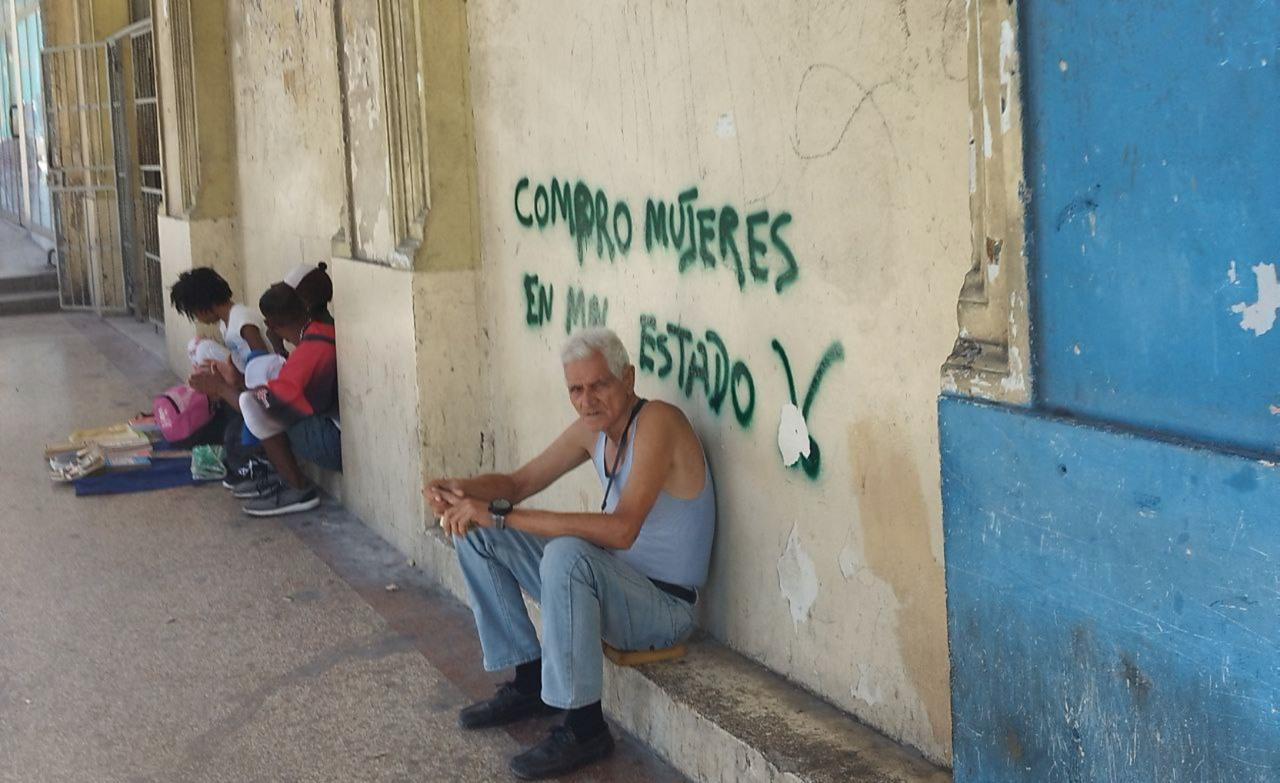
Image of a poster painted on a wall in Havana that reads: “I buy women in bad condition.”

14ymedio bigger14ymedio, Havana, 31 July 2025 — After years of complaints by observers and independent media about the limited capacity of the Cuban Penal Code to punish crimes against women, this Thursday the official press finally began to ask questions. “Do we need more legal reforms in this regard? Should sexual offenses be better criminalized? Do we need faster judicial processes and more protection for victims?” asks Periódico 26 in its own survey in which it exposes a crucial fact: 72% of the participants consider that the current laws against these crimes are “insufficient” or “lax.”

The media warns that the survey “is not representative,” but ensures that the perception of citizens brings to debate a concern not unfounded and, above all, “brings to light the macho culture that surrounds us.”

In 2024, according to figures from the Cuban Observatory on Gender Equality, Las Tunas reported 22 cases of “gender-based violence,” two more than the previous year. Although the report does not detail whether they were assaults or murders and offers a brief profile of the victims -the most common being white women between 20 and 44 years old- it confirms that these facts are hardly those that reached the courts.

The survey also measures the low level of trust in authorities.

Las Tunas was also the second province in the country with the highest number of cases that year, only behind Havana (51), which has more than four times its population, an information that Periódico 26 ignores.

The survey also measures the low level of trust in authorities — between 46% and 55% of respondents believe that many cases are never reported — and the stigma women suffer when they are victims of machista violence. “It is frightening that some, [a] small percentage but enough to worry, feel that ‘they are asking for it’, in a clear sign that the reprehensible culpability of continue reading

the victims persists,” warns the media.

This same Thursday, the official newspaper of Camagüey, Adelante, announced that the system of courts on the island created “gender committees” in each province to “mainstream a gender perspective in the administration of justice.”

According to the article, the strategy seeks, among other things, to deal with these cases “urgently and as a matter of priority,” emphasizing the “right to a dignified life free from violence.”

The articles of both Adelante and that of Periódico 26 were published ten days after the official press reported the murder of a woman in Holguín, calling it “femicide” contrary to its custom. However, a few weeks ago the independent media reported the case of Orlis Daniela, only nine years old, killed by a neighbor in Grito de Yara, Granma, about which the authorities never commented.

So far this year, 14ymedio records 20 femicides, of which one took place in that province.

The girl and her four brothers had found the body of their mother, Yusmila Mayo Ruiz, victim of a femicide perpetrated by her partner on February 14, 2024, in Las Tunas. After Orlis’ death, independent observatories called out the authorities for leaving the children homeless. “The terrible story of this little girl is not a tragedy or fate; it is the consequence of a broken society and a State that refuses to protect the lives of women and girls,” they said.

So far this year, 14ymedio records 20 femicides, of which one took place in that province. This is the teacher Nancy Leyva García, 35 years old and a resident of Las Delicias (Puerto Padre), who was killed by her partner on the street on April 12.

According to the platforms, Nancita, as she was known, was very popular in the community for her profession. She had two children, at least one of them of school age.

In an unusual report that seeks to confirm that enough attention is being paid to machista violence in Cuba, the official press also reported last June the sentencing to 28 years in prison of a man accused of killing his former partner last year in Las Tunas. “The accused, in the early hours of June 5, 2024, assaulted with a knife and deprived of life the woman (…) with whom he had two children,” said Periódico 26, which did not reveal the name of the victim, who could be identified thanks to independent records.

This is Katia Ortiz Figueredo, 25 years old, killed around 11:00 in the evening in front of several people who were waiting to buy medicines in front of a pharmacy. “They had been divorced for a few months, but he, under threats, had kept her in his home for five days and sexually abused (her), according to the expert reports from the necropsy, leaving two children, a boy eight and a girl of three,” said a family member.

Translated by Regina Anavy

____________

COLLABORATE WITH OUR WORK: The 14ymedio team is committed to practicing serious journalism that reflects Cuba’s reality in all its depth. Thank you for joining us on this long journey. We invite you to continue supporting us by becoming a member of 14ymedio now. Together we can continue transforming journalism in Cuba.

The Murder of a 19-Year-Old Woman is the Fourth Femicide in Cuba in August

Ledisvannielis Acosta Echavarría was stabbed in her home in Centro Habana by her partner.

The murder of Acosta Echavarría adds to a particularly bloody cycle. / Facebook

14ymedio bigger14ymedio, Havana, 18 August 2025 — The body of 19-year-old Ledisvannielis Acosta Echavarría was found in the bathroom of her house, located on Calle Amistad, between San José and Barcelona, in the Havana municipality of Centro Habana. The Alas Tensas Gender Observatory (OGAT) confirmed the event on Monday through its social networks.

The crime occurred on Tuesday, August 12 and, according to neighbors in the area, the attacker was seen trying to sell her pet before turning himself over to the police around eight o’clock at night. The perpetrator, also a very young man, stated that he was under the influence of drugs at the time of the murder.

The murder of Acosta Echavarría adds to a particularly bloody cycle. The young woman became the youngest victim of the femicides recorded this month.

Violence against women affects the entire country

With this case, 14ymedio counts 24 femicides in Cuba so far in 2025. In August alone, four women have lost their lives in similar circumstances.

The records of this newspaper and feminist platforms show that violence against women affects the entire country. Holguín tops the list with four confirmed femicides. It is followed by Havana and Camagüey, with three continue reading

victims each. There are two cases in each of Ciego de Ávila, Sancti Spíritus, Granma and Santiago de Cuba, while at least one such murder has been documented in Pinar del Río, Cienfuegos, Matanzas, Las Tunas and Artemisa.

The dispersion of the events shows that almost no province is exempt from a phenomenon that feminist organizations call a national emergency. The lack of official data and effective prevention protocols aggravate the picture.

Not all murders of women in the context of a robbery are classified as femicides.

On August 4, Mailenis Blanco Amor, 47, was murdered in the town of Puerta de Golpe, in the municipality of Consolación del Sur. Three unknown men, posing as policemen to break into her house and rob her, ended her life. Both Alas Tensas and Yo Sí Te Creo en Cuba emphasize that, although not all murders of women in the context of a robbery are classified as femicides, in this case “gender bias is evident,” since the aggressors waited for the victim to be alone and applied disproportionate violence against her.

A day later, on August 5, another crime occurred in the city of Holguín. Milagros Batista Estévez, 56, was killed by her ex-partner in her home in the Alex Urquiola neighborhood. According to reports from feminist platforms, the victim had filed multiple prior complaints against her attacker, but police authorities had not adopted any effective protective measures. Batista, a mother of two grown children and grandmother to several grandchildren, was well-known in her community, which was shocked by the incident and the institutional inaction.

The 72-hour deadline required to officially report a missing person puts women victims of gender-based violence at greater risk.

The third victim in August was Bárbara Elena Tejería Magdaleno, also 56, a resident of Calabazar, Boyeros municipality, Havana. On August 11, she was attacked with a machete by her partner, who denied having seen her for days. Bárbara Elena’s body was found three days later in a vacant lot in the Las Cañas neighborhood. The attacker took his own life shortly afterward. Her case reignited the debate over the 72-hour deadline required to officially report a missing person, a protocol that, according to activists, puts women victims of domestic violence at greater risk.

Neither the Federation of Cuban Women nor other state institutions have offered a public response to these crimes, despite the growing social alarm they provoke. Independent observers warn that the lack of effective recognition of femicide in the Cuban Penal Code is reflected in the lack of prevention policies, the lack of protection for victims, and the lack of transparency in official statistics.

The state’s response is limited to prosecuting the aggressors and issuing “exemplary sentences.”

These organizations also denounce that there is no network of shelters for women at risk, nor specialized helplines that operate systematically throughout the country. The state response is limited, in most cases, to prosecuting the aggressors and issuing “exemplary sentences.”

The four victims of August share common elements: solitude in the face of their attackers, a lack of institutional protection, and the extreme violence inflicted on them. From murders committed by resentful ex-partners to those perpetrated in the context of robbery, the common denominator is the use of excessive force against women in vulnerable situations.

Translated by Regina Anavy

____________

COLLABORATE WITH OUR WORK: The 14ymedio team is committed to practicing serious journalism that reflects Cuba’s reality in all its depth. Thank you for joining us on this long journey. We invite you to continue supporting us by becoming a member of 14ymedio now. Together we can continue transforming journalism in Cuba.