Tens of kilometers of pipeline in poor condition and four pumping stations serve the tourists.
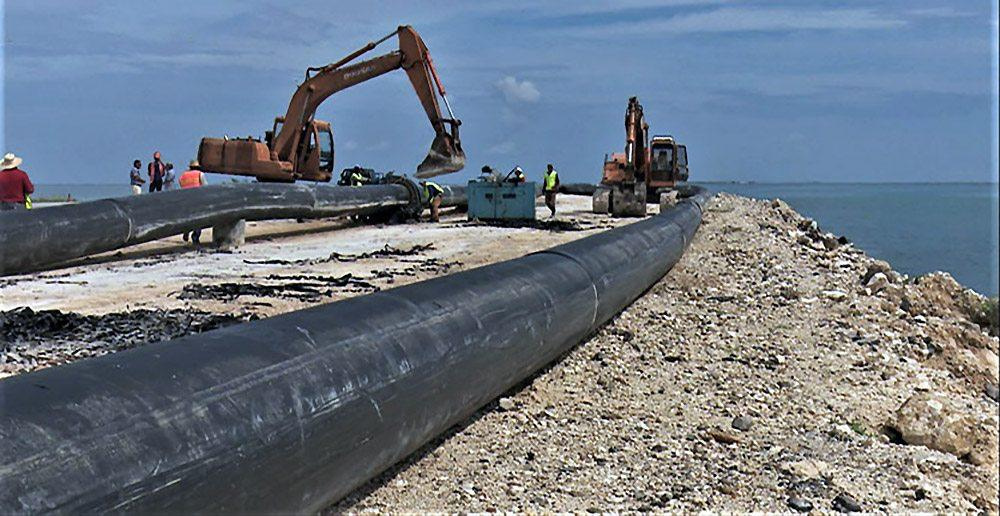
 14ymedio, Havana, July 20, 2025 — In Cuba, tourists also should be grateful for the Revolution. This, at least, is the suggestion of the news media Invasor, which this Wednesday defended the titanic task of bringing water from Ciego de Ávila to the hotels on the north coast. Behind the simple gesture of opening a tap in one of the spas are dozens of kilometers of pipelines built with the “sacrifice” of the country, says the newspaper, a service which is taken for granted by vacationers, who are very busy enjoying their rest.
The article comes one day after 14ymedio gave the news of the closure of the hotels, all luxury, of Cayo Cruz in Camagüey, because of problems with the water supply, and the transfer of guests to other facilities of Ciego de Ávila. However, the official newspaper never mentions the incident and instead presents its report in a triumphalist tone.
Invasor exhausts itself exposing numbers and data to show that, in practice, the supply to the keys is big enough for the province. The water, it explains, comes from the municipality of Morón, specifically from the basins of Patria III and Los Satos, which face “the strategic challenge of responding to the demand of 1,831 users, of which 1,665 are nuclei of the residential sector based in the popular council Turiguanó and the rest are real estate or State structures: 24 hotels, two villas and 140 non-hotel facilities.”
167.9 kilometers of water pipes and other supply networks have been installed “all along the causeway and beyond.”
In total, it adds, 167.9 kilometers of pipeline and other supply networks have been installed “all along the causeway and beyond.” In recent years they have repaired about 64 kilometers, plus 48.7 kilometers of sewage networks.
To move that amount of water, it points out, four pumping stations are needed, located in Cayo Coco (two units), Cayo Guillermo and Cayo Romano. They are all “properly equipped,” the newspaper claims, and can store together up to 5,000 cubic meters.
In the high tourist season, during the winter months when demand grows, the key can need up to 200 liters per second. “Patria III and Los Satos, however, are able to contribute 140 and 210 liters per second, respectively, a flow rate that could respond even to the demands of the area with the insertion of new facilities provided for in the territorial management plan,” says Invasor.
If the situation is optimal, as the provincial newspaper argues, and the same is expected of other hotel facilities, what happened then in Cayo Cruz? Invasor does not say, but it’s bombastic defense makes two things clear: even with the necessary means, bringing water through a causeway exceeds the capacity of Water Resources, and in the midst of a disastrous drought and with most supply systems interrupted or broken, tourism remains a priority.
Just yesterday the newspaper reported on the water situation in the province, describing “ruptures, hydrological drought -on average, dams are 41% filled- and important complications due to the energy crisis.” As a result, in Havana alone the water supply comes only every nine days, and in any one day up to 10,000 inhabitants can be affected.
“The fuel deficit also has other implications, such as the water pressure per tanker truck.”
According to the general manager of Aqueduct and Sewage, Miroslava Reyes, out of 196 water pumps in the territory, five are “inoperative due to technical problems.” The number is not significant, says the local newspaper, but “exacerbates a situation riddled with problems.”
Alternative sources do not solve anything either: “The fuel deficit also has other implications, such as the limitation of water pressure per tanker truck. To ensure supply, up to 15 tanks are used during a day, especially for vital services, without meeting the entire population’s demand,” the newspaper admits.
However, while the pipelines for the keys are regularly renewed and the pumps work like Swiss clocks to bring water to tourists, the only solution found by Aqueduct and Sewage for the poor supply to the population has been to fix drains -300 in the last two months- to avoid further wasting of water.
The situation in Cayo Cruz is therefore surprising and has not been explained. A post this Wednesday from Dairon Castro, social media administrator of one of the enclave’s luxury establishments, Sanctuary White Sands, regrets that the situation remains the same.
“It is with great regret that I inform you that, despite the efforts made, it has not yet been possible to solve the problem of water supply at the Cayo Cruz tourist center. Intensive work continues. The guidance so far for foreign customers is to keep in touch with their travel agents, who will explain how to proceed; and for domestic customers, they should contact the bureaus where they made their reservations to give them information about everything,” he wrote.
Translated by Regina Anavy
____________
COLLABORATE WITH OUR WORK: The 14ymedio team is committed to practicing serious journalism that reflects Cuba’s reality in all its depth. Thank you for joining us on this long journey. We invite you to continue supporting us by becoming a member of 14ymedio now. Together we can continue transforming journalism in Cuba.