- The new CIMEX-GAESA supermarket is operated in partnership with the Spanish-owned Panamanian company IPSA.
- On Tuesday, cashiers were only accepting cash because card readers lost their internet connection.
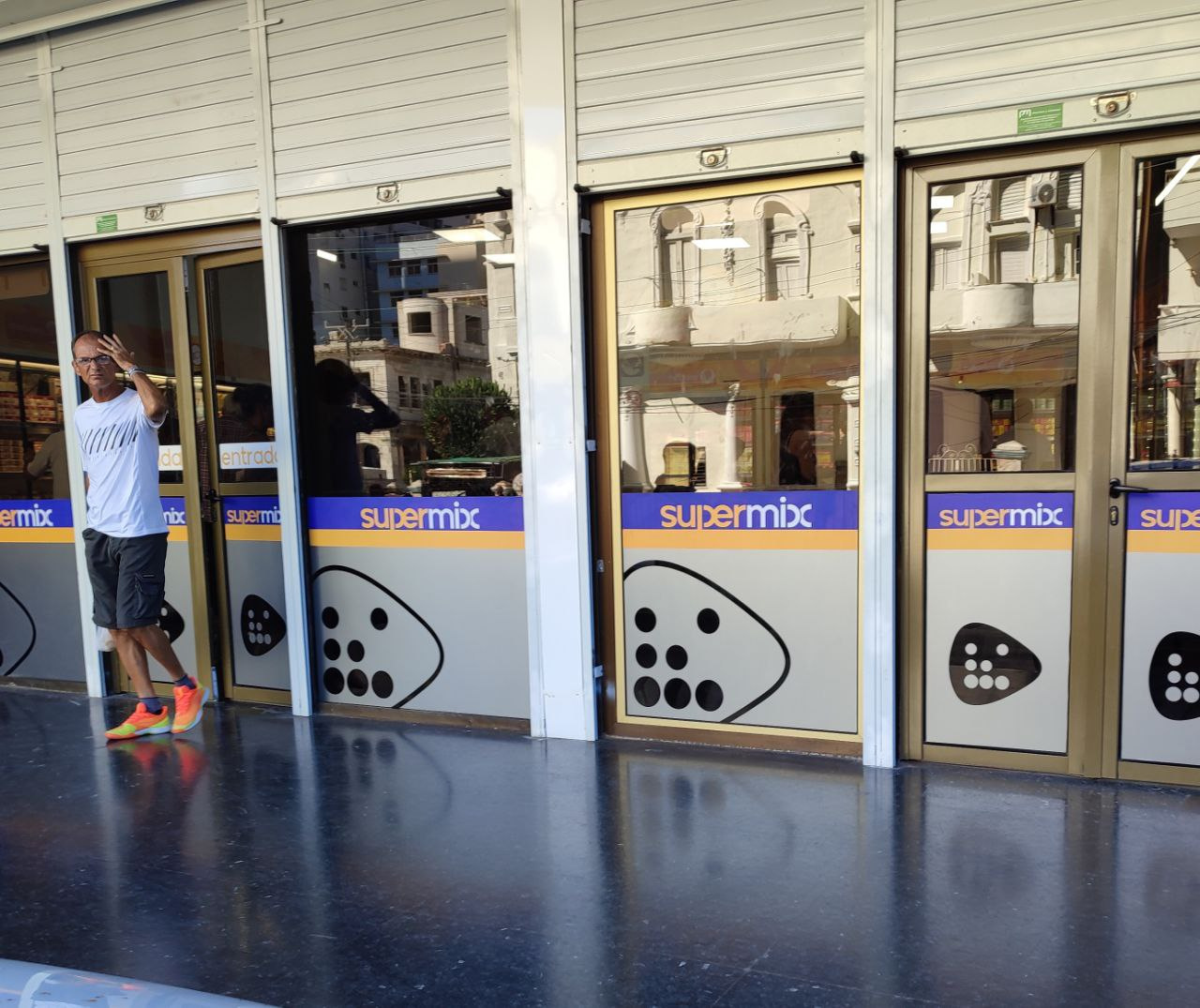
 14ymedio, Natalia López Moya, Havana, 20 August 2025 — Dollars in hand, Marcial entered the newly opened dollar store on the ground floor of Havana’s Focsa Building on Tuesday. The store is part of a government effort to dollarize the Cuban economy, which began in earnest in January. Even with U.S. greenbacks, however, customers still face obstacles. With no coins to give customers their change, and with internet bank connections often disrupted, retail stores like this one are operating at half speed.
“We are handing out pieces of candy as change,” explains a uniformed cashier at Supermix Market, a recognizable brand name in Havana since the opening of another such store on 20th Street between Third and Fifth streets. In this new location in Focsa, the name is now on the walls, the shopping carts are brand new and the shelves are packed with merchandise, all signaling to anyone who might not have noticed that this is U.S. dollar territory.
“I haven’t been here in awhile so I was surprised to see that everything was painted and the entrance was clean. But if you walk a few yards from the front door, the spell is broken,” said a local resident who stopped in to buy some ground chicken. To reach the market, the woman had to dodge a man sleeping on the sidewalk right in front of the entrance to the Focsa Building, a structure considered one of the Cuban capital’s architectural marvels since the 1950s.
“I haven’t been here in awhile so I was surprised to see that everything was painted and the entrance was clean. But if you walk a few yards from the front door, the spell is broken”
The newly opened store is jointly managed by CIMEX, a subsidiary of the military conglomerate GAESA, and Inversiones Pucara S.A. (IPSA), a Panamanian company founded by Spanish shareholders which as been operating in Cuba since 1997. The company boasts on its social media platform of being “one of the most respected and prominent importers of quality food and beverages on the island.” A quick glance at the shelves reveals that it imports everything from wines to basic foodstuffs to pet food.
“It’s well stocked and prices are on the moderate to high side,” notes an elderly woman who has come here with her partner to buy yoghurt and powdered milk. Her tab comes to $9.65, which she pays with a ten-dollar bill. Instead of change, the cashier hands her a chocolate candy. “There’s not a lot of it,” the cashier says, an explanation that does not entirely satisfy the customer though it comes as no surprise.
“I’ve been told that the store at 3rd and 70th streets is also like this but hearing is one thing and seeing is another,” says the woman before leaving. Right behind her in the checkout line, a Cuban man from Miami is paying for his items with a hundred-dollar bill, which slows down the line. On a multi-column form, the cashier writes down his full name, passport number and the address where he will be “staying for the next few days.”
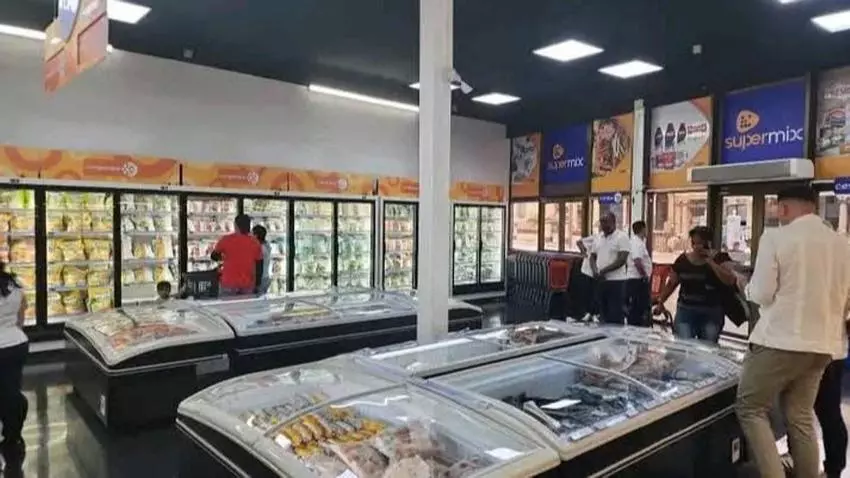
“There’s lots of products on display but no machine that can do a quick scan for counterfeit bills,” the man complains. He had previously asked if he could pay with a Visa card issued by a Spanish bank. “No, the POS (electronic point of sale) hasn’t been connected to the bank since yesterday,” the employee explained. “We don’t know what’s going on. We are only accepting cash for now.”
The supermarket offers products from brands such as El Pozo, Pascual and La Menorquina from Spain, Parmalat and Ferrero Rocher from Italy, and Pringles from the United States. IPSA is also one of the main distributors of the Spanish beer Belgastar, a major rival to Cuba’s own Bucanero and Cristal brands, whose operations have been greatly curtailed.
IPSA’s Spanish general director in Cuba is Fernando Rovira Murillo, who has become a darling of state media both for his work at Pucara as well as for his participation in the 2023 International Wine Festival. He is described in official press reports as a “reliable partner” and “highly professional.” The company, which employs more than 100 people, also has agreements with local private businesses, to which it provides wholesale services.
” I just came in for a little fresh air from the air conditioning and was amazed by all the lights”
Faced with a 1,820-megawatt power shortage, the entire country can be plunged into darkness for hours at a time on any given day. In contrast, all the light fixtures at the Vedado store lend a certain surreal quality to a business located in an area plagued by ongoing blackouts. “I just came in for a little fresh air from the air conditioning and was amazed by all the lights,” a customer comments ironically to one of the employees. “You can tell it’s a dollar store because you don’t see this in peso stores anymore,” he concludes before leaving.
Others are carefully inspecting every shelf, mulling over future consumer choices. “There’s lots of options but I also see things that are very exclusive while some basic foods aren’t even available,” says one customer near the meat section. “There don’t seem to be many meat options. I also thought they would have a wider variety of cured meats.” A young employee explains to her, “This is just the beginning. There’s more merchandise on the way.”
The location of the new dollar store could not be more telling. The Focsa Building was one of the symbols of the Cuba’s once thriving bourgeoisie. With Fidel Castro’s rise to power, however, many of its luxurious apartments were nationalized and reallocated to trusted officials, government ministers and people close to the supreme leader. Soviet technicians, Latin American guerrilla fighters, and foreign artists committed to the revolution all lived here.
Now, however, the supermarket on the ground floor of the architectural colossus only accepts dollars, the currency many of those former inhabitants once said they hated.
____________
COLLABORATE WITH OUR WORK: The 14ymedio team is committed to practicing serious journalism that reflects Cuba’s reality in all its depth. Thank you for joining us on this long journey. We invite you to continue supporting us by becoming a member of 14ymedio now. Together we can continue transforming journalism in Cuba.