Political Prisoner Alexander Díaz Rodríguez Is Released With Severe Malnutrition

The 11J protester, suffering from cancer, denounces lack of medical care and mistreatment in prison


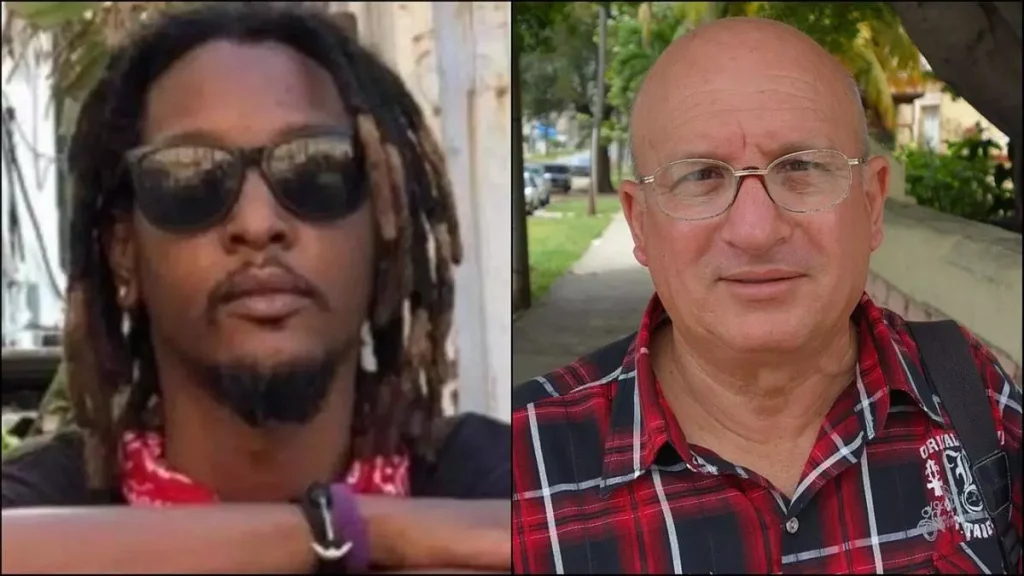
The activist Alexander Díaz Rodríguez, before and after his release. / Prisoners Defenders

14ymedio bigger14ymedio, Havana, April 13, 2026 – Cuban opposition figure Alexander Díaz Rodríguez was released on April 4 in Artemisa after fully serving a four-year prison sentence for peacefully protesting on July 11, 2021. The state of physical deterioration and malnutrition he was in upon release highlights the levels of abuse to which prisoners of conscience are subjected in Cuba.

“When I saw the condition he was in, I noticed what I have seen on other occasions in prisoners leaving Cuba: they look like they’ve been rescued from a concentration camp,” Javier Larrondo, president of Prisoners Defenders, told 14ymedio, after Díaz Rodríguez contacted him via video call immediately upon leaving prison.

The photographs of the activist taken after his release, which Larrondo urges to be shared despite their harshness, speak for themselves. “I couldn’t believe it. I wanted to congratulate him, but I was speaking to a human being reduced to skin and bones, completely destroyed,” Larrondo notes.

During his imprisonment, in 2022, Díaz Rodríguez was diagnosed with advanced-stage thyroid cancer, but at no point did he receive adequate treatment. This was compounded by later suffering from hepatitis B, anemia, inflammation in his limbs, and a progressive state of malnutrition.

“We knew he was in terrible condition and we have fought for years for his life. He has requested parole on medical grounds, we have taken his case to the United Nations, but the Cuban regime continue reading

made him serve the entire sentence, in full,” adds the Prisoners Defenders president about his case.

There were numerous complaints about his deteriorating health and the irregularities surrounding the entire judicial process against him

Indeed, during the sentence of the now former prisoner, aged 45, there were numerous complaints about his deteriorating health and the irregularities surrounding the entire judicial process against him. According to relatives and independent organizations such as Justicia 11J, Prisoners Defenders, and Cubalex, the political prisoner was deprived of medication and specialized care. On several occasions he had to be urgently transferred to Abel Santamaría Hospital in critical condition, even vomiting blood, but was always returned to prison without guarantees of treatment.

Despite his condition, he was subjected to forced labor. The former political prisoner stated that he was forced to work to access a less severe prison regime, despite his physical state, and that by refusing to collaborate with State Security he lost prison benefits, including sentence reduction.

The complaints also include physical assaults: in 2024 and 2025, his mother reported that he was beaten by prison officials. Additionally, he was subjected to threats so that his family would stop denouncing the situation on social media. He also endured constant interrogations and arbitrary restrictions, such as the removal of his prison job after refusing to cooperate with State Security.

Despite his critical condition, the authorities refused to grant him medical parole. The refusal was based on his status as a “counterrevolutionary”

Despite his critical condition, authorities repeatedly refused to grant him medical parole. According to his family, the refusal was based on his status as a “counterrevolutionary,” despite meeting the medical requirements to access this benefit.

Díaz Rodríguez was detained during the 11 July 2021 protests in Artemisa and remained in pretrial detention until his trial. On December 27, 2021, the Municipal People’s Court of Artemisa sentenced him to four years in prison for contempt and public disorder.

Prisoners Defenders presented the case before the UN Human Rights Council as part of the collective complaint “1,000 Cuban Families vs. Cuban Government.”

This document claims that Díaz Rodríguez’s process was plagued with legal irregularities. Among them, the imposition of pretrial detention without judicial intervention and the lack of access to independent defense, as he was represented by lawyers from the National Organization of Collective Law Firms, subordinate to the State.

The document also points to the absence of judicial impartiality and the use of questionable evidence and testimony, mostly from State officials, as well as the complete dismissal of defense witnesses.

Cuba has consolidated itself as the country with the most convictions for arbitrary detention in the world according to the UN Working Group

The court used subjective assessments such as “poor social conduct” or “destabilizing actions” to justify the severity of the sentence, which reached the maximum limit provided. According to the complaint by Prisoners Defenders, these expressions, included in the ruling, demonstrate political bias and a lack of neutrality incompatible with international standards.

The images, circulated among activists and opposition figures, were also shared by the leader of the Patriotic Union of Cuba, José Daniel Ferrer, who publicly denounced the situation through a video on social media and recalled the situation of other prisoners of conscience who also suffer mistreatment, such as Roilán Álvarez, Luis Manuel Otero Alcántara, and Félix Navarro, among the 1,213 political prisoners that Prisoners Defenders reports to date.

Meanwhile, Cuban president Miguel Díaz-Canel, in his recent interview with NBC, has once again denied the existence of political prisoners on the Island: “That image that in Cuba, anyone who speaks against the revolution is imprisoned is a lie.”

The UN has shown that the detentions are political in nature and violate fundamental rights of expression and assembly

Prisoners Defenders reports that Cuba has consolidated itself as the country with the most convictions for arbitrary detention in the world according to the UN Working Group. The UN has shown that the detentions are political in nature and violate fundamental rights of expression and assembly.

Javier Larrondo also recalls that according to the latest report from the United Nations Committee on Enforced Disappearances, Cuba is the fourth country in the world in urgent actions for this crime, behind only Mexico, Iraq, and Colombia. Unlike these countries, he notes, in Cuba enforced disappearances are directly attributed to the State.

Translated by Regina Anavy

______________________

COLLABORATE WITH OUR WORK: The 14ymedio team is committed to practicing serious journalism that reflects Cuba’s reality in all its depth. Thank you for joining us on this long journey. We invite you to continue supporting us by becoming a member of 14ymedio now. Together we can continue transforming journalism in Cuba.

Cuba’s Only Labor Union (CTC) Calls To Celebrate May 1st ‘While Rationally Assuming the Imposed Restrictions’

With grandiloquent language and references to ‘Che’ Guevara, the CTC calls to “defend the country from the furrow, the factories, the classrooms, from every trench of combat”

In recent years, the May 1 parade has had low turnout, despite pressure. / 14ymedio

14ymedio bigger14ymedio, Madrid, April 13, 2026 – The Island’s single union, the Central de Trabajadores de Cuba (CTC), will once again adapt to circumstances and on May 1 will again celebrate its act of revolutionary reaffirmation, this time “with parades and events in every workplace collective, towns, municipalities, and provinces, rationally assuming the imposed restrictions.”

The call has gone through years of ups and downs in which the pandemic, lack of fuel, and low turnout capacity have made the traditional parades to the Plaza de la Revolución disappear. What remains unchanged is the distance from international labor movements, which dedicate the day to making demands on governments and not to applauding their own, with the exception of China, North Korea, or Vietnam.

The statement was released at the end of the most recent “voluntary workday,” held this Sunday with a focus on food production. Union leaders present at the event highlighted that these activities, called by the CTC on weekends this year, “have become a demonstration of unity alongside other organizations, reviving the creative idea championed by Che Guevara in the 1960s as a powerful tool to produce and sustain the vitality the country needs to grow and move forward in the face of the genocidal blockade.”

Union leaders present at the event highlighted that these activities, called by the CTC on weekends this year, “have become a demonstration of unity alongside other organizations, reviving the creative idea championed by Che Guevara in the 1960s

Last week, in fact, Miguel Díaz-Canel participated in one of these events in Artemisa. The president was photographed turning the soil in a furrow with a hoe, alongside about 50 people, including 18 young people to whom he handed membership cards of the Union of Young Communists. The CTC has asked that these voluntary work efforts focus, in addition to “food sovereignty,” on the installation of solar panels and the sugar harvest, although milling is halted in all sugar mills in the country due to lack of fuel.

Liván Izquierdo Alonso, first secretary of the Communist Party in Havana, and Yanet Hernández Pérez, governor of the province, accompanied by other members of the UJC and the PCC, stood alongside Osnay Miguel Colina Rodríguez, president of the organizing committee of the 22nd Congress of the CTC, who outlined the purpose of the May 1, 2026 event. Under the slogan “the Homeland is defended,” the objective will not differ from continue reading

traditional ones, although with the yearly varnish, which this time is the energy blockade.

The statement emphasizes the importance of “working together and growing as a country (…) in the face of increasing threats from the U.S. Government, reinforced by the executive order of January 29, which added an energy siege to the already intensified economic, commercial, and financial blockade imposed on us for more than 65 years simply for wanting to build a dignified, sovereign, and independent nation.”

Nor does the call differ, as is traditional, in the use of the so-called founding fathers of the nation. “Celebrating May Day (…) is to once again ‘break the corojo’* as Maceo did in Baraguá when he did not accept a peace without independence; it is to evoke the ideas of José Martí in his speech Los Pinos Nuevos, a transcendental declaration of unity of several generations of Cubans around the independence project; it is to defend, in the year of the centennial of Commander in Chief Fidel Castro Ruz, his concept expressed on May 1, 2000.”

The organization calls on workers to “defend the country from the furrow, the factories, the classrooms, scientific centers, thermoelectric plants, hospitals, culture, sports; from every trench of combat,” and invites “friends of Cuba around the world” to accompany the celebration. Last year, according to the organizers, nearly 1,000 activists from 260 organizations aligned with the regime in 39 countries traveled to the Island, including 211 Americans, the largest national delegation. Now, with a large number of international flights suspended, it remains to be seen what will happen with these foreign delegations, which normally attend the Havana event and usually take part in a tour of activities.

Now, with a large number of international flights suspended, it remains to be seen what will happen with these foreign delegations, which normally attend the Havana event and usually take part in a tour of activities

In any case, the CTC thanks in its statement the solidarity of those who wish to support them “in the midst of a real military threat” and repeats the idea that Díaz-Canel brought up last week during his interview on the U.S. channel NBC: “To die for the homeland is to live.”

The document continues by urging workers to comply with “the priorities defined by the Party,” whether it be the energy matrix shift, food, education, or health, “not out of dogma or fanaticism, but out of conviction, ideas, and action.”

Last year, the regime claimed to have gathered one million people at the May 1 parade, which was again held in the Plaza de la Revolución. Enthusiasm, however, was once again notably absent, as in the past decade. According to official data, in 2018 there were 800,000 attendees, but a year later, during the so-called energy “conjuncture,” the empty spaces were clear evidence of the lack of motivation, despite pressure. After the suspension of celebrations due to the pandemic and the last-minute cancellation in 2023, the situation was such that in 2024 the march was held at the Anti-Imperialist Tribune, with 13,000 square meters and the attendance of supposedly around 200,000 people.

*Translator’s note: The phrase “el 23 se rompe el Corojo” was used as a coded message of defiance by supporters of Maceo, setting a date (March 23) to “break the corojo,” meaning to break the agreement and resume hostilities. (AI)

Translated by Regina Anavy

______________________

COLLABORATE WITH OUR WORK: The 14ymedio team is committed to practicing serious journalism that reflects Cuba’s reality in all its depth. Thank you for joining us on this long journey. We invite you to continue supporting us by becoming a member of 14ymedio now. Together we can continue transforming journalism in Cuba.

China Replaces Canada’s Sherritt As the Main Operator in Nickel Exploitation in Cuba

The multinational has suspended its activities in Moa due to the lack of fuel, while Beijing, the leading buyer of the mineral, invests in modernizing the industry

The deterioration of Sherritt in Cuba is due both to the collapse of the international price of nickel and to the growing financial burden of its operations on the Island. / Radio Angulo

14ymedio bigger14ymedio, Havana, April 12, 2026 – The Cuban energy crisis has opened a gap in one of the country’s most sensitive industries, and China is moving to fill it. While the Canadian company Sherritt has suspended operations in Moa due to fuel shortages, the Cuban government is showcasing the arrival of Chinese technology at the Comandante Ernesto Che Guevara plant as a sign of continuity in a sector that has been operating at the limit for years. What is at stake is not just a specific investment, but a rebalancing of external influence in the exploitation and commercialization of Cuban nickel.

The official press reported this week on the installation of a Chinese-made sedimentation tank in the leaching and washing area of the Moa plant, in Holguín, framing it within a technological modernization program. It did not report how much the equipment cost, who manufactured it, under what conditions it was acquired, or how much it will increase process efficiency. In Cuba, strategic industrial investments are often announced as political gestures rather than as projects subject to public scrutiny.

The new development stands out because it comes at the most delicate moment for Sherritt in years. In February 2026, the Canadian company reported that it had reduced or halted activities in Moa due to fuel restrictions and warned that a prolonged shutdown makes any restart more expensive and complicated. Sherritt maintains its stake in the joint venture Moa Nickel S.A., but the operational crisis has reduced its visible presence on the ground and exposed the fragility of a model overly dependent on imports, subsidized energy, and logistical stability.

In 2024, China was the main destination for Cuban exports of “nickel mattes” and other intermediate nickel products, with 53.1 million dollars

In that context, China appears less and less like a distant partner and increasingly like the practical support Havana needs to sustain the industry. This is not, at least for now, a formal corporate replacement of Sherritt. It is something more gradual and perhaps more important. Beijing gains influence where the Canadian company loses room to maneuver, especially as a buyer of the mineral, supplier of equipment, and actor willing to sustain a strategic relationship with an industry that Cuba cannot allow to collapse.

China has long occupied a central place in this framework. In 2018, Cuba aimed to produce more than 50,000 tons annually of continue reading

combined nickel and cobalt. Production from the Ernesto Che Guevara plant was exported mainly to China, while that of Pedro Soto Alba, operated in association with the Canadian company Sherritt, was sent to Canada. China was, at least for a significant portion of Cuban nickel, the main destination market.

The most recent trade data from the Observatory of Economic Complexity reinforce this trend. In 2024, China was the main destination for Cuban exports of “nickel mattes” [intermediate sulfide products] and other intermediate nickel products, with 53.1 million dollars, ahead of the Netherlands, with 35.4 million. The figure confirms that the link with Beijing can no longer be described as complementary. In a key part of the business, China is now the most important buyer.

The relationship between the two countries in this sector, however, did not begin now. The most ambitious precedent dates back to 2004, when Cuba and China signed 16 cooperation agreements that included a promise of investment exceeding 500 million dollars to complete a ferronickel plant abandoned in the eastern part of the country. According to the United States Geological Survey (USGS), that package also included the supply of 4,000 tons of nickel annually to China between 2005 and 2009, and the creation of a joint venture to explore and develop mineral deposits. As has happened so many times in the Cuban economy, the gap between announcement and outcome was considerable. It was later acknowledged that the Camarioca project ended up leaving the orbit of China Minmetals.

Sherritt has not disappeared from the map, but the combination of energy crisis, production paralysis, and external dependence has weakened its immediate prominence

In statements to 14ymedio, businessman William Pitt has linked the deterioration of Sherritt in Cuba both to the collapse of the international price of nickel and to the growing financial burden of its operations on the Island. In April 2024, he warned that a metric ton of nickel was trading at 17,439 dollars, well below the 23,894 dollars of a year earlier, and argued that this drop was forcing mining companies to cut investments in Cuba. A year later, commenting on the company’s annual report, he noted that although in 2024 Sherritt extracted 30,331 tons of nickel and 2,206 of cobalt, its revenues fell to 109.9 million dollars, 29% less than in 2023.

In May 2025, moreover, the company recorded a loss of 40.6 million dollars in the first quarter, while its nickel production fell from 3,597 to 2,947 tons, its nickel sales declined from 87.8 to 75.7 million dollars, and the Cuban State kept frozen the payment of some 107 million dollars it owed the Canadian company. For Pitt, behind those losses there is not only a bad price cycle, but a combination of blackouts, fuel shortages, falling global demand, lack of personnel, and the general deterioration of the Cuban state partner.

Sherritt has not disappeared from the map, but the combination of energy crisis, production paralysis, and external dependence has weakened its immediate prominence. China, on the other hand, is strengthening its position through a less visible and more effective route. It buys, supplies equipment, sustains cooperation, and places itself at the center of an industry that the Cuban government needs to preserve in order to obtain foreign currency. According to the USGS, mineral products accounted for nearly a third of Cuban exports in 2023, a proportion too high to allow nickel to collapse without external support.

The installation of the sedimentation tank does not by itself rescue the industry nor does it amount to a major wave of investment. But it does function as a symptom. At the moment when the Canadian company slows down and the Cuban State cannot sustain the comprehensive modernization of the sector with its own resources, China occupies the available space.

Translated by Regina Anavy

______________________

COLLABORATE WITH OUR WORK: The 14ymedio team is committed to practicing serious journalism that reflects Cuba’s reality in all its depth. Thank you for joining us on this long journey. We invite you to continue supporting us by becoming a member of 14ymedio now. Together we can continue

Madruga, a Cuban Town Stalled at the Bus Stop

The lack of transportation turns every trip into an odyssey of hours and money in the Mayabeque municipality

Madruga, a Cuban Town Stalled at the Bus Stop

14ymedio bigger14ymedio, Julio César Contreras, Madruga (Mayabeque), April 12, 2026 – The traffic sign next to the bus stop has blank boxes. There could be no better symbol to define the lack of public transportation, the void that stretches along the central highway for those who have to travel. In Madruga, Mayabeque, the stop has become a place of waiting without promises, a point where time stretches and patience is tested under the clear sky and the dust kicked up by the few vehicles that manage to pass.

“The route that used to go to San José de las Lajas twice a day no longer exists. Now you have to go segment by segment, getting on whatever stops,” explains Ignacio, a self-employed worker who comes to the town frequently. The man, with a backpack slung over his shoulders and rubber boots still stained with dirt, watches the road as if salvation might appear at any moment in the form of a truck, scooter, or improvised pickup.

According to Ignacio, speaking to 14ymedio, he managed to get on an electric tricycle that charged him 500 pesos to Catalina de Güines, from where he managed to climb onto a cargo truck for another 600 pesos. “To get here I was lucky, but the return is very complicated. I’ve been here at the stop for four hours and not even flies are passing. My only hope is that by holding out a 1,000-peso bill, some driver will want to take me,” he laments, pacing restlessly back and forth along the sidewalk.

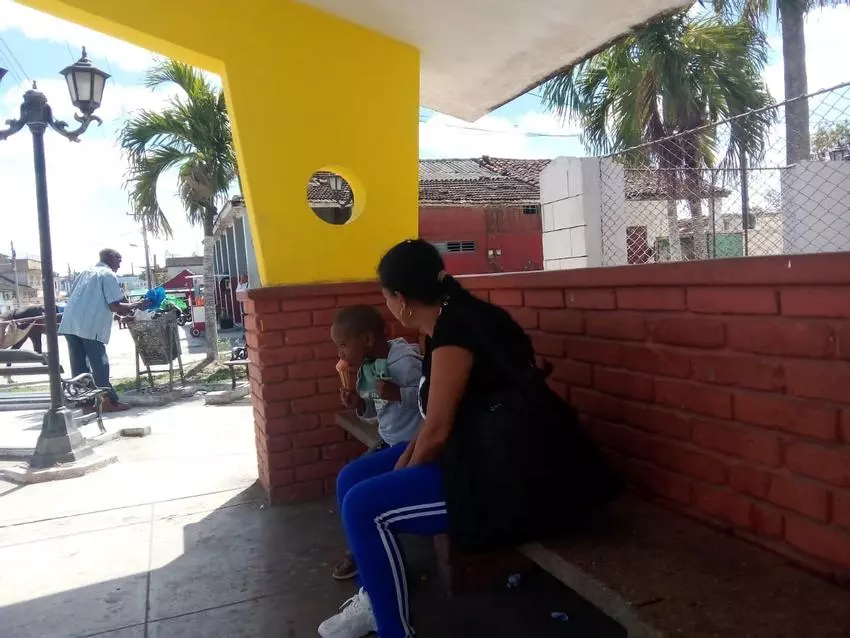
Only a woman with a small child shelters under the yellow roof of the terminal, trying to protect themselves from the heat and exhaustion. / 14ymedio

Next to the stop, the taxi stand from which private taxis used to depart is also deserted, leaving no way to travel to Ceiba Mocha or Matanzas. The metal bench, once contested by passengers, remains empty for long stretches of time. Only a woman with a small child shelters under the yellow roof of the terminal, trying to protect themselves from the heat and the fatigue accumulated after hours of waiting.

“It’s already past 2:00 in the afternoon and not a single car has come through today. Now things are really bad, because even with money in your pocket you can’t get out of here,” says a young man, for whom the municipality of Unión de Reyes feels farther away than ever. The man checks his phone frequently, although he knows the battery will run out continue reading

before a vehicle willing to pick up passengers appears. “The few that are circulating are from the same town. No private driver will go to Matanzas for less than 40,000 pesos. Honestly, it’s an abuse,” he complains.

Worried that night will fall without being able to leave, the man from Matanzas has gone several times with his four-year-old son to a nearby cafeteria, where tractor-trailers stop to eat. The child, sitting on the edge of a bench, plays with an empty cup while curiously watching the road. “Only two or three big trucks have passed. All the drivers tell me they’re loaded, that they can’t take me. My child keeps asking when we’re leaving. He asks for water, food, and we’re stuck in the middle of the road. We left San Nicolás de Bari before dawn and we’re still wandering around. Hopefully we won’t have to sleep on a bench,” says the young father, visibly exhausted.

“No official is concerned about the hardships the people go through, because they all have ways to get around.” / 14ymedio

You could cross the road without looking both ways, if not for the occasional electric scooter breaking the silence of the roadway. The sounds of combustion engines have practically disappeared from the central highway. There is little movement in the surroundings: a street vendor pushes a cart with agricultural products, a cyclist passes slowly, and occasionally a truck raises a cloud of dust that forces those present to cover their faces.

“I need to take medication to my mother who lives in Aguacate, just a few kilometers from here. A trip that can be done in minutes takes a whole day because there are no intermunicipal buses running,” says a woman, sitting in the same spot since mid-morning, without even leaving to get a coffee for fear of missing a vehicle that might stop. She grips her bag tightly and anxiously watches every point that appears on the horizon.

“The traffic sign is there for nothing. I got tired of raising in accountability meetings that this stop needs an inspector, but no official cares about the hardships people go through, because they all have ways to get around,” the woman argues, unable to hide her frustration.

As the afternoon goes on, the sun beats down on the sidewalk and the shadow of the yellow roof becomes the only refuge for travelers trapped in the wait. Time seems to stand still in Madruga. Only the young man with his son and four other people persist in trying to embark on a journey whose wait becomes unbearable due to the heat and uncertainty.

Translated by Regina Anavy

______________________

COLLABORATE WITH OUR WORK: The 14ymedio team is committed to practicing serious journalism that reflects Cuba’s reality in all its depth. Thank you for joining us on this long journey. We invite you to continue supporting us by becoming a member of 14ymedio now. Together we can continue transforming journalism in Cuba.
Iberia Suspends All Its Flights to Cuba Starting in June

It is the first time in history that the Spanish airline cancels the route for reasons attributable to conditions on the Island, although it aims to resume flights in November

A Havana-bound aircraft from the Spanish company, landed at José Martí International Airport. / Iberia

14ymedio bigger14ymedio, Madrid, April 13, 2026 – The airline Iberia announced this Monday the suspension of its flights to Cuba due to a drop in tourism. The measure does not take effect immediately and is limited to the low season, between June and November, with the intention of resuming routes at that time. However, the fact that it is one of the main airlines connecting Europe with the Island, and until now seemed committed to continuing to guarantee the route, is another final blow to the deplorable state of the sector.

The Spanish company currently maintains three weekly frequencies from Madrid to Cuba, and the first step is to reduce them to two in May. When June arrives, the only alternative will be to travel to Panama and, from there, come to the Island with Copa Airlines, which has a codeshare agreement with Iberia. The company has stated that its offices in Havana remain open to assist customers who need help.

“This temporary suspension affects exclusively Cuba, due to its exceptional situation. Iberia maintains the rest of its operations normally and, looking ahead to this summer, will offer a record number of 21.4 million seats,” the airline said in the announcement. The declaration is another painful verdict for Havana. The Spanish company had only suspended operations twice before, and neither was attributable to conditions on the Island. continue reading

“This temporary suspension affects exclusively Cuba, due to its exceptional situation. Iberia maintains the rest of its operations normally and, looking ahead to this summer, will offer a record number of 21.4 million seats”

In 2013, Iberia went through a severe economic crisis that forced the airline, which only two years earlier had merged with British Airways in the IAG alliance, one of the largest in the world, to carry out a workforce restructuring. In those negotiations, which led to the departure of more than 4,500 employees, three long-haul routes were canceled: Cuba, the Dominican Republic, and Puerto Rico. It was the first time in more than 60 years that the Spanish company did not fly to the Island.

The measure lasted two years, and in 2015 flights resumed in a big way, with five weekly connections, precisely in a promising year for the Cuban economy, when amid the thaw with the United States, companies from around the world bet on positioning themselves on the Island ahead of an opening that ultimately ended in failure.

Iberia suspended flights to Cuba again during the pandemic, when air routes worldwide were affected by border closures and airspace shutdowns.

This is, therefore, the first time the Spanish airline leaves the Island for reasons attributable exclusively to Cuba. On February 9, the company announced that, despite the lack of fuel, it would maintain its flights to Havana by refueling in the Dominican Republic. It was also one of the few airlines that did not backtrack on its decision, unlike those from Canada and Russia, countries that currently have higher flows of tourism to the Island, which nevertheless evacuated their nationals and stopped traveling until the situation is resolved.

Spain, despite being a key economic and cultural partner of Cuba, has ceased to be a top-tier tourism market as it had been until recently. The commitment of hotel entrepreneurs remains, for now, intact, but travelers are fleeing. Last year, barely 46,489 Spaniards visited the Island, compared to 65,054 in 2024. These numbers are put into perspective when compared to those of 2017, when the figure was 168,949.

In the first two months of 2026, only 4,422 Spaniards traveled to Cuba, 32% fewer than in the same period the previous year.

Translated by Regina Anavy

______________________

COLLABORATE WITH OUR WORK: The 14ymedio team is committed to practicing serious journalism that reflects Cuba’s reality in all its depth. Thank you for joining us on this long journey. We invite you to continue supporting us by becoming a member of 14ymedio now. Together we can continue transforming journalism in Cuba.

Havana Chronicles: In Havana, the Hustle and Bustle of the Iconic Rampa Has Moved to the ‘Candonga’ of 100 and Boyeros

The blackouts have wiped out the cinemas and the Coppelia ice cream parlor in El Vedado; life is now in the kiosks where it is advertised: “Here we have everything”

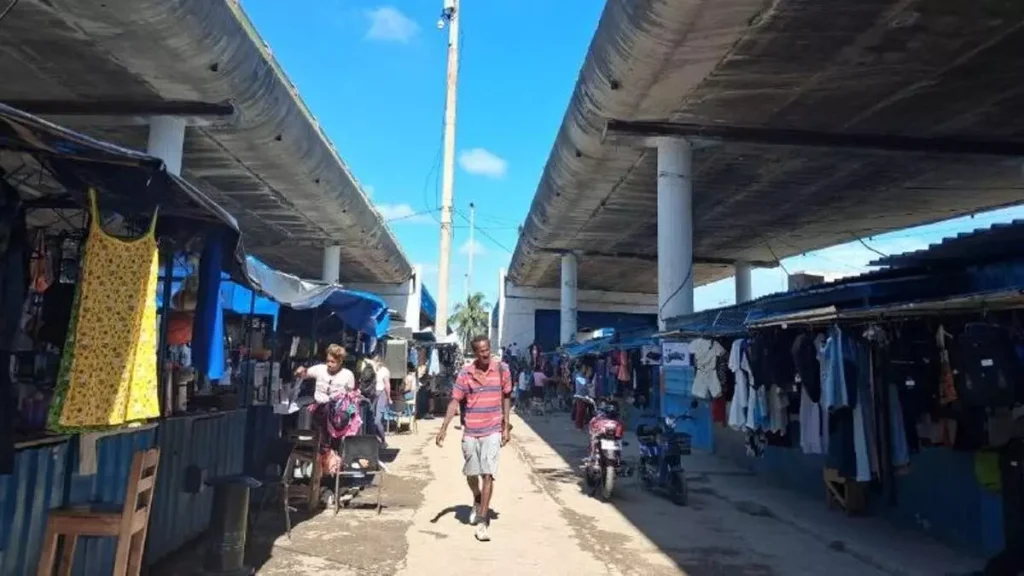
Above my head, the bridges that once roared with the passing of trucks and buses are now almost silent. / 14ymedio

14ymedio bigger14ymedio, Yoani Sánchez, Havana, 12 April 2026 —  This time the route heads south. I need to get to the market that sprawls under the overpasses at 100th and Boyeros in Havana. My eternal quest for a part to fix leaky faucets leads me to one of the city’s main open-air markets. “We have everything here,” reads a sign I find at a kiosk at the entrance to the candonga [black market], where you can buy anything from antibiotics to soldering iron.

There is no internet connection anywhere along the route to the fair, and in some sections, you can’t even get a cell phone signal to make calls. We Cubans have come to accept that chatting with friends, watching reels, or posting on Facebook is becoming a thing of the past. It’s a shame that X no longer has the option to post via text messages (SMS) like was possible on the old Twitter. We have lost even our smoke signals.

While along the entire route I had barely encountered half a dozen people, the scene changed as I approached the market  / 14ymedio

Disconnected but walking briskly, I approach the overpasses. While along the entire route I had barely encountered half a dozen people, the scene changes as I near the market. At 100th and Boyeros, there are more people than at 23rd and L, the iconic corner of La Rampa in Vedado. The crowds that no longer surround the cinemas, clubs, or the Coppelia ice cream parlor seem to have concentrated around the stalls selling instant glue, clothing, and tools.

Even companionship is for sale. Stationed at certain points in the market are women and men in tight clothing with flirtatious glances. Here, rice cookers and caresses are traded; dishwashing liquids and sex. None of those prostituting themselves are over 30. This generation wasn’t even given an attempt to mold them into the “new man”, rather, they were left adrift in classrooms where television replaced teachers. They were the ones who fueled the majority of the Island-wide protests on 11 July 2021, and also the ones who were most frequently imprisoned after those demonstrations.

I slip between the kiosks. Above me, the bridges that once roared with the passing trucks and buses are now almost silent. Life is happening below. Tamales, soft drinks, motorcycle helmets, trash cans, plastic trinkets, and the cries of “we buy gold” or “we buy dollars” echo continue reading

everywhere. There are narrow passageways, lined with stalls made of zinc sheets and others, more sophisticated, built of brick. In a moment, I’m lost in this labyrinth.

“Does it have a sink faucet?” / 14ymedio

I finally find the sink drain piping I need and decide to look for other parts. To avoid confusion, in a market where there are people from all over Cuba, I approach a vendor and ask him point-blank, “Do you have a sink-faucet-with-handles-for-hand-washing?” The mix of regional names and the many ways of referring to the same object across the island make me want to emphasize what I mean. The man bursts out laughing at my excessive specificity. “I’m all out, but I’ll get more tomorrow,” he replies.

I start heading back. On the way, I pass the Boyeros and Camagüey market, where food and basic goods are sold in dollars. Inside, the air smells of spoiled meat, probably thawed by the long power outages. The refrigerators are practically empty, and an employee asks me to run a calculation on my phone’s calculator because they’re not allowed to bring cell phones into the store where they work.

The cell phone we carry in our pockets is becoming increasingly useless. Workers at the hard-currency stores aren’t allowed to bring them inside, and when I continue on my way home, mine barely works. Near the Sports City, nostalgia hits me. On the same grounds where The Rolling Stones played live ten years ago, grass now grows, and a couple of stray dogs stare at me with eyes pleading for food. Only a few electric tricycles pass by on the avenue, and very occasionally, an almendrón — a classic American car.

I’m already crossing Cerro Avenue. From a nearby doorway, a man offers me “all kinds of medications.” While state-run pharmacies are practically empty, Havana’s streets have become a very well-stocked pharmacy. What customers are offering and seeking most are antidepressants, anti-anxiety medications, and mood stabilizers. It seems that three out of every five people walking the streets are under the influence of some drug.

Only a few electric tricycles and, very occasionally, a classic American car pass by on the avenue. / 14ymedio

It’s hard to believe that a regime that tries to control every aspect of life doesn’t know that in Havana it’s easier to get sertraline* [Zoloft] than pork, diazepam* than coffee, amitriptyline* than eggs. A friend says it’s “state policy” to keep people drowsy and sedated. Some people spend part of their salary on a good supply of pills that will transport them to another place where the garbage on the corner doesn’t pile up so much, prices don’t rise every day, and their children aren’t packing their bags to emigrate.

I turn left at Tulipán. I spot my building with its enormous water tank. I reach for my cell phone to call home. Three tries and nothing. Each time, the voice says, “The number you are calling is switched off or out of coverage,” but I have to keep trying. “We are having a blackout,” the voice on the other end finally tells me when I get through. Isn’t there some kind of pill that makes me grow wings so I can get to the 14th floor without climbing the stairs? I fantasize and start humming that song that goes, “cause I try, and I try, and I try, and I try.”

*Translator’s ntoe: All these drugs are anti-depressants

Previous Havana Chronicles

______________________

COLLABORATE WITH OUR WORK: The 14ymedio team is committed to practicing serious journalism that reflects Cuba’s reality in all its depth. Thank you for joining us on this long journey. We invite you to continue supporting us by becoming a member of 14ymedio now. Together we can continue transforming journalism in Cuba.

Publishing Houses Are Dying in Cuba, in Contrast to the Abundant Literary Production of the Diaspora

On the island, printing presses remain paralyzed due to a lack of electricity, paper, and resources

In a landscape of blackouts and paper shortages, the literary map of March was drawn, above all, from exile. / Collage

14ymedio bigger14ymedio, Havana, April 12, 2026 — The energy crisis, which has paralyzed printing presses, suspended book launches, and reduced print runs to symbolic numbers, has left many provincial publishing houses empty and has turned the publication of a book into an exceptional event in Cuba. Against this backdrop of blackouts and paper shortages, the literary landscape of March was shaped, above all, by exile and the diaspora.

In Havana, editors and proofreaders describe a routine marked by uncertainty. Power outages force work to stop for hours, computer equipment frequently breaks down, and printing shops can barely meet even the most urgent orders. Adding to this precarious situation is the lack of transportation and fuel, which hinders the distribution of the few copies that do manage to come off the presses. Thus, the book printed on the island has become an increasingly scarce commodity.

Meanwhile, in other cultural spheres, new releases were announced that keep the discussion about Cuban identity and its intellectual legacy alive. One of the most talked-about titles in March was El Monte’s New Itineraries, by researcher Alberto Sosa, presented as the first volume dedicated entirely to the study of El Monte (1954), by the Cuban author and ethnographer Lydia Cabrera.

Considered one of the most influential texts in Caribbean cultural history, Cabrera’s book intertwines ethnobotany, popular oral and Afro-Cuban traditions, and has exercised a notable influence on disciplines as diverse as anthropology, theater, and even the science fiction literature in the region. Sosa’s work aims to examine this legacy from a contemporary perspective, highlighting its continued relevance in spiritual and medicinal practices of the Hispanic Caribbean.

Obejas’s new work “dismantles the myth and makes it flesh,” by placing its characters in recognizable Havana settings.

Another noteworthy publication this month was Humo y otros cuentos [Smoke and Other Stories], by Cuban-American writer and translator Achy Obejas. The volume brings together stories that explore memory, desire, and violence from an intimate, urban perspective. According to Puerto Rican novelist and essayist Yolanda Arroyo Pizarro, Obejas’s new work continue reading

“dismantles the myth and makes it flesh,” by placing its characters in recognizable settings in Havana, Los Sitios, Vedado, and Old Havana, where the city ceases to be a mere backdrop and becomes a force that shapes the decisions and silences of its inhabitants. In these stories, exile appears as an emotional and narrative experience that is constantly rewritten, a wound that opens and closes with each memory.

In the realm of poetry, March was marked by the announcement of a publishing project aimed at rescuing silenced voices. Poet Katherine Bisquet reported that she is working on selecting authors for the anthology Poemas escritos en la cárcelDesde los primeros presos de Castro hasta la Primavera Negra [Poems Written in Prison: From Castro’s First Prisoners to the Black Spring], a work in progress that seeks to highlight the literary production of Cuban political prisoners. The project aims to gather texts written under conditions of confinement and censorship, where writing became a form of resistance and a symbolic space of freedom. The initiative has sparked interest among cultural organizations and human rights defenders, who see poetry as a tool for preserving the memory of repression.

Orlando Luis Pardo Lazo presented his book ‘Olvidos y obituarios’ (Forgotten Things and Obituaries), a volume that collects chronicles and short texts characterized by their experimental and provocative style.

Also in March, in Madrid, writer and photographer Orlando Luis Pardo Lazo presented his book Olvidos y obituarios [Forgotten Things and Obituaries], a collection of chronicles and short texts characterized by their experimental and provocative style. His prose, which the author himself describes as a “vocabulary,” combines wordplay, irreverent humor, and cultural references that engage with the Cuban literary tradition. For essayist Miguel Correa, these pages embody the discourse of those marginalized by the official narrative, while critic Gustavo Pérez Firmat has noted that, behind the linguistic acrobatics, one perceives “a sadness bordering on despair.”

The contrast between the vibrant creativity abroad and the paralysis of the publishing industry on the island was starkly evident on March 31st, during the official commemoration of Cuban Book Day. The ceremony, held at the José Martí Memorial in Havana, had a tone more political than cultural. While the event commemorated the founding of the National Printing Office in 1959, the main address was delivered by Michel Torres Corona, director of the Nuevo Milenio Publishing Group and host of the television program Con Filo, who transformed the day into an exercise in ideological reaffirmation before officials from the Ideological Department of the Central Committee of the Communist Party and the Ministry of Culture.

Far from being a fiesta for readers, the event left the impression of a cultural sector trapped between material scarcity and political subservience. Bookstores with empty shelves, book fairs canceled due to power outages, and publishing houses barely operating make up the current landscape of the book industry in Cuba.

______________________

COLLABORATE WITH OUR WORK: The 14ymedio team is committed to practicing serious journalism that reflects Cuba’s reality in all its depth. Thank you for joining us on this long journey. We invite you to continue supporting us by becoming a member of 14ymedio now. Together we can continue transforming journalism in Cuba.
Cuban State Security Intensifies Harassment of Anna Bensi and Her Family Following a Visit From U.S. Mission Head Mike Hammer in Havana

The influencer reports threats against her sister and the blocking of her WhatsApp account

“It was a great pleasure to finally meet Anna Sofía Benítez and her mamá,” Hammer wrote after the meeting. / X / U.S. Embassy in Cuba

14ymedio bigger14ymedio, Havana, April 9, 2026 / Mike Hammer, head of the U.S. mission to Cuba, visited content creator Anna Sofía Benítez Silvente, known online as Anna Bensi, at her home in Alamar, Havana, on Tuesday. The meeting took place amid the ongoing criminal proceedings against the young woman and her mother, Caridad Silvente, and the continued harassment of her family by Cuban authorities.

“It was a great pleasure to finally meet Anna Sofía Benítez and her mamá. They told me about their situation and that they are under house arrest,” Hammer wrote after the meeting. The diplomat added that the young woman told him that “all she has done is express her ideas, her faith, and her aspirations as a Cuban who loves her country.” “She is a brave young woman who speaks her mind. She is admirable,” he concluded.

The pressure on her inner circle intensified just hours after the visit. This Thursday, her sister, Elmis Rivero Silvente, a U.S. citizen who has been visiting Cuba for several days, was summoned to the Immigration Unit in the Playa municipality under the pretext of an “interview for immigration control of her stay,” according to Cubanet. During the questioning, officers tried to determine if she had coordinated Hammer’s visit to the family home in Alamar.

According to the same media, the conversation quickly escalated into threats. Rivero stated that the agents warned him that both Anna Bensi and her mother could end up in prison and asked him to speak “especially” to his sister “to make her shut up, to stop denouncing the regime and speaking freely.” The officers also attempted to portray the diplomat’s visit as a provocation and even alluded to a supposed US invasion of Cuba, in another attempt to frame a case of political harassment within the regime’s defensive rhetoric. continue reading

Hammer arrived accompanied by Leslie Núñez Goodman, counselor of the Office of Education, Culture and Press of the diplomatic headquarters

Hammer has spent over a year traveling around Cuba, meeting with activists, religious leaders, independent journalists, and opposition members. His visit to Anna Bensi is part of this series of meetings with Cubans under surveillance, pressure, or persecution for political reasons.

The meeting on Tuesday also took place during a power outage. Hammer arrived accompanied by Leslie Núñez Goodman, counselor at the Office of Education, Culture, and Press of the diplomatic mission. Also present at the residence were the young woman’s mother, her sister Elmis Rivero Silvente, and Pastor Rolando Pérez, known as el Pregonero de Cristo [Herald of Christ].

Anna Bensi has become one of the most visible young voices on social media in Cuba. Through platforms like Instagram and TikTok, she has denounced abuses, expressed her religious convictions, and defended a vision of the country openly contrary to the official narrative. According to her own account, her exposure began to grow with a video in which she denounced the obstacles she faced in receiving her university degree after graduating. Later, she also ventured into music with “Mi Tierra” (My Land), a song dedicated to Cuba and Christ, which has already appeared on Billboard’s recommendation list.

The mother and daughter were reportedly prosecuted after recording and posting a video showing two men in civilian clothes delivering an official summons to Caridad Silvente. Authorities allege that one of the men, a non-commissioned officer from the Ministry of the Interior, felt “threatened” after his identity was revealed. The accusation, however, reinforces the impression that the case is not intended to protect individual rights, but rather to punish the public exposure of agents linked to the repressive apparatus.

The young woman said she felt “disgusted by this whole situation, by all the repression,” but stressed that her faith, her conviction, and her ideals “remain stronger than ever.”

Far from softening her discourse, Anna Bensi has responded with more directness. This Wednesday, she reported that her WhatsApp account had been suspended. “It won’t let me log in; when I request the code, it doesn’t arrive on my number. And when people message me, it appears as if I’ve delivered the messages,” she wrote. The young woman said she felt “disgusted by this whole situation, by all the repression,” but emphasized that her faith, her conviction, and her ideals “remain stronger than ever.”

During the meeting with Hammer, she insisted that she doesn’t believe she’s doing anything wrong. “I’m calm because I’m convinced I’m doing the right thing, that I’m on the right side,” she stated. She also expressed her desire for a Cuba where young people don’t have to emigrate to aspire to a decent life and where they can express themselves without fear of repression.

At the end of the visit, Hammer presented Anna Bensi with a small bell as a symbol of the 250th anniversary of the United States Declaration of Independence. The young woman, in turn, sang them a song in English. The gesture does not alter her legal status nor stop the harassment. But it leaves an image that will be difficult for the regime to neutralize: that of a 21-year-old woman, monitored and prosecuted for speaking out, receiving in her home, in the midst of a blackout, a foreign diplomat interested in hearing precisely what the regime is trying to silence.

______________________

COLLABORATE WITH OUR WORK: The 14ymedio team is committed to practicing serious journalism that reflects Cuba’s reality in all its depth. Thank you for joining us on this long journey. We invite you to continue supporting us by becoming a member of 14ymedio now. Together we can continue transforming journalism in Cuba.

Seven Cubans Deported by the US Find Support in a Shelter in Tapachula

“These people have spent more than half their lives in the US and they have no one in Mexico.”

A group of deported Cubans in Tapachula. / Video capture

14ymedio bigger14ymedio, Angel Salinas, Mexico City, April 10, 2026 / Tapachula, in the state of Chiapas, has become the epicenter of deportations from the US of Cubans, Haitians, Mexicans, and Salvadorans. “Mexico is doing the dirty work; today it accepts people that the Donald Trump administration doesn’t want—people with criminal records and the elderly, people who are abandoned without papers or money,” says lawyer Jacinto Gómez.

At the Jesús el Buen Pastor del Pobre y el Migrante shelter, there are seven Cubans. The oldest, Olga Sánchez Martínez, the center’s director, tells 14ymedio, is about 65 or 75 years old. “These people have spent more than half their lives in the US; they have children, family, property, but they were deported and have no one in Mexico.”

Doña Olga, as the migrants call her, has accepted these Cubans regardless of their history. “They need help; most are between 40 and 50 years old, and many of them have spent days without food and sleeping on the street.”

At the shelter, located almost 20 minutes from downtown Tapachula, migrants find a place to sleep, shower, and eat, “for as long as they need.” The facility, which has been receiving migrants for decades , has a capacity for 1,500 people, but is currently housing only 90. In addition to Cubans, “there are Nicaraguans, Haitians, Salvadorans, Africans, and Mexicans.”

Despite being expelled, the island’s nationals, Sánchez says, “are hoping to return when Trump leaves the White House. They are waiting for continue reading

changes.”

The Jesús el Buen Pastor del Pobre y el Migrante shelter has a capacity for 1,500 people. / Facebook

More than 500 Cubans have been deported by the US between March and the beginning of April. The director of the Center for Human Dignity, Luis Rey García Villagrán, denounced the apathy of the authorities toward their requests for immigration regularization. They are allowed to fill out the forms and “in the best-case scenario, are told to wait three to four months to receive an email that will never arrive.”

The shelter is sustained by Sánchez Martínez, who also owns a small store: “That’s where the money comes from to cover the electricity, water, and food expenses.” The state government helped him this year with bathroom renovations. “Health authorities come to the shelter twice a week to provide medical care.”

Sánchez began supporting migrants in 1992, helping those who “fell off the train and lost legs or an arm,” she says, referring to the freight train known as La Bestia (The Beast), which travels north-south through Mexico carrying all kinds of goods, while migrants sneak on for a ride north. She continued even when authorities pressured her to stop the aid. “The train left, but the migrants kept arriving, first a few, then thousands, and they know they won’t lack food or shelter.”

During the day, the migrants go out in search of work; “there is work on the farms, harvesting bananas, papayas, and coffee.” Because of their circumstances, the wages are low; they earn 150 pesos a day (a little over $8) when the average wage is 270 pesos ($15.60) per day.

While some deported Cubans hope to return to the United States, others have expressed their desire to go back to the island. One of them is William Herrera López, who told Diario del Sur last March that, given the lack of opportunities in Tapachula, he was seeking Mexico’s support to return to his country. “I’m 53 years old and I’d like to be sent back to my country. There I have my mother, siblings, nephews, and a humble little house where I can stay, not here in a place I don’t know and am completely alone.”

Óscar Rodríguez, another of those expelled by the US, lamented: “Work is hard here, it’s poorly paid, and it’s not enough. The truth is, all we can do is ask to be sent back to Cuba or given the opportunity to move to another part of Mexico, because things are complicated in Tapachula.”

______________________

COLLABORATE WITH OUR WORK: The 14ymedio team is committed to practicing serious journalism that reflects Cuba’s reality in all its depth. Thank you for joining us on this long journey. We invite you to continue supporting us by becoming a member of 14ymedio now. Together we can continue transforming journalism in Cuba.

The Prison Sentence Against the Artist Nando OBDC Is Confirmed, and Félix Navarro Was Beaten Again in the Agüica Prison

The Cuban regime intensifies its crackdown on dissidents as discontent grows across the country

Rapper Nando OBDC and opposition leader Félix Navarro, political prisoners suffering mistreatment in Cuba. / Collage from social media

14ymedio bigger14ymedio, Havana 10 April 2026 — Cuba’s Supreme People’s Court ratified the five-year prison sentence against artist Fernando Almenares Rivera, known as Nando OBDC, after dismissing the appeal filed by his defense.

The decision was communicated to his family this week, according to Almenares’ mother, Eva Rivera, who spoke to 14ymedio: “Unfortunately, it was denied. I expected that to happen. I don’t expect anything better from this government.”

The appeal filed by the artist’s defense alleged a lack of substantiation in the assessment of the evidence in its previous sentence and errors in the appreciation of aggravating circumstances.

The ruling established that Almenares wrote messages on pieces of bedsheets intended to incite the population “to take action against the government,” which he then placed in visible locations for public dissemination. As an aggravating circumstance, it noted that the accused had received money from abroad to carry out the action.

The court maintains that these acts constitute the crime of propaganda against the constitutional order, considering it proven that the accused acted with the purpose of “inciting against the social order and the socialist state”; and confirms the sentence “in all its parts and declares it final. No appeal is authorized against this sentence.”

The Court “confirms the judgment in its entirety and declares it final. No appeal is permitted against this judgment.”

After nearly a year in detention without charges, Almenares was sentenced on December 22, 2025 to five years in prison. The sentence was continue reading

one year less than the prosecution’s initial request of six years.

The process began with a search warrant issued on January 2, 2025 for an alleged crime of sabotage, but the record only records the seizure of a Cuban flag, without evidence related to that charge.

Months later, the charges were reformulated as propaganda against the constitutional order, based on the artistic action of painting slogans such as “Cuba Primero en las calles por los derechos humanos” [Cuba First in the streets for human rights] on pieces of fabric and placing them in visible locations. The court considered that these acts were intended to “disturb public peace” and “create discontent,” according to the ruling, to which 14ymedio had access.

The artist’s family and civil organizations have questioned the validity of the proceedings. Eva Rivera has denounced errors in the basic information of the case file and the lack of conclusive evidence. Cubalex points out contradictions in the process and demands the artist’s release. The Cuban Youth Dialogue Table described the trial, held in November 2025, as “a farce” and condemned its political nature.

Julie Trébault, director of Artists at Risk Connection, also expressed concern about the case: “The Cuban government’s sustained strategy of exiling or imprisoning dissenting artists must end, Nando OBDC must be released, and freedom of expression must prevail.”

The Cuban government’s sustained strategy of exiling or imprisoning dissenting artists must end, Nando OBDC must be released, and free expression must prevail.

Almenares remains imprisoned in the Cuba-Panama prison in Güines, Mayabeque, a facility for inmates with HIV, although he does not suffer from that disease, but rather from sickle cell anemia—a genetic disorder that causes anemia—according to his mother. Last July, he staged a hunger strike to protest his situation. His mother has also reported restrictions on communication with the artist and his deteriorating emotional and physical health.

The criminal offense of “propaganda against the institutional order,” incorporated into the 2022 Penal Code, penalizes any critical expression that the State considers “incitement against the social order or the socialist State”, without precisely defining what acts constitute that crime, which makes it a legal instrument to persecute dissent.

CTDC warned this Friday about a “brutal beating” suffered by the historic political prisoner Félix Navarro Rodríguez, 72.

The Cuban regime’s repression of dissidents continues to intensify amid the current crisis on the island, with violence against political prisoners within the prison system. The Council for Democratic Transition in Cuba (CTDC) reported on Friday a “brutal beating” suffered by long-time political prisoner Félix Navarro Rodríguez, 72, in the Agüica maximum-security prison in Matanzas, and warned that his life could be in danger due to his fragile health.

The organization held State Security and prison authorities responsible for the attack and any resulting consequences, and denounced that, following the attack, Navarro was transferred to solitary confinement, which worsens his situation. It also demanded his immediate release and guarantees for his physical safety, while calling on the international community to take urgent action.

The case was reported to the Inter-American Commission on Human Rights (IACHR) by the Cuba Decide Complaints Center, which filed an urgent appeal regarding the events, as reported by Martí Noticias. According to Juan Carlos Vargas, director of Cuba Decide, the attack occurred on April 9, after a family visit, when the opposition member was intercepted by prison officials, handcuffed, and beaten while defenseless.

Félix Navarro, vice president of the CTDC and recipient of the 2024 Patmos Award, is currently serving a nine-year prison sentence for his participation in the Island-wide 11 July 2021 [’11J’] protests. In 2003, he was among the 75 opposition members and independent journalists convicted during the Black Spring. His daughter, Sayli Navarro, a member of the Ladies in White, is also serving a politically motivated sentence.

______________________

COLLABORATE WITH OUR WORK: The 14ymedio team is committed to practicing serious journalism that reflects Cuba’s reality in all its depth. Thank you for joining us on this long journey. We invite you to continue supporting us by becoming a member of 14ymedio now. Together we can continue transforming journalism in Cuba.

A Man Dies While Attempting To Steal Dielectric Oil in Santiago De Cuba

Two brothers were extracting the product when a transformer exploded, causing the death of one and severe burns to the other

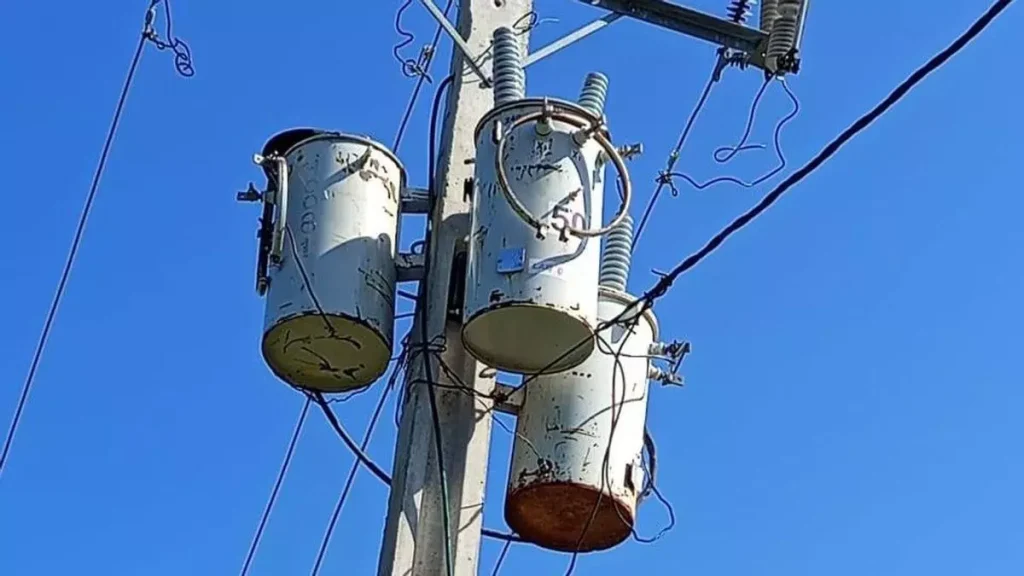
Transformers where the incident took place, in Songo La Maya, Santiago de Cuba. / Santiago de Cuba Electric Company

14ymedio bigger14ymedio, Havana, April 11, 2026 – A man died and another was seriously injured on Friday night in Santiago de Cuba while attempting to steal dielectric oil* from a bank of transformers in the locality of Alta Esperanza, in the municipality of Songo La Maya.

According to the official publication of the provincial Electric Company, at the moment when the two brothers were attempting to carry out the theft, a fault in a transformer caused an explosion that directly affected those involved, instantly killing one of them and severely burning the other.

The statement emphasizes that this type of crime against the National Electric System (SEN) is punished under Law No. 151/2022, Article 125, of the Penal Code, which constitutes “sabotage” as it is an “attack against the infrastructure that sustains daily life and the country’s economic development.”

The risky theft of dielectric oil is not new in Cuba, and its recurrence demonstrates the level of desperation the population has reached in the context of needs and shortages resulting from the current crisis on the Island.

The risky theft of dielectric oil is not new in Cuba, and its recurrence demonstrates the level of desperation the population has reached

In addition to being dangerous to the physical integrity of the perpetrators, as seen in this and other cases, the crime is defined and severely punished by law. Penalties can range from four to twenty years in prison and even reach life imprisonment if there are aggravating circumstances. In some cases reported by 14ymedio, perpetrators have received sentences of up to 15 years in prison. continue reading

Dielectric oil serves an essential function of insulation and cooling, crucial for extending the lifespan and efficient operation of electrical transformers. In a situation of scarcity of all kinds of supplies in the country, this substance has become a valuable commodity, stolen from power poles to end up lubricating motors of household appliances, among other uses.

The explosion of the transformers caused a power outage in the municipalities of Songo La Maya and Segundo Frente, following the fall of a 33 kV line that supplied the area. The Electric Company warned that the extraction of dielectric oil can cause breakdowns, explosions, and blackouts as occurred in this case, in addition to generating a shortage of this essential resource for the system, with direct effects on supply to the population.

The state entity reported hours later that the perpetrators were brothers, and that authorities managed to recover 70 liters of the stolen oil 100 meters from the scene of the incident.

*Dielectric transformer oil is a specialized insulating fluid used in power transformers to provide electrical insulation and cooling.

Translated by Regina Anavy

______________________

COLLABORATE WITH OUR WORK: The 14ymedio team is committed to practicing serious journalism that reflects Cuba’s reality in all its depth. Thank you for joining us on this long journey. We invite you to continue supporting us by becoming a member of 14ymedio now. Together we can continue transforming journalism in Cuba.

A Pair of Oxen and a Cart, the Latest Innovations in Cuba’s Military Strategy

What must they be thinking in Washington and Moscow about the bovine logistics introduced by Havana in the “war of all the people”?

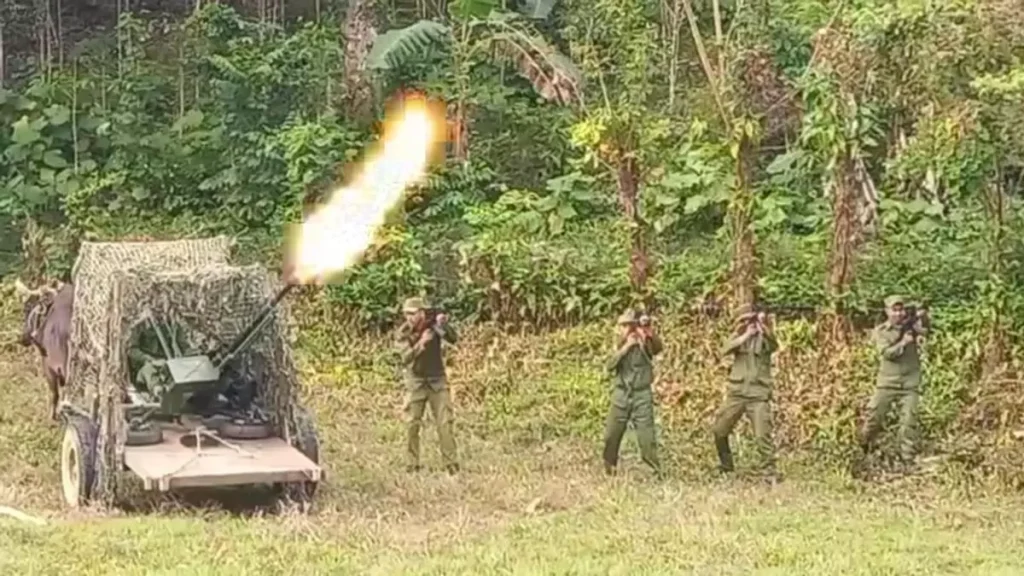
Following the same logic, the Strait of Hormuz could be closed with a pair of barracudas. / Screenshot

14ymedio bigger14ymedio,Yunior García Aguilera, Madrid, April 11, 2026 – Social media of the regime have once again delivered one of those scenes conceived halfway between parody, mockery, and Cuban-style ridicule. In the videos of defense preparations circulating this Saturday, several half-malnourished uniformed men deploy around a rural house, crouch down, take positions, and simulate a military operation with the seriousness of someone who believes they are participating in the prelude to the Normandy landings. Except that in the middle of the scene, a camouflaged cart bursts in, pulled by a pair of oxen, as if it were a secret, decisive, and impregnable weapon.

In some Pentagon office, one imagines U.S. generals watching the videos in silence, first with confusion, then rewinding them to make sure they are not looking at a meme, and finally wondering whether it is a military exercise or a Gaesa agricultural fair. Perhaps one of them has concluded that there is no need to deploy drones, satellites, or precision missiles against an adversary that still seems to fight its battles in the Middle Ages.

On the other side, it is also easy to imagine the discomfort of Havana’s allies. In Moscow, perhaps someone has looked away to avoid admitting that, after sending weapons, oil, and political support, the great showcase of Cuban “resistance” ends up making such blunders. Even in Tehran, perhaps some strategist has thought that, following the same logic, the Strait of Hormuz could be closed with a pair of barracudas, three sharks, and a boat covered with dry grass. continue reading

It’s one thing is to improvise in a ruined country and quite another to turn precariousness into military doctrine

While the world discusses autonomous drones, electronic jamming systems, highly precise guided missiles, and wars fought thousands of miles away through screens, satellites, and sensors, in Cuba the defensive epic seems to continue relying on bovine logistics. The ox, slow and completely alien to the rhetoric of the “imperial enemy,” thus enters the cast of the “war of all the people.”

There will be no shortage of those who say it is ingenuity, adaptation to shortages, or a display of “creative resistance.” But it’s one thing to improvise in a ruined country and quite another to turn precariousness into military doctrine and, on top of that, to showcase it. In the images, soldiers run around, smear their faces with mud, cover themselves with grass and bushes, as if thermal weapons, night vision, and satellite surveillance had not yet been discovered.

What is laughable, however, stops being amusing when the context is observed. Since January, after the capture of Nicolás Maduro and the cutoff of Venezuelan oil shipments, the Cuban regime has intensified its military maneuvers and the staging of defense exercises. In parallel, the energy crisis has worsened to extremes that affect daily life, the electrical grid, and essential services.

That is where the oxen from Villa Clara come into the scene, not as a tactical innovation, but as a prop resource to disguise waste

The Russian tanker Anatoly Kolodkin arrived with about 730,000 barrels of crude, a limited amount whose real dilemma is not its volume but what the authorities will decide to spend it on. That aid will not last long if it ends up squandered on absurd war drills. While operations in hospitals are suspended, supplies are scarce, and the healthcare system operates at the limit due to blackouts and lack of fuel, the State continues to find thousands of liters, week after week, to move tanks, helicopters, and heavy equipment, as has been seen in previous maneuvers.

Now propagandists seem to have understood that it is no longer effective to denounce to the world that there is no fuel for pediatric services but there is for weekly military deployments. The narrative of permanent victimization runs into the evidence of a power that, when it comes to shielding itself, always finds reserves, diesel, mobilization, and staging. Perhaps that is where the oxen from Villa Clara come in, not as a tactical innovation, but as a prop resource to disguise waste.

In a collapsed country, wasting fuel on useless exercises to reassure a nervous leadership does not convey strength. It conveys fear. And also disconnection. The distance between power and the needs of the people is measured today in hours of blackouts, canceled bus routes, lost harvests, and exhausted hospitals. But also, it seems, it can be measured in the length of a cart pulled by oxen and presented as if it were a strategic resource.

The scene provokes laughter, yes. But then it leaves something worse: the certainty that, while the country sinks, those in power continue playing at war with the fuel they deny the population. And so, among dry grass, mud camouflage, and the weary pace of military cattle, the Revolution ends up demonstrating that it no longer knows how to run a country and barely manages to herd its own decline.

Translated by Regina Anavy

______________________

COLLABORATE WITH OUR WORK: The 14ymedio team is committed to practicing serious journalism that reflects Cuba’s reality in all its depth. Thank you for joining us on this long journey. We invite you to continue supporting us by becoming a member of 14ymedio now. Together we can continue transforming journalism in Cuba.

Russia ‘Is Working on an Energy Supply Plan’ That Includes Sending Another Oil Tanker to Cuba

An envoy from Moscow gives no details about this cooperation and limits himself to noting that it involves restarting the Antillana de Acero plant, paralyzed by the lack of electricity

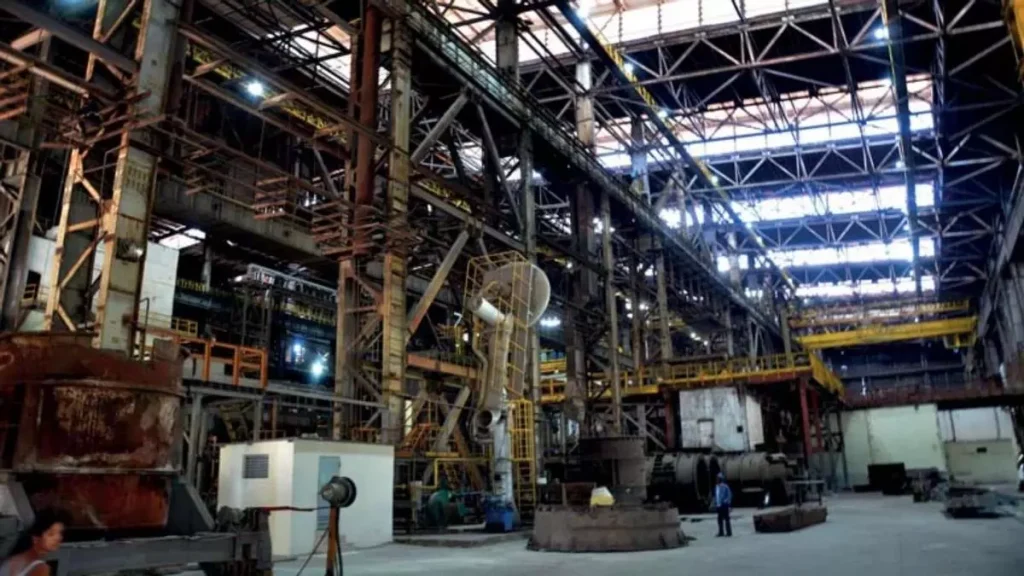
Antillana de Acero, halted since 2020, continues without stable operations due to the energy crisis and decades of deterioration. / Granma

14ymedio bigger14ymedio, Havana, April 11, 2026 – Speaking Friday, the Russian Deputy Minister of Industry Roman Chekushov said, “We discussed with our Cuban partners that Russian companies would have access to the management of industrial enterprises in the Republic [of Cuba].” Chekushov is in Havana as part of a delegation led by Russian Deputy Foreign Minister Sergei Ryabkov.

Last Thursday, Chekushov had stated to the same outlet that both parties have agreed on “an energy supply plan” as a basis for reactivating production at the Cuban metallurgical plant.

“We will try to launch rolled steel production once the small remaining outstanding debt is settled, which will increase the turnover of metallurgical product sales and allow further development of that business with those funds,” the Russian official noted.

Chekushov stressed that Cuba’s current economic priority is the restoration of normal electricity supply. “All industrial projects are linked to this,” he said.

“We discussed with our Cuban partners that Russian companies would have access to the management of industrial enterprises in the Republic”

The most important project within this bilateral cooperation is the modernization of the Antillana de Acero José Martí metallurgical plant, whose rehabilitation was agreed upon in 2015 by both governments. According to the Russian official, the contract is 93% completed in terms of value, which he described as “practically the end.”

The completion of the project would allow an annual production of around 160,000 tons of rolled steel, in a context where Cuba’s heavy industry has operated for years with serious energy and investment continue reading

limitations.

He also noted that in the case of the assembly of Russian vehicles in Cuba, suspended last month as a result of the energy crisis just one year after its launch, is expected to resume once the energy supply is normalized.

The Russian Deputy Foreign Minister, Sergei Ryabkov, at a press conference following his meeting with Cuban president Miguel Díaz-Canel last Thursday, stated: “Ensuring the Island’s energy security is a priority. It is premature to talk about next steps. It is widely known that we are not limited to the supply of the batch of oil that has already arrived on the tanker Anatoly Kolodkin.”

A second tanker loaded with 251,000 barrels of diesel and coming from the Baltic port of Vysotsk is heading toward the Caribbean, probably to Cuba

Following the arrival in Cuba on March 30 of the Russian oil tanker Anatoly Kolodkin, with 100,000 tons of oil, a second shipment appears to already be en route to the Caribbean.

However, Ryabkov did not confirm the departure of the second Russian tanker promised a few days earlier by Energy Minister Sergei Tsiviliov, who boasted of having “broken the energy blockade” imposed by Washington.

According to maritime tracking agencies, the tanker Universal, loaded with 320,000 barrels of fuel and coming from the Baltic port of Vysotsk, has just crossed the English Channel and is heading toward the Caribbean, with an arrival date of April 23, probably to Cuba, although it keeps its final destination secret, as do all Russian ships sanctioned by the United States and Europe.

Translated by Regina Anavy

______________________

COLLABORATE WITH OUR WORK: The 14ymedio team is committed to practicing serious journalism that reflects Cuba’s reality in all its depth. Thank you for joining us on this long journey. We invite you to continue supporting us by becoming a member of 14ymedio now. Together we can continue transforming journalism in Cuba.
A Cuban Man and Others Deported by the U.S. to Eswatini Will Have the Right to a Lawyer

Roberto Mosquera del Peral, who had served a sentence for homicide in Miami, was sent to that African country last summer

In October 2025, the Cuban’s lawyer said her client had begun a hunger strike to protest his detention. / DHS

14ymedio biggerEFE / 14ymedio,  Nairobi / Madrid, April 11, 2026 – The Supreme Court of Eswatini, the former Swaziland, ruled in favor of four of the migrants deported by the United States to that small African kingdom and recognized their right to meet with a lawyer, after spending nine months without in-person access to legal assistance. Among them is the Cuban Roberto Mosquera del Peral, sent to the country last summer as part of the new policy of expulsions to third states promoted by the Trump administration.

The court’s decision confirms an earlier ruling by a lower court, which had been challenged by the Eswatini government. The case refers to the first group of deportees that Washington sent to Eswatini in July 2025: initially there were five men, although one of them was later repatriated.

The judicial resolution does not end the case nor immediately improve the underlying situation of the deportees, but it does represent a defeat for the Eswatini executive, which had argued that those men did not have the right to a defense because, formally, they were not detained nor had they been charged with any crime in the country. It also claimed that they did not wish to meet with the local lawyer Sibusiso Nhlabatsi, who acts on behalf of the attorneys representing them from the United States and who until now had only been able to speak with them by phone.

Amnesty International (AI) welcomed the ruling, although it warned that the main problem remains unchanged. “The Supreme Court’s ruling represents an important step in defending the right to access a lawyer for people who have been illegally transferred by the U.S. to Eswatini,” said Vongai Chikwanda, regional deputy director of the organization for East and Southern Africa.

“No one should be transferred to a country in violation of international law guarantees, only to then be secretly detained without a clear legal process”

The NGO, however, stressed that access to a lawyer does not correct the most serious violations reported for months. According to AI, these transfers are part of an abusive practice that leaves deportees trapped in continue reading

countries with which they have no connection, without a clear judicial process, and without guarantees against a new expulsion.

“No one should be transferred to a country in violation of international law guarantees, only to then be secretly detained without a clear legal process, without access to lawyers, and without protection against a subsequent illegal expulsion,” the organization insisted.

The case of Mosquera del Peral illustrates this policy. The Cuban man had served a sentence for homicide in Miami and was one of the individuals sent by Washington to Eswatini after his country of origin, like others, refused to accept him. He traveled with nationals from Vietnam, Jamaica, Laos, and Yemen. Over the months, the number of deportees transferred to that African kingdom grew to at least fifteen people, although two of them have already been returned to their countries, Jamaica and Cambodia.

Last October, Mosquera’s lawyer, Alma David, reported that the Cuban had been held for more than three months without charges in the maximum-security prison of Matsapha, in Eswatini. The attorney said at the time that her client had begun a hunger strike to protest his detention and warned that his life was in danger, while demanding that he be allowed access to a lawyer in that African country.

Washington agreed to pay 5.1 million dollars to the Eswatini government, as acknowledged by the kingdom’s authorities

According to complaints filed in court and by human rights organizations, the deportees have remained detained without charges and in isolation in the maximum-security prison of Matsapha, near Mbabane, the capital of Eswatini. The local government denies that these are illegal detentions, but that has been precisely one of the central issues in the litigation.

As early as last February, Eswatini’s judiciary rejected an appeal that sought to halt the deportation of third-country nationals from the United States. That lawsuit had been filed in August, shortly after the U.S. Department of Homeland Security confirmed the transfer of the first five foreigners to the African country.

The agreement was not free. Washington agreed to pay 5.1 million dollars to the Eswatini government, as the kingdom’s authorities acknowledged. That figure further fueled criticism from activists and legal experts, who see in these agreements an externalization of the U.S. migration system: those expelled leave American territory but do not necessarily return to their countries of origin, instead being sent to third states willing to receive them in exchange for financial compensation.

Nine months after their arrival at a maximum-security prison in a foreign country, they remain in a situation of legal limbo

Since returning to the White House in January 2025, Trump has hardened his migration policy and promoted rapid expulsions with the support of several countries. In addition to Eswatini, Washington has reached similar agreements with El Salvador, Ghana, Rwanda, Uganda, South Sudan, Equatorial Guinea, and the Democratic Republic of the Congo.

Humanitarian organizations believe these agreements expose hundreds of people to a chain of abuses: arbitrary detention, mistreatment, isolation, and the risk of being sent to places where they may face persecution, torture, or degrading treatment. For this reason, they have called on several African governments to refuse to become destinations for migrants expelled from the United States.

In the case of Eswatini, the Supreme Court’s ruling opens a legal window for the deportees but does not clarify how long they will remain detained or what their final destination will be. Nor does it resolve the underlying issue: whether a country can accept people expelled from another state and keep them detained for months, without charges, without transparency, and without explaining what will happen to them.

For Mosquera del Peral and the other men, the ruling means at least a possibility of defense that had until now been denied to them. But nine months after their arrival at a maximum-security prison in a foreign country, they remain in a situation of legal limbo, turned into pawns of a migration policy that has moved the problem far from the U.S. border.

Translated by Regina Anavy

______________________

COLLABORATE WITH OUR WORK: The 14ymedio team is committed to practicing serious journalism that reflects Cuba’s reality in all its depth. Thank you for joining us on this long journey. We invite you to continue supporting us by becoming a member of 14ymedio now. Together we can continue transforming journalism in Cuba.
The Eight Basic Problems of Cuban President Díaz-Canel

His illusion of power, with the symbolic capacity of all representation, is a serious problem for the new consensus that needs to be built.

Miguel Díaz-Canel, in a 2024 photo. / Cubadebate

14ymedio bigger14ymedio, Manuel Cuesta Morúa, Havana, April 10, 2026 / Faced with a country in crisis in its three fundamental dimensions—infrastructure, nation, and model of state—Miguel Díaz-Canel should step aside. He should not insist on presiding over Cuba. His delusion of power, with the symbolic capacity of all representation, is a serious problem for the new consensus that needs to be built. His withdrawal, moreover, would salvage something of what we might call his legacy.

Here are eight reasons why the current president should resign:

1. He has the legitimacy of the Communist Party of Cuba (PCC) to be its general secretary, but not that of 99% of the people to be the president.

2. Because the PCC is a selective party, in which the people do not elect its leaders, it lacks the popular legitimacy to designate, from within its ranks, who will lead the country. Its membership comprises less than 1% of the active population, those with the right to vote.

3. He only has the legitimacy of those who, in his district, voted for him as a candidate for the National Assembly, without competing against any other candidate. It is worth noting that he, like many others, was nominated directly by the Nominations Commission, which has the power to directly nominate 50% of the candidates to serve in an Assembly where there is no competition for each of its 416 seats. We must keep in mind that ratification is achieved through a vote for one candidate per seat.

He lacks the popular support that, in seven years, could have generated a certain legitimacy of function if he had possessed the intellectual competence.

4. Nor did he even compete within the National Assembly with other candidates, so he only had one ratification vote, after the triple designation on the part of Raúl Castro, the Cuban Communist Party (PCC) and the Candidacy Commission, the latter composed of mass organizations, now empty, which, within the electoral system are above the popular will.

5. He does not have the popular support that in seven years could have generated some legitimacy of functions if he had had the intellectual competence and the competencies of the mandate granted to solve the problems of the people.

6. He lacks—crucial in a regime that rewards personality—the empathetic legitimacy that comes from popular sympathy. The thing is that the guy can’t solve problems, but at least he’s likeable. But—worse still—his lack of sympathy doesn’t end in indifference, but in antipathy. I don’t recall a public figure as detested in Cuba as Díaz-Canel. And this is a serious problem for governing a country, because it obstructs communication between the government and the people.

7. He is not a factor of critical power factor, because he lacks the capacity and competence to determine the main lines in the most fundamental political and diplomatic relations for Cuba, those that have to do with the United States.

8. Finally: he is not an ideologue or an intellectual, a popularizer of any political doctrine, nor a particularly gifted communicator, which would give him respectability at least within a certain segment of the elite.

______________________

COLLABORATE WITH OUR WORK: The 14ymedio team is committed to practicing serious journalism that reflects Cuba’s reality in all its depth. Thank you for joining us on this long journey. We invite you to continue supporting us by becoming a member of 14ymedio now. Together we can continue transforming journalism in Cuba.