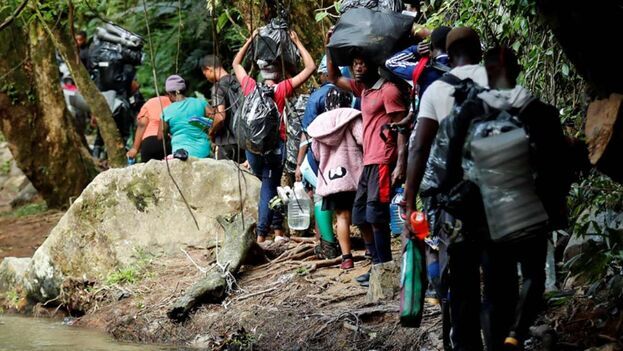

More Migrants Have Now Crossed the Panamanian Darién Than in All of 2021

In 2021, the governments of Colombia and Panama imposed a quota of 500 migrants a day on who can pass through the Darién jungle. (EFE)

14ymedio biggerEFE/14ymedio, Panama, 24 September 2022 — A total of 134,178 migrants in transit to North America have arrived in Panama this year after crossing the Darién, the dangerous border jungle with Colombia, above the historic figure of 133,726 in 2021, the Government reported on Friday.

“Panama is strengthening its humanitarian and security teams that work in the border communities, because this Friday, the number  of migrants who entered the country after crossing the thick Darién jungle reached the figure of 134,178,” reported the Ministry of Public Security (MINSEG).

MINISEG added that to date, 343 boys and 231 girls have been registered in the communities of Bajo Chiquito or Canaan Membrillo and in reception stations, where they are provided with health care, food and housing in response to human rights agreements.”

The Ombudsman’s Office reported that “the number of travelers is equal to that at the end of 2021,” and  announced a meeting, this Friday, of its head, Eduardo Leblanc, and his Colombian colleague, Carlos Camargo, to continue looking for ways that guarantee “the safe passage” of this population. Leblanc stressed that Panama “is the only country that collects statistics or biometric figures for the number of migrants.” continue reading

While last year the vast majority of irregular migrants were Haitians, in 2022 it’s Venezuelans who cross the most — 80,000 so far this year according to the National Migration Service (SENAFRONT), all bound for North America, especially the United States.

Migrants who leave the Island also use the dangerous jungle as a way to get to the United States, a crossing where several Cubans have already died. A boy under the age of 14 died in November 2021 of a heart attack on the crossing, and his family spent seven days in the jungle.

The Darién jungle is considered one of the most dangerous migratory routes in the world, both because of its own wild environment and the presence of armed groups. Migrants report that they suffer attacks and sexual assaults by criminals, some of whom have already been arrested and convicted in Panama, according to the authorities.

This newspaper has received the testimony of several migrants who were victims of rape during their crossing through the Darién but refused to make their cases public or to file corresponding complaints with the Panamanian authorities. Last year, a 45-year-old Cuban woman told Doctors Without Borders how she, along with a group of women, was raped in front of everyone as she passed through the jungle.

Panama welcomes irregular travelers in migratory reception stations (ERMs) located on its border with Colombia (south) and Costa Rica (north), where they take their biometric data and receive food and medical care, in the only operation in the region that consumes millions of dollars per year, according to the Government.

According to data provided to EFE this Friday by SENAFRONT, so far this year at least 26 migrants have died while crossing the Darién, a 266-kilometer stretch of thick, dangerous and inhospitable jungle.

One of those cases is the murder, this week, of a six-year-old Venezuelan minor, when armed men assaulted a group of migrants in the jungle.

Those allegedly responsible for the death of the child and for a gunshot wound to his father’s cheekbone, also a national of Venezuela, would be Venezuelans, Colombians and Panamanians, according to the testimony of the survivor, said the director of SENAFRONT, Oriel Ortega, on Friday.

“We’re going to capture these people (…) we condemn this vile and cowardly act. How is it possible that, on top of robbing these defenseless human beings, they attack them using firearms?” asked the head of the agency in charge of border security in an interview with the local TVN network.

Ortega explained that the members of this “criminal” group offer help to migrants to cross the jungle and then commit their “villainy.” But most of those who died this year in the jungle drowned. Among the victims are many nationals of countries in Asia and Africa who are not familiar with flowing rivers such as those of the Darién, Ortega explained.

There are times when we find bones or corpses already in an advanced state of decomposition and buried along the route. They are marked with geo-referenced GPS systems,” he added.

Last July, the International Organization for Migration (IOM) and the UN Refugee Agency (UNHCR) warned that 192 migrants had died so far this year during their transit through Central America and Mexico.

Translated by Regina Anavy

____________

COLLABORATE WITH OUR WORKThe 14ymedio team is committed to practicing serious journalism that reflects Cuba’s reality in all its depth. Thank you for joining us on this long journey. We invite you to continue supporting us by becoming a member of 14ymedio now. Together we can continue transforming journalism in Cuba.
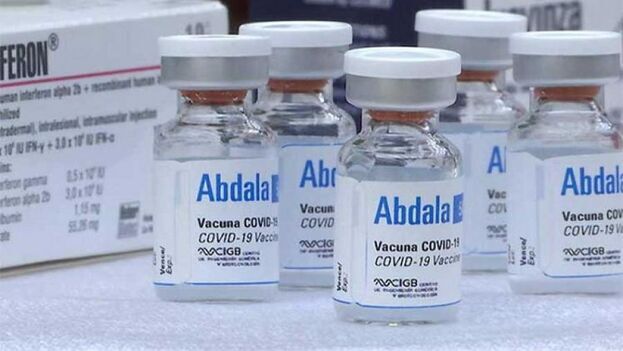
Cuba Receives a Loan to Produce 200 Million Vaccines Against COVID

The Cuban government proclaims, without the endorsement of the WHO, that Abdala has an effectiveness of 92.28% against the coronavirus. (CIGB)

14ymedio bigger14ymedio, Havana, 24 September 2022 — The United Nations Development Program (UNDP) will grant a loan of 46.7 million euros ($45.25 million) for the purchase of protective equipment and the production of 200 million coronavirus vaccines in Cuba.

This agency will channel a credit granted by the Central American Bank for Economic Integration (BCIE), the main financier of the governments of Nicaragua and El Salvador, to strengthen the infrastructure of the Cuban industry in the development of injectable antibiotics, parenteral solutions (serums), generic drugs and biosimilars, UNDP reported in a statement on Thursday.

This loan is expected to achieve the production of 200 million vaccine doses, as well as to increase the economic productivity of the national biopharmaceutical industry with the development of “innovative medicines and the modernization of technology.”

“This operation, in particular, will contribute to facing the health crisis through the development of vaccines that will reduce the risk of people becoming infected with the COVID-19 virus and will also contribute to the economic reactivation of the country,” said Dante Mossi, president of the BCIE, last January, when the bank approved the financing. continue reading

Part of the money will be used for the purchase of diagnostic medical equipment, health supplies and protective materials used by professionals in the treatment of people infected with coronavirus and other communicable diseases.

The BCIE, created to finance Central American integration in 1960, accepted Cuba as an “extraregional partner” and became the first multilateral organization in the area to incorporate the Island into its members after the triumph of the 1959 Revolution. The institution has not detailed the terms of the operation, but its credits are usually granted on “soft” terms, with interest rates of 3-4%.

The new resources come at a time when BioCubaFarma is in financial trouble because it hasn’t been able to collect most of the $200 million in profits allegedly obtained from the sale of the Soberana and Abdala vaccines, confirmed Eduardo Martínez Díaz, president of the pharmaceutical business group, on September 14.

In 2021, the state-owned company spent half of its resources on the development of drugs against COVID-19 but has not been able to recover the investment from its exports. Although it hasn’t revealed which countries bought its products, this newspaper published in 2021 that Vietnam bought five million doses and lots of Sovereign were sent to Iran, although in that case the serum was made in conjunction with Tehran. There were also shipments of one million vaccines to Venezuela last January.

Cuba also sent seven million doses of Soberana 02 and Abdala to Nicaragua in 2021, at a unit cost of seven dollars per dose, for a total of 49 million dollars, according to a document presented last June by the regime of Daniel Ortega, when it sought to access a loan of 116 million with the World Bank.

Translated by Regina Anavy

____________

COLLABORATE WITH OUR WORKThe 14ymedio team is committed to practicing serious journalism that reflects Cuba’s reality in all its depth. Thank you for joining us on this long journey. We invite you to continue supporting us by becoming a member of 14ymedio now. Together we can continue transforming journalism in Cuba.
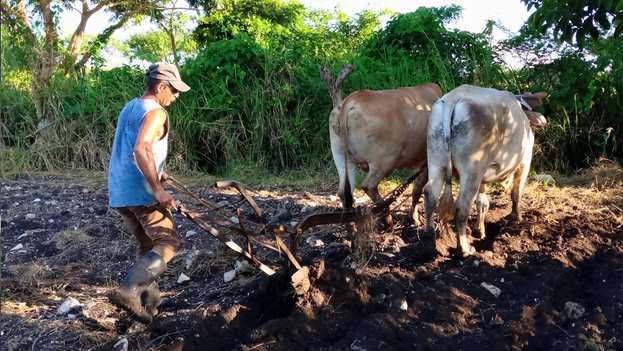
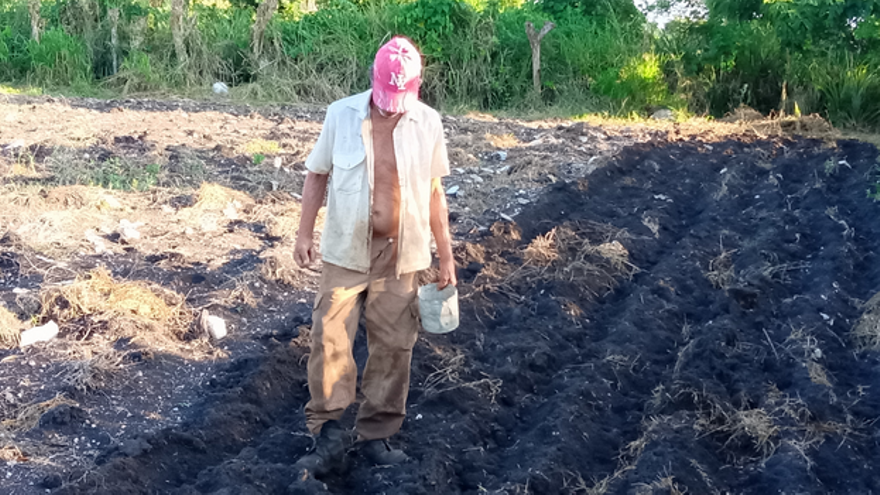
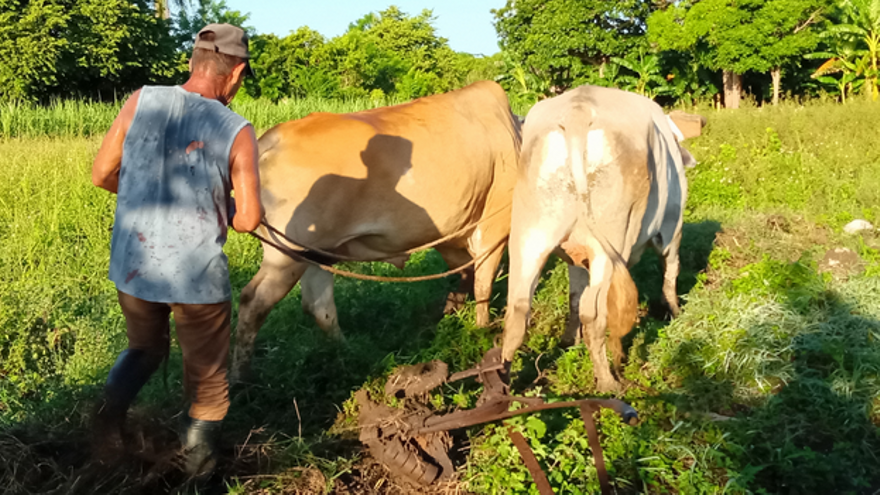
In Camajuani, the Cuban State Leaves the Majority of Farmers in Poverty

Despite the poverty and the impossibility of making profits in dollars, the Government continues to sell agricultural inputs in foreign currency. (14ymedio)

14ymedio bigger14ymedio, Yankiel Gutiérrez Faife, Camajuaní (Cuba), 24 September 2022 — Like most Cuban farmers, Ernesto gets up before dawn and has coffee. Half of his house is made of boards; the other is covered with fiber cement. He isn’t poor, but the money he earns has to be reinvested in crops.

His land, located on the outskirts of Camajuaní, Villa Clara, used to be fertile and welcoming. But it has been dry for years and doesn’t produce unless it’s fertilized with expensive fertilizers, sprayed with insecticides and weeded. “When you can’t get these resources,” the farmer tells 14ymedio, “the harvest is lost.”

Ernesto wants to grow 15 bean plants. Between the payment of the workers, the plow and the liquids, he has to spend 25,000 pesos on planting. A small fortune that took him three months to gather, in addition to getting used to remote management through Revolico, the buying and selling website where he got six liters of the herbicide glyphosate, for 1,675 pesos each.

The driver of the tractor that had planned to drag the plow charged him 6,000 pesos, plus fuel money, another 2,200. “All I have been able to achieve has been with my money, without credits or loans,” says Ernesto. “And I haven’t even been able to start planting with that.”

“What’s lucky is that I sell almost everything from what I produce,” he concludes, “and I also have something left for my house. If not, I have nothing.” continue reading

Rarely does the State pay attention to them when they complain to farm agencies, and the resources never arrive on time when bought. (14ymedio)

A few kilometers from Camajuaní, on a farm in the town of La Sabana, Armando grows mangoes and guavas that he then sells to Acopio. This State company distributes them to the Los Atrevidos canning factory, in Remedios. “The people of Acopio seemed serious,” he says, “until one day they really let me down.”

Armando planned to send six boxes of ripe mango, and they kept waiting for him all weekend. Under the heat of August, some mangoes began to rot. “I couldn’t wait any longer,” says the guajiro, who had to sell the lot to a merchant from Camajuaní, who quickly dispatched it.

“When I called Acopio to complain, they shamelessly explained to me that without fuel for the trucks they couldn’t buy the mango,” he says. “With that level of instability, how can you trust the State to do business?”

Miguel also lives and works in Camajuaní but, unlike Ernesto and Miguel, his resources are very scarce to keep his crops in good condition. Lately he doesn’t even sell what he harvests, but dedicates it to the consumption of his own family.

Old and with ailments, Miguel depends on his squalid checkbook. “It  doesn’t give me enough for insecticides,” he laments. He has tried to thrive with other alternatives: earthworm hummus, animal feces and a mixture made with tobacco wedges and rotten vegetables, “but even so the pests don’t give up.”

An attempt is made to eliminate pests with earthworm humus, animal feces and a mixture made with tobacco and rotten vegetables, but they don’t even give up. (14ymedio)

Bordering on extreme poverty, Miguel’s house doesn’t even have a bathroom, just a toilet of boards in the courtyard. Despite the poverty and the impossibility of making profits in dollars, the Government continues to sell agricultural inputs in foreign currency. Most farmers don’t have or don’t know how to apply for a freely convertible currency account. These are very new processes, modes of payment to which they aren’t accustomed and a suffocating bureaucracy that turns marketing into a nightmare.

Some of them, the wealthiest, have been able to hire laborers and equipment. Others follow the tradition of facing the countryside alone, from sunrise to sunset, and resign themselves to austerity and the departure of the children, who rarely remain in rural villages.

Ernesto, Armando and Miguel are not affiliated with any cooperative. Rarely does the State pay attention to them when they complain to farm agencies, and the resources never arrive on time. “What there is goes to State producers,” they’re told.

Díaz-Canel has a special affection for Camajuaní, and it’s not enough for him to pave the way for the well-shod mafia, omnipotent in the territory; now he also supports his “chosen” farmers. (14ymedio)

It’s not strange that these three men, accustomed to difficulties and bureaucracy, have been perplexed by a recent headline in the the Communist Party newspaper Granma, which spoke of another Camajuaní producer: “If Yusdany can, why can’t others?” said the paper, citing none other than Miguel Díaz-Canel.

The plump president, on an official visit to the town of Villa Clara, had gone to the brand-new private “slaughterhouse” of Yusdany Rojas, a 31-year-old farmer. Rojas feeds the huge amount of 800 pigs on his farm, while he sows tobacco to sell to those who remove the veins of the leaves. In addition, he grows cane and other crops on its land and has space for a “small” sausage factory.

Díaz-Canel is portrayed with the young Yusdany, fascinated by the growth of the pigs and the “self-management” of the farm, where problems don’t take their toll. “He needs land,” says Granma, so that the local bureaucracy feels pressured in the face of the dilemma: the five pieces he owns are no longer enough.

“We were used to the State giving us everything for a long time as if we were pigeons,” he says, and his words almost sound ironic, “but now they have freed our wings and what we have to do is learn to fly.”

Yusdany sells his products to tourism and State-owned companies. The bank is lavish when it comes to granting loans, and the pigs are in good health. “Very soon I will have 3,800 pigs,” Rojas promises, and no one doubts it.

Almost 4,000 pigs, 86 employees, 5 pieces of land that will soon multiply and the personal blessing of Díaz-Canel. The president has a special affection for Camajuaní, and it’s not enough for him to pave the way for the well-shod mafia, omnipotent in the territory. Now he also guarantees that “chosen” farmers, such as Rojas, will prosper and entertain them in the official media.

Ernesto, Armando and Miguel ask themselves the same question, which becomes a complaint: If Yusdany can do it, why can’t we?

Translated by Regina Anavy

____________

COLLABORATE WITH OUR WORKThe 14ymedio team is committed to practicing serious journalism that reflects Cuba’s reality in all its depth. Thank you for joining us on this long journey. We invite you to continue supporting us by becoming a member of 14ymedio now. Together we can continue transforming journalism in Cuba.
Cuba Confirms its Third Case of Monkey Pox

The third case of monkey pox is a 27-year-old woman from Cienfuegos province. (General Hospital Calixto García/Facebook)

14ymedio biggerEFE (via 14ymedio), Havana, 25 September 2022 — The Ministry of Public Health confirmed this Saturday the third case of monkey pox in Cuba in a 27-year-old woman who is hospitalized, isolated and under medical care.

The patient, a Cuban resident in the central province of Cienfuegos, has no connection with the other two cases confirmed in August, the institution reported. They were a 60-year-old Cuban resident in the United States and a 50-year-old Italian tourist, who died days after testing positive for the disease, according to the Cuban government.

Regarding this third case, health authorities indicated that it was through contact with a Cuban citizen residing in the United States who had suspicious symptoms of the disease.

He “arrived in Cuba on September 3 of this year and returned on the 13th of the same month,” they added. The diagnosed young woman started with symptoms on September 15, went to the doctor a week later, and the next day the infection was confirmed. continue reading

“The established focus control actions and epidemiological surveillance are being carried out,” said the Ministry of Health. “In relation to the contacts of the previously reported cases, they are already discharged, and there is no transmission of the disease in the focus checks,” the source added.

The World Health Organization (WHO) declared this disease — also called “simian smallpox” — a “global health emergency” on July 23, when more than 16,000 infections had been reported in 75 countries.

The disease is caused by a virus and can be transmitted from animals to humans or through direct contact with people who have the symptoms, according to specialists.

WHO reports that the symptoms include fever, headache, muscle pain, low energy, inflammation of the lymph nodes and rashes or lesions on the skin.

Patients can spread the disease to other people while they have symptoms, and the virus is transmitted through body fluids (pus or blood from skin lesions), scabs and objects used by the sick.

Translated by Regina Anavy

____________

COLLABORATE WITH OUR WORKThe 14ymedio team is committed to practicing serious journalism that reflects Cuba’s reality in all its depth. Thank you for joining us on this long journey. We invite you to continue supporting us by becoming a member of 14ymedio now. Together we can continue transforming journalism in Cuba.
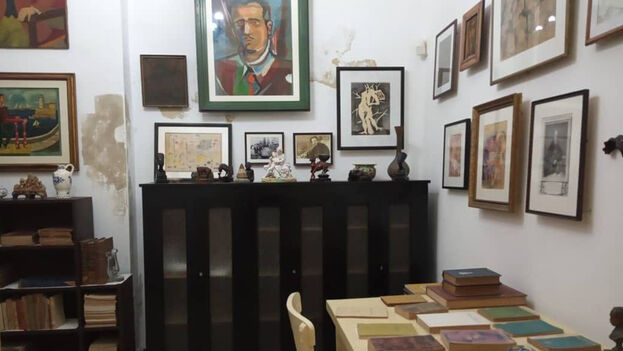
Cuba: The Last Place for Home

Image of the interior of the José Lezama Lima House Museum, located at 160-162 Trocadero Street, in Central Havana. (José Lezama House Museum)

14ymedio bigger14ymedio, Xavier Carbonell, Salamanca, 25 September 2022 — Although we are wandering creatures, we are always looking for a home. For no one is a house enough; we must affirm our domain with small ornaments, paintings, touches, ashtrays, scratches on the wall, even breaks. That’s why hotels — no matter how luxurious they are — have something sterile and prostibulary  that expel us to welcome the next one.

The trip exists to get home, no matter if it’s real or imaginary. The young people make lists and draw maps, and symbolically anticipate that coming home through small talismans: a lamp, a portrait, a book to which they cling. If these objects represent anything, it is loyalty to ourselves, the confidence that there will be a future and it will be — even in poverty — warm and welcoming.

Nothing is frivolous inside a house; everything has its meaning. Cuban mothers — for whom all junk is a treasure — were enraged when, carelessly, we broke a plate. Or if the cat we raised with care and civility knocked down a vase with its tail.

The secret space between the wall and the door was the favorite hiding place of childhood, as was the interior of the closets, where the jackets and ties of the old people made us sneeze. On the hallway boards, my brother and I marked our height with pencil: our whole life is contained in those lines of graphite, year by year, inch by inch, until we stop growing. continue reading

Inside the home there are free spaces and forbidden regions. The first time I opened a drawer, I did it with fear. The wardrobe, formidable, threatening, had three doors. I took hold of the handle and looked, on tiptoe, at the contents of the drawer.

There is no way to list what I saw — what we all saw at some point — because already the memory, treacherous as it is, populated it with false artifacts, invented by me. However, the only thing I clearly distinguish is a pair of gold-mounted mirrors, which belonged to a deceased relative.

Even now I remember the effect they caused on me, when I put them in front of my face: vertigo, dizziness, the terror of looking with the eyes of the deceased. From then on I was more suspicious of drawers.

“The dead should die with their things,” García Márquez wrote with disgust. Nothing worse than looting the memory of those who left. One feels — and rightly so — that he is disrupting the portion of existence that it took others a lifetime to accumulate. However, it’s natural that books, statuettes and lead soldiers don’t hinder the flow of the lives to come. We have to make room for them.

Sentimentality leads me to make only one exception: libraries.

Every reader of Lezama has embarked on the pilgrimage to the house at Trocadero 162, in Havana. There, library and home are one thing. The forgetfulness of the bureaucrats has been good for the place. They haven’t removed the figures that he had on his shelves and that acquire so much meaning in his work. Their gravity remains in the pictures and seats, and it could not be destroyed even by the cyclone that flooded the house a few years ago.

His friends, who still live and remember him, return to that time and to that library. Dislocating the showcases and disrupting the order of the specimens would mean, in a way, burning a fragment of their legacy.

Libraries, therefore, have to survive us.

The last station in the home, the one we have left when we have left or are far away, is the void. It was the master of Trocadero himself, heir to the Chinese dragons and the Japanese sages, who taught us how to taste it. The word is tokonoma, the empty creator of the house, a refuge made of nothing and silence where we can enter and rest.

The emptiness is the “unsurpassed company, the conversation in a corner of Alexandria,” which “surrounds our whole body with a silence full of lights.” There is nothing abstract about this. In fact, it is the only real thing when — in the cold and waiting for the train at the station — we look for the lukewarm interior of our pockets. In the background, intact as a ghost, is the promise of home.

Translated by Regina Anavy

____________

COLLABORATE WITH OUR WORKThe 14ymedio team is committed to practicing serious journalism that reflects Cuba’s reality in all its depth. Thank you for joining us on this long journey. We invite you to continue supporting us by becoming a member of 14ymedio now. Together we can continue transforming journalism in Cuba.
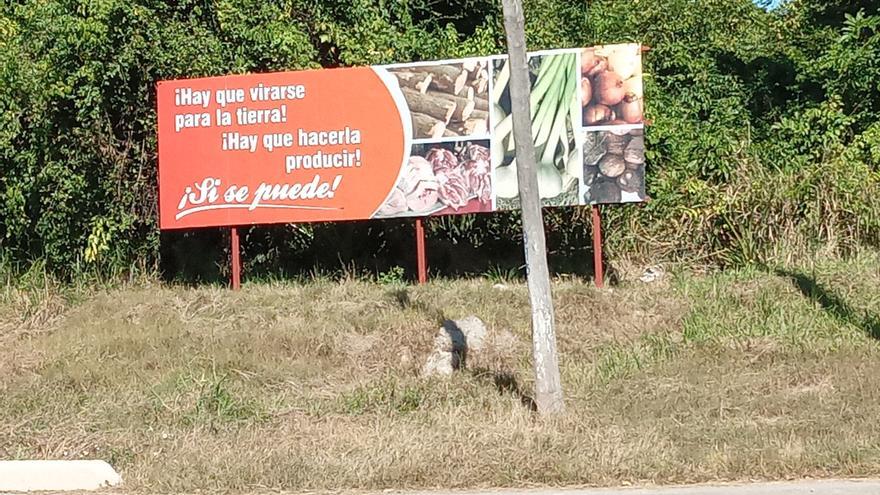
Cubans Are More Concerned About Hurricane Ian Than About Voting in the Referendum

Cuba holds a referendum on September 25 to approve the new Family Code. (14ymedio)

14ymedio bigger14ymedio, Juan Diego Rodríguez and Herodes Díaz, Havana/Santiago de Cuba, 25 September 2022 — In the early hours of this Sunday morning there was a notably small turnout in the voting centers for the referendum on the Family Code, and the majority of the voters were elderly, according to 14ymedio reporters in Havana and Santiago de Cuba.

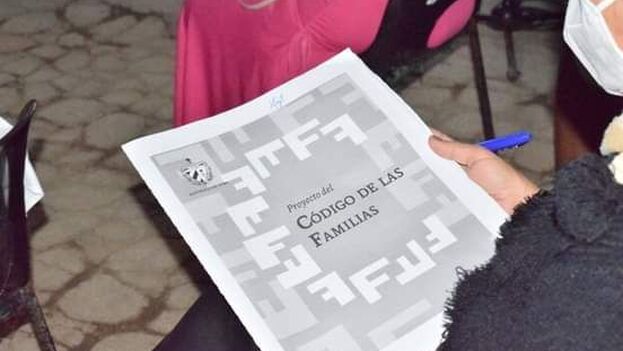
About eight and a half million Cubans have been called to participate in this referendum, the third that is being held under the current political system. The referendum will approve or reject a text that in recent months has generated intense controversy about equal marriage, adoption by homosexual couples and surrogacy.

According to the National Electoral Council (CEN), at 11:40 in the morning, almost five hours after the opening of the polls, 37.03% of registered voters had gone to vote.

Voters are divided among more than 24,000 polling stations, which will be open from 7:00 am to 4:00 pm on this day, a Sunday of uncertainty with the advance of Tropical Storm Ian that is expected to reach the status of hurricane in the coming hours and to hit western Cuba.

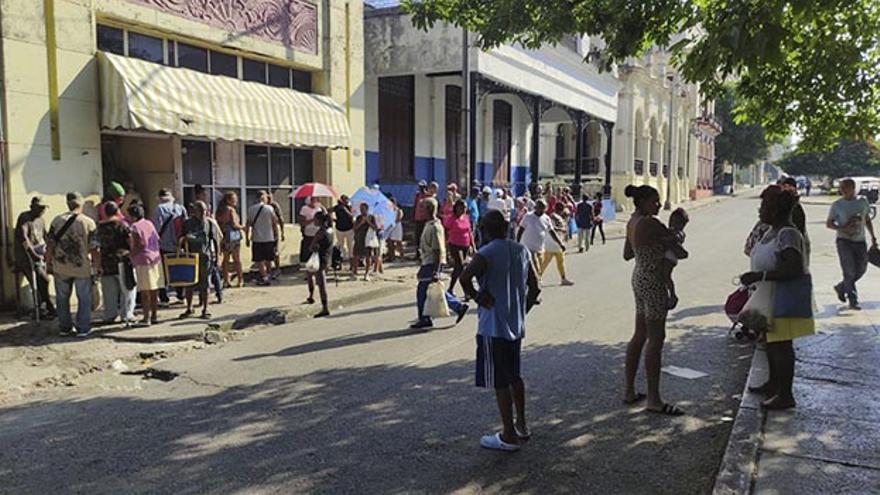
The proximity of the storm has launched Cubans into the streets in search of canned food, bread, cookies, candles and other products that will allow them to handle confinement in their homes when the winds and rains become stronger. However, shortages have worsened in recent hours, causing longer lines in front of bakeries and markets. continue reading

“It’s very early Sunday and on the eve of a hurricane, said the official in charge of reviewing the voters’ identity cards, trying to justify the low turnout. Voters were picking up their ballots at a school polling place in the neighborhood of Cayo Hueso in Havana. A few meters away, a line to buy bread summoned more people than the referendum for the Family Code.

“I came early so I could leave,” said Missy, a 28-year-old who cast her vote in a school in the Pueblo Nuevo neighborhood. “My daughter is in elementary school and for a few days she was called on to take care of the polls. She didn’t want to come, but the teacher told her that even if it was two hours, she had to fulfill that commitment.”

“It was early and she came back done in. She told me that very few people had gone to vote so far and that the snack they gave to the students who guard the ballot boxes is terrible: a cold roll with bad picadillo and a bag of hot Coral soda,” the mother complains.

At Missy’s same school, her mother and grandmother voted. “Even if they don’t believe me, they marked the yes and I marked the no,” the young woman explains. “Because they are immersed in Party militancy, but although I’m a lesbian and the issue of equal marriage suits me, I prefer to wait to have other rights first.”

Nearby, in Los Sitios, Dalmar and Julito have been placing the multicolored flag that identifies the LGBT+ community on their balcony for days. This Sunday they went to vote early and both marked yes. “We want to get married as soon as possible and appeal to solidarity motherhood to be able to have a child together,” they tell this newspaper. “We have struggled a lot to get here, and although it’s not an ideal situation, our rights cannot continue to be postponed.”

“Between the dead and those who have emigrated, we have 54 people on the registry who aren’t going to come to vote,” one of the organizers of a school in Cerro, near Ayestarán Avenue, explained loudly, through the telephone line. “When we’re done, we’ll know how many people are no longer in Cuba,” he said.

The exodus of recent months, the largest that the Island has suffered in its entire history, estimated to be close to 200,000 people, has taken away part of the electorally active population. So emigration also marks an election where the expectation of leaving the country soon has made many desist from approaching the polls.

“Why should I go, if I plan to leave this country?” explained a 19-year-old boy this Sunday morning on an improvised basketball court located in an open field in Nuevo Vedado. “Let those who stay decide. When I take the plane, I will no longer have to be governed by any of these laws; I will already have those of the country wherever I go.”

Along with him, other young people of similar ages repeat a similar speech. “I already have everything to leave for Nicaragua, so it’s like I’m not here,” adds another of the players, who from early morning preferred scoring a basket to dropping a ballot in a box.

“I haven’t seen young people,” emphasizes Manuel, a man from Havana who went to vote early and marked the no box. “When I entered school, it was around nine in the morning and there was only one old man. Then I took a tour of other schools in my neighborhood and only saw other elderly people.”

The presence in the early hours of voters over 60 years old may be due not only to the fact that among young people sleeping on Sunday morning is a more widespread habit, but also that the militants of the Communist Party and active members of organizations such as the Committee for the Defense of the Revolution are mostly people who exceed five or six decades of life.

One person who did arrive with the first light of Sunday and was surrounded by cameras and microphones at his polling place in the municipality of Playa was Miguel Díaz-Canel. The ruler took advantage of the moment to qualify the enthusiasm he had shown in previous days: “The expectation is not that it will be a unanimous vote, but I do believe that it will be a majority on the part of our people.”

According to the official press, Díaz-Canel assured that “against the Code there is a whole platform that starts from the demonization and discrediting of the Cuban Revolution,” and described the call for a referendum as courageous “in the conditions that the country is going through: shortages, blackouts, scarcity, with an important part of the economy paralyzed.”

Even Díaz-Canel didn’t rule out that there could be a “protest vote” and explained that, “in such complex issues where there is a diversity of opinion and in the midst of a difficult situation there can even be people who vote in order to protest.”

The official press also showed the former Cuban ruler Raúl Castro in the moment of voting, although his presence in the official campaign to promote the yes vote for the Family Code was very scarce.

Translated by Regina Anavy

____________

COLLABORATE WITH OUR WORKThe 14ymedio team is committed to practicing serious journalism that reflects Cuba’s reality in all its depth. Thank you for joining us on this long journey. We invite you to continue supporting us by becoming a member of 14ymedio now. Together we can continue transforming journalism in Cuba.
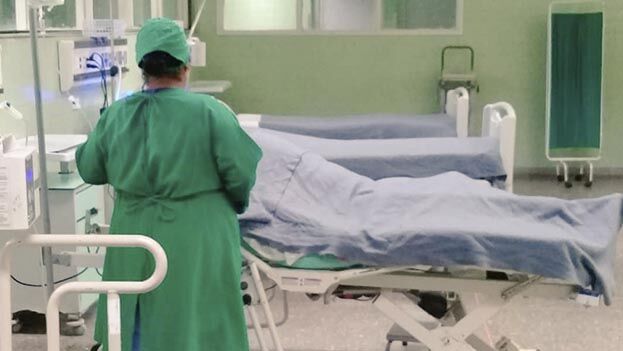
Cuba: Are You Voting on the Family Code?

The Cuban Government is facing the closest vote in its history. (Granma)

14ymedio bigger14ymedio, Havana, 22 September 2022 — The Cuban government has called on the population to vote yes in the referendum on the Family Code held this Sunday. Far from the monolithic opinion that has been imposed in the official discourse — and maybe in private — voting is like a Russian doll for those who are outside the institutional fold. Pluralism, rich in nuances and diverse, is immersed in the middle of debate. Going to vote or not? And, in that case, yes or no?

The Spanish politician and professor of Constitutional Law, Diego López Garrido, warned years ago of the risks involved in some referendums: “People, many times, don’t respond to the issue in question, but to who makes it or how they do it,” he commented on the relevance of this type of voting. The expert agreed with the opinion of many political scientists who point out the dangers of minorities being unprotected by a referendum. “The issues that concern individual rights or rights that affect a minority are legislated, but they are never decided with a popular consultation,” he said.

Some Cubans agree with this, such as the journalist Reinaldo Escobar, from this newspaper. “Rights, no matter how long they have been violated, should not be submitted to a referendum. Neither the abolition of slavery nor the vote for women nor the use of public services without racial discrimination, to give just three examples, have had to wait for to be approved at the polls.” continue reading

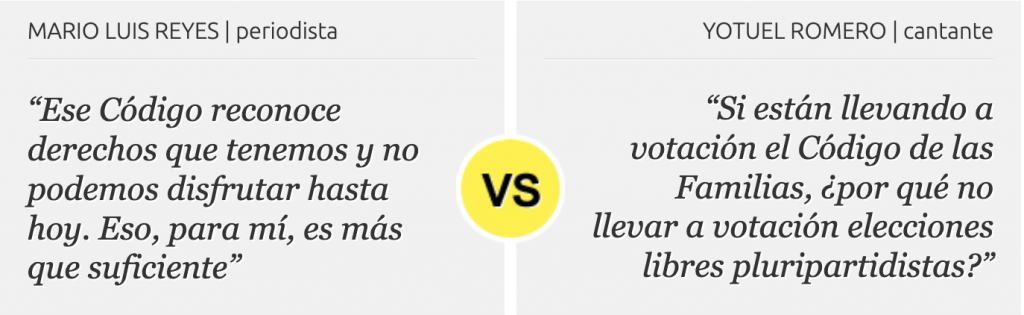
“This Code recognizes rights that we Cubans have and cannot enjoy until today. That, for me, is more than enough.” / “If they’re putting the Family Code to the vote, why not take multiparty free elections to the vote?”

In a similar sense, although more clearly in favor of abstention, the Cuban artist and co-author of the popular song Patria y Vida, Yotuel Romero expressed himself on Tuesday. “If you can’t elect your president, how can you expose your children to a Family Code chosen by someone you didn’t vote for? If they’re putting the Family Code to the vote, why not take multiparty free elections to the vote?” he said on his social networks.

The DemoAmlat organization, which has promoted the vote of the diaspora — deprived of this right despite having Cuban citizenship in perpetuity — through an electronic voting platform, doesn’t hesitate to describe the operation of a referendum on the Family Code as “pinkwashing, after decades of repression and forced labor as a state policy against the LGBTIQ+ community.”

“If the project means an extension of rights, and there is no provision that obliges a totalitarian regime like Cuba to consult with citizens, why submit it to a referendum?” asks this institution.

The playwright Yunior García Aguilera has also unequivocally expressed his opinion against submitting an issue like this to consultation while everything else is imposed from the leadership of the Communist Party. “The embarrassing thing here is having to submit common sense to a referendum, after we were impaled by the worst Penal Code on the continent, without consulting anyone.” However, he also points out that rejecting the dictatorship doesn’t mean “putting anyone’s rights on hold.”

Among those who consider that voting and doing it in a positive way is the least of all evils in this context is the independent journalist Mario Luis Reyes. “This Code recognizes rights that we Cubans have and cannot enjoy until today. That, for me, is more than enough,” he admits with sadness, adding: “I understand that the rejection of the dictatorship causes many people, out of pure reaction, to want to vote no so that the regime suffers a symbolic ’defeat,’ but if the ’no’ wins, the most defeated ones will be ourselves.”

Also from activism, Manuel de la Cruz, a member of the San Isidro Movement and a former political prisoner, promotes the positive vote and asks those who think differently that abstaining or rejecting the Family Code will not bring any democratic improvement. “To the people who will vote no so that their children aren’t taken away, come up with a strategy that includes more than that, because under the old code, they will also be able to take children away,” he says.

Few surprises exist in the religious sphere, where the opening of marriage, gender self-determination or surrogate wombs are enough to raise hives. The clergy has demonstrated in all countries of the world in which similar rules have been approved and have raised their voices with all the means at their disposal, managing to mobilize many from the temples. Although their room for maneuver in Cuba is more limited, they have not had any problems circulating their clear commitment to voting, but in a negative direction. “We see with disappointment that these and other proposals that were notoriously questioned by society are still intact in the Code that is now presented for a referendum,” the Cuban bishops said in an institutional statement.

Far from the voices of the Government or the communicators and intellectuals with greater capacity to raise their message, popular opinion is more divided than ever. People aren’t afraid to express the meaning of their vote, even if it’s not the one promoted by the ruling party, and the Government could see its strategy of closing ranks endangered.

The content of the Family Code is prolific and extensive. It addresses some of the topics that have generated the most controversy, from the issues of equal marriage and adoption by people of the same sex, “solidarity management” or parental authority, to other less commented ones that entail guaranteed and important improvements: the end of child marriage, care of the elderly, care of children, the right to an economic regime for both parties in marriage and the fight against domestic violence.

In these last issues, very diverse organizations from the Church to YoSíTeCreo in Cuba agree that it’s already late for the assumption of rights that are more than consolidated in many parts of the planet, and that they can be derailed because they’re included in the same legal corpus as other issues that generate a notable dissent, in addition to punishing the regime by a predictably high abstention as a method of protest.

Four days from the referendum, the Government is facing the first election that it may lose but, as some analysts point out, even that has been guaranteed “life insurance.” Suffice it to say that  reactionary, conservative and counterrevolutionary ideas will win. Even if that means admitting that the Government’s power has decreased.

Translated by Regina Anavy

____________

COLLABORATE WITH OUR WORKThe 14ymedio team is committed to practicing serious journalism that reflects Cuba’s reality in all its depth. Thank you for joining us on this long journey. We invite you to continue supporting us by becoming a member of 14ymedio now. Together we can continue transforming journalism in Cuba.
Cuba: In Deteriorating Health, Instructor Pedro Albert Sánchez is Transferred to a Hospital

Physics instructor Pedro Albert Sánchez during a broadcast on social media. (Facebook/Captura)

14ymedio bigger14ymedio, Havana, 20 September 2022–Physics instructor Pedro Albert Sánchez was transferred from Valle Grande prison to a hospital, after a week on a hunger strike, according to information provided to 14ymedio by opponent Manuel Cuesta Morúa. Although it is unknown to which hospital he was taken, another prisoner in that jail confirmed that the academic’s health had deteriorated greatly in the last few days.

Albert Sánchez has been imprisoned since November 3, 2021 and, last July, the Attorney General sought a five year prison term but his trial has not yet taken place. The instructor was arrested after announcing a march “for freedom of thought, of expression and peaceful demonstration.”

During the most recent family visit Sánchez received in prison, on September 13th, he refused to receive the food they took him. “I have no way of expressing the frustration and powerlessness I feel right now,” the instructor’s son, Pedro Antonio Albert who lives abroad, stated in a video he shared on Facebook at that time.

“My father’s situation is truly worrisome and I fear for his life,” wrote Pedro Antonio on social media, to accompany his statement. “A physics and mathematics instructor who has taught thousands of students in Havana and Pinar del Río,” that is how the young man described his father and added that the academic is suffering from cancer and ulcerative colitis. continue reading

“His only crime has been freely expressing what he thinks,” stated Pedro Antonio. “My dad is going to die, he has been on a hunger strike for two days. My brother and I are worried because we know that when our father makes a decision no one can intervene and make him change his mind.”

“I don’t want the worst to happen, but I know that it can,” said the young man. and on Tuesday the family’s greatest fears are becoming reality with Albert Sánchez’s transfer to the hospital due to his deteriorating physical condition.

The instructor, heir to a long tradition of marchers, among them emblematic personalities such as Andarín Carvajal, a Cuban athlete who participated in the marathon at the Saint Louis Olympics in 1904, sought to revive citizen freedom on the Island with his initiative of walking through part of Havana.

However, just the announcement of that walk in solidarity with the Civic March of November 15, 2021 was enough to arrest and later transfer him to Valle Grande prison.

“Let him go, because my father is not a criminal. He is a professional, with dignity, which is what you all lack,” the young man stated while addressing agents of the Cuban political police. “That man has more dignity than all of you.”

Translated by: Silvia Suárez

____________

COLLABORATE WITH OUR WORKThe 14ymedio team is committed to practicing serious journalism that reflects Cuba’s reality in all its depth. Thank you for joining us on this long journey. We invite you to continue supporting us by becoming a member of 14ymedio now. Together we can continue transforming journalism in Cuba.
Santa Spiritus Sausages Factory Leaves Grocery Stores Without Meat

Sausages from the Sancti Spiritus plant are being made with 50% ground chicken and beef, and 50% starchy fillers and water. (Captura/Centrovision

14ymedio bigger14ymedio, Mercedes García, Havana, 23 September 2022 — “Everything coming out of the slaughterhouse is being swallowed up by the sausage factory,” says a resident of Kilo 12, a Sancti Spiritus neighborhood named for the province’s meat producer. He reports that, for several days, meat has been increasingly hard to find. Not even the black market, where it is worth its weight in gold, has been spared the debacle.

“They used to set aside the pork loins and the cuts of beef, and you could buy those. But that was then. It seems sausages are more profitable than raw meat,” he says. The state-owned company’s sausages are produced with a particular customer base in mind, one that pays better: tourist hotels and the network of hard currency stores.

The man claims that a plant employee he knows, who works in quality control, told him a large container of imported pork entered the country two weeks ago. Half the shipment was sent to the plant, which has since greatly increased production.

Opened in 2019 after a six-million-dollar investment, the Sancti Spíritus sausage factory is the only one of its kind in Cuba. The company’s directors boasted of these figures on the local television station, Centrovision. During Wednesday’s broadcast, however, workers admitted that all production is focused on meeting the demands of the tourism industry and filling the shelves of hard-currency stores. continue reading

What Cubans get, if anything, comes from the company’s “parallel production line,” which supplies its mass market “product leader.” It also produces ground meat, hamburgers and chorizo. According to the employee, anything that is left over is made available to retail and dining establishments.

The factory has the capacity to produce six tons of cured meats but is currently operating on a half-day schedule due to a shortage of spare parts. One official, whose name Centrovision did not reveal, stated that the parts needed to return the plant to full capacity are available on the island and that the “only” issue to be resolved is the meat supply.

Another unnamed official stated that they had been making sausages with pork but, due to shortages, have had to use alternatives. “They’ve been made with ground chicken and beef. The formula is 50% these kind of meats, 50% water and starchy fillers” she says.

“I’ve bought them. They’re not bad. They’re better than they were six months ago when they were making them with horse meat,” added the Kilo 12 resident. “It’s too bad they’re so expensive. They’re meatier.”

In 2021 Cuban pork production fell 53.5%, to 132.90 tons, compared to the previous year. It was part of a trend that also saw beef fall 13.5%. Similarly, lamb fell 32.5% and poultry 20.8% according to the National Office of Statistics and Information.

____________

COLLABORATE WITH OUR WORKThe 14ymedio team is committed to practicing serious journalism that reflects Cuba’s reality in all its depth. Thank you for joining us on this long journey. We invite you to continue supporting us by becoming a member of 14ymedio now. Together we can continue transforming journalism in Cuba.
Little Enthusiasm and Expensive Food at an Official ‘March’ in Support of the Family Code in Havana

Schoolchildren concentrated in La Piragua, in Havana, for the official concert in favor of the yes on the Family Code referendum. (14ymedio)

14ymedio bigger14ymedio, Juan Diego Rodríguez, Havana, 23 September 2022 — In its desperate struggle for the yes to win in the referendum on the Family Code this Sunday, the Cuban Government has mobilized not only workplaces but also schools.

Barely thirty kids, from nearby schools, arrived this Friday at the corner of G and Malecón, in El Vedado, Havana, where a march was called for 3 pm that would be enlivened, as they pompously announced, with “dancing and congas.”

Dragging their feet, accompanied by teachers who walked with the same reluctant step, they received a cap and fans, all made of cardboard, with the colors of the rainbow and the slogan “Code Yes” from the hands of officials stationed in front of a car of the Union of Young Communists (UJC).

Some of them, after receiving these, didn’t hesitate to flee the place. “We’re going to stop by — there’s a camera — so they know we were there,” a teacher told a group of teenagers while they deserted the activity before it even started. continue reading

Another group followed in the footsteps of a UJC official who harangued them with a whistle, to walk to the next point of call, La Piragua. This esplanade, located on the Malecón at the heights of the National Hotel, has recently moved to the Anti-imperialist Tribune, in front of the United States Embassy and a few feet from there, as the center of propaganda events organized by the Communist Party of Cuba.

Barely thirty kids, from nearby schools, arrived this Friday at the corner of G and Malecón, in El Vedado. (14ymedio)

In the evening, a concert will take place, the official press explained. Los Van Van, Haila María Mompié, Arnaldo and his Talisman, the La Colmenita Children’s Theater Company and actors of the Teleseries Calendario will participate.

Around 3:30, La Piragua was observed guarded by a huge police operation, with parked patrols and agents stationed on every corner. Immediately several buses arrived with more students, all dressed in their uniforms.

“We’re going to stop by — there’s a camera — so they know we were there,” a teacher told a group of teenagers while they deserted the activity. (14ymedio)

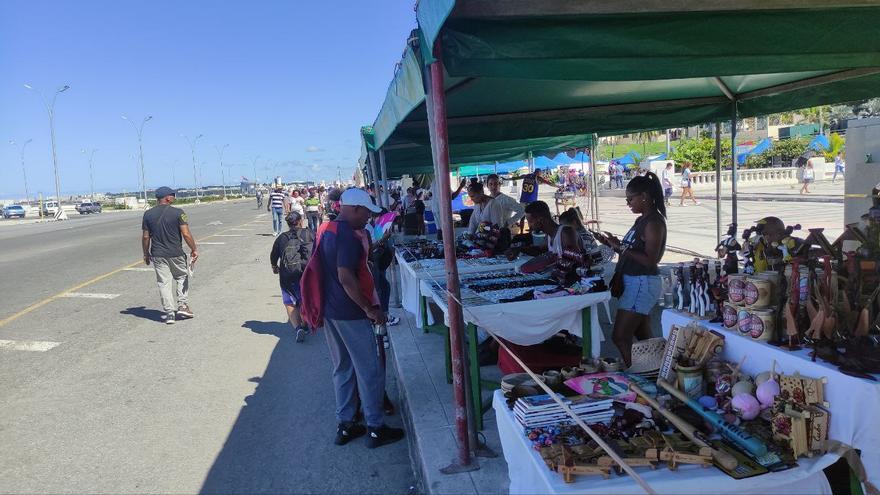
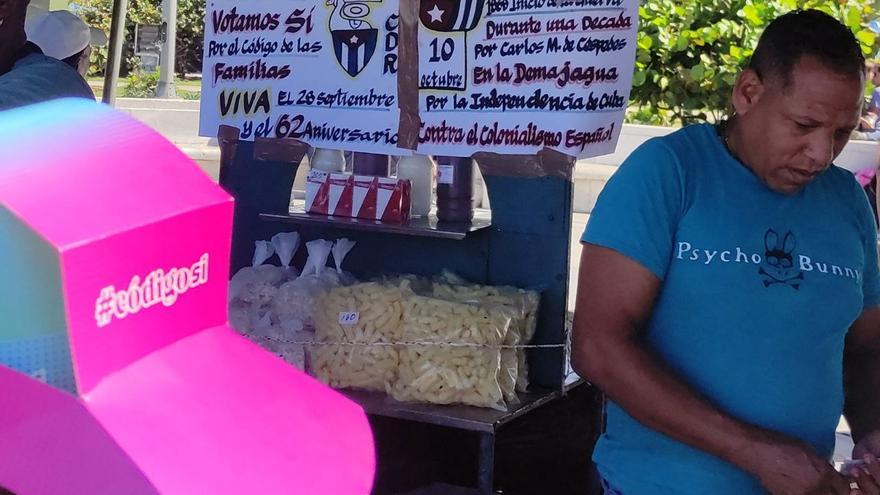
As part of the event, the authorities established stalls for the sale of handicrafts and food. The prices were high: for example, bread with pork, at 250 pesos, and bread with ham, at 200. To drink, they offered Coca-Cola and Mahou brand beer, something striking if one of the propaganda posters that “decorated” the stalls is taken into account: “Against Spanish Colonialism.”

“In no way is this a voluntary event. It’s a forced concentration of students where they are taking advantage to sell food, drinks and handicrafts at unpayable prices,” lamented a passerby who stopped for a moment hoping to buy something to eat.

As part of the event, the authorities established stalls for the sale of handicrafts and food. (14ymedio)

Around 4:30, many among the crowd of young people began to scurry away, little by little, under a harsh sun and in the face of the impossibility of spending so much on a drink.

The schools in the capital have been wallpapered with posters containing the slogan “Code Yes,” and students have already been warned of the obligation to “take care of the ballot boxes” [i.e. observe the voting in person] on Sunday, “for at least four hours,” according to a high school student from Nuevo Vedado.

To drink, they offered Coca-Cola and Mahou brand beer, something striking if you take into account one of the propaganda posters that “decorated” the stalls reads: “against Spanish colonialism.” (14ymedio)Translated by Regina Anavy

____________

COLLABORATE WITH OUR WORKThe 14ymedio team is committed to practicing serious journalism that reflects Cuba’s reality in all its depth. Thank you for joining us on this long journey. We invite you to continue supporting us by becoming a member of 14ymedio now. Together we can continue transforming journalism in Cuba.
Cuba: The Sand Generation

He shares the surveillance of the cars with a friend who takes care of his position so that, from time to time, he runs a race to take a client to his house. (14ymedio)

14ymedio bigger14ymedio, Yoani Sánchez, Generation Y, Havana, 24 September 2022 — As I adjust my helmet, he tells me that he is 29 years old and has an ulcer. I get on the back of the motorcycle and we head down Calle Reina heading to Carlos III. The Belascoaín traffic light forces us to a stop, where he tells me that he was born in the middle of the Special Period and that he is part of what he has called “the sand generation.” “We were the children who grew up without milk and without toys,” he adds, just as the green light gives way to the wide avenue.

He has tried almost everything to survive: “I worked as a waiter in a state cafeteria; I was a house-to-house distributor for the weekly packet; I got a job at a gas station but I didn’t last long there; I let myself be carried away by the dream of working in the Mariel Special Development Zone but that quickly deflated; I was a coachman in Old Havana; and finally I ended up in El Trigal Market.” We are already arriving at Zapata Street and a close trust – as if we had known each other all our lives – marks our conversation.

“But I can’t leave this country because I have my mother and my grandmother here, I know that if I ‘go out to see the volcanoes’ I will never see them again.”

“At first the idea of ​​El Trigal was good,” he confesses. “I bought bananas from the farmer for 80 centavos in pesos and sold them to the customers, who were mostly paladares [private restaurants] and cafeterias, for 1.50.” But El Trigal market, a prototype of what could be extended throughout the island to eliminate obstacles to agricultural trade, ended up collapsing. “One day we arrived and we were no longer allowed to buy directly, we had to go through the state company Acopio, which then offered the bananas at 2.50 CUP [Cuban pesos] and there was no business for us to sell them.”

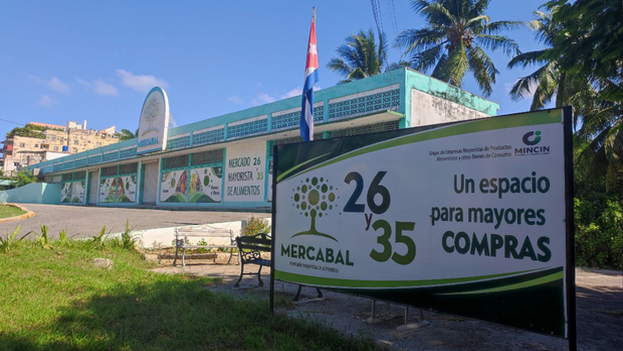
The tower of the Plaza de la Revolución is on the left as we cross part of La Timba. “I had to leave there and I started driving an electric tricycle to offer my services to the self-employed who went to buy at the Mercabal on 26th Street, but that was dying little by little and now it is closed and without anything to sell… Nor do I have the health to continue in that job, which involved carrying a lot of weight and I have a herniated disc and hip problems.”

“I started driving an electric tricycle to offer my services to the self-employed who went to buy at the Mercabal on 26th Street.” (14ymedio)

Now, he makes a living parking cars outside a Havana store. He shares the work of keeping an eye on the cars with a friend who steps in for him, so that, from time to time, he can speed off to take a customer home. “It doesn’t pay much but at least I have a job, most of my friends are at home with their arms crossed because they can’t find anything.”

We can already see Tulipán street, without traffic at that time of the afternoon, and the young man comments: “It’s just that, as I told you, we are made of sand, we are disarming ourselves.” We turn and he continues: “But I can’t leave this country because I have my mother and grandmother here, I know that if I ‘leave to go look at the volcanoes’ I will never see them again.” The train station, with its empty rails and platforms, is the scene of his harshest comment: “I don’t want to have children here, but I can’t emigrate either, so it seems that my family ends with me.”

In front of my concrete block he says goodbye. I get off the bike and hand him back his helmet. I see him go away and out of sight as if the breeze from my street had finished disseminating the grains of sand that he had still managed to retain inside his shirt.
____________

COLLABORATE WITH OUR WORKThe 14ymedio team is committed to practicing serious journalism that reflects Cuba’s reality in all its depth. Thank you for joining us on this long journey. We invite you to continue supporting us by becoming a member of 14ymedio now. Together we can continue transforming journalism in Cuba.
‘Godfathers’ Jump the Lines at the Currency Exchanges in Cuba

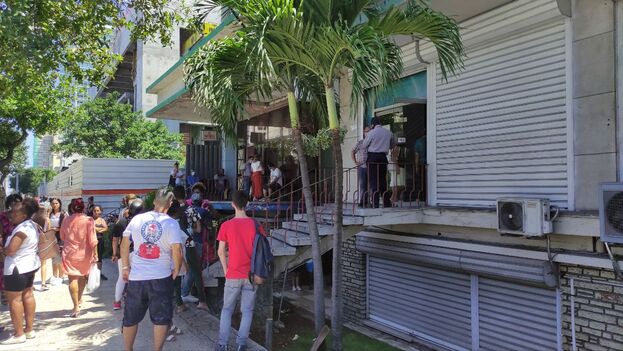
The workers at the Cadeca (currency exchange) on 23rd Street — and at any exchange office in Cuba — have their own business of influence, with family, friends and even coleros [people others pay to stand in line for them]. (14ymedio)
14ymedio bigger14ymedio, Juan Diego Rodríguez /Juan Izquierdo, Havana, 22 September 2022 — “No one cheats on me,” a man grumbles in front of the Cadeca [currency exchange] on 23rd Street in Havana, this Tuesday. “I’m not a fool.” His face is swollen and red; he is sweating and drags a crutch with difficulty. Next to him, a  sympathetic mulatto in a T-shirt and with a golden tooth nods. “He walked in front of me and went in;  it was that simple,” shouts the man. Several people in the line predict a heart attack if he doesn’t calm down.

Beyond, at the door, a lady demands explanations from the policeman who guards the exchange house: “It’s not the first time this has happened today,” she says. The officer looks at her reluctantly, as if he doesn’t understand, and sends the complaint to the “organizer” of the Cadeca line, who calls the customers according to a list.

Everyone witnessed how an individual arrived at the establishment, advanced, distracted, up the stairs and approached the door, beckoning through the glass. The door opened, and the man managed to slip between the policeman and the organizer, who didn’t say a word.

The eyes of the clients followed the event in detail, but they were silent until the subject entered the Cadeca. First it was a buzz of comments; then someone rebuked the organizer of the line, and finally the man on the crutch exploded, left his place and began to scream. continue reading

In the face of the screams and fingers pointing at him, the policeman remained calm.

“That one had a ’godfather’ inside the Cadeca,” someone theorizes. Sponsorship consists of having a contact within the establishment, a friend or relative who overcomes obstacles and facilitates access to the first place in line.

The customers can withstand the sun, heat and hunger, but never that someone “unrecognized” approaches and, mysteriously, penetrates the building without waiting: it’s intolerable.

The workers at the Cadeca on 23rd — those at any exchange house in Cuba — have their business of influence. The “chosen” are family or friends, and also coleros who accept a payment to guarantee another person a privileged place.

Those who don’t have a “godfather” must submit to the murky system of “lists,” drawn up illegally after the previous night, which pretends to be a spontaneous form of organization in the face of institutional corruption. The lists include solitary buyers, but also the “gangs” of customers, groups of five or ten people who intend to assault the Cadeca.

However, spending the night in the vicinity of an establishment is considered, by the police, a violation. So they’re authorized to fine or arrest the overnight coleros. But it’s a risk that dollar buyers are willing to take, because without the few bills that the Government agrees to sell, it’s impossible to live decently.

So the man with the crutch calms down, goes up to the policeman and calmly says: “Officer, if you want, arrest me, but tonight I’m going to sleep here, to see who is going to take the first place in line away from me tomorrow.”

Translated by Regina Anavy

____________

COLLABORATE WITH OUR WORKThe 14ymedio team is committed to practicing serious journalism that reflects Cuba’s reality in all its depth. Thank you for joining us on this long journey. We invite you to continue supporting us by becoming a member of 14ymedio now. Together we can continue transforming journalism in Cuba.

Twenty-Eight Cuban Rafters Rescued by the U.S. Coast Guard Are Transferred to the Bahamas

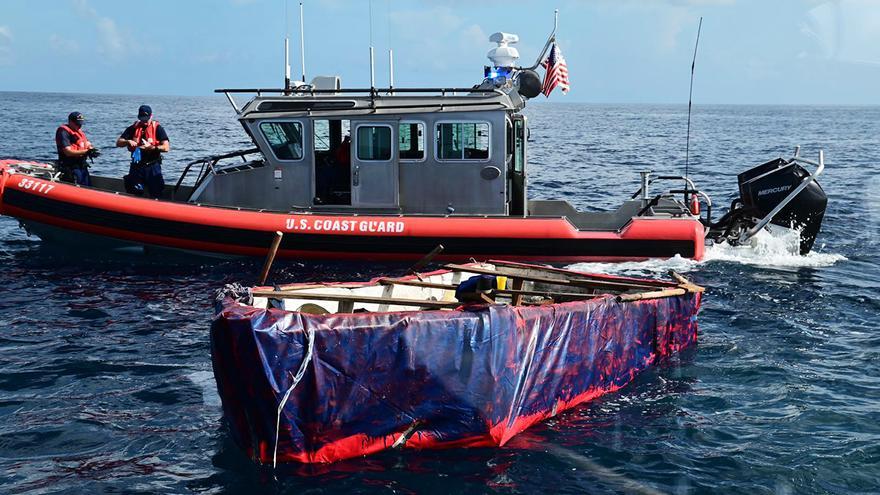
The U.S. Coast Guard rescued 31 people at the request of the Bahamas. (Twitter/@USCGSoutheast)

14ymedio bigger14ymedio, Havana, 21 September 2022 — On Tuesday, the U.S. Coast Guard, at the request of the Bahamas authorities, rescued 31 people who were adrift on the high seas. Among them were 28 Cubans, three Chinese, one Jamaican and one Dominican. The migrants were picked up by the ship Robert Yered and handed over to the Royal Bahamas Defense Force (RBDF), according to the U.S. Coast Guard on its Twitter account.

The 28 Cubans ’rescued’ on Tuesday are in addition to the six who, on September 6, were arrested and handed over to the RBDF, after the boat in which they were transported to Florida was intercepted by the U.S. Coast Guard.

The trafficking of migrants by sea has increased in the last month. On Monday, it was reported that Didier Pérez Pérez, Lester Leyniel Soca Díaz and Yoandy Alonso face six charges for transferring Cuban rafters to Florida, kidnapping them in a house in Hialeah, and extorting their relatives, of Cuban origin and residents of Florida, for the sum of $15,000. If found guilty, they will be sentenced to 10 years in prison and will be forced to pay fines of $250,000. continue reading

The U.S. Coast Guard announced on Wednesday that from October 2021 to date, 6,032 rafters have been intercepted and arrested. In addition, 50 more Cubans were repatriated, on board the Pablo Valent, who were added to the 68 who returned last Tuesday on the Paul Clark.

The Cuban exodus has been considered a real “migration catastrophe” by the Cuban virologist based in Brazil, Amílcar Pérez-Riverol. The number of rafters intercepted in their attempt to reach the United States, the scientist says, “exceeds the total of the previous five years.” In 2017, they arrested 1,468; in 2018 there were 259; in 2019, 313; in 2020, 49; and in 2021, 838, according to official figures.

The data are even more alarming if we consider that during this fiscal year 180,000 Cubans have entered the United States by land. And no record takes into account those who have emigrated to Europe and Latin America, which according to Pérez-Riverol’s calculations are equivalent to “1.6% of the population and 2.5% of the entire workforce.”

The flight of Cubans by sea has not diminished despite Hurricane Fiona, which continues its trajectory through the Caribbean islands and the Atlantic Ocean. On Monday, the Florida Border Patrol rescued and “put into custody six rafters that were stranded” in Gaius Marquesas. The head of this police force, Walter Slosar, warned of the dangers of going to sea in a “homemade boat in hurricane season.”

For her part, a Coast Guard non-commissioned officer, Nicole Groll, said in a statement issued on Tuesday that “migration on rustic and improvised boats without safety equipment, such as a life jacket, is dangerous,” and stressed to the rafters that “risking their lives in this way causes their loved ones unnecessary anxiety for not knowing if they are saved or lost at sea.”

Translated by Regina Anavy

____________

COLLABORATE WITH OUR WORKThe 14ymedio team is committed to practicing serious journalism that reflects Cuba’s reality in all its depth. Thank you for joining us on this long journey. We invite you to continue supporting us by becoming a member of 14ymedio now. Together we can continue transforming journalism in Cuba.
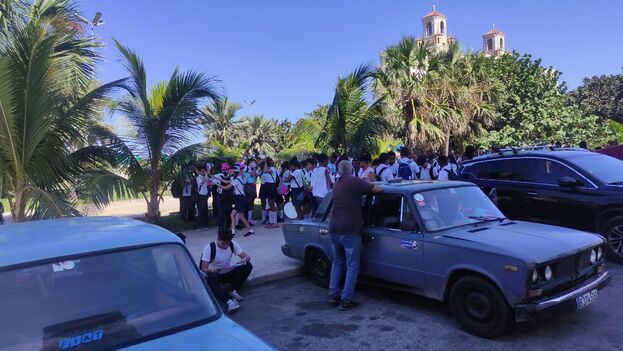
Another General of Cuba’s ‘Historic Generation’, Antonio Enrique Lussón Batlle, Dies at the Age of 92

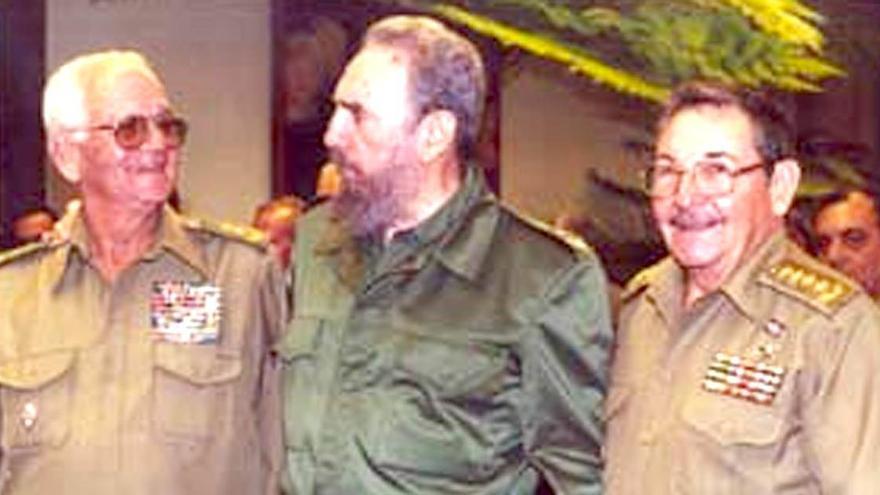
Lussón Batlle (left) was on the II Frank País García Eastern Front and the Abel Santamaría Front and held the rank of commander. (Granma)

14ymedio bigger14ymedio, Havana, 22 September 2022 — Major General Antonio Enrique Lussón Batlle died this Wednesday in Havana at the age of 92, according to a note published by the Revolutionary Armed Forces (FAR) and released by the official press.

His body will be cremated and his ashes displayed this Friday from 9 a.m. to 12 p.m. in the Veterans’ Pantheon of the Columbus necropolis. Subsequently, they will be transferred to the Mausoleum of the Second Eastern Front, in Santiago de Cuba, where he was originally from.

Lussón Batlle has been profusely praised by the official press, which highlights that since joining the Castro Army in 1957, he showed “daring and courage in every action and was promoted to the rank of captain and appointed chief of the platoon.” At that time, he was part of the José Tey, René Ramos Latour Column 9, but a year later went to the II Frank País Garía Eastern Front and in a few months to Abel Santamaría, already with the rank of commander. According to the official newspaper Granma, the promotion was due to his “outstanding participation in the fighting, discipline, spirit of sacrifice and courage.” continue reading

His military successes during the Revolution earned him a privileged position, and he was responsible for bringing the so-called Caravan of Victory to Havana.

Lussón Batlle was second head of the Managua military camp, head of the Operations section of the Western Army, head of the Directorate of Operations of the General Staff, head of the Independent Corps of the West, and second head of the Inspection Body of the FAR. He was also twice in the Angolan War, although one of his best-known missions was his performance at the head of a battalion in the Bay of Pigs invasion in 1961.

In addition, between 2000 and 2008 he was head of Special Troops of the FAR.

In the political sphere, Lussón was Minister of Transport, first vice president of the National Institute of the State Reserve, and vice president of the Council of Ministers between 2010 and 2015. In 2016, he returned to the Central Committee of the Communist Party, which he had helped form as a founding member. He also held the position of deputy in the National Assembly of People’s Power for several legislatures.

In 2001 he received the medal of Hero of the Republic of Cuba.

In the last 14 months, about twenty senior Army officers have died, almost all of them from the so-called historic generation that participated in the 1959 Revolution.

Translated by Regina Anavy

____________

COLLABORATE WITH OUR WORKThe 14ymedio team is committed to practicing serious journalism that reflects Cuba’s reality in all its depth. Thank you for joining us on this long journey. We invite you to continue supporting us by becoming a member of 14ymedio now. Together we can continue transforming journalism in Cuba.
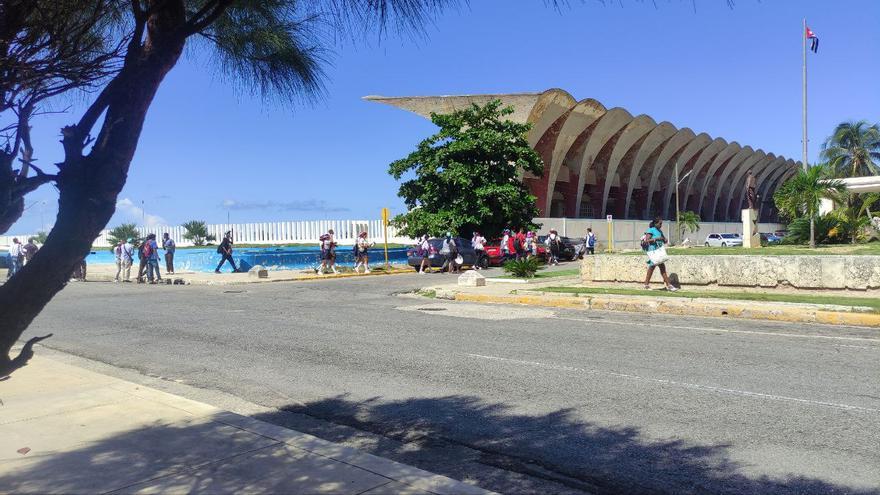
United Airlines Expects to Resume Flights to Cuba by the End of the Year

Before the COVID-19 pandemic, United Airlines had seven weekly flights to Havana from its hubs in Houston and Newark. (CC)

14ymedio bigger14ymedio, Havana, 22 September 2022 — The U.S. company United Airlines announced on Wednesday that it is working to resume its commercial flights to Cuba by the end of 2022, two and a half years after suspending them due to the pandemic.

The airline, based in Chicago, told Reuters news agency that it has been working on the reactivation of its flights to Havana for several months but is facing contract setbacks. It has requested from the United States Department of Transportation (USDOT) an extension of 30 days to finish the deadline process, set by the US regulator for October 31.

“United needs to do significant work, including the renegotiation of multiple contracts with service providers that have expired and the construction of the necessary infrastructure in Terminal 3 of the Havana airport, where United is being relocated,” it said.

Before shutting down its operations in March 2020, when countries closed their airspace due to coronavirus restrictions, United had seven weekly flights to Havana from its hubs in Houston and Newark. continue reading

The airline resumed negotiations to return to Cuba after June, when the USDOT lifted the restrictions imposed by former President Donald Trump on commercial flights of American companies to small airports in Cuba outside Havana.

The USDOT agreed on Monday to expand U.S. flights by granting one to JetBlue and 13 to American Airlines, although the latter requested authorization to operate two more daily flights, one in the morning and one in the afternoon, on the route between Miami and Havana, which would have meant an increase of 14 weekly flights.

In this way, American Airlines will add 13 additional routes in December to the seven that are already flying from Miami to the Cuban capital, while JetBlue, a low-cost airline, will have four from Fort Lauderdale.

Even before the Biden Administration lifted the air restrictions, American Airlines requested permission to extend its operations to the Island and, in July, obtained authorization to fly, beginning in November, to Santa Clara, Holguín, Varadero and Santiago de Cuba.

The airline has indicated that the flights would improve “service and access between the United States and these points outside Havana, after more than two years during which such operations were suspended.”

Translated by Regina Anavy 

____________

COLLABORATE WITH OUR WORKThe 14ymedio team is committed to practicing serious journalism that reflects Cuba’s reality in all its depth. Thank you for joining us on this long journey. We invite you to continue supporting us by becoming a member of 14ymedio now. Together we can continue transforming journalism in Cuba.