
The Yes Vote and No Vote on Cuba’s New Family Code Collide on a Street In Havana

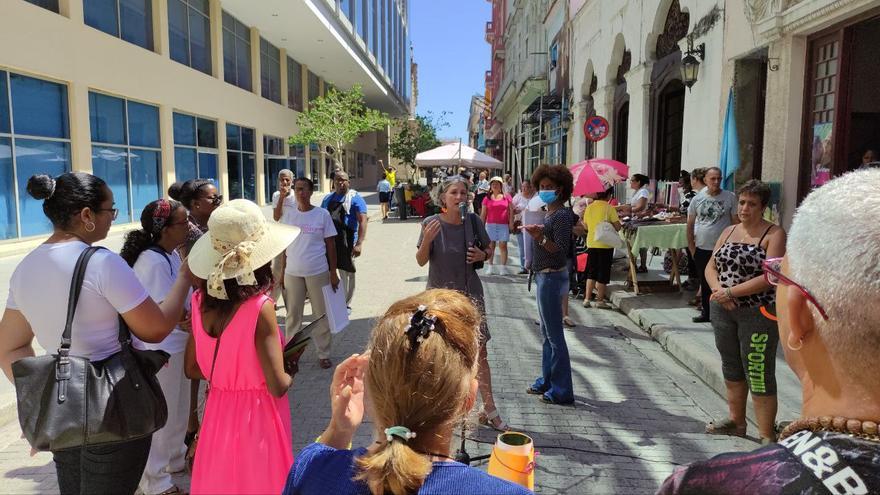
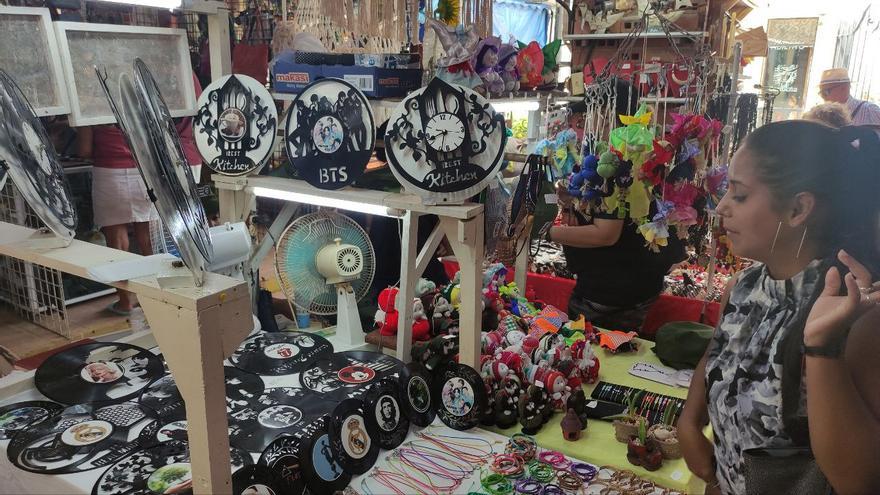
An official this Thursday on Obispo Street in Old Havana talking about the Family Code. (14ymedio)

14ymedio bigger 14ymedio, Juan Diego Rodríguez, Havana, 22 September 2022 — A scene this Thursday on Obispo Street, in Old Havana, was enough to show that the opinion of Cubans on the Family Code, whose referendum will be held next Sunday, is far from uniform.

This isn’t what the Government would like, judging by the resources it has been deploying for months to guide the population to vote yes, without giving space to any discordant voice. In addition to the complimentary notes in the official press on the new rule, the final text of which has been available in the Official Gazette since August 17, are joined, in recent days, acts of propaganda in the streets.

The one on Obispo Street, this Thursday, would have been very difficult at another time, given the obligatory stop for tourists that has always been at that point of Old Havana. This is not the case this month of September, when the volume of foreign travelers still hasn’t rebounded, and the street has only a few passers-by in the hottest hours of the day. continue reading

That’s why it caught the attention of the resident so much that, before noon, there were tables selling handicrafts — decorated with posters containing the slogan “Yes on the Code,” and some officials — wearing T-shirts with the same slogan — with a microphone placed in the middle of the street.

Before the crowd, an official began to explain different aspects of the Family Code, such as the protection it would provide to the elderly. At one point, with pedagogical concession, he asked the people around him what they thought.

“I think this is very bad,” replied an old woman to whom they gave the microphone. “Because I understand that marriage has to be between a man and a woman, not between two men and two women,” the woman said, based on her religious beliefs.

At that moment, without removing the microphone, the music that enlivened the activity through loudspeakers began to sound at full volume, in such a way that it prevented the old woman from being heard. Without being intimidated, the woman raised her voice even more: “I vote no, I vote no!”

In her favor, many of those who had spontaneously gathered to hear the official began to speak up. “This is a lack of respect,” one man protested, defending the old woman. “Don’t ask me my opinion if you’re going to call the police later, because that’s not democracy,” another woman shouted.

One of the summoned officials replied: “This is Revolution, and now it’s more important than ever to vote yes.”

Three days before the plebiscite on the Family Code, the Government hasn’t given up trying to win by all possible means. This Thursday, President Miguel Díaz-Canel will lead a special program on National Television to defend the yes vote.

For tomorrow, Friday, a march has been called in the capital, with the same slogan, “Yes on the Code,” “with the participation of Havana’s youth.” According to a message disseminated through official networks, the event will start at 3:00 pm along G and the Malecón, and there will be “dance troupes and congas.”

Esteban Lazo Hernández, president of the National Assembly of People’s Power, called on Monday to “win the battle of the popular referendum, by a landslide,” in the face of what he calls “maneuvers of the enemies, the haters” alluding to the independent opinions that contradict the official voice.

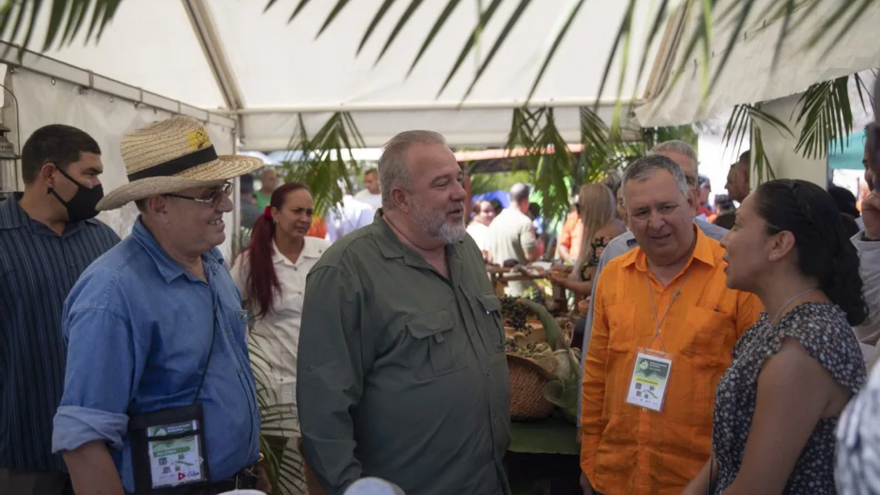
On Tuesday, it was the Prime Minister, Manuel Marrero, who asserted that the Family Code has served as ” cannon fodder” for the “enemies” of the Revolution, who have carried out a “campaign” of disinformation about the content of the rule.

At the International Nature Tourism Event in Havana, Marrero declared that those who have positioned themselves against it — who in no case have had space in the official media — haven’t spoken “of all the virtues of the code, which identifies and unites the Cuban family.”

The Cuban regime does not appear to have the support it needs for the third referendum called in 63 years, the first one it could lose.

Translated by Regina Anavy

____________

COLLABORATE WITH OUR WORKThe 14ymedio team is committed to practicing serious journalism that reflects Cuba’s reality in all its depth. Thank you for joining us on this long journey. We invite you to continue supporting us by becoming a member of 14ymedio now. Together we can continue transforming journalism in Cuba.
Biden Says It Is Not Logical to Deport Migrants to Cuba, Venezuela and Nicaragua

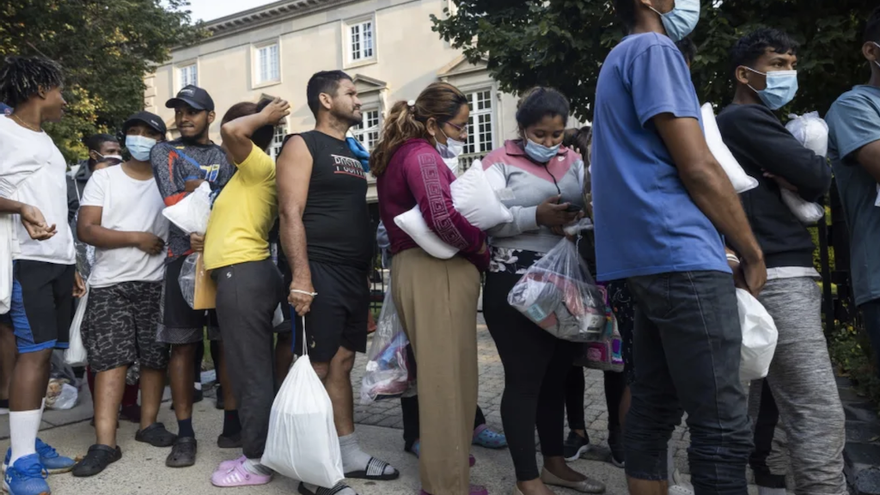
Migrants outside the residence of U.S. Vice President Kamala Harris in Washington on September 15. (EFE/Jim Lo Scalzo)

14ymedio biggerEFE (via 14ymedio) Washington, 20 September 2022 — The President of the United States, Joe Biden, said on Tuesday that “it’s not rational” to deport migrants from Venezuela, Cuba and Nicaragua, and he’s working with Mexico to stop the flow of these arrivals.

In statements to the press at the White House, Biden said that the situation at the border is “totally different” from that of the previous Donald Trump Administration (2017-2021), since “fewer  migrants are coming from Central America and Mexico.”

“Now I’m aware of Venezuela, Cuba and Nicaragua. The possibility of sending migrants back to these countries isn’t rational,” said Biden, adding: “We’re working with Mexico and other countries to see if we can stop the (migration) flow.”

Faced with rumors that Republican governors might send undocumented migrants to the state of Delaware, where Biden’s residence is located, the president limited himself to answering, in a mocking tone: “Visit Delaware, it’s beautiful state.” continue reading

Immigration has become a main topic of the November midterm election campaigns following the decision of some Republican governors to send groups of undocumented immigrants to states governed by Democrats, in protest against Biden’s immigration policy.

Since April, the governor of Texas, Republican Greg Abbott, has regularly sent buses with migrants, mostly Venezuelans, to Washington, New York and Chicago, in response to Biden’s attempt to rescind Title 42, a health policy that allowed express deportations of migrants at the border.

Last week, the governor of Florida, also Republican, Ron DeSantis, joined Abbott’s strategy by sending two planes with migrants to Martha’s Vineyard, an exclusive island in the state of Massachusetts.

Translated by Regina Anavy

____________

COLLABORATE WITH OUR WORKThe 14ymedio team is committed to practicing serious journalism that reflects Cuba’s reality in all its depth. Thank you for joining us on this long journey. We invite you to continue supporting us by becoming a member of 14ymedio now. Together we can continue transforming journalism in Cuba.

The United States Authorizes 14 More Flights to Cuba from Florida

American Airlines will have 13 more flights between Miami and Havana. (EFE)

14ymedio bigger 14ymedio, Madrid, 20 September 2022 — JetBlue has one of the 14 flights to Cuba, and American Airlines (AA) now has 13. The United States Department of Transportation, which set a limit of 20 daily round trips to Havana, has thus resolved the dispute that occurred between the two companies to make more trips.

AA had six daily flights from Miami to the Cuban capital and in December will expand to 13, while JetBlue adds one more to the three it has from Fort Lauderdale.

Since the Biden government revoked the rule of the Trump administration, which prohibited flights to Cuban cities other than the capital, AA began to request permission to expand operations, and in July obtained authorization to fly, beginning in November, to Santa Clara, Holguín, Varadero and Santiago de Cuba.

The airline said that the flights would improve “service and access between the United States and these points outside Havana, after more than two years during which such operations were suspended.” continue reading

In August, the Fort Worth-based company submitted a request to increase the route between Miami and Havana by two more daily flights, one morning and one afternoon, which meant 14 flights.

At that time, JetBlue decided to enter into dispute alleging that AA was taking a dominant position. “There is no justification in the public interest to grant additional U.S. flights as long as there is such a competitive imbalance,” argued the New York-based company, which was requesting a Saturday flight.

“Of all U.S. airlines, JetBlue has the least options to offer low-cost flights between South Florida and Havana on Saturdays, one of the most important days for travel in the Caribbean,” it added in its letter to the Department of Transportation.

American Airlines, however, argued that the additional flights “would maximize the benefits, by increasing capacity at the gateway with the increased demand for travel between the United States and Havana, while improving connectivity using American’s leading network in Miami.”

JetBlue, finally, has received what it wanted, although it benefits both airlines since they are in a merger process under the name of “Northeast Alliance,” which depends on the decision of a federal court.

Translated by Regina Anavy

____________

COLLABORATE WITH OUR WORKThe 14ymedio team is committed to practicing serious journalism that reflects Cuba’s reality in all its depth. Thank you for joining us on this long journey. We invite you to continue supporting us by becoming a member of 14ymedio now. Together we can continue transforming journalism in Cuba.
Some Private Companies in Cuban Begin Exporting without the State’s Involvement

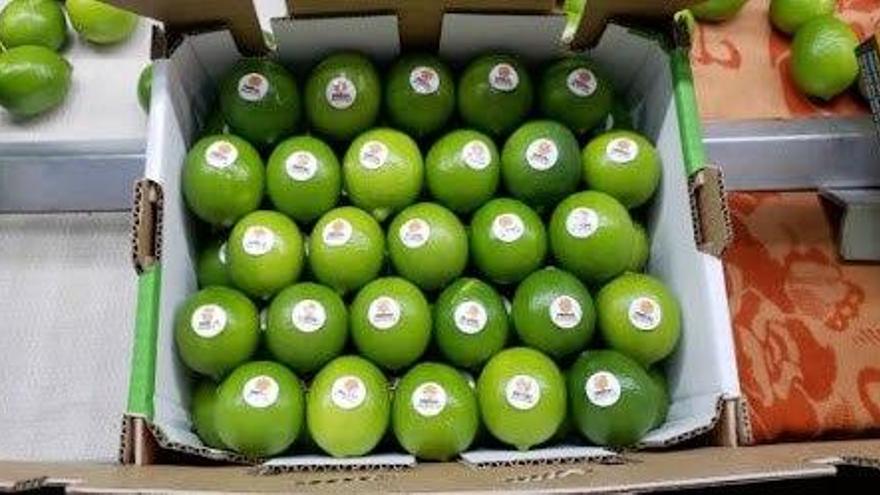
Persian limes, known locally as lemons, are one of the island’s most exported products according to officials. (Cubadebate)

14ymedio bigger14ymedio, Madrid, 21 September 2022 — Small and medium-sized companies in the technology and renewable energy sectors may now export their products and services without having to rely on the state as an intermediary. The news was buried near the end of an article published on Wednesday in the the official online daily Cubadebate. The article dealt with foreign trade involving “forms of non-state management,” a euphemism that avoids using the words “private sector”.

Authorities had already announced in August that they would allow private entities to do this “under the control of the Ministry of Foreign Trade and Investment.” That time has now come. Vivian Herrera Cid, director-general for this program, states that the technology sector was chosen because it had the “simplest operations” and the renewable energy sector because of “the country’s energy situation.”

Herrera notes that these businesses will be subject to the same controls and supervision as state-run entities. Companies which are already engaged in foreign trade do not seem to be convinced the process will work, however. One such skeptic is Bernardo Romero Gonzalez, head of the mid-sized software firm Ingenius SRL. continue reading

The Cuban businessman is trying to take advantage of this option but fears that the experience will be similar to the one with which he is already familiar. “This could work as long as the procedures are more flexible,” he tells Cubadebate. As an exporter, he has been hampered by the slowness of the system, pointing out that, though a state company can afford such delays, every week spent waiting for approvals means money lost for a small company. Imports have also faced long delays.

Though the article contains data that should come as no surprise to anyone given the country’s heavy dependence on imports, the numbers are startling. Of the 15,497 contracts private businesses have finalized with overseas companies through the state, 15,101 (97.4%) were for imports. Only 396 were for exports.

Since these businesses were converted to small-size businesses, and to a lesser extent new ones were created from scratch, 1,092 have been involved in imports and only six in exports.

In the article, Herrera blames several factors to justify the low level of foreign trade in the private sector. On one hand, she cites the pandemic, which has drained the island’s few resources and hindered the flow of exchange between countries. Then there is Russia’s war against Ukraine as well as the rise in freight costs and of products in general.

She points out that officials have tried measures intended to encourage foreign trade. These include consignment sales, the sale of imported merchandise already stored in government warehouses and the creation of small state-owned enterprises dedicated exclusively to foreign trade to supply the private sector.

In the latter example, this involved creating another government intermediary: Solintel. The company has set up an online store to sell technology as well as retail stores in several provinces that its customers can access. She therefore feels that, despite inconveniences, “inaction by some companies is not justified.”

But Romero Gonzalez refutes this, pointing out that the Cuban economy, especially foreign trade, remains burdened with bureaucratic hurdles.” The problem is in the regulations,” he says bluntly, emphasizing that it is even more confusing when it comes to online sales with no freight charges.

The businessman, who has worked with Solintel, explains that, after negotiating with the client, he contacted the company. It handed him “a sheaf of papers” required by the Ministry of Foreign Trade. “They tell you if you’ve missed a comma, or that where it says ’client’ when it should say a ’buyer.’ Things like that. We’ve spent up to three months in this process before being able sign a contract,” he complains.

Romero Gonzalez, who has thirty employees, admits that sometimes he has had to provide services without having signed a contract or received payment, putting everything at risk. “What we cannot do is tell clients, ’Wait two months for the paperwork to be completed,’ because we would lose them.”

Romero admits that he has been able to export and to be paid in hard currency but says things cannot go on as they have, especially when it involves long-term contracts.

Harrera says her ministry is aware of the complaints and is revising and modifying more than seventy regulations dealing with foreign trade. “It’s not a matter of  getting rid of permits but of simplifying the steps required by authorities, not throwing out all regulations,” she explains.

She adds that businesspeople must understand that they are not individuals making purchases on Alibaba, that international sales follow procedures that address border security, health and other concerns and involve cumbersome procedures. She insists, however, that there will be changes “so that, when direct export is authorized by small and medium-sized businesses, they can operate under the same conditions as socialist state companies.”

Among the largest number of exports are charcoal, agricultural products (lima beans, avocados, chile peppers, turmeric, bananas and pineapple), technical support services, web platforms, furniture and decorative accessories. Meanwhile, imports include food, footwear, construction materials, paint, automobile spare parts, home appliances and an endless number of other products.

Herrera also mentions the single, one-stop system that should simplify the paperwork process, which in any given instance can now take between 50 to 60 days. “This process, in which several agencies and institutions are involved, requires a lot of permits. These are necessary, however, because they are intended to protect people, plants, animals, the broadcast spectrum and national security,” she points out.

____________

COLLABORATE WITH OUR WORKThe 14ymedio team is committed to practicing serious journalism that reflects Cuba’s reality in all its depth. Thank you for joining us on this long journey. We invite you to continue supporting us by becoming a member of 14ymedio now. Together we can continue transforming journalism in Cuba.
Mexico Tries to Convince its Medical Students to Stay in Cuba with 1,500 Euros

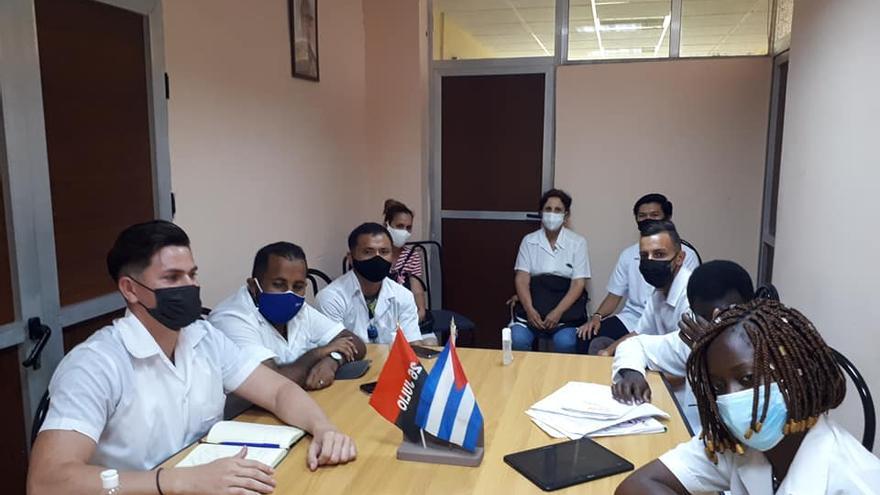
Foreign medical students during an event at the University of Medical Sciences of Ciego de Ávila. (Facebook)

14ymedio bigger14ymedio, Havana, 20 September 2022 — The National Council of Science and Technology (CONACYT) will award 1,500 euros as “additional one-time support” to Mexican medical students who accept controversial scholarships to study a specialty in Cuba.

According to the report, which doesn’t specify the number of beneficiaries, the support is to encourage “permanence in their academic programs,” given desertions and refusals to agree to study on the Island. The money will be deposited with the Banco Popular de Ahorro, which is the Cuban entity that manages these scholarships from the Mexican Government.

In the first year of the program, which began in 2020, of 1,600 spaces planned to study a specialty in Cuba, only 172 were filled. For these residents, the Government of Mexico gave $1,501,766 to Cuba. The transaction was made by CONACYT to the Comercializadora de Servicios Médicos Cubanos, S.A., the Cuban company that has been accused on countless occasions of promoting “human trafficking and forced labor.” continue reading

A graduate of medicine at the Autonomous University of Mexico, Luz Elena Rodríguez, rules out traveling to the Island to study a specialty in pulmonology. “I’m not convinced by the curriculum, and because of the experiences shared with me by some Mexican doctors who have been to Cuba, I prefer to do the specialty in Mexico.”

Rodríguez told 14ymedio that the theoretical part “is acceptable, but in practice it appears to be elementary” in hospitals. “Last year a friend applied for a scholarship abroad, but the only option was Cuba,” she says.

A group of 172 Mexican medical students arrived in Cuba two years ago to study a specialty. (Capture)

She also says that what ended up discouraging her friend were several reports that began to come out, in which “the shortage of medicines and the lack of supplies were denounced.” That isn’t frightening, she says, because “in Mexico it exists in rural areas, but why go to another country, if the conditions here seem to be much better to continue specializing?”

There is total secrecy about the second generation of scholarship students on the Island who were selected last January, which suggests that perhaps, again, the call for students is once again received tepidly.

In a March post on his social networks, the consultant for health issues, Xavier Tello, pointed out that “out of the 995 places for medical residences that CONACYT conjured up, only five were occupied.” Because of this disinterest, “doctors are now accused of being selfish and only wanting scholarships in the United Kingdom, the United States and Germany.”

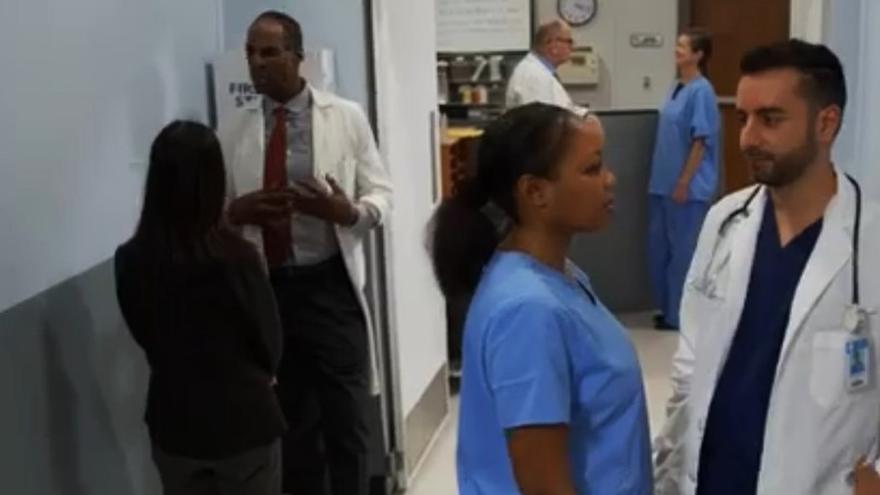
In addition to the controversial scholarship program, the Government of Mexico hired 641 Cuban doctors to serve in marginalized areas. These supposed health workers were denounced by the president of the Prisoners Defenders association, Javier Larrondo, who said that they didn’t have any specialty and that among the group were State Security agents.

Translated by Regina Anavy

____________

COLLABORATE WITH OUR WORKThe 14ymedio team is committed to practicing serious journalism that reflects Cuba’s reality in all its depth. Thank you for joining us on this long journey. We invite you to continue supporting us by becoming a member of 14ymedio now. Together we can continue transforming journalism in Cuba.
Rice and Bean Production Collapse While Hotel Rooms in Cuba Grow by 125 Percent

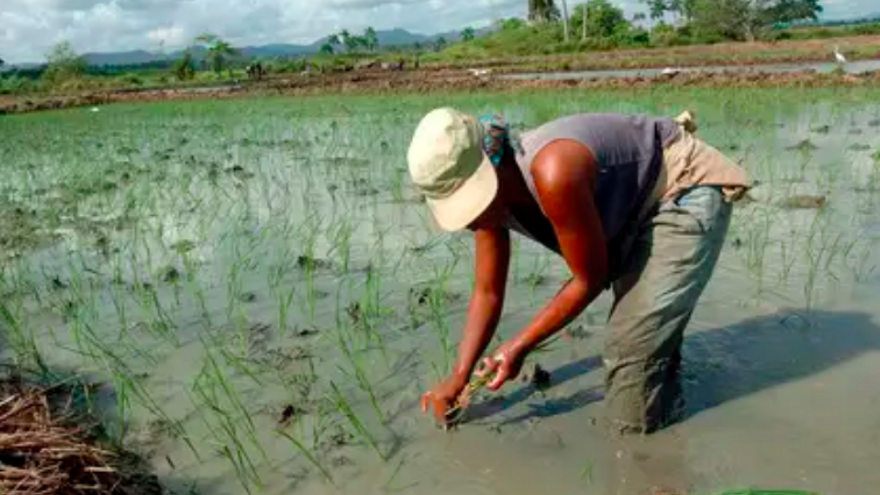
A Cuban farmer plants rice in Pinar del Río, about 75 miles west of Havana. (EFE/File)

14ymedio bigger14ymedio, Havana, 20 September 2022 — The discomfort of Cubans due to the lack of basic necessities and food in the face of the unbridled pace of construction and renovation of hotels is not just a mere perception. Official figures show that divestment in agriculture is a reality that coexists with wasted investment for tourism.

According to data published by the National Office of Statistics and Information (ONEI) last Friday, of the 31,673 million pesos invested by the Government between January and June of this year, 10,692 were dedicated to “business services, real estate and rental activities,” the heading that covers most of the investment in hotels and tourism. This accounts for a third of all state investment.

At the same time, the numbers reveal that only 830 million pesos were dedicated to agriculture, livestock and forestry, and 225 million were dedicated to fishing. continue reading

But these figures are even more astonishing in perspective, as can be seen in the graphs prepared by the Cuban economist Pedro Monreal from the history of production in the last nine years. Between 2013 and 2021, the tons of rice generated by the country fell by -66.4% while hotel rooms grew by 125%. Food also shows a strong reduction compared to tourism, although its decrease is smaller, with -5.7%.

However, rice is not the only crop in collapse: beans, another basic product of accompaniment in Cuban cuisine, also fell by -55.5% this year, compared to 2013. Vegetables also lost, with -28.8%.

“Cuba’s distorted investment priorities are reflected in disparate results: the 10.7% increase in hotel rooms in 2022 compared to 2017, when 4.6 million visitors were welcomed with far fewer rooms, coexists with a deep agricultural crisis,” Monreal points out, comparing the last five-year period.

That year was the golden moment of the tourism sector, and the Island received 4,689,898 visitors. Since then, with the tightening of the embargo, the pandemic and the poor market recovery, the data have been falling. For this year, the authorities maintain their target of 2.5 million tourists, but during the first half of the year, 682,297 travelers arrived, almost 500% more than in 2021, which is no relief, since in 2019 by this time, 2.6 million people had arrived in Cuba for vacation.

Monreal also notes that the weight of investment in “business services, real estate and rental activities” was even greater in 2020, when it took 45.6% of the total allocated. “But it’s still irrational in the context of food insecurity, with agriculture receiving only 2.6%,” he emphasizes.

Now the imbalance is even greater, since in 2020 almost 6% was invested in agriculture, with 7.7 times more investment in real estate. At present, the percentage is 13 times higher than for farming. “The overcoming of the food insecurity crisis in Cuba requires that, at a minimum, 8% of total national investment be devoted to agriculture — especially the private sector — which would be equivalent to approximately 5,000 to 6,000 million pesos per year,” says the economist.

Despite having the precise data of negligible investment dedicated to the countryside, the Government ventures to ask in public what is happening so that Cubans don’t manage to produce. This Monday, Cuban President Miguel Díaz-Canel visited Camajuaní, in Villa Clara, and went to the estate of Yusdany Rojas Pérez, belonging to the Juan Verdecia cooperative. The young man is successfully dedicated, according to the account of the presidency and the official press, “to pig breeding, the planting of crops as the main source of animal food, shade-grown tobacco and the planting of cane.”

“If he can do it, why can’t others?” the president asked. A question shamelessly copied by the official newspaper Granma to present Rojas Pérez as an example to the detriment of thousands of farmers who aren’t mentioned in daily reports.

“When I ask him about the keys to his success in the company where he works,” says the State newspaper, “he doesn’t hesitate for a moment to say: ’I’m not someone who starts crying in the face of problems; I always see the positive side of things and try to look for options to get afloat.’”

Granma, which ends up giving some advice to the farmers to increase production, considers this a success story, and “evidence (…) that despite the difficulties the country is going through, if someone works with passion and without fear of facing obstacles and problems, results can happen.” The fact that the Government invests less than a billion for the population to eat doesn’t seem to be newsworthy to the official press.

Translated by Regina Anavy

____________

COLLABORATE WITH OUR WORKThe 14ymedio team is committed to practicing serious journalism that reflects Cuba’s reality in all its depth. Thank you for joining us on this long journey. We invite you to continue supporting us by becoming a member of 14ymedio now. Together we can continue transforming journalism in Cuba.
The Risk Of Getting Sick From Dengue Fever is High in Cuba, According to the Minister of Health

The authorities admit that they have failed in the fight against dengue fever. (14ymedio)

14ymedio bigger14ymedio, Havana, 20 September 2022 — The risk of getting sick from dengue fever is high throughout the country. This comes from the Minister of Public Health, José Ángel Portal Miranda, who signed a statement released this Monday by his department to warn of the worrying situation.

“The rates of infestation caused by Aedes Aegypti, the [mosquito] transmitting agent of dengue, continue to be high in Cuba. Even though in the last five weeks there has been a decrease in the rate of transmission of the virus — with very similar figures — the risk of getting sick is high throughout the country,” says the minister, who is also a doctor, without giving any of those figures that allow a full understating of the extent of the situation.

Ten days ago, health authorities went on the State TV Roundtable television program in order to provide extensive information, they said, on the evolution of the virus, but they refused to detail once again how many cases there are currently on the Island and limited themselves to pointing out that the situation is similar to that of Latin America, which has reported an increase of 300% in the first 32 weeks of the year, and of 165% in comparison with all of 2021.

Since the number of infections in that year is not known either, it’s impossible to know the real dimension of the problem, although the number of known patients is a warning symptom. continue reading

In addition, the authorities specified that 60% of the cases are of type 3, the most serious, although the four variants of the disease currently coexist.

According to Portal Miranda, Santiago de Cuba, Havana, Guantánamo, Las Tunas, Matanzas, Mayabeque and Isla de la Juventud are the provinces with the highest incidence rates of the disease, although, once again, the rate is unknown.

The minister places the beginning of the “current cycle of focal treatment” on September 5, at which time the greatest presence of mosquitoes was detected in Santiago de Cuba, Havana, Camagüey, Holguín, Matanzas, Villa Clara and Pinar del Río, with water tanks, once again, as the main place of concentration of the Aedes Aegypti mosquito.

Portal Miranda adds that in 43.1% of the blocks in which the presence of the mosquito was detected, the problem persists, and that although the rate of growth is contained, “it’s still impossible to stop the transmission or increase in the incidence rate of suspected cases” of the disease.

The minister’s message is addressed to the population to become aware and avoid contagion or worsening in the case of getting sick. “We cannot leave that responsibility alone to the workers of the vector campaign,” says Portal Miranda.

The official reminds people of the symptoms and also insists that they don’t have to wait for bleeding to take action, because sometimes abdominal pain, vomiting, fluid accumulation, bleeding from the mucosa, irritability, drowsiness or fainting are already a warning that the disease is  entering a critical phase.”

One of the problems faced by the Ministry of Public Health in the face of the spread of dengue is the lack of diagnostic methods, which is why Portal Miranda indicates in his statement that action be taken even without the appropriate confirmation. “The first thing we should always think about in any of these symptoms is dengue, until the opposite is proven,” he said, immediately warning of the dangers of a delay.

The problems in obtaining diagnoses, medicines and good hospital care are a blow in the face of the current epidemic. Many Cubans refuse to be admitted due to the poor condition of the facilities and prefer to stay at home, potentially multiplying the chances of contagion.

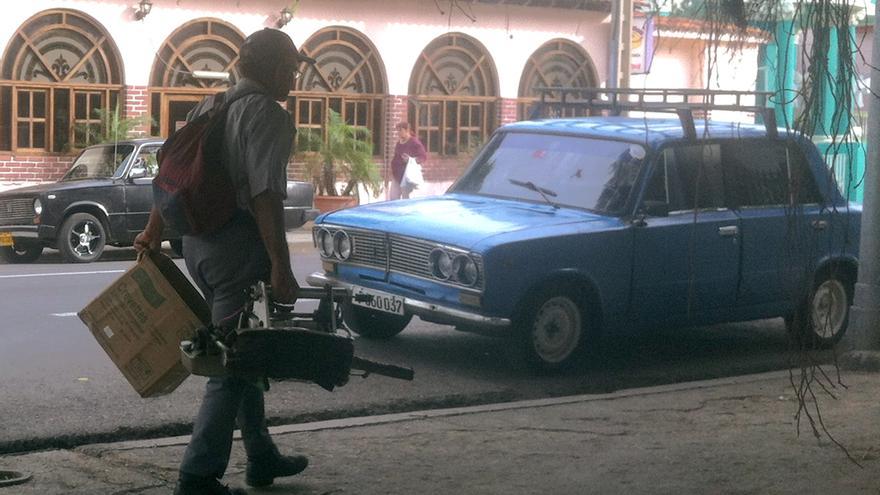
The difficulties in carrying out the campaign against dengue have been another factor that have contributed to the worsening of the situation this year. The lack of workers and, above all, material and fuel to fumigate have been the norm, to the point that the Deputy Minister of Health, Carilda Peña García, warned last week that the blame this time fell to the Government. “[The population] has worked to eliminate the foci of the vector in their homes. We know that we have responsibility for the issue and that it didn’t go as it should have,” he said, although there are many people who are reluctant to fumigate their homes.

The authorities have also acknowledged that dengue is causing deaths in Cuba, but they haven’t dared to give a figure. Just last week, two health workers died from virus.

Translated by Regina Anavy

____________

COLLABORATE WITH OUR WORKThe 14ymedio team is committed to practicing serious journalism that reflects Cuba’s reality in all its depth. Thank you for joining us on this long journey. We invite you to continue supporting us by becoming a member of 14ymedio now. Together we can continue transforming journalism in Cuba.
Three Coyotes Who Demanded $15,000 From Relatives of Cuban Rafters Are Arrested In Order To Free Them

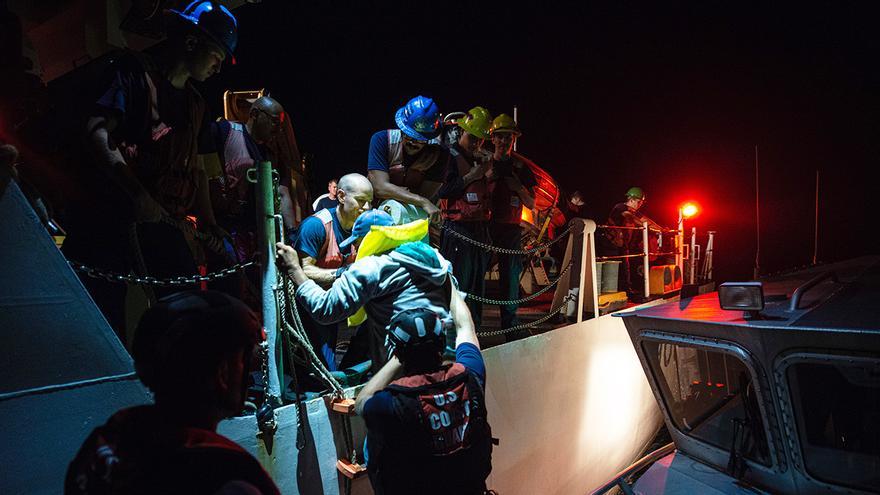
Last Tuesday, the Coast Guard intercepted a boat with Cubans who were allegedly being transferred to Florida by coyotes. (Twitter/@USCGSoutheast)

14ymedio bigger14ymedio/EFE, Havana, 19 September 2022 — Didier Pérez Pérez, Lester Leyniel Soca Díaz and Yoandy Alonso, arrested last Thursday, are accused of belonging to a human trafficking network that was transporting Cubans by sea to Monroe County, Florida (USA), where they were kept kidnapped in a house in Hialeah, until their relatives paid $15,000.

A grand jury in the Southern District of Florida has charged them with “conspiracy to transport and hold foreigners for profit; transportation of foreigners for profit; conspiracy to commit hostage-taking; and hostage-taking.”

According to details of the indictment, to which the Spanish agency EFE had access, the facts of which they are accused happened from August to the beginning of September of this year, and “other people, both known and unknown participated in them.”

The indictment also mentions the existence of two affected, identified only as victim 1 and victim 2, who were held and whom their captors threatened to “injure” or “kill.” According to information from the working group on the control of drugs against organized crime, in charge of the investigation, “migrants were even told that they would be left in the middle of the ocean if they didn’t pay their smuggling debts.” continue reading

According to the U.S. authorities, with the capture of Pérez, Soca and Alonso, the network of coyotes was dismantled and the Cubans could be rescued thanks to a “friend of one of the kidnapped, who served as a hook and agreed to pay the 15,000 dollars. They summoned him to a spot for the exchange of the hostage.”

The coyotes, who will have to stand trial, if found guilty could be sentenced to a maximum penalty of 10 years in prison and a maximum of three years of probation, as well as fines of $250,000.

The indictment provides for the confiscation of boats, vehicles and planes that may have been used to commit the crimes charged.

Properties that are acquired, directly or indirectly, from the commission of the crimes and those used to commit them will also be confiscated.

The existence of these coyote networks has been exposed in some cases. Boxer Andy Cruz saw his escape frustrated due to the denunciation made by Rolando Céspedes, The Prosecutor, a man who has been in the business of the departure of athletes for more than 10 years and has contacts in immigration in Cuba. This individual had warned the athlete that his departure should be managed with him in exchange for a large sum; since the athlete didn’t agree, he was denounced.

Last Wednesday, Víctor Manuel Ríos Castillo, 29, a resident of West Palm Beach, and Jorge Luis Fernández Rodríguez, 53, a resident of Tampa, were arrested. The first was accused of attempted smuggling of people and the second of illegally transporting fuel.

Ríos admitted that he had planned to go to Cuba to transfer migrants. Since October 2021, when the current fiscal year began, more than 177,000 Cubans have arrived by land in the U.S. and more than 5,000 by sea, a migration crisis that surpasses those of 1980 and 1994 together.

Translated by Regina Anavy

____________

COLLABORATE WITH OUR WORKThe 14ymedio team is committed to practicing serious journalism that reflects Cuba’s reality in all its depth. Thank you for joining us on this long journey. We invite you to continue supporting us by becoming a member of 14ymedio now. Together we can continue transforming journalism in Cuba.
Stones Rain Down from the Top of the Building of the Ministry of Public Health in Havana

The only signal that anyone walking on the sidewalk at that time would have to protect themselves would be the building custodian’s alert (14ymedio)

14ymedio bigger14ymedio, Juan Diego Rodríguez, Havana, 19 September 2022 — From the facade under repair of the Ministry of Public Health, in the crucial ramp on 23rd Street, in Havana, numerous stones fell this Monday. They were not large, but they were large enough that, given the height from which they fell, would have caused a head injury to any passerby.

The only signal that anyone walking on the sidewalk at that time would have to protect himself would be the alert from a building custodian: “Walk fast, walk fast, don’t let it fall on you!”

“Is this normal?” A woman who was passing by at the time blurted out. “Stones are falling into the street, there are no signs, they have not stopped traffic. One drives by in a car and the windshield gets smashed, what do you do?” continue reading

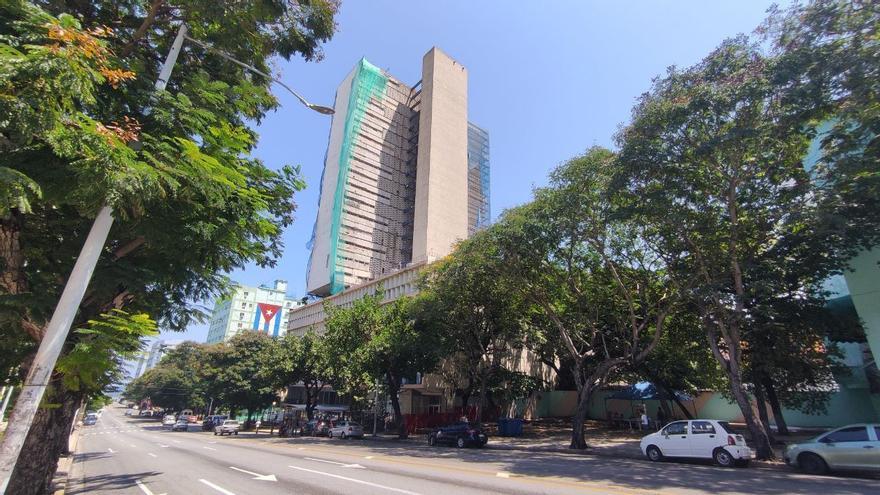
Towards the top of the Public Health Building a green mesh can be seen that barely covers part of the scaffolding placed for the works. (14ymedio)

Toward the top, a green mesh can be seen that barely covers part of the scaffolding placed for the works being done to the building. Minutes later, two workers scrambled to sweep the debris from the street.

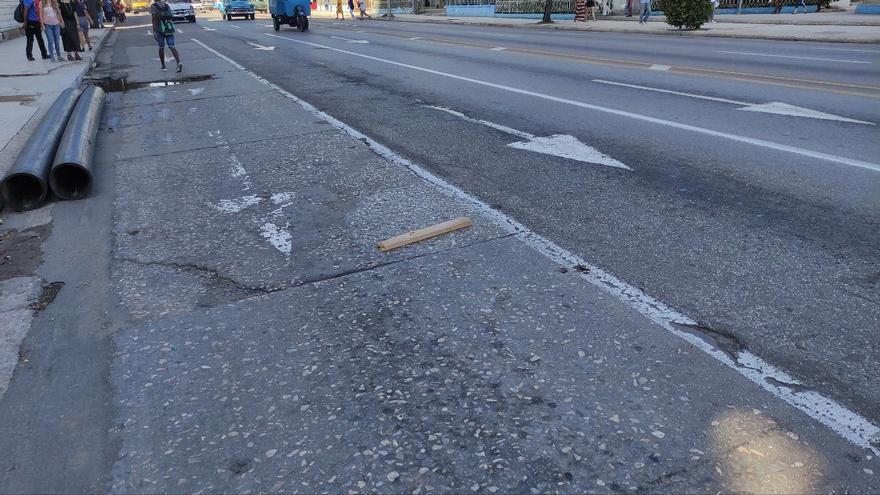
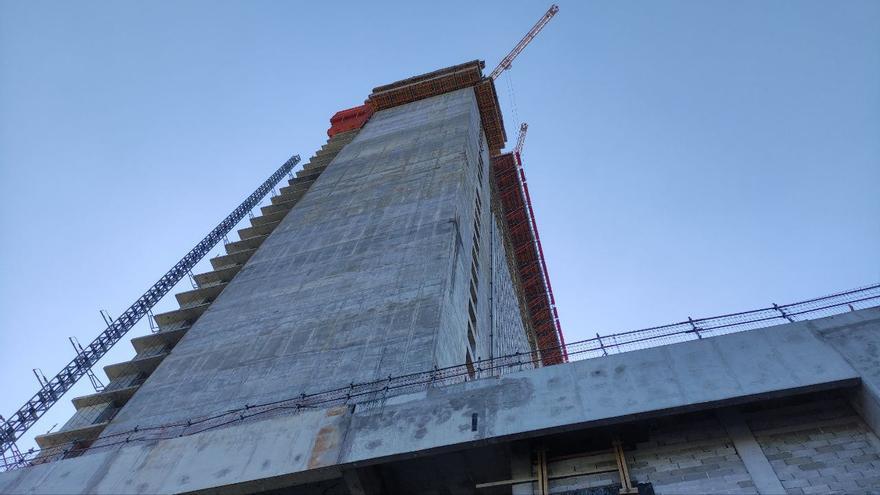
Fewer security measures can be seen in the works of the controversial tower at K and 23rd Streets, also in Havana’s Vedado district, from where a piece of wood of considerable size shot out, also this Monday.

Also on Monday, a large piece of wood of considerable size shot out from the tower at K and 23rd Streets (14ymedio)

In this case, the building does not have a protective mesh, which is something various specialists have criticized.

The board was dodged by a man in his thirties, to the shock of the rest of the passers-by. “That’s why I don’t go through here,” one of them said to the young man, who was livid. “Because anything that falls might kill anyone and nothing happens.”

The building does not have a protective mesh, something for which it has been criticized by various specialists. (14ymedio)

Translated by Norma Whiting
____________

COLLABORATE WITH OUR WORKThe 14ymedio team is committed to practicing serious journalism that reflects Cuba’s reality in all its depth. Thank you for joining us on this long journey. We invite you to continue supporting us by becoming a member of 14ymedio now. Together we can continue transforming journalism in Cuba.
No Cuban Wants a Wooden Plaque with ‘Ever Onward to Victory’ Inscribed on It

Leather sandals, decorative plates with floral motifs and small pieces of earthenware now make up most of the itmes for sale at the outdoor market in Havana’s El Quijote park. (14ymedio)

14ymedio bigger14ymedio, Havana, September 19, 2022 — Berets with the face of Ernesto “Che” Guevara are relegated to a small corner of the table while in the middle are boxes of matches, super-glue and mobile phone accessories. A few yards from the Plaza de la Catedral in Old Havana, this souvenir stand has had to reinvent itself due to the drop in tourism to Cuba.

“Most of the people buying things here now are Cubans,” admits 62-year-old Pedro Novo, who has more than twenty-years experience selling handicrafts in the historic heart of the Cuban capital. “What I’m selling now are rattles and refrigerator magnets with images of things that appeal to people here, like soccer team logos and photos of influencers.”

The items most popular with tourists are now relegated to craft fairs located in areas frequented by foreign travelers. The market on downtown 23rd Street no longer carries jewelry made from seeds or images of old Chevrolets that once drew customers from the Habana Libre hotel a few yards away. continue reading

A version of that market can be found a little further away in El Quijote park. The merchandise here, however, is geared more to locals than to foreigners — leather sandals, decorative plates with floral motifs, small earthenware gifts — though the face of the Argentine guerrilla leader, or the odd olive-green baseball cap, still pops up from time to time.

“Three years ago our biggest sellers were wooden keys, little drums, statuettes of old men in hats, and any souvenir that would appeal to tourists,” says Randy, a young artist and graduate of Havana’s San Alejandro academy who supports his family by making wood carvings for several souvenir vendors.

“After the pandemic we had to shift gears because the Cuban buyer is not looking for the same things. Who’s going to be interested in a wooden plaque with ‘Hasta la Victoria Siempre*‘ [Ever Onward to Victory] inscribed on it? No one who lives here… These days I’m finding it easier to sell wooden spoons and forks for the kitchen than a carving of the Capitol.”

Near the Plaza Vieja, a makeshift display provides evidence of vendors’ eagerness to get rid of things they are having a hard time selling. “Three for the price of one,” reads a small sign in front of a tobacco sculpture with Fidel Castro’s profile carved into it. Berets with “comandante” insignias have also been reduced to 150 pesos apiece. The other items on display are pet collars and spirals of mosquito repellent.

The most astute vendors are able to change with the times, which currently means fewer foreign visitors and worsening food shortages. Behind a counter displaying earrings made from colored beads and wristbands adorned with zodiac signs, a vendor on Obispo Street offers an assortment of “packaged frozen chicken quarters, sausages and cleaned, deboned fish fillets.”

The merchandise, more like that found in a grocery store than a crafts fair, is purchased only after the buyer feels confident and has spent enough time looking at the jewelry. The transaction is completed after the buyer follows the seller’s instructions: “I have already alerted my contact. Just turn the corner, knock on the blue door, give him the money and you’ll be all set.”

Others rely on privately owned restaurants and cafes near Havana Bay to exhibit some of their merchandise on the walls in hopes of attracting the interest the few tourists who might happen to be there. The strategy occasionally bears fruit and customers leave with a painting of Morro Castle or the Giraldilla statue. It depends on how many Cuba Libres they have had to drink.

“It will take time for this market to recover,” says Pedro Novo. “But we’re also learning from this crisis because we had forgotten the Cuban customer. We had focused too much on foreigners and, when tourism declined, we realized we had to produce more for the people here.”

Monetary issues can also pose a problem, however. “Cubans pay in pesos but the peso is always losing value. What I would like is for tourists to be able to pay me directly in dollars because my products are well-made, beautiful and will last for many years on the walls of their house or on a shelf.”

“People are also tired of things that just a few years ago were novelties. There’s a lot of repetition and, when an artisan comes up with something new, everyone else copies it over and over,” he observes. “So we have to come up with other things or I’m going to spend the rest of my life selling matches and Spanish playing cards.”

*Translator’s note: A phrase associated with Ernesto ‘Che’ Guevara

____________

COLLABORATE WITH OUR WORKThe 14ymedio team is committed to practicing serious journalism that reflects Cuba’s reality in all its depth. Thank you for joining us on this long journey. We invite you to continue supporting us by becoming a member of 14ymedio now. Together we can continue transforming journalism in Cuba.
The United States Will Resume All Its Services to Issue Immigrant Visas in Cuba

These efforts are “a key step” to fulfill the commitment made by the United States under the Migration Agreements with Cuba. (EFE)

14ymedio biggerEFE (via 14ymedio), Havana, September 21, 2022 — The United States Government announced on Wednesday that at the beginning of 2023 its embassy in Cuba will resume all its services to issue immigrant visas, for the first time since 2017.

According to a statement, with this measure, the United States “announces the expansion of the usual ways available to Cubans who want to come to the United States and an increase in the staff of the U.S. embassy” on the Island.

Washington explained that immigrant visas provide people who are eligible to apply for them with a “safe and orderly” migration route.

“This change will also eliminate the need for Cubans applying for immigrant visas in categories of family preference to travel outside Cuba to Georgetown, Guyana, for their interviews,” the U.S. government said.

At the same time, the U.S. Immigration and Citizenship Services (USCIS) are increasing their staff in Havana to “effectively and efficiently” process cases and conduct interviews.

On September 1, the United States embassy in Cuba began processing pending applications for the Cuban Family Reunification Parole Program (CFRP), suspended since 2017. continue reading

The program was initially launched in 2007 under the mandate of President George W. Bush (2001-2009) and provides a legal way for Americans and legal residents in the United States to claim their family member within Cuban territory.

The program was suspended ten years later by the Donald Trump Administration (2017-2021).

In its statement on Wednesday, the U.S. Government explained that these efforts are “a key step” to comply with the commitment made by the United States under the Migration Agreements with Cuba to ensure that the total legal migration from the island to U.S. territory is a minimum of 20,000 Cubans each year, not including direct relatives of U.S. citizens.

And it pointed out that the State Department continues to consider further expanding its visa services in Havana if conditions permit.

Since the arrival of Democrat Joe Biden to the U.S. Presidency, the U.S. embassy resumed issuing visas for migrants last May after a four-year break.

In addition, his government suspended the limit of $1,000 quarterly on remittances and authorized the travel of groups destined to make contacts with the Cuban people, known in English as people-to-people travel.

Last June, the embassy extended the visa process for immediate family members.

Translated by Regina Anavy

____________

COLLABORATE WITH OUR WORKThe 14ymedio team is committed to practicing serious journalism that reflects Cuba’s reality in all its depth. Thank you for joining us on this long journey. We invite you to continue supporting us by becoming a member of 14ymedio now. Together we can continue transforming journalism in Cuba.
The Garrido Sisters, Convicted in Cuba for July 11th (11J), are ‘Plantadas’ and Demand their Freedom

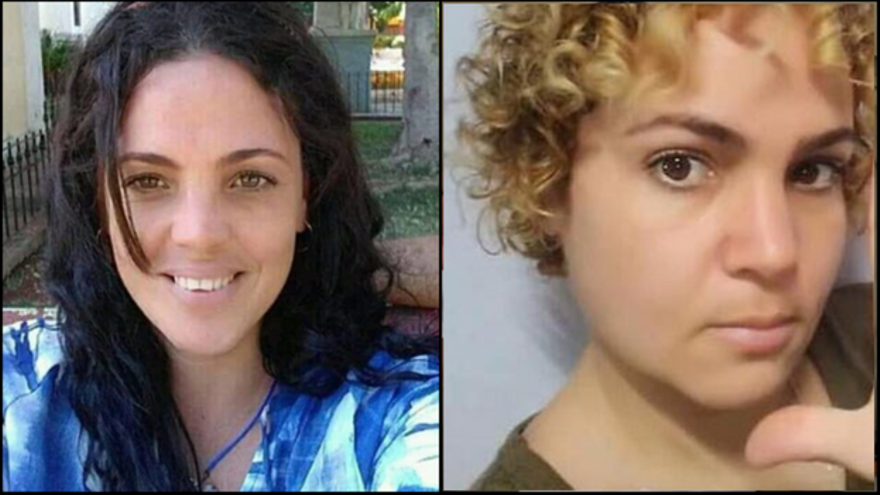
The decision could bring an additional reprisal by the authorities for the three young women: isolation. (Collage)

14ymedio bigger14ymedio, Havana, September 20, 2022–Writer María Cristina Garrido, her sister Angélica, and activist Lizandra Góngora, arrested for their participation in the 11J protests [11 July 2021], announced on Tuesday their refusal to wear common prisoner uniforms and declared the start of a hunger strike.

The prisoners signed a note from the women’s prison in Guatao, Havana, in which they demand their freedom and reiterate “the poor health the three of us are experiencing.” They added that, for this reason, their lives are at risk and if anything should happen to them, “all justice will befall on their repressors.” The note concludes with a “greeting of resistance from this cold shadow.”

Luis Pérez Rodríguez, Angélica’s husband, told 14ymedio that the three young women are “plantadas*” and have refused prison food. The issue, he explained, is that the decision could bring an additional reprisal by the authorities.

They could isolate them for more than a week, which would mean that their family members will not be able to take them food or other assistance. “Meaning, it would be ten days of complete hunger,” says Pérez Rodríguez.

The three women have not been the only ones to suffer the harshness of the regime against those arrested following 11J. Rowland Jesús Castillo, one of the minors prosecuted for his participation in the protests has received, suddenly, a hardening of his sentence.

According to activist Carolina Barrero, the young man, who had been released from prison in May to serve his sentence in a labor camp, will return to prison on October 6th. continue reading

The Court for Crimes Against State Security of Havana’s Provincial Tribunal, explained Barrero, decided that Castillo must be admitted on that day to the Jóvenes de Occidente prison, after modifying his sentence to “correctional with internment.” At that prison, where many of the 11J protesters are being held, he must remain for five years.

Rowland Castillo is one of the “children of 11J”, accused of the crime of sedition, one of the most serious in the Cuban Criminal Code, which authorities used to prosecute those arrested during the protests. Since his arrest, his mother Yudinela Castro Pérez, has staunchly defended her son’s innocence. Last March the woman, who also has leukemia, had to be hospitalized following a suicide attempt.

The young man was initially sentenced to 18 years in prison, but was released later in May along with other detainees. For demanding his release, his father, Ángel Rolando Castillo Sánchez, was sentenced to two years in jail during a summary trial.

In the courts requirements issued to Rowland Castillo, he was informed that he will perform agricultural labor and will be living in a camp; for this reason he is ordered to bring some supplies such as a towel, sheet, a bucket and appropriate clothing, “with a view toward guaranteeing the best living conditions for himself, since the center cannot provide these.”

“Prison, forced labor and indoctrination, that is how the regime punishes young people for their desire for democratic change, widely expressed during the protests in 2021 and 2022,” stated Carolina Barrero in her publication.

Meanwhile, Estelvina Rodríguez, mother of another 11J prisoner, Dayron Martín Rodríguez, a patient diagnosed with schizophrenia, demanded his release at the United Nations.

In a video shared on Monday by NGO Freedom House at the UN Working Group on Arbitrary Detentions, Estelvina Rodríguez stated that Dayron was “one of the many young people who went out peacefully to protest in Havana demanding freedom, a change of government, and economic improvements,” that 11J. For that, the regime accused him of an attack on state security.

The tribunals imposed upon Martín Rodríguez one of the longest sentences for his participation in the protests in the emblematic corner of Toyo in Havana, no less than 30 years in prison. His mother’s pleas for the risk he faces due to his illness were of no use.

“My son’s life is in danger, for being a schizophrenia patient who had previously been admitted to a mental health facility for attempting suicide,” said Rodríguez in her statement on Monday.

She added, “He must be released, for he is innocent. At the very least, we implore for him to be transferred to a medical center equipped to guarantee his health. We are worried that in prison he might attempt suicide due to his mental condition.”

Rodríguez highlighted that Dayron is not being provided with the conditions nor the medications needed to treat his illness and insisted, “I implore this United Nations committee to intercede with the Cuban government for my son’s health and to initiate an investigation into the true cause of his detention.”

*Translator’s note: A ‘plantado’ — literally ’planted’ — is a term with a long history in Cuba and is used to describe a political prisoner who refuses to cooperate in any way with their incarceration. “Plantada” is the feminine. 

Translated by: Silvia Suárez

____________

COLLABORATE WITH OUR WORKThe 14ymedio team is committed to practicing serious journalism that reflects Cuba’s reality in all its depth. Thank you for joining us on this long journey. We invite you to continue supporting us by becoming a member of 14ymedio now. Together we can continue transforming journalism in Cuba.
Cuban Writer Carlos Alberto Montaner Will Be Honored for His Defense of Democracy

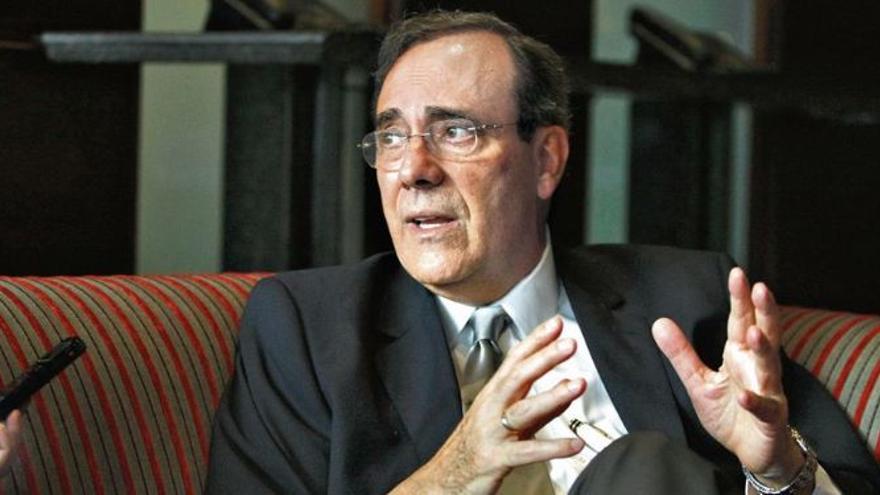
Carlos Alberto Montaner will move to Spain in October. (Cubanet)

14ymedio biggerEFE (via 14ymedio), Miami, September 20, 2022 — The Cuban writer, essayist and journalist Carlos Alberto Montaner, one of the most relevant critical voices of exile, will receive recognition this Tuesday in Miami for his defense of democracy and freedom, a tribute that the author himself described to EFE with humor as an “uproar.”

“It will be an emotional and multitudinous farewell of very close friends before my trip in October with my wife to Spain,” where Montaner (b. Havana, 1943) will settle permanently and plans to conclude the writing of his next book.

Montaner was very grateful to the Inter-American Institute for Democracy, its executive director, Carlos Sánchez Berzaín, and Beatrice Rangel, the people who “plotted” this tribute and award, even if they didn’t request his agreement, he said ironically.

Several guests will join in the tribute, which will be opened by the former mayor of Miami, Tomás Regalado, to the intellectual stature and human dimension of Montaner, who also has Spanish and American nationality.

The Argentine Gerardo Bongivanni, president of the Libertad Foundation, will address the ethical and political commitment of the Cuban in his presentation entitled “Carlos Alberto: The Freedom Fighter,” and Iliana Lavastida, director of the Diario Las Américas, will speak about the “Cubanness” of Carlos Alberto. continue reading

Gina Montaner, daughter of the novelist and politician, will bring the public closer to the figure of Carlos Alberto, the father, and Rosa María Payá, daughter of the Cuban dissident Oswaldo Payá (1952-2012), who died in an accident in Cuba that, according to the family, was “an attack caused by officials of the Castro regime,” will talk about Carlos Alberto, the mentor.

“It’s a tribute to Montaner’s career, which earns him the most important award of this institution to which the writer has been linked for years,” Berzaín told EFE, about the Francisco de Miranda prize for the defense of freedom and democracy that will be given to Montaner on Tuesday at the Museum of the Cuban Diaspora, in Miami.

Once in Spain, the Cuban intellectual will conclude the writing of a story that delves into the lives of one of Karl Marx’s three daughters, Laura, and her husband, Paul Lafargue, who, injected her and then himself with hydrocyanic acid [considered a “suicide pact”].

“I’m going to finish this book about Lafargue, who was really Cuban, since he lived until he was 11 years old in Cuba and then went to France. My theory is that he killed Laura before committing suicide in 1911,” said Montaner, the 2010 Juan de Mariana Prize winner in defense of freedom.

Montaner’s first vocation, that of a storyteller, has been successfully shown in novels such as Perromundo (1972) and La mujer del coronel [The Colonel’s Wife], the latter a story of a failed love, loaded with strong eroticism and with the Cuban totalitarian regime of macho traits as a backdrop.

Among his important essay work, described in his bibliography, is the Manual of the Perfect Latin American Idiot (1996), the bestseller he published together with Plinio Apuleyo Mendoza and Álvaro Vargas Llosa, in which he caustically portrays the collectivist ideologies of the Latin American left and its elites.

Translated by Regina Anavy

____________

COLLABORATE WITH OUR WORKThe 14ymedio team is committed to practicing serious journalism that reflects Cuba’s reality in all its depth. Thank you for joining us on this long journey. We invite you to continue supporting us by becoming a member of 14ymedio now. Together we can continue transforming journalism in Cuba.
Cuba Will Seek to Attract More International Visitors Through Ecotourism

The authorities inaugurated the XIII International Nature Tourism Event on Tuesday in Havana. (EFE)

14ymedio biggerEFE/14ymedio, Havana, 21 September 2022 — This Tuesday, in Havana, the Cuban Prime Minister Manuel Marrero inaugurated the XIII International Nature Tourism Event, which will aim to diversify offers for tourists on the Island.

The event, suspended for two years due to the COVID-19 pandemic, will be attended by personalities from 19 countries, as well as different tour operators, according to the organizers. The purpose, they pointed out, will be to promote ecological and adventure destinations in the country.

In that sense, Marrero pointed out that Cuba must leave behind the image of being only a “sun and beach” destination and that, to achieve this, it will have to “continue to promote” other formats, such as ecological tourism. “We still have to improve in many things,” he admitted.

The Minister of Tourism, Juan Carlos García Granda, pointed out that the country is concentrating “all its energy to recover” the levels of pre-pandemic international visitors and that ecotourism is a “global trend” that will help reach that goal.

The Government has set itself the goal of reaching 2.5 million visitors this year, and although Marrero himself questioned the possibility of achieving it this May, he has finally ended up joining the official discourse and believes it is feasible to reach the projection.

According to the latest available figures, the number of foreign travelers reached 834,891 visitors as of July, leaving 1,665,000 to be achieved for the last five months of the year. continue reading

Looking at the first half of the year, the comparison with respect to 2021 is a growth of almost 500%, but the number translated into 682,297 travelers. In 2019, by that date, 2.6 million people had already arrived in Cuba to spend their holidays.

During his speech, Marrero denounced the “media campaigns” against tourism on the Island, alluding to the constant criticism of the Cuban diaspora against the opening of the sector.

“Why is it that campaigns against Cuban tourism are unleashed every now and then? (…) Isn’t that what the development of tourism in this country promises to break precisely with the blockade and this crisis?” he asked.

However, from the very pages of the official media, the readers and sympathizers of the Communist Party themselves are reproaching the Government for continuing to invest strongly in the same sector — which also isn’t experiencing its best moments in terms of visitors — while the population lacks light and food.

“Currently, the occupancy rate of our tourist facilities is around 14%. Meanwhile, we continue to build new hotels, instead of investing in energy, road and agricultural infrastructure,” lamented a commentator last week in Cubadebate.

According to data published by the National Bureau of Statistics and Information, a third of the State’s investments during the first semester went to business services, real estate and rental activities, which include hotels and tourism, totaling  31.7 billion pesos.

Meanwhile, only 830 million pesos were dedicated to agriculture, livestock and forestry, and 225 million to fishing.

Translated by Regina Anavy 

____________

COLLABORATE WITH OUR WORKThe 14ymedio team is committed to practicing serious journalism that reflects Cuba’s reality in all its depth. Thank you for joining us on this long journey. We invite you to continue supporting us by becoming a member of 14ymedio now. Together we can continue transforming journalism in Cuba.
In Plaza Carlos III, an Identity Card is Required to Buy a Quarter of Fried Chicken

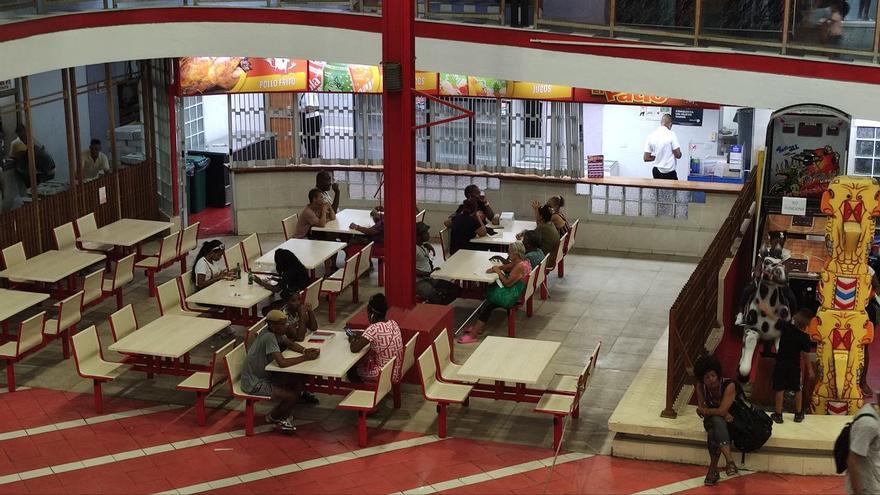
Some of the first forty customers this Wednesday, sitting and eating their quarter chicken. (14ymedio)

14ymedio bigger14ymedio, Juan Diego Rodríguez, Havana, 14 September 2022 — Forty people and forty identity cards, not one more. The crisis in the markets has made the leap to state cafeterias, and even in the cafeteria of the popular Plaza Carlos III, in Central Havana, it’s already impossible to sit normally and eat a quarter of fried chicken. The restaurant has decided to limit the sale, and, as if it were just another ration store, customers are obliged to identify themselves so as not to “monopolize” the 350 grams of chicken that the place sells for 37 pesos.

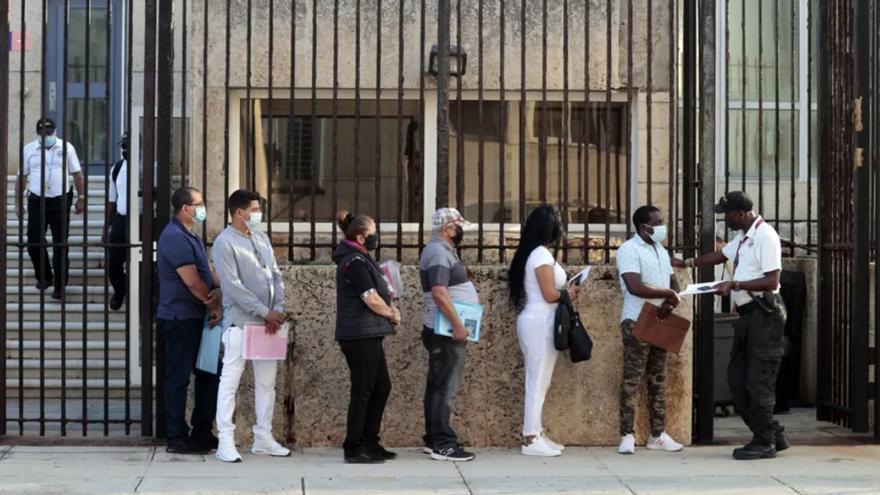
The line to buy fried chicken in the central place was a hive of people this Wednesday when a man, dressed in a T-shirt that identified him as “security,” went out to organize the line and ask customers to present one identity card per person, because he was only going to allow forty to enter.

Immediately the pushing and fighting began, epic for a reward as scarce as a piece of chicken. Or two, if the one you get is small. “No way you’re going here,” one said. “I’ve been here for hours,” shouted another. “You’re not going ahead of me,” a third party argued. Meanwhile, the guard continued to stop the tumult with his hand up.

Carlos III Plaza  is known as the great palace of consumption in Havana and is the largest shopping center after Cuatro Caminos. Its location, in Central Havana, and its aesthetics, with a characteristic circular ramp winding through the structure, has made it since the ’90s one of the most prosperous and crowded shopping centers in the Cuban capital. continue reading

Dollarization had turned the old market that sold meat, each time more withered, into a place with establishments of all kinds, from shoe stores and perfumeries to hardware stores or clothing stores. The ground floor, with restaurants, was so busy that the neighbors complained about the sale of alcoholic beverages and fast food, which was crowded with people wanting to have fun and eat something different.

Now, fallen from grace, it barely has two stores in national currency and a supermarket in pesos where only the residents of Central Havana and part of El Cerro can buy as a result of the municipalization of commerce that the Government imposed in April of this year. The rest are shops that take payment only in MLC (hard currency) and a few restaurants with minimal offerings. The only fuss occurs when the cafeteria, called El Patio, begins to sell its famous fried chicken, the only food that can now be eaten on site.

Luckily, this Wednesday the first forty were not the only fortunate ones. The cafeteria again accepted another quota of forty when the first group had finished. Until the chicken ran out.

Translated by Regina Anavy

____________

COLLABORATE WITH OUR WORKThe 14ymedio team is committed to practicing serious journalism that reflects Cuba’s reality in all its depth. Thank you for joining us on this long journey. We invite you to continue supporting us by becoming a member of 14ymedio now. Together we can continue transforming journalism in Cuba.