
With Recycling, the Cuban State Earned 41.6 Million Dollars Exporting Garbage

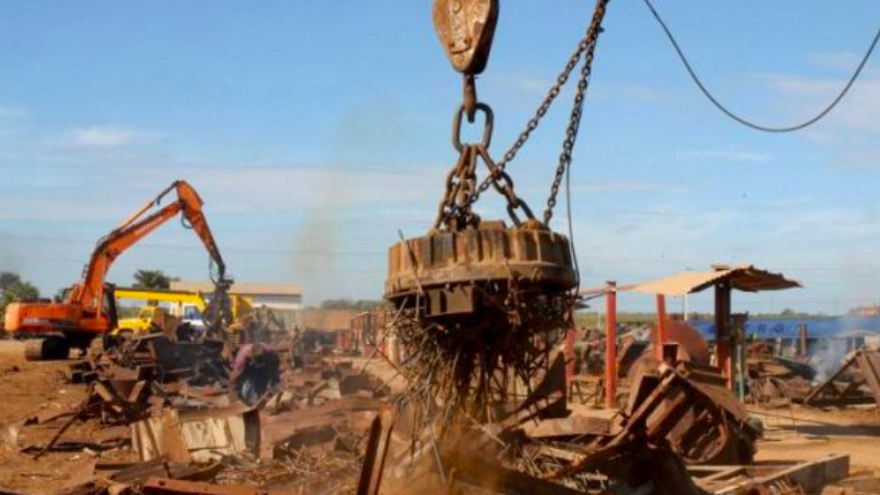
A junkyard in Cuba, a key point of the lucrative raw materials business. (Cubadebate)

14ymedio bigger14ymedio, Havana, 13 October 2023 — The directors of the Recycling Company congratulated themselves this Thursday on Cuban State TV’s Roundtable program for being one of the few “industries” in the country that has overfulfilled its plan: so far this year, the company has collected 74,000 tons of raw material and collected more than 41.6 million dollars, of which 29 million come from export.

The president of the business group, Jorge Luis Tamayo, regretted that the economic consequences of the coronavirus pandemic did not allow him to achieve “superior results.” Even so, there was success with what was accumulated between the “fixed” recycling points, which collected 16,400 tons, and the “mobile” points – which collected 16,000. In addition, state schools and organizations, contributed 1,500 tons. The Communal Services, which should carry the weight of the collection, only delivered about 1,900 tons to Recycling, the leader complained.

Nothing exceeds, however, the capacity of the Island’s hotels to generate garbage, which Recycling then purges and collects. So far this year, tourist establishments have “provided” the not-inconsiderable amount of 2,240 tons of usable raw material, 556 more than last year. continue reading

Tamayo said that, in addition to selling the raw material, his company uses it to manufacture 65 products “without executing large investments”

Tamayo said that, in addition to selling the raw material, his company uses it to manufacture 65 products “without executing large investments.” What generates the most money – and therefore, what is most exported – are “carton packaging, plastics, glass, parts, pieces, aggregates, laminates, pipes and ball  bearings.” In addition, the sale of non-metallic scrap managed to bring in five million dollars.

What is reinvested in the maintenance of recycling equipment is minimal: about 109 million pesos, Tamayo said. His company, in addition, benefits from a “closed scheme of foreign exchange financing” – for which other sectors, like publishing, have advocated, without success – and from “a differentiated exchange rate” of 1 dollar for 120 pesos, which the leader described as “fundamental for the organization.”

Tamayo proudly said that Recycling knows how to take advantage of any setback. In the greatest disasters of recent years – the gas exposion that collapsed the Saratoga Hotel, the fire at the Matanzas Supertanker Base and the collapse of the mezzanine in a tower of the Antonio Guiteras thermoelectric plant – his company has collected and reused the materials that were no longer usable in the reconstruction.

The director of the Recycling company in Havana, Rosa Reyes, was not so optimistic about the situation. During her speech, she admitted that in the capital no one is too interested in recycling, and she attributed this to the “great dissatisfaction of the population,” besieged by the “energy situation” and the fact that habaneros throw garbage on the street without distinguishing between materials that are recyclable and those that are not.

The recyclable product, once it is mixed with garbage, loses quality, loses value and is very difficult to recover

“The recyclable product, once it is mixed with garbage, loses quality, loses value and is very difficult to recover,” she said. On the other hand, “Havana doesn’t have the optimal infrastructure to be able to make that sourcing of recyclable materials from home,” she said, referring to the absence of containers and baskets on the streets. However, she ended up calling on Cubans to have “a little discipline and conscience.” The collection of raw materials, she insisted, could help the “home economy.”

Although burdened by health restrictions during the pandemic, the collection of raw materials was the livelihood of many elderly and low-income people in Cuba. On the streets of the Island, it is also common to see beggars collecting cans and cartons that they then sell at recycling points for a few pesos.

The phenomenon carries a serious health risk, since the search for these items is carried out without the slightest protection, and it is not uncommon to find “dumpster divers” – people who dive into the containers looking for materials and food – rummaging through the garbage. Tamayo and Reyes alluded to none of this, setting their sights set on how lucrative the business has become.

Both managers ended the program with a call to the micro, small and medium-sized companies of the Island to join their “action” to increase the profits of Recycling. “We are urging everyone,” Tamayo concluded.

Translated by Regina Anavy

____________

COLLABORATE WITH OUR WORKThe 14ymedio team is committed to practicing serious journalism that reflects Cuba’s reality in all its depth. Thank you for joining us on this long journey. We invite you to continue supporting us by becoming a member of 14ymedio now. Together we can continue transforming journalism in Cuba.
Imports of Chicken From the United States Skyrocket and Even the Cuban Army Sells It in Its Markets

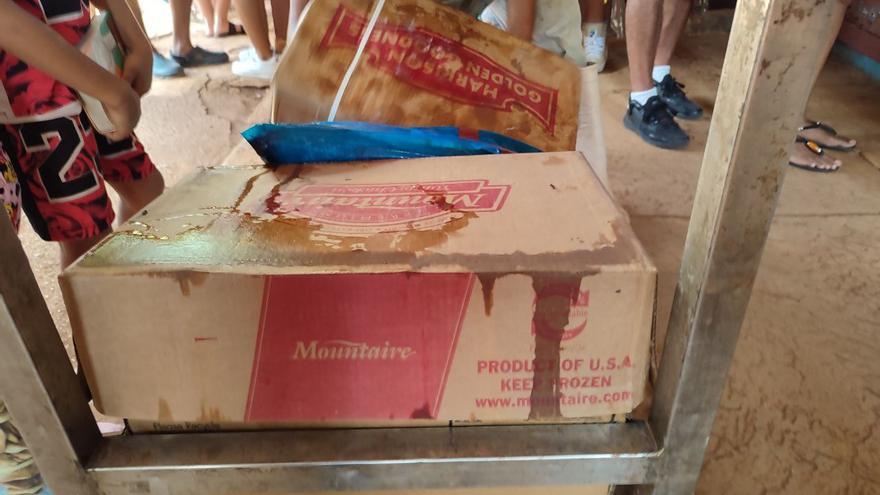
Arrival of American chicken at the El Vedado Youth Labor Army market. (14ymedio)

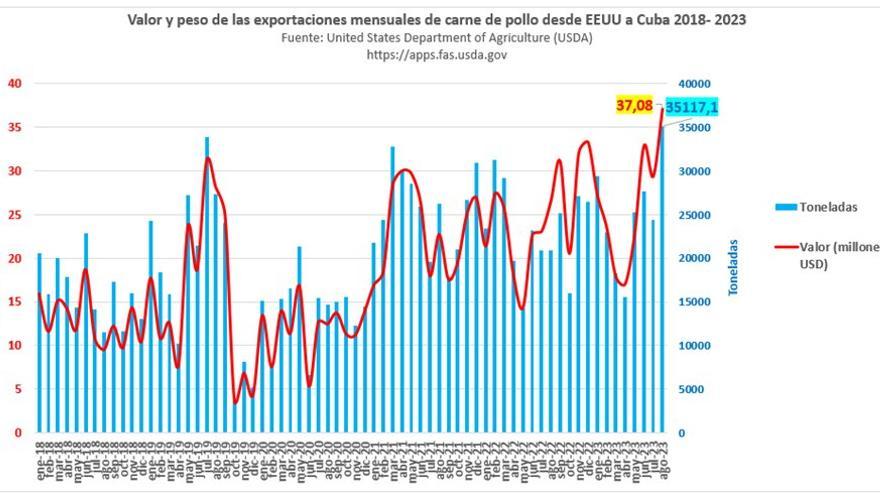
14ymedio bigger14ymedio, Havana/Madrid, 9 October 2023 — The arrival of  American chicken in Cuba has multiplied to such an extent that on Saturday it landed in Havana’s Nuevo Vedado market of the Youth Labor Army itself, the agro-market of the Cuban Armed Forces. In August, imports from the United States recorded absolute record figures, both in quantity and in millions of dollars.

At 35,117 tons, the figure is much higher than in the last five years, recorded in December 2022, when 30,884 tons arrived on the Island. Although the price fell by 14.6% compared to July, when 2.2 pounds of chicken cost $1.23, the volume is so high that total U.S. sales reached $37.08 million. It is more than 90% of that month’s total imports from the U.S., which rose to 39.91 million dollars.

“The ineffective official economic policy means that the MSMEs [micro, small and medium-sized enterprises], far from contributing to the national production of the main animal protein consumed in Cuba, would seem to be strengthening their dependence on imports,” said Cuban economist Pedro Monreal on his X account (Twitter). His diagnosis of the situation is overwhelming. “That high import dependence is a risk to food security,” he says. continue reading

Chicken purchases from the United States in the last five years. (P.Monreal/Dep. Agriculture USA)

The figures analyzed by Monreal are sourced from the U.S. Department of Agriculture and together represent the purchases made by the Cuban State and the country’s new economic actors, the MSMEs. During the first eight months of the year, Cuba bought 198,706 tons of chicken meat worth more than 207 billion dollars.

The August data from the Consumer Price Index did not highlight the cost of chicken in the official Cuban markets, but in the previous month it was, curiously, one of the products that most contributed to curbing the rise in inflation. In July, the price of chicken fell by 3.8%, which most experts attributed to the increase in supply, thanks to private companies, whose impact has also been noticed on other imported foods, cooking oil among them.

Chicken meat has gradually regained its presence in Cuba, and its lack is no longer so frequent, although on social networks the desperate exchange continues between those who try to buy it at about 250 pesos a pound and those who offer boxes of 33 pounds or more. The worst part is, without a doubt, the almost absolute absence of national production.

This Monday, Cubadebate dedicates an extensive report to the scarcity of another product linked to this: the egg. The text collects the terrible data that the provincial press has been offering in previous weeks – and which this newspaper has echoed – about the poor diet and old age of the chickens, which, consequently, lay fewer eggs.

The official media recalls that an attempt was made to alleviate the shortage with semi-rustic chickens and quail but that it was completely insufficient to feed the country. The most discouraging thing is that there is no proposal or solution. “It’s a chain in which the population observes how the price continues to rise on a par with resellers and speculation, and it will not stop as long as the industry is unable to meet demand.”

Translated by Regina Anavy

____________

COLLABORATE WITH OUR WORKThe 14ymedio team is committed to practicing serious journalism that reflects Cuba’s reality in all its depth. Thank you for joining us on this long journey. We invite you to continue supporting us by becoming a member of 14ymedio now. Together we can continue transforming journalism in Cuba.
A Son of Fidel Castro Defends the Cuban Regime on Social Media With Capitalist Arguments

A carton of eggs costs more than the minimum monthly wage. (14ymedio )

14ymedio bigger14ymedio, Madrid, 12 October 2023 — It’s been a little over a month since Alexi Castro Soto del Valle, one of the children that Fidel Castro had with his last wife, Dalia Soto del Valle, opened an account on the social network X, where he maintains a remarkable level of activity dedicated to the active defense of his father’s principles. According to his own description, he is a “Cuban patriot, follower of the ideology of the founding heroes Félix Varela and José Martí and the July 26 ideology of the revolutionary leader Fidel Castro Ruz.” In his penultimate dispute, he made clear, however, his critical opinion of the current Government, which he asks to be accountable to the National Assembly, “which is the sovereign power of the people represented through its deputies,” for the failure of the Ministry of Agriculture’s policy.

“Nor is the role of state and private property management by the various cooperative forms in agriculture fully understood;  each has its place and function,” says Castro’s son, who also attributes to companies and farmers the incompetence that has generated food insecurity on the Island.

Castro takes advantage of his posts to illustrate his knowledge of economics. “They don’t understand concepts such as the sense of ownership, the necessary autonomy to invest, associate, produce and market, and price formation, which should not be by mandate, but respond to an econometric science, the role of the market…”

The remark comes as a result of a comment by journalist Magdiel Jorge Castro, annoyed with the price of the eggs, whose shortage was the subject of a report even in Cubadebate on Monday. “So that you have an idea of the huge crisis in Cuba: a carton of eggs is sold today at 2,800 pesos, almost double the average [monthly] pension and much more than the minimum [monthly] wage, set at 2,100 pesos. A Cuban worker can’t even buy 30 eggs with a month’s work,” the reporter emphasizes. continue reading

Concepts such as the sense of ownership, the necessary autonomy to invest, associate, produce and market, price formation, which should not be by mandate, are not understood

Castro’s son rushes to reproach him for not using his “communication talents to lead a movement of all Cubans against the blockade as an effective way to favor the changes he wants so much.” In addition, he considers that the journalist, like many activists, does not maintain a constructive attitude toward solving the Island’s problems.

“Of course we all have the right to criticize or propose what we want. But no one has a moral right to promote the blockade against their homeland, offend or threaten those who think differently, call for disrespect or the laws and violence,” he adds.

Alexis Castro also points out that it is not an “informational first” to talk about the high price of eggs, since “Cubadebate was the one to first publish it. In case you didn’t know, Fidel taught us that the greatest critics have to be the revolutionaries themselves, so there’s no problem with that,” he says, ignoring, with or without knowledge, that the independent press has been denouncing the escalation of the prices of eggs and other products for years.

The most recent article on the subject in 14ymedio, without going any further back, is from October 2nd – when a carton of eggs was reported at 3,000 pesos – a week before the article in the official digital media. It  even noted the inflation of the product in 2020, when the Ordering Task* had not yet given the coup de grâce to the runaway prices that came from its application.

Castro admits that things are not right in Cuba, but he believes that the solutions are only, as his father said, within the Revolution. “We know that we have a lot of deficiencies and that we have made another mountain of mistakes, but there is a big difference between staying in the homeland working to move it forward and criticizing from the outside with resentment, without making serious proposals,” he says.

A few hours later, a new dispute began, in this case from the cancellation of new contracts to send Cuban doctors to Kenya. “If I manufacture a product and you invest in finding a market for me, and for that management you have a part of the profit and we both earn, does that make me your slave?” he responds when they suggest that the doctors of the Island work as slaves.

Among the answers, a user reproaches him for comparing people to merchandise, but he insists that “there is nothing slavish in having the opportunity to provide services of high human value, acquire experiences, obtain income and contribute a part to the country that formed you and managed the opportunity. Doctors win and the country wins.”

*Translator’s note: The Ordering Task is a collection of measures that include eliminating the Cuban Convertible Peso (CUC), leaving the Cuban peso (CUP) as the only national currency, raising prices, raising salaries (but not as much as prices), opening stores that take payment only in hard currency, which must be in the form of specially issued pre-paid debit cards, and a broad range of other measures targeted to different elements of the Cuban economy. 

Translated by Regina Anavy
_______________________

COLLABORATE WITH OUR WORKThe 14ymedio team is committed to practicing serious journalism that reflects Cuba’s reality in all its depth. Thank you for joining us on this long journey. We invite you to continue supporting us by becoming a member of 14ymedio now. Together we can continue transforming journalism in Cuba.

Cuba’s Telecommunications Company Blames the Electric Union for the Telephone and Internet Cuts

Cubans from Sancti Spíritus complain about the poor Internet connection during blackouts. (ACN)

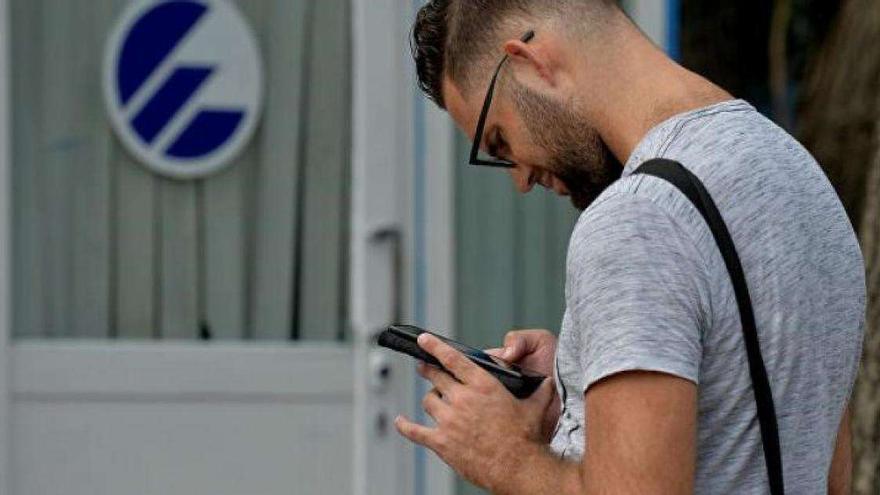
14ymedio bigger14ymedio, Havana, 12 October 2023 — The directors of the Cuban communications monopoly, Etecsa, blamed the Unión Eléctrica (UNE) on Thursday for the poor state of telephone and Internet services in Sancti Spíritus, and for the terrible conditions of its radio bases. According to the officials, as long as the “difficulties” with electricity generation in the country are not solved, any investment to improve the telephone infrastructure will be in vain.

In response to the constant complaints of the espirituanos [people in Sancti Spíritus] about the collapse of Internet connectivity and even fixed line telephone service during the blackouts, Gustavo López, commercial head of Etecsa in the territory, told the provincial newspaper Escambray that the main problem lies in the instability of the electricity flow: “All the equipment of the telecommunications system works with electricity, and when this is lacking, since there are not enough backup sources, the interruptions and impacts begin.”

The official also explained that many of the radio bases and power plants – in charge of emitting, expanding and receiving telephone signals – had backup batteries to maintain service for a few hours, until the electricity returned. However, with the constant cuts, the batteries, which should last about four hours, hold less and less and are damaged faster. continue reading

Even if that money were available and the investment executed, it would not really be money well spent if the capacity of the electro-energy system is not recovered and normal generation restored

The largest telephone power plants, located in the key towns of the province and in the capital city, have higher capacity generators, but these do not ensure that the services are maintained for very long once the blackouts begin. The few hours that they function don’t benefit everyone either. “Of the 66 sites we have in the province that provide service today, only 26 are backed up by generators: less than 40%,” López explained.

“In the case of radio bases, there are 85 in the province, and just 30% have the support of a generator backup. The rest have only batteries and are greatly affected by the lack of electricity,” he added.

To Escambray’s question of why Etecsa did not invest in the repair or replacement of those batteries so that the population could enjoy better connectivity during power outages, López added that, currently, the company lacks the funds to make that type of large-scale investment, which would involve thousands of radio bases and power plants throughout the country. “But, even if that money were available and the investment executed, it wouldn’t really be money well spent if the capacity of the electro-energy system is not recovered and normal generation restored,” he said.

The official’s explanations do not promise relief for the population, which continues to suffer long hours of blackouts without being able to communicate. Lázaro, a 41-year-old espirituano, told 14ymedio that the situation of Internet interruptions during blackouts has lasted for more than a year.

“We have been suffering from both blackouts and Internet outages for a long time, and, when the power goes out, you don’t know what to do. Every time there is a power outage, which sometimes lasts up to 16 hours, the connection gets terrible and the phone starts jumping from 3G to 2G and gets very slow. At this point, 4G is not even available,” he explains.

“Internet speed drops ridiculously, and you can’t send a single message on WhatsApp. I have to go out on the street and walk around like a fool if I need to communicate urgently, looking for an antenna that isn’t in a blackout area. There are days when I don’t see the face of my daughter, who lives in Miami,” says Lázaro, who collected at least 18 reports to Etecsa in recent months complaining about the situation.

For about three months, when the power goes out, the fixed line also fails, and there is no way to call anywhere

To top it off, he says, “for about three months, when the power goes out, the fixed line also fails, and there is no way to call anywhere. Fortunately, when the power comes on, both the landline and the mobile are restored in a few minutes.”

The situation of Sancti Spíritus is similar to that in other provinces of the country. However, in rural areas, even with power, it is not possible to communicate comfortably. Reina, a former retired primary school teacher who lives in a small town next to the Central Highway in Villa Clara, regrets not being able to communicate with her son, who lives in Spain, due to the poor Internet connection.

“When I want to talk on the phone I have to walk to the little park, near the road, because the signal is better there. There isn’t any inside my house. If, on the other hand, the issue is the Internet, then things get complicated, because not even in the park is there a good signal,” the retiree said, adding that she takes advantage of all the trips to Santa Clara, the capital city of the province, to talk for a while with her son and grandchildren.

“When I know that I’m going to Santa Clara I make sure I have data and tell my son before so that he knows that I’m going to call him, because talking here without the voice or image being cut is very difficult. Sometimes my son gets very frustrated and ends up using the international call service. I tell him not to do it, because I know it’s expensive,” she adds.

According to Reina, about four years ago they were promised an antenna closer to town so that they would have Internet coverage, but the promise has not yet been fulfilled. “I hope that one day they will do it, because it’s very difficult to communicate. In recent weeks, when they have cut off the power for a longer time, we have been incommunicado for almost whole days.”

This Thursday, the UNE announced a deficit of 465 megawatts (MW) for the entire country that, compared to the 973 MW on Wednesday, seemed enviable. With these forecasts, it is evident that both Etecsa and the Electric Union have few answers for Lázaro and Reina who, in the current situation, and with the authorities pointing at each other, will have to look for their own remedies.

Translated by Regina Anavy

____________

COLLABORATE WITH OUR WORKThe 14ymedio team is committed to practicing serious journalism that reflects Cuba’s reality in all its depth. Thank you for joining us on this long journey. We invite you to continue supporting us by becoming a member of 14ymedio now. Together we can continue transforming journalism in Cuba.
With Blood and Bullet Holes, Che’s Last Shirt Casts Doubt on the Remains Buried in Santa Clara

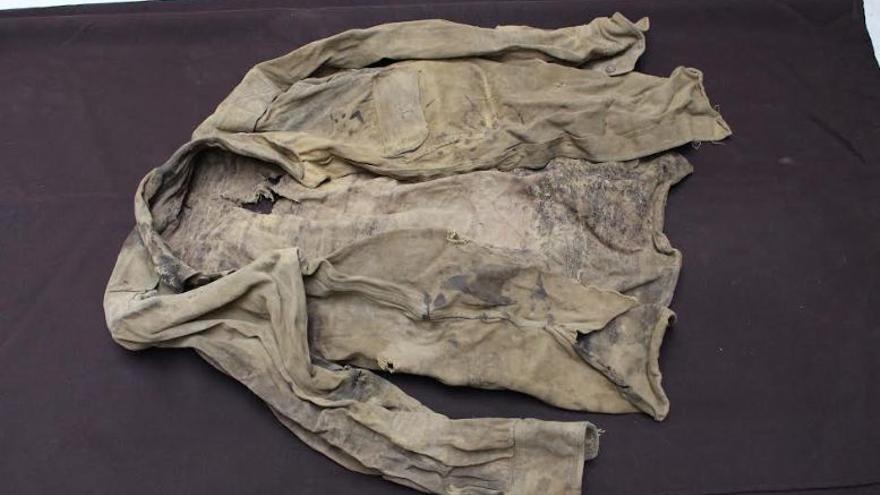
The bullet holes in the fabric provide some clue as to the quantity and trajectory of the sixteen bullets that hit Guevara. (Raúl Torres Salmerón/Leticia Montagner García)

14ymedio bigger14ymedio, Juan Izquierdo, Havana, 9 October 2023 — In 2017, Dr. Moisés Abraham Baptista, who performed the autopsy of Che Guevara after his capture and execution, offered a challenge to Cuban authorities: using DNA evidence, verify that the remains found by the island’s forensic experts three decades ago in a grave in Vallegrande, Bolivia, and later reinterred in Santa Clara, are in fact those of the Argentine revolutionary.

As a basis for comparison, Baptista offered to provide Havana with the shirt Guevara wore when he was captured and that still has his blood and sweat on it, as well as several bullet holes. Baptista kept the garment at his house in Puebla, Mexico, where he moved after leaving Bolivia and where he lived until his death on March 2nd of this year at the age of eighty-three.

The Cuban government, of course, never responded to Baptista, who told his story to two Mexican journalists, Raúl Torres Salmerón and Leticia Montagner. The Bolivian doctor’s account as well as numerous documents, photographs and articles about the death of Guevara were collected by the authors for “I Did the Autopsy on Che Guevara.” 14ymedio was given access to the book, which remains unpublished seven years after Baptista made his claim.

It took Torres and Montagner years to convince Baptista to tell his story

It took Torres and Montagner years to convince Baptista to tell his story. A discreet man who was fully aware of the delicate political nature of the situation, he kept a low profile to avoid harassment by Cuban counterintelligence. After a team of forensic specialists announced the discovery of what they said were the remains of Guevara and several of his companions in 1997, the doctor decided to speak up.

He did it on Mexican television, saying he had remained silent out of concern for his own and his family’s safety. “People must know how the things I experienced happened. It’s no longer a secret,” he said. The shirt, preserved in excellent condition by Baptista, is a key element in his argument. It came into his possession in 1967, after the autopsy, while he was working as director at the Señor de Malta hospital in Vallegrande. continue reading

Torres and Montagner, who had access to the shirt, are thorough in their description. The garment, placed on a rack in Baptista’s residence in Puebla, smells like “blood, sweat and gunpowder,” they say. The fabric is khaki and has “two large tears, one six inches and the other three inches.” The bullet holes in the fabric provide some clue as to the quantity and trajectory of the sixteen bullets that hit Guevara and which of them, according to Baptista, killed him.

“The shirt still has some curly, light brown hairs on it, some of which can be seen on the collar,” the authors state. Photographs of Guevara in Bolivia confirm that these were the clothes he was wearing when he died. Baptista reported that the body, which was delivered to the hospital’s laundry room, had a lot of blood on the back. “When undressing him to wash the body, [I saw] a strange, large wound. This could have been from a bayonet or from a Garand M2 automatic carbine fired at very close range,” the doctor said.

Che Guevara, shortly before his death on October 9, 1967, with the shirt preserved by Dr. Abraham Baptista. (Arhivo)

In his 1967 reports, Baptista initially stated that Guevara suffered seven gunshot wounds but later revised the number to nine. On several subsequent occasions, he confessed that these figures had been “invented.”

Based on Baptista’s testimony, Torres and Montagner concluded, “When the first shots were fired, it is likely that he fell forward — that is, face down — and was still alive. They tried to finish him off with a machete, a bayonet or with a closed discharge from a machine gun while his back was turned up. He was still alive. They immediately turned him face up and he was killed by a shot to the heart. Judging from the trajectory of the bullet as indicated on his shirt, that was from top to bottom.”

After finishing the autopsy, Baptist severed the hands from the body as evidence that Guevera had been killed. He injected formaldehyde into the body to preserve it and, though he lacked the proper materials, made a death mask.

“I Did the Autopsy on Che Guevara” includes several appendices including Baptista’s medical reports, details about his departure from Bolivia, photographs of Guevara and his shirt, the doctor’s “political will and testament,” articles by the two authors — published in El País and Letras Libres — questioning whether it is Che’s remains which are buried in Santa Clara, and a short biography of Tamara Bunke, one of the guerrillas who accompanied Guevara on his expedition.

____________

COLLABORATE WITH OUR WORKThe 14ymedio team is committed to practicing serious journalism that reflects Cuba’s reality in all its depth. Thank you for joining us on this long journey. We invite you to continue supporting us by becoming a member of 14ymedio now. Together we can continue transforming journalism in Cuba.
Prisoners Defenders Raises the Number of Political Prisoners in Cuba to 1,052

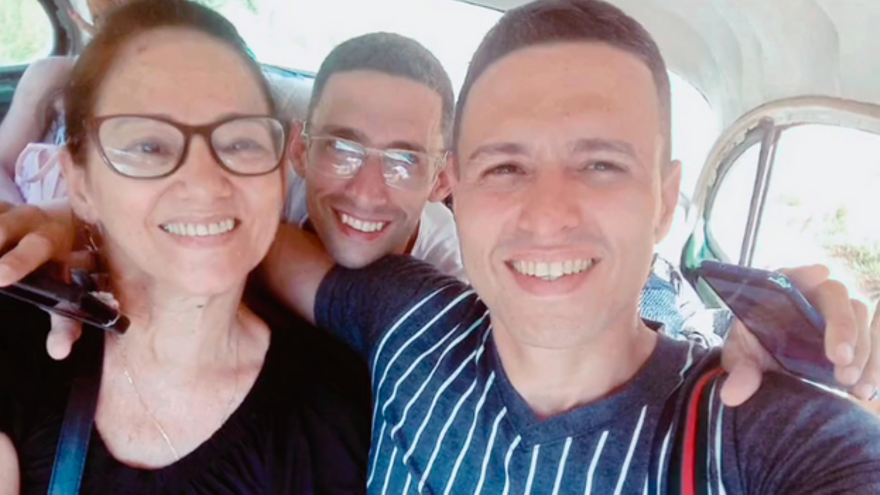
The brothers Nadir and Jorge Martín Perdomo, along with their mother, Marta, after receiving their first pass from prison in more than two years. (X/Betty Guerra)

14ymedio biggerEFE (via 14ymedio), Havana, 12 October 2023 — The NGO Prisoners Defenders (PD) raised this Thursday to 1,052 the number of people considered political prisoners in Cuba, compared to 1,047 the previous month. The organization, based in Madrid, specified in its report at the end of September that in the last six months they have confirmed and added to their list “104 new political prisoners.”

The record published on the PD website includes 34 minors, of which 28 are serving a sentence and six are being criminally prosecuted.

PD also denounced that there are 117 prisoners “who are in proceedings for political and conscientious convictions”

The NGO statement adds that 223 demonstrators of the 1,052 political prisoners have been accused of sedition, and at least 207 have already been sentenced for this crime, to an average of ten years of imprisonment.

PD also denounced that there are 117 prisoners (including several who are transgender), “who are are in proceedings for political and conscientious convictions.”

All transgender women of conscience have been and are imprisoned among men, which also happens with common trans prisoners, and they suffer indescribable situations because of their sexual condition,” the organization warned.

Translated by Regina Anavy

____________

COLLABORATE WITH OUR WORKThe 14ymedio team is committed to practicing serious journalism that reflects Cuba’s reality in all its depth. Thank you for joining us on this long journey. We invite you to continue supporting us by becoming a member of 14ymedio now. Together we can continue transforming journalism in Cuba.

Diplomarket, the ‘Cuban Costco’, in the Hands of a Front Man for the Regime

Diplomarket is heavily guarded: “Yes, that looks like a military unit.” (14ymedio)

14ymedio bigger14ymedio, Juan Diego Rodríguez/Olea Gallardo, Havana, 11 October 2023 — The opening of a wholesale supermarket in Havana under the name Diplomarket in December last year went unnoticed. Only an ad on Instagram for the company, dedicated until then only to online purchases and shipping, gave an account of the opening of the establishment, located at kilometer 8 ½ of the Carretera Monumental, in the neighborhood of Berroa, more than 6 miles east of the center of the capital.

A tweet last week from Patrick Oppmann, a CNN correspondent, put the focus of current affairs on commerce. “After years of having to look for the most basic products, it’s a bit surreal to see how a private entrepreneur has set up what is basically the first Costco in Cuba,” said the journalist on the network now called X, without specifying the name of the supermarket and assuring that Cubans can pay in pesos, dollars and euros, even with U.S. credit cards.

And yes, the images that accompanied his text verified the resemblance to the American wholesale firm: huge corridors with wholesale products placed as in a warehouse, the distinctive red color and, more revealing, the sale of Kirkland brand products, marketed exclusively by Costco.

In a visit to the store this Wednesday, 14ymedio verified that, in fact, the place is similar to the Costco franchise, which is in more than a dozen countries. It is also true that the Kirkland brand populates its shelves, but no more so than Goya, the largest food company of Hispanic origin in the United States, which just three years ago was involved in a controversy for defending the then-president, Donald Trump. continue reading

It’s designed for cars, and you always see luxurious cars and the rich people who fill those huge cars

For the rest, the differences between Diplomarket and Costco are obvious. In Costco, when buying wholesale, the products are cheaper. In Diplomarket, very few customers were seen with the large packages. Most preferred to buy the items separately, at stratospheric prices: a small bottle of Goya oil for 7 dollars, a small can of grated Goya coconut for 4 dollars, a bar of soap for 2 dollars (the complete package, 16 bars, $32), toothpaste for a little more. As for cheeses and sausages, prices exceeded 20 dollars, as for a large jar of mayonnaise. Tools and household items are also offered at an unattainable price given the country’s average salary.

Diplomarket does not require a membership card, as Costco does, and is supposed to be open to any customer, but the stratospheric prices and the remoteness of the location deter any ordinary Cuban. “It’s designed for cars, and you always see luxurious cars and the rich people who fill those huge cars,” says Mayca, a young woman from Central Havana who went once with a friend who has a private food business.

The establishment is also heavily guarded. At the first checkpoint, they take the data of the vehicles at the time of entry, and then there is another booth with guards before you enter the store. At the door, two individuals look everyone up and down. A large screen shows the movement of the security cameras, placed everywhere with warnings. “Yes, that looks like a military unit,” Mayca concedes.

Inside, a kind of “persecution” by the employees begins. You are not allowed to take photos or record videos, and the workers walk behind the customers watching every movement, disguising their zeal with kindness: “Can I help you with something?”

You are not allowed to take photos or record videos, and the workers walk behind the customers watching every movement, disguising their zeal with kindness: “Can I help you with something?

Mayca says that whenever she has gone she has felt very uncomfortable: “Not only because of the vigilance but because of the humiliation with which they treat you. “A lady almost had to return the merchandise because she didn’t bring dollars and thought that everything could be paid in Cuban pesos. At the last minute she was saved by her friend, who loaned her some American bills.”

Didn’t the U.S. correspondent say that you could pay in all currencies? Doesn’t it say that in the firm’s own ad on Instagram? The cashier laughed at our reporter’s question: “That’s over, people pay in cash in dollars.”

As for the ownership of the supermarket, neither does it have the same transparency as the capitalist brand that it intends to emulate. They do not indicate on the web or on the premises any clear information about what causes the most mistrust: who actually owns Diplomarket, a gigantic, well-stocked and clean store, guarded like a government enclave?

The firm is not on the list of micro, small and medium-sized enterprises (MSMEs) approved by the Ministry of Economy and Planning. Moreover, according to its corporate website, Diplomarket belongs to an American company called Las Américas TCC Corporation, founded in 2011 and based in Florida.

The vice president of Las Americas is the Cuban, Frank Cuspinera Medina, who is domiciled in the United States. Two years ago, his name appeared as a “specialist” in a meeting between self-employed workers (TCP) and the National Association of Economists and Accountants of Cuba.

On that occasion, he told the Cuban News Agency that “this type of exchange allows the institutions to know first-hand the interests and needs of the TCPs” and that the official association was “an efficient way to raise the approaches presented at the meeting to the authorities in charge.”

This last firm is also not on the regime’s list of MSMEs, but a company with its name is: Cuspinera SURL LVI, dedicated to “providing e-commerce platform services

Cuspinera Medina, whose current address is in El Vedado, Havana, also appears in a letter that several Cuban entrepreneurs sent in 2021 to U.S. President Joe Biden, asking him to lift sanctions against the Government of the Island,  which were harming their businesses. In the letter he does not appear as a member of Las Américas, but as part of Iderod Servicios Constructivos.

This last firm is also not on the regime’s MSME list, but a company of the same name is: Cuspinera SURL LVI, dedicated to “providing e-commerce platform services.” It is also a branch of Las Américas TCC.

The issue is not a minor one, given the U.S. embargo against Cuba. As U.S. Treasury officials said, following a meeting of Cuban businessmen in Miami a few weeks ago, several conditions must be met in order not to break the law. Entrepreneurs residing in Cuba, for example, cannot create companies in the U.S. to sell their products or buy goods directly from U.S. companies. Similarly, Cuban-Americans cannot establish businesses on the Island unless they achieve permanent residence in the country through repatriation.

It is not clear in which category Cuspinera Medina, which maintains a low profile on social networks, belongs. About Diplomarket, Mayca is blunt: “It is not private.”

Translated by Regina Anavy

____________

COLLABORATE WITH OUR WORKThe 14ymedio team is committed to practicing serious journalism that reflects Cuba’s reality in all its depth. Thank you for joining us on this long journey. We invite you to continue supporting us by becoming a member of 14ymedio now. Together we can continue transforming journalism in Cuba.
The Cuban Jewish Community Rejects the Regime’s Statement About the Attack on Israel

Some members of the Jewish community of Cuba at a meeting in 2019. (Board of the House of the Jewish Community of Cuba/Facebook)

14ymedio bigger14ymedio, Havana, 11 October 2023 — The Jewish community of Cuba, grouped in an NGO that has never been characterized as dissident, has expressed its severe disagreement with the Government about the conflict unleashed in Israel as a result of the unprecedented attack by Hamas terrorist militias that infiltrated its territory.

“The Federation of Jewish Communities of Cuba totally disagrees with the pronouncement of the Ministry of Foreign Affairs of the Republic of Cuba in the face of the events that are taking place in Israel, generated by acts of total terrorism,” reads a post by the Board of Trustees of the House of the Jewish Community, published on Monday, two days after the aggression began.

On the same Saturday of the attack, the Ministry released a statement in which it expressed its “serious concern” about the “escalation of violence,” for which in no case did it blame Hamas, but rather the “75 years of permanent violation of the inalienable rights of the Palestinian people and Israel’s aggressive and expansionist policy.”

In the same text, they demanded “a comprehensive, just and lasting solution to the Israeli-Palestinian conflict, on the basis of the creation of two States, which allows the Palestinian people to exercise their right to self-determination and to have an independent and sovereign State within the pre-1967 borders, with East Jerusalem as its capital.” They also called on the UN to “end the impunity of Israel, the occupying power, with which the United States has been complicit.” continue reading

It is more than proven that the State of Israel has nothing against the Palestinian Authority; the war is with Hamas, an openly terrorist organization

In the face of the regime, the Federation is blunt: “It is more than proven that the State of Israel has nothing against the Palestinian Authority; the war is with Hamas, an openly terrorist organization.”

For them, “justifying the reprehensible acts of crime and savagery” is unacceptable. “The terrorism that occurred since last Saturday in the territory of Israel, of which the international media give clear samples with videos shared by the members of Hamas themselves, who filmed how they killed in cold blood and with impunity, indiscriminately, children, young people and the elderly, including more than 260 young people from various countries who were innocently attending a large outdoor youth festival in the southern part of Israel, is totally unbalanced and lacking in coherence,” they say in their publication, making clear their “total support for the right of the State of Israel to defend itself.”

This Wednesday, the Board of Trustees of the House of the Jewish Community reiterated its position, asking to spread the news about the conflict, because “silence” made possible the extermination of six million Jews in the Holocaust.

It also mentioned another publication that praises the “powerful statement” of the president of El Salvador, Nayib Bukele, who “has had the courage to say what many won’t.”

The Cuban Federation of Jewish Religious Communities put in writing what it thought from the first day of the attacks, which it immediately condemned. “Once again Hamas shows its true face, the face of terror, the face of betrayal, the face of opportunism, the face that many do not want to see,” it said in a statement, recalling that Israel “warns the civilian population with enough time to prevent the deaths of innocent people whose responsibility lies solely with Hamas.”

The Federation of Jewish Religious Communities of Cuba is composed of all the synagogues of the Island and the B’nai B’rith Lodge. Its headquarters is located on Calle I between 13 and 15 in El Vedado, in Havana.

Translated by Regina Anavy

____________

COLLABORATE WITH OUR WORKThe 14ymedio team is committed to practicing serious journalism that reflects Cuba’s reality in all its depth. Thank you for joining us on this long journey. We invite you to continue supporting us by becoming a member of 14ymedio now. Together we can continue transforming journalism in Cuba.
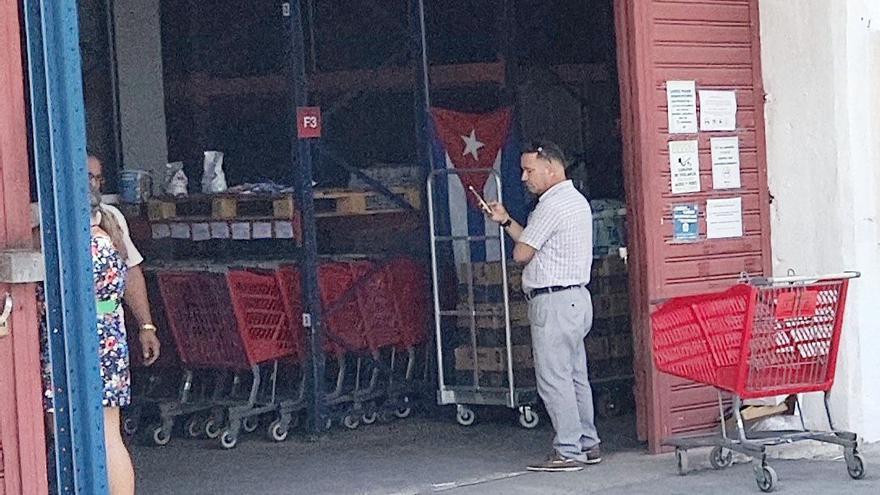
Cubans are Prisoners, by Day and by Night, of the Programmed Power Cuts

“The hardest is when the power goes off in the early hours, because with the heat and the mosquitos no one can get any sleep”. (14ymedio)

14ymedio bigger14ymedio, Natalia L. Moya/Francisco Herodes Díaz, Havana/Santiago de Cuba, 3 October 2023 – She looks at her phone and then looks back at the pressure cooker. Noise fills the kitchen. Luisa is softening up some beans in the Marialina district of Santiago de Cuba. She knows it’s only a question of minutes before the power goes off and the cooker goes dead but she’s confident there’ll be enough time for the beans to soften.  The Electricity Union (UNE) distributes a timetable of power cuts for the province. “Everyone keeps a copy of it in their phone because that’s the place where they organise their life”, Luisa tells 14ymedio. In her apartment block, designated as B2 and where she lives with her husband and two children, there’s due to be 14 hours of cuts, divided into two sessions, this Monday.

“The hardest is when the power goes off in the early hours, because with the heat and the mosquitos no one can get any sleep”, complains this 42-year-old Santiago resident. “During the day you try and get done all the things that need electricity while it’s available, but when you go to bed how do you order your body to rest, with all these inconveniences going on”. continue reading

The strict timetable of power cuts, which up to three times a day affects the two sections into which the eastern side of the city is divided, has been available to view for weeks, but “sometimes it isn’t adhered to”

The strict timetable of power cuts, which up to three times a day affects the two sections into which the eastern side of the city is divided, has been available to view for weeks, but “sometimes it isn’t adhered to”, Luisa explains. During September, “when things weren’t so bad, there were days when they were supposed to cut the power off for an hour but then they didn’t, or they did cut it but it came on again before it was due to”.

However, the residents of Marialina complain that on many occasions they cut the power at times when, according to the schedule, it should remain on. “It’s a joke, and since the beginning of October it’s getting even worse. You can see all the people watching their phones, desperately trying to check the times of the power cuts to get all their domestic tasks done before they happen”.

With its columns divided up into hours, and into yellow and white depending on the section of the city, the timetable distributed by UNE has become an all too familiar sight for Santiago residents. “In the beginning I found it all really difficult to understand but now even my little boy says to me: look, mama, it’s our turn again this morning”.

Every month, when the new timetable is published, the residents of Santiago de Cuba send it around to each other. “People put it up everywhere; one friend sent it to me via Messenger and I forwarded it on to everyone I knew”, the woman explains. As if it weren’t enough to have to carry in your head all the details of the food rationing system and its own particular timetable of “module” availability, Cubans now have to learn how to navigate all the twists and turns of this new power cut timetable nonsense too.

A lack of fuel has caused reductions in public transport, an increase in the number of power cuts and a rise in people’s feelings of uncertainty

Next door to Louisa’s flat, a family whose son has emigrated complains that when the power goes off they also lose mobile  internet. “This shouldn’t happen, because Etecsa’s mobile signal masts are supposed to carry on working, but in fact when the power goes off there’s no longer any way to access the internet – it’s a total blackout: of electricity and of connection”, the woman rails.

In Sancti Spiritus on Tuesday, Duanny has just spent his umpteenth morning without electricity. Lying in bed, sweating heavily and with a gesture of discomfort, he took a selfie which he tried to send to friends on WhatsApp. Only after several hours, when the power returned, did the image of this 33-year-old Espiritu resident get posted on the group chat of his friends.

“This October started badly”, says Duanny. October –  which Cubans used to await with relish because it’s when summer temperatures finally begin to fall – has become a bit of a bad joke. A lack of fuel has caused reductions in public transport, an increase in the number of power cuts and a rise in people’s feelings of uncertainty.

“Here, every time things get bad, even if fuel supplies improve later, it never gets back to how it was before”, says Duanny. Trained as a nurse, he uses his knowledge of care for the elderly to describe the current situation in Cuba. “An elderly man has flu or suffers a fracture and is cured, but after going through this he never really gets back to his earlier self – he loses some of his capabilities and his level of health is never quite the same again. That’s what is happening to this country: once it’s lost something there’s no way of getting it back”.

In the end it was all a bit half-done because during one of the power cuts the power came back before it was scheduled to, but then they turned it off one morning when they weren’t scheduled to

The Sancti Spiritus UNE also distributes the dreaded timetable, in which, for this province, they use the alternating colours of red and blue. “I print it out at work with enlarged print and then stick it on the fridge door to help guide my parents because they don’t use the mobile phone much”, he adds. On Monday, the block where Duanny lives had three power cuts scheduled – each one for four hours.

“In the end it was all a bit half-done because during one of the power cuts the power came back before it was scheduled to, but then they turned it off one morning when they weren’t scheduled to”, he told this newspaper. The Espiritu resident doesn’t hide his resentment towards the “privileged Habaneros”: in the Cuban capital the frequency and length of power cuts doesn’t come anywhere near those that ravage the provinces.

On UNE’s Facebook page and on their Telegram channel there are many messages questioning the severity of the power cuts in the provinces of the interior, whilst Havana gets “a free ride” – in Duanny’s opinion. “They don’t even know that it’s October in Havana – they’re still living in September”, he says, annoyed.

On his fridge door, the timetable of cuts announces that there will be eight hours without electricity in Duanny’s neighbourhood on Tuesday. And Luisa, starting early in the day, before the power goes off, has put on the pressure cooker to soften some beans. She prays that the food will be ready before the house is plunged into darkness.

Translated by Ricardo Recluso

____________

COLLABORATE WITH OUR WORKThe 14ymedio team is committed to practicing serious journalism that reflects Cuba’s reality in all its depth. Thank you for joining us on this long journey. We invite you to continue supporting us by becoming a member of 14ymedio now. Together we can continue transforming journalism in Cuba.
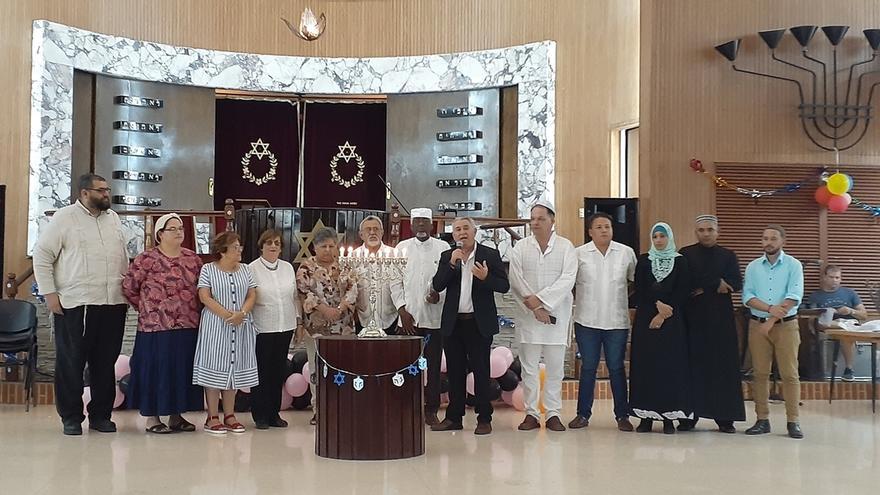
Roberto Perdomo, Former Cuban Political Prisoner and Leader of Plantados, Dies in Miami

Former Cuban political prisoner Roberto Perdomo. (Lilo Vilaplana/Facebook)

14ymedio biggerEFE (via 14ymedio), Miami, 11 October 2023 — Former Cuban political prisoner Roberto Perdomo, president of the Plantados exile group, died at the age of 89 of heart failure in a Miami hospital, close sources reported on Wednesday.

His death in the Kindred hospital comes a month after he underwent surgery for a fracture due to a fall in his home, as reported today by the Assembly of the Cuban Resistance (ARC), an organization formed by opposition organizations inside and outside Cuba.

“We deeply regret the departure of the patriot and former political prisoner, Roberto Perdomo and president of Plantados, a member of the ARC organization,” said the statement.

Perdomo, disappointed with the direction the 1959 Cuban revolution was taking towards a communist dictatorship, “began to fight” against the Castro regime “clandestinely.”

In 1961 he was arrested and sentenced in a summary trial to 28 years in prison.

In his imprisonment “he refused to wear the uniform of a common prisoner, always maintained a firm position as a plantado” and carried out several hunger strikes, says the statement. continue reading

In 1986, the ARC statement continues, Perdomo went into exile in the United States, where “he continued his struggle for the freedom of Cuba until the last days of his life.”

During his exile in the United States he was elected president of the patriotic organization Plantados hasta la Democracia y la Libertad de Cuba (“Planted” until Democracy and the Freedom of Cuba. (Plantados)

In the statement, the ARC expressed its condolences to Perdomo’s widow, family, friends and “all Cuban political prisoners, especially those who were his companion Plantados.

“We have lost one of the bravest and noblest children of the Cuban people,” the exile organization stressed.

Translated by Regina Anavy

____________

COLLABORATE WITH OUR WORKThe 14ymedio team is committed to practicing serious journalism that reflects Cuba’s reality in all its depth. Thank you for joining us on this long journey. We invite you to continue supporting us by becoming a member of 14ymedio now. Together we can continue transforming journalism in Cuba.
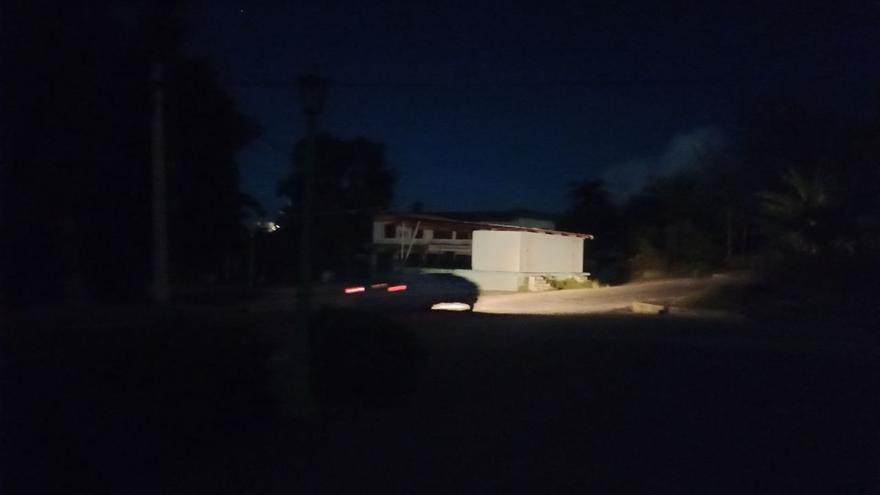
Calabria Contracted Cuban Doctors Out of ‘Desperation’, Say the Italian Authorities

Roberto Occhiuto, president of the Calabrian region, and the first group of Cuban healthcare workers who arrived there last January. (Facebook/ Roberto Occhiuto)

14ymedio bigger14ymedio, Havana, October 4th 2023 – – “The idea sprang from desperation”, was the answer that Roberto Occhiuto, president of the region of Calabria (Italy), gave to Reuters regarding the hiring of Cuban doctors last August to alleviate the health crisis in that province. According to the politician, doctors from other countries do not want to work in the European nation because, he says, they would earn much more in countries such as France or Germany, which offer higher salaries. ##”I tried with Albanian doctors, but they told me that, although in Italy they can earn five to six times more than in their own country, in Germany they could earn much, much more than that,” the official explained to the British agency. Havana, however, did not wait long, and a contract was quickly signed for 497 doctors to arrive in Calabria this year for a period of three years, of whom at least 171 are already working in the region.

Although the hiring annoyed the Italian medical staff, the authorities gave assurances that the Cubans “are not going to steal any jobs”

Although the hiring annoyed the Italian medical staff, the authorities gave assurances that the Cubans “are not going to steal any jobs” and that increasing the personnel was necessary, especially after the covid-19 pandemic, which exposed the deep crisis in the sector.

Interviewed by Reuters, Elizabeth Balbuena, a cardiologist from Santiago who arrived in the Calabrian city of Locri as part of the first contingent of 51 doctors this January, described her surprise on learning that she would be traveling to Europe as part of the mission. “It was a surprise to me to think that Italy had a health problem. None of us had ever been to Europe,” said the Cuban, who is used to the most common destinations being in Africa, Asia or Latin America.

Nevertheless, the country´s authorities recognise that the arrival of the health workers only constitutes a temporary relief, since they have to return to the island in 2025. By the same year, according to Italian trade unions, a quarter of the 102,000 Italian doctors working in public health will be of retirement age.

With these forecasts, the Italian government has begun to negotiate with professionals from less “demanding” nations who are willing to provide their medical services. This is not only the case of Cuba, but also of India, a country visited last March by Italian Prime Minister Giorgia Meloni, where she signed a memorandum for the recruitment of nurses and paramedics.

Italy has always been reluctant to hire foreign staff, says Reuters. According to the Organization for Economic Co-operation and Development (OECD), in 2019 the country had just 0.9% presence of healthcare personnel from OECD countries, in contrast to 11.6% in France, 13.1% in Germany and 30% in the UK. However, only 107 French and 317 German physicians worked in Italy.

During the pandemic, when the country faced saturation of its public health services, the government eased restrictions that only allowed the recruitment of physicians from the European Union or who had residency.

According to OECD data for 2021, at least 11,358 Italian doctors are working in OECD member countries

The situation is aggravated by the fact that salaries in the medical sector in Italy ($82,000 per year for a specialist) are considerably lower than in other nearby countries with similar size economies, such as France (99,000), the United Kingdom (156,000) or Germany (172,000).

Interviewed by Reuters, Lorenzo Grillo della Berta, in charge of health in Morbegno, north of Milan, describes the case of a hospital with just 15 beds that could not open due to lack of staff. “It’s a remote place and it’s not considered attractive. Besides, as soon as you cross the border you find yourself in Switzerland, where you earn more.” “If here a nurse earns 1,500 euros (per month), in Switzerland she earns more than twice as much,” she said.

According to OECD data for 2021, at least 11,358 Italian physicians are working in OECD member countries, of whom 1,644 are employed in France and another 1,408 in Germany. Other non-member states, such as the United Arab Emirates, also attract the attention of Italian staff. According to the Nursing Up union, this September 550 nurses signed up to go to work in Abu Dhabi, where they earn about 3,400 euros and have their accommodation and travel expenses paid.

Uncompetitive salaries, defective infrastructure, long working hours and bureaucracy not only deter national healthcare workers, but also hinder the arrival of foreigners seeking opportunities in the sector. “In Italy it takes a year or a year and a half to accredit (international) degrees. People leave because of that,” Foad Aodi, head of the Italian association of foreign doctors, told the agency.

During the pandemic, the country’s leaders promised to reinvest more heavily in public health. However, as the number of infections declined, these promises came to nothing.

The Meloni government reported that healthcare spending for 2023 will be 6.6% of gross domestic product, 0.2% less than the previous year. By next year it will fall even more, to 6.2%.

Translated by GH

____________

COLLABORATE WITH OUR WORKThe 14ymedio team is committed to practicing serious journalism that reflects Cuba’s reality in all its depth. Thank you for joining us on this long journey. We invite you to continue supporting us by becoming a member of 14ymedio now. Together we can continue transforming journalism in Cuba.
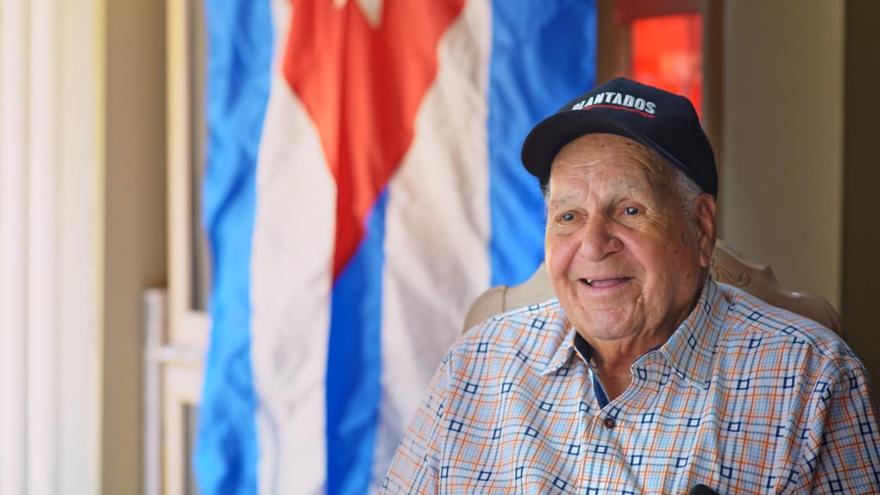
‘Carlos Alberto Montaner Was the Ideal Person to be the First President of a Free Cuba’

Zayas-Bazán worked for 31 years at East Tennessee State University, teaching languages, while remaining in contact with great figures of the Cuban diaspora. (Screen Capture)

14ymedio bigger14ymedio, Xavier Carbonell, Salamanca, 10 October 2023 — When he was 26 years old, Eduardo Zayas-Bazán was rescued from Cuba by the US Government along with 59 other soldiers, imprisoned after the failed Bay of Pigs invasion in 1961. A Camagüey native, lawyer, member of a famous criolla family – among his ancestors are José Martí’s wife, Carmen, and several notable politicians of the Republic – the young man left his country after long days in prison in Havana’s Castillo del Príncipe.

Like other Cubans of his generation who had recently arrived in exile, Zayas-Bazán put down roots and achieved a successful career as a university professor. He worked for 31 years at East Tennessee State University, teaching languages, while remaining in contact with great figures of the Cuban diaspora, such as Carlos Alberto Montaner.

It was Montaner who, along with other Cuban emigrants, founded the Cuban Liberal Union, a political party of which Zayas-Bazán has just been elected president. About the meaning of the word liberal, the present and future of the association, and the vision of the Island from the other shore, the author of the novel The Flying Fish talks with 14ymedio from his house in Miami.

14ymedio: What does it mean for you to preside over the Cuban Liberal Union at such a significant moment for that organization?

Zayas-Bazán: For me it is a great honor to be able to preside over a political party in which I have been a member for more than two decades.

14ymedio: What is the political role and current situation of the Party?

Zayas-Bazán: The Cuban Liberal Union in exile is really an embryo of a political party. Although in exile and in Cuba there are many people who sympathize with our political thinking, we are aware that, in reality, the party where we should proselytize is in a free Cuba. There we will organize ourselves, with Cubans who think like us, on a defined platform to participate in the first elections. For this, in exile we have a select group of liberals who are willing to return to Cuba and, with the experience acquired in all these years of exile, help rebuild the country.

14ymedio: What does it mean to be a liberal Cuban today?

Zayas-Bazán: The liberal Cuban cultivates and defends freedoms and human and civil rights. He believes in the right to own private property in real and personal property, in all types of businesses and other means of production. He believes it is up to civil society to create wealth. The State should only play a role when private enterprise is not capable of meeting the essential demands of society. He believes that democratically elected continue reading

leaders must be public servants, who are subject to the law, who have limited powers, who act with transparency and who are periodically accountable for their actions.

He believes that the political organization of society must be plural, open, with periodic electoral consultations and rotation of governing groups through democratic methods that – although subordinated to majority rule – take into account and respect the rights of minorities. He believes in a rule of law without individual, group or class privileges, and that all people have the same rights and obligations.

And finally, he believes in peace, in consensual negotiation, in the search for solutions to conflicts, in respect for the dignity of the adversary, in civic cordiality as an attitude towards those who have ideas different from his.

14ymedio: How do you value the personality of Carlos Alberto Montaner, recently deceased and founder of ULC?

Zayas-Bazán: Montaner was an exceptional person. He had a charming personality and impressive analytical power. He could explain complex issues in a way that everyone understood. With his ease of expression he would have been the ideal person to be the first president in a free Cuba. Unfortunately, he died before that dream became a reality.

Not only was he the founder of ULC in 1989, but in 1990 he was also the one who devised the Cuban Democratic Platform, made up of the three internationals: the liberals, the Christian Democrats and the social democrats. Carlos Alberto, a convinced democrat, did not mind allying himself with organizations with different ideals. Montaner believed in the exchange of ideas, in the liberal democracy with multiple political parties that our Cuba needs so much.

Thanks to Montaner, since 1992, ULC has been a full member of the Liberal International and is also part of the Liberal Network of Latin America.

14ymedio: What is the legacy – and what have you learned – of your predecessors Antonio Guedes, Miguel Sales and Elías Amor?

Zayas-Bazán: We have been very lucky to have, in addition to Carlos Alberto Montaner, three excellent presidents: the doctor Antonio Guedes (who led ULC from 2010 to 2015), the writer Miguel Sales (2015-2020) and the economist Elías Amor Bravo (2020-2023). All of them have done a great job representing ULC at international conferences and congresses. Thanks to them, to the dissidents inside and outside of Cuba, and to other exile leaders, we know what is happening on our long-suffering island and because of them foreign leaders make statements urging respect for human rights in Cuba and asking that the country open itself to the world.

14ymedio: After several decades in exile, how do you see Cuba?

Zayas-Bazán: Very badly. The Government continues to be determined to remain in power at all costs, despite knowing perfectly well that these 64 years of communism have been disastrous for Cuba. I would tell the authorities not to be afraid of change, that only those who have committed crimes against the population will have to answer for their actions in a rule of law.

The exile wants to help build a new Cuba that will be an example not only for Latin America but for the rest of the world. The exile community, with the experience it has acquired in these 64 years, will be crucial for the future of Cuba. We have experts in all types of fields and Cuba will need this experience so that the changes are achieved correctly. A rule of law will make it possible for exile capital to be invested in Cuba. Exiles like me, although they have not returned, continue to love our country deeply.

14ymedio: What advice do you give to recently exiled young Cubans? Do you think that the future of the Island can be prepared by being outside of it?

Zayas-Bazán:  It is sad how Cuba is running out of its youth. And worse is that the Government facilitates their departure because it counts on them so that, once in exile, they can send remittances to their relatives in Cuba. I advise young people not to abandon the Island. We need you to rebuild it when the change comes. If a change occurred in Spain after an atrocious civil war in which half a million people died, in Cuba it will be easier. May they have faith in the change that will come soon because the situation is unsustainable.

____________

COLLABORATE WITH OUR WORKThe 14ymedio team is committed to practicing serious journalism that reflects Cuba’s reality in all its depth. Thank you for joining us on this long journey. We invite you to continue supporting us by becoming a member of 14ymedio now. Together we can continue transforming journalism in Cuba.

What is behind Cuba’s Small Private Companies?

The main purpose of these MSMEs seems to be to open US bank accounts and then apply for loans in their names. (14ymedio)

14ymedio bigger14ymedio, Orlando Gutierrez-Boronat, Miami, 9 October 2023 — Lately, many have witnessed the apparent growth of small and medium-sized businesses (MSMEs) in Cuba, a development characterized by the regime as a step towards economic freedom and development. However, behind the facade lies a much more complex reality.

The regime in Havana is making a visible effort to show the world, especially the European Union, how much more economically open it is becoming. It has managed to profit from this by retaining control of allegedly private companies, using them as it sees fit. Clearly, the communist government needs more resources and international support, and MSMEs are one means of achieving this.

So what is behind these seemingly independent companies?

According to investigations and statements by various experts, there is a network of support behind many MSMEs, some of which were created by senior government officials, their families or friends under the auspices of the Cuban military. Some were even registered in countries such as Panama and Canada.

One of the most striking cases is that of Cuban spy Gerardo Hernandez, now national coordinator for the Committees for the Defense of the Revolution. It has been pointed out that Hernandez is the “godfather,” if not the owner, of a private company operating in Cuba, a fact that calls into question his autonomy given his obvious connection to the state. And his is just one of dozens of cases. continue reading

The international community must continue to investigate and raise questions to ensure MSMEs do not become one more tool of the regime

 Allegations that MSMEs have been been acquiring high-value properties abroad for use as tax havens are a cause for concern. Questions about how the earnings of these companies are generated and whether they are being used for the benefit of the Cuban people cannot be ignored.

Gelet Fraguela, director of the  digital platform ADN Cuba, publicly exposed this network during a press conference organized in Miami by the Assembly of the Cuban Resistance.

Research indicates that they are a way for the regime to make money through purchases made by Cuban exiles on behalf of family members still on the Island. They allow the regime to fund itself in the midst of the worst economic crisis it has faced in decades.

The main purpose of these MSMEs seems to be to open US bank accounts and then apply for loans in their names. This raises additional concerns, however, as it could put undue pressure on banks to use them as lobbyists calling for the U.S. embargo to be lifted.

Therefore, it is essential that the international community continue to investigate and raise questions to ensure MSMEs do not become one more tool of the regime for maintaining its control over the Cuban economy and evading international sanctions.

A genuinely open economy and freedom to do business in Cuba are desirable, but only under a democratic government which, as we know, has not existed on the island since 1959. Ideally, these initiatives would be driven by real businesspeople and not used as strategy to acquire economic resources and more power. It’s time for the United States to open its eyes to this reality.

____________

Editor’s note: Orlando Gutiérrez-Boronat is coordinator of the Assembly of Cuban Resistance

____________

COLLABORATE WITH OUR WORKThe 14ymedio team is committed to practicing serious journalism that reflects Cuba’s reality in all its depth. Thank you for joining us on this long journey. We invite you to continue supporting us by becoming a member of 14ymedio now. Together we can continue transforming journalism in Cuba.
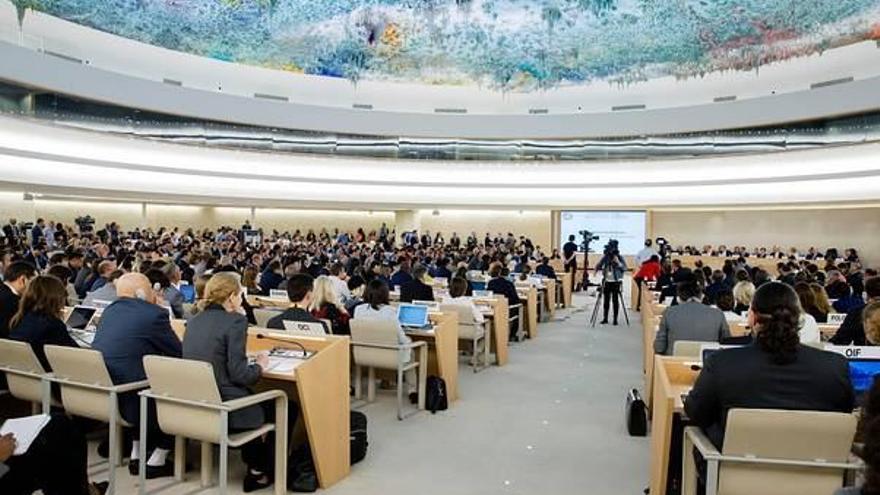
Cuba Re-Elected to the UN Human Rights Council Despite Its History of Repression

Other countries with a documented record of human rights violations, such as China, also won a seat. (EFE)

14ymedio bigger14ymedio, Madrid, 10 October 2023 — Despite the numerous complaints against its candidacy for the UN Human Rights Council, Cuba obtained 146 votes in its favor on Tuesday. The Island, systematically accused of violating basic rights and freedoms, and with 784 political prisoners, will be part of the Council from 2024 to 2026.

The Cuban Foreign Ministry celebrated that the country “had the most votes,” which it attributed to the “indisputable” recognition that the international community gives to the regime. It is the sixth time that Havana has received the necessary ballots to occupy a position on the Council, to which Brazil and the Dominican Republic were also elected.

Other countries with a documented record of human rights violations also won a seat. This is the case of China – the most controversial candidate along with Russia – which won 154 votes.

The 47 member states, “responsible for the protection and promotion of human rights around the world” elected their board, which includes France, Japan, the Netherlands and the Ivory Coast. continue reading

As the vote was secret, it is unknown whether Putin’s allies, such as Cuba, Nicaragua, Venezuela or Belarus, supported Cuba’s candidacy

 Peru was left out, overwhelmed by political instability since the attempted coup d’état perpetrated by former President Pedro Castillo in 2022, as was Russia, expelled from the Council since that same year, after Vladimir Putin’s invasion of Ukraine. However, Moscow managed to get 83 countries to endorse its request, which required 97 votes.

Since the vote was secret, it is unknown whether Putin’s allies, such as Cuba, Nicaragua, Venezuela or Belarus, supported the candidacy. In the case of Peru, which obtained 108 votes – more than necessary – it was surpassed by the other applicants in the region.

Several institutions and personalities had criticized Cuba’s candidacy to the Council’s board of directors. The Demo Amlat platform lamented Cuba’s entry into the Council and pointed out that “the Cuban regime criminalizes dissent and systematically persecutes human rights defenders.”

Hours before the results were known, activist Carolina Barrero had pointed out that “if Cuba is re-elected in the Human Rights Council, it will be with the support of complicit states… Cubans, human rights organizations and activists condemn the re-election of a bloody dictatorship that has plunged our country into misery and oppression,” she added.

“In a slap in the face to the democratic aspirations of the Cuban people, the longest-running dictatorship in the hemisphere has been re-elected to the UN Human Rights Council right in the midst of an escalation of violence against its citizens. A real shame,” stressed fellow activist Magdiel Jorge Castro.

Hours before the results were known, activist Carolina Barrero had pointed out that “if Cuba is re-elected to the Human Rights Council it will be with the support of complicit states

For his part, the exile Félix Llerena had said days ago that “the perpetrators (of violations of rights) cannot be the guarantors of compliance with international law.”

The Human Rights Watch organization reminded the international community of Havana’s treatment of its dissidents and the “thousands of political prisoners,” prosecuted for demonstrating peacefully, and asked them to vote against Cuba.

With a view to the vote, the Government and the Chancellery of the Island had undertaken an international campaign aimed at promoting Cuba as a state that defends rights. In the main lobby of the UN headquarters in New York, an exhibition entitled “Cuba, a sustained commitment to all human rights for all,” by Cuban visual artist Yosvany Martínez, was curated.

“The Cuban people own their own destiny, exercise full power and control over the life of the country, and actively participate as the main actor in an effective system of socialist democracy and social justice that they support and endorse,” said the presentation brochure of the exhibition, signed by the Deputy Prime Minister of Foreign Affairs of Cuba and Permanent Representative to the UN, Gerardo Peñalver Portal.

Among posters alluding to the “benevolent” Cuban Criminal Code – which intensified the sentences of the protesters in the protests of July 11, 2021 – the exhibition invited the UN to “feel pride” in Cuba’s role in the defense of human rights.

Translated by Regina Anavy

____________

COLLABORATE WITH OUR WORKThe 14ymedio team is committed to practicing serious journalism that reflects Cuba’s reality in all its depth. Thank you for joining us on this long journey. We invite you to continue supporting us by becoming a member of 14ymedio now. Together we can continue transforming journalism in Cuba.

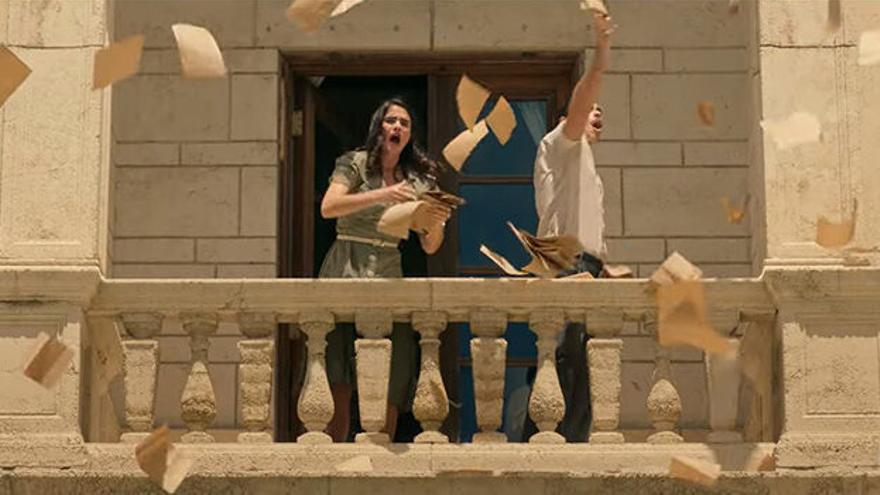
The Toronto Independent Festival Awards the Cuban Film ‘Plantadas’

Frame of the film ‘Plantadas’, by Lilo Vilaplana and his son Camilo. (Capture)

14ymedio bigger14ymedio, Havana, 10 October 2023 — The historical feature film Plantadas (Planted)* by Cuban directors Camilo and Lilo Vilaplana, won the award for best international film at the Toronto Independent Festival of Cift, in Canada, the directors of the event announced on Tuesday.

Lilo Vilaplana celebrated the award on his Facebook page and thanked his entire team for the production of the film. “I am very happy with this award. I really thank Reinol Rodríguez (activist and executive producer of the film) for electing me to do Plantadas.” He also praised his technical and production team, the actors, sponsors, businessmen and “everyone who contributed money, resources and support to Plantadas, but above all the former Cuban political prisoners who gave everything for Cuba, including the Cubans who are imprisoned today for thinking differently and asking for freedom for our beloved homeland.”

The award, added the filmmaker, “will greatly annoy the dictatorship, which will no longer be able to say that it is a film  awarded only in Miami. We are taking the message of the denunciation of castrismo to the whole world.”

The story of the inmates who opposed Fidel Castro after the triumph of the Revolution in 1959 was also awarded last March at the 40th edition of the Miami Film Festival. At the same event, El Caso Padilla (The Padilla Case), by Pavel Giroud, was awarded in the category of best documentary. continue reading

This film promises to be at least as valuable as the previous one, because it will collect the experiences of women who have faced the dictatorship

Vilaplana’s feature film was made after the success of his film Plantados, which forms, along with the most recent production, a duo that narrates the human rights violations of the Cuban prison system and illustrates the daily life of the first political prisoners imprisoned by Castro.

“This film promises to be at least as valuable as the previous one, because it will collect the experiences of women who have faced the dictatorship and who, for their actions, ended up in the dungeons of totalitarianism, suffering a systematic violation of their rights, including that of life,” said journalist Pedro Corzo in an article published in 14ymedio.

“The political imprisonment of Cuban women has been, without a doubt, the most numerous and extensive in years that the American hemisphere has suffered. It started in 1959 and it’s not over yet,” he said.

*Translator’s note: Plantadas refers to female political prisoners who resist, refusing to conform to the demands of their jailers. Brief history of plantados [male political prisoners who resist] here

Translated by Regina Anavy 

____________

COLLABORATE WITH OUR WORKThe 14ymedio team is committed to practicing serious journalism that reflects Cuba’s reality in all its depth. Thank you for joining us on this long journey. We invite you to continue supporting us by becoming a member of 14ymedio now. Together we can continue transforming journalism in Cuba.