
Camaguey Court Prosecutes an Activist for Being Photographed With the Cuban Flag

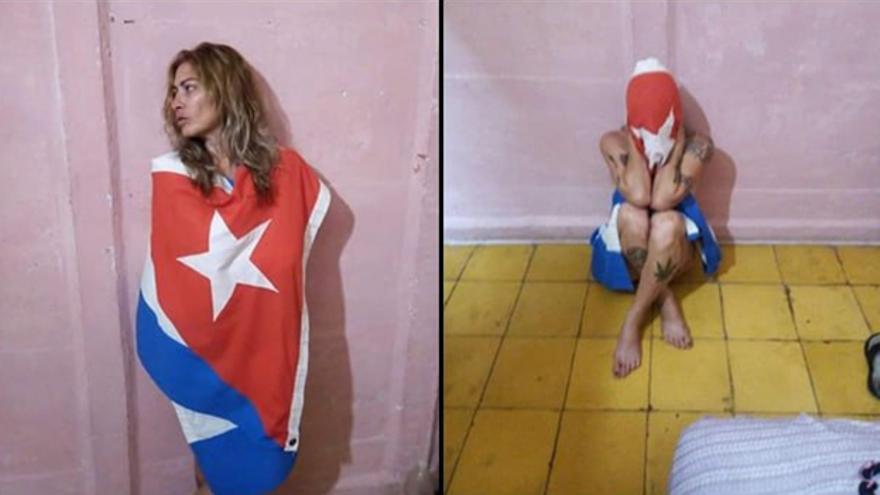
Aniette González was arrested on March 23 in Camagüey for publishing photographs of herself dressed in the Cuban flag. (Facebook)

14ymedio bigger14ymedio, Havana, 4 October 2023 — The oral hearing of the trial against the Camagüeyan activist Aniette González was held this Wednesday in Camagüey and was concluded for sentencing. The opponent is accused of the crime of “insulting patriotic symbols,” after she posted photos of herself wrapped in the Cuban flag on social networks.

According to Cubalex, the Prosecutor’s Office, which in its petition requested four years in prison for the 43-year-old woman, alleged that she did not have a garment under the flag when taking the photos, so the images are considered “a lack of respect” for the patriotic symbol.

For her part, González’s lawyer stated that her client “was being judged for her political ideology” and emphasized in her defense that the opponent “was wearing clothes.”

One of the witnesses of the Prosecutor’s Office acknowledged that “he had not seen the photos with the flag very well, because they simply appeared on her Facebook wall, to which he did not pay much attention,” Cubalex adds. continue reading

One of González’s daughters told La Hora de Cuba that they were able to enter the trial room only long after the oral hearing had begun.

“The three witnesses for the Prosecutor’s Office didn’t agree; it was total madness,” said the young woman. “One said that breasts could be seen and then retracted that and said breasts couldn’t be seen. Another said that he only saw the posted photos. I don’t know what he was doing there as a witness.”

Similarly, the witness stated that “it was impossible” to know if she had on clothes under the flag

The witness said that “it was impossible to know whether or not she had on clothes under the flag, giving an example: ’At this moment I have on a shirt and shorts under my uniform. I know because I put them on myself, but you who were not present when I put them on, who don’t know what I have on underneath, have no way of knowing what my uniform hides. So I can’t say if she had on clothes under the flag or not.’”

In the photos of Aniette González, which are part of a performance, she is seen standing with her body covered by the flag, and, in another image, she is sitting with her face covered by the flag. With those images, the activist joined the “The flag is everyone’s” campaign, in solidarity with the artist Luis Manuel Otero Alcántara, imprisoned in the maximum security prison of Guanajay (Artemisa), for the crimes of outrage to symbols of the homeland, contempt and public disorder.

in the city of Camagüey, Wednesday began with the arrest of the director of La Hora de Cuba, Henry Constantin, to prevent him from covering the trial. The independent media published on its Facebook page that the reporter was detained in a police unit for three hours while his colleague, José Luis Tan Estrada, “was incommunicado” with the same objective.

From the early hours, the court “was surrounded by police and State Security agents. A police patrol was waiting for Henry at the intersection of Cisneros and Hermanos Agüero streets,” the media reported.

Translated by Regina Anavy

____________

COLLABORATE WITH OUR WORKThe 14ymedio team is committed to practicing serious journalism that reflects Cuba’s reality in all its depth. Thank you for joining us on this long journey. We invite you to continue supporting us by becoming a member of 14ymedio now. Together we can continue transforming journalism in Cuba.
Following Criticism from Cuban Officials, the Sign for San Pepper’s Burger in Holguin is Removed

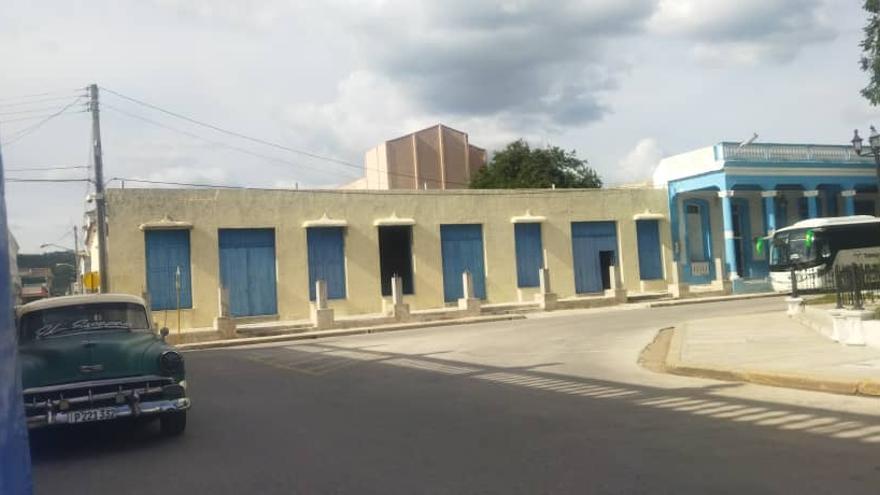
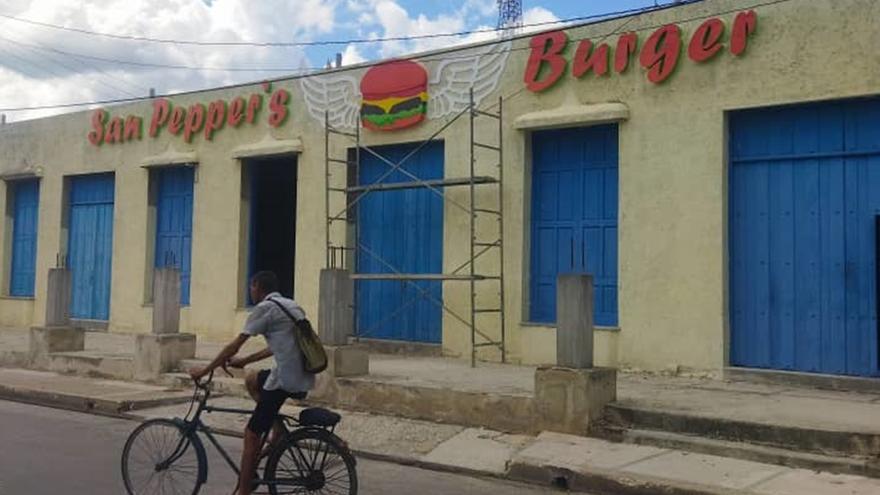
On Friday morning, nearby residents noticed the colorful letters and the cute image of a hamburger with wings were missing. (14ymedio)

14ymedio bigger14ymedio, Miguel García, Holguín, 13 October 2023 — The sign on the facade of San Pepper’s Burger, a private establishment which was about to open in the city of Holguín, lasted less than a week. On Friday morning, nearby residents noticed the colorful letters and the cute image of a hamburger with wings were missing. “We saw it coming,” said a resident of the zone, alluding to the attack on the business last Tuesday on the state-run site Cubadebate, where they reproached the establishment for selling “a culture that is not ours.”

On Thursday, 14ymedio published an article which included testimonies of people from Holguín who offered their opinions on the diner, its name and the impact its opening could have on the depressed food service scene in the city. “No one knows what happened because it’s been closed all day, but rumor on the strees is that the owner got scared,” said an old lady who lives in the area near Parque de las Flores located right in front of the private business.

With what that sign must have cost and the effort they went through to put it up, no one believes that they now removed it for anything other than pressure by the extremists.

“With what that sign must have cost and the effort they went through to put it up, no one believes that they now removed it for anything other than pressure by the extremists,” said the woman. The renovated facade, painted yellow with its blue colonial doors, seemed to be missing something today after the establishment’s name disappeared. “People used to come all the way over here to take pictures and the kids were taking selfies with the wings in the background, as if they were coming out of their head,” added Paco, a frequent visitor to the park. continue reading

As of yet, the local press has not mentioned the matter and the question that Cubadebate’s writer posed in her article has already been answered. Faced with the question of “what happened with fighting the culture war” the facade is now bare and one sign no longer lights up the night in Holguín.

“People used to come all the way over here to take pictures and the kids were taking selfies with the wings in the background, as if they were coming out of their head,” added Paco, a frequent visitor to the park. (14ymedio)

Translated by: Silvia Suárez

____________

COLLABORATE WITH OUR WORKThe 14ymedio team is committed to practicing serious journalism that reflects Cuba’s reality in all its depth. Thank you for joining us on this long journey. We invite you to continue supporting us by becoming a member of 14ymedio now. Together we can continue transforming journalism in Cuba.
Fewer Than 150,000 Tourists in Cuba in the Worst September Other Than During the Pandemic

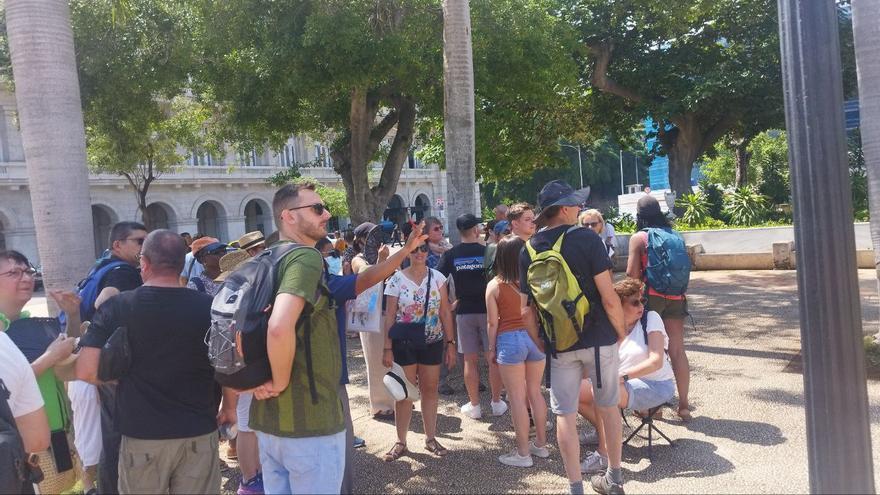
Canadian tourists in Havana’s Central Park this September. (14ymedio)

14ymedio bigger14ymedio, Madrid, 16 October 2023 —  The complete tourism data for the month of September has not yet been released, but thanks to a note published in Prensa Latina, the umpteenth failure of the sector on the Island has become known. The figures for last month barely added 147,380 international travelers. It is the worst figure so far this year, even fewer than in June, when the figure rose to 154,590.

The state agency released a note this Sunday in which it celebrates the good progress of Canadian tourism. In it, professor and researcher José Luis Perelló states that Cuba received 709,556 Canadian tourists, almost 40% of the total 1,813,972 visitors. As of August, with data from the National Office of Statistics and Information (Onei), 1,666,592 international travelers had arrived on the Island, of which 177,306 came in that month.

September and October are traditionally the worst months of the year for Cuban tourism, already on the verge of the high season, which begins in November. However, compared to other Septembers before the pandemic, the catastrophe is palpable. In 2017, international visitor arrivals were around 250,000, A year later – the best in memory for the sector – they stood at approximately 280,000, while in 2019, when the worsening of tourism for the Island began, the number reached 200,000, which is still over 50,000 more people than this year. continue reading

In the first nine months of the year, a total of 709,556 travelers arrived from Canada, which means that in that month 33,560 Canadians flew to the Island

On the positive side for the Cuban authorities is the Canadian data. In the first nine months of the year, a total of 709,556 travelers arrived from that country, with 33,560 Canadians flying to the Island in September. The number is lower than that recorded in August, when 45,955 Canadians arrived, but it is consistent with the global figure.

That would mean, pending developments in subsequent months, that the alert issued by the Canadian Government for its citizens to exercise caution when choosing this destination due to the “shortage of basic necessities, including food, medicine and fuel” has not had much impact to date. The measure, taken at the beginning of last month, was reinforced in an update issued on September 26.

According to information from Prensa Latina, between January and September there were 4,195 flights with 808,028 seats for sale to fly to Cuba between the companies Air Canada, Air Transat, Sunwing, WestJet and Swoop.

The authorities still have not set a new tourist target for this year, more than two months after admitting that the planned 2.5 million will not be reached.

____________

COLLABORATE WITH OUR WORKThe 14ymedio team is committed to practicing serious journalism that reflects Cuba’s reality in all its depth. Thank you for joining us on this long journey. We invite you to continue supporting us by becoming a member of 14ymedio now. Together we can continue transforming journalism in Cuba.
Adulterated Coffee in Short Supply for Cubans; Premium, Organic Coffee for Export

Nury’s days of going without her morning shot could end if Holguín’s Reynerio Almaguer Paz coffee roaster lives up to its managers’ promise.

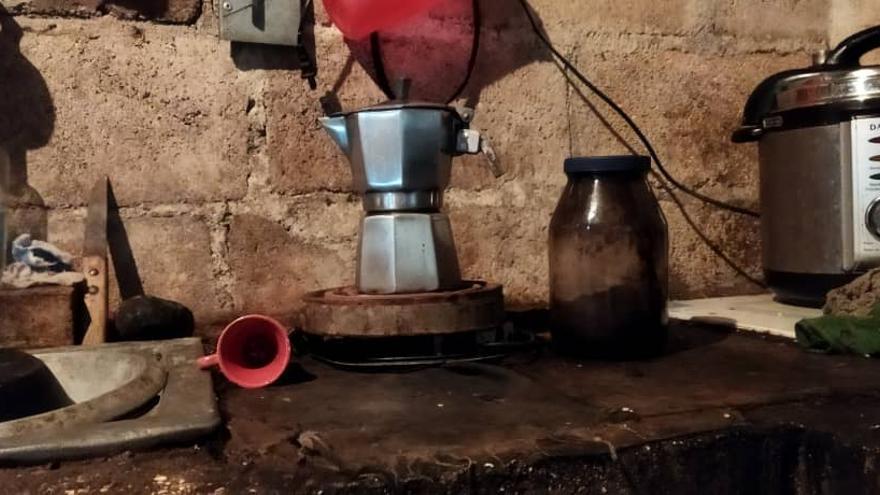
14ymedio bigger14ymedio, Miguel García, Holguín, 14 October 2023 — A stain on the wall reminds Nury that not only does rationed coffee taste worse and worse but it can be dangerous too. “They’ve added so many things to it that it clogged* the coffee pot while it was brewing. Luckily, I was in the room at the time,” she says. Despite the risks, this 57-year-old Holguín resident misses the coffee, which local stores have not been able to carry for months.

Nury’s days of going without her morning shot could end if Holguín’s Reynerio Almaguer Paz coffee roaster lives up to its managers’ promise. This week, company director Rider Juan Sanchez Hijuelos told state media that the factory was able to resume production after it received a delivery of raw materials. He added that its ¡Hola!-brand coffee would not only be in Holguín by October 25 but in Granma and Las Tunas as well.

“And what about the coffee we were supposed to get months ago? Why haven’t we gotten any since June?” asks Nury. Sanchez Hijuelos has made it clear that, to his regret, back orders will not be filled because the shortage of raw materials does not allow it. Residents in the east of the country, where the coffee shortage is most acute, have had to get it on the black market or make do with infusions of one sort or another.

And what about the coffee we were supposed to get months ago? Why haven’t we gotten any since June?

“Orange leaves, lemongrass, wild oregano — for months we’ve been brewing everything except coffee,” says Nury. Those with family members overseas have rediscovered the joys of coffee unadulterated by roasted peas, a common additive on the island. “The other day I was at a neighbor’s house and she offered me a little cup of La Llave [from the United States]. I almost licked the bottom of the cup because I had forgotten just how good coffee could taste,” says the Holguin native. continue reading

Difficulty importing peas has been one of the reasons production of ¡Hola! has ground to a halt. Raquel Vingut Ceballos, director of the Coffee Roasting and Distributing Company in Ciego de Ávila province, urges patience. She reports that five tons of peas have already been delivered, which will allow the company to meet its October quota.

“And what about the coffee we were supposed to get months ago? Why haven’t we gotten any since June?” asks Nury. (14ymedio)

In response to the crisis, Vingut Ceballos has been issued coffee from the strategic state reserve, a stockpile that is supposed to be used only in an emergency situation. A mixture of 50% coffee and 50% chicory, it is one item in a basket of staple products that Cubans may purchase with their ration books. The coffee harvest will begin in November but few have have any hope that it will alleviate the current situation considering that some portion of it will end up on the international market.

Meanwhile, thousands of kilometers from Nury’s house and the Vingut Ceballos offices, Lavazza — one of the most prestigious coffee brands in the world — was rolling out its new premium organic coffee, Reserva de Tierra Cuba. A blend of coffee beans from different regions, it is being marketed to the hospitality industry.

The coffee harvest will begin in November but there is little hope that it will alleviate the current situation

“With Cuban music playing in the background, Lavazza’s best baristas brew the product in full view of attendees [at a company event in Madrid on October 10]. The flavor and aroma of the Island’s coffee captivates the restaurateurs, distributors and food lovers. And no wonder since it offers a contemporary, sustainable, quality coffee experience that perfectly embodies our values of social and environmental responsibility,” the company press release boasts.

The statement details the product’s origins when, back in 2018, “the Lavazza group launched a sustainable development program” in collaboration with several institutions and local authorities to revive coffee cultivation in the country and restore the quality of Cuban green coffee. The company acknowledges that Cuban coffee growing has been drastically curtailed but attributes the drop in production not to the exodus of producers, government credit defaults or the lack of investment but to an outbreak of rust disease.

“The final result is La Reserva De ¡Tierra! Cuba, made from beans grown by 170 farmers in the provinces of Santiago and Granma.” To further tease the palate, the statement notes that it is made up of 65% specially washed Arabica Turquino, 25% washed Robusta and 10% fermented Robusta, which the company claims makes the final product “sweeter and more elegant.”

And no wonder, as it offers a contemporary, sustainable, high-quality coffee experience that embodies the company’s values of social and environmental responsibility

The resulting cup has a “velvety body with notes of almond, milk chocolate and the sweet aftertaste of wine,” nothing like dry, grassy flavor and grainy texture of the product that rationing has forced on the island’s consumers.

Lavazza claims that its collaboration with Cuba “protects farmers, promotes the role of women and young people, and helps the environment in terms of forest conservation and the exchange of good agricultural practices.” It adds it has provided specialized training to farmers and local producers “in the implementation of a controlled fermentation process during part of the Robusta harvest.”

Meanwhile, back on the island, many people are counting the days until ¡Hola! is back on the shelves. When brewing it, though, they’d better keep a safe distance from the coffee pot.

*Translator’s note: “Additives” used to stretch the coffee often clog the stove-top espresso pots, which then are prone to explode in Cuban kitchens. 

____________

COLLABORATE WITH OUR WORKThe 14ymedio team is committed to practicing serious journalism that reflects Cuba’s reality in all its depth. Thank you for joining us on this long journey. We invite you to continue supporting us by becoming a member of 14ymedio now. Together we can continue transforming journalism in Cuba.
Agromarkets Give a Blow to the Cuban Regime’s Banking Reform

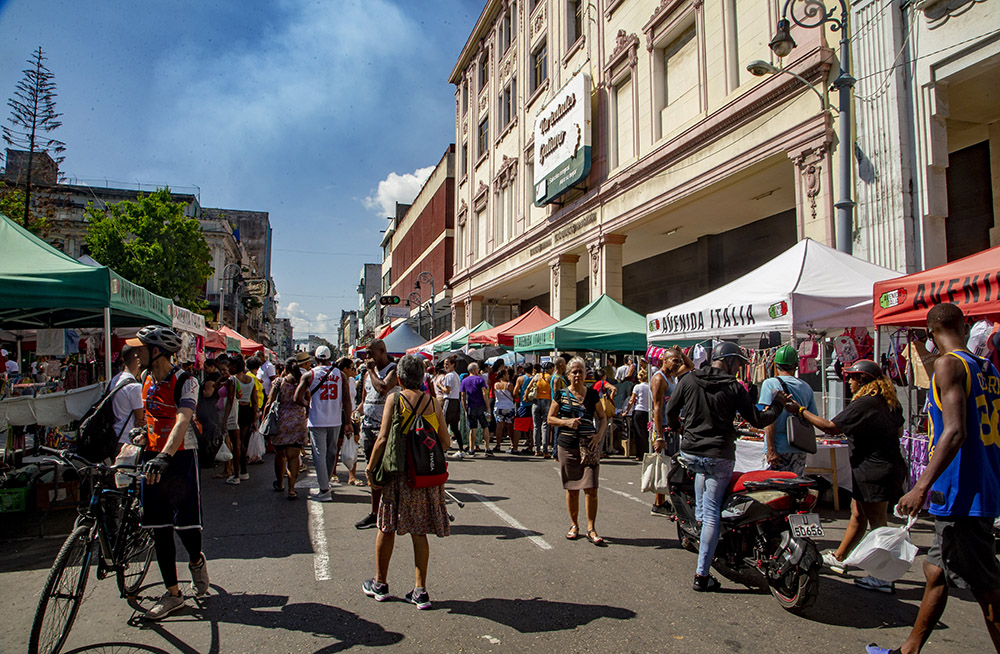
Trade fair on Galeano Street, where the use of electronic channels was promoted, such as the Transfermóvil and EnZona payment gateways, for the payment of goods and services. Photo: Ismael Francisco/ Cubadebate.

14ymedio bigger14ymedio, Elías Amor Bravo, Economist, October 6, 2023 — There is more news about bancarización.* The state press analyzes the relationship between agromarkets and electronic payments and describes it as “a union that is not yet consolidated.” It’s a good example that bancarización as a hierarchical order issued by the regime, mandatory for all, is not well focused. The reason? It has already been highlighted in previous entries. Cubans prefer to make cash payments and use paper money. They don’t trust the banks and what the communists call “electronic payments.” What is not in demand can hardly get anywhere. The law of supply and demand makes its way inexorably into the Cuban communist economy. What we are seeing is a rebellion of the Cuban people against the regime, and we will see who wins.

The state press complains that in certain areas of the country there is slowness and resistance when it comes to adopting electronic commerce mechanisms in agromarkets. In these spaces in which many Cubans solve their basic food needs, bancarización is of no interest. Neither to buyers nor to sellers, and, therefore, in businesses that now have the QR Code for payment, the use of electronic means is almost null. Interesting.

This information is not trivial. In those agromarkets, thousands of transactions take place every day that materialize, apparently, in cash. People don’t use electronic mechanisms, despite having the facilities for it. The payment by digital e-commerce platforms for one or two malangas (sweet potatoes), a few bananas and two or three mangoes does not justify using bancarización.

And although it’s true that the average transaction in these agromarkets is small in value, although at current prices nothing is cheap in Cuba, as numerous operations are carried out every day, the weight of operations in the total retail market is very high, and this lowers the regime’s expectations to extend bancarización to all branches of the economy. People pay in cash not only for food. In these agromarkets, many other transactions escape the trap of electronic payments, like the training of workers and the leasing of premises. continue reading

It’s in this area of the agromarkets where it will be very difficult for the regime to achieve the integral bancarización of operations, and, therefore, it will continue to handle paper money and cash in transactions, which will require people to have those funds. And of course, since what is happening in the agromarkets does not please the leaders, the state press contemplates the spontaneous process of transactions between buyers and sellers as the “survival of the fittest without regard for the rules” and insists that agromarkets should not be allowed “the stealing that lends itself even to not paying taxes.” Unbelievable.

It then claims that rents for the market stalls by the Provincial Property Management Company should be paid compulsorily by electronic commerce using the EnZona platform, in addition to the cash charge, which must be reduced to the minimum expression. The complaint goes further and says that in the areas leased to the self-employed, the “providers only take cash.” And this should not be allowed.

Faced with this pressure from the authorities to implement bancarización, even if it is not among most people’s priorities, opinions begin to divide. And so appear those who believe that the use of cards is not complicated and that people should get used to it. Even those who provide the Extra Cash service, which gives cash to buyers in the agromarkets to make up for the poor functioning of ATMs, received a recommendation to change procedures and use electronic payments, despite the fact that the population, in general, positively values having the Extra Cash.

From the perspective of agromarkets it seems evident, as the state press points out, “that there is a long way to go to make bancarización effective and to provide access for most of the population to electronic payment channels, no longer as an option for suppliers, but as an indispensable condition when providing a service or marketing a product.”

The regime’s imposition of bancarización is taking place at a particularly complicated time in the Cuban economy, where stagflation drags economic operators into a vicious circle in which internal and external imbalances limit the ability of the authorities to get out of the dark hole.

Nothing that is mandatory and that doesn’t respond to the real needs of society can be successful. Neither producers nor consumers have the slightest interest in electronic payments in agromarket transactions, even indirect ones. Forcing and compelling them is a serious mistake that can lead to a reduction in transactions, with devastating effects on private consumption.

The most serious thing is that Acopio, the state monopoly on the distribution of agricultural products, is also not offering signs of incorporating electronic payments into its operation, despite the orders received. The incorporation of QR codes of the EnZona platform in the aisles and agromarkets, and the actions to install Point of Sale Terminals (TPV or POS) in businesses aren’t advancing at the necessary pace, and numerous Acopio transactions continue to be carried out in cash, with the use of electronic means being almost non-existent in some places, as the state press points out.

The regime’s propaganda emphasizes that the elderly are the ones who pose the most problems in making electronic payments, while young people do not. They should worry about it, since Cuba’s aging trend forces them to be very careful with the needs and preferences of the elderly, who in many cases do not have mobile phones or other devices. Likewise, the regime concentrates its attacks on sellers, who are described as unprepared and unwilling to incorporate electronic payments, without taking into account that if this is the case, it’s because their customers don’t want it.

The agromarkets give a blow to the regime’s bancarización strategy. They are not the only ones. The chosen path, to order and command, is not the most appropriate.

*Translator’s note: Bancarización— banking reform –in effect since August 3, 2023,  is a set of measures intended to move Cuba to a “cashless” society based on electronic banking.  So far, the fast-falling peso, soaring consumer prices, the inability of the Island’s infrastructure — subject to constant blackouts — to support required elements as simple as ATMs, along with widespread distrust among the population, have stymied the effort.

Translated by Regina Anavy

____________

COLLABORATE WITH OUR WORKThe 14ymedio team is committed to practicing serious journalism that reflects Cuba’s reality in all its depth. Thank you for joining us on this long journey. We invite you to continue supporting us by becoming a member of 14ymedio now. Together we can continue transforming journalism in Cuba.
Cuba: Totalitarianisms’ Dangerous Business Vision

A small and medium enterprise (mipyme in Spanish) in Havana, Cuba. (14ymedio)

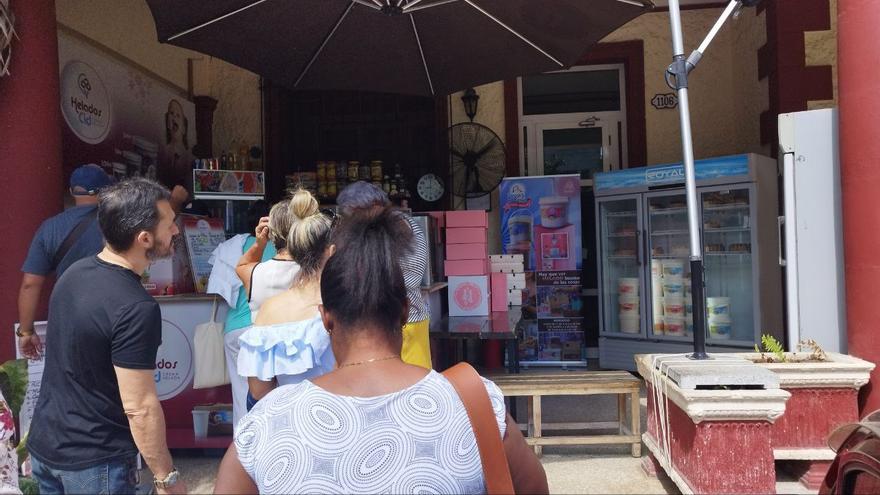
14ymedio bigger14ymedio, Pedro Corzo, Miami, October 14, 2023 — Castroite totalitarianism is reinventing itself by launching the rise and development of small enterprises, an activity that would not be possible if the ruling class weren’t strongly involved with the opportunistic objective of preserving power.

I confess that I do not believe in the good faith of Cuban autocrats. They’ve demonstrated more than enough skill to manipulate the population and other people of good faith, without excluding professional climbers who only seek to promote their own interests. Subjects whom we all know.

The heirs of those who belong to “the new class” — as Yugoslav Milovan Djila would wisely identify them — is greedy for the wealth and wellbeing that competes with the resentment and sectarianism of their predecesors. Nevertheless, they do no want to leave the government, which would mean losing their invaluable prerogatives.

On March 13, 1968, with the so called Revolutionary Offensive — which eliminated close to 60,000 small private businesses that had survived other confiscations by Castroism — Fidel realized his dream of building a kind of trinity comprising him, the Revolution and Cuba. continue reading

The confiscations were so absurd, says writer Jose Antonio Albertini, that a high-ranking government official, Carlos Rafael Rodríguez, one of Castro’s loyal servants, opposed the measure alleging that socialist countries like Czechoslovakia and Poland hadn’t implemented that option. The Castros never listened to the claim.

To grow, the ’mipymes’ need the least intrusive government possible, a condition the Cuban authorities never grant, due to their controlling and arbitrary nature

One year later, Christmas was banned on the Island by governmental decree. The regime declared July 25, 26 and 27 official holidays. The caudillo assumed the role of messiah. We had a new national religion with a vanguard of loyalists, which we could have referred to as Castro’s inquisition, supported by mass organizations the leaders of which, to the rythm of songwriters of totalitarianism, emulated the sadly famous Tomás de Torquemada.

Some will remember that, parallel to the scarcity and the snitches of the Committees in Defense of the Revolution, the firing squad was deafening and more jails were built, because death and prisoners were the only thing the regime produced.

Until 1968, we had lived under an iron-clad and bloody dictatorship. As of that date, we began to suffer one of the most severe and disastrous totalitarian regimes to ever exist, accumulating, by imposition, failures, misery and a profound disenchantment among most citizens.

We can’t deny that imposing totalitarianism relied on the complicity of a large number of citizens and that the counteroffensive we live today, contrary to the nature of absolutists, isn’t orphaned by the support of other Cubans on the island and abroad either, which trust that Miguel Diaz-Canel and his servants, through economic freedom, will drive the Island toward democracy, as if Xi Jinping’s China were free.

The extreme poverty created by even the most modest confiscations — barber shops, hair salons and even the closure of the miserly shoe repair establishments — led to strengthening the state bureaucracy with the creation of consolidated enterprises that managed the businesses confiscated by sector.

We cannot deny that imposing totalitarianism relied on the complicity of a large number of citizens

Certainly, although the inefficiency was enthroned in the country, humor was not lacking, people would say that the most important business was Ecochinche — Bedbug Management Company — that horrendous parasite Castroism had imitated to perfection because it has spent more than six decades bleeding the people dry, plundering their allies and stealing from business owners who, trustingly, have invested in their properties.

The micro, small and medium enterprises have always existed and, luckily, many of them were the starting point for large companies that, due to their efficiency and creativity, have been pillars of universal development. However, to grow they all need the least intrusive government possible, conditions the Cuban authorities will never grant, due to their controlling and arbitrary nature.

In any given Latinamerican country, even the poorest, small businesses which are now called mipymes exist. The governments allow them to be created and grow without restrictions, in contrast to what happens on the Castros’ Island, where even to travel abroad a permit is required and the approval of political commissars. From there, my doubts about the legitimacy of management that should benefit Cubans, more than its despots.

Translated by: Silvia Suárez

____________

COLLABORATE WITH OUR WORKThe 14ymedio team is committed to practicing serious journalism that reflects Cuba’s reality in all its depth. Thank you for joining us on this long journey. We invite you to continue supporting us by becoming a member of 14ymedio now. Together we can continue transforming journalism in Cuba.
Cuba: ‘It Neither Tastes Like Coffee Nor Smells Like Coffee’

Sancti Spíritus residents have nothing good to say about the rationed coffee being sold at local stores. (14ymedio)

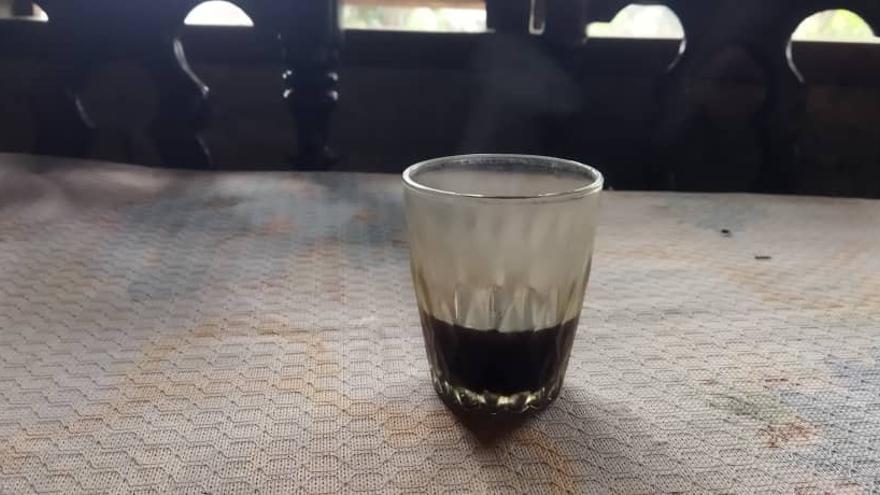
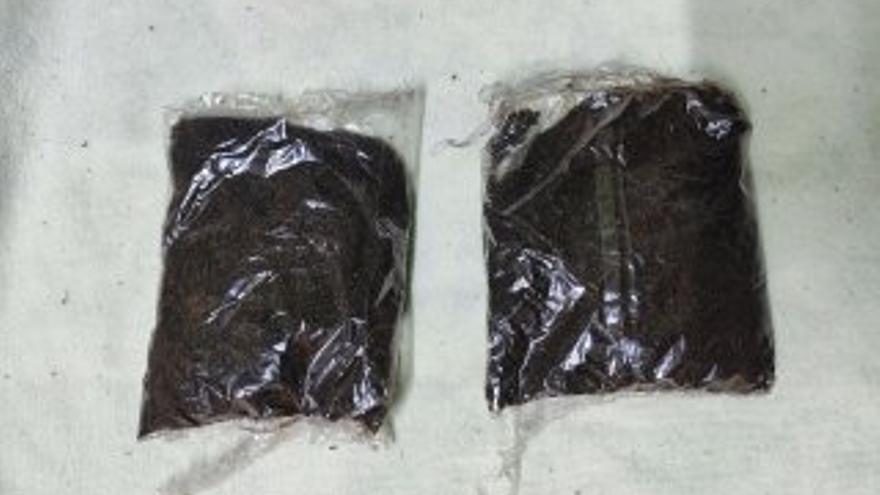
14ymedio bigger14ymedio, Mercedes García, Sancti Spíritus, 16 October 2023 — The relief among Sancti Spíritus consumers was short-lived following the news that coffee would once again be available at stores selling rationed products. After being out of it for months, government warehouses finally began distributing it recently. The product, which arrived at state-run stores in October, comes in a plastic package with no label and crudely sealed edges. With a grainy texture, an odd flavor and little aroma, it is far cry from what most people would call coffee. “It leaves a sludge in the bottom of the cup that looks like river mud,” complains Lismary, a 32-year-old Sancti Spíritus resident who is among the thousands of frustrated customers.

“When a neighbor told me about it, I ran to the store, but once I saw the color, I had a bad feeling. It was very black, like it was burnt. When I opened the package, I realized it didn’t smell like much of anything. Maybe a bit like burnt bark.” Her biggest disappointment, however, came after she had brewed her first cup. “My grandmother was dying to try a shot but, when I gave it to her, her immediate reaction was, ’It neither tastes like coffee nor smells like coffee.’”

My grandmother was dying to try a shot but, when I gave it to her, her immediate reaction was, ‘It neither tastes like coffee nor smells like coffee.’

Lismary, who lives alone with her grandmother, took a photo of the two packages she had brought home. “I posted it to a neighborhood WhatsApp group, Kilo 12, that alerts us when something is delivered to the warehouse or to our local stores.” Critical comments from her neighbors poured in over the weekend, all complaining about the new coffee and making fun of its poor quality.

The complaints were directed at the Cabaiguán Roasting Plant, which recently resumed production after having stopped work last June. “What are they adding to this coffee? Charcoal, dried logs, burnt coconut shells?” wrote Luis Ernesto, a Kilo 12 member, on the WhatsApp thread. “This is happening to us  because they don’t respect us,” replied another group member. Interspersed among the posts was an ad. “I have La Llave and Bustelo coffee, real coffee, home delivery. Nothing like the no-name concoction,” wrote the seller, fishing for customers in the churning waters of discontent.

____________

COLLABORATE WITH OUR WORKThe 14ymedio team is committed to practicing serious journalism that reflects Cuba’s reality in all its depth. Thank you for joining us on this long journey. We invite you to continue supporting us by becoming a member of 14ymedio now. Together we can continue transforming journalism in Cuba.
Cuba’s Deputy Foreign Minister Compares ’11J’ Protests in Cuba With the Assault on the U.S. Capitol

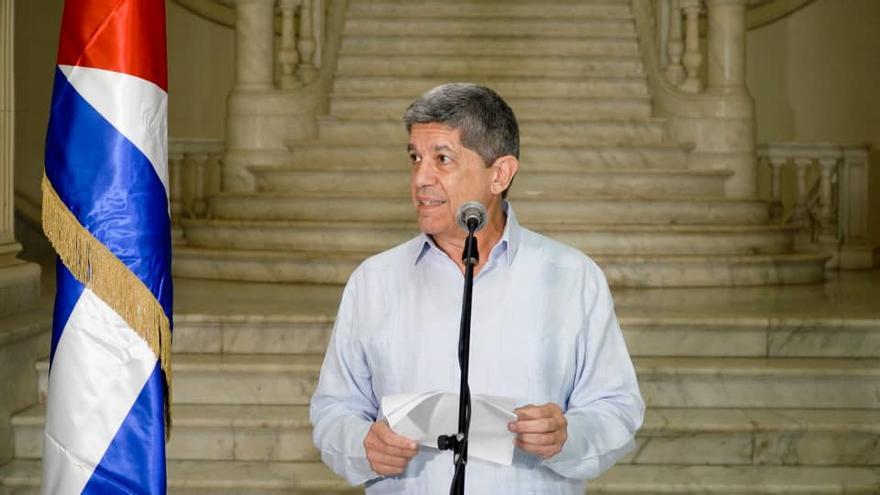
The Deputy Minister of Foreign Affairs of Cuba, Carlos Fernández de Cossío. (Cuban Ministry of Foreign Affairs/Facebook)

14ymedio bigger14ymedio, Madrid, 3 October 2023 — The Deputy Minister of Foreign Affairs of Cuba, Carlos Fernández de Cossío, has compared the anti-government demonstrations of 11 July 2021 [’11J’] in Cuba with the assault on the Washington Capitol on January 6 of that same year. In an interview with WLRN radio station, located in South Florida, the senior official also clarified that no change is expected that will allow Cuban-Americans to open companies on the Island, as the president, Miguel Díaz-Canel, allegedly said last week.

Tim Padgett, editor of the radio chain, addressed the situation of bilateral relations with Fernández de Cossío, who argued – as in previous interviews – that progress has been made in some technical areas, especially those related to migration, but also in education, culture or legislation, including anti-terrorism. However, he again reproached the Biden Administration for maintaining a line that continues the policy of his predecessor, specifically regarding the embargo.

Thousands of people participated in the demonstration in Cuba more than two years ago. Thousands of people… and a few hundred were prosecuted

The interviewer reminded the official that the White House has put the brakes on an eventual reissue of the thaw due to the repression unleashed after the 11J protests, when there were thousands of arrests. “Thousands of people in the demonstration in Cuba more than two years ago. Thousands of people… and a few hundred were prosecuted,” argued Fernández de Cossío, who attributes the arrests and subsequent convictions to vandalism and not to the demands that were made that day on the marches. continue reading

“That in Cuba is a crime, as I suspect it is in the United States,” he said, which Padgett refuted with the figures of international human rights groups, according to which between 500 and 700 people were tried simply for protesting. “For the events of January 6, 2021, in the United States, people who were not even present in the area have been imprisoned, just because they were accused of inciting people to go to the Capitol,” said Fernández de Cossío in an unexpected and veiled defense, voluntary or not, of the leader of the far-right organization Proud Boys, the Cuban-American Enrique Tarrio.

The U.S. Justice Department sentenced Tarrio to 22 years in prison for encouraging the siege of the House of Representatives on the day when Joe Biden’s victory was to be ratified, in which five people died and 140 agents were injured. Tarrio was not in Washington because he was prohibited from approaching the federal capital after a previous arrest.

Another of the most interesting features of the conversation is the one that addresses the aforementioned easing of measures for the private sector. Fernández de Cossío categorically denied that Díaz-Canel spoke in New York about possible legislative changes to allow Cuban-Americans to own businesses on the Island.

I think there is a misunderstanding. Cuba is not waiting for the United States to act to any extent. The growth of the private sector in Cuba is a national decision

“I’m surprised by what you say, because I was at that meeting and the president never said that. Whoever reported that did not remember what happened there,” clarified the deputy minister, who emphasizes that Cuban Americans will be welcome like any other foreign investor and with the same conditions, but that only residents can incorporate a company. The official also took the opportunity to downplay Washington’s possible measures to provide credits or accounts in U.S. banks to the owners of micro, small and medium-sized enterprises (MSMEs) in Cuba in order to promote the private sector.

“I think there is a misunderstanding. Cuba is not waiting for the United States to act to any extent. The growth of the private sector in Cuba is a national decision,” he said. Fernández de Cossío indicates that the owners of MSMEs also suffer “the economic blockade, but Cuba does not need a bilateral banking relationship with the United States for the private sector in Cuba to prosper.”

The deputy minister admitted that there have been “mismanagement” and “inefficiencies” on the part of the Cuban government and that things must be improved, but the fundamentals will not change. On the one hand, he rejected the possibility of large companies outside the state sector. “We do not conceive, at least for the moment, that there are large monopolies, large concentrations of property, large concentrations of wealth and large concentrations of capital,” he specifies.

Nor will there be, he made clear, a fluctuation in politics. “If liberalization is called on to make money and participate in politics for the parties to serve as machines so that politicians can be influenced and then the corporations and the rich have the ability to finance and buy political favors, that is something that we will not grant in Cuba,” he responded when asked about a possible plural system.

Our relationship with Russia is a good relationship. We don’t think it’s damaged, although on some issues we don’t have a similar point of view

Fernández de Cossío also addressed the issue of Cuban recruits who fight with the Russian army, to whom, he said, the laws on human trafficking and smuggling will be applied, as well as the one that punishes mercenarism. The official said that Havana was the first to detect the network and to begin collecting information from different governments to deactivate it, something that, if so, was made public when it was already a clamor in the independent and international media.

“Our relationship with Russia is a good relationship. We do not believe that it is damaged, although on some issues we do not have a similar point of view,” he replied when asked about the possible repercussions on the friendship between the two countries, closer than ever in recent years.

In addition, the deputy minister tiptoed over the alleged attack on the Cuban embassy in Washington. After his boss, Foreign Minister Bruno Rodríguez, said from the beginning that those responsible were exiles, whom he described as “anti-Cuban groups that resort to terrorism and feel impunity,” Fernández de Cossío apparently evades that position.

“It is not up to us to rush and start making accusations without knowing the facts or the investigation. That should be done by the law enforcement authorities in the United States,” he said.

Translated by Regina Anavy

____________

COLLABORATE WITH OUR WORKThe 14ymedio team is committed to practicing serious journalism that reflects Cuba’s reality in all its depth. Thank you for joining us on this long journey. We invite you to continue supporting us by becoming a member of 14ymedio now. Together we can continue transforming journalism in Cuba.
The Official Newspaper of Las Tunas Describes the Low Productivity of Companies As ‘Stealing From the State’

Mercasa Commerce, in Las Tunas. (Periódico 26)

14ymedio bigger14ymedio, Madrid, 3 October 2023 — “The first eight months of the year were bad for the economy of Las Tunas,” summarizes the provincial newspaper Periódico 26. To no surprise, the numbers make an impact. Of the 41 state-owned companies in the territory, 21 had lost more than 300 million pesos by the end of August. The forecasts of net sales were met by only 83.4%, which translated into an impact on the budget of 145 million pesos. Returns, discounts and damaged products accounted for the difference with gross sales.

The most serious losses were in the Commerce sector, where seven companies lost 169 million pesos. Distant, but still prominent, were Gastronomy and Accommodations, which were short by 29 million pesos. The article from the official newspaper does not hesitate to admonish workers and managers about the consequences of mismanagement.

In the review of the economic situation, there is also talk of profits (20 companies failed to meet the forecasts) and salaries paid without the corresponding productivity. The article warns of the serious consequences of this decision, which “constitutes a serious indiscipline, and even a crime because sums of money are unduly disbursed.” continue reading

In total, 80 million pesos were paid in salaries between January and August of this year without the corresponding productivity, a practice that contributes, the newspaper states, to increasing inflation

In total, 80 million pesos were in salaries paid between January and August of this year without the corresponding productivity, a practice that contributes, the newspaper states, to increasing inflation, since it increases the money available in workers’ pockets, causing an escalation of prices, a vicious circle.

“More clearly: when you pay for work that was not done, you are stealing from the State,” says Periódico 26, which unrelentingly accuses the entire chain of command of each work center, especially because of the repeated situation.

In January 2023, according to the newspaper, 25 Las Tunas companies paid out almost 30 million pesos without the corresponding productivity. “It seems that no one answers for the state money.”

The directors have alleged, it follows from the article, that the companies have to pay more to retain workers, especially the most qualified. The flight of employees, especially from the state sector, either by emigration or by displacement to the private sector, where they earn more money, is affecting the workforce throughout the Island. This, the managers have argued, has an impact on production, since there are fewer people in the work force and no ability to hire more.

However, the official newspaper says that these are not valid justifications. “We have to find formulas to reorient the work and have other options that allow us to sustain wages,” it urges.

“There is a lot of irrationality in the use of the workforce and resources, little analysis and a lot of negligence,” said Ernesto Luis Cruz Reyes, deputy governor of Las Tunas, who again resorted to mere desire to solve the serious problems that affect the Cuban economy.

“If those deficiencies are eliminated and those responsible are held accountable, the indicators would show it. And we have to achieve that,” he said.

Translated by Regina Anavy

____________

COLLABORATE WITH OUR WORKThe 14ymedio team is committed to practicing serious journalism that reflects Cuba’s reality in all its depth. Thank you for joining us on this long journey. We invite you to continue supporting us by becoming a member of 14ymedio now. Together we can continue transforming journalism in Cuba.
Emigrate or Start a Business? Most Cubans Prefer to Leave

A September meeting between American and Cuban businesspeople in Miami. (OnCuba)

14ymedio bigger14ymedio, Havana, 13 October 2023 — The conclusion of the most recent report by the online opposition platform Cuba Siglo 21 (21st Century Cuba) on the emergence of small and medium-sized companies (MSMEs) on the island is that they have been a resounding failure. Designed as an attempt to breath life into the Island’s moribund economy — and in the process replenish the state’s coffers — they never managed to attract capital from the Cuban exile community nor did they generate the economic freedom needed to fulfill their promise.

According to Cuban business consultant and Cuba Siglo 21 director  Emilio Morales, who edited the report, “The effort by the Cuban regime to liberalize the economy through the MSME law has been resoundingly rejected not only by Cubans living on the island but also by Cuban exiles.”

The proof is in the number of private businesses registered since 2021, when the government adopted a law that allowed for the creation of private companies. Cubans have paid thousands of dollars to leave the country. Money that, under different circumstances, could have provided any of them the start-up capital for a small private business. continue reading

In the last three years, half a million Cubans arrived at the Mexican border in hopes of entering the United States. Morales estimates that another million and a half managed to get in, or hope to get in, through the so-called parole program. Together, these figures represent roughly 20% of Cuba’s total population.

“In monetary terms, we could say that, if fully implemented, this program could represent an investment of around thirty billion dollars by the Cuban diaspora over a period of three to six months. More a rescue operation than immigration program, it dwarfs any other previous effort,” he says. “Given the hard choice that Cubans face today — to start over by emigrating or opening a new business under the new MSME legislation — they have decided overwhelmingly to emigrate.”

According to Morales, the mass demonstrations of July 11, 2021 were a watershed moment in the government policies

According to Morales, the mass demonstrations of July 11, 2021 were a watershed moment in government’s policy, which split into two approaches. On the one hand, there was an obvious increase in repression, which lead to hundreds more political prisoners in jail. On the other hand, the state quickly looked for a way to assuage the public mood. Both the apparent economic liberalization for private citizens and free visas to go to Nicaragua – which gave Cuban emigrés a new way out – were some of the measures taken.

In Morales’ opinion, however, MSMEs only give the illusion of economic freedom on the Island. “To be approved, they must get past controls set up by local and provincial governments, and the Ministry of Economy and Planning, to say nothing of the hidden nets of counterintelligence and the Cuban Communist Party. All in all, a selection process that is fertile ground for discriminatory exclusion on ideological grounds and for corruption,” he says. The Cuban regime refused to adopt the legislation during the Obama administration — a period when there was a thaw in diplomatic relations — which would have been the right time to do so. Instead, it chose to halt the reform process and squelch the largest growth in  entrepreneurship that the island had seen in six decades of communism.

One example of this is the abysmal difference between the number of MSMEs that exist on the island versus the rest of Latin America: some 8,938 in Cuba according to official statistics versus more than four million in Mexico and between 147,000 to 880,000 in the smallest countries. “It is the dynamics of the market. Each of these countries has its own rules to promote business development. In Cuba, on the other hand, the constitution outlaws the concentration of wealth, the state caps prices and banks retain the dollars that companies earn in profits”

Furthermore, he argues, Cuban statistics do not reflect the number of these ventures that do not survive for longer than a few months or which never turn a profit. “If we compare MSME statistics from Latin America, where only 45% of these companies are still in business after the first two years — and that is under conditions where there is full freedom to operate, freedom to set prices and a totally open market economy with access to financing from banks and private entities — the number of MSMEs incorporated in Cuba in the last two years is truly disappointing and nothing to brag about.”

Morales also alluded to recent attempts at raprochement between Cuban-American businesspeople and the the island’s government, including a meeting in Miami between a U.S. contingent and several Cuban MSMEs. On other occasions, owners of some MSMEs have written to President Biden asking him to lift the embargo, which is impacting their businesses, and to remove Cuba from the list of state sponsors of terrorism

It is understandable that the Biden administrtion, in its desire to stem the tide of immigrants, would try to offer incentives for Cubans to remain on the island

It is understandable that the Biden administrtion, in its desire to stem the tide of immigrants, would try to offer incentives for Cubans to remain on the island rather than risk emigrating to the United States. However, it is the Cuban regime itself that is preventing this empowerment with its with its gag laws, its relentless repression, its endless obstacles and its persecution of anyone creating wealth,” says the Morales.

The Cuban regime, he claims, has used large waves of migration in recent years to blackmail its northern neighbor. “International law provides the United States with a large arsenal of effective, dissuasive tools it can use to stop this immigration blackmail,” he adds. “[But]engaging in political marketing operations in an effort to promote a private sector that does not exist, that is artificial, and that has been created for the benefit of the regime is a regrettable and useless exercise.”

Last August, Cuba Siglo 21 presented a series of appeals to the United Nations Human Rights Commission aimed at establishing a truly functional private sector on the island. The appeals called for the freedom to incorporate and manage one’s own company, free-market economic reform and an end to  economic discrimination for political reasons. According to the organization, trying to put the country’s economy back on track by establishing a private sector under current conditions “is absurd.”

“The main obstacle to prosperity in Cuba is not the external sanctions but the internal blockade that the regime has imposed on its citizens. It is the mental blockade of the oligarchs who control the country, who do not yet understand that their time has passed, that for the country to function, for capital to flow and for the economy and the population to stay afloat, a democracy is needed,” he concludes.

____________

COLLABORATE WITH OUR WORKThe 14ymedio team is committed to practicing serious journalism that reflects Cuba’s reality in all its depth. Thank you for joining us on this long journey. We invite you to continue supporting us by becoming a member of 14ymedio now. Together we can continue transforming journalism in Cuba.

Without a Bank and an Internet Connection, the Cuban ‘Guajiro’ Wants To Have Cash in Hand

The battle to “update” the guajiros (farmers) has become a headache for local leaders. (Guerrillero)

14ymedio bigger14ymedio, Havana, 14 October 2023 — The official press warned this Saturday that the bancarización* banking reform process in Pinar del Río has found its nemesis: the Cuban guajiro. “They have no culture of that,” complained the authorities, who insist that the farmers – particularly those dedicated to tobacco cultivation – are impervious to the “change of mentality” that the measure entails.

Beyond the resistance of the guajiros to electronic transactions and payments, the Guerrillero newspaper admits that the essence of the problem is that not everyone has a mobile phone. The connection in rural areas is terrible, and the fact that not all workers have bank accounts makes it difficult to exchange digital money.

Niurka Rodríguez, deputy governor of Pinar del Río, complained that she has been trying for more than two years to convince cooperative members to “migrate” to digital with the use of paid applications. “We started with Xetid and EnZona; then we used Transfermóvil,” she said. There was no success. Not even market administrators – there are 16 in the province – made the “effort” to incorporate electronic payment into their daily lives. continue reading

According to the authorities, nothing justifies the lack of  bancarización in Pinar del Río. There are 15,000 bank accounts in the province, “markets that have conditions” and officials willing to explain how the process works. But, simply, “even with all this, they haven’t implemented it.”

The tension is at its highest, energized by the fact that “the workforce in the field is scarce,” argues Blanco

The guajiros continue to demand their payments in cash and prefer “money in the hand,” as they say. “If there is no money, they won’t work,” explains Armando Blanco, a state tobacco administrator from Consolación del Sur. “I have a phone, and for me it would be a convenience to be able to pay the men out there without having to go to the bank, but they don’t like it. They ask for cash, because from here to their house they buy a bag of bread, a packet of soda powder, something they need.”

The tension is at its highest point, energized by the fact that “the workforce in the field is scarce,” argues Blanco, who must pay 300 pesos a day to his workers, in addition to giving them their breakfast and lunch, and “part of what is harvested.” Despite these “guarantees,” without cash, there are no employees.

“They reject the process, because there are no conditions created at the grassroots level for them,” acknowledges Ibraúl Hernández, another president of the state cooperative. “That would lead to more knowledge, more advice. There are producers who do use payment gateways, but traditionally in the life of the guajiro, it is the son who has the cell phone and uses the technology. The older ones like to have the money to invest, under the mattress.”

Hernández describes an increasingly common situation, that of the farmer who goes to a “connected” ration store, and, upon arrival, the clerk tells him that there is no connection. If the State does not set the conditions, it might as well forget about the farmers in towns such as La Palma or Viñales paying with magnetic cards, Hernández insists. “For the guajiro, seeing is believing,” he emphasizes.

Cash payment also brings numerous difficulties, since the order must be made days in advance because the bank is not prepared for large cash withdrawals. “They (the directors of cooperatives) withdraw large amounts,” says Yoania Ramos, head of Electronic Banking of the Bank of Credit and Commerce in the province; hence they need a special authorization from the provincial director every month, before paying the salaries.

Tobacco growers, the most “untamed” sector, demand cash for another practical issue: transport. To travel from the countryside to the main city, the drivers only accept hard currency

The battle for the “updating” of the guajiros has become a headache for local leaders. Tobacco growers, the most “untamed” sector, demand cash for another practical issue: transport. To travel from the countryside to the main city, the drivers only accept cash. “It’s not a whim,” says Rubén García, a tobacco manager. “We have talked to many. The youngest have cards and transportation, so it is easier for them to do that type of activity. We have proposed it in all scenarios; it must be done little by little until we reach all of them. With the farmer, a year goes by, and he doesn’t leave the land.”

For a guajiro, money in the bank is not money, says the economist Yadira García, interviewed by the local newspaper. “My cooperative is located in an area called Canalete, 6.4 miles from the first village, where there is no ATM or bank branch. We are 15 miles from the municipal capital. They reject it because they see it as something they don’t have in their hand. They recognize that it’s their money, that it’s safe, but they can’t use it like that.”

Will bancarización be imposed in rural areas? In the midst of an increasingly serious energy crisis, blackouts and Internet cuts, neither the official press nor the leaders dare to answer in the affirmative.

*Translator’s note: Bancarizaciónrefers to government efforts to reduce the role of cash through a greater reliance on digital payment options.

Translated by Regina Anavy
_______________________

COLLABORATE WITH OUR WORKThe 14ymedio team is committed to practicing serious journalism that reflects Cuba’s reality in all its depth. Thank you for joining us on this long journey. We invite you to continue supporting us by becoming a member of 14ymedio now. Together we can continue transforming journalism in Cuba.

Das kubanische Staatsunternehmen, das 41,6 Millionen Dollar mit dem Export von Müll verdient hat / DEUTSCHE [GERMAN] VERSION

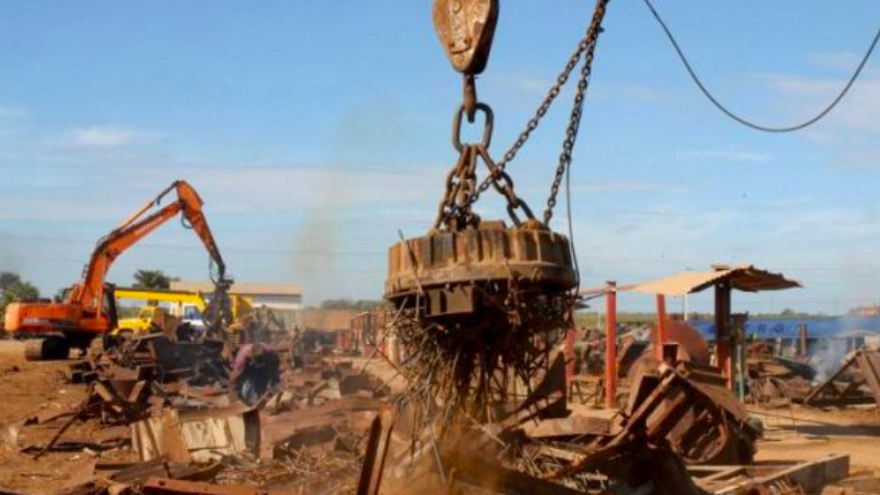
Ein Schrottplatz in Kuba, ein wichtiger Punkt im lukrativen Rohstoffgeschäft (Cubadebate).

Note to readers: {FORGIVE THE ENGLISH!} We are trying to get a German version of 14ymedio on line, but we need someone who can manage it. Any errors in this post are because it was posted by someone who does not speak German (again, please forgive us). If you can help, please email: TranslatingCuba@gmail.com

14ymedio bigger14ymedio, Havanna, 13. Oktober 2023 — Die Direktoren der staatlichen kubanische Recycling Company “Empresa de Reciclaje” beglückwünschten sich am Donnerstag im Rahmen des TV-Sendung “Mesa Edonda” dazu, dass ihr Unternehmen zu den wenigen “Branchen ” des Landes gehört, die ihren Plan übererfüllt haben: Bislang hat das Unternehmen in diesem Jahr 74.000 Tonnen Rohstoffe gesammelt und mehr als 41,6 Millionen Dollar eingenommen, von denen 29 Millionen aus dem Export stammen. continue reading

Der Präsident der Unternehmensgruppe, Jorge Luis Tamayo, bedauerte, dass die wirtschaftlichen Folgen der Coronavirus-Pandemie ihm nicht erlaubten, “bessere Ergebnisse” zu erzielen. Immerhin gab es einen Erfolg bei der Zusammenführung von “festen” Recyclingstellen, die 16.400 Tonnen sammelten, und den “mobilen”, die 16.000 Tonnen sammelten, sowie den Schulen und staatlichen Organisationen, die 1.500 Tonnen beisteuerten. Die kommunalen Dienste, die die Last der Sammlung tragen sollten, übergaben dem Recycling nur etwa 1.900 Tonnen, beklagte der Leiter.

Nichts übertrifft jedoch die Kapazitäten der Hotels auf der Insel, Abfälle zu generieren, die dann von der Recyclingfirma eingesammelt und entsorgt werden. In diesem Jahr haben die touristischen Einrichtungen bisher nicht unerhebliche 2 240 Tonnen an verwertbaren Rohstoffen “beigesteuert”, 556 mehr als im Vorjahr.

Tamayo versicherte, dass sein Unternehmen den Rohstoff nicht nur verkauft, sondern auch für die Herstellung von 65 Produkten verwendet, “ohne große Investitionen zu tätigen”

Tamayo versicherte, dass sein Unternehmen den Rohstoff nicht nur verkauft, sondern auch für die Herstellung von 65 Produkten verwendet, “ohne große Investitionen zu tätigen”. Was am meisten Geld einbringt – und daher auch am meisten exportiert wird – sind “Kartonagen, Kunststoffe, Glas, Teile, Stücke, Aggregate, Laminate, Rohre, Winkel”. Darüber hinaus konnten aus dem Verkauf von nicht-metallischem Schrott fünf Millionen Dollar erzielt werden.

Was in die Instandhaltung der Recyclinganlagen reinvestiert wird, ist minimal: etwa 109 Millionen Pesos, sagte Tamayo. Sein Unternehmen profitiert auch von einem “geschlossenen Finanzierungssystem in Fremdwährung” – für das sich andere Sektoren, wie das Verlagswesen, erfolglos eingesetzt haben – und einem “differenzierten Wechselkurs” von einem Dollar für 120 Pesos, den er als “grundlegend für die Organisation” bezeichnet.

Tamayo ist stolz darauf, dass er es versteht, aus jedem Rückschlag das Beste zu machen. Bei den größten Katastrophen der letzten Jahre – dem Einsturz des Saratoga-Hotels, dem Brand in der Supertanker-Basis von Matanzas und dem Einsturz einer Trennwand in einem Schornstein des Wärmekraftwerks Antonio Guiteras – hat sein Unternehmen Materialien gesammelt und wiederverwendet, die für den Wiederaufbau nicht mehr brauchbar waren.

Die Direktorin des Unternehmens in Havanna, Rosa Reyes, sieht die Situation nicht so optimistisch. Sie räumte ein, dass niemand in der Hauptstadt ein großes Interesse am Recycling hat, und führte die Tatsache, dass die Einwohner Havannas ihren Müll auf die Straße werfen, ohne zwischen wiederverwertbaren und nicht wiederverwertbaren Materialien zu unterscheiden, auf die “große Unzufriedenheit der Bevölkerung” zurück, die von der “Energiesituation” bedrängt wird.

Sobald wiederverwertbare Produkte mit Abfällen vermischt werden, verlieren sie an Qualität und Wert und lassen sich nur sehr schwer verwerten.

“Wenn das wiederverwertbare Produkt mit Müll vermischt wird, verliert es an Qualität und Wert und lässt sich nur schwer wiedergewinnen”, beklagte er. Andererseits “verfügt die Hauptstadt nicht über die optimale Infrastruktur, um wiederverwertbare Materialien an der Quelle, d.h. in den Haushalten, zu klassifizieren”, sagte er und verwies auf das Fehlen von Containern und Körben auf den Straßen. Abschließend appellierte er jedoch an die Kubaner, “ein wenig Disziplin und Bewusstsein” zu entwickeln. Das Sammeln von Rohstoffen, so betonte er, könne die ” Haushaltswirtschaft ” unterstützen.

Trotz der Gesundheitsbeschränkungen während der Pandemie war das Sammeln von Rohstoffen die Lebensgrundlage vieler älterer und armer Menschen in Kuba. Auf den Straßen der Insel sieht man auch häufig Bettler, die Dosen und Pappe sammeln, die sie dann bei Recyclingstellen für ein paar Pesos abgeben.

Das ist gesundheitlich bedenklich, denn die Suche nach diesen Gegenständen erfolgt ohne den geringsten Schutz, und es ist nicht ungewöhnlich, dass “buzos” – “Taucher”, wie am in Kuba die Menschen nennt, die in Containern nach Materialien und Lebensmitteln suchen – den Müll durchwühlen. Von all dem wollen Tamayo und Reyes nichts wissen, denn sie sehen, wie lukrativ das Geschäft geworden ist.

Beide Führungskräfte beendeten die TV-Sendung mit einem Aufruf an die Kleinst-, Mittel- und Kleinunternehmen der Insel, sich ihrer “Aktion” anzuschließen, um die Gewinne von Recycling zu steigern. “Wir fordern sie alle dazu auf”, schloss Tamayo.

Übersetzt von: Andreas B. Lindner

____________

COLLABORATE WITH OUR WORKThe 14ymedio team is committed to practicing serious journalism that reflects Cuba’s reality in all its depth. Thank you for joining us on this long journey. We invite you to continue supporting us by becoming a member of 14ymedio now. Together we can continue transforming journalism in Cuba.

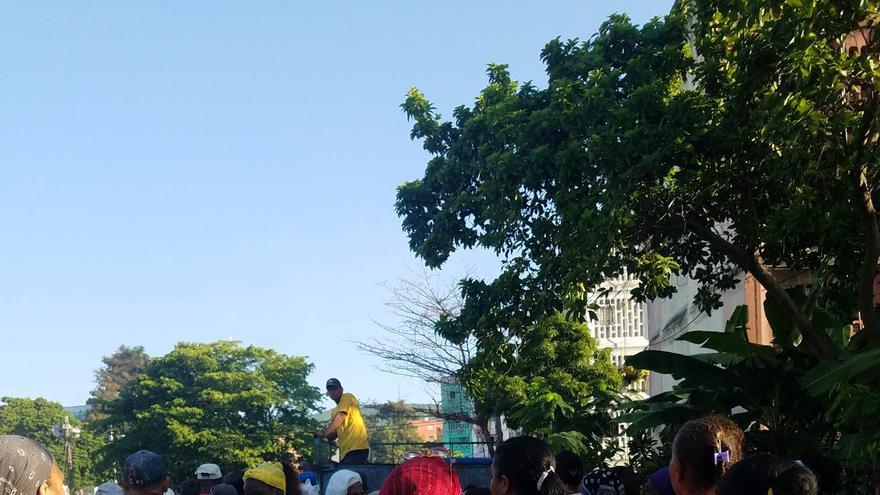
Running Behind the Truck Is the Only Way To Buy Bananas at a Fair in Santiago de Cuba

Agricultural fair on October 14, 2023, in the José Martí District of Santiago de Cuba. (14ymedio)

14ymedio bigger14ymedio, Santiago de Cuba, 14 October 2023 — It’s early morning, and Yésica puts on her most comfortable clothes and shoes. Together with her two children, she tries to be among the first to buy ’burro bananas’ (fongo, in the east of the country) and yucca at the agricultural fair that takes place every Saturday in the Micro 9 neighborhood, in the José Martí District of Santiago de Cuba. She anxiously waits for the truck to arrive with the products so “the bananas don’t turn black during the week,” but her plan is one thing, and the result could be another.

“People run after the truck, willing to be dragged. If they don’t die of hunger they can die by being crushed,” complains Yésica. To reach the vehicle, still running, position yourself and be among the first customers, “you have to be ninjas,” she says, although in her case, as in that of so many others who come to the fair, “the instinct for survival is stronger than the fear.”

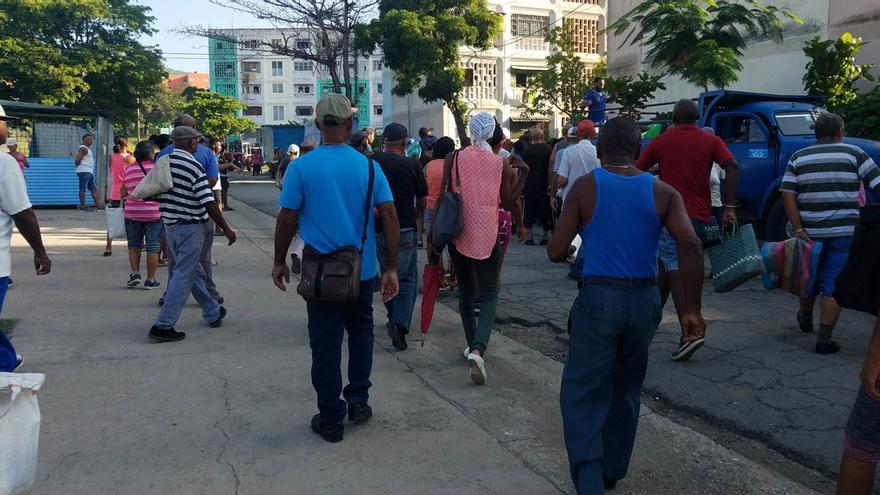
Organized by the city authorities, the fair is not peaceful, and the police often intervene, as happened this Saturday. The relatively low price of food, cheaper than in the private shops, causes an unstoppable flood of people. Both a pound of fongo and one of cassava costs 15 pesos, in contrast to the 80 that they ask for in the private shops. Both products have become the salvation of many homes in the area. continue reading

That food is essential to occupy the space that cannot be filled by the scarce five pounds of rice that are distributed through the ration book. That amount is barely enough for a few days, and Yésica says that she can’t always buy the product at 200 pesos a pound, which is the current price in the informal market.

“I bring my children to the fair, and we buy yucca and fongo for 15 pesos. That helps us stretch the little bit of rice they give us,” explains Yésica. “And we even have breakfast with that. If there is no bread, I fry yucca for the kids in the morning and let them fill up with it because sometimes I can’t buy bread. I need at least six rolls a day, and that’s where 150 pesos go.”

Physical skill, youth and some craftiness are essential to fill the bag. Last Saturday, the son of this santiaguera, 16 years old, got a good place on the moving vehicle, and “I got a place nearby, like the 15th.” Every Saturday you can see people rushing to get in line and run behind the truck. There are also people on crutches, mothers carrying small children and the elderly.

“That day, although my son managed to be among the first, I didn’t get home until noon, and that’s why they do a nearby fair,” Yésica adds, referring to others in various parts of the city, but because of “how bad the transport is, it’s not worth it to bother going there to see what they are selling,” she explains.

In the informal market, a pound of these foods can cost up to 80 pesos. (14ymedio)

That same day, Evaristo, another neighbor of the District, tells 14ymedio that “they even gave tickets to the slaughter and sold only six pounds of yucca and 10 of fongo per person, so that everyone could take a little, because if not, the first ones hoard everything and then you see them reselling a pound at 60 pesos.”

But, beyond having more agile legs or younger children, hunger is hitting everyone, says Evaristo. For her part, another 68-year-old resident summarizes the hard daily life in Santiago de Cuba: “Today I told my niece, who lives in Spain, that people here walk on the street like they’re crazy, without transportation, without money, but above all, without eating. They even faint on the buses. In my grandson’s school, children pass out every day because they don’t have breakfast and can’t bring a snack.”

“One boy told me that at his best friend’s house there is a law: ’Whoever eats lunch doesn’t eat dinner’. So he leaves the main course for the night and eats nothing at lunch,” she adds.

Translated by Regina Anavy

________________

COLLABORATE WITH OUR WORKThe 14ymedio team is committed to practicing serious journalism that reflects Cuba’s reality in all its depth. Thank you for joining us on this long journey. We invite you to continue supporting us by becoming a member of 14ymedio now. Together we can continue transforming journalism in Cuba.
Moscow Sends Teachers to Havana so That Cubans Can Speak Russian ‘With Quality’

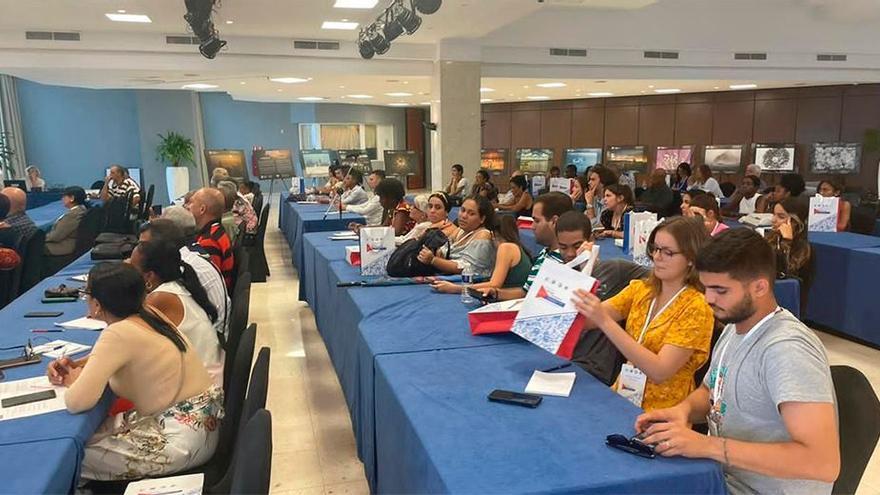
Good relations between Cuba and Russia include encouraging the learning of that language. (Portal Cuba)

14ymedio bigger14ymedio, Havana, 14 October 2023 — The political alliance between Havana and Moscow involves the teaching of the Russian language. This is demonstrated by the meeting at the Meliá Cohiba hotel this week of a hundred Cuban professors and students with advisors from the Moscow state university Rosbiotech. With the endorsement and funding of the Kremlin, learning the Russian language begins to gain ground on the Island, and the authorities of both countries are determined that Cubans speak Russian “with quality.”

In four days of work, which began at the University of Havana and followed at the hotel, a delegation of Rosbiotech, founded in Moscow in 1930, explained that the course would be funded by Rossotrudnichestvo, a federal collaboration agency supervised by the Russian Foreign Ministry.

The goal is to “raise the rating of Russian language teachers in Cuban universities,” said Anastasia Fedosina, director of Rosbiotech’s Center for Engineering and Complementary Education. The project will begin in Havana, but it will soon be repeated in other provincial universities, which sent representatives to the meeting at the Meliá Cohiba. continue reading

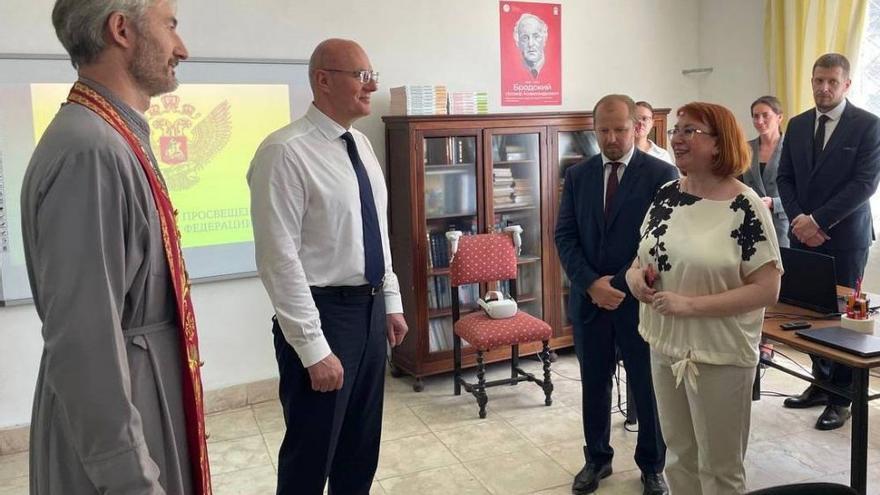
Although its efforts have redoubled for several months, Moscow has been providing means to Havana for the teaching of Russian for years. The decisive impulse came last May, during the visit of Russian Deputy Prime Minister Dmitri Chernishenko. Among the many agreements agreed during that visit, the politician had on his agenda a meeting in the classrooms of the Russian Orthodox cathedral in the Cuban capital.

Interviewed by 14ymedio, a cathedral worker said that the Russian classes taught there are free and that they take place every day of the week, except Friday, Saturday and Sunday, at five in the afternoon. The language is taught, he added, for “the one who knows something, for the one who knows nothing and for the one who comes to review.” Children who wish to receive classes can also take them.

Father Savva, along with Russian Deputy Prime Minister Dmitri Chernishenko and a delegation from the Cuban Ministry of Education. (Korolenko Center)

The classrooms of the Havana cathedral have the advice of the Glazov Pedagogical Institute – known as the Korolenko Center – which has provided them with “an interactive whiteboard, a virtual reality helmet, Russian textbooks and fiction. Here the Cuban and Russian classics are combined,” Arseniy Parfyonov, head of the project office of the Korolenko Center, posted on the center’s official website.

The Orthodox priest Savva Gagloev, who has lived in Havana since 2017 and is rector of the cathedral, oversees the project as part of his personal mission on the Island. The priest himself, in an interview with Orthodox Christianity, when asked if he preferred to be appointed to the United States or Cuba, did not think twice before choosing the “Isle of Freedom.”

More than 180 Cubans have already passed through the classrooms, and there are several hundred requests waiting to be seen to. Among the students, according to the Korolenko Center, there are employees of several hotels in the capital.

Online courses have also been promoted, the company Maximum Education told this newspaper by email. Its project, called “Maximum. Govorim po-russki” (“Maximum. We speak Russian”), is funded by the Russian Ministry of Education, and its goal is to “teach Russian to foreign citizens.”

Online courses have also been promoted, the company Maximum Education told this newspaper by email

The classes are taught online with a teacher and at different levels, from beginner to advanced, and even for those who want to take the Unified State Exam to access Russian universities.

The interactive platform they use is based, they explain, on the methodology of Maksimum Obrazovaniye, which has developed “courses of various formats and directions for over 10 years” and, since last year, “has also been implementing international educational projects.”

According to the collaborative encyclopedia page, Maximum Education was founded in Moscow in 2013 by Mikhail Myagkov, who had worked for the American consulting firm Boston Consulting Group and the international educational company Kaplan. The name under which it is registered does not appear on Wikipedia: Umax LLC (Limited Liability Company).

Relations between Cuba and Moscow, which had been going at full speed since Chernishenko’s visit in May, have advanced more cautiously since several international media reported the presence of Cuban soldiers in the Russian invasion of Ukraine. The announcement that Russia continues to promote its projects in Cuba is a sign that the alliance with the Kremlin is as healthy as it was several months ago.

Translated by Regina Anavy

____________

COLLABORATE WITH OUR WORKThe 14ymedio team is committed to practicing serious journalism that reflects Cuba’s reality in all its depth. Thank you for joining us on this long journey. We invite you to continue supporting us by becoming a member of 14ymedio now. Together we can continue transforming journalism in Cuba.
‘Prices Are Expressed in Dollars’ Says the Sign in Cuban Shops

Products in the hard currency store on 47th Street in Nuevo Vedado is poor. (14ymedio)

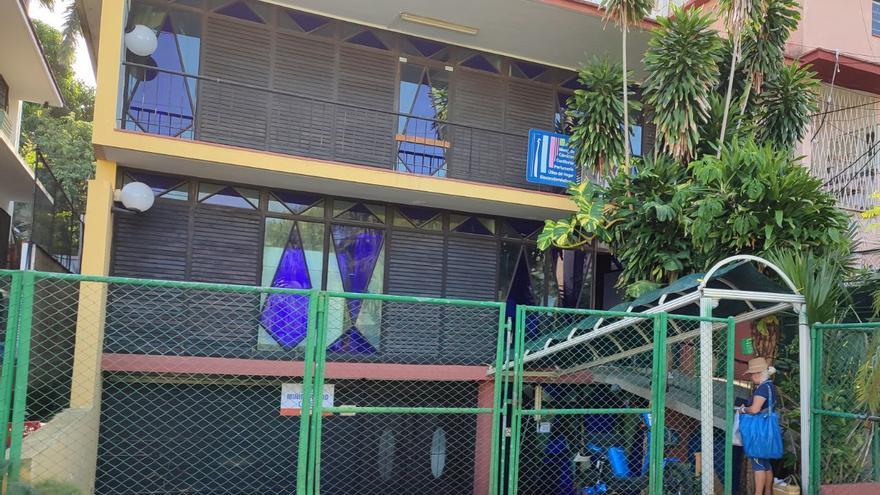
14ymedio bigger14ymedio, Natalia López Moya, Havana, 13 October 2023 — “I now pronounce you husband and wife,” was repeated several times a day between those walls. The former Legal Consultancy of Nuevo Vedado in Havana, which welcomed so many marriages between Cubans and foreigners, is now a business immersed in the separation of goods for the privileged foreigners and the National beggars. On the same property there is a market in pesos and another, newly opened, in freely convertible currency. From a distance the building is obvious. Dark wooden blinds cover its facade and alternate with geometric stained glass windows that are not only the most beautiful thing on that block but for several blocks around. The house, which once belonged to a prosperous resident of the area, has been in the hands of the State for decades, and a few years ago it ceased to be used for marriages and the legalization of documents to become a store.

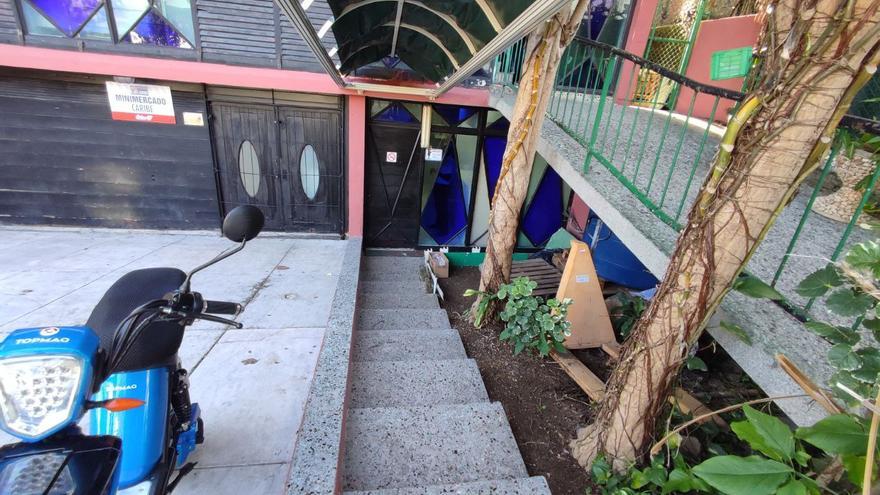
An exterior ramp and staircase lead to very different worlds. The one that goes upwards leads to a room where the so-called “modules” are sold in Cuban pesos, which the nearby neighbors can acquire once a month after being aware, for days, of what is announced in the shop window that corresponds to their family’s ration. The staircase leads to the semi-basement, where they only accept foreign currency.

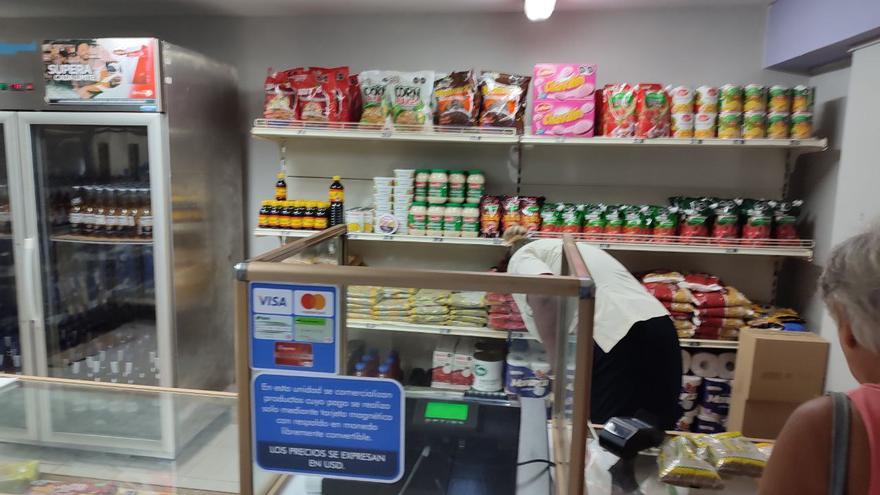
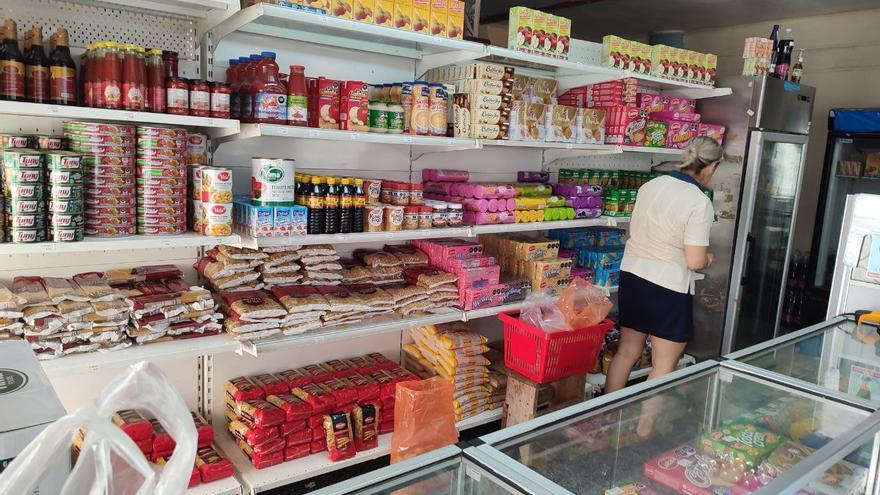
Recently opened, the new freely convertible currency (MLC) store is a small room with only one counter. “It’s not self-service; ask for what you want and I’ll get it,” the employee clarified to a customer who wanted to look closely at a can of tomato sauce located on the shelf behind the woman’s back. Displayed on four shelves were mayonnaise, soy sauce, pasta, cookies, vegetables and toilet paper. continue reading

In the former Legal Consultancy of Nuevo Vedado, Havana, a foreign currency store has been opened. (14ymedio)

“The offers are quite poor,” complained an old woman who had been looking for chicken sausages. “We don’t have any butcher or frozen food because there is no fridge to store those products,” the employee responded. An exhibition refrigerator contained only beer: the foreign Corona and the national Parranda. A few small packets of instant soda completed the market’s limited catalog.

Outside, some customers who did not know that sales were in foreign currency crowded to enter. The guard, realizing the confusion, warned that the place “is in MLC.” This caused a stampede of long faces. “I thought they weren’t going to continue opening stores of this type if the ones that exist are all out of stock,” grumbled one of the frustrated buyers.

Opened at the end of 2019, initially the MLC stores were intended for the sale of appliances, hardware and furniture, but in mid-2020 they also began to sell food, toiletries and other basic items. Cubans reacted angrily when they found out that the peso shops languished from shortages while the MLC shops had products ranging from vegetable oil to beef.

The ramp leads to a store that only sells “modules” in national currency, while the staircase leads to the store in foreign currency. (14ymedio)

“You would have thought that the people who live in this neighborhood have a lot of money to spend,” another woman grumbled at the doors of the store on 47th Street in Nuevo Vedado. The truth is that the house has had a long history of invoicing in foreign currency. In the 1990s, when the Island opened up to tourism and the economy became dollarized, thousands of Europeans, Canadians and visitors of other nationalities passed through its salons, seeking to formalize their marriage with a Cuban or write a letter of invitation, an indispensable condition for nationals to obtain the exit permit and travel outside the country.

All those procedures had prices of three or even four figures, and every day the place received thousands of dollars for marrying, legalizing documents and writing invitation letters. After the immigration reform that came into force in January 2013, all that very expensive paperwork faltered, and many Cubans preferred to marry their foreign partner in his or her country, and the exit permit was eliminated as a requirement to travel.

“Nothing has changed. Now they get the foreign currency out of us  with concentrated soup cubes and cookies for the children’s snacks,” Rosa María, a resident of the neighboring Santa Ana Street, told 14ymedio. “The State always finds a way to take away our dollars.”

La Mariposa has been divided into one part in Cuban pesos and the other in freely convertible currency. (14ymedio)

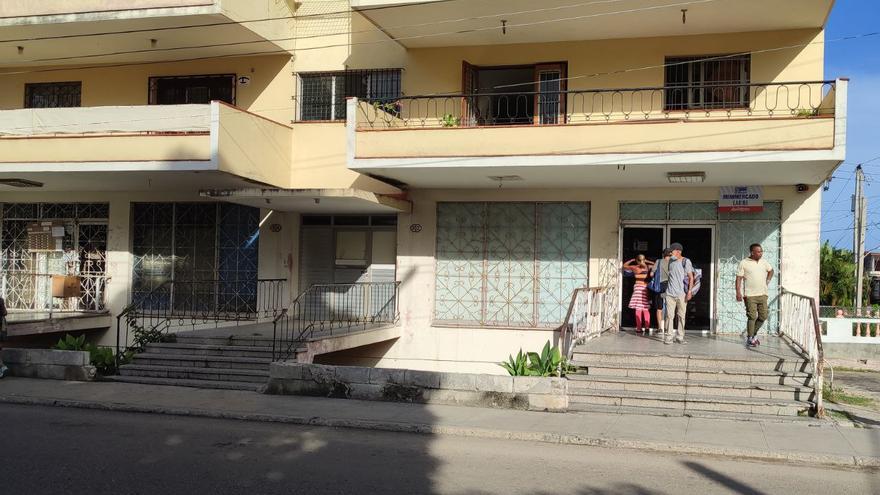
Almost 100 yards away, the story is repeated. La Mariposa, located on Tulipán Street and 26th Avenue, has opened another MLC store this week. The market, with two access doors, now has one door for customers who pay in foreign currency and the other for those who pay in pesos for the basic product modules from the ration program.

Still placing some products on the shelves, the employees of the area in foreign exchange received customers who had just discovered the new market. With poor offerings but a greater number of products than in the old Legal Consultancy, La Mariposa in MLC also has fruit juices, cans of sardines, cream to add to coffee and canned peppers.

“Look, here is the soda that disappeared,” said a young woman, pointing to a 1.5 liter bottle of cola from the national brand Ciego Montero. Next to the container, a Corona beer and another Parranda completed the offer of drinks. “I want two boxes of apple juice,” the woman asked. “It’s 5.45,” the employee replied without mentioning in which currency. A foreign Visa card came out of the customer’s wallet, and she paid the bill.

Behind her, a man bought two 1.5 liter bottles of Parranda beer for 3.70 MLC each. “It’s like carnival beer, but it’s the cheapest on the market right now,” the customer explained to a woman who inquired about the quality of the product. After touching the container, the man complained: “Even though it’s in hard currency, the beer isn’t even cold.” His criticism was immediately answered by the employee: “We have been open for a very short time. We’re just beginning.”

Near the box a sign showed the logos of the magnetic cards that the store accepts and underneath, a blunt phrase: “Prices are expressed in dollars.”

Customers don’t have direct access to the products; when they want to buy something they must ask the employee. (14ymedio)

Translated by Regina Anavy

____________

COLLABORATE WITH OUR WORKThe 14ymedio team is committed to practicing serious journalism that reflects Cuba’s reality in all its depth. Thank you for joining us on this long journey. We invite you to continue supporting us by becoming a member of 14ymedio now. Together we can continue transforming journalism in Cuba.