This is indicated by reports from Prisoners Defenders in Havana, Las Tunas, Villa Clara, and Santiago de Cuba.

 14ymedio, Havana, April 3, 2026 – The Cuban regime began this April 3 to release some of the inmates included in the official announcement of the pardon of 2,010 people. But far from the image of openness that Havana is trying to project, the first data verified by human rights organizations point in another direction: those benefiting are not political prisoners, but common inmates, in an operation that appears aimed at relieving overcrowding and reducing prison costs without touching the core of repression.
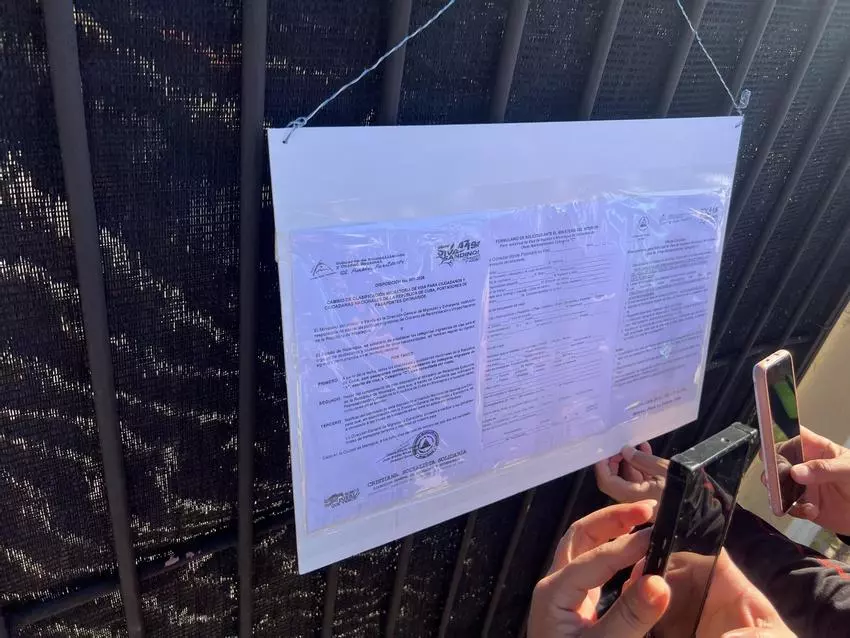
The decision was presented this Thursday by the Government as a “humanitarian and sovereign” gesture, in the middle of Holy Week, but so far it has not been accompanied by a public list of names or transparent information about the real selection criteria.
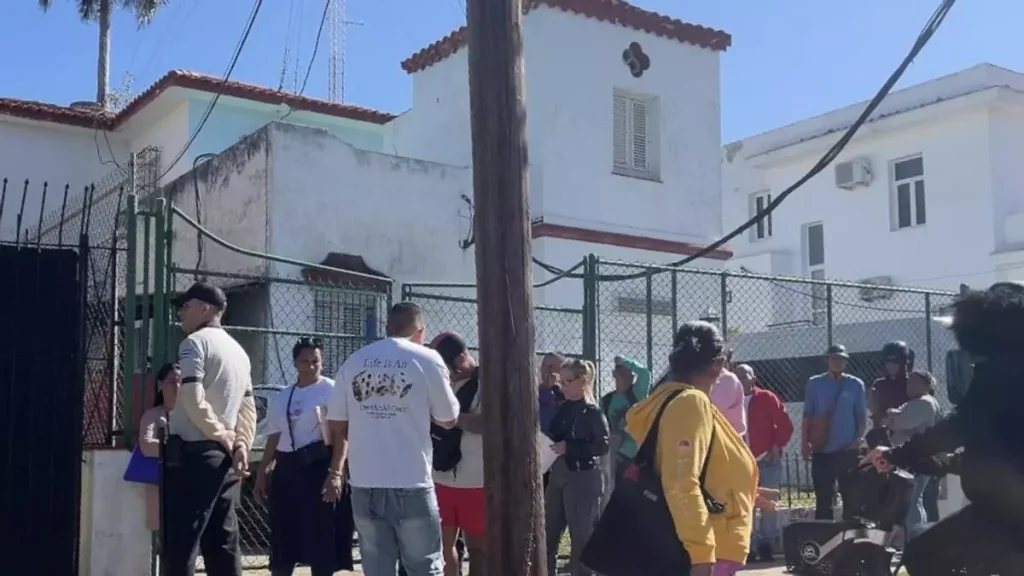
The reports that have begun to arrive from different provinces dismantle, at least for now, any expectation that the process includes opposition members, activists, and demonstrators sentenced for political reasons. Javier Larrondo, president of Prisoners Defenders, reported this Friday that 41 prisoners were released from the Toledo 2 Forced Labor prison in Marianao (Havana), all of them common inmates.
At El Típico prison in Las Tunas, six common inmates were released, along with “dozens more” prisoners linked to forced labor centers near that prison. According to the Madrid-based NGO, the trend is repeated across the country, where “only common prisoners are being released; not a single political prisoner in any prison, so far.” continue reading
Seven common inmates were released from the Remedios forced labor prison and no political prisoners
The same is happening in Villa Clara. Seven common inmates were released from the Remedios forced labor prison and no political prisoners. Opposition members and activists remain imprisoned there, including the octogenarian Miguel Díaz Bauzá, with no indication so far that they will be included in this round of releases. In Boniato, Santiago de Cuba, four common prisoners were freed. The conclusion drawn by Prisoners Defenders is that the operation is not a political shift, but rather a “prison drain” of common inmates in a country with one of the highest incarceration rates in the world.
The very design of the official announcement pointed in that direction. Authorities made it clear that those convicted of certain crimes would be excluded, including so-called “crimes against authority,” a broad category often used by the Cuban repressive apparatus to prosecute, under charges such as contempt, resistance, assault, or public disorder, those who protest, film abuses, criticize the government, or simply refuse to obey an officer. This is compounded by the total absence of a verifiable list.
What is happening inside the prisons also confirms that the political problem not only remains intact but is also worsening. While the regime opens the doors to common inmates, it keeps behind bars people detained for protesting and continues to extend repression toward particularly vulnerable sectors.
The teenagers Jonathan and Cristian remain detained and face sabotage charges
Cubalex warned this Friday about the situation of teenagers arrested after the March 13 protest in Morón, Ciego de Ávila. The organization has verified at least four adolescents linked to those events: Jonathan David Muir Burgos, 16; Cristian Crespo Álvarez, also 16; Kevin Samuel Echeverría Rodríguez; and Yohasnel Estrada Rodríguez. At least Jonathan and Cristian remain detained and face charges of sabotage, a very serious crime that authorities are using to punish social protest. (see also)
In Jonathan’s case, Cubalex reported that he was arrested on March 16 along with his father, who was released a few hours later. Since then, the teenager has remained in detention, and his family has reported emotional distress and deterioration in his health. Cristian was arrested a day later, amid an opaque identification process and without his relatives having access to official case documentation. His family has also reported severe communication restrictions, brief and supervised visits, and signs of physical deterioration. In both cases, there were failed transfers to Canaleta prison and returns to the detention center, a practice that adds psychological pressure and increases uncertainty. Cubalex warns of a pattern of delayed detentions, disproportionate charges, pretrial detention as the rule, family isolation, and lack of procedural transparency.
The regime’s real message is not one of openness but of managing punishment. The figure of 2,010 released prisoners serves more as a headline than as proof of change. What is already becoming clear, as the first reports emerge from Havana, Las Tunas, Villa Clara, and Santiago de Cuba, is that political prisoners are not on that list.
Translated by Regina Anavy
______________________
COLLABORATE WITH OUR WORK: The 14ymedio team is committed to practicing serious journalism that reflects Cuba’s reality in all its depth. Thank you for joining us on this long journey. We invite you to continue supporting us by becoming a member of 14ymedio now. Together we can continue transforming journalism in Cuba.