
Cuba: Spies to Order

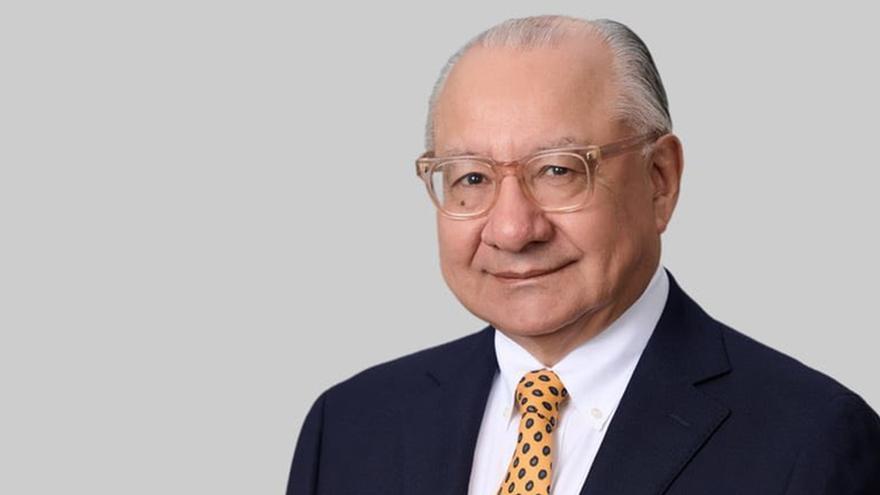
The former US diplomat Manuel Rocha. (@AnthonyDaquin/Twitter)

14ymedio bigger14ymedio, Pedro Corzo, Miami, 10 December 2023 — Castro’s totalitarianism never rests, it does not take vacations or holidays. It avidly feeds on its hatred of freedom, on its desire to eliminate the United States, which is why its intelligence service will always be ready to destroy that nation, while the repressive forces inside the Island do not give up their efforts to crush the opponents. In short, the perfect terrorist state.

Hence I was not surprised by the discovery of a new Castro mole in the spheres of American power. Unfortunately we must be prepared for subjects who, due to moral disability, economic reasons or any other cerebral deficiency, serve regimes contrary to human dignity.

The case of Ambassador Víctor Manuel Rocha demonstrates once again how efficient the Castro intelligence trappers are and how confident the officials of this country are who favor closer relations with the Cuban regime, the best ally that Russia, China and Iran have in the hemisphere.

There is no doubt that Castroism publicly seduced a significant number of people on the continent, some admitted their enchantment, others, apparently, maintained it in pectore, such as the accused spy Rocha and the unforgettable Mrs. Ana Belén Montes, an analyst with the US Defense Intelligence Agency, who confessed to having spied for Cuba for 16 years, resulting in her being sentenced to long years in prison. On the Island she would have been shot. continue reading

Unfortunately we must be prepared for subjects who, due to moral disability, economic reasons or any other cerebral deficiency, serve regimes contrary to human dignity

Those who favor closer relations with Castroism, Americans and Cubans, in the best of cases have a terrible memory, are very ignorant or there is something more rotten in their brains.

The Castros know this society from the inside. Even before coming to power, supporters of Fidel Castro in the July 26 Movement formed cells in the most important cities in the United States to support the insurgents, exert influence on the media and on the ruling class, particularly in universities and intellectual sectors, the objectives they prioritized and managed to continue to develop fully and efficiently.

These parties insist on ignoring that the alleged assassin of John F. Kennedy, Lee Harvey Oswald, led a Fair Play for Cuba Committee; that a senior Immigration official, Mariano Faget, transmitted information to the Government of Havana; that dozens of Castro agents were expelled from the United Nations for espionage; and that the Wasp Network caused the death of four young people when their planes were shot down by a Castro Mig.

Other cases that once attracted attention have apparently been forgotten. José Rafael Fernández Brenes infiltrated the US station TV Martí and his information helped the Cuban Government to interfere with the station’s signal, and the academics Carlos Álvarez, doctor in Psychology, and his wife, the psychotherapist Elsa Prieto, were convicted of spying for the Cuban regime.

According to the indictment, Álvarez had spied since 1977 and his wife since 1982. Also forgotten is the married couple Walter and Gwendolyn Myers, who spied for 30 years in support of the Cuban regime. Myers, who worked for three decades in the State Department, acknowledged, together with his wife, responsibility for spying for Cuba.

Those who favor closer relations with Castroism, Americans and Cubans, at best, have a terrible memory, they are very ignorant or there is something more rotten in their brains

Cuban spies have a lot of blood on their hands. Manuel Hevia Cosculluela published the book Passport 11333 in Cuba, where he confessed to having infiltrated the CIA and having worked alongside Dan Mitrione in Uruguay, a US agent murdered by the Tupamaros, trained by Castroism.

It is unknown how much ambassador Víctor Manuel Rocha will have benefited the Island’s totalitarianism, however, if he is found guilty he should be punished with the greatest severity for spying in favor of a criminal dictatorship and against a country that gave him the opportunity to serve as ambassador.

It is assumed that the accused is not the last as he was not the first, if we accept the statement of Lieutenant Colonel Chris Simmons, working in counterintelligence in the United States Army, who once told The Miami Herald that, between 9 and 18 months after the dismantling of the Wasp Network, the number of Cuban intelligence agents and officers in Florida had returned to the levels prior to the capture of that infamous espionage network.

The danger exists and will exist as long as Castro’s totalitarianism rules in Cuba.

____________

COLLABORATE WITH OUR WORKThe 14ymedio team is committed to practicing serious journalism that reflects Cuba’s reality in all its depth. Thank you for joining us on this long journey. We invite you to continue supporting us by becoming a member of 14ymedio now. Together we can continue transforming journalism in Cuba.
Dispute Over the Essequibo Region in Guyana is a Maneuver by Maduro and Havana to Postpone the Elections

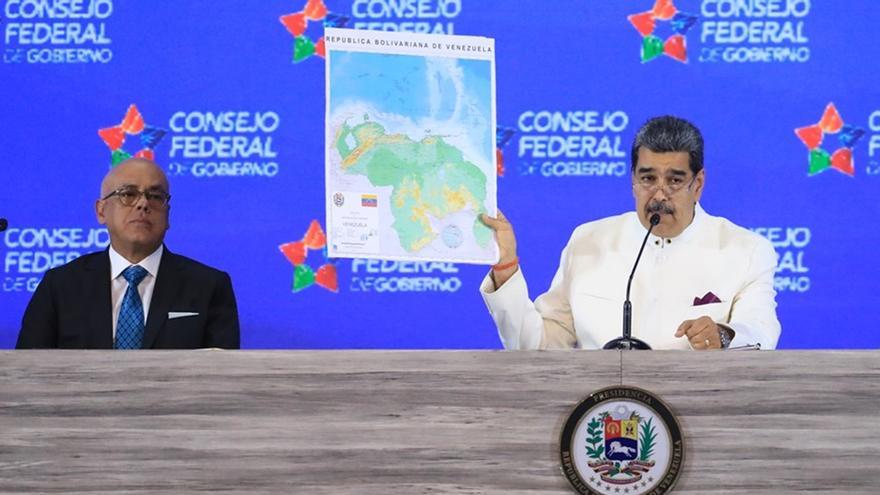
Photograph provided by the Miraflores Palace of President Nicolás Maduro holding a map of Venezuela with the Guyana area, at a Government event in Caracas. (EFE/Miraflores Palace)

14ymedio bigger14ymedio, Havana, 8 December 2023 — Havana’s silence in the face of the bellicose declarations of its Venezuelan ally to integrate  the Essequibo region of Guyana into its territory seems to reflect a short-term calculation: to present itself as a mediator and use the risk of a conflict with small Guyana to postpone the elections, and thus stave off the risk of an opposition victory in Caracas, something totally unacceptable to the Cuban regime.

The tension between Venezuela and Guyana has reached its zenith since last Sunday, when after a referendum of very dubious validity Nicolás Maduro announced his plans to annex the territory, which include founding a state administered by Caracas, promoting the oil exploitation of the area by the Venezuelan-owned PDVSA and create, together with the Army, a “comprehensive defense zone.” After the announcement, Guyanese President Irfann Ali warned Maduro that he would summon his allies, including the United States Southern Command. The factors at play in Essequibo: oil, gold and geopolitics.

For his part, Cuban President Díaz-Canel gave a discreet show of support to Guyana this Friday, recalling the more than 50 years of diplomatic relations that both countries have behind them. Both “peoples and governments” are united by “deep ties of friendship and cooperation,” said the president, without referring to his meeting in the United Arab Emirates with Ali and other Caribbean friends from Havana, such as Ralph Gonsalves, prime minister of Saint Vincent and the Grenadines.

In addition to the United States and the Commonwealth of Nations – an organization that brings together countries with historical ties to the United Kingdom – Guyana has found support among the leaders of the Caribbean Community (Caricom), whose headquarters are located in Georgetown itself, and which on Friday Díaz-Canel greeted in his X profile. continue reading

This week a newspaper clipping from 1981 circulated on social media where, next to a photo of an angry Fidel Castro, a headline appeared: “Venezuela is expansionist!

The Cuban president approached Georgetown in 2022, when he spoke by phone with Ali and agreed on cooperation agreements in several key areas, such as health. “Guyana has benefited enormously from the good will of Cuba and its people,” the Guyanese leader said then.

The alliance between both countries is historical and pre-dates Chavismo. This week a newspaper clipping from 1981 circulated on social media where, next to a photo of an angry Fidel Castro, a headline appeared: “Venezuela is expansionist!” The news item, which spoke of the dictator’s opinion on Essequibo, stated – citing Ricardo Alarcón, then chancellor – that the Island considered any attempt by Caracas to take “what does not belong to it” illegal.

That year, Havana and Georgetown had signed a pact that united them as members of the Summit of Non-Aligned Countries. That pact, those who recall it say, is still in force today, despite the Island’s alliance with Venezuela.

Ali’s request, last July, to “get nurses” from Cuba to help alleviate the shortage of health personnel in his country demonstrates the validity of the alliances between the two states.

As expected, the official Cuban press reflects the caution of the authorities in addressing the conflict in Essequibo. In a comment on the referendum held by Maduro, Cubadebate limited itself to saying that the day had passed with “complete tranquility” and that the authorities had had to extend the closure of the schools, a sign that the Caracas regime did not achieve the massive response it expected, although the Cuban news site does not say so.

The official media did not explain to its readers why Venezuelans were voting. They alluded, barely, to a decision “on the defense of Guyana’s Essequibo region,” or more precisely on “the recovery of it.” Of course, they did not spare adjectives about participation in the referendum: “splendid,” “immense,, “peaceful” and “victorious,”,as well as facilitating the “fusion between the people and the military.”

The official media did not explain to its readers why Venezuelans were voting. They alluded, barely, to a decision “on the defense of Guyana’s Essequibo region”

As for Guyana, they added, it was following the referendum “carefully” through the “front pages of the local press.” However, Cubadebate cited several international organizations that agree with Georgetown and remind Venezuela that it must “refrain from taking any measure that could modify the situation that currently prevails in the disputed territory,” as stated by the United Nations.

“Caricom advocated adhering to the principle of maintaining the Caribbean as a zone of peace and not engaging in any act contrary to the tranquility of the region, as it considered it an essential element for the economic prosperity and social well-being of all its member nations and those of Latin America,” the official media reports, without once alluding to Havana’s opinion on the conflict.

Essequibo, a territory of 159,000 square kilometers and 125,000 inhabitants, represents two thirds of Guyana. In the heart of the Guyanese Highlands, its mineral and oil wealth is considerable: it has gold, diamonds, aluminum, copper, bauxite and iron. As for oil, the discoveries made since 2015 by the American company Exxon have contributed to boosting the gross domestic product of the country, which has since become an oil power.

For Maduro, several analysts explain, annexing Essequibo would not only represent a great economic achievement, but also the ideal pretext to postpone the 2024 elections, in which he would face the very popular opponent María Corina Machado at the polls if the current government does not manage to permanently disqualify her candidacy.

This Thursday, Corina Machado expressed her concern about the ulterior motives of the conflict. “If the regime, knowing it is lost in the electoral process, opts for the path of repression or even an escalation of war, (the fact) could have terrible consequences, not only for Venezuela, but also for the region,” she stated.

This they know well in Havana, where there is more concern about what is at stake in the elections than about the situation in Essequibo, although the official press remains silent on that score.

____________

COLLABORATE WITH OUR WORKThe 14ymedio team is committed to practicing serious journalism that reflects Cuba’s reality in all its depth. Thank you for joining us on this long journey. We invite you to continue supporting us by becoming a member of 14ymedio now. Together we can continue transforming journalism in Cuba.
Obispo Street, the ‘Beggars’ Boulevard’ in the Cuban Capital

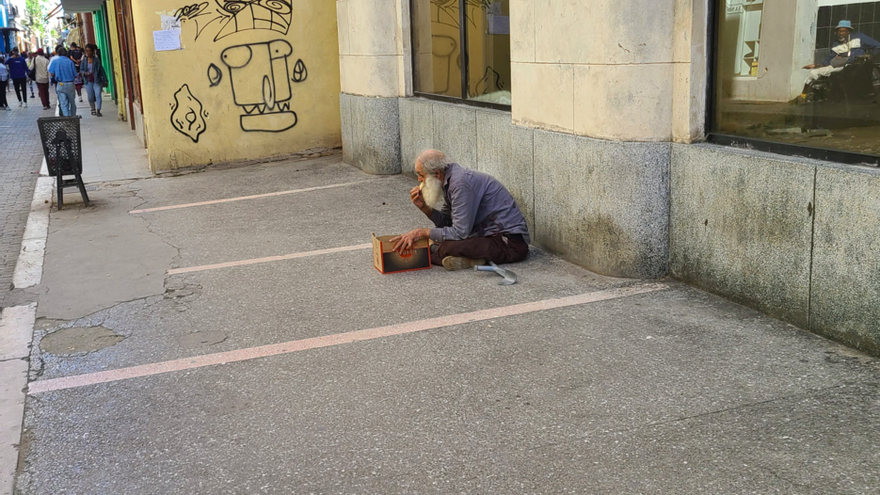
Orlando ‘El Barba’ [The Beard] begs for alms next to La Moderna Poesía, which at one time was the best bookstore in Havana. (14ymedio)
14ymedio bigger14ymedio, Pedro Espinosa, Havana, 21 December 2023 — The belongings of old Orlando, whom everyone in Havana knows as El Barba [The Beard], can be counted on the fingers of one hand. With fingers left over. A quilt, a couple of shirts, some pants, his crutch and a small box. His 86 years are also part of the inventory – it is what weighs the most on him – and he has lived them, at least the last few decades, on the streets.

Every morning, Orlando opens his eyes and sees the facade of a bar, next to the dilapidated Saratoga Hotel. Since he sleeps in a corner of the doorway, the bar is the closest thing he has to a house. So that he can go out to “work,” the employees store the quilt and the clothes that he is not going to wear that day.

Like all beggars, Orlando remembers a previous life. “I had a house with everything inside, but my family made a mess for me. They sold it, furniture and everything, and left the country,” he tells 14ymedio from the sidewalk of La Moderna Poesía, the famous bookstore – also abandoned – in the Bishop Street.

Passing children point to Orlando’s long beard. Passersby greet him and leave what they can in the cardboard box, which used to hold bottles of Havana Club rum. “It’s all a story and a lie,” he insists to those who ask him why he has not demanded assistance from the authorities. “I have gone to the municipal government several times. They have never given me the time of day, they have never wanted to help me.” continue reading

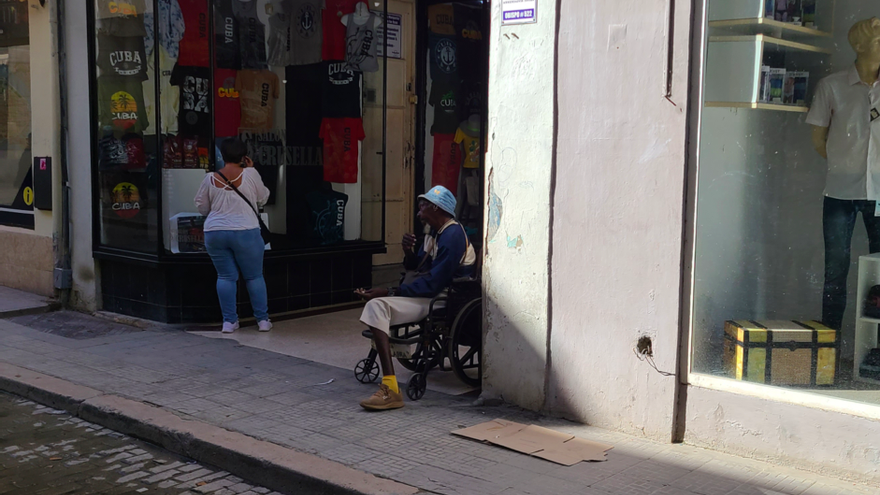
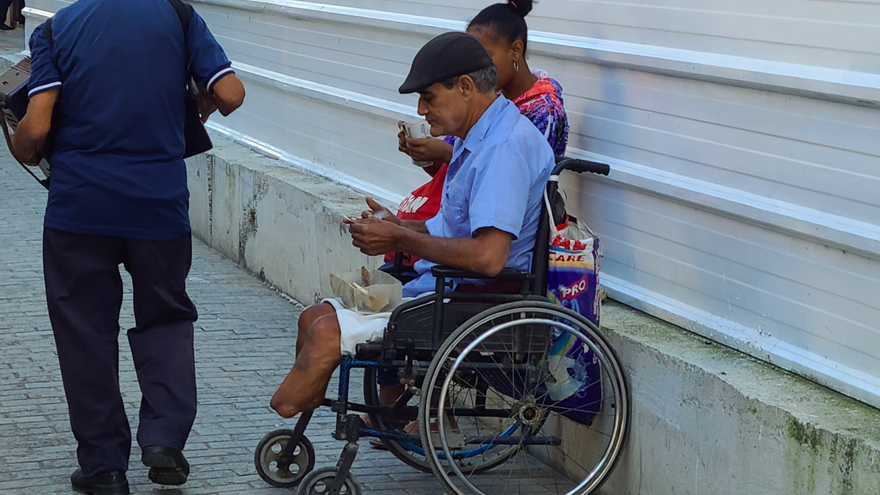
William, a neighbor by trade and on the street of ’El Barba’, does not sleep in any doorway but in “a little house” on Avenida del Puerto. (14ymedio)

William, a neighbor by trade and on the street of El Barba, does not sleep in any doorway but in “a little house” on Avenida del Puerto. With all the patience in the world, and sometimes pushed by a neighbor, his wheelchair leaves the Malecón heading towards Obispo. He stops at the door of a store, in front of La Moderna Poesía, and – he clarifies – “I don’t call out to anyone.” It is the people who, “if they want,” leave him some money.

“I’m not selling my house because I can’t sleep in a porch,” he emphasizes, when it is recommended to him. He is right: with one leg missing – he lost it 25 years ago in an accident, when he was a Comunales employee and collected garbage – William has a hard time expressing himself. He smokes a lot, coughs often and his memory fails. “They pay me 1,000 checkbook pesos a month,” he says, and clarifies that that’s all: “No social assistance, no spare parts for the chair, no nothing.”

29 years ago, at the wheel of his Moskvitch, Osvaldo braked badly while crossing the train line. (14ymedio)

Every beggar is a story. Sometimes fantastical – pain rewrites the past – but always bitter: in the end, one of Fidel Castro’s countless promises to the people of Cuba was that with the Revolution there would be no beggars. Another lie. Osvaldo, who is missing both legs, knows it well. 29 years ago, at the wheel of his Moskvitch, he slammed on the brakes crossing the train line. It was the worst of times. Before he could react, a locomotive rammed into the vehicle.

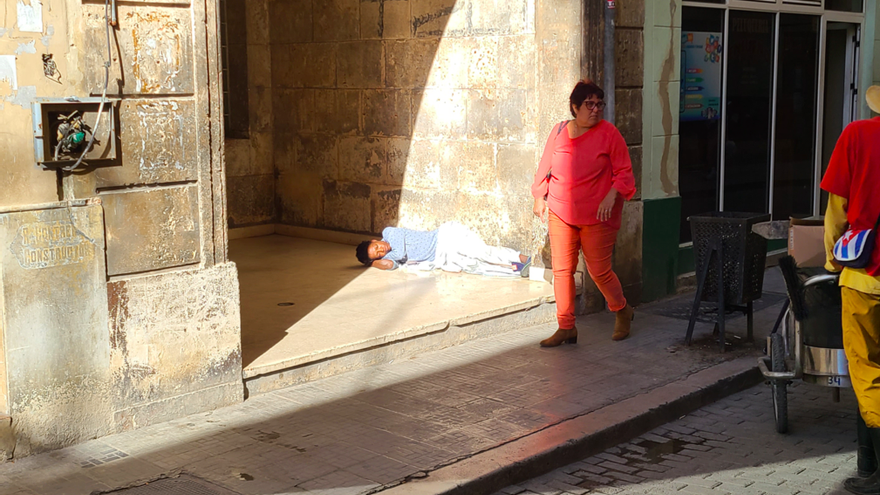
With him was his wife, who died instantly, and his two daughters, who survived. In the crash he also lost both legs. Osvaldo lives in Old Havana and likes to drink. Alcohol, in any quality and caliber, helps numb pain and fosters sleep. Sleeping, in fact, is what a beggar does most in Havana. Huddled in the corners of Carlos III or in a doorway on San Rafael Street, in rags or without a shirt.

Osvaldo is also paid 1,000 pesos a month, and the wheelchair he has was not given to him by the State. There is nothing at all, was the response of every doctor or technician he asked, when he tried to get it through official means. “The worst thing is that no one told me lies: they really didn’t have even a single screw,” he admits.

Now he can just “sit there,” he admits, and witness the movement of the city. In the box where people deposit a note there is always a statuette of Saint Lazarus. The beggar and lame saint – who is also the sickly orisha Babalú Ayé – is the patron of one of the many hidden Havanas: that of those who, like Osvaldo, William or El Barba, only aspire to a quiet corner to remember and sleep.

Sleeping is what a beggar does most, curled up in the corners of Carlos III or in a doorway on San Rafael Street. (14ymedio)

____________

COLLABORATE WITH OUR WORKThe 14ymedio team is committed to practicing serious journalism that reflects Cuba’s reality in all its depth. Thank you for joining us on this long journey. We invite you to continue supporting us by becoming a member of 14ymedio now. Together we can continue transforming journalism in Cuba.
‘Why Should I Kill Myself Studying?’ Is the New Motto of Young Cubans

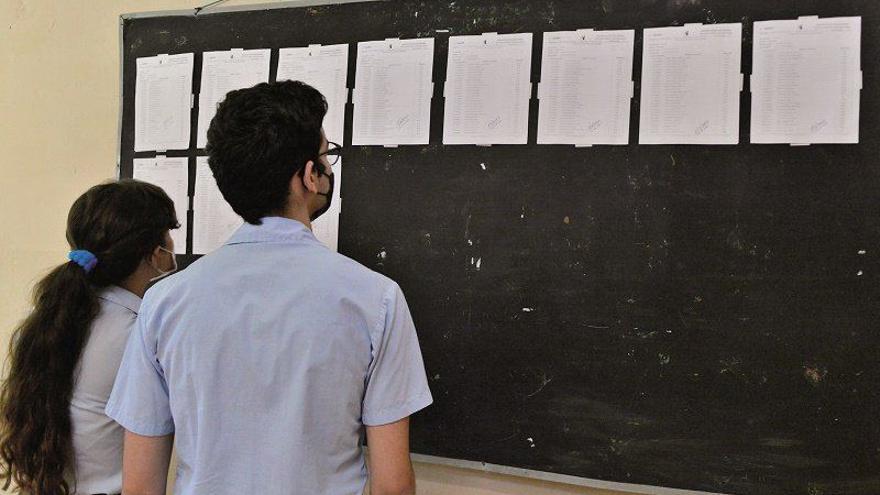
High school students in Havana look for their grades on a bulletin board. (Juventud Rebelde)

14ymedio bigger14ymedio, Havana, December 19, 2023 — Of the 2,175 students from Camagüey who promised to take the university entrance exams, 907 attended; of them, only 508 passed the Spanish, Mathematics and History syllabus. The situation of the province, which was described in detail this Monday by the official press, is just a sample of the educational debacle of the Island, where the slogan of the students has become – according to Adelante – “Why should I kill myself studying?”

The article is accompanied by several graphs that illustrate the gravity of the panorama. In the province, the worst result corresponds to the main municipality, with only 37% passed, and the best to Sierra de Cristal, where 100% passed. Not even the Vocational Pre-University Institute of Exact Sciences – in the past an “elite” school – was up to the task: it passed a little more than 72%.

Another graph shows the drop in those passing since 2017, when more than 80% were able to pass the exams, to the current 59% held by the province in the 2022-2023 academic year.

The relaxation of the mechanisms of entry into higher education, the possibility of entering the university even after failing the exam and the immigration stampede that the country is going through – in which the first to leave are the young people – has given a mortal blow to a system that already had multiple deficiencies. continue reading

The entrance exams have lost their function as a “filter,” reports  the newspaper, to become a mere “computer” of the promotion ladder

Adelante licks the wounds of the Ministry of Education and attributes the demotivation of the students to the lag of school years after the coronavirus pandemic. The readjustment claimed numerous victims, not only in primary and secondary education, but also in the university itself, which has not yet managed to return to the pace that was maintained before 2019.

Resolution 119 of 2021 tried to mitigate the swell of disapproved  by reducing the consequences of failing the exam: since then, even if the student strikes out, he can access a career, although “those who pass have priority.” The entrance exams lost their function as a “filter,” laments the newspaper, to become a mere “computer” of the promotion ladder. The law, he adds, “encourages making things easy and lack of effort.”

The emigration of school-aged young people is mentioned in the text only in passing, since Adelante prefers to emphasize the “insufficient vocational training work” and the discouragement towards studies that prevails, also, in families.

Among the arguments about the need to toughen the mechanisms of entry into the university, according to the newspaper, is the fact that the careers that keep their aptitude tests as a filter – such as Journalism and International Relations – have the best records of each generation.

The revolutionary principle of free and equitable access for all to universities continues to stand, and we defend it, but it cannot be used as a pretext to graduate more professionals”

“The revolutionary principle of free and equitable access for all to universities continues to stand, and we defend it, but it cannot be used as a pretext to graduate more professionals,” the article says. The alarms about the educational situation had already risen, in the national press, at the end of November, when Cubadebate published a report about admission days to the university, which were ones “of anxiety, despair and effort.”

The article commented with concern about “the true figures” of the exams: of 21,942 applicants at the national level; only 11,063 passed, a drop of 8.9% compared to the previous year. Most of the failures were in Mathematics (52%), while in Spanish (92%) and History (76%), the numbers were acceptable.

The students, it continues, had complained that the Mathematics exam was “too hard,” while the training during that course had not been the best. The officials interviewed by Cubadebate were shielded by the fact that “for more than ten years” similar questionnaires have been used, although the grades were not so disastrous.

Like Adelante, Cubadebate also avoided talking about the high number of students who emigrate before finishing high school. The abandonment, not infrequently, is calculated and kills two birds with one stone: to avoid the tension of the tests and escape, just in time, from the list of recruits for compulsory military service.

Translated by Regina Anavy

____________

COLLABORATE WITH OUR WORKThe 14ymedio team is committed to practicing serious journalism that reflects Cuba’s reality in all its depth. Thank you for joining us on this long journey. We invite you to continue supporting us by becoming a member of 14ymedio now. Together we can continue transforming journalism in Cuba.
Eight Blocks in Line, the Price To Get End-of-Year Gasoline in Cuba

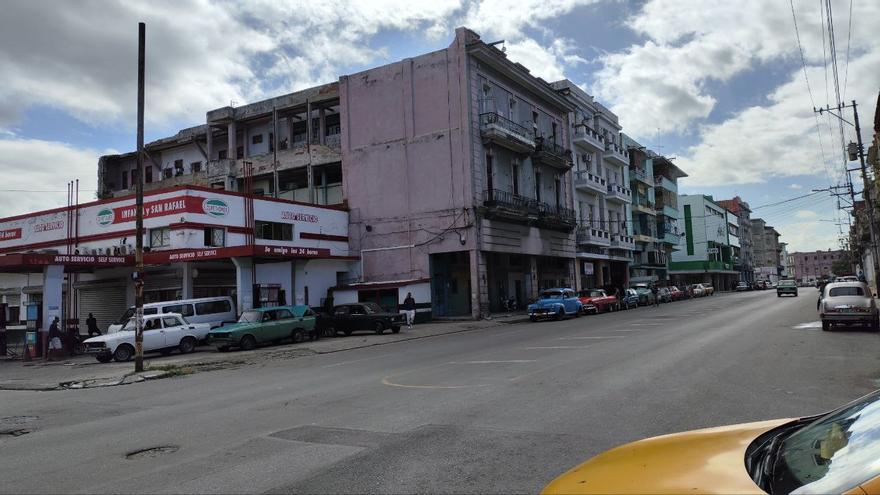
The line of cars extends for three blocks from San Rafael at Infanta and turns on Zanja to stretch for five more blocks. (14ymedio)

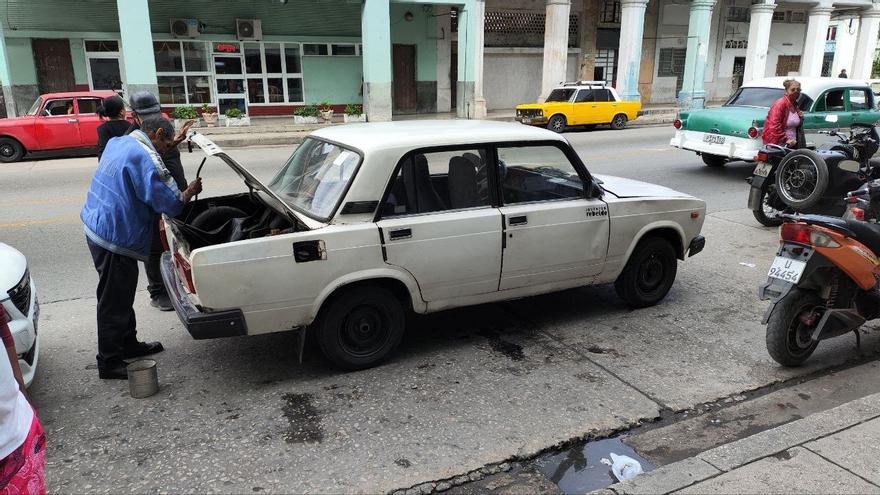
14ymedio bigger14ymedio, Havana, 21 December 2023 — The faces of the drivers who were waiting this Thursday morning in the line in front of the San Rafael and Infanta gas station left no room for doubt: the feeling of helplessness was widespread. “Eight blocks long!” complained the drivers who were waiting in the hope of buying a few gallons of gasoline in a line without end.

In the second block of the line, the driver of a Lada belonging to the official newspaper Juventud Rebelde empties the remains of fuel left in the tank with a hose and deposits it in an old jam or tomato puree can. “That’s to be able to fill the tank in the service center and buy as much as possible,” explains the owner of the almendrón (shared taxi), pointing out the “maneuver” of his neighbor in the line.

“We all do the same thing because there is no fuel anywhere, and these opportunities must be taken advantage of,” he explains. Others simply bring their vehicles to guarantee the purchase of fuel and resell it later if they can’t use it.

Two cars behind, a young driver tries to calm his partner through the phone. “Take it easy, the line is very long and this is going to take a while,” he counsels. continue reading

The more they advance in the line, which starts at San Rafael and Infanta, follows three blocks and turns at Zanja to stretch for five more blocks, the more sullen the drivers seem. This end of the year, they say, getting fuel has become particularly difficult.

“I’ve never seen such a thing. Having a car I have faced very long lines, sometimes in the early hours and for several hours, but this is the longest I’ve been in,” says another driver who sees several dozen vehicles ahead of him. “I’m here because I have no choice. I need gas, but at this point I don’t know how long it will take to get to the service center or if I will get fuel,” he says. Behind him, several more feet of the line wait on the corner of Zanja and Soledad.

The driver of a Lada from the official newspaper ’Juventud rebelde’ uses a hose to empty the remains of fuel that remain in the tank. (14ymedio)

The scarcity of such an essential resource leaves many in a state of uncertainty. In the capital, where there are more vehicles than anywhere else in the country, the streets have seen traffic decrease in a worrying way in recent months. “There are times of the day when not even a bicycle passes along 23rd Street, which is the vital center of Havana,” says the driver.

One piece of news in particular worries drivers, who take refuge from the unexpected drizzle: the Government is going to raise the price of fuel. This was announced a few days ago in Parliament by the Island authorities, who, in the face of the economic crisis, plan to raise the price of many other products in an attempt to recover the country’s finances.

At the moment, what was discussed in the parliamentary sessions does not reveal the new price, although the leaders clarified that the fuel that is purchased by foreigners will be charged in foreign currency.

To top it off, the drivers add that every habanero knows how to read the signs of the approaching crisis: “The refinery has been shut down for days.”

Translated by Regina Anavy

____________

COLLABORATE WITH OUR WORKThe 14ymedio team is committed to practicing serious journalism that reflects Cuba’s reality in all its depth. Thank you for joining us on this long journey. We invite you to continue supporting us by becoming a member of 14ymedio now. Together we can continue transforming journalism in Cuba.
The Alleged Murderer of ‘Snow White’, a Well-Known Cuban Drag Queen, Is Arrested

After the first investigations, the authorities confirmed that the cause of death was a stab wound to the lung.  (Luis Alberto Castillo/Facebbok)

14ymedio bigger

14ymedio, Havana, 16 December 2023 — Rudy, a Cuban drag queen known in the LGBTI community as Blancanieves, (Snow White) was murdered this Thursday by his partner, who was arrested shortly after by the Police. The crime, which could be classified as femicide when the details are known, occurred in the town of Santiago de las Vegas, in the province of Havana, where the victim lived with Yordano, who caused her violent death with a knife.

After the first investigations, the authorities confirmed that the cause of death was a stab wound to the lung. According to Cubanet, the testimony of a neighbor states that Blancanieves and Yordano returned home in the early morning hours and had a heated argument while the former’s cries for help could be heard. However, no one came to offer help because they claim that the couple often had heated fights.

On Friday morning, upon noticing a suspicious attitude on the part of Yordano, who said that Blancanieves had gone on a trip, the neighbors decided to go to the house, where they found the body and immediately called the Police. When the aggressor returned to the scene, they detained him and handed him over to the authorities, according to this same version of the events.

No one came to offer help because they claim that the couple repeatedly had heated fights.

Last June, 14ymedio published a story about the murder of a 30-year-old trans woman, Samira Lescar, known as La Loba, at the hands of her ex-partner, who refused to leave the relationship. La Loba died from the four stab wounds that were inflicted on her, one of which fell directly on her heart. continue reading

In November, the platforms also reported a violent attack against a transsexual woman in Cárdenas, an event that Alas Tensas then considered an attempted trans-feminicide. It was Roxana Suárez, 22 years old, who suffered several skull fractures and had to be transferred to the Faustino Pérez hospital in Matanzas in serious condition.

The work of feminist groups and their dissemination in independent media has contributed to making visible the cases of sexist murders and of women who have disappeared in recent years.

This Saturday, Alas Tensas and Yo Sí Te Creo in Cuba included in their registry of femicides the murder of Yamilet de Jesús Domínguez Torres from Holguín, a case that 14ymedio reported last December 13. After verifying the manner of her death, they indicated that her body was found buried under the floor of her own house after being reported missing on November 24.

Translated by Norma Whiting

____________

COLLABORATE WITH OUR WORKThe 14ymedio team is committed to practicing serious journalism that reflects Cuba’s reality in all its depth. Thank you for joining us on this long journey. We invite you to continue supporting us by becoming a member of 14ymedio now. Together we can continue transforming journalism in Cuba.
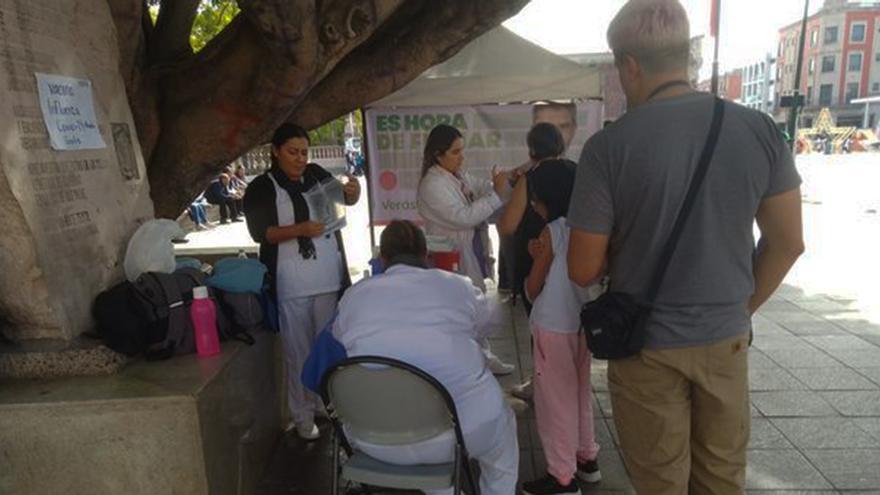
Mexicans Flee From the Cuban Abdala Vaccine and Line Up for the Pfizer

The Pfizer vaccine sold out on its first day of sale in Mexico. (Facebook/The Economist)

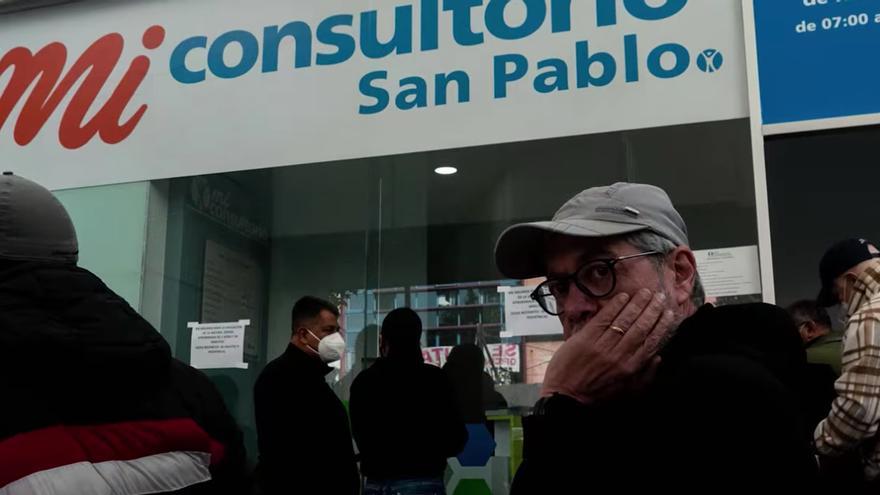
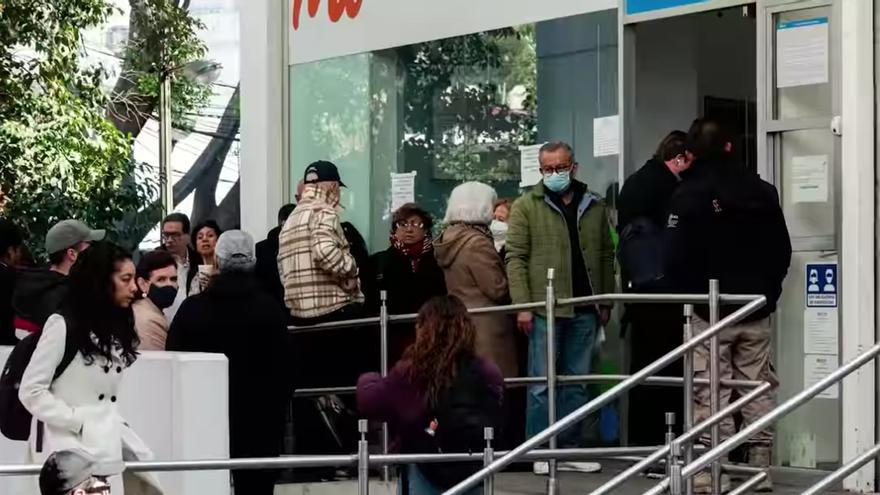
14ymedio bigger14ymedio, Ángel Salinas, Mexico, 21 December 2023 — “Prevention is better than death,” Raúl Noé Dorantes tells 14ymedio. This Wednesday he was one of the 4,500 people who was able to buy Pfizer’s Corminaty vaccine in the Farmacia San Pablo before it was exhausted . “At my age (78), a certified drug is preferable than than being tested, with Abdala or Sputnik, which are the ones that the Government is giving,” for free in hospitals and public health centers.

Cinthia Martínez, 67, went at 9 in the morning to one of the branches of the same pharmacy, located on Universidad Avenue but was told that she had to go to another one, over 10 miles away. “No matter the time or distance, it’s worth getting vaccinated,” she says.

Martínez says that the dose against seasonal influenza was applied in the Health Sector clinic, but she did not accept “the Abdala vaccine because it is not approved” by the World Health Organization. “When they gave me the Russian (Sputnik), I got sick, and I don’t want to go through the same thing.”

Farmacia San Pablo was the only one of the four pharmacies authorized by the Federal Commission for Protection against Health Risks that offered the dose of Pfizer against the Omicron XBB 1.5 variant, along with the Spikevax (Monovalent XBB 1.5) from Moderna, which has not yet arrived in Mexico. This Thursday, the franchise indicated that it has 16,000 doses. The pharmacy is now asking those interested in being vaccinated to call the customer service number to find the pharmacy closest to their home. continue reading

Esteban Ordorica arrived at 8:30 in the morning at the Tecamachalco branch. “They had me see the doctor, to whom I explained the doses I had and after filling out an authorization form they gave me the vaccine. It didn’t take even ten minutes to get vaccinated. It’s worth the expense of 848 pesos, and they even gave me a card with the drug’s data.”

Four pharmacies were authorized to sell vaccines against COVID-19 from Pfizer and Moderna. (Facebook/The Economist)

The director of operations of Farmacias del Ahorro, Gabriel Zavala, confirmed to 14ymedio that to the extent that the distributor delivers the vaccine to them, people will be able to buy it in one of 400 branches of the 1,800 that they have in the country. On his website he shared a list of 371 locations where one can buy the COVID-19 vaccine for less than 1,000 Mexican pesos.

Faced with the euphoria about the doses of Pfizer, the Government of Mexico City noted that between December 21, 2022 and December 4, 2023, it has applied 562,991 doses of Abdala and that they already have the Sputnik. The Cuban vaccine, he said in a statement dated December 5, is in more than 200 Health Centers to “immunize vulnerable groups: those over 60 years of age, pregnant women, girls and boys from 5 to 17 years of age and over 18 years of age with comorbidities.”

On his social networks he shared images of the venues where several people are observed, but he omitted to point out that the seasonal influenza vaccine is also being given.

President Andrés Manuel López Obrador proclaimed last Tuesday that he had fulfilled the responsibility of guaranteeing vaccines against COVID-19 and influenza. “The important thing is that there is a vaccine for the people, for everyone, for the rich and for the poor, and it costs them nothing because in accordance with article 4 of the Constitution, the right to health must be guaranteed. Health is not a privilege; it is a right of the people.”

The Undersecretary of Prevention and Health Promotion, Ruy López Ridaura, said that 3.8 million doses applied against the coronavirus have been counted since the start of the campaign last October, which represents 18% of the target contemplated. However, he specified that the campaign against influenza has an advance of 53% of the population, 35 million people, and 19 million vaccines have been administered so far.

Módulo de vacunación para aplicar dosis Abdala y contra la influenza en Aguascalientes. (Facebook/¿Que Pasa Aguascalientes?)
Vaccination site to apply Abdala doses against Covid and a vaccine against influenza in Aguascalientes. (Facebook/¿Que Pasa Aguascalientes?)

The doctor, a deputy of the National Action Party, Éctor Jaime Ramírez, insisted to this newspaper that the vaccines offered by the Government “do not work for the current variants” of the coronavirus. He regretted that López Obrador fails to comply with the obligation to “assure that older adults, people with diabetes, with cancer, have a vaccine that works.”

Jaime Ramírez said that the current Administration has 13 billion pesos earmarked for the Vaccination Program. If “that money is not used, it will go to the Maya Train, the Dos Bocas refinery, the Felipe Ángeles International Airport.” He recalled that last year “it had 14.4 billion pesos for the health sector and only used 20%.” This year, a budget of 13 billion pesos was approved for 2024.

“It is striking that they continue to pay in the dark the Government of Cuba and the Government of Russia to buy vaccines that are useless,” says the legislator opposed to López Obrador. “The same will happen with the Mexican vaccine Patria, a project in which almost 1 billion pesos have been invested and is still just a promise. The money was badly invested, because the vaccine is made based on the initial strain; it will be of no use in the face of the new variants.”

Despite the fact that López Obrador indicated in his fifth government report that only 114,008 Abdala vaccines had been applied out of the 9,000,000 that he bought from the Island, in October he acquired another 3,000,000 doses. The Government of Mexico insisted on continuing to favor its partner Cuba, regardless of the fact that thousands of doses have expired and still continue to be used.

Translated by Regina Anavy

____________

COLLABORATE WITH OUR WORKThe 14ymedio team is committed to practicing serious journalism that reflects Cuba’s reality in all its depth. Thank you for joining us on this long journey. We invite you to continue supporting us by becoming a member of 14ymedio now. Together we can continue transforming journalism in Cuba.
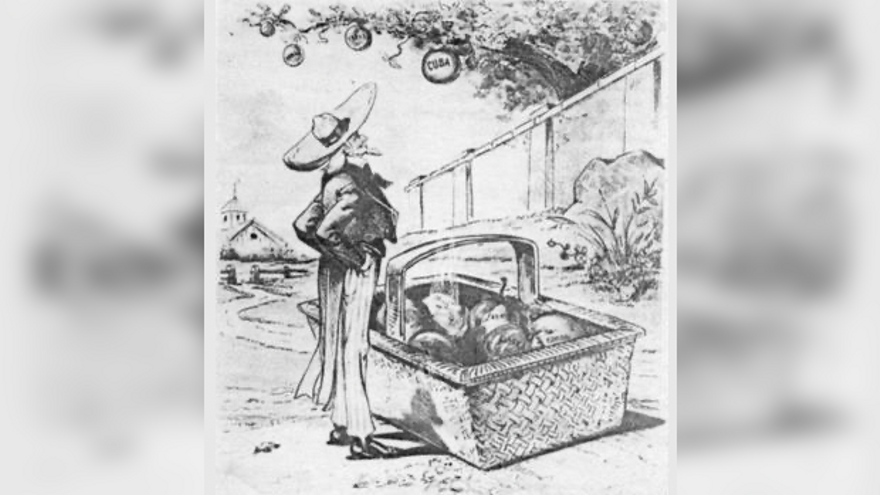
Rotten Fruit

Cartoon published in 1897 in the American newspaper ’Puck’ with the title ’Patient waiters are not losers.’ (Cubainformación)

14ymedio bigger14ymedio, Yunior Garcia Aguilera, Madrid, 21 December 2023 — The Cuban regime and its ideologues have, time and again, recycled a statement made in 1823 by John Quincy Adams. The then American Secretary of State wrote about gravity, or rather about Cuba, comparing us to a fruit. He predicted that, when the island broke away from Spain, it would inevitably fall to the ground. Or, in other words, towards the U.S.

But Adams, who would later become the sixth president of the United States, never got past Isaac Newton and did not live long enough to learn about the theory of relativity. Many years later, Albert Einstein would redefine gravity, not as a force but as a deformation of space-time. And though some Granma librettists still cling to that quasi-vegan phrase, history has witnessed, on more than one occasion, space-time deformations.

If we put ourselves in his shoes, Adams words make perfect sense for someone of his time and place

If we put ourselves in his shoes, Adams words make perfect sense for someone of his time and place. Cuba enjoyed an enviably strategic position. In enemy hands, it could constitute a real threat to the United States. Our island was also the world’s largest producer of sugar, the white oil of its time. And in the coming years U.S. actions did indeed follow the “low-hanging fruit” logic, whether that meant trying to buy the island, supporting the insurgency or entering directly into the conflict with Spain, as it ultimately did. continue reading

The Teller Amendment, however, expressly prohibited eating the fruit. So what happened? Was it sudden reluctance? Fear of unfamiliar foods? In fact, not all Americans wanted this particular new star on their flag. Some were genuinely committed to our independence. Others rejected annexation because of the threat that Cuban sugar competition posed to their own businesses. And quite a few simply did it out of racism. At the time, Cuba had half a million people of African descent in a country with barely a million and a half inhabitants.

The first period of military occupation (1899-1902) has been widely studied by a broad range of historians. I personally recommend Viento Norte (North Wind) by Ignacio Uría — a sharp, intelligent, well-documented study that does not come with the embarassing Castro-Stalinist baggage that afflicts so many of our history books.

The fact is the Americans left. Years later, Cuban president Estrada Palma begged them to return. They came and left again. What was up with the fruit? This inconsistency in the American diet has confounded more than one Marxist historian. But as for the fruit, they really don’t seem to be too interested.

What John Quincy Adams never imagined was that the United States was not the only place where the apple — or, to be more tropical, mango or papaya — could fall. It took until 1959 for gravity to pull it towards Moscow. That rollercoaster of a fall was like a second Platt Amendment.

The rot in the fruit became so obvious that Fidel Castro began to see “worms” everywhere

The rot in the fruit became so obvious that Fidel Castro began to see “worms”* everywhere. He was convinced that only the Soviet cherubim could prevent the Yanks from going into full Adam-and-Eve mode on the little fruit. But the Cold War ended and the United States still showed no appetite, even though they had the opportunity to bite down hard. The balsero crisis in 1994 gave them the perfect excuse but they didn’t do it. Nor did they do it after widespread anti-government protests in July of 2021.

Some have theorized that there are those in Washington who prefer that the Cuban regime survives if for no other reason than to serve as a bad example. But one bad apple can spoil the whole bunch as we have seen in Venezuela, Nicaragua… The “defective sample” theory has been worse useless; it has been downright dangerous.

Regardless of how Washington or anyplace else sees us, we do know how important it is for us to be free. And if we have to do it on our own, we had better be realistic. Because freedom is not just about taking to the streets to celebrate and throw streamers. The country we will be inheriting is a pile of rubble.

There is much we can learn from that first transition, when the republic took its first steps. We have often looked to others such as the countries of Eastern Europe or post-Franco Spain for inspiration. But looking at ourselves can also shed a lot of light. And we must stop believing, once and for all, that we are a fruit.

*Translator’s note: “Gusanos” in Spanish, a term Castro often used in his speeches to disparage Cubans who opposed his regime.

____________

COLLABORATE WITH OUR WORKThe 14ymedio team is committed to practicing serious journalism that reflects Cuba’s reality in all its depth. Thank you for joining us on this long journey. We invite you to continue supporting us by becoming a member of 14ymedio now. Together we can continue transforming journalism in Cuba.
Devoid of Tourists and Locals, Only the Turkey Vultures Remain in the Plaza of the Revolution

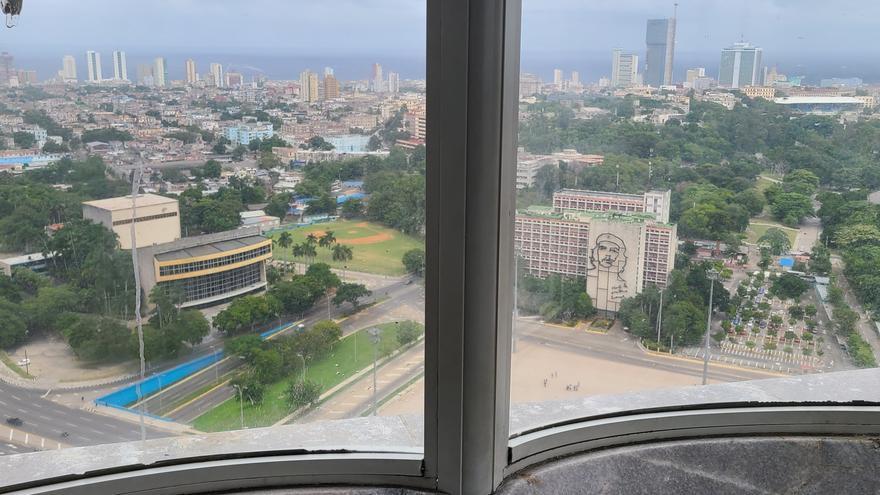
The guide, always attentive to curious visitors, leads them to a narrow perch with acrylic windows. (14ymedio)

14ymedio bigger14ymedio, Pedro Espinosa, Havana, 13 December 2023 — A few years ago a line of taxis and old convertibles regularly filled the esplanade in front of the Plaza of the Revolution’s tower. But the decline in tourism has also led to a decline in visitors to what was once the nerve center of political power on this Island.

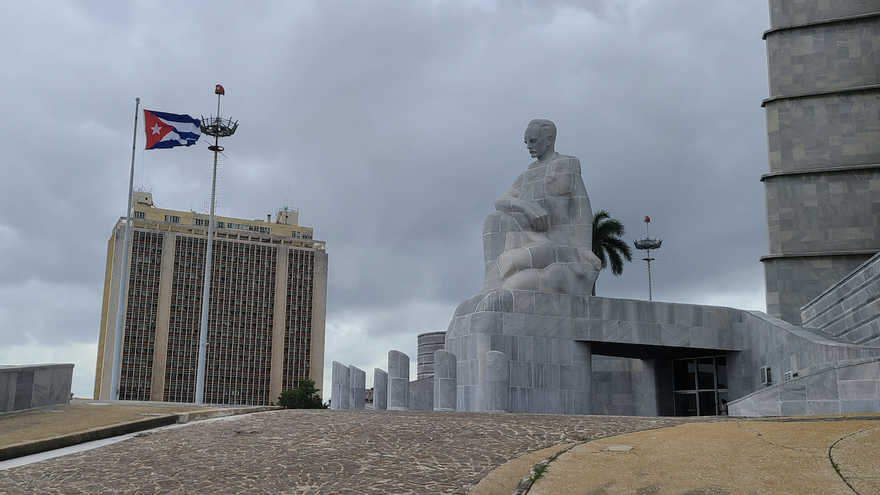
On Wednesday, guards stood watch over the broad rectangle in front of the statue of José Martí that the writer Eliseo Alberto de Diego described as the saddest one that had ever been made. Its faded contour and melancholy pose suggest a sculpture that has melted under the tropical sun while observing the city spread out at its feet.

Adding to the sense of ossification is the stillness. Nothing in the scene moves, not even the uniformed guards. Hours pass before a lone person walks up the ramp towards the José Martí Memorial. The view provides a different vantage point, allowing us to see what  most Cubans have only observed from below, when they participated in May Day events or stood listening to a very long speech by Fidel Castro. continue reading

The leader known for waving his index finger when shouting into microphones there died in 2016 and the site lost its political importance

But the number of political rallies in the plaza have been decreasing over the years as have visits by foreigners. The leader who used to wave his index finger while shouting into microphones there died in 2016 and the site lost its political importance. The same thing has happened to other official spaces such as the Anti-Imperialist Grandstand and, more recently, La Piragua, the esplanade next to the National Hotel in Vedado. The latter, with its proximity to the sea and location at the foot of a cliff, allows for far more effective security precautions for party leaders.

But despite its decline as a revolutionary symbol, visitors still get the sense they are entering the sancta sanctorum, or peeking into the inner workings of the Cuban regime, when they take the elevator or walk past the marble benches that so often held the posteriors of Communist Party bigwigs. Even though everyone knows it was Fulgencio Batista who built the place, and that before the Revolution it was originially known as Civic Plaza, the site has become an emblem of Castroism.

Motivated by curiosity and the almost desperate public pleas by its caretakers for people to visit the site, the visitor climbs the hill and heads straight to a small ticket office to purchase a ticket to the viewing platform, galleries and temporary exhibitions, which are open, Monday to Saturday, from 9:30 A.M. to 4:00 P.M.

Those in charge of the monument took advantage of the sudden attention from goverment media outlets to point out that entry to the museum is 20 pesos for Cubans. Since currency unification, foreigners can now also pay in the local currency, for which they will need 150 pesos, less than a dollar at the unofficial exchange rate.

Its faded contour and melancholy pose suggest a sculpture that has melted under the tropical sun while observing the city spread out at its feet.

After buying a ticket, a guide will explain, upon request, that the tower was built on the highest point of the site, formerly known as Loma de los Catalanes. He will discuss details of the design competition that led to two of the proposals being combined into one and will describe the marble that was transported from the what is now known as the Isle of Youth.

One of the employees, most of whom are women, will provide details, names, figures and dates but will avoid mentioning the slogans about “¡paredón!” — to the wall! — that were chanted in the plaza during fits of collective hysteria demanding the executions of opponents after Castro came to power. Nor will she talk about the unsavory characters, trigger-happy figures or authoritarian leaders who have been invited to appear at the memorial. And she will certainly not allude to the turkey vultures that constant inhabits of the hilltop.

Then, after listening to this speech in which the guide takes the opportunity of to denigrate the former republic and praise Castro, one will be allowed to cross the threshold and enter an odd series of spaces. Laid out in a configuration dictated by the star shape that the tower maintains from its base to its pinnacle, the first thing that stands out are the walls with quotes by the “apostle,” José Martí. And what quotes!

“Unify, that is the word of the world.” And “Silence is the modesty of great characters.” Or the politically incorrect “The people who want to be free shall be free in business.” These are among the seventy-nine musings by Martí that can read in a mural by the Cuban painter and ceramist Enrique Caravia, all of them inscribed in 22-carat gold on a greenish blue background.

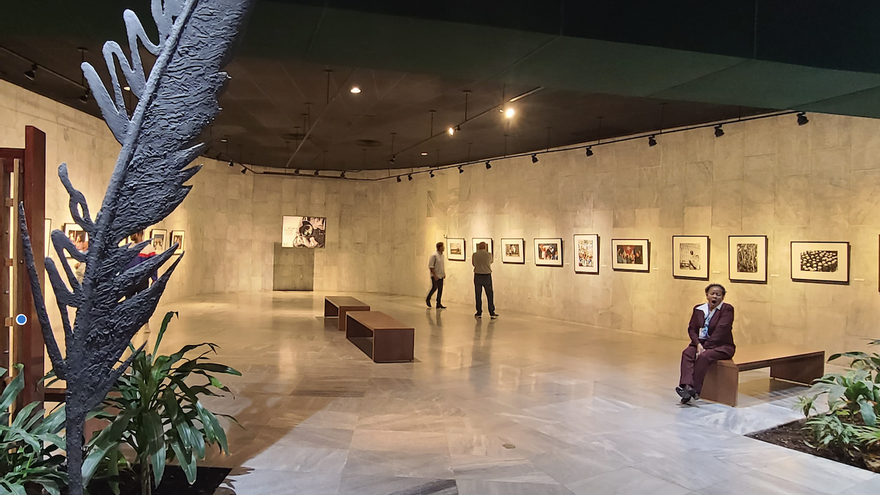
Photos, facsimiles of letters and personal objects on display in the galleries provide a snapshot of a man who only lived for forty-two years. (14ymedio)

Photos, facsimiles of letters and personal objects on display in the galleries provide a snapshot of a man who only lived for forty-two years. Among the large format images on display, a head-to-toe photo of Fidel Castro stands out. A dark snapshot that often puzzles tourists, it shows him holding a Cuban flag on a narrow stretch of beach at Cajobabo that recalls Martí’s landing on that coast in 1895.

The image of Castro, dressed in a khaki uniform and assuming a rigid posture, clashes with the warm civility of Mariano and Leonor’s son, who has accompanied the visitor to the memorial here. Wielding the flag like a spear, the ruler seems to want to lay claim to any space or reference having anything to do with José Martí. By planting a flag, he is signaling that this is also his museum.

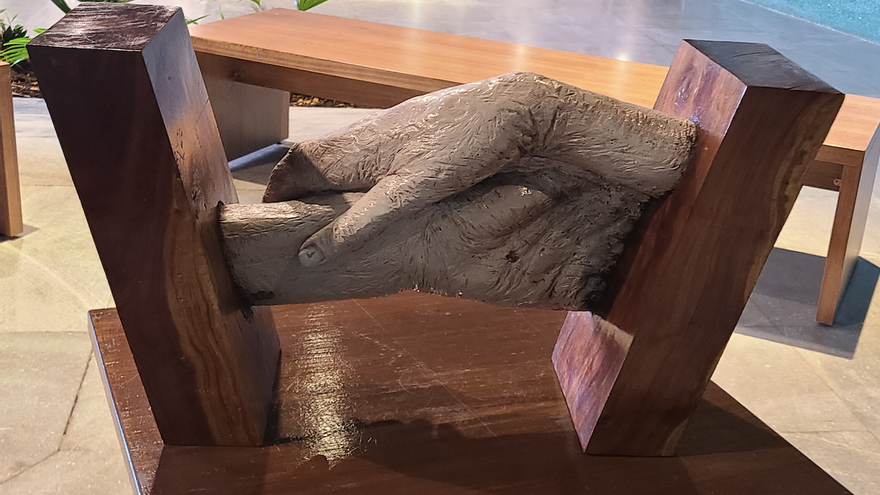
It is no surprise that one of the temporary exhibitions on display is titled “Fidel’s Hands.” It includes photos by Alberto Korda and Roberto Chile as well as a painting by Oswaldo Guayasamín in which Castro looks more like a saint in an El Greco painting than a stern tyrant who held power for almost half a century without allowing free elections.

Finally, it is time to go up to the lookout. The guide, always attentive to those who are curious, leads them to a narrow perch with acrylic windows. Up there, where vehicles driving along Rancho Boyeros Avenue look tiny and the Council of State building looks it was designed for the Third Reich, the guide begins to share details about the size of the building: 142 meters tall.

One of the temporary exhibitions on display is titled “Fidel’s Hands,” and includes photos by Alberto Korda and Roberto Chile. (14ymedio)

According to urban legends, of which there is no shortage when it comes to this topic, there is a regulation which prohibits the construction of any building in Havana taller than the José Martí Monument. But, at 154 meters, the imposing Tower K, which can clearly be seen from the windows at the top of the monument, makes it clear that this is just a hoax. Or that politics lost out to tourism in the battle over height.

The absence of human presence in the plaza, the imposing buildings and lack of trees is more noticeable from the top. One can make out, in a foreshortened view, the outline of Che Guevara’s face on the gloomy Ministry of Agriculture building, the same portrait that is slyly included in official photos so that he appears in the frame alongside official visitors such as Barack Obama and King Felipe VI of Spain.

The immediate impression one gets is that the entire architectural complex has not aged well. While the world is moving towards more people-friendly public spaces, the center of Cuban power is not a place where people choose to go voluntarily, where friends meet and mothers walk their babies in strollers. The gray marble also gives it a funereal quality that is only reinforced by the completely empty esplanade.

A turkey vulture pervades the space beyond the window. On the other side are scavenger birds drawn to high elevations and tall buildings. One cannot help but see a parallel between the rotting meat they feed on and the decadence of the Cuban system that the Plaza of Revolution represents. The guide doesn’t even glance at the huge bird just outside. Instead, she quickly wraps up her speech and warns visitors that it’s time to head down.

____________

COLLABORATE WITH OUR WORKThe 14ymedio team is committed to practicing serious journalism that reflects Cuba’s reality in all its depth. Thank you for joining us on this long journey. We invite you to continue supporting us by becoming a member of 14ymedio now. Together we can continue transforming journalism in Cuba.
Raising Prices and Ending the Universal Ration ‘Booklet’, Measures to Stop Cuba’s Economic Disaster

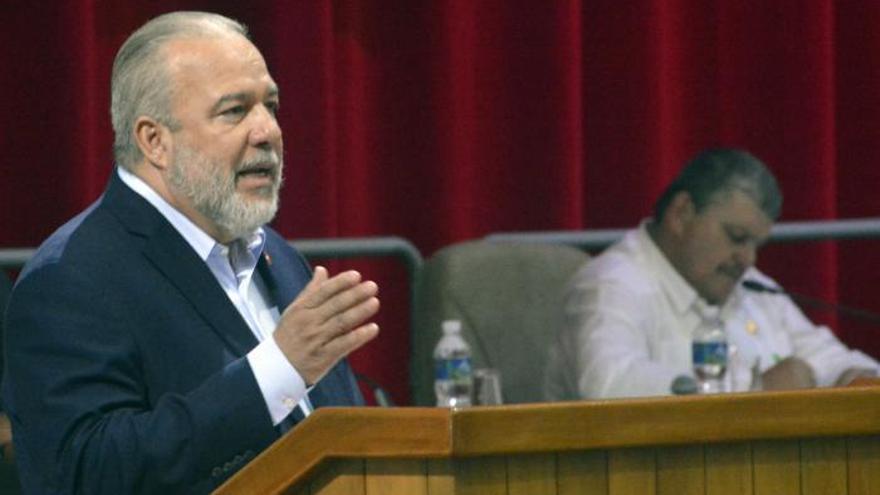
Cuban Prime Minister, Manuel Marrero, on the first day of the second ordinary session of the National Assembly, this Wednesday. (Granma)

14ymedio bigger14ymedio/EFE, Havana, 20 December 2023 — The unsustainable economic situation of the Island has led the Government to establish a shock plan starting at the beginning of 2024. Among the main measures announced by Prime Minister Manuel Marrero on the first day of the second ordinary session of the National Assembly, are the increases in prices of products and services and the end of the universal subsidy for the basic food basket sold through the rationing system.

Regarding the rationed market, Marrero argued that the objective is to move to “subsidizing people and not products” to achieve “a more fair and efficient scheme,” tacitly recognizing the increase in social and economic inequalities.

“It is not fair that those who have a lot receive the same as those who have very little. Today we subsidize the same to an elderly pensioner as to the owner of large private businesses who has a lot of money,” he argued.

Thus, he continued, the Ministry of Labor and Social Security must identify people by their degree of “vulnerability,” so as to “not leave anyone helpless.” The latter group will be able to continue acquiring highly subsidized basic products with the ration card. continue reading

Marrero stressed that this classification will be carried out in “the coming weeks and months,” without further details.

Prominent among these increases are the 25% increase in the electricity rate for the 6% of the residential sector that consumes the most, and the move to require tourists to pay for fuel in foreign currency

The head of the Cuban Government also assured that, given the situation, the State cannot continue with the “waste” in certain subsidies, such as water, electricity, liquefied gas, transportation and fuel.

Prominent among these increases are the 25% increase in the electricity rate for the 6% of the residential sector that consumes the most, and the move to require tourists to pay for fuel in foreign currency.  The cost of water supply will triple for those who do not have timed service and the price of a liquefied gas cylinder will increase by 25%.

Marrero also announced that “new rates will be applied” to passenger transportation services, but without detailing what those rates will be.

Another still unspecified forecast announced by the prime minister is the end of the exemption from customs taxes for the import of food and medicine, which, for the moment, he clarified, will be extended.

Marrero also announced that next year the Government will change the official exchange rate of the peso with respect to the dollar, for which a working group has been created with the Central Bank of Cuba.

Since 2021, the official exchange rate remains at 24 pesos per dollar for legal entities and 120 CUP for individuals. In the informal market, meanwhile, the dollar has skyrocketed to 273 pesos.

The prime minister also left the door open to a “review” of the number of people currently on the state payroll

Another product that will see its cost increase is tobacco, which, according to the prime minister, “in many cases is bought for resale.”

The prime minister also left the door open to a “review” of the number of people currently on the state payroll, in reference to possible cuts to reduce the wage bill.

In this regard, he pointed out that the authorities must “review the state structures and templates” to guarantee “efficient management” and announced that “there is a group that is studying a law on the organization of the central administration of the State.”

This Monday, the Minister of Economy and First Vice Minister, Alejandro Gil, had already warned of the debacle of the situation, specifying that Cuba’s gross domestic product (GDP) will contract between 1% and 2% in 2023, versus the forecasted growth of 3% previously expected for the end of the year.

Inflation, for its part, is close to 30%, and its first victim is the “purchasing capacity” of Cubans’ salaries. Finally, the deficit will rise to around 15% of GDP, after the Executive recognized a deviation of 44% with respect to what was budgeted.

Although in his speech before the Economic Affairs Commission Gil listed a whole string of administrative calamities, he clarified that the disaster cannot be attributed to the Cuban Government’s management of the crisis, but rather to the well-known “tightening of the blockade” imposed by the United States.

____________

COLLABORATE WITH OUR WORKThe 14ymedio team is committed to practicing serious journalism that reflects Cuba’s reality in all its depth. Thank you for joining us on this long journey. We invite you to continue supporting us by becoming a member of 14ymedio now. Together we can continue transforming journalism in Cuba.
More Than 600 Residents of Cuba With Spanish Nationality Ask for Financial Aid From Castilla y Leon

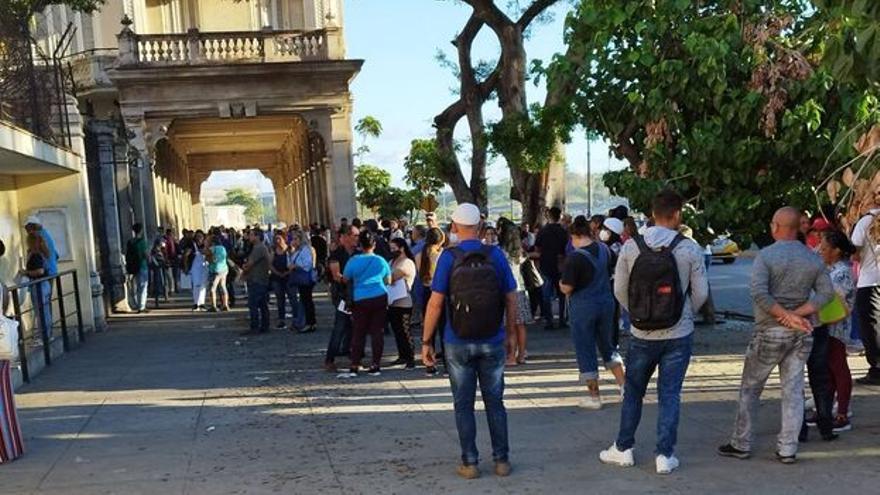
Cubans in line in front of the Spanish Consulate in Havana. (14ymedio)

14ymedio biggerEP (via 14ymedio), Valladolid, Spain, 21 December 2023 — More than 600 Cubans who are nationalized Spanish residents on the Island have received the help of the Junta de Castilla y León, in Spain, for being in a situation of special need, and 226,000 euros have been allocated to them, almost 90% more than in 2022.

The Official Bulletin of Castilla y León has published the Order of the Ministry of the Presidency by which the call for these individual grants is resolved, whose beneficiaries are people registered in a municipality of Castilla y León in the Register of Spanish Residents Abroad (PERE), and who allege a lack of sufficient resources to cover their basic subsistence needs.

The amount of aid depends on the level of income of the different family units and the members that make up these units. All the aid requested has been granted, provided that the conditions set out in the official announcement were met. continue reading

The amount of aid depends on the level of income of the different family units and the members that make up these units

All  of the aid has been allocated to Castilian and Leonese citizens or their descendants residing in Cuba. In fact, of the 816 applications received, 812 corresponded to citizens on the Island.

The amount of aid has been 360 euros per application. To assess the data, it must be taken into account that the minimum pension in Cuba stands at 1,528 pesos per month; that is, less than 60 euros, and the minimum wage at 2,100 (80 euros).

The amount of 360 euros is, therefore, the equivalent of the remuneration received by a resident in Cuba who receives the minimum pension for half a year, and the salary of a worker who receives the minimum wage for more than four months.

Of the 627 beneficiaries, 400 are women and 227 are men; 15 are under 35 years old; 164 are between 35 and 65 years old, and 448 are over 65 years old.

The most abundant profile of a person who has received this help responds, therefore, to a woman of Castilian and Leonese origin residing in Cuba, over 65 years of age and with serious survival problems.

As of January 1, 2023, according to data from the Spanish National Institute of Statistics, 9,719 Castilians and Leonese registered in the PERE reside in Cuba.

Translated by Regina Anavy

____________

COLLABORATE WITH OUR WORKThe 14ymedio team is committed to practicing serious journalism that reflects Cuba’s reality in all its depth. Thank you for joining us on this long journey. We invite you to continue supporting us by becoming a member of 14ymedio now. Together we can continue transforming journalism in Cuba.
Sancti Spíritus, the Cuban Capital of the Giant African Snail

In the municipality of Taguasco, the main focus is on the crops of the Agroforestry Company. (Vicente Brito/Escambray)

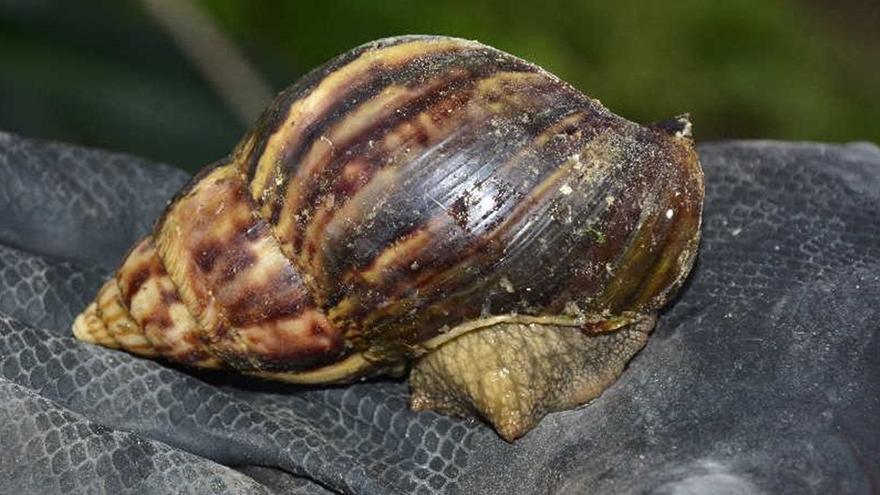
14ymedio bigger14ymedio, Mercedes García, Havana, 21 December 2023 — Although the issue has ceased to appear in the official press, the presence of the giant African snail continues to spread through Cuba, and the economic crisis makes it almost impossible to combat it, due to the lack of resources and fuel. In Sancti Spíritus, the plague wreaks havoc on agriculture and homes, according to sources from the Plant Health Research Institute (INISAV).

“Many people have forgotten about this animal, but we receive reports every day,” an INSAV employee in the province, who prefers anonymity, explains to 14ymedio. In Sancti Spíritus, the municipalities most affected by this species, considered one of the hundred most invasive in the world, are Cabaiguán, Taguasco and the provincial capital.

“We received a complaint that they saw the snails in one place, but we can’t do anything because we don’t have the resources. We’re not even going to check the level of infestation because we don’t have the necessary fuel to move within the province,” the worker emphasizes.

“Right now we are focusing on the School of Medicine, in the former Faculty of Nursing, which has a vacant lot between the houses and the buildings. That area is infested with snails,” he explains. “Specimens have even been found in the lime ovens on the outskirts of the city. They are everywhere, and nothing stops them.” continue reading

We received the complaint that they saw the snails in one place, but we can’t do anything because we don’t have the resources; we’re not even going to check the level of infestation”

The expert sees a relationship between the flooding of the stream that borders the city of Sancti Spíritus and the spread of the plague. “If the water rises, the snails spread everywhere, so what seems like good news for agriculture, that there is water to plant, becomes a headache with this animal in here.”

In the municipality of Taguasco, the main focus is on the crops of the Agroforestry Company. “There they have eaten everything. It makes you want to cry because we are having a bad time with crop productivity, and on top of that this plague arrives to devour them.”

In Cabaiguán, on the other hand, it is the neighbors who suffer the ravages of the giant African snail in their own courtyards. “You can’t leave anything outside because you get up and some of them have already been eaten,” laments Cipriano, 81 years old and a resident of the town. “We had everything very beautiful, with flowers and everything, but since that bug arrived we don’t even have hibiscus.”

“We used to throw salt on them, but we no longer can afford the expense,” the farmer admits. “Now, if you come across one, you try to crush it or chop it with a machete, but for each one you see there are many more. We can’t be awake all morning waiting for them to come out.”

“They haven’t reported anything for a long time as if they had disappeared, but we continue to suffer from them,” Cipriano complains. “We don’t see anything on television; we don’t hear anything on the radio, but you just have to leave the house to see them everywhere. Right now they are big enough to carry us.”

“They haven’t reported anything for a long time as if they had disappeared, but we continue to suffer from them”

In 2019, when the presence of the snail was already confirmed in 12 provinces, the Plant Health Research Institute issued guidelines for the population to contribute to the control and elimination of the giant African snail, but the arrival of the COVID-19 pandemic, the economic crisis, the lack of fuel and inflation shifted the focus of interest to other issues of daily life.

Among the measures that INSAV suggested then was the destruction of the snail and its subsequent burial in a hermetically sealed bag. Another option was to burn it safely or immerse it in a 3% solution of salt or lime (three tablespoons 4.2 cups of water) for 24 hours and then bury it. In no case should the snails be thrown alive into rivers, plots, streets or garbage dumps.

The giant African snail can transmit diseases to crops in addition to consuming at least 250 types of plants, many of them planted for economic purposes. It also causes irreparable damage to the ecosystems it colonizes. It has a great ability to adapt to the climate and to all types of terrain. In Cuba it does not have natural predators that can put a stop to its insatiable appetite.

The first information about the arrival of this mollusc on the Island was released by this newspaper in July 2014 after a tour of the Havana municipality of Arroyo Naranjo. The text warned that “this species will test the capacity of the national public health system in Cuba to control this type of situation.” That forecast seems to have fallen short.

Translated by Regina Anavy

____________

COLLABORATE WITH OUR WORKThe 14ymedio team is committed to practicing serious journalism that reflects Cuba’s reality in all its depth. Thank you for joining us on this long journey. We invite you to continue supporting us by becoming a member of 14ymedio now. Together we can continue transforming journalism in Cuba.
Those on the ‘List of Terrorists’ Can Face the Death Penalty, Threatens Hacemos Cuba

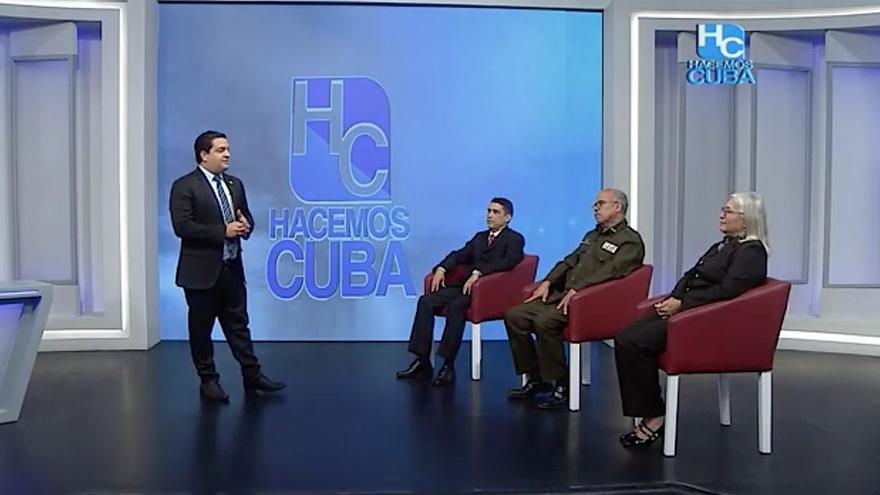
Humberto López invited Pilar Varona, Deputy Minister of Justice; Marcos Caraballo, Deputy Attorney General of the Republic, and Francisco Estrada, director of State Security. (Screen capture)

14ymedio bigger14ymedio, Havana, December 20, 2023 — “Terrorists and their accomplices seek to colonize our minds,” was one of the many exalted statements of the spokesman for the Humberto López regime during this Tuesday’s broadcast of the program Hacemos Cuba. How do we hunt and execute those “declared enemies of the Revolution“? What legal mechanisms can guarantee the extradition from the United States of “criminals” such as Alexander Otaola and Orlando Gutiérrez Boronat? Can the “list of terrorists” published on December 7 continue to grow?

To answer these questions, López invited three ideal interlocutors to the set: Pilar Varona, Deputy Minister of Justice; Marcos Caraballo, Deputy Attorney General of the Republic, and Francisco Estrada, the lieutenant colonel who heads the State Security Investigation Body.

The presenter asked the Deputy Minister of Justice to emphasize the importance of the list, published in the Gaceta Oficial. Varona answered that the text’s appearing in that publication “gives it a legal weight,” he said, which helps to accentuate the rigor. continue reading

The presenter asked the Deputy Minister of Justice to emphasize the importance of the list’s appearing in the ’Gaceta Oficial’

Estrada Portales dusted off the State Security videos about the 1999 explosions in several hotels. There is no problem that more than 20 years have passed since those events, Deputy Prosecutor Caraballo clarified: on Guillermo Novo, Pedro Crispín and José Hernández – three of the names at the top of the list – the weight of the law can fall “at any time.”

Despite validating every name on the list, López decided that many were ancient history and preferred to move forward to 2020, with the cases of Iván Leyva and Jorge Fernández, residents outside the Island accused of carrying out “sabotage of the national energy system.” “Let’s record these names,” stressed the regime’s spokesman; “we have evidence.”

López has no problem quoting himself in previous broadcasts of Hacemos Cuba, showing the televised interrogations he conducted on some “terrorists.” According to the presenter, the confessions of people who were financed by Leyva and Fernández are enough to condemn them. The images “are still shocking,” he said.

State Security has in its power material to charge numerous people, said the lieutenant colonel, both detained and outside the country.

The presenter recited with emphasis the names of Otaola, Eliécer Ávila, Gutiérrez Boronat, Jorge Ramón Batista Calero and Alain Sánchez, among others, about whom he asked the deputy prosecutor if they incurred the crime of terrorism or if they simply exercised their freedom of expression. “That right is not absolute; it has limits,” Caraballo insisted. “There is no doubt: new technologies can become a scenario for committing terrorist and violent acts.”

As for the influencer Batista Calero, known as Ultrack, López took him as an example of clear terrorist behavior, for his call to “kill the Castro leadership.” The crime, Estrada theorized, is not just in committing the act, but in “the instigation” and “participation” in groups on social networks, “replicating the incitement.” It is a straight path to “receiving financing,” sooner or later.

Are they going to be investigated even though all they have done is communicate?” López asked. The deputy prosecutor’s response was yes

“Are they going to be investigated even though all they have done is communicate?” López asked. The deputy prosecutor’s response was yes. The Constitution provides for a “wide range” of participation in crimes, “even if a concrete result does not occur.”

The phrase of the day was “international criminal assistance,” the series of mechanisms by which Cuba intends to appeal to “guarantee an effective confrontation” against “terrorists.” Several countries “have cooperated with Cuba” to send people of interest that Havana has asked for – the deputy prosecutor did not say who. Interpol “circulated with red notification” to 12 members of the list, said the representative of State Security. Those people are now in Cuba, in the middle of their legal process.

However, even if the international authorities do not listen to Cuba’s demands, the members of the list can always be “judged in absentia.” The deputy prosecutor recalled that among the punishments are life imprisonment and the death sentence. The slogan is to “persecute, repress and punish” those whom the Government considers terrorists, stressed the Deputy Minister of Justice in the last minutes of the program.

He betrayed the star spokesman of the regime, however, with a careless allusion to the “desire and imagination” of State Security when it comes to calling terrorists those who “come up again and again” in the investigations. The lieutenant colonel ignored the slip: “Those names will go on the list,” he warned.

Translated by Regina Anavy

____________

COLLABORATE WITH OUR WORKThe 14ymedio team is committed to practicing serious journalism that reflects Cuba’s reality in all its depth. Thank you for joining us on this long journey. We invite you to continue supporting us by becoming a member of 14ymedio now. Together we can continue transforming journalism in Cuba.
Lourdes Gurriel Signs for 42 Million Dollars, Below the Contracts of Other Cuban Baseball Players

’Yunito’ Gurriel extended his contract for three more years with the ’D-backs’. (Instagram)

14ymedio bigger14ymedio, Havana, 19 December 2023 — Cuban baseball player Lourdes Gurriel Jr. signed a $42 million contract for three seasons with the United States Major League Diamondbacks on Monday. According to MLB magazine, the agreement includes a renewal option with the Arizona team for $14 million in 2027, in addition to the possibility for the Cuban outfielder to respond to new offers in 2026 and, if he chooses, to leave the team.

Gurriel’s contract is significant, although it is below the agreements reached by five other Cuban players in the Major Leagues. Yordan Álvarez, recognized as one of the best in the U.S., has a six-year agreement for $115 million with the Houston Astros, which includes an annual salary of almost $20 million and a bonus of five million.

This 30-year-old player from Sancti Spíritus arrived last season at the Diamondbacks in an exchange with the Toronto Blue Jays, where he had a batting average of .285 with 68 home runs

Yasmani Grandal has a four-year contract of $73 million with the White Sox of Chicago. On the same team is Yoan Moncada, whose five-year agreement is for 70 million dollars. Jose Abreu is tied for three years to the Houston Astros for 58.5 million dollars, while Raisel Iglesias has a 58 million dollar contract with the Atlanta Braves. continue reading

The youngest of the Gurriels says that he had “a dream season both individually and collectively.” At the end of the World Series, he acknowledged that this year “he could not have asked for more” than what he had in Arizona. “I felt like we were a family there, and I am very grateful for the whole collective group.”

This 30-year-old from Sancti Spíritus arrived last season at the Diamondbacks in an exchange with the Toronto Blue Jays, where he had a batting average of .285 with 68 home runs. This year he was called up to form the roster of the Star Game with a batting average of .261 with 24 home runs and 82 runs produced.

Seven years ago, in 2016, Lourdes Gurriel, along with his brother Yulieski, were the sensation of the Cuban national team. They decided to try their luck in the United States, and the two athletes abandoned the Island team after their participation in the Caribbean Series in the Dominican Republic. The regime considered it “a frank attitude of surrender to the merchants of professional baseball — baseball-for-hire,” Cubadebate published at the time.

Yunito, as he is affectionately called, signed his first major league contract as a rookie. The Blue Jays paid him a base salary of one million dollars

Lourdes’ father, who was also a Cuban baseball legend, recalled in an interview with the Mexican newspaper Excélsior last November that it was not easy to make the decision. “The road was not easy; you could say that it might seem like everybody was leaving Cuba and becoming a star, but no, there is a lot of sacrifice and a very long adaptation process.”

Yunito, as Lourdes Gurriel is affectionately called, signed his first major league contract as a rookie. The Blue Jays paid him a base salary of one million dollars. After five seasons, the total was a bit over 15 million dollars, according to the Sportrac portal.

Translated by Regina Anavy

____________

COLLABORATE WITH OUR WORKThe 14ymedio team is committed to practicing serious journalism that reflects Cuba’s reality in all its depth. Thank you for joining us on this long journey. We invite you to continue supporting us by becoming a member of 14ymedio now. Together we can continue transforming journalism in Cuba.
With the Death of Mayelin Rodriguez in Camaguey, the Number of Femicides in Cuba Rises to 83 in 2023

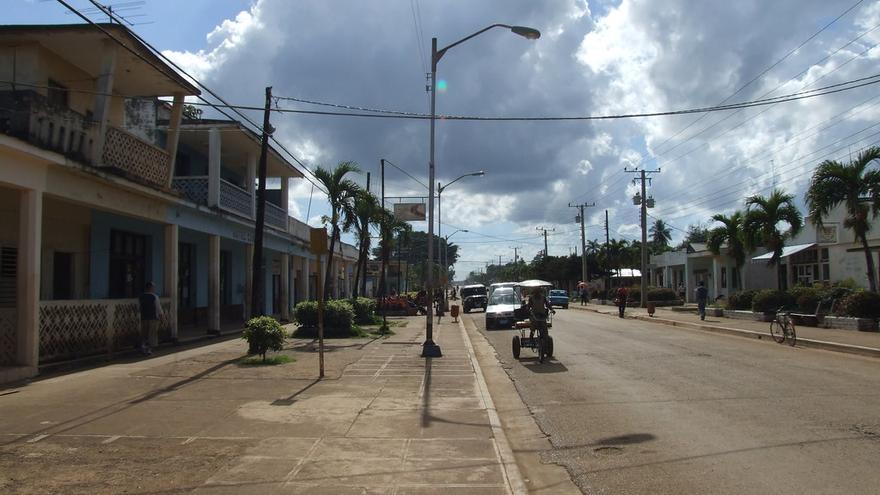
Poblado de Sola, in the municipality of Sierra de Cubitas in Camagüey. (TV Camagüey)

14ymedio bigger14ymedio, Havana, December 19, 2023 — The independent observatories Alas Tensas and Yo Sí Te Creo en Cuba (YSTC) confirmed on Tuesday a new violence against women murder, that of Mayelín Rodríguez, in Camagüey. With it, the number of femicides on the Island rises to 83 since January.

Little is known about Rodríguez’s murder. So far, the platforms revealed that the woman was murdered on December 11 in the vicinity of a penitentiary in the town of Sola, in the Camagüey municipality of Sierra de Cubitas.

The alleged murderer was her partner; no other data is known in addition to the fact that he may have committed suicide after killing the woman. The platforms also pointed out that the victim is survived by two minor children.

Other details, such as Rodríguez’s age and the motivation for the crime are also not known. Activists believe that his second surname may be “Vals.”

Alas Tensas and YSTC also verified the femicides this December of Yailén Matamoros and Melani García, which had already been reported by the independent press. continue reading

Some posts on social networks allege that the aggressor had a criminal record for which he served time and that he may have committed suicide after the crime

Matamoros, 35, was attacked last Saturday by her ex-partner in San Antonio de los Baños. She was stabbed 33 times, a resident of the neighborhood told 14ymedio. According to the source, the alleged murderer attacked her after learning that the woman had a new romantic relationship.

Some publications on social networks allege that the aggressor had a criminal record for which he had served time and that he may have committed suicide after the crime. Other stories say that a relative of the victim killed her as revenge.

The second victim, Melani García, 16, was murdered last Saturday in Havana. A post by a relative of the teenager pointed to a man whose identity responds to the initials P.J.S. as the alleged aggressor, but it did not reveal his link with the victim. Another publication pointed out that there could be two others involved in the case and that they had fled. According to the same source, García was the mother of a two-year-old boy.

The Attorney General of the Republic, Yamila Peña Ojeda, reported last Saturday that since 2020 and until the end of October 2023, 117 violent deaths of women have been reported on the Island. The provinces of Matanzas, Havana, Santiago de Cuba, Granma and Guantánamo have the highest case rates.

During the VII Plenary of the Communist Party, it was also indicated that the Cuban Observatory on Gender Equality, created in 2021, was updated with the User Manual, to facilitate web browsing. The secretary general of the ruling Federation of Cuban Women (FMC), Teresa Amarelle Boué, said that there is still no public system of statistical information on the subject.

Translated by Regina Anavy

____________

COLLABORATE WITH OUR WORKThe 14ymedio team is committed to practicing serious journalism that reflects Cuba’s reality in all its depth. Thank you for joining us on this long journey. We invite you to continue supporting us by becoming a member of 14ymedio now. Together we can continue transforming journalism in Cuba.